Communities Department Socio Economic Update No. 43 - March 2021 - Comhairle nan Eilean Siar
←
→
Page content transcription
If your browser does not render page correctly, please read the page content below
Communities Department
                                          Socio Economic Update
                                                  No. 43
                                                        March 2021

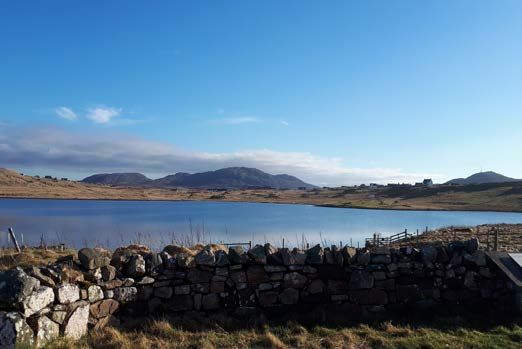
                                                                                       Shawbost

IN THIS ISSUE (click on links)

Household Projections              Small Area Population Estimates        Migration

Life Expectancy                    Covid Local Economic Impact            Hate Crime

Sea Fisheries Statistics           Gross Weekly Pay                       ScotlandsPeople

                           Comhairle nan Eilean Siar - Socio Economic Update No. 43
Socio Economic Update No. 43

Household Projections
2018 based Household Projections were                       As shown in the chart below in 2028, in all age
published by National Records of Scotland in                groups (apart from 16-19 years) up to the age of
September 2020. The projections are produced                69 years old, men are projected to be more likely
every two years and show how many additional                to live alone than women.
households would form based on previous                     From the age of 70 onwards, women are
trends.                                                     projected to be more likely to live alone than
Nationally, the number of households is                     men and this likelihood increases with age.
projected to increase by 5% (120,000) to 2.60               Adult female households in the 90+ age group
million in 2028. The number is projected                    are projected to rise from 141 households in
to decrease by 2.3% from 12,773 to 12,478                   2018 to 203 households in 2028, in contrast to
households in the Outer Hebrides.                           20 male households in 90+ age group in 2028.
Over the period 2018 to 2043 the Outer                      This reflects the continued higher life expectancy
Hebrides is projected to have the highest                   of females than males.
decrease in households at 11%.
Scotland’s population is ageing. One person                                                 Adult Male & Female Households 2018 & 2028

households are the main household type and
                                                             450
                                                             400

this is projected to continue with households
                                                             350
                                                             300

with children declining.
                                                             250
                                                             200
                                                             150

In 2028, 1 adult households are projected to                 100
                                                              50

remain the most common (41.8%) in the Outer                    0

Hebrides and 1 adult plus one or more children
                                                                                               1 adult male 2018                              1 adult male projected 2028
is projected to remain the least common (4.3%).                                                1 adult female 2018                            1 adult female projected 2028

In addition, between 2018 and 2028 the 50-54
year age group will see the largest percentage
decrease (-24.1%) and the 90 & over age group               The chart below shows the projected change
is projected to have the largest increase (+41%)            in household type between 2018 and 2028.
in the Outer Hebrides.                                      As shown the projected increases are in the 1
In 2028, the largest age group is projected to              and 2 adult households while decreases are
be the 75-79 age group, in comparison to the                projected in larger households with the largest
50-54 age group in 2018, highlighting the ageing            decrease (-15%) in the 2+ adults plus child(ren)
population.                                                 households.
           Average household size continues on
           a downward trend. From 2018-2028
                                                                                        Projected number of households in Outer Hebrides by household type, 2018 and 2028

                                                                                    6,000

           it will decrease by 7% in both Scotland                                                          Small increases projected in
                                                                                                                                                                                 2018
                                                                                                                                                                                 2028

           and the Outer Hebrides. However,
                                                                                    5,000
                                                                                                  + 2%     households containing one or
                                                             Number of households

                                                                                                                     two adults

           from 1998 to 2028 it will decrease by
                                                                                    4,000
                                                                                                                    + 1%

           15% in the Outer Hebrides and 10% in
                                                                                    3,000                                                                Numbers of larger households
                                                                                                                                                            are projected to fall

           Scotland. By 2027 it is projected to fall
                                                                                    2,000
                                                                                                                                                             - 15%

           below 2.0 in the Outer Hebrides.                                         1,000

                                                                                                                                           - 8%
                                                                                                                                                                                - 8%

                                                                                       0
                                                                                               1 adult          2 adults      1 adult with children   2+ adults with       3+ adults

  Year          Outer Hebrides         Scotland
                                                                                                                                                         children
                                                                                                                            Type of household

   1998              2.35                2.31
   2008              2.19                2.18               Between 2018 and 2028 increases in households
   2018              2.07                2.15               are projected in all but 4 council areas; Outer
                                                            Hebrides, Argyll & Bute, Inverclyde and North
   2028              1.99                2.08
                                                            Ayrshire.
   2043              1.93                2.00

                                                   Page 2
Socio Economic Update No. 43
Small Area Population Estimates Total % Change
pop. 2011 to
National Records of Scotland published Data zone 2019 2019
Small Area Population Estimates (SAPES) for
Eriskay to South Boisdale 466 -12.2
mid-2019 in August 2020.
Newton to Plasterfield 743 -11.8
Scotland’s 32 Council areas are made up of
Galson to Swainbost 572 -11.7
6,976 data zones. There are 36 data zones
in the Outer Hebrides. Most data zones Loch Roag 441 -11.1
contain between 500 and 1,000 people. Habost to Port of Ness 712 -9.8
Uig and Bernera 715 -8.3
Over the last decade 2009 to 2019
population decline has mainly occurred in North Manor Park 610 -7.9
island and rural council areas, and some in Goathill 804 -7.8
the West of Scotland. However, cities tend Coulegrain to Stenish 609 -7.7
to experience increases. Loch Eynort to Iochdar 697 -6.6
The data zone with the highest population Knock to Bayble 791 -6.2
in Scotland is Currie West in Edinburgh Loch Boisdale 591 -5.4
with 3,784 people, as it contains student
Sheshader to Tiumpan Head 575 -5.4
accommodation.
North Bayhead (Stornoway) 618 -5.2
Over the period 2009 to 2019 the Outer Barvas to Borve 716 -4.9
Hebrides experienced the largest average
Pairc and Kinloch 881 -4.8
change in median age in Scotland at 4.1
years while Dundee City had the lowest at Carloway to Shawbost 595 -4.8
-0.1 years. Central Stornoway 836 -4.8
Over this period 94% (34 data zones) South Harris 870 -4.7
became older in terms of median age . West North Uist to Baleshare 690 -4.6
In contrast, 44% in Dundee City became Bragar to Brue 701 -3.8
younger. North Benbecula 787 -3.6
Ruchill in Glasgow has the lowest median Grimsay, East North Uist to Berneray 872 -3.5
age of 20 years, as it contains student Coll to Back 908 -2.7
accommodation for Glasgow University. North Harris and Scalpay 957 -2.5
Over the period 2009-2019, 11 data zones Marybank to Newvalley 1058 -2.1
(31%) in the Outer Hebrides experienced Springfield 606 -1.8
an increase while 25 data zones (69%)
Garrabost 789 -1.6
experienced a decrease in population.
Vatersay to Castlebay 621 -0.5
Over the last year from 2018 to 2019, the
Tong to Upper Coll 1088 -0.2
3 data zones with the highest estimated
percentage population increase were: North Barra 660 0.6
South Benbecula 527 1.9
• Melbost to Braighe +5.2% (51)
Gress to Tolsta 727 2.0
• Eriskay to South Boisdale +3.3% (15) North Lochs 914 3.9
• Newmarket +2.7% (25) Newmarket 936 4.0
The 3 data zones with the highest estimated Melbost to Braighe 1037 18.5
population increase over the year 2018 to The table above highlights the difference in population
2019 were: change in different data zones. While Melbost to
• North Manor Park -5.7% (-37) Braighe has increased by 162 (18.5%) mainly due to
increased affordable housing development, Eriskay to
• Central Stornoway -4.5% (-39) South Boisdale has decreased by 65(12.2%). It also
• Springfield -2.7% (-17) highlights the difference in size, with Loch Roag (441)
the smallest and Tong to Upper Coll (1088) the largest.
Page 3Socio Economic Update No. 43
Small Area Data Zone Total pop. % under 16 %16-64 % 65+
Population Vatersay to Castlebay 621 19 57 23
North Barra 660 19 53 28
Estimates
Eriskay to South Boisdale 466 12 54 33
The adjacent table Loch Boisdale 591 16 59 25
shows the broad age
Loch Eynort to Iochdar 697 19 57 24
groups by data zone
for 2019 for each data South Benbecula 527 19 58 24
zone. North Benbecula 787 24 60 16
There are large West North Uist to Baleshare 690 15 55 30
variations within the Grimsay, East North Uist to Berneray 872 11 59 30
Outer Hebrides, with South Harris 870 13 53 34
some data zones North Harris and Scalpay 957 14 57 30
having a much older
Pairc and Kinloch 881 15 58 27
profile than others.
North Lochs 914 15 58 27
Uig and Bernera Uig and Bernera 715 7 59 33
has the smallest
Loch Roag 441 12 55 32
percentage under 16,
at 7%, while Melbost Carloway to Shawbost 595 12 62 26
to the Braighe, Tong to Bragar to Brue 701 14 62 24
Upper Coll and North Barvas to Borve 716 15 59 26
Benbecula all have the Galson to Swainbost 572 10 57 33
highest at 24%.
Habost to Port of Ness 712 14 54 32
Goathill has the Gress to Tolsta 727 16 56 28
smallest working age Coll to Back 908 17 61 22
population at 51%,
while Newmarket has Tong to Upper Coll 1088 24 58 18
the highest at 67%. Newmarket 936 19 67 14
Marybank to Newvalley 1058 17 63 20
Newmarket has the
smallest 65+ age North Manor Park 610 20 63 18
group at 14% while North Bayhead (Stornoway) 618 11 63 26
Goathill has the Central Stornoway 836 14 60 26
highest at 36%. Newton to Plasterfield 743 12 59 29
As such, with the data Springfield 606 16 57 27
zone areas varying Goathill 804 14 51 36
so greatly, the island Coulegrain to Stenish 609 14 56 30
areas do too.
Melbost to Braighe 1037 24 58 18
The adjacent table Garrabost 789 18 61 21
shows that Barra and
Knock to Bayble 791 16 58 26
Vatersay have the
highest under 16 age Sheshader to Tiumpan Head 575 15 55 30
group at 19% (Scot. Island Area % Under 16 % 16-64 % 65+
avg. 17%) and Harris Barra & Vatersay 19 55 26
have the greatest South Uist 16 57 27
65+ age group at
32% (Scot.avg. 19%). Benbecula 22 59 19
Benbecula and Lewis North Uist 13 57 30
have 59% aged 16-64 Harris 13 55 32
(Scot.avg. 64%). Lewis 16 59 25
Outer Hebrides 16 59 25
Page 4Socio Economic Update No. 43
Migration
National Records of Scotland (NRS) produces data on Migration. NRS updated local area migration
data in August 2020. The publication brings together migration-related indicators from different
sources for council areas and health board areas.
The chart below shows the net migration in 5 year age groups for island areas. It clearly shows that
there is significant loss in the 15-19 age group and also 25-29 and 20-24 year age groups for all island
areas. However, the loss has been less than in previous years in the 15-19 year age group in the
OuterHebrides. In 2015-16 the loss was -90. Usually, the Outer Hebrides always has the greatest loss
in this age group, however, this year it is Shetland. Net gain is mainly in 5-14 and 30-64 age groups.
Over the year net gains were as follows: Outer Hebrides +50, Orkney +145 and Shetland -88.
Net migration by 5 year age group in island areas 2018/19
47
38
40 30 27 27 29
27
19 20 20
16 16
20 13 14 1414
10 12
7
12 10
1 2 3 2 3 1 5 2 3 5 3 3
1 0 1 1 2
0
Number
-1 -2 -4 -1 -1 -4
-6
-20 -17 -18 -15 -16
-12
-14
-8
-23 -30
-40
-60 -47
-57
-80 -77
Outer Hebrides Orkney Islands Shetland Islands
The chart below shows the migration flows from the Outer Hebrides for the year 2018-2019. The
chart shows that the largest percentage of people moving within Scotland, left to go to Glasgow City
(128 people) while the smallest percentage, not shown, went to Clackmannanshire (1 person). A
larger number (140) went to the rest of the UK, while 60 went overseas. A large number (120) also
went to the Highland council area.
A total of 800 left the Outer Hebrides in 2018-19 while 850 arrived, leaving net migration of +50.
Orkney Aberdeen City Dundee City Argyll&Bute
South Ayrshire Perth & Kinross
East Ayrshire 2% 5% Angus 1% 3%
2% 2%
1% Falkirk 1% Aberdeenshire Dumfries & Galloway
East Renfrewshire
1% 1%
1% 3%
Scottish Borders
1% North Ayrshire
Fife 1%
Rest of UK 3% North
18%
Lanarkshire
1%
Edinburgh City
6%
Highland
15%
Overseas Moray
8% 3% West
Glasgow City
17% Dunbartonshire
1%
Renfrewshire
2%
South Lanarkshire
2%
Migration Flow from Outer Hebrides 2018-2019
(areas with numbers less than 5 excluded)
Page 5Socio Economic Update No. 43
Migration
Net migration in Island areas 2009 to 2019
Over the period 2009 to 2019 net
250
migration has varied greatly in all 200
220
200
island areas. Orkney has had the 160
110
160 150
100 100
highest net migration in all but the
90 80
70 60 70
50
20 20
first two years and has had positive 10
-20 -10 -10
-40
-20
migration every year over this period. -70
-90 -90
-70 -80 -90
-130
The Outer Hebrides has had positive
net migration since 2016-17, while
Shetland has mainly had negative Outer Hebrides Orkney Islands Shetland Islands
migration.
Over the whole period net migration
has been as follows: Outer Hebrides
+310, Orkney +1,530 and Shetland National Insurance Number (NINo) Allocations in the
Outer Hebrides and Scotland 2009 - 2019
-110.
90 60,000
Number of Allocations
80
Number of Allocations
50,000
70
60 40,000
(Hundreds)
The number of National Insurance
(Thousands)
50
30,000
Number (NiNO) allocations has 40
30 20,000
increased in Scotland by 16% from 20
10,000
10
41,610 in 2009 to 48,190 in 2019. This 0 0
is the highest number over the period.
However, in the Outer Hebrides the Outer Hebrides SCOTLAND
trend was down in 2019 and the
number remains the same in 2019 as it
was in 2009 at 50. The highest number
was in 2015 with a total of 70. Number of Births to non-UK mothers in the
Outer Hebrides and Scotland 2009 - 2019
30 9,500
Over the decade the highest number 25 9,000
Number of Births
Number of Births
of births to non-UK mothers, both in
(Thousands)
20
8,500
(Tens)
the Outer Hebrides and Scotland, was 15
8,000
10
in 2016. The number of births remains 7,500
5
low in the Outer Hebrides with 10 0 7,000
births in 2019. Births in Scotland have
been decreasing since 2016 and are Outer Hebrides SCOTLAND
continuing to do so.
The number of pupils from minority
Pupils from minority ethnic groups in the
ethnic groups is showing a steady Outer Hebrides and Scotland 2009 - 2019
increase in both the Outer Hebrides 80 70,000
70
Number of pupils
and Scotland. Over the decade the 60,000
Number of Pupils
60 50,000
(Thousands)
percentage of pupils from minority 50
(Tens)
40,000
40
ethnic groups has increased by 37% 30
30,000
in the Outer Hebrides and by 73% in 20 20,000
10 10,000
Scotland. 0 0
Outer Hebrides SCOTLAND
Page 6Socio Economic Update No. 43
Life Expectancy
National Records of Scotland published Life
Expectancy 2017-2019 in September 2020.
Life expectancy in Scotland is the lowest in Life expectancy for women is highest
the UK and Scotland also has the lowest life in East Renfrewshire at 84 years, and
expectancy in the 16 nations that make up lowest in Glasgow City at 78.5 years.
Western Europe. Male life expectancy is highest in East
Deprivation continues to have an impact on life Dunbartonshire at 80.5 years and
expectancy. The gap between the most and lowest in Glasgow City at 73.6 years.
least deprived areas continues, with the gap for The publication does not take into
men being 13.3 years and the gap for women 10 account the effects of Covid 19 on
years. life expectancy as it covers the years
Life expectancy for men at birth is 77.1 and 81.1 2017-19.
for females. Life expectancy at age 65 is 17.7 for Covid 19 was first mentioned on a
men and 19.8 for women. Scottish death certificate in the week
beginning 16 March 2020.
What is ‘life expectancy at older ages’? The table below shows the gap in life
expectancy at birth between men
and women in all Council Areas in
Life expectancy at older ages can be Scotland.
quite a confusing concept - how can a
The Outer Hebrides continues to have
man aged 65 expect to live 17.7 years
the highest gap in life expectancy
when life expectancy at birth is 77.1 at birth between men and women,
years? The best explanation for this is along with Dundee City. The Outer
that life expectancy is an average Hebrides and Dundee City, have the
which is affected by people dying at highest gap in Scotland at 5.6 years
younger ages as well as in old age. (after rounding up).
While the average number of years People living in rural areas tend to
a baby boy might live is 77, if he have a higher life expectancy than
those living in urban areas. People
makes it to 65 without dying, then the
generally live longer and spend more
average number of years left is 17.7. years in good health in rural areas.
Source: National Records of Scotland
Difference in life expectancy at birth between males and females
2017-2019
6.0 5.6 5.6
4.9 4.8
5.0 4.4 4.4 4.3 4.3 4.2 4.2 4.1 4.1 4.1 4.1
4.1 3.9 3.9 3.9 3.9
3.8 3.6 3.6
4.0 3.4 3.3 3.2 3.2 3.1 3.1 3.1
Years
3.1 2.8
3.0 2.3
2.0
1.0
0.0
Page 7Socio Economic Update No. 43
Gross Weekly Pay Characteristics of Hate Crime
Information from the Annual Survey of The Scottish Government has published
Hours and Earnings shows the levels of gross A Study into the Characteristics of Police
weekly pay all over the United Kingdom, Recorded Hate Crime in Scotland.
some of which are highlighted in the table For the purposes of this report, a hate crime is
below. any crime which is perceived by the victim or
any other person, to be motivated (wholly or
partly) by malice and ill-will towards a social
group.
Earnings by residence 2020
The police recorded 6,448 hate crimes in 2019-
Gross weekly pay 2020. The number of hate crimes recorded by
All full time workers Police Scotland per 10,000 of the population
£ was highest in Glasgow City and the City of
Edinburgh local authority areas (25 and 23
Outer Hebrides 562.00 crimes per 10,000 population respectively).
Orkney 572.20 The Shetland Islands and Orkney Islands had
Great Britain 587.10 the lowest rates.
Scotland 595.00 In over half of crimes (58%), the victim did not
know the perpetrator, whilst in a further 30% of
Shetland 655.00
cases, the perpetrator was an acquaintance of
the victim.
Source: NOMIS Around a third of hate crime in Scotland
involved a victim who experienced the incident
at their place of work or whilst undertaking
duties as part of their occupation. Most
Gross weekly pay in the Outer Hebrides has
of these victims were working in retail or
increased by 8.5% since last year. Although
other service industries. Almost two-thirds
pay has increased, the Outer Hebrides
of hate crime victims and three quarters of
has the 8th lowest pay in Council Areas in
perpetrators were male. In around half of
Scotland.
crimes the victim did not know the perpetrator,
East Renfrewshire has the highest pay in with more than a third involving a perpetrator
Scotland at £815.20, (45% higher than the who was an acquaintance of the victim.
Outer Hebrides pay), while Dumfries and
Galloway has the lowest at £517.50 (8%
lower than the Outer Hebrides pay). 2019-20 Hate Crimes Recorded
Pay in Orkney has decreased over the year • Outer Hebrides 14
by 4%, while the Great Britain pay remains
• Orkney 2
the same. Pay in Scotland has increased by
3%, while pay in Shetland has increased by • Shetland 1
almost 10% and is now the 3rd highest in
Scotland.
There was a large increase in hate crimes
Pay in the Orkney Islands is now 1.8% higher recorded in the Outer Hebrides over the year
than that of the Outer Hebrides, while pay from 4 crimes recorded in 2018-19.
in the Shetland Islands is now 16.5% higher
This has also resulted in the rate per 10,000
than that of the Outer Hebrides. The average
crimes increasing from 1 to 5 in the Outer
pay in Scotland is now 5.9% higher than pay
Hebrides. The rate in the Orkney Islands
in the Outer Hebrides.
remains at 1 and is 0 in the Shetland Islands.
Page 8Socio Economic Update No. 43
Covid Local Economic Impact
The Improvement Service has produced a tool which summarises the data available relating to the
current economic impact of Covid 19. This information is available at Local Authority level, giving
details of the current uptake in Council Areas of government support available.
Information is available on the following:
• The Coronovarius Job Retention Scheme - Employments Furloughed
• The Self-Employment Income Support Scheme (SEISS) - Third Grant
• Unemployment benefit claims
• The COVID Strategic Framework Business Fund
On the whole, Covid appears to have had less of an impact on island areas than the rest of Scotland,
when using these measures.
The island areas, along with Aberdeenshire, East Dunbartonshire and East Renfrewshire, have
suffered less impact while Covid appears to have had the largest impact on Highland Council.
Information below is for all island areas and Scotland, as at January and February 2021.
Outer
Measure Hebrides Orkney Shetland Scotland
Total Furloughed (Feb) 1,400 900 1,000 364,100
Rate per 100 aged 16-64 9.0 6.7 7.1 10.4
Unemployment Benefit Claimant Count (Feb) 775 375 465 213,325
Claimants per pop. aged 16-64 5 2.8 3.3 6.1
Total Self-Employment Support Scheme - 700 700 400 131,000
Third Grant Claim (SEISS) (Jan)
SEISS Claims per 100 potentially eligible pop. 55 40 47 64
Total Covid Strategic Framework Business 375 36 214 43,218
Fund Grants Awarded (Feb)
Business Grants per 100 Small or Micro 25.4 2.1 11.9 20
Businesses
The measures above show that for most measures the Orkney and Shetland Islands tend to have
the lowest rates in Scotland and the Outer Hebrides tends to have the 4th or 5th lowest. The only
exception to this is in Business Grants per 100 Small or Micro Businesses where the Outer Hebrides
had the 7th highest rate in Scotland.
With reference to Unemployment Benefit Claimant Count the following percentage increases have
occurred between January 2020 and February 2021:
Outer Hebrides: 84.5% increase; Orkney: 97.4% increase; Shetland 102.2% increase. All measures
for all the areas have increased since December 2020.
Page 9Socio Economic Update No. 43
Scottish Sea Fisheries Statistics Quantity and Value of all landings in the Outer
Hebrides 2015 to 2019
2019 6000 20000
The Scottish Sea Fisheries Statistics 2019 5000
Quantity (tonnes)
15000
Value (£'000)
4000
were published in September 2020.
3000 10000
Mackerel remained the most valuable species 2000
5000
landed by the Scottish fleet, representing 27 1000
per cent of the value of all Scottish vessels’ 0 0
2015 2016 2017 2018 2019
landings. Nephrops is the second most
Quantity Value
valuable species, with 15 per cent of the total
value. Haddock became the most valuable
demersal species overtaking cod with
monkfish third.
Together, haddock, cod and monkfish account Number of vessels in Island areas
for 20 per cent of the value of Scottish 2015 to 2019
250 219 221
vessels’ landings. 210
184
208
188
209 201 214 215
200
The quantity of landings in the Outer 150 132 131 128 128 127
Hebrides W has decreased over the 5 year 100
period by 4.2%. However, the value of the 50
landings has increased by 57.1%. 0
2015 2016 2017 2018 2019
The number of vessels in the Outer Hebrides
O Hebrides Shetland Orkney
has increased by 4.3% over the 5 year
period, while the numbers in Shetland have
increased by 20%. Vessel numbers in Orkney
have decreased by 3.8%.
Number of fishermen employed in the
Fraserburgh is the district with the highest
Outer Hebrides 2015 to 2019
number of vessels with 223 vessels (11 per 376
400 360
cent of the Scottish fleet) . This was closely 337
318 303
290
followed by Shetland (221) and Stornoway 300 262 268 256 258
Number
(219) districts. 200
92
Fraserburgh is the district with the largest 100 53 58 48 42
number of fishers (797) accounting for 16 per 0
17 17 2 5 26
cent of the total in 2019. It is also the district 2015 2016 2017 2018 2019
with the largest number of fishers who Total Regular Irregular Crofters
work regularly, with 788 regularly employed
fishers. Shetland had the most irregular
fishers (254), accounting for 28 per cent of
Employment in Fishing as proportion of
the total fishers in this category. Stornoway
total employed in Scotland - the three
was the district with the largest number of
island areas have the highest proportions in
crofters employed (26), accounting for 67 per
Scotland.
cent of the total fishers in this category.
The number of fishers in the Outer Hebrides
has increased by 4.4% over the 5 year period, Outer Shetland
rising from 360 to 376. Orkney Hebrides
2.38% 4.21%
2.79%
Page 10Socio Economic Update No. 43
ScotlandsPeople
Scotland’s People have recently added
Kirk sessions to their web page. Images
of more than a million pages from the kirk
sessions and other court records of the
Church of Scotland, containing details of key
events in communities across the country
between 1559 and 1900, have been added
to ScotlandsPeople, NRS’s online research
service.
These records offer remarkable insights
into the everyday lives of ordinary Scots,
recording important moments such as births,
marriages and deaths.
If you have any queries or suggestions
Global Grasshopper – an award winning blog regarding this bulletin please contact:
and resource for independent travellers has
recommended the top 10 most beautiful
places to visit in the Outer Hebrides. Kathleen Shirkie, Research Officer,
Unsurprisingly, beaches in the Outer Hebrides Communities Department, Comhairle nan
continue to get recognised as being the most Eilean Siar, Sandwick Road, Stornoway, Isle of
beautiful, continuing to get listed as some of Lewis, HS1 2BW
the best, both UK and European wide. kshirkie@cne-siar.gov.uk
The latest is Lonely Planet, a leading travel
guide. Listed in the top 20 best beaches
This e-bulletin is also available (along with past
in Europe by Lonely Planet, was the West
issues) on the Comhairle’s internet/intranet in
Beach in Berneray. West Beach was the only
the ‘Fact File’, click below.
Scottish entry.
Lonely Planet also listed the 11 most
beautiful beaches in the UK to visit. Listed
here are Luskentyre and Traigh Mhor, Barra.
FACTFILE
Top Girl’s and Boy’s Names 2020
Scotland Outer Hebrides
Jack Alexander, Lachlan
Isla Freya
Page 11You can also read


