COMMUNITY SHOPS 2021 A BETTER FORM OF BUSINESS - Plunkett Foundation
←
→
Page content transcription
If your browser does not render page correctly, please read the page content below
COMMUNITY
SHOPS
A BETTER FORM OF BUSINESS
2021
About this publication                         Methodology
This publication is the most extensive and     While compiling this report, Plunkett
                                               Foundation undertook a stringent process of
comprehensive research report to have been
                                               data validation to ensure that historic records
produced on the community shop sector          are as up to date as possible.
in the UK. It was first published in 2011,
                                               The data was gathered from:
and has become a much anticipated annual
report ever since, growing with additional        lunkett Foundation records that record all
                                                 P
information year on year.                        shops engaging with the Foundation over a
                                                 considerable period of years
The report now serves as a startup guide
                                                  tatutory data sourced from the Financial
                                                 S
for new groups, a benchmarking tool for          Conduct Authority and Companies House
existing community shops, and is used by
                                                 A survey with 137 responses
funders and support organisations (including
Plunkett Foundation) to futureproof services      ocus group discussions with 34 shops from
                                                 F
                                                 Wales, Scotland and England to validate and
and investment decisions concerning
                                                 illuminate findings
community shops.
                                                  ost Office data on the number of
                                                 P
The data collection, analysis and report-        community shops offering postal services.
writing was undertaken by Plunkett
Foundation staff and advisers. This work
was only made possible by the generous
contribution from Power to Change.

  KEY FACTS

  In 2020:
    13 new shops opened
    392 community shops were trading in the UK by the end of the year
     he total share capital raised by communities of shops opening in
    T
    2020 was £328,055 from over 1,800 new members
     ommunity shops had an average £167,000 p.a. turnover,
    C
    representing an estimated £61 million annual turnover for the sector
    204 community shops offer postal services
     n estimated 400-425 FTE staff were employed within the community
    A
    shop sector
    The sector has a workforce of approximately 7,500 volunteers
     he majority of community shops have between 50 and 250
    T
    members/shareholders
    The long-term survival rate of community shops was 92.5%
Contents

Foreword                               4   5	People                                  19
                                            5.1 	Management model                     19
What is a community shop?              5   5.2 	Employed staff                       19
                                            5.3 	Volunteers                           20
1	Community shops                          5.4 	COVID-19 effects on staff
   during the pandemic                6         and volunteers                        21

2	Growth in 2020                      8   6	Impact                                  23
2.1 	Sector size                      8   6.1 	Community cohesion
2.2 	Regional distribution            9         and wellbeing                        23

2.3 	New shops opening in 2020        9   6.2 	Boosting the local economy           24

2.4 	New activity                     9   6.3 	Provision of key products
                                                 and services                          25
                                            6.4 	Employment and preparation
3	Business model                     10
                                                 for work                              25
3.1 	Legal structures                10
                                            6.5 	Environmental impacts                26
3.2 	Membership and shares           10
3.3 	Shop premises                   11
                                            7	Financial performance                   27
                                            7.1 	Profitability                        27
4    Services and activities          13
                                            7.2 	Turnover                             28
4.1 	Core products and services      13
                                            7.3 	Impact of the pandemic on
4.2 	Café services                   14         profitability and turnover           29
4.3 	Services introduced during            7.4 	Rents, loans and mortgage
     the pandemic                     14         overheads                            30
4.4 	Effects of COVID-19 on                7.5 	Ongoing fundraising                  31
     existing products and services   16
                                            7.6 	Financial support                    31
4.5 	Post Office services            17
                                            7.7 	Use of profits                       32
4.6 	Use of EPOS                     18

                                            8	Sector confidence
                                               and concerns                            33
                                            8.1 	Main concerns related to the
                                                  pandemic                             33
                                            8.2 	Longer-term priorities               34
                                            8.3 	Confidence                           35

                                               Community Shops: A better form of business 2021   3
Foreword

The scenes of people clapping for NHS staff,           of adversity to make sure that they could continue
carers and other key workers who worked                to serve their customers. The businesses offered
tirelessly to keep us all healthy, fed, watered and    telephone or online orders, home delivery services,
able to access other key services remotely will        and coordinated wider community activity to
be a lasting image of the COVID-19 pandemic.           support the most vulnerable and isolated people
In nearly 400 communities across the UK and            living locally. They had to do all of this whilst
other surrounding communities, that applause           also trying to interpret advice and guidance for
would have also been for a network of volunteers       their own operations, and make sure that their
that were putting themselves on the front line         volunteers and staff were supported and kept safe –
to keep their community-owned shops open for           it is therefore fantastic to see that they had a good
the benefit of their community. It is therefore my     year’s trade last year, and also that the majority of
pleasure to provide the foreword for this year’s       them are feeling positive about the future.
Community Shops; A Better Form of Business and
                                                       It was so heartening to see a new generation of
start with a note of appreciation and gratitude to
                                                       volunteers step up last year – with furloughed
every single person involved with these inspiring
                                                       workers and students replacing those who were
and vital local shops.
                                                       unable to work because of shielding or safety
The sector has been steadily growing for over two      advice. However, as these individuals return to their
decades not only in number, but also in terms of       own lives and society is afforded past freedoms,
the impact these small businesses are having in        we are once again faced with the challenge of
rural areas across the UK. They create jobs, support   retaining and building on this new cohort of
young people to access training, supply local          volunteers. I hope that this report can inspire more
goods, contribute positively to the environment        people to become involved in their community
and make a significant difference to the health        shop, not just with new developing projects but
and wellbeing of their community just by being         also with the businesses that have been serving
open. As a member of staff at Plunkett described       communities for the best part of a generation.
to me, these businesses are often so much more
                                                       Remember, these local businesses were there
than just a shop. These projects are often started
                                                       when we needed them most. Now, we need to
by local residents wanting to save or to reinstate
                                                       keep supporting them going forward.
a shop locally and once in community-ownership
the businesses develop and offer a huge range of
products and services to meet local needs. Seeing
that 13 new shops opened their doors for the very
first time, against the backdrop of a pandemic is
truly amazing.

When the Prime Minister told us all to “stay at
home” in March 2020, the role of small local
retailers was critical and community-owned shops                              Chris Coe
stepped up to support their local community. As                               Trustree and Treasurer
this report shows, the shops adapted in the face                              Plunkett Foundation

                                                         Community Shops: A better form of business 2021       4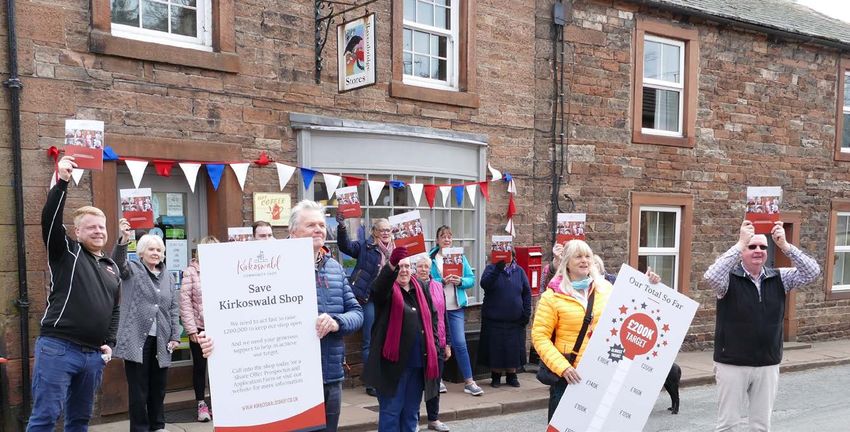
What is a community shop?

Since 1919, Plunkett Foundation has been advocating for communities
taking control of assets and services that are important to them, as a
means for delivering wider social, environmental and economic benefits.

A community shop does this by being owned and controlled by a large
number of people from within the community for community benefit.

Community shops are owned by their members         of paid staff and/or volunteers (a managed shop),
(also known as shareholders) and are run           or in a small number of cases, sublet to a tenant
democratically on the basis of one-member          who will operate the business within a framework
one-vote. Membership is voluntary, affordable      set by the community (a tenanted shop).
and open to all, and is the way to ensure the
                                                   Community shops often go beyond providing
community has a genuine say in how the business
                                                   basic retail provisions and provide a wide range of
is run. This is what gives community shops their
                                                   additional services such as post offices and cafés.
longevity. The active control and input by the
                                                   In addition, they become a hive of community
business’s members ensures it is continually
                                                   and voluntary activity, providing a focal point
adapting and serving the needs of its members
                                                   for community events and services. Community
and wider community.
                                                   shops actively promote inclusion and take care to
Once in community ownership, an elected            involve people of all ages and backgrounds and
committee or board represents the wider            particularly look out for those most vulnerable
membership and determines how the business is      in society. They play an active role in addressing
managed. The committee will either delegate the    isolation and loneliness through the creation of
day-to-day management of the business to a team    employment and volunteering opportunities.

                                                     Community Shops: A better form of business 2021     5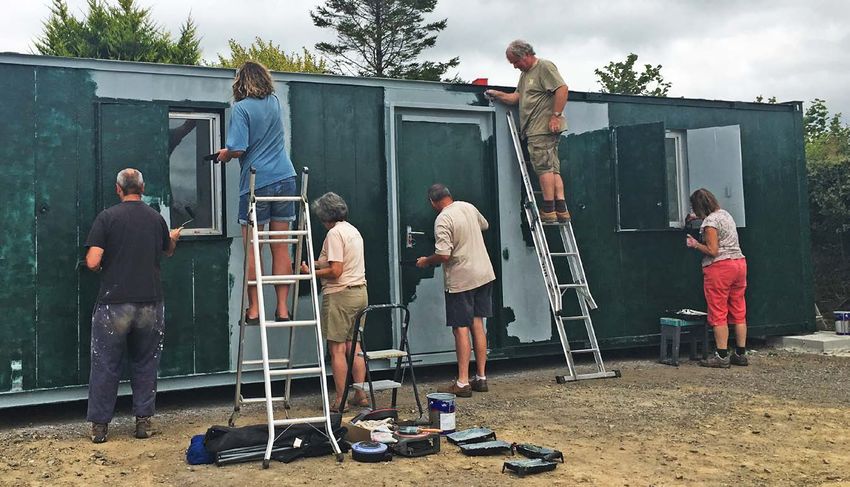
Community shops
      1 during the pandemic

                                                                                       is the Future,
                                                                                      T
                                                                                      Tisbury, is a
                                                                                      mobile refill
                                                                                      shop run by the
                                                                                      community, to
                                                                                      help shoppers
                                                                                      eliminate
                                                                                      single-use
                                                                                      plastic waste

Community shops have proven their value several      online shop; and organised prescription and food
times over during 2020. When supermarkets            deliveries for people who were self-isolating.
saw long queues and empty shelves, many              Being locally rooted gave these businesses an
communities turned to shopping more regularly at     advantage, as staff and volunteers were able to
their local shop. Community shops faced unique       quickly and easily identify those most in need.
challenges compared to other businesses, such
                                                     The success of community shops is testimony to
as shielding volunteers and disruption to supply.
                                                     the resilience of the communities that own and
Thanks to local support, their resourcefulness
                                                     run them. When volunteers had to shield in the
and their resolve to serve their communities, they
                                                     early stages of the pandemic, younger people or
have not only pulled through a challenging period
                                                     furloughed workers signed up to fill the shortage.
but have thrived. The overwhelming majority of
                                                     When wholesale deliveries failed to arrive,
community shops saw in an increase in demand
                                                     communities made use of their local networks to
and therefore trade during 2020.
                                                     find stock for their customers. Having once fought
As small businesses run for and by local people,     to save to establish their shop, most communities
community shops were quick to adapt to the           will remain committed in spite of enormous
changing situation. They restructured the layouts    obstacles to sustaining their service.
of their shops to include “order and collect”
                                                     Volunteers, management committees and staff
points or one-way systems to keep customers
                                                     went above and beyond to keep the community
safe; set up remote ordering by phone, email or
                                                     feeling connected and care for during successive

                                                       Community Shops: A better form of business 2021    6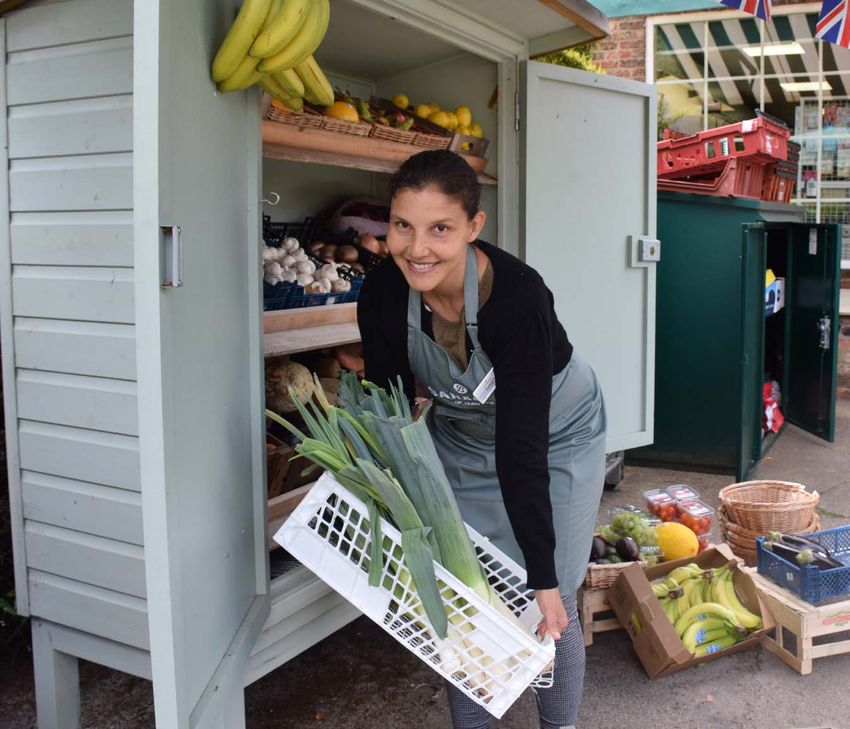
restrictions, with deliveries of care packages,
activity packs for families and socially distanced                        INSIGHT: KIRKOSWALD COMMUNITY SHOP
meet-ups. The cohesion and mutual care that a
                                                                          Kirkoswald in the Eden Valley, Cumbria, has
community business can foster has never been
                                                                          had a shop for over 100 years, serving locals
more keenly felt than in the last 18 months, and
                                                                          and tourists alike. When the shop went up for
this has only renewed the perceived value of
                                                                          sale in 2020, a group of determined residents
community shops.
                                                                          stepped in with ambitious plans to purchase
Although it remains to be seen whether the trend                          the shop on behalf of the community and
of shopping locally will continue, the outlook                            raised £200,000 in just seven weeks from a
for community shops looks positive. The sector                            small rural community.
continues to grow with a number of new openings,
                                                                          Following local and national media coverage
in spite of a year of disruption, and no closures
                                                                          donations came in from across the country
were recorded last year.
                                                                          and as far afield as Australia and Texas. The
It must not be overlooked that community shops                            shop now has over 600 shareholders and
had to deal with extremely difficult challenges last                      started trading under community ownership
year, such as fluctuation in volunteer numbers,                           in July 2021. It is a shining example of the
needing to furlough staff, insufficient space, and                        power of a determined community. Ruth
supply disruption. Although many saw an increase                          Anderson, Chair of the group, said: “We’ve
in trade, for some shops with cafés based in                              been totally blown away by the strength
tourist hotspots, 2020 resulted in a loss of income.                      of feeling about keeping it open and the
Even as we eventually leave behind the worst of                           community spirit. The shop was essential
the crisis, community shops will face ongoing                             during COVID-19 lockdowns when people
challenges. Volunteer recruitment, improving                              felt unsafe travelling to larger supermarkets;
profitability and sustaining turnover have always                         when the village was cut off by floods, it was
been key priorities in previous years. We hope that                       the only place people could buy food until the
this report will reinforce the value of community                         waters subsided.”
shops for its readers and engender even more
                                                                          “For many people, particularly during
support for this flourishing sector. The high
                                                                          COVID-19, coming to the village to do their
confidence that community shops have looking to
                                                                          shopping is perhaps the only time they’ve
the coming months gives us reassurance that their
                                                                          spoken to anybody all day because it’s very
hard-won success will continue for years to come.
                                                                          rurally isolated. It really is a lifeline.”

     Campaigners raised £200,000 in community shares to save their shop in Kirkoswald, Cumbria

1
    As the Kirkoswald Community Shop opened in July 2021, its share offer figures will be included in the 2022 Better Business report

                                                                           Community Shops: A better form of business 2021               7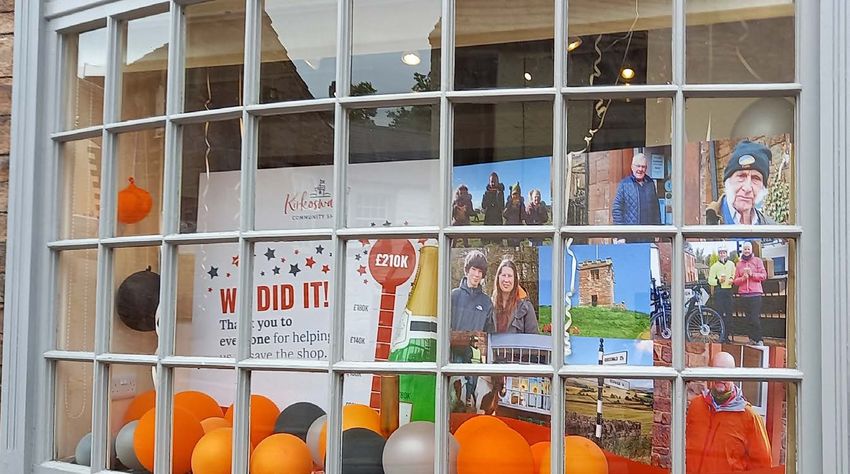
2 Growth in 2020
2.1 Sector size
In 2020, 13 new community shops opened, and 2020 demonstrates a consistently steady growth
no shops ceased to trade. There was a cumulative and shows a stability in the sector, in spite of
total of 392 community shops trading by the a challenging year. The long-term survival rate
end of the year. The number of openings in remains high at 92.5%.
FIGURE 2.1 CUMULATIVE TOTAL TRADING BY YEAR SINCE 1996 392
379
365
334 343
322
310
300 291
274
250 252
229
200 199
159
150 144
127
116
100 104
88
75
58 67
50 46 50
33 35
0
00
04
02
05
20
03
06
08
09
01
07
14
10
12
15
13
16
18
19
96
98
17
99
11
97
20
20
20
20
20
20
20
20
20
20
20
20
20
20
20
20
20
20
20
20
20
19
19
19
19
Source: : 2021 Plunkett Foundation Records
FIGURE 2.2 NUMBER OF COMMUNITY SHOPS OPENING BY YEAR FROM 1996
(EXCLUDES ANY SUBSEQUENT CLOSURES)
40 40
30 31 30
23 22 22
20 19
16 17 17
15 14 13
13 12 11 12 12
10 11
8 9 8 9
4
2 2
0
19 ore
96
96
97
98
99
00
01
02
03
04
05
06
07
08
09
10
11
12
13
14
15
16
17
18
19
20
f
20
20
20
20
20
20
20
20
20
19
20
20
20
19
19
19
20
20
20
20
20
20
20
20
20
be
Source: : 2021 Plunkett Foundation Records: includes seven shops previously unrecorded
Note: figures 2.1 and 2.2 have been updated to include seven shops that opened before 2020
and exclude any shops known to have passed out of community ownership.
Community Shops: A better form of business 2021 8
2.2 Regional distribution                                      he accessibility of other shops: whilst 91% of
                                                              T
                                                              shops surveyed in 2021 are within six miles of
The distribution of community shops continues to              another general store or supermarket, issues
show the highest density in South West England                such as infrequent public transport or other
with an overall bias to Southern and Central                  accessibility constraints may make a local
England and progressively lower densities in                  community shop more viable and attractive
English regions moving northwards, with low take-
                                                               ufficient community capacity and cohesion,
                                                              S
up in the North East. The distribution of openings
                                                              and the availability of enough volunteers to
in 2020 follows a similar pattern.
                                                              successfully set up and run a shop
Wales and Scotland have significant numbers
                                                               he extent to which external help and support
                                                              T
of existing shops. Northern Ireland still does not
                                                              is available and accessible (be this third sector,
appear to have embraced the community shop
                                                              public sector or other support).
movement on any scale.
                                                            The regional distribution of trading community
Existing data does not explain variations in these
                                                            businesses broadly correlates with the distribution
regional distributions but likely factors include:
                                                            of regions in relation to the enquiries received
   “cluster” effect: the existence of successful
  A                                                         from new groups. There is no evidence from
  and relatively local shops can stimulate other            our records to suggest that the success rate
  communities to set up their own shops                     of groups from enquiry to trading stage varies
                                                            across regions. This means that where there are
   ettlement patterns and population
  S
                                                            fewer enquiries from a region, there tend to be
  distributions: there needs to be sufficient
                                                            fewer trading community businesses. Further
  local critical mass in terms of a customer and
                                                            investigation is needed to determine why there is
  volunteer base
                                                            regional variation at enquiry stage.

                                                            2.3 New shops opening in 2020
FIGURE 2.3
                                                            Of the 13 new shops opening, seven offer Post
DISTRIBUTION OF COMMUNITY SHOPS
BY LOCATION                                                 Office services and five have café facilities. Eleven
                                                            of the 13 new shops opening in 2020 were set
                                                            up as Community Benefit Societies and ran share
Location                          Trading in          New   offers. For 11 shops where data was available, this
                                    2020 at      openings   resulted in a total of £328,055 raised as share
                                 the close of     in 2020   capital from over 1,800 new members.
                                    the year

South West England                         116         3    2.4 New activity
South East England                         84          4    Rural communities continue to show strong
                                                            interest in seeking to establish a community shop.
East of England                            49          2
                                                            62 groups looking to set up a new community
Scotland                                   36          1    shop made up 20% of all new enquiries to Plunkett
                                                            Foundation in 2020. Plunkett data shows that of
West Midlands                               27         0
                                                            all enquiries made, around 1 in 5 shop projects will
East Midlands                               21         1    go on to trading.

Wales                                      20          0

North West England                          18         0

Yorkshire & the Humber                      16         2

North East England                          4          0

Northern Ireland                             1         0

Total                                      392        13

Source: 2020 Plunkett Foundation records

                                                               Community Shops: A better form of business 2021      9
3 Business model

3.1 Legal structures                                     FIGURE 3.1
                                                         LEGAL STRUCTURES ADOPTED BY
One of the first decisions that a community              COMMUNITY SHOPS
group makes when setting up a shop is on its
legal structure. As community shops are trading                     2%                    12%
                                                                            4%
businesses that employ staff, manage volunteers and
enter into contracts and financial agreements, they
need to be constituted so that the individuals running          8%
the business have ‘limited liability’, and to ensure
they are compliant with legal necessities such as tax,
insurance, trading standards and employment rights.       4%

Plunkett recommends that community shops adopt
legal structures that enable genuine community
ownership with equal and democratic control. This
would include:
                                                                                                                  70%
  Open and voluntary membership

   management committee drawn from members
  A
  of the community

   he community clearly represented with the
  T
  majority of members coming from it and having a
  genuine say in how the business is run, preferably       Company limited by guarantee                           46
  with one member one vote
                                                           Community Benefit Society                          275
  Ideally, there should be an asset lock
                                                           Co‑operative Society                                   16
   rading should meet the community’s identified
  T                                                        Community Interest Company                             30
  needs and represent a long-term commitment
                                                           Unincorporated                                          8
   commitment to re-investing profits in the local
  A                                                        Other / unknown                                        16
  community.
                                                         Source: Plunkett Foundation from 390 available records
Legal structures which allow for this include:
Community Benefit Societies (CBS), Co-operative
Societies, Companies Limited by Guarantee, and
Community Interest Companies (CIC) and may also          3.2 Membership and shares
include a Private Company Limited by Shares if the
above criteria can be established. The Plunkett          The CBS model continues to be popular because
Foundation offers model rules for the CBS, and 10 of     it exists to benefit the wider and collective
the 13 new shops opening in 2020 were established        interests of a community and emphasises member
using these model rules. In general, the proportion      involvement. The benefits of having a larger
of shops using the different types of structure has      membership base include:
changed little since the previous year.
                                                            greater number of customers who are likely to
                                                           A
One major reason for the popularity of the CBS             use the business regularly
model is its democratic structure with a voting
                                                           A greater pool of people to call on as volunteers
membership. Having ‘invested’ members is one
positive means to foster community engagement               greater range of expertise to elect onto the
                                                           A
and support for community businesses.                      management committee.

                                                            Community Shops: A better form of business 2021             10
Candover Valley Store in Hampshire celebrated its first anniversary in June 2020
A small membership can leave groups vulnerable 3.3 Shop premises
when volunteer numbers reduce, or when the
original directors or committee members are no Community shops come in all shapes and sizes.
longer able or willing to serve. In 2020, five (38%) newly opened shops were
situated in existing shop premises taken over by
A cautious estimate of total members of community
the community, and four (31%) are in new builds.
shops currently trading (based on a projection
Undoubtedly the majority of community shop start-
of those where data is available) suggests that
ups are triggered by the closure of an existing shop,
67,000 people are members and have therefore
although community groups do not necessarily take
made a commitment to these enterprises that
over the old shop, due to the purchase price being
typically serve small rural communities (7% of shops
too expensive, or the premises too small. In 2020,
having no members but 93% have a membership
four shops opened in premises that have an existing
scheme, whether requiring some degree of financial
or previous purpose other than a traditional shop:
commitment or not). A majority of shops (61%) have
between 50 and 250 members. An equally cautious he Lion Corner Shop, Langenhoe opened
T
estimate of the value of community investment in on the site of the old pub (the Lion) that was
community shops (based on a projection of those demolished for terraced housing. Villagers put
where data is available) suggests a cumulative total together a business plan and a shop is hosted
investment of £7.5m to date by members of these on the ground floor of one of the new homes.
predominantly small rural shops / cafés / post offices.
olunteers from the St Dominick Community
V
Village Shop adapted an old cabin to suit their
needs.
FIGURE 3.2 he Minstead Community Shop operates from
T
COMMUNITY SHOPS:
the Trusty Servant pub.
MEMBER/SHAREHOLDER NUMBERS
he Minety Community Shop is based in the
T
56 committee room of Minety Village Hall.
46
43
33
22
20
17
12
9
0-50 51-100 101-150 151-200 201-250 251-300 301-350 351-400 400+
Source: Plunkett Foundation from 258 available records
Community Shops: A better form of business 2021 11FIGURE 3.3 The range of premises across these new businesses
COMMUNITY SHOPS: TENURE demonstrates the resourcefulness of rural
communities in finding space for their business
NUMBER OF SHOPS
where there are few local community assets
Purchased by the community remaining. Community businesses often combine a
shop with other business models, as is the case with
62 the Royal Oak in Stoke St Gregory, which is run by
Heart of the Village, and operates a shop alongside
Rented / leased by community at full market rent
the pub.
30
Peppercorn, other discounted rent or ground rent only
INSIGHT: HEART OF THE VILLAGE
32
(THE ROYAL OAK)
Rent free
In response to the closure of both the village
6 pub and shop in Stoke St Gregory, Somerset,
the residents rallied and decided to fundraise
Other
to buy the Royal Oak so that it could
7 accommodate both the community shop and
the pub.
Source: 2021 Plunkett Foundation community shops survey
from 137 responses Located in the village square, the Royal Oak
was seen as an essential building to maintain
a social hub for a relatively isolated village
community that could no longer provide
essential services to young families or older
residents.
FIGURE 3.4
COMMUNITY SHOPS: RENT Despite the difficulties of the pandemic, and
with a great deal of determined volunteers,
NUMBER OF SHOPS
the Heart of the Village community business
opened their community shop in November
No rent / not applicable
2020. Starting as a temporary ‘shop in a
53 box’ on the playing field, the business now
hosts a café, post office. Later in 2021, when
Up to £100 per month
COVID-19 restrictions allowed, their pub, the
16 Royal Oak, started trading too.
£101 - £200 per month Graham Gleed, volunteer committee member,
11 commented: “Our success is evidence of
everyone’s hard work. We started with a hope,
£201 - £400 per month rather than a plan, that we could save our
village’s shop and pub and bring new energy
7
and vibrancy to the village. Having both the
£401 - £600 per month shop, café and pub working together unites
our village – bringing people together that
6
would never normally meet.”
£601 - £800 per month
6
£800+ per month
3
Source: 2021 Plunkett Foundation community shops survey
from 137 responses
Community Shops: A better form of business 2021 124 Services and activities
Coffee being served at the Brent Knoll Community Shop, Somerset
4.1 Core products and services community shops were able to draw on their
network of local suppliers to get what was needed.
Community shops stock an enormous range of Alongside basic grocery and household goods,
products from essentials such as groceries and community shops stock fresh produce (fruit
household goods, local produce, ethically sourced and vegetables, milk, bread etc.), newspapers,
products, and ecologically sustainable products stationery, medicines, with a large proportion
such as refill services to reduce plastic waste. Many (over 80%) stocking fresh meat and freshly baked
of the shops will draw their stock from up to 20-30 goods. Other products not listed in Figure 4.1
suppliers (though this is very variable), tailoring include road fuel, kindling and logs, bird food,
their stock to the needs of their own community. plants and fresh flowers. The latest Plunkett
This adds to their diversity and resilience, and survey shows that almost 100% now say they
ensures that visiting a community shop will always stock locally-sourced products (under a fairly wide
be a unique experience. During the initial UK definition) – a useful pointer to the contribution
lockdown where many products such as flour they make to the local economy. Selling local
were in short supply, and wholesalers appeared to produce also creates a point of difference from
prioritise larger retailers over smaller businesses,
Community Shops: A better form of business 2021 13FIGURE 4.1
CORE PRODUCTS
Locally sourced produce
99%
Alcohol
87%
Newspapers
91%
Cards and stationery
96%
ustomers at the café in Candover Valley
C
Fresh meat Community Store
85%
Freshly baked goods 4.2 Café services
87%
Café facilities have been an increasingly popular
Medicines addition to community shops and even some of
the smaller shops manage to squeeze in a table in
88%
the corner, for people to come and have a cup of
Cigarettes and tobacco tea and a chat. This helps to increase footfall and
may improve profitability (café products generally
77%
having higher margins, although may incur higher
Crafts and gifts staff costs) as well as fulfil the shops’ social mission
71% of addressing isolation and loneliness. Cafés also
provide volunteering, work experience or paid
Environmentally friendly products employment opportunities for young people.
77% 31% (43) of shops responding to the survey
operate a café. Most community shop cafés tend to
Fairly traded products
offer a limited menu that generally means coffee,
63%
tea, and cake (these tend to be run by volunteers).
Other Some shops offer wider choice and generally
include dishes prepared on the premises including
22%
hot food.
Source: 2021 Plunkett Foundation survey from 137 responses
Note: respondents could select more than one option 4.3 Services introduced during
the pandemic
During the first months of the pandemic, and
the supermarkets, helps to engage the community through successive lockdowns, community shops
and can be proven to reduce food miles. introduced new services in response to the
Community shops also host a wide range of COVID-19 crisis. These included essential services
formal services, because they aim to support such as food and prescriptions deliveries for
their communities in every feasible way. In people who were self-isolating and shielding, free
addition to the core services shown in Figure 4.3, school meals, and “good neighbour” schemes to
additional services are offered, such as: charging support vulnerable people. Other services included
points for electric bikes, cars and mobile phones; online social events, plant swaps, and jigsaw and
refilling water bottles (ceased for a period during book lending. Many shops also implemented
lockdowns); collection/dropoff point for parcels; online or telephone ordering systems and
veg boxes; distribution point for village newsletter; customer accounts, to make shopping safer for
laundrette; defibrillator; ticket sales for local the most vulnerable residents with their orders
events; and collections for local charities. being processed remotely.
Community Shops: A better form of business 2021 14When asked whether they planned to sustain people returning to their studies, many community
these services, significant proportions of shops are facing the pre-pandemic issue of
community shops said they would. It should be volunteer recruitment and retention once again.
noted that many community shops offered key
The only service set to increase post-pandemic is
services such as prescription pick-up and delivery
the stocking of locally sourced products, with all
prior to the pandemic, and so it is unsurprising
respondents wanting to continue the new product
that they continue to be committed to supporting
lines they introduced in 2020 and some additional
their community.
respondents saying that they wanted to increase
Activities which were introduced in response to their range in future. This demonstrates the
self-isolating residents are noticeably among important role community shops can play in the
those least likely to be continued, as the vaccine re-localisation of the supply chain and creating a
rollout has reduced the need for shielding. more robust food system in the UK.
Delivery and “good neighbour” schemes are also
heavily reliant on volunteers, and so with the return
to work for workers from furlough and young FIGURE 4.2
COMMUNITY SHOPS ESTABLISHING
NEW COVID-19 SERVICES AND PLANS
TO SUSTAIN THEM
INSIGHT: DUNSHALT COMMUNITY SHOP
Takeaway food / drink
Dunshalt Community Shop and café opened in
Fife only a few weeks before the pandemic and 15
the first lockdown restrictions were imposed. 11
Instead of an adverse effect the committee,
staff and volunteers were busier than ever. Good neighbourhood schemes
to support vulnerable individuals
Alison Crook, Treasurer of the Dunshalt 40
Community Shop, said: “First we closed the
café, just hours before the national lockdown, 62
we closed the doors of the shop and moved Prescription deliveries
to free home delivery service to Dunshalt and
13
surrounding villages. With local suppliers we
were able to supply food in the community 19
when supermarkets were struggling to keep
Added locally sourced products
their shelves stocked. Volunteer drivers and to meet increased demand
village teenagers delivered on foot. We also
58
did a prescription pick-up service and provided
free packed-lunches for struggling families 55
through a voucher-scheme.
School meals
When lockdown eased we re-opened the shop 2
with takeaway food and it has been doing a
3
great trade ever since. I love that it proves
social enterprise works – profit does not have Online / remote ordering / home delivery
to make the world go around.”
55
The community shop means everything to our 76
village; less travel, great local produce, the
essentials within a five-minute walk and for Virtual / online social events or activities
the morale of the village of course. We were 7
so grateful to have the shop during lockdown.
10
Due to our home deliveries, and being there
when people needed us the most, we now Other lan to sustain
P
have an abundance of loyal customers – post COVID-19
8
people from near and far that visit our shop.” OVID-19
C
13 specific services
Source: 2021 Plunkett Foundation community shops survey
from 137 responses
Community Shops: A better form of business 2021 154.4 Effects of COVID-19 on FIGURE 4.3
CORE SERVICES OFFERED PRE-COVID-19
existing products and services AND PLANS TO SUSTAIN THEM
Products Access to a computer
15
Although many shops did experience supply 13
issues at the beginning of the first UK lockdown Free WiFi
in 2020, many were able to adapt quickly, e.g. by 61
using local suppliers, doubling up on orders, even 63
in some cases arranging to buy stock from local Book / DVD exchange
supermarkets. In response to the 2021 survey, 43
91% said that they did not experience “major 43
supply issues” during the pandemic. Despite the Community information board
initial scramble to source certain products that 107
106
were in short supply, it seems that the majority
of community shops responding to the survey Home delivery
50
felt that they were able to cope with short-term 73
shortages. 40% of responding shops stocked new
Prescription collection
local product lines to meet the increased demand.
23
All 115 shops (84% of respondents) who saw an 24
increase in demand were able to partially or wholly
Dry cleaning
meet that demand (13% and 87%). 53
49
However, it was evident at the focus groups that for
some shops supply issues are longer-term and even Photocopying / printing
43
pre-date the pandemic. For example, profit margins 41
are being squeezed due to rising wholesale prices,
Driver service
or stock deliveries are still not being fulfilled, with
6
some wholesalers citing lack of pickers and drivers 7
as a reason for delays in deliveries.
Collect point for parcels
Broadly speaking it seems from survey responses 40
36
that the range of products stocked by community
shops will not change as a result of the pandemic, Post Office services
73
although some shops may try to increase stock or 63
local product lines.
Cash back at till
60
Services 52
In our 2021 survey, we asked community shops Cash machine
which services they had offered before March 9
7
2020, and which services they planned to
continue as life begins to return to normal. The Bill payments
33
intention was to establish whether the range umber of shops
N
31
of services offered by community shops in the offering service
Social events
long term would change substantially due to pre-COVID-19
36
the pandemic. Although figures vary from 2021 31 umber of shops
N
survey findings, there are some changes evident – offering service
Recycling centre
most variations from 2020 are explainable by the 36 post-COVID-19
different sample responding to the survey rather 38
than any trend. However: Refill scheme
22
here is evidence of a very modest
T
28
rationalization of some services planned for
Other
post COVID-19. The enormous upheaval of
12
re-organising the shop space and activities has 6
put many shops in a position to reconsider their
Source: 2021 Plunkett Foundation community shops survey
current offering. The list in Figure 4.3 gives an from 137 responses
Community Shops: A better form of business 2021 16overview, but probably understates the true in the summer of 2021, some shops in tourist
diversity of services provided by shops. hotspots experienced a huge rebound in café
trading (one focus group participant described
ne of the more significant reductions is in the
O
demand as “overwhelming”). This was of course in
offer of cash back at the till, which may be a
part dependent on nearby tourist accommodation
reflection of increasing usage of contactless
re-opening, which happened at differing dates
card payments and an accelerated reduction in
across the UK.
the use of cash during the pandemic. However,
at the focus groups many shops stated that
they remained committed to accepting cash, to 4.5 Post Office services
remain accessible to all customers.
According to Plunkett records, 204 community
here is a more surprising reduction in shops
T shops run or host a post office (52% of all
planning to sustain post office services, community shops). Figure 4.5 shows a breakdown
which again may be a reflection of a wider of Post Office models, with a Community Post Office
shift to online access, or may be a result of (i.e. legacy agreement) being the most common.
the challenges of running a post office in a 54% of new shops opening in 2020 (7 of 13) run or
community shop (such as limited space and host a post office.
staff capacity).
This year Plunkett ran a focus group for
ore shops intend to introduce environmentally
M community businesses operating post offices,
friendly initiatives, by installing refill dispensers to understand the benefits and challenges of
and recycling points. providing this service. Building on our research
Cafés
43 shops (31% of all respondents) previously FIGURE 4.4
offering café services reported COVID-19 changes COMMUNITY SHOPS: POST OFFICE MODELS
as follows:
7 closed completely (some reported that
1
2% 8%
operating takeaway only was financially
unviable)
8 offered takeaway services and reopened for
1
outdoor services when allowed by government
8 offered takeaway only.
22%
In terms of the impact of the closure of the café
45%
on profitability,
42% (18) reported no impact
33% (14) reported some impact
12% (5) reported substantial impact
% (3) were not sure (a further three did not
7 23%
provide a response).
In most cases, impacts on overall profitability of
the business were minimal (with a few exceptions),
Community 91
for example because:
Outreach 47
Increased shop sales more than compensated.
afé services were modest prior to the
C Local 45
pandemic in comparison to shop trade.
Mobile 4
As places for people to get together and meet,
cafés are often operated for their social benefit Other / type not known 17
rather than their income-generating potential.
However, due to the surge in domestic tourism Source: Plunkett Foundation from 204 available records
Community Shops: A better form of business 2021 17last year, we received confirmation from attendees manage their financial performance and monitor
that post office services were considered a vital stock levels. This is broadly consistent with
community asset, even when these did not previous years.
noticeably contribute to profitability. Although
During COVID-19, some shops took advantage
it has been suggested that having a post pffice
of their EPOS capabilities to set up accounts
might increase customer footfall to the shop,
and store cards which, combined with email or
attending shops had mixed opinions about
telephone ordering, meant that customers could
whether this actually translated into increased
shop easily and without physical contact, settling
sales. In some cases, shops even subsidise post
their shop bills at the end of the month. Having to
office activities with revenue from the shop.
rapidly train new volunteers to use EPOS during
The main challenges beyond covering the costs of lockdown showed the necessity for easy-to-use
running the services are: systems for community shops.
raining part-time staff and volunteers on a wide
T
range of services
INSIGHT: DRYSLWYN COMMUNITY SHOP
Insufficient space for parcels or a second counter AND POST OFFICE
he technologies are difficult to use and prone
T
to errors
he frequency of outreach or mobile services is
T
limited and not always reliable.
To improve on these challenges, participants
suggested enhancing technical support (e.g.
through a live online chat), and having the option
to select some services in the Post Office Local
model based on local need.
However, almost all participants agreed it is
worthwhile to continue their post office, because
of the valuable services it provides to the
community – such as access to cash, banking,
and parcel services. Having a post office can also Simon Fraser is a long-serving volunteer of
support the local economy, acting as a banking the Dryslwyn Community Shop & Post Office
service for small businesses and reducing the in Carmarthenshire, Wales. He is a mainstay
need to travel long distances to deposit cash at of the Post Office and is known by the rest of
a bank branch. In the context of increased bank the volunteer committee as “Our enormously
branch closures during the pandemic, and an valued Mr Fixit”. He is also on the delivery
increase in using parcel services, having a local team helping customers who were self-
post office has come to be seen as more valuable isolating during the pandemic and is one of
than ever. the shop’s volunteer Directors too.
“My volunteering at Dryslwyn is led by my
4.6 Use of EPOS strong belief in community. I love having the
opportunity of meeting and helping our local
A key tool to aid financial and stock management community. It’s important to me that we offer
is an EPOS (Electronic Point of Sale) system, which daily essentials and that includes fellowship,
can assist with: assistance, sympathy and concern. We’re a
t racking sales and turnover figures, and trends common location for common good.”
in sales Dryslwyn Shop is entirely run by volunteers
onitoring stock levels to help avoid holding
m and is a lifeline to many villagers. Its
excess stock, thus tying up too much capital commitment to serving its community,
particularly during the pandemic, was
recording wastage in detail. celebrated with the recent Queen’s Award
78% of responding shops have an EPOS system, for Voluntary Service – the highest accolade
the majority of whom (90%) use it to review and achievable by a voluntary group.
Community Shops: A better form of business 2021 185 People
Volunteers painting a cabin to be used as the St Dominick Community Shop in Cornwall
5.1 Management model 5.2 Employed staff
The majority of community shops are managed The popularity of employing at least one member
directly by the community through a management of staff is most likely due to the continuity it
committee elected by the members, with a very gives to shop administration and ordering, and
small percentage managed by a private tenant – also because the complexity of the workload can
in the 2021 survey only one of the responses appear challenging to run via volunteers alone.
came from a tenanted shop. As well as overseeing
The 2021 Plunkett Foundation survey response
the business’s strategic direction and financial
shows 60+ full time employees and approximately
performance, the management committee also
350+ part time employees giving a full-time
recruits staff or volunteers, or a combination of the
equivalent (FTE) employment figure of
two, to handle the day to day running of the shop.
approximately 160+ from the 111 responding
From 368 available Plunkett records: shops employing staff.
29 (89%) are managed by paid staff, with
3 Although crude, assuming that some 5% of
volunteer support community shops are run solely by volunteers
and that those employing staff are broadly
19 (5%) are managed by a tenant
consistent with the survey sample, this suggests
7 (5%) are managed by volunteers, without
1 that community shops are employing 180+ full
paid staff time staff and 1000+ part time staff (on a cautious
estimate) which amounts to some 400-425 full-
(1%) are managed by paid staff, without
3
time equivalents.
volunteer support.
Community Shops: A better form of business 2021 19This is an increase on last year which is 5.3 Volunteers
unsurprising and is largely explainable by the fact
that the sector is growing, we have better data, Volunteers are a key strength of the community
and we have identified more community shops shop sector, boosting the shops’ viability by
open prior to 2020. lending their skills, keeping costs down and
spreading the workload to manageable levels,
Whatever the caveats, these findings remain
enabling the businesses to focus on growth
impressive, given that most community shops
and development. They also add to the friendly
operate in small rural places and are a significant
and community-focused nature of the shop
source of employment – and that is before taking
environment. This research does not quantify the
into account any impact from sourcing and
value of volunteer input, but if translated into an
selling locally sourced products, which will also
equivalent staff cost even at the minimum wage,
have a positive impact on the local economy and
it would render many community shops unviable.
available employment.
Based on 368 available Plunkett records, 95% of
We did not repeat previous years’ analysis of the community shops are supported by volunteers, of
provision of work and volunteering experience for which 5% are solely run by volunteers.
young people but have no reason to doubt that
On a rough projection from 137 survey
this was sustained. On average, each community
respondents (of which 129 rely at least to some
shop benefits an estimated average of 3-4 young
degree on volunteers) for the full population of
people through employment, work placements
community shops (adjusted down proportionally
or volunteering experience.2 COVID-19 may even
for those not engaging volunteers) this suggests
have enhanced the engagement of young people,
a figure of 7000–7500 volunteers. For the
for example through volunteering (see section
majority of shops using volunteers, this represents
5.4), even if formal schemes were disrupted by
an average of 20-25 volunteers per shop – an
the pandemic.
impressive figure.
27 responding shops employed new staff during
Reassuringly, this is broadly comparable to last
2020. A small number did this for reasons not
year’s figures, but as community shops continue
related to the pandemic, but most did this to
to grow as a sector, the calculation suggests a
meet increased demand or to backfill volunteer
modest increase in the numbers.
numbers dropping, e.g. due to shielding. Typically
shops took on one or two part time or full-time In the 2021 survey, only 6% of shops surveyed
staff with a small number taking on more part time had no volunteers, while 81% reported volunteer
employees. numbers of between 1 and 30. A detailed
breakdown is available in Figure 5.1.
FIGURE 5.1
VOLUNTEERS WORKING IN SHOP/CAFÉ PER WEEK
0 8
NUMBER OF VOLUNTEERS
1-10 40
11-20 46
21-30 24
31-40 12
40+ 7
NUMBER OF SHOPS
Source: 2021 Plunkett Foundation Community Shops survey from 137 responses
2
Based on a sample of 102 community shops in a 2020 Plunkett survey
Community Shops: A better form of business 2021 20In addition to ‘front-line’ volunteers, a large
easonal products
S
majority of the shops surveyed reported they had
at Itteringham
several volunteers working behind the scenes (this
Community Shop,
could be assistance with marketing, accounting,
Norfolk
driving to cash-and-carry, home deliveries,
merchandising, maintenance etc.). With figures
matching previous years’ findings, the majority
(74%) had 1 to 10 ‘back-room’ volunteers, while
9% had more than 10.
Community shops also rely on volunteers at
committee/board level. The management
committees, which generally have between 5
and 10 members, are responsible for strategic
direction, financial oversight, fulfilling fiduciary
duties, staff employment, coordinating volunteers
and troubleshooting, as well as carrying out their
obligations to their members/shareholders, such
as newsletters, annual reports and meetings.
5.4 COVID-19 effects on staff
and volunteers
107 (78%) community shops that responded
to the survey stated that they had recruited
new volunteers in 2020. Whilst under normal
circumstances there is a typical pattern whereby
some volunteers cease to engage with the shop
and others are recruited, the higher numbers
involved in 2020 for a significant proportion of
shops appear to be above the normal annual
New volunteers worked on a wide range of tasks,
pattern. This increase was due to people on
although a significant number were specifically
furlough or young people unable to attend school,
tasked with the introduction of ordering and
college or work volunteering to cover older or more
delivery services, and packing food parcels for
vulnerable volunteers that were shielding or were
people who were self-isolating. Sourcing of goods
not as confident in working during the pandemic.
and suppliers was an important volunteer task and
The table below illustrates the numbers involved: some shops reported permanently improved stock
ranges due to this massive effort.
As the lockdown eased, so those new volunteers
Number of new volunteers Number of started to leave to return to their normal lives,
joining in 2020 shops in and the regular volunteers, some of whom had
band clamoured to come back, started arriving when
they felt safe to do so.
1-5 47
Despite the majority of community shops being
6 - 10 29 able to replace existing or recruit new volunteers,
from the focus group discussions it was evident
11 - 20 16
that there are once again issues with volunteer
20 - 40 8 recruitment and retention as life begins to return
to normal in 2021 (see also section 8). The fact
40+ 5 the overall figures of volunteers (as shown in
No response / not applicable 32 Figure 5.1) did not change substantially in 2020
compared to previous years is evidence of this.
Community Shops: A better form of business 2021 21A new volunteer at Barkers of Huby in North Yorkshire
Attendees of the focus groups expanded on asked to estimate how many additional hours were
ways of dealing with this, e.g. offering flexible worked by management committee members
shift rotas and adjusting opening hours being during the pandemic, survey respondents
two such examples of action taken. Some understandably found it extremely difficult to
shops commented that with the return of in- quantify this. Of the 137 responding shops, 126
person community events, engaging committed estimated the number of weekly hours put in by all
volunteers might become easier than it was when committee members, with wide variations, but a
done solely through social media. crude average would be 23 hours per week. Only
78 shops provided an estimate of the number
Additionally, due to the extra burdens and
of additional hours worked, which (albeit with
responsibilities experienced during the pandemic,
wide variations) came to a rough average of 31
volunteers, committee members and paid staff
additional hours per week. Based on this, we may
were put under greater physical and mental strain.
crudely estimate that management committee
They coordinated and carried out new crisis-
members worked 134% more hours during the
response services, adapted existing activities to be
COVID-19 crisis.
carried out remotely, and generally looked out for
members of their community. 28 (20%) of shops recorded that they had
furloughed staff during the COVID-19 outbreak,
Volunteer fatigue may be a contributing factor to
and the balance 109 (80%) did not. No responding
concerns around retaining volunteers, particularly
shops found the furlough scheme challenging.
as management committee members. When
Community Shops: A better form of business 2021 226 Impact
Community businesses, as locally rooted and
accountable enterprises, are able to adapt quickly
to the changing needs of their communities.
In rural areas, they may be the last remaining
community asset offering vital services and a
space for local people to come together. In their
response to the COVID-19 crisis, community
businesses have been critical in contributing to
the resilience of their local community. Beyond
the pandemic, community businesses offer a way
of building a fairer economy centred on people,
the environment and local benefit.
6.1 Community cohesion
and wellbeing
The presence of a community shop can lead to
increased local engagement and participation,
encouraging mutual support and care within the
community.
Community shops significantly reduce isolation and
poor mental health by providing opportunities for
involvement, such as through volunteering or social
activities. Even having a regular chat with someone
at the till can make all the difference to someone’s
mental wellbeing. For some, the shop is their only
social point of contact. Research published by the
Association of Convenience Stores suggests that
39% of customers know the people running their
local shop quite well or very well. Even the 36%
of customers who did not know them well would
still occasionally have a conversation with them.3
It is likely that these figures will be even higher at
community shops, as they are socially inclusive and
locally rooted businesses.
When we consider that ONS (Office of National
Statistics) figures show that from October 2020 to
February 2021, around 7.2% of the adult population
(3.7 million people) were ‘often’ or ‘always’ lonely,4
community shops have an important role to play.
This is the case particularly in rural areas, where
3
he Local Shop Report 2021, Association of Convenience Stores, September 2021. https://www.acs.org.uk/research/local-
T
shop-report/
4
pinions and Lifestyle Survey by the Office for National Statistics, published April 2021. https://www.ons.gov.uk/
O
peoplepopulationandcommunity/wellbeing/articles/mappinglonelinessduringthecoronaviruspandemic/2021-04-07
Community Shops: A better form of business 2021 23a shop may be the last remaining business or communities. Deprived areas which lack these
community space in the village and also for many assets have higher rates of unemployment, ill
surrounding areas too. health and child poverty than other deprived
areas. And they appear to be falling further behind
Volunteering has benefits for a diverse range
them.’5 Social infrastructure, like community
of people. It can offer people from all ages and
shops, cafés and pubs, can make an enormous
backgrounds an opportunity for young people
contribution to a community’s resilience in the
to develop a sense of purpose and improved
face of a crisis.
confidence. Volunteering is also a route into
community involvement for newcomers and
those who have suffered bereavement, illness or 6.2 Boosting the local economy
redundancy, or need to find a way to interact
with others. Community shops are a resilient form of business
that can help regenerate the local economy by:
During the pandemic, community shops acted as a
conduit for collective action. Volunteers (and staff) tocking products and using services from local
S
are generally local, so they are immediately aware suppliers
of anyone in the community needing support. This Improving access to other local services
has proved invaluable during the COVID-19 crisis.
Creating local employment opportunities
Research by OCSI (Oxford Consultants for Social
Inclusion) commissioned by the Local Trust aising money for local charities either through
R
suggests that ‘a lack of places to meet’ is a fundraising or surplus profits
contributing factor to communities becoming ncouraging collective investment via community
E
‘left-behind’, and compounds issues such as ‘the shares in the local economy.
absence of an engaged and active community’
and ‘poor connectivity to the wider economy – There are multiple examples of communities adding
physical and digital’. The presence of community to their community business “portfolio” by tackling
assets can ‘make a significant difference to another local need or opportunity – after discovering
social and economic outcomes for deprived they can set up and run their shops, several
5
eft behind? Understanding communities on the edge, Local Trust, August 2019. https://localtrust.org.uk/wp-content/
L
uploads/2019/08/local_trust_ocsi_left_behind_research_august_2019.pdf
Community Shops: A better form of business 2021 24communities have been inspired into collective community shop provides these services in the
action to save their pubs or other critical assets. absence of any other nearby business offering
On Plunkett’s records there are 16 rural settlements them. 42% of community shops responding to
that have more than one community business. the survey said that their nearest general store or
supermarket was more than 5 miles away.
6.3 Provision of critical products Even during successive lockdowns, many
community shops remained opened where
and services possible, or operated using order and collect where
In measuring impacts Plunkett has found that, the premises was too small, in order to continue
almost without exception, wherever there is a serving their community. Participants at the focus
community business, there has been increased groups commented that their local residents often
provision of necessary products and services. felt safer shopping at their local shop, because they
These include: felt reassured that the business was doing all it
could to ensure customers’ safety.
ffordable essential items such as fresh fruit and
A
vegetables, household items, fuel, and stamps
6.4 Employment and
place to meet and specific support for young
A
people, families, older people, low income preparation for work
households, people with disabilities or long-term
Community shops have an excellent record
health conditions
in creating rural employment opportunities
ey services such as cash withdrawal, post office,
K and offering training opportunities to staff and
deliveries, bill and utilities payment, food and volunteers. With cautious estimates being
household supplies, defibrillator, laundrette, extrapolated from the latest survey data, the
prescription pick-up and delivery, access to 392 shops offer:
health services or pop-up clinics
400-425 full-time equivalent roles
community café, garden, or meeting space for
A
Around 7,500 volunteering positions.
local clubs and societies.
These are impressive statistics as they are driven
All of these services can contribute to a better
by community-based businesses rather than
quality of life and improved wellbeing. Often, the
through government employability programmes.
FIGURE 6.1
COMMUNITY SHOPS: DISTANCE FROM NEAREST GENERAL STORE OR SUPERMARKET
9%
19%
NUMBER OF SHOPS
0 -2 miles 26
33%
3 -4 miles 53
5 -6 miles 45
Over 7 miles 13
39%
Source: 2021 Plunkett Foundation community shops survey from 137 responses
Community Shops: A better form of business 2021 25You can also read


