Comprehensive School Safety
←
→
Page content transcription
If your browser does not render page correctly, please read the page content below
Comprehensive
School Safety
A global framework in support of
The Global Alliance for Disaster Risk Reduction and Resilience in the Education Sector
and The Worldwide Initiative for Safe Schools,
in preparation for the 3rd U.N. World Conference on Disaster Risk Reduction, 2015
Purpose
This framework provides a comprehensive approach to reducing                  The CSS framework is intended to advance the goals of the
risks from all hazards to the education sector. The past decade has           Worldwide Initiative for Safe Schools and the Global Alliance
brought children’s advocates together:                                        for Disaster Risk Reduction and Resilience in the Education
•   To promote disaster risk reduction (Hyogo Framework for                   Sector, and to promote school safety as a priority area of
    Action 2005-2015) throughout the education sector along with              post-2015 frameworks for sustainable development, risk
    education for sustainable development (International Decade for           reduction and resilience.
    Education for Sustainable Development)
    To assure universal access to quality basic education in a safe
                                                                          The Goals of
•
    environment (Millennium Development Goals, Education for

                                                                          Comprehensive
    All, Global Partnership for Education, Education First, Global
    Coalition to Prevent Education from Attack).

                                                                          School Safety
•   To incorporate risk reduction into Millennium Development Goals
    for education.
At the core of these child-centered, child-participatory,
and evidence-based efforts is the recognition of children’s
rights to survival and protection as well as to education and
                                                                          The goals of comprehensive
participation.                                                            school safety are:
The purpose of this Comprehensive School Safety Framework                 •    To protect learners and education workers from death, injury,
is to bring these efforts into a clear and unified focus in order              and harm in schools
for education sector partners to work more effectively, and to
                                                                          •    To plan for educational continuity in the face of all expected
link with similar efforts in all other sectors at the global, regional,
                                                                               hazards and threats
national and local levels.
                                                                          •    To safeguard education sector investments
                                                                          •    To strengthen risk reduction and resilience through education

The Three Pillars of
Comprehensive School Safety
Comprehensive school safety is addressed by education policy and practices aligned with
disaster management at national, regional, district, and local school site levels.
It rests on three pillars:
1. Safe Learning Facilities
2. School Disaster Management
3. Risk Reduction and Resilience Education
Multi-hazard risk assessment is the foundation for planning for Comprehensive School Safety. Ideally, this should be part of
Educational Management Information Systems at national, subnational, and local levels. It is part of a broader analysis of education
sector policy and management in order to provide the evidence base for planning and action.
c tor Policie
                                 Se             sa
                              on                  nd
      a                     ti                                  • Safe site selection
                                                                  • Building codes
                                                             • Performance standards
                                                             • Disaster resilient design

                                                                                                                            Pl
    uc
                                                        Pillar 1.
                                                 Safe Learning Facilities

                                                                                                                              an
  Ed

                                                                   • Builder training
                                                              • Construction supervision

                                                                                                                                s
                                                                    • Quality control
                                                                     • Remodelling
                                           • Building                    • Retrofit       • Structural safety
                                              maintenance                                      education
                                                 • Non-structural                 • Construction as
                                                    mitigation                       educational
A l ig n e d t

                                                                                                                                            la ns
                                                                                      opportunity
                                                       • Fire safety
                           • Assessment & Planning                                                     • Formal curriculum
                   • Physical & Environmental Protection                                             integrations & infusion
                        • Response Skills & Provisions                • Household            • Teacher training & staff development

                                                                                                                                      ent p
                                                                      disaster plan
                      Pillar 2. School                                  • Family                         Pillar 3.
                 Disaster Management reunification                                         Risk Reduction and
                                                                           plan           Resilience Education
                       • Representative/participatory
               on

                                                                        • School

                                                                                                                                      em
                                SDM committee                                                 • Consensus-based key messages
                                                                           drills
                        • Educational continuity plan                                      • Extracurricular & community-based
                      • Standard operating procedures                                                 informal education
                  at i

                                                                                                                               ag
                            • Contingency planning
                       on

                                                                                                                          an
                       l,
                          a

                              su                          • multi-hazard risk assessment
                                                                                                                     m  r
                                   bn                                                                           s te
                                                             • education sector analysis

                                        at i o        • child-centred assessment & planning
                                                                                                            a
                                                    n al a n d lo cal dis

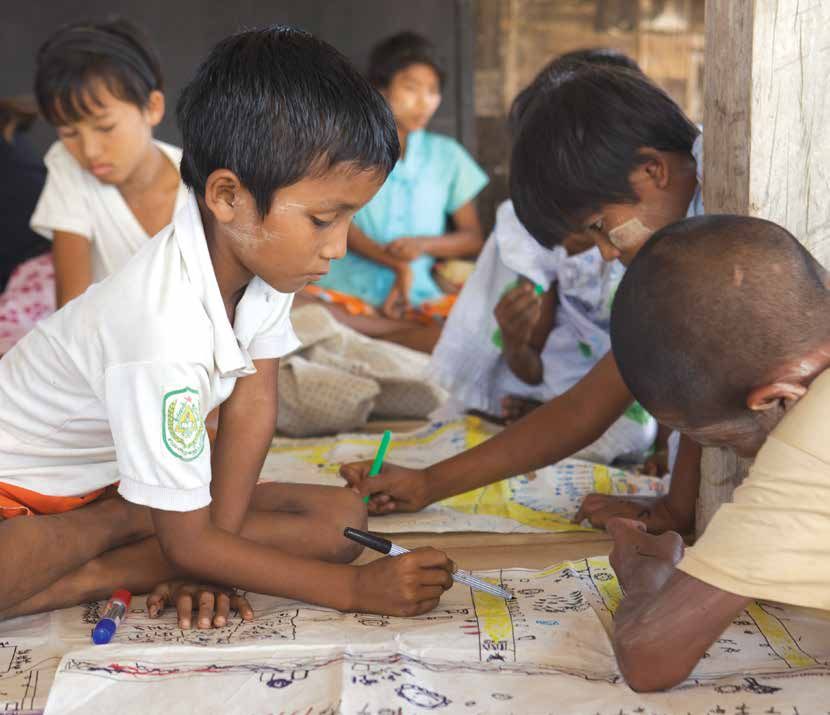
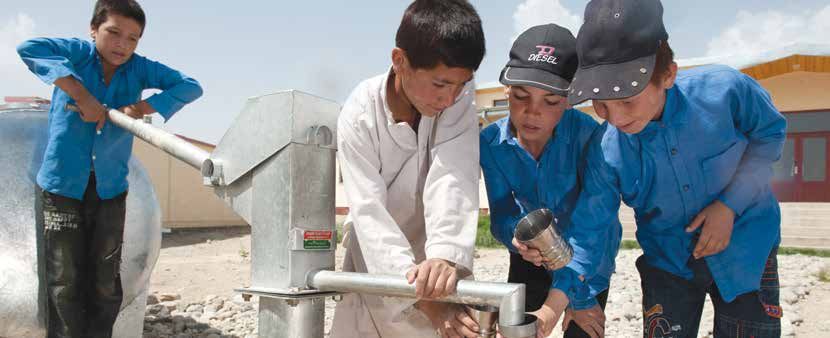
                                                                                                                                                    Photos: Save the Children, Conor Ashleigh/Save the Children, and Plan International
Three Pillars of Comprehensive School Safety
1. Safe Learning Facilities involves education authorities, planners, architects, engineers, builders, and
school community members in safe site selection, design, construction and maintenance (including safe
and continuous access to the facility). The key responsibilities for both public and private schools are to:
• Select safe school sites and implement disaster-resilient design • Ensure that children’s access to schools is free from physical
and construction to make every new school a safe school. risks (eg. pedestrian paths, road and river crossings).
• Implement prioritization schema for retrofit and replacement • Adapt water and sanitation facilities to potential risks
(eg. including relocation of unsafe schools). (eg. rain-fed and lined latrines).
• Minimize structural, non-structural and infrastructural • Implement climate-smart interventions to enhance water, energy
risks to make buildings and facilities for survival and evacuation. and food security (eg. rainwater harvesting, solar panels,
• Incorporate access and safety for people with disabilities renewable energy, school gardens).
in design and construction of school facilities. • Plan for continuous monitoring, financing, and oversight for
• If schools are planned as temporary community shelters, design ongoing facilities maintenance and safety.
them to meet these needs, and be sure to plan for suitable
alternate facilities for educational continuity.
2. School Disaster Management is established via national and sub-national education authorities and
local school communities (including children and parents), working in collaboration with their disaster
management counterparts at each jurisdiction, in order to maintain safe learning environments and plan
for educational continuity, conforming to international standards. The key responsibilities are to:
• Establish national and/or sub-national level committee and full- • Establish national and sub-national contingency plans, based on
time focal point(s) leading comprehensive school safety efforts. the Interagency Network for Education in Emergencies (INEE)
• Provide policies, guidance at sub-national and school-site Minimum Standards (2010), to support educational continuity,
levels for ongoing site-based assessment and planning, risk including plans and criteria to limit the temporary use of schools
reduction, and response preparedness as part of normal school as temporary shelters.
management and improvement. • Identify alternate locations for temporary learning spaces and
• Develop, train, institutionalize, monitor and evaluate school alternate modes of instruction
committees. These should be empowered to lead identification • Incorporate the needs of pre-school and out-of-school
and mapping of all hazards inside and outside school and children, children with disabilities, and both girls and boys.
community and action-planning for ongoing risk reduction • Link education sector and disaster management sector,
and preparedness activities. Encourage participation of staff, and public safety policies and plans at each level of social
students, parents and community stakeholders in this work. organization (national, sub-national levels, and local and school-
• Adapt standard operating procedures as needed, for hazards site level) and establish communication and coordination linkages
with and without warnings, including: drop cover and hold, across sectors.
building evacuation, evacuation to safe haven, shelter-in-place • Practice, critically evaluate, and improve on response
and lockdown, and safe family reunification. preparedness, with regular school-wide and community-linked
• Engage schools in making early warning and early action simulation drills. Adapt standard operating procedures to specific
systems meaningful and effective. context of each school.
3. Risk Reduction and Resilience Education should be designed to develop a culture of safety and
resilient communities. Key responsibilities are to:
• Develop consensus-based key messages for reducing • Develop quality teaching and learning materials for students and
household and community vulnerabilities, and for preparing for teachers. Address all dimensions of climate-smart risk reduction
and responding to hazard impacts as a foundation for formal and education: disaster mechanisms, key messages for safety and
non-formal education. preparedness, understanding risk drivers and mitigating the
• Engage students and staff in real-life school and community consequences of disasters, building community risk reduction
disaster management activities, including school drills for fire capacity and a culture of safety and resilience, and learning to live
(and other hazards, where applicable). together.
• Develop scope and sequence for teaching about critical thinking • Provide teacher training for both teachers and teacher trainees on
for all hazards. risk reduction curriculum materials and methodologies.
• Infuse risk reduction throughout the curriculum and provide • Develop strategies to scale-up teacher involvement for effective
guidelines for integration of risk reduction and resilience into integration of these topics into formal curriculum as well as non-
carrier subjects. formal and extra-curricular approaches with local communities.Interpreting the Hyogo Framework for Action
2000-2015 for the Education Sector
It will be a priority to make sure that disaster risk reduction in the education sector is a priority in
the HFA2 process.
Strategic Goals for the Education Sector
1. Integrate risk reduction and resilience into sustainable development policies and practices in the education sector.
2. Develop and strengthen institutions, mechanisms and capacities to build resilience to hazards and threats in the education sector at
national, sub-national and local levels.
3. Systematically incorporate risk reduction approaches into the implementation of emergency preparedness, response and recovery
programmes in the education sector.
Priorities for Action Indicators for the Education Sector
1. Ensure that disaster risk 1. Policy and legal framework for disaster risk reduction exists with decentralized responsibilities
reduction and resilience and capacities in the education sector at all levels.
are priorities with a strong
2. Dedicated and adequate resources are available to implement disaster risk reduction plans and
institutional basis with
activities at all administrative levels.
education authorities
nationwide. 3. Community participation and decentralization are ensured through the delegation of authority
and resources to education authorities at the local level.
4. A national multi-stakeholder platform for disaster risk reduction is functioning in the education sector.
2. Identify, assess and monitor 1. National and local risk assessments based on hazard data and vulnerability information are
disaster risks and threats available to education authorities and schools.
to schools and enhance
2. Systems are in place to monitor, archive and disseminate changing data on school structural,
early warning for all learning
infrastructural and environmental vulnerabilities.
environments.
3. Early warning systems for major and local hazards reach schools, and schools have the
opportunity to participate in early warning systems.
3. Use knowledge, innovation 1. Educational materials on risk reduction and resilience (including climate change adaptation
and education to build and learning to live together) are shared internationally, and available for localization and
a culture of safety and contextualization.
resilience through curricular
2. School curricula is holistically-infused to include disaster risk reduction, resilience and recovery
and co-curricular activities
concepts and practices.
in schools and communities.
3. Research methods and tools for multi-risk assessments and cost-benefit analysis are developed
and strengthened for the education sector.
4. Countrywide public awareness strategy to stimulate a culture of risk reduction and resilience, with
outreach to urban and rural communities, includes child-centered and child-led elements.
4. Reduce the underlying risk 1. Risk reduction and resilience-building are an integral objective of site selection, design,
factors. construction, and maintenance of schools.
2. School disaster and emergency management policies and plans are implemented to reduce the
vulnerability of children in and out of school.
3. Educational continuity plans are in place to reduce disruption of the school year, and protect
individual attainment of educational goals.
4. Planning and management of schools facilities incorporates all-hazards awareness, risk
reduction elements (including eg. enforcement of building codes).
5. Risk reduction and resilience measures are integrated into post-disaster and chronic crisis
recovery and rehabilitation processes in the education sector.
6. Procedures are in place to assure that every new school is a safe school.
5. Strengthen disaster 1. Strong policy, technical and institutional capacities and mechanisms for disaster risk
preparedness for effective management, with a risk reduction and resilience perspective are in place in the education sector.
response in learning
2. Disaster and emergency plans are in place at all administrative levels in the education sector
environments.
and regular training drills and rehearsals are held to test and develop disaster and emergency
response capacity at all levels.
3. Insurance and contingency mechanisms are in place to support effective response and recovery
when required.
4. Procedures are in place to exchange relevant information about impacts on schools, during
hazard events, disasters, and emergencies and to undertake post-event reviews.Gaps and priorities
The following needs and priorities focused on the education sector have been identified from
research and advocacy efforts, as of 2013.
1. Global Leadership 3.School Disaster and Emergency
• Identify and coordinate visible global leadership for each
Management
of the three pillars of comprehensive school safety. • Develop guidance for education authorities on policies
• Align and integrate Comprehensive School Safety messaging and practices of school-based disaster risk reduction and
with Global Campaign for Education, EFA, Global Partnership for preparedness, including standard operating procedures,
Education, Education First, UNGEI, and the INEE MS. simulation drills, contingency and educational continuity plans.
• Align and integrate Comprehensive School Safety messages • Develop guidance on disaster risk reduction and preparedness
with post-2015 Millennium Development Goals, Sustainable and safety for family, home-based, congregate child-care
Development Goals and Hyogo Framework for Action 2. providers and parents.
• Develop support for regional collaboration for advocacy and • Develop discussion and guidance for planned and limited use
standards (eg. through ASEAN, SAARC, ECOWAS, SEAMEO, of schools as temporary post-disaster shelters, while protecting
OAS, RCRCY in LAC, and others). educational continuity.
• Establish research priorities and research-practice linkages. • Develop corresponding monitoring and evaluation tools for
accountability.
• Incorporate disaster risk reduction into key enabling documents
for both development and humanitarian assistance.
4. Risk Reduction and Resilience Education
2. Safe Learning Facilities • Promote national and local adaptation of consensus-based and
actionable key messages for household and community risk reduction.
• Develop due diligence procedures for governments, donors, non-
governmental and community construction of schools • Develop model for comprehensive “scope and sequence” for
and early childhood development centers to assure that knowledge, skills and competencies in disaster risk reduction.
‘every new school is a safe school’. • Develop knowledge management tools to permit sharing, user ratings,
• Conduct international audit of new school construction re-use, adaptation and impact testing of educational materials.
in response to universal education. • Develop educational materials incorporated to meet differential
• Develop cost-efficient guidance for prioritization of school needs of children of different ages, gender and disabilities.
facilities for technical on-site assessment and establishment • Global, regional, national, and peer-to-peer experience exchange
of retrofit and replacement schedule. opportunities.
• Encourage national governments to assess the safety of school
facilities and implement an action plan to make every school
a safe school within a specified time period.
• Develop guidance for non-structural and infrastructure
safety measures for schools.
Published in 2014 STC00792You can also read


