Convergence on graphic representations of designs - Common Communication 15 May 2018 - Common ...
←
→
Page content transcription
If your browser does not render page correctly, please read the page content below

Convergence

              Convergence on graphic representations of
                     designs - Common Communication
                                           15 May 2018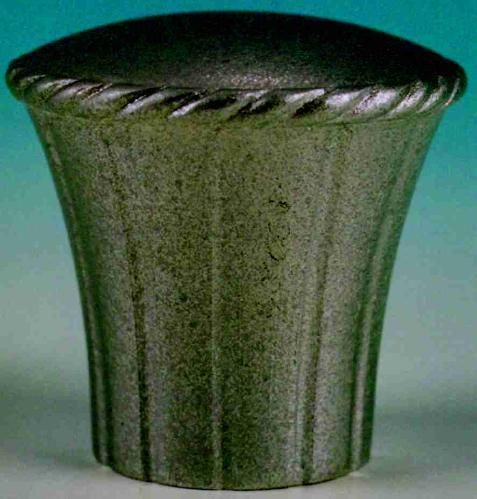
Convergence
1. BACKGROUND
The IP Offices of the European Trade Mark and Design Network continue to collaborate in the context of the
Convergence Programme. They have now agreed on the first Common Practice of Designs with the aim of giving
guidance for the examination procedures on how to use the appropriate disclaimers, types of views and how to
represent designs in a neutral background. Furthermore, there is also an overview of the Offices’ quality standards for
design applications received by electronic means and by paper.
This Common Practice is made public through this Common Communication with the purpose of further increasing
transparency, legal certainty, and predictability for the benefit of examiners and users alike.
The following issues are out of the scope of the project:
Verbal disclaimers.
Additional elements (not all the Offices consider additional elements to be within the Neutral Background
concept).
Priority (not all the Offices carry out an examination of priority claims).
Disclosure (not all the Offices have invalidity proceedings).
Number of views (a large number of Offices have legal constraints).
Computer-animated representations, 3D representations (a large number of Offices have legal constraints).
2. THE COMMON PRACTICE
The following text summarizes the key messages and the main statements of the principles of the Common Practice.
The complete text and all the examples used to illustrate the common criteria can be found in Annex 1. The results of a
benchmarking study on the quality standards required for applications received by electronic means and by paper can
be found at the end of Annex 1.
The images should be of good quality and capable of reproduction. In order to determine the requirements of a correct
graphic representation of designs, the following criteria are considered:
WITH RESPECT TO THE USE OF VISUAL DISCLAIMERS
Definition Visual disclaimers indicate that protection is not being sought for, and registration has
not been granted for, certain features of the design shown in the representation. Thus,
they indicate what is not intended to be protected.
Requirements Visual disclaimers will only be accepted when:
They clearly indicate that protection is not being sought for certain features of
the design shown in the representation.
They are shown consistently in all the views where the disclaimer appears.
1
RCD No. 002322644-0001 (07.02) (pan handles)
Owner: ACTERVIS, GMBH
1 For the sake of clarity, the examples indicated with a “ ”are acceptable and the examples indicated with a “ ” are not acceptable.
2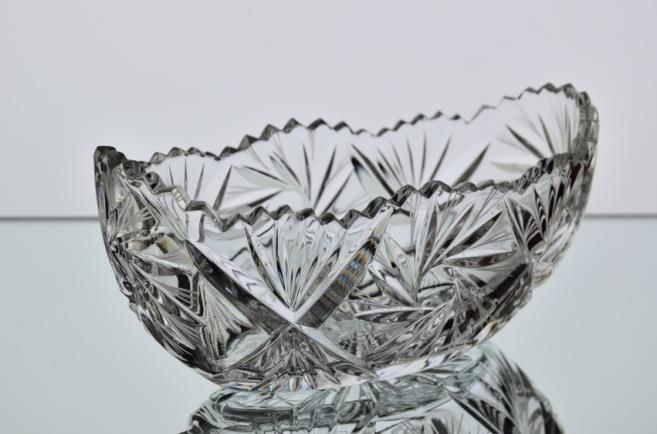
Convergence

 Recommendations/    Graphic or photographic representations showing only the claimed design are
 Guidelines          preferred.

                     However, disclaimers can be used when the graphic or photographic representation of
                     the design contains parts of the product for which no protection is sought. In these
                     cases, the disclaimer must be clear and obvious: the claimed and disclaimed features
                     must be clearly differentiated.

                     Where a disclaimer is used, broken lines are recommended. Only when broken lines
                     cannot be used due to technical reasons (for example, when they are used to indicate
                     stitching on clothing or patterns; or photographs are used), other disclaimers can be
                     used: colour shading, boundaries and blurring.

 a) Broken lines     If a disclaimer is used, broken lines are recommended. They are used to indicate that
                     no protection is sought for the features that are shown using the interrupted trace.

                     In order to be accepted, the features for which protection is not sought should be clearly
                     indicated with broken lines, whereas the parts for which protection is sought should be
                     indicated with continuous lines.

                            BX registered design No. 38212-0001 (12.16)      Hungarian registered design No. D9900409-0001
                             (Rearview mirrors) Owner: Interimage BV                 (08.04) (handle of screwdriver)
                                                                                     Owner: Cooper Industries, Inc.

                     When broken lines are a feature of the design and a part of the design needs to be
                     disclaimed, other visual disclaimers can be used.

 b) Colour shading   Although broken lines are the preferred disclaimer, if they cannot be used, the use of
                     colour shading could be an option. This type of visual disclaimer consists of using
                     contrasting tones of colour to obscure sufficiently the features for which protection is not
                     being sought.

                     The features for which protection is sought must be clearly shown so that they are neatly
                     perceptible, whereas the disclaimed features must be represented in a different tone of
                     colour and in a way that they appear blurred or imperceptible.

                                              RCD No. 000910146-0004 (12.08) (Automobiles (part of-))
                                                   Owner: TOYOTA MOTOR CORPORATION

 c) Boundaries       Although broken lines are the preferred disclaimer, if they cannot be used, the use of
                     boundaries could be an option. With this type of visual disclaimer, the features for which

                                                                                                                             3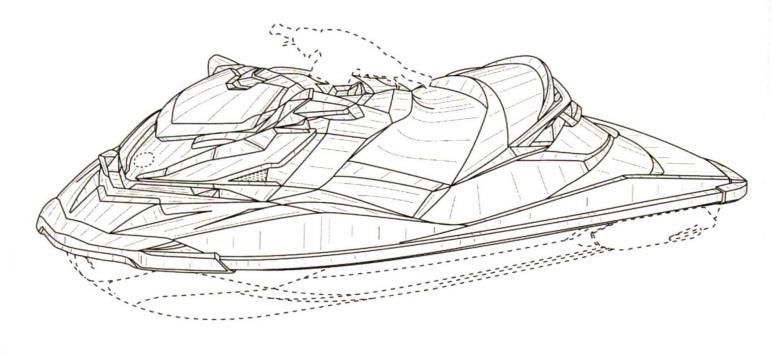
Convergence
protection is sought should be clearly indicated/represented within the boundary,
whereas all the features outside the boundary are considered to be disclaimed and
therefore not protected. Boundaries must be carefully used in drawings/photographs due
to the risk of including more than just the design within the boundary.
RCD No. 001873688-0003 (02.04) CP6 Example (12.16) (Air-intake grilles for
(soles for footwear) Owner: Mjartan s.r.o. vehicles)
d) Blurring Although broken lines are the preferred disclaimer, if they cannot be used, the use of
blurring could be an option. This type of visual disclaimer consists of obscuring the
features for which protection is not being sought and may only be accepted when the
features for which protection is sought are clearly distinguishable from the disclaimed
(blurred) features.
RCD No. 000244520-0002 (12.15) (Tyres for vehicle wheels, pneumatic)
Owner: Nokian Tyres plc
WITH RESPECT TO THE DIFFERENT TYPES OF VIEWS
Definition A view is a visual representation of the design. It may reproduce the design from various
directions (angles) or at different moments in time or in various states.
General In most cases, aspect views (see the guidelines below) are enough for
recommendations disclosing all the features of the design. However, the applicant may provide
complementary/additional views in order to further disclose the features of the
design (subject to the maximum number of views allowed by each Office).
It is not obligatory for the applicant to file a certain number of views or a certain
type of view as long as all the features of the design can be clearly perceived,
e.g. one view may be sufficient.
The views must belong to one and the same design, and each view must be
shown separately.
In case of products consisting of several parts, at least one view must present
the whole product.
4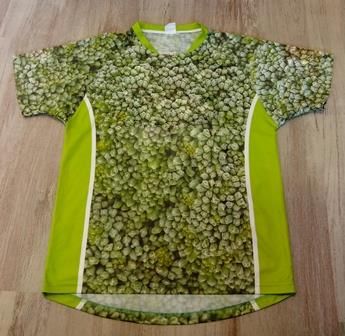
Convergence

 Guidelines for each type   The use of aspect views to disclose the features of the design is preferred. However,
 of view:                   the applicant is free to provide complementary/additional views as mentioned above.
                            Therefore:

 a) Aspect views            Show the design from certain directions (angles) and encompass the following views:
                            front view, top view, bottom view, right side view, left side view, back view and
                            perspective views. The applicant is recommended to file as many views as necessary to
                            fully disclose the features of the design. In some cases one view can be sufficient.

                                         RCD No. 002325456-0001 (31.00) (Mixers, electric [kitchen]) Owner:KENWOOD LIMITED

 b) Views magnifying        Show one part of an overall design in an enlarged scale.
    part of the design
                            A single magnified view is acceptable provided that the magnified part is already visible in
                            one of the other submitted views and it is presented in a separate single view.

                                         RCD No. 001913690-0002 (24.02) (PCR multi-well plates) Owner: ABGENE LIMITED

 c) Alternate positions     Designs with alternate positions have an appearance which can be modified into several
                            configurations without any addition or removal of any parts.

                            The views showing the different configurations of the design must be shown separately.

                                  RCD No. 000588694-0012 (14.03) (Mobile phones) Owner: Fujitsu Mobile Communications Limited

                                                                                                                                5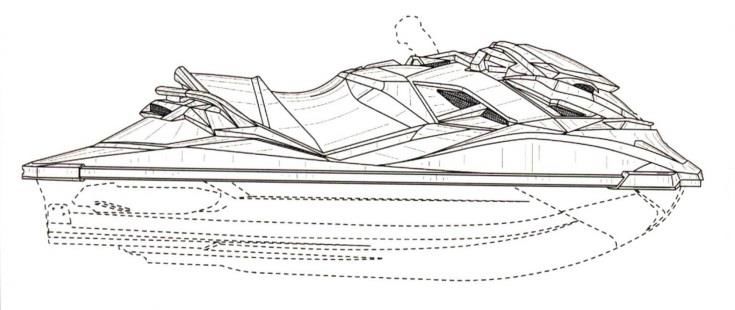
Convergence

 d) Exploded views    Views where the parts of a product are shown disassembled in order to clarify how the
                      parts fit together.

                      These views must be combined with at least one view representing the product
                      assembled. All the parts of a product must be shown disassembled in a separate single
                      view, in close proximity and in order of assembly.

                          Croatian registered design No. D20140080 (24.01) (Bracelets with muscle stimulator) Owner: Dominik Žinić

                      Note: Showing the exploded parts in an additional view can help to facilitate the
                      understanding of the design. However, only the parts that remain visible during the
                      normal use of the product are protected.

 e) Partial views     Show a part of a product in isolation.

                      Partial views can be magnified and must be combined with at least one view representing
                      the product assembled.

                         RCD No. 2038216-0001 (15.01, 23.04) (Air filters, Containers for air filers, for engines) Owner: BMC S.r.l.

 f) Sectional views   Cutaway portions that complement aspect views by illustrating a feature or features of the
                      appearance of the product such as the contour, surface, shape or configuration of the
                      product.

                      Sectional views should, in an unambiguous way, be a view of the same design and must
                      be submitted with other traditional views such as aspect views. It should be noted that
                      representations with technical indications such as axial lines or sizes (dimensions),
                      numbers are not allowed.

                                   Spanish registered design No. I0152702-D (01.01) ) (biscuits) Owner:CUETARA, S.L.

                      Note: Adding sectional views can help to facilitate the understanding of the design.
                      However, only the parts that remain visible during the normal use of the product
                      are protected.

                                                                                                                                       6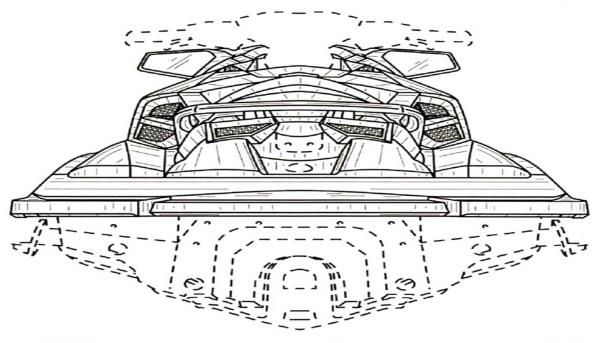
Convergence
g) Sequence of Short sequence of views used to show a single animated design at different specific
snapshots (animated moments in time, in a clearly understandable progression. This applies to an animated
designs) icon (design consisting of a sequence) or an animated graphical user interface (design of
an interface). In order to be accepted:
The sequence of snapshots needs to be visually related (must have features in common)
and it is the responsibility of the applicant to number the views in such a way so as to
give a clear perception of the movement/progression.
RCD No 2085894-0014 (14.04) (Animated screen displays) Owner: NIKE Innovate C.V.
h) Combination of It is recommended that a design should be represented using only one visual
several means of format (drawing, photograph) so as to avoid disclosing aspects that contribute to a
visual representation different overall impression.
Where multiple representations of a design are used, each must clearly and obviously
relate to the same design and be consistent when comparing the features disclosed.
CP6 Example (21.01) (Vehicles [toys]
WITH RESPECT TO THE NEUTRAL BACKGROUND
In order to assess if a background is neutral, the following aspects should be taken into
consideration:
a) Requirements
A single or predominant colour in a background is always acceptable if it stands
related to colours
out against the colours of the design.
Graduating colour and more than one colour in a background is acceptable if the
design is clearly distinguishable.
Austrian lapsed design No. 1747/1999 French registered design No. 955805- CP6 Example (01.01) (Cakes)
(01.01) (Ice lolly) Owner: Schöller 0005 (09.07) (Cover for perfume
Lebensmittel GMBH & O. KG bottle) Owner: SNIC SARL
7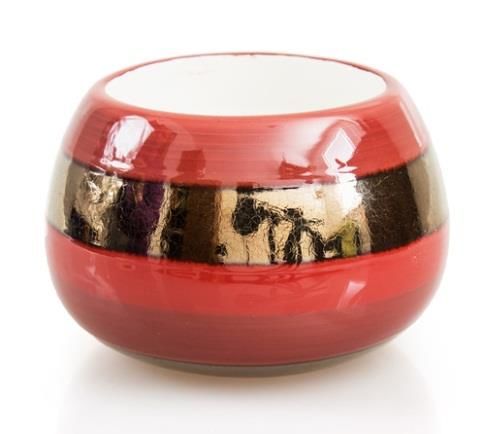
Convergence
b) Requirements
All features of the design should be clearly visible.
related to contrast
The contrast is considered insufficient when the colour of the background and
the design are similar and partly melt into each other (i.e. it is not clear where
the product finishes and the background starts).
Sometimes a darker background can help when the design is clear or pale and
vice-versa.
BX registered design No. 38895-00 (25.03) Portuguese lapsed design No. 420-0006
(Shed) Owner:Herman Lankwarden (06.01) (chairs) Owner: Abril Mobiliário
c) Requirements related
Shadows or reflections are acceptable as long as all features of the design
to shadows/ reflections
remain visible.
Shadows or reflections are unacceptable when the subject of protection of the
design, in any of the submitted views, cannot be determined in an unambiguous
way. This can occur when there is limited colour contrast with the design, and/or
shadows interfere with, or hide parts of, the design or they distort the contour of
the design.
Danish registered design No. 2013 00069 (12.11)
CP6 Example (11.02) (Flower vases)
(wheeled cargo bike) Owner: 3PART A/S
3. IMPLEMENTATION
As has been the case previously, this Common Practice took effect within three months of the date of publication of this
Common Communication. Further details on the implementation of this Common Practice are available in the table
below.
Implementing Offices have the option to publish additional information on their websites.
The following Offices have implemented the common practice: BG, BX, CY, CZ, DE, DK, EE, ES, FR, GR, HR, HU, IE,
IS, IT, LT, LV, NO, PL, PT, RO, SI, SK, TR, UK and EUIPO.
The following EU Offices support the common practice, but have not implemented it at this moment in time: AT, FI, MT
and SE. At the time of publication, a minority of Offices have legal constraints in specific parts of the Common Practice
8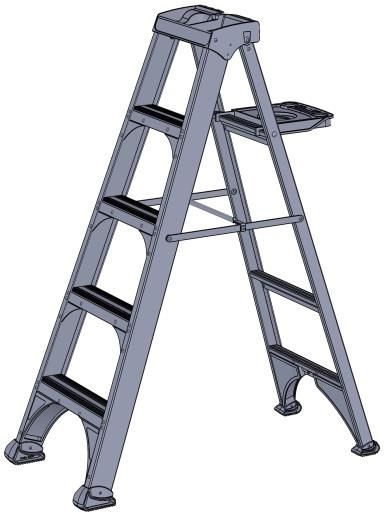
Convergence

which constitute an impediment for its implementation in its entirety, specifically Estonia (sectional views); Czech
Republic (sequence of snapshots; Norway (partial views); Croatia (sectional views), and Slovenia (sectional views).

    3.1 IMPLEMENTING OFFICES

LIST OF IMPLEMENTING OFFICES, IMPLEMENTATION DATE AND IMPLEMENTATION PRACTICE

                             Overview of implementation of the Common Practice

                                                             The Common Practice will be applicable to:

                              Implementation
           Office
                                   date             Applications pending on           Applications filed after the
                                                    the implementation date             implementation date

             BG                  15.07.2016                                                         X

             BX                  15.04.2016                      X                                  X

             CY                  15.07.2016                                                         X

             CZ                  15.07.2016                                                         X

             DE                  15.07.2016                                                         X

             DK                  15.04.2016                                                         X

             EE                  15.07.2016                                                         X

             ES                  15.04.2016                                                         X

             FR                  15.07.2016                                                         X

             GR                  15.04.2016                      X                                  X

             HU                  15.07.2016                                                         X

             HR                  15.04.2016                                                         X

              IE                 15.04.2016                      X                                  X

                                                                                                                       9
Convergence

          IT    15.07.2016       X

          IS    15.04.2016       X

          LT    15.04.2016       X

          LV    15.07.2016       X

          NO    15.04.2016   X   X

         OHIM   15.04.2016   X   X

          PL    15.04.2016       X

          PT    15.07.2016   X   X

          RO    15.07.2016       X

          SI    15.07.2016       X

          SK    15.04.2016   X   X

          UK    15.04.2016   X   X

          TR    15.04.2016       X

                                     10
Convergence
ANNEX:
PRINCIPLES OF THE COMMON PRACTICE
11Convergence
Principles of the Common Practice
Convergence Programme
CP 6. Graphic Representation of Designs
12Convergence
Table of Contents
1.OBJECTIVE OF THIS DOCUMENT ......................................................................................15
2. THE PROJECT SCOPE........................................................................................................15
3. THE COMMON PRACTICE ..................................................................................................17
3.1 Objective 1 - Use of visual disclaimers ........................................................................17
3.1.1 Definitions..........................................................................................................18
3.1.2 General requirements .....................................................................................18
3.1.3 General recommendations……………………………………………………… 19
3.1.4 Guidelines for the types of visual disclaimers…………………………….…… 21
a) Broken lines……….……………………………………………………. 21
b) Blurring………………………………………………………………….…23
c) Colour shading…………………………………………………………. 24
d) Boundaries……………………………………………………………….. 24
3.2. Objective 2 - Types of Views……………………………………………………………… 25
3.2.1 A Definition of view ...........................................................................................26
3.2.2 Forms/means of representation .......................................................................26
3.2.3 General recommendations for all types of views ............................................27
3.2.4 Guidelines for each type of view ......................................................................28
a) Aspect views ..........................................................................................................28
b) Views magnifying part of the design ....................................................................29
c) Alternate positions.................................................................................................31
d) Exploded views ......................................................................................................33
e) Partial views (fragmentary views) .........................................................................35
f) Sectional views .......................................................................................................36
g) Sequence of snapshots (animated design) ..........................................................37
h) Combinations of several means of visual representation ..................................38
13Convergence
3.3 Objective 3 - Neutral Background .................................................................................39
3.3.1 Requirements related to coloured background ..............................................39
3.3.2 Requirements related to contrast.................................................................... 42
3.3.3 Requirements related to shadows/reflections...……………………………… 43
3.4 Objective 4 - Format of views……………………………………………………………….. 45
3.4.1 Quality recommendations for representations of designs filed in the form of
drawings and photographs………………………………………………………………. 45
3.4.2 Benchmarking study………………………………………………………………… 46
Annex 1: Applications received by paper………………………………………………….. 47
Annex 2: Applications received electronically…………………………………….............55
14Convergence
1. OBJECTIVE OF THIS DOCUMENT
This document will be the reference for EU national and regional IP offices (hereinafter referred to
as “the Offices”), User Associations, applicants and representatives on the common practice of the
requirements for graphic representation of designs.
These requirements cover the use of visual disclaimers, the use of different types of views and
how to reproduce a design on a neutral background. Furthermore, this document also provides
recommendations to enhance the applicants’ understanding of how best to reproduce their designs
and an overview of the Offices’ quality standards for design applications received by electronic
means and by paper.
The following guidance relates to examination procedures only and is not intended to give
advice on the scope of protection of a design under National or European law.
2. THE PROJECT SCOPE
The scope of the CP6 project includes:
- An analysis of the use of visual disclaimers: This objective aims at harmonising the
practice on the use of visual disclaimers as a means to indicate features for which protection is
not claimed.
- An analysis of types of views: This objective aims at harmonising the practice regarding the
types of views that can be accepted by the Offices and the requirements to be established in
order to represent correctly designs in an application for registration. This objective also aims
at determining if a combination of photographs and drawings is allowed in the representation
of a design.
- An analysis of the requirements for neutral background: This objective aims at defining
the requirements to determine when a background is considered neutral.
- A benchmarking exercise on format of views: This exercise aims at creating an overview of
the Offices’ quality standards for any design application received by electronic means and by
paper. Additionally, the exercise aims at developing recommendations for representations of
designs filed in the form of drawings and/or photographs.
15Convergence
The four different objectives are represented in the following figure:
Convergence Project on Designs (CP6)
Objective 1: Disclaimers
Objective 2: Types of views
Graphic
representation Objective 3: Neutral background
of a design
Objective 4: Format of views
[limited to general recommendations
and a benchmarking exercise]
Figure 1 - CP6 Scope
The following items are out of the scope of the project:
- Verbal disclaimers.
- Additional elements.
- Priority (not all the Offices carry out an examination of priority claims).
- Disclosure (not all the Offices have invalidity proceedings).
- Number of views (a number of Offices have legal constraints).
- Computer-animated representations, 3D representations (a number of Offices have legal
constraints).
- The implementation of the Common Practice itself on behalf of the Offices.
- Updating of the Offices’ guidelines and manuals. This will follow internal procedures of the
implementing Offices.
- Legislative changes on behalf of the Offices.
- The Common Practice and Common Communication(s) will only explain the Common Practice
created and approved by the Working Group. The description of legal constraints preventing
16Convergence
implementations will not be included. The practices of those Offices that do not adhere to the
common practice will not be described.
3. THE COMMON PRACTICE
3.1 Objective 1 - Use of visual disclaimers
A comprehensive analysis of the Offices’ practices on visual disclaimers showed that before this
project was launched there was no consistent and unified way of using visual disclaimers in an
application for registration of a design.
This analysis confirmed that, despite the fact that the majority of Offices accepted visual
disclaimers in an application for registration of a design, there were no clear and harmonised
rules/requirements to assist applicants to disclose their designs correctly. This resulted in an
inconsistent understanding of the purpose of each visual disclaimer by examiners.
To remedy this incongruence in practices within the EU, and due to the importance of appropriate
disclosure of the design for the determination of the scope of protection, this chapter on visual
disclaimers includes:
- The definition of a design and the definition of visual disclaimers.
- General requirements for the acceptability of visual disclaimers.
- General recommendations provided for all types of visual disclaimers that this document
concerns.
- Guidelines for each type of visual disclaimer. These encompass:
- A definition of each type of visual disclaimer.
- Requirements for accepting each type of visual disclaimer.
- Examples.
17Convergence
The proposed structure can be seen in the graphic below:
4) For each type of
2) General disclaimer:
3) General
1) Definitions requirements for • Definition.
recommendations
acceptability • Requirements.
• Examples.
Figure 2 – Visual Disclaimers Chapter Structure
3.1.1 Definitions
a) Definition of a design: a “design” means the appearance of the whole or a part of a product
resulting from the features of, in particular, the lines, contours, colours, shape, texture and/or
materials of the product itself and/or its ornamentation - Article 1 (a) of the Directive 98/71/EC of
the European Parliament and of the Council of 13 October 1998 on the legal protection of designs.
b) Definition of visual disclaimers: visual disclaimers indicate that protection is not being sought for,
and registration has not been granted for, certain features of the design shown in the
representation. Thus, they indicate what is not intended to be protected. This can be achieved:
- By excluding with broken lines, blurring or colour shading the features of the design for
which protection is not sought or
- By including within a boundary the features of the design for which protection is sought,
thus making it clear that no protection is sought for what falls outside the boundary.
3.1.2 General requirements
The following are the general requirements that need to be fulfilled by all types of visual
disclaimers:
a) Visual disclaimers will only be accepted when they clearly indicate that protection is not being
sought for certain features of the design shown in the representation.
18Convergence
b) In order to be accepted, when the design is represented in more than one view, the visual
disclaimer must be shown consistently in all the views where the disclaimer appears. For
example:
RCD No. 001282545-0001 (12.06) (Water crafts)
Owner: Bombardier Recreational Products Inc.
RCD No. 002322644-0001 (07.02) (Pan handles)
Owner: ACTERVIS, GMBH
Example 1 - Consistent use of visual disclaimers
3.1.3 General recommendations
The following general recommendations aim to assist applicants to correctly represent their
designs using disclaimers. These recommendations are applicable to all types of disclaimers:
a) Graphic or photographic representations showing only the claimed design are preferred.
19Convergence
b) However, to understand the features of the design for which protection is sought, it may be
helpful to show the design in context. In such cases the use of visual disclaimers may be
necessary.
c) Correct use:
- The visual disclaimer must be clear and obvious from the representation of the design.
There must be a clear distinction between the claimed and the disclaimed features.
RCD No. 150297-0001 (02.04) (Footwear (part of)) International registration No. DM/078504
Owner: Salomon SAS (12.08) (Vehicles) Owner: DAIMLER AG
Example 2 - Clear distinction between claimed and disclaimed features
- The visual disclaimer should be self-explanatory when appreciated in the context of the
whole design.
- When the representations of the design are line drawings, we recommend the use of
broken lines as visual disclaimers.
- However, in cases where broken lines cannot be used due to technical reasons (e.g. when
the broken lines are used to indicate stitching for clothes or pattern; or photographs are
used), the use of blurring, colour shading, or boundaries is recommended.
d) When to use:
It is recommended that visual disclaimers be used in those cases where the graphic or
photographic representation of the design contains parts of the product for which no protection is
sought.
20Convergence
RCD No. 002182238-0002 (26.03) (Outdoor lighting) Community design lapsed No. 000030606-0003
Owner: Stanisław Rosa trading as Zakład Produkcji (14.03) (Key button arrangement for mobile)
Sprzętu Oświetleniowego ROSA Owner: Nokia Corporation
Example 3 - Useful views for showing the context
3.1.4 Guidelines for the types of visual disclaimers
a) Broken lines
Definition: Broken lines consist of a trace made up of dots or dashes (or a combination of both)
and are used to indicate that no protection is sought for the features that are shown using an
interrupted trace.
A visual disclaimer consisting of broken lines will usually be combined with continuous lines.
Requirements: In order to be accepted, the features for which protection is not sought should be
clearly indicated with broken lines, whereas the parts for which protection is sought should be
indicated with continuous lines.
21Convergence
Danish registered design No. 2013 00070 (20.02) (Parts of the
BX registered design No. 38212-0001 (12.16)
device for storage, display, positioning and distribution of varer)
(Rearview mirrors) Owner: Interimage BV
Owner: Brynild Gruppen AS
Hungarian registered design No. D9900409-0001 (08.04) (Handle of screwdriver)
Owner: Cooper Industries, Inc.
Example 4 - Broken lines
Note: In cases where broken lines are a feature of the design (such as stitching on clothing), this
must be clear from the representation. In such cases, it may be helpful to file, for example, a
magnified view.
French registered design No.911104-0021 (02.02) (A pocket supporting a urine pouch)
Owner: MULLIEZ FRERES SA SOCIETE INDUSTRIELLE
Example 5 - Broken lines as a feature of the design (such as stitching on clothing) 22Convergence
Note: In cases where broken lines are a feature of the design and a part of the design needs to be
disclaimed, this can be done by using any of the other visual disclaimers, such as colour shading,
blurring or boundaries.
French registered design No.911104-0021 (02.02) (A pocket supporting a urine pouch)
Owner: MULLIEZ FRERES SA SOCIETE INDUSTRIELLE
Example 6 - Use of other disclaimers when broken lines are a feature of the design (such as stitching on clothing)
b) Blurring
Definition: Blurring is a type of visual disclaimer that consists of obscuring the features for which
protection is not being sought in drawings or photographs of a design application.
Requirements: Blurring may only be accepted when the features for which protection is sought
are clearly distinguishable from the disclaimed (blurred) features.
RCD No. 000244520-0002 (12.15) (Tyres for vehicle wheels, pneumatic) Owner: Nokian Tyres plc 23
Example 7 - Blurring correctly appliedConvergence
c) Colour shading
Definition: Colour shading is a type of visual disclaimer that consists of using contrasting tones of
colour to obscure sufficiently the features for which protection is not being sought in drawings or
photographs of a design application.
Requirements: With colour shading, the features for which protection is sought must be clearly
shown so that they are neatly perceptible, whereas the disclaimed features must be represented in
a different tone of colour and in a way that they appear blurred or imperceptible.
RCD No. 000910146-0004 (12.08) (Automobiles (part of-))
Owner: TOYOTA MOTOR CORPORATION
Example 8 - Colour shading correctly applied
d) Boundaries
Definition: Boundaries are a type of visual disclaimer used in drawings or photographs of a design
application to indicate that no protection is sought for the features that are not contained within the
boundary.
RCD No. 002182238-0002 (26.03) (Outdoor lighting) Owner: Stanisław RCD No. 001873688-0003 (02.04) (Soles for footwear)
Rosa trading as Zakład Produkcji Sprzętu Oświetleniowego ROSA Owner: Mjartan s.r.o. 24
Example 9 - Boundaries correctly appliedConvergence
Requirements: In order to be accepted, the features for which protection is sought should be
clearly indicated/represented within the boundary, whereas all the features outside the boundary
are considered to be disclaimed and therefore not protected.
Recommendation: Boundaries must be carefully used in drawings/photographs due to the risk of
including more than just the design within the boundary. For example:
CP6 Example (12.16) (Air-intake grilles for CP6 Example (14.01) (Tone arm to
vehicles) turntables)
Example 10 - Boundaries incorrectly applied
3.2. Objective 2 - Types of views
The applicant should file the types of views considered appropriate for a clear, full and detailed
disclosure of the design. If all the features of the design cannot be displayed in one single view,
the applicant may submit additional views which are necessary for this purpose, subject to the
maximum number of views allowed by each Office.
The following information aims at helping applicants to file a design application correctly with the
appropriate type of view while facilitating the work of design examiners. This chapter on types of
views contains the following:
- The definition of a view.
- A description of the possible forms/means available to applicants to represent their
designs.
25Convergence
- General recommendations provided for all types of views that this document concerns; and
- Guidelines for each type of view. These encompass:
- A definition of each type of view.
- Requirements for acceptance of each type of view.
- Recommendations for filing each type of view (if applicable).
- Examples.
The proposed structure can be seen in the graphic below:
Figure 3 - Types of Views Chapter Structure
3.2.1 Definition of view
A view is a visual representation of the design. It may reproduce the design from various directions
(angles) or at different moments in time or in various states.
3.2.2 Forms/means of representation
The representation of the design can be filed in the form of:
a) Drawings.
b) Photographs.
c) Any other means of visual representation admitted by the Offices.
26Convergence
3.2.3 General recommendations for all types of views
The following general recommendations aim to assist applicants to correctly represent their design
using types of views. These recommendations are applicable to all types of views:
a) It is the applicant’s responsibility to disclose the features of the design as completely as
possible. This is most likely to be achieved by using aspect views of the design. However, the
applicant may provide complementary/additional views in order to further disclose the features of
the design.
b) It is not obligatory for the applicant to file a certain number of views or a certain type of view as
long as all the features of the design can be clearly perceived by the submitted representation(s),
e.g. one view may be sufficient:
RCD No. 002324756-0001 (06.01) (Seating furniture) RCD No. 002327015-0001 (12.11) (Bicycle frames)
Owner: Marcin, Kacper Hajek
Owner:Axmann Investment GmbH
Example 11 - Sufficient view
c) The views must belong to one and the same design.
d) Applicants may file one or more views of the design. Each view must be shown separately.
e) In case of products consisting of several parts, at least one view must present the whole
product.
27Convergence
3.2.4 Guidelines for each type of view
The project deals with the following types of views:
a) Aspect views.
b) Views magnifying part of the design.
c) Alternate positions.
d) Exploded views.
e) Partial views.
f) Sectional views.
g) Sequence of snapshots.
h) Combination of several means of visual representations.
a) Aspect views
Definition: Aspect views show the design from certain directions (angles) and encompass the
following views: front view, top view, bottom view, right side view, left side view, back view and
perspective views.
28Convergence
RCD No. 002325456-0001 (31.00) (Mixers, electric [kitchen])
Owner:KENWOOD LIMITED
Example 12 - Aspect views
Recommendations: It is recommended that the applicant should file as many views as necessary
in order to fully disclose the features of the design, subject to the maximum number of views
allowed by each Office. In some cases one view can be sufficient.
RCD No. 002319392-0001 (25.04) (Stools steps) Owner: CDH RCD No. 002327015-0001 (12.11) (Bicycle frames)
Owner: Marcin, Kacper Hajek
GROUP (société par actions simplifiée)
Example 13 - Sufficient view
b) Views magnifying part of the design
Definition: Magnified views show one part of an overall design in an enlarged scale.
29Convergence
Requirements:
- A single magnified view is acceptable provided that the magnified part is already visible in
one of the other submitted views.
- The view which shows the magnified part of the design must be presented in a separate
single view.
RCD No. 001913690-0002 (24.02) (PCR multi-well plates) Owner: ABGENE LIMITED
Example 14 - Acceptable (different views)
CP6 Example (32.00) (Surface patterns)
Example 15 - Unacceptable (same view)
30Convergence
c) Alternate positions
Definition: Designs with alternate positions have an appearance which can be modified into
several configurations without any addition or removal of any parts.
These designs have pre-defined stages of use which each corresponds to an alternate position. In
some cases different configurations may result in different products as in the case of a bag which
is convertible into a towel (see example 16).
Requirements:
- The views showing the different configurations of the design are acceptable provided no part
is added or removed.
- The views showing the different configurations of the design must be shown separately.
RCD No. 002257493-0001 (25.02) (Roof constructions) Owner:Glazing Vision Ltd.
RCD No. 000588694-0012 (14.03) (Mobile phones) Owner: Fujitsu Mobile
Communications Limited
31Convergence
RCD No. 002319814-0001 (06.06) (Leisure furniture) Owner: Przedsiębiorstwo Wielobranżowe
KAREX Krzysztof Karpiński
RCD No. 002329938-0001 (06.01) (Chairs [seats]) Owner: Stechert Stahlrohrmöbel GmbH
Croatian registered design No. D20110100 (03.01) (Bags with towel and purse) Owner: KO-
ART proizvodni, uslužno-servisni i trgovački obrt
Example 16 - Acceptable alternate positions (different views) 32Convergence
RCD No. 002257493-0001 (25.02) (Roof constructions)
Owner:Glazing Vision Ltd.
RCD No. 000588694-0012 (14.03) (Mobile
phones) Owner: Fujitsu Mobile Communications
Limited
Example 17 - Unacceptable alternate positions (the pre-defined stages of use of the design are shown
in the same view)
d) Exploded views
Definition: Exploded views consist of views where the parts of a product are shown disassembled
in order to clarify how the parts fit together.
Requirements:
- Exploded views must be combined with at least one view representing the product assembled
(see example 18 - view no.2 combined with view no.1).
- In these views, all the parts of a product must be shown disassembled in a separate single
view (see example 18 - view no.2).
- The disassembled parts must be shown in close proximity and in order of assembly (see
example 18 - view no.2).
33Convergence
View no. 1 Assembled View no. 2 Exploded
RCD No. 001847468-0003 (09.03) (Packaging) Owner:Josefa Colls Llobet
Croatian registered design No. D20140080 (24.01) (Bracelets with muscle
stimulator) Owner: Dominik Žinić
RCD 001385926-0001 (09.03) (Beverage containers) Owner: Mocktail Beverages, Inc.
Example 18 - Exploded views 34Convergence
Note: Showing the exploded parts in an additional view can help to facilitate the understanding of
the design. However, the suitability of using exploded views for representing the design is without
prejudice to the limitations foreseen by the National or European law in respect of the protection of
invisible or partially visible parts of a product when in use.
e) Partial views (fragmentary views)
Definition: A partial view is a view showing a part of a product in isolation. A partial view can be
magnified.
Requirements:
- Partial views must be combined with at least one view representing the product assembled
(the different parts need to be connected to each other) - see example 19, views no.2, 3 and 4
combined with view no.1.
Assembled view no. 1
Partial view no. 2 Partial view no.3 Partial view no. 4
RCD No. 2038216-0001 (15.01, 23.04) (Air filters, Containers for air filers, for engines)
Owner: BMC S.r.l.
Example 19 - Partial views
35Convergence
- Those Offices which accept a set of articles as being one single product are free to apply the
same requirements.
f) Sectional views
Definition: Sectional views are cutaway portions that complement aspect views by illustrating a
feature or features of the appearance of the product such as the contour, surface, shape or
configuration of the product.
Requirements:
- Representations with technical indications, such as axial lines or sizes (dimensions),
numbers, etc. are not acceptable.
- The sectional view should, in an unambiguous way, be a view of the same design.
- Sectional views should not be submitted without other traditional views such as aspect views.
Spanish registered design No. I0152702-D (01.01) (Biscuits) Owner:CUETARA, S.L.
BX registered design No. 38478-0002 (23.02) (Washbasins) Owner: Maan Amsterdam Holding BV
Example 20 - Sectional views
36Convergence
Note: Adding sectional views can help to facilitate the understanding of the design. However, the
suitability of using such views for representing the design is without prejudice to the limitations
foreseen by the National or European law in respect of the protection of invisible or partially visible
parts of a product when in use.
g) Sequence of snapshots (animated design)
Definition: Snapshots are a short sequence of views used to show a single animated design at
different specific moments in time, in a clearly understandable progression. This applies to:
- An animated icon (design consisting of a sequence)
RCD No 2085894-0014 (14.04) (Animated screen displays) Owner: NIKE Innovate C.V.
RCD No 001068001-0002 (14.04) (Icons, Animated icons, Screen displays and icons) Owner: Deutsche Telekom AG
Example 21 - Acceptable animated icons
- An animated graphical user interface (design of an interface).
37Convergence
RCD No 001282388-0031 (14.04) (Animated graphical user interfaces for a display screen or portion thereof) Owner: Sony Corporation
Example 22 - Animated graphical user interface
Requirements:
- In principle, all views of an animated icon and graphical user interface need to be visually
related, this means that they must have features in common.
- It is the responsibility of the applicant to number the views in such a way so as to give a clear
perception of the movement/progression.
Note: A video clip is a potential way of representing such designs (as it allows the sequence of the
movement to be seen and visually appreciated), although the technical means to file a design by
submitting a video clip are not available yet.
h) Combination of several means of visual representation
Recommendation:
A design should be represented using only one visual format (drawing or photograph) so as to
avoid disclosing aspects that contribute to a different overall impression. Where multiple
representations of a design are used, each must clearly and obviously relate to the same design
and be consistent when comparing the features disclosed.
38Convergence
CP6 Example (21.01) (Vehicles [toys])
Example 23 - Unacceptable combination
3.3 Objective 3 - Neutral background
An extensive analysis of the Offices’ practices on neutral background determined that, although
the Offices required design applications to be reproduced on a neutral background, there was no
common approach among them when it comes to interpreting the notion of neutral background.
This situation prevented the establishment of clear and harmonised requirements meant to assist
applicants on how to represent their designs correctly on a neutral background throughout the EU.
Therefore, in order to assess if a background is neutral, the following aspects should be taken into
consideration: colours, contrast and shadows.
Figure 4 - Neutral Background chapter structure
3.3.1 Requirements related to coloured background
a) A single or predominant colour in a background is always acceptable if it stands out against the
colours of the design.
39Convergence
Austrian lapsed design No. 1747/1999 (01.01) (Ice lolly) RCD No. 001390298-0001 (15.05) (Washing machines
Owner: Schöller Lebensmittel GMBH & O. KG [part of-]) Owner: BSH Hausgeräte GmbH
Example 24 - Acceptable single coloured background
CP6 Example (09.02) (Jerricans) CP6 Example (22.05) (Bait for fishing)
Example 25 - Unacceptable single coloured background
RCD No. 002333484-0001 Greek lapsed design No. 20040600136-0001 (11.01)
(02.02) (Sportswear) Owner: La Hoya Lorca - Club de fútbol (Bracelet) Owner: Maria Mantzagrioti Meimaridi
Example 26 - Acceptable predominant coloured background 40Convergence
CP6 Example (01.01) (Cakes)
Example 27 - Unacceptable predominant coloured background
b) Graduating colour and more than one colour in a background is acceptable if the design is
clearly distinguishable.
RCD No. 001387476-0001 (09.01) (Bottles)
Danish registered design No. 2013 00008
(23.01) (Taps) Owner:Line Nymann, Emilie Owner: Vandemoortele Lipids, naamloze vennootschap
Kampmann, Nadja Ibsen, Pernille Hinborg
French registered design No. 955805-0005 (09.07)
(Cover for perfume bottle) Owner: SNIC SARL 41
Example 28 - Acceptable graduating/more than one coloured backgroundConvergence
3.3.2 Requirements related to contrast
a) All features of the design should be clearly visible.
b) The contrast is considered insufficient when the colour of the background and the design are
similar and partly melt into each other. The result is that not all parts of the design will have
sufficient contrast with the background (i.e. it is not clear where the product finishes and the
background starts).
c) Sometimes a darker background can help when the design is clear or pale and vice-versa.
BX registered design No. 38895-00 (25.03)
(Shed) Owner:Herman Lankwarden
Example 29 - Sufficient contrast
Portuguese lapsed design No. 420-0006 RCD lapsed design No. 000234265-0001 (09.01)
CP6 Example (06.01) (Chairs) 42
(06.01) (Chairs) Owner: Abril Mobiliário (Bottles) Owner: Torgovy Dom Aroma (ZAO)
Example 30 - Insufficient contrast s)Convergence
3.3.3 Requirements related to shadows/reflections
a) Shadows or reflections are acceptable as long as all features of the design remain visible.
b) Shadows or reflections are unacceptable when the subject of protection of the design, in any of
the submitted views, cannot be determined in an unambiguous way.
This can occur when:
- there is limited colour contrast with the design;
- shadows do not allow the appreciation of all the features of the design, for example
because they interfere with, or hide parts of, the design or they distort the contour of the
design.
Danish registered design No. 2013 00030 (08.05, Danish registered design No. 2013 00057 (11.01)
08.08) (Holder) Owner:KITCINO ApS (Jewellery) Owner: House of Hearing
Danish registered design No. 2013 00069 (12.11)
(Wheeled cargo bike) Owner: 3PART A/S
43
Example 31 - Acceptable shadowsConvergence
CP6 Example (11.02) (Flower vases) CP6 Example (14.01) (Headphones)
Example 32 - Unacceptable shadows
CP6 Example (11.01) (Finger rings)
Example 33 - Acceptable reflections
CP6 Example (07.01) (Fruit bowls) CP6 Example (07.01) (Fruit bowls)
Example 34 - Unacceptable reflections
44Convergence
3.4 Objective 4 – Format of views
A thorough analysis of the legal provisions of the Offices determined that some have legal
constraints regarding the quality standards required for applications received by electronic means
and by paper. Since it is not possible to reach a common practice on this topic due to the
existence of legal constraints, a benchmark study was carried out and the results of which are
provided at the end of this document (Annexes 1 and 2). Furthermore, in order to enhance the
users’ understanding on how best to reproduce their designs, recommendations for
representations of the designs filed in the form of drawings and/or photographs are provided
below.
3.4.1 Quality recommendations for representations of designs filed in the form of
drawings and/or photographs
a) In the form of drawings: The drawings should be of good quality so that the images are drawn
with clear and dark continuous lines. Representations should be capable of being reproduced so
that the features of the design remain clearly visible.
Thus, the following should be avoided in the representations:
- Poor line quality.
- Blurry lines.
- Substantial pixilation.
- Lines which merge forming black and undefined areas.
- Drawings which are excessively small or large.
- Drawings with signs of deletion or correction.
b) In the form of photographs: The representations of the design filed in the form of photographs
must be of good quality. The design must be shown in such a way that all features of the displayed
design are clearly visible and suitable for reproduction. In order to guarantee the quality of the
photographs representations, the following should be avoided:
- Undefined areas due to a lack of lighting.
- Glare on shiny, reflective or transparent surfaces.
- Blurriness (unless used as a disclaimer).
- Poor contrast.
- Obvious deletions or corrections.
45Convergence
3.4.2 Benchmarking study on:
a) Paper Design Application (Annex 1)
- Representation of the design on paper (e.g. size of the separate sheet and other
requirements).
- Maximum number of designs per application and maximum number of views per design;
- Number of representations submitted per sheet.
- Number of representations per view.
- Indication of number of views.
- Acceptance of descriptions within the representation e.g. front view, back view.
- Acceptance of technical drawings, explanatory text, wording or symbols within the
representation.
- Number of copies required.
- Dimensions in cm of the representation of photographs and drawings in single and multiple
applications (minimum and maximum).
b) Electronic Design Application (Annex 2)
- Maximum number of views per attachment.
- Maximum number of designs uploaded per application and maximum number of views
uploaded per design.
- File format type.
- Total application size limit.
- Size limit per view.
- Minimum and maximum resolution (dpi).
- Offices with an e-filing system.
46Convergence
ANNEX 1: Applications received by paper
Representation Dimensions of the Are technical
Are descriptions
of the design on Maximum Maximum Number of representation on Is the drawings;
Each representation of the types of Number of
paper (e.g. size number of number of views representations that photographs and number of explanatory text,
corresponds to one views allowed Copies
of the separate designs per submitted per can be submitted per drawings in a single and views wording or symbols
view? e.g. front view, required
sheet and other application design sheet multiple application indicated? allowed within the
back view?
requirements) (minimum and maximum) representation?
Two copies of
A4 (29.7 cm x 21 Min 3 cm x 4 cm and 14 cm
BG No Limit Max 7 Views 6 Yes Yes Yes No each
cm) x 24 cm
representation
Three copies
of each
Min 4 cm x 4 cm and Max representation
BX 50 No Limit 24 repr. Yes No Yes No
A4 16 cm x 24 cm including one
copy on paper
application.
Several views are Yes, but beside
CH A4 No Limit No Limit Yes Max: A4 Yes No Only one copy
possible the picture
A4 (29.7 cm x 21
CY 50 No Limit Yes Max: 6 cm x6 cm Yes Yes Yes Only one copy
cm)
No Limit, Five copies of
Yes, on the
CZ recommendation No Limit No Limit No Limit Yes No Limit Yes No each
separate sheet
A4 representation
47Convergence
Representation Dimensions of the Are technical
Are descriptions
of the design on Maximum Maximum Number of representation on Is the drawings;
Each representation of the types of Number of
paper (e.g. size number of number of views representations that photographs and number of explanatory text,
corresponds to one views allowed Copies
of the separate designs per submitted per can be submitted per drawings in a single and views wording or symbols
view? e.g. front view, required
sheet and other application design sheet multiple application indicated? allowed within the
back view?
requirements) (minimum and maximum) representation?
Following § 7 III 3 Design (Design
The design shall No limit. However, for No. This is to One set is
Implementing Regulation) one Yes, they are
be reproduced on every design in a multiple repr. shall only show one view of explain in a enough. No
DE 100 Max. 10 views Min:3 cm x 3 cm to be No
the official forms application a separate the design (not 2 objects of the separate copies are
same design within one view) - indicated.
(A4) form is to use. description. required.
but not a view in a standardised.
DK No Limit No Limit No Limit No Limit Yes No Limit Yes No No Only one copy
Two copies of
A4 (29.7 cm x 21
EE No Limit No Limit No Limit Yes No Limit Yes No No each
cm)
representation
ES A4 50 Max. 7 views 7 Yes 26.2 cm x 17cm Yes No Upper part Only one copy
No min. limitations but Two copies
FI A4 No Limit No Limit No Limit Yes Yes No No
should be visible max. A4 included
48Convergence
Representation Dimensions of the Are technical
Are descriptions
of the design on Maximum Maximum Number of representation on Is the drawings;
Each representation of the types of Number of
paper (e.g. size number of number of views representations that photographs and number of explanatory text,
corresponds to one views allowed Copies
of the separate designs per submitted per can be submitted per drawings in a single and views wording or symbols
view? e.g. front view, required
sheet and other application design sheet multiple application indicated? allowed within the
back view?
requirements) (minimum and maximum) representation?
Min:8 cm in at least one of Two copies of
A4 (29.7 cm x 21
FR 100 No Limit 1 Yes the dimensions Yes No Only for Class 1908 each
cm)
Max:15 cm by 18 cm representation
No
No text is allowed.No photocopies
graphical symbols in accepted, no
No limitation to representions. photos from
the number polaroid films
GR A4 50 N/a Yes Max:16 cm x 16 cm Yes No
of views per Technical drawings accepted,
design are accepted as long images should
as they don’t contain be suitable for
text. offset
publication
49Convergence
Representation Dimensions of the Are technical
Are descriptions
of the design on Maximum Maximum Number of representation on Is the drawings;
Each representation of the types of Number of
paper (e.g. size number of number of views representations that photographs and number of explanatory text,
corresponds to one views allowed Copies
of the separate designs per submitted per can be submitted per drawings in a single and views wording or symbols
view? e.g. front view, required
sheet and other application design sheet multiple application indicated? allowed within the
back view?
requirements) (minimum and maximum) representation?
A4 (29.7 cm x 21 cm);
The design shall be
reproduced on white
paper and either pasted
or printed directly on it. Min: 4 cm x 4 cm; Max:
Graphic or photographic
26.2 cm x 17 cm; a margin
HR representations of a No Limit Max 6 Views 1 Yes Yes No No Only one copy
design shall have right of at least 2.5 cm shall be
angles and straight left on the left-hand side
edges, may not be
folded, marked or
connected with the form
by perforations.
No number limits but No - The representation
there are minimum and is not allowed to have
any added lines what
maximum sizes
Photos:Min:3 cm x 4 cm could disturb the No -
requirements
understanding of the
(see Dimensions of the The representation Max:12 cm x 15 cm See HIPO legal
design
representation). should Graphical such as broken lines, provisions:
HU A4 50 No Limit Yes One copy
If a sheet contains more present the design in an representation:Max:A4 cross hatched lines or Decree No. 19/2001
than 1 representation, any explanation
unambiguous way Space on the top of each on the detailed formal
comments or titles.
there should be a clear
paper sheet (2.5 cm) See HIPO legal prov: requirements.
space between each
Decree No. 19/2001on
representation (minimum the detailed formal
2 cm). requirements.
50You can also read


