COVERING:
Sport New Zealand
High Performance Sport New Zealand
Drug Free Sport New Zealand
Sports Tribunal of New Zealand
←
→
Page content transcription
If your browser does not render page correctly, please read the page content below
COVERING: Sport New Zealand High Performance Sport New Zealand Drug Free Sport New Zealand Sports Tribunal of New Zealand
CONTENTS

                                               PAGE

Introduction                                     3
Immediate Sport New Zealand Group Priorities     4
About Sport New Zealand                          9
New Zealand’s Sport and Recreation System       13
Our Strategies and Key Work Areas               15
World Cups Office                               21
Monitoring Department                           22
Your Discretionary Fund                         22
World Anti-Doping Agency                        23
Drug Free Sport New Zealand                     24
Sports Tribunal of New Zealand                  25
Appendices                                      26

                                    2
INTRODUCTION
1. Congratulations on being appointed to the portfolio of Sport and Recreation. This Briefing to
the Incoming Minister (BIM) is mainly focused on Sport New Zealand (Sport NZ) and High
Performance Sport New Zealand (HPSNZ), but also covers the activities of Drug Free Sport New
Zealand (DFSNZ) and the Sports Tribunal of New Zealand (Sports Tribunal).
2. Sport NZ is the Crown Agency responsible for oversight and leadership of the sport and
recreation sector, increasing participation and ensuring that there are more New Zealanders
winning on the world stage. The Sport NZ Group comprises the parent entity, Sport and
Recreation New Zealand (Sport NZ), and its wholly owned subsidiary HPSNZ.
3. Sport NZ is unique amongst Crown Agencies in having a full in-house policy function. We are
looking forward to working with you closely to shape the direction of sport and recreation in
New Zealand. The Ministry of Culture and Heritage is the monitoring agency for Sport NZ.
4. Engagement with you and other ministers is led by the Sport NZ Board Chair Sir Paul Collins and
Sport NZ Chief Executive Peter Miskimmin, with the Sport NZ Strategy and Policy Team
providing ministerial servicing support across the Sport NZ Group.
5. The Government invests $85.6 million (2017-18) in Vote Sport and Recreation because sport
enriches and inspires New Zealanders. Evidence shows that sport provides significant health,
social, economic and cultural benefits to individuals and communities.
6. Sport NZ works with the sport and recreation sector to encourage participation and support
teams and athletes to win on the world stage. We also work closely with other government
agencies where we can contribute to their outcomes, especially in health and education,
through sport.
7. We will be seeking your preferences on how you wish to be briefed in more detail on a series of
matters over the coming months. Our immediate priorities (page 4) and activities (page 5) are
outlined in this BIM, together with a high level overview of Sport New Zealand Group and the
sport and recreation sector.
3IMMEDIATE SPORT NZ GROUP PRIORITIES
8. Some high-level information about our key work priorities is provided below. We are happy to
provide you with further briefings at your request.
Community Sport challenges
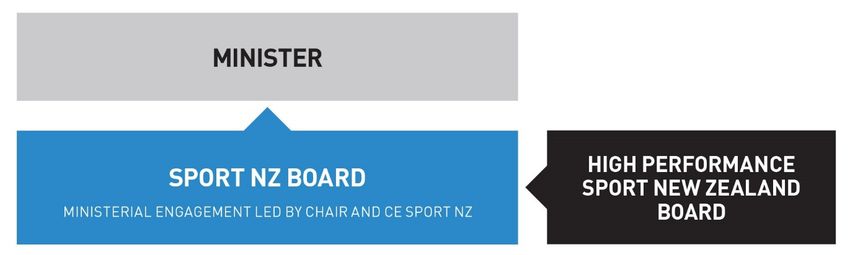
Declining participation
9. New Zealand has traditionally had high rates of participation in sport and recreation by both
young people and adults. This provides many benefits for individuals and communities, and a
wide pipeline of talent through to high performance. The 2013/14 Active NZ Survey reported
that 74% of adults participated at least once a week, and that close to one million adults
volunteered in sport and recreation each year. The 2011 Young People’s survey showed that
89% of those aged 5-18 participated in at least three hours of formal and informal sport and
recreation each week.
10. However, in October 2016 Sport NZ published a report on 16-year trends for adult participation
in sport and recreation, which showed a national decline of 7.7% between 1998 and 2014. The
decline was most pronounced among:
• adults aged 18 to 24 (down 13.9%)
• Pacific communities (down 11.4%)
• households with a combined income of between $20,000 and $40,000 (down 12.6%)
• men (down 9.2%, compared with women at 6.4%).
11. While we do not currently have trend data for participation among young people, there are
indicators that this may also be in decline. Rates of childhood obesity are rising and our
research shows a decrease in the quality and quantity of physical education (PE) in primary
schools.
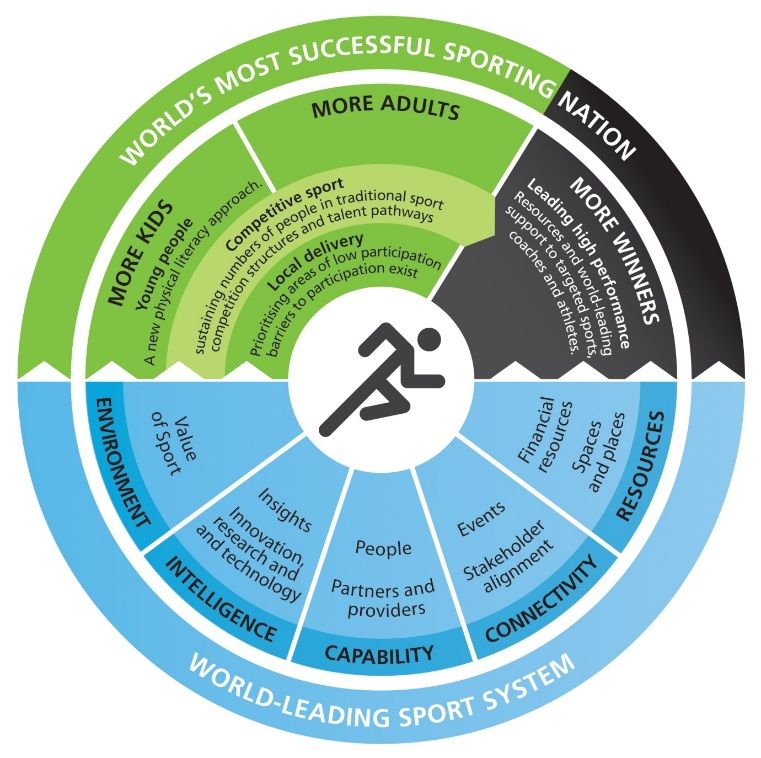
12. Our response to this has been the Community Sport Strategy 2015-20, which prioritises young
people (aged 5-18 years) and ensuring they have quality early experiences which will lead to a
life-long love of sport and recreation. Five of the initiatives in the strategy are also part of the
Government’s Childhood Obesity Plan, led by the Ministry of Health.
13. In the future we will be better placed to monitor and understand trends in participation
through a revised version of our longstanding Active NZ survey, which now involves continuous
(rather than four-yearly) sampling of 20,000 adults and 5,000 young people aged 5-18. This has
been designed to give greater flexibility over how and when we measure participation, as well
as insights into the barriers to, and enablers of, participation. The first full year results will be
published in April 2018.
4Low-participation communities
14. We have a particular focus on communities where participation in significantly lower, which
includes Māori. Between 1998 and 2014, Māori participation in sport and recreation
decreased by 8.4%, compared to the national average of 7.7%.
15. In 2016 we commissioned a review to understand how the sport and recreation sector can
mobilise to better foster Māori participation. The review’s 21 recommendations focused on
three key themes of leadership, cultural capability and advice to enable us to build stronger
engagement with Māori.
16. In response, we have appointed a Māori Participation Senior Advisor to develop and lead a
Māori Participation Plan. Our other immediate priorities are building the Māori cultural
capability within Sport NZ, forming a Māori Advisory Group to support the Māori Participation
Plan and further developing relationships with key agencies such as Te Puni Kōkiri.
17. Other low-participating communities we are currently focused on are Pasifika, Indian and
teenage girls.
Community Sport Activities
Quality experiences for young people - Play.Sport
18. As part of our focus on young people within the Community Sport Strategy 2015-20, we are
piloting a new approach to physical education (PE) and sport in schools, called Play.Sport. This
is in response to a review which found that both the quality and quantity of PE in schools had
declined.
19. Play.sport is based on a Physical Literacy approach, which gives young people the motivation,
confidence, physical competence, knowledge and understanding required to be physically
active for life. The pilot provides professional development and support for teachers, additional
workforce support for schools and establishes community alliances and the sharing of facilities.
20. Play.sport is being piloted over four years in 45 schools across Upper Hutt and Waitakere
(reaching 20,000 children). The $8 million initiative is led by Sport NZ and supported by the
Ministry of Education and the Accident Compensation Corporation (ACC).
(Subject to section 9 (2) (f) (iv) of the Official Information Act 1982.)
5Secondary School Age Review
22. In the first two years of our Community Sport Strategy, the key focus on young people has been
mainly on children of primary school age. This year we are undertaking a new piece of work to
understand the challenges and opportunities for young people of secondary school age
(aged 12-18 years) better.
23. Sport and recreation can be an important contributor to children’s health and wellbeing. The
secondary school setting is an important stage for young people’s relationship with sport and
recreation. It is one of the first opportunities to identify sporting talent and to maintain
participation levels the transition from the school to club is crucial.
24. Our aim is to establish a more coordinated, comprehensive approach to meeting the needs of
secondary school age New Zealanders and keep them participating throughout their teenage
years and beyond. This review is about to get underway and will be completed by July 2018.
Realignment of KiwiSport funding
25. Sport NZ distributes the KiwiSport Regional Partnership Fund ($8.5 million annually, calculated
on a per capita student basis) via Regional Sports Trusts to promote sport for school-aged
children. We are currently working to evaluate the impact of Kiwisport and identify
opportunities to further realign some of this investment to specifically impact young people in
communities where participation rates are low.
26. Current funding has been committed through to July 2020, although we have the opportunity
to consider some adjustments from July 2018. The Ministry of Education will consider the
KiwiSport Direct Fund ($13 million annually) component of schools’ operational grant funding in
the context of the Review of Education Funding Systems.
Review of approach to Disability Sport
27. Sport NZ is currently undertaking a review of our approach to disability sport which is expected
to be completed by mid-2018. We expect this to complement the recently completed review
of the Government’s Disability Strategy.
28. Through the review we are seeking to understand how best to support the sector to provide
quality participation opportunities and experiences for those with disabilities and their
families/whānau.
Contributing to Cross-government initiatives
29. As part of our current Strategic Plan, we are working to position sport and physical activity
more strongly across government and to highlight our contribution to outcomes sought by
other parts of government, in particular by the Ministries of Education and Health. Our
Community Sport focus areas align with the government’s current goals for young people,
physical activity, well-being, community impact and supporting outcomes for Māori and Pacific
peoples.
630. Capability constraints mean that Sport NZ needs to prioritise relationships that are most
aligned to our strategic focus on young people. We are working more closely with the
following key agencies: Ministry of Education (physical education and physical literacy),
Ministry of Health (Physical Activity Guidelines and Active NZ) and Department of Internal
Affairs (connected communities, Class 4 gaming and the Racing Act).
31. To support our value proposition for the contribution that sport and recreation can make to
broader societal outcomes we have recently completed a research project on the Value of
Sport. This provides a quantitative and qualitative evidence base for the benefits which come
from sport and recreation. The report on this work is due to be published in November 2017.
Integrity of sport
32. Globally the value of sport has been undermined in recent years by doping, match-fixing and
other forms of corruption. More recently events here at home, including those which led to
New Zealand Rugby’s Respect and Responsibility Review, suggest there are wider integrity
issues which could impact on participation that also warrant attention. These include things like
player welfare and child protection, as well as wider diversity and inclusion matters.
33. Sport NZ is currently scoping a Review of Sport Integrity to better understand these issues and
ensure both government and the sector are responding appropriately. In May 2018 New
Zealand will take over the Oceania seat on the World Anti-Doping Agency (WADA) Executive
Committee from Australia for one year. This is an opportunity to show leadership in the region
and globally on anti-doping issues.
Pinnacle high performance events
34. The 2018 Winter Olympics will be held in PyeongChang South Korea from February 9-25. HPSNZ
has invested in Snow Sports NZ to support a small team to the Games, with a target of winning
one medal. Provision has been made for you, should you wish to attend the Games to support
our athletes.
35. The 2018 Commonwealth Games will be held on Australia’s Gold Coast from April 4-15. This
event is a key early milestone in the Tokyo Olympic and Paralympic Cycle, and HPSNZ is working
closely with the New Zealand Olympic Committee to plan and deliver an optimum Games
environment for the New Zealand team. Sport NZ has also been working with the New Zealand
Olympic Committee to develop a program of activity to leverage the profile of the event and
the success of the team. It is likely that you will be expected to attend the Games as part of the
New Zealand Government delegation.
7New Zealand hosted major sporting events
Rugby League World Cup 2017
36. The Rugby League World Cup (RLWC2017) will take place from 27 October – 2 December
2017. The event is being co-hosted by New Zealand and Australia and includes three matches
in Papua New Guinea. New Zealand will host seven matches in the tournament, which you will
be invited to attend.
37. VIPs and overseas dignitaries, including royalty, are expected to attend some of the matches.
The first Ashes Cricket Test in Brisbane coincides with the Auckland RLWC2017 semi-final
match. It is a possibility that any guests of government to Australia at that time may also
consider visiting New Zealand.
Key New Zealand matches
28 October New Zealand v Samoa, Auckland
4 November New Zealand v Scotland, Christchurch
Samoa v Tonga, Hamilton
11 November New Zealand v Tonga, Hamilton
18 November Quarter Final, Christchurch
Quarter Final, Wellington
25 November Semi Final, Auckland
America’s Cup
38. Sport NZ and HPSNZ do not invest in the America’s Cup team, but our World Cups Office may
have a role to play in co-ordinating across government for the successful delivery of the event,
and leverage and legacy activity.
39. Our Chief Executive is part of the Central Government CE’s Group that has been established to
support government investment in the event, and we are working with officials to progress
decisions on longer-term governance and management of the event.
40. The Ministers of Economic Development, Sport and Recreation and Finance will be briefed in
more detail by the Ministry of Business, Innovation and Employment.
Sport NZ Board appointment
41. There is currently a vacancy on the Sport NZ Board following the resignation of Dr Brendan
O’Neill. The Ministry of Culture and Heritage will support you in making a new appointment to
the Board.
8ABOUT SPORT NEW ZEALAND
Sport NZ
42. Sport NZ was established as a Crown entity on 1 January 2003 under the Sport and Recreation
New Zealand Act 2002 (the Act). Our purpose is to “promote, encourage and support physical
recreation and sport in New Zealand”.
43. Sport NZ has two main operational areas: Community Sport (responsible for participation) and
Group Strategic Support (leading and supporting Ministerial engagement, building sector
capability and supporting the Community Sport and High Performance strategies).
44. Sport NZ’s statutory functions are set out in Section 8 of the Act. These include investment,
promotion of participation, support for capability development and provision of policy advice.
The full list of Sport NZ’s statutory functions is set out in Appendix 1.
45. As the ‘parent’, Sport NZ has accountability for the functions of the entire Group (including
ratifying the key decisions of the HPSNZ Board) and oversight of the whole sporting pathway –
from community sport through to high performance. This latter component ensures alignment,
efficiencies and removes duplication, and is strongly supported by the sector.
46. Sport NZ also produces a single set of accountability documents on behalf of the Group. Our
current suite of accountability documents comprises our Statement of Intent 2015-2020,
Statement of Performance Expectations 2017/18 and Annual Report 2016. The 2017 Annual
Report is due to be tabled shortly.
47. We also provide and publish quarterly reports on Organisational Health and Capability,
Financial Performance and key results. The Ministry of Culture and Heritage acts as
performance monitor across Sport NZ and advises you in this regard.
Senior management
48. The Chief Executive of Sport NZ is Peter Miskimmin who was appointed to this role in April
2008. A biographical note is attached in Appendix 2.
49. The other members of Sport NZ’s Senior Leadership Team (SLT) are:
• Geoff Barry, General Manager Community Sport
• Andrea Blackshaw, General Manager Strategy and Policy
• James Gibson, General Manager Partnerships and Communication
• Julie Morrison, General Manager Corporate Services.
9High Performance Sport NZ
50. HPSNZ was established as a Crown entity subsidiary by the board of Sport NZ in August 2011
with a mandate to lead the high performance system. Its key objective is “making New Zealand
the most successful sporting nation in the world by developing high performance sport”. Other
objectives are set out in its constitution.
51. Based at the AUT Millennium Institute of Sport and Health (MISH) in Auckland, HPSNZ leads the
high performance sport system, working in partnership with national sport organisations, the
New Zealand Olympic Committee and others so that more New Zealanders can win on the
world stage at Olympic and Paralympic Games, and at world championships in targeted sports.
Senior management
52. The newly appointed Chief Executive of HPSNZ is Michael Scott. He starts in the role in January
2018. He replaces Alex Baumann who was Chief Executive since the inception of HPSNZ. A
biographical note on Michael Scott is attached in Appendix 2.
53. The other members of HPSNZ’s SLT are:
• Pete Pfitzinger, General Manager Capacity and Expertise (Acting Chief Executive until
January 2018)
• Erik-Jan Koers, General Manager Performance and Strategic Investment
• Martin Dowson, General Manager Athlete Performance Support
• Zoltan Varadi, General Manager Business Operations.
Interface with the New Zealand Olympic Committee (NZOC)
54. Sport NZ and HPSNZ work closely with the NZOC across a number of areas to enable New
Zealand’s elite athletes to achieve on the world stage. Under the Memorandum of
Understanding between the NZOC and the Sport NZ Group there are twice yearly meetings at
Board/CE level, and the NZOC has a seat on the HPSNZ Board. A separate and independent
entity, the NZOC represents both the Olympic and Commonwealth Games movements in New
Zealand. It leads selection, logistics and operations for New Zealand teams attending these
events, and ensures they have the best performance environment possible at Games time. It is
the role of HPSNZ to invest in and prepare athletes to compete as part of NZOC teams, and
therefore HPSNZ works in close partnership with the NZOC’s operational team to ensure
athletes are supported seamlessly to allow them to focus on achieving results.
Governance
55. Sport NZ is governed by a board whose members and chairperson are appointed by the
Minister for Sport and Recreation. The board is responsible for setting the Sport NZ Group’s
strategic direction and for providing governance and leadership for the agency. Board members
are listed in Appendix 2.
56. HPSNZ is governed by its own board of directors, appointed by you as the Minister for Sport
and Recreation as per its Constitution, on the recommendation of Sport NZ. The members of
this board are listed in Appendix 2.
1057. Sir Paul Collins chairs both boards. A biographical note is included in Appendix 2.
58. The Sport NZ Board is responsible to you as the Minister for Sport and Recreation. Sport NZ has
accountability for the functions of the entire Sport NZ Group (High Performance and
Community Sport) and oversight of the whole sporting pathway and ministerial engagement.
To ensure Group alignment, three Sport NZ Board members also serve on the HPSNZ Board and
the CEO of Sport NZ is an ex-officio board member of HPSNZ.
59. HPSNZ was established as a wholly-owned subsidiary to enable it to dedicate its entire
operational focus to high performance sport, in particular on ensuring more of our athletes win
on the world stage. The current governance and structural arrangements have delivered
improved performance results and optimal efficiency. We are currently reviewing the
operational structure including the shared services model to ensure that it continues to deliver
efficiencies and enables HPSNZ to continue to focus on performance.
Funding
60. Sport NZ is funded by both Government and the NZ Lotteries Commission. Lotto funding is
heavily dependent on jackpots and can therefore vary significantly from the forecast amount.
For 2017/18 we have been allocated $85.6 million through Vote Sport and Recreation and have
forecast $45 million of Lotto funding. The Board approve investments into the sector of around
$95m per annum, the majority of these are committed until the end of our strategic period and
the current Olympic cycle in 2020.
61. Vote funding is provided through three separate output expenses as outlined in the table
below:
Sport and Recreation $19.151 million for delivery of programmes in accordance with Sport NZ
Programmes statutory functions to promote, encourage and support sport and recreation
in New Zealand and the provision of policy advice and information relating
to sport and recreation.
High Performance $62.192 million for the delivery of initiatives aimed at improved sports
Report performance at elite level.
11Prime Minister’s $4.25 million to fund scholarships for athletes, coaches, officials and other
Sports Scholarships support persons and allow athletes to pursue study or develop skills that
contribute to the quality of performance at the elite level and to their career
after competition.
62. A more detailed breakdown of the Vote Sport and Recreation funding is provided in
Appendix 3.
63. We also seek opportunities to increase system funding from the private sector. Our Black Gold
programme was established in 2014 as a philanthropy-seeking partnership between the Sport
NZ Group and the NZOC to increase investment in the sport system. In the period to the Rio
Olympics, Black Gold raised $9.35 million. The programme has now been re-focused towards
the Tokyo Olympic Games in 2020.
12NEW ZEALAND’S SPORT AND RECREATION
SYSTEM
Participation
64. There are an estimated 15,000 clubs and gyms delivering sport and recreation at a local level in
New Zealand. Because of the large number of organisations working in the sector Sport NZ
mostly works through representative bodies at the national and regional levels, including:
• 66 National Sports Organisations (NSOs) that are the peak organisations for their sport in
New Zealand
• 14 Regional Sports Trusts (RSTs) that deliver community-level sport, recreation and physical
activity initiatives. They form a network of community-based organisations with
approximately 50 offices located around New Zealand
• eight national recreation organisations (NROs), including the Mountain Safety Council and
the New Zealand Recreation Association.
65. Community-level sport and recreation is largely funded through territorial authorities
(estimated at $778 million a year), gaming societies (estimated at $120 million) and community
trusts (estimated at $25 million). Sport NZ’s contribution is approximately $45 million a year.
The total value of sport and recreation facilities owned by local government alone is estimated
at $7 billion.
66. Central government also invests separately in sport and recreation through: schools and
education; administration of conservation lands; management of fisheries; and water safety.
District Health Boards also invest in physical activity.
High performance
67. While Sport NZ is one of many funders of sport at community level, HPSNZ is the main investor
in our targeted high performance sports system ($66 million a year).
68. HPSNZ works in partnership with targeted NSOs, investing in athletes and teams that can win
Olympic and Paralympic medals, and other targeted world championships and pinnacle events.
69. HPSNZ also contributes to exceptional New Zealand sporting achievements in a variety of
non-Olympic sports such as cricket, netball, rugby, rugby league, bowls, squash and surf
lifesaving.
70. Our medal targets for the 2020 Tokyo Olympics and Paralympics are 16+ Olympic (with a focus
on gold medals) and 10-14 Paralympic gold medals.
1371. As well as investing in targeted athletes and teams, the Government has also invested in a
network of world-class facilities which ensure athletes have a high-quality daily training
environment. Since 2010, $35 million has been invested in high performance infrastructure,
leveraged to a total investment of more than $107 million mostly due to private/public
partnerships, including:
• the National Training Centre on Auckland’s North Shore
• the Avantidrome in Cambridge
• the high performance centres for rowing and canoe (under construction) at Lake Karapiro
• regional high performance centres in Wellington, Christchurch and Dunedin
• the high performance snow sport centre in Wanaka.
72. However, our current level of international sporting success could be hard to sustain into the
future as other larger countries continue to increase their investment into high performance
sports significantly.
Economic contribution
73. Sport and active recreation contributes $4.9 billion or 2.3% to our annual GDP, and the sector
employs more than 53,000 New Zealanders. These economic benefits of sport and recreation
include:
• the impact on public health costs, both in terms of reduced spending on healthcare and
improved general productivity of the population
• expenditure by members of the public on related goods and services such as sporting
equipment and club or gym membership
• increases in domestic and international tourism as a result of both consumption of sporting
events and participation in sport and recreation activities
• central and local government investment in new facilities for sport and recreation
• the impact of hosting major events, including investment in infrastructure and facilities,
visitor spending and event promotions.
14OUR STRATEGIES AND KEY WORK AREAS
Sport NZ Group Strategic Plan 2015-20
74. The Sport NZ Group Strategic Plan 2015-20 outlines a vision for New Zealand to be the world’s
most successful sporting nation as measured by more kids and adults in sport and active
recreation and more winners on the world stage.
75. We believe that if New Zealanders
are to continue to participate and win
at sport, the starting point is for
young people to be given the chance
to develop a love of sport, and the
skills and confidence needed for
lifelong involvement.
76. We must have a system that is
adaptable, accessible, and reduces
the barriers to participation. Within
this we still need strong clubs and
strong development pathways into
the elite world through competitive
sport. We need a world-class high
performance system to develop and
support our top sporting stars, and
we need these stars to continue to win on the world stage so that future generations are
inspired to get active and, for some, follow in their footsteps.
77. Delivery of this plan is achieved through our Community Sport Strategy 2015-20, the High
Performance Strategic Plan 2017-20, and our work in Group Strategic Support (see below).
Community Sport Strategy 2015-20
78. We are now in the third year of our Community Sport Strategy 2015-20, which has seen Sport
NZ take important steps towards addressing declining participation by taking a participant
focus and improving the quality of sport and recreation opportunities available to New
Zealanders.
1579. Our focus is on young people (aged 5 to 18 years), so that we can create a life-long love of
being physically active. This is being achieved through aligning partner thinking and effort
around three key approaches (physical literacy, insights and locally-led delivery) and building
partner capability in the following key areas:
• Insights
• Space and places
• Pathways
• People
• Partners and providers.
All of this is underpinned by targeted investment.
Progress in key work areas
80. For the last two years we have been working with the sector to effect a change in the delivery
of sport and active recreation, with a focus on improving the quality of opportunities for young
people. We are particularly focused on teenage girls, those in competitive sport and those in
low participant communities (Māori, Samoan and Indian).
81. At the heart of our approach is Physical Literacy, which is the motivation, confidence, physical
competence, knowledge and understanding required by participants that allows them to be
physically active for life.
82. We are working with our partners and providers, other government agencies, and others who
provide and support physical activity and sport opportunities to develop a shared
understanding of this holistic needs approach.
83. Additionally, we are currently piloting a Physical Literacy approach to teaching PE and sport in
primary schools. Called Play.sport, the pilot programme provides professional development and
support for teachers, additional workforce support for schools and establishes community
alliances and the sharing of facilities.
84. Play.sport is being piloted over four years in 45 schools across Upper Hutt and Waitakere
(reaching 20,000 children). The $8 million initiative is led by Sport NZ and supported by the
Ministry of Education and the Accident Compensation Corporation (ACC).
85. Another key focus is building the capability of RSTs to work collaboratively with local partners
and focus resources and energy into targeted communities. We call this locally-led delivery.
Through our research we know that lower level socio-economic communities, as well as
communities with larger populations of some ethnicities (such as Indian and Samoan) tend to
have lower levels of participation in sport and active recreation. These communities face
greater barriers to participation, which requires the sports system to respond differently.
1686. In the past year we have made significant progress with our insights programme. This has
strengthened our ability to be evidence-led, and we are also working with our partners to help
them connect and share information, understand their impact and better respond to
participant needs. A key priority for this work is our new Active NZ survey tool.
High Performance Strategic Plan 2017-20
87. Our mission is to create a world-leading, sustainable high performance sport system, and our
strategy works towards this through a performance-driven, athlete-focused, coach-led
philosophy.
88. Our strategic plan sets out seven priorities:
• Lead a highly effective high performance system that ensures resources are targeted and
prioritised to deliver performance outcomes
• Work in partnership to increase the stability and high performance capability of NSOs
• Partner with NSOs to build world-leading coaching and high performance programme
leadership
• Deliver world-leading performance support for our athletes and coaches
• Enhance the daily training and competition environments
• Strengthen high performance athlete development systems
• Lead an integrated and robust innovation, technology and knowledge programme to drive
increased performance.
Progress in key work areas
89. To support system sustainability, we are working in partnership with 11 targeted NSOs to
enhance their capability and capacity to meet the changing requirements for winning
performance and increase NSO self-reliance to support athlete success.
90. Our team of experts delivers a world-leading performance support system for New Zealand
athletes and coaches. In 2016/17, our team supported 582 athletes and more than 100 coaches
through performance knowledge, experience and support.
91. In partnership with NSOs, our goal is to develop world-leading coaching and leadership
programmes that prioritise coaching and create an environment where athletes are provided
with the quality of coaching they need to win.
92. To support the future of high performance sport in New Zealand, we are committed to
strengthening high performance athlete development (HPAD) systems. With evidence-based
pathways now in place for 10 targeted sports (and five others in progress), we are supporting
NSOs to develop effective HPAD systems and pathways to deliver the number and quality of
athletes required to meet or exceed future medal targets.
1793. HPSNZ leads an integrated and robust innovation, technology and knowledge programme to
drive increased performance. With a constant focus on performance, we ensure resources are
effectively allocated and our network of innovation expertise is harnessed to develop and
implement solutions to improve athlete performance.
94. We work in partnership with athletes, coaches and sports to develop and deliver applied
innovation projects to solve performance issues. We are currently overseeing 17 projects, 15 of
which we expect to complete this year. Through our intelligence gathering programme
‘Knowledge for Tokyo’, our goal is to improve collective NSO capability in pinnacle event
learning to enhance decision-making and uncover cross-sport insights.
High performance facilities
95. Over the past eight years, the Government has invested $35 million in a number of high
performance sports facilities1. This investment has contributed to New Zealand’s success on
the world stage by enhancing the daily training and competition environments for high
performance athletes.
96. Below is a list of high performance facilities completed in the past eight years and those
currently under construction. The canoe racing centre is nearing completion and a blessing and
opening ceremony is planned for February 2018.
1
The Government also agreed to invest $1 million of the High Performance Facilities allocation into Nga Puna Wai
(a Community Sports Hub being constructed as part of Christchurch’s earthquake recovery).
1899. To build a sustainable world-leading system, Sport NZ aims to ensure sufficient capability in the
sector by working with our partners on individual business capability initiatives, making system-
wide improvements and supporting our financially vulnerable partners. A key area for sector
capability is quality of governance, and in 2016/17 we awarded the first Sport NZ Governance
Mark to Sport Wellington. To achieve the mark, an organisation must have processes in place
for director recruitment, clarity on roles, well-structured meetings and a culture of external
accountability. A further 19 of our partners are now working towards the mark. Sport NZ and
HPSNZ are currently going through the Governance Mark process.
100. A key leadership role for Sport NZ is to facilitate collaboration by bringing people together to
explore opportunities for mutual benefit and to learn from one another. This includes bringing
our NSO and RST partners together, for example we have hosted sessions with Young People,
Insights and Locally-Led Delivery Leads from within RSTs to share ideas and best practice.
101. The sport system benefits from multiple funding sources. Sport NZ has a key role to ensure this
funding is both aligned and maximised. One critical source of funding comes from Class 4
Gaming proceeds (gambling in pubs and clubs), which provides approximately $120 million of
funds to amateur sports. In 2016/17, as part of a legislative review of ‘Class 4’ Gaming, we
engaged in a working group to improve the impact and sustainability of Class 4 funding. We
also aligned our recently appointed regional partnership managers to the more significant Class
4 societies to build connections and influence.
102. The commission from sports betting is another important and growing source of funding. As
part of changes to the Racing Act 2003 proposed in 2016/17, we consulted with our sector and
agreed a position with the New Zealand Racing Board on the formula used to calculate the
commissions NSOs receive from sports betting. The proposal intends to provide more equitable
distribution between the racing and sport sectors with a minimum of 26% of net betting
revenue from sports betting recommended to go to NSOs, and 3% of total sports betting
revenue proposed to be allocated to Sport NZ to distribute to our sector partners, to ensure a
wider distribution of funding.
103. Key to protecting the Government’s investment in high performance sport is ensuring a level
playing field for our high performance athletes. Sport NZ works with the World Anti-Doping
Agency (WADA), Drug Free Sport NZ, and the Sports Tribunal to address doping in sport.
104. In 2016 we undertook a Performance Improvement Framework (PIF) Self Review across both
Sport NZ and HPSNZ. The review identified strengths including our strategic plan, relationship
management with key stakeholders, staff engagement and Chief Executive leadership.
Weaknesses included our organisational alignment, operational planning and prioritisation, and
the lack of an evidence base on the value of sport.
105. In response to the review we have developed improvement plans to strengthen our
organisational alignment, culture, and cross-government relationships. We are also working to
improve the sustainability of the high performance system and conducting a review of our
operational support model.
20WORLD CUPS OFFICE
106. As Minister for Sport and Recreation you are a member of the Major Events Ministers’ Group,
chaired by the Minister for Economic Development. The World Cups Office (WCO) and Sport NZ
work closely with the Major Events team at the Ministry of Business, Innovation and
Employment to provide advice on applications to the Major Events Development Fund and lead
the prospecting for future major sporting event bids. We also work with the Ministry of Foreign
Affairs and Trade and New Zealand Trade and Enterprise on sports diplomacy opportunities.
107. The WCO in Sport NZ performs an essential role in co-ordinating government support and
leveraging around major international sporting events hosted in New Zealand, with a view to
consolidating and enhancing New Zealand’s reputation as a major event host. The WCO:
• co-ordinates the activities of the 35-40 central government agencies which have support or
leveraging roles with local authorities, event organisers, venues, infrastructure and utilities
providers, and foreign governments where events are co-hosted
• leads an all-stakeholder risk management and contingency response framework that has
proved highly successful in managing the often significant risks inherent in large scale events
• co-ordinates communications, messaging and reporting across government, host regions
and event organisers
• where applicable, administers government funding for supporting activities, e.g. host region
community and fan engagement programmes and other leveraging programmes for the
2015 Cricket World Cup and DHL NZ Lions Series 2017.
108. The WCO is not currently resourced beyond 2017. The continuation of the WCO’s role and
functions in supporting any future event (including the delivery of the 2021 America’s Cup) is
yet to be determined.
21MONITORING DEPARTMENT
109. The Ministry for Culture and Heritage (MCH) is Sport NZ’s monitoring agency. MCH will provide
you with a short BIM covering its responsibilities in relation to Sport NZ.
110. MCH provides you with monitoring and purchase advice about the agencies in the sport and
recreation portfolio. It receives $319,000 per annum for these services, which also covers the
costs of your portfolio Private Secretary.
111. Sport NZ alignment with MCH’s outcomes for the wider cultural sector is predominantly in the
following two areas:
• Engage: Engagement in cultural and sporting activities is increasing
• Excel: Athletes, artists and organisations achieve excellence
112. MCH also manages the appointments process for the Sport NZ and Drug Free Sport NZ boards
as well as for the Sports Tribunal.
YOUR DISCRETIONARY FUND
113. As Minister, you have access to a small discretionary fund of $44,000 (excluding GST) a year.
This can be allocated to groups, individuals and organisations that are unable to obtain support
through organisations such as Sport NZ, local government, or the New Zealand Lottery Grants
Board to support participation in sport.
114. Sport NZ will provide you with advice on any applications you receive for the discretionary
fund. The money is held by MCH on your behalf and paid out at your direction.
22WORLD ANTI-DOPING AGENCY
115. As Minister for Sport and Recreation, you are a member of the Foundation Board of the World
Anti-Doping Agency (WADA). WADA is responsible for leading the collaborative worldwide
movement for doping-free sport. The 38-member Foundation Board is WADA’s supreme
decision making body.
116. WADA’s key activities include scientific research, education, development of anti-doping
capacities, and monitoring of the World Anti-Doping Code (WADA Code) – the document
harmonising anti-doping policies for all sports and all countries.
117. New Zealand is also a party to the International Convention against Doping in Sport which helps
ensure the effectiveness of the WADA Code. The Convention achieves this by providing the
legal framework under which governments can address specific areas of the doping problem
that are outside the domain of the sports movement.
118. The international anti-doping system has been rocked by recent scandals involving systematic
doping within Russia and corruption within the International Athletics Federation. The
international system is at a pivotal moment with various proposals for reform having been put
forward, many of which New Zealand has been involved in.
119. WADA is currently responding to allegations of state-sponsored doping in Russia. These
allegations came to light following an investigation commissioned by WADA and production of
a report compiled by Professor Richard McLaren (the McLaren Report). The McLaren Report
indicates that the government of Russia undertook a systematic process of subversion of the
drug testing processes from at least late 2011 until August 2015.
120. To date, New Zealand has taken a relatively strong stance on Russia and related issues. We
would recommend New Zealand continue this strong stance to promote meaningful change.
121. New Zealand will take a seat on WADA’s Executive Committee for one year in 2018. The
Executive Committee is WADA’s ultimate policy making body. This provides an opportunity for
New Zealand to show further leadership in this area and influence the global integrity agenda.
122. Hon Justice Warwick Gendall has acted as delegate to the Minister for Sport and Recreation at
WADA meetings as required.
23DRUG FREE SPORT NEW ZEALAND
123. Drug Free Sport New Zealand (DFSNZ) is New Zealand’s National Anti-Doping Organisation
which provides technical advice on anti-doping, carries out New Zealand’s anti-doping
programme, and is a signatory to the WADA Code. It is an independent Crown entity set up
under the Sport Anti-Doping Act 2006 (Anti-Doping Act). The Anti-Doping Act is administered by
Sport NZ which provides policy advice to the Government on all anti-doping matters.
124. DFSNZ has an annual appropriation of $3.239 million. Its activities are concentrated on the
following three areas:
• Regulation - involves testing, primarily elite, athletes through both blood and urine samples
and investigating evidence of doping from other sources such as NZ Customs (with which it
has a memorandum of understanding).
• Education - of athletes subject to testing, up-and-coming athletes and more broadly in the
sporting community.
• Collaboration - both internationally and nationally as it seeks to create partnerships, tap into
additional sources of expertise and to influence policy development.
125. DFSNZ has a strong international reputation in anti-doping, providing leadership on doping
issues in Oceania and further afield. Its performance is monitored, on your behalf, by the
Ministry for Culture and Heritage.
126. A list of DFSNZ board members and a short biographical note on the Chair, Hon Justice Warwick
Gendall, are attached as Appendix 4.
24SPORTS TRIBUNAL OF NEW ZEALAND
127. The Sports Tribunal of New Zealand (Tribunal) is an independent statutory body under the
Sports Anti-Doping Act 2006. The Tribunal is the national hearing body on anti-doping matters.
The majority of New Zealand’s sports bodies use the Tribunal, but they may establish their own
tribunal under the Sports Anti-doping Rules should they choose. The Sports Tribunal also hears
other sports disputes such as appeals against disciplinary decisions and appeals against not
being selected for a New Zealand team or squad.
128. The Tribunal members are appointed by the Governor-General on your recommendation, after
consultation with the board of Sport NZ. A list of Tribunal members and a biographical note on
the Chair, Sir Bruce Robertson, are attached as Appendix 6.
129. A recent review of the Tribunal recommended that a Sports Mediation Service also be
established as a low-cost mechanism for resolving certain types of disputes. Sport NZ is
currently scoping the establishment of a Sports Mediation Service.
25APPENDICES
26Appendix 1: List of Sport NZ’s statutory functions
Section 8 of the Sport and Recreation New Zealand Act 2002 outlines the functions for which Sport NZ is
responsible:
The functions of the Agency are to—
(a) develop and implement national policies and strategies for physical recreation and sport:
(b) allocate funds to organisations and regional bodies in line with its policies and strategies:
(c) promote and advocate the importance of participation in physical activity by all New Zealanders
for their health and well-being:
(d) promote and disseminate research relevant to physical recreation and sport:
(e) provide advice to the Minister on issues relating to physical recreation and sport:
(f) promote and support the development and implementation of physical recreation and sport in a
way that is culturally appropriate to Māori:
(g) encourage participation in physical recreation and sport by Pacific peoples, women, older New
Zealanders, and people with disabilities:
(h) recognise the role of physical recreation and sport in the rehabilitation of people with
disabilities:
(i) facilitate the resolution of disputes between persons or organisations involved in physical
recreation and sport:
(j) work with schools, regional, central, and local government, and physical recreation and sports
organisations to ensure the maintenance and development of the physical and organisational
infrastructure for physical recreation and sport:
(k) work with health, education, and other agencies to promote greater participation in physical
recreation and sport through policy development, advocacy, and support, in line with the
objectives of the New Zealand health strategy:
(l) provide advice and support for organisations working in physical recreation and sport at
national, regional, and local levels:
(m) facilitate co-ordination between national, regional, and local physical recreation and sport
organisations:
(n) represent the Government's policy interests in physical recreation and sport internationally.
27Appendix 2: Boards of Sport NZ and HPSNZ
Sport NZ board
Board Member Term expires
• Sir Paul Collins – Chair June 2018
• Jason Shoebridge – Deputy Chair December 2019
• Jackie Barron June 2018
• Darrin Sykes December 2018
• Paul Cameron June 2018
• Bill Moran December 2019
• Hilary Poole June 2020
• Kylie Clegg June 2020
• Dr Chelsea Grootveld (intern) March 2018
• Vacancy
HPSNZ board
Board Member Term expires
• Sir Paul Collins (Chair) June 2018
• Bill Moran December 2019
• Simon Wickham2 December 2017
• Alison Shanks July 2018
• Ian Hunt July 2018
• Waimarama Taumaunu July 2020
• Hilary Poole December 2019
• Peter Miskimmin, Sport NZ CE Not applicable (ex officio)
2
NZOC representative. Tony Hall to be appointed as Mr Wickham’s replacement in December 2017.
28Biographical note on Sir Paul Collins
Sir Paul Collins has extensive governance experience in business and sport. He was a governor of the
New Zealand Sports Foundation from 1986 to 1999, and was chairman for seven years (1992-1999).
In 2005 he was a member of the Rugby 2011 World Cup Bid Committee which won the hosting rights for
the 2011 World Cup, and was a director of Rugby New Zealand 2011 Limited. He is a director of the
Hurricanes. Sir Paul was an advisor to the ICC Cricket World Cup 2015 and was chair of the Wellington
Regional Stadium Trust from 2000 to 2012.
Sir Paul is a former chief executive of Brierley Investments and has served on the boards of more than
50 listed companies in New Zealand, Australia, Hong Kong, and London. He is chair of the private
investment company, Active Equity Holdings Ltd and Chair of the Wairarapa District Health Board and a
member of the Ministry of Foreign Affairs and Trade Overseas Property Investment Panel.
Biographical note on Peter Miskimmin
Peter joined Sport NZ in 2006 as General Manager, Sector Development before taking on the CEO role in
2008. Prior to that, Peter had briefly served on the board of Sport NZ. Peter gained considerable
experience in the corporate world as Head of Corporate Sales at NZ Post for several years. He was also a
board member of the New Zealand Olympic Committee from 1993 to 2000, a board member of the New
Zealand Sports Foundation from 1995 to 1999, Chair of the Olympic Athletes’ Commission 1992 to 2000
and President of the Olympian Club of New Zealand from 1999 to 2010.
Peter is a two-time Olympian in the sport of hockey, playing 150 test matches over 15 years and was
named NZ hockey player of the year twice. Peter is also a high performance hockey coach and national
selector.
Biographical note on Michael Scott
Currently Chief Executive of Rowing Australia, Michael has 20 years’ experience in high performance at
both a system and sport level. Prior to joining Rowing Australia in May 2015 he was Performance
Director at Swimming Australia from 2013 to 2015.
His former roles also include National Performance Director at British Swimming, Chief Executive of the
2007 World Swimming Championships Corporation and Director of both the Australian Institute of Sport
(AIS) and the New South Wales Institute of Sport (NSWIS). His experiences as system leader at the AIS
and NSWIS from 1997 to 2005 were during a period when Australian sport performed to its best ever
level on the world stage.
Michael takes over as Chief Executive of HPSNZ in January 2018.
29Appendix 5: Drug Free Sport NZ Board
DFSNZ board
• Hon Justice Warwick Gendall QC CNZM (Chair)
• Tim Castle
• Dr John Mayhew ONZM
• Sarah Ulmer ONZM
• Keven Mealamu MNZM
Biographical note on Hon Justice Warwick Gendall
Appointed to the Board in 2013, Hon Justice Warwick Gendall is a former High Court Judge and current
Chair of the New Zealand Parole Board. His background in football spans over 50 years. He represented
Hutt Valley and Wellington in football at Senior level. Justice Gendall is a Life Member of the New
Zealand Football Association and coached and refereed junior football for many years. He has been
involved and remains involved with many sporting and charitable organisations. Justice Gendall has
been the Minister of Sport and Recreation’s designated representative at WADA and UNESCO meetings
on a number of occasions.
31Appendix 6: Sports Tribunal of New Zealand
Tribunal members
• Hon Sir Bruce Robertson KNZM VGSM (Chair)
• Alan Galbraith QC (Deputy Chair)
• Dr Jim Farmer QC (Deputy Chair)
• Dr Lynne Coleman MNZM
• Chantal Brunner
• Robert Hart
• Paula Tesoriero MNZM
• Georgina Earl ONZM
• Ruth Aitken ONZM
Biographical note on Sir Bruce Robertson
Sir Bruce was appointed a High Court Judge in 1987 and a Court of Appeal Judge in 2005. He retired in
2010. Sir Bruce was Chair of the Rugby World Cup Authority in 2010-11 and is a member of the Judicial
Control Authority for Racing. Sir Bruce sits on some Pacific Courts of Appeal and the Qatar International
and Civil Court in Doha. He was a member of the Legislation Advisory Committee for 20 years and sits on
various public legal and community boards.
32You can also read


