CRACKING THE CODE FOR VOICE COMMERCE - IPSOS - Barriers and Solutions to Accelerate V-Comm Adoption
←
→
Page content transcription
If your browser does not render page correctly, please read the page content below
CRACKING THE
CODE FOR VOICE
COMMERCE
Barriers and Solutions to
Accelerate V-Comm Adoption
By Supriya Chabria and Mai Someya | Oct 2020

IPSOS
VIEWS

INTRODUCTION – A KEY MOMENT IN
 CONSUMER ADOPTION
Shopping is evolving rapidly, as we adapt to conditions        an offer that inspires more confidence than they have
created by the global pandemic and as we seek to keep up       today. With the window of opportunity open, it falls upon
with advancing technology that can help us in our lives. The   technology companies and brand partners to push forth with
introduction of voice assistants has opened new doors          the right offers before consumers lose interest. Now is the
in the world of commerce, allowing us to shop using            time to build confidence with this powerful tool that could
our voice alone. Voice assistants are already a part of our    revolutionize the way we shop.
lives on our smartphones, watches, headphones, speakers,
refrigerators, and home hubs. Everywhere we go they are        For a retail brand, Voice Commerce can push competition
there with us, ready to assist. However, most of us lack the   behind the scenes as shoppers focus on a few products
confidence to use them to help us shop.                        suggested by their voice assistant. And technology
                                                               companies stand to benefit from brand partnerships while
Buying products or services using our voice or Voice           achieving higher user engagement on their platforms. They
Commerce (V-Comm) remains widely untapped,                     have tried similar strategies and failed. Remember the
with voice assistants used mostly for low risk tasks like      Amazon Dash Button? It was designed to be stuck around
playing music, looking up information or checking the          the home and pressed to reorder specific products on
weather (Figure 1). But, as comfort with these simple tasks    Amazon, in the moment. Amazon discontinued the Dash
increases, so do user expectations with voice assistants.      button in March 2019 2 suggesting voice-activated shopping
More than half of consumers (57%) in the US think that a       would supersede the buttons. And yet a survey six months
voice assistant could make a purchase on their behalf by       later showed only 15% users in the US claimed to buy or
2021 and more importantly, and perhaps more as we think        order something using their voice assistant. 3
about it’s potential, people expect this to be a way of life
by 2024 with 92% expecting voice assistants to help with       In this paper, we explore the barriers to adoption for V-Comm
shopping (see Figure 2 over page).1                            and demonstrate how consumer-centric solutions can help
                                                               overcome these challenges, allowing companies to activate
This represents a key moment in the consumer adoption          its full potential.
journey – consumers are open to V-Comm but need

   Figure 1 Top tasks with voice assistants in the US and UK

         Play music                        Look up               Check weather                   Set timer/alarms
                                      information online

   Source: Ipsos MORI Technology Tracker, Q1 2019

                                                                           IPSOS | CRACKING THE CODE FOR VOICE COMMERCE        2
Figure 2 People expect V-Comm to be a way of life

  [Q] Thinking about how digital assistants can enhance your shopping experience, which of the following do you think a
  digital assistant can do to assist you today?
  U.S. consumer opinion on how digital assistants enhance shopping 2019

100

                                              92%
 80

                              69%
 60
                                                                                                            61%
                                                                                              57%

 40

              38%

 20
                                                                             23%
                                                                                                                        2019
                                                                                                                        2020
                                                                                                                        2024

                  Help me make retail purchases                                   Make a purchase on my behalf

  Source: https://www.statista.com/study/60607/voice-commerce-in-the-united-states/

                                                                                      IPSOS | CRACKING THE CODE FOR VOICE COMMERCE   3
ENHANCE                                      DO IT                           MAKE ME
                MY LIFE                                    FOR ME                          CONFIDENT

 BARRIERS TO ADOPTION
Through its Vantis framework, Ipsos has been has been testing        Leveraging these principles, we found that there are
tech-led innovations for 35+ years and have the world’s largest      distinctive similarities between the Amazon Dash Button and
database in this space. We have studied consumer adoption to         V-Comm. The sheer nature of these offers allows them to
uncover what we believe are the three key principles that motivate   deliver strongly on the first two principles. And both face the
people to change behavior:                                           same hurdle - make me confident. But, unlike the Amazon
                                                                     Dash Button, voice assistants with their advanced features
Enhance my life: Simplify a process that is loaded with friction     have the potential to crack the code on building consumer
to make it easy and seamless, so I can focus on my priorities –      confidence. In order to gain a deeper understanding of the
usually family, health and well-being.                               issue and to identify potential solutions, we partnered with
                                                                     the 2nd Annual Master of Behavior and Decision Sciences
Do it for me: Solve a problem or meet a need all the way i.e.        Design Challenge at the University of Pennsylvania. The
provide solutions, not just content.                                 students identified several psychological underpinnings to
                                                                     the lack of confidence with V-Comm. A quantitative survey
Make me confident: Allow me to see every step of the process         confirmed the following barriers:
from the point I place an order until it arrives on my doorstep,
inspiring confidence.

                                                                                IPSOS | CRACKING THE CODE FOR VOICE COMMERCE           4
BARRIER 1:

                                                           The Invisible Gap – Placing a product in your cart (physical
THE ENDOWMENT EFFECT                                       or virtual) is underpinned by the endowment effect, a feeling
People are more likely to purchase an item when they       of ownership. Shopping with voice lacks this visual cue and
feel ownership over it than when ownership is lacking      creates distance between the user and the product (or the
                                                           invisible gap), which lowers confidence in the purchase.
                                                           Technology companies have understood the importance
                                                           of visual cues and introduced screen enabled devices
                                                           like Facebook Portal, Google Nest Hub and Amazon Echo
                                                           Show 8. However, we already have voice assistants on our
                                                           smartphones with screens and V-Comm usage remains low.
                                                           This indicates there is no tangible benefit to V-Comm when
                                                           combined with a screen. We would simply default to ordering
                                                           products as we do today via eCommerce.

                                                            BARRIER 2:

                                                           Context – We contextualize decisions by comparing options
BUYER’S REMORSE                                            – prices, design, brands, sizes etc., which allows us to
A naturally occurring feeling of disappointment or guilt   reduce the possibility of buyer’s remorse and feel confident
that happens after a purchase, due to the impulsivity      about the purchase. Receiving a recommendation from the
or making a purchase with seemingly insufficient           voice assistant takes away the ability to compare, limiting
information or deliberation.                               our options and thus confidence.

                                                            BARRIER 3:

                                                           Errors – We have all felt the frustration of being
ALGORITHM AVERSION                                         misunderstood by a voice assistant. Errors create an
We become averse to using an algorithm or a device         aversion to using an algorithm or a device, even if it
once it makes a mistake. Even if it makes a smaller        improves with usage. With the involvement of money in a
or more infrequent mistake than a person will.             V-Comm transaction, the aversion is stronger.

                                                           Again, technology companies are aware that the user
                                                           experience with voice assistants is not optimal. And users
                                                           have yet to see a substantial improvement. Instead, there

“People expect                                             seems to be a focus on expanding possible uses. In the
                                                           following section we provide potential solutions to the
V-Comm to be a                                             identified barriers. While the invisible gap and need for

way of life by 2024                                        context can be solved with specific offers, errors require
                                                           algorithm improvements which rely on development efforts.

with 92% expecting                                         Another common concern with all tech-enabled innovation,
voice assistants to                                        not just voice assistants, is privacy. Our experience and

help with shopping”                                        results of the tests in the following section show that a
                                                           strong user benefit outweighs the risk in consumers’ minds.
                                                           Many successful innovations have won consumers over this
                                                           way. Think of how much we still use social media despite the
                                                           focus in media about the risks with personal information.

                                                                      IPSOS | CRACKING THE CODE FOR VOICE COMMERCE         5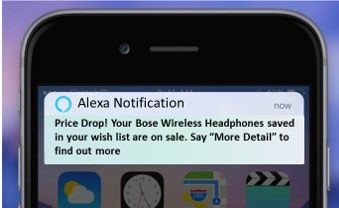
SOLUTIONS TO                                                                    an aggregated demand measure with a high correlation to
 ACCELERATE ADOPTION                                                             in-market success. An MSS score of 133+ indicates a high
                                                                                 probability of success in the market (see Figure 3).
In order to assess consumer acceptance of V-Comm with
barriers addressed, we imagined new ways it could come                           70% of concepts with a high MSS are successful when they
to life for users. We created hypothetical offers aimed at                       launch. Some now popular offers that achieved this before
minimizing the impact of the psychological underpinnings.                        they succeed in-market include Google Chrome browser,
The offers were tested with consumers through Vantis 2.0, a                      Gmail, Hulu (video on demand), Spotify, and Nest Learning
concept testing solution designed specifically for technology,                   Thermostat. With an MSS score between 67 and 133, the
durables and services. The survey responses to key                               probability of success reduces to 51%. But it is still possible
measures were compared to our database of 220+ relevant                          with the right marketing strategy, as observed with Amazon
digital innovations including voice recognition tools. One                       Kindle, Fitbit activity tracker, Apple iPad and Bose Bluetooth
output of this exercise is the Market Success Score (MSS),                       headset.

   Figure 3 Market Success Score

        0
                      Caution                      67
                                                              Hidden Winner?                    133
                                                                                                          Mass Potential                   200

                       17%                                             51%                                        70%

            Low performers have little chance of         Middle performers have a 50/50 chance.       Top performers are highly likely to be
                 success if launched as is                  Some surprisingly big ideas can be              successful in the market
                                                        disguised as middle performers in research

   Source: Vantis Database, Ipsos

                                                                                             IPSOS | CRACKING THE CODE FOR VOICE COMMERCE          6
SOLUTION 1: BRIDGE THE Figure 4 Saved Item (Price Drop) Concept
INVISIBLE GAP WITH STRONG
CONSUMER BENEFITS Alexa can you let me know when there’s a price
drop with saved items in your wish list.
Based on our experience with testing over 39,000 concepts,
we know that people need to see a strong benefit in
order to adopt any innovation. Convenience alone
is not enough. The Amazon Dash Button was built for
convenience, yet it failed and V-Comm could be on the same
path. Consumers need to feel that ‘V-Comm is on their side’
and working for them. This may take the form of competitive
prices or personalized predictive offers. For example, if
the voice assistant tracks and notifies a price drop it could
alleviate the need for tracking or compulsively checking for YOU: More details
notifications. To validate this, we tested it as a concept (see Alexa: Your Bose Soundlink Wireless II Headphones in your wish
Figure 4 ) which achieved an MSS of 162, a very strong
4
list are on sale from $160 to $120. Would you like to order?
performance. This confirms that with a strong benefit, YOU: Does it come in the colour black?
consumers are willing to adopt V-Comm. Alexa: Yes that’s in stock
YOU: Okay, order me the headphones
This offer provides users confidence – it leverages Alexa: Order placed, it will be delivered in the next 3 days
algorithms to save users money, an extremely strong benefit.
162
Focusing on a saved product removes the need for additional Market Success Score
context since the user would have pre-selected the product
and also reduces possibilities of error. 0 200
Integration across various tools such as calendars, emails Figure 5 Smart recommendations Concept7
and other apps can further fuel smart recommendations,
creating opportunities for V-Comm. With this in mind, Alexa can now integrate with other apps to help
we imagined the possibility of the assistant foreseeing make your life easier.
product needs based on a user query and offering to make YOU: What’s the weather in Yosemite next weekend?
a purchase. The results were surprisingly positive with an Alexa: Yosemite will have a high of 65 and low of 43 this
MSS of 131 (see Figure 5). While not an outright winner, the weekend. I noticed you have a ‘camping trip’ planned for next
results indicate a willingness to try the solution. weekend. Would you like to order some bug repellent in time for
this camping trip?
Expanding the willingness to try into wide adoption will YOU: Sure
require accuracy of predicting consumer needs and offering Alexa: REPEL Plant-based Lemon Eucalyptus Insect Repellant
the right product at the right moment. Pump Spray-4 ounce has almost 12,000 review and is 4 stars.
The price is $4.97. Would you like to order this one?
Both the offers discussed above are designed to bring YOU: Yes, buy two of those
consumers closer to the product by bridging the invisible Alexa: You got it! Ordering two REPEL Plant-based Lemon
gap with strong consumer benefits. These benefits create Eucalyptus Insect Repellant Pump Sprays , it will be delivered by
confidence for users regarding their decisions, representing Wednesday August 5
a new way to fulfill the Endowment Effect - a feeling of
131
control or ownership over their choices despite the absence Market Success Score
of visual cues.
0 200
IPSOS | CRACKING THE CODE FOR VOICE COMMERCE 7SOLUTION 2: CONTEXTUALIZE Figure 6 Replenishment Concept
THE TRANSACTION
Now you can order Tide pods through Alexa. If you
Replicating the context from eCommerce in a voice only have ever placed an order for Tide pods on Amazon,
interface is clearly not feasible. Hearing hours of information Alexa will simply repeat your last order.
about competitive offers will drown any benefits of using YOU: Alexa, order me Tide pods
voice. The solution is to offer simple V-Comm purchases Alexa: Sure, your last order was Tide Free and Gentle Laundry
that benefit from familiarity. A replenishment purchase is Detergent Pods, 81 count. Do you want the same one?
the lowest hanging fruit and one companies already offer. YOU: Yes, that sounds good
Providing contextual information in these transactions, Alexa: OK, the price is the same as last time, $19.99. Shall I
such as reiterating that the brand, size and price are the place the order?
same as the last purchase, is critical to improve user YOU: Yes
confidence. Voice assistants benefit from the ability to Alexa: Order placed, it will be delivered by Wednesday July 8
provide this added context during the interaction, unlike
145
the Amazon Dash Button, which could only send cues Market Success Score
post-purchase. Again, our results for the hypothetical offer
indicate strong acceptance with a Market Success Score of
0 200
145 (see Figure 6).
Without the benefit of a previous purchase (as in the Figure 7 Common household Purchase
replenishment scenario), the need for context is much higher.
This is where tech companies can lean on user ratings and Now you can order common household items
reviews to help build confidence. Consumers increasingly through Alexa. Ran out of toilet paper? Dish soap?
rely on ratings and reviews in order to avoid Buyer’s Trashbags? Let Alexa suggest the best product and
Remorse and our results indicate that these can also serve take care of it for you.
the purpose of contextualizing the decision in a V-Comm YOU: Alexa, order me some dish soap
transaction. While not everyone is willing to make the leap Alexa: Sure, you haven’t ordered dish soap through Amazon yet.
for such purchases, there is a sub-set of consumers who are The most popular item is the Palmolive Ultra Dish Soap. It’s a
very committed to using the service (see Figure 7). 32.5 oz bottle with 4 in a pack for $11.92. Do you want to hear
more options?
Buying or replenishing common household items may not YOU: No, but how many stars and review does is have?
create the strong user benefits proposed in our first solution. Alexa: It has 5 stars with 1,892 reviews.
These serve as stepping stones in building confidence. In YOU: Ok, place an order for that dish soap
our research, 50% indicated they are comfortable using Alexa: Order placed, it will be delivered by Wednesday July 8
V-Comm for common household goods, followed by 37%
153
for pantry staples and 36% food or beverage. 5 Successful Market success Score
voice assistant trial for low-involvement products will be
key in gaining trust, giving users confidence to attempt
0 200
more complex purchases as they will be a step closer to an
adopted behavior. Source: Vantis Database,Ipsos (Figure 4,5,6,7)
IPSOS | CRACKING THE CODE FOR VOICE COMMERCE 8Post-purchase cues such as email order confirmations or app also expect safety nets such as free returns on errors or free
notifications are also important as they allow users to engage updates to an order after purchase (see Figure 8).
their visual senses, further boosting confidence. Consumers
Figure 8 Consumers expect there to be safety nets in case of errors in purchasing
[Q] What additional steps do you think you’d want Alexa (or any other voice assistant) to take to make you feel comfortable
making a purchase with your voice?
100
80
60
58%
54%
50%
40 46%
20
Free returns for any orders Free returns for any incorrect Visual confirmation of correct Ability to update or edit your
placed with an error orders where product doesn’t product sent to your phone order, for a few hours, after
match your expectations before placing the order purchase for free
Source: Ipsos US Study6
IPSOS | CRACKING THE CODE FOR VOICE COMMERCE 9FINAL THOUGHTS
Consumers expect V-Comm to be a way of life and are willing without demanding more work from users such as repeat
to try offers that allow them to feel confident as evidenced items or smart recommendations show strong acceptance.
by the strong MSS scores in our test. Being consumer With the Amazon Dash Button, there was only one button
centric results in higher overall acceptance - our solutions for convenience, whereas voice assistants can provide
achieved an average of +9% over current usage of V-Comm customized and human interactions. This added exchange
(see Figure 9). Anything that saves money is especially resonates with consumers, as reflected in these scores.
appealing, while anything that slips into current routines
Figure 9 Change in acceptance over current usage
[Q] How likely are you to purchase am item through your digital assistant using voice only?
Saved Item (Price Smart Replenishment Common Household
Average
Drop) Concept Recommendations Concept Purchase Concept
+9% +14% +8% +9% +4%
Source: Ipsos US Study6
With these results and our experience with innovation, we called “assistants” for a reason since they are naturally built
offer a few key pieces of advice: to enhance consumers’ lives and do things for them. But
the human element needed for successful adoption
Keep consumers front and center. Technology driven is confidence. To build this:
innovation can be disruptive and successful if it
helps enhance people’s lives, offers a solution (not 1. B ring consumers closer to the offer by providing
just data) and provides confidence in the entire strong benefits that fulfill the Endowment Effect –
process. Technology advancements can often take over not just convenience.
the innovation pipeline and dilute the focus on consumers.
Invest in understanding your users and the behavioral 2. L everage available data to provide context –
biases that may underly their decisions. Understand the building confidence and reducing the possibility of
‘must-haves’ or entry requirements and create solutions Buyer’s Remorse.
geared towards overcoming the identified barriers. And
just building it isn’t enough – users need to be aware, 3. F ocus efforts and investment towards enhancing
understand and connect with the offer. Voice assistants are algorithms and providing an error-free experience.
IPSOS | CRACKING THE CODE FOR VOICE COMMERCE 10REFERENCES
1. Statista: Voice Commerce in the United States
2. Mintel: Voice Assistants and Skills - US - December 2019,
Ipsos MORI Technology Tracker, Q1 2019
3. https://www.bbc.com/news/technology-47416440
4. Mintel: Voice Assistants and Skills - US - December 2019
5. Respondents were shown offers with Alexa as an example
but were prompted to think about the voice assistant they
most preferred.
6. Ipsos US study: August 2020 among 600 adults 18-65
who own a voice assistant compatible device
IPSOS | CRACKING THE CODE FOR VOICE COMMERCE 11CRACKING THE CODE FOR VOICE COMMERCE Barriers and Solutions to Accelerate V-Comm Adoption SUPRIYA CHABRIA Global Lead Digital Innovation, Ipsos MAI SOMEYA Senior Account Manager, Ipsos In collaboration with the students of the 2nd Annual Master of Behavior and Decision Sciences Design Challenge at the University of Pennsylvania: Robert Bulford, Sara Sermarini, Fiona Yang, Dillon Myers, Jessica Miller, Nyaknno Owodiong-Idemeko The Ipsos Views white papers are produced by the Ipsos Knowledge Centre. www.ipsos.com @Ipsos
You can also read


