DigiPLACE online information session - WELCOME!
←
→
Page content transcription
If your browser does not render page correctly, please read the page content below

WELCOME!

 DigiPLACE
    online
information
   session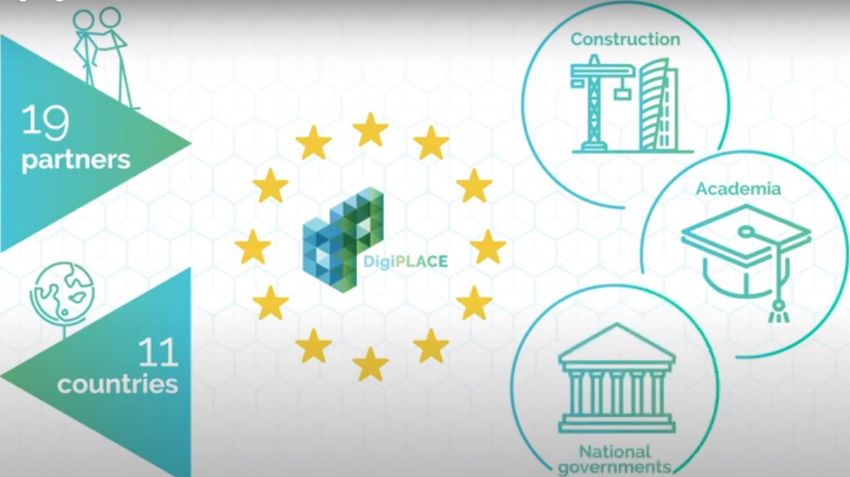
Moderation

  Carole BACHMANN
  ERA Manager

29/4/2020
Housekeeping rules

                                         REC
  no camera          mute   questions   recording

29/4/2020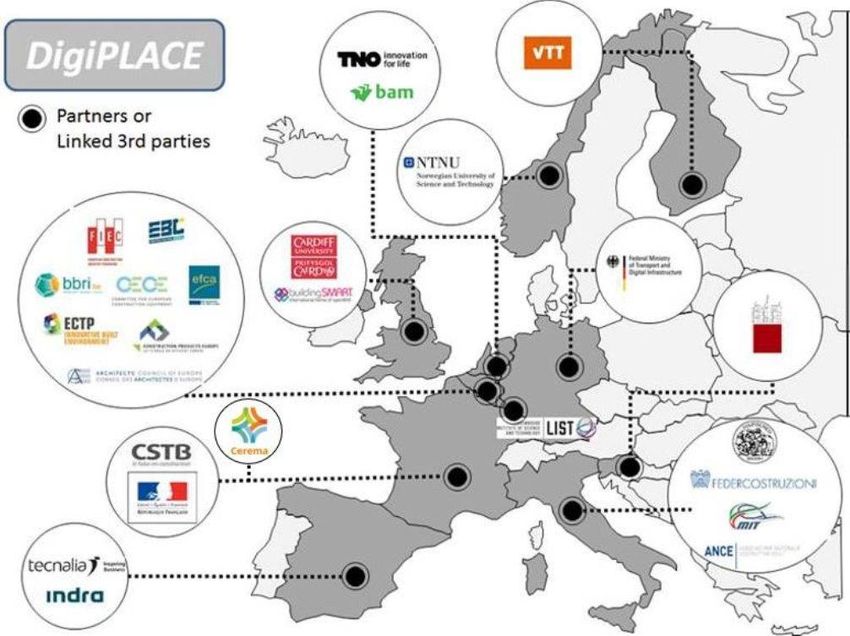
AGENDA
10:00 HOUSEKEEPING RULES BY THE MODERATOR
Carole BACHMANN, ERA Manager

10:05 WELCOME MESSAGES
Niklas NILLROTH, CECE President
Rositsa GEORGIEVA, European Commission

10:10 OPENING MESSAGE
Michel PETITJEAN, ERA Secretary General

10:15 DigiPLACE PROJECT PRESENTATION
Claudio MIRARCHI, Politecnico di Milano, DigiPLACE coordinator

10:30 DIGITAL LEVEL AND COMPARISON ANALYSIS
Alain ZARLI, ECTP Secretary General

10:50 OUTLINING THE DIGIPLACE REFERENCE ARCHITECTURE FRAMEWORK
Nicolas NAVILLE, CSTB

11:10 Q&A SESSION

11:25 CONCLUSION
Riccardo VIAGGI, CECE Secretary General

“WELCOME

Niklas NILLROTH
CECE President

29/4/2020
“WELCOME

Rositsa GEORGIEVA
European Commission

29/4/2020

“OPENING MESSAGE

Michel PETITJEAN
ERA Secretary General

29/4/2020

See the video here
29/4/2020                        8

“DigiPLACE
 PROJECT PRESENTATION

Claudio MIRARCHI
Politecnico di Milano
DigiPLACE coordinator

29/4/2020

The call

29/4/2020
DigiPLACE

Horizon 2020 work programme 2018/20 - Information and Communication Technologies

Call: H2020-DT-2018-2020
Digitising and transforming European industry and services: digital innovation hubs and
platform

Topic: DT-ICT-13-2019
Digital Platform/Pilots Horizontal Activities

Project 1st classified:
DigiPLACE (Digital PLAtform for Construction in Europe)

29/4/2020
The starting
              vision

29/4/2020
Construction information flow 29/4/2020
Private, national, EU information repository and platform

29/4/2020
Construction information needs

29/4/2020
The project

29/4/2020
The DigiPLACE project objectives

   The highest-level objective of the DigiPLACE project is to
    create a Reference Architecture Framework (RAF)
for the digital industrial platform for the construction sector
       based on a shared consensus along the entire chain

29/4/2020
Expected impacts 01: Increased productivity and sustainability of European Construction Industry 02: Facilitate the diffusion of a common language in the construction sector 03: Pave the way for the growth of smart cities and smart infrastructures 04: Strengthening the role of EU in Global Construction Ecosystem 05: Accelerated and efficient collaboration between public authorities and industry 06: Validation in usage context of usability, risk and security assessment …and sustainability 07: Maintaining and extending an active eco-system of relevant stakeholders, including start-ups and SMEs 08: Promote the diffusion of knowledge and facilitate the introduction of digital practices… 09: Tangible contributions from European key players to actively engage with the platform building Process 10: Efficient information sharing across the programme stakeholders for horizontal issues of common Interests 11: Facilitate the introduction of …Digital Transformation of the Construction sector 29/4/2020
DigiPLACE beneficiaries and Linked Third Parties
N. Beneficiary name Short name
1 Politecnico di Milano POLIMI
2 Centre Scientifique Et Technique Du Batiment CSTB
3 European Construction, Built Environment And Energy Efficient Buildings Technology ECTP
Platform
4 Indra Soluciones Tecnologias De La Informacion Sl INDRA
5 Conseil Des Architectes D'europe ACE
6 Buildingsmart International Limited BSInt
7 Committee For European Construction Equipment CECE aisbl
8 European Builders Confederation EBC
9 European Federation Of Engineering Consultancy Associations EFCA
10 Federation De L'industrie Europeenne De La Construction FIEC
29/4/2020DigiPLACE beneficiaries and Linked Third Parties N. Beneficiary name Short name 11 Univerza V Ljubljani UL 12 Federazione Delle Costruzioni FederC 13 Centre Scientifique Et Technique De La Construction CSTC 14 Construction Products Europe CPE 15 Ministere De L'ecologie Du Developpement Durable Des Transports Et Du Logement MEEM 16 Associazione Nazionale Costruttori Edili ANCE 17 Bundesministerium Fuer Verkehr Und Digitale Infrastruktur Dig BMVI 18 Bam Bouw En Techniek Bv BAM 19 Italian Ministry Of Infrastructure And Transports MIT 29/4/2020
DigiPLACE beneficiaries and Linked Third Parties
N. Linked 3rd Parties
1 VTT
2 CU/BRE
3 LIST
4 Tecnalia
5 NTNU
6 TNO
7 CEREMA
29/4/2020DigiPLACE beneficiaries and Linked Third Parties
Project
Coordinator
Linked 3rd Advisory
Parties Project Board
Steering Committee
Stategic
Sub Comunity of
Executive Board
Contractors Stakeholder
Operational
DigiPLACE beneficiaries
29/4/2020DigiPLACE Advisory Board Members N. Company name Referent name 1 McKinsey & Company Gernot Strube 2 Dassault Systèmes Gianluca Gonella 3 Ente italiano di normazione - UNI informatica Alberto Galeotto 4 ADN Construction Benoit Senior 5 CoBUILDER International Lars Christian Fredenlund 6 Acca Software s.p.a Guido Cianciulli 7 Unismart Padova Enterprise S.r.l. Stefano Carosio 8 International Data Space Association Lars Nager 9 Estonian Ministry of Economic Affairs and Communications Jaan Saar 10 Ministry of Construction and Physical Planning (Croatia) Maja Marija Nahod 29/4/2020
DigiPLACE Advisory Board Members

N.   Compay name                                                           Referent name
11   Czech agency for standardization (CESKA Agentura Pro Standardizaci)   Jaroslav Nechyba
12   BIM-architecture                                                      Mr Peter Hyttel Sørensen
13   European Rental Association                                           Carole Bachmann
14   Platform of Trust                                                     Toni Luhti
15   Finnish Association of Civil Engineers RIL                            Miimu Airaksinen
16   European Concrete Platform                                            Francesco Biasioli
17   Chamber of Construction and Building Materials, Chamber of
                                                                           Joze Renar
     Commerce and Industry, Slovenia
18   Neumarkt                                                              Marcus Schreyer
19   Engineering Ingegneria Informatica S.p.A                              Lafranco Marasso
20   IBM - International Business Machines Corporation                     Paul Surin

29/4/2020
DigiPLACE Advisory Board Members N. Company name Referent name 21 Vinci Marie Claire Coin 22 Trimble Jean-François Sourdoire 23 ENCORD Norbert Pralle 24 Autodesk Emmanuel Di Giacomo 25 Graphisoft (Nemetschek) Miklós Szövényi-Lux 26 Ecole de Téchnologie Supérieur, Québec Prof. Conrad Boton 27 Allplan (Nemetschek) Kevin Lea 29/4/2020
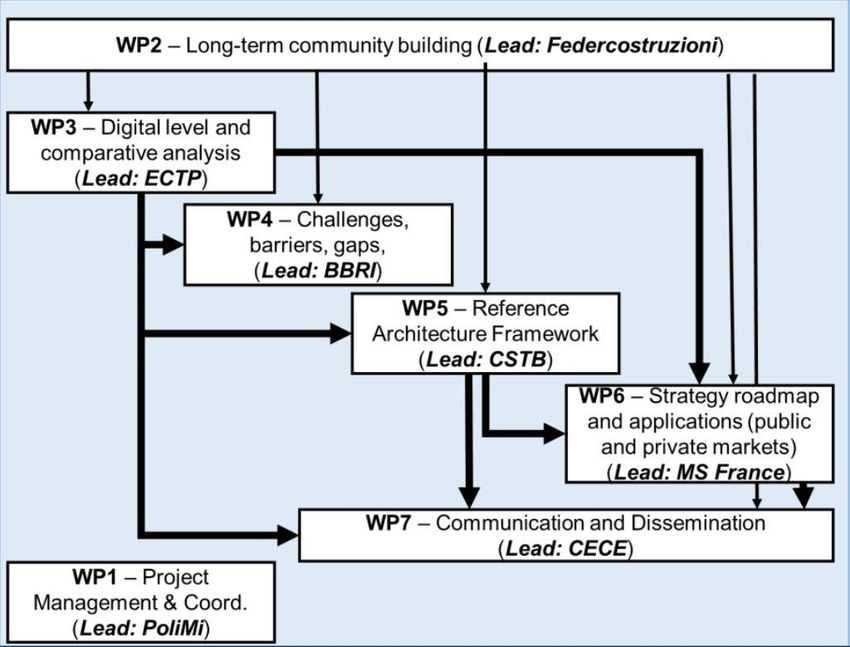
DigiPLACE project Work Packages WP1 – Project management - Politecnico di Milano WP2 – Long term community building - Federcostruzioni WP3 – Digital level and comparison analysis - ECTP WP4 – Challenge barriers and gaps - BBRI WP5 – Reference Framework Architecture - CSTB WP6 – Strategy roadmap (private and public markets) - MEEM WP7 – Communication and dissemination - CECE 29/4/2020
DigiPLACE project Gantt and state of the art
September 2019

                                          WP1 (WIP)
                                     WP2 (WIP)
         WP3 - Completed
                              WP4 (WIP)
                                               WP5 (WIP)
                                                           WP6
                                          WP7 (WIP)

                   Launch         April 2020                     February 2021   May 2021
                 conference

 29/4/2020
DigiPLACE project Work Packages
We are waiting you
in the community of
stakeholder:
https://docs.google.com/forms/d/e/1FAIpQLSdvtdZ
_C9N-4QrJfF0ahcL0IJ0-TKP-
6sLe1ucW5qLF8dR6mA/viewform?vc=0&c=0&w=1
29/4/2020“DIGITAL LEVEL & COMPARISON ANALYSIS Alain ZARLI ECTP Secretary General 29/4/2020
WP3 - Pave the way for DigiPLACE activities
• Provide a global vision of the level of digitalisation of the Construction sector
    •   Digital technologies & tools implementation
    •   Ongoing initiatives & existing digital platforms
    •   Actual practices
    •   Barriers & gaps
    •   Comparison with other industrial sectors
    •   …

  29/4/2020
T3.1 Level of implementation of digital technologies and industrial hubs/platforms in the EU construction sector and in other industrial sectors 29/4/2020
T3.1 – Methodology

            Identification of
                existing
              Construction        Characterization and
               platforms             1st Clustering of
                                  existing Construction
             Identification of           platforms
            evaluation criteria
                                                           Assessment of the level of
                                   Online survey to
                                                           implementation of digital
                                   assess end-users’
                                                          technologies & platforms in
                                    (practitioners)
                                                            the construction sector
                                       practices
                                                            (& some other sectors)

                                  Interviews with key
                                      stakeholders

29/4/2020
T3.1 – Characterization of existing platforms & 1st clustering
Criteria (15 items) Platform categories (1st clustering)
Name of the platform Generic (all phases)
Rights holder Design phase
Collaborative
Country of origin Construction phase
platforms
Platform category(ies) Operation & maintenance phase
Demolition & renovation phase
Deployment type(s) Object catalogues
Type of users Product catalogues
Type & number of users/licences Data and analytics platform
Materials re-use (circular economy)
Use coverage of the platform
Inventory & supply chain management
Type of property IoT Platforms
Open source? Marketplace for materials
Cost of the service Marketplace for digital services
… Risk management
… Other
29/4/2020 33T3.1 – Characterization of existing platforms & 1st clustering
Occurrences of platforms categories
• 300+ digital platforms listed
• Around 200 of them characterised
(with the previous criteria) and
clustered
29/4/2020 34T3.1 – Online survey (1/3)
Size of companies/org. who answered the survey
- Disseminated among “practitioners” of the
construction sector (currently still opened here)
- 186 responses, in 17 countries
- Provides a snapshot of :
• Their digital practices in the “real-world”
• What tools are used, why and how
• Their vision of digitization and their actual needs
• Etc.
Why not?
Do you use “advanced”
digital tools & tech.?
29/4/2020 35T3.1 – Online survey (2/3)
Which “advanced” digital tools & tech.
do you mainly use?
29/4/2020 36T3.1 – Online survey (3/3)
Many inputs received on:
• The added value of digital tools & tech. that practitioners see in their work
• The obstacles faced by practitioners in their digitalisation & the features/functionalities they actually need
Added value Obstacles and missing features/functionalities
Project efficiency & management (11 items) Standards and formats (11 items)
Business/economics advantage (6 items) Interoperability and connectivity (3 items)
Main categories
of the inputs Service to the client (2 items) Technical features (5 items)
received
Data & technical aspects (2 items) Cost and accessibility (4 items)
Lack of knowledge & openness in the construction
sector (2 items)
29/4/2020 37T3.1 – Interviews with key stakeholders across EU
• Objectives:
▪ Refine (country by country) the digitalisation context of the Construction sector & other sectors
▪ Collect examples & good practices
• Main observations at EU scale for the Construction sector:
▪ Global low level of digitalisation, due e.g. to the cost of technologies/tools or a certain conservatism
▪ Major gaps among companies in terms of size and subsectors:
▪ Digitalised large companies vs. non-digitalised SMEs
▪ Most digitalised: consultancy firms, then Architects, Planners, Engineers, Contactors...
▪ Strong incentive to digitalise to increase margins (when applied on the whole value chain), productivity,
quality, …, or simply to comply with clients’ demands
▪ Need for standards and harmonisation
▪ Need to share good practices among public & private stakeholders
▪ Large companies (technical & economic capacity) Can be drivers for digitalisation, by setting
Tendering obligations (in part. by public authorities) digital practices & rules that SMEs and the
Clients whole value chain will have to adopt
38T3.2 Comparative analysis of existing platforms in the construction sector and in other sectors 29/4/2020
T3.2 – Methodology
            Selection of some
              representative
               Construction       Detailed characterization of
             digital platforms       platforms & listing of
                                  features they offer/enable
             Identification of
            evaluation criteria                                  • Detailed & technical
                                                  Comparison       comparative analysis of
                                                                   existing platforms
                                  Same approach with other
                                                                 • Key aspects to take into
                                     sectors (healthcare,
                                                                   account for the development
                                    agriculture, aerospace,
                                                                   of DigiPLACE RAF
                                         automotive)
                                                                 • Identification of
                                                                   implementation options
                                  Collect opinions,                existing on the market
                                  consolidate & validate the
                                  platforms analysis.
                   Interviews     Show potential differences
                                  between what platforms
29/4/2020                         offer and how end-users
                                  actually use them.
T3.2 – Platforms analysed
• Construction digital platforms and tools analysed:
Company/organisation that
Name of the platform analysed
developed the platform
1 ACCA software PriMus-PLATFORM
2 ACCA software usBIM.platform
3 Autodesk BIM 360
4 Autodesk Revit
5 Cardiff University CUSP
6 CSTB KROQI
7 Dassault Systèmes 3DEXPERIENCE
8 IBM IBM Built Environment Platform
9 GRAPHISOFT ARCHICAD
10 GRAPHISOFT BIMcloud
11 TNO BIMserver.org
12 Trimble Trimble WorksManager
13 Government of Estonia E-Construction
• Global context and a few representative digital platforms for each of the sectors
considered: healthcare, agriculture, automotive, aerospace.
29/4/2020T3.2 – Evaluation criteria
• Assess the characteristics of existing platforms (architecture, functionality, services provided, standards,
adapted LOD, etc.):
• Use case and services: features proposed by the platform and the way they are implemented (40+ items)
• System functioning: how the platform works in terms of data management, architecture, etc. (30+ items)
• Usability: how the platform is adaptable to different kinds of users and needs (10+ items)
• Economic factors: cost of the platform and potential packages available (8 items)
• Some examples for the “System Functioning” criteria:
Compliance with the GDPR
3D modelling
Data property
Calculation/data capacity
Data storage (Where & how? Possible to chose the hosting
CDE (Common Data Environment) funtionalities: Data
country?)
-->Data format convertion tool availability security and
-->Data storage Property of the system
GDPR
Technical -->Data viewing Possibility to delete all the user's documents (incl. the
features -->Linked data backup files)
-->... ...
Cloud architecture Maturity of the system (incl. support, documentation, etc.)
Data sharing and diffusion Compatibility between different versions
Input data Robustness
Compatibility between different softwares
... ...
29/4/2020T3.2 – Main observations (1/2)
• The analysis provides a representative listing of what can be found on the market for all these criteria.
The RAF will consider them and make recommendations.
• Remarks for Construction platforms:
• “Collaborative platforms” offer a vast array of use cases & services, under many different forms
• If not directly integrated in the platform/tool, still often possible to access services through APIs
• Use of many formats, extensions, linked services, standards, etc. across software
• Major issues for all sectors for the development of a large scale digital platform:
• lack of standardisation Further development of IFC standard could be an answer. But other approaches
• low interoperability of software & services could be considered, e.g. the protocol-based standards in Healthcare.
• Some services/features are not properly answered in the Construction sector (e.g. Machine Learning,
Product Lifecycle Management, Requirements for Documentation) and could take example from
developments in other more “advanced” sectors such as Aerospace.
• Some interesting concepts identified, especially from the Healthcare sector:
• Horizontal platforms
• Integration & development platformsT3.2 – Main observations (2/2)
• Preliminary agreement on the definition of a digital platform - at least in the context of DigiPLACE:
Operating system that enables to plug-in services and to give access to data, with the
possibility to connect to other platforms, tools or applications via APIs.
29/4/2020T3.3 Impact analysis and success factors for the identification of possible points of knowledge transfer 29/4/2020
T3.3 – Methodology

                             Assess how SF are
                           currently addressed in
                           existing representative
                            Construction digital
                                                      For each SF: list potential
    Identify Success          platforms & tools
                                                      R&D orientations for the       To be further
      Factors (SF)
                                                       future development of        investigated in
   With their related                    Comparison      DigiPLACE RAF and           WP5 & WP6
issues & interrogations
                                                              Roadmap
                          Same approach with other
                              industrial sectors
                           (healthcare, automotive,
                                  aerospace)

 29/4/2020
T3.3 – Success Factors
Success Factors: focus points that the DigiPLACE RAF should consider, in order to fulfil the objectives of the
DigiPLACE project.
TECHNICAL ASPECTS DEMAND / REGULATORY ASPECTS
1 Interoperability and sustainability 13 Capacity to check compliance with regulations & certifications
2 Collaboration enabler 14 Capacity to answer the demand/needs of every kind of stakeholder
3 Single entry point 15 Relying on the national level, by interconnecting with national
platforms
4 Capacity to connect several platforms both at regional and national
levels
5 Integration of both public and private data ECONOMIC ASPECTS
6 Easier circulation of / access to services and products
16 Identification of clear funding mechanisms / systems (analysis of
the economic sustainability of the platform)
7 Maintenance of data
17 Identification of business cases for all stakeholders
8 Maintenance and update of the services
18 Increase of the competitiveness for all the value chain
9 Adequate backup of data
10 Be customizable
SECURITY ASPECTS
11 Be scalable and dynamic (provide an environment able to integrate
new/existing tools) 19 Information and data security
12 Efficient and fast data management and data queries 20 GDPR compliance
29/4/2020T3.3 – Main remarks on the comparison between sectors (1/2)
• Many industries share common elements of context:
• impetus for digitalisation
• need for more cross-boarders/sectors cooperation
• increasing amount and complexity of the data to deal with
• need to comply with new regulations
• need to standardise practices and formats, e.g. to facilitate cooperation projects
• etc.
• Thus, SF added-value is not limited to Construction. SF are addressed in other sectors, e.g.
standardisation:
• All have adopted - or tend to adopt - international standard formats and APIs.
E.g. IFC standard, promoted by many stakeholders in the Construction sector, is also used in
Healthcare and Aerospace
• Some sets of standards are very specific to sectors
E.g. ISO TC184 series for automation process in Aerospace
29/4/2020T3.3 – Main remarks on the comparison between sectors (2/2)
• Major differences in the comprehension of the purpose & characteristics of platforms:
• The need for interconnected platforms, with an important role for public authorities at regional/national
level, seems more adapted to fragmented sectors (Construction, Agriculture) where the markets and
regulations have as well mostly remained national.
• Interconnected national platforms are not really considered in sectors like Aerospace and Automotive,
where the market is dominated by fewer & bigger service providers having their own proprietary solutions.
• Inspiration could be taken from other sector for specific feature. E.g. regarding private data
protection in Healthcare.
• The concept of RAF, in the sense of DigiPLACE, does not seem to be existing in the other industrial
sectors - at least the ones studied here.
• A structure enabling to fulfil the 20 previous success factors (and maybe others) would certainly help
the Construction sector to catch up on digitalisation compared to other sectors, as well as to become
more attractive
29/4/2020T3.3 – R&D orientations and next steps
• For the future development of an EU digital platform concept, T3.3 has exposed a certain number of:
• Challenges
Refer to D3.3 for the
• Open questions complete listing
• Possible ways of implementation
• Based on these observations and on the expertise of the stakeholders involved in the project, a list of R&D
orientations for each Success Factor has been made.
From there and from the other WP3 inputs:
• WP4 → further descriptions and possible solutions to the barriers identified
• WP5 & WP6 → further analyses, compare potential ways of implementation, etc., and ultimately to provide
final answers through the development of the DigiPLACE RAF and Roadmap.
• Crucial questions will have to be answered in priority, since they will necessarily orientate the way to consider
many Success Factors. E.g.:
• Should DigiPLACE foresee the possibility of allowing users to work on a collaborative construction project or not (i.e.
from an engineering point of view)?
29/4/2020“OUTLINING the DigiPLACE REFERENCE ARCHITECTURE FRAMEWORK Nicolas NAVILLE CSTB 29/4/2020
OUTLINE

•   What is DigiPLACE Reference Architecture Framework ?

•   Defining DigiPlace key Use Cases

29/4/2020                                                  52
Core of DigiPLACE project

                              WP3 – Digital                                           WP4 – Barriers and
                          technologies and tools                                    factors for digitalisation
                                adoption                                                 enhancement

            • Levels of implementation of digital
                                                                                             Needs, challenges
             technologies in the construction sector
                                                                                          Barriers (technical, social)
             • Comparative analysis of existing
                                                                                                     Gaps
               platforms in other industrial sectors
                                                          WP5 – Reference
                                                       Architecture Framework

                                                           3 different scenarios
                                                       SWOT analysis for each scenario

                                                                                 WP7 – Communication &
                             WP6 – Strategy roadmap
                                                                                     dissemination

29/4/2020                                                                                                                53
What is the Reference Architecture Framework ?
A new european digital
construction platform ?
Reference Architecture
Framework
Common guidelines for building and
implementing digital platforms for the
construction sector across europe
(public or private, local or european…)
29/4/2020 54What is the Reference Architecture Framework ?
A new european digital
construction platform ?
Reference Architecture Provide common services and tools to help
Framework connect/integrate existing platforms ?
Common guidelines for building and
implementing digital platforms for the
construction sector across europe
(public or private, local or european…)
29/4/2020 55What is the Reference Architecture Framework ?
A new european digital
construction platform ?
Reference Architecture Provide common services and tools to help
Framework connect/integrate existing platforms ?
Common guidelines for building and
implementing digital platforms for the
construction sector across europe
(public or private, local or european…)
29/4/2020 56Identifying DigiPLACE key use cases • A Reference Architecture Framework … to answer Use Cases • Key use cases of DigiPLACE : WHAT ? WHAT FOR ? HOW ? 29/4/2020 57
Use cases : underlying objectives

 •   Environmental performance, climate change
 •   Industry 4.0, productivity gains, common language, interoperability
 •   Digitalization of SMEs
 •   Knowledge sharing, mutual learning, best pratices exchange
 •   Data sharing, artificial intelligence tools
 •   Market integration and strengthening: call for tenders, supply chain management,
     smart contracts, IPR…
 •   Integrating other European initiatives : LEVELS, CPR, Building Passport, European
     Building Stock 2.0…

29/4/2020                                                                                58
Use cases definition : several inputs
WP3
Implementation level of T5.1 : Use Cases and specifications
3.1
digital technologies
Questions to answer :
Comparative analysis of
3.2
existing platforms
Key use cases : - Do existing services answer the core
A Identification, objectives, the needs and barriers
Impact analysis of investigation
3.3
technology transfers identified ?
Technical - What is missing in the current
WP4 situation ? Where are the
B expectations and
Social and technical
4.1
barriers
specifications shortcomings ?
- How to fill the gap ?
Sharing data : - How better european integration can
4.2
willingness and tools
High level
C
specifications improve things ?
Needs & expectations of - What should be replicated from
4.3
stakeholders, SMEs
other sectors ? Generalized at
4.4
Measures to mitigate European scale ?
barriers
Pilot case studies for T5.2 : Reference architecture framework
4.5
proposed measures (3 scenarios)
29/4/2020 59Use Cases definition : overview of identified topics
Area Examples of use case categories
Common language, interoperability Interoperable product/object data databases
Provide a map of existing digital standards
Regulations Access to national construction rules, rules
checking tools
Cadastre, urban and real estate data retrieval
Knowledge sharing Sharing of private data with AI analytics
Best practices exchange on BIM projects
Collaboration tools Common guidelines for BIM services to improve
interoperability
Business, market Supply chain management (industry 4.0, off-site,
link between conception and manufacturing)
Dedicated tools/servicse for SMEs digitalization
Environmental performance (transversal) Ease access to Environmental Produc Data
Provide LCA tools, collect and analyse LCA data
29/4/2020 60Next steps
• In progress : brainstorming for the definition and description of key use cases
> Identify use cases and build a consensus among European stakeholders
> By September 2020
• Building scenarios for the Reference Architecture Framework (T5.2)
• Strategy Roadmap (WP6)
29/4/2020 61Q&A 29/4/2020
“CONCLUSION
Riccardo VIAGGI
CECE Secretary General

29/4/2020
Community of Stakeholders
Join the DigiPLACE Community of
Stakeholders and actively contribute to
building the European Digital Platform
for the construction ecosystem.

You have the opportunity to be heard
and have your inputs valued!

Go to the registration page
or use the QR code
29/4/2020
Follow us
           Digi_PLACE
           DigiPLACE
           DigiPLACE

     www.digiplaceproject.eu

THANK YOU!
You can also read


