DINOSAUR BEHAVIOR - Leighton Moylan and Olivia Silva
←
→
Page content transcription
If your browser does not render page correctly, please read the page content below
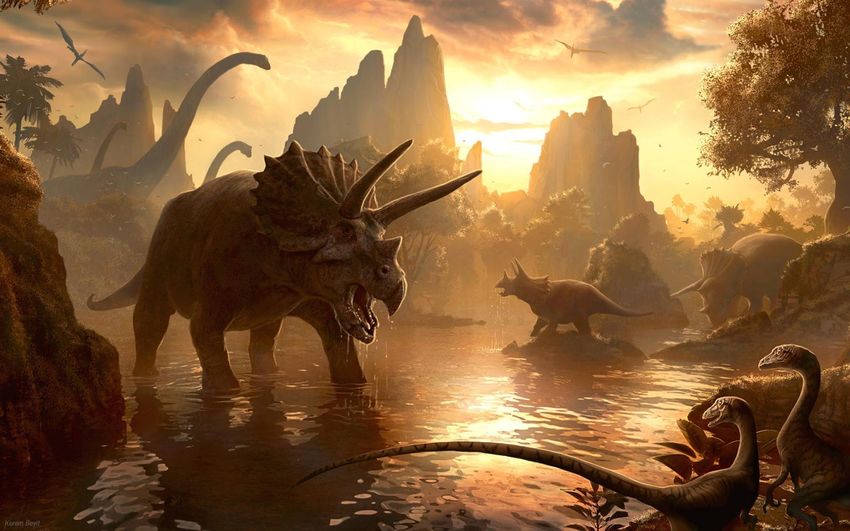
DINOSAUR BEHAVIOR

     Leighton Moylan and Olivia Silva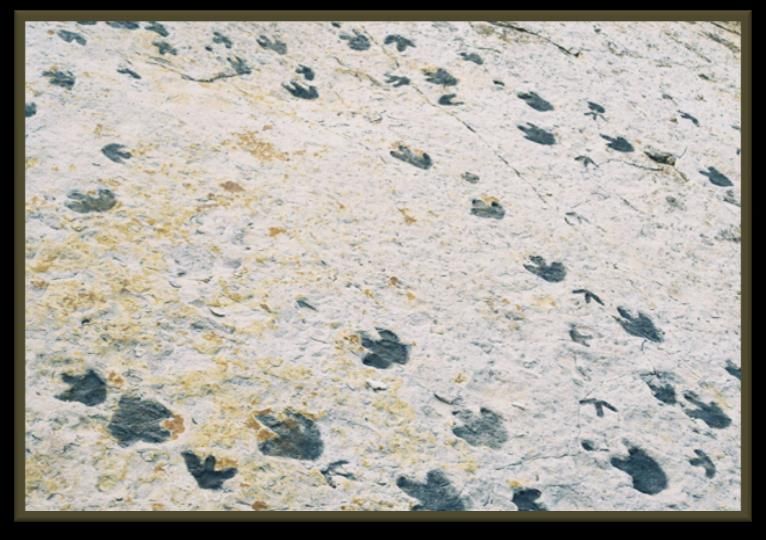
1

Table of Contents
Introduction        2
Classification      4
Herbivores          5
Omnivores           7
Carnivores          9
Extinction          11
Birds               12
Glossary            13
Image Credits       17
About the Authors   18

2

Introduction
    The term dinosaur refers to a group of extinct animals that
lived 230 million years ago that belonged to the reptilian kingdom.
Dinosaurs thrived during the Triassic, Jurassic, and Cretaceous
periods, which spanned 164 million years. Dinosaurs were the
dominant terrestrial animals during the prehistoric era. These
animals are separated into three
main    groups:           herbivores,
carnivores, and omnivores,
which   are        based        on     the
dinosaurs’ diets.          Herbivores
only ate plants, carnivores only
ate meat, and omnivores ate
both plants and meat.
    Scientists            who        study
prehistoric animals, such as                                   Small dinosaur fossils

dinosaurs, are known as paleontologists.
The only information paleontologists can find about dinosaurs come
                                     from their fossils, which are preserved
  Did you know?                       dinosaur skeletons and traces (such as
  The   Chinese       thought         footprints and feces).
  dinosaur      fossils    were
  dragon bones and used
  them to make medicine.
  The   first     recognized
  dinosaur      fossils    were
  found in England.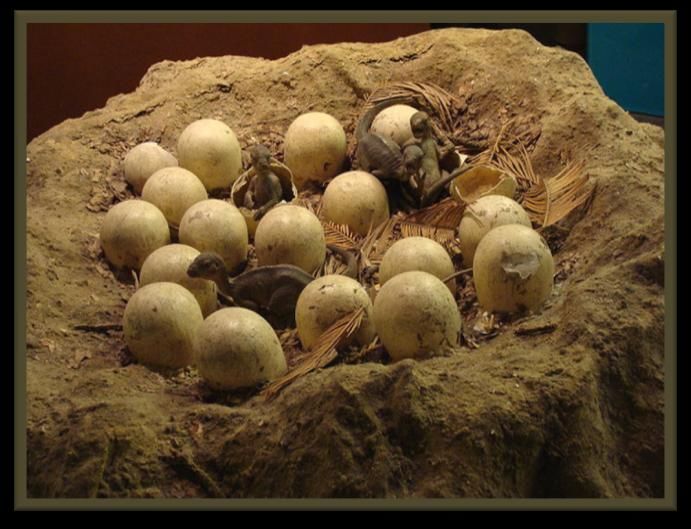
3

 Introduction
    Scientists can hypothesize about dinosaur behaviors just by
observing the fossils.         There are
certain physical traits that reflect
certain behaviors.        For example,
carnivores need sharp teeth to be
able to tear meat.         By analyzing
fossils, scientists are also able to
estimate the time that the dinosaurs
existed.
    Paleontologists                     have
discovered   over     1,000         different

species of dinosaurs. Fossils must be             The basic tools used by paleontologists

carefully cleaned and dug up using special tools such as
paintbrushes and dental picks. This process is very tedious because
the fossil itself must remain unharmed while the soil must be
                                                completely removed.

              Dinosaur footprints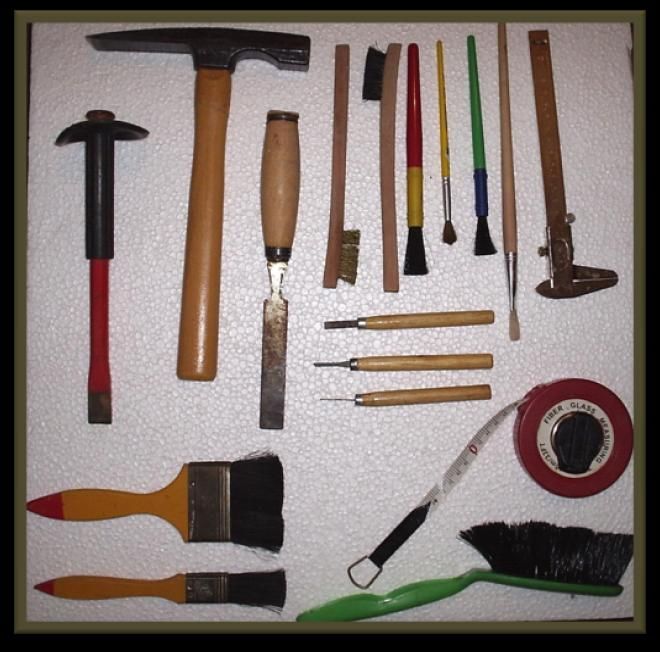
4

Classification

    Dinosaurs belong to the kingdom Animalia, phylum Chordata,
and class Reptilia.           As with other reptiles, all dinosaurs lay
amniotic eggs, which means they do not require water to survive.
Most species made elaborate nests for their eggs.              One species,
Maiasaura, lived in packs and nested in colonies. There were only
seven meters between each nest, and each nest contained 30 to 40
eggs. The mother did not sit on her young to keep them warm;
instead, she inserted rotting plants in the nest, which would emit
heat.
    Although paleontologists do not have evidence, they speculate
                                                that dinosaurs had similar
                                                skin to modern reptiles,
                                                which have impermeable
                                                scales.    Dinosaurs share
                                                multiple     traits       with
                                                common     reptiles,     which
                                                allows      scientists      to
                                                hypothesize that dinosaurs
    A reconstructed Maiasaura nest with eggs
                                               had   an    epidermis      that
resembled that of reptiles.
    Scientists do not know much about the physiology of soft
tissues in dinosaurs because there are not many fossils containing or
depicting organs.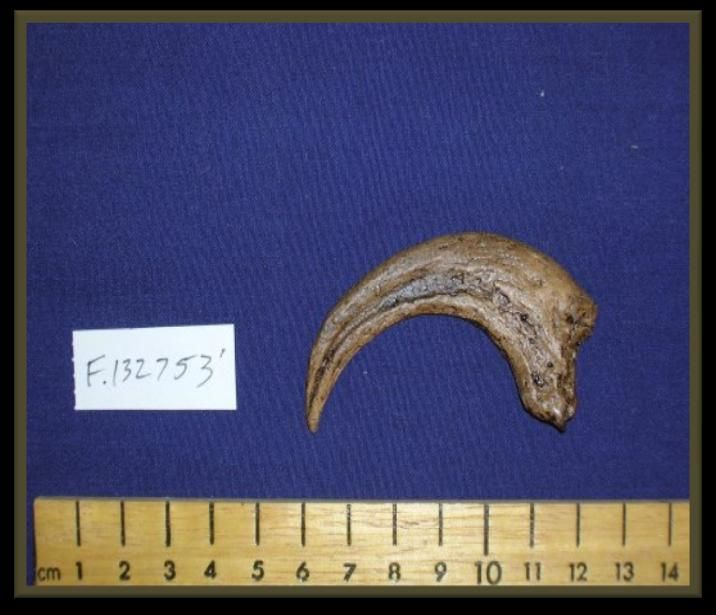
5

Herbivores

     Paleontologists have discovered numerous herbivore dinosaur
fossils.   They are easily identifiable
because       of    their      distinguishing
physiological features. Herbivorous
dinosaurs had teeth for consuming
plants, which were much different
from those of carnivorous dinosaurs.
     The        most          well    known

                                                    The Brachiosaurus, a type of Sauropod
herbivorous          dinosaurs       are   the
Sauropods. They are noted for their elongated necks, small heads,
                                                 and long front legs. These
                                                 animals also had long tails,
                                                 which scientists speculate
                                                 were for rearing up on their
                                                 hind legs. The tail balanced
                                                 the dinosaur and acted like
                                                 a tripod.     Sauropods had
t
           Examples of gastroliths
e
eth that were blunt, narrow, and well spaced. They were used to
rake leaves off trees and vegetation off the ground.
     These dinosaurs could not chew their food; they swallowed
rocks known as gastroliths to churn the vegetation and aid in
digestion. Paleontologists often found gastroliths in the abdomens
of fossilized dinosaurs and considered this digestive behavior
specific to herbivorous dinosaurs.
6

Herbivores

    The other main category of herbivores was the Ornithopods.
Unlike Sauropods, these dinosaurs were able to chew their food;
therefore, swallowing gastroliths was unnecessary.             Their jaws
resembled a beak of a bird and had hind teeth that were for chewing
vegetation.      Their teeth were grouped into sections and were
serrated, similar to a cheese grater. As old teeth wore out, new teeth
replaced them.
    These dinosaurs thrived on plants low to the ground, as
evidenced by their small necks and short height. These dinosaurs
                                          were       originally        small
                                          bipedal       organisms, but
                                          they     eventually       evolved
                                          into    larger      quadrupedal
                                          animals.          The      earliest
                                          Ornithopods were only one
              A bipedal Ornithopod       meter long, where the later
dinosaurs were 15 meters long. Ornithopods were able to run,
despite   their      large     bodies.
Running was one of their few
defense mechanisms; they did
not have sharp teeth or claws.
The smaller Ornithopods were
the fastest dinosaurs.

                                         A drawing of a quadrupedal Ornithopod
7

Omnivores

    There were also omnivorous dinosaurs, or those that ate both
plants and meat. Some carnivorous dinosaurs were found with
plants in their intestines, but most of these instances appear to be
coincidental. However, paleontologists have evidence that there
were dinosaurs that consumed both plants and animals on a regular
basis. Omnivores often had physiological survival advantages that
                                            allowed   them    to   rely    on
                                            numerous food sources. Most
                                            of   these   dinosaurs        were
                                            medium       sized      because
                                            accessing all both plants and
                                            animals was necessary for
                                            their survival.
                                                 Omnivorous        dinosaurs
                                            were physiologically capable

     An illustration of Heterodontasaurus   of consuming a variety of
                                            foods. One specific dinosaur,
Heterodontasaurus, had teeth that were specifically for eating both
plants and animals. It had pointed canine teeth similar to those of
carnivores such as T. rex and more robust back teeth that were for
grinding vegetation.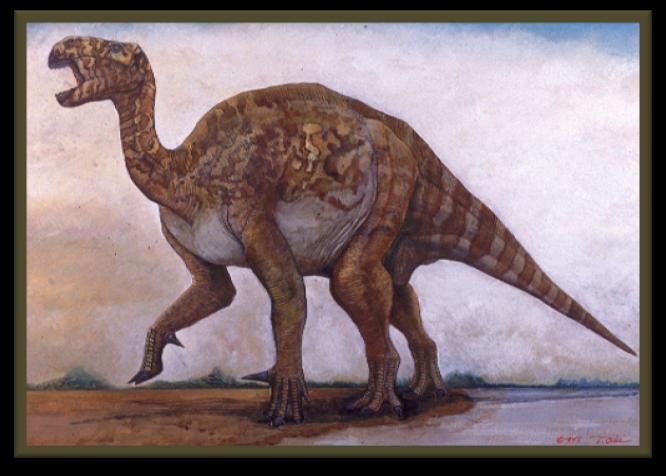
8

Omnivores

     Ornithomimus was a large dinosaur at four meters long and
could run at high speeds similar to a modern ostrich. It also had a
large beak-like mouth that lacked teeth. This mouth structure would
not be suitable for eating meat. Instead, scientists speculate that this
dinosaur survived on a diet that was mostly plants with some small
animals. Ornithomimus could reach high speeds and had a beak,
which are characteristics of carnivores and herbivores, respectively.
     Scientists originally thought that omnivores, such as Oviraptor,
preyed upon other dinosaurs’ eggs. This came from a discovery of
an Oviraptor fossil in a presumably predatory position over a nest
                                                          of eggs. However, scientists
                                                          later found that the eggs
                                                          were Oviraptor offspring
                                                          and    realized    that   the
                                                          dinosaur was protecting its
                                                          eggs. Its mouth structure
                                                          reinforced the notion that
                                                          Oviraptor did not eat eggs.
                                                          The jaw had no teeth, but it
                                                          did have strong muscles.
                                                          This structure would not
                                                          be efficient for cracking
The Oviraptor, which was not an egg hunter, contrary to     eggshells,      but     was
                   early hypotheses
                                                            effective for consuming
plants and crushing shells of animals, such as clams.
9

Carnivores

      Many dinosaurs in the prehistoric era were carnivorous,
meaning they hunted and ate meat as their food. These predators’
physiology        allowed        them        to     be
efficient and effective when hunting.
The     ability      to     hunt       the     large
herbivores was necessary for survival.
Because they relied on their ability to
hunt, chase, and kill other animals,
their physiology became adapted to
such        requirements.             As       these
dinosaurs developed, they evolved to
become         the        most       dangerous
creatures on land.                                       Spinosaurus, the largest known carnivorous
                                                                 dinosaur at 17 meters long
      Dinosaurs hunted in some ways
                                                         similar to those of modern
                                                         reptiles.            Carnivores
                                                         needed sharp and deadly
                                                         tools to kill their prey,
                                                         which is why most had
                                                         large, sharp teeth and
                                                         claws. Some, specifically
                                                         Velociraptors, developed
                                                         one large

       An example of a Velociraptor claw with its
                   measurements
10
Carnivores
sickle-shaped claw on each of its hind feet. This claw, which could
be over six centimeters long, was raised while running to provide
little resistance to the dinosaurs’ speed
and could be utilized for killing prey. Did you know?
Carnivorous dinosaurs were often much The smallest dinosaur,
larger than most herbivores and Anchiornis huxleyi, was
the about size of a
omnivores. The smaller dinosaurs were
pigeon. It was only 35
as deadly as the larger, especially when
centimeters long.
they hunted in packs. Carnivores acted
very similarly to modern lions when they hunted. Solitary hunters,
such as T. rex, waited in hiding as a pack of other dinosaurs passed
by. The attacker would then sprint toward the back of the group,
where the slowest dinosaurs were.
Carnivorous dinosaurs were important to the prehistoric
ecosystem. There
were fewer carnivores
than herbivores, but
their hunting
prevented population
of herbivorous
A fossil of a Velociraptor and Protoceratops locked in battle dinosaurs from growing
rampantly.
Herbivores required numerous plant sources, and by
controlling the herbivore population, the carnivores kept the
ecosystem in balance. In turn, their reliance on other carnivores as
a food source kept their own population in check.11
Extinction
Scientists are still unsure what caused dinosaurs to become
extinct; however, there are some valid hypotheses. Some scientists
support the idea that an asteroid collided with the earth and caused
a long nuclear winter. There is a 180-kilometer wide crater located
in the Gulf of Mexico that scientists think was caused by the impact
of the asteroid. Despite this evidence, some scientists theorize that
the extinction was caused by volcanic eruptions, sea level changes,
and climate changes.
An estimated 75% of all species on earth became extinct during
this event, including all non-avian dinosaurs, which were the
dinosaurs that could not fly. Scientists speculate that these animals
ran out of food and starved. However, they do not know if the
extinction occurred gradually or suddenly. There is evidence
supporting both gradual and sudden extinctions.12
Birds
The bird-like dinosaurs survived the mass extinction, which
allowed for further evolution. Scientists theorize that some birds
today, such as chickens, evolved from avian dinosaurs. Some
dinosaurs, such as Anchiornis huxleyi, had feathers, which supports
this theory. Scientists also classify dinosaurs according to their
skeleton type: bird-like or lizard-like. Some herbivorous dinosaurs
had a mouth structure that was similar to the common bird today.
In addition, the skeletons of some dinosaurs resembled those of
modern birds.
There is behavioral evidence that birds are descendants of
dinosaurs. Fossils of Sinornithiodes indicate that dinosaurs slept
with their heads tucked under their arms, as modern ostriches do.
In addition, there are fossils that show evidence of soft-tissue
structures, such as lungs, that are similar to modern birds’ organs.13
Glossary
amniotic eggs- eggs that do not require water and have a hard shell
bipedal- uses two legs to walk
Canine teeth- sharp, pointed teeth used for tearing meat
carnivores- animals that only eat meat
Dinosaur- group of reptilian animals from the prehistoric era that
became extinct
Ecosystem- a community of organisms and their environment
gastroliths- stones that dinosaurs would swallow to churn food in
their stomach
non-avian- dinosaurs that do not fly
herbivores- animals that only eat vegetation
omnivores- animals that eat both meat and vegetation
paleontologists- scientists that study prehistoric animals
Physiological- pertaining to the functions of organisms and their
parts
Sickle-Shaped- crescent shaped
terrestrial animals- animals that live on land14
Image Credits
Cover- http://www.blirk.net/dinosaurs-wallpaper/4/1680x1050/
Page 2- http://www.freeimageslive.co.uk/files/images006/
Page 3- http://upload.wikimedia.org/wikipedia/commons/3/39/
http://geochristian.files.wordpress.com/2008/10/dinoridge-tracks.jpg
Page 4- http://1.bp.blogspot.com/bs6Y4q1Gi4I/UPBboCV3nsI/AAA AAAAAP6Y/BkCqA_KBTRs/s1600/800px-
Maiasaura_Nest _Model.001_-
Page 5- http://www.kidsdinos.com/images/dinosaurs/Brachiosaur us1140906630.jpg
http://1.bp.blogspot.com/_1f8qaegCiyU/S5egU7z0dAI/AAAAAAAABgY/gmHG01D8pnk/s400/gastrolit
hs.jpg
Page 6- http://3.bp.blogspot.com/-h0ZMvi6W0Vo/TjWtvOTPcgI/A AAAAAAAASc/hHpbiFEs3H4/s
http://img.geocaching.com/cache/91c965da-5761-4aac-a32e-14b1f873fb1c.jp
Page 7- http://animal.discovery.com/dinosaurs/heterodontosaurus .htm
Page 8- http://jarek-boxjellyfish.blogspot.com/2011/10/oviraptor .html
Page 9- http://www.kidsdinos.com/dinosaurs-for-children.php?din osaur=Spinosaurus
http://australianmuseum.net.au/image/Velociraptor-claw
Page 10- http://www.baystatereplicas2.com/wp-content/uploads/2013/03/DINO_veloprotofighting_GASTON.jpg15
About the Authors
Leighton Moylan is a senior at Mass Academy of Math
and Science. He enjoys writing both books and music.
In his spare time he likes to play football and the
guitar. Leighton is an avid dinosaur enthusiast and is
ecstatic to have worked on this project.
Olivia Silva is senior at the Mass
Academy of Math and Science.
She loves writing, sailing, and
skiing. In her free time, she
enjoys drawing and reading. She
had a wonderful time writing this
book.You can also read


