Diversion Colitis and Probiotic Stimulation: Effects of Bowel Stimulation Prior to Ileostomy Closure
←
→
Page content transcription
If your browser does not render page correctly, please read the page content below
ORIGINAL RESEARCH
                                                                                                                                                 published: 25 June 2021
                                                                                                                                         doi: 10.3389/fmed.2021.654573

                                              Diversion Colitis and Probiotic
                                              Stimulation: Effects of Bowel
                                              Stimulation Prior to Ileostomy
                                              Closure
                                              Ángela Rodríguez-Padilla 1 , Germán Morales-Martín 1 , Rocío Pérez-Quintero 2 ,
                                              Ricardo Rada-Morgades 2 , Juan Gómez-Salgado 3,4* and Carlos Ruiz-Frutos 3,4
                                              1
                                               Department of General Surgery, Infanta Elena University Clinical Hospital, Huelva, Spain, 2 Department of General Surgery,
                                              Juan Ramón Jiménez University Clinical Hospital, Huelva, Spain, 3 Department of Sociology, Social Work and Public Health,
                                              Faculty of Labour Sciences, University of Huelva, Huelva, Spain, 4 Safety and Health Postgraduate Programme, Universidad
                                              Espíritu Santo, Guayaquil, Ecuador

                           Edited by:
                        Marcello Dallio,      Background: Diversion colitis is a non-specific inflammation of a defunctionalised
          University of Campania Luigi
                                              segment of the colon after a temporary stoma has been performed. This inflammation is
                         Vanvitelli, Italy
                                              associated with a change in the colonic flora.
                        Reviewed by:
                 Ruggiero Francavilla,        Aim: To evaluate the efficacy and safety of preoperative stimulation of the efferent
    University of Bari Aldo Moro, Italy
                       Fabio Campos,
                                              loop with probiotics prior to closure of the protective ileostomy in patients operated
    Universidade de São Paulo, Brazil         on colorectal carcinoma and its effect on diversion colitis. A prospective, randomised,
                   *Correspondence:           double-blind, controlled study is carried out.
                 Juan Gómez-Salgado
                  jgsalgad@gmail.com          Methods: Patients who underwent surgery for colorectal carcinoma with protective
                                              ileostomy pending reconstructive surgery and with diversion colitis as diagnosis are
                    Specialty section:        included. Randomised and divided into two groups. Histological and endoscopic
          This article was submitted to
                      Gastroenterology,       changes were evaluated after stimulation, after restorative surgery and during the
                a section of the journal      short-term follow-up after surgery.
                   Frontiers in Medicine
                                              Results: Patients in CG were distributed according to the endoscopic index of severity in
          Received: 16 January 2021
            Accepted: 31 May 2021             pre-stimulation/post-stimulation as follows: severe n = 9/9 (25.7%), moderate n = 23/23
           Published: 25 June 2021            (65.7%), and mild n = 3/3 (8.6%); compared to the distribution in SG, severe n = 9/0
                             Citation:        (26.5/0%), moderate n = 23/3 (67.6/8.8%), mild n = 2/19 (5.9/55.9%) and normal
                  Rodríguez-Padilla Á,
 Morales-Martín G, Pérez-Quintero R,
                                              colonoscopy in 0/12 patients (0/35.3%).
Rada-Morgades R, Gómez-Salgado J
                                              Conclusion: Probiotic stimulation of the efferent loop is a safe and effective method,
  and Ruiz-Frutos C (2021) Diversion
     Colitis and Probiotic Stimulation:       managing to reduce both macroscopic and microscopic colitis, as well as a decrease in
 Effects of Bowel Stimulation Prior to        symptoms in the short term after reconstructive surgery.
                   Ileostomy Closure.
               Front. Med. 8:654573.          Keywords: diversion colitis, efferent loop stimulation, ileostomy closure, inflammatory bowel diseases, IBD
    doi: 10.3389/fmed.2021.654573             management, probiotics

Frontiers in Medicine | www.frontiersin.org                                          1                                              June 2021 | Volume 8 | Article 654573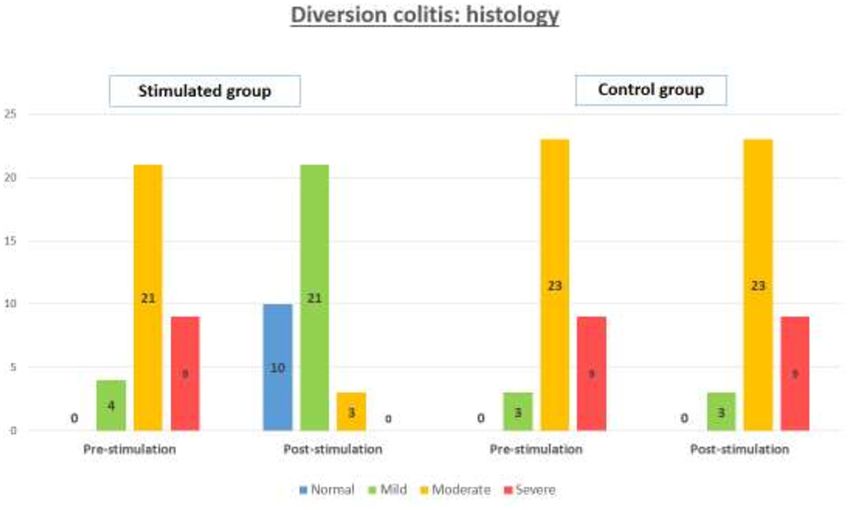
Rodríguez-Padilla et al.                                                                                 Diversion Colitis and Probiotic Stimulation

INTRODUCTION                                                             MATERIALS AND METHODS
In Western countries, rectal cancer represents 28–35% of all             Study Design
colorectal cancers, with an incidence of 15–25 new patients per          Prospective,     randomised,       multicentre,     double-blind
100,000 inhabitants/year. Its greatest complication is anastomotic       experimental study, comparing two groups of patients operated
leakage, with an incidence of 25% (1). The creation of a                 on for colorectal carcinoma with protective ileostomy. One
temporal ileostomy in patients operated on for colorectal                group includes patients treated with stimulation of the efferent
carcinoma by means of a low anterior resection with total                loop with probiotics prior to transit reconstruction surgery; the
excision of the mesorectum, reduces the morbidity associated             other control group is stimulated without giving any substance.
with anastomotic leakage (2). Around 18–40% of patients
will present complications, such as diversion colitis, small             Simple Size
bowel obstruction, surgical wound infection, postoperative ileus,        The sample size was calculated according to the incidence
anastomotic leak, fistula, perforation, abscess, bleeding, or            of diversion colitis published in systematic reviews. Assumed
hernia (3).                                                              reduction in PI was 50% (100–50%). With a loss adjustment of
    Diversion colitis (DC) is an inflammation produced in                15%, it was necessary to have 30 patients per group. We recruited
a defunctionalised segment of the colon after a temporary                34 patients in stimulated group and 35 patients in control group
stoma has been performed (4). Described by Glotzer et al.                for a statistical level of 95% and a power of 0.8.
(5), it is characterised by an inflammation of the large
bowel mucosa that mimics idiopathic inflammatory bowel                   Selection of Patients
disease (4). It can manifest symptoms such as abdominal                  Between January 2017 and December 2018, all the patients
or pelvic pain, mucous discharge, tenesmus, fever, and rectal            from participating centres included in the surgical waiting list
bleeding in the most severe cases, although up to 30% of                 for temporary stoma closure after colorectal carcinoma were
patients remain asymptomatic (6). There are several hypotheses           consecutively evaluated to determine their inclusion in the study.
to explain the pathogenesis. One of them relates chronic                 The selection flowchart of the study patients can be seen in
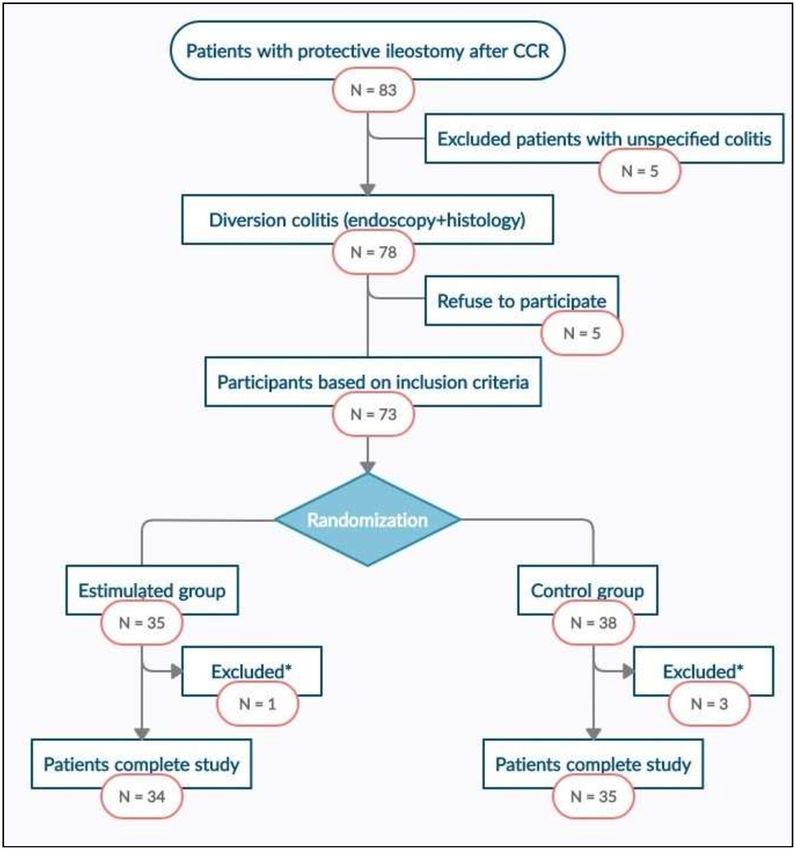
inflammation with a decrease of bacteria in the dysfunctional            Figure 1.
area (7, 8). This inflammation causes endoscopic findings                   The inclusion criteria were being over 18 years of age,
such as mucosal friability, oedema, erythema, appearance                 having protective ileostomy after colorectal carcinoma surgery
of polyps, ulcers, stenosis, and microscopic findings such               free of disease, with endoscopic and histological confirmation of
as lymphoid follicular hyperplasia, infiltration of the lamina           diversion colitis and having signed the informed consent. The
propria by lymphocytes, eosinophils, the appearance of plasma            exclusion criteria being under 18 years of age, clinical history
cells, architectural disruption, and the appearance of crypt             and histological confirmation of inflammatory bowel disease
abscesses (4).                                                           with colorectal involvement and refusal to participate in the
    The definitive treatment is the restoration of the continuity        study. Abandonment criteria: loss during follow-up, exitus, and
of the digestive tract (4, 6). Pharmacological treatments using          anastomotic leakage after stoma closure.
instillations with short-chain fatty acids, mesalazine fibre, or
corticosteroids are reserved for patients who are not candidates         Randomisation and Intervention
for surgical treatment or for stimulation of the efferent loop           A colonoscopy including biopsies for histological study, was
prior to surgery (9, 10). Stimulation with probiotics prior to           performed on all patients selected to participate in the study.
closing the protective stoma would allow the dysfunctional colon         After confirming the diagnosis, level of colitis (based on the
segment to be repopulated, which would reduce diversionary               Harig scoring system) (15), and excluding patients who did
colitis (11).                                                            not meet the selection criteria, randomisation was performed.
    Probiotics are defined as live microorganisms that, when             Randomisation was performed by using a computer-generated
administered in adequate amounts, confer a health benefit on             sequence (Statistical software EPIDAT 4.1) into 2 groups:
the host (12, 13). These and their metabolic products have been          • Stimulation group (SG): preoperative stimulation of the distal
proposed as food supplements to achieve a healthier intestinal             limb of the ileostomy loop with probiotics was performed
homeostasis and also as a treatment for pathologies with an                during the 20 days prior to surgery every second day. During
important inflammatory component. Probiotics interact with                 the process and after it, the patient registers the appearance
the intestinal mucosa, reducing the molecular production of                of symptoms after each stimulation session: abdominal pain,
pro-inflammatory substances (12, 14). This immunomodulatory                emission of gas, and stool. A sterile Foley catheter No.14
effect is what is needed in order to reduce the level of                   Ch connected to an infusion set was introduced through
diversion colitis. Currently available probiotics, aimed at                the de-functioned bowel to allow the slow infusion of a
other pathologies with inflammatory conditions, produce a                  solution with 4.5 mg of probiotics diluted in 250 ml of 0.9%
modulating effect in a transitory and limited way. This                    physiological saline for 20–30 min. Each preparation was made
time-limited effect is what is needed to reduce the level                  under sterile conditions and maintaining the cold chain.
of diversion colitis, since after reconstruction this tends                Vivomixx R lyophilised live bacteria, marketed by MENDES,
to disappear.                                                              S.A, contained 4.5 × 10 11 of live bacteria in each preparation:

Frontiers in Medicine | www.frontiersin.org                          2                                      June 2021 | Volume 8 | Article 654573
Rodríguez-Padilla et al.                                                                                             Diversion Colitis and Probiotic Stimulation

 FIGURE 1 | Study flowchart. CRC, Colorrectal cancer. *Excluded patients with anastomic leak.

   ◦ Four strains of Lactobacillus:                                                 After ten stimulation sessions, 24 h before surgery, a colonoscopy
                                                        R                           with biopsy was performed on all patients, re-quantifying the
           Lactobacillus acidophilus DSM 24735
                                                                                    endoscopic and histological index of severity of diversion colitis.

          Lactobacillus plantarum DSM 24730 R
          Lactobacillus paracasei DSM 24733 R
          Lactobacillus delbrueckii subsp. bulgaricus DSM 24734 R
                                                                                    Surgery and Follow-Up
   ◦ Three strains of Bifidobacterium:                                              All patients were admitted in the hospital the day before surgery,
        Bifidobacterium breve DSM 24732 R                                          fasting, receiving antithrombotic prophylaxis (enoxaparin
        Bifidobacterium longum DSM 24736 R                                         40 mg subcutaneous) and premedication according to the
        Bifidobacterium infantis DSM 24737 R                                       pre-anaesthesia’s instructions sheet. The reconstruction surgery
                                                                                    was carried out by three expert surgeons from the Colorectal
   ◦ One strain of Streptococcus                                                    Surgery department. A parastomal incision was made and
        Streptococcus thermophilus DSM 24731 R                                     carried out sharply into the peritoneal cavity. The anastomosis
                                                                                    was lateral-lateral, either manual or mechanical, according to the
• Control group (CG): exactly the same procedure was carried                        decision of the surgeon. Every surgeon was allowed to decide
  out, but with the infusion set closed. During the process                         as well whether to change to a median laparotomy procedure.
  and after it, the patient himself registers the appearance of                     Complications or events happened during surgery were recorded
  symptoms after each stimulation session: abdominal pain,                          in the surgical procedure protocol. General anaesthesia was
  emission of gas, and stool.                                                       given to all patients and, after extubation and stabilisation in

Frontiers in Medicine | www.frontiersin.org                                     3                                       June 2021 | Volume 8 | Article 654573
Rodríguez-Padilla et al. Diversion Colitis and Probiotic Stimulation
the postoperative resuscitation room, they went directly to the tolerance, re-establishing intestinal transit and hospital stay. To
hospitalisation ward. quantify its level of association, Cramer’s Phi and V coefficients
Follow-up during hospitalisation was carried out by the were calculated. In order to correlate quantitative variables, the
staff of the Colorectal Surgery department of each centre, Spearman’s rank correlation coefficient was used. A p < 0.05 was
recording any postoperative complications, with special vigilance considered to be significant. Statistical analysis was performed
of abdominal pain, passage of flatus, or stool with correct using the statistical program SPSS version 24.0, with the support
quantification and initiation of oral tolerance. Patients were of calculation tools provided by the software Microsoft Excel
discharged from the hospital after re-establishing intestinal or R.
transit, adequate oral tolerance and stool control, recording the
length of stay in hospital. Ethical Aspects
Follow-up after hospitalisation was carried out by Colorectal The project was performed with the consent of the Ethics
Surgery team in the first, third, and sixth postoperative months. Coordinating Committee for Biomedical Research of Andalusia,
These evaluations were performed by the colorectal surgeon who Spain, and registered with the project number 2017/331191354.
intervened in each patient. Any symptomatology related to the Written informed consent was requested to participate
intervention was recorded, with special monitoring of abdominal in the study, giving details of both the study objectives
pain and number and control of stools. and the methodology to be followed. The data was kept
anonymous, maintaining the confidentiality and anonymity of
Blinding the participants. The CONSORT Statement criteria for the design
To ensure blinding of the patients, all underwent the same of clinical trial were followed (standard trial methodology).
diagnostic procedure. During the stimulation sessions, both the
solution with probiotics and the infusion set were covered by RESULTS
an opaque protective envelope, which prevented observing the
colour and transparency of the fluid, or whether the system was Study Population
open or closed. The stimulation sessions were performed by a Between January 2017 and December 2018, 83 disease free
single surgeon, who was also in charge of preparing the dilution. patients with protective ileostomy after colorectal carcinoma
The endoscopist, the pathologist and the surgeon who resection were reviewed and included in the surgical waiting
performed the surgical intervention and the follow-up, as list for intestinal transit reconstruction. Seventy eight of them
well as surgeons who participated, after the surgery, in the met the endoscopic and histological criteria for diversion colitis
hospitalisation process, did not know whether the patient had diagnosis and 73 patients were finally randomised into two
received probiotics or not. groups, intervention (n = 35) and control (n = 38). Sixty nine
patients completed the study, 1 of them from SG and 3 from
Assessment Criteria CG abandoning the study because of anastomotic leakage. Study
The main evaluation criterion was the effect caused by flowchart is presented in Figure 1. There were no significant
stimulation of the efferent loop with probiotics on the persistence differences between SG and CG in terms of sociodemographic,
and severity index of diversion colitis, both endoscopic and clinical, or surgical variables (Table 1).
histological, comparing SG and CG after stimulation, after
surgery, in the first post-operative month and during short-term Main Assessment Criteria
follow-up (third and sixth postoperative month). The effect of stimulation with probiotics on diversion colitis,
Secondary evaluation criteria were passage of gas and stool identified by endoscopic, is showed in Figure 2. It shows a
during the stimulation period and after surgery, the initiation of homogeneous distribution in the pre-stimulation phase between
oral tolerance, restoration of intestinal transit (gas and stool), and SG and CG (p = 0.911), with n = 9 patients with severe diversion
hospital stay. colitis in both groups (26.5% SG vs. 25.7% CG), n = 23 patients
with moderate diversion colitis in both groups (67.6% SG vs.
Statistical Analysis 65.7% CG) and n = 2 patients with mild diversion colitis in SG
A descriptive univariate analysis of sociodemographic and (5.9%) vs. n = 3 patients in CG (8.6%). In the post-stimulation
clinical variables was performed. The Kolmogorov-Smirnov test phase, CG maintains its distribution with n = 9 patients with
was used to verify the normality of the quantitative variables. severe diversion colitis (25.7%), n = 23 patients with moderate
To describe the quantitative variables, the mean and standard diversion colitis (65.7% CG), and n = 3 patients with mild
deviation were used, and the median and interquartile range for diversion colitis (8.6%); on the other hand, SG shows no patients
those variables that did not follow a normal distribution. For with severe diversion colitis (n = 0), n = 3 patients with moderate
qualitative variables frequencies and percentages will be used. diversion colitis (8.8% CG), n = 19 patients with mild diversion
Afterwards, to verify the main objectives, a bivariate analysis colitis (55.9%) and n = 12 patients with normal endoscopic
was performed. A contrast test of proportions based on the Chi- findings (35.3%), achieving a p < 0.001 and a Phi and V Cramer
square test was used in order to determine whether stimulation coefficient of 0.883.
of the efferent loop with probiotics prior to the closure of the The effect of stimulation with probiotics identified by
protective ileostomy reduces the level of diversion colitis, as well histology is showed in Figure 3. It shows a homogeneous
as its effects on the passage of gas and stool, the initiation of oral distribution in the pre-stimulation phase between SG and CG
Frontiers in Medicine | www.frontiersin.org 4 June 2021 | Volume 8 | Article 654573Rodríguez-Padilla et al. Diversion Colitis and Probiotic Stimulation
TABLE 1 | Demographics, clinics, and surgical characteristics.
Stimulated group Non-stimulated group p
(n = 34) (n = 35)
Demographics
Age (years) 65 (45 – 81) 68 (41 – 80) 0.130
Sex ratio (Men/Women) 23:11 25:10 0.733
BMI (kg/m2 ) 23.5 (21.6 – 32.6) 27.6 (18.8 – 40.2) 0.091
ASA 0.483
ASA I-II 31 30
ASA III 3 5
Smoker / Non-smoker 20/14 23/12 0.826
Colorectal surgery
Surgical procedure: 0.129
LAR 25 25
uLAR 9 10
Surgical approach: 0.551
Laparoscopic 24 24
Open 10 11
Type of anastomosis: 0.430
Stapled EEA 31 33
Coloanal anastomosis 3 2
Neoadjuvant therapy 26 25 0.239
Adjuvant treatment 26 28 0.256
Ileostomy closure
Time between surgery 12 (8 – 37) 9 (6 – 32) 0.813
Surgery: 0.690
Small bowel resection 33 34
Ileocecal resection 1 1
Surgical approach: 0.291
Peri-ileostomy 30 28
Midline laparotomy 4 7
Type of anastomosis: 0.355
Sewn 29 29
Stapled 5 6
Time (minutes) 50 (30 – 70) 65 (50 – 120) 0.053
ASA, American Society of Anaesthesiologists Classification; BMI, body mass index; EEA, end to end anastomosis stapler; LAR/uLAR, low anterior resection/ultralow anterior resection.
(p = 0.896), with n = 9 patients with severe diversion colitis significant differences between the two groups. Abdominal pain
in both groups (26.5% SG vs. 25.7% CG), n = 23 in CG and was evaluated using the visual analogue scale (VAS). Pain was
n = 21 patients with moderate diversion colitis in both groups moderated in SG, only present in the first stimulation sessions
(61.8% SG vs. 65.7 % CG) and n = 4 patients with mild diversion and disappearing afterwards. Pain was mild-moderate in CG in
colitis in SG (11.7%) vs. n = 3 patients in CG (8.6%). In the post- all stimulation sessions and disappeared after their completion.
stimulation phase, the CG maintains its distribution with n = The symptoms of diversion colitis after reconstruction surgery
9 patients with severe diversion colitis (25.7%), n = 23 patients appeared in 100% (n = 35) of the patients in CG, vs. 23.5%
with moderate diversion colitis (65.7% CG), and n = 3 patients in SG (n = 8), the remaining 76.5% being asymptomatic after
with mild diversion colitis (8.6%), on the other hand, SG shows surgery (n = 26), with p < 0.001 and a Phi and V Cramer
no patients with severe diversion colitis (n = 0), n = 3 patients coefficient 0.789. This clinical scenario is maintained 1 month
with moderate diversion colitis (8.8% CG), n = 21 patients with after reconstructive surgery in CG, with 94.3% (n = 33) of
mild diversion colitis (61.8%) and n = 10 patients with normal patients showing symptoms of diversion colitis, compared to
histologic findings (29.4%), getting a p < 0.001 and a Phi and V 5.7% who are asymptomatic (n = 2). SG shows 97.1% of
Cramer coefficient of 0.843. asymptomatic patients after surgery (n = 33) compared to 2.9%
Abdominal pain was the only symptom observed during of patients with diversion colitis (n = 1), with p < 0.001 and
stimulation, which appeared in 20.5% of patients SG (n = 7) a Phi and V coefficient of Cramer 0.913. Finally, during the
compared to 14, 3% CG (n = 5). There were no statistically short-term follow-up after reconstructive surgery, symptoms are
Frontiers in Medicine | www.frontiersin.org 5 June 2021 | Volume 8 | Article 654573Rodríguez-Padilla et al. Diversion Colitis and Probiotic Stimulation
FIGURE 2 | Grade of macroscopic diversion colitis, measured by endoscopy, in the stimulated group and control group, in the pre-stimulation and post-stimulation
phases.
FIGURE 3 | Grade of microscopic diversion colitis, measured by histology, in the stimulated group and control group, in the pre-stimulation and post-stimulation
phases.
present in CG with 28.6% (n = 10) compared to 71.4% who are and the decrease in the level of diversion colitis in SG with
asymptomatic (n = 25). SG shows 100% asymptomatic patients p < 0.001 and a Phi and V Cramer coefficient of 0.683 for
after surgery, with p < 0.001 and a Phi and V Cramer coefficient stool and 0.971 for gas. There were no statistically significant
of 0.406. differences among the initiation of oral tolerance, restoration of
intestinal transit, or length of hospital stay, as shown in Table 2.
Secondary Endpoints The incidence of postoperative ileus was similar in both groups,
In the comparative analysis, we found a direct relationship appearing in 10/34 (29, 4%) for SG and 11/35 (31.4%) for CG with
between passage of gas and stool during the stimulation period p = 0.192. After reconstructive surgery, SG started oral tolerance
Frontiers in Medicine | www.frontiersin.org 6 June 2021 | Volume 8 | Article 654573Rodríguez-Padilla et al. Diversion Colitis and Probiotic Stimulation
TABLE 2 | Postoperative results.
Stimulated group Non-stimulated group p
(n = 34) (n = 35)
Postoperative ileus, n (%) 10 (29.4%) 11 (31.4%) 0.192
Nasogastric tube, n (%) 9 (26%) 11 (31.4%) 0.116
Time to tolerating a diet, days-mean (range) 2 (1 – 24) 3 (2 – 50) 0.619
Start of the passage of flatus, days-mean (range) 2 (1 – 20) 2 (1 – 48) 0.173
Start of the passage of stool, days-mean (range) 3 (1 – 21) 3 (1 – 48) 0.184
Postoperative stay days-mean (range) 4 (4 – 26) 5 (4 – 56) 0.105
The median has been used as a measure of central tendency for the evaluation of variables as initiation of oral tolerance, gas emission, restoration of transit and duration of hospital stay.
24 h earlier than CG, but it was statistically non-significant (2 definitive treatment, which is the reconstruction of the transit.
days vs. 3). The emission of gases and the restoration of intestinal Results on preoperative stimulation prior to the closure of the
transit happened 2 days after surgery in both groups. SG had protective ileostomy published by Rombey et al. (10), including
an interval between 1 and 20 days in the emission of gases and 8 studies with a total of 267 patients, despite the promising
between 1 and 21 days in the intestinal transit, vs. 1–48 days in initial results, show that there is no sufficient quality evidence
both cases in CG. The hospital stay was also shorter in the SG, to recommend routine implementation of preoperative bowel
but without statistical significance. stimulation in clinical practise. That is why we propose that
microbial manipulation by stimulating probiotics prior to closing
the protective ileostomy would allow the altered autoimmune
DISCUSSION function to be normalised, restore homeostasis, and reduce
mucosal inflammation.
As mentioned in the introduction, colorectal cancer surgery After completing the stimulation phase with probiotics, no
has progressively evolved. More and more complex resections statistically significant differences were detected in terms of
are performed both by abdominal and perineal approach, sociodemographic, clinical or surgical variables. On the contrary,
increasing their quality and achieving a more radical surgery there is indeed a notable decrease in surgical time in SG,
with increasingly inferior anastomoses and without the need which we associate with the thickening of the distal end caused
for a permanent stoma, even if still requiring a temporary by stimulation and which facilitates the performance of the
stoma (16). To protect low colorectal anastomosis from possible anastomosis. In the pre-stimulation phase, no differences were
complications, we must create an ileostomy, which also will found in terms of index of severity in both groups, either by
lead to morbidity. Derivative stomas are not exempt from endoscopy or histology. After stimulation, a decrease of the
complications, the most feared being the anastomotic leak index of severity was observed in SG compared to CG, both by
however the most common is diversion colitis (2, 3, 17). In endoscopy and histology, as shown in Figures 2, 3.
patients that require a protective ileostomy, dysbiosis happens A reduction in the level of diversion colitis was achieved by
in the excluded colon segment that leads to diversion colitis 100% of SG patients, with the disappearance of macroscopic
(6). This dysbiosis activates metabolic products that produce diversion colitis in 35.3%, obtaining normal endoscopic findings
an immune response, causing an attack on the colonic mucosa in 12 patients (p < 0.001 and a Phi and V Cramer coefficient
and affecting the function of the regulatory immune cells that of 0.883) and the disappearance of microscopic sign in 29.4%,
normally promote its homeostasis (18). This causes structural obtaining normal histological findings in 10 patients (p < 0.001
changes, such as atrophy of villi in the defunctionalised limb, and a Phi and V Cramer coefficient of 0.843). Both cases showed
and in consequence produce loss of smooth muscle area a strong correlation between stimulation with probiotics and
and reduced isometric contractility with loss of the intestinal the decrease of diversion colitis, with the appearance of colicky
absorption capacity (7). Intestinal dysbiosis has been linked abdominal pain in 20.5% of the patients (n = 7) as the only side-
to the pathogenesis of numerous chronic diseases, such as effect, valued as moderate pain using the visual analogue scale
inflammatory bowel disease, and has been studied in order to (VAS) and only associated with the first stimulation sessions,
identify its correction, with variable results (19, 20). disappearing afterwards. This effect has already been described
The bibliography about diversion colitis and its relationship in studies with stimulation of the efferent loop with short chain
with microbiota alteration is not extensive. In the last 2 years, fatty acids (6, 10, 15).
two studies have been published about intestinal microbiota At the same time as stimulation, an increase in stool and gas
(19, 21); to which we must add, on the one hand, the latest emission was observed during this phase in SG compared to
systematic review on diversion colitis published by Kabir et al. CG, which we directly relate to a decrease or disappearance of
(6) that reviews a total of 3,305 articles, eventually including 35 diversion colitis after stimulation with probiotics with a value of
studies, and analyses the pathophysiology, clinical presentation p < 0.001 and a Phi and V Cramer coefficient of 0.683 for stool
and treatment of diversion colitis which concludes that there and 0.971 for gas, both showing the association with a strong
is a great variability of forms of presentation and a single correlation. Initiation of intestinal transit prior to reconstruction
Frontiers in Medicine | www.frontiersin.org 7 June 2021 | Volume 8 | Article 654573Rodríguez-Padilla et al. Diversion Colitis and Probiotic Stimulation
allows the identification of functional obstructions distal to the p < 0.001 and observing correlation between the absence of
ileostomy that can cause mechanical ileus after surgery and that symptoms and stimulation with a V Cramer coefficient of 0.789,
can be solved by endoscopic dilations or, on the contrary, it allows compared to CG, in which 100% of patients presented symptoms.
the identification of a level of incontinence associated with the This is maintained in the follow-up to the first month after
anterior resection syndrome, which allows for early toilet training closure ileostomy with 94.3% of symptomatic patients in CG
(22, 23). vs. 2.9% in SG, with p < 0.001 and an association of 0.913.
Regarding the effect on bowel function after transit However, in the short-term follow-up, both tend to equalise,
reconstruction, no differences were observed between the achieving 100% asymptomatic patients in SG and 71.4% in
two groups, with a non-statistically significant time to recovery CG, with p < 0.001 and a Phi and V Cramer coefficient
of transit and oral tolerance. The difference in terms of hospital of 0.406. This correlation disappears between the third and
stay was 1 day, with a median of 4 days in SG and 5 days in sixth month, when diversion colitis becomes non-existent both
CG, associating it with 24-h difference in oral tolerance between endoscopically and microscopically. This fact coincides with the
SG, in which 58% of patients tolerate liquid diet in the first transitory and limited modulatory effect that probiotics produces
24–48 h, compared to the CG, which requires 48–72 h. There on the intestinal mucosa (43–47) and with the recovery curve of
were no differences in postoperative ileus between SG (n = 10, intestinal function published in other studies (7, 9). However,
29.4%) and CG (n = 11, 31.4%), highlighting a disagreement as the main limitation of our study has been the sample size
with systematic reviews published by Rombey and Garfinkle and we cannot make definitive statements about the effectiveness of
other studies on post-operative ileus that seem to improve after this technique. We will need additional multicentre studies on
stimulation of the efferent loop prior to closure of the ileostomy bowel function and preoperative stimulation prior to closure of
(7, 23–28). Nonetheless, both conclude with a lack of evidence to the protective ileostomy to confirm these conclusions.
recommend the stimulation of the efferent loop in a routine way
and emphasise the need to carry out multicentre studies with CONCLUSION
higher scientific quality, in order to verify their validity.
The observations presented here demonstrate that the The pathogenesis of diversion colitis is related with a chronic
decrease in endoscopic and histological findings associated inflammation and decrement of flora in the dysfunctional area.
with the decrease in inflammation means that stimulation of The definitive treatment is the restoration of the continuity
the efferent loop of the ileostomy with probiotics can be an of the digestive tract, and the stimulation of the efferent loop
alternative treatment in patients with symptomatic DC who are with probiotics would allow patients to reduce complications in
not candidates for reconstructive surgery as a treatment to resolve the pre/postoperative process. The stimulation with probiotics
the colonic inflammation (29, 30). Finally, the stimulation of the is a safe and feasible procedure with minimal adverse effects,
efferent loop with probiotics can be an alternative treatment to being an option for patients who are not candidates for
resolve the inflammation in patients whose surgical option is surgical treatment.
not feasible.
The most studied probiotic bacterias are Bifidobacterium DATA AVAILABILITY STATEMENT
and Lactobacillus spp. These two produce a decrease of pro-
inflammatory molecules and an increase of molecules that The original contributions presented in the study are included
inhibit inflammation, also protecting against oxidative stress in the article/Supplementary Material, further inquiries can be
in humans and demonstrating an important role in intestinal directed to the corresponding authors.
disbiosis (7, 31, 32). Currently, the evidence shows that probiotics
have a positive effect on systemic and oxidative inflammation, ETHICS STATEMENT
especially at the gastrointestinal level. L. acidophilus, one
of the probiotics administered during our stimulation, has The project was performed with the consent of the Ethics
demonstrated its role in inflammatory regulation in multiple Coordinating Committee for Biomedical Research of Andalusia,
experimental studies (32–41). A randomised controlled clinical Spain, and registered with the project number 2017/331191354.
trial conducted by Jafarnejad et al. (42) describes the effect The patients/participants provided their written informed
of supplementation with probiotics for 8 weeks, in this case, consent to participate in this study.
with VSL3 (a probiotic similar to the one administered in our
study), on glycaemic status and inflammatory markers among AUTHOR CONTRIBUTIONS
pregnant women. The probiotic supplements contained eight
strains of lactic acid bacteria (S.thermophilus, Bifidobacterium ÁR-P, GM-M, RP-Q, RR-M, JG-S, and CR-F: conceptualisation,
breve, Bifidobacterium longum, Bifidobacterium infantis, L. data curation, formal analysis, investigation, methodology,
acidophilus, L. plantarum, L. paracasei, and L. delbrueckii subsp. resources, writing—original draught, and writing—review and
Bulgaricus). They found a statistically significant decrease in TNF editing. ÁR-P, GM-M, and RP-Q: project administration. GM-M:
alpha and CRP levels in the probiotic group compared to the software. RP-Q, JG-S, and CR-F: supervision. RR-M and
placebo. Results are superimposable to other studies (41). JG-S: validation. GM-M, RP-Q, JG-S, and CR-F: visualisation.
Finally, it was possible to reduce diversion colitis symptoms All authors contributed to the article and approved the
after reconstructive surgery in 76.5% of SG (n = 26) with submitted version.
Frontiers in Medicine | www.frontiersin.org 8 June 2021 | Volume 8 | Article 654573Rodríguez-Padilla et al. Diversion Colitis and Probiotic Stimulation
REFERENCES 19. Mishima Y, Sartor RB. Manipulating resident microbiota to enhance
regulatory immune function to treat inflammatory bowel diseases. J
1. Glynne-Jones R, Wyrwicz L, Tiret E, Brown G, Rödel C, Cervantes A, et al. Gastroenterol. (2020) 55:4–14. doi: 10.1007/s00535-019-01618-1
ESMO clinical practice guidelines for diagnosis, treatment and follow-up. Ann 20. Lloyd-Price J, Arze C, Ananthakrishnan AN, Schirmer M, Avila-Pacheco J,
Oncol. (2017) 28(Suppl 4):vi22–40. doi: 10.1093/annonc/mdx224 Poon TW, et al. Multi-omics of the gut microbial ecosystem in bowel diseases.
2. Matthiessen P, Hallbook O, Rutegard J, Simert G, Sjodahl R. Defunctioning Nature. (2019) 569:655–62. doi: 10.1038/s41586-019-1237-9
stoma reduces symptomatic anastomotic leakage after low anterior resection 21. Knox NC, Forbes JD, Van Domselaar G, Bernstein CN. The gut microbiome as
of the rectum for cancer: a randomized multicenter trial. Ann Surg. (2007) a target for IBD treatment: are we there yet? Curr Treat Options Gastroenterol.
246:207–14. doi: 10.1097/SLA.0b013e3180603024 (2019) 17:115–26. doi: 10.1007/s11938-019-00221-w
3. Sharma A, Deeb AP, Rickles AS, Iannuzzi JC, Monson JRT, Fleming FJ. 22. Kim KH, Yu CS, Yoon YS, Yoon SN, Lim SB, Kim JC. Effectiveness of
Closure of defunctioning loop ileostomy is associated with considerable biofeedback therapy in the treatment of anterior resection syndrome
morbidity. Colorectal Dis. (2013) 15:458–62. doi: 10.1111/codi.12029 after rectal cancer surgery. Dis Colon Rectum. (2011) 54:1007–13.
4. Szczepkowski M, Banasiewicz T, Kobus A. Diversion colitis 25 years later: doi: 10.1097/DCR.0b013e318221a934
the phenomenon of the disease. Int J Colorectal Dis. (2017) 32:1191–6. 23. Abrisqueta J, Abellan I, Lujan J, Hernandez Q, Parrilla P. Stimulation of the
doi: 10.1007/s00384-017-2802-z efferent limb before ileostomy closure: a randomized clinical trial. Dis Colon
5. Glotzer DJ, Glick ME, Goldman H. Proctitis and colitis following Rectum. (2014) 57:1391–6. doi: 10.1097/DCR.0000000000000237
diversion of the fecal stream. Gastroenterology. (1981) 80:438–41. 24. Garfinkle R, Savage P, Boutros M, Landry P, Reynier P, Morin N, et al.
doi: 10.1016/0016-5085(81)90003-2 Incidence and predictors of postoperative ileus after loop ileostomy closure:
6. Kabir SI, Kabir SA, Richards R, Ahmed J, MacFie J. Pathophysiology, a systematic review and meta-analysis. Surg Endosc. (2019) 33:2430–43.
clinical presentation and management of diversion colitis: a review of current doi: 10.1007/s00464-019-06794-y
literature. Int J Surg. (2014) 12:1088–92. doi: 10.1016/j.ijsu.2014.08.350 25. Menéndez P, Garcia A, Lozano E, Pelaez R. Effectiveness of afferent
7. Beamish EL, Johnson J, Shaw EJ, Scott NA, Bhowmick A, loop stimulation prior to ileostomy closure. Cir Esp. (2013) 91:547–8.
Rigby RJ. Loop ileostomy -mediated fecal stream diversion is doi: 10.1016/j.cireng.2013.11.007
associated with microbial dysbiosis. Gut Microbes. (2017) 8:467–78. 26. Vázquez-Melero A, Loizate-Totoricaguena A, García-Alonso P. Stimulation
doi: 10.1080/19490976.2017.1339003 of the Efferent Loop Before Loop Ileostomy closure. U.S. National Library
8. Williams L, Armstrong MJ, Finan P, Sagar P, Burke D. The effect of Medicine, Bethesda (Maryland, USA). ClinicalTrials.gov Identifier:
of faecal diversion on human ileum. Gut. (2007) 56:796–801. NCT03424447 (2018).
doi: 10.1136/gut.2006.102046 27. Fernández-López F, González López J, Paz Novo M, Ladra González
9. Keane C, Park J, Öberg S, Wedin A, Bock D, Grady G, et al. MJ, Paredes Cotoré J. Estimulación preoperatoria del asa eferente de la
Functional outcomes from a randomized trial of early closure of temporary ileostomía con ácidos grasos de cadena corta. Cir Esp. (2019) 97:54–6.
ileostomy after rectal excision for cancer. Br J Surg. (2019) 106:645–52. doi: 10.1016/j.ciresp.2018.06.018
doi: 10.1002/bjs.11092 28. Garfinkle R, Trabulsi N, Morin N, Phang T, Liberman S, Feldman L, et al.
10. Rombey T, Panagiotopoulou IG, Hind D, Fearnhead NS. Preoperative bowel Study protocol evaluating the use of bowel stimulation before loop ileostomy
stimulation prior to ileostomy closure to restore bowel function more quickly closure to reduce postoperative ileus: a multicenter randomized controlled
and improve postoperative outcomes: a systematic review. Colorectal Dis. trial. Colorectal Dis. (2017) 19:1024–9. doi: 10.1111/codi.13720
(2019) 21:994–1003. doi: 10.1111/codi.14636 29. Rodríguez-Padilla Á, Morales-Martín G, Pérez-Quintero R, Gómez-
11. Shen Z, Zhu C, Quan Y, Yang Z, Wu S, Luo W, et al. Relationship Salgado J, Rada-Morgades R, Ruiz-Frutos C. Diversion Colitis: macro and
between intestinal microbiota and ulcerative colitis: mechanisms and clinical microscopic findings after probiotics stimulation. Biology. (2021) 10:303.
application of probiotics and fecal microbiota transplantation. World J doi: 10.3390/biology10040303
Gastroenterol. (2018) 24:5–14. doi: 10.3748/wjg.v24.i1.5 30. Rodríguez-Padilla Á, Morales-Martín G, Pérez-Quintero R, Gómez-
12. Biagioli M, Capobianco D, Carino A, Marchianò S, Fiorucci C, Ricci Salgado J, Balongo-García R, Ruiz-Frutos C. Postoperative Ileus after
P, Distrutti E, et al. Divergent effectiveness of multispecies probiotic stimulation with probiotics before ileostomy closure. Nutrients. (2021)
preparations on intestinal microbiota structure depends on metabolic 13:626. doi: 10.3390/nu13020626
properties. Nutrients. (2019) 11:325. doi: 10.3390/nu11020325 31. Morgan DM, Cao Y, Miller K, McGoldrick J, Bellavance D, Chin SM, et al.
13. Hill C, Guarner F, Reid G, Gibson GR, Merenstein DJ, Pot B, et al. Expert Microscopic colitis is characterized by intestinal dysbiosis. Clin Gastroenterol
consensus document. the international scientific association for probiotics Hepatol. (2020) 18:984–6. doi: 10.1016/j.cgh.2019.06.035
and prebiotics consensus statement on the scope and appropriate use 32. Rossi M, Amaretti A. Chapter 6: Probiotic properties of bifidobacteria. In: van
of the term probiotic. Nat Rev Gastroenterol Hepatol. (2014) 11:506–14. Synderen D, Mayo B, editors. Bifidobacteria: Genomics and Molecular Aspects.
doi: 10.1038/nrgastro.2014.66 Norfolk: Caister Academic Press (2010). p. 97–123.
14. Corridoni D, Pastorelli L, Mattioli B, Locovei S, Ishikawa D, Arseneau 33. Buanaim RP, Pereira JA, Campos FG, Kotze PG, Goto EFK, Mendonça RLS,
KO, et al. Probiotic bacteria regulate intestinal epithelial permeability in et al. Effects of anti-TNF-α in experimental diversion colitis. Acta Cir Bras.
experimental ileitis by a TNF-dependent mechanism. PLoS ONE. (2012) (2019) 34: e201901004. doi: 10.1590/s0102-865020190100000004
7:e42067. doi: 10.1371/journal.pone.0042067 34. Biagioli M, Laghi L, Carino A, Cipriani S, Distrutti E, Marchianò
15. Harig JM, Soergel KH, Komorowsky RA, Wood CM. Treatment of diversion S, et al. Metabolic variability of a multispecies probiotic preparation
colitis with short-chain-fatty acid irrigation. N Eng J Med. (1989) 320:23–8. impacts on the anti-inflammatory activity. Front Pharmacol. (2017) 8:505.
doi: 10.1056/NEJM198901053200105 doi: 10.3389/fphar.2017.00505
16. Heald RJ, Santiago I, Pares O, Carvalho C, Figueiredo N. The perfect 35. Hod K, Sperber AD, Ron Y, Boaz M, Dickman R, Berliner S, et al. A double-
total mesorectal excision obviates the need for anything else in the blind, placebo-controlled study to assess the effect of a probiotic mixture on
management of most rectal cancers. Clin Colon Rectal Surg. (2017) 30:324–32. symptoms and inflammatory markers in women with diarrhea-predominant
doi: 10.1055/s-0037-1606109 IBS. Neurogastroenterol Motil. (2017) 29:e13037. doi: 10.1111/nmo.13037
17. Farag S, Rehman S, Sains P, Baig MK, Sajid MS. Early vs delayed closure of loop 36. Tenorio-Jiménez C, Martínez-Ramírez MJ, Del Castillo-Codes I, Arraiza-
defunctioning ileostomy in patients undergoing distal colorectal resections: Irigoyen C, Tercero-Lozano M, Camacho J, et al. Lactobacillus reuteri
an integrated systematic review and meta-analysis of published randomized V3401 reduces inflammatory biomarkers and modifies the gastrointestinal
controlled trials. Colorectal Dis. (2017) 19:1050–7. doi: 10.1111/codi.13922 microbiome in adults with metabolic syndrome: the PROSIR study. Nutrients.
18. Macfarlane GT, Macfarlane S. Bacteria, colonic fermentation, (2019) 11:1761. doi: 10.3390/nu11081761
and gastrointestinal health. J AOAC Int. (2012) 95:50–60. 37. Yang YJ, Chuang CC, Yang HB, Lu CC, Sheu BS. Lactobacillus acidophilus
doi: 10.5740/jaoacint.SGE_Macfarlane ameliorates H. pylori-induced gastric inflammation by inactivating
Frontiers in Medicine | www.frontiersin.org 9 June 2021 | Volume 8 | Article 654573Rodríguez-Padilla et al. Diversion Colitis and Probiotic Stimulation
the Smad7 and NFkappaB pathways. BMC Microbiology. (2012) 12:38. 44. Cohen LJ, Cho JH, Gevers D, Chu H. Genetic factors and the
doi: 10.1186/1471-2180-12-38 intestinal microbiome guide development of microbe-based therapies
38. Borthakur A, Bhattacharyya S, Kumar A, Anbazhagan AN, Tobacman JK, for inflammatory bowel diseases. Gastroenterology. (2019) 156:2174–89.
Dudeja PK. Lactobacillus acidophilus alleviates platelet-activating factor- doi: 10.1053/j.gastro.2019.03.017
induced inflammatory responses in human intestinal epithelial cells. PLoS 45. Kang SI, Oh HK, Kim MJ, Son IT, Kim DW, Kang SB. The effect of probiotics
ONE. (2013) 8:e75664. doi: 10.1371/journal.pone.0075664 (CJLP243) on bowel function restoration after ileostomy closure in patients
39. Li H, Zhang L, Chen L, Zhu Q, Wang W, Qiao J. Lactobacillus acidophilus with rectal cancer: a pilot randomised controlled trial. Colorectal Dis. (2016)
alleviates the inflammatory response to enterotoxigenic Escherichia coli 18(Suppl 1):127. doi: 10.1111/codi.15463
K88 via inhibition of the NF-kappaB and p38 mitogen-activated protein 46. Basso PJ, Câmara NOS, Sales-Campos H. Microbial-based therapies in the
kinase signaling pathways in piglets. BMC Microbiol. (2016) 16:273. treatment of inflammatory bowel disease—an overview of human studies.
doi: 10.1186/s12866-016-0862-9 Front Pharmacol. (2018) 9:1571. doi: 10.3389/fphar.2018.01571
40. Stenman LK, Waget A, Garret C, Klopp P, Burcelin R, Lahtinen S. Potential 47. Amoroso C, Perillo F, Strati F, Fantini M, Caprioli F, Facciotti F. The role of gut
probiotic Bifidobacterium animalis ssp. lactis 420 prevents weight gain and microbiota biomodulators on mucosal immunity and intestinal inflammation.
glucose intolerance in diet-induced obese mice. Benef Microbes. (2014) 5:437– Cells. (2020) 9:1234. doi: 10.3390/cells9051234
45. doi: 10.3920/BM2014.0014
41. Hajifaraji M, Jahanjou F, Abbasalizadeh F, Aghamohammadzadeh N, Abbasi Conflict of Interest: The authors declare that the research was conducted in the
MM, Dolatkhah N. Effect of probiotic supplements in women with absence of any commercial or financial relationships that could be construed as a
gestational diabetes mellitus on inflammation and oxidative stress biomarkers: potential conflict of interest.
a randomized clinical trial. Asia Pac J Clin Nutr. (2018) 27:581–91.
doi: 10.6133/apjcn.082017.03 Copyright © 2021 Rodríguez-Padilla, Morales-Martín, Pérez-Quintero, Rada-
42. Jafarnejad S, Saremi S, Jafarnejad F, Arab A. Effects of a multispecies Morgades, Gómez-Salgado and Ruiz-Frutos. This is an open-access article
probiotic mixture on glycemic control and inflammatory status in women distributed under the terms of the Creative Commons Attribution License (CC BY).
with gestational diabetes: a randomized controlled clinical trial. J Nutr Metab. The use, distribution or reproduction in other forums is permitted, provided the
(2016) 2016:5190846. doi: 10.1155/2016/5190846 original author(s) and the copyright owner(s) are credited and that the original
43. Sartor RB, Wu GD. Roles for intestinal bacteria, viruses, and fungi in publication in this journal is cited, in accordance with accepted academic practice.
pathogenesis of inflammatory bowel diseases and therapeutic approaches. No use, distribution or reproduction is permitted which does not comply with these
Gastroenterology. (2017) 152:327–39. doi: 10.1053/j.gastro.2016.10.012 terms.
Frontiers in Medicine | www.frontiersin.org 10 June 2021 | Volume 8 | Article 654573You can also read


