Eastbourne Town Centre - Local Plan - Lewes District Council
←
→
Page content transcription
If your browser does not render page correctly, please read the page content below

Eastbourne
Town Centre
       Local Plan
        November 2013
                   1
Contents

    1.0	INTRODUCTION TO THE TOWN CENTRE LOCAL PLAN			                5          Theme 3: Town Centre public realm					                         39
         Overview of the Town Centre						5                                      Public Realm Priorities							41
         What is a Town Centre Local Plan?					                       6          Theme 4: Accessing the Town Centre					                        46
         How does the Town Centre Local Plan relate to other plans?		 7          Arriving in the Town Centre 						47
    2.0  A VISION FOR THE TOWN CENTRE					                            9          Moving Around the Town Centre					48
         What will Eastbourne Town Centre be like in 2027?			         9    5.0   SITE SPECIFIC PROPOSALS						51
         Town Centre objectives						10                                          Development Opportunity Sites					52
    3.0  DEVELOPMENT STRATEGY AND SPATIAL FRAMEWORK		                 13         Trigger Mechanism							53
         Approach to development within the Town Centre			            13         Contingency Options							53
         Defining the extent of the Town Centre boundary			           15         Development Opportunity Site One					57
         The Town Centre spatial framework					15                                Development Opportunity Site Two					59
         Character Areas							16                                                Development Opportunity Site Three					61
         Approaches, gateways, streets and spaces				                 17         Development Opportunity Site Four 					63
    4.0  TOWN CENTRE POLICIES						21                                            Development Opportunity Site Five 					65
         Theme 1: Supporting a mix of uses					                       21         Transition Areas							66
         Retail Development in the Town Centre				                    23         Transition Area One: Seaside Road and Terminus Road East 		    66
         Living and Working in the Town Centre				                    26         Transition Area Two: Station Street and Mark Lane			           67
         Enjoying the Town Centre						28                                        Potential Areas of Change						68
         Evening and night-time economy					28                                   Potential Area of Change One: International Lawn Tennis Centre 69
         Tourism, Culture and the Arts						29                                   Potential Area of Change Two: Land at Langney Road and
         Arts Trail								31                                                    Pevensey Road								69
         Theme 2: Town Centre Identity						32                             6.0   IMPLEMENTATION AND MONITORING					71
         Town Centre Design Objectives and Development Quality		      33         Timescales and programme						72
         Key building frontages and elevations					34                            Monitoring framework							85
         Building Heights							35
         Accommodating Servicing Access					37                             GLOSSARY									90
         Historic Environment and Town Centre Heritage			             37   APPENDIX 1: POLICIES FOR DELETION						               91
         Sustainable Design							38                                       APPENDIX 2: DEVELOPMENT OPPORTUNITY SITE BOUNDARIES		 92

2
Policies                                                               Eastbourne
                                                                       Town Centre
                                                                              Local Plan

Policy TC1    Character Areas 						17
Policy TC2    Town Centre Structure 					19
Policy TC3    Mixed Use Development 				22
Policy TC4    Primary Retail Areas (PRAs)				23
Policy TC5    Secondary Retail Areas (SRAs)				24
Policy TC6    Residential Development in the Town Centre          27
Policy TC7    Supporting the Evening and Night-time Economy		     28
Policy TC8    Arts Trail						31
Policy TC9    Development Quality 					30
Policy TC10   Building Frontages and Elevations				34
Policy TC11   Building Heights
                                                                 36
Policy TC12   Servicing Access and Storage 				37
Policy TC13 	Public Realm Quality and Priorities 			45
Policy TC14   Public Transport Interchange				47
Policy TC15   Parking in the Town Centre				48
Policy TC16   Town Centre Streets					49
Policy TC17   Strategic Approach to Town Centre Development Sites 52
Policy TC18   Development Opportunity Site One			57
Policy TC19   Development Opportunity Site Two			59
Policy TC20   Development Opportunity Site Three			61
Policy TC21   Development Opportunity Site Four			63
Policy TC22   Development Opportunity Site Five			65
Policy TC23   Transition Areas						67
Policy TC24   Potential Areas of Change				69

                                                                                           3
4
1.0 Introduction to the Town Centre Local Plan
Overview of the Town Centre

1.1   Eastbourne Town Centre is a key location within the          1.5   Given the nineteenth century development of Eastbourne,
      Borough. It provides a focus for retail, leisure, tourism,         there is a strong variety of traditional architectural forms
      cultural and community activities, is an important                 with many generously proportioned, tree lined streets
      economic driver providing employment and business                  fronted by buildings of a high quality. Open spaces at
      opportunities, and is also located in a highly accessible          Devonshire Park, Hyde Gardens and Wilmington Square
      location.                                                          play an important role within the Town Centre and are
                                                                         important assets that could be enhanced.
1.2   For the most part the Town Centre is an attractive
      and vibrant place to work in and visit. Being relatively     1.6   However, despite the relative strengths of the Town
      compact it is therefore easy to walk around. The two               Centre there are also a number of areas that would
      main areas for activity in the Town Centre are the                 benefit from regeneration or enhancement. These
      Seafront and Terminus Road. Terminus Road is an                    include strengthening the retail offer within the Town
      important spine running broadly east west through the              Centre, particularly prime retail floor space, whilst at the
      Town Centre. It connects the railway station with the              same time maintaining the diversity of secondary retail.
      Seafront via the pedestrianised Sussex Gardens and the             Diversifying the overall mix of uses within the Town
      Arndale shopping centre, providing the prime retail area           Centre, including the provision of new homes, community
      of the Town Centre. These locations are busy and well              facilities and employment, would also improve its overall
      used, particularly during opening hours, and there is a            attractiveness. In addition there are pockets of significant
      good mix of national and independent retailers present.            deprivation within the Town Centre, in particular
                                                                         Devonshire Ward.
1.3   The extensive secondary shopping areas, particularly those
      around Grove Road and South Street, known as ‘Little         1.7   In terms of arriving at and moving around the Town
      Chelsea’, give Eastbourne a special quality of shopping            Centre, enhancements to public transport provision,
      experience. This is due to the variety of products and             cycling, having particular regard to the Eastbourne
      services on offer, and the prevalence of small scale,              Cycling Strategy (March 2012) and pedestrian accessibility
      independent retailing which has allowed historic building          would greatly improve the way people use the Town
      forms to prevail.                                                  Centre. Connecting together key attractions and arrival
                                                                         points, in particular the railway station and the Seafront,
1.4   The Seafront is a key tourist attraction of the town. The          through improvements to the public realm as well as
      establishment of a seaside resort was the main reason for          identifying and strengthening the various centres of
      the nineteenth century development of Eastbourne by the            activity within the Town Centre would also help enhance
      Duke of Devonshire. Today tourism remains an important             its legibility i.e. making sure the Town Centre is easy, safe,
      economic driver and the Seafront’s promenades, gardens,            convenient and attractive for people to find their way
      pier and bandstand overlooked by grand hotels such as              around and spend time.
      The Grand, Cavendish and Burlington attract a significant
      number of visitors. In addition Eastbourne’s theatres and    1.8   In order to address these issues and enhance the positive
      award-winning Towner gallery contribute to the overall             characteristics of the Town Centre a Local Plan has been
      mix of attractions.                                                prepared in order to provide a strong framework for
                                                                         bringing forward beneficial change.

                                                                                                                                          5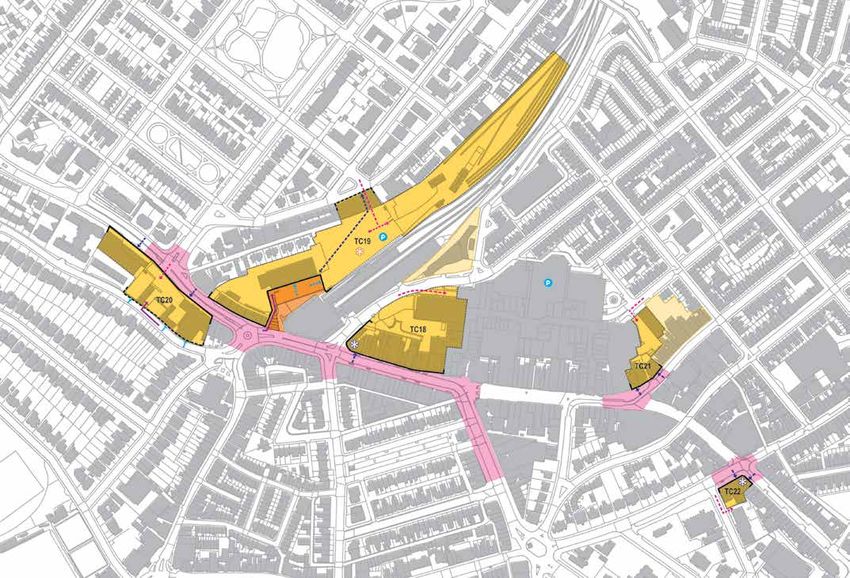
What is a Town
    Centre Local Plan?
    1.9   The Town Centre Local Plan (TCLP) is a formal                 1.12 A five-stage process has been adopted in preparing the      1.13 The TCLP has been prepared following a period of
          Development Plan Document (DPD) which establishes a                TCLP:                                                            consultation on Issues and Options facing the Town
          planning framework for an area that may be subject to                                                                               Centre and represents the Council’s proposed policy
          change, in this case the Town Centre. It forms part of the            Stage 1: Information gathering, baseline analysis and
                                                                              •	                                                             framework taking account of comments that have been
          Local Plan for Eastbourne together with the Eastbourne                identifying issues. This stage was completed in late          received. The document was originally submitted to the
          Core Strategy Local Plan and other documents set out                  2009.                                                         Secretary of State on 31st January, 2012. However, the
          within the Local Development Scheme (LDS).                            Stage 2: Consideration of options, shaping the policy
                                                                              •	                                                             inspector raised a number of issues in correspondence
                                                                                direction and developing a spatial framework for              and these have now been addressed. The TCLP has been
    1.10 The purpose of the TCLP is to set out a strategy and                   the Town Centre. An Issues and Options report was             subject to a Sustainability Appraisal (SA). The SA process
         proposals for the regeneration of the Town Centre.                     subject to a 12 week period of consultation in 2010           has run in parallel with the preparation of the TCLP. The
         The TCLP is an important policy document that will                     with representations used to shape the draft TCLP.            TCLP should be read in conjunction with the SA Report
         shape development within the Town Centre to 2027                       Stage 3: Preparation of the Proposed Submission
                                                                              •	                                                             which can be viewed at www.eastbourne.gov.uk.
         in accordance with the National Planning Policy                        Version of the TCLP having regard to the
         Framework and in particular the “presumption in favour                 representations received at Stage 2 and in accordance
         of sustainable development”. It is being prepared in                   with Regulation 27 of the Town and Country Planning
         accordance with the Eastbourne Core Strategy Local Plan                (Local Planning) (England) Regulations 2004 (as
         which will set out the overarching policy direction for                amended in 2008 and 2009)
         Eastbourne.                                                            Stage 4: Preparation of Modifications to the
                                                                              •
                                                                                Submission Version of the TCLP, having regard to the
    1.11 The Policies Map, which takes account of the Eastbourne                representations received at Stage 2 and in accordance
         Core Strategy Local Plan policies will be updated to reflect           with Regulation 18(3) of the Town and Country
         the TCLP. It will set out and define important policy areas            Planning (Local Planning (England)) Regulations 2012).
         and locations within Eastbourne and in the Town Centre.                The Submission Version was published to provide
         The Policies Map for the defined Town Centre will be                   stakeholders and the community with an opportunity
         based on TCLP Figure 1, which illustrates key policies and             to make final representations over a 6 week period
         policy areas. It is on Page 14. Where artist’s impressions             prior to the document being submitted to the Secretary
         are used in the TCLP these are for illustrative purposes               of State.
         only and are not indicative of a fully worked-up design                Stage 5: Independent examination of the Submission
                                                                              •
         proposal.                                                              Version conducted by a Planning Inspector.

6
How does the Town Centre Local
Plan relate to other plans?
1.14 The TCLP has been prepared having regard to the              1.16 The Eastbourne Core Strategy Local Plan was submitted         1.18 The TCLP replaces saved policies from the Eastbourne
     planning policy context established at national, regional         to the Secretary of State in January 2012 and adopted              Borough Plan that applied to the Town Centre area.
     and local level including the National Planning Policy            in February 2013. It identifies a spatial vision for the           They are listed in Appendix 1.
     Framework and specifically the presumption in favour of           Borough supported by a number of objectives and
     sustainable development.                                          policies. Fourteen distinct neighbourhoods are identified
                                                                       as part the Spatial Development Strategy which together
1.15 The Local Plan for Eastbourne sets the local planning             cover the built up area of the town. The Vision for the
     policy context for the Town and comprises a suite of local        Town Centre (Neighbourhood 1) states:
     development documents. Of particular relevance to the
     Town Centre are the:                                               “The Town Centre will maintain its status as a sustainable
                                                                        centre by maximising its economic potential and attract
      • Local Development Scheme which sets out the                     more shoppers, workers, residents and visitors through
        programme of preparation for the Local Plan, and                schemes and proposals for redevelopment detailed in the
      • Eastbourne Core Strategy Local Plan which                       Town Centre Local Plan.”
        establishes the broad spatial development strategy and
        key policies for Eastbourne (excluding the area of the    1.17 The policies and proposals set out within the TCLP are
        Borough within the South Downs National Park) and              consistent with the objectives and policies within the
        has been prepared in parallel with the TCLP.                   Eastbourne Core Strategy Local Plan. The Eastbourne
                                                                       Core Strategy Local Plan has been prepared having
                                                                       regard to the East Sussex Sustainable Community
                                                                       Strategy – Pride of Place. The Eastbourne Core Strategy
                                                                       Local Plan highlights that maintaining and improving
                                                                       the environment is a vital element in ensuring that
                                                                       Eastbourne has a sustainable future.

                                                                                                                                                                                                 7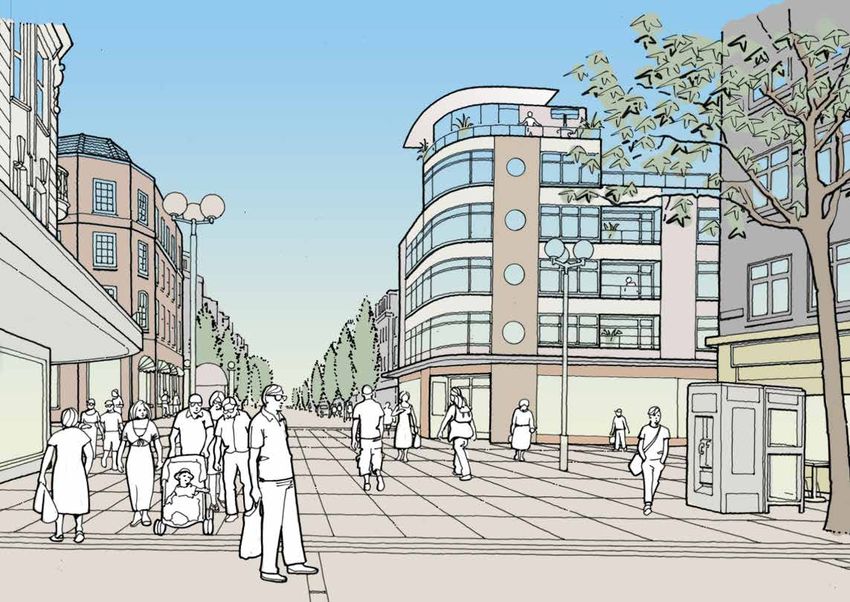
8
    Artist’s impression of public realm enhancement at Grand Parade
2.0 A Vision for the Town Centre
What will Eastbourne Town
Centre be like in 2027?                                           VISION
2.1   The starting point for the TCLP is a clear vision for the
      future of Eastbourne Town Centre which will be achieved
      through a series of objectives. The Vision and objectives
      are consistent with the proposed Eastbourne Core
                                                                  By 2027, Eastbourne Town Centre will
                                                                  be a place that attracts more shoppers,
      Strategy Local Plan and the Community Strategy and
      comply with the National Planning Policy Framework.

                                                                  workers, residents and visitors to spend
                                                                  more time enjoying a vibrant and varied
                                                                  offer and mix of uses in a well connected
                                                                  series of attractive streets and public
                                                                  spaces. Increasing investment in the
                                                                  town will bring wide-ranging benefits
                                                                  and will allow Eastbourne to respond
                                                                  positively to climate change.

                                                                                                              9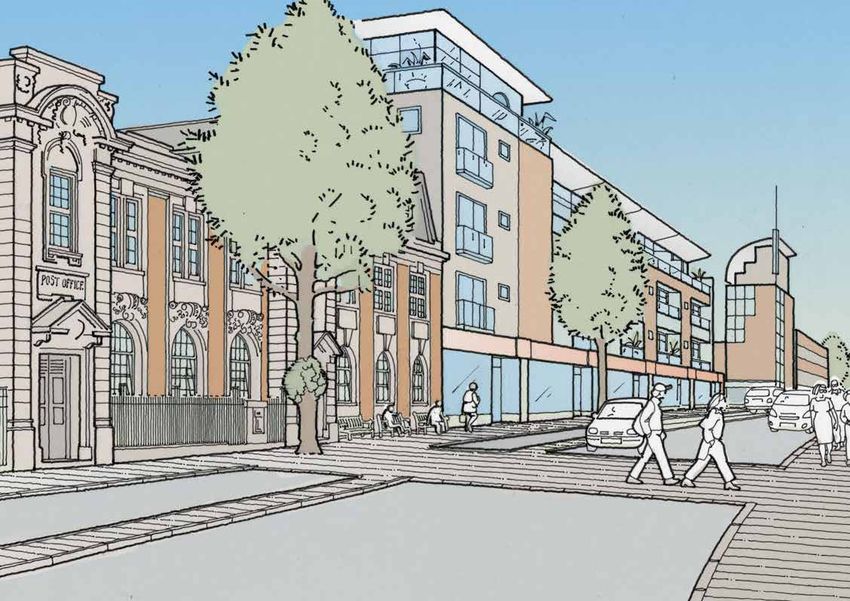
Town Centre Objectives

     2.2   The Eastbourne Town Centre Local Plan has been                 6.    A mixed use centre: increase the mix of uses within the      11.   Public realm: provide enhanced pedestrian and cycle
           prepared to deliver the Vision through meeting the                   Town Centre including leisure uses such as restaurants             links across the Town Centre, particularly between
           following twelve objectives:                                         and cafés and specifically to encourage significant                Sussex Gardens, the railway station, the seafront and
                                                                                additional residential development including the provision         Arts Quarter through improvements to the public realm
     1.    Economic potential: identify and prepare a series of high            of affordable homes and community facilities ensuring              ensuring that the qualitative experience for those who
           quality, ambitious and deliverable proposals and policies            that the Town Centre is well used and safe at all times of         shop, work, visit and live in Eastbourne is improved
           for Eastbourne Town Centre that will enable the area to              the day and evening;                                               through measures such as pedestrian access and security,
           maximise its economic potential in creating a thriving and                                                                              provision for cyclists taking account of the Eastbourne
           dynamic Town Centre that will play an important part in        7.    Employment opportunities: develop strategies                       Cycling Strategy, improving the quality of public places
           helping to build a sustainable and prosperous future for             for increasing the employment opportunities in high                and securing increased priority for pedestrians and cyclists
           the town;                                                            quality jobs in a variety of sectors in the Town Centre.           within the Town Centre; and
                                                                                In particular, the Council will support the retention,
     2.    Vitality and competitiveness: enhance the vitality                   refurbishment and extension of existing office and           12.   Sustainable development: enhance the sustainable
           and viability of the Town Centre as a whole by improving             business floorspace and the provision of new high quality          performance of development proposals coming forward
           Eastbourne’s retail competitiveness, both in its role as             office space that will meet the needs of a range of                within the Town Centre by utilising a balance of resource
           a sub-regional centre in East Sussex and in respect of               businesses;                                                        efficiency measures and improving biodiversity having
           competing with out of town developments;                                                                                                regard to Policy D9 of the Eastbourne Core Strategy
                                                                          8.    Supporting tourism and business: ensure the                        Local Plan.
     3.    Quality and Diversity: increase the quality and                      regeneration of the Town Centre contributes to
           diversity of the Town Centre retail offer to increase choice         Eastbourne as an important tourist and business              2.3   The objectives underpin the preparation of the TCLP and
           for all sectors of the population. To secure a mix of                destination including opportunities for providing a range          policies and proposals contained within it. They will also
           occupiers in the Town Centre with a mutually supporting              of hotel uses through retention and enhancement of                 help monitor its performance and effectiveness.
           balance between national multiple retailers through the              existing stock and through new development;
           provision of units of a sufficient size and configuration in                                                                      2.4   When considering development proposals, the
           suitable locations in order to respond to modern retailer      9.    Accessibility: improve accessibility to and within                 Council will take a positive approach that reflects the
           requirements, as well as smaller independent traders;                the Town Centre and Seafront for all sectors of the                “presumption in favour of sustainable development”
                                                                                population, through the provision of an integrated                 set out in paragraphs 14 and 15 of the National
     4.    Complementary new retailers: complement rather                       approach to all transport users particularly pedestrians,          Planning Policy Framework. It will work with applicants
           than compete with the existing retail offer, promoting               cyclists and public transport customers;                           to find solutions that address concerns raised by local
           a strategy for new mixed use development that aims to                                                                                   residents and community groups, which mean that
           bring in new retailers, not simply relocate those already      10.   Design and heritage: protect the best areas and                    proposals can be approved wherever possible, and to
           present;                                                             important heritage assets while delivering a high quality,         secure development that improves the economic, social
                                                                                contemporary urban design which will integrate and                 and environmental conditions in the area. Planning
     5.    Independent retail offer: strengthen the towns                       encourage greater activity in the Town Centre;                     applications that accord with the policies in this Town
           independent retail offer, improving its integration with the                                                                            Centre Local Plan will be approved, unless material
           primary shopping area and the seafront and building on                                                                                  considerations indicate otherwise.
           its authentic local distinctiveness;

10
11
12
3.0 Development Strategy and Spatial Framework
Approach to development
within the town centre
3.1   The Eastbourne Core Strategy Local Plan has adopted         •     Establishing a stronger Town Centre identity and structure
      a sustainable neighbourhood based approach to                     by reinforcing the interrelationship between key locations
      development within Eastbourne. The Town Centre                    including the railway station, the primary and secondary
      is identified as one of fourteen neighbourhoods in                retail areas, and the Seafront, and by identifying distinct
      Eastbourne. Policy B2 of the Eastbourne Core Strategy             character areas and making the Town Centre a more
      Local Plan states that sustainable neighbourhoods will            cohesive and legible neighbourhood.
      be established which will work together as an interlinked
      network with a focus on meeting the needs of their          •     Improving and increasing the mix of uses in the Town
      respective communities.                                           Centre particularly retail, employment, community,
                                                                        residential, leisure, recreation, cultural and tourist
3.2   The Town Centre neighbourhood is at the heart                     facilities through maximising development around key
      of Eastbourne and is home to principal shopping,                  Development Opportunity Sites.
      employment and tourist attractions. Development
      priorities will maximise the economic potential of the      •     Strengthening the pattern of existing land uses within the
      Town Centre attracting more shoppers, businesses,                 Town Centre, supporting existing functions, independent
      workers and residents. The TCLP sets out the policies             retailers and the resident community and proactively
      and proposals that will achieve this. The approach to             addressing locations where change is likely to happen
      development must help to deliver the Vision for the Town          during the lifetime of the TCLP.
      Centre and the accompanying objectives in particular
      through:                                                    •     Preserving and enhancing the character of the
                                                                        Town Centre by delivering development, which has
                                                                        high architectural, urban design and environmental
                                                                        performance and sustainability standards.

                                                                  •     Making it easier and more convenient to move around
                                                                        and spend time in the Town Centre by identifying key
                                                                        public realm enhancements, opportunities for new
                                                                        public spaces and improving sustainable movement
                                                                        patterns particularly pedestrian, cycle and public transport
                                                                        provision.

                                                                  3.3   Polices within the TCLP aim to reinforce the approach to
                                                                        development providing a robust framework against which
                                                                        proposals can be shaped and assessed.

                                                                                                                                       13
N 14 TCLP Figure 1 - Eastbourne Town Centre
Defining the extent of the                                       The Town Centre
Town Centre boundary                                             Spatial Framework
3.4   The Town Centre boundary defines the area within which     3.6   The role and function of the Town Centre is influenced          3.10 In order to implement proposals for the public realm the
      the TCLP policy framework will be applied. The boundary          by the way that it is perceived by users particularly those          Council will:
      is shown on TCLP Figure 1.                                       who choose to shop, live, work or visit Eastbourne. An
                                                                       overall structure that is attractive and enhances the                 •	produce a detailed Public Realm Strategy for the Town
3.5   Options were considered relating to the extent of                ease with which the Town Centre is used is therefore an                  Centre in the short term phase of the plan period
      the boundary, which included retaining the previous              important consideration for the TCLP. The provision of a                 in order to provide design, layout and preliminary
      boundary as set out in the Eastbourne Borough Plan               comprehensive spatial framework that establishes a clear                 costings for the identified public realm projects in the
      (2001-2011) or extending it to include sites that are            structure for the Town Centre and identifies opportunities               TCLP, focusing on the public realm priorities set out in
      appropriate for new town centre uses and incorporate             and priorities within it is therefore proposed. The                      Policy TC13 but also considering the wider public realm
      key approaches, gateways and connecting streets that are         framework provides a spatial expression for the policies                 areas that contribute to the structure of the Town
      important within the Town Centre movement network.               within the TCLP and forms part of the overall approach to                Centre set out in Policy TC2;
      Following consultation the Town Centre boundary has              development within the Town Centre.                                   •	link projects together to maximise opportunities to
      been extended and this is shown on TCLP Figure 1.                                                                                         progress work on the public realm, for example at the
                                                                 3.7   The spatial framework is based on an analysis of the                     junction of Terminus Road and Grove Road where the
                                                                       Town Centre. Through identifying and reinforcing key                     funded scheme for the public transport interchange in
                                                                       structural elements through, for example, public realm                   Terminus Road will help implement initial work on the
                                                                       enhancements, the TCLP aims to produce a well defined                    Grove Road and South Street public realm priority area
                                                                       and legible neighbourhood. The elements comprise:                        through enhancing pedestrian and cycle connectivity
                                                                                                                                                from the Station into an important secondary retail
                                                                       •	Character areas and associated patterns of land                       area;
                                                                          use                                                                •	as part of LTP3 target funding from surplus on-street
                                                                       • Principal approaches and gateways                                      parking charges in the Town Centre towards the
                                                                       • Important streets and open spaces                                      funding of public realm projects;
                                                                                                                                             •	work with East Sussex County Council identifying
                                                                 3.8   The key components of the spatial framework are                          where the programmed ongoing highway maintenance
                                                                       described on the following pages. Policy TC2 and TC13                    budget could use additional funding streams to bring
                                                                       identify those key elements of the spatial framework                     forward public realm projects; and
                                                                       that will be prioritised for enhancement as specific                  •	negotiate section 106 contributions for the public
                                                                       projects through the TCLP period. This is because of the                 realm from the Development Opportunity Sites, and
                                                                       contribution these elements make towards enhancing the                   other sites that relate to and adjoin indentified public
                                                                       legibility, identity, functionality, particularly in terms of            realm projects in the Town Centre.
                                                                       pedestrian movement, and the overall appearance of the
                                                                       Town Centre.                                                    3.11 The Council will monitor progress on the delivery of the
                                                                                                                                            public realm projects identified in the TCLP and the Public
                                                                 3.9   The TCLP Implementation Framework in Section 6 gives                 Realm Strategy to re-evaluate priorities, where necessary,
                                                                       details of how these projects will be brought forward                or bring forward wider public realm projects as priorities
                                                                       including broad timescales over the TCLP period, project             during the plan period.
                                                                       leads and key partners, and potential funding sources.
                                                                       The Council will take a lead role in scoping these projects
                                                                       working with other partners and agencies including
                                                                       land owners, private developers and East Sussex County
                                                                                                                                                                                                           15
                                                                       Council.
Character Areas
3.12 Eastbourne Town Centre is already a focus for many
activities. However the Town Centre currently lacks
a particularly strong image and identity. One way of
enhancing the overall character of the Town Centre,
strengthening the range and mix of uses on offer and
examining different development opportunities and
priorities, is through identifying a number of distinctive
quarters, or character areas, that are linked together by
a network of attractive streets, promenades and public
spaces.
3.13 Eastbourne can already be thought of in terms of a
number of different quarters or ‘districts’, principally
defined by land uses and characteristic built form. These
include the Seafront; the ‘Arts Quarter’ (around the
Congress Theatre and Towner Gallery); Little Chelsea;
and the main retail area around the Arndale Centre and
Sussex Gardens. Other districts can also be identified
with a character based on the pattern of land uses, built
form, spaces and streets.
3.14 Seven overlapping character areas have been identified,
which are shown on figure 2:
16 Figure 2 - Character AreasApproaches, gateways,
streets and spaces
Arts District. Focused on the Congress and Devonshire Cavendish. A distinctive area of the Town Centre 3.17 Key approaches are the main streets that lead into the
Theatres, The Towner, and Devonshire Park. Strong links focused around a well defined grid of streets with a Town Centre. They must be designed to be attractive and
exist to the Seafront via Wilmington Square and Carlisle dense, urban character. The area has a sizable resident convenient for everyone to use linking the Town Centre
Road, although pedestrian routes back towards Terminus population together with a mix of small businesses and with adjoining neighbourhoods through, for example,
Road via Cornfield Terrace are less well defined. secondary retailers. It is also one of the more deprived the provision of safe surface level pedestrian and cycle
parts of the Town Centre. crossings and the provision of improved signage. There
Business District. The area around Hyde Gardens, are four key approaches into the Town Centre:
Lushington Road and Gildredge Road is a focus for 3.15 The purpose of identifying interlinked character areas is
commercial business premises. It is closely related to the to make different places across the Town Centre more • Seaside and Marine Parade providing a key point of
Retail District and Little Chelsea and within easy reach of distinctive and memorable. As such the character areas access into the Town Centre from the north east
the railway station and public transport interchange on draw on the existing structure of the town reflecting the • Upperton Road giving access into Terminus Road
Terminus Road. prevailing mix of land uses, urban form and structure, • Upper Avenue giving access across the railway line
and identity that already exists in key locations across the and connecting into The Avenue and Cavendish Place
Retail District. The town’s retail heart focused on Town Centre. • King Edward’s Parade giving access from the south
Terminus Road, Sussex Gardens and the Arndale Centre west
is a key destination. Part of Terminus Road to the east of 3.16 The identified character areas have been supported
Langney Road, Bolton Road and Cornfield Road is also through the consultation on Issues and Options. 3.18 Gateways are located on the approaches to the Town
emerging as a focus for the evening economy. Centre and mark the entrance points into the defined
Town Centre area. There are five key gateways into
Seafront. The Seafront is a principal location that does Policy TC1 Character Areas Eastbourne:
much to define the character of the Town Centre and of
Eastbourne as a whole. The Seafront is made up of three The structure of the Town Centre will be defined through • Junction of King Edward’s Parade and Wilmington
distinct areas: the main promenades; the area of hotels seven interlinked character areas each with a distinctive role Square adjoining the Wish Tower;
and apartments focused on the Seafront and Grand and identity to harness and promote Eastbourne’s variety • Junction of Marine Parade, Queen’s Garden’s and
Parade, Burlington Place, Devonshire Place and Hartington and character. A complementary mix of uses will improve Cavendish Place;
Place; and the area around the eastern end of Terminus and strengthen the character areas contributing towards • Junction of Upperton Road and The Avenue;
Road and Seaside Road. maintaining a robust mix of uses across the Town Centre. • The Upper Avenue roundabout; and
• The railway station and the public transport
Little Chelsea. One of the oldest parts of the Town interchange on Terminus Road.
Centre, Little Chelsea has a strong identity and a vibrant
mix of independent retailers and businesses. Links 3.19 Gateways must positively announce arrival into
to the main Retail District via Terminus Road must Eastbourne and create a welcoming first impression of the
be strengthened in order to enhance its role as a key Town Centre through the design of the public realm and
secondary retail location and enhance the overall retail the character of the surrounding built form. Gateway
offer in the Town Centre. spaces will be characterised by a consistent approach to
the detailing of the public realm, and a strong built form
Northern District. This is a key opportunity within the that defines and fronts the gateway. A landmark building
Town Centre focused around the railway station, the or piece of public art may also help distinguish a gateway
Enterprise Centre and the principal approach towards the space within the wider structure of the town.
Town Centre from Upperton Road. It is a key point of
arrival and a main gateway into the Town Centre. The
17
district also encompasses St Leonard’s Road.3.20 At the boundaries between different character areas and of mobility for everyone maximising accessibility around
at the junctions between different routes important places the Town Centre. Collectively approaches, gateways,
occur, which must be enhanced to reinforce the role and streets, squares and spaces make up the Town Centre’s
character of the Town Centre and locations within it. primary public realm.
3.21 These will be places of choice and decision, marking the 3.23 A number of key streets and spaces have been
points where transition is being made from one district to identified through analysis and as part of the consultation Terminus Road corridor. This is a principal street giving
another. They must be designed to be attractive, useable process on Issues and Options. These key streets and access from the railway station to the Seafront.
and of the highest quality enhancing the experience of spaces make a particular contribution towards enhancing
being in Eastbourne and encouraging people to linger, the legibility, identity, functionality, particularly in terms
and giving people clear visual signals to inform decisions of pedestrian movement, and the overall appearance of
about where to go next. the Town Centre and have therefore been prioritised.
Information on how they will be brought forward for
3.22 They will include the town’s streets, walks and public delivery is given in the TCLP Implementation Framework
squares which must be carefully managed to ensure ease in Section 6. They comprise:
Grove Road and South Street. These streets are
a focus for secondary and independent retail activity
within ‘Little Chelsea’ and contribute significantly to the
character of the Town Centre.
Seaside Road. Although Seaside Road has been subject
to recent investment it is an area of transition in terms of
the mix of uses that are supported there and its proximity
to both the primary retail core and Seafront areas of the
Town Centre.
18 Figure 2a - Approaches, Streets and GatewaysPolicy TC2 Town Centre Structure
Susans Road provides an important linkage into the Cornfield Terrace and Cornfield Road are key streets A legible Town Centre structure will be supported by
Town Centre and gives access to the Arndale Centre car within the wider Town Centre movement network strengthening the following key approaches, gateways,
park. As such it is one of the main streets that many particularly for public transport and pedestrians. They streets and public spaces:
visitors to the Town Centre first experience. provide access between the Retail District, the Arts District
and the Seafront. •• Seaside and Marine Parade approach
•• Upperton Road approach
•• Upper Avenue approach
•• King Edward’s Parade approach
•• Gateway at the junction of King Edward’s Parade and
Wilmington Square adjoining the Wish Tower
•• Gateway at the junction of Marine Parade, Queen’s
Garden’s and Cavendish Place
•• Gateway at the junction of Upperton Road and The
Avenue.
•• Gateway at the Upper Avenue roundabout
Pevensey Road and Lismore Road are important in Open spaces at Hyde Gardens and the Memorial •• Gateway at the railway station and the Terminus Road
terms of their role within the wider movement network in Roundabout to improve their environmental quality, public transport interchange
the Town Centre. It will be important to ensure that there make the spaces more useable and improve pedestrian
is a balance between pedestrian and vehicular movement crossing facilities. •• Terminus Road Corridor
through enhancements to the public realm including •• Grove Road and South Street.
crossing points and pavements. •• Seaside Road
•• Susans Road
•• Pevensey Road and Lismore Road.
•• Gildredge Road.
•• Cornfield Terrace and Cornfield Road.
•• Open space at Hyde Gardens
•• Open space at Memorial Roundabout
•• Open spaces at Wilmington Square and the Wish Tower
Open spaces at Wilmington Square between King This will be achieved by prioritising investment and public realm
Edwards Parade and the Congress Theatre to enhance enhancements. New streets and open spaces will be established
environmental quality, provide an enhanced setting for as part of key Development Opportunities coming forward
Gildredge Road provides an important connection an important Post War listed building and The Towner, within the Town Centre.
between South Street and the railway station. Currently and improve the pedestrian environment at a gateway
one way operation. location particularly across to the Wish Tower.
1920
4.0 Town Centre Policies
                                                                 Theme 1:
                                                                 Supporting a Mix of Uses
4.1   This section of the TCLP sets out policies and proposals   4.3   The Town Centre is an important neighbourhood within           4.5   In addition, the introduction of a wider mix of uses can
      that relate to the Town Centre. They will be used to             Eastbourne and the natural focus for a range of different            help to informally ‘police’ the Town Centre during the
      shape the regeneration of the Town Centre, inform                activities. However, unlike many neighbourhoods which                evenings and periods when shops and other businesses
      strategies and assess development proposals as they              are primarily residential areas the Town Centre performs             are closed. It can encourage a broader range of people,
      come forward. The policies must also be considered               an additional function and is used by larger numbers                 including families and people from all age groups and
      in conjunction with policies within the Eastbourne               of people who do not necessarily live there. It is a key             backgrounds, to make use of the Town Centre at different
      Core Strategy Local Plan and other Development Plan              economic driver for the town supporting a range of                   times. Increasing the actual and perceived surveillance
      Documents (DPDs) in particular the Development                   different employment activities. As such it is therefore             of the central area can play a role in crime prevention
      Management Local Plan and the Infrastructure Delivery            vital for the TCLP to support an appropriate and diverse             and reducing the fear of crime, encouraging a greater
      Plan (IDP).                                                      mix of uses that will contribute to the overall vitality and         proportion of the town’s population to spend time there.
                                                                       economic viability of the Town Centre.                               This must be supported through design measures such as
4.2   Policies are grouped around four themes:                                                                                              ensuring that all streets and open spaces are fronted by
                                                                 4.4   Supporting a mix of uses in the Town Centre has a                    development that supports an active mix of uses.
      • S
         upporting a mix of uses which includes retail                number of benefits. New homes within the Town Centre
        development, living and working in the Town Centre,            for example will provide a local resident population           4.6   The Town Centre must offer a broad range of facilities
        and enjoying the Town Centre.                                  that can help support existing services and facilities.              to all potential users including families, children,
                                                                       Provision for a greater mix of uses enhances the range               young people and the elderly. This could include
        Town Centre identity which sets out policies for
      •	                                                              of employment opportunities on offer. The creation of                cafés, restaurants and other facilities that appeal to a
        achieving appropriate high quality development                 a complementary range of land uses will make the Town                broad range of people. Everyone should feel safe and
        standards for buildings in the Town Centre.                    Centre a vital and attractive place to spend time.                   welcome at all times of the day and evening. Mixed
                                                                                                                                            use development should not concentrate exclusively on
      • T
         own Centre public realm which considers design                                                                                    bars, pubs and shops, but also provide other leisure,
        quality and public realm priorities.                                                                                                cultural and tourism opportunities that can be enjoyed
                                                                                                                                            by everyone. Consideration must be given to broadening
      • A
         ccessing the Town Centre which sets out policies                                                                                  the mix of uses when new development proposals come
        concerning arriving at and moving around the Town                                                                                   forward in the Town Centre. Proposals for bars, pubs
        Centre.                                                                                                                             and other premises where alcohol is likely to be served
                                                                                                                                            will be carefully assessed having regard to policies within
                                                                                                                                            the TCLP but also the Council’s Statement of Licensing
                                                                                                                                            Policy, including the Cumulative Impact Policy, in order
                                                                                                                                            to minimise the potential for noise, disturbance and anti-
                                                                                                                                            social behaviour in the Town Centre. Policies relating to
                                                                                                                                            general issues of noise, amenity protection and air quality,
                                                                                                                                            particularly in relation to residential development, will also
                                                                                                                                            be dealt as part of the Development Management Local
                                                                                                                                            Plan which will replace saved policies from the Borough
                                                                                                                                            Plan.

                                                                       High quality mixed use development with apartments                                                                                    21
                                                                       above retail
4.7 These opportunities would complement the existing Policy TC3 Mixed Use Development
leisure, tourism and cultural facilities within the Town
Centre particularly those focused around the Seafront and A mix of uses will be supported throughout the Town Centre
Devonshire Park including the Congress Theatre, Winter including Development Opportunity Sites and redevelopment
Gardens, and The Towner. In addition a mix of small proposals. Priority will be given to retail uses, leisure and
studio, workshop, gallery spaces and complementary cultural uses, employment generating uses particularly office
retail, together with an arts-focused signage and way- development (class B1(a)), residential, supporting community
finding strategy, could also help support the cultural uses, and evening and night time economy uses including
identity of the Town Centre, capitalising on the success of cafés, restaurants and bars.
the Towner and existing small galleries and workshops in
South Street and Cornfield Terrace. Mixed use developments and mixed uses within individual
buildings will be encouraged (for example ground floors
4.8 In order to maintain a range of different uses in the accommodating a different use to upper floors) in order to
Town Centre, including retail development, employment, add to the vitality of the Town Centre, provide active frontages
housing, leisure and community facilities the TCLP sets addressing streets and open spaces, and increase opportunities
out policies that will protect, support and encourage for surveillance at different times of the day and night to
mixed use development. In addition the TCLP allocates enhance the safety of the Town Centre.
a number of Development Opportunity Sites where a
range of key land uses have been identified as being Within mixed use developments care must be taken to
appropriate. minimise noise and disturbance between different uses through
layout, design and the siting of potentially noise generating
plant such as mechanical ventilation and extraction equipment.
22 Vibrant mixed-use environmentRetail Development in
the Town Centre
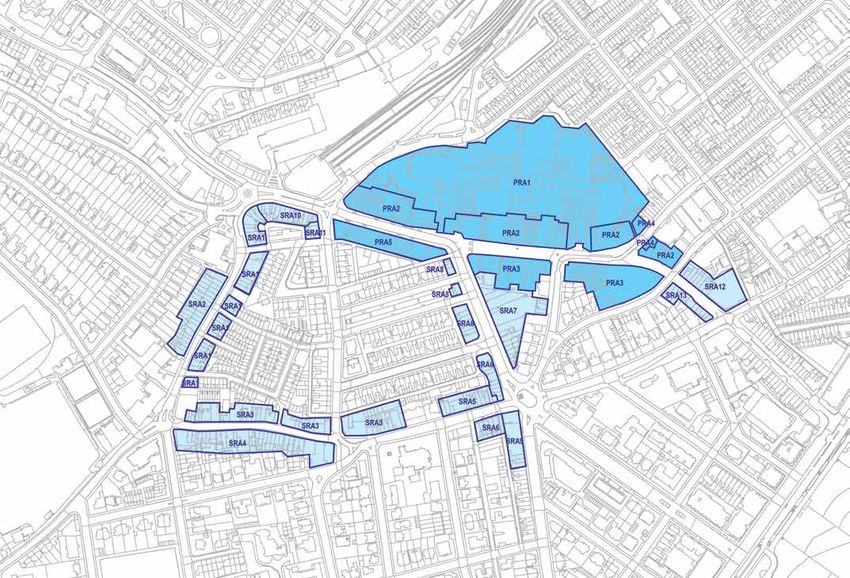
4.9 There is a clear desire to ensure that Eastbourne retains • Updating the boundaries of the existing primary and Policy TC4 Primary Retail Areas (PRAs)
and strengthens its retail offer and consolidates and secondary retail areas as part of the preparation of the
enhances its position as a shopping destination so that TCLP to ensure that they provide a focused, attractive and The Town Centre’s primary retail core will be maintained and
it can compete effectively with other nearby shopping legible retail environment; and enhanced and comprises the following principal retail areas. The
destinations including Brighton and Hove and Royal following are defined as primary retail frontages and are shown
Tunbridge Wells. This is reflected in Policy D4 of the • identifying opportunities for new retail floor space. on TCLP Figure 1 and Figure 3:
Eastbourne Core Strategy Local Plan. The retail offer in These are set out elsewhere in the TCLP as part of the
Eastbourne is characterised by a mix of larger national Development Opportunity Sites in Section 5. •• The Arndale Centre (PRA1)
multiple retailers and smaller independent and specialist •• 11 to 155 Terminus Road (PRA2)
retailers. The primary retail core of the Town Centre 4.12 Within the primary retail core retailing will continue to
•• 96 to 170 Terminus Road (PRA3)
is currently focussed around the Arndale Centre, Sussex be the predominant land use. A limited number of other
Gardens and Terminus Road. There are also important specific non-retail uses, comprising banks and building •• 1,2, 3 and 4 Langney Road (PRA4)
areas of secondary, specialist and independent shops societies (class A2), and cafés and restaurants (class A3) •• 46-94 Terminus Road (PRA5)
on Grove Road, South Street and Cornfield Road. In will also be allowed within the primary retail core as long
addition there are significant opportunities for expanding as they contribute to the vitality and viability of the Town Use Classes A2, A3 and A4 will only be permitted at ground
the retail offer in the Town Centre, particularly around the Centre i.e. encourage activity at different times of the day floor level within the primary retail frontages where:
Arndale Centre and the railway station. and add to the overall variety of the primary retail core.
An active ground floor window display and frontage will •• it would result in no more than 10% of the overall retail
4.10 The balance between primary and secondary retail and be required for any non-retail uses in order that they frontage in the Arndale Centre or 25% of the overall
the attractiveness of linkages between them, make a contribute to street activity and provide opportunities for retail frontages in the remaining primary retail areas being
strong contribution to the overall vitality and viability of people to overlook the public realm. in non-retail use;
the Town Centre as a whole. The potential for enhancing
•• no more than three consecutive shop units are in non-
the existing retail offer and improving linkages and 4.13 Other non-retail uses will not be permitted within the
retail use; and
accessibility across the Town Centre are key issues for the primary retail core at ground floor level. They are likely
TCLP. to cause harm to the vitality and viability of the primary •• a ground floor shop front window is retained.
retail core through diluting to an unacceptable extent
4.11 An assessment of retailing in the Borough (The the character and identity of the area as a focus for retail Other non-retail uses will not be permitted within the Primary
Eastbourne Shopping Assessment May 2010) identifies activity and introducing inactive and blank frontages Retail Area.
the need to bring forward the regeneration of the Town particularly at ground floor level addressing the street.
Centre, to strengthen its position as the principal retail Public realm enhancements will be brought forward in order to
centre in the Borough and enhance retail offer. The 4.14 In calculating percentages for the purposes of applying improve the quality of pedestrian linkages between the primary
Council is committed to the regeneration of the Town Policy TC4 the Council will measure in metres the overall retail core and secondary retail areas.
Centre and the TCLP is a means of identifying how the primary retail frontage sections as set out in the policy
overall retail strategy for the Town Centre should be and defined on TCLP Figure 1 and Figure 3 Primary and
taken forward. This has been achieved through positively Secondary Retail Area.
managing demand for floor space by:
234.15 The secondary retail areas support a diverse range Policy TC5 Secondary Retail Areas (SRAs)
of independent and specialist retailers which make a
significant contribution to the overall variety of the Town Secondary retail areas make an important contribution to the In order to maintain and enhance secondary retail areas
Centre. It is important to protect these smaller retailers diversity of retailing in the Town Centre and will be maintained the comprehensive redevelopment or the amalgamation of
and the contribution they make in enlivening the retail and enhanced. individual shops within the secondary retail frontages will be
mix and character of the Town Centre particularly the resisted unless it can be demonstrated that this contributes to
areas around South Street and Grove Road (Little Chelsea) •• 2 to 66 Grove Road (SRA1) the overall vitality and viability of the Town Centre.
and the area around Cornfield Road and Cornfield •• 25 to 57 Grove Road (SRA2)
Terrace. Non-retail uses (class A2, A3, A4, B1(a) office), D1 and D2 will
•• 3 to 89 South Street (SRA3)
only be permitted at ground floor level where:
4.16 A greater degree of flexibility will be applied to allowing •• Public House at Corner of South Street and Grange Road
non-retail uses including banks, building societies (class to 56 South Street (SRA4) •• it would result in no more than 35% of the overall retail
A2), cafés and restaurants (class A3), pubs and bars •• 99 to 121 South Street (SRA5) frontages in each Secondary Retail Area being in non-
(class A4) and small commercial office space (class B1 •• 106 to 114 South Street (SRA6) retail use;
(a) office). It will still be important to ensure the overall •• no more than three consecutive shops are in non-retail
•• 7 to 45 Cornfield Road (SRA7)
vitality and viability of these areas is not diminished. An use; and
active ground floor window display and frontage will •• 2 to 44 Cornfield Road (SRA8)
be required for any non-retail uses in order that they •• a ground floor shop front window is retained.
•• 17 to 28 Cornfield Terrace (SRA9)
contribute to street activity and provide opportunities for •• 2 to 44 Terminus Road (SRA10)
people to overlook the public realm. Applications for new A5 hot food takeaways will not be
•• 1a to 3b Gildredge Road including 1a and 1b Ivy Terrace permitted within secondary retail areas. This would be
4.17 Additional A5 hot food takeaway uses in the secondary (SRA11) detrimental to other uses in the area, particularly residential, by
retail areas will be resisted by the Council. Through •• 157 to 187 Terminus Road (SRA12) way of noise, smell and disturbance.
problems associated with noise, smell and disturbance •• 172 to 200 Terminus Road (SRA13)
such uses can be difficult to accommodate within a mixed Public realm enhancements will be brought forward in order to
use environment, particularly where residential dwellings improve pedestrian linkages between the primary retail core and
are located. secondary retail areas.
4.18 In calculating percentages for the purposes of applying
Policy TC5 the Council will measure in metres the
secondary retail frontage sections as set out within the
policy and defined on TCLP Figure 1 and Figure 3 Primary
and Secondary Retail Areas.
24Primary Retail
Secondary Retail
Figure 3 - Primary and Secondary Retail 25Living and Working
in the Town Centre
4.19 The Town Centre already supports a significant resident 4.22 A range of community facilities will also need to 4.25 The Town Centre supports a range of leisure and evening/
population. There is considerable benefit in attracting be provided to meet the needs of the Town Centre night time economy uses which contribute significantly
more people to live within the Town Centre. It is community. It is anticipated that this will include to its vitality and viability. Within a busy, mixed use
both socially and economically sustainable. Increasing additional provision for Early Years Childcare (for 3-4 environment, care must be taken in the design and layout
the population of the Town Centre also benefits year olds); primary school places; and GP surgeries. A of new development to avoid undue noise. This means
local businesses and employers. It also enhances the number of the Development Opportunity Sites allow the careful design and location of livelier uses, such as
viability of public transport in the Town Centre through for community provision within the range of acceptable cafés, bars and restaurants, relative to the places where
introducing a larger potential customer base as well as uses. Where supporting community uses cannot be greater numbers of people will live, thereby reducing the
reducing the potential need for people to make journeys provided on-site contributions will be sought for off-site likelihood of excessive disturbance and future problems.
by car because of the availability and proximity of a range provision within or close to the Town Centre. This will This is particularly important in the Development
of services. be in accordance with Policy D7 of the Eastbourne Core Opportunity Sites where more comprehensive proposals
Strategy Local Plan and the Council’s Infrastructure will be brought forward. Policies relating to general issues
4.20 The Eastbourne Core Strategy Local Plan identifies the Delivery Plan. of noise, amenity protection and air quality, particularly
Town Centre as a sustainable location for increasing in relation to residential development, will also be dealt
household growth. The Eastbourne Core Strategy Local 4.23 Affordable housing provision will be sought in line with as part of the Development Management Local Plan
Plan anticipates 1,190 dwellings being provided in the with Policy D5 of the Eastbourne Core Strategy Local which will replace saved policies from the Borough Plan.
Town Centre within the period up to 2027. The TCLP Plan. An appropriate range of affordable housing will
identifies that from this amount 450 should be provided be provided within the Town Centre to meet the needs
through new homes as a component of mixed use of the community including a range of tenures and
development on the Development Opportunity Sites. accommodation types.
4.21 It is likely that residential development in these 4.24 The provision of outdoor amenity space for the use of
sustainable locations will be built at higher densities in residents within the Town Centre will be an important
order to maximise the use of brownfield land. This is design objective for new development. Eastbourne Town
supported by Policy B1 of the Eastbourne Core Strategy Centre has a relatively limited number of public open
Local Plan. Housing must be delivered in a form that spaces and it will therefore be important for residents
makes effective use of available land, adds to the quality to have access to either a shared communal space or
and character of Eastbourne Town Centre’s distinctive a private space in the form of balcony or roof terrace.
townscape and meets identified housing need. A Balconies should be useable spaces able to accommodate
consequence of maximising the development potential as a minimum sitting out space for residents and shall be
of Town Centre sites could mean that taller buildings an integral component of the overall design character
are introduced. These will need to be carefully designed of the building. They should be designed to allow for a
where required in accordance with the requirements of degree of privacy while screening any items that may be
Policy TC10. stored on the balcony from longer distance views. Roof
terraces should be designed so that they are accessible,
useable and do not cause problems of overlooking and
privacy. Where roof areas are not used for terraces they
should be designed to enhance biodiversity in the Town
Centre through the incorporation of habitat creation
through green roofs for example.
26 Cafe space in Bolton RoadPolicy TC6 Residential Development in the Town Centre 4.26 As well as being an important place to live the Town 4.29 The town centre’s office stock adds to the mix of uses
Centre provides a wide range of employment within the centre and is an important contributor to its
Proposals for new residential development in the Town Centre opportunities. Through supporting and planning for overall vitality and viability. Those working in and visiting
must demonstrate how the following design issues have been a range of different employment generating uses the the centre’s offices provide an important customer base
addressed: Council aims to increase economic prosperity and job for other businesses and commercial enterprises in the
growth in accordance with Policy D2 of the Eastbourne centre, adding in particular to its weekday and daytime
•• Protecting the amenity of residential occupiers by Core Strategy Local Plan. footfall and helping to support the centre’s night time
minimising potential conflicts between different land uses economy.
including noise disturbance, smell and vibration through 4.27 Providing opportunities for new employment generating
the design and siting of servicing areas, ventilation and uses such as B1(a) office space and retail development 4.30 The Council is to produce a new Employment Land Local
mechanical extraction, and external light sources. within the Town Centre is a key aim of the TCLP. In Plan (ELLP) which will quantify the amount of office space
•• Provision of a mix of different dwellings to include one, particular the TCLP supports mixed use development that is to be provided during the current Core Strategy
two and three bedroom units to suit the needs of a range within the Town Centre generally and specifically requires Local Plan period. This will inform the amount of space
of different occupiers. a mix of uses to be provided on the key Town Centre that should be directed to the town centre. This is in
Development Opportunity Sites. the interest of concentrating office workers within the
•• Provision of outdoor amenity space in the form of a
most accessible locations of the town centre, close to
shared communal garden, useable private balcony or roof
4.28 In addition the Council will continue to protect those living in the town centre and easily accessible for
terrace that forms an integral part of the design of the
employment uses within the Town Centre, in order commuters based in the neighbouring wards and areas
building.
to enhance the diversity and mix of particularly office from which people can readily travel to the centre on
•• Provision of adequate bin and recycling storage that is accommodation. Proposals for redevelopment or change foot, or by cycle, bus or by train.
screened from publicly accessible locations including of use of buildings within this area will be required to
adjoining streets, parking facilities and open space. retain an office use unless it can be demonstrated that 4.31 Having regard to the outcome of the ELLP and through
this would make proposals unviable. Proposals will be monitoring any changes of use coming forward as a
Residential development in the Town Centre will contribute assessed against the requirements of Policy D2 of the result of the Prior Notification process on the temporary
towards the provision of 30% affordable housing in accordance Eastbourne Core Strategy Local Plan. relaxation of Permitted Development rights, the Council
with Policy D5 of the Eastbourne Core Strategy Local Plan and will consider the use of Article 4 Directions to protect
community, sport and health facilities in accordance with Policy B1(a) office space in the Town Centre.
D7 of the Eastbourne Core Strategy Local Plan.
27You can also read


