Neighbourhood Care Network Integrated Medium Term Plan 2020 -2023 Newport East - Primary Care One
←
→
Page content transcription
If your browser does not render page correctly, please read the page content below
Neighbourhood Care Network
Integrated Medium Term Plan
         2020-2023

       Newport East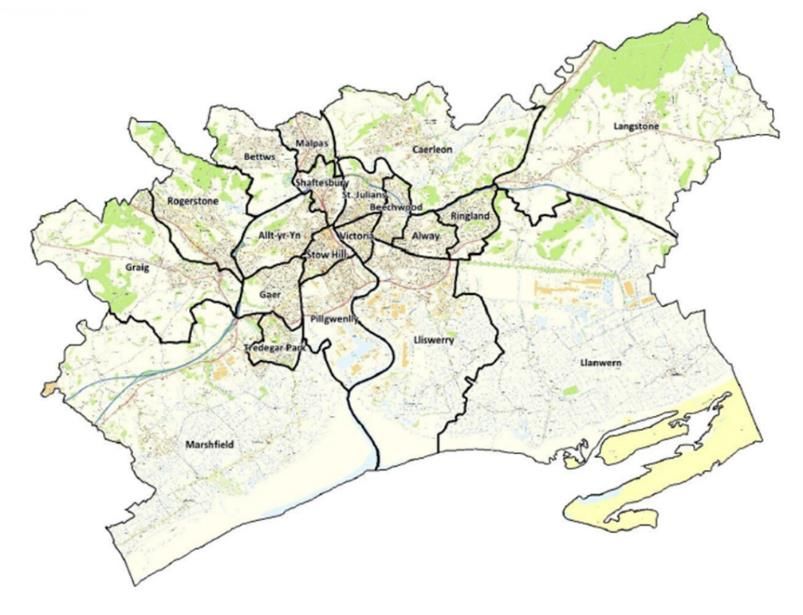
Neighbourhood Care Networks
                                                      Integrated Medium Term Plan 2020 - 2023

Table of Contents
Executive Summary .............................................................................................................................................. 3
1    Introduction to the 2020-2023 Plan ................................................................................................................ 8
2    Overview of the Neighbourhood Care Networks ............................................................................................ 11
3    Planning Context ........................................................................................................................................... 27
4    Key Achievements from the 2017-2020 Plan ................................................................................................. 34
5    Population Health Needs Assessment ............................................................................................................ 37
6    Assets Profile ................................................................................................................................................ 39
7    Estates Profile ............................................................................................................................................... 41
8    Workforce Profile .......................................................................................................................................... 47
9    Opportunities and Challenges for 2020-2023 ................................................................................................ 67
10 Prioritised Actions 2020-2023 ....................................................................................................................... 70
11 Communication & Engagement Mechanisms .................................................................................................. 79
12 Financial Profile ............................................................................................................................................. 81
13 Actions to Support Cluster Working and Maturity .......................................................................................... 83
Appendices –....................................................................................................................................................... 84
14 Appendix 1 – Population Health Needs Assessment ...................................................................................... 87
15 Appendix 2 – Care Closer to Home Communication Plan ............................................................................... 98

                                                                          Page 2 of 98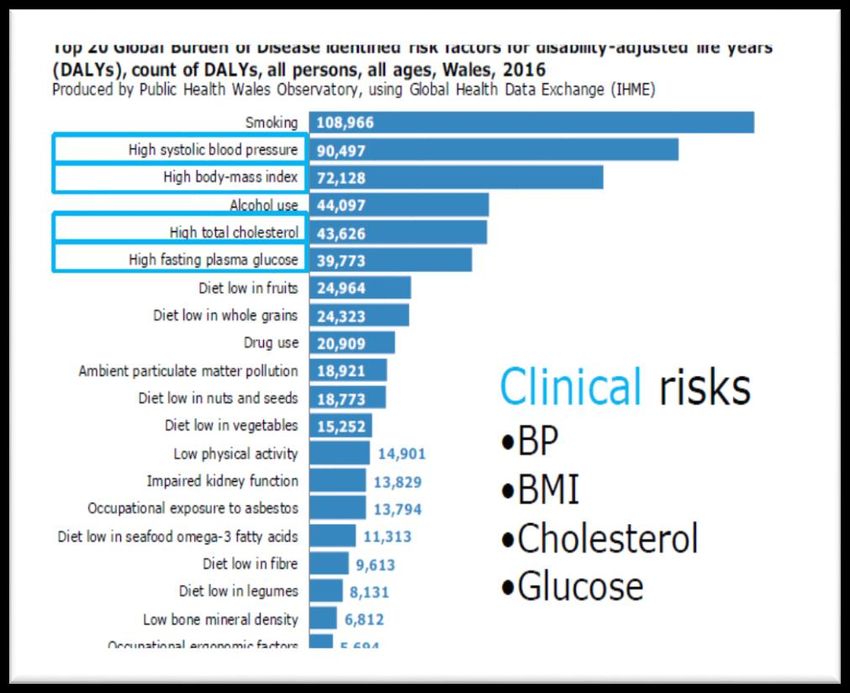
Neighbourhood Care Networks
                                                 Integrated Medium Term Plan 2020 - 2023

                                                       Executive Summary
What is this section for?
Summary of the key points of the whole document, outlining the strategic direction of the area and highlighting key learning from the population needs
assessment and asset profiles. Sharing the plan on a page as a high level summary of the actions to be taken forward in the next period.
This IMTP is based on an assessment of population need in Newport East and sets out the type and distribution of health and
care services that will bring the greatest benefit. It has also looked at the whole population served by the NCN to identify
gaps, assets or inequity in service provision. This assessment involved a review of national and corporate priorities,
epidemiological data, service utilisation data, views of professionals and managers within the NCN and intelligence from public
engagement.

The Newport East NCN has a registered population of population 48,500. Newport has an ageing population and those aged
65 and over grew by 8.6% between 2011 and 2015. The population of Newport aged 65 and over is projected to rise to 37,241
by 2039 accounting for almost a quarter of the population. Within the electoral wards of Alway, Beechwood, Lliswerry, Ringland
and Victoria there are 14 of the 27 lower super output areas (populations of around 1,500) in the top 20% most deprived for
Wales. Pregnancy and childhood surveillance data shows that around third of children in Newport are living in poverty, teenage
pregnancy rates and dental caries in 5 year olds are higher compared to Wales. Around a quarter of 4 and 5 year olds are
either overweight or obese. There is a large minority ethnic community resident in the electoral wards of Victoria and Lliswerry
representing 38 and 14 per cent of the population respectively. Newport East has seen an increase in its homeless population
as well as other vulnerable groups such as asylum seekers and refugees and people with substance misuse problems.

The Burden of Disease report in Wales showed that cardiovascular disease and cancer are the main causes of disability adjusted
life years. The main behavioural risk factors are diet, smoking, alcohol and physical activity and the clinical risks being high
blood pressure, high body-mass index, high total cholesterol and high fasting plasma glucose. Musculoskeletal disorders,
mental health and substance misuse problems are the main causes of years lived with a disability. Newport East NCN has a
slightly lower recorded prevalence of hypertension and obesity in adults compared to the ABUHB average. Similarly, the
recorded prevalence of major chronic conditions, except diabetes, is lower than the ABUHB average. Smoking prevalence was
shown to be the second highest of all the NCNs with around a quarter of adults reporting smoking. Data from the cancer
registry shows that a high proportion of lung cancers in Newport East are diagnosed at a late stage. Newport East has among
the lowest uptake of breast, bowel and cervical screening and all are below the national target. In relation to vaccine
preventable diseases Newport East has a significantly lower uptake of flu vaccination that other NCNs. In terms of scheduled
childhood immunisation, the uptake in Newport of the second dose of MMR vaccine and 4-in-1 booster at age 5 is second
lowest in Wales and below the level required for herd immunity.

                                                                   Page 3 of 98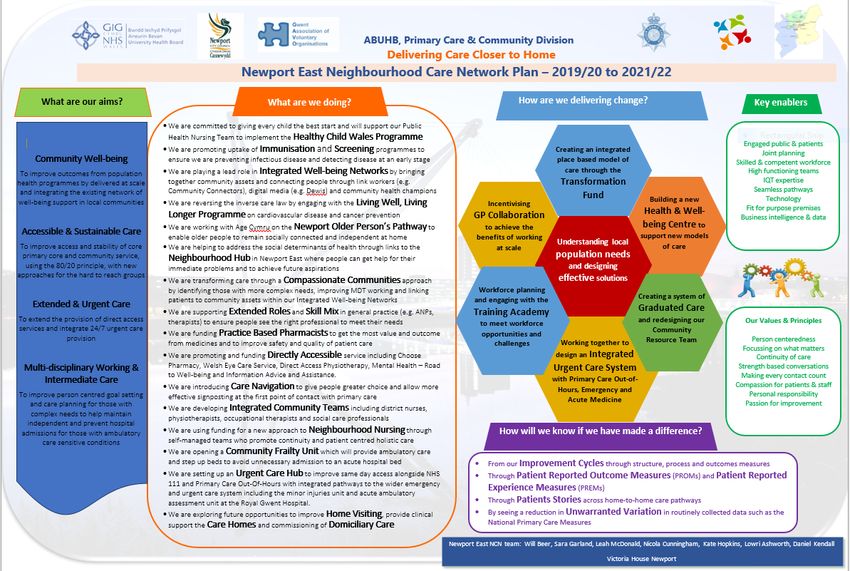
Neighbourhood Care Networks
                                          Integrated Medium Term Plan 2020 - 2023

Urgent care remains a priority area for the Health Board. Newport East has the highest rate of Primary Care Out-of-Hours
contacts and has seen a slight reduction in accepted referrals to Rapid Response Services. However, although there are some
large fluctuations due to small numbers, the conveyances to hospital from care homes has decreased. In terms of prudent
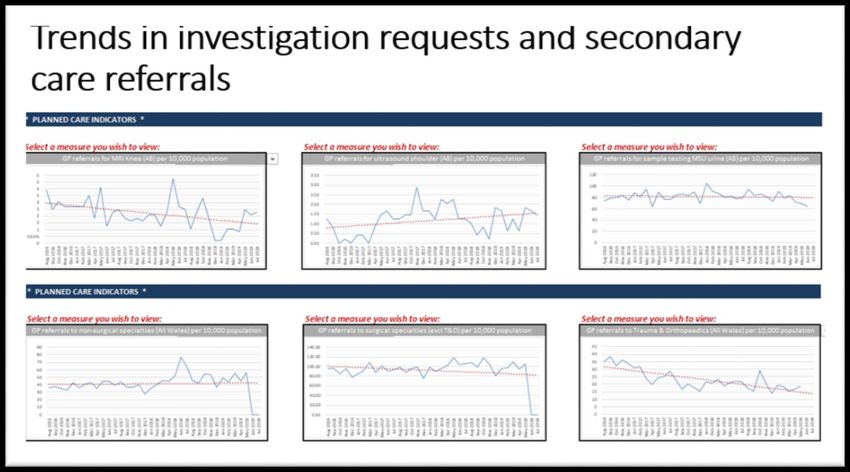
use of resources the trends in secondary care referrals for investigations show there was a reduction to GP referral for MRI
knee, slight increase in ultrasound shoulder and a sharp decrease in laboratory testing for INR associated with the introduction
of the anticoagulation enhanced service. Medicines management data for Newport East NCN shows significant improvements
in antimicrobial stewardship in terms of prescription rates for the 4C antimicrobials. However, future improvements are
required to achieved national targets and the level an antimicrobial prescribing seen in other parts of the UK. This is crucial
to prevent population spread of infection from multi-drug resistant organisms and to ensure antimicrobials remain an effective
treatment for future generations. A continued focus is required on gabapentin and pregabalin (often used to treat pain and
anxiety) and hypnotic and anxiolytics (often calle d sedatives) as these prescribed drugs can lead to dependence. Tramadol
is also a national prescribing indicators and Newport East NCN has seen a sustained reduction in prescribing of tramadol,
although there is some variation between GP practices.

The following sections set out the response from Newport East NCN to healthcare needs identified over the next three years.
The first of these are a number of national or corporate priorities, including specific requirements in the Quality Assurance and
Improvement Framework (QAIF) of the General Medical Service (GMS) contract 2019/20. These priorities are as follows:

   1. Innovative and collaborative approaches across the NCN to achieve in-hours GMS access standards set by the Minister
      for Health & Social Services, including a digital offer

   2. Quality improvement projects led by the NCN across a range of areas including patient safety (mandatory), reducing
      stroke risk and advanced care planning

   3. Planning and delivery of GP enhanced services on an NCN footprint to ensure equity of access

   4. Demand and capacity analysis and workforce planning in general practice to ensure greater efficiency, appropriate
      skill mix and sustainability of services

   5. On-going review of clinical incidents and sharing learning within the NCN to improve quality and patient safety

                                                         Page 4 of 98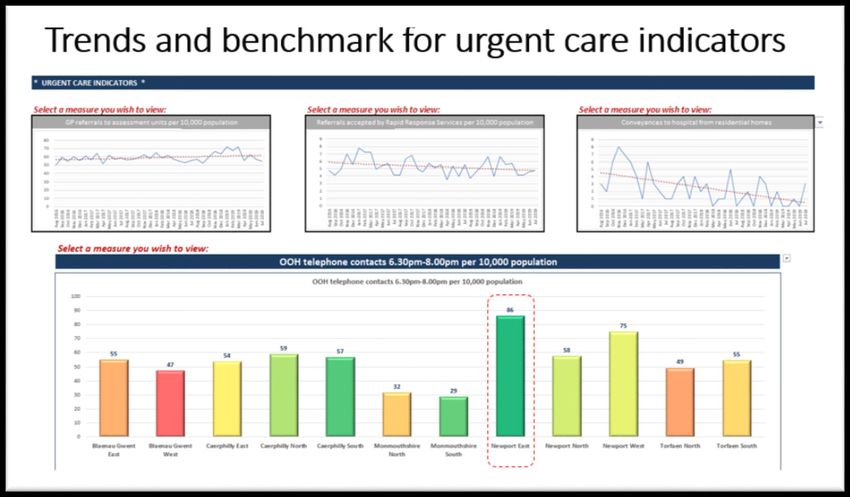
Neighbourhood Care Networks
                                         Integrated Medium Term Plan 2020 - 2023

   6. Redesign of urgent care pathways and delivery of specific aspects of the winter delivery framework including flu
      vaccination, risk stratification of the frail population and effective management of those with ambulatory care sensitive
      conditions

In addition to these “must dos” there are a number of local priorities identified where the Newport East NCN with provide
leadership and accountability for delivery. These include:

   7. Improving self-care and patient activation with consideration given to cultural and social norms as well as other
      factors such as language and literacy.

   8. Improving uptake of flu vaccination with a specific focus on 2-3 year olds and those in at risk groups such as patient
      with asthma and COPD

   9. Continued innovation and development of the Neighbourhood Nursing model through self-managed teams working
      as part of an integrated place-based approach

   10.Improving secondary care and OOH interface through on-going dialogue with clinical teams and peer review within
      the NCN

The Newport East NCN will continue to evaluate, improve and embed existing initiatives such as care navigation, the
common ailments services, practice based pharmacists and direct access physiotherapy.

In support of NCNs the Newport Integrated Partnership Board will continue to support NCN development and the redesign
community services to build a model of graduated care across the Borough. This will involve implementing actions arising
from the Gwent Frailty Service review to ensure that care provided of the older and frail population is responsive to current
and future demands. This will include opening up referrals to a wider range of advanced practitioners (initially ANPs and
paramedics), new roles within the team (e.g. Physician Associate, Pharmacist, Reablement Worker) and greater integration
with District Nursing teams. The Clinical Futures Service Redesign Programme has set out the need to reshape care frailty
pathways around four pillars – prevention and anticipatory care, proactive home care, admission avoidance and early facilitated
discharge. This will require integrated place-based teams that promote continuity, reduce hand-offs and encourage warm
handovers at transition point across the system.

                                                        Page 5 of 98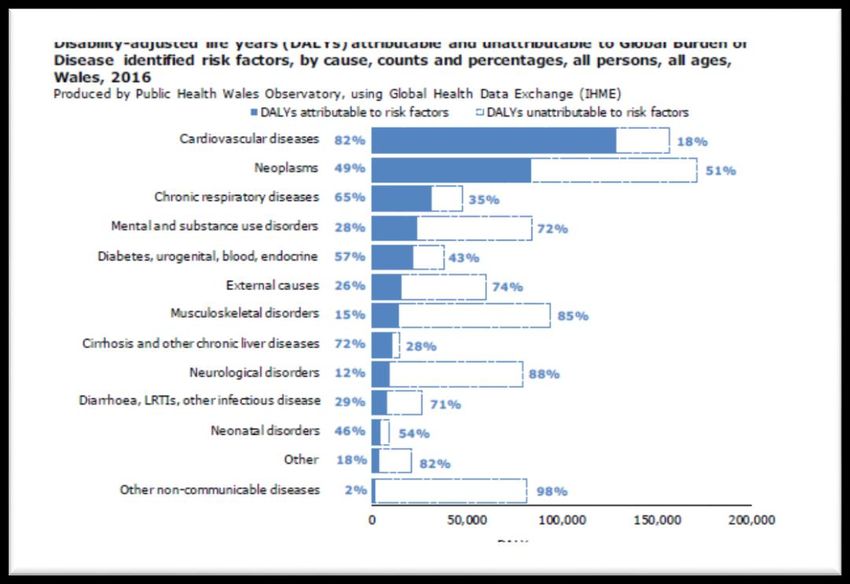
Neighbourhood Care Networks
Integrated Medium Term Plan 2020 - 2023
In addition to national, corporate and locally determined priorities the Newport East NCN will be a vehicle for delivery of other
programme that are funded centrally either through ABUHB or the Regional Partnership Board. Whilst the leadership,
management and funding of these programmes sits elsewhere within the health and social care system they will require
significant engagement with primary care if they are to be delivered effectively and at the scale required to have impact. These
programmes are the:
Healthy Child Wales programme to ensure universal but proportionate approach health visiting provision. This will
require close partnership working with colleagues in primary care and children’s services around a range of issues
including safeguarding, positive parenting, healthy child development and the promotion of healthy lifestyle choices such
as smoke-free homes and childhood immunisations.
Transformation programme including the Workforce Academy, Compassionate Communities, ‘Iceberg’ CAMHS
model and Integrated Well-being Networks
Living Well, Living Longer programme with a new focus on management of patients with identified lifestyle risk factors
and a prevention pathway for people with pre-diabetes.
Older Persons Pathway to ensure that people with low to moderate levels of frailty have a Stay Well Plan which will
helps them to remain socially connected and maintain their independence at home.
Finally, there are four areas where the Newport East NCN recommends that greater advocacy is required to improve outcomes
through concerted action across the wider system. These areas include uptake of cancer screening services, care and
support to homeless and vulnerable groups, childhood obesity and smoking prevalence.
Page 6 of 98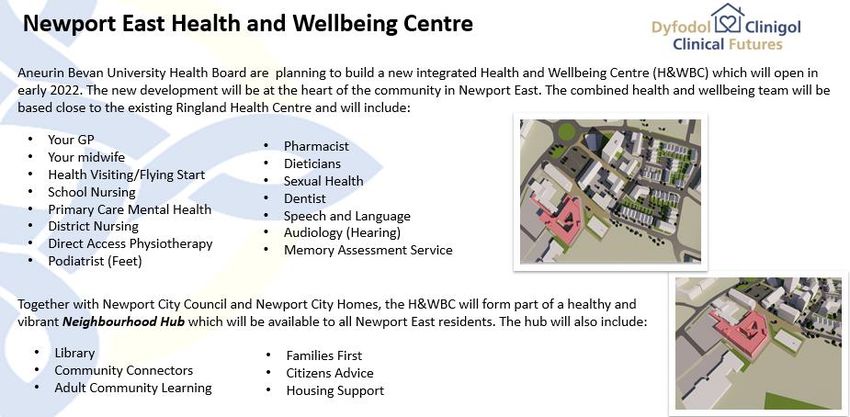
Neighbourhood Care Networks
                 Integrated Medium Term Plan 2020 - 2023

Plan on a Page

                              Page 7 of 98
Neighbourhood Care Networks
Integrated Medium Term Plan 2020 - 2023
1 Introduction to the 2020-2023 Plan
What is this section for?
Introduction to the document to be developed by Head of Service and NCN Leads, setting out its purpose and overarching ambition of the plan.
Within the Health Board, the need for clinical modernisation has been recognised in the context of the delivery of the new
model of primary and community care. The Clinical Futures Strategy sets out the strategic direction for modernising clinical
services and forms part of the Health Boards response to delivering A Healthier Wales.
Our Clinical Futures Strategy sets out how we are moving to a better balance of care by:-
delivering most care close to home,
creating a network of local hospitals providing routine diagnostic and treatment services, and
centralising specialist and critical care services in a purpose build Specialist and Critical Care Centre
Primary and Community Services are at the heart of the model and central to developing a new relationship with patients as
partners/co-producers in preserving, maintaining and improving their own health and wellbeing. Investing in and strengthening
primary, community and social care services to create the capacity to support and treat patients in their homes and
communities is a core component of our strategy.
In order to deliver on these principles, Newport Neighbourhood Care Networks ambition is to create a new, more integrated
system of primary and community care in partnership with our local government and independent/third sector colleagues
across Newport.
We want people to be able to access the care they need in their own community and homes wherever appropriate and avoid
any unnecessary harm, be it from injury at home, medication errors, and unnecessary admissions to hospital or from delayed
diagnosis or access to treatment.
The Neighbourhood Care Networks are the footprint for the development of this sustainable, social model of primary care which
will support people to better manage their own health and wellbeing and to retain their independence and resilience for longer
in their own homes and localities.
Our Integrated Medium Term Plan therefore reflects the agreed activity to support the creation of a seamless system of
‘wellbeing’ where more care is provided closer to home, and where the patient is placed at the centre of service delivery. We
Page 8 of 98
Neighbourhood Care Networks
Integrated Medium Term Plan 2020 - 2023
aim to achieve this by delivering place-based care within each NCN footprint, with access to more specialised services at a
borough or Gwent-wide level.
Newport is a multi-cultural city with its own unique atmosphere, where neighbourhoods with some of the country’s highest
levels of social deprivation sit next to some of those with the greatest affluence. We have the second highest proportion of
population from a BME background in Wales and a growing homeless and rough sleeper population. Demand for healthcare is
growing and will continue to grow; we have an aging population, with patients living longer and with more complex needs,
which intensifies the challenges faced by the NHS. Although a national issue, primary and community services sustainability
has impacted on the local area and our estate is also not fit to provide primary care services for now and the future.
With such challenges come opportunities, and we have been fortunate in Newport to have received funding to enable us to
test components of the new model including;
Establishment of Neighbourhood Nursing in Newport East
Establishment of the Newport Older Persons Pathway and Stay Well Plans
Roll out of Care Navigation in all GP practices
GPs demonstrating leadership and best practice (e.g. Common Ailments)
Establishment of a Direct Access Physiotherapy
New early intervention CAMHS model,
Appointment of Practice Based Pharmacists across all GP practices
Establishment of a Community Phlebotomy Service utilising NCN funding
During 2020-2023, opportunities ahead for Newport include;
Improvements GMS access and quality improvement though the QAIF within the GMS contract 2019/20
Creating more sustainability in primary care through the incentive scheme to support skill mix and workforce academy
Development of the Newport East Health & Wellbeing Centre in Ringland
Development of Neightbourhood Nursing approach in line with Buurtzorg approach and District Nurses principles
Implementation of Graduated Care
Establishment Place Based Care model across the NCN footprint
Further engagement with Living Well Living Longer programme and Integrated Well-Being Networks
Implementation of the Healthy Child Wales Programme
Engagement with the Compassionate Communities programme
Page 9 of 98
Neighbourhood Care Networks
Integrated Medium Term Plan 2020 - 2023
Organisational development for Practice Managers
Proposal to redesign the NCN footprint from three to two, in line with partner service delivery needs.
Establishment of a framework for resilience and wellbeing to guide all partners and communities to provide clarity on
why wellbeing and resilience are important, and how they will be systematically improved and strengthened within
Newport.
Our main challenge as an NCN will be to first embed and then sustain these changes so that they become business as usual,
whilst also managing the day to day service pressures.
In order for these changes to be embedded, engagement of multiple stakeholders is vitally important and the resulting
interventions evaluated in order to assess their value. Newport has developed a comprehensive communications strategy and
supporting action plan to address this, crucially taking our citizens on the journey with us, so that they are continuously co-
designing the model and truly own and feel responsible for not only their community but for their own health and well-being.
Our plan will set out the steps which the Newport Neighbourhood Care Networks will take over the next three years to take us
closer to achieving our vision.
It sets our key priorities, milestones and implementation plans, and analyses the challenges, opportunities and risks associated
with delivery and defines how we will deliver these actions, in terms of workforce configuration and financial implications.
This plan will be the cornerstone of our NCN business, enabling us to be clear and purposeful in our actions and to hold
ourselves accountable for delivering our agreed priorities, for the benefit of the communities we serve.
Page 10 of 98Neighbourhood Care Networks
Integrated Medium Term Plan 2020 - 2023
2 Overview of the Neighbourhood Care Networks
What is this section for?
This section describes the organisation of the neighbourhood care network. It should describe the long term vision for the NCN, its key goals and statement
on how the NCN will plan to deliver these. It is important that NCN has well defined and transparent governance arrangements and this section should
articulate these clearly, including how the NCNs will interface with the wider Health Board and other key partner organisation.
Profile of the Neighbourhood Care Network
Newport is a multi-cultural city, with a population of 153, 302 and
covers a geographical area of 73.5 square miles. We have some of the
most and least deprived neighbourhoods in Wales, in some instances
just a walking distance apart. Geographical patterns of poverty are also
reflected in health inequalities and significant differences in healthy life
expectancy across the city. Certain neighbourhoods are
disproportionately affected by unemployment, low incomes, poor skill
levels and crime and anti-social behaviour.
Newport has the second highest proportion of population from a BME
background in Wales, with 48 different languages spoken amongst 20
identified communities. Newport is also an asylum seeker dispersal area
and there is a growing homeless and rough sleeper population.
Newport has been established around three Neighbourhood Care
Networks; North, East and west which work collaboratively to strive to improve primary care and community services within
the local area.
The Newport East NCN is led by William Beer, Consultant in Public Health (Aneurin Bevan University Health Board and honorary
contract with Public Health Wales). They are a network of 6 GP practices which together have a combined registered population
of 52,958.
There are also 4 dental practices, 1 optometrist and 10 Community pharmacies situated within Newport East NCN.
Page 11 of 98Neighbourhood Care Networks
Integrated Medium Term Plan 2020 - 2023
Vision Statement
Newport aims to provide a more integrated system of primary care with community care and wellbeing services, based around
each NCN footprint. Services will be designed to provide more co-ordinated care, closer to home with fewer handoffs and
reduced complexity. The approach is intended to be delivered in a manner that will aim to strengthen community resilience
and respond to need. The continuum of services and support to maintain health, indepednace and well-being into old age is
summarised in Figure 1 (below).
Page 12 of 98Neighbourhood Care Networks
Integrated Medium Term Plan 2020 - 2023
Figure 1 – Continuum of services and support to maintain health, independence and well-being into old age
Page 13 of 98Neighbourhood Care Networks
Integrated Medium Term Plan 2020 - 2023
The Newport Integrated Partnership Board will continue to support NCN development and the redesign community services
to build a model of graduated care across the Borough. The Newport Integrated Partnership Board have established three
workstreams (see Figure 2, below) that align with the Divisional strategic workstreams (see Section 3.4) but which specifically
require an integrated approach with the local authority and third sector.
Figure 2: CC2H Delivery Plan and Enablers
Page 14 of 98Neighbourhood Care Networks
Integrated Medium Term Plan 2020 - 2023
1. Prevention, Well-Being and Self Care
Improving long term population health through a focus on early intervention, prevention and well-being services by making
sure that the right support is available at the right time, as close to home as possible. Ensuring that people have more control
over their wellbeing and making decisions about their support. Organisations working together on a place basis with each other
and with local people.
The RPB has successfully bid to the Transformation Fund for additional resources to accelerate implementation of the Integrated
Well-being Networks (IWNs) programme. The initial focus in Newport East will be on Ringland and Alway, but this will be
extended across the NCN in due course. Mapping and gap analysis has been undertaken and a number of community assets
identified as providing (or having the potential to provide) well-being support. These are the Ringland Neighbourhood Hub
(opening in Oct 2019), Ringland Health Centre, Lloyds Community Pharmacy, Ringland Dental Practice, Ringland Primary
School, St. Gabriel’s R.C. Primary School, Llanwern High School, Wellwood House, Hendre Farm Court and Milton Court
Sheltered Housing, Dan-y-Graig Nursing Home, Ringland Labour Club, Ringland Presbyterian Church of Wales, Bishpool
Methodist Church, Workers’ Educational Association (WEA) Adult Learning and Newport Live Leisure Trust.
Newport City Council are opening their first Neighbourhood Hub in Ringland in October 2019 (see Figure 3, below). This will
bring together a range of organisations, groups and services, organised on a place basis, under a new neighbourhood
management structure. A Neighbourhood Hub Manager has been appointed to the Hub who will work alongside community
development workers. There will be a range of support provided from the Hub including Flying Start, Families First, Work &
Skills, Careers Service, Department for Work and Pensions Advice (e.g. benefits), Adult Community Learning, Citizen’s Advice
Bureau, Housing officers, Library and various community groups and voluntary organisations.
Page 15 of 98Neighbourhood Care Networks
Integrated Medium Term Plan 2020 - 2023
Figure 2 – Concept images and design features of the Ringland Neighbourhood Hub
Page 16 of 98Neighbourhood Care Networks
Integrated Medium Term Plan 2020 - 2023
The IWN programme will be bringing together the current place-based ‘linking roles’ such as Tenancy Support Workers, Citizen
Advice Workers, Community Development Workers, Care Navigators and Community Support Officers.
The next steps are to jointly agree community engagement methods to use and to produce a local engagement plan and the
resource (funding or people) to carry out engagement. There is a specific objective in the programme to explore the
• Use of social media to engage and also develop community awareness and involvement
• Advice on/support other communication methods to raise community awareness and share stories
• Support to develop social prescribing model
• Local event to bring partners together and develop wellbeing offer further
• Signing up wellbeing centres and frontline signposting training
2. Access and Sustainability
Improving access to services, delivered at or close to home, is a key strategic priority for Welsh Government and is central to
the Primary Care Model for Wales. Access remains a Ministerial priority for primary care and a key feature of the GMS contract
underpinned by clear measurable expected achievements by March 2021. We need to better understand the barriers people
face in accessing GP services and to seek insight into what “good” looks like for the people in Newport East. Improvement in
access will also help to anticipate people’s health needs and intervene before those needs become urgent. Under the new
model, professionals will work together to provide people with a range of ways to access the right care and support, close to,
or even in their home. This means a shared commitment to access and integrated working for professionals such as GPs,
pharmacists, physiotherapists, social workers, OTs and people working in the third sector. This should include better use of
technology and integrated information systems, particularly WCCIS and GP clinical systems. Newport City Council have
rationalised the number of front doors into the system and have strengthened their First Contact and Information Advice and
Assistance function. This includes ICF funding for Community Connectors that connect with people who are not already
engaged with groups and activities and signpost to well-being services and support. AskSara is an online platform that has
been procured which allows people to make their own assessment and purchase equipment that will enable them to live safely
and independently at home.
Page 17 of 98Neighbourhood Care Networks
Integrated Medium Term Plan 2020 - 2023
In addition to primary and community care services the Mental Health & Learning Disabilities Division are developing innovative
way of improving access to Primary Care Mental Health Support Services and are introducing a single point of access for Adult
Crisis Mental Health Services. Family & Therapy Services are utilising the Transformation Fund to create a single point of
access for the new ‘Iceberg’ CAMHS model (i.e. SPACE) and have already adopted a similar approach with the Integrated
Service for Children with Additional Needs (i.e. ISCAN) and an Integrated Autism Service. Newport East are currently funding
the Direct Access Physiotherapy Service at St Woolos hospital and there is potential for this to be extended to other therapy
services such as audiology.
Sustainability remains an issue across a number of service areas in Newport East, particularly within general practice. The
Newport Integrated Partnership Board will have a key role in joint workforce planning and optimising the use of resources
across the continuum of care. The ICF and Transformation Fund are important funding streams to support joint planning and
workforce development through, for example, the Health & Social Care Academy and scheme to incentive skill mix within
general practice. The NIP Board should retain a strategic overview of this to ensure that the introduction of new roles within
primary care does not inadvertently destabilise services in another part of the system. Innovation and quality improvement
are other ways to support sustainability and the Neighbourhood Nursing model in Newport East is a good example of how this
can help improve morale, reduce sickness absence and promote recruitment and retention. Finally, the NIP Board will need to
continue the focus on sustainability of commissioned service within the Independent Sector, particularly domiciliary care, but
also residential care and nursing homes.
3. Integrated Model of Primary and Community Care
The National Primary and Community Care Model for Wales set out a clear blueprint for providing a wider range of services in
primary care, using the skills of a greater range of professionals and work closely with other services in the community through
multidisciplinary teams. With increasing pressure and scrutiny on health and social care budgets it will be important for the
NIP Board to resist the ‘fortress mentality’ where organisations and agencies act to secure their own individual interests and
future, and instead establish place-based ‘systems of care’ in which they collaborate with other services to address the
challenges and improve the health of the populations of Newport. Much of the work to improve and join up local services will
be done at an intermediate level, often referred to as the level of ‘place’. The NCNs will need to come together with other local
providers to shape and deliver some services across a place. The NIP Board will need to use the NCNs to bring detailed
knowledge of their populations and service challenges to support intelligent system-wide decisions that are sensitive to
distinctive local contexts and needs.
Page 18 of 98Neighbourhood Care Networks
Integrated Medium Term Plan 2020 - 2023
In terms of intermediate care the Gwent Frailty Service review and Clinical Futures Service Redesign Team have identified a
number of areas where care of complex older and fail people needs to evolve of the next three years. A graduated care
approach is being introduced in the St Woolos Community Hospital which will allow for the implementation of a revised model
of multidisciplinary care. To facilitate this 2 wards at SWH have been designated as Rehabilitation/Reablement and Complex
discharge. These beds offer a step up and step down approach to care. Patients can be transferred and stepped down from
acute beds, or stepped down from Community beds into Parklands Residential Reablement beds. Equally patients can step into
care if admitted directly via the Clinical Frailty Team in to in patient Clinical Frailty Unit beds for patients that require short low
acuity intervention before discharge home, who bypass the need to enter secondary care via the Emergency Department where
they are likely to experience a longer length of stay and may physically decompensate due to this admission.
Newport’s aim is to provide a more integrated system of primary care with community care and wellbeing services, based
around each NCN footprint. Services will be designed to provide more co-ordinated care, closer to home with fewer handoffs
and reduced complexity. The approach is intended to be delivered in a manner that will aim to strengthen community resilience
and respond to need. The work that is being undertaken within the borough affects all services and will require wholescale
change. New ways of working need to align and dove tail into each service as boundaries diminish and more seamless care
and support is provided. Services will be required to implement a more anticipatory approach with greater participation of
patients in their own care; working more collaboratively and often at greater scale. The more socially centred model of care
will require a more differentiated skill mix and the supported development of new roles.
Page 19 of 98Neighbourhood Care Networks
Integrated Medium Term Plan 2020 - 2023
Neighbourhood Care Network Governance
The NCN itself is a collaborative network, led by an NCN Lead but featuring a wide range of individuals from different
disciplines and agencies who deliver care within the local area. The group are required to meet on a monthly basis to
share information and discuss / plan local developments. This section outlines these arrangements.
2..1 Membership
Newport East Neighbourhood Care Network
Name Title Organisation / Designation
William Beer NCN Lead Public Health Wales
Kelly Yemm Practice Manager Beechwood Surgery
Dr E Jones General Practitioner Beechwood Surgery
Kay Lau Practice Manager Lliswerry Surgery
Dr Al-Haj Ali General Practitioner Lliswerry Surgery
Kerry Hagland Practice Manager Park Surgery
Dr Kandhai General Practitioner Park Surgery
Elaine Coldrick Practice Manager Ringland Medical Practice
Dr Sarah Morgan General Practitioner Ringland Medical Practice
Wendy Hall Practice Manager The Rugby Surgery
Dr J Staniforth General Practitioner The Rugby Surgery
Gaynor Pick Practice Manager Underwood Health Centre
Dr James Leney General Practitioner Underwood Health Centre
Aimee Clement-Rees Service Development Manager Primary Care Unit
Ann Owen Senior Nurse Community Division
Sian Price Public Health Operational Manager Families & Therapies Division
Sharon Cooke Clinical Programme Manager Primary Care & Community Division
Naheed Ashraf Carers Regional Partnership Coordinator Primary Care Unit
Kate Hopkins Care Closer to Home Project Manager Partnership & Development Unit
Nicola Cunningham Neighbourhood Care Network Manager Newport Locality
Leah MacDonald Assistant Head of Service Newport Locality
Sara Garland Head of Service Newport Locality
Page 20 of 98Neighbourhood Care Networks
Integrated Medium Term Plan 2020 - 2023
Mike Curson Senior Primary Care Pharmacist Newport Locality
Marietta Evans Integrated Wellbeing Network Service Public Health Wales
Development Lead
Linda Jones Operational Health Manager Flying Start
Kerry Phillips Senior Midwife Manager Midwifery
Kathryn Smith Interim Associate Director of Operational Executive Board
Delivery
Kate Thomas Health, Social Care & Wellbeing Coordinator Gwent Association of Voluntary
Organisations
Judith Davies District Nursing Team Leader District Nursing
Joanne Baker Community Diabetes Specialist Nurse Community Services
Karen Fitzpatrick Community Resource Team Nurse Manager Frailty
Dave Thomas Pharmacist Lliswerry Pharmacy
Virginia Morgan Strategic and Clinical Lead Primary Care Mental Health Support
Services
Penny Gordon Head of Nursing Primary Care & Community Division
Patricia Bartley Community Resource Team Manager Frailty
Dawn Pridham First Contact Team Manager Newport Local Authority
Sandra Trimarco Community Strategy & Partnership Newport Local Authority
Manager
Newport Neighbourhood Care Network Management Team
Name Title Organisation / Designation
Sara Garland Head of Service Aneurin Bevan University Health Board
Dr Graeme Yule NCN Lead Newport North Aneurin Bevan University Health Board
Dr Susan Thomas NCN Lead Newport West Aneurin Bevan University Health Board
Will Beer NCN Lead Newport East Aneurin Bevan University Health Board
Sara Garland Head of Service Aneurin Bevan University Health Board
Leah MacDonald Assistant Head of Service Aneurin Bevan University Health Board
Nicola Cunningham Network & Community Services Manager Aneurin Bevan University Health Board
Page 21 of 98Neighbourhood Care Networks
Integrated Medium Term Plan 2020 - 2023
Daniel Kendall Network & Community Services Support Aneurin Bevan University Health Board
Officer
Kate Hopkins CC2H Project Manager Aneurin Bevan University Health Board
Aimee Clement-Rees Service Development Manager Aneurin Bevan University Health Board
Ann Owen Senior Nurse – District Nursing Aneurin Bevan University Health Board
Caroline Rowlands Quality & Patient Safety Manager Aneurin Bevan University Health Board
Carolyn Jones Decision Support Analyst Aneurin Bevan University Health Board
David Price Community Regeneration Manager Newport City Council
Dawn Pridham Service Manager Newport City Council
Dr Liam Taylor Deputy Medical Director Aneurin Bevan University Health Board
Gemma Burrows Principle Public Health Practitioner Public Health Wales
Hannah Henson Occupational Therapy Service Manager Aneurin Bevan University Health Board
Linda Jones Operational Health Manager Flying Start Aneurin Bevan University Health Board
Lori Davies Decision Support Accountant Aneurin Bevan University Health Board
Patricia Bartley Community Resource Team Manager Aneurin Bevan University Health Board
Rachel Lee Senior Nurse - Community Aneurin Bevan University Health Board
Sharon Cooke Clinical Programme Manager Aneurin Bevan University Health Board
Sian Price Public Health Operational Manager Aneurin Bevan University Health Board
2 Practice Manager GP Practice Manager Aneurin Bevan University Health Board
Representatives on a
rotational basis
Newport Practice Managers Forum
Name Practice Manager
GP Practices
East NCN
Beechwood Primary Care Kelly Yemm
Lliswerry Medical Centre Kay Lau
Park Surgery Kerry Hagland
Ringland Medical Practice Elaine Coldrick
The Rugby Surgery Wendy Hall
Underwood Health Centre Gaynor Pick
Page 22 of 98Neighbourhood Care Networks
Integrated Medium Term Plan 2020 - 2023
North NCN
Westfield Clinic Stacey Clarke
Isca Medical Centre Sian Moore
Malpas Brook Health Centre Helen Rossiter
Richmond Clinic Nichola Tayler
St Julians Medical Centre Lynne Barry
The Rogerstone Practice David Harris
West NCN
Bellevue Surgery Gill Campbell
Bryngwyn Surgery Sandra Bogue
St Pauls Clinic Samantha Ashford
St Davids Clinic Karen Phillips
St Brides Medical Centre Molly Jelly
2..2 NCN Leadership and Support Teams
Within each borough, NCNs have a support structure consisting of fellow NCN Leads and members of the Primary Care
& Community Services Division. These individuals will ensure that NCN governance is maintained, collaboration is
supported and will provide a link between the NCN and the mechanics of the Health Board in order to assist in the
delivery of identified objectives.
Name Title
Sara Garland Head of Service
Leah MacDonald Assistant Head of Service
Will Beer NCN Lead (East)
Dr Susan Thomas NCN Lead (West)
Dr Graeme Yule NCN Lead (North)
Nicola Cunningham Network and Community Manager
Kate Hopkins Care Closer to Home Project Manager
Daniel Kendall Network and Community Support
Officer
Page 23 of 98Neighbourhood Care Networks
Integrated Medium Term Plan 2020 - 2023
Lowri Ashworth Administrative Assistant/PA
Aimee Clement Rees Primary Care Contracting Manager
Gemma Burrows Public Health Wales
2..3 Frequency of Meetings
Newport NCN Meetings take place on a bi-monthly basis.
Newport Locality Management Team Meetings take place on a monthly basis.
2..4 Secretariat Support
Newport NCN Meetings: Secretariat support for each NCN meeting is provided by the Network Support Officer.
Requests for agenda items are forwarded to the NSO for consideration by the appropriate NCN Lead at the weekly
Newport NCN Leads meeting.
Newport Management Team Meetings: Secretariat support is provided by the locality administrative officer.
Requests for agenda items are forwarded to the administrative officer and are discussed at the weekly operational
team meeting with the Head of Service. Agenda items are linked to the delivery of the Locality and NCN work
plans.
Newport Practice Managers Forum: Secretariat support is provided by the Network Support Officer. Agenda items
are submitted to the NSO.
2..5 Quorum
To be quorate, the NCN would need to have two thirds of the membership by profession, either primary membership
or nominated deputies, as per the list of members at 2.3.1 above. Where voting is necessary it will be along the lines
of a vote per professional entity. Where no majority is achieved, the Chair will have the casting vote.
2..6 Communication
The NCN lead has one dedicated NCN day per week, working directly with the locality management team in order to
progress meeting planning, NCN budget, implementation of NCN plans and objectives. This is enhanced outside of this
time by email correspondence as required to facilitate local resolution of queries linked to the NCN plan. The NCN
management team meetings run on a bi-monthly basis. The NCN support team, along with locality team hold weekly
catch up meetings in order to progress work. The NCN leads sit on the Newport Integrated Partnership Board (NIP)
and regular feedback is also given to the Divisional Leadership Team.
Page 24 of 98Neighbourhood Care Networks
Integrated Medium Term Plan 2020 - 2023
The Newport NCN have a very active Practice Managers forum, who meet on a bi-monthly basis. Information and
updates in relation to work progression are fed both ways, from the forum to the NCN leads and support team, and
back in. Two practice managers are also members of the NCN management team – with attendance rotated from all
practices.
There is Regular email contact with the NCN and partners as and when applicable to circulate information.
In addition to this the NCN Team has developed a monthly Newport locality e-bulletin which provides updates against
the three Newport Care Closer to Home work streams, the wider Newport community and ABUHB Clinical Futures.
Information is also disseminated via the Clinical Futures Champions within GP practices, which is then shared with the
rest of the staff and patients.
Twitter Account – Newport NCN are the first in ABUHB to establish their own Twitter account. This provides an
opportunity to share information as soon as it is available and to monitor any feedback. The account has been live
since September 2019 and is being shared at every opportunity.
2..7 Reporting Framework
The NCNs form part of a wider reporting framework, as described
opposite.
The NCNs are a key component of the Integrated Services
Partnership Boards (ISPBs) in each of Gwent’s five boroughs,
which report to the Regional Leadership Group and onwards to
the Public Service Boards and Gwent Regional Partnership Board.
The NCNs are an operational arm of this framework, and as such
have the responsibility of implementing national and regional
strategy through local actions. However, the NCNs are also
crucial in prioritising the implementation of these strategies
depending on local circumstances.
Where need is identified that is not currently being addressed,
NCN plans must seek to address these issues and, via the ISPBs,
influence regional planning as required.
Page 25 of 98Neighbourhood Care Networks
Integrated Medium Term Plan 2020 - 2023
2..8 Organisational Alignment within Aneurin Bevan University Health Board
Although the NCNs consist of representatives from a wide range of services,
both within and outside Aneurin Bevan University Health Board, the NCN
function is organisationally aligned to the Primary Care & Community Services
Division of the Health.
This alignment ensures that the resources of the Division can be utilised to
support the NCN function as a whole (including support for consistent
governance between NCNs) and support individual NCNs with planning and
implementation of prioritised developments, as and when required. The NCN
Leadership & Support Teams, described earlier, provide the key link between
NCNs and the wider Health Board.
Page 26 of 98Neighbourhood Care Networks
Integrated Medium Term Plan 2020 - 2023
3 Planning Context
What is this section for?
Although NCN plans must be developed in collaboration between all members of the network and seek to address local issues, NCNs are also part of the
wider health and social care system in Wales. As a result, they must operate within a strategic framework which this section of the plans seeks to describe.
When developing the locality and NCN actions (section 10), wherever possible each activity should demonstrate alignment with the strategic workstreams
described in section 3.4.
Key Resources:
Well-being of Future Generations (Wales) Act (2015), Welsh Government – (link)
A Healthier Wales (2018), Welsh Government (link)
Strategic Programme for Primary Care (2018), Welsh Government (link)
A Healthier Wales
Integration across Health and Social Care is the driving force for reform and service modernisation, set out in both the
Parliamentary Review of Health and Social Care (January 2018) and Welsh Government’s long term plan, ‘A Healthier
Wales’. These documents describe four interlocking aims – described together as the Quadruple Aim – which create a
shared commitment to how the system will develop and prioritise change over the coming years. These aims consist of:
• Improved population health and wellbeing;
• Better quality and more accessible health and social care services;
• Higher value health and social care; and;
• A motivated and sustainable health and social care workforce
The context in which these aims will be delivered is through regional planning of health and social care services, for people
with a care and support need. This is done via the Regional Partnership Board, and the publication of an ‘Area Plan’
detailing the agreed ‘partnership activity’. The plan sets out how services will be planned, delivered and designed on a
regional, local authority and NCN footprint to provide more integrated care closer to home.
To deliver more care closer to home, that is seamless for patients, carers and their families the emphasis has been placed
on ‘service transformation’ and service redesign’ to create more integrated models of care including mental health,
primary and community care and wellbeing services. Through the Welsh Government Transformation Fund and the
Integrated Care Fund (ICF) additional resources have been secured to deliver new models of care including compassionate
communities, Home First and Integrated Wellbeing Networks, and delivery is now underway and reflected in the NCN
IMTP.
Page 27 of 98Neighbourhood Care Networks
Integrated Medium Term Plan 2020 - 2023
As such the NCN IMTPs are developed within the context of the agreed regional partnership planning framework (the Area
Plan) and in alignment with five Wellbeing Plans, published in May 2018, by Public Service Boards. On a local authority
footprint Integrated Services Partnership Boards will translate the regional vision into local delivery and support NCN to
develop more integrated services closer to home, the NCN IMTP sets out this activity in detail and will align with both the
Health Board IMTP and Gwent Area Plan.
Clinical Futures Strategy
Within the Health Board, the need for clinical modernisation has been
recognised in the context of the delivery of the new model of primary and
community care. The Clinical Futures Strategy sets out the strategic
direction for modernising clinical services and forms part of the Health
Boards response to delivering ‘A Healthier Wales’. Clinical Futures is a
clinically owned and led programme that seeks to rebalance the provision
of care in Gwent. The programme aims to:
Improve citizen well-being and patient outcomes (including patient
experience) for people of all ages, by designing and delivering new
models of care for the population of Aneurin Bevan University
Health Board across the whole health and wellbeing system. The
models are designed with a focus of prevention, delivering care
close to home where ever possible, routine care and specialist and
emergency care in the most appropriate care setting.
Improve the efficiency and sustainability of service provision from
2018 – 2022 by ensuring that service development, model of care
design and implementation is patient-centred, transformative,
evidence based and economically viable.
Ensure that care quality and safety is of the highest importance
during a period of transition to different delivery models, that any changes are well planned.
Improve staff satisfaction, recruitment and retention through the enhancement of patient and citizen focussed
services.
Page 28 of 98Neighbourhood Care Networks
Integrated Medium Term Plan 2020 - 2023
The design principles of Clinical Futures are:-
Patient centred, concentrating on safety, quality and experience.
Home to home: integrated services in the community to prevent illness and improve wellbeing, and providing
care closer to home where appropriate
Data and evidence driven, patient outcome focussed.
Innovative and transformative, considering new ways of organising and delivering care around the patient and
their careers.
Standardised, best practice processes and care pathways.
Sustainable with efficient use of resources.
Prudent by design, following NHS Wales’s prudent healthcare principles.
Strategic Programme for Primary Care
Following on from Welsh Government’s ‘Plan for a Primary Care Services for Wales up to March 2018’, published in
February 2015, a new ‘Strategic Programme for Primary Care’ was released in November 2018. This strategy builds on
the work gone before and provides a direct response to ‘A Healthier Wales’ from a primary care perspective.
The Transformation Model for Primary Care features heavily within this strategy, following a period of testing each
component via national funding sources (i.e. pacesetter / pathfinder, cluster, integrated care fund). The model seeks to
address the well-established challenges facing primary care, which includes increasing workload from a growing, aging
and increasing complex population and a shortage of GP numbers to deliver the traditional model of primary care.
Page 29 of 98Neighbourhood Care Networks
Integrated Medium Term Plan 2020 - 2023
As a result, the model depicts a different approach to delivering
services, featuring a renewed emphasis on early intervention; a
focus on signposting, direct-access and social prescribing services;
implementation of a new multidisciplinary workforce model; and
greater utilisation of technological developments.
As a result, on a national basis, 6 key workstreams have been
established to oversee this work, these include:
Prevention and wellbeing
24/7 Primary Care Model
Data & Digital Technology
Workforce & Organisation Development
Communication & Engagement
Transformation and the Vision for Clusters
Primary Care & Community Services’ Integrated Medium
Term Plan
Primary Care & Community Services’ Integrated Medium Term Plan
The Division’s IMTP is intended to provide an overarching 3 year plan, based on an assessment of both strategic priorities
and operational risks. The IMTP has been broadly divided into 10 workstreams. It is intended that NCN plans will feed
into these workstream areas for support and decision-making.
Page 30 of 98Neighbourhood Care Networks
Integrated Medium Term Plan 2020 - 2023
Strategic Delivery Worksteam Description Example of Priority Areas
Workstream Committees
1) Prevention, Improving long term population health through Enhanced services, risk stratification, screening,
Wellbeing & a focus on early intervention, prevention and immunisation, smoking cessation, tackling
Self-care well-being services which may prevent or delay obesity, integrated wellbeing network
future ill-health. Empowering the population to
take greater responsibility for their own health
and well-being.
NCN Leads Meeting
2) Care Closer to Delivering care closer to home by shifting INR & DVT management, extended skin
Home demand out of secondary care services and into surgery, community audiology services,
primary and community settings. Implemented ophthalmic diagnostic & treatment centres
through re-designing services and pathways,
using primary care practitioners’ full scope of
practice.
3) Access & Maintaining timely access to services and Access standards in primary care, urgent care
Sustainability ensuring the long term sustainability of primary hub(s), GDS Reform Programme, 111
and community care provision, in the face of Programme, sustainability risk matrix, workflow
growing demands and an aging workforce. optimisation
Access Group /
4) Implementing Sustainability Board The new Primary Care Model for Wales has First contact practitioners / multidisciplinary
the Primary Care been developed over recent years. Through a skill mix, care navigation, direct-access
Model for Wales combination of care navigation, first contact services, working at scale, multidisciplinary
practitioners and direct-access services, team meetings
demand for primary care services is now being
managed through a multidisciplinary approach.
5) Re-designing Transformation Gwent is committed to developing integrated Integrated place-based teams, compassionate
Community Delivery Group place-based teams which reduce hand-offs and communities, graduated care, neighbourhood
Services increase continuity of care. New models to nursing, district nursing principles
deploy community services more effectively,
closely synchronised with primary care and
social services, is a key priority for the region.
6) Digital, Data & Digital Technology Utilising new developments in technology to WCCIS, GP System Migration, electronic
Technology Group improve communication between professionals, referrals, virtual consultations, electronic triage,
reduce workload for staff and enhance care and My Health Online, escalation reporting, assistive
the experience of patients. technology, point-of-care testing
Page 31 of 98Neighbourhood Care Networks
Integrated Medium Term Plan 2020 - 2023
7) Skilled Local Primary Care Recognising the changing workforce Primary Care Academy, Diploma Level 4 (Health
Workforce Workforce Group requirements outside of the hospital setting, & Social Care), rotational posts in community
this workstream focuses on the training and nursing, palliative care education, workforce
development of both newly qualified and planning, demand & capacity analysis
existing staff in line with the new ways of
working.
8) Estates Primary Care Recent estate developments outside of hospital Primary Care Estates Strategy, 6 facet survey
Development Estates Group have accounted for the new model of service of primary care estates, major / minor
delivery, providing integrated health & improvement grants, health & wellbeing hub
wellbeing hubs. However, many estates are not developments, discretionary capital programme
fit for purpose and a programme to improve
facilities is underway.
9) Communication Senior Leadership Involving both local practitioners, patients and Health talks, public engagement, social media
& Involvement Team the general public in the planning of services is campaigns
key to their success. Particularly with the
changing face of primary care, an awareness of
the new options for care is essential to change
behaviours.
10) Quality, Value & Quality & Patient All services should be continually seeking Medicines management, Strategy for Falls &
Patient Safety Safety Committee opportunities to improve the way that care is Bone Health, management of wounds &
delivered, making it more effective, of higher pressure damage, infection prevention and
quality and safe. A quality / continuous control, healthcare needs assessments, peer
improvement programme reviews, Primary Care QI Programme, advance
care planning
Page 32 of 98You can also read


