Good Liver - Hepatitis Victoria
←
→
Page content transcription
If your browser does not render page correctly, please read the page content below
The Magazine of Hepatitis Victoria

April 2020

Good Liver
 This educational tool (below) was         Hepatitis Victoria CEO, Melanie Eagle,
developed for use at Rotary meetings       with members of Rotary Albert Park.

       Working with Melbourne Rotary
           to End Hepatitis Now!
Impacts of COVID-19                      #Kindtoyourliver                           Combating obesity
and liver health                         As part of promoting liver health          podcast
                                         for World Liver Day 2020, you are
Hepatitis Victoria/LiverWELL® has                                                   Gastroenterologist and expert in
                                         invited to share how you are being
developed a number of resources                                                     chronic liver disease, Dr Alex Hodge,
                                         #kindtoyourliver on social media.
for people living with liver health                                                 discusses his particular interest in
                                         Participate and go in the draw to win
conditions, including viral hepatitis                                               obesity, sharing his thoughts on
                                         one of two free meals. Our shout!
about the potential impact of COVID-19                                              the many ways to combat it to help
on their health.                                                                    improve liver health.                1
Staff                                                                                  Contents

Contact and postal address:    Melanie Eagle               Helen Tran                    3    Communiqué
                               CEO                         Hepatitis B Community
                                                                                        From the desk of the CEO
                               Telephone: 9385 9102        Education Project Officer
Hepatitis Victoria             melanie@hepvic.org.au       Telephone: 9385 9123          4    De-livering the news
Suite 5, 200 Sydney Road,      Sarah Kleinitz
                                                           helen@hepvic.org.au
                                                                                         6
                                                                                        End Hepatitis Now!
Brunswick, Victoria 3056.      General Manager             Dina Moussa
                                                                                        Rotary joins fight to end hepatitis
                               Telephone: 9385 9109        Hepatitis B Community
Telephone: (03) 9380 4644      sarah@hepvic.org.au         Mobilisation Coordinator     7 Fit for Cure/HepLOGIC Community
Facsimile: (03) 9380 4688                                  Telephone: 9385 9125        		 Insights Research
                               Martin Forrest              dina@hepvic.org.au
Email: admin@hepvic.org.au
                               Health Promotion                                         8 Impacts of COVID-19/COVID-19
                               Program Manager             Kate Hoppe                  		 and liver health
Website: www.hepvic.org.au     Telephone: 9385 9111        Communications Manager
                               martin@hepvic.org.au        Telephone: 9385 9107         9     Reveal Project/World Liver Day

HepatitisInfoline              Mez Obrien                  kateh@hepvic.org.au
                                                                                       10
                                                                                        Liver language
                               Office Coordinator          Kay Dufty
                                                                                        Common hepatitis terms explained
1800 703 003                   Telephone: 9380 4644
                               admin@hepvic.org.au
                                                           Health Promotion
                                                           Project Officer             12 Featured podcast
                               Geraldine Allen             Telephone: 9385 9108        		 Alex Hodge
                               Finance Manager             kay@hepvic.org.au           14 Fatty liver
                               Telephone: 9385 9116        Isabelle Purcell            		 Dr. Marno Ryan
                               geraldine@hepvic.org.au     Health Promotion
                               Steven Taylor               Project Officer             15 Educators plan ahead/HEP Hero
                                                           Telephone: 9385 9112        		 Paul Stewart honoured for services
                               HEPReady AOD
                               Workforce Trainer           isabelle@hepvic.org.au      		 to community
                               Telephone: 9385 9117
                               steven@hepvic.org.au
                                                           Neylan Aykut                16 HEP Heroes
                                                           Health Promotion            		 Prof. Peter Revill and Vicki Muscat
                               Pearl Prabal                Project Officer
                               HEPReady Workforce          Telephone: 9385 9110        18		   Four key projects evaluated
                                                           neylan@hepvic.org.au
                               Development Project
                               Officer
                                                                                       20     StreetShot turns 10
                                                           Ali Khaki
                               Telephone: 9385 9119        Hepatitis B Community       23     Custodial programs progress report
                               pearl@hepvic.org.au         Education Project Officer
                                                           Telephone: 9385 9121
                                                                                       24Feeling well
                                                           ali@hepvic.org.au           		Allan Dumbleton

                                                           Shaun Knott                 25     Non-alcoholic Steatohepatitis: NASH
                                                           Digital and Online
                                                           Services Officer
                                                                                       26     Melbourne lunar festivals
                                                           Telephone: 9385 9106        27     Services listing
                                                           shaun@hepvic.org.au

Good Liver is produced by Hepatitis       Reader response
Victoria/LiverWELL®, with support from
                                          Your feedback about any articles in
the Victorian Government. The opinions
                                          Good Liver is welcome.
and language expressed in this magazine
                                          Email: admin@hepvic.org.au
are not necessarily those of Hepatitis
Victoria/LiverWELL® or the Department     Graphic Design:
of Health and Human Services.             Swivel Design 0435 733 206

2
Communiqué
From the desk of the Chief Executive Officer

                                               people to engage in a private, one-on-one,       reports prepared by the Australian Institute
                                               online discussion with a trained professional.   for Primary Care and Ageing at La Trobe
                                               Our hope is that this channel will provide       University were delivered.The reports
                                               easy access for people whose second              showcase the innovation and dedication by
                                               language is English, and those who may find      the organisation’s staff and volunteers.
                                               making a private phone call difficult.           The highlights of each evaluation are
                                                                                                included in this edition.
                                                   We have launched an online                   Looking forward, we are seeking to increase
                                                   live chat functionality.”                    our knowledge regarding the information
                                                                                                and service needs of people living with liver
                                               We are committed to continuing to deliver our    disease more generally, and how these
                                               programs in new and inventive ways, by this I    could be met, along with the needs and
                                               mean using digital and online platforms where    opportunities for health care workers. Hence

W
                                               possible and appropriate. Stay tuned to our
       elcome to the Autumn Good Liver.                                                         our exciting new “Reveal” project which you
                                               website and regular HepCHAT e-newsletter as
       This edition has been prepared amid                                                      can about on page 9. We are hoping as many
                                               more information becomes available.
the COVID-19 pandemic - a time of great                                                         people as possible will contribute to the first
uncertainty and rapid change. I would like     Articles in this edition highlight a number      stage by completing a short survey.
to take this opportunity to urge everyone      of exciting developments including a new
                                                                                                If you find yourself at home with some
to continue to do all they can to support      partnership with Rotary, one of the most
                                                                                                spare time, I’d encourage you to have a look
each other throughout this very trying time.   established and influential community
                                                                                                through our “back catalogue”of informative
Staying abreast of, and adhering to the        organisations in Australia. Rotary has joined
                                                                                                podcasts and video recordings. We’ve listed
advice of the medical experts will be key in   forces with Hepatitis Victoria/LiverWELL®
                                                                                                the most popular in De-livering the News on
the coming months.                             to raise awareness about the seriousness of
                                                                                                page 5 – if you’ve missed one, now might be
                                               liver disease and need to ‘End Hepatitis Now!’
                                                                                                an opportune time to catch up.
                                               We look forward to continuing this productive
    We are responding to the
                                               partnership well into the future.
    situation in a considered                                                                       I’d encourage you to
                                               I’d also like to draw your attention to some
    and careful way.”                          new resources that support our expanded              have a look through our
At Hepatitis Victoria/LiverWELL® we are
                                               brief to provide tools and supports to help          informative podcasts
                                               improve the liver health of all Victorians.
responding to the situation in a considered                                                         and video recordings.”
                                               These resources cover Liver Cancer and Non-
and careful way. We have created a resource
                                               alcoholic Steatohepatitis (commonly called       In closing, on behalf of the Board and staff
hub on our website that provides specific
                                               NASH) and include information brochures,         at Hepatitis Victoria/LiverWELL® I’d like
information about COVID-19, particularly its   podcasts and interviews with esteemed            to convey our best wishes for everyone’s
potential impact on those living with liver    clinical experts.                                continued safety in the coming months and
conditions. It will be updated regularly
                                                                                                echo the call made by so many others for
and provides links to a range of trusted
resources to help you stay up to date.
                                                   Four detailed evaluation                     kindness and compassion in our actions.

                                                   reports prepared by the
While our team have transitioned to working
from home, one of our flagship services,
                                                   Australian Institute for                          Visit our:
                                                   Primary Care and Ageing
the free and confidential Hepatitis Infoline
continues to be available to receive and           at La Trobe University
                                                                                                     •   Soundcloud to listen
                                                                                                         or download our
return calls from those in the community
                                                   were delivered.”                                      popular podcasts
seeking advice and support about hepatitis.
To compliment this long-running and highly     As always it is important to continually              •   YouTube channel
successful service, we have launched an                                                                  for a range of
                                               assess the impact and success of the work
                                                                                                         informative videos
online live chat functionality. Available      being conducted. To this end, towards
weekdays, 9 am to 5 pm, online chat allows     the end of 2019 four detailed evaluation

                                                                                                                                           3
De-Livering the news

                                                            COVID-19, False colour added. Virus represented by yellow

                                                           COVID-19 information portal
                                                           Visit the dedicated section on our website that provides specific
                                                           information about COVID-19, particularly its potential impact on
                                                           those living with liver conditions. It will be updated regularly and
                                                           provides links to a range of trusted resources to help you stay
                                                           up to date.

                                                                                                                              Photo by bongkarn thanyakij from Pexels
Photo by Canva Studio from Pexels

                                                           New online chat functionality
                                                           available at: www.hepvic.org.au
                                                           Available weekdays, 9 am to 5 pm, online chat allows people to
                                                           engage in a private, one-on-one, online discussion with a trained
                                                           professional. Our hope is that this channel will provide easy access
                                                           for people whose second language is English, and those who may
                                                           find making a private phone call difficult.

                                    4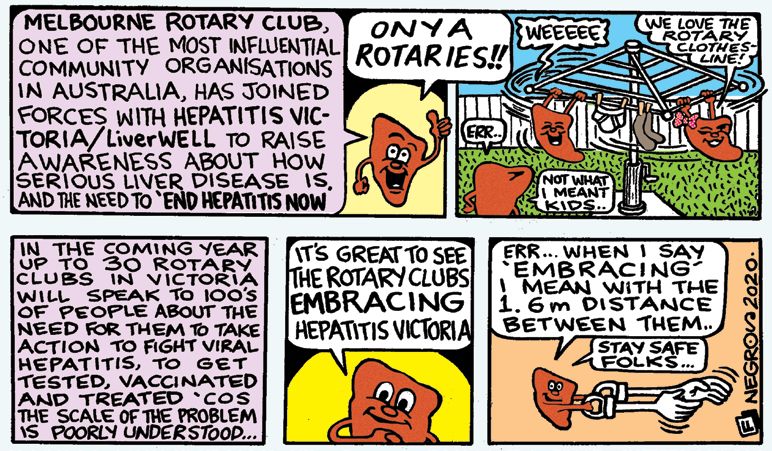
Top five podcasts
If you find yourself at home with spare time, why not catch up on
some great podcasts you may have missed . . . here are the five
most listened to. Just click on the blue link:

       All things liver, including aQ&A session
       by Dr. Paul Gow

       Nutrition and health
       presented by dietitian Priscilla Hiromi Correa.

       The pernicious impact of stigma and
       discrimination on health
       presented by Dr Bruce Bolam.

       Five years as a Hepatitis Victoria volunteer and
       employee featuring Will Scott.                                 Volunteer hours really mount up
       Discrimination in the blood: Why can’t people who have         In just the first few months of 2020, volunteers have already
       fully recovered from hepatitis C donate blood                  contributed over 200 hours of their valuable time to support the
       featuring Emily Male and Amy Hatfield.                         important work of Hepatitis Victoria. Thanks to everyone who has
                                                                      so generously volunteered their time and expertise.

                                                                      Sydney Road Festival, Brunswick
                                                                      O’Liver was out and about again, making new friends and renewing
                                                                      old acquaintances at Brunswick’s Sydney Road Festival in March.
                                                                      He is pictured here enjoying the sun and the company of Hepati-
More Little Hep B Heroes                                              tis Victoria’s staff and volunteers. He was a big hit with the kids,
                                                                      spending much of his time getting in on their selfies!
Hepatitis Victoria is very grateful for the commitment among our
volunteers to see the Little Hep B Heroes resource for children       Of interest, many of those who approached the stand were inter-
and families expand its reach to include the Hindi and Arabic         ested in learning more about Fatty Liver Disease. If you’d like to
speaking communities.                                                 learn more about this important topic, have a look at the story on
                                                                      page 14.
Work has commenced to translate the story book into these
                                                                      Events like these provide an excellent opportunity to raise aware-
languages. Once funding is secured to continue the work, we
                                                                      ness, and offer support and help to the local community.
will move to print and distribute this valuable resource within the
relevant communities. If you, or your organisation would like to      We would like to thank the Moreland City Council for allowing us
contribute to support the continuation of this valuable work,         to participate in this event, and our volunteers and staff members
please contact us on 03 9380 4644.                                    who worked around the clock to ensure its success.

                                                                                                                                           5
End Hepatitis Now!
Rotary joins the fight to ‘End Hepatitis Now!’

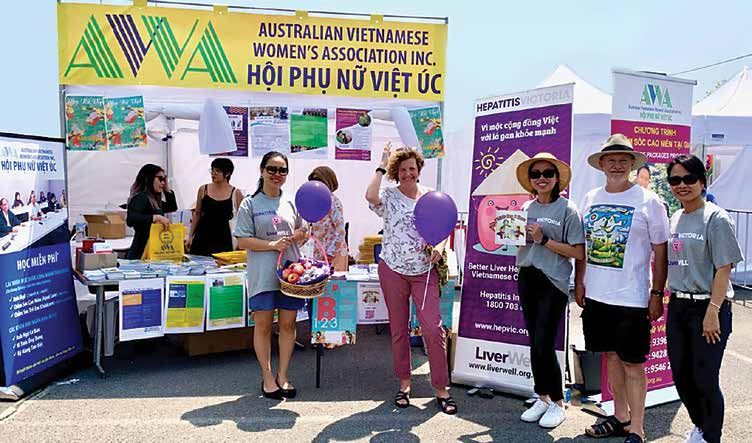
T    he Melbourne Rotary Club, one of
     the most established and influential
community organisations in Australia,
                                                  “There are 30,000 Rotarians in Australia,
                                                  but more than ten times that many people
                                                                                                 Dr Peter Clark of the Melbourne Rotary Club,
                                                                                                 who has been instrumental in the Rotary/
                                                                                                 Hepatitis Victoria/LiverWELL® collaboration
                                                  are living with viral hepatitis, so we must
has joined forces with Hepatitis Victoria/        do everything we can to raise awareness,”      said he was very pleased with the first
LiverWELL® collaborating to raise awareness       said Melanie.                                  presentation.
about the seriousness of liver disease and                                                       “I thought the presentation materials were
the need to ‘End Hepatitis Now!’                  The first event - a short presentation and
                                                                                                 excellent, it was the first time I had seen them
                                                  distribution of materials, followed by a
“Rotary has an incredible history of pioneering                                                  and their professionalism was evident. The
                                                  question and answer session - took place on
disease elimination. Their work to help                                                          feedback from all present was very positive,”
                                                  22 January at the Rotary Club in Camberwell.
eliminate polio has changed the lives of                                                         he said.
                                                  Brighton’s Rotary Club received a similar
millions of people for the better,” said                                                         “The Rotarians and their guests were clearly
                                                  presentation at the end of the month.
Hepatitis Victoria/LiverWELL® CEO                                                                interested and asked a variety of questions,
                                                  A dozen other clubs have already arranged
Melanie Eagle.                                                                                   with one of the members even interested in
                                                  for a presentation.
“I am delighted that in the coming year our                                                      becoming a HEP Hero,” Peter said.
                                                  HEP Hero, Mark Farmer Award winner for
educators and lived experience speakers will                                                     While the COVID-19 health situation has
present at up to 30 Rotary Clubs in Victoria,     2018 and lived experience speaker Andree
                                                                                                 unfortunately required Rotary to suspend their
speaking to hundreds of people about the          Dolby said she was thrilled by the response
                                                                                                 face-to-face meetings, Hepatitis Victoria will
need for them to take action to fight viral       of the audience at the ‘kick-off’ event.       continue to work with Rotary in the short and
hepatitis, and to get tested, vaccinated          “It’s fantastic to have the opportunity to     long term to End Hepatitis Now!
and treated.”                                     collaborate with Rotary to encourage testing   Contact Martin Forrest, Hepatitis Victoria’s
Melanie said the scale of the problem and         and treatment, and to spread the positive      Health Promotion Programs Manager
its corrosive impact on health and lives is       message that together we can stop viral        martin@hepvic.org.au or 03 9385 9111
very poorly understood.                           hepatitis,” she said.                          to learn more.

6
Want to get Fit for Cure?
Read on to learn how…

Hepatitis Victoria/LiverWELL® has recently commenced an                What else?
exciting new project in Brimbank and surrounds. Kindly supported
                                                                       The second key component of the project is upskilling staff to
by the Brimbank City Council, we are working alongside the staff
                                                                       help facilitate suitable change and ongoing awareness.
and clients of alcohol and other drug (AOD) and crisis services
in the area to develop a local resource focused on hepatitis C         This is through tailored and free staff training that is available to
testing and treatment.                                                 organisations in Brimbank (or who have a significant number of
                                                                       clients who reside in Brimbank) working with people who are
Our goal is to develop a useful, appropriate and unique
                                                                       at risk of, or living with viral hepatitis. This may include crisis and
resource for at risk members of the Brimbank community,
                                                                       AOD services among many others. We are looking at innovative
including a service directory of harm reduction and hepatitis C
                                                                       ways to deliver this training and are happy to work with you
treatment contacts in the local area.
                                                                       to develop a program that suits your organisation, perhaps
Ultimately, we are working to raise awareness of hepatitis C and       developing online services or related resources.
treatment across Brimbank and to improve knowledge of, and
                                                                       If this is of interest to your team or colleagues, please do
access to relevant services for residents.
                                                                       not hesitate to get in contact. Otherwise, for now...
                                                                       stay tuned!
Give us your thoughts
If you are local to or work in Brimbank and have suggestions or        For more details,
thoughts about a new resource, or perhaps you would like to be         please contact:
notified when it is available, we would love you to get in touch.      isabelle@hepvic.org.au
                                                                       or phone (03) 9385 9112.
Furthermore, if you work in Brimbank and provide AOD-friendly
hepatitis C testing, treatment or support, as well as broader
harm reduction services, that could be included
in the resource, please let us know!

HepLOGIC Community
Insights Research: An update
Thank-you to everyone who has completed, shared, participated          We also wanted to learn about any specific tools used to
in or was otherwise involved in the HepLOGIC community                 manage their health and how these might be improved.
insights research. We are extremely grateful for everyone’s time,
                                                                       The response has been tremendous, with over 40 interviews
contributions and effort.
                                                                       conducted so far, and numerous responses to the online survey.
HepLOGIC is a Victorian Cancer Agency funded research project
                                                                       Your involvement has been vital and will play a key role in
that will design and evaluate the effectiveness of a program
implemented in primary care to improve prevention of liver cancer      informing the development of the programs with the aim
in people living with chronic viral hepatitis.                         of increasing the rates of testing for viral hepatitis, as well as
                                                                       strengthening and enhancing ongoing engagement in care.
Over the past few months, Hepatitis Victoria/LiverWELL® in
                                                                       This is an important step to help address liver cancer by working
collaboration with the Doherty Institute WHO Collaborating Centre
                                                                       to reduce the risks associated with unmanaged viral hepatitis.
for Viral Hepatitis has been recruiting for and undertaking research
to help inform the development of these programs.                      Further information, including the current status of the study is
                                                                       available at: www.hepvic.org.au/research
We have been talking to those with experience of hepatitis B
and/or C, as well as their family members to identify the tools and    Feel free to get in touch if you’d like to learn more:
strategies that have helped them engage more effectively in care.      research@hepvic.org.au or phone (03) 9385 9112.

                                                                                                                                             7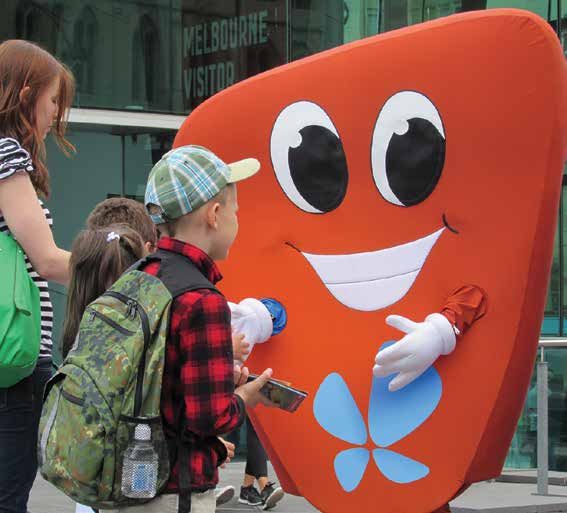
Impacts                                                    COVID-19 and liver health
of COVID-19                                                conditions website hub

Like many people and organisations around the              Hepatitis Victoria/LiverWELL has created a
world Hepatitis Victoria/LiverWELL is constantly
assessing and responding to the many impacts               dedicated section on the website to support the
of COVID-19.                                               needs of people living with liver health conditions,
From an organisational perspective we are
                                                           including viral hepatitis by bringing together
committed to supporting our Board, staff,
volunteers, as well as the wider community                 information and resources about the potential
through this difficult time.                               impact of COVID-19 on their health.
How we’ve adapted so far                                   Visit the hub for resources such as:
At the time of going to print:
                                                           • Answers  to the most Frequently Asked Questions about liver health and COVID-19.
•   Our office is closed and our team is working             This resource has also been translated into Vietnamese.
    from home. While you can’t drop into our office,
    you can still call us on all our usual numbers,
                                                           • A range of information and resources for health care workers.
    as well as email us in the usual way as well.          • Access to the latest updates from the Department of Health and Human Services.
    We are all set up to keep in touch.                    • And much, much more.
• The Freecall Hepatitis Infoline 1800 703 003             Hepatitis, Vaccination and COVID-19
    remains fully operational and is busier than ever.

• We have launched an online chat functionality            (for those who speak Vietnamese)
    on our website. This new communication
    channel aims to provide another way for you
    to make contact. The service provides direct
    access via a one-on-one, private chat with a
    trained Infoline team member. Its available
    9 am – 5 pm (Melbourne time), Monday to
    Friday (excluding public holidays). If we’re
    offline, simply send an email and we’ll respond
    as quickly as we can.

• Work is underway to determine how we can
    continue to effectively deliver our programs,
    potentially using online and digital technology.
    We’ll keep you updated via our regular
    HepCHAT e-newsletter, and via the website
    as more information becomes available.
                                                           More than 10,000 views have been recorded of a 60 minute FaceBook stream held
• Our website has a dedicated section to                   in mid-April in which Helen Tran of Hepatitis Victoria/LiverWELL collaborated with Dr.
    providing information about the impacts of
                                                           David Hiep Dinh Phan and Dr. Nhan Phuc Pham to answer the questions regarding
    COVID-19. It provides specific information for
                                                           Hepatitis, Vaccination, and COVID-19.
    those with liver health conditions, as well as links
    to trusted sources.                                    Visit the FaceBook page: www.facebook.com/tochucviemganVictoria to watch
                                                           the recording.
Keep updated
• If you haven’t already signed up for our
    HepCHAT e-newsletter, do so now by visiting            Looking after yourself and others
    www.hepvic.org.au. Simply scroll to the bottom
                                                           Lifestyle factors are important when caring for your liver, either for prevention or
    of the page and enter your name and email
                                                           maintenance of a liver condition. We have developed four lifestyle guides to provide
    address where indicated.
                                                           tips and advice about healthy living that provide guidance and suggestions for: Eating
Most importantly. Please take care, stay informed          Well, Getting Active, Feeling Well and being Drink Aware. These are more important
and keep connected.                                        than ever, so visit: www.liverwell.org.au to learn more.

8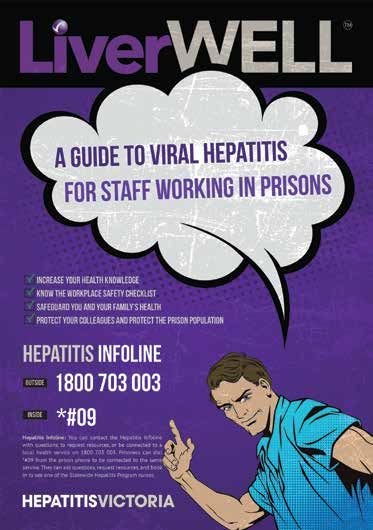
Reveal project
Developing resources and referrals
for all types of liver disease

Provide your thoughts
on improving support
                                                    There are two online surveys – one for
                                                    health workers and one for those living
                                                                                                    World Liver
for those experiencing
liver disease
                                                    with liver conditions.
                                                                                                    Day 2020
                                                    Complete the survey now.
                                                                                                    Did you know?
U     p to 40% of Australians currently live
      with fatty liver disease. Many of whom
will develop more serious conditions like
                                                  All survey responses will be treated              • Your liver is your largest internal organ,
                                                  confidentially and privacy is assured.              performing up to 500 functions to keep
non-alcoholic steatohepatitis, cirrhosis, and                                                          you healthy.
                                                  There’ll also be the opportunity to participate
even liver cancer.
                                                  in a more personal way through an                 • More than six million Australians are or
                                                                                                      have been affected by liver disease.
Hepatitis Victoria/LiverWELL® is                  interview process conducted over the
undertaking a project (called Reveal) to
develop resources and extend its current
                                                  phone. If you’d like to register to participate   • More  than 7,000 Australians die each
                                                                                                      year from chronic liver disease.
                                                  in this way, please contact Martin Forrest,
information provision, support and referral       martin@hepvic.org.au in the first instance.       Improve your liver health
services to include all forms of liver disease.                                                     For World Liver Day 2020, consider the
The first step in this process involves             The information collected, will focus on        impacts of the current COVID-19 restrictions
consulting with health professionals who            learning about . . .                            on your liver health.
work with people who have liver disease,
as well as those experiencing the disease           • The liver health conditions that are          Visit www.liverwell.org.au/your-liver-health/
                                                                                                    world-liver-day/ for tips on supporting your
                                                        of the greatest concern or interest.
themselves, to gather their input.                                                                  liver health while at home for extended
                                                    • Most appropriate and accessible               periods of time, with reduced access to
                                                        types of health promotion education         loved ones, support networks and the
                                                        and associated resources to meet            outdoors.
                                                        the identified needs.

                                                    • Referral pathways and available
                                                        service directories.
                                                                                                    Share and win!
                                                    •   Community attitudes and awareness           Show how you’ve been kind to your liver by
                                                        of liver disease, the impacts of            posting on Facebook, Twitter, Instagram
                                                        stigma and discrimination on people         or LinkedIn by Friday 22 May, and go in the
                                                        living with liver disease.                  draw to win one of two meals. Our shout!
                                                                                                    #kindtoyourliver
                                                                                                    Post a pic of a liver-friendly meal, an indoor
                                                  If you are a health worker and know
                                                                                                    exercise routine, something that boosted
                                                  someone with a lived experience who
                                                                                                    your spirits, or your favourite mocktail using
                                                  would like to contribute, please ask them
                                                                                                    the #Kindtoyourliver #Stayhome #Kindness
                                                  to complete the online survey or phone
                                                                                                    On our Facebook, post in the comments
       “... to help meet your                     (03) 9385 9111.
                                                                                                    section of any post promoting the
        liver health needs.”                      What will happen next?                            competition.
                                                                                                    On Instagram, post in your account
                                                  The information and feedback provided
                                                                                                    and tag @hepvic
                                                  will be analysed to identify needs and gaps,
Providing your input is                           ultimately informing resource and service         On our Twitter, post in the comments
easy – online or via the phone                    developments to best provide information,         section of any post promoting the
Whether you are currently living with a liver     support and referral to the community and         competition.
condition, or you are part of the health          workforce.
                                                                                                    On our Linkedin, post in the comments
workforce who support those who do, you           Stay tuned . . . we’ll provide more information   section of any post promoting the
are invited to provide your feedback.             as the project progresses.                        competition.

                                                                                                                                               9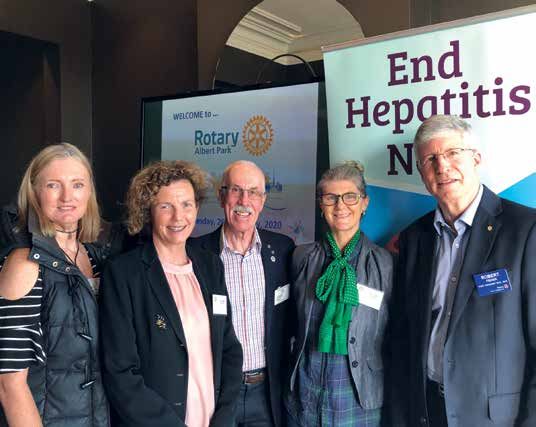
Liver language:
Lifting the fog

                                                   The list is available on our website,                Cirrhosis
‘Acute’, ‘chronic’,                                but we’ve highlighted some here:
‘hepatocytes’: words you                                                                              Very bad scarring of the liver. This is when
                                                     Alcohol and other drugs (AOD)                    the healthy cells of the liver are progressively
may have heard but were                                                                               replaced by scar tissue, which seriously
too afraid to ask about                            A common term used when referring to
                                                   substances (alcohol and other drugs) of
                                                                                                      impairs liver functioning. This has many

H
                                                                                                      causes but is commonly due to viral hepatitis
      ealthcare workers sometimes use              dependency (that is, people rely on these
                                                                                                      infection or excessive alcohol intake.
      highly specialised terms that refer to       substances to feel good, normal, or to
a person’s body or health condition, to the        cope with day to day life).
consternation and confusion of the listener                                                             Cancer or Carcinoma
if they can’t completely grasp what is said.
                                                     Asymptomatic                                     Abnormal cell growth that has the potential
Often these specialised terms are technical                                                           to develop into tumours and invade or spread
and not easily understood. To help, Hepatitis      A condition or infection that shows no             to other parts of the body. Cancers that
Victoria/LiverWELL® has created a glossary         signs or symptoms of illness being present.        are dangerous and can spread are called
of words you may hear when talking with            Chronic hepatitis B (CHB) is often referred        malignant tumours. Cancers that do not
health specialists about your liver, along         to as an asymptomatic infection, as many           spread are called benign tumours.
with a clear explanation of their meaning.         people carry the virus, however they do not
                                                                                                      Primary cancer refers to the initial location of
                                                   look or feel ill.
“Coping with a diagnosis of liver disease                                                             the cancer in the body. Primary liver cancer is
and managing the ongoing impact of a                                                                  a malignant tumour that begins in the liver.
condition is in itself very challenging,” said
                                                     Autoimmune liver disorders
                                                                                                      Secondary cancer, or secondaries, refers
Melanie Eagle, Chief Executive Officer of          An autoimmune disease is a condition in            to a cancer that has spread from the primary
Hepatitis Victoria.                                which your immune system mistakenly                site to another location in the body. This can
“What we need is clarity and understanding         attacks your own body and cells.                   also be to the liver. Secondary cancers are
around the terms we hear when specialists                                                             often named after the primary cancer, for
                                                   Autoimmune liver diseases are when there           example breast cancer with liver secondaries.
talk about our health. This is particularly        is an abnormal increase in immune cells in
important for people who don’t have
                                                   the liver that results in damaging liver cells
English as a first language,” she said.                                                                 Chronic
                                                   through inflammation.
The glossary contains words people might                                                              Long-term illnesses or infections that last
                                                   These are rare disorders and include
have heard but are not 100 percent sure                                                               for more than six months, sometimes even
                                                   autoimmune hepatitis and primary biliary
about. Words such as hepatoma (cancer                                                                 a lifetime.
                                                   cirrhosis (commonly affecting women) and
of the main liver cells), jaundice (yellowing
                                                   primary sclerosing cholangitis (commonly
of the skin), and fibrosis (mild to moderate                                                            Direct Acting Antivirals (DAAs)
                                                   affecting men).
scarring of the liver).
                                                                                                      Often referred to as DAAs, these are a
Meg Perrier, Hepatitis B Community                   Acute                                            new group of drugs used for treatment of
Mobilisation Project Officer is also a
                                                   Short-term illnesses or infections that            hepatitis C. The DAAs have a nearly 95%
Registered Nurse. She helped create the
                                                   last less than six months are called acute         success rate of curing hepatitis C.
glossary to broaden awareness about
                                                   illnesses. Hepatitis A is often referred to as     Compared to the previous treatment
liver health and to challenge stigma.
                                                                                                      (Interferon), the DAAs are easier to take,
                                                   an acute infection as it usually lasts less than
“The way we communicate can help or                                                                   have fewer side effects and can be taken
                                                   six months and our bodies are able to clear
hinder access to care, so it is vital healthcare                                                      in a shorter period of time.
                                                   the infection.
workers are conscious of the language
they are using,” she said.                                                                              Fatty liver disease (FLD)
                                                     Blood Borne Virus (BBV)
“There is nothing wrong about not knowing
                                                   Blood borne viruses are viruses that travel        This is the most common of the alcohol-
the exact meaning of a particular health
                                                   through our blood and can be shared through        induced liver disorders. Fat builds up inside
term, it’s perfectly normal as people can’t
                                                   direct blood to blood contact with another         the liver cells, causing cell enlargement
know everything.
                                                   person. Viruses in this group include Human        (steatosis) and sometimes cell damage
“Our glossary is a start if you have a question    Immunodeficiency Virus (HIV), hepatitis B          (steatohepatitis), which can lead to cirrhosis.
and we will be adding to the list as terms or      and hepatitis C.                                   This condition, but in the absence of
words are suggested to us for explanation,”                                                           excessive alcohol consumption, is called
she added.                                                                                            Nonalcoholic Fatty Liver Disease (NAFLD).

10
Fit Pack Nonalcoholic Steatohepatitis Sexually Transmissible Infection
(NASH) (STI)
A fit pack contains new clean syringes and
needles for injecting drug use. Not sharing NASH is the advanced progression of Also sometimes called Sexually
and using only new clean equipment each NAFLD, in which there is further liver Transmissible Diseases (STD), these are
time reduces the spread blood borne viruses. inflammation and liver cell damage, due to infections that are shared through sexual
Fit packs can be collected and returned to excessive fat build up. NASH may progress contact and sexual fluids with another
Needle Syringe Program (NSP) locations. to advanced scarring (cirrhosis) and liver person. They can be either bacterial
failure in a very small number of people. infections like Chlamydia or viruses like
Fibrosis hepatitis B.
Mild to moderate scarring of the liver. This is
Nonalcoholic Fatty Liver Disease There are some less common liver
when the healthy cells of the liver are slowly
(NAFLD) conditions that you may also come
replaced by scar tissue, which can start to Nonalcoholic fatty liver disease (NAFLD) is a across, including:
impair liver functioning. Fibrosis of the liver condition in which fat builds up in your liver
is often asymptomatic, however cirrhosis
cells, reducing liver function. This occurs in
Alpha-1 antitrypsin deficiency
can have symptoms of jaundice, weakness
people who do not drink excessive amounts This is a rare inherited disorder that can
and fatigue. Excessive alcohol intake is the
of alcohol, but are overweight, obese or cause cirrhosis of the liver.
leading cause of fibrosis.
have diabetes. The liver becomes enlarged,
causing discomfort on the upper right side of
Hepatitis Galactosaemia
the abdomen. People with NAFLD can go on
to develop NASH, which is a more aggressive The body’s reaction to particular milk sugars
Inflammation (swelling) of the liver. Hepatitis
comes from two words put together – form of fatty liver disease. damages the liver and other organs. This is a
HEPA (meaning liver) and ITIS (meaning rare inherited disorder.
inflammation). Needle Syringe Program (NSP) or
Needle Syringe exchange Program Haemochromatosis
Hepatitis can be caused by viruses (viral
hepatitis; including hepatitis A, hepatitis B, These services offer the safe disposal This inherited disease makes the body
hepatitis C, hepatitis D, and hepatitis E). Other (removal of) used needles and syringes, and absorb and store higher than normal
causes include excessive consumption of the opportunity to collect new clean needles amounts of iron. This damages many organs
alcohol or autoimmune diseases. and syringes. including the liver, pancreas and heart.
Hepatocytes Opioid Substitution Therapy (OST) Wilson’s disease
The main cell type of the liver. Otherwise known as Opioid Replacement
This disease is when liver can’t excrete
Therapy (ORT). Common therapies include
copper. Various organs of the body, including
Hepatoma or Hepatocellar Methadone, Buprenorphine,
the liver and brain, are affected by the
Carcinoma (HCC) or Depot Bupe (a longer lasting
excessively high copper levels. This is an
version of Buprenorphine)
extremely rare condition.
Cancer of the main liver cells, hepatocytes.
Hepatoma is often used to describe a
tumour of the main liver cells (hepatocytes).
We need clarity and understanding
Jaundice around the terms we hear when
Yellowing of the skin due to build-up of specialists talk about our health.
bilirubin (waste product of red blood cell
break down) in the blood. Often an indication
of liver problems.
Naloxone
Naloxone is a drug used to prevent
or reverse an opioid overdose
(if given early enough).
11Featured podcast
Dr. Alex Hodge, gastroenterologist
various sub-types. Some people just have fatty liver and some
have NASH (non-alcoholic steatohepatitis), which is the fat
plus inflammation. It is those people who typically are at
risk of developing liver fibrosis, called liver cirrhosis at its
worst stage. Those people are the ones with some abnormal
liver enzymes or where imaging may show they have some
liver damage.
Ten to fifteen percent of the people who have fatty liver in
Australia have the inflammatory component, which is a
reasonable number of people. Of course, a smaller number
of those will go on to develop cirrhosis.
Q Any simple tips to help them?
‘Waist’ loss and top liver health tips
A I look at what fat can do inside the liver, and what fat means
Q&A with gastroenterologist and expert in chronic liver for the patient outside the liver. Inside, it can eventually
disease Dr Alex Hodge from Monash Medical cause fibrosis and cirrhosis, and outside it is a risk factor for
Centre. Alex has a particular interest in obesity and has shared his developing diabetes. The recommendation for both of these
thoughts on the many ways to combat it. is generally the same - lifestyle modification, and what that
really means is focusing on diet and exercise.
Q Why do you focus on ‘waist loss’ and not ‘weight loss’? The recommendation for diet is very similar to what we have
A What I am talking about is central adiposity-visceral fat. in Eating Well: A LiverWELL Lifestyle Guide the Grecian-
That’s fat inside the abdomen and the fat we want lose. Mediterranean diet, and we couple that with coffee and of
course exercise.
Q Is there a particular waist size or waist shape?
Q Is it about eating less or eating better, and are diets
A There are measurements that are dependent on gender and such as intermittent fasting useful?
ethnicity, but generally it’s the fat that you can’t generally pinch,
not the love handles but the fat around the belly. A Yes, it is about eating better, if you distil it down its about
cutting out those bad calories. Those include starchy
Q You have said that up to 40% of Australians have this fat vegetables, carbohydrates, the breads, the pastas, potatoes
and children are also now affected. Is the trend getting and rice, cutting back on those things, and focusing on whole
better or worse? grains, good oils, above-ground plants and lean proteins –
that’s eating better. Eating less, of course, is helpful. Often we
A Unfortunately, it is not getting better, and yes, it is affecting
eat too much and intermittent fasting which is eating less but
children and we are not yet sure of long-term ramifications
doing so over a period of time. There are many ways to lose
for them.
weight and like all types of diets it is best to be coupled with
Q What is the big deal with fatty liver? some type of exercise, so we don’t lose muscle mass. You
need to lose generally 5% of body weight to have meaningful
A Some studies suggest that up to 30% of people in the world
liver improvements.
have fatty liver, so we are talking about fat in the liver generally
from lifestyle, not from alcohol. It is impacting developing Q What about your research into the benefits of coffee?
countries too. As far as developing liver disease, 3-5% of
A All the studies of coffee have been positive studies. Not just
people with fatty liver will go on to develop significant liver
my study shows that there’s an association between coffee
disease and by that I mean liver cirrhosis.
consumption and improvement in various liver parameters.
The way I like to look at fatty liver is I just call it non-alcoholic There haven’t been any causal studies, by this I mean there
fatty liver disease or NAFLD. Under that umbrella there are hasn’t been one yet that shows giving people coffee and their
12liver gets better, but there are many that show if you give Studies show that for patients with NAFLD even a modest
people four or more cups of coffee a day, they have less liver amount of alcohol impedes the liver’s function. That’s one
cancer, less liver fibrosis. It’s caffeinated coffee we are talking thing that has changed in the last couple of years.
about, so it could be instant, expresso-based or filtered coffee.
Water is a great beverage. Juice is high in sugar and we
Q Where are we going with pharmaceutical remedies for fatty liver? recommend not drinking it, especially if sugar is added.
A Many drug companies are pouring money into research Q Where would you like to see fatty liver as a health issue
because it is such a global problem, but because it is weight develop in the next 20 years?
related, there are many pathways and different approaches.
A I would like to see a concerted interdisciplinary approach.
There are many different clinical trials and we are seeing some
The liver is attached to the rest of the body and fatty liver
decent results but we are a ways away before we can apply
is risk factor for diabetes, it’s a risk factor for high blood
any of these to patients in the clinic.
pressure, high cholesterol, obstructive sleep apnoea, and
Q What has surprised you about the development of course it is linked into obesity. Considering all of this,
of fatty liver as a health issue in the community? I would like to see a multi-disciplined approach where
gastroenterologists, dietitians, psychologists, and nurses, all
A Firstly, we are seeing younger people with fatty liver, and
work together looking at the patient as a whole and applying
secondly people are still under the notion that it is the fat in
a coordinated effort to provide the best patient care.
their diet that causes fatty liver, as opposed to some of the
high caloric foods. It is really the sugars and the soft drinks Q Final health tips to make your liver healthier?
that lead to fatty liver. And still the majority of the fast-food
A Drinking coffee is beneficial, eating better and eating less,
industry in our society pedals high-sugar, high carbohydrate,
following the Eating Well Guidelines, along with exercise,
high-caloric foods.
doing anything just getting out there and doing something.
Q Do you think Government should pay a bigger role in
Let’s not become complacent, let’s be aware and fight fatty
pointing out the problem?
liver to focus on the long-term health of our family.
A Absolutely. There has to be a top-down approach to regulate
that industry [fast food] and start making changes to help the
population become healthier.
Listen to the full podcast
Q What about other drinks, water, alcohol, fruit juice, what’s
your advice for drinking them?
A Let’s start with alcohol. As recent as the last two years there
have been some very large studies that show, unfortunately,
that there is no safe amount of alcohol that we can
recommend to patients. Previously we’d say if you follow
the Australian guidelines you should be safe, but
now if somebody asks you the safest amount Some studies
of alcohol to drink, the answer is zero.
suggest that up to
30% of people in the world
have fatty liver, so we are
talking about fat in the liver
generally from lifestyle, not
from alcohol.
13Fatty liver
NASH and the importance of raising awareness
The people most at risk of NASH are typically
males with a body mass index (BMI) over
30 and diabetes, as well as those living with
diabetes who drink alcohol.
“We need to cast the net wide … it’s a growing
issue and we do need to increase awareness,”
she says.
So, what can people who think they might be
living with NASH do?
Marno says that people living with diabetes
ll
who have a BMI over 30 should get a blood
Eating We
test and potentially an ultrasound.
yle Guide
LL™ Lifest “The most important thing people living
A LiverWE
with fatty liver can do is manage their other
metabolic conditions such as diabetes. That
means controlling sugar intake, managing
blood pressure and cholesterol, as well as
losing weight.”
with lived
experience
Podcast here.
titian and endorsed
by liver hea
lth experts
and people
For those who develop more serious liver
ited die
an accred
diseases such as NASH, losing between
by
Developed
5-10% of body weight can make a really
positive difference she says but weight-loss is
Dr Marno Ryan, Gastro- “People who are perhaps a bit overweight or difficult and everyone struggles.
obese and have other metabolic risk factors
enterologist and Hepa- like diabetes are likely to have some fat in their
“If you lose up to 5% of your body weight you
can stop the inflammation and losing up to
tologist at St Vincent’s liver,” she says.
10% can reverse the scarring and fibrosis.”
Hospital joined us in the “Of interest most people have absolutely no
The Mediterranean diet is very good. Marno
symptoms at all, and a fatty liver is often only
studio recently to talk about revealed incidentally through a liver test or an
recommends that people consider fish 2-3
times a week, eat avocados, tree nuts and
fatty liver, NASH and the ultrasound scan,” Marno says.
green leafy vegetables, and have less red
importance of increasing The specific fatty liver condition to really meat and carbohydrates.
worry about however, is non-alcoholic steato-
awareness. hepatitis (NASH) which affects 2-5% of the
“Avoid simple sugars. Fructose is particularly
bad because it converts directly into fat. High-
population. It is an inflammatory condition
fructose drinks are a problem,” she says.
The following article is based on the resulting where the fat has irritated the liver and
podcast. Visit our website to listen to or caused inflammation, leading to scarring and When asked about ‘super’ foods or drinks,
download the full recording. cirrhosis. Marno says, “Coffee has been associated with
reversing liver scarring and fibrosis, but if you
Marno has a special interest in fatty liver “We are trying to work out why some people
have a latte with multiple sugars, it’s not going
disease, a condition that is fast becoming a go down the path of inflammation and
to be as good for you as an espresso.
serious health issue not only in Australia but cirrhosis, and others don’t, but it seems to be
throughout the world. It is now the second related to the number of metabolic features “I think it is really important to remember you
most common indicator in Australia for liver you have. don’t have to lose a lot of weight to get better,
transplants. you only need to lose a small amount of
“The only way to determine if someone
weight,” Marno says.
Marno says that while 30% of the Australian has NASH is a couple of tests, initially an
population has some fat in their liver, not ultrasound, blood test and potentially a Listen to the full podcast to learn more,
everyone will go on to develop more serious fibroscan. The only way to really know though including finding out about which diets and
liver health issues. is to do a liver biopsy,” Marno says. drinks promote liver health.
14Educators plan ahead
Hepatitis Australia’s resource planning workshop
I n December 2019 representative staff
from each of Hepatitis Australia’s member
organisations, including Hepatitis Victoria
• It only takes one GP in a practice to start
treating hep C, to encourage the whole
practice to start treating.
Aliasgar said, “I particularly enjoyed sharing
the work Hepatitis Victoria has undertaken
in the Victorian community.”
came together in Melbourne for a resource
planning workshop and skill-sharing session. • Stigma remains around the cost of hep
C treatment, and people often worry
about being ‘worthy’ of treatment. This
“It was an excellent opportunity
Hepatitis Victoria’s Project Officers Aliasgar
Khaki and Kay Dufty joined other attendees is particularly prominent in cases of re- to also learn about the challenges
to discuss emerging issues and information infection.
others are facing, and workshop
gaps, as well as hear from a number of
experts and people with lived experiences of • Telling people that myths or potential solutions based on our
misconceptions are wrong is not enough.
hepatitis B and C.
People are emotionally invested in their collective knowledge.”
The theme of the workshop was ‘tackling beliefs and it takes time to break down
barriers to care’ and participants discussed those barriers.
“This year’s theme provided the opportunity
the complex barriers that prevent people with
hepatitis from getting appropriate testing • Immigration health laws remain a major to discuss scenarios that arise for people
and treatment. Just a few of the insights barrier to people getting tested and seeking treatment and care related to viral
gained in this meeting include: treated for hepatitis B. hepatitis and liver health. It was a valuable
• Many patients like openness about hep • Liver disease is often better understood opportunity to share ideas on how we can
improve our approach to care and better
C treatment side-effects as this helps and less stigmatised than hepatitis B,
them recognise what is normal when which can make it a good entry point for support people show are affected and at
undergoing treatment. discussions about hepatitis B. risk,” he said.
HEP Hero Paul Stewart
Honoured for services to community
and the performing arts
Don’t put your head in the
sand – get tested and act.
O n behalf of Hepatitis Victoria’s Board and
staff, a big congratulations to our HEP
Hero Paul Stewart, who was awarded an
Paul joined forces with Shane Laffy
(ex Man Friday) to form the band.
Together they raise awareness of the He works with young people who are at risk,
Order of Australia in the 2020 Australia Day risks, thank those who have donated in particular those who have been in prison or
Honours for “...services to the community organs, and support others who have youth justice centres.
and the performing arts”. had a transplant or are waiting for one.
In Paul’s words, “I believe that through positive
In addition to being a founder and member of A very worthy recipient of this honour, education messages we can make people
The Transplants, a group of musicians who he also works at the Brosnan Centre more aware of hepatitis C and end the silence.
have all received transplants, Paul works with in Brunswick, as well as with a few Don’t put your head in the sand – get tested
the music program at Jesuit Mission. youth organisations. and act.”
15HEP Heroes
Prof. Peter Revill, and Vicki Muscat
Prof. Peter Revill Vicki Muscat
Medical Scientist focused on the Nurse
molecular virology for the hepatitis B virus (HBV)
I have dedicated my working life to fast tracking a cure for
chronic hepatitis B and eliminating stigma associated with living
with viral hepatitis.
I am a mother of three adult children and a pug. I went to
university, receiving my nursing degree when my youngest child
was three years old. I went on to do a Post-Graduate Diploma in
Advanced Clinical Nursing (psychology stream), at the same time
I am co-founder and Chair of the Governing Board of the
completing a Diploma of Aromatherapy and Certificate of Massage.
International Coalition to Eliminate Hepatitis B (ICE-HBV). I also
lead a research group dedicated to understanding how HBV causes I integrated all of my learning to enhance the well-being of my
liver cancer and develop new approaches to cure HBV infection. patients through holistic care, always looking outside the box.
I have been researching hepatitis B virus in my capacity as a The reason I did nursing was to make a difference, which I have
scientist at Melbourne Health for over 15 years. been able to do with my work and in particular the work I do with
refugees - I have a great affection for the Karen community, who
In 2016, with colleagues from Melbourne Health, the ANRS
expect nothing but give so much in return.
in France, and the International HBV meeting, we formed the
International Coalition to Eliminate HBV (ICE-HBV), which is My journey started working at a community centre in the western
coordinating global research efforts to fast track HBV cure. suburbs of Melbourne, where I was asked to initiate a nurse-led
care plan clinic. The patients were mainly Karen, who come from a
There are 257 million people worldwide living with chronic HBV,
state in Burma.
including 221,000 Australians and while there are effective
therapies, treatment is daily, long term, and does not eliminate the I was fortunate enough to have as my assistant an interpreter who
risk of liver cancer. spoke both Karen and Burmese. The GPs were of great support to
me and very experienced in hepatitis B. I also completed a two day
HBV causes 40% of all liver cancers, and as the highly effective
hepatitis B seminar organised by Jacqui Richmond in 2015.
preventative vaccine has no impact on existing infections, a cure is
urgently required. Through the hepatitis B care plan, contact tracing began. My
educational tools were the Hep B story and video, a hepatitis B
Peter’s message to others... spread sheet was my data base where I recorded all bloods, liver
ultrasounds and contact tracing.
Together we can beat this virus!
All my patients were always booked back in with me and given
a pathology slip for bloods, and if a liver ultrasound was due a
16Get the
LiverWELL ®
App
radiology slip. That was how close surveillance was always
maintained. I had a great team with myself at the centre of a
centralised system.
I also presented at the Australian Primary Health Care Nurses
Association (APNA) conference in 2016 and successfully
published an article about my work. Not long after, through
the University of Melbourne, a clinic audit was completed,
funded by a Primary Health Network. One of our GPs
facilitated with the audit and my hepatitis B spread sheets
were used for data collection. Join the hundreds of
The clinic audit was also presented in poster form at a viral
hepatitis conference in 2017, and I did a QA Evaluation and a
people who have already
power point presentation to the PHN in 2017.
downloaded the LiverWELL®
I continue seeing patients with hepatitis B and HIV at
Footscray and Laverton through my health care plans. I App. It provides a wealth
continue to have surveillance for hepatitis B patients, to
educate them to help stop the spread of hepatitis B and of information about liver
reduce the risk of liver cancer.
health, the latest news,
Vicki’s message to others... as well as great tools to
Hepatitis B patients can be managed through care plans support the management
in a GP setting and probably elsewhere. After working
successfully managing hepatitis B patients through care of a range of liver
plans in a streamlined system, I know it works and it’s
a matter of applying this to other GP’s practices. health issues, including
Don’t give up - continue to look at ways to manage
hepatitis B patients and contact tracing and viral hepatitis.
working holistically.
17Four key projects evaluated
La Trobe University’s An overview of the reports HEPReady AOD
Australian Institute for and the key findings follow. Workforce Training
Primary Care & Ageing
Love Your Liver The HEPReady AOD Workforce Training
has undertaken detailed project delivered free HEPReady workshops
The Love Your Liver campaign raised to Alcohol and Other Drug (AOD) services
evaluations of four Hepatitis
awareness about viral hepatitis and liver in Victoria.
Victoria/LiverWELL® projects. health. The campaign was supported by
HEPReady Regional workshops that were Key findings and outcomes
T he reports reveal the breadth,
depth and creativity of the work
that Hepatitis Victoria/LiverWELL® is
conducted during the campaign period.
The campaign targeted areas of Victoria • 522 participants from 39 organisations
across the state attended the training
with high prevalence of hepatitis as well as
undertaking in communities throughout over an 11 month period.
regions where treatment uptake is low.
Victoria, touching thousands of people • One-third of attendees completed
with the goal of raising awareness about Key findings and outcomes surveys that measured changes in
the need to tackle viral hepatitis and liver knowledge, attitudes and behaviour.
disease more broadly. The campaign has contributed to the The results indicated:
following priority focus areas in the
President Frank Carlus welcomed the Victorian Hepatitis C Strategy 2016-2020 • a significant increase in accurate
reports, saying, “affected communities and the Victorian Hepatitis B Strategy knowledge of participants from
are at the heart of our work and we strive 2016-2020: pre- to post-training sessions
to be transparent around demonstrating
the positive changes we have been able • Victorians are supported to reduce • at least eight in 10 respondents
indicated that as a result of the
to make for them through the work their risk of contracting viral hepatitis.
training they intended to:
that we do”.
• Victorians with viral hepatitis know • identify risk factors for hepatitis B
their status.
and C for individuals (78%)
• The Victorian workforce has the skills, • recommend hepatitis testing (85%)
knowledge and attitudes needed to
deliver best practice hepatitis B & C • recommend vaccinations (85%)
prevention, testing, treatment and care.
• Systems and settings are integrated to
meet the needs of people affected by
hepatitis B & C.
18Responding Hepatitis B Community ...the breadth, depth and
to Stigma Mobilisation
creativity of the work
The Responding to Stigma project aimed to
reduce stigma about viral hepatitis amongst
The program aimed to increase awareness
of hepatitis B and drive vaccine uptake,
that Hepatitis Victoria/
health workers and the general community particularly amongst people from countries LiverWELL® is undertaking
and to improve the experiences of people where chronic hepatitis B is endemic. The
living with viral hepatitis. While the project program was delivered to areas within in communities throughout
funded in 2018-2019 was the subject of the
evaluation, it built on and complemented
Victoria where the highest numbers of
people from the identified countries were
Victoria, touching thousands
activities Hepatitis Victoria conducted or living. Extensive engagement with local of people with the goal of
supported both before and after that time. communities and relevant organisations
was employed as a mechanism to extend
raising awareness about
Key findings and outcomes reach and amplify impact. the need to tackle viral
The project delivered eight individual
Key findings and outcomes hepatitis and liver disease
activities throughout the 2018-19 financial
year. Notable achievements included: • Data from the Victorian Infectious more broadly.
Diseases Reference Laboratory for
• Australian Visa Applicants and Hepatitis 2017 and 2018 demonstrate an
leaflet – translated into five community
increase in the number of doses of
languages.
vaccine ordered by health providers.
The web page housing these resources Hepatitis Victoria is likely to have
was viewed 3,453 times from October contributed to this increase through
2018 to September 2019. the diverse projects delivered by the
• Stigma Stories, a 12-part series of
Hepatitis B Community Mobilisation
Program.
short videos and podcasts featuring
interviews with people about hepatitis-
related stigma and discrimination, the
consequent impact, and perceptions
on how the community can address
the issue. Promotion of Stigma
Stories generated an increase in user
engagement across Hepatitis Victoria’s
social media platforms.
19You can also read


