Economic Assessment of Parkgate Street Scheme
←
→
Page content transcription
If your browser does not render page correctly, please read the page content below
Economic Assessment of
Parkgate Street Scheme

Ruirside Developments Limited

Reliance Restricted
19 December 2019 | Final
19 December 2019 | Final

                             Reliance Restricted

                             Ruirside Developments Limited
                             Usher House
                             Main Street
                             Dundrum
                             Dublin 14

Ernst & Young                Parkgate Street Scheme Economic Impact Assessment                                                                                                                              19 December 2019
Business Advisory Services
Harcourt Centre,             In accordance with the terms or our engagement agreement dated 1 November 2019, we have assisted Ruirside
Harcourt Street,             Developments Ltd in an economic assessment of its proposal for the development of the Parkgate Street Scheme (the
Dublin 2                     “Purpose”). Our role is to provide you with our findings for your consideration.
D02 YA40
                             Limitations of Scope
                             We will not, except to such extent as you request and we agree to in writing, seek to verify the accuracy of the data,
                             information and explanations provided by yourselves, and you are solely responsible for this data, information and
                             explanations. We will therefore rely on the information provided by you to be accurate and complete in all material respects..
                             This report has been provided to you for the above Purpose only and should not be used or relied upon for any other purpose,
                             nor should it be disclosed to, or discussed with, any other party without our prior consent in writing.
                             Use & Distribution of this Report
                             This report is prepared for the purpose set out in the Agreement and may only be used and disclosed, quoted or referred to on
                             the basis set out therein. Ernst & Young only accepts responsibility to the addressees of this letter on the basis of the
                             Agreement and assumes no responsibility whatsoever in respect of, or arising out of, or in connection with the contents of this
                             letter to parties other than yourselves. If other parties choose to rely in any way on the contents of this letter, they do so
                             entirely at their own risk.
                             We appreciate the opportunity to have provided EY’s business advisory services to you. Should you have any queries or
                             comments regarding this report or if we may be of any further assistance, please do not hesitate to contact me on +353 1 221
                             2611.
                             Yours sincerely

                             Simon MacAllister

                             D Buckley, D Dennis, J Fenton, M Gageby, J Hannigan, S MacAllister, S MacSweeney, B McCarthy, D McSwiney, J Maher, A Meagher, I O’Brien, R O’Connor, F O’Dea, E O’Reilly, M Rooney, C
                             Ryan, P Traynor, A Walsh, R Walsh, F Kane, A O’Brien

                             The Irish firm Ernst & Young is a member practice of Ernst & Young Global Limited. It is authorised by the Institute of Chartered Accountants in Ireland to carry on investment business in the Republic
                             of Ireland.

                                                                                                                             Economic Assessment of Parkgate Street Scheme: Ruirside Developments Limited | Page 2 of 23
19 December 2019 | Final

    Dashboard                                                                                             1 Executive Summary
                                                                                                          2 Introduction
    Table of contents                                                                                     3 Strategic context of the ...
                                                                                                          4 Analysis of Dublin's Pro ...
                                                                                                          5 Economic Benefits of th ...

Executive                  Introduction   Strategic context Analysis of
Summary                                   of the scheme     Dublin's Prop ...
1                          2              3                                             4

Page 4                     Page 6         Page 8                                        Page 12

Economic
Benefits of th ...
5

Page 21

                                                   Economic Assessment of Parkgate Street Scheme: Ruirside Developments Limited | Page 3 of 23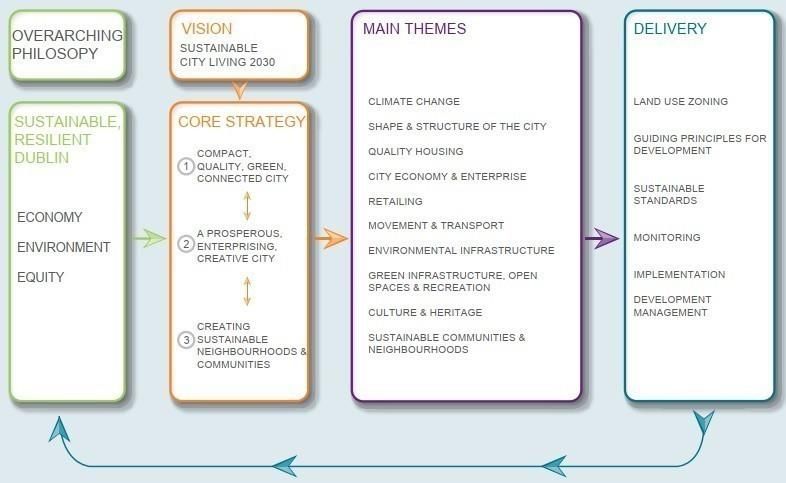
19 December 2019 | Final

1
Executive Summary

                           Economic Assessment of Parkgate Street Scheme: Ruirside Developments Limited | Page 4 of 23
19 December 2019 | Final
1 Executive Summary 1 Executive Summary
2 Introduction
Key Conclusions 3 Strategic context of the ...
4 Analysis of Dublin's Pro ...
5 Economic Benefits of th ...
Macro conclusions Project-specific conclusions
Dublin’s population Office-based jobs Residential New homes in the Employment
will grow to accommodation for Heuston Area generated
1.9m 34,000 21,000 481 1,150
Projected size of Dublin’s Could be accommodated in people based on housing In the new build-to-rent In the construction and post-
population in 2036 compared the current pipeline of offices starts in Dublin in the past 12 scheme in the Parkgate street construction phase
the current 1.4m in 2019. under construction months development
If current trends continue, The current office New housing is not Analysis of property The scheme will employ up
Dublin’s population will construction pipeline could keeping pace with the transactions in the Heuston to 700 people over the
grow by 33% by 2036. By accommodate up to 34,000 growth in employment in Station Area shows just 61 construction phase, and up
2027 the population could jobs. Office-based Dublin. Just 8,714 new homes have been to 650 once complete
reach 1.6m. However, employment in Dublin is up residential units have built between 2012 and across a range of
Dublin remains one of the by 16,400 (+6.4%) in the commenced construction 2018. The Parkgate Street commercial activities on
lowest density cities year to Q2 2019, and IDA- in the past 12 months, development will add 481 site, as well as enabling a
amongst similar-sized supported firms have which could accommodate new apartments to the growing trend towards
cities in Europe. Dublin’s announced an immediate 21,785 persons - below housing market in the area, remote working by
must develop higher pipeline of 5,000 new jobs even the most accommodating over 1,100 residents. Indirect
density housing if it is to year to date conservative estimate of people employment will also be
meet the goals of Ireland employment related to the generated by the scheme
2040 current office pipeline which can be measured
ex-post
More on page 13 More on page 20 More on page 20 More on page 18 More on page 24
Economic Assessment of Parkgate Street Scheme: Ruirside Developments Limited | Page 5 of 2319 December 2019 | Final
2
Introduction
Economic Assessment of Parkgate Street Scheme: Ruirside Developments Limited | Page 6 of 2319 December 2019 | Final
2 Introduction 1 Executive Summary
2 Introduction
The Parkgate Street Scheme is a vital element of the renewal of the 3 Strategic context of the ...
4 Analysis of Dublin's Pro ...
Heuston Station Area 5 Economic Benefits of th ...
The Parkgate Street scheme represents a major investment in the Heuston Station
Area. The Heuston Station Area is designated as a strategic development and
regeneration area in the Dublin City Development Plan (2016-2022). These areas
are earmarked to deliver the majority of the city’s future residential, commercial and
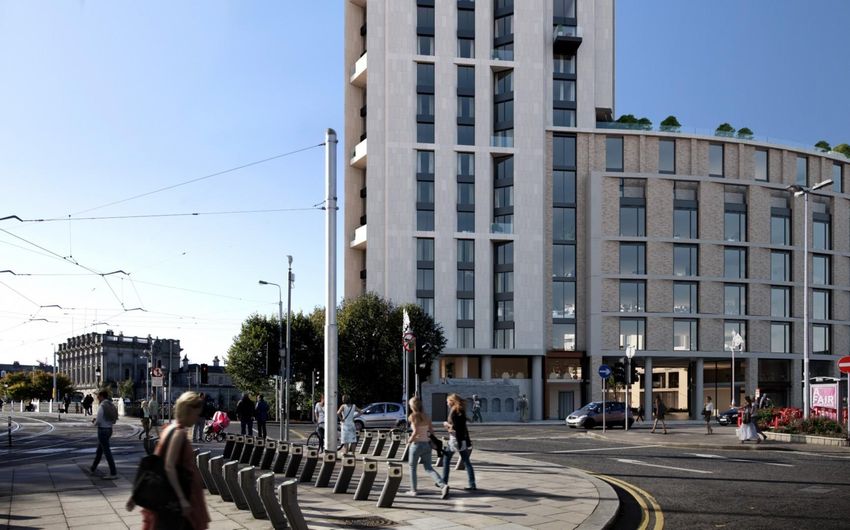
social amenities. The scheme will provide 481 apartments accommodating over
1,100 people. The scheme will also include 3,698 sqm of office space, 658 sqm of
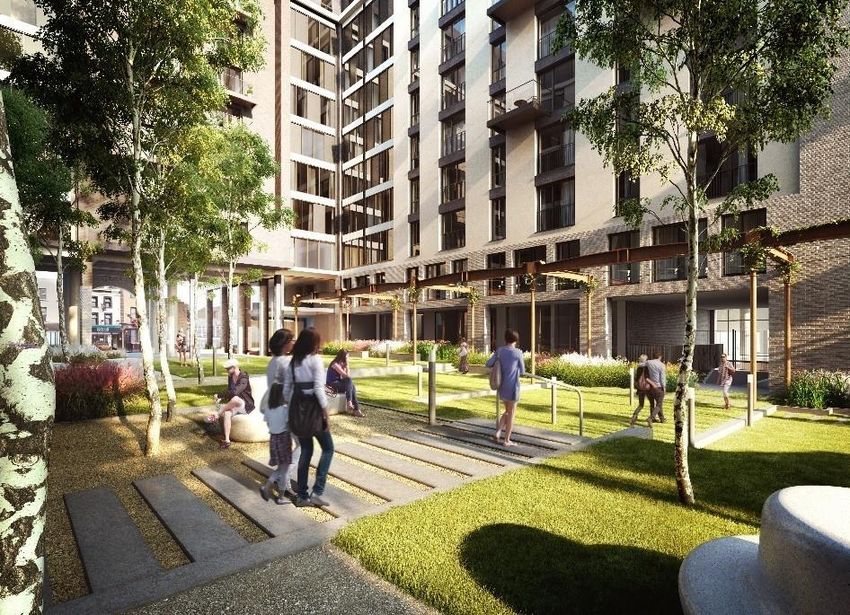
retail and restaurant space, and two new open spaces at ground level.
The site meets all of the requirements set down in Project Ireland 2040 related to
compact and sustainable urban development. Most importantly it provides the
opportunity to holistically design and develop a new urban quarter, enabling
residents and workers to utilise the area’s sustainable transport and public
amenities..
This report provides an economic assessment of the scheme. It analyses the
scheme in the context of the Ireland and Dublin’s strategic plans, and places it in
the city’s housing and commercial office markets, and scopes the economic impact
of this type of urban regeneration scheme. The report structure is outlined below.
Report Structure
• Section 1 contains the Executive Summary outlining the key conclusions of
the report Parkgate Street Scheme in numbers
• Section 2 sets out the background and context of the report.
• Section 3 considers the strategic context for the Parkgate Street
redevelopment in relation to Ireland’s National Planning Framework, and
Dublin City Development Plans, 3,698 658 481
• Section 4 analyses the current trends in Dublin’s housing market. It sqm of retail
sqm of office New Homes
examines housing market dynamics and provides evidence of a sub-optimum and restaurant
space
delivery of home in comparison to the rapid growth in office-based space
employment in the city.
• Section 5 scopes the economic benefits of urban regeneration schemes and
Source: Ruirside Developments Ltd
the economic benefits of the proposed development
Economic Assessment of Parkgate Street Scheme: Ruirside Developments Limited | Page 7 of 2319 December 2019 | Final
3
Strategic context of the
scheme
Economic Assessment of Parkgate Street Scheme: Ruirside Developments Limited | Page 8 of 2319 December 2019 | Final
3 Strategic context of the scheme 1 Executive Summary
2 Introduction
The National Planning Framework envisages compact urban growth in 3 Strategic context of th ...
4 Analysis of Dublin's Pro ...
Ireland 5 Economic Benefits of th ...
Half of all new housing and employment must be within Ireland’s cities European metropolitan population density (1.5 - 2.5 million cities)
A shift towards medium-to-high density development is the cornerstone of the Düsseldorf
Government’s National Planning Framework (Ireland 2040). This is not just a Bucharest
vague strategy goal, but a quantified framework set down in legislation. Ireland Köln
2040 envisages 50% of future population, homes, and employment will be Rotterdam
within Ireland’s five cities. In doing so, these new communities can be better Porto
serviced by existing public infrastructure. Copenhagen
Liverpool
A key benefit of compact development will be reducing environmental
Lyon
degradation such as by reducing land area requirements and preserving
Glasgow
natural habitats and green spaces. Ireland’s higher than average carbon-
Stockholm
intensity per capita must be tackled at a local level, and Dublin, as the capital
Turin
city, will be crucial in leading this transition to a competitive, low carbon and
Alicante
climate resilient economy. Large-scale, sustainable regeneration of existing
brownfield sites will play a key role in achieving this goal. Dublin
Málaga
Place-making is a key focus of the National Planning Framework. High-quality Leeds
urban places must be designed that are home to integrated communities. Helsinki
There are proven links between the quality of urban place-making, business Bordeaux
investment and job creation. Sofia
Ireland’s cities must be developed to a sufficient scale to be able to compete Seville
on an international stage. To facilitate Dublin’s forecasted population growth Gotenberg
towards 2 million people by 2040, infrastructure investment by both the public 0 200 400 600 800 1,000 1,200 1,400
and private sector will need to keep pace with a rapidly growing population.
Persons per sq. km
Dublin lags significantly behind European cities in terms of population density.
Source: Eurostat
According to Eurostat, the Dublin metropolitan region had a density of 262
persons per kilometre in 2016, placing it towards the bottom of the league table
of cities with a similar population. This lack of density in development could
impede Dublin’s attractiveness to new residents and inward investment Over
the next 30 years, the city needs to move up these rankings if it is to fulfil the
goals of the National Planning Framework and contribute to Ireland’s climate
change efforts.
Economic Assessment of Parkgate Street Scheme: Ruirside Developments Limited | Page 9 of 2319 December 2019 | Final
3 Strategic context of the scheme 1 Executive Summary
2 Introduction
The National Planning Framework envisages compact urban growth in 3 Strategic context of th ...
4 Analysis of Dublin's Pro ...
Ireland 5 Economic Benefits of th ...
The National Planning Framework (Ireland 2040) is underpinned by a shared set of goals or National Strategic Outcomes. These form the foundations of all future
development planning and delivery, as Ireland builds towards one million extra people by 2040. The Parkgate Street Scheme aligns with the key objectives related to
urban development in the Ireland 2040 plan. These are:
“Compact Growth” “Sustainable Mobility” “A Strong Economy Supported by Enterprise,
Innovation and Skills”
The Parkgate Street Scheme regeneration will The site is adjacent to commuter rail, Luas and
A well-planned, mixed-use quarter will foster
create a new urban quarter within the current primary bus routes. Furthermore, a high-
innovation and attract new indigenous and
footprint of Dublin City. The NDP states that 50% quality cycle route is planned to link the area
multinational firms. With 3,698 sqm commercial
of new city housing must be within the existing to the city centre and Docklands along the
office space, the Parkgate Street Scheme will
Dublin City and suburbs footprint River Liffey
support hundreds of new jobs.
“High Quality International Connectivity” “Enhanced Amenity and Heritage” “Transition to a Low-Carbon and Climate-
Resilient Society”
The Parkgate Street Scheme is proximate to bus, The area’s unique heritage, waterfront location
commuter rail and light rail networks. and panoramic views will be accessible to all via The Parkgate Street Scheme is within walking
Consequently, both the state’s largest airport public spaces and a riverside walkway. The distance of the city centre and will be situated on
and port - Dublin Airport and Dublin Port - are development will also be characterised by cafés the proposed Liffey Cycle Route. Furthermore,
easily accessible and shops at ground level to create a vibrant commuter rail and light rail networks are very
hub for the local community. close by
“Access to Quality Childcare, Education and
Health Services”
The development will contain a gym while it is in
close proximity to a variety of schools, hospitals
and childcare facilities, and several third-level
institutions
Economic Assessment of Parkgate Street Scheme: Ruirside Developments Limited | Page 10 of 2319 December 2019 | Final
3 Strategic context of the scheme 1 Executive Summary
2 Introduction
Dublin City Development Plan priorities 3 Strategic context of th ...
4 Analysis of Dublin's Pro ...
5 Economic Benefits of th ...
The key vision of the DCDP Context for the Dublin City Development Plan
The Dublin City Development Plan sets the strategic path for the city for the period of 2016
to 2022. The Development Plan aims to develop the city in an inclusive way, improving the
quality of life of its citizens and attract new residents and visitors.
The key vision in the Development Plan is to move towards sustainable city living by 2030,
by prioritising compact growth, fostering enterprise and creativity, and creating sustainable
neighbourhoods within the city. While it pre-dates the National Planning Framework, the
Dublin City Development Plan was very much a harbinger of the national plan with its
emphasis on sustainability. The plan also outlines key strategic development and
regeneration areas (SDRA), with the Parkgate Street Scheme situated in SDRA 7.
Strategic Development and Regeneration Area (SDRA) 7: Heuston Station and
Environs
The DCDP states that the following guiding principles should apply to any developments in
this area:
1. Developments here must complement their major residential and office uses with
vibrant elements of culture, retail and service to transform the area into an excellent
destination in which to live, work and socialise.
2. Incorporate sustainable densities within architectural designs of an exceptionally high
standard that fuse seamlessly with the existing cultural and natural heritage which
characterises the area. “to create a coherent and vibrant quarter of the city
3. Apply best practice urban design principles to prioritise the provision of public space that captures the public imagination with high quality
that is integrated within the adjacent urban landscape. services, development, design and public spaces that
The Parkgate Street Scheme meets the key visions and goals of the DCDP, including consolidate and improve the existing strengths of the
► The mix of high-quality residential units with ground floor retail, café and ancillary area.”
facilities, creating a new urban quarter close to major public transport routes.
► The development will retain the heritage of the area by retaining and restoring SDRA 7 - Dublin City Development Plan
structures contained within the Record of Protected Structures.
► The construction of two new spaces, one of which is secure, centred upon the
protected arch off Parkgate Street, and the other public which will create vibrant
meeting points, with a viewing terrace will provide a new dynamic perspective of the
city. Economic Assessment of Parkgate Street Scheme: Ruirside Developments Limited | Page 11 of 2319 December 2019 | Final
4
Analysis of Dublin's
Property Market
Economic Assessment of Parkgate Street Scheme: Ruirside Developments Limited | Page 12 of 2319 December 2019 | Final
4 Analysis of Dublin's Property Market 1 Executive Summary
2 Introduction
Dublin must plan for a population of close to 2 million people by 2036 3 Strategic context of the ...
4 Analysis of Dublin's ...
5 Economic Benefits of th ...
Population projections in Dublin, 2017-2036
Dublin’s population set to grow by a quarter by 2036 2
According to Project Ireland 2040 the overall population is forecast to increase by 1.9
c.1 million to reach a total of 5.8 million by 2040. Although the overall objective of
Project Ireland is to see a rebalancing of economic and population growth away 1.8
from Dublin to the other regions, estimates from the CSO indicate that just over
40% of Ireland’s population growth will be concentrated in Dublin. Regional 1.7
and local authorities, therefore, must plan for a significant increase in population 1.6
density with current urban footprints, if Ireland’s growth is to be sustainable in the
long term. 1.5
The CSO recently published regional population projections under a number of 1.4
scenarios1. With much uncertainty associated with long-range forecasts, the CSO
has produced a number of scenarios for Dublin’s population by 2036. Given, the 1.3
wider global trend towards urbanisation, it seems likely that internal (from other
Irish regions) and external migration into Dublin will continue in the coming years, 1.2
as the city remains the engine of Ireland’s economy. 1.1
In this scenario of inward migration into Dublin, the population is forecast to
1
grow by 20-33% by 2036. This implies an additional 276,319 – 465,084 people
2017 2019 2021 2023 2025 2027 2029 2031 2033 2035
additional to a population of 1.4 million in 2019. Even over a shorter timeframe,
Dublin’s population is projected to increase by 116,940 – 204,545 persons by M1F2 Dublin Outflow M2F2 Dublin Outflow M3F2 Dublin Outflow
2026. In the long run, Dublin’s local authorities must plan for a population of close M1F2 Dublin Inflow M2F2 Dublin Inflow M3F2 Dublin Inflow
to 2 million people. To do so will require major investment in infrastructure, Source: CSO
including social, commercial transport, utilities and new housing.
CSO population projection notes:
If the current household density average of 2.5 persons holds steady in the long
F2: Fertility to decrease to 1.6 by 2031 and to remain constant thereafter
term, Dublin would require up to 186,000 new homes by 2036 if the population
reaches the top-end of the CSO’s growth projections. M1: High net inward migration +30,000 per annum in 2017/2036
M2: Net inward migration continuing at more moderate levels +20,000 per annum in 2017/2036
M3: Low net inward migration +10,000 per annum in 2017/2036
1.9 million Dublin Inflow: 2016 internal migration flows of -4,400 per annum from Dublin to other regions reverting
to the 2006 pattern of -10,200 outflows from Dublin annually by 2021 and remaining constant
Population of Dublin by 2036 if current trends in migration continue, thereafter.
compared to 1.4 million in 2019 Dublin outflow: 2016 internal migration flows of -4,400 per annum from Dublin reverting to the
traditional pattern of +2,100 inflows from other regions to Dublin per annum by 2021 and remaining
constant thereafter.
1 CSO - Regional Population Projections, 2019 - 2036 Economic Assessment of Parkgate Street Scheme: Ruirside Developments Limited | Page 13 of 2319 December 2019 | Final
4 Analysis of Dublin's Property Market 1 Executive Summary
2 Introduction
Dublin’s housing market is growing rapidly off a low base, but still not 3 Strategic context of the ...
4 Analysis of Dublin's ...
keeping pace with demand 5 Economic Benefits of th ...
Overview of Dublin’s Housing Market
The recovery in the Irish construction sector commenced in 2013 and has been -24.0% +51.8%
gathering momentum over the past six years. The latest data for the sector show YoY change in number of YoY change in number of house
significant improvements in public and private investment, albeit much of this in flats/apartment units granted units granted planning
the non-residential sector. Housebuilding, in particular, has recorded significant planning permission (4Qrs to Q2 permission (4Qrs to Q2
improvements since the trough in 2013 and much of the improvements have been
2019/2018) 2019/2018)
recorded in Dublin, but activity remains at exceptionally low levels.
2,204 (4Qrs to Q2 2019) 460 (4Qrs to Q2 2019)
Following the economic boom years of the mid-2000’s the residential market
nationally recorded a considerable setback. In 2014 less than 1,000 housing units
were commenced across all of Dublin, 230 of which were based in Dublin City. +32.8%
Housing completions too were dampened with only 1,708 recorded across the
YoY rise in new dwelling €390,000
county in 2014 (546 in Dublin City).
completions (4Qrs to Q2 Median sale price - house
Though there have been considerable improvements in the market since 2013,
2019/2018) July 2019 (+1.9% YoY)
with 6,474 commencements recorded in the first nine months of 2019 (2,061 or
31.8% in Dublin City) and 4,868 completed units in the first nine months of the
(apartment: €327,500; +4.0%)
year (1,300 or 26.7% in Dublin City), the residential market in Dublin remains
2,219 (4Qrs to Q2 2019)
imbalanced. Source: CSO planning permissions to Q2 2019; Completions to Q2 2019; Prices at July
The disequilibrium between supply and demand for housing has resulted in 2019
significant price pressures that persisted over several years. In Dublin City alone,
residential property prices have increased by approximately 86% over the past six
years, with the median sales price for a house at €390,000 in July 2019 (+69.6%
since July 2013). However, house prices are still 21% lower than the previous • 4% increase in the number of sites with planning permission
peak in 2007, and remain below replacement cost in many areas. House prices
• 6% increase in the total number of units with planning permission
have begun to show some early signs of stabilisation in recent months with
residential property prices in Dublin City recording negative growth year-on-year • 50% decrease in the number of active sites
in February 2019 (-7%) for the first time in six years.
• 25% decrease in the number of units under construction
Rental prices, on the other hand, continue on a prominent upward trend with the
average monthly rent level in Dublin City up 8.8% YoY in Q2 2019 to €1,691, an
almost 43% increase in average rents since 2013, signalling a significant lack of
Period: Q2 2019 compared with Q2 2018
supply in the rental market. Source: Housing Supply Coordination Task Force, Quarter 2 2019 Returns
With Dublin’s population expected to grow by 20-33% by 2036 and the pressures
in the market resulting from low supply levels, there is renewed pressure to
provide the level of residential accommodation required, in the right locations, so
as to generate sustainable growth both regionally and nationally. Economic Assessment of Parkgate Street Scheme: Ruirside Developments Limited | Page 14 of 2319 December 2019 | Final
4 Analysis of Dublin's Property Market 1 Executive Summary
2 Introduction
Dublin housing and rental prices have risen rapidly in recent years 3 Strategic context of the ...
4 Analysis of Dublin's ...
5 Economic Benefits of th ...
Residential property prices
Residential Property Price Index, Dublin, January 2005- Sep 2019
According to the CSO, mix-adjusted residential property prices in Dublin City
160
more than doubled since its trough in April 2012 (+110%). The annual rate of
inflation has been negative for the past two months and was -1.3% in 140
September. Annual growth in Dublin property prices has been moderating
since early 2018. 120
There are several reasons for the current slowdown in house prices recorded 100
in the market. A number of contributory factors have been noted in recent
80
reports, including the issue of affordability for consumers and the Central Bank
mortgage rules. The latter may be a factor explaining the appreciable drop in 60
the number of mortgage approvals for properties in excess of €350,000
nationally. The rules have created a ceiling on house prices which is now 40
evidenced in the data. Indeed, in its latest review of its macro-prudential
20
measures the Central Bank estimates that house prices this year would been
15% to 25% higher than they currently are without the introduction of the 0
mortgage lending rules. 2005 2007 2009 2011 2013 2015 2017 2019
Residential rents
The rental market has been under considerable pressure in recent years, a Average Residential Rents, Dublin City, 2013-2018
direct consequence of the housing supply issues in the market. Legislation 1,700
regarding Rent Pressure Zones, introduced in 2016, has had a marginal
1,600
positive impact on rent inflation. The Q2 2019 Daft.ie Rental Report shows that
rents across Dublin are up close to 100% compared to the trough recorded in 1,500
2010/2011. According to this report the average rent in the City Centre was
€2,064 in Q2 2019 (+4% YoY). 1,400
Average residential rents in the Dublin City area grew by 42.8% in the five- 1,300
years preceding 2018 (annualised growth of 7.4%) and the latest data from the
Residential Tenancies Board indicates that the average monthly rent was 1,200
€1,691 in Dublin City in Q2 2019. The annual growth rate was 8.8%. This 1,100
average figure masks large differences within the city itself. For example, the
average monthly rent in Grand Canal Square, Dublin 2 was in excess of 1,000
€2,900 in 2018. 2013 2014 2015 2016 2017 2018
Dublin City Council Dublin average rent
Source: Residential Tenancy Board, CSO, daft.ie
Economic Assessment of Parkgate Street Scheme: Ruirside Developments Limited | Page 15 of 2319 December 2019 | Final
4 Analysis of Dublin's Property Market 1 Executive Summary
2 Introduction
Housebuilding activity is growing rapidly, albeit off an exceptionally low 3 Strategic context of the ...
4 Analysis of Dublin's ...
base 5 Economic Benefits of th ...
Planning permissions Number of units granted planning permission, Dublin City, 2013-2018
Although the grant of planning permission does not always result in a 3,000 45%
commencement, the number of planning permissions granted is an important 40%
indicator of future supply. The improvement recorded since 2015 across the Dublin 2,500
35%
City market must be considered against the low base from which activity is growing
from. 2,000 30%
1501
25%
Over the past five years there has been clear improvement in the market, much of 1,500 2399
1563 1914 20%
which has been driven by the move towards apartment building. In 2018, 2,337
housing units were granted planning permission in Dublin City, 1,914 (82%) of 1,000 15%
which were for apartment units. This represents a considerable improvement in the 359 10%
247
market since 2013 when a total of 779 planning permissions were awarded, 247 500 1061
532 578 586 5%
(31.7%) of which were apartments. However, the total units granted planning 307 423
0 0%
permission was down by 13.6% YoY in 2018, with apartments down by 20.2%.
2013 2014 2015 2016 2017 2018
According to the Housing Supply Coordination Task Force for Dublin report from
Q2 2019, there has been a 4% increase in the number of Dublin City sites with Houses Apartments % of Dublin Total (R.H.S)
planning permission, up from 138 sites in Q2 2018 to 143 sites in Q2 2019, while
there has been a 6% increase in the total number of units with planning permission Source: CSO
in the same period (from 10,906 to 11,629). Housing Commencements, Dublin City, January 2015 - June 2019
550
Housing commencements 500
450
The level of commencements, the point at which development levies are collected, 400
has been on an upward trend since 2015. There were 2,256 residential 350
commencements in Dublin City in 2018, 24.6% above the corresponding level in 300 Trendline
2017 and up from just 855 in 2015. A total of 2,061 units were commenced in the 250
first nine months of 2019, 23% above the corresponding total in the first nine
200
months of 2018. Dublin City accounted for 29.3% of the total commencements in
150
Dublin in 2018 and 32% in the first nine months of 2019.
100
However, according to the Task Force for Dublin report from Q2 2019, there has 50
been a 50% reduction in the number of active sites in the city. This suggests that 0
while the number of unit being constructed is rising, activity has become Jan Jun Jan June Jan June Jan June Jan June
concentrated in a smaller number of large sites.
2015 2016 2017 2018 2019
Source: Department of Housing, Planning and Local Government (DHPLG)
Economic Assessment of Parkgate Street Scheme: Ruirside Developments Limited | Page 16 of 2319 December 2019 | Final
4 Analysis of Dublin's Property Market 1 Executive Summary
2 Introduction
PBSA and Built-to-Rent market in Dublin 3 Strategic context of the ...
4 Analysis of Dublin's ...
5 Economic Benefits of th ...
Purpose Built Student Accommodation in Dublin
Build-to-Rent market in Dublin
The inclusion of student accommodation in Rebuilding Ireland: Action Plan for
The Build-to-Rent (BTR) sector has been acknowledged by Government as
Housing and Homelessness (July 2016) was designed to both increase the
playing an important role in addressing the shortage of rental accommodation.
supply of housing for students and to reduce the dependency of students on the
The Government is keen to support the development of large-scale,
traditional private rented sector. The Action Plan set a target of 7,000 additional
institutionally funded and professionally managed purpose-built residential
Purpose Built Student Accommodation (PBSA) bed spaces to be delivered by
accommodation, in order to increase and improve the stock of rental
end 2019.
accommodation in the Irish market. This ‘professionalisation’ of the rental sector
Analysis completed by us in February 2019 concluded there are approximately is a big departure from the prevailing system in Ireland whereby rental
6,364 PBSA bed spaces currently operational within the canals of Dublin city accommodation was, for the most part, provided by small Buy-to-Let landlords
centre, growing to over 9,000 operational by 2020, given the number under and provided none of the amenities or common areas (wet & dry leisure, cinema
construction at present. There is the potential for a total of approximately 14,000 rooms, residents lounges/game rooms, workstations, private dining rooms,
PBSA bed spaces to be available for students by 2024, given the number of storage facilities, crèche etc.) often associated with purpose-built rental
PBSA bed spaces approved and in the planning process at present. PBSA bed accommodation.
space provision in Dublin City is on track to meet the National Student
According to CBRE, the number of residential units under institutional ownership
Accommodation Strategy (NSAS) supply target of at least an additional 16,374
in Ireland is approximately 11,700 (3.5% of the rental stock) with 15 institutional
PBSA bed spaces to provide an overall supply of 28,806 PBSA bed spaces in the
owners now operating in the market. To date, most new apartment
Dublin area by 2024. However, this would address only one-third of the predicted
developments in the BTR sector have been provided in the Dublin market.
demand for PBSA bed spaces by 2025 in the Dublin area, estimated at over
50,000 as identified in the report. The latest Daft.ie Rent Report1 noted that the majority of BTR developments and
other rental development in the Capital will occur in Dublin City (12,912 units)
The current position, according to the Higher Education Authority (HEA), is that
and South County (9,662 units). Daft.ie have identified that approximately
4,384 units are on-site, of which 2,884 are in Dublin City. Plans have also been
80,000 new rental homes would need to be built in the capital in the short run to
granted for 5,258 PBSA units across Dublin, of which an estimated 2,955 are in
address the current supply-demand issues in the market.
Dublin City. These include some of the larger schemes at the Jameson Gate
Development (494 units) by Park Shopping Centre, the Brewery Block (349 units) Building pipeline for Dublin with BTR and private residential rental development
by Summix Developments, and at Phibsborough Shopping Centre (341 units) by pipeline 2019-2025
MM Capital. Based on this current position, there are a further 5,839 bed spaces
City North South North West South
in the pipeline in Dublin City. Centre City City County County County
BTR 9 7 9 5 2 15
PBSA bed-spaces on site and granted permission, Dublin, 2017-2019
Private 7 5 9 1 0 9
2017 2018 2019 Total
No. units 4,393 2,984 5,535 2,611 1,096 9,662
On site 250 3,028 1,106 4,384
Source: Daft.ie Rental Report Q2 2019
Plans granted 1,403 1,567 2,076 5,258 1 https://www.daft.ie/report/2019-Q2-rental-daftreport.pdf
Source: Student Accommodation Development Activity, Higher Education Authority, June 2019
Economic Assessment of Parkgate Street Scheme: Ruirside Developments Limited | Page 17 of 2319 December 2019 | Final
4 Analysis of Dublin's Property Market 1 Executive Summary
2 Introduction
The delivery of residential units in the Heuston Station Area has been 3 Strategic context of the ...
4 Analysis of Dublin's ...
minimal 5 Economic Benefits of th ...
New home sales within a 1km radius of Heuston Station, 2012-2018
Minimal new residential delivery in Heuston and Environs
The area in which the proposed scheme is being developed is in the Heuston
Station and Environs or SDRA 7. As discussed in section 2 of this report, the
land-use framework for SDRA 7 envisages a “new urban gateway” and a “high-
quality destination to live, work and socialise in”. EY analysis of housing activity
in this area suggests the goals of the framework have not been met in recent
years.
In the SDRA 7 area, just seven new-build homes have been transacted
between 2012 and 2018, while within a 1km radius of Heuston Station 61 new
homes were transacted in the same period. In 2018, 30 new-build homes were
transacted at a median price of €470,000. To the immediate west of this area,
over 400 new apartments have been completed recently at Clancy Quay, the
only major delivery of new supply in the Heuston environs in last few years.
This low level of residential development is despite this area encompassing
densely populated neighbourhoods of the north-west and south-west inner city
including Stoneybatter, The Liberties, and Kilmainham.
A visualisation of new home sales between 2012 and 2018 reveals activity has
been largely confined to small pockets around Stoneybatter and St James’s
Hospital, despite the area have among the best public transport links in Dublin
City. Source: EY Property Analytics Tool, Property Price Register
In 2018, the median new home sales price was €470,000. This compares to a
median household income ranging between €32,750 and €67,561 according to New home sales in the Heuston Station Area , 2012-2018
CSO income data1, or 7-14x incomes. According to Daft.ie, rents in Dublin 8 2012 2013 2014 2015 2016 2017 2018
ranged from €1,730 for a 1-bed apartment to a €2,285 for a 3-bed house.
New Home Sales 6 6 3 6 6 4 30
Annual rental inflation for a 1-bed apartment in Dublin 8 was 6.5% in Q2 2019,
well above the city-wide average of 3.4%, suggesting demand is far outstripping Median Price (€000) 238 164 374 207 365 386 470
the supply of new housing in this area. Source: Property Price Register
Rental prices in Dublin 8, Q2 2019
61 new build homes 1-bed
apt
2-bed
house
3-bed
house
4-bed
house
5-bed
house
Monthly Rent 1,730 1,967 2,285 2,489 2,654
have been transacted within a 1km radius of Heuston Station
between 2012 and 2018 Annual % change 6.5 5 4.3 3.2 0.1
Source: Daft.ie
1 CSO Earnings Analysis using administrative sources Economic Assessment of Parkgate Street Scheme: Ruirside Developments Limited | Page 18 of 2319 December 2019 | Final
4 Analysis of Dublin's Property Market 1 Executive Summary
2 Introduction
Demand for office space in Dublin driven by strong domestic economy and 3 Strategic context of the ...
4 Analysis of Dublin's ...
unpresented foreign direct investment 5 Economic Benefits of th ...
Strong economy drives office demand in Dublin Employment growth in office-based sectors in Dublin, 2012-2014
70
The growing economy and labour market are supporting strong demand for
office space in Dublin. Demand is driven by international tech companies,
professional services and the public sector. This robust demand for office space 60
is set to continue with a strong pipeline of FDI investment announced by the IDA
year to date. Our analysis of FDI job announcements by the IDA shows over 50
5,000 new roles will be created in Dublin in the near term, 4,000 of these in the
international tech sector. 40
This is supported by recent employment data which shows that 16,400 (+6.4%)
additional persons have been employed in the main office-based sectors in 30
Dublin in the year to Q3 2019, bringing the total to 271,600. In total, these five
sectors have added 80,600 jobs in Dublin between Q1 2012 and Q3 2019.
20
Within this, the information and communication sector accounted for 30,500 2012Q4 2013Q4 2014Q4 2015Q4 2016Q4 2017Q4 2018Q4
jobs, and the public sector 15,300.
Information and communication Financial, insurance and real estate
Property agent Savills estimates the delivery of new office space in Dublin at Professional services Admin
461,789 sqm between 2015 and 2018. Assuming a conservative estimate of net Public admin
internal area at 80% of the gross area delivered and a density of 12sqm per Source: CSO
employee implies approximately 30,786 jobs have been accommodated in these
New office space delivered in Dublin (000’s sqm)
newly completed developments.
250,000 14000
Total demand at the end of Q3 2019 was 388,600 square metres, of which 56%
was estimated to be in the city centre by CBRE. They expect the Dublin office 12000
market to continue to see strong levels of take-up, due to the expansion of the 200,000
tech, finance, serviced offices and professional services occupiers. 10000
150,000 8000
100,000 6000
30,786 jobs 50,000
4000
2000
could be accommodated in the new office space delivered in Dublin
between 2015 and 2018 - 0
2015 2016 2017 2018 2019H1
New Office Space Supported Jobs
Source: Savills
Economic Assessment of Parkgate Street Scheme: Ruirside Developments Limited | Page 19 of 2319 December 2019 | Final
4 Analysis of Dublin's Property Market 1 Executive Summary
2 Introduction
Residential delivery has not kept pace with office space delivery in Dublin 3 Strategic context of the ...
4 Analysis of Dublin's ...
5 Economic Benefits of th ...
Pipeline of office employment outstripping residential pipeline Total non-residential floor area granted planning permission in Dublin (000’s sq.m)
4Qrs to
Estimates for current office construction in Dublin vary from 336,150 to 511,363 Q3’18 Q4’18 Q1’19 Q2’19
Q2'19
sqm, which could potentially support a further 24,000 – 34,000 jobs in the city.
Commercial Buildings 144 113 125 96 478
► Lisney estimated that 77,200 sq.m of new stock is due for completion by end Buildings for Agriculture 22 1 1 3 27
2019, with a further 215,000 sq.m of new supply under construction in Q2 Industrial Buildings 20 18 14 24 76
2019 and due for completion in 2020 and 2021.
Govt., Health and Education 24 2 16 2 44
► Cushman & Wakefield reported that there were 473,350 sq.m of office space Other Buildings for Social Use 15 5 28 6 54
under construction, of which 88% or 416,548 sq.m consisted of new office
Total non-residential 225 139 184 131 679
space, the balance representing refurbishment.
Total Residential 356 195 236 347 1,134
► BNP Paribas estimated that 410,430 sq.m are under construction in the City Total Residential (Units) 3,358 1,781 2,237 3,512 10,888
Centre (Dublin 1, 2, & 4), with a further 100,933 sq.m under construction in Source: CSO
the suburbs.
Estimated Office Space under construction in Dublin (sq m)
► More recent figures suggest that at the end of Q3 2019, there were 32 office
schemes under construction in Dublin City Centre, extending to almost 600,000 40000
435,000 sq.m between them, of which 45% was already pre-let (CBRE).
35000
500,000
In addition, CSO planning permission data for Dublin show that 679,000 sqm of
30000
non-residential floor area was granted planning permission in the year to the end
400,000
of Q2 2019. This compares to total residential floor space granted of 1.1 million 25000
sqm, or 10,888 units in the same period. At an average household size of 2.5 300,000
20000
persons, these recent planning permissions could potentially accommodate
27,220 people. This would be insufficient to house the current pipeline of office 200,000 15000
space under construction which equates to up to 34,000 people. 10000
However, planning permission does not necessarily translate to a housing unit. 100,000 5000
For a better gauge of the current pipeline it is more instructive to track housing
commencements. In the year to September 2019, 8,714 residential units 0 0
commenced construction in Dublin, which could accommodate just 21,785 Lisney C&W BNP Paribas CBRE
persons. This figure is below even the lowest estimate of employment-related to Under Construction Jobs Capacity (RHS)
current office construction in the city. Source: Property Agents
34,000 Jobs 21,785 people
accommodated in the new office space currently under construction could be accommodated in housing commenced in the past year
Economic Assessment of Parkgate Street Scheme: Ruirside Developments Limited | Page 20 of 2319 December 2019 | Final
5
Economic Benefits of the Scheme
Economic Assessment of Parkgate Street Scheme: Ruirside Developments Limited | Page 21 of 2319 December 2019 | Final
5 Economic Benefits of the Scheme 1 Executive Summary
2 Introduction
Regeneration of brownfield sites yield significant benefits 3 Strategic context of the ...
4 Analysis of Dublin's Pro ...
5 Economic Benefits of t ...
Benefits of regeneration not just confined to employment gains Benefit-Cost Ratios associated with regeneration activities
Research by the UK Department for Communities & Local Government (DCLG) in BCR
Theme & subcategories BCR (cautious)
2010 suggests the benefits of regeneration policies significantly outweigh the cost of (standard)
investment. Benefit-Cost Ratios (BCR) in the table across detail the net additional
Worklessness, skills and business development
outputs generated over time, in both a standard and cautious scenario. BCR’s are
calculated by dividing the present value of benefits generated by the annual public Tackling worklessness 1.04 1.04
expenditure from which it was generated. Overall the BCR of regeneration schemes Skills and training 2.2 1.6
was found to range from 2.3 to 3.5.
General business support 8.7 6
Urban regeneration which provides new housing not only relates to the delivery of Start-up and spin-outs 9.3 6.8
residential units but the spin-off benefits of building new communities and the
Business enterprise R&D 2.5 1.8
environmental benefits of providing new green and communal spaces. The DCLG
analysis estimates a BCR of 2.6 in the delivery of new housing and a BCR of 2.7 in Homes, communities and environment
the delivery of new open spaces. New build housing 2.6 1.7
However, the benefits of regeneration are not just confined to new homes. The study Housing improvement 2 1.3
finds the acquisition, demolition and new build on brownfield sites generates a BCR
Acquisition, demolition and new build 5.5 3.7
of 5.5 as under utilised land is brought back into more productive use.
Communities: volunteering 1.1 1.1
The analysis also calculates BCRs related to increased community activities such as
Communities: investing in community organisations 1.8 1.3
new organisations and volunteering activity. While BCRs related to these types of
social activities are lower than elsewhere, they nonetheless emphasis the importance Environmental: open space 2.7 1.8
of careful planning and place-making within regeneration schemes. Providing new Environmental: public realm 1.4 0.9
open spaces (2.7x) and creating a new public realm delivers quality of life
Neighbourhood renewal 3 3
improvements to nearby occupants.
All categories 3.5 2.3
Source: Dept. for Communities & Local government “Valuing the Benefits of Regeneration” (2010)
“…successful regeneration is about achieving additional economic,
social and environmental outcomes that would not otherwise have
occurred”
DCLG (UK) – Valuing the Benefits of Regeneration
Economic Assessment of Parkgate Street Scheme: Ruirside Developments Limited | Page 22 of 2319 December 2019 | Final
5 Economic Benefits of the Scheme 1 Executive Summary
2 Introduction
Generating Employment: Parkgate Street Scheme will support over 1,000 3 Strategic context of the ...
4 Analysis of Dublin's Pro ...
jobs 5 Economic Benefits of t ...
Construction phase will support 600-700 jobs Estimated jobs in completed development
The Parkgate Street Scheme will act as a significant generator of employment in Area Jobs Estimate
the Heuston Station Area. During the construction phase, peak employment is
expected to be approximately 400 people, broken down between 330 general Office & co-working 410 - 510
operatives, 35 management, and 35 design team members. However, over the Retail unit 10
lifecycle of the project, the scheme is expected to support 600-700 full-time jobs.
Restaurant Unit 30
Completed scheme will generate 550-650 jobs
Operations Staff 10
Once completed, the scheme will support a significant level of employment across Work from Home 90
various sectors and flexible workspaces, detailed in the table across. These include
new office and co-working working spaces, retail units, a restaurant unit, on-site Construction Employment 600-700
operatives, and remote workers. The estimated employment generated is detailed Total 1,150 - 1,350
in the table across.
Source: Ruirside Developments Ltd
Working from home an emerging trend
Working from home by sector in the UK, 2017 (% of employment)
Notably, the growing trend towards remote and flexible working practices implies 25%
that employment generation will not be just confined to commercial spaces. Census
2016 data shows 94,955 people worked mainly from home, equivalent to 4.8% of
workers1. This was an increase from 83,326 (4.7%) in 2011. In the UK, the rate is 20% 18%
even higher at 6.1%, while sectoral data shows office-based employment sectors
have working from home rates closer to 10%, with 18% of tech employees working 15%
from home. This growing trend suggests up to 10% of residents in the Parkgate 12%
development could work from home. Based on 1,190 people living in the scheme, a 10%
9% 9%
conservative estimate of 7.5% working remotely implies 90 people could be 10%
employed and working mainly from home. 7%
Indirect employment will be generated 5%
The regeneration of the Parkgate street area into a new mixed-use quarter will also
provide spin-off employment indirectly in the wider economy. While the estimation 0%
of this is beyond the scope of this analysis, indirect employment can be estimated
once the development is completed using an economic impact model. This will be
driven by the increase in employment in firms in the supply chain and the increased
employment generated household expenditure.
1 Census 2016 Profile 6 – Commuting in Ireland Source: Office for National Statistics
Economic Assessment of Parkgate Street Scheme: Ruirside Developments Limited | Page 23 of 23You can also read


