EFFECTIVENESS AND INNOVATION IN THE AREA OF ACTIVE LABOUR MARKET POLICIES - Country Report - Republic of Moldova - European Training ...
←
→
Page content transcription
If your browser does not render page correctly, please read the page content below

EFFECTIVENESS AND INNOVATION
IN THE AREA OF
ACTIVE LABOUR MARKET POLICIES

Country Report – Republic of Moldova

Cristina Mereuta, Labour Market Specialist, ETF & Alic Birca, Researcher
CONTEXT

•       European Training Foundation led several analyses to capture immediate developments and provide targeted
        advice or the sharing of innovative solutions in response to the impact of the pandemic.
•       One strand covers socio-economic dynamics and the impact of COVID-19 pandemic on the labour market and
        policy responses in terms of the crisis, post crisis and recovery phases,
•       Focus on the role of ALMPs including skills development programmes:
    •     pandemic induced sectoral changes requiring a change in career paths, reskilling and upskilling;
    •     ALMPs need adjustments to fit current and foreseeable socio-economic conditions, technological advancement etc.
•       2 cross-country reports on ALMPs innovation and effectiveness - presentations and summaries available here
        https://www.etf.europa.eu/en/news-and-events/events/active-labour-market-policies-and-human-capital-
        development-fostering
•       In Moldova, North Macedonia and Jordan – focused reports on the pre-conditions and measures to boost the
        efforts of Public Employment Services and other stakeholders as well as policy advice on priorities for
        building up ALMPs delivery and continuous training pursuing a transition agenda towards more agile
        economies and workforce

                                                                                                                            2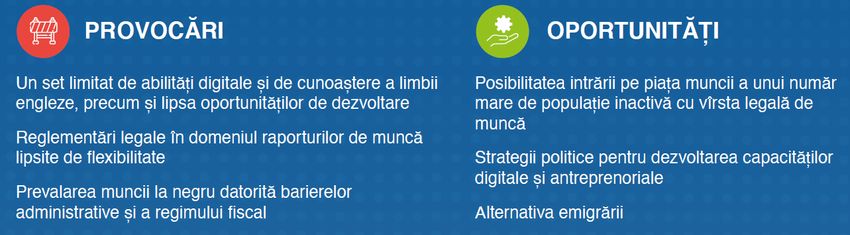
REGISTERED UNEMPLOYED

                                            Number of unemployed registered at the NEA
                                            Number of vacancies registered at the NEA
                                            Number of unemployed registered at the NEA who got a job

                                                                                                                                  50226
 50162

                          50061

                                                                                         49200
                                                                45429
                                   44612
          42345

                                                       42119

                                                                                35544

                                                                                                                  34283
                                                                                                         31484

                                                                                                                                           24101
                                           17654
                  16780

                                                                        16648

                                                                                                 14702

                                                                                                                          11245

                                                                                                                                                   9131
         2015                     2016                         2017                     2018                     2019                     2020

                                                                                                                                                          3
SHARE OF UNEMPLOYMENT BENEFIT BENEFICIARIES IN
THE TOTAL REGISTERED UNEMPLOYED, %

 No.   Indicators                        2015    2016    2017    2018    2019    2020
 1.    Number of unemployed              50612   50061   42119   35544   31484   50226
       registered during the year
 2.    Number of beneficiaries of        5200    5804    4454    3283    3566    9480
       unemployment benefit
 3.    Share of unemployment             10,3    11,6    10,6    9,2     11,3    18,9
       benefit recipients in the total
       registered unemployed, %

                                                                                        4
BENEFICIARIES OF PROFESSIONAL COUNSELLING AND
INFORMATION SERVICES
Total Unemployed people
120000
100000 100852
96324
88603
80000 77679 78902
70647
65392 63022 65433 63399
60000
52782
45827
40000
20000
0
2015 2016 2017 2018 2019 2020
5BENEFICIARIES OF LABOUR INTERMEDIATION SERVICES
35000
32381
30000 30264 29492
28052
25935 26178 26489
25000 25118
23245 22999 22563
20000 19454
15000
10000
5000
0
2015 2016 2017 2018 2019 2020
Total Unemployed people
6BENEFICIARIES OF CAREER GUIDANCE SERVICES
Total Unemployed people
16000
13402
14000
12354
12000
10100
10000
8200
8000
6000 4686 4500 4600
3900
4000
2600
1906 2087
2000 900
0
2015 2016 2017 2018 2019 2020
7BENEFICIARIES OF VOCATIONAL TRAINING COURSES
Indicators 2015 2016 2017 2018 2019 2020
Unemployed number,
beneficiaries of vocational 2979 2992 2600 2200 868 692
training courses
Hiring rate of graduates of
76,6 89,5 85,0 91,0 99,1 57,1
vocational training courses, %
8CHALLENGES
Insufficient capacity for the implementation of employment measures (specialised staff; financial resources,
capacities at local level)
Large number of work tasks per employee within NEA (due to staff downsizing, diversity of responsibilities)
Lack of own headquarters for the territorial employment subdivisions (difficult to provide specialised services, in
particular to jobseekers with disabilities)
Outdated information system of the labour market
Need to increase the professional knowledge and skills in the field of employment among local stakeholders
(representatives of local public authorities, trade unions and employers’ associations, member of local tripartite
commissions)
Decreasing number of unemployed people with employment potential, as a result of labour migration abroad;
Insufficiently skilled labour supply
Rural / urban imbalance on the labour market
High share of people employed in the informal sector
9RECOMMENDATIONS
Attracting the NEET group in the labour market (closer
collaboration with youth organizations, local public Increasing the NEA budget to finance active measures on
the labour market
authorities; subsidizing apprenticeship / internship)
Increasing the number of employees within the NEA
Attracting Moldovan migrant workers to the labour market
(information campaign and business start-up opportunities) Improving the professional knowledge and skills of NEA
employees and local stakeholders
Financial support for the rural workforce (increase the
Improving the quality of digital services provided by NEA
volume of funding for subsidizing jobs, subsidizing local
initiative projects, and incentives for labour mobility) Improving the NEA infrastructure
Attracting the workforce from the informal to the formal Increase the scope of impact evaluation of existing ALMP
sector (combination of social protection measures, measures as part of the process to determine future policy
developments
information campaigns, as well as targeted ALMMs)
Enhance Communication on Recently introduced initiatives
Development of digital knowledge and skills in the labour with employers to attract greater interest
market (to develop training programs focused on the
development of digital skills) Consolidation of labour market information system, skills
needs identification and anticipation
Ensuring a higher degree of inclusion in the labour market
of socially vulnerable groups
10PLATFORM WORK IN THE REPUBLIC OF MOLDOVA Iwona Ganko, Labour Market Specialist, ETF
NEW FORMS OF WORK IN MOLDOVA - CONTEXT

➢ Modest economic development and massive labour migration
➢ Weak activity, low unemployment but high inactivity
➢ Self-employment increased in recent years from 29.3% in 2010
  to 40.4% in 2018
➢ Widespread informality, especially in rural areas
➢ Skills mismatch

                                                             Iwona Ganko ETF

                                                                               12
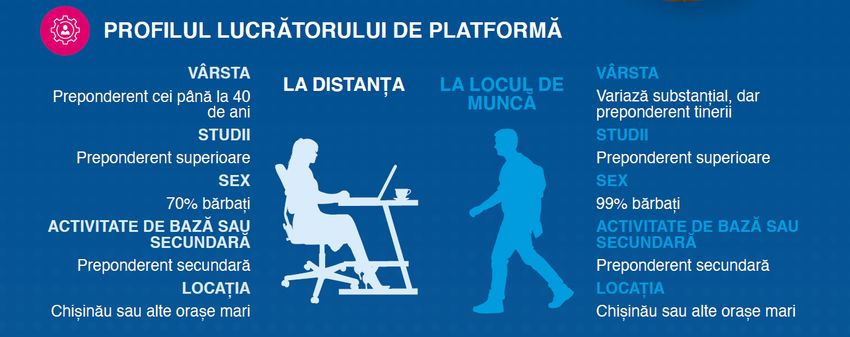
NEW FORMS OF WORK IN MOLDOVA – PLATFORM WORK
Iwona Ganko ETF 13NEW FORMS OF WORK IN MOLDOVA – STATE OF PLAY
➢ Policy discourse
➢ Regulatory
frameworks –
labour and
taxation
➢ Strategies to
support digital
skills
development and
entrepreneurship
➢ ICT infrastructure
Iwona Ganko ETF
14NEW FORMS OF WORK: IMPLICATIONS FOR PES
➢ Role of PES in supporting the transition into employment and job-to-job in
the platform economy
➢ Information: platform work may become a pathway to work for the un- or
underemployed
➢ Enhancing access to services: counselling, career guidance and other
support services
➢ Skills development opportunities: training programmes that help people
gain skills to use online freelancing platforms - digital, entrepreneurial, self-
organisation, language skills
Iwona Ganko ETF 15THANK YOU !
ADDITIONAL INFORMATION AVAILABLE ON ETF WEBSITE AND OPEN SPACE
PLATFORM:
WWW.ETF.EUROPA.EU
ACTIVE LABOUR MARKET POLICIES AND HUMAN CAPITAL DEVELOPMENT | OPEN
SPACE (EUROPA.EU)
THE FUTURE OF WORK: NEW FORMS OF EMPLOYMENT AND PLATFORM WORK |
OPEN SPACE (EUROPA.EU)
16You can also read


