ENG - Viaggiareinpuglia.it
←
→
Page content transcription
If your browser does not render page correctly, please read the page content below
[ ENG ]

Cathedrals, castles, towers

Puglia is an age-old land traversed by centuries of history and art
that have left their unmistakable mark on the imposing architectu-
re: from the Classic Age to the present day, from the Romanesque to
the Baroque. But Puglia’s history starts even before history, as the
refined historian and exceptional traveler Cesare Brandi wrote. This
is shown by the dolmens and menhirs bearing witness to prehisto-
ric civilizations. A journey through the region reveals the differences
between a north with its ancient Daunian and Medieval Latin tra-
dition evoked by castles and monasteries, and a south influenced
by Magna Graecia and Byzantine rule. If we were to travel through
Puglia by air, we would take it all in from above. Imposing Romane-
sque cathedrals and majestic castles from the times of Frederick the
Great soar to the sky, amid enchanting villages and breathtaking
landscapes. The coastline is dominated by silent towers built over
the centuries by Normans, Swabians, and Angeivns, while the Ba-
roque churches of Lecce and Martina Franca lend charm with their
stone crenellations. From here, we lose ourselves in the magic of the
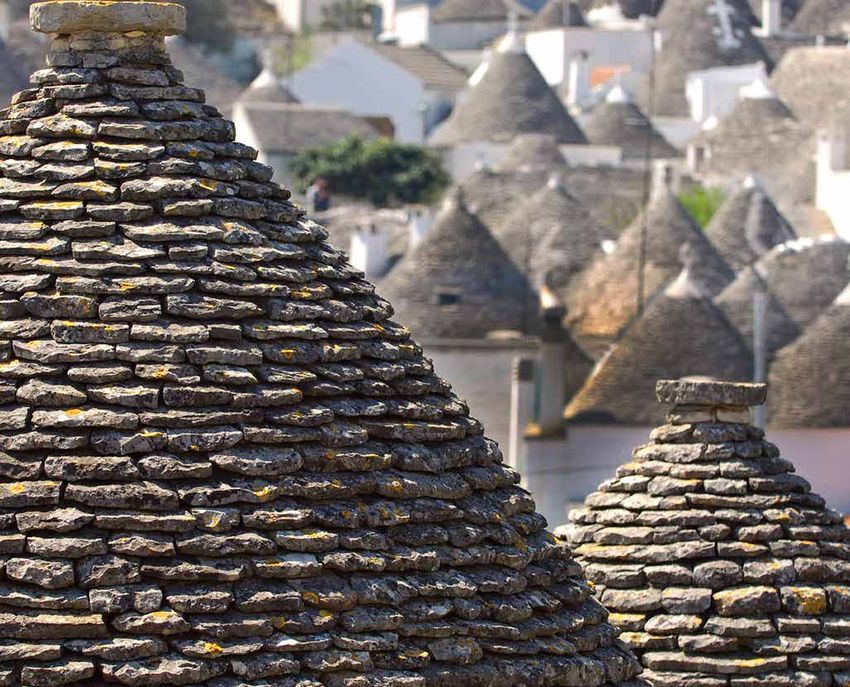
valley of the trulli, before arriving in Taranto, the realm of Greek art.
It is a land of enigmas and ancestral rites, of sweet and sour flavors,
of generous wines, of captivating dance, of welcoming smiles, and
of places of the heart. This meditative, wondrous journey starts by
reading this guide for hints and recommendations, and continues
in Puglia itself, offering us our fill of a light that warms the soul, of
crystal-clear water that refreshes the body, and of a slow way of li-
ving, in which we can enjoy the landscape right down to its roots.
THE FASCINATION OF STONE
    SPIRITUAL PUGLIA
    A secret Puglia? It is discovered      Ruvo di Puglia, Giovinazzo, Con-
    by observing the landscape as          versano, and Ostuni, and then in
    we set off for the more renowned       Salento there are two masterpie-
    places. A world of bare rock, with     ces: Santa Annunziata in Otranto
    retreats perched on cliffs, like the   and the Basilica of Santa Caterina
    mill near the Pulsano Abbey, and       d’Alessandria in Galatina. Last
    imposing rupestrian crypts from        comes the Baroque explosion,
    San Michele in Gravina in Puglia       with its sumptuous excesses, its
    to Lama d’Antico in Fasano, with       redundancy of statues and fan-
    a high concentration in the gravi-     tastic decor, carved into the soft,
    ne of Bari and Taranto, and in Sa-     cream-colored stone: acanthus
    lento. Men of faith, farmers and       leaves climbing up spiral columns,
    shepherds prayed in these tran-        leaping putti, floral motifs and
    sformed caves, in about the year       mythological animals. Starting in
    1000, in chapels frescoed with         the mid-sixteenth century, after
    Christ Pantocrator, saints, Ma-        the Battle of Lepanto, the Church,
    donnas, and archangels, like the       through the Jesuits, Theatins, and
    crypt of Santa Cristina in Carpi-      Celestines, intended to make Pu-
    gnano Salentino. Then there are        glia the bulwark of Catholicism,
    the spectacular white-stone ca-        and this exuberant architectural
    thedrals set ablaze at sunset. The     style took hold in Lecce and in the
    most well known is San Nicola in       and the whole region: from the
    Bari, while the most evocative is      Addolorata Church in Foggia to
    the one dedicated to St. Nicholas      the Shrine of Maria Santissima del
    the Pilgrim in Trani (see photo),      Soccorso in San Severo; from the
    suspended over the sea, like San       Madonna delle Grazie in Gravina
    Corrado in Molfetta. In these          in Puglia to Santa Maria in Bet-
    masterworks of Apulian Roma-           lem in Mesagne, – not to men-
    nesque art, the fine inlays of the     tion Martina Franca, Nardò and
    doors and rose windows show            Galatone. Baroque achieves its
    a blend of influences from the         apotheosis in the splendid Santa
    Arab, Jewish, and Syrian worlds,       Croce Basilica in Lecce. There is
    as does the Cathedral of the As-       also a sense of theater in religious
    sumption in Troia. Built between       rituals and in the Living Passions
    the twelfth and thirteenth centu-      that come to life during the Easter
    ries, many during the reign rick       period in Troia, Conversano, Albe-
    II, they are a continous discovery     robello, Ginosa, Taranto, Franca-
    from north to south. From Al-          villa Fontana, Oria, Maglie, and
    tamura, Bitonto and Andria to          Gallipoli.
2                                                                                 3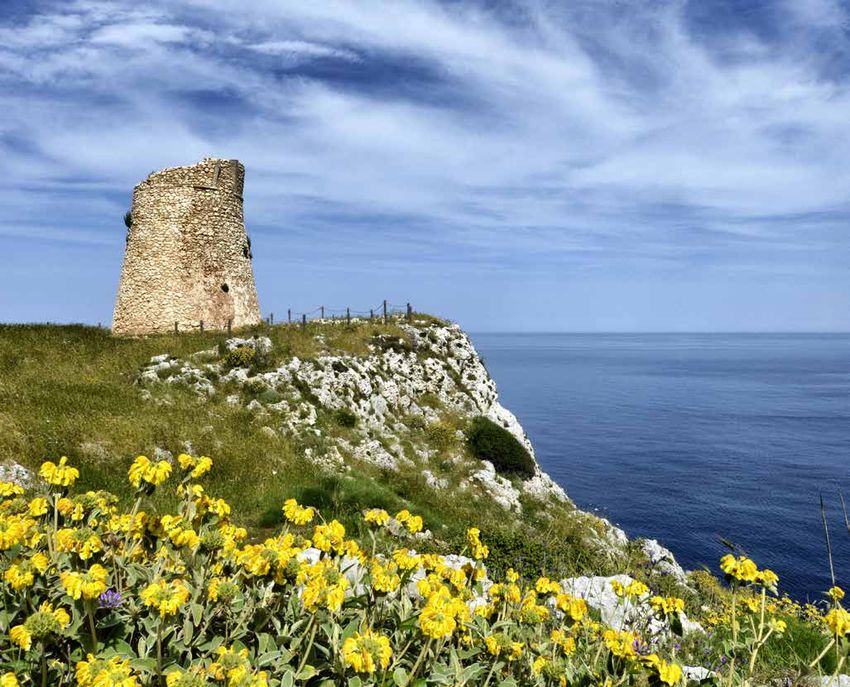
BOLD, TIMELESS
    FORTRESSES
     Puglia is a land of castles and cathedrals, all imposing and
     mostly the artistic expression of that genius loci that marked
     Frederick II, puer apuliae – the boy of Puglia. The surprising
     journey in search of Frederick’s architecture starts in places
     where nature was once lush and permitted the much-loved
     hunting with falcons. In Capitanata, there are many to be
     found, from Lucera with the large Palatium, to the maje-
     stic Ducal castle of Bovino; Gargano boasts the Swabian
     castle of Vieste, a small jewel soaring over the sea, and the
     Monte Sant’Angelo manor, with a 360° panorama. Further
     south is the enigmatic Castel del Monte (see photo), atop
     a 500-meter hill, then the Norman-Swabian castle of Bari
     and that of Gioia del Colle, a royal dwelling with 100 doors,
     it is told. And then it’s on to Gravina in Puglia; atop the hill,
     the imposing ruins of the hunting castle may be seen. From
     here, the view ranges towards the Murgia and the Calabrian
     mountains. In the Medieval village of Oria, we admire the
     exterior of the splendid castle that took center stage in Fre-
     derick II’s marriage to Yolande of Brienne, which is recreated
     in mid-August in a famed historical procession – Torneo dei
     Rioni – with nearly one thousand re-creators.
     Along the 865 kilometers of coastline, we discover the ma-
     gical towers that stand alone and scan the horizon – silent
     companions of those opting for an alternative, coast-to-co-
     ast journey. Starting from the Capitanata area towards
     Salento, the temptation to pull over to the side of the road
     to photograph them is irresistible. The Kingdom of Naples
     boasted nearly 400 of them, 150 of which in Puglia alone.
     Although the Ancient Romans were the first to build them,
     the current ones date to the Spanish period, ordered by
     Charles V in the sixteenth century to better defend the king-
     dom from marauding pirates and Saracens. They served mo-
     stly to keep lookout over the coasts. This is why they were
     small, square or round in layout, alternating on the Ionian
     side with imposing towers that functioned as command sta-
     tions, where men were gathered and goods stowed.
4                                                                        5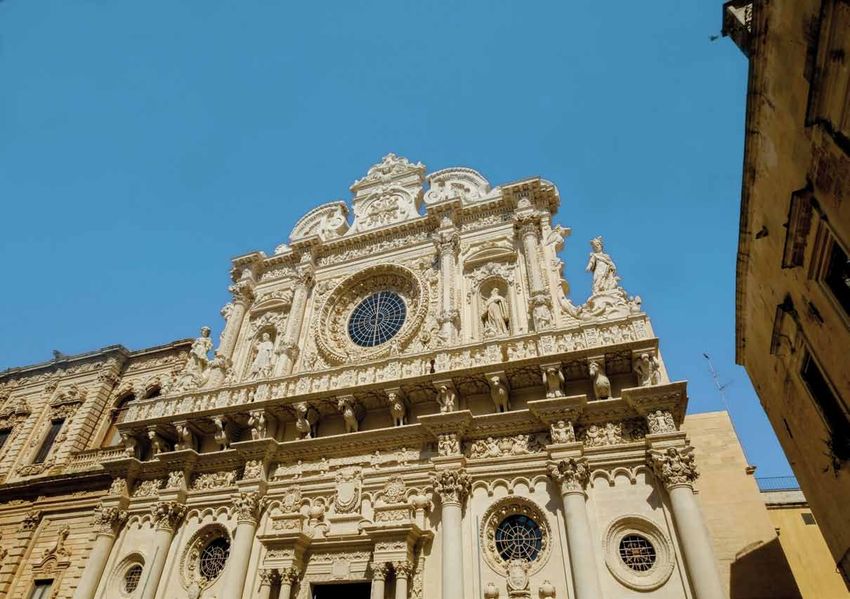
“A journey in Puglia
Tremiti Islands
San Nicola
Peschici
1
is a journey
L. di Lesina L. di Varano
Rodi Garganico Vieste across a continent
Lesina Cagnano Varano
San Nicandro Garganico
of Ancient History”.
San Giovanni Monte
Rotondo Sant’Angelo Cesare Brandi
Torremaggiore
San Severo La Puglia by Francesco Varzi
Rignano
Garganico Manfredonia
Castel Fiorentino
Siponto
Pietramontecorvino FOGGIA
Lucera
Alberona
Roseto Valfortore
BARLETTA
Troia
Orsara di Puglia TRANI
2
ANDRIA Molfetta
Bisceglie
Canosa
Bovino Giovinazzo
di Puglia
Sant’Agata di Puglia Minervino
Rocchetta
Bitonto BARI
3
Sant’Antonio Murge Ruvo di Puglia
Castel del Polignano a Mare
Adriatic Sea
Monte Monopoli
Conversano
Egnazia
Savelletri
Fasano Torre Cann
Gioia del Colle
Gravina in Puglia
Altamura Locorotondo 5
Alberobello Ostuni
Cisternino Torre
Martina Franca Guaceto BRINDISI
Laterza Mottola
Castellaneta Massafra Francavilla
Grottaglie Fontana Mesagne Torre Specchiolla
Ginosa
Torre Rinalda
Oria Casalabate Torre Chianca
TARANTO
TERRITORIAL AREAS: LECCE Torre Specchia Ruggeri
S. Pietro Manduria Acaya
in Bevagna San Foca
1 GARGANO AND DAUNIA RUPESTRIAN CHURCHES T. Colimena Copertino Melendugno Torre dell’Orso
4 Torre S. Andrea
Porto Cesareo Corigliano Carpignano S.
Nardò D’Otranto
2 IMPERIAL PUGLIA ROMANESQUE CATHEDRALS Otranto
Santa Caterina Galatina Giurdignano
Santa Maria al Bagno Galatone Maglie
3 BARI AND THE COAST BAROQUE CHURCHES Vaste
Ionian Sea Casarano Poggiardo
Gallipoli
4 MAGNA GRECIA, MURGIA, TOWERS Castro
Ugento
Tricase
AND THE GRAVINE Torre San Giovanni
Alessano
CASTLES Torre Mozza
5 VALLE D'ITRIA Torre Pali
Torre Vado
Leuca
6 SALENTO 6
6 7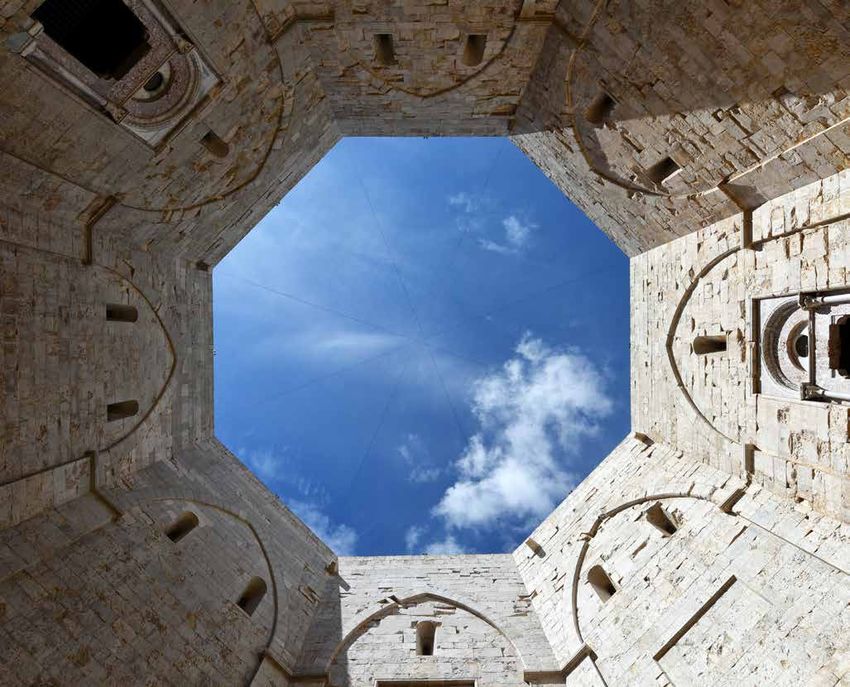
INDEX OF ITINERARIES

    .........................................................................................

    .........................................................................................

    .........................................................................................

    .........................................................................................

    .........................................................................................

    .........................................................................................

    .........................................................................................

    .........................................................................................

           Rupestrian Churches                         Natural areas

           Romanesque Cathedrals                       Beaches

           Baroque Churches                            Trekking

           Pilgrimage routes                           On horseback

           Archaeological sites

           Towers                                      By boat

           Castles                                     Food

           Museums                                     Wine

           Events                                      Regional network Info-Point

8                                                                                               9
Itinerary 1 - One step from heaven GARGANO
“If it is night like this one,
and if the sky
is so full of stars (…)
Tremiti Islands
San Nicola Rodi
Garganico Peschici
you can listen
L. di Lesina
L. di Varano
Vieste
to the darkness
ole
and see the silence.”
Lesina Cagnano Varano
San Nicandro Garganico
San Giovanni Monte
Sant’Angelo Lucio Dalla
Rotondo
Tutto Gargano 2000
C
Rignano
Garganico Manfredonia Adriatic Sea
Siponto
FOGGIA LENGHT OF ITINERARY
Km 107 + 65
BARLETTA DURATION
TRANI 5 - 7 Days
ANDRIA
RECOMMENDED FOR
those who love silence
BARI
and spirituality, immerse themselves in nature,
and explore the sea
San Nicandro Garganico
S. Giovanni Rotondo
Monte Sant’Angelo
Rignano Garganico
h 0.20
Cagnano Varano
Rodi Garganico
Manfredonia
BRINDISI
Isole Tremiti
km 24,9 - h 0.24
km 15,4 - h 0.24
km 23,7 - h 0.25
km 16,8 - h 0.26
km 21,7 - h 0.30
km 25,8 - h 0.31
km 17,3 - h 0.27
km 21 - h 0.23
km 5 - h 0.11
Peschici
h 1.50
Siponto
Lesina
Vieste
TARANTO
LECCE
10 11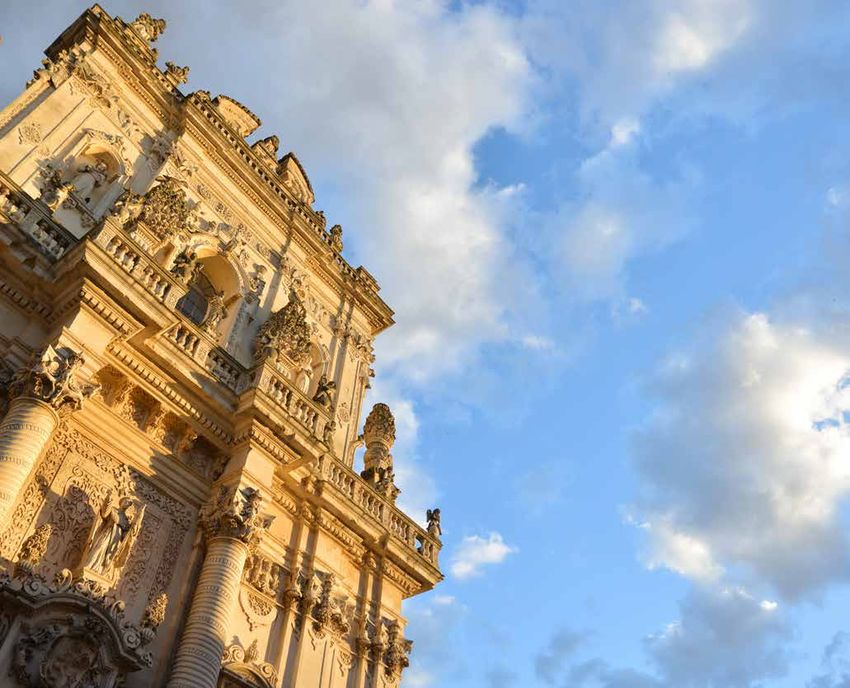
Itinerary 1

     ONE STEP
     FROM HEAVEN
         There are two possible itineraries in Gargano: one towards
         the sea to discover villages perched on the rocks, and the
         other in Gargano National Park, following sacred roads.
         Towards Lakes Lesina and Varano, we may admire lookout
         towers, such as Torre Mileto in San Nicandro Garganico
         and along the coastline, amid coves and the fishing machi-
         nes known as trabucchi; afer Rodi Garganico and Peschici
         we come to Vieste, where Torre San Felice and the Swa-
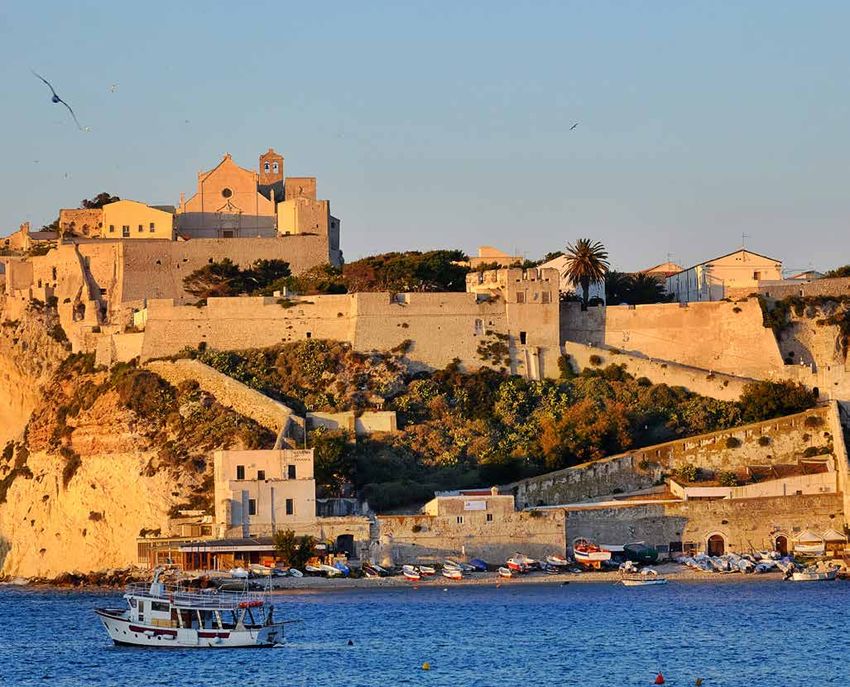
         bian castle rise. By sea or helicopter, we reach the Tremiti
         Islands, and, on the island of San Nicola (see photo) stroll
         amid towers, city walls and cloisters to the Church of Santa
         Maria a Mare, home to a twelfth-century cross. From Ri-
         gnano Garganico along the Via Sacra Langobardorum,
         we visit San Giovanni Rotondo for a prayer at the tomb of
         Padre Pio in the immense Church designed by Renzo Piano,
         and then reach the retreats of the Pulsano Abbey and the
         Shrine of Saint Michael the Archangel at Monte Sant’An-
         gelo, a UNESCO site since 2011. Then comes a tasty stop
         to savor the filled wafers and excellent bread, before visi-
         ting the Norman Castle. In Manfredonia we visit the Swa-
         bian-Angevin Castle at Museo Archeologico Nazionale, and
         in nearby Siponto we admire the Basilica of Santa Maria
         Maggiore and the Abbey of San Leonardo in Lama Volara –
         both splendid examples of Apulian Romanesque.
12                                                                      13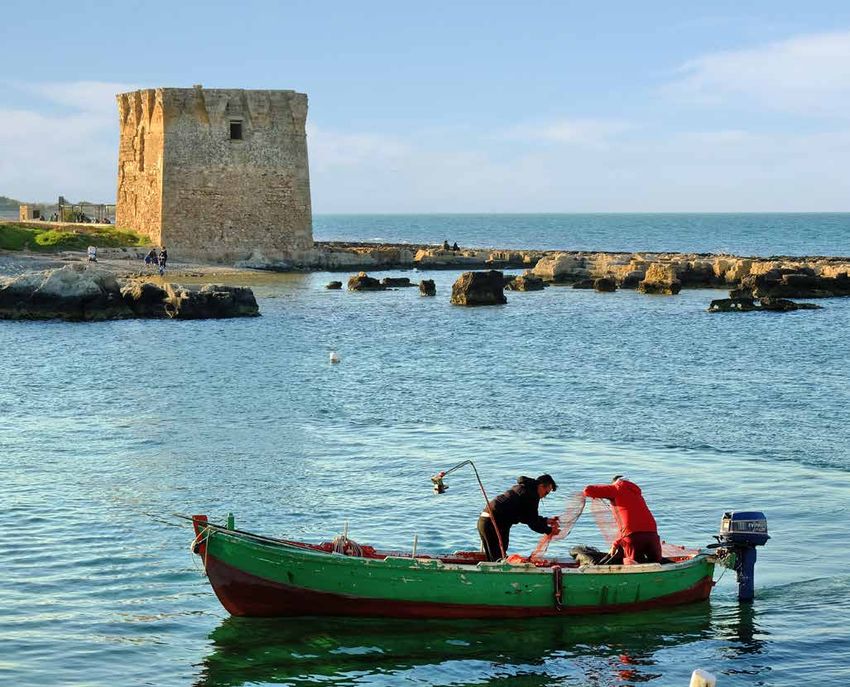
Itinerary 1

                                                                                MONTE SANT'ANGELO
                                                                                Sanctuary of San Michele Arcangelo
                                                                                An impassable grotto, where the Archangel Michael is said to have
                                                                                appeared in the fifth century, becomes holy for all of Christendom, an
                                                                                obligatory destination for the Crusades and pilgrims from all over Eu-
                                                                                rope, and a UNESCO Heritage Site since 2011. We climb the 89 steps
                                                                                of the imposing thirteenth-century Angevin staircase and, after the
                                                                                atrium and the splendid Romanesque portal, we enter the sacred grot-
                                                                                to with evocative crypts from the Lombard period. Monte Sant'Ange-
                                                                                lo +39 0884562062, Info +39 0884561150, santuariosanmichele.it

                                                                                                         INTERESTING FACTS

     MONTE SANT'ANGELO                                                                           THE SACRED LINE OF SAINT MICHAEL

     Abbey of Santa Maria di Pulsano                                              Departing from Monte Sant’Angelo is one of the straight lines
                                                                                  that unite together holy places of strong symbolism. This is the
                                                                                  Sacred Line of Saint Michael, according to legend the sword blow
     A place of contemplation and mysticism, all around there are 24 retre-
                                                                                  inflicted by the saint upon Satan, to hurl him back to Hell. This in-
     ats hidden in the mountains, linked by paths and stairways. Set amid
                                                                                  visible line connects seven monasteries, from Skelling in Ireland to
     rocks and 200-meter precipices, the Abbey was rebuilt in the twelfth
                                                                                  Stella Maris on Mount Carmel in Haifa, touching the three most
     century by Saint John of Matera, who founded the Congregation of the
                                                                                  important in between: Mont Saint Michel in France, the Sacra di
     Hermits of Pulsano: the last hermit died in 1959. Since 1997, a commu-
                                                                                  San Michele in Val di Susa, and the Sanctuary of Monte Sant’Ange-
     nity of Benedictine monks has lived there. Inside, Scuola di formazio-
                                                                                  lo in Gargano, all equidistant from one another. Every June 21, the
     ne permanente in iconografia offers lessons to learn the symbology
                                                                                  line is perfectly aligned with the setting sun.
     and meaning of this sacred art, and teaches how to transcribe icons,
     in accordance with age-old painting techniques.      Monte Sant' Angelo
     +39 0884562062, Info +39 0884561047, abbaziadipulsano.org

                              INTERESTING FACTS

                                GARGANO BY HORSE
       An unusual experience, in Gargano it is more unique still. One disco-
       vers sights and glimpses otherwise hard to see, enveloped by the wild
       beauty of Parco Nazionale del Gargano and Foresta Umbra. We
       traverse Giganti del Bosco, the age-old beech forest and a UNESCO
       heritage site, plus pastures and stands of oak. We climb the moun-
       tains, sleep in tents in the open air, and stop at the farmhouse for a
       tasty sampling of cheeses, fruit preserves, and traditional dishes.
          Manfredonia +39 0884581998, parcogargano.it

14                                                                                                                                                         15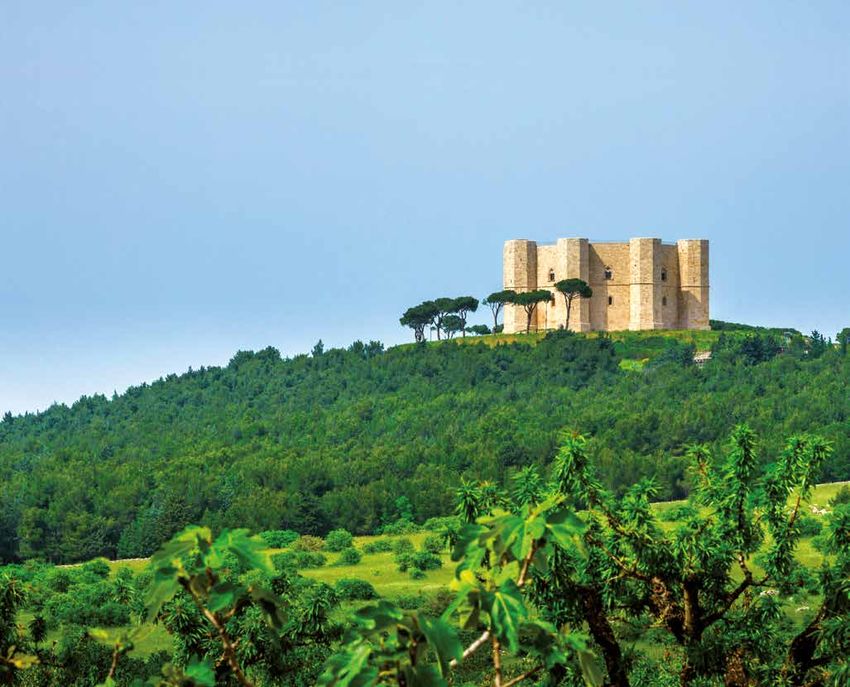
Itinerary 1

     MONTE SANT'ANGELO
     Norman Castle
     Not far from the Sanctuary of San Michele Arcangelo, a holy and evocati-
     ve place, the imposing castle appears. It boasts more than a millennium
     of history, from Ursus I, Bishop of Benevento, who had it built in 837, to the
     Normans who built Torre Quadrata (“square tower”) and reconstructed
     Torre dei Giganti (“tower of the giants”), where we may see the knot of
     Solomon or the lotus flower – symbols reminiscent of the Templars. With
     the Swabians, it became one of the privileged castra. Here, Charles III,
     King of Naples and Hungary was born, and the Swabian princess Phiip-
     pa of Antioch and Queen Joanna were imprisoned. We enter inside the
     towers and stroll along the scenic walkways with views from Gargano to
     the Tavoliere. Particularly impressive are the interior rooms, such as that
     of Frederick II’s treasury, where temporary exhibitions are held.
        Monte Sant'Angelo +39 0884562062

     MANFREDONIA
     Swabian/Angevin Castle
     A visit to the imposing castle begun by Manfred of Swabia and com-
     pleted by Charles of Anjou is a must. The landscape may be admired
     on a lovely stroll atop the perimeter wall. Until the restorations and
     new organization are completed, visit the Piazza d’Armi and a room in
     Museo Archeologico Nazionale displaying a fragment of the rich col-
     lection of Daunian steles, and archaeological finds of weapons, vases,
     and jewels.     Manfredonia +39 0884581998
16                                                                                    17
Itinerary 1
SIPONTO Coastal Towers
The Basilicas The light is right, as are the colors of the sea in the brightest blues and
and the Archaeological Park greens, plus the towers – the undisputed stars in the natural landsca-
pe: it is hard not to take pictures. They served to spot those approa-
San Leonardo in Lama Volara is a fascinating abbey. The monastic ching Puglia’s coast and to transmit signals to neighboring towers to
complex, founded around the year 1000 by the Canons Regular of Saint defend against Saracen attacks. Starting from the north, near Lesina,
Augustine, was a shelter for pilgrims visiting the Sanctuary of the Ar- we may admire the austere Torre Mileto in San Nicandro Garganico,
changel Michael, and for knights on the Crusades. Info +39 0884549439, with its corners oriented towards the cardinal points and, further east,
sanleonardomanfredonia.it Torre San Felice in Vieste (see photo), which dominates the bay by
that name, and the famed Architiello extending into the sea.
DON'T MISS
21
J U N
Every year, on the summer solstice, at 12:58 PM, inside
San Leonardo in Lama Volara, the light filters from a
gnomic hole, an 11-petal rose placed beneath the church’s
vault; at the moment the sun is at its zenith, it projects
a beam of light inside that gradually rests upon the cross
carved into the floor.
Rising alongside is the Basilica of Santa Maria Maggiore, with two
churches atop one another: the upper one upon Roman foundations,
with a square plan and a central dome, and an Early Christian sar-
cophagus that serves as a mensa for the upper altar. The lower one,
from the eleventh century, is divided by 4 columns and 16 small co-
lumns with Romanesque capitals. Since 2016, an evanescent metal
mesh installation by the artist Edoardo Tresoldi has risen beside it. The
work reconstructs the Early Christian Basilica with an embroidery of
4,500 square meters of mesh, 14 meters in height – the world’s tallest.
Info +39 0884541470
18 19Itinerary 2 - Between the sacred and the profane DAUNIA
“It was a silence
shod in green sandals
and with the forehead
of an ancient solder (those dark soldiers
whose lips, in the shoving of the ranks,
form unexpected words
of a simple grandeur)".
San Severo Vittorio Bodini
Torremaggiore Tutte le poesie
Adriatic Sea
Castel Fiorentino
Pietramontecorvino FOGGIA
Lucera LENGTH OF ITINERARY
Alberona
Km 302
Roseto Valfortore
BARLETTA
Troia DURATION
Orsara di Puglia
ANDRIA 5 - 7 Days
Bovino
Sant’Agata di Puglia
RECOMMENDED FOR
Rocchetta those who love Medieval villages,
Sant’Antonio BARI
age-old stories,
and uncontaminated landscapes
Rocchetta S. Antonio
Pietramontecorvino
Roseto Valfortore
S. Agata di Puglia
Castel Fiorentino
Orsara di Puglia
Torremaggiore
BRINDISI
km 30,4 - h 0.36
km 48,6 - h 0.47
km 42,5 - h 0.48
km 35,8 - h 0.36
San Severo
km 13,2 - h 0.20
km 22,7 - h 0.23
km 37,2 - h 0.39
km 18,5 - h 0.23
km 15,8 - h 0.18
km 9,8 - h 0.17
km 20 - h 0.24
km 7,9 - h 0.12
Alberona
Bovino
Foggia
Lucera
Troia
TARANTO
LEC
20 21Itinerary 2
BETWEEN THE
SACRED AND
THE PROFANE
Starting from Foggia, the itinerary sets out to discover
Daunia, a land rich with castles, retreats, Romanesque ca-
thedrals and Baroque churches, like Calvary Chapel: a triu-
mph of arches and chapels that in the nineteenth century
provided a meeting place for Foggian conspirators who dre-
amed of Italian Unity. Then there’s the dramatic Addolorata
Church with its statue of the Virgin Mary in procession on
Holy Friday, and the Cathedral of the Assumption of the Vir-
gin Mary, in whose interior the ancient icon called the “Ma-
donna of the Seven Veils” or icona vetere is venerated. Of
Frederick II’s Imperial Palace in Foggia, little more than an
inscription remains, while imposing castles are encountered
as we enter a Puglia that although less well-known and so-
mewhat isolated is rich with some of Italy’s most beautiful,
bandiera arancione (orange flag) villages: from Rocchetta
Sant’Antonio to Sant’Agata di Puglia, from Bovino, where
every 29 August the Historic Procession is held and the maje-
stic Ducal Palace rises, to Orsara di Puglia, the destination
of pilgrims for the Grotto of San Michele. Then comes Troia,
which has one of Puglia’s most fascinating cathedrals and
hosts the Procession of the Kiss at Easter, followed by Rose-
to Valfortore, the town of the stonecutters and Alberona,
that of the Templars, ending in Pietramontecorvino with
its splendid Norman tower. In Lucera, a city with a glorious
past, we visit what remains of the Swabian/Angevin castle
and savor the excellent PDO wine called “Cacc’e Mmitte.”
Twenty kilometers away is the archaeological site of Castel
Fiorentino, with ruins of the castle where Frederick II is said
to have died, while the imposing Ducal Castle rises in Torre-
maggiore. Ten minutes away, San Severo is rich with pala-
ces, underground cellars, and churches, such as the Baroque
Maria Santissima del Soccorso Sanctuary.
22 23Itinerary 2
TROIA LUCERA
Cathedral of the Assumption Swabian/Angevin Castle
It is 900 years old, with a rose window of Islamic manufacture that is Very little remains of the three stories of Frederick II’s majestic Palatium,
unique in the world. The 11 columns that start from the center meet an impregnable fortress built in 1233 on the foundations of a Romane-
in a play of arches that make a frame, creating a movement of carvin- sque cathedral, which dominated the Tavoliere area from the Albano hill.
gs and lacework one different from the other. It is so beautiful that it A soaring square tower was subdivided into 3 stories with 32 rooms for
could be seen on the 5,000 lire banknotes with Alessandro da Messina the court and the imperial apartments. Its walls rested on a four-sided
on the front, printed from 1979 to 1983. Its bronze door is divided into scarped base, on two stories, with stalls for 500 horses and barracks for
28 parts with tales of all kinds, and stories of Saints and Bishops. Also the soldiers. It was the site of a state mint, of part of the imperial trea-
beautiful is the fresco recounting the Dormitio Mariae and the ambon sury, and – according to legend – of the emperor’s harem as well. Now we
of Saint Basil. The annexed Museo del Tesoro della Cattedrale holds may admire the 900 meters of perimeter wall and the 22 reinforcement
silver, parchments, and precious exsultets, such as those with the Ea- towers built by Charles of Anjou once the palace was demolished and
ster chants and illuminated illustrations. Troia +39 0881970020 transformed into a fortress for defense. Torre della Leonessa and Torre
del Leone may be visited, and then it’s off to the center to admire the fine
door and the large rose window of Basilica Sanctuary of San Francesco
Antonio Fasani and the fourteenth-century Cathedral of the Assumption
with a fifteenth-century crucifix. Info +39 0881522762, comune.lucera.fg.it
INTERESTING FACTS
In Torremaggiore, the Ducal Castle is imposing with its 6 towers,
and maintains its Medieval charm, although the original Norman ca-
stle conserves only the keep and the 4 round crenellated towers. The
interior preserves seventeenth-century frescoes from the Neapolitan
School, while 10 km away, at the Castel Fiorentino archaeological
site, legend has it that Frederick II died in 1250, exactly as the court
astrologer had foretold: “…you shall die near the iron door, in a place
whose name is formed by the word ‘flower’...” Info +39 0882391114
24 2526
ITINERARY 2 – ALSO DISCOVER
27Itinerary 3 - The Emperor’s Legacy IMPERIAL PUGLIA
In its layout,
Castel del Monte
has a geometric regularity
more reminiscent
Adriatic Sea of snowflakes
than of man’s work …
FOGGIA
Cesare Brandi
Pellegrino di Puglia
BARLETTA
TRANI
Canosa ANDRIA Bisceglie
di Puglia
LENGTH OF ITINERARY
Minervino
Km 125
Murge Ruvo di Puglia BARI
Castel del
Monte DURATION
3 - 4 Days
RECOMMENDED FOR
those who feel the charm of history,
love castles and cities of art,
and yield toBRINDISI
the pleasures of fine food
O
Minervino Murge
Castel del Monte
Canosa di Puglia
Ruvo di Puglia
LECCE
km 22,8 - h 0.25
km 23,7 - h 0.30
km 18,2 - h 0.26
km 10,5 - h 0.16
km 16,8 - h 0.19
km 14,1 - h 0.25
km 19 - h 0.25
Bisceglie
Barletta
Andria
Trani
28 29Itinerary 3
THE EMPEROR’S
LEGACY
Barletta marks the start of a moving itinerary in the foot-
steps of Frederick II, the great emperor, a skilled warrior, and
a man of enormous culture. He made his residence here, and
in 1228 summoned the famous Diet to deliver good governan-
ce. An absolute must is a visit to the Co-Cathedral of S. Maria
Maggiore and to the Castle, which contains the world’s only
bust of Frederick. Then it’s time for some tasty refreshment
in the town center, followed by a visit to Canosa di Puglia to
see the Hypogea, the Cathedral of S. Sabino, and the tomb of
Boemondo and to Minervino Murge to travel the road that
for centuries has brought pilgrims from the Church of Ma-
donna della Croce to the grotto of S. Michele Arcangelo, an
enormous karstic cavity used as a place of worship for more
than a millennium. We continue to the lands where Frederick
II would hunt, to admire the enigmatic Castel del Monte (see
photo), a UNESCO site since 1996, whose octagonal archi-
tecture is still cause for wonder. All around is an agricultural
landscape rich with olive trees, age-old paths, sheep shelters
called jazzi, and olive presses. Following the traces of the Me-
dieval past and the scent of Jordan almonds and burratine, in
Andria it is pleasant to lose oneself in a knot of alleyways and
small piazzas, amid towers and churches, like the Cathedral
of S. Maria Assunta, which houses the remains of two wives
of the Emperor. In Trani, the queen of Apulian cathedrals, de-
dicated to Saint Nicholas the Pilgrim, appears to emerge from
the sea. Also of great beauty are the castle and the ancient
Jewish quarter, with the Scolanova Synagogue reopened for
worship, and the former synagogue, the St. Anna Museum. In
nearby Bisceglie, known for its fishing tradition, home to the
fish market behind the Norman Tower, we visit the Cathedral
with a Romanesque core and a Baroque exterior. The tour
ends in Ruvo di Puglia, whose Cathedral of S. Maria, with its
inclined sloping façade, was, according to tradition, partially
financed by Frederick II, identified by some with the figure se-
ated above the rose window.
30 31Itinerary 3
BARLETTA TRANI
Co - Cathedral Cathedral of San Nicola Pellegrino
of Santa Maria Maggiore Imposing in form, it appears suspended between sea and sky. Evocati-
ve with its slim lines, it is a set of 3 superimposed churches. The walls
Born atop an Early Christian basilica, it has a Romanesque façade, a are animated by high reliefs and decorations in Arab-inspired style. The
Renaissance door, and a Gothic rose window. When descending five interior houses the large bronze door from 1175 by Barisano da Trani,
meters further down, we find the mosaic floor and the catacombs of with 32 tiles. The large space is divided into three naves by double co-
the earlier sixth/century and tenth/eleventh-century churches. lumns – unique in Puglia. The transversal crypt of Saint Nicholas the
Barletta +39 0883 331331 Pilgrim is a flight of 28 columns supporting the transept of the upper
church. From here, we gain access to the longitudinal crypt of Santa
Maria, with three naves, and to the San Leucio hypogeum.
Trani +39 3755575405; Info +39 0883500293, cattedraletrani.it
BARLETTA
Swabian Castle
Behind the Cathedral, it appears imposing with its moats and spear-point
bastions. The residence of Frederick II, it was transformed by the Holy Ro-
man Emperor Charles V into an impregnable fortress – one of the largest
in Italy. Here, the Swabian emperor, before leaving on the Sixth Crusade,
promulgated the famous diet on the rules and precepts of good governan-
ce, to be observed in his absence. We may visit the large Piazza d’Armi, the
underground environments, and the Museo Civico which houses the only
stone bust attributed to Frederick II. Info +39 0883578621, barlettamusei.it
INTERESTING FACTS RUVO DI PUGLIA
In 1986, the castle was chosen by Franco Zeffirelli to set his Otello, Cathedral of Santa Maria Assunta
an opera film with Plácido Domingo and Katia Ricciarelli, while
The gabled façade, with the rose windows and inclined sloped roofs, is
in September every year it is one of the sites for the historical re-
iconic. The door is enriched with columns upon which two lions, top-
creation inspired by the famous Challenge of Barletta of 1503, in
ped by griffons, rest. The apse’s ciborium echoes the one at San Nicola
which 13 Italian knights led by Ettore Fieramosca triumphed over
in Bari. . . . Ruvo di Puglia +39 0803628428; Info +39 0803611169, cattedra-
the French. Barletta +39 0883331331
leruvo.it
32 33Itinerary 3
ANDRIA
Castel del Monte
Here, the wonder of Frederick’s castles attains its maximum perfection.
Visible from a distance and placed on a high, sunlit hill, it expresses the
emperor’s magnificence, and with eight strong, slender towers at the
corners of the octagonal structure, it brings the Swabians’ crown to
mind. A UNESCO Heritage Site since 1996, it is a place of magic and
mystery: it certainly was no fortress, as it lacks defensive elements;
perhaps it was conceived as a hunting lodge or show residence, gi-
ven the richness of the decorations that were later lost. Everything
revolves around the number eight, which recurs from the layout to
the internal courtyard, from the towers to the eight halls on the first
story and on the piano nobile; leaves and flowers over the doors and
capitals are also carved in groups of eight. Nothing is left to chance;
every elementi s based on precise calculations. Frederick II once again
astounds, leaving us his enigma. In the Kabbalah, the number eight
means resurrection, and symbolizes new life. And the octagon, a syn-
thesis of square and circle, is the link joining Heaven and Earth.
Andria +39 0883 290231/0883 290229
Info +39 0883569997, casteldelmonte.beniculturali.it
INTERESTING FACTS
Although Frederick II had Swabian and Norman blood, he felt at
home in Puglia. His head wore many crowns: King of Sicily and la-
ter of Germany, Christian King of Jerusalem and of the Romans,
and crowned Emperor of the Holy Roman Empire first in Aachen
by the electors in 1215, and later by the Pope in Rome, in 1220. A
highly skilled warrior and a tireless traveler, he boasted extraor-
dinary culture, with a passion for art and science, astronomy and
theology, with knowledge of Greek, Latin, Italian, German, Fren-
ch, Hebrew, and Arabic. Dante was wrong to place him in Hell as a
heretic; instead, as medievalist Franco Cardini maintains, despite
tensions with the Pope, he never lost his sense of duty as a Chri-
stian King, and in fact fought against heresy.
34 35Itinerary 4 - The triumph of Romanesque BARI AND THE COAST
“The immense,
slightly undulating
plain of the countryside,
Adriatic Sea the sea so majestic,
the sky so infinite and serene
BARLETTA
constitute a grand, unique trinity.”
TRANI
ANDRIA Molfetta
Giovinazzo
Paul Schubring
La Puglia: impressioni di viaggio
BARI
Bitonto
Polignano a Mare
Monopoli
Conversano
LENGTH OF ITINERARY
Km 139
Gioia del Colle
DURATION
BRINDISI 4 Days
RECOMMENDED FOR
those who feel a little like sailors and a little like
fishermen, who love art, and who have a real
passion for raw seafood
TARANTO
LECCE
Ionian Sea
Polignano a Mare
Gioia del Colle
Conversano
km 20,4 - h 0.22
km 36,7 - h 0.44
km 35,2 - h 0.34
Giovinazzo
km 10,3 - h 0.17
km 8,8 - h 0.16
km 9,8 - h 0.16
Monopoli
km 18 - h 0.31
Molfetta
Bitonto
Bari
36 37Itinerary 4
THE TRIUMPH OF
ROMANESQUE
A continuously evolving journey to discover seafaring vil-
lages, home to age-old stories and art, with castles and
cathedrals in a dialogue with the Adriatic. One example
is Molfetta, (see photo), a hub for pilgrims on their way
to Jerusalem and the home of master shipbuilders, where
the Cathedral of San Corrado reigns over the sea on one
side, and, on the other side, the Basilica of the Madonna
dei Martiri, who is celebrated on September 8 with an evo-
cative procession of boats. Further south, the ancient vil-
lage of Giovinazzo appears, and can be admired from on
board colorful wooden skiffs. Continuing on to Bitonto,
the Cathedral of San Valentino and Galleria Nazionale del-
la Puglia at Palazzo Sylos are worth a visit. Then we come
to effervescent, modern Bari, with Teatro Margherita and
the Spazio Murat that now house contemporary art exhi-
bitions, while Museo Archeologico di Santa Scolastica pro-
vides a glimpse of the ancient world. In the old city, we are
accompanied by the scents of sgagliozze (fried polenta)
and Bari’s famous focaccia, stopping at the Basilica of San
Nicola, the Norman-Swabian Castle, and the Romanesque
cathedral of San Sabino with its unexpected underground
path. After Torre San Vito, Polignano a Mare appears, the
capital of cliff diving, the home town of singer Domenico
Modugno, and home to Fondazione Museo Pino Pascali,
the contemporary art museum dedicated to the Apulian
artist. The tour continues with a scenic stroll in Monopo-
li, from Charles V’s Castle to the Cathedral of Santa Maria
della Madia, a triumph of Baroque altars and marble. The
journey continues to Conversano, between its Cathedral,
a jewel of Apulian Romanesque architecture, and its impo-
sing Castle, the ancient dwelling of the Counts of Aragon
from the house of Acquaviva, and ends at Gioia del Colle
for a visit to the Norman-Swabian castle, home to Museo
Archeologico Nazionale.
38 39Itinerary 4
BARI
Cathedral of San Sabino
Built upon the ruins of a Byzantine church, it is among the greatest
examples of Apulian Romanesque. The façade is softened by a series
of single-mullioned windows, a double-mullioned window, and a rose
window adorned with grotesque figures and fantastic beings. The side
is elegant, raised upward by a gallery of arches, by the large Trulla, a
modern-day sacristy, and the majestic campanile. In the austere and
solemn interior, dominating over the high altar is the splendid ambon
with the false thirteenth-century matroneum by Alfano da Termoli. The
Baroque crypt houses relics of San Sabino and the panel of the Madon-
na Hodegetria, painted according to tradition by Saint Luke. On June
21 every year, the magic is repeated of the light that filters through the
rose window, projecting its shadow inside. Minute by minute, amid or-
BARI
gan playing and singing, at about 5:10 PM it rests perfectly in the central
nave, with the corresponding rose window on the floor.
Basilica of San Nicola
Bari +39 0805242244 This imposing construction, among the earliest examples of Romane-
sque, stands out for its sculptural details. The gabled façade set betwe-
en Torre delle Milizie and Torre del Catapano, from an era prior to
INTERESTING FACTS the San Nicola structure, is enriched with a central rose window, 5
double-mullioned windows, 3 windows, and 3 entrance doors. At the
top, along the sides, the austerity of the stone is softened by a flight
of blind and open arches topping the well-decorated doors, including
the Door of the Lions. The rich central nave is divided from the side
naves by granite columns topped by matronea. Prominent at the top is
the gilded wooden ceiling, with canvasses by Carlo Rosa. Also of con-
siderable beauty are the altarpiece by Vivarini with the Madonna and
Saints, the Ciborium, the Cathedra of Elias sculpted out of a single
block of marble, and the silver altar, resting on a mosaic floor in Islamic
Byzantine style. The Crypt houses the tomb of Saint Nicholas. Info +39
0805737111, basilicasannicola.it
THE SAINT WHO CAME FROM THE SEA
It is told that 62 sailors from Bari smuggled the remains of Saint Nicholas out
of Myra and brought them to Bari in 1087. Every year, the Patron Saint has
In the Crypt, a museum itinerary offers beautiful Roman and two celebrations: from May 7 to 9, the translation of the remains is recreated,
Early Christian mosaics, like that depicting Timothy, tombs from while December 6 is dedicated to the liturgical solemnity of the Saint. On the
various eras, remains of a Roman road, ceramic finds, the walls of evening of May 7, the city is illuminated with lights, music, aerial dances, and
the older Cathedral, and the small early Medieval church. acrobatics with more than 500 re-creators parading in period clothing. On
Info +39 0805210605 May 9, the ritual of the manna taken from the Saint’s tomb is repeated.
40 41Itinerary 4
BARI
Norman/Swabian Castle
The manor, protected by a wall and surrounded by a large moat, has
had a troubled life. Built by Frederick II’s grandfather Roger II, trape-
zoidal in layout with a central courtyard and 4 high corner towers, it
was partially destroyed in 1156 by the harsh intervention of William the
Bad. It was rebuilt by puer Apuliae between 1233 and 1240, with a new
exterior making it more of a residence than an austere castle. Win-
dows were opened in the towers, but the change is most evident in
the high groin vaults supported by columns with different capitals; the
one with a series of warriors’ heads – a warning for any invaders – is
original. The sixteenth century was the castle’s golden age when, with
Isabella of Aragon and her daughter Bona Sforza, it became a lively
and cultured court. The Renaissance courtyard is enlivened by a mo-
numental double staircase. Bari +39 0805242244 Info +39 080 5213704
INTERESTING FACTS
A few kilometers from Bari, at the Gioia del Colle Castle, lived Bian- The Castle’s Gipsoteca is worth a visit, to admire the region’s artistic
ca Lancia, Frederick II’s lover and Manfred’s mother, who gave birth masterworks – 130 plaster casts of capitals, statues, corbels, and doors
in the Tower where she had been segregated because of the empe- – done for the 1911 Ethnographic Exhibition in Rome. We can then de-
ror’s jealousy. Two rotund elements are carved in the stone; it is told scend into Underground Bari, accompanied by archaeologists, to see
they are the breasts that Bianca cut off and sent on a tray, along with the remains of a Byzantine settlement also at the Castle, the stratifica-
the newborn Manfred. Today, the castle is home to Museo Archeo- tion of eras in the Crypt of the Cathedral of San Sabino, and the remains
logico Nazionale. Info +39 0803491780 of two Byzantine-era and Romanesque churches at Palazzo Simi.
Bari +39 0805242244
42 43Itinerary 4
Coastal Towers
Spaced about ten kilometers apart from one another, the
coastal Towers they transmitted danger signals using
smoke by day and fire by night, or by ringing bells or shoo-
ting arquebuses.
In the province of Bari, Torre Calderina, north of Molfetta,
is on the beach, surrounded by dry stone walls and Medi-
terranean maquis. An enchantment in Polignano a Mare
is the tower of San Vito (see photo), which appears to
emerge from the sea, suspended over a rock flush with the
water, in the town by the same name.
44 45Bari - Santa Candida
ITINERARY 4 – ALSO DISCOVER
MONOPOLI - CATHEDRAL OF SANTA MARIA DELLA MADIA
An ancient church in Lama Picone,
its fan-shaped interior boasts 5 na-
ves around the central hall, separa-
ted by columns with round arches
ending with 5 apses, where the
names of Saints Erasmus Iacobus,
Candida, and Thomas may be seen,
painted in red.
Bari +39 0805242244
Molfetta
Cathedral of San Corrado
The Cathedral overlooks the sea,
with 3 pyramid domes, sloped roofs
lined with limestone slabs, and 2
twin towers, closing the apse at the
sides. There is a fine 12th-century
high relief of the Redeemer, and the
holy water basin dates to the 13th c.
Molfetta +39 351 986 9433
Bitonto
Cathedral of San Valentino
The large door bears Eastern deco-
rations, and the rose window bo-
asts a soprarco with a sphinx and
two lions at the sides on hanging
columns. The interior preserves the
rare monolithic basin of the bapti-
Strolling through the alleyways in the town center, we reach a piaz-
smal font and the 1229 ambon by Ni-
za enclosed by a rusticated wall that seems to protect the impo-
colaus. From the crypt, we descend
sing Cathedral and its soaring campanile. The exterior decoration
to the Early Christian church and its
is elegant, while the large central window that replaced the rose
11th-century mosaic.
window during the Baroque period is quite striking. The interior is
cattedralebitonto.com
pure spectacle, artfully created to enhance and pay homage to the
Conversano - Aragonese Castle
Madonna della Madia, a succession of colored marble and Baroque
Of the ancient Norman fortress,
altars. The side naves end in front of two staircases leading to the
only the mighty Main Tower re-
twelfth-century holy icon. The arrival from the sea of the Byzantine
mains, incorporated into the prin-
icon of the Madonna with Child is recreated in August every year.
cely dwelling of the Acquaviva fa-
On the evening of August 13, a copy of the icon is carried in proces-
mily, to which it owes its Cylindrical
sion to Piazza Plebiscito, and the following day another copy is pla-
Tower. It is home to Gipsoteca Co-
ced on a raft that in the evening reaches Cala Batteria with divers
munale and to Pinacoteca France-
escorting it by torchlight. cattedralemonopoli.net
sco Netti. Info +39 080 4958525
46 47Itinerary 5 - Churches hidden in the rocks MAGNA GRECIA, MURGIA
AND THE GRAVINE
Taranto: two seas
Adriatic Sea
and two souls (…)
BARLETTA made of light and shadow,
ANDRIA
TRANI whose maximum splendor
belongs to now remote times,
when it was the most important
BARI
trading port for the East...
Stefania Mola
Il Giro della Puglia in 501 luoghi
Altamura
Gravina in Puglia
BRINDISI LENGTH OF ITINERARY
Laterza
Castellaneta Km 155
Mottola
Massafra
Ginosa DURATION
Grottaglie 5-7 Days
TARANTO
LECCE
RECOMMENDED FOR
lovers of nature and active vacations,
wanna-be spelologists, and those who harbor
Ionian Sea a true veneration for bread
Gravina in Puglia
Castellaneta
km 23,9 - h 0.25
km 33,2 - h 0.36
km 19,6 - h 0.22
km 23,3 - h 0.32
km 19,8 - h 0.27
km 15,3 - h 0.22
Grottaglie
Altamura
km 13 - h 0.20
km 7,5 - h 0.12
Massafra
Mottola
Taranto
Laterza
Ginosa
48 49Itinerary 5
CHURCHES HIDDEN
INTHE ROCKS
Some of Europe’s largest canyons, and rock churches to be disco-
vered in the belly of the earth, are featured in the itinerary that
starts from Gravina in Puglia with its imposing San Michele del-
le Grotte, the Seven Chambers Complex, the Crypt of Saint Vitus
the Elder reconstructed in Museo Pomarici Santomasi, and ori-
ginal churches, like the Romanesque Santa Maria Assunta and
the Baroque Madonna delle Grazie. The tour continues in the
footsteps of dinosaurs and Neanderthals in nearby Altamura,
an Authentic Village of Italy known for its DPO bread, and the
beautiful Cathedral of the Assumption, one of the 4 Palatine
Churches built by Frederick II.From here, the tour heads to La-
terza, with majolicaware to be admired at MuMa - Museo della
Maiolica, excellent bread, and the imposing gorge called Gravina
Oasi Lipu, in Parco Terra delle Gravine. By hang glider, in Ginosa,
we fly over the rupestrian church of Santa Sofia, cave homes,
and the Santi Medici church, home to an Ecce Homo painting.
In Castellaneta, a short hike leads to the Church of Santo Ste-
fano I, to Santa Maria di Costantinopoli, and to the crypt of the
Eternal Father; Mottola, on the other hand, is home to the Mi-
rabili Grotte di Dio grottoes and stupendous frescoed rupestrian
churches, like Santa Margherita, Sant’Angelo, and San Nicola di
Myra. Gravina di San Marco in Massafra is studded with hun-
dreds of caves, from the home of Hegumen to the Santa Mari-
na, Candelora (see photo) and San Leonardo churches. Moving
to the Ionian side, we dive into the glory of Magna Graecia. We
discover Taranto from the bottom up, amid the pittaggi, the
ancient quarters of Isola Madre; the underground olive presses;
the Necropolis with unbelievable tombs such as that of the Ath-
letes and the Ori di Taranto at MArTA, Museo Archeologico Na-
zionale. Our tour then visits the Cathedral of San Cataldo and
the Aragonese Castle, and the evocative rites of Holy Week. In
Grottaglie, we visit the Ceramics Quarter and the Museum and
former stables of Castello Episcopio, to discover ceramic pro-
duction from the 14th to the 20th centuries.
50 51Itinerary 5
TARANTO
Cathedral of San Cataldo
It has to be looked for, hidden in the heart of Isola Madre and its three
thousand years of history, at the end of Via Duomo when coming from
the castle. Puglia’s oldest Cathedral, it dates to the second half of the
tenth century. Having undergone modifications over the centuries, it
is a blend of styles. The Baroque façade is enriched with medallions,
angels, and saints. The majestic interior is marked by the rich wood
and gold coffering dominating over the vault of the central nave, a
testament to the city’s masters of woodworking and goldsmithery.
A genuine jewel of Baroque art is the Cappellone di San Cataldo, to
the right of the presbytery. It is impossible not to be awed by the rich
marble decorations, by the presence of statues, and by the high altar
that preserves the relics of Saint Catald. Above, we see the immense
Baroque fresco dedicated to the life of Saint Catald. The crypt houses
columns and frescoes in Byzantine style. Taranto +39 3342844098 cat-
tedraletaranto.com
INTERESTING FACTS
THE ADDOLORATA E DEI MISTERI PROCESSION IN TARANTO
This is perhaps the most evocative of the rituals in Puglia’s Holy Week,
and certainly the most mystical and agonizing. The poste – pairs of
Brothers from the Maria Santissima Addolorata e San Domenico Con-
fraternity - take 14 hours to reach the new city during the Addolora-
ta (Our Lady of Sorrows) Procession. They move to the rhythm of
the troccola (a wooden instrument), each wearing a white hood over
his face with two holes for his eyes, a mozzetta and black shoes, and
white gloves. From the Church of San Domenico Maggiore in the old
village, at midnight between Holy Thursday and Good Friday, they set
forth carrying the statue of Our Lady of Sorrows on their shoulders. At
5:00 PM on Good Friday, the Procession of the Mysteries leaves from
the Madonna del Carmine Church, ending 15 hours later. The statues,
which re-evoke the Passion of Jesus, are carried by Perdùne, brothers
in the Maria Santissima del Carmine Confraternity, rigorously barefoot
and wearing white shirts, black belts, rosaries, scapulars, cream-colo-
red mozzette, and hoods over their faces. The procession ends at 8:00
AM on Holy Saturday, when the troccola player raps three times on the
church door with the top of his age-old pilgrim’s staff.
52 53Itinerary 5
GROTTAGLIE
Bishops’ Castle
A symbol of the feudal power of Taranto’s bishops, it is just a stone’s
throw from the Ceramics Quarter. Dating to the fifteenth century are
its main tower, its wall, the two curtain towers, and the rooms on the
piano nobile. Today it appears with the ancient interior tower divided
into 4 stories, the former seat of the Episcopate, and Museo della Ce-
ramica in the south-east wing. Grottaglie +39 0995623866
TARANTO
Aragonese Castle
Its monuments wrapped in plays of light astound, as does the Castle
whose mighty heart reserves a wealth of surprises. Rebuilt by Ferdi-
nand of Aragon, it was impregnable and could accommodate up to four
thousand soldiers. A symbol of the city and included among the top-ten
“luoghi del cuore” sites by FAI - Fondo Ambiente Italiano, The Natio-
nal Trust for Italy, it is one of the region’s most visited monuments. In
90 minutes, we can discover the Renaissance Chapel of San Leonardo,
the walkways, the 4 cylindrical towers, and the galleries.
Taranto +39 3342844098; Info +39 0997753438, castelloaragonesetaranto.it
INTERESTING FACTS
The writer Alexandre Dumas drew inspiration from the Aragonese
Castle when he wrote The Count of Montecristo. His father Thomas
Alexandre Dumas, a Napoleonic general, was imprisoned in this very
manor.
54 55Gravina in Puglia Mottola
ITINERARY 5 – ALSO DISCOVER
S. Michele delle Grotte Mirabili Grotte di Dio is a complex
Excavated into the rock around of rupestrian churches from the 11th
1000 AD, it has 5 naves, 14 columns, to the 14th centuries: from S. Mar-
and 3 altars. Of the frescoes, a Christ gherita to S. Angelo, the only one in
Pantocrator and St. Michael of the Italy on two levels; from S. Nicola di
Caves remain on the central apse, Myra, the Sistine Chappel of rupe-
while statues of St. Michael and of strian civilization, to the S. Gregorio
the Archangels Gabriel and Raphael church with its large Christ Panto-
may be seen on the altars. crator. Mottola +39 099 8867640,
Info +39 0803269065 mottolaturismo.it
Laterza Massafra
The Maria SS. Mater Domini San- The S. Marco gravina includes the
ctuary, with its frescoed Byzanti- home of the Hegumen, the rupe-
ne crypt, is worth a visit, as is the strian village, and the Church of S.
16th-century rupestrian church of Marina. Highly beautiful are the 13
S. Vito, divided into a semi-under- 12th-century frescos in the Cande-
ground part and a part excavated lora church, with a unique, Komne-
into the tuff stone, with the fresco nos-school Christological scene of
on the altar of St. Vitus the Martyr, the Presentation of the temple. The
with the holy doctors at the sides. 14th-century St. Leonard with Christ
Laterza +39 099 8296793 Pantocrator in deesis is astounding.
Ginosa Massafra +39 0998804695
Of the 15 rupestrian churches, few,
like S. Sofia, can be explored: exca- ALTAMURA - CATHEDRAL OF THE ASSUMPTION
vated in the 17th c., it conserves fre-
scoes on the presbytery. Of impor-
tance are the many 16th-century
cave homes and the Santi Medici
church, conserving a painting of an
Ecce Homo.
Ginosa +39 0998290332
Castellaneta
On Monte Camplo, we can vi-
sit the S. Stefano I church with
13th/14th-century frescoes and, in This is one of the four Palatine Churches built by Frederick II. Par-
Gravina Coriglione, the 12th/13th-c. tially destroyed by an earthquake in 1316, it was rebuilt in Gothic
S. Maria di Costantinopoli and the style. The majestic pointed-arch façade is set between two soaring
underground Padre Eterno crypt, campanili, with a fourteenth-century 15-spoke rose window and a
with paintings of saints and Christ magnificent decorated door. The interior presents a set of styles
between the Virgin and St. John. and renovations from the mid nineteenth century, such as the co-
Castellaneta +39 099 8497278 lumns lined with marble and stuccos.
56 57Itinerary 6 - Microcosm of art ITRIA VALLEY
“The countless brown cones
marked by the emblem
Adriatic Sea
of the Phoenicians.
BARI Long, rosy clouds in an aquamarine sky …
a White cities growing blue in the evening.”
Egnazia Gabriele D’Annunzio
Fasano Savelletri Cronache di un viaggio 1917
Torre Canne Torre
Alberobello Locorotondo Guaceto
Ostuni
Cisternino
Martina Franca BRINDISI
LENGTH OF ITINERARY
Km 116
DURATION
TARANTO
LECCE 4 Days
RECOMMENDED FOR
romantic souls who dream
of an escape to the trulli, bon vivants,
and unrepentant food lovers
Ionian Sea
Martina Franca
Torre Guaceto
Locorotondo
Torre Canne
Alberobello
km 35,2 - h 0.32
km 14,2 - h 0.25
Cisternino
km 1,9 - h 0.03
km 8,6 - h 0.13
km 8,9 - h 0.13
km 23 - h 0.30
km 9,6- h 0.15
Savelletri
km 15 - h 0.22
Egnazia
Ostuni
58 59Itinerary 6
MICROCOSM
OF ART
Amid fabulous landscapes and authentic flavours, the tour
starts from the coast, where treasures of inestimable beauty
are waiting to be discovered, and continues into the green he-
art of the Itria Valley. In Savelletri di Fasano, the rupestrian
Lama d’Antico park offers a surprise amid age-old olive trees,
and a short distance away is ancient Egnazia, with its Acropo-
lis overlooking the Adriatic and Museo Nazionale Archeologico,
home to precious finds. Don’t miss a dive in the coves between
Torre Canne and Torre S. Leonardo in Parco delle Dune Costie-
re, and a tasty frisella dressed with Regina tomato from Torre
Canne, a Slow Food bastion, and DPO Collina oil from Brindisi.
The Ottava Grande farmhouse is worth a visit, with its Me-
dieval, eleventh century church of S. Pietro in Ottava, and the
imposing square tower that, with Torre Guaceto, completes
the coastal defense system. The hinterland awaits discovery,
with Ostuni, the entryway to the Itria Valley and terrace over-
looking the plain of millennium-old olive trees. August 26 every
year witnesses Cavalcata di S. Oronzo – “St. Orontius’s ride,”
the beautiful procession honoring Saint Orontius with horses
and horsemen. Don’t miss the Cathedral and Museo delle Civil-
tà Preclassiche della Murgia Meridionale, home to the cast of
Delia, a pregnant woman 28 thousand years old. From here, to
reach Alberobello (see photo), a UNESCO heritage site since
1996, with its 1500 trulli, we pass by way of Cisternino, famed
for its open kitchens serving excellent meat, and the ring-sha-
ped Locorotondo, both among Italy’s most beautiful villages,
with pointed roofs and a magnificent view overlooking the vi-
neyards of Locorotondo DOC. Elegant Martina Franca is rich
with palazzi and Baroque churches like Basilica di S. Martino,
and home to the famed Capocollo and bombette, small roula-
des, also served in a version to enjoy while walking.
60 61Itinerary 6
SAVELLETRI DI FASANO
Parco Rupestre
This leaves one truly astounded for its majesty, and the richness of de-
tail. The Rupestrian Church of Lama d'Antico is among the region’s
largest, immersed amid olive trees and, three kilometers from Fasa-
no, extends almost to the sea. It is surrounded by a very ancient vil-
lage carved into the caves, developing over the course of six or seven
centuries: it is a whole succession of houses and workshops, animal
shelters, places for agricultural activities, tombs and funerary monu-
ments. Lama d’Antico is a Cathedral dug into the rock, with two naves
and 23 blind arches that run along the perimeter walls, displaying a
series of Eastern and Latin paintings. The architectural treasures of the
Church of San Giovanni with its influences from the Middle East, Pa-
lestine, and Syria are worth a look, as are the beautiful frescoes in the
Church of San Lorenzo, such as the hieratic and expressive figures of
Saints Basil and Benedict.
Fasano +39 0804394182; Info +39 3283597517, lamadantico.it
CAROVIGNO
Torre Guaceto
Inside a Marine Protected Area and Natural Reserve, Torre Guaceto,
16 meters per side, is one of the largest coastal towers. An ancient
stronghold defending the coast, it has stood guard for centuries, faced
thousands of storms, and withstood attacks and the wear of time. The
tower has been renovated, with a new interior arrangement housing
the artistic installation of a Roman ship, reproduced on a 1:1 scale, by
master woodworker Mario Palmieri. Crystal-clear waters invite a dive,
and the surrounding landscape of dunes, bays, and the remains of a
Neolithic village are all to be discovered, following the guided itinera-
ries proposed by the park. Info +39 08311989976 riservaditorreguaceto.it
62 63Itinerary 6
MARTINA FRANCA
Basilica of S. Martino
At the top of the staircase, the Majestic, 37-meter façade appears;
at its center is the large high relief of Saint Martin in the saddle of a
galloping horse, recreating the scene of the Saint and the pauper. Un-
believably imposing is its single-nave interior, enriched by an array of
marble altars, the most prestigious of which is the Santissimo Sacra-
mento Chapel, with paintings of the Evangelists by Domenico Carella,
and the large Altarpiece of the Holy Spirit. The inlaid pulpit by Domeni-
co Semeraro, a cabinetmaker from the time, is a precious work. Rising
at the center of the presbytery is a monumental high altar in polychro-
me marble.
MuBa is the Basilica’s new museum in Palazzo Stabile. It houses re-
liquaries, a collection of liturgical texts, the Basilica’s treasure with
wondrous silver pieces, sacred paraments, and prized choral works,
such as the Gregorian Chant in sheepskin.
OSTUNI muba-sanmartino.it
Co - Cathedral of Santa Maria INTERESTING FACTS
When visiting Martina Franca, it is worth making a stop at the many
dell’Assunzione butcher shops there, to enjoy Capocollo di Martina: tasty and spi-
cy, it is the most famous charcuterie of the Murgia dei Trulli and the
We arrive by slowly ascending the main avenue, making our way among
Itria Valley.
the people crowding it from spring to autumn. Alternatively, we pass by
way of evocative stairways and narrow alleyways. The fifteenth-century
Cathedral has late Gothic lines and 3 rose windows in the façade: the
24-spoked one at the center is astounding. The interiors underwent modifi-
cations in various eras, and are in Baroque style. Ostuni +39 0831 339627
CAN’T - MISS EVENTS
26
A U G
Cavalcata di Sant’Oronzo marks the festivities celebra-
ting the patron saint. A cortège of Murgia horses with red
banners and mother-of-pearl decorations, accompanied by
festively harnessed horsemen, parades through the town’s
streets, escorting the city’s Protector. According to tradition,
the origins of the procession may be dated to the second
half of the seventeenth century, when the Plague invaded
Salento, sparing Ostuni and other cities in the Terra d'Otran-
to area. The miracle was attributed to Saint Orontius.
64 65You can also read


