ENGLISH LITERATURE Coloma Sixth Form - "Reading...is a full-contact sport; we crash up against the wave of words with all of our intellectual ...
←
→
Page content transcription
If your browser does not render page correctly, please read the page content below
Coloma Sixth Form

             ENGLISH LITERATURE

“Reading...is a full-contact sport; we crash up against the wave of words with all of our
intellectual, imaginative, and emotional resources.” Thomas C. Foster (Understanding Novels)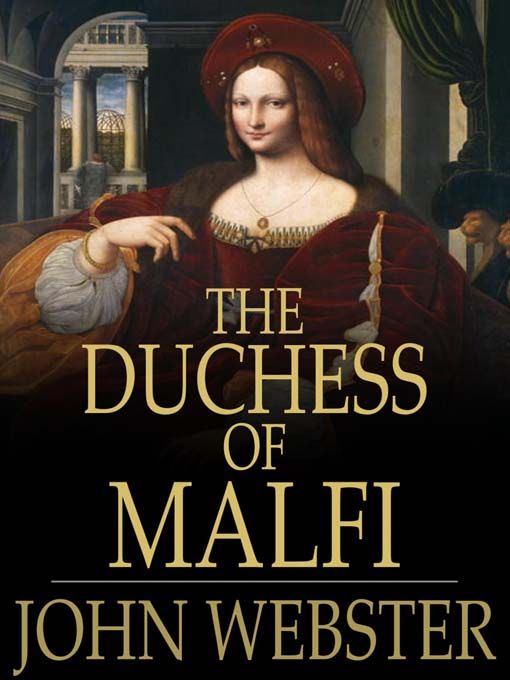
Make the most of the summer to get ahead at A Level
   How? By getting underway with your reading and research for the coursework texts.

Normally we start with the toughest texts which really require studying together as a class
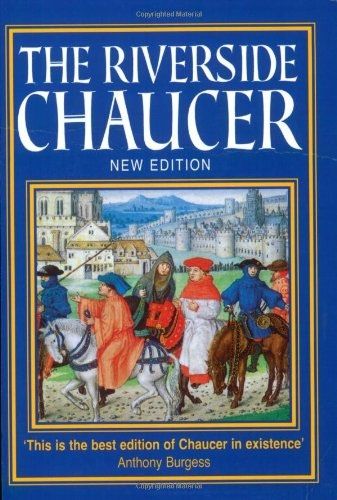
such as Mrs Dalloway, Chaucer’s The Merchant’s Tale and Webster’s The Duchess of Malfi.
You are provided with work to do in the next few pages to prepare for those, but this year
we’re going to start with texts which will be more immediately accessible working by
yourselves. We’ll begin with the coursework.

You will study 3 texts:

In Search of Equilibrium by Theresa Lola

The Penelopiad by Margaret Atwood

By the Bog of Cats by Marina Carr
Please get hold of these texts. Read and annotate the poems, researching the context for
each (I’ll be making an excellent study guide available on Google Classroom and you might
find the lectures on the poems on Massolit useful). I’ll be setting work on our Google
Classroom. Make sure you join it!

Read The Penelopiad: it’s based on The Odyssey so research it here initially
http://www.mythweb.com/odyssey/ Read the short version, then the more detailed one. If
you’re inspired, read the real thing. I’d particularly recommend the recent translation by
Emily Wilson. I personally loved a brilliant book about The Odyssey called An Odyssey by
Daniel Mendelsohn which gives some fascinating insights.

By the Bog of Cats is an Irish play by Marina Carr (research her other plays). It’s based on
Euripides’ Medea. Research and read it. You can find a good play version of The Medea on
Yotube. It’s also alluding to The Troubles in Ireland. I’d recommend a brilliant book called
Say Nothing by Patrick Radden Keefe. But you could also explore The Troubles for
yourselves. I’ll give more details on the google classroom.
Specification ENGLISH LITERATURE OCR H472
http://www.ocr.org.uk/Images/171200-specification-accredited-a-level-gce-english-literature-
h472.pdf

                                         Texts studied

Paper 01

Chaucer’s The Merchant’s Tale and Webster’s The Duchess of Malfi and Shakespeare’s The
Tempest

Paper 02

Mrs Dalloway by Virginia Woolf and Their Eyes Were Watching God by Zora Neale Hurston

Coursework 03: this year’s students will be studying the following

Close reading: In Search of Equilibrium by Theresa Lola

The comparative essay: The Penelopiad by Margaret Atwood and By the Bog of Cats by
Marina Carr

1
How to achieve an A* in English Literature
While there is no formula for achieving the top marks in English Literature (indeed the hallmarks of a
top calibre essay are individuality and independence) there are some common characteristics. The
best essays

    •   define and/or challenge the terms of the question
    •   establish a clear argument/ thesis in their introduction
    •   incorporate all the relevant Assessment Objectives to an impressive level
    •   adopt an academic register, are fluently expressed and written in technically accurate
        English
    •   show consistently excellent knowledge of the texts under discussion
    •   cite all their sources in footnotes and provide a comprehensive bibliography (for
        coursework)

An example of an excellent introduction for a coursework essay:

AA Gill said that Thomas “saw the countryside with an intense emotional realism”. Compare and
contrast the extent to which this view applies to both Thomas and Cowen

Between both Edward Thomas, in his poems, and in Rob Cowen’s non-fiction book ‘Common
Ground’, it is possible to identify similarities and differences in the way they view and appreciate the
countryside. An ‘intense emotional realism’ can be interpreted differently with both men: Thomas
largely focusing on the powerful connections nature has, such as with the war, for example; Cowen
on the other hand, uses the countryside as a way of relating to life events, such as the journey
through his wife’s pregnancy. The word ‘intense’ on its own can be seen to mean powerful, with
‘emotional’ suggesting a wealth of different emotions, such as anger and sorrow and ‘realism’
highlighting either the reality or even the illogicality of the situation. In saying that Thomas “saw the
countryside with an intense emotional realism”, AA Gill is alluding to Wordsworth’s preface to Lyrical
Ballads where he states ‘for all good poetry is the spontaneous overflow of powerful feelings.’ 1
This idea of feelings in connection with literature can be explored within the works of both Thomas
and Cowen and the quote also argues that both men are writing in the tradition of the Romantics.
Furthermore, the expression of emotion differs in both Thomas and Cowen with the idea of
sophrosyne – a concept which focuses on the ability of verbal self-control within a person – holding
substance in both of their writings.

The following site might be of use for essay writing advice:

http://www2.warwick.ac.uk/fac/arts/english/currentstudents/undergraduate/modules/fulllist/seco
nd/en228/how_to_write_an_essay

If your technical accuracy needs improving, go to
http://www.bristol.ac.uk/arts/exercises/grammar/grammar_tutorial/page_01.htm

And work through the exercise

2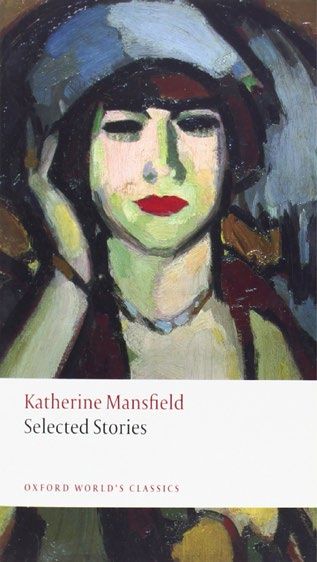
What could this qualification lead to?
Research shows there are a huge range of jobs on offer for those with an academic
background in English.

English graduates find opportunities with many different employers. Public and private
sector organisations such as the National Health Service, educational institutions, local and
national government, financial and legal firms, and voluntary and charitable organisations
employ English graduates in a range of roles, including:

    •   administration
    •   finance
    •   general management
    •   research

        English graduates often enter

    •   advertising marketing and public relations agencies
    •   media organisations
    •   publishing companies

The retail, leisure and tourism sectors also typically recruit English graduates. Many go into
teaching at both Primary and Secondary levels while others enter acting, film and creative
media environments or politics.

The combination of analytical ability, written and oral communication skills and the
empathy gained from studying others’ lives also make English A Level a sought after
qualification for those considering a medical degree.

Relevant Links to Websites

https://www.englishandmedia.co.uk/cpd-and-consultancy/our-projects/what-jobs-do-
people-with-an-english-degree-end-up-doing

https://www.thecompleteuniversityguide.co.uk/courses/english/top-10-celebrities-with-
an-english-degree/?entry=1

https://www.prospects.ac.uk/careers-advice/what-can-i-do-with-my-degree/english

https://www.topuniversities.com/student-info/careers-advice/what-can-you-do-english-
literature-degree

One advantage of studying English at Coloma is our involvement with the superb Massolit
lectures- see below for further details.

3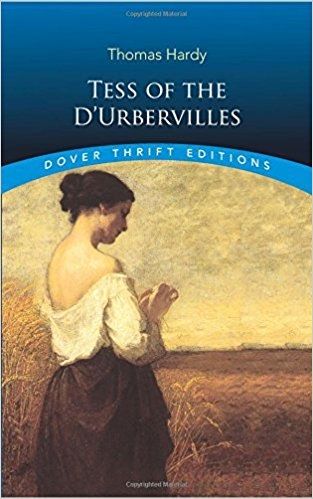
SUMMER WORK

             If you want to take English next year, you MUST

Read The Penelopiad

Research Medea and The Odyssey (context for The Penelopiad and
The Bog of Cats...)

Research The Troubles

Research other works by Marina Carr and Margaret Atwood

Read Theresa Lola’s anthology of poems, choose one and prepare a
response to it.

You could:

    • Write an essay analysing it
    • Write a personal response as a poem of your own
    • Make a PowerPoint or Prezzi exploring it
    • Make a video/ artwork in response
    • Get in touch with Theresa Lola on twitter to research the
      poem
    • Email mholloway@coloma.croydon.sch.uk if you want to do
      something different or have any questions

4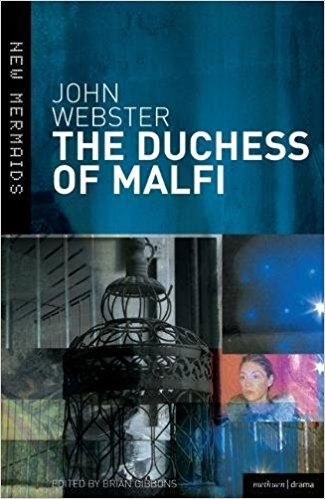
PAPER 01 preparation
      Go to the Harvard website at https://chaucer.fas.harvard.edu/pages/text-and-
                                       translations
                            to find translations of the following tales
       from The Canterbury Tales: The Knight’s Tale, The Franklin’s Tale, The Miller’s Tale
         The Wife of Bath’s Tale and The Clerk’s Tale. Read each of them and make notes.
      (This year’s students found it helpful to watch these animated versions first on YouTube)

                         https://www.youtube.com/watch?v=LdTKmlbzKkg
                         https://www.youtube.com/watch?v=e3cvOm7qStk
                         https://www.youtube.com/watch?v=deRyhTuny3w
                          https://www.youtube.com/watch?v=86Y62CIF3II
Explore the lectures on Chaucer and Webster on Massolit ( making notes for your file).

 READ Katherine by Anya Seton. Based on historical research, it tells the story of Chaucer’s sister-in-
law, Katherine Swynford. It’s a great lockdown read which will give you superb contextual
understanding of Chaucer’s period. I’d also recommend Sacred Hearts by Sarah Dunant to give you
excellent understanding of women in Renaissance times in Italy.

             Any questions, email Mrs Holloway on mholloway@coloma.croydon.sch.uk

5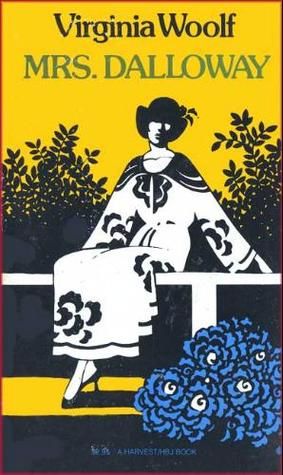
Paper 02 preparation
                               WOMEN IN LITERATURE
Task : Read at least 5 short stories/essays from the choice above or from this list. Jot down
           notes on how women are presented. Note any similarities/patterns.
    https://trueafrica.co/lists/5-of-the-best-chimamanda-ngozi-adichie-stories-you-can-read-for-free/
          http://www.katherinemansfieldsociety.org/short-stories-by-katherine-mansfield/
                       https://americanliterature.com/author/kate-chopin
                      https://americanliterature.com/author/edith-wharton
       https://mashable.com/2018/02/03/best-short-stories-female-british-writers/?europe=true
                             https://www.bbc.co.uk/programmes/b05sy2zs

                        Read Zora Neale Hurston’s Their Eyes Were Watching God

                        You would benefit from reading another book from this list:
Chimamanda Ngozi Adichie Americanah, Margaret Atwood The Edible Woman or The Handmaid’s Tale, Jane
Austen Northanger Abbey, Emily Brontë Wuthering Heights, George Eliot The Mill on the Floss, Thomas Hardy
Tess of the D’Urbervilles, DH. Lawrence Women in Love, Anita Loos Gentlemen Prefer Blondes, , Sylvia Plath
The Bell Jar, Toni Morrison The Bluest Eye, Jeanette Winterson Oranges Are Not The Only Fruit

                  Make notes on your reading for your folder to bring to your first lesson.

   Research Massolit lectures to support your reading- make notes for your folder. You might like to look at
lectures on Jane Austen, Morrison’s Beloved, Carter’s The Bloody Chamber, Mill on the Floss, as well as on the
              texts you will be studying. You would find the course on Modernism very helpful.

                      The following critical reading texts would be very useful

      http://www.ricorso.net/tx/Courses/LEM2014/Critics/Gilbert_Gubar/Madwoman_full.pdf

6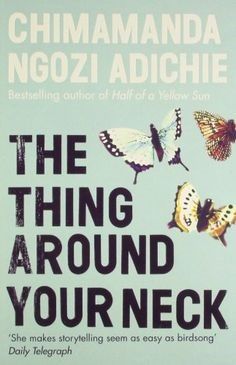
Additional Suggestions for the Summer- some are more relevant if lockdown
ends, others are more useful immediately.
See a play at the Globe http://www.shakespearesglobe.com/theatre/whats-on/globe-
                              theatre or other theatre venues such as the Young Vic, The
                              National Theatre etc. Look out for local opportunities or go to
                              one of the live screenings at a cinema

                              Try one of the wonderful London Walks
                              http://www.walks.com/ - look out for the Shakespeare and
                              Dickens’ walks

                              Take a train ride out to Canterbury, take a tour of the
                              Cathedral, then enjoy https://www.canterburytales.org.uk/ to
                              learn more about Chaucer!

Catch a literary event in London at https://rsliterature.org/

Join The Poetry Society https://poetrysociety.org.uk/ to read some great poetry as well as
entering your poetry in competitions

Join – or start – a Reading Group! Online is fine!

Visit https://www.theguardian.com/books/booksblog

Listen on the internet to some of the amazing literary programmes available on Radio 4
http://www.bbc.co.uk/programmes/b006x3hl/episodes/player

In Our Time http://www.bbc.co.uk/programmes/b006qykl

Open Book is a personal favourite http://www.bbc.co.uk/programmes/b006qp6p along with
A Good Read http://www.bbc.co.uk/programmes/b006v8jn

And, lastly, plunder the incredible World Book Club archive to listen to amazing half hour
programmes (usually with the author) of a huge range of literature
http://www.bbc.co.uk/programmes/p003jhsk/episodes/downloads

7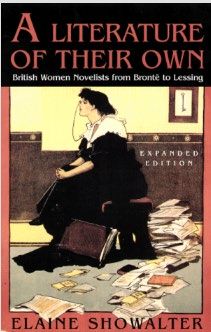
Feedback from Former Students
I wish that I had ...
    •   Been more organised from the start
    •   Done my summer reading and read all the books when I had time!
    •   Read Katherine by Anya Seton so I understood the Middle Ages
    •   Done homework the night I got it
    •   Known that the best guides are The Connell Guides or The Phillip Allan ones
    •   Started learning quotes from the start

The best bit was...
    •   Hearing other people’s opinions
    •   It made me so much more confident
    •   The freedom to explore what interests you
    •   Those lightbulb moments when you really get a literary interpretation
    •   You get the chance to discuss so much
    •   It links well with other subjects
    •   It’s fun!

   “I really loved our lessons and the way we read through the texts and
translated what was going on and I feel like if we hadn’t done this I would
            have been completely lost, especially with Chaucer.”

“I would say Coloma helped me so much for studying English at university. The
      texts we studied in Sixth Form were a wide enough range to get an
            understanding of studying literature in a scholarly way.”

“My Director of Studies at Queens commented on how well prepared
   I’d been at Coloma for studying English at Cambridge.”

8
You can also read


