Epistemic Stance in Chinese L2 Spoken English: The Effect of Grade and Genre-Specific Questions - MDPI
←
→
Page content transcription
If your browser does not render page correctly, please read the page content below

languages
Article
Epistemic Stance in Chinese L2 Spoken English: The Effect of
Grade and Genre-Specific Questions
Fang Xu and Rongping Cao *

                                         School of Foreign Languages, Beijing Forestry University, Beijing 100083, China
                                         * Correspondence: caorongping@bjfu.edu.cn

                                         Abstract: Zuczkowski et al.’s KUB model clarified three epistemic stances: Knowing/Certain, Not
                                         Knowing Whether and Believing/Uncertain, and Unknowing/Neither Certain nor Uncertain, ac-
                                         cording to the speakers’ communicated information, and delineated three types of markers: macro-
                                         markers, micro-markers, and morphosyntactic markers. The model has seldom been applied to L2
                                         instruction. To address this gap, the study examines the effect of grade and genre-specific questions
                                         on Chinese L2 speakers’ choice of epistemic markers with reference to the model by analyzing the
                                         self-built corpus consisting of the oral data collected from two groups: Group One consisting of
                                         20 sophomores and Group Two comprising 20 first-year graduate students. The participants were
                                         required to answer four genre-specific questions covering argumentation, description, narration, and
                                         exposition. The results show that the two group members use similar epistemic markers (EMs) for the
                                         Knowing/Certain and Not Knowing Whether and Believing /Uncertain positions but present a slight
                                         discrepancy in Unknowing/Neither Certain nor Uncertain stance-taking. The genre-based questions
                                         demonstrate a significant effect on the graduate speakers’ use of the micro-markers and morphosyn-
                                         tactic markers for the Not Knowing Whether and Believing/Uncertain and the macro-markers and
                                         morphosyntactic markers for the Unknowing/Neither Certain nor Uncertain. It indicates that high-
                                         grade speakers are more sensitive to genre-based messages, though they use rather limited epistemic
                                         forms as low-grade speakers do. The findings suggest that English as a Second Language (ESL) oral
                                         instruction in China should be reformed and supplemented with diverse EMs to allow the speakers
                                         to take the epistemic stance they are comfortable with.

Citation: Xu, Fang, and Rongping         Keywords: epistemic stance; L2 spoken English; grade; genre-specific context
Cao. 2023. Epistemic Stance in
Chinese L2 Spoken English: The
Effect of Grade and Genre-Specific
Questions. Languages 8: 15.
                                         1. Introduction
https://doi.org/10.3390/
languages8010015                               Epistemic stance-taking is the core pragmatic skill in speaking and has a significant
                                         effect on the smooth flow of daily communication. Studies show that speakers tend to show
Academic Editor: Julien Longhi
                                         more concern for marking their epistemic stance than marking attitudes or evaluations
Received: 4 September 2022               or expressing personal feelings and emotions in interactive communication (Biber et al.
Revised: 15 November 2022                1999; Thompson 2002). Pouromid (2021) concludes that speakers manage their epistemic
Accepted: 19 December 2022               stance to achieve intersubjectivity and maintain mutual understanding despite gaps in
Published: 31 December 2022              their linguistic repertoire. Therefore, the appropriate use of epistemic stance appears to
                                         be crucial and a challenge for L2 speakers in mastering speaking skills, allowing them to
                                         freely display their personalities and interact better with people.
                                               Some scholars define epistemic stance or epistemic position as the speaker’s commit-
Copyright: © 2022 by the authors.
                                         ment to the status of the communicated information, most commonly their assessment of
Licensee MDPI, Basel, Switzerland.
                                         its reliability (Kärkkäinen 2003; Biber 2004; Du Bois 2007; Englebretson 2007). Ochs (1996)
This article is an open access article
                                         incorporated sources of information (namely evidentiality) and the degree of certainty into
distributed under the terms and
conditions of the Creative Commons
                                         the concept of epistemic stance. To substantiate Ochs (1996)’s perspective, Zuczkowski
Attribution (CC BY) license (https://
                                         et al. (2014) further proposed the “KUB model”, the acronym from “Knowing/Certain,
creativecommons.org/licenses/by/         Unknowing/Neither Certain Nor Uncertain, Believing/Uncertain”. More recently, the
4.0/).                                   epistemic stances were updated to “Knowing/Certain, Unknowing/Neither Certain Nor

Languages 2023, 8, 15. https://doi.org/10.3390/languages8010015                                            https://www.mdpi.com/journal/languages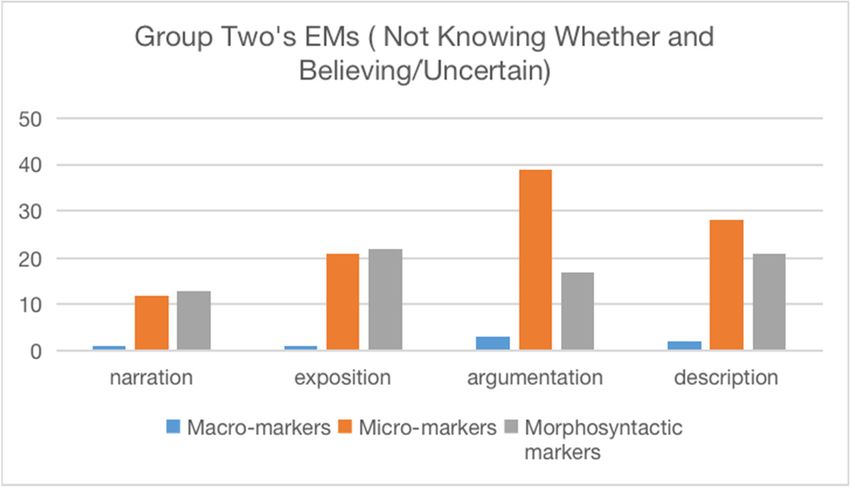
Languages 2023, 8, 15                                                                                           2 of 16

                        Uncertain, Not Knowing Whether and Believing/Uncertain” so that evidentiality and
                        epistemicity are likened to two sides of the same coin (Zuczkowski et al. 2017; Zuczkowski
                        et al. 2021). According to Zuczkowski et al. (2021), epistemic stances are conveyed by
                        lexical markers and are further classified into macro-markers and micro-markers, and
                        morphosyntactic markers, pointing to three positions—Knowing/Certain position, Not
                        Knowing Whether and Believing/Uncertain position, and Unknowing/Neither Certain nor
                        Uncertain position—each having two sides, one evidential (source, access) denoting the left
                        of the slash and the other epistemic (commitment), pointing to the right of the slash. The
                        macro-marker is a general label and a hypernym, encompassing all the micro-markers that
                        specify access to information or refer to a particular commitment to the truth of information
                        in the here and now of communication. The morphosyntactic markers refer to syntactic
                        structures communicating speakers’ epistemic status.

                        2. Epistemic Stance in L2 Spoken Language Research
                             Recently, scholars have been exploring features in L2 spoken English and attempting
                        to test elements affecting forms of epistemic stance.
                             Zhang and Sabet (2016) highlighted one typical epistemic lexical marker, I think (IT),
                        and investigated its variation caused by different cultural backgrounds. The researchers
                        drew on the large-scale naturally occurring spoken data produced by L1 and L2 speakers
                        to investigate the elasticity of “IT”, the most common epistemic marker. The result shows
                        that L1 and L2 speakers have different preferences and focuses in using IT. L1 speakers
                        are speaker-oriented and assertive, whereas L2 tend to take the middle ground between
                        speaker-oriented/assertive with listener-oriented/less authoritative.
                             Some researchers have shown interest in the effect of task type. Gablasova et al.
                        (2017) focused on two task types and tested the effect of the task on L2 speakers’ stance-
                        taking choice from three epistemic forms: adverbs, adjectives, and verb expressions. The
                        outcome demonstrates that there is evidence that task and style can affect speakers’ selection
                        of epistemic markers, and the speakers used a specific pattern of stance-taking in the
                        monologic task, as opposed to the interactive task where contextual factors are changing,
                        and the two interlocutors interactively negotiate the epistemic stance. Their results were
                        confirmed by the research conducted by Ou and Huang (2016) that investigated the effect
                        of oral task type on learners’ epistemic stance expression behavior and showed that the
                        overall frequency of an epistemic stance maker in the conversation task is much higher
                        than that in impromptu speech since the speakers use more epistemic stances to maintain
                        the relationship with each other in a conversation task. However, both studies claim that
                        the monologic tasks are under-researched.
                             More recently, researchers directed to test the effect of contextual factors and the
                        interactive context demonstrated an effect on affecting the speakers’ epistemic forms
                        (Gablasova and Brezina 2015). Pérez-Paredes and Bueno-Alastuey (2019) explored the
                        effect of contexts on epistemic adverbs used by native speakers (NSs) of English and
                        non-native speakers (NNSs) of English across the same speaking task in the four datasets.
                        They concluded that there is significant difference in the effect of contextual factors while
                        different language groups of NNSs using epistemic adverbs.
                             Previous research has mainly focused on the lexical markers of the epistemic stance and
                        tested the effect of cultural background, task types, and the contextual factors constructed
                        by the interactive activities. There is little research on morphosyntactic epistemic forms
                        and a lack of study on the effect of L2 oral instruction in monologic tasks on epistemic
                        stance-taking. Moreover, the effect of language proficiency may be mitigated by learners
                        involved in interaction, but in monologic tasks learners are left to their own resources,
                        without being affected by their interlocutors (Robinson 2011).
                             According to Perry (1970), who focused on college students’ epistemic growth, epis-
                        temic development continues long beyond childhood. Related studies have shown that
                        senior college students’ score on epistemic stance (Perry’s Position) was significantly higher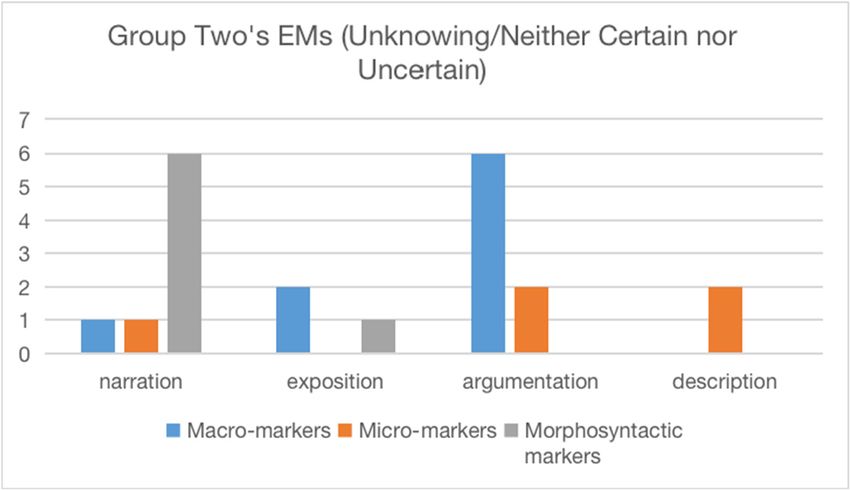
Languages 2023, 8, 15                                                                                             3 of 16

                        than sophomores (King 1978; Widick et al. 1975; Meyer 1977; Clinchy et al. 1977; Chandler
                        et al. 2002).

                        3. The KUB Model and Its Applications
                             The KUB model has been applied to investigate the authors’ epistemic stance-taking in
                        scientific written texts. Bongelli et al. (2012) detected the uncertain markers in 80 biomedical
                        research articles, sourced from The British Medical Journal randomly sampled over a 168-year
                        period. Results show that there is a trend that the uncertain markers gradually decreased
                        in recall along with an increase in precision. Further research was conducted on a larger
                        sample size and the outcomes delineate that the authors use lexical markers more frequently
                        than morphosyntactic markers, and the writers have kept using uncertainty in an unaltered
                        way and always occupy a smaller percentage with respect to certainty (Zuczkowski et al.
                        2016). The outcomes are confirmed by Bongelli et al. (2019)’s research that incorporated
                        scientific popular articles from Discover 2013 for genre comparison, and statistics show that
                        scientific and popular scientific journals demonstrate the gradual diminishing of uncertain
                        markers over time, which are susceptible to the genre variant.
                             The KUB model has also been adopted to study questions in spontaneous conversa-
                        tions. Riccioni et al. (2018) investigated the relation between epistemic stance and four types
                        of uncertain questions: alternative, polar interrogatives, tag, and declarative questions, in
                        which polar and alternative questions are clarified as dubitative questions. Bongelli et al.
                        (2018) found that wh-questions, on the one hand, and alternative and polar questions on
                        the other come from two different epistemic positions: unknowing and uncertain, through
                        the analysis of presuppositions, question design, social action, and preference organization
                        in short fragments of Italian question–answer sequence.
                             Epistemic status and epistemic negotiation are other aspects of the KUB model that
                        have been adopted to analyze literary types of discourse. Riccioni et al. (2014) investigated
                        the role of epistemic negotiation and mitigation in the giving-advice sequence within
                        informal troubles-talk and showed that epistemic status must be negotiated and shared
                        by two interlocutors in order to have the advice accepted. Dorigato et al. (2015) analyzed
                        dialogues in Harry Potter books and delineated how the characters negotiated, developed,
                        and constructed their identities and how they evolved within the epistemic stance through
                        the dialogue. Vincze et al. (2016) focused on the epistemic status in the presidential debate
                        and found that the political candidates tended to employ ignorance-unmasking questions
                        and multimodal negative evaluations of the opponent to boost their epistemic status and
                        renegotiate their epistemic authority. Applications of the KUB model have not covered L2
                        instruction to date.
                             A literature search from databases including Web of Science, Google Scholar, Research-
                        Gate, IEEE, Taylor & Francis, and Joster, using the keywords, “KUB model”+ “epistemic
                        stance”, and “L2 instruction”, or “grade/age” indicates that applications of the KUB model
                        have not covered L2 instruction discourses to date, nor investigated grade/age effect.

                        4. The Current Study
                             The current study attempts to address the aforementioned research gap by investigat-
                        ing the effect of grade and genre-specific questions on speakers’ choices of EMs in oral ESL
                        instruction. It seeks to answer the following research questions:
                        1.   Is there an effect of grade on L2 speakers’ choice of epistemic stance?
                        2.   Is there a significant difference between epistemic markers employed by the sopho-
                             mores and the first-year graduates across genre-specific questions?
                             Q1 explores whether there is a discrepancy in epistemic forms between the first-year
                        graduate speakers and the sophomore speakers, such as their EM preferences, ranges, and
                        diversity. The ranges depict the variation across the three types of EMs in administration,
                        and the diversity points to the diverse items under each category. Q2 investigates whether
                        their choice of EMs is susceptible to genre-specific questions.
Languages 2023, 8, 15 4 of 16
5. Method
5.1. Participants
The present study selected second-year undergraduate and first-year graduate stu-
dents as research subjects in an attempt to find the epistemic stance discrepancy across
two grades. Forty students at Beijing Forestry University voluntarily participated in this
program and were identified as two groups. Group One consists of 20 sophomores from
diverse colleges comprising Forestry, Soil, and Water Conservation, Landscape Architec-
ture, Biological Sciences and Biotechnology, Economics and Management, and Technology,
comprising 7 males and 13 females with an average age of 20. They all passed College
English Test Band 4 (CET-4) and have received two-year oral English training in college.
Group Two consists of 20 first-year graduate students, from colleges of Forestry, Biological
Sciences and Biotechnology, Technology, and Foreign Languages, involving 6 males and
14 females with an average age of 23, who passed College English Test Band 6 (CET-6)
and have received oral English training for four years. The two group members’ mother
tongue is Chinese, and they have never learned a third language. CET-4 and CET-6 are
the standard tests for gauging college students’ language proficiency administrated by the
Ministry of Education of the People’s Republic of China (MoEPRC). The basic information
of the participants is summarized in Table 1:
Table 1. The demographic information of the two groups.
Group Gender Average Age Level College
Forestry/Soil and Water
Conservation/Landscape
One 7M&13F 20 CET-4 Architecture/Biological Sciences and
Biotechnology, Economics and
Management/Technology.
Forestry/Biological Sciences and
Two 6M&14F 23 CET-6 Biotechnol-
ogy/Technology/Foreign Languages
5.2. Data Collection
5.2.1. Collecting Recordings
The participants are required to record their answers to the four questions on two
topics: Marriage and Love and Embarrassing Experience. They are supposed to upload
to the WeChat platform two extracts, each of which is no longer than 3 min. Each topic
involves two related questions, encompassing argumentative, descriptive, narrative, and
expositive messages. The subject is supposed to submit a persuasive response plus a
descriptive response for the topic, Marriage and Love, and a narrative response plus an
expositive response for the topic, Embarrassing Experience. To collect the participants’
spontaneous speeches, the participants were required to submit their answers in 3 min for
each question, but they still had 30 s for preparation before starting to record. The recordings
will be submitted automatically when the time is up and resubmission is unacceptable. The
topics and the contained questions are presented below:
Marriage and Love
• What do you think of cyber love? (Your opinion plus reasons)
• Please describe the qualities of your expected life companion.
Embarrassing Experience
• What is your most embarrassing experience? (Please narrate your experience in detail)
• How can you overcome social phobia and be more outgoing?
5.2.2. Coding the Epistemic Markers
According to Zuczkowski et al. (2021)’s KUB model, the most typical marker for
communicating a piece of information from the Knowing/Certain position is the plainLanguages 2023, 8, 15 5 of 16
declarative sentence in the indicative mood (either present, past, or future) without any
lexical marker of epistemicity or evidentiality (Lyons 1968; Aijmer 1980). For instance,
“Someone was dancing to the music.” The sentence does not contain any lexicons indicating
the source of information or the speaker’s commitment to the truth of the communicated
information. Providing that the declarative sentences include lexical evidential or epistemic
markers, such as “I know/I am certain”, the general type, adaptable to many syntactic
structures and contexts, and “I remember/no doubt”, the specific type, subject to the
limited contexts, they will be identified as macro-markers or micro-markers, respectively.
The former is described by Fordyce (2014) as “easy forms”, and the latter as “difficult
forms”. The EMs are summarized in Table 2.
Table 2. The Knowing/Certain stance and its related EMs.
Macro-Markers Micro-Markers Morphosyntactic Markers
I remember . . . /I hear . . . /I see . . .
Knowing/I know . . . The plain declarative sentence
No doubt . . . /surly/certainly/of
Certain/I’m certain . . . without lexical markers
course/without doubt
The EMs were summarized from Zuczkowski et al. (2021)’s “KUB”model.
The uncertain position indicates that the speakers’ commitment to the truth is at a
minimum level, and it turns out to be an epistemic continuum ranging from two opposing
poles of not knowing whether something is true or not to believing that something is
true or false. The uncertain markers can be grouped into six categories: verbs, modal
verbs, non-verbs, uncertain questions, if-clauses, and epistemic future. Verbs, modal verbs,
and non-verbs belong to lexical categories whereas uncertain questions, if, and epistemic
future are classified as morphosyntactic markers. The uncertain position highlights the
modal verbs in the simple present tense, communicating possibility or uncertainty, such as
can, may, and the modal verbs in the conditional mood, expressing uncertainty, including
could, might, and should. Non-verbs involve adjectives, adverbs, and nouns, which
convey uncertainty and doubts, and expressions concerned with personal opinions. Polar
interrogatives, tags, and declarative questions are considered as conveying the speakers’
uncertainty. If-clauses are counted in uncertain markers except for the zero conditionals
(Zuczkowski et al. 2021)1 . All other forms of if-clauses are markers of uncertainty. For
example, “If I have money, I will buy a boat”. “If I had had enough money, I would
have bought that boat “. The epistemic future is realized by the epistemic or conjectural
uses of “will”. For example, “(The doorbell is ringing.) That will be the postman” can be
paraphrased as “I (now) hear the doorbell ringing and make an assumption (Uncertainty)
that the postman is at the door”, based on prior knowledge (concerning, for example, the
fact that the postman usually arrives at that time and, if he has to deliver mail, he rings the
bell) (Palmer 2001). Table 3 summarized the markers for the Not Knowing Whether and
Believing/Uncertain stance.
Table 3. The Not Knowing Whether and Believing/Uncertain stance and its related EMs.
Macro-Markers Micro-Markers Morphosyntactic Markers
uncertain/possible/probable/
I don’t know whether . . . /I supposed/assumed/believed/ modal verbs in conditional
believe . . . doubted/suspected/I think/I and subjunctive moods
I’m uncertain . . . /I’m not suppose/I doubt/I guess/in If clauses
certain . . . my opinion/according to Epistemic future
me/as far as I am concerned
The EMs were summarized from Zuczkowski et al. (2021)’s “KUB” model.
The unknowing position communicates the speakers’ absence of information. Con-
sequently, the speaker cannot express his certainty or uncertainty due to the information
void. The typical marker is “I don’t know” encompassing the micro-markers denotingLanguages 2023, 8, 15 6 of 16
evidentiality, such as “I don’t remember”, “I don’t see” and “I don’t hear”, and some adjec-
tives, such as “incomprehensible”,” mysterious”, “obscure”, and so on. The speaker asks
literary interrogatives for seeking information, implying the speaker’s lack of information.
However, rhetorical questions or question tags should be excluded since those questions are
expected to act as an effective tool wielded by the speakers to make their words impactful
or concise, apart from communicating their epistemic status. For instance, “It is a sunny
day, isn’t it?” The speaker may simply seek agreement/confirmation or merely get in touch
with others, instead of asking for information. The markers are listed in Table 4.
Table 4. The Unknowing/Neither Certain nor Uncertain stance and its related EMs.
Macro-Markers Micro-Markers Morphosyntactic Markers
I don’t remember/I don’t
see/I don’t “Literal” interrogatives
Unknowing/I don’t know . . . hear/incomprehensible/ (i.e., excluding rhetorical
mysterious/obscure/mystery/ questions, question tags, etc.)
secret/ambiguity
The EMs were summarized from Zuczkowski et al. (2021)’s “KUB” model.
5.3. Data Analysis
Altogether, 120 tracks equaling 3 h, 54 min, and 26 s of voice recordings are collected.
Each participant’s recording times vary between 5 min and 6 min. The voice record-
ings were transcribed through the online platform: https://www.iflyrec.com (accessed
on 10 August 2022) and saved as separate plain text files. The authors listened to the
recordings, checked the words, and made an agreement on revision. Thereby, according to
the group, the author built two datasets: the Group One dataset encompassing a total of
36,607 tokens, and the group two dataset consisting of a total of 46,533 tokens.
The authors first conducted literary concordance using Nvivo to identify the listed
lexical markers and counted the frequencies of each marker. A total of 12 markers were
identified for the Knowing/Certain position, 17 markers for Not Knowing Whether or
Believing/Uncertain, and 11 markers for Unknowing/Neither Certain nor Uncertain. After
that, the authors did the manual analysis to capture the epistemic forms that cannot be
identified by the tool. The authors separately identified the morphosyntactic markers and
made decisions for inclusion based on the KUB model, sought agreement, and combined
the files to check the average Kappa value, which is 0.95, indicating high reliability. For
morphosyntactic markers, one independent sentence is counted as a single unit for sta-
tistical analysis. The item-level descriptive statistics of the two datasets are presented in
Tables 5 and 6.
Table 5. The item-level descriptive statistics of the Group One dataset.
N Mode Std. Error Std. Deviation
Marker 421 3 1 0.027 0.546
Genre type 421 32 0.052 1.063
Epistemic stance 421
13 0.025 0.523
Valid N (listwise) 421
1 3 = morphosyntactic marker. 2 3 = argumentation. 3 1 = Knowing/Certain stance.
Table 6. The item-level descriptive statistics of the Group Two dataset.
N Mode Std. Error Std. Deviation
Marker 737 3 1 0.018 0.494
Genre type 737 12 0.040 1.093
Epistemic stance 737
13 0.032 0.868
Valid N (listwise) 737
1 3 = morphosyntactic marker. 2 1 = narration. 3 1 = Knowing/Certain stance.Languages 2023, 8, 15 7 of 16
The frequencies of the two groups’ three types of EMs to the four types of questions
were counted under each epistemic stance, supplemented with qualitative analyses of the
transcribed texts to capture the two group members’ ranges, preferences, and diversity of
EMs across the four genre-specific questions, pertaining to Q1. For Q2, SPSS is adopted
to do a chi-square test to examine the effect of genre-based questions on the two groups’
EMs. The authors also used the partitions of X2 method to further detect which types of
EMs adopted by the speakers were more susceptible to genre-specific messages.
6. Results and Discussion
The distribution of each group’s EMs of the three epistemic stances to the four types
of questions is present in the bar charts, followed by examples extracted from the data.
The chi-square values showed the genre-specific questions’ effect on the ESL speakers’
choice of types of EMs for communicating the epistemic position. The data would be
further analyzed leveraging the partitions of the X2 method in the case of a significant
effect detected.
The outcomes would be expounded on in the following sections. Group One members
were tokened with “US”, and Group Two members with “GS”.
6.1. The Distribution of EMs Generated by the Three Epistemic Positions
Figures 1 and 2 demonstrate the two group members’ EM distributions for know-
ing/certain stance-taking. Overall, the two group members are inclined to use morphosyn-
tactic markers for the knowing/certain position, especially in narrations, followed
Languages 2023, 7, x FOR PEER REVIEW 8 ofby
17
Languages 2023, 7, x FOR PEER REVIEW 8 of 17
argumentations, as shown in Figures 1 and 2. In contrast, the percentages of the lexical
markers account for a relatively small proportion across the four types of questions.
Figure1.
Figure
Figure 1.The
1. Thebar
The barchart
bar chartof
chart ofGroup
of Group
Group One
One
One speakers’
speakers’
speakers’ EMs
EMs
EMs (Knowing/Certain).
(Knowing/Certain).
(Knowing/Certain).
Figure 2. The bar chart of Group Two speakers’ EMs (Knowing/Certain).
Figure2.2.The
Figure Thebar
barchart
chartof
ofGroup
GroupTwo
Twospeakers’
speakers’EMs
EMs(Knowing/Certain).
(Knowing/Certain).
The typical morphosyntactic marker expresses that the knowing position is the de-
The sentence:
clarative typical morphosyntactic
the default type marker expresses that
of the independent the retaining
clause knowing the
position is the de-
declarative
clarative
force sentence:
of the statementthe default
(Biber et al.type ofItthe
2003). independent
occupies clause
a large area retaining because
in narrations the declarative
the
force statements
plain of the statement (Biberfor
are suitable et relating
al. 2003).a It occupies
series a large
of events. area in narrations
Moreover, because the
the argumentationLanguages 2023, 8, 15 8 of 16
The typical morphosyntactic marker expresses that the knowing position is the declar-
ative sentence: the default type of the independent clause retaining the declarative force
of the statement (Biber et al. 2003). It occupies a large area in narrations because the plain
statements are suitable for relating a series of events. Moreover, the argumentation is
more convincing in the absence of subjective lexical expressions, whereas in exposition or
description, declarative sentences occupy a relatively small percentage since the expected
information is related to personal opinions, which are more likely to go with lexical mark-
ers indicating mental thoughts. The data provide evidence that declarative sentences are
more effective for communicating information, especially for relating facts or evidence as
opposed to opinions. For example,
• US6: And one of my most classic embarrassing experiences is when I’m on class.
• GS6: In my second year, in high school, I once liked a boy who was my senior, he was
a sports student with special talent.
• GS6: We can understand a person besides information and some family situations
through the network, but to rarely understand the habits of this person,
• GS14: Some people claim that online love is very romantic and exciting. It’s a
amazing things because the internet brings two strange persons far away from each
other together.
Some grammatical mistakes can be seen from the examples, such as “on class”, “be-
sides information”, “but to rarely understand”, and “a amazing”, suggesting that even
Languages 2023, 7, x FOR PEER REVIEW 9 of 17
high-grade speakers may utter ungrammatical sentences in spontaneous speeches, and
opt for the plain declarative sentences for telling stories or providing evidence, similar to
the low-grade speakers. The results indicate that the speakers’ cognitive mechanism of
communicatinginformation
communicating informationoutperforms
outperformsthe themonitoring
monitoringnerves
nerveswired
wiredin intheir
theirbrains.
brains.The
The
ESL
ESLoral
oraltraining
trainingininChina
Chinacontributes a little
contributes to develop
a little the ESL
to develop the speakers’ vocabulary
ESL speakers’ com-
vocabulary
plexity in conveying
complexity the knowing
in conveying stance.
the knowing As aAs
stance. result, theythey
a result, are apt
are to
aptuse
to the
use standardized
the standard-
forms to communicate
ized forms their knowing
to communicate position,
their knowing albeitalbeit
position, with different messages.
with different messages.
Group
GroupOne Oneprefers
prefersto
touse
use micro-markers
micro-markersacrossacrossthethe four
four genre-based
genre-based questions
questions when
when
expressing the Not
expressing the NotKnowing
KnowingWhether
Whether and and Believing/Uncertain
Believing/Uncertain stance,
stance, as shown
as shown in
in Figure
Figure 3. The same feature can be detected in the Group Two members’
3. The same feature can be detected in the Group Two members’ argumentative and de- argumentative and
descriptive discourses,with
scriptive discourses, withmorphosyntactic
morphosyntacticmarkers
markersclaiming
claiming aa dominant
dominant proportion
proportion in in
narration
narration and exposition, contrastive to the Group One counterparts, as demonstrated in
and exposition, contrastive to the Group One counterparts, as demonstrated in
Figure
Figure4.4.
Figure 3.
Figure 3. The
Thebarbar
chart of Group
chart One speakers’
of Group EMs (Not
One speakers’ EMsKnowing WhetherWhether
(Not Knowing and Believing/Uncer-
and Believ-
tain).
ing/Uncertain).Languages 2023, 8, 15 9 of 16
Figure 3. The bar chart of Group One speakers’ EMs (Not Knowing Whether and Believing/Uncer-
tain).
Figure The
Figure 4. The barbar chart
chart of Group
of Group Two speakers’
Two speakers’ EMsKnowing
EMs (Not (Not Knowing
WhetherWhether and Believ-
and Believing/Uncer-
tain).
ing/Uncertain).
Similar
Similar features of the two two groups
groupscan canalso
alsobebedetected
detectedininthe
thediversity
diversity andand ranges
ranges of
of micro-markers,
micro-markers, Thetypical
The typicalmicro-markers
micro-markersare arethe
the first-person-perspective
first-person-perspective expressions,
expressions,
such
such asas “I
“I think”,
think”, “in
“in mymy opinion”,
opinion”, “from
“from mymy perspective”,
perspective”, and
and “as
“as far
far as
as I’m
I’m concerned”
concerned”
since
since Chinese NNSs tend to literally translate chunks in Chinese (Xu and Xu 2007). Huang
Chinese NNSs tend to literally translate chunks in Chinese (Xu and Xu 2007). Huang
(2014)
(2014)found
foundthat
that“I“Ithink” is likely
think” to co-occur
is likely to co-occurwithwith
hesitation markers,
hesitation pauses
markers, and restarts,
pauses and re-
personal opinionsopinions
starts, personal and evaluation, factual information,
and evaluation, concluding
factual information, remarks, and
concluding questions.
remarks, and
The
questions. The micro-markers may co-occur with different structures across thequestions.
micro-markers may co-occur with different structures across the four stylistic four sty-
listicFor the typical micro-markers, the first-person perspective expressions primarily co-
questions.
occurFor withthepersonal opinions in argumentation.
typical micro-markers, the first-personA perspective
complete argument
expressionsconsists of three
primarily co-
building blocks: claims, warrants, and reasons (Zhang 2011; Bennett
occur with personal opinions in argumentation. A complete argument consists of three 2015; Bowell et al.
2019). The speakers use “micro-markers plus personal opinions” more often to state their
claims, employ “because plus that-clause” for reasons, and are inclined to adopt implicit
warrants. Sometimes, “that” is added due to personal styles, or the whole phrase forms a
lexical trunk implemented in the speaker’s head. Some examples listed below:
• GS11: I think cyber love is a very scared thing.
• GS5: As far as I am concerned, it is an easy and fast way for people to make new
people by the internet.
• GS9: I think that online dating is unreliable, because in the virtual species of the
internet, everyone can disguise.
It is the same with description, where the micro-markers precede personal opinions.
However, in most cases, the micro-markers may occur in the rear or with the hesitation
markers, “er” and “um”, indicating the speaker is searching for content information or
appropriate lexical expressions. For example,
• GS10: I think first, first and the most important and I think he will very handsome. Yes.
And I think um if if I see a boy who is very handsome, I will have the good emotion.
• US 10: I think this question is a very complex question that I can’t give the clear
answers about it. In my opinion, I think the life company must have the same or the
similar attitudes about the life and the future.
In the second case, the co-occurrence of “in my opinion” and “I think” demonstrates
their function as filler words, suggesting the mental process, as NNSs usually need more
time to express their meaning in a foreign language. The two group speakers tend to
mitigate using the micro-markers and the graduate speakers are more likely to use the
formulaic structure, “first, second, third . . . ” when describing their expected companions’
qualities. For example,
• US15: My standard for choosing a partner is that he need to be a good character,
motivated tyrant, and love me.Languages 2023, 8, 15 10 of 16
• GS12: First of all, my life company must be a person with three views of integrity and
confirm to my concepts, which can guarantee a effective communication. Secondly, it
is essential for him to be self-motivated and waiting to fight with me for the future life.
Finally, his appearance should miss my synthetic needs.
For the exposition, the two group speakers use the micro-markers to give suggestions
on overcoming social phobia, closely concerned with tackling a problem. The first-person
perspective markers act as softeners to avoid being assertive and sound more acceptable to
listeners. The morphosyntactic marker, “if-clause”, is the optimal option for the speakers to
offer suggestions. For example,
• GS2: I think that if you want to overcome social phobia, you must first overcome
psychological barriers, don’t be afraid to chat to death.
• US10: if you’re embraced about communicating in the real world, I think it is a better
choice for you to make some friends online
In summary, the EMs employed by the two grades for conveying the Not Knowing
Whether and Believing/Uncertain are of high variability, tightly correlated with the speak-
ers’ subjective mental activities but still confined in a certain range. The group members
tend to take this stance to communicate pragmatic meanings, apart from revealing their
epistemic status.
The Unknowing/Neither Certain nor Uncertain stance represents relatively small pro-
portions in the two groups. The significant discrepancy can be detected in Figures 5 and 6.
Figure 5 shows that the speakers prefer to use macro-markers for explaining their lack
Languages 2023, 7, x FOR PEER REVIEW 11 ofof
17
knowledge, as opposed to the Not Knowing Whether and Believing/Uncertain position,
where the micro-markers dominate the speeches. The similarity can be captured in argu-
mentation in which
argumentation the two
in which thegroup members
two group are inclined
members to use macro-markers
are inclined to support
to use macro-markers to
their claims in argumentation, especially for the opposite opinions. For example,
support their claims in argumentation, especially for the opposite opinions. For example,
• GS8:
GS8: II think
think the
the relationship
relationship is
is about
about the
the cyber
cyber love
love is
is not
not very
very good,
good, because
because we
we
can’t, because we can’t know about the guys we met in. We met in the internet.
can’t, because we can’t know about the guys we met in. We met in the internet. We
We don’t know his characteristics, and we don’t know a lot of things about it.
don’t know his characteristics, and we don’t know a lot of things about it.
• GS1: First of all, cyber love is very unsafe on the internet. We don’t know what the
GS1: First of all, cyber love is very unsafe on the internet. We don’t know what the
other person looks like. Don’t know the Information.
other person looks like. Don’t know the Information.
• US14: Instead of spending a lot of time talking to someone you don’t know, focus on
US14: Instead of spending a lot of time talking to someone you don’t know, focus on
learning, practicing, and improving yourself.
learning, practicing, and improving yourself.
Figure 5.
Figure 5. The
The bar
bar chart
chart of
of group
group one
one speakers’
speakers’EMs
EMs(Unknowing/Neither
(Unknowing/Neither Certain
Certain nor Uncertain).
nor Uncertain).Languages 2023, 8, 15 11 of 16
Figure 5. The bar chart of group one speakers’ EMs (Unknowing/Neither Certain nor Uncertain).
Figure 6.
Figure 6. The
The bar
bar chart
chart of
of Group
Group Two
Twospeakers’
speakers’EMs
EMs(Unknowing/Neither
(Unknowing/Neither Certain
Certain nor
nor Uncertain).
Uncertain).
When
When relating
relating their
their embarrassing
embarrassing experiences, the Group Two Two speakers
speakers tend
tend to
to ask
ask
questions to vividly depict the mental process, whereas the undergraduate
questions to vividly depict the mental process, whereas the undergraduate speakers may speakers may
generally
generally reproduce
reproducetheirtheirthoughts.
thoughts. For
For example,
example,
• GS14:
GS14: And I couldn’t understand thequiz.
And I couldn’t understand the quiz.What
Whatisisthe
thequestion?
question?So
SoI Iasked
askedher,
her,again,
what the question is?
again, what the question is?
• GS7:
GS7: There
There areareaalot
lotofof
thoughts
thoughtsdisturbing me.me.
disturbing Am AmI performing good?
I performing Can Can
good? I do I do
my best?
my best? How
How do do others
others think
think of
of me?
me?
US7: Well,
• US7: Well,ititwas
wassosoembarrassing,
embarrassing,and andIIeven
evendidn’t
didn’tknow
knowwhat
whattotodo.
do.
6.2. The
6.2. The Effect
Effect of
of Genre-Based
Genre-Based Contexts
Contexts on
on EMs
EMs across
acrossthe
theThree
ThreeEpistemic
EpistemicPositions
Positions
The chi-square
The chi-squaretesttest is
is adopted
adopted to
to check
check the variation
variation of EMs across the four questions,
categorized by
categorized by the
the three
three epistemic
epistemicpositions.
positions.
Via the chi-square test, Table 7 shows that the calculated p-values of each group are
0.496 > 0.05 (Group One) and 0.519 > 0.05 (Group Two), respectively, indicating that there
is no significant discrepancy for the two groups in using EMs across the four questions to
take the Knowing/Certain stance. That means both groups apt to use similar EMs across
the genre-based questions.
Table 7. The chi-square test of the EMs (Knowing/Certain).
Asymptotic Significance
Group Value Df
(Two-Sided)
Pearson chi-square 5.379 6 0.496
likelihood ratio 7.372 6 0.288
Group One
Linear-by-linear association 0.160 1 0.689
N of valid cases 260
Pearson chi-square 5.192 6 0.519
likelihood ratio 5.301 6 0.506
Group Two
Linear-by-linear association 0.045 1 0.831
N of valid cases 297
Pearson chi-square 4.918 6 0.554
likelihood ratio 4.917 6 0.554
Total
Linear-by-linear association 0.312 1 0.557
N of valid cases 557
Table 8 shows that the chi-square value of group one is 8.585 (p = 0.198 > 0.05), whereas
the chi-square value of group two is 42.065 (p = 0.000 < 0.01), suggesting a great significance
detected in the co-relation of EMs with the questions. The results delineate that the Group
Two speakers’ use of EMs explaining the Not Knowing Whether or Believing/UncertainLanguages 2023, 8, 15 12 of 16
position varies across the genre-based questions. In order to figure out the specific EMs, the
authors employed the partitions of the X2 method for further calculations, and the results
are further detected and analyzed.
Table 8. The chi-square test of the EMs (Not Knowing Whether and Believing/Uncertain).
Asymptotic Significance
Group Value Df
(Two-Sided)
Pearson chi-square 8.585 6 0.198
likelihood ratio 9.918 6 0.128
Group One
Linear-by-linear association 1.942 1 0.163
N of valid cases 154
Pearson chi-square 42.065 6 0.000
likelihood ratio 51.036 6 0.000
Group Two
Linear-by-linear association 19.625 1 0.000
N of valid cases 147
Pearson chi-square 22.732 6 0.001
likelihood ratio 23.382 6 0.001
Total
Linear-by-linear association 7.551 1 0.006
N of valid cases 301
Table 9 presents the Group One Pearson chi-square value: X2 = 4.278, p = 0.118 > 0.05,
and the Group Two Pearson chi-square value: X2 = 18.428, p = 0.005 < 0.01. The p-value is an
indicator for a significant level, and the significance is detected in Group Two, demonstrat-
ing that EMs communicating the Unknowing/Neither Certain nor Uncertain position vary
across the four questions, or the effect of the genre-based questions is significant on Group
Two members’ options for EMs. The partitions of the X2 method for multiple comparisons
are applied to obtain the variance further.
As shown in Table 10, the significance can be detected in the pairwise comparison
between the micro-markers and morphosyntactic markers (p = 0.000 < 0.0125). It manifests
that the Group Two speakers’ use of the micro-markers and morphosyntactic markers
for taking the Not Knowing whether and Believing/Uncertain positions are susceptible
to the inbuilt genre-specific information. The effect of genre-based questions on two
types of EMs is as follows: micro-markers and morphosyntactic markers are significant
in the graduate speakers’ expressions, pointing to the Not Knowing Whether and Believ-
ing/Uncertain position.
Table 9. The chi-square test of the EMs (Unknowing/Neither Certain nor Uncertain).
Asymptotic Significance
Group Value Df
(Two-Sided)
Pearson chi-square 4.278 2 0.118
likelihood ratio 5.742 2 0.057
Group One
Linear-by-linear association 0.878 1 0.349
N of valid cases 7
Pearson chi-square 18.428 6 0.005
likelihood ratio 20.396 6 0.002
Group Two
Linear-by-linear association 6.139 1 0.013
N of valid cases 21
Pearson chi-square 21.516 6 0.001
likelihood ratio 23.686 6 0.001
Total
Linear-by-linear association 3.694 1 0.055
N of valid cases 28Languages 2023, 8, 15 13 of 16
Table 10. The multiple comparisons of the EMs (Not Knowing/Uncertain) generated by Group Two.
Comparative Markers Group X2 p-Value
Macro-markers
Two 7.620 0.055
Micro-markers
Macro-markers
Two 7.696 0.053
Morphosyntactic markers
Micro-markers
Two 38.845 0.000
Morphosyntactic markers
Table 11 shows that a great significance resides in the comparisons of macro-markers
and morphosyntactic markers (p = 0.007 < 0.0125). It demonstrates that when conveying
the Unknowing/Neither Certain nor Uncertain position, the graduate speakers are sen-
sitive to the inbuilt genre-specific messages when choosing the macro-markers and the
morphosyntactic markers. For example, they use “don’t know” to support the antagonistic
claims and questions for recounting stories, as opposed to the undergraduate speakers who
make no distinction and overuse the macro-markers regardless of the genre types.
Table 11. The multiple comparisons of the EMs (Unknowing/Neither Certain nor Uncertain) gener-
ated by Group Two.
Comparative Markers Group X2 p-Value
Macro-markers
Two 5.289 0.152
Micro-markers
Macro-markers
5.301 9.808 0.007
Morphosyntactic markers
Micro-markers
Two 8.473 0.037
Morphosyntactic markers
Via observation, pertaining to Q1, the two grades use rather limited and similar EMs,
especially when expressing the Not Knowing Whether and Believing/Uncertain stance, in
which the first-person perspective micro-markers dominate the expressions. However, the
discrepancy is found in expressing the Unknowing/Neither Certain nor Uncertain stance
where the graduate speakers tend to use questions to recount stories, and the undergraduate
speakers prefer to resort to the macro-markers for stating their psychological activities.
As for Q2, the effect of the genre-based questions is captured in Group Two’s use of the
two epistemic stances: the Not Knowing Whether and Believing/Uncertain stance and the
Unknowing/Neither Certain nor Uncertain position. The high-grade speakers show sensi-
tivity to the genre-based questions in terms of the micro-markers and the morphosyntactic
markers for the Not Knowing Whether and Believing/Uncertain epistemic stance-taking,
and the macro-markers and the morphosyntactic markers for the Unknowing/Neither
Certain nor Uncertain epistemic position. In contrast, low-grade speakers prefer to use
stable EMs regardless of the inbuilt genre information.
7. Conclusions
The article examined the effect of grade and genre-based questions on L2 speakers’
EMs, based on the “KUB” model that clarifies three types of EMs—lexical macro-markers,
micro-markers, and morphosyntactic markers, pointing to three epistemic positions: the
Knowing/Certain stance, the Not Knowing Whether and Believing/Uncertain stance, and
the Unknowing/Neither Certain nor Uncertain stance. The sophomores and the first-year
graduate speakers recorded their answers to the four monologic speaking tasks embed-
ded with the four types of genre-specific information: narration, description, exposition,
and argumentation.Languages 2023, 8, 15 14 of 16
The high-grade speakers are more sensitive to the genre-specific messages in the ques-
tions but adopt similar epistemic forms as the low-grade speakers. This indicates that oral
English pedagogy and English proficiency tests in China primarily aiming to cultivate stu-
dents’ awareness of implicit messages and develop students’ epistemic expressions retreat
into the second position. The spoken pedagogical design contributes to raising Chinese L2
speakers’ genre awareness but proves insufficient in expanding the Chinese L2 speakers’
epistemic forms. Consequently, the speakers may lack the ability to exactly express their
epistemic status or properly interact with foreigners in intercultural communication. It
is necessary to reform the traditional pedagogical design by introducing more epistemic
forms to instruct Chinese L2 speakers, thus allowing them to better communicate their
thoughts and take the stance they are comfortable with. However, this study is limited
in that it was conducted on a small sample size, and future research will have to collect
more data to dig deeper into the effect of ESL instruction in China on students’ epistemic
stance-taking. In addition, the four questions were insufficient in that they offered rather
limited contexts: marriage and love, and embarrassing experiences. More contexts should
be provided in order to explore whether the effect of genre-specific messages is regulated
by the contexts.
Future research might focus on Chinese L2 learners with the same level of English
language proficiency and make comparisons of their epistemic stance-taking in genre-
specific texts in the same way as in verbal English and might perceive whether there
are discrepancies in EMs regarding written texts and verbal expressions. If any, what is
the degree of EMs variance? Apart from that, future studies can investigate whether L2
speakers take different epistemic stances to genre-specific questions under diverse contexts.
The monologic tasks deserve to be further researched.
Author Contributions: Conceptualization, F.X. and R.C.; methodology, F.X.; software, F.X.; validation,
F.X.; formal analysis, R.C.; investigation, F.X.; resources, F.X.; data curation, F.X.; writing—original
draft preparation, F.X.; writing—review and editing, F.X.; visualization, F.X.; supervision, R.C.; project
administration, R.C.; funding acquisition, R.C. All authors have read and agreed to the published
version of the manuscript.
Funding: This research was funded by Beijing Forestry University education and research project,
grant number #BJFU2019JY074.
Institutional Review Board Statement: Ethical review and approval were waived for this study due
to the fact that this research does not require approval by the Human Sciences Ethics Committee of
the Beijing Forestry University.
Informed Consent Statement: Informed consent was obtained from all subjects involved in the study.
Data Availability Statement: Data are available on request due to restrictions.
Acknowledgments: The authors would like to thank the students who participated in the research
during the data collection process. The authors also thank the reviewers or editors for their useful
comments and suggestions.
Conflicts of Interest: The authors declare no conflict of interest.
Notes
1 Zero conditional (Zuczkowski et al. 2021): “if” is accompanied by the simple present in the conditional clause as well as simple
present in the main clause. For instance, the sentence, “If the weather is fine, I usually go for a hike” is excluded since “if” can be
replaced by “when” or “every time”, which communicates certainty.
References
Aijmer, Karin. 1980. Evidence and the Declarative Sentence. Acta Universitatis Stockholmiensis. Stockholm Studies in English Stockholm
53: 3–150.
Biber, Douglas. 2004. Historical Patterns for the Grammatical Marking of Stance: A Cross-register Comparison. Journal of Historical
Pragmatics 5: 107–35. [CrossRef]Languages 2023, 8, 15 15 of 16
Biber, Douglas, Stig Johansson, Geoffrey Leech, Susan Conrad, and Edward Finegan. 1999. Longman Grammar of Spoken and Written
English. London: Longman.
Biber, Douglas, Susan Conrad, and Geoffrey Leech. 2003. Longman Student Grammar of Spoken and Written English. London: Longman.
Bennett, Bo. 2015. Logical Fallacious: The Ultimate Collection of over 300 Logical Fallacies Academic Edition. Sudbury: Archieboy
Holdings, LLC.
Bongelli, Ramona, Carla Canestrari, Ilaria Riccioni, Andrzej Zuczkowski, Cinzia Buldorini, Ricardo Pietrobon, Alberto Lavelli, and
Bernardo Magnini. 2012. A Corpus of Scientific Biomedical Texts Spanning over 168 Years Annotated for Uncertainty. Paper
presented at the Eighth International Conference on Language Resources and Evaluation (LREC’12), Istanbul, Turkey, 21–27 May.
Bongelli, Ramona, Ilaria Riccioni, Laura Vincze, and Andrzej Zuczkowski. 2018. Questions and Epistemic Stance: Some Examples from
Italian Conversations. Ampersand 5: 29–44. [CrossRef]
Bongelli, Ramona, Ilaria Riccioni, Robert Burro, and Andrzej Zuczkowski. 2019. Writers’ Uncertainty in Scientific and Popular
Biomedical Articles. A Comparative Analysis of the British Medical Journal and Discover Magazine. PLoS ONE 14: e0221933.
[CrossRef]
Bowell, Tracy, Robert Cowan, and Gary Kemp. 2019. Critical Thinking: A Concise Guide, 5th ed. Abingdon-on-Thames: Routledge.
Chandler, Michael J., Darcy Hallett, and Bryan W. Sokol. 2002. Competing claims about competing knowledge claims. In Personal
Epistemology: The Psychology of Beliefs about Knowledge and Knowing. Philadelphia: Erlbaum, pp. 145–68.
Clinchy, Blythe, Judy Lief, and Pamela Young. 1977. Epistemological and Moral Development in Girls from a Traditional and a
Progressive High School. Journal of Educational Psychology 69: 337–43. [CrossRef]
Dorigato, Laura, Gill Philip, Ramona Bongelli, and Andrzej Zuczkowski. 2015. Knowing, Unknowing, Believing Stances and Characters’
Dialogic Identities in the Harry Potter Books. Languages and Dialogue 5: 61–88.
Du Bois, John. 2007. The Stance Triangle. In Stancetaking in Discourse. Amsterdam: John Benjamins Publishing, pp. 139–82.
Englebretson, Robert. 2007. Stancetaking in Discourse. Amsterdam: John Benjamins Publishing.
Fordyce, Kenneth. 2014. The Differential Effects of Explicit and Implicit Instruction on EFL Learners’ Use of Epistemic Stance. Applied
Linguistics 35: 6–28. [CrossRef]
Gablasova, Dana, and Vaclav Brezina. 2015. Does Speaker Role Affect the Choice of Epistemic Adverbials in L2 Speech? Evidence from
the Trinity Lancaster Corpus. In Yearbook of Corpus Linguistics and Pragmatics 2015: Current Approaches to Discourse and Translation
Studies. Edited by Jesús Romero-Trillo. Bern: Springer International Publishing, pp. 117–38.
Gablasova, Dana, Vaclav Brezina, Tony Mcenery, and Elaine Boyd. 2017. Epistemic Stance in Spoken L2 English: The Effect of Task and
Speaker Style. Applied Linguistics 38: 613–37. [CrossRef]
Huang, Lan Fen. 2014. “I Think” in NS and Chinese NNS Spoken English. International Journal of Computer-Assisted Language Learning
and Teaching 4: 84–100. [CrossRef]
Kärkkäinen, Elise. 2003. Epistemic Stance in English Conversation. Amsterdam: John Benjamins Publishing.
King, Patricia M. 1978. William Perry’s Theory of Intellectual and Ethical Development. New Directions for Student Services 4: 35–51.
[CrossRef]
Lyons, John. 1968. Introduction to Theoretical Linguistics. Cambridge: Cambridge University Press.
Meyer, John P. 1977. Intellectual Development: Analysis of Religious Content. The Counseling Psychologist 6: 47–50. [CrossRef]
Ochs, Elinor. 1996. Linguistic Resources for Socializing Humanity. In Rethinking Linguistic Relativity. Edited by John J. Gumperz and
Stephen C. Levinsin. Cambridge: Cambridge University Press, pp. 407–38.
Ou, Yuan Chun, and Xiao Ping Huang. 2016. The Effect of Oral Task Type on English Majors’ Epistemic Stance Markers. Journal of
Zhejiang International Studies University 1: 19–24.
Palmer, Frank. 2001. Mood and Modality. Cambridge: Cambridge University Press.
Pérez-Paredes, Pascual, and Maria Camino Bueno-Alastuey. 2019. A corpus-driven analysis of certainty stance adverbs: Obviously,
really and actually in spoken native and learner English. Journal of Pragmatics 140: 22–32. [CrossRef]
Perry, William G. 1970. Forms of Intellectual and Ethical Development in the College Years. New York: Holt, Rinehart and Winston.
Pouromid, Sajjad. 2021. From incompetence to competence: Maintaining intersubjectivity through shifting epistemic stance in
intercultural L2 talk in an Asian context. Asian Englishes 23: 166–83. [CrossRef]
Riccioni, Ilaria, Ramona Bongelli, and Andrzej Zuczkowski. 2014. Mitigation and Epistemic Positions in Troubles Talk: The Giving
Advice Activity in Close Interpersonal Relationships. Some Examples from Italian. Language & Communication 39: 51–72.
Riccioni, Ilaria, Ramona Bongelli, Gill Philip, and Andrzej Zuczkowski. 2018. Dubitative Questions and Epistemic Stance. Lingua 207:
71–95. [CrossRef]
Robinson, Peter. 2011. Task-Based Language Learning. Amsterdam: John Wiley & Sons.
Thompson, Sandra A. 2002. “Object Complements” and Conversation: Towards a Realistic Account. Studies in Language 26: 125–63.
[CrossRef]
Vincze, Laura, Ramona Bongelli, Ilaria Riccioni, and Andrzej Zuczkowski. 2016. Ignorance-Unmasking Questions in the Royal–Sarkozy
Presidential Debate: A Resource to Claim Epistemic Authority. Discourse Studies 18: 430–53. [CrossRef]
Widick, Carole, L. Lee Knefelkamp, and Clyde A. Parker. 1975. The Counselor as a Developmental Instructor. Counselor Education and
Supervision 14: 286–96. [CrossRef]
Xu, Jia Jin, and Zong Rui Xu. 2007. Discourse Management Chunks in Chinese college learners’ English speech: A spoken corpus-based
study. Foreign Language Teaching and Research 39: 437–43.You can also read


