ESTIMATION THE FX INFORMALLY BROUGHT TO THE REPUBLIC OF MOLDOVA, AND ITS DISTRIBUTION BY BOP ITEMS - UNECE
←
→
Page content transcription
If your browser does not render page correctly, please read the page content below
Estimation the FX informally
 brought to the Republic of
 Moldova, and its distribution by
 BoP items
UNECE Workshop on measuring informal economy for EECCA and
SEE countries
Angela Gherman-Cernei, International Accounts Statistics Division Head
Angela Moraru, Balance of Payments Compilation Unit Head
OUTLINE
1. Personal remittances related items
personal remittances overview
data sources used for the estimates
compilation techniques applied
the impact of the estimates on BOP accounts, including errors
and omissions
challenges in performing the estimates
2. Currency and deposits
overview of cash cross –sectorial flows
data sources used for the estimates
compilation techniques applied
the impact of the estimates on BOP accounts, including errors
and omissions
challenges in performing the estimates
3. Future plans to expand the estimates to other BOP components
2
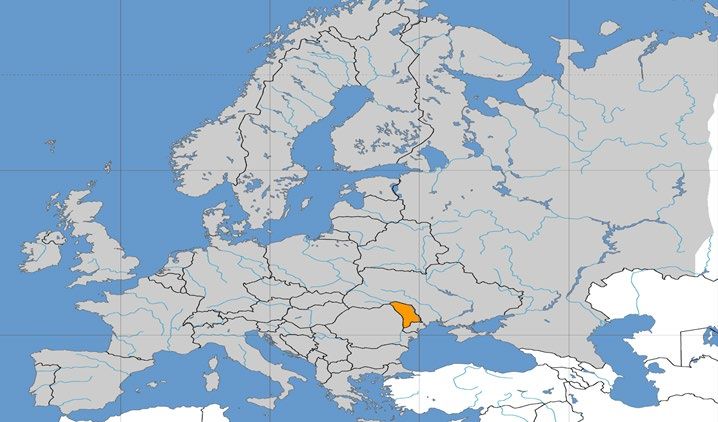
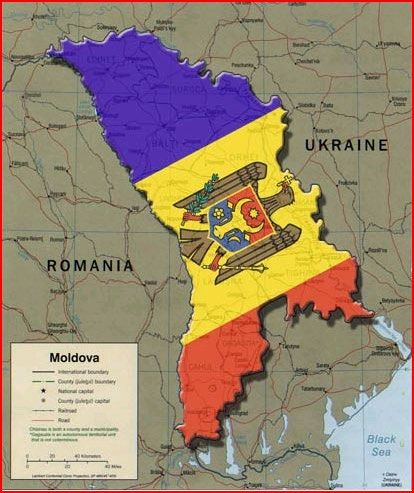
Geographical Location
   Population:      Area:
    2.6 million   33,800 km2

                               3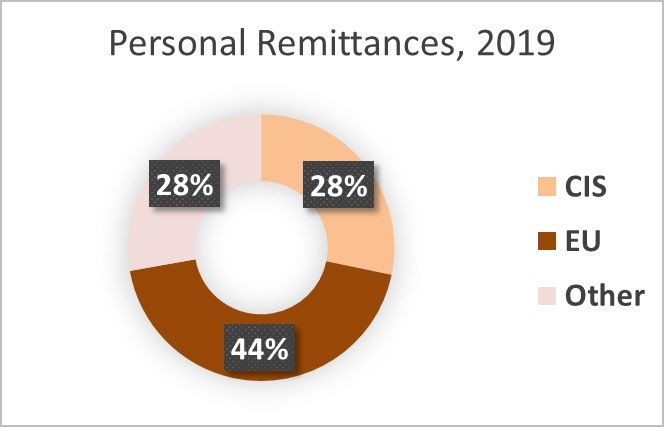
Personal remittances
           components for which estimates are performed

Total remittances and transfers to NPISHs: a+b+c+d+e+f
Total remittances: a+b+c+d
Personal remittances: a+b+c
a.                   b.                  c.              d.         e.             f.
Personal transfers   Compensation of     Capital         Social     Current        Capital
(part of current     employees less      transfers       benefits   transfers to   transfers to
transfers)           taxes, social       between                    NPISHs         NPISHs
                     contributions,      households
                     transport, and
                     travel

        Include informal flows

NPISH = nonprofit institution serving households.

                                                    4
Personal remittances magnitude
Geographical structure of personal remittances
5Personal remittances: Data sources
Statistics collected by the National Bank of Moldova
ITRS - Summary report on international banking transactions
Money transfers from abroad to individuals (via commercial banks, money transfer operators, and postal offices)
Foreign currency assets and liabilities of commercial banks of the Republic of Moldova - data on foreign cash
holdings
Cash deposited in/ withdrawn from the accounts of individuals with commercial banks
Transactions made by foreign exchange offices of commercial banks
Foreign currency sale / purchase transactions made by independent foreign exchange offices
Foreign cash taken out from/ brought to Moldova by commercial banks
Data on key household spending categories where foreign cash is typically used, collected
by other national authorities
Transactions in real estate (Agency for Public Services)
Average market prices of real estate (Real estate agencies)
Number and value of cars imported by individuals (Customs declarations database)
Migration and labor force statistics
Labor Force Survey (National Bureau of Statistics)
Population Census (2004, 2014)
Specially Designed Surveys (CBX-AXA, IOM)
Other data sources
Number of residents and non-residents who crossed the border (Frontier service)
Statistics of partner countries (e.g. Russia - money transfers, working permits)
6
Economic situation in host countriesPersonal remittances
Compilation techniques applied
Estimation of informal inflow to be included in remittances-related items of the BoP
https://www.imf.org/en/Data/Statistics/informal-economy-
data/Reports/Moldova-Compensation-of-employees-and-Personal-transfers
• The total value of the financial flows entering the country by all formal channels is
calculated
1.
• The difference between the actual foreign currency consumption of individuals and
available foreign currency from formal sources is estimated
• Adjustments for consumption pattern of households are included taking into account
2. the evolution of other macroeconomic indicators (final consumption, savings, CPI)
• The aggregation of amounts calculated in previous 2 steps, and distribution according
to BoP articles
3.
7Personal remittances
Advantages of inflow estimation method
covers all channels of money transfers (banks, MTO, post offices)
takes into account migration and labor force statistics
covers all formal national FX circuits involving individuals:
o the evolution of resident individuals' deposits (new deposits in foreign cash and
withdrawal of deposits)
o the evolution of foreign cash held by commercial banks (including the export-import
of foreign cash by banks)
o the turnovers of foreign exchange offices
takes into account FX consumption and savings of households
o the evolution of real estate and motor car markets
o expenditures on education, medical services, etc.
Individuals’ propensity to save and the evolution of households' consumption are also
taken into account.
it is based on comparison of the consumption and resources entered the country formally
(taking into consideration the demand (uses) to adjust the supply (resources) 8Personal remittances
Distribution according to BoP
1. Geographical distribution:
The transfers by formal channels – data sources (ITRS)
Adjustments – tendencies set by Labor Force Survey
Aggregation by geographical areas
2. Residents / nonresidents – coefficients (shares) based on Labor Force
Survey
< 1 year – residents (net compensation of employees)
> 1 year – nonresidents (personal transfers)
3. Gross compensation of employees:
taxes, social contributions – 5%
transport and travel – 12%
4. Personal remittances: personal transfers + net compensation of9
employees + capital transfers between householdsPersonal remittances structure
Personal remittances growth (YOY)
10Personal remittances
Informal inflow impact on BoP
11Personal remittances
Challenges in performing the estimates
The model relies on many assumptions. Individuals’ behavior may change over time, that
is why empirical verification of assumptions is important and requires periodical
appropriate surveys to be conducted; however, specialized surveys are conducted very
rarely.
No comprehensive and reliable counterpart data are available. Moldova’s official statistics
and implicitly BoP and remittances statistics do not include a part of territory called
Transnistria, which is not under the control of Moldovan authorities. Partner countries’
statistics include the whole territory, that is why data are not comparable.
The geographical distribution of cash received via informal channels remains a challenge.
The model estimates the total inflow of remittances from the perspective of demand
(spending) - based approach and the informal inflow of remittances is derived as a
residual, therefore it is impossible to distinguish between flows coming from informal or
illegal activities.
Due to development of IT technologies (especially payment methods) and distance
employment is necessary develop data-sources and estimations methods to cover these
individuals (e.g. compensation of NR employees working from their countries)
12Currency and deposits
Net acquisition of financial assets-Other sectors
Overview
https://www.imf.org/en/Data/Statistics/informal-economy-
data/Reports/Moldova-Net-Purchases-of-Foreign-Currency-in-Cash
In Moldova, net purchases of foreign cash from individuals by resident banks and currency
exchange offices constantly and largely exceed net remittances (from all channels, including
informal), which suggests that individuals own and sell more foreign cash than they receive
from abroad in the current period and they keep this resources on accounts abroad and via
informal channels move them into the country when need.
The sources of the cash are not covered completely by the official statistics. The actual
situation in the country with high dollarization/eurozation of economies and biggest
transactions of individuals (motor car and real estate, education and health care, travel..) in
FX or linked on it, the issue of reflecting, the inflows in BoP and the source in IIP, informal
cash has undeniable importance.
The size of this phenomenon is on average of 27% of all inflows in BOP Financial account.
Necesity to adjust the flows on Currency and deposits-Net acquisition of financial assets-
Other sectors by estimating the excess of net amounts of foreign cash sold by individuals to
banks against estimates of total net remittances during reporting period as a decrease in CD
of OS abroad.
13Currency and deposits
Net acquisition of financial assets-Other sectors
Data sources used for the estimates
Information on demand and supply of foreign exchange in the forex market / monthly
The NBM's activity on the interbank market /monthly
The evolution of DTC FX assets and liabilities and Official Reserves assets and other foreign
currency assets /monthly
Information about the deposits in national and foreign currencies of commercial banks, on
their own behalf and on the behalf of their customers / monthly
Remittances statistics, produced within International Accounts Statistics Division by BP
Compilation Unit, the calculations in the model of informal remittances in cash estimations
/ quarterly
Research on the exchange rate behavior in Moldova, 2017, the Economic Research
Department, NBM (in frame of witch also the FX flows were analyzed and same estimates
of postponed consumption were made), other relevant researches / ocasitionaly
BIS statistics of deposits of Moldova’s residents in banks abroad
14Currency and deposits
Net acquisition of financial assets-Other sectors
Compilation techniques applied (1)
I. A comparison is made between the net supply of foreign cash and net remittances
in the same period. Two situations are possible:
net supply of foreign cash > net supply of foreign cash <
net remittances net remittances
• It is assumed that the extra cash • This reflects growth in households’
sold by individuals comes from assets in the form of FX hold
savings hold abroad made from abroad as a result of saving and
remittances received in the past or represents potential postponed
from other unknown sources . The consumption. The difference is
difference is recorded on the Ct recorded as an increase in other
side as a decrease in other sectors’ sectors’ currency and deposit
currency and deposits assets and as assets on the Dt side (with the Ct
an increase in currency and entry in remittances).
deposits of deposit-taking
corporations on the Dt side.
15Currency and deposits
Net acquisition of financial assets-Other sectors
Compilation techniques applied (2)
II. The evolutions of deposits within bank’s sector(DTC) is analyzed. Several clearly identified
situations are possible : group 1 (intra-bank flows)
Commercial Commercial Natural Natural Economic Economic
banks, banks, persons, persons, entities, entities,
Interpretation
national foreign national foreign national foreign
currency currency currency currency currency currency
intra-bank flows, no inflow
1 ↑ ↓ ↓ ↑ ↓ ↑
of FX into the DTC sector
intra-bank flows, no outflow
2 ↓ ↑ ↑ ↓ ↑ ↓
of FX from DTC sector
1. Deposits of individuals or economic entities in foreign currency increase as a result of the
conversion (bank-customers), accompanied by a simultaneous reverse net dynamics of
deposits in national currency. In this case, there are no cross-sector flows if the converted
amounts are deposited with commercial banks (row 1 in the table above), not BoP;
2. Deposits of individuals or economic agents in foreign currency decrease as a result of the
conversion (bank-customers), accompanied by a simultaneous reverse net dynamics of
deposits in national currency. In this case, there are no cross-sector flows if the converted
amounts are deposited with commercial banks (row 2 in the table above), not BoP;
16Currency and deposits
Net acquisition of financial assets-Other sector
Compilation techniques applied (3)
III. The amplitude of changes in deposits is analyzed and compared for different groups of
customers, the group 2 (inter-customers flows):
Commercial Natural Natural Economic Economic
Commercial
banks, persons, persons, entities, entities,
entities banks, foreign Interpretation
national national foreign national foreign
currency
currency currency currency currency currency
intra-customers flows, no inflow
3 Insign. change Insign.change ↓ ↑ ↑ ↓
of FX into the DTC from OS
intra-customers flows, no
4 Insign.change Insign.change ↑ ↓ ↓ ↑
outflow of FX from DTC to OS
3. Deposits of individuals in foreign currency increase (decrease in national currency) as a result of
the conversion (between customers – individuals/ec. entities), accompanied by a simultaneous
opposite net dynamics of deposits of economic entities in foreign currency and in national currency.
In this case, when deposits of banks also do not change significantly (or the change is explained by
flows with the central bank) there are no cross-sector flows (row 3 in the table above), not BoP;
4. Deposits of individuals in foreign currency decrease (increase in national currency) as a result of
the conversion (between customers – individuals/ec. entities), accompanied by a simultaneous
opposite net dynamics of deposits of economic entities in foreign currency and in national currency.
In this case, when deposits of banks also do not change significantly (or the change is explained by
flows with the central bank) there are no cross-sector flows (row 4 in the table above), not BoP; 17Currency and deposits
Net acquisition of financial assets-Other sectors
Compilation techniques applied (4)
IV. The change in the deposits of individuals is compared with the difference between the net
supply of foreign cash and net remittances for the following situations : Group 3 (inflow/outflow
from/to individuals with banks)
Commercial Commercial Natural Natural Economic Economic
banks, banks, persons, persons, entities, entities,
Interpretation
national foreign national foreign national foreign
currency currency currency currency currency currency
outflow of FX from banks to
5 ↓ ↓ ↓ ↓ ↓ ↓
other sectors
inflow of FX to banks from
6 ↑ ↑ ↑ ↑ ↑ ↑
other sectors
5. Deposits of individuals decrease (both in FX and in national currency) as well as of economic
agents, accompanied by a net decrease in commercial banks’ deposits in FX and in national
currency (bigger than with CB), which indicate an outflow from banks to other sectors (row 5),
BoP, debit Currency and Deposits(NAFA +) – Other sectors;
6. Deposits of individuals increase (both in FX and in national currency) as well as of economic
agents, accompanied by a net increase in commercial banks’ deposits in FX and in national
currency (bigger than with CB), which indicate an inflow from banks to other sectors (row 6),
BoP, credit Currency and Deposits (NAFA -) – Other sectors
18Currency and deposits
Net acquisition of financial assets-Other sectors
Compilation techniques applied (5)
V. After the analysis of the current situation in deposits (for the quarter of compilation) and
classifying the evolution of deposits to mainly one of three groups presented, only for the cases
of the group 3 (rows 5 and 6) the adjustment could be done.
The size of adjustment is determined by the difference between the net supply of foreign cash
and net remittances in comparison with the change in the deposits of individuals, excluding the
changes caused by the withdrawals or opening deposits with cash.
VI. The adjustments for positions in the International investment position for currency and
deposits are also operated, aimed to consolidate the stock for other sectors. The value of
adjustment is assumed to be equal as a half of the informal cash inflow during the current
period, estimated in the model on personal remittances.
Main advantages of estimation method
All formal and estimated cash flows are taking into consideration during the concluding
on the necessity and size of the adjustment.
The double accounting is unless probable due of using a most prudent approach.
A complex method of integrating the estimations of flows with
consolidation/modification in positions is applied.
The cross-checking of estimated data magnitude (for flows and positions) generally with
19
the estimates of informal economy share in GDP formation and relevant BIS statistics.Magnitude of currency and deposits adjustments
(1) Financial account – inflow
(2) GDP
20Currency and deposits adjustments
Impact on BoP
21Currency and deposits
Net acquisition of financial assets-Other sectors
Challenges in performing the estimates
1. The discrepancy during reporting period between the net supply of foreign cash
from individuals to banks and net remittances received might partly arise from
possible issues with the estimation of net remittances or with the estimation of
other BOP items (underestimations or overestimations for the current period).
2. This time of establishing transactions could be with in different period as the
contra-entry, this inconsistency in time of recording could pertain to the current
period, or be cumulated historically, or more probably, both.
3. The economic origin of estimated informal entries from abroad of FX in cash
can have a mixed nature, postponed consumption or offsetting records of
current period’s transactions not reflected in BoP (in Current Account or
Financial Account).
4. Additionally, within the amounts estimated, it is impossible to distinguish
between flows coming from informal, underground or illegal activities,
because this supply-based approach estimates the total.
22Future plans to expand the estimates to other
BOP components
1. To correlate/improve the existing estimates and estimations technique on
informal/non-observed economy in IA with those applied in NA
2. To extend the estimations on goods and services, in order to find the
sources of FX inflows – use other countries estimates for Moldova
(informal exports of tobacco, alcoholic beverages, prostitution, IT related
services…)
3. To analyze the possibility to improve the DI and PI assets estimations and
income inflow from them, as one of possible sources of cash inflow into
the country.
4. To use available data, as the WB and BIS databases, for
enhancing/completing/or even replace partly the estimations of stocks
and flows for OS CD abroad, and CDIS and CPIS datasets for DI and PI
assets estimates.
5. To collaborate more active with the Research department and encourage
them to made more often researchers on informal economy, FX in pockets
(in cash), consumption in FX. To analyze the related international
researches and papers for similar country situations.
23Thank you!
Angela.Gherman@bnm.md
Angela.Moraru@bnm.md
2021You can also read


