Exercise Diary - Active Against ...
←
→
Page content transcription
If your browser does not render page correctly, please read the page content below

Exercise Diary
Welcome
    This exercise diary has been created to guide and
    support you through your journey with Active
    Against Cancer, and to help keep you active when
    you are not with us. Exercise should be safe,
    effective and fun. Whether you are exercising at
    home, in class, or both, everything you need to
    know is contained within these pages. Please give
    it a good read and speak to a member of the team
    if you have any questions.

    The Active Against Cancer Team :)

WARNING: EXERCISE HAS BEEN
KNOWN TO CAUSE HEALTH AND
HAPPINESS
Contents
Introduction
The benefits of exercise..................................................................04
Break the cycle of tiredness or fatigue...........................................05
How often should I exercise?..........................................................06
How should it exercising me feel?..................................................07
How to exercise safely....................................................................08
What equipment do I need?...........................................................09

Exercise Guide
How oftern should I do a session?.................................................10
Warm Up........................................................................................12
Shoulder Shrugs. Knee Lifts, Toe Taps, Marching on the Spot
Resistance exercises.....................................................................17
Heel Raises/Calf Raises, Seated Leg Extensions, Shoulder Rotations/
Upper Back, Front Arm Raise, Shoulder Press, Bicep Curl, Chair Dips,
Wall Press, Sit to Stand/Squats, Lunge, Shoulder/Back/Rotator Cuff
Balance exercises..........................................................................29
Side Walks, Grape Vines, Heel-to-toe walk, One Leg Stand
Aerobic exercises...........................................................................34
Walking, Step-Ups, Star Jacks, Marching on the Spot, Shadow Box-
ing - jabs and upper cuts,
Cool Down......................................................................................40
Shoulder/Tricep Stretch, Chest Stretch, Calf Stretch, Quad Stretch,
Hamstring Stretch, Torso Stretch, Seated Glute Stretch

Over to you…
Notes................................................................................................51
01
The benefits of exercise

Exercise is good for everyone...

     Improves physical wellbeing
     Improves mental wellbeing
     Improves sleep
     Improves fitness

... but also has lots of specific benefits for those
living with or beyond cancer:

     Builds physical resilience

     Reduces the chance of surgical complications

     Reduces the impact of the side effects of treatment

     Supports recovery

     Reduces the chances of recurrence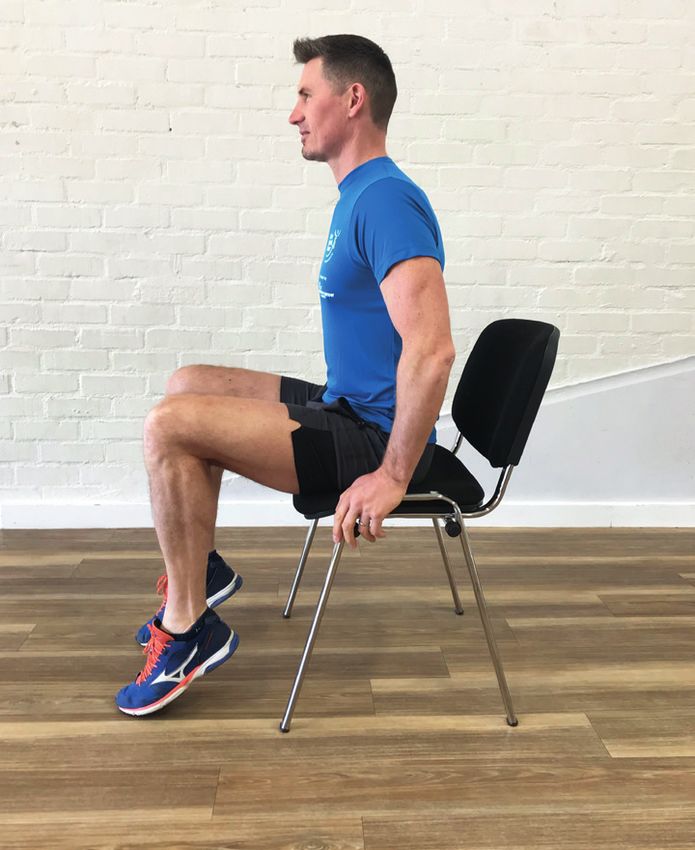
02
  Physical activity or exercise can help
  break the cycle of tiredness or fatigue.
                     You feel unmotivated
                         and fatigued

                                                       You do less
                                                     physical activity
You get more
breathless
and unfit
                                                 Your muscles
                                                   weaken

                                          c y cle
                                       he        E
         Your fitness level     re ak t ERCIS
                              B      EX
                               with
            decreases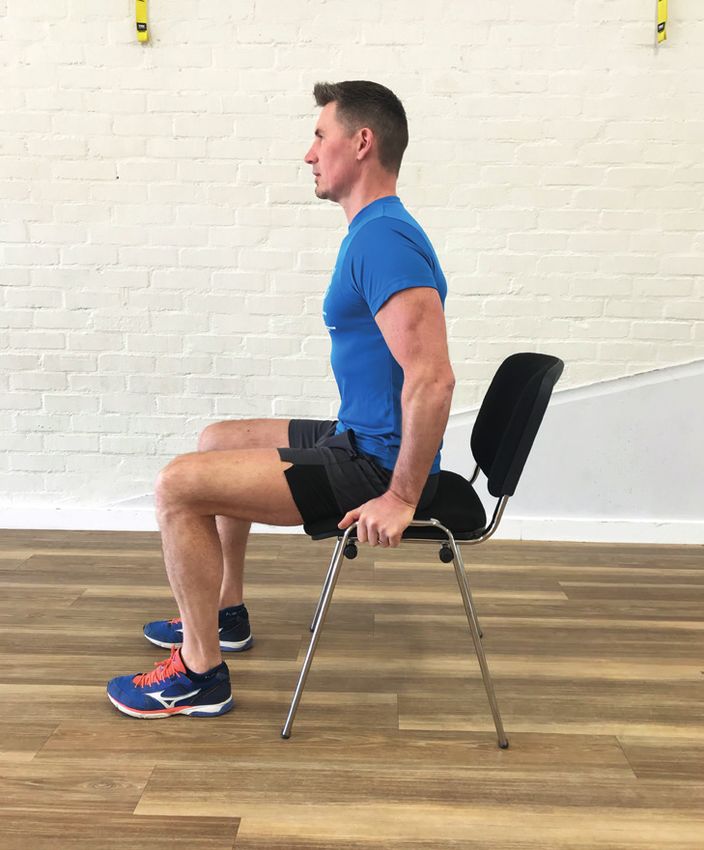
03
  How often should I exercise?
  Healthcare professionals recommend that all adults, including
  those over 65, should do this much exercise every single week.

          at least                                   at least

       150mins                                   75mins
  Moderate Intensity                      Vigorous Intensity
     per week                                 per week

   SWIM     BRISK WALK     CYCLE           RUN        STAIRS       SPORT

                     MUSCLE                                 MOBILITY
                     STRENGTHENING                          STRENGTHENING
                     EXERCISES                              EXERCISES

   2 DAYS a week                          2+ DAYS a week
                 GYM                        BOWLS            TAI CHI
YOGA
                       CARRY HEAVY BAGS             DANCE
04
How should exercising make me feel?
It is completely normal to experience your heart rate,
breathing and temperature changing whilst exercising or being
physically active. Use this page to help you assess how hard
you are working!

  MEASURE          LIGHT                    MODERATE              VIGOROUS
                EXERCISE OR                EXERCISE OR           EXERCISE OR
                 PHYSICAL                   PHYSICAL              PHYSICAL
                  ACTIVITY                   ACTIVITY              ACTIVITY
Will feel…     … easy                    … Somewhat hard        … Very hard

Your           … May not change          … May begin to         … May become deep
breathing…                               quicken and deepen     and rapid and you
                                                                may feel breathless

Talk test…     Possible to talk or sing Possible to talk but    Only possible to say
                                        not sing                a few words

Sweating…      Not unless it is hot or   … May begin after 10   … May begin after 2
               humid                     minutes                minutes

For example…   • Casual walking          • Brisk walking        • Football
               • Hanging laundry         • Gardening            • Running
               • Yoga                    • Cycling
                                         • Dancing

Try the talk test yourself. Can you say or sing...

        This exercise programme
      is going to do me good!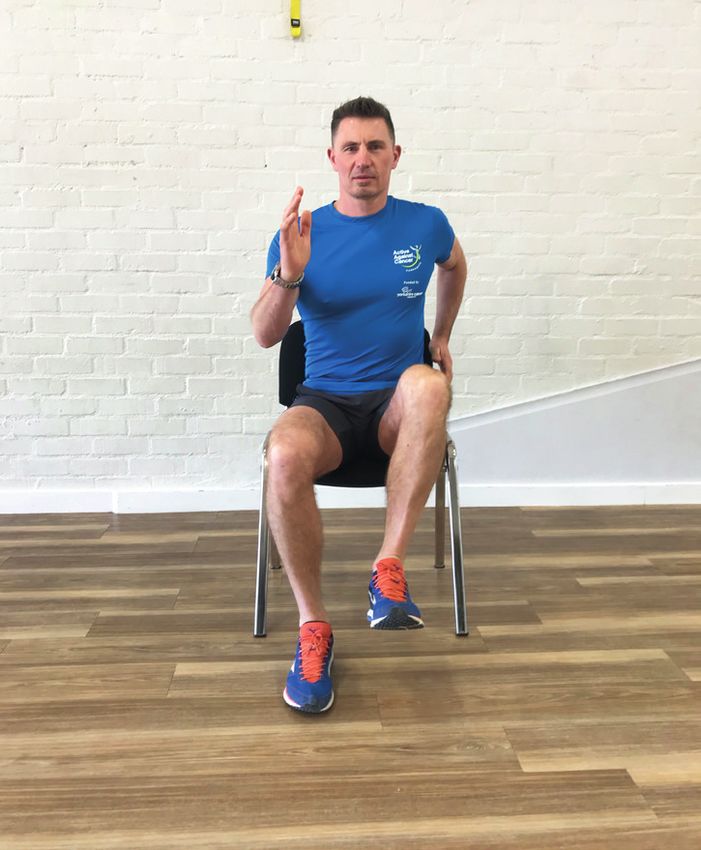
05
Exercising safely…

                             Always warm up
                             before and cool down
                             after exercising

                             Wear loose and
                             comfortable clothing

                             Eat lightly and drink
                             plenty of water

STOP                         If you suddenly
                             experience:

  Chest pains or tightness          Joint or muscle pain over and above
                                    the level of exercise you are doing.
  Dizziness or nausea               All little muscle ache is good.

  Clamminess or cold                Feeling overly tired

  Increasing wheeziness/
  shortness of breath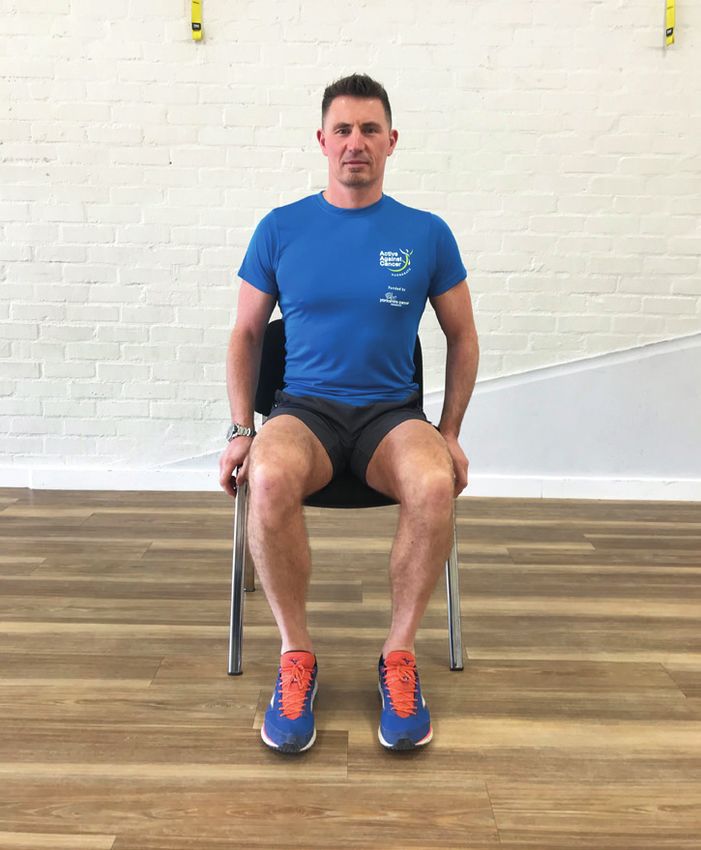
06
What equipment do I need?
You have everything you need to complete these
exercises already within your home…

A dining room chair

                                                           A clear wall
                        Some arm weights (water
                      filled plastic bottles, tin cans

A clock or watch

                           A clear area to exercise
                              in and clutter free
                                                          Resistance band
                                                         (provided by AAC)
A Step or stairs

        Remember that any exercise is better
        than no exercise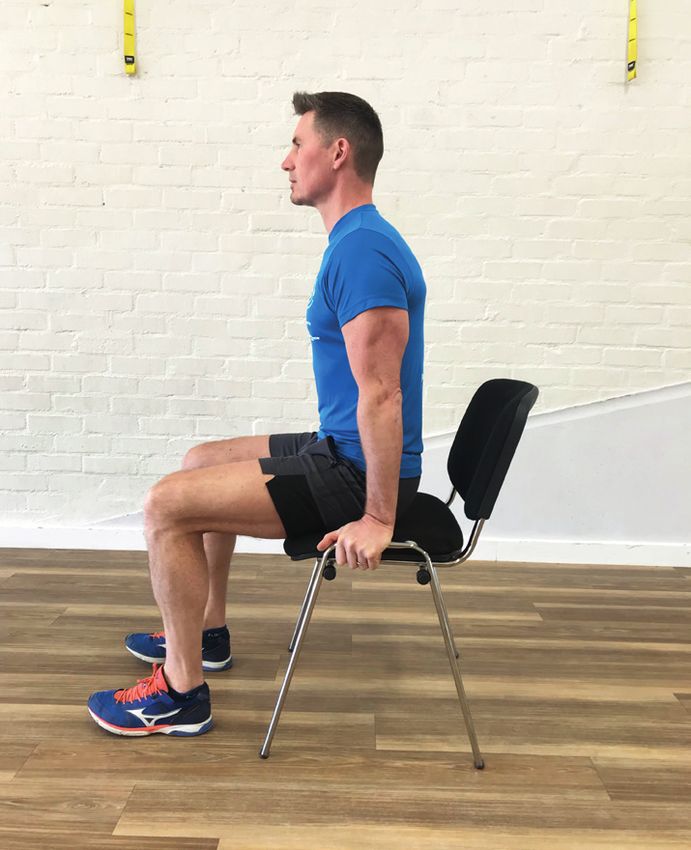
How often should I do a session?
If you build your session in this way, you will incorporate all of
the recommended elements of exercise. You should aim to do this
often enough to meet the time targets shown on page 2. We would
suggest building up to 3 - 4 sessions a week, including the ones you
do with us. Enjoy!

 LEVELS explained:

 Level 1                              Level 2                             Level 3
 Beginner                          Intermediate                           Difficult

 REPS explained:                             SETS explained:
 Reps or repetitions describes the           Once you have completed your reps,
 number of times you are doing an            take a short break and then go again.
 exercise without stopping. For each         The number of times you complete
 exercise we have suggested a range          the reps-rest cycle in the number of
 of reps. Aim for somewhere within           sets completed. For each exercise we
 the range that starts to make your          have suggested a range of sets. Aim
 working muscle ache.                        for somewhere within the range.

Low                            High         Low                             High
6 reps         9 reps        12 reps        1 set          2 sets          3 sets
Warm Up
Ok, let’s get you moving. The warm-up does exactly what it
says, warms your muscles and cardiovascular system. It is
important to warm up gradually, every time you exercise.

The benfits of warming up:
     Reduces the chances of getting injured

     Can improve your range of movement

     Counts towards you physical activity totals (see page 3)

How much?
Follow the programme you have been recommended by one of the Active Against
Cancer team.
UPPER BODY
WARM U
Shoulder Shrugs
PREPARES BODY FOR EXERCISE
6 x2 WARMS JOINTS AND MUSCLES
REPS SETS EQUIPMENT GENTLY RAISES HEART RATE
EXERCISE PROGRESSION
Slowly lift your shoulders backwards and Hands on shoulders and circle
upwards towards your ears, then forwards the elbows.
and downwards, in small circles.
Change direction. Extend the arms and circle the
full arm.
Tip: Stand with you back against a
wall to learn the movementLOWER BODY
WARM U
Knee Lifts
PREPARES BODY FOR EXERCISE
6 x2 WARMS JOINTS AND MUSCLES
REPS SETS EQUIPMENT GENTLY RAISES HEART RATE
EXERCISE PROGRESSION
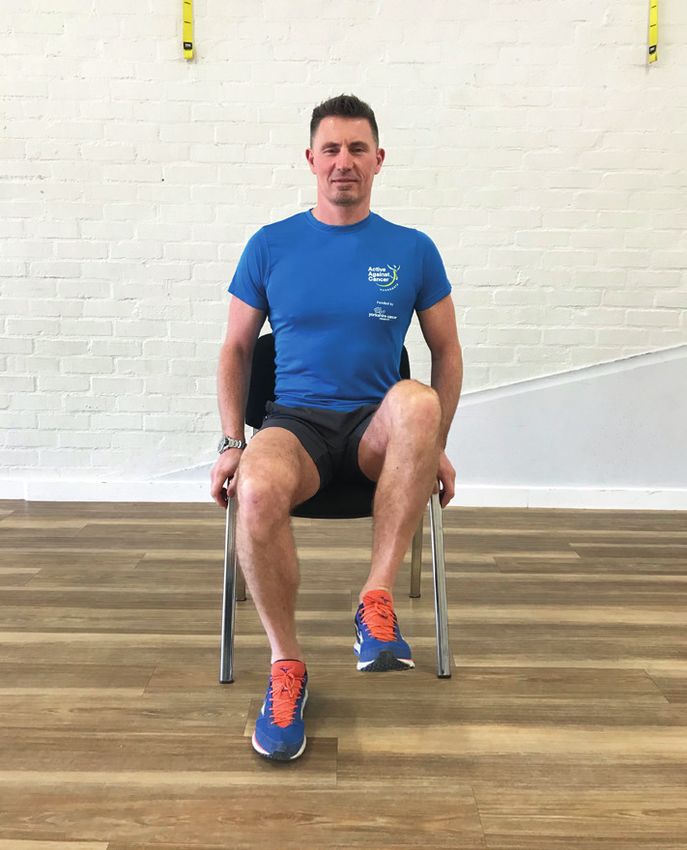
STARTING POSITION: Sit, engaging your Start in a standing position.
core and with you back off the backrest.
Slowly lift one knee up to hip level, then
lower again. Repeat with the other leg.
Tip: Always make sure you have a
chair, counter top or perhaps a wall to
help keep you steadyLOWER BODY
WARM U
Toe Taps
PREPARES BODY FOR EXERCISE
6-8 x1 WARMS JOINTS AND MUSCLES
REPS SETS EQUIPMENT GENTLY RAISES HEART RATE
EXERCISE PROGRESSION
Sit towards the front of your seat and engage Start in a standing position.
your core.
Put your right leg out to the side and tap
your toe on the ground. Bring this leg back
to the centre and then repeat with your left.
Try to avoid leaning with your upper body.
Tip: Draw in your stomach to create
a stable baseFULL BODY
WARM U
Marching on the Spot
PREPARES BODY FOR EXERCISE
1 min x1 WARMS JOINTS AND MUSCLES
REPS SETS EQUIPMENT GENTLY RAISES HEART RATE
EXERCISE PROGRESSION
Sit with you feet hip width apart, your back Start in a standing position.
off the backrest and engage your core.
Keep elbows and knees bent to 90°, and Only if you have done so in class,
march on the sport for 1 minute without take it into a run.
stopping.
Repeat for up to 1 minute without stopping.
You can do this every day.
Tip: If you feel yourself getting out
of breath really quickly, build up
10 seconds at a timeResistance
Exercises
Resistance exercises use some form of resistance, this could
be a band, body weight or a weighted object, to build muscle.
In this diary there are a combination of exercises designed to
work all of the major muscle groups in the body.
Building strength means:
It is easier to carry out daily tasks such as carrying the shopping or gardenI
Increasing muscle or lean mass which is often lost with chemo or radiotherapy
How much?
Follow the programme you have been recommended by one of the Active Against
Cancer team. When performing resistance exercises it is normal to feel a burning
or aching sensation in the working muscle, and it may feel stiff or sore one to
two days after exercising. Build up the number of reps and sets gradually and
take rests if your muscles are overly sore. You can also increase the resistance or
weight to make them harder.LOWER BODY
RESISTANC
Heel Raises/Calf Raises
STRENGTHENS LEGS
8-12 x3 IMPROVES BALANCE
REPS SETS EQUIPMENT ASSISTS WITH DYNAMIC
STABILITY
EXERCISE PROGRESSION
Use the back of a chair or wall for balance. Rise up on both feet, take one
Place your feet hip width apart with your foot off the floor and lower on
toes facing forwards and legs straight. one leg. Complete on one leg,
repeat on the other side.
Brace your stomach and raise slowly up on
to your toes, pause and lower back to the
floor.
Tip: Use a chair or wall for stability
until you become more confidentLOWER BODY
RESISTANC
Seated Leg Extensions
STRENGTHENS LEGS
6-12 x3 IMPROVES BALANCE
REPS SETS EQUIPMENT GENTLY WORKS CORE MUSCLES
EXERCISE PROGRESSION
Place your chair on a non-slip floor or with Hold each leg and squeeze at
the back legs pressed against a wall. Start the top of the movement for 3
seated with a straight back towards the edge seconds.
of your chair, holding the handles adjacent
to your hips.
Try lifting both legs at the same
With one leg at a time, lift your foot off the time.
floor by bending at the knee and straighten
your leg out in front of you. Squeeze your
thigh for a moment and then lower back to
down. Repeat with the other leg.
Tip: Draw the stomach in to stabilise
to avoid leaning backUPPER BODY
RESISTANC
Shoulder Rotations/Upper back
STRENGTHENS UPPER BACK AND
SHOULDERS
6-12 x3 IMPROVES POSTURE AND SHOULDER
MOBILITY
REPS SETS EQUIPMENT WORKS ABS & CORE
EXERCISE PROGRESSION
In a seated or standing position hold your Pull the band tighter for more
resistance band in both hands with your resistance.
palms turned upwards and your arms
straight out in front of you. Pull your
Slow it down – 3 seconds out and
shoulders down towards the floor. Keeping
3 seconds in.
you arms straight and pinching your should
blades together, pull the ends of the band
apart. Pause out wide and then slowly return
your hands back to the starting position
whilst resisting the tension of the band.
Tip: Brace your stomach at all times to stop
yourself swaying backwards. Try and stop
your shoulders rising up towards your ears.UPPER BODY
RESISTANC
Front Arm Raise
STRENGTHENS ARMS &
SHOULDERS
8-12 x3
IMPROVES POSTURE
REPS SETS EQUIPMENT WORKS ABS & CORE
EXERCISE PROGRESSION
Sit towards the front of your seat, with the Start the exercise in standing to
resistance band under one foot. create more resistance.
Grip the band tightly at each end with your
hands just in front of your hips. Keeping your Create even more resistance by
arms straight, raise them to shoulder hight, placing both feet in the band
pause and then lower back down slowly shoulder width apart.
resisting the tension on the band.
Tip: 3 seconds up, 3 seconds downUPPER BODY
RESISTANC
Shoulder Press
STRENGTHENS SHOULDERS
6-12 x3 IMPROVES POSTURE AND
SHOULDER MOBILITY
REPS SETS EQUIPMENT WORKS ABS AND CORE
EXERCISE PROGRESSION
STARTING POSITION: In a seated position Perform the exercise in a
place your resistance band under one foot, standing position to increase
holding on to the ends with each hand. Bring the resistance.
your hand up to your shoulders with your
elbows bent and pointing forwards.
Slow it down – 3 seconds up and
From this point lift your arms above your 3 seconds down.
head until your arms are straight, pause, and
then lower your hands back towards your
shoulders whilst resisting the band.
Tip: Brace your stomach at all times
to stop yourself swaying backwardsUPPER BODY
RESISTANC
Bicep Curl
STRENGTHENS ARMS
6-12 x3 IMPROVES POSTURE
REPS SETS EQUIPMENT WORKS ABS & CORE
EXERCISE PROGRESSION
Start seated towards the edge of your chair Pull the band tighter for more
with your feet under your knees hip width resistance.
apart. Place your resistance band under
both feet and grip the band tightly at each
end. Complete in standing.
Bend your elbows and bring your hands
towards your shoulders, keeping your elbow
tucked in as you move. Pause at the top and
then slowly lower your hands back down,
resisting the tension of the band
Pause, and then lower your hands back to
your starting position.
Tip: Brace your stomach at all times to stop yourself swaying backwardsUPPER BODY
RESISTANC
Chair Dips
STRENGTHENS ARMS & CHEST
6-10 x3 IMPROVES POSTURE
REPS SETS EQUIPMENT WORKS ABS & CORE
EXERCISE PROGRESSION
Place your chair on a non-slip floor or with Hover on the seat between reps
the back legs pressed against a wall. Start
seated towards the edge of your chair. Holds
the handles of the chair, with your hands Bring your feet forwards and
adjacent to your hips. lower infront of the chair seat
Draw your stomach in and push against the
arms of the chair lifting your body off the
seat. Attempt to straighten your arms and
then slowly lower yourself back into the
chair.
Tip: Keep your stomach braced at all timesUPPER BODY
RESISTANC
Wall Press
STRENGTHENS ARMS & CHEST
6-10 x3 IMPROVES POSTURE
REPS SETS EQUIPMENT WORKS ABS AND CORE
EXERCISE PROGRESSION
Start stood roughly two steps away from a Stand a little further away from
clear wall, with your palms on the wall at the wall and slow it down.
roughly shoulder height and width.
Slowly lower yourself towards the wall by Stand further away from the
bending your elbows until your forehead wall, place your hands closer
reaches the wall. together, and keep your elbows
pointing downwards.
Pause and slowly push yourself back to your
starting position.
Tip: Keep your stomach braced at all timesFULL BODY
RESISTANC
Sit to Stand/Squats
STRENGTHENS’ LEGS & BUM
6-12 x3 IMPROVES BALANCE,
STRENGTH & MOBILITY
REPS SETS EQUIPMENT WORKS ABS & CORE
EXERCISE PROGRESSION
Place your feet just behind your knees, flat Hover on the seat between reps.
on the floor around hip width apart. Point
your toes out ever so slightly.
Loose the chair completely, start
Lean forwards and with your nose over your
standing and squat.
toes stand up slowly.
When standing, lower yourself slowly back
to the chair to the starting position.
Tip: When starting this exercise hold
your arms out in front of you to act as
a counter balance. Try and rely less on
this when you become more confidentFULL BODY
RESISTANC
Lunge
STRENGTHENS LEGS AND BUM
4-8 x3 IMPROVES BALANCE AND STABILITY
Both Legs
REPS SETS EQUIPMENT IMPROVES SINGLE LEG STRENGTH
EXERCISE PROGRESSION
Stand up straight with your feet hip width Drop your trailing knee closer to
apart and your toes pointing forwards. the floor.
Take a large step backwards with one leg
and gently lower your knee to the floor. Pull yourself back to the starting
Making sure you front knee doesn’t extend position using your front leg
forwards beyond your toes. rather than pushing off with your
back leg.
Pause at the bottom and then push off with
you back leg to return to standing. WARNING – THESE ARE A MORE ADVANCED
EXERCISE AND SHOULD ONLY BE
ATTEMPTED WHEN INSTRUCTED BY YOUR
AAC PHYSICAL TRAINER
Tip: Use a wall or chair for balanceUPPER BODY
RESISTANC
Shoulder/Back/Rotator Cuff
STRENGTHENS ARMS
6-12 x3 IMPROVES POSTURE
REPS SETS EQUIPMENT WORKS ABS & CORE
EXERCISE PROGRESSION
In a seated or standing position hold your Hold for 15-30 seconds.
resistance band in the palms of your hands
approximately shoulder width apart. Your
palms should be facing upwards and your
elbows bent to 90 degrees just in front of
your ribs. From this point, rotate your hands
out to the side, keeping your elbows bent
and tucked into your side.
Pause, and then return to the starting
position whilst resisting the band.
Brace your stomach at all times to stop yourself swaying backwards.
Try and stop your shoulders rising up towards your earsBalance
Exercises
Balance comes more naturally to some of us but these
exercises are designed to help everyone improve their core
strength and balance.
Building strength means:
Reduced risk of falling
More control when performing daily activities such as cleaning or
carrying shopping
More control when completing the other exercises in this diary!
How much?
Follow the programme you have been recommended by one of the Active
Against Cancer team.FULL BODY
BALANC
Side Walks
IMPROVES BALANCE
3-5 x3 WORKS ABS & CORE
REPS SETS EQUIPMENT IMPROVES KNEE & HIP MOBILITY
EXERCISE PROGRESSION
Stand with your feet together, knees slightly The slower you do this exercise,
bent. the harder it will be.
Step sideways in a slow and controlled
manner, moving one foot to the side first.
Move the other foot to join it, go for 5 paces
then back the other way.
Tip: Use your arms for balance
and avoid dropping your hips as
you stepFULL BODY
BALANC
Grape Vines
IMPROVES BALANCE
3-5 x3 WORKS ABS & CORE
REPS SETS EQUIPMENT IMPROVES KNEE & HIP MOBILITY
EXERCISE PROGRESSION
Stand with your feet hip width apart. Cross The slower you do this exercise,
your right foot over your left so you are the harder it will be.
standing crossed legged, then uncross your
legs by bringing your left leg behind your
right so you return to the starting position.
Go for 5 paces, then back the other way by
bringing your left leg over your right.
Tip: Put your finger tips against
a wall for stabilityFULL BODY
BALANC
Heel to Toe Walk
IMPROVES BALANCE
3-10 x3 WORKS ABS & CORE
REPS SETS EQUIPMENT IMPROVES KNEE & HIP MOBILITY
EXERCISE PROGRESSION
Stand upright and place your right heel on The slower you do this exercise,
the floor directly in front of your left toe. the harder it will be.
Take a step forward and place your left heel
directly in front of your right toe.
Tip: Use a wall for stability until
you become more confidentFULL BODY
One Leg Stand
IMPROVES BALANCE
3-6 x3 WORKS ABS & CORE
REPS SETS EQUIPMENT IMPROVES KNEE & HIP MOBILITY
EXERCISE PROGRESSION
Stand near a wall with your feet hip width Rely less on the wall for stability.
apart. Try and only use your fingertips for
support.
Hold the lift for longer, aiming for
Lift your left leg, keeping your hips level and 10 seconds.
keep a slight bend in the supporting leg.
Pause with you left knee bent and then
gently lower your foot back to the floor.
Repeat with the other leg.
Tip: Use a chair or wall for stability until you
become more confidentAerobic
Exercises
These are exercises which increase your heart rate, breathing
rate and may make you sweat!
Building aerobic fitness means:
the body will become more efficient at delivering and using oxygen
over time this reduces the likelihood of getting out of breath meaning you
could walk further and do more
How Much?
Follow the programme you have been recommended by one of the Active Against
Cancer team. You can do this in as many small chunks as you like, whatever works
for you and your schedule. If you become breathless very quickly, try building up
the duration of your exercise gradually.FULL BODY
Walking
STRENGTHENS’ LEGS
10-20 IMPROVES BALANCE
WORKS HEART AND LUNGS
MINS SETS EQUIPMENT
EXERCISE PROGRESSION
Walk on the flat at a rate that increases you Increase your speed, duration
breathing rate for 10-20 minutes. Gentle and incline.
strolls don’t count as a training walk.
Further increase your speed,
duration and incline.
Tip: Take any inhalers or medical spays with you
Get outside to improve you mood
Wear appropriate footware and clothing
Wait 1 - 2 hours after a large meal
Have funFULL BODY
AEROBI
Step-Ups
STRENGTHENS THE HEART AND
LUNGS
1 min x1
IMPROVES BALANCE
REPS SETS EQUIPMENT IMPROVES KNEE AND HIP STABILITY
EXERCISE PROGRESSION
Stand tall with your feet hip width Using any step available to you, stand
apart. with your feet hip width apart in front of
your step.
Take a step forwards and quickly
bring your trailing foot to the same Lift one foot on the step and then bring
position. the other foot to join it. Return the first
foot to the starting position followed by
Repeat in reverse.
the second foot.
Repeat up to 1 minute without stopping
Tip: Start with small steps at first and gradually increase. Use a
chair or wall for stability until you become more confidentFULL BODY
AEROBI
Star Jacks
STRENGTHENS THE HEART
& LUNGS
1 min x1
IMPROVES BALANCE
REPS SETS EQUIPMENT IMPROVES KNEE & HIP STABILITY
EXERCISE PROGRESSION
Stand up straight with your feet hip width Start in a standing position.
apart and your hands by your side
Simultaneously extend your left lag and
Hold a light weight in each hand
arm out sideways, tapping your foot on the
whilst doing the exercise.
ground.
Return to your starting position and repeat
the exercise on the opposite side.
Tip: Start slowly and work on
coordinationFULL BODY
AEROBI
Marching on the Spot
PREPARES BODY FOR EXERCISE
1 min x1 WARMS JOINTS AND MUSCLES
REPS SETS EQUIPMENT GENTLY RAISES HEART RATE
EXERCISE PROGRESSION
Sit with you feet hip width apart, your back Start in a standing position.
off the backrest and engage your core.
Keep elbows and knees bent to 90°, and Only if you have done so in class,
march on the sport for 1 minute without take it into a run.
stopping.
Repeat for up to 1 minute without stopping.
You can do this every day.
Tip: If you feel yourself getting out
of breath really quickly, build up
10 seconds at a timeFULL BODY
AEROBI
Shadow Boxing - jabs and upper cuts
STRENGTHENS HEART & LUNGS
1 min x1 IMPROVES BALANCE
WORKS THE ABS AND CORE
REPS SETS EQUIPMENT
EXERCISE PROGRESSION
In a seated position sit towards the middle start in a standing position.
of the chair with your hands up and fists
clenched like a boxer.
hold a light weight in each hand
Jabs - using alternate hands simulate
whilst doing the exercise.
punching out in front at a roughly shoulder
height.
Upper cuts – using alternate hands simulate
punching upwards from your hips.
Tip: Brace your stomach at
all times to avoid excessive
swaying from side to sideCool Down
These are exercises for the end of each session. Performing
a cool down helps gradually lower your heart rate, breathing
rate and body temperature back to normal.
Benefits of cooling down:
Cooling down gradually gives your body chance to remove any acid that has
built up in the muscles during the session
It reduces the chance of being stiff and achy after exercising
How much?
You must cool down after every session. Complete every exercise at least once,
and if you have had a hard session the whole cool down can be completed up to
three times.UPPER BODY
COOL DOW
Shoulder/Tricep Stretch
GENTLY LOWERS HEART RATE
10-30 x2 HELPS MUSCLES RECOVER FASTER
HELPS PREVENT MUSCLE
SECONDS SETS EQUIPMENT SORENESS
EXERCISE
Raise one arm out in front with your hand at
shoulder height. Draw the arm across your
body. Use the opposite arm to pull the other
further towards your body.
You should feel the stretch across the outside
of your shoulder and across the back of your
upper arm.
Tip: Relax your shoulders down
towards the floorUPPER BODY
COOL DOW
Chest Stretch
GENTLY LOWERS HEART RATE
10-30 x3 HELPS MUSCLES RECOVER FASTER
HELPS PREVENT MUSCLE
SECONDS SETS EQUIPMENT SORENESS
EXERCISE
Place your hands on your lower back with
your finger tips on your belt line pointing
to the floor. Squeeze your elbows towards
each other behind your back.
You should feel the stretch across the front
of your chest.
Tip: Breath deeply and the
Increase the intensity of your
stretch on your ‘out’ breathsLOWER BODY
COOL DOW
Calf Stretch
GENTLY LOWERS HEART RATE
10-30 x2 HELPS MUSCLES RECOVER FASTER
HELPS PREVENT MUSCLE
SECONDS SETS EQUIPMENT SORENESS
EXERCISE PROGRESSION
Stand facing a wall with one foot forwards Widen your stance whilst keeping
and palm flat on the wall back heel on the floor.
Bend the knee on your front leg and move
your weight forwards. Keep your back leg
straight with the heel on the floor.
You should feel the stretch on the back of
your straight leg below the knee.
Tip: Use a chair or wall for stabilityLOWER BODY
COOL DOW
Quad Stretch
GENTLY LOWERS HEART RATE
10-30 x2 HELPS MUSCLES RECOVER FASTER
HELPS PREVENT MUSCLE
SECONDS SETS EQUIPMENT SORENESS
EXERCISE PROGRESSION
In a seated position sit towards the edge of Do this stretch in standing.
the seat and twist to the left. Take your right Have a wall or chair to assist
ankle with your right hand and pull the foot with balance.
towards the seat whilst bending the knee.
You should feel the stretch in your thigh.
Tip: When seated allow your
bent knee to drop towards the
floor to get maximum benefit
from the stretchLOWER BODY
COOL DOW
Hamstring Stretch
GENTLY LOWERS HEART RATE
5-10 x2 HELPS MUSCLES RECOVER FASTER
HELPS PREVENT MUSCLE
SECONDS SETS EQUIPMENT SORENESS
EXERCISE PROGRESSION
Start seated with a straight back towards the Lift your toes on your straight leg
front of a chair with your knees bent. up towards the ceiling to further
increase the stretch.
Slide the heel of one leg out until the leg is
straight.
Place both hands on the thigh of your
straight leg and slowly slide your hands
down your leg towards you toes.
You should feel the stretch on the back of Tip: Start gently, it can
your straight leg. feel very painful if you
stretch too far, too soon.
Keep your head up when
you lean forwardsMIDDLE BODY
COOL DOW
Torso Stretch
GENTLY LOWERS HEART RATE
10-30 x2 HELPS MUSCLES RECOVER FASTER
HELPS PREVENT MUSCLE
SECONDS SETS EQUIPMENT SORENESS
EXERCISE PROGRESSION
Start seated with your feet should width Look further behind and hold
apart. the stretch for longer
Place you left hand on the outside of your
right knee.
Gentle turn to look over your right shoulder.
Repeat on the other side.
Tip: Use the back of the chair
for supportLOWER BODY
COOL DOW
Seated Glute Stretch
GENTLY LOWERS HEART RATE
10-30 x2 HELPS MUSCLES RECOVER FASTER
HELPS PREVENT MUSCLE
SECONDS SETS EQUIPMENT SORENESS
EXERCISE PROGRESSION
Start seated with your feet shoulder width Slide your left foot back to the
apart. starting position.
Allow you left foot to slide out in front.
Lift you right ankle onto your left knee.
Allow your right knee to gentle drop towards
the floor.
Tip: Sit with your back against
a wall until you become more
confidentNotes
Contact
01423 557924
info.activeagainstcancer@nhs.net
www.activeagainstcancer.org.uk
Core Exercises
These exercises are to improve your core stability (the
muscles around your stomach, pelvis and lower back).
Tip – Your core muscles are different to your breathing
muscles. Make sure you keep breathing when doing these
exercises

Building a stable core means:
      Your balance will improve
      You are able to improve your general mobility
      Providing protection for your lower back when carrying out
      everyday activities

How much?
Follow the programme you have been recommended by one of the Active Against
Cancer team.
MIDDLE BODY
CORE EXERCISE
Pelvic Tilts
STRENGTHENS CORE
5-10 1-3 IMPROVES BALANCE
AIDS GENERAL MOBILITY
REPS SETS EQUIPMENT
EXERCISE
Start in crook lying (laid on back with knees
bent). TIP
Brace stomach, tuck tail bone between legs Remember to always breathe
and flatten back onto mat. - do not hold your breath.
Pull tummy button gently
Hold for 1 second and return to start position.
inwards and upwards.
Arch low back off the mat, tilting hips forward.
Hold for 1 sec and return to start position.MIDDLE BODY
CORE EXERCISE
Knee Rolls
STRENGTHENS CORE
5-10 1-3 IMPROVES BALANCE
AIDS GENERAL MOBILITY
REPS SETS EQUIPMENT
EXERCISE
Start in crook lying.
TIP
Roll knees to right side and pause.
Remember to always breathe
Brace stomach and roll knees back to start - do not hold your breath.
position. Pull tummy button gently
Repeat to left side. inwards and upwards.MIDDLE BODY
CORE EXERCISE
Four Point Kneel
STRENGTHENS CORE
5-10 1-3 IMPROVES BALANCE
AIDS GENERAL MOBILITY
REPS SETS EQUIPMENT
EXERCISE
Start on hands and knees (hands underneath
shoulders, knees underneath hips).
TIP
Remember to always breathe
Brace stomach, tuck tail bone between legs - do not hold your breath.
and lift rib cage.
Hold for 1 second.
Return to start position.MIDDLE BODY
CORE EXERCISE
Abdominal Curl Ups
STRENGTHENS CORE
5-10 1-3 IMPROVES BALANCE
AIDS GENERAL MOBILITY
REPS SETS EQUIPMENT
EXERCISE
TIP
Start in crook lying.
Remember to always breathe
Hands by sides. - do not hold your breath.
Inch finger tips towards heel whilst lifting Pull tummy button gently
head and shoulders off the mat tucking chin inwards and upwards.
into chest.
Imagine peeling your spine
Hold for 1 second. off the mat one vertebra at a
Return to start position with control. time.MIDDLE BODY
CORE EXERCISE
Abdominal Oblique Curls
STRENGTHENS CORE
5-10 1-3 IMPROVES BALANCE
AIDS GENERAL MOBILITY
REPS SETS EQUIPMENT
EXERCISE
Start in crook lying.
TIP
Hand on opposite hip. Remember to always breathe
Inch finger tips towards heel whilst lifting - do not hold your breath.
head and shoulders off the mat tucking chin Pull tummy button gently
into chest. inwards and upwards.
Hold for 1 second.
Return to start position with control.MIDDLE BODY
CORE EXERCISE
Bridging
STRENGTHENS CORE
5-10 1-3 IMPROVES BALANCE
AIDS GENERAL MOBILITY
REPS SETS EQUIPMENT
EXERCISE
TIP
Start in crook lying. Remember to always breathe
Hands by your side. - do not hold your breath.
Lift hips towards the ceiling
Squeeze buttocks together and push through and push through feet.
heels to lift pelvis off the mat.
Challenge yourself by
Hold for 1 second. bringing your heels closer to
Return to start with control. your buttocks and feet closer
to each other.Shoulder
mobility
These exercises can help you regain arm and shoulder
movement after surgery. They are also good to help maintain
good arm and shoulder movement.
Tip – Keep your shoulders as relaxed as possible and keep
breathing throughout the exercises.
Good shoulder mobility means:
The ability to carry out everyday activities with ease and pain free
Reducing the risk of developing long term shoulder problems and
lymphoedema
How much?
Follow the programme you have been recommended by one of the Active Against
Cancer team.UPPER BODY
SHOULDER MOBILIT
Shoulder Shrugs
REGAIN ARM AND SHOULDER
MOVEMENT
5 1-3 PREVENT LONG TERM SHOULDER
AND ARM STIFFNESS
REPS SETS EQUIPMENT
REDUCE RISK OF LYMPHOEDEMA
EXERCISE PROGRESSION
Slowly lift your shoulders backwards and Hands on shoulders and circle
upwards towards your ears, then forwards the elbows.
and downwards, in small circles.
Change direction. Extend the arms and circle the
full arm.
TIP
Remember to keep shoulders relaxed and
breathe whilst doing these exercises. They
may feel a little uncomfortable but should
not cause you pain.UPPER BODY
SHOULDER MOBILIT
Shoulder Circles
REGAIN ARM AND SHOULDER
MOVEMENT
5 1-3 PREVENT LONG TERM SHOULDER
AND ARM STIFFNESS
REPS SETS EQUIPMENT
REDUCE RISK OF LYMPHOEDEMA
EXERCISE
Start with arms loose and relaxed by your
sides in a seated position.
Shrug shoulders up towards your ears, then
circle them back down.
TIP
Remember to keep shoulders relaxed and breathe whilst
doing these exercises. They may feel a little uncomfortable
but should not cause you pain.UPPER BODY
SHOULDER MOBILIT
Bent arm elbow lift (front)
REGAIN ARM AND SHOULDER
MOVEMENT
5 1-3 PREVENT LONG TERM SHOULDER
AND ARM STIFFNESS
REPS SETS EQUIPMENT
REDUCE RISK OF LYMPHOEDEMA
EXERCISE
Bend your arms and rest your hands lightly
on your shoulders.
Raise both arms forward so they are at right
angles to your body.
Lower your elbows slowly back to the start
position.
TIP
Remember to keep shoulders relaxed and breathe whilst
doing these exercises. They may feel a little uncomfortable
but should not cause you pain.UPPER BODY
SHOULDER MOBILIT
Bent arm elbow lift (side)
REGAIN ARM AND SHOULDER
MOVEMENT
5 1-3 PREVENT LONG TERM SHOULDER
AND ARM STIFFNESS
REPS SETS EQUIPMENT
REDUCE RISK OF LYMPHOEDEMA
EXERCISE PROGRESSION
Bend your elbows and rest your hands lightly
on your shoulders.
Raise both arms out to the sides so they are
at right angles to your body.
Lower elbows slowly back to the start
position.
TIP
Remember to keep shoulders relaxed and breathe whilst
doing these exercises. They may feel a little uncomfortable
but should not cause you pain.UPPER BODY
SHOULDER MOBILIT
Back scratches
REGAIN ARM AND SHOULDER
MOVEMENT
5 1-3 PREVENT LONG TERM SHOULDER
AND ARM STIFFNESS
REPS SETS EQUIPMENT
REDUCE RISK OF LYMPHOEDEMA
EXERCISE
Hold your arms out to the sides and bend
your arms at the elbow.
Slowly reach up behind your back to your
shoulder blades.
Slowly lower your arms back to your sides.
TIP
Remember to keep shoulders relaxed and breathe whilst
doing these exercises. They may feel a little uncomfortable
but should not cause you pain.UPPER BODY
SHOULDER MOBILIT
Shoulder wings
REGAIN ARM AND SHOULDER
MOVEMENT
5 1-3 PREVENT LONG TERM SHOULDER
AND ARM STIFFNESS
REPS SETS EQUIPMENT
REDUCE RISK OF LYMPHOEDEMA
EXERCISE
Place your hands behind your head with your
elbows pointing forward.
Bring your elbows back so they are pointing
out to the sides.
Return to the starting position.
TIP
Remember to keep shoulders relaxed and breathe whilst
doing these exercises. They may feel a little uncomfortable
but should not cause you pain.Breathing Exercises These exercises can help you to prepare for surgery and reduce the risk of a chest infection pre and post operatively. They are also a good way to help you to relax. Tip – keep shoulders relaxed throughout.
WHOLE BODY

Breathing exercises
These exercises can help you to prepare for surgery and reduce the risk of a
chest infection pre and post operatively. They are also a good way to help you
to relax.

 EXERCISE

 1.   Sit upright in a supported chair.
 2.   Breathe in and out normally.                   TIP
 3.   Take a slow deep breath in through your        Keep shoulders relaxed
      nose (if able) so that your ribs expand        throughout.
      sideways and your lungs fill up with air
      and then exhale through your mouth.
 4.   Take a slow deep breath in and expand
      your lungs, hold that breath for three
      seconds and then slowly exhale.
 5.   Repeat 3-5 times.
Pelvic floor
These exercises help to improve your pelvic floor strength
Tip – keep breathing throughout whilst doing these exercises.
Good pelvic floor strength means:
A reduced risk of developing continence issues
A support structure for your abdominal contentsPELVIC FLOOR
Pelvic Floor Exercises
FOR WOMEN
What are the PELVIC FLOOR MUSCLES
The pelvic floor forms a sling of muscles that are attached to the pubic bone at the
front of the pelvis and the tailbone (coccyx) at the back. There are three passages
through the pelvic floor muscles; one at the front from the bladder (urethra), one
in the middle from the birth canal (vagina) and one at the back from the bowel
(rectum).
What do the
Pelvic Floor
Muscles do?
The pelvic floor muscles
are made of two types of
muscle fibres:
1. Slow twitch muscle
fibres have constant tone in them (even when you are asleep). They support
your pelvic organs inside and work to keep urine inside your bladder until you
find a suitable place to pass it.
2. Fast twitch muscle fibres contract strongly and quickly to prevent leakage of
urine when there is extra pressure on the bladder e.g. when you cough, sneeze,
laugh or lift something heavy.
Learning to do the Pelvic Floor Exercises
Sit on a firm chair or stool with your knees slightly apart in good posture:
TIGHTEN the ring of muscle around your back passage (anus) as though preventing a
bowel movement or wind escaping. At the same time TIGHTEN the muscles around
your front as if you are stopping yourself passing urine.
LIFT the muscles up inside, HOLD, then…RELAX slowly.
Remember to keep your buttocks and thigh muscles relaxed. Try to breathe normally
throughout. The pelvic floor muscles work with your lower abdominal muscles.
Therefore as you draw up your pelvic floor muscles, you may feel your lower
abdomen draw in slightly.PELVIC FLOOR
Pelvic Floor Exercises
FOR WOMEN
The Exercise Programme
1. Slow contractions
First determine your “starting block”
1. TIGHTEN your pelvic floor muscles as described above.
2. HOLD for as many seconds as you can (up to a maximum of 10 seconds).
3. RELAX the contraction and REST for 4 seconds.
How long can you HOLD the contraction for? seconds
How many times can you repeat the contraction? times
So, your “starting block” becomes
e.g. 2 seconds 4 repetitions
2. Fast contractions
1. Now quickly tighten your pelvic floor muscles and then relax the muscle
completely.
2. How many quick contractions can you do?
3. Aim to increase this number (up to a maximum of 10).
4. It is important to do both these exercises 3-6 times a day, gradually building up
the amount of each exercise that you can do. It can take between 3-6 months to
develop enough strength in the muscles to reduce your symptoms.
Updated by the Specialist Continence Service Dec 2017
If you require this information in an alternative language or format (such as Braille, audiotape or large
print), please ask the staff who are looking after you.PELVIC FLOOR Pelvic Floor Exercises FOR MEN Introduction Many men experience problems with their urinary system, leading to unwanted leakage of urine. Some also have difficulty controlling wind or leakage from the bowels. Often this is due to a weakness of the muscles of the pelvic floor, which play an important role in preventing these troublesome conditions. These pelvic floor muscles can be strengthened by regular exercises like any other muscles. What are the PELVIC FLOOR MUSCLES The pelvic floor forms a sling of muscles, which are attached to the pubic bone at the front of the pelvis and the tailbone (coccyx), at the back. A man’s pelvic floor supports the bladder and bowel. The pelvic floor muscles play an important role in bladder and bowel control and have a role in maintaining sexual function. Why the pelvic floor muscle get weak. • Surgery for an enlarged prostate • Constipation - repeated straining to empty the bowels • Persistent heavy lifting • Chronic cough • Being overweight • Lack of general fitness
PELVIC FLOOR

Pelvic Floor Exercises
FOR MEN
Learning to do the Pelvic Floor Exercises
Sit on a firm chair with your knees slightly apart,
TIGHTEN the ring of muscle around your back passage (anus) as though preventing
wind escaping. At the same time TIGHTEN the muscles around your front as if you
are stopping yourself passing urine.
You should feel a slight lift of the scrotum as your muscle contracts and the base of
your penis moves towards your abdomen.
LIFT up inside, HOLD , then…RELAX slowly.

You may feel your lower tummy draw in as you pull in your pelvic floor, this is due
to the fact that the muscle work together. It is important to keep your buttocks, and
thighs relaxed and to breathe normally.
These exercises can be done in any position. If you can, practice them standing up.

The pelvic floor muscles have two types of
muscle fibres in them. It’s important to exercise
both.

Slow twitch muscle fibres have constant tone in them (even
when you are asleep!). They support your bladder and bowel and help you to hold
on when you can’t get to the toilet immediately.

Fast twitch muscle fibres                   contract strongly and quickly to prevent
leakage of urine, when there is extra pressure on the bladder e.g., when you cough,
sneeze, laugh or lift something heavy.
PELVIC FLOOR

Pelvic Floor Exercises
FOR MEN
The Exercise Programme
1. Slow contractions
1.   Hold for as many seconds as you can (up to a maximum of 10 seconds).
2.   How long can you HOLD the contraction for?                         seconds
3. RELAX the contraction and REST for 4 seconds.
4.   How many times can you repeat the exercise?                         repetitions (up to a
     maximum of 10)

2. Fast contractions
1.   How many fast contractions can you do?
2.   Aim to increase this number (up to a maximum of 10). Take your time ensuring
     you rest briefly between contractions.
3.   It is important to do both these exercises 3-6 times a day, gradually building up
     the amount of each exercise that you can do. It can take between 3-6 months to
     develop enough strength in the muscles to reduce your symptoms.

These exercises may be used on their own or in conjunction with other strategies such as bladder training
to improve control of urgency and frequency. If you would like further information or speak to your GP or
specialist physiotherapist or continence nurse.
Contact 01423 557924 info.activeagainstcancer@nhs.net www.activeagainstcancer.org.uk
Aerobic Exercise Record
                    Use this table to record your daily aerobic exercise

                   Day: Monday      Day:          Day:            Day:     Day:
Aerobic Activity
                   Date: 01/01/20   Date:         Date:           Date:    Date:

   Walking
                      25 mins
 (continuous)

   Step ups           2 mins

  Star Jacks          2 mins

Marching on the
                      3 mins
     spot
 Arm Punches/
                       1 mins
Shadow Boxing

     Total            33 mins
Exercise Record
Use this table to record your daily exercise
Day : Monday
Day: Day: Day: Day:
Activity
Date : 24 Date: Date: Date: Date:
Warm –up 10 mins
Main Session
Sit To Stand/
Squats
3 x 10
Chair Dips 3x6
Wall Press 3x8
Lunge -
Seated Leg Exten-
sion
3 x 12
Arm Curls 3 x 10
Calf Raises 3 x 10
Cool Down 5 minutesOvercoming obstacles
Use this table to record....xxxxx
Things which get in the way How can I overcome or
of exercising minimise the effect
Bad weather again Have the right clothing or plan anPrepare to succeed We all set out with the best of intentions, however there may be occasions where things just get in the way. It could be the weather, family commitments or feeling unwell. Have a think about what may prevent you from exercising and formulate a plan to overcome these.
Here are some tips to help you succeed.

   Make a plan – try and plan in your exercise as part
   of your daily routine, so you know what you will be
   doing today, tomorrow...

   Find an exercise buddy – having a friend or family
   member to exercise with makes you more likely to
   stick to the plan.

   Have a bad weather plan – if the weather takes a
   turn, make sure you have an indoor alternative or the
   right clothing to get outside regardless

   Vary your workouts – you have lots of exercises to
   choose from, so be creative and vary the order and
   content to make it more interesting

   Complete this diary – this will help you track your
   progress and reinforce how well you’re doing (or give
   you a little reminder if you’re letting yourself off the
   hook)

   A little is better than nothing – Even 5 minutes of
   exercise is better than nothing, with that in mind,
   ‘time’ should never be an excuse again

   Enjoy it – Do the things which are fun
You will need...

   Remember that
   any exercise is
   better than no
   exercise
You will need...

   Remember that
   any exercise is
   better than no
   exercise
1 Walking
  •   Walking is a good way to start your aerobic exercise and can easily be
      incorporated as part of you daily routine so you could do this every day.
  •   Simply walking around your home and garden is a good start before you
      venture beyond.
  •   Warm up by starting your walks slowly and then gradually build your
      speed up. Aim to walk at speeds which make you moderately out of breath.
      When you become more experienced Increase your distance and speed or
      incorporating short hills as part of your route will make your walks more
      effective.

  Walking Do’s
  •   Take any inhalers or medical spays with you
  •   Get outside to improve you mood
  •   Wear appropriate footware and clothing
  •   Have fun

  Walking Dont’s
  • Walk after a very large meal
  • Count a gentle stroll as a training walk
  • Push yourself too hard so you feel ready
    to drop
02
Physical activity or exercise can help
break the cycle of tiredness or fatigue.
You feel unmotivated
and fatigued
You do less
physical activity
Your muscles
weaken
Your fitness level
le...
cyc
decreases
he
e a kt
Br
You get more
breathless
and unfit07
Creating An Effective Work-Out
Here is how to put it together an effective session…
1 2
Warm-Up Main Session
• The warm up is a very
important part of your This is where you can start and get creative
work-out and should not be
RESISTANCE
missed. Simply, follow all
the warm-up exercises as • Choose 1 upper body (for arms and
shown in the diary. shoulders) card and 1 lower body
(for legs) card.
If you are planning a longer
workout you can repeat the • Complete one set of reps for your upper
warm-up up to three times. body exercise, then one set of reps for you
lower body exercise. You can repeat this
up to three times depending on how hard
you found it. We would recommend…
depending on the level of classes you
are attending with us.
Flip your cards over and repeat with the
exercises on the back.
BALANCE
• Choose 1 card and follow the exercises
LEVELS explained: Perform at least one set of each exercise
building up to a maximum of three sets
of each.
Level 1 - Beginner AEROBIC
• Choose 1 card and follow the exercises
Level 2 - More challenging
Perform at least one set of each exercise
building up to a maximum of three sets
Level 3 - More demanding of each.3
Cool Down
• The cool down is very Tip: Try and build up to 3-4
important and should always sessions per week (including
be completed after your those you are doing with us!) and
work out. Simply, follow all vary the exercise cards each time
the cool-down exercises as so you get a varied workout.
shown in the diary.
You can run through the cool
down up to three times after
your session.
REPS explained:
Reps or repetitions describes the number of times you are doing an exercise.
We will suggest a range for each exercise, but within that do enough so that you
can start to feel an ache or burning sensation in your working muscle. As a starting
point this is what we would expect if you are coming to classes on site…
Low High
6 reps 9 reps 12 reps
SETS explained:
The number of sets is how many times you complete your repetitions. We will
suggest a range for each exercise but try and build up to three for everything. As a
starting point this is what we would expect if you are coming to classes on site…
Low High
1 set 2 sets 3 sets07
Creating An Effective Work-Out
You can use the exercises in this diary to put
together your own sessions. Every session should
follow the same structure...
1 Warm Up
You need to warm up at the start of every session. The
longer or harder the session you are planing, the longer
your warm up should be.
5 - 15 minutes
2 Main Session
The main body of your session should include a mix of
resistance, aerobic and balance exercises - pick a couple
of exercises from each category. You can complete these
in any order, but try to alternate between upper body and
lower body exercises to give your muscles enough rest.
10 - 30 minutes
3 Cool Down
You need to cool down at the end of every session. The
longer or harder the session you’ve done, the longer your
cool down should be.
5 - 15 minutesLEVELS explained: Level 1 Level 2 Level 3 Beginner Intermediate Difficult REPS explained: Reps or repetitions describes the number of times you are doing an exercise without stopping. For each exercise we have suggested a range of reps. Aim for somewhere within the range that starts to make your working muscle ache. Low High 6 reps 9 reps 12 reps SETS explained: Once you have completed your reps, take a short break and then go again. The number of times you complete the reps-rest cycle in the number of sets completed. For each exercise we have suggested a range of sets. Aim for somewhere within the range. Low High 1 set 2 sets 3 sets How often should I do a session? If you build your session in this way, you will incorporate all of the recommended elements of exercise. You should aim to do this often enough to meet the time targets shown on page 2. We would suggest building up to 3 - 4 sessions a week, including the ones you do with us. Enjoy!
Nutrition
“What Should I Eat During My Cancer Diagnosis and
Treatment?”
Since your cancer diagnosis, you may have considered “should I be doing
anything differently with my diet?” “are there any foods I should be avoiding,
or indeed are there any foods which I should be eating more of which might
help my treatment ?”
Of course, diet may also be one of those things which you may have put
to the back of your mind during this challenging time, here is some simple
advice which may help you during your treatment and rehabilitation with
Active Against Cancer.
Firstly, it is important to stress, this is general advice which
may not be suitable for every individual. If you have been given
specific dietary advice from your clinical team, please speak to
your Cancer Nurse Specialist.
You must continue to ‘eat well’ and choose well-balanced meals. This
will help you feel better and keep your energy levels up. This is especially
important if you are exercising with Active Against Cancer. Building muscle
and strength will help you through your treatment but this will only
happen with good food and exercise.

So, our advice is

“EAT WELL”
“What should i eat during my cancer
diagnosis and treatment”
Eat regularly throughout the day and choose a variety of
foods. Use the table below to help you plan your meals.

                     TYPES OF             WHEN OR
    WHAT ?                                                          WHY
                       FOOD              HOW OFTEN

                         Bread                                 Gives you energy
                         Pasta                                   Provides fibre
     Starchy           Potatoes                                       and
                                            Every meal
  Carbohydrates         Cereals                                Essential vitamins
                          Rice                                   and minerals

       Dairy        Milk & Cheese                               Good source of
        Or             Yoghurt                                      protein
                                        2-3 portions per day
       Dairy        Soy Products                               Provides calcium
   Alternatives                                                  and vitamins

                           Meat                                Important source
                                        2 portions per day
                      Fish and Eggs                                of protein
                                         2 portions of fish
                  Beans and Legumes                            Provides vitamins
     Protein                                  per week
                    Meat alternatives                          and minerals like
                                        (1 oily like salmon)
                  like Quorn and Tofu                           iron and vitamin
                                                                      B12

                                                                  So important
                     Choose a wide
                                        5 portions per day      for vitamins and
                   variety and try to
   Fruits and                             (minimum of 3         minerals, energy
                    include a green
   Vegetables        vegetable like
                                           vegetables)            and essential
                                                               fibre to keep your
                        broccoli
                                                                 bowels moving
Weight is important and there may be circumstances where your clinical specialist has advised you lose some, generally however, it is not encouraged at this time. If you are overweight, weight loss should only be attempted with close clinical supervision. There may be times when you experience a loss of appetite caused either by your cancer or the treatment you are receiving. Please consult with any Active Against Cancer staff member or your Cancer Nurse Specialist who can help sign-post you to further support and advice. Exercising requires more calories and your body prefers carbohydrate for its energy source. Aim to eat a high carbohydrate, low fat snack or small meal 1 ½ - 2 hours before you exercise. A small banana on toast, jacket potato with beans or a small bowl of rice with peas will give you the energy you need. Re-charge your energy stores after exercise with a protein rich snack which will also help to build and repair your muscles. Scrabbled eggs on toast, a tuna sandwich or just a glass of milk are good choices as are nuts, seeds and yoghurt. Limit the amount of high fat and high sugar foods you consume. Foods such as cakes, biscuits, sweets and soft drinks contain little or no protein, vitamins or minerals and should only be consumed in small amounts. Other high fat foods such as butter, margarines and oils which are high in calories should also be limited. Liquid essential for both physical and mental performance. Ensure you are well hydrated throughout the day by drinking 6-8 cups of water or clear teas per day. Remember, if you are exercising that day or doing vigorous activity such as gardening or housework you will need even more. At least one extra cup per hour of exercise. If you feel thirsty, drink some water. For more advice on healthy eating please consult with the following : https://www.nhs.uk/live-well/eat-well/the-eatwell-guide/
100 calories =
 11 minutes     20 minutes of     22 minutes of
 of jogging      gardening        brisk walking

 10 minutes      30 minutes         60 minutes
 of dancing      of general          of sitting
                 housework

100 calories =

1 large apple   3 ½ squares of    2 small slices
                milk chocolate       of bread
                                  (NO spreads)

5 Tangerines/   1 ¼ chocolate    Lightly buttered
 clementines      Hob Nobs       slices of toast x2
07
Creating An Effective Work-Out
You can use the exercises in this diary to put
together your own sessions. Every session should
follow the same structure...
1 Warm Up
You need to warm up at the start of every session. The
longer or harder the session you are planing, the longer
your warm up should be.
5 - 15 minutes
2 Main Session
The main body of your session should include a mix of
resistance, aerobic and balance exercises - pick a couple
of exercises from each category. You can complete these
in any order, but try to alternate between upper body and
lower body exercises to give your muscles enough rest.
10 - 30 minutes
3 Cool Down
You need to cool down at the end of every session. The
longer or harder the session you’ve done, the longer your
cool down should be.
5 - 15 minutesFULL BODY
AEROBI
Step-Ups
STRENGTHENS THE HEART AND
LUNGS
1 min x1
IMPROVES BALANCE
REPS SETS EQUIPMENT IMPROVES KNEE AND HIP STABILITY
EXERCISE PROGRESSION
Using any step available to you, stand with Increase the length of time
your feet hip width apart in front of your
step.
Use a slightly higher step
Lift one foot on the step and then bring the
other foot to join it. Return the first foot to
the starting position followed by the second
foot.
Repeat up to 1 minute without stopping
Tip: Use a chair or wall for stability until you
become more confidentThe grid below shows you which exercises to do on which day.
Your AAC instructor will go through this with you.
CARDIO-
SESSION STRENGTH/ SHOULDER
VASCULAR/ BREATHING CORE BALANCE
/DAY RESISTANCE MOBILITY
AEROBIC
1 √ √ √ √
2 √ √ √ √
3 √ √ √ √
4 √ √ √ √
5 √ √ √ √
6 √ √ √ √
7 √ √ √ √
8 √ √ √ √
9 √ √ √ √
10 √ √ √ √
11 √ √ √ √
12 √ √ √ √
13 √ √ √ √
14 √ √ √ √
Resistance exercises
1. Squats 5. Band bicep curls
6-12 reps 10-15 reps
2. Wall press 6. Chair dips
6-12 reps 6-12 reps
3. Band shoulder abduction 7. Lunge/split squat
4. Standing calf raise 6-10 reps
6-12 repsThe grid below shows you which exercises to do on which day.
Your AAC instructor will go through this with you.
CARDIO-
SESSION STRENGTH/ SHOULDER
VASCULAR/ BREATHING CORE BALANCE
/DAY RESISTANCE MOBILITY
AEROBIC
1 √ √ √ √
2 √ √ √ √
3 √ √ √ √
4 √ √ √ √
5 √ √ √ √
6 √ √ √ √
7 √ √ √ √
8 √ √ √ √
9 √ √ √ √
10 √ √ √ √
11 √ √ √ √
12 √ √ √ √
13 √ √ √ √
14 √ √ √ √
Resistance exercises
1. Seated leg extension 5. Seated band bicep curls
6-12 reps (each leg) 6-15 reps
2. Seated shoulder press 6. Seated calf raises
6-12 reps (each arm) 6-15 reps
3. Seated band shoulder abduction 7. Chair dips
6-12 reps 6-12 reps
4. Sit to stand
6-12 repsYou can also read


