Exercise Report Inter-Agency Committee on Radiological and Nuclear Emergencies ConvEx-3 (2013) - International Atomic ...
←
→
Page content transcription
If your browser does not render page correctly, please read the page content below
Inter-Agency Committee on
Radiological and Nuclear Emergencies
Working Group on Coordinated International Exercises

          Exercise Report

              ConvEx-3 (2013)
   International Emergency Response Exercise

              BAB AL MAGHRIB

                    Morocco
              20–21 November 2013

                                      LIMITED DISTRIBUTION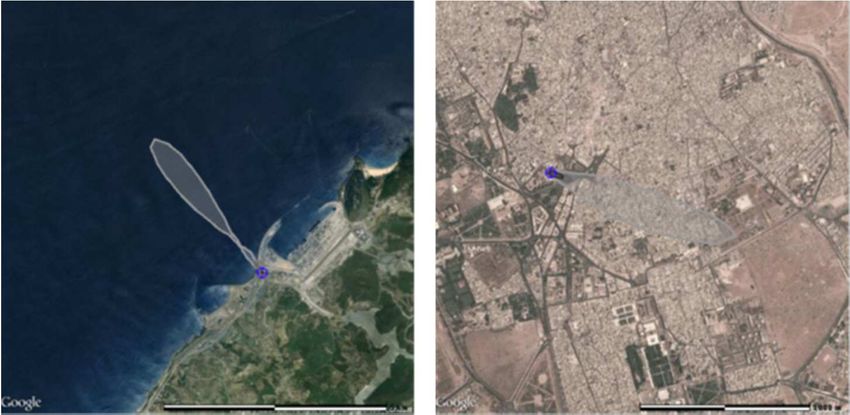
This report has been prepared by the:
                      Incident and Emergency Centre
                    International Atomic Energy Agency
                  PO Box 100, Vienna International Centre
                            1400 Vienna, Austria

EDITORIAL NOTE
The material in this document has been supplied by the IAEA’s Incident and
Emergency Centre, the participating international organizations and by some
Member States, and has not been edited by the IAEA for formal publication. The
views expressed remain the responsibility of the Incident and Emergency Centre
and other participating organizations and do not necessarily reflect those of the
government(s) of Member State(s). In particular, neither the IAEA, nor any other
organization or body participating in the exercise can be held responsible for any
material reproduced in this document.

                   CONVEX-3 (2013) EXERCISE REPORT
                         IAEA, VIENNA, 2014

                                 © IAEA, 2014
                        Printed by the IAEA in Austria
                                 June 2014
Foreword
The Convention on Early Notification of a Nuclear Accident (Early Notification Convention) and the
Convention on Assistance in the Case of a Nuclear Accident or Radiological Emergency (Assistance
Convention) are the prime legal instruments that establish an international framework to facilitate the
exchange of information and the provision of assistance in the event of a nuclear or radiological
emergency.
The International Atomic Energy Agency (IAEA) has specific functions allocated to it under these
Conventions. These include the responsibility to inform States Parties, Members States, and other
States of a nuclear or radiological emergency. The IAEA receives reports of an emergency from a
designated competent authority in a State and verifies any unconfirmed reports of an emergency. It
establishes primary functional links with the reporting State and any potentially affected States as
appropriate, providing direct communications with the respective official national emergency
response coordinating structures. It also establishes functional links with the relevant international
intergovernmental organizations, as appropriate.

The IAEA regularly convenes the Inter-Agency Committee on Radiological and Nuclear
Emergencies (IACRNE)1, whose purpose is to coordinate the arrangements of the relevant
international intergovernmental organizations (international organizations) for preparing for and
responding to nuclear or radiological emergencies in a coordinated way. Although the Conventions
assign specific response functions and responsibilities to the IAEA and the States Parties, various
international organizations have — by virtue of their statutory functions or related legal instruments
— general functions and responsibilities that encompass aspects of emergency preparedness and
response.
It has been recognized that good preparedness in advance of an emergency can substantially improve
the response. With this in mind, the IAEA and other organizations of the IACRNE have developed
and maintain the Joint Radiation Emergency Management Plan of the International Organizations
(the Joint Plan). The Joint Plan represents a framework for inter-agency emergency preparedness and
response coordination, describes common understandings of each participating organization’s
response mandate, provides the basis for coordinated and harmonized international response and
ensures that coordinated and consistent arrangements and capabilities of relevant international
organizations are developed and maintained. However, it does not replace arrangements in place in
the international organizations.
The purpose of the ConvEx-3 exercises2 is to evaluate the response to a major nuclear or radiological
emergency (radiation emergency) and, in particular, the exchange of information and provision of
international assistance. Thus, the ConvEx-3 exercises provide an opportunity to identify
shortcomings in the national and/or international emergency response systems that might hamper the
response to a radiation emergency.

The first such jointly sponsored international radiation emergency exercise took place 22–23 May
2001, and was based on a French national level nuclear emergency exercise at the French Gravelines

1
 Formerly the Inter-Agency Committee for the Co-ordinated Planning and Implementation of Response to Accidental Releases
of Radioactive Substances, that was later renamed to the Inter-Agency Committee on Response to Nuclear Accidents, and in
2009 was renamed the Inter-Agency Committee on Radiological and Nuclear Emergencies.
2
    Exercises are prepared, conducted and evaluated in the framework of the Early Notification and the Assistance Conventions.
nuclear power plant (NPP). The second, ConvEx-3 (2005) exercise was based on the Romanian
national exercise at Cernavoda NPP and was conducted 11–12 May 2005, while the thirdConvEx-3
(2008), was based on a severe nuclear accident at Laguna Verde NPP, Mexico and was conducted 9–
10 July 2008.

The ConvEx-3 (2013), codenamed Bab Al Maghrib, was the fourth exercise in this series based on
the Moroccan national radiological emergency exercise.

This exercise report describes the exercise, summarizes evaluation of the response of the international
organisations and Member States, and presents common lessons, exercise conclusions and
recommendations.

The report was prepared by R. Martincic, Lead Exercise Evaluator, IAEA’s Incident and Emergency
Centre, based on the Chief Evaluators’ Reports and outcomes of the fifth meeting of the IACRNE
Working Group on Coordinated International Exercises held at IAEA Headquarters in Vienna 11–12
February 2014.
Contents
1.      INTRODUCTION ...................................................................................................................... 7
     1.1. BACKGROUND INFORMATION ............................................................................................... 7
     1.2     IACRNE WORKING GROUP ON COORDINATED INTERNATIONAL EXERCISES .......................... 8
     1.3     EXERCISE SCOPE .................................................................................................................. 9
     1.4     EXERCISE OBJECTIVES ......................................................................................................... 9
       1.4.1     Common Exercise Objectives ....................................................................................... 9
       1.4.2     Specific Exercise Objectives ....................................................................................... 10
     1.5     EXERCISE PARTICIPANTS AND LEVEL OF PARTICIPATION ..................................................... 11
       1.5.1     States ......................................................................................................................... 11
       1.5.2     International Organizations ....................................................................................... 12
     1.6     EXERCISE DATES AND DURATION ....................................................................................... 12
     1.7     EXERCISE WEATHER .......................................................................................................... 12
     1.8     EXERCISE TIMELINE ........................................................................................................... 13
     1.9     EXERCISE DOCUMENTS ...................................................................................................... 14
2       FACTUAL ANALYSIS........................................................................................................... 15
     2.1       TECHNICAL SCENARIO ....................................................................................................... 15
     2.2       EXERCISE DATA ................................................................................................................. 16
     2.3       EXERCISE MESSAGES AND INJECTS ..................................................................................... 17
     2.4       ANTICIPATED KEY EVENTS ................................................................................................ 18
     2.5       MESSAGES TO IAEA SENT BY MOROCCO ............................................................................ 23
     2.6       PLUME MODELLING ........................................................................................................... 25
     2.7       INTERNATIONAL ASSISTANCE ............................................................................................. 26
     2.8       PROTECTIVE AND OTHER ACTIONS ..................................................................................... 29
     2.9       PUBLIC INFORMATION ........................................................................................................ 38
3       EXERCISE EVALUATION ................................................................................................... 39
     3.1     EXERCISE EVALUATION STRUCTURE AND METHODOLOGY .................................................. 39
     3.2     EVALUATION SUMMARY .................................................................................................... 40
     3.3     ACCIDENT STATE – KINGDOM OF MOROCCO ....................................................................... 42
       3.3.1     Exercise conduct ........................................................................................................ 42
       3.3.2     Conclusions and recommendations............................................................................. 45
     3.4     INTERNATIONAL ORGANIZATIONS ...................................................................................... 47
       3.4.1     EADRCC – Euro-Atlantic Disaster Response Coordination Centre ............................. 47
       3.4.2     EC – European Commission....................................................................................... 47
       3.4.3     EUROPOL – European Police Office ......................................................................... 48
       3.4.4     IAEA – International Atomic Energy Agency .............................................................. 50
       3.4.5     ICAO – International Civil Aviation Organization ...................................................... 51
       3.4.6     INTERPOL – International Criminal Police Organization .......................................... 53
       3.4.7     WHO – World Health Organization............................................................................ 55
       3.4.8     WMO – World Meteorological Organization .............................................................. 59
     3.5     MEMBER STATES ............................................................................................................... 60
       3.5.1     Bulgaria .................................................................................................................... 60
       3.5.2     Egypt ......................................................................................................................... 60
       3.5.3     Ethiopia ..................................................................................................................... 61
       3.5.4     France ....................................................................................................................... 62
       3.5.5     Germany .................................................................................................................... 63
       3.5.6     Hungary .................................................................................................................... 63
       3.5.7     India .......................................................................................................................... 66
       3.5.8     Ireland....................................................................................................................... 66
       3.5.9     Jamaica ..................................................................................................................... 66
       3.5.10 Japan......................................................................................................................... 68
       3.5.11 Luxemburg................................................................................................................. 69
       3.5.12 Norway ...................................................................................................................... 70
       3.5.13 Pakistan..................................................................................................................... 71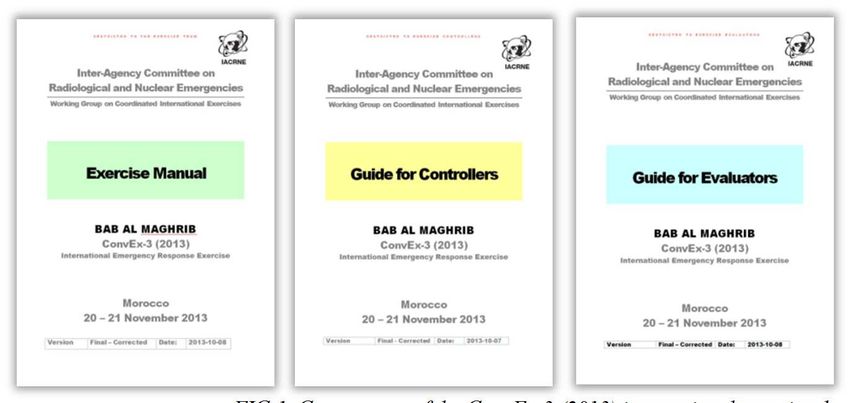
3.5.14        Portugal .................................................................................................................... 73
       3.5.15        Slovenia ..................................................................................................................... 74
       3.5.16        Spain ......................................................................................................................... 75
       3.5.17        Turkey ....................................................................................................................... 77
4      CONCLUSIONS AND RECOMMENDATIONS................................................................... 79
    4.1     CONCLUSIONS .................................................................................................................... 79
      4.1.1     Related to EPR .......................................................................................................... 79
      4.1.2     Related to the preparation, conduct and evaluation of the ConvEx-3 exercises ............ 80
    4.2     RECOMMENDATIONS .......................................................................................................... 80
      4.2.1     Related to EPR .......................................................................................................... 80
      4.2.2     Related to the preparation, conduct and evaluation of the ConvEx-3 exercises ............ 81
5      REFERENCES........................................................................................................................ 83
    5.1 DEFINITION OF TERMS ........................................................................................................ 83
    5.2 ABBREVIATIONS ................................................................................................................ 84
    CONTRIBUTORS TO THE REPORT .......................................................................................... 86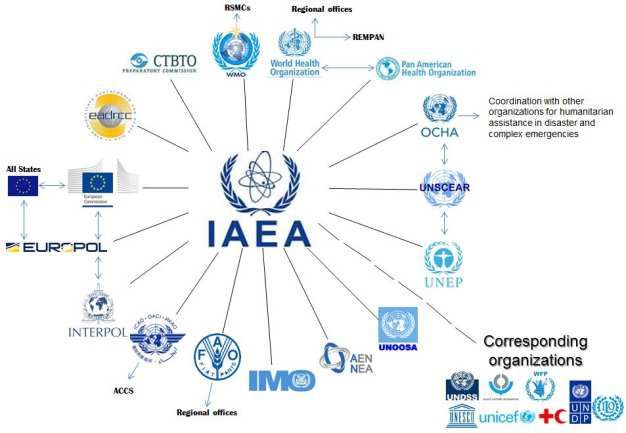
Section

                                                                                                            1
1 INTRODUCTION
1.1 BACKGROUND INFORMATION
   Over the past decade, many international nuclear emergency exercises have taken place, and much
   experience has been gained in the important
   fields of emergency preparedness and response.
   In order to more efficiently plan, conduct,
   analyse and share the results of international
   nuclear emergency exercises, the Inter-Agency
   Committee on Radiological and Nuclear
   Emergencies (IACRNE), for which the
   International Atomic Energy Agency (IAEA)
   provides the Secretariat, is a coordination point
   for these activities. The IACRNE is composed
   of     representatives     from      international
   intergovernmental organizations3 involved in the
   preparedness for and response to radiation emergencies.

   It has been recognized that coordination and joint sponsorship of international nuclear emergency
   exercises can reduce the total number of exercises undertaken, which would help to optimize
   resource utilization for both national and international organizations. Coordination can also extend
   the scope of the objectives addressed by such exercises, and national and international participants
   can profit from a broad range of proposed objectives. At the same time, exercise evaluation and
   lessons learned can be more effectively shared.

   Large scale joint international exercises (ConvEx-3 exercises), covering the early phase of a severe
   radiation emergency, are organized by the IAEA once every three to five years, based on a national
   exercise being conducted in a Member State. The purpose of the ConvEx-3 exercises is to evaluate
   response to a major radiation emergency and, in particular, to evaluate the exchange of information,
   provision of the international assistance and coordination of public information. Thus, the ConvEx-
   3 exercises provide an opportunity to identify shortcomings in the national and/or international

   3
      Comprehensive Nuclear-Test-Ban Treaty Organization (CTBTO), the Euro-Atlantic Disaster Response
   Coordination Centre (EADRCC), the European Commission (EC), the European Police Office (EUROPOL), the
   Food and Agriculture Organization of the United Nations (FAO), the International Atomic Energy Agency
   (IAEA), the International Civil Aviation Organization (ICAO), the International Criminal Police Organization
   (INTERPOL), the International Maritime Organization (IMO), the Nuclear Energy Agency of the Organisation for
   Economic Co-operation and Development (OECD/NEA), the Pan American Health Organization (PAHO), the
   United Nations Environment Programme (UNEP), the United Nations Office for the Co-ordination of
   Humanitarian Affairs (OCHA), the United Nations Office for Outer Space Affairs (OOSA), the World Health
   Organization (WHO) and the World Meteorological Organization (WMO). In addition, the Joint Plan has been
   developed in cooperation with the secretariat of the United Nations Scientific Committee on the Effects of Atomic
   Radiation (UNSCEAR).

                                                                                                                  7
emergency response systems that might hamper the response aimed at minimizing the
   consequences of a radiation emergency.

   The IAEA invites Member States to host the ConvEx-3 exercise at least 18 months in advance and
   expects to receive offers in the following 6 months. The IAEA liaises with the Member States
   offering to host the exercise, and with the IACRNE, in order to decide which Member State will
   host the exercise.

   The hosting State must meet the following conditions:

    (a) The host State must be an IAEA Member State and apply the current IEComm arrangements;
    (b) The host State must simulate an emergency involving a significant release of radioactive
        material into the environment requiring protective actions and having transnational impact;
    (c) The National Warning Point, relevant competent authorities in the host country and the
        ‘accident facility’ (if applicable) must participate in the exercise;
    (d) The exercise must last a minimum of 24 hours from the first message sent to the IAEA;
    (e) The host State must guarantee its intention to establish and maintain communication links and
        information exchange with the IAEA’s IEC throughout the exercise; and
    (f) The host State must designate at least one person to work over a 12 month period with the
        IAEA and the IACRNE Working Group on Coordinated International Exercises to prepare the
        international part of the exercise, and in particular to draft exercise documents, and conduct
        the exercise evaluation.

   The decision about the host State also takes into account available resources and the expressed
   objectives of international organizations intending to participate. When choosing the host State,
   priority is given to States in the regions that have not yet hosted the ConvEx-3 exercise. Detailed
   preparation begins no later than 12 months before the scheduled date of the exercise. Preparation,
   conduct and evaluation are coordinated through the IACRNE Working Group on Coordinated
   International Exercises, and also involve representatives of the neighbouring States that intend to
   participate in the exercise.

   In July 2010, the IAEA Secretariat sent out an invitation letter for hosting the ConvEx-3 exercise in
   2012. Due to the nuclear accident at the Tokyo Electric Power Company’s (TEPCO’s) Fukushima
   Daiichi NPP in 2011, a decision was made to postpone the exercise until 2013.

   By July 2011 the IAEA Secretariat received an offer for hosting the exercise from the Morocco. In
   November 2011, the IEC sent a fax to all competent authorities and encouraged Member States
   with nuclear power programmes to reconsider offering to host the ConvEx-3 exercise. However, no
   new offers were received and the kind offer of Morocco was accepted.

   The scenario for the exercise – a severe radiological emergency triggered by a nuclear security
   event – was prepared by the Exercise Direction Committee of the Morocco and codenamed Bab Al
   Maghrib.

1.2 IACRNE WORKING GROUP ON COORDINATED
    INTERNATIONAL EXERCISES
   For the coordination of the international exercises, a standing working group – the IACRNE
   Working Group on Coordinated International Exercises (WG-CIE) – was established with the
   objectives to (a) coordinate plans for each organization’s exercises, (b) review and coordinate
   preparation and evaluation of the ConvEx-3 exercise, and (c) coordinate sharing of exercise
   evaluation results and lessons identified. The IAEA’s Incident and Emergency Centre (IEC)
   coordinates the work of the WG-CIE and provides support.

                                                                                                      8
For the ConvEx-3 (2013) the IACRNE WG-CIE was comprised of the representatives of the
     international organizations and the Morocco as ‘Accident State’. Morocco designated a
     representative of the National Centre for Energy Sciences and Nuclear Techniques (CNESTEN) –
     as a member of the WG-CIE to assist in preparation, conduct and evaluation of the international
     part of the exercise.

     Based on the input received, the WG-CIE defined common exercise objectives and prepared the
     international aspects of the exercise.

1.3 EXERCISE SCOPE
     The exercise was based on a severe radiological emergency triggered by nuclear security
     events with transnational/transboundary implications. The following issues were addressed in
     the exercise scenario: (a) dispersion of radioactive material into the atmosphere, (b) the
     interface between safety and security, (c) medical and public health, (d) impact on commerce,
     industry and tourism (food and products contamination, contamination of vehicles, ships), and
     (e) communication with the public.

1.4 EXERCISE OBJECTIVES
     The overall goals of this exercise were:

            1    To allow Member States and relevant international organizations to evaluate the response
                 in a severe radiological emergency triggered by a nuclear security event;
            2    To evaluate the international emergency management system e.g. current IEComm,
                 IAEA’s Response and Assistance Network (RANET) and Joint Radiation Emergency
                 Management Plan of the International Organisations (JPLAN) arrangements, and direct bi-
                 lateral/multi-lateral communications between countries; and
            3    To identify good practices, as well as areas requiring improvement that cannot be
                 identified in national exercises.

     Additionally, at the international level, the exercise focused on different protective and other
     response actions in connection with the specific interests in the Accident State such as commerce,
     industry and tourism.

1.4.1 Common Exercise Objectives

     In order to enable a harmonized exercise evaluation common objectives and specific evaluation
     questions4 were developed to be addressed by participating States/international organizations. All
     objectives or specific evaluation questions might not have been appropriate for all participating
     States/international organizations, therefore, the participants could choose which
     objective/evaluation questions were applicable to them.

     States and international organizations

     CO 1:          To investigate response management in a radiological emergency triggered by a nuclear
                    security event.
     CO 2:          To assess links and response coordination between safety and security authorities at the
                    national and international level.
     CO 3:          To assess the efficiency of emergency information exchange including security related
                    information.
     CO 4:          To analyse the level of consistency of recommended protective and other actions.

     4
         For details see the Guide for Evaluators.

                                                                                                               9
CO 5:       To assess the effectiveness of arrangements for the international assistance.

      CO 6:       To assess public information activities – information consistency, coordination, timeliness,
                  and security aspects.

      Within these objectives the participating international organizations in particular evaluated the
      following:

      International organizations

      CIO 1:      To evaluate inter-agency response to radiological emergency triggered by nuclear security
                  event

1.4.2 Specific Exercise Objectives

      In addition, the States and international organizations developed their own specific objectives5 as
      follows.

      International organizations
      IAEA       SO 1:       To evaluate the effectiveness of the IAEA’s Incident and Emergency System
                             and its Response Plan for Incidents and Emergencies (REPLIE) 2013
                 SO 2:       To evaluate effectiveness of communications with Morocco, other Member
                             States, the media and the public
                 SO 3:       To test and evaluate the IAEA Secretariat’s arrangements for consequence
                             assessment and possible event progression
                 SO 4:       To test arrangements for the coordination of provision of international
                             assistance under RANET
      ICAO        SO 1         To evaluate the effectiveness of the International Civil Aviation Organization
                               (ICAO) Secretariat’s arrangements for impact assessment and event
                               progression, including roles and responsibilities within the JPLAN
                               arrangements, emergency incident response (EIR) processes and infrastructure,
                               and coordination between ICAO Headquarters and Regional Office(s)
                               concerned
                  SO 2         To test the activation of the IACRNE ad-hoc Working Group on Air and
                               Maritime Transportation (WG-AMT) and to evaluate the inter-agency
                               response
                  SO 3         To assess the provision of exercise nuclear emergency messages, exercise
                               SIGMET (Significant Meteorological Information) messages and exercise
                               NOTAM (Notice to Airmen) messages for radioactive material in the
                               atmosphere for Casablanca flight information region, issued in accordance
                               with ICAO Annex 3 – Meteorological Service for International Air Navigation
                               and Annex 15 – Aeronautical Information Services
                  SO 4         To evaluate the decision-making process with respect to flight operations by
                               concerned Member States, and the effectiveness of contingency plans,
                               established in accordance with ICAO Annex 11 – Air Traffic Services, in
                               addressing consequent shortcomings in the provision of air navigation services
                               in Morocco, neighbouring States and over the high seas, with a view to
                               identifying requirements for optimizing ICAO provisions in this regard
                  SO 5         To evaluate the effectiveness of communications with Morocco, other
                               concerned Member States, relevant United Nations agencies and international
                               organizations, media and public
                               No other international organizations reported specific exercise objectives
      States

      5
        These objectives had to be communicated to the Exercise Lead Controller (Incident and Emergency Centre) in
      time so that adequate exercise injects could be prepared.

                                                                                                              10
Morocco SO 1: To evaluate effectiveness of the national plan, ORSEC (Organisation des
Secours) and operational protocols for response to a radiological emergency
triggered by a nuclear security event
SO 2: To test the notification and activation mechanisms
SO 3 To evaluate coordination among different stakeholders at the national level and
at emergency response centres
SO 4 To test the command control system
SO 5 To test arrangements for providing technical assistance at the national level
SO 6 To test arrangements for requesting international assistance
No other States reported specific national exercise objectives
1.5 EXERCISE PARTICIPANTS AND LEVEL OF
PARTICIPATION
States/international organizations participating in the ConvEx-3 (2013) exercise had the opportunity
to choose between the following two levels of participation.
Level A Participation
The contact points under the Early Notification and Assistance Conventions received
messages/information from the IAEA and/or the Accident State according to bilateral/multilateral
agreements, and were expected to confirm receipt of the messages according to the IEComm. The
aim of this level of participation was to test effectiveness of communications, to train/drill response
personnel in using the IAEA’s emergency website and to test the provision of advice to nationals
and businesses potentially affected.
Level B Participation
In addition to Level A participation, States or international organizations were testing elements of
their emergency response system (to include a provision of assistance upon request) to identify the
strength of the response and areas requiring improvement. States and international organizations
used common exercise objectives and evaluation processes in order to produce a harmonized
exercise evaluation.
While the extent of participation in the exercise was the choice of each State or international
organization, in order to fully “assess links and response coordination between safety and security
authorities at national and international level”, it was expected that the organizations at the national
and international level relevant to this objective would participate in the exercise.
1.5.1 States
The following States participated in the ConvEx-3 (2013).
# State Level # State Level
1. Albania A 13. Egypt B
2. Algeria A 14. Ethiopia A
3. Argentina B 15. Finland A
4. Armenia B 16. France B
5. Austria A 17. Germany A
6. Azerbaijan A 18. Greece A
7. Belarus B 19. Honduras A
8. Bulgaria B 20. Hungary B
9. Chad A 21. Iceland A
10. Chile B 22. Italy A
11. Congo A 23. India B
12. Czech Republic A 24. Ireland B
11# State Level # State Level
25. Israel B 42. Qatar A
26. Jamaica A 43. Russian Federation A
27. Japan B 44. Saudi Arabia A
28. Kenya B 45. Senegal B
29. Kuwait A 46. Singapore A
30. Latvia A 47. Slovakia A
31. Lithuania A 48. Slovenia B
32. Luxembourg B 49. South Africa A
33. Macedonia A 50. Spain B
34. Mauritius A 51. Sri Lanka A
35. Mexico B 52. Thailand A
36. Moldova A 53. Tunisia B
37. Norway B 54. Turkey B
38. Pakistan B 55. Ukraine A
39. Peru A 56. United Arab Emirates A
40. Poland A 57. United Kingdom A
41. Portugal B 58. United States of America B
1.5.2 International Organizations
The following international organizations participated in the ConvEx-3 (2013).
# International Organization Acronym Level
1 Euro-Atlantic Disaster Response Coordination Centre EADRCC B
2 European Commission EC B
3 European Police Office EUROPOL B
4 Food and Agriculture Organization of the United Nations FAO B
5 International Civil Aviation Organization ICAO A
6 International Maritime Organization IMO A
7 INTERPOL INTERPOL B
8 World Health Organization WHO B
9 World Meteorological Organization WMO A
1.6 EXERCISE DATES AND DURATION
The exercise was conducted 20–21 November 2013. The exercise started at 07:00 UTC (also
Moroccan local time) and lasted for 25 hours allowing work in shifts, which also tested shift
change. The exercise start time was not announced in advance, to give participating States and
international organizations – playing at level B – an opportunity to test activation times.
1.7 Exercise Weather
In general, there are two options for exercise weather conditions: (1) actual weather at the time of
the exercise, or (2) fictitious weather usually based on historical weather data. Both options have
their advantages and disadvantages. The decision of which option to choose for the exercise
depends primarily on the exercise objectives.
Following discussions at the second and fourth IACRNE WG-CIE meetings, the group decided to
conduct this exercise under fictitious weather conditions, based on the historical data from 00
UTC on 28 February 2013 to 23 UTC on 1 March 2013 (without precipitation) for Tangier Med
port and under actual weather conditions at the time of the exercise for Marrakesh. The
Meteorological Service of Morocco, with the collaboration from Météo-France and WMO,
provided the following meteorological data for Tangier:
− 48 hours (every hour) of surface weather sequence (temperature, humidity, wind direction
and speed, and no precipitation); and
12− Surface and 850 hPa analyses, every 6 hours covering the 48 hours.
This dataset was used during the exercise for the Tangier Med port. Météo-France provided
atmospheric dispersion modelling and advisory support. In addition, the Meteorological Service of
Morocco, with the collaboration from Météo-France and WMO, also provided examples of
atmospheric dispersion charts for the two radiological dispersal device (RDD) explosions.
1.8 EXERCISE TIMELINE
Exercise preparation, conduct and evaluation timeline6 is presented in Table 1.
The following exercise schedule covers the period from the first invitation to Member States for
hosting the ConvEx-3 exercise in July 2010 to April 2014 when the Exercise Report was published.
TABLE 1. TIMETABLE OF KEY EVENTS CONNECTED WITH CONVEX-3 (2013)
EXERCISE
# Date EVENT LOCATION
2010-07-27 START – Invitation to Member States for hosting the ConvEx-3 IAEA, Vienna
(2012)
2011-02-04 A letter of encouragement to consider offering to host the ConvEx-3 IAEA, Vienna
(2012) exercise sent to Korea and China
2011-05 Decision to postpone the exercise until 2013 made due to the accident IAEA, Vienna
at the TEPCO’s Fukushima Daiichi NPP
2011-07-05 Morocco’s offer to host the ConvEx-3 (2012) received IAEA, Vienna
2011-07-19 Letter of acknowledgement sent to the Permanent Mission of Morocco IAEA, Vienna
in Vienna
2011-11-23 Fax sent to all competent authorities inviting Member States with a IAEA, Vienna
nuclear power programme to reconsider offering to host the ConvEx-3
(2013) exercise
2012-03-31 Deadline for additional offers – no additional offers received IAEA, Vienna
2012-06-11 Acceptance letter sent to Permanent Mission of Morocco in Vienna IAEA, Vienna
2012-06 Working contact with the National Centre for Energy Sciences and Vienna, Rabat
Nuclear Techniques (CNESTEN), Morocco established
2012-09-05 Preparatory Meeting on ConvEx-3 (2013) exercise with Moroccan IAEA, Vienna
representatives
2012-12-04 1st WG-CIE Meeting DGPC Headquarters, Rabat
2012-05 Invitation to Member States to participate in the ConvEx-3 (2013) sent IAEA/Vienna
out
2013-05-07 2nd WG-CIE Meeting DGPC Headquarters, Rabat
2013-07-05 Deadline for participants’ registration
2013-07-09 3rd WG-CIE Meeting DGPC Headquarters, Rabat
2013-09-05 Extended deadline for participants’ registration
2013-09 Distribution of exercise documents IAEA, Vienna
2013-09 Designation of controllers/evaluators Participating org.
2013-10-01 4th WG-CIE Meeting DGPC Headquarters, Rabat
2013-10 Training of controllers/evaluators Participating org.
2013-11-18 Announcement of communication test IAEA, Vienna
2013-11-18 Briefing of controllers/evaluators Participating org.
2013-11-19 Communication test IAEA, Vienna
2013-11-19 Pre-exercise media advisory Participating org.
2013-11-19 Pre-exercise check Participating org.
2013-11-20 STARTEX Tangier Med
2013-11-21 ENDEX Rabat
2013-11-22 Post-exercise media advisory IAEA, Vienna
2013-11 National exercise debriefing Participating org.
2013-12 Chief evaluators’ reports prepared Participating org.
2014-01 Draft Exercise Report prepared IAEA, Vienna
2014-02-11 5th WG-CIE Meeting IAEA, Vienna
6
The exercise timeline was agreed by the WG-CIE and it was used for planning purposes.
13# Date EVENT LOCATION
2014-03 Exercise Report prepared IAEA, Vienna
2014-04 END – Exercise Report published IAEA, Vienna
1.9 EXERCISE DOCUMENTS
In the exercise preparation phase the following exercise documents were prepared and distributed
to all participating States and international organizations: Exercise Manual, Guide for Controllers,
Guide for Evaluators and Guide for Players.
The Exercise Manual communicates the exercise concept and the background information needed
for the preparation, control and evaluation of the ConvEx-3 (2013) exercise. The Manual was
intended for the exercise teams in the international organizations and Member States
participating in the exercise.
The Guide for Controllers describes control of the exercise and communicates instructions,
exercise event sequence, data and injects to the exercise controllers. The Guide for Controllers was
available only to the exercise controllers. It was supposed to be customized as appropriate for use at
‘organizational’, ‘local’ or ‘national’ levels.
The Guide for Evaluators describes the exercise evaluation process and communicates
instructions, evaluation criteria, evaluation checklists and the Evaluator’s Report template to the
exercise evaluators. The Guide for Evaluators was available only to the exercise evaluators. It was
supposed to be customized as appropriate.
The Guide for Players provides players with the basic information that is needed for effective
participation in the exercise. It describes the exercise objectives, scope, evaluation process, relevant
information about the Accident State, role of players/observers, role of controllers/evaluators,
exercise rules, safety and feedback required from the players. The Guide for Players was supposed
to be customized with additional information specific to the State/organization participating in the
exercise.
Exercise Chief Controllers and Evaluators were encouraged to prepare customized ‘Guides’ or
specific additional documents for use in their respective countries or international organizations.
FIG 1. Cover pages of the ConvEx-3 (2013) international exercise documents.
14Section
2
2 FACTUAL ANALYSIS
2.1 Technical Scenario7
On 20 November 2013, a large explosion took place in the port of Tangier Med. As a consequence,
a fire broke out in a harbor complex of Tangier Med.
At the time of the explosion in Tangier Med there were around 16 ships, including ferry boats and
boats for goods in the port, either docked or waiting to be unloaded or loaded at an anchoring area.
Close to the area of the detonation, hundreds of passengers and vehicles were waiting for boarding
on two ferries to Algeciras, Spain. There were around 3000 people present in the harbor complex:
port staff, boat crews and passengers, including a significant number of foreigners. The explosion
caused devastation in the port and numerous casualties (dead and injured). A number of buildings
and vehicles were damaged to at least 200 meters distance from the point of explosion.
International media delivered ‘breaking news’ to the world about the event within minutes after the
explosion, including photos and videos from the scene.
First responders (law enforcement teams, safety brigade, firefighters) of the port of Tangier Med
were deployed immediately to the scene to secure the site, to ameliorate the explosion
consequences, to make an initial damage assessment and to initiate a criminal investigation.
Screening revealed dozens of dead bodies and more than one hundred injured among the
passengers, tourists and employees. However, many people not injured, but in shock, were still
wandering around the scene, some left the port immediately. Many ships and boats, that were
waiting to be served, sailed away.
Moroccan authorities promptly responded to the explosion according to the national emergency
response plan. Few first responders were wearing radiation pagers, which indicated an abnormal
level of radiation. This triggered a suspicion that the explosion might have had a radiological
component.
The exchange of information at the international level showed that few months ago, highly
radioactive sources were stolen from a facility in a country in the Sahel region. It shows also the
possible implication of an active terrorist group, named Black & White Fighters, operating in this
region. Preliminary results from the ongoing criminal investigation supported a suspicion of an
exploded RDD.
A few hours after the explosion, the Black & White Fighters claimed responsibility and stated their
demands through a radio announcement. They threatened that the explosion in the Tangier Med
port was only a warning, and that other populated areas in big cities could be strategically targeted
next, if their demands were not met. Moroccan security services, in collaboration with the
7
The exercise scenario was developed by the Moroccan Exercise Direction Committee.
15International Criminal Police Organization (INTERPOL) initiated assessment of the treat
credibility. Rabat and Marrakech were identified as likely future targets.
A large radiological search, investigations and preventive and protective actions were launched
targeting, mainly, strategic locations in Rabat and Marrakech. In an aerial survey, abnormal
radiation levels were detected over the medina of Marrakech. Security forces and monitoring teams
were deployed immediately, but all intended protective actions were thwarted by a new explosion.
A few people died, and many were injured in the second explosion. Moroccan authorities received
numerous requests for information from possibly affected States, businesses, media as well as from
citizens.
Both events caused consequences that exceeded Moroccan response capabilities and led Moroccan
authorities to request international assistance through the IAEA.
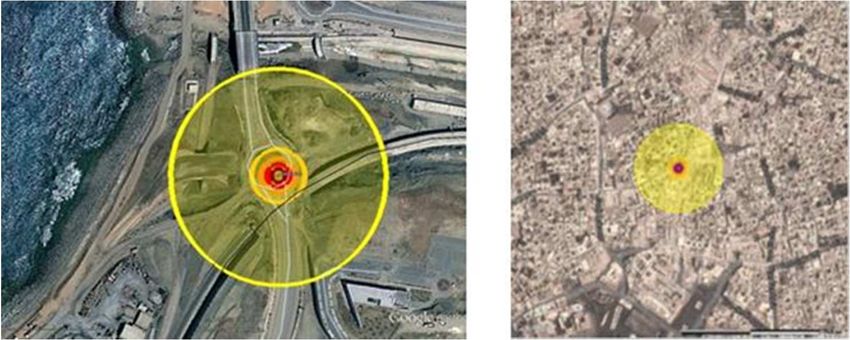
FIG 2. Blast areas at Tangier Med port and Marrakech.
2.2 EXERCISE DATA
2.2.1 Source Data
Tangier Med
Explosive: 20 kg HE*
Radionuclide: Cs-137
Activity: 37 TBq (1000 Ci)
*
High Explosive – a powerful chemical explosive that produces gas at a very high rate.
Marrakech
Explosive: 10 kg HE
Radionuclide: Se-75
Activity: 2.96 TBq (80 Ci)
2.2.2 On-scene Data
Tangier Med
Place of explosion: Port Tangier Med
Geo coordinates: Latitud: 35o53’5.50’’N
Longitud: 5o30’18.39 W
Number of vessels: 16 vessels including ferry boats and cargo ships
anchored or docked in the port
Number of vessels: 6 vessels
that left the port without authorization
Planned port destinations: Chile, Egypt, Greece, Iceland, Portugal and Tunisia
16Number of people present in Around 3000 people: port staff, boat crews and passengers, including a significant
port complex: number of foreigners
Hundreds of passengers and numerous vehicles waiting to board onto two ferries to
Algeciras, Spain
Area impacted: 600 m frag radius
Number of dead: 38
Number of injured: 420
Damage assessment: Heavy damage within 30 to 40 m radius
Max dose rate: > 10 mSv/hr
Max ground contamination: Up to 2 × 10⁴ MBq/m2
Marrakech
Place of explosion: Marrakech medina
Geo coordinates: Latitud: 31o37’33’’N
Longitud: 7o59’21 W
Area impacted: 300 m radius
Number of dead: 6
Number of injured: 45
Damage assessment: Heavy damage within 15–20 m radius
Max dose rate: > 600 µSv/h
Max ground contamination: Up to 600 MBq/m2
Additional information:
− 250 tourists that visited Marrakech were at the Marrakech (Menara) airport waiting for
their flights to Barcelona and Lisbon;
− 100 tourists that visited Marrakech were at the Casablanca airport waiting for their flights
to Frankfurt, Paris and Istanbul.
2.3 EXERCISE MESSAGES AND INJECTS
Exercise messages are messages expected to be communicated by the players, to the players. The
international exercise messages were:
(a) Messages sent to the IAEA, e.g. notification, situation reports, data, requests for information
or international assistance/advice, etc.; and
(b) Messages sent from the IAEA to Morocco or other States and/or international organizations.
In addition to the exercise messages, the exercise injects (inputs) were used to introduce new
elements in the exercise, or to keep track or direct the overall progress of the exercise.
Inject # Day: Inject to:
Time [relative]: Injected by:
Inject time [Vienna]: Intended for:
Means: Type: Conditional/Unconditional
Input – Describe an event or situation.
Message
Instructions Instructions to the controller relating to the delivery of this inject
Expected Describe action(s) that are expected as a result of this inject
Actions
FIG 3. An example of the exercise inject format that was used by the IEC. Other formats could be used.
172.4 ANTICIPATED KEY EVENTS
Key events, timeline and anticipated actions as planned are shown in Table 2. The key exercise
events are linked to Morocco’s messages to the IAEA, and to controller’s injects. The timing of
expected injects were approximated for planning purposes.
TABLE 2: KEY ANTICIPATED EVENTS AND RELATIVE TIME WHEN THEY
WERE EXPECTED TO OCCUR, LINKED WITH THE PLANNED EXERCISE
MESSAGES/INJECTS
# Time Event Anticipated Actions/Messages/Injects
1. 00:00 Explosion and fire at Tangier Med port occurs INJECT to Moroccan players
2. TMPA activated the Alert Plan in case of disaster
On-site security and firefighting teams deployed
00:10 Activation and initial assessment First aid, fire truck and ambulances deployed
Local authorities and responders alerted
Initial assessment of devastation initiated
3. Security perimeter and access control initiated
Evacuation of areas and registration of people within planned
security perimeter initiated
First aid on-going
Crisis cells activated (Command Post, operational and logistical
First responders received alarms on their
00:15 cells, communication cell)
radiation pagers
Access to the port denied to all but security and rescue services
TMPA requested reinforcement in firefighting and rescue
activities
Port Control and Coordination Centre ensured communication
with authorities
4. National authorities alerted, including CVC/NEC and national
Media delivered breaking news about the response coordination initiated
explosion with photos and videos from the scene Nautical traffic and boarding/landing of passengers interrupted
00:20 that speculated that the explosion could be a National Meteo Service made SIGMET
RDD On-site crisis cell considered the possibility of RDD
Moroccan media made inquiries about explosion Criminal investigation initiated
INJECT to Moroccan players
5. CVC/NEC activated
TCC at CNESTEN activated
Instructions on basic protective actions to first responders issued
Initial status report made available: number of
National capabilities and teams for responding to radiological
00:30 dead/injured, property damage, operability of
emergency activated
port
Victims assembly point established and medical triage initiated
Informed and instructed passengers, crews and workers on the
situation and directed them to assembly points
6. Member State requests information from the IAEA requested information from MAEC
00:40
IAEA (IAEA-INJECT#01)
7. TMPA identifies radioactive source as Cs-137 First victims received at the emergency care centre
with radiation identifier Seriously injured victims transported to hospitals
00:45
Criminal investigation supported a suspicion of INJECT to Moroccan players
exploded RDD
8. 01:00 MAEC notified the IAEA and replied to the MOROCCO#01
request
9. 01:05 Morocco declared level 3 under the International MAEC notified neighbouring States according to the Early
Ships and Port Security (ISPS) code Notification Convention
First information from national intelligence services received by
CVC/NEC
Aerial survey deployed
10. 01:10 Cargo ships in port prepared to get underway Specialized regional security teams (EOD) deployed to the scene
Additional local and regional resources (Health and DGPC)
deployed to the scene (including one decontamination unit)
National response teams deployed to Tangier Med
ORSEC Plan activated by the Wali/Governor
11. 01:20 MAEC requested, from the IAEA, relevant ITDB MOROCCO#02
information regarding missing/stolen source
12. 01:25 Meteorological data and forecast available Crews of carriers and ships at the port were briefed on the
Rumours about contamination were spreading situation development
Instructions and assistance was given to hospitals on managing
contaminated victims
MAEC informed embassies and consulates in Morocco
First decontamination unit established
INJECT to Moroccan players
18# Time Event Anticipated Actions/Messages/Injects
13. 01:40 International media reports on the explosion Rumour control initiated
made available INJECT to Moroccan players
Professional Export Associations (related to
shipments of cars, citrus fruit, etc) expressed
concerns about the situation and their cargos
shipment to Europe
Preliminary data on the bombing was made
available
14. 01:50 MAEC requested medical advice and advice on MOROCCO#03
protective actions
15. 02:00 Crews and passengers of ferries and ships in the Based on weather conditions the CNESTEN ran initial
Gibraltar strait expressed concern about possible plume/deposition modelling to assess possible impact to ships
contamination Aerial survey of port area and surrounding started
Updated data on number of causalities available
INJECT to Moroccan players
16. 02:15 Worried well (people who have received neither INJECT to Moroccan players
sufficient radiation exposure nor have been National radiological and specialized teams deployed to Tangier
sufficiently contaminated to warrant medical Med (CNRP, CNESTEN)
treatment or decontamination but who are Public call centre established; management of public phone call
worried and wish to be assessed for radiation services set up
exposure/contamination) were rushed to hospitals Message from IMO or INJECT
IMO requested to assist in preparing adequate
advice/instructions regarding maritime issues
17. 02:30 Initial aerial survey results available: Cs-137 is Initial press release with instructions to people that left the scene
the radionuclide used in RDD, preliminary without monitoring and registration to come back to the
assessment of the extent of contamination assembly point
Press conference conducted
Informing embassies and consulates of the initial assessment of
number of injured foreigners
18. 02:35 MAEC sends Situation Report, press release and MOROCCO#04
local weather data to the IAEA
19. 02:50 National specialized security, civil protection and
medical teams deployed
Additional local and regional (health and DGPC)
resources deployed (departure from Rabat)
20. 03:00 Aerial survey results made available
21. 03:10 MAEC sought advice in assessment of possible MOROCCO#05
consequences and proposed to have discussions
and consultations between Moroccan experts and
IAEA using VTC
22. 03:15 Moroccan authorities exchange relevant Port authorities requested to provide information on identities of
intelligence information with INTERPOL all ships docked or anchored in Tangier Med and their next
destination ports
23. 03:30 CNRP and CNESTEN teams performed Advice and assistance to hospitals rendered (contaminated
monitoring and oversaw protective actions victims, decontamination, worried well)
DGSN and GR performed crime scene
management operations
24. 03:35 Crew and passengers of ferries and ships in the INJECT to Moroccan players
Gibraltar strait expressed concern regarding
possible contamination
ICAO communicated with DMN
25. 03:50 Moroccan authorities issued a press release and Instructions for worried well issued
conductd a press conference Announcing that briefings to embassies and consulates will be
given the following day
26. 03:55 MAEC sent results of the aerial survey and press MOROCCO#06
release to the IAEA
27. 04:00 Safety perimeter adjusted in accordance with the Personal contamination monitoring (radiological triage) ongoing
results of radiological survey
Thorough environmental monitoring initiated
Radiological survey of vessels docked in the port
and parked trucks initiated
28. 04:15 Crews of ferries and other vessels briefed on
latest situation
29. 04:20 Association of citrus exporters requested release INJECT to Moroccan players
of its blocked 200 TIR trucks destined for Europe Message from Spain or INJECT
Spain requested information regarding Spanish
ferries
30. 04:30 Preliminary results of monitoring available Actions regarding agriculture products on ships and trucks
ICAO issueed press communication regarding considered
flights to/from Morocco Message from ICAO or INJECT
31. 04:45 Discussion and consultation on possible VTC discussion; participants/experts: Morocco, IAEA, World
consequences Health Organization (WHO), FAO
32. 04:55 MAEC sent Situation Report and radiological MOROCCO#07
survey data to the IAEA
19# Time Event Anticipated Actions/Messages/Injects
33. 05:00 DGPC (PMA, decontamination units) and
Military health capabilities (field hospital,
decontamination units) deployed to the scene
Decontamination of victims intensified
Medical care and psychological support
strengthened at the scene
34. 05:15 MAEC informed the IAEA that six vessels MOROCCO#08
departed the port subsequent to the explosion –
vessels may have been contaminated – and
requested support from IAEA to inform the
destination States/ports
35. 05:30 Moroccan authorities repeated instructions to
people that left the scene without monitoring or
registrations and worried well people to come to
the assembly points
36. 05:45 Association of citrus exporters protested against INJECT to Moroccan players
blocking of its 200 TIR trucks destined for
Europe
37. 05:50 MAEC requested IAEA assistance in dose MOROCCO#09
assessment
38. 06:00 Attackers publicly announced that further attacks INJECT to Moroccan players
were possible in other major cities if demands
were not met
39. 06:10 Media delivered breaking news Moroccan security service, in collaboration with INTERPOL,
National and international media pressed for initiated assessment of the treat credibility
information INJECT to Moroccan players
40. 06:20 Moroccan authorities initiated:
- Directive to maintain security and order in
strategic locations
- Increased national security level within the
country to include all ports and entry points
- Public advice
- Monitoring media and rumors
41. 06:25 MAEC informed the IAEA about the MOROCCO#10
communicated threat
42. 06:30 Preparation for wide radiological search (aerial,
on-rout, on-foot) initiated
Criminal investigation initiated
43. 06:45 Tangier Med: Instructions issued to the crews of ships
Initial results of ships and trucks survey made Progressive resumption of maritime traffic activities under
available consideration
Questions on liability for damages raised by INJECT to Moroccan players
ships and trucks owners
44. 06: 55 MAEC sent Situation Report and results of MOROCCO#11
radiological survey of trucks and ships to the
IAEA
45. 07:00 Rabat and Marrakesh were identified as likely Overall plans for radiological surveys was set-up
targets INJECT to Moroccan players
46. 07:15 On-route monitoring in Rabat deployed Message from France to Moroccan players or INJECT
Aerial radiological survey deployed to Message from EC or INJECT
Marrakech
European Commission issued instructions to
European ports
France offered to provide radiation monitoring
and detection capabilities
47. 07:20 NEC received the following requests/questions: INJECT to Moroccan players
- Embassies and consulates requested
information on number of dead and injured
and their nationalities
- Moroccan nationals in Algeciras requested
information on ferry schedule back to
Morocco
48. 07:30 MAEC requested international assistance in MOROCCO#12
radiological survey/source search (aerial, on-
route, on-foot) from the IAEA
49. 07:45 FAO provided advice on food safety concerns FAO message to Moroccan players or INJECT
50. 08:00 Moroccan authorities issued third press release Subject: explosion in Tangier Med and announced threat to other
Moroccan authorities issued travel instructions cities
for tourists
51. 08:10 MAEC sent press release to the IAEA and MOROCCO#13
requested consultation on the media strategy
regarding the communicated threat
52. 08:15 Security in all popular and strategic locations in
Rabat and Marrakech increased
20# Time Event Anticipated Actions/Messages/Injects
53. 08:30 Moroccan authorities conducted third press Subject: explosion in Tangier Med and announced threats to
conference other Moroccan cities
54. 08:45 Tangier Med: collected, controlled, conditioned
and transported evidence (contaminated/not
contaminated)
Marrakech:
New elements on threat assessment made
available
55. 09:00 Tangier Med: Normal activities in the port started to resume (except in the
Additional bodies identified cordoned off area)
Marrakech: Embassies and consulates informed of positively identified
Aerial survey started foreigners (dead, injured)
56. 09:15 Discussion on media strategy VTC discussion between the IAEA and Moroccan authorities
57. 09:30 Tangier Med: management of contaminated Marrakech: Local authorities, responders and national
bodies at the morgue began authorities alerted
Marrakech: aerial survey resulted in detection of
a radioactive source in medina; radionuclide not
positively identified
58. 10:00 Marrakech:
Bomb disposal units activated
Medical and civil protection activated
Security perimeter around medina defined
Evacuation within planned security perimeter
initiated
59. 10:15 Marrakech: CNESTEN sent aerial survey measuring data (measured spectra)
Establishment of planned security perimeter to US DOE (Triage) requesting assistance in radionuclide
initiated identification
On-foot radiological search initiated
60. 10:20 MAEC sent Situation Report to the IAEA MOROCCO#14
61. 10:30 Marrakech:
Governor activates the ORSEC plan
62. 10:30 Consultations and exchange of information at the IAEA initiated and conducted VTC among Morocco, IAEA,
international level EUROPOL and Interpol
63. 11:00 Some vessels from Tangier Med that were INJECT to Moroccan players
approaching their destination ports had reported
cases of ‘radiation sickness’ and had requested
immediate medical attention
Marrakech:
Security perimeter and access controls
established
64. 11:30 Tangier Med: Disaster victims identification
Port authorities provided information on
identities of all ships that were docked or
anchored in Tangier Med at the time of explosion
and their planned destination ports
65. 12:00 TCC received results of radionuclide Message/INJECT from US DOE
identification: Se-75
66. 12:15 MAEC requested IAEA to inform States of MOROCCO#15
possible contamination of their citizens/tourists
returning from Morocco
67. 13:15 Marrakech: Bomb disposal units deployed
Radioactive source detected in the area at or INJECT to Moroccan players
close to the Jemaa el Fna square and market
place
68. 13:30 Detonation at Jemaa el Fna (Marrakech) INJECT to Moroccan players
69. 13:40 Marrakech:
Rescue, radiological crime scene management
and other relevant response activities initiated
70. 14:00 Marrakech:
1000s were in panic and worried about their INJECT to Moroccan players
families and merchandise Citizens attempted access exclusion zone
First responders had difficulties establishing a Security requested additional help
security perimeter Meteorological data and initial forecast for Marrakech obtained
from DMN
71. 14:15 Marrakech:
Initial status report made available: number of
dead/injured, property damage, operability of
medina
72. 14:20 MAEC notified the IAEA of the second MOROCCO#16
explosion accompanied with the Situation Report
73. 14:30 Marrakech: Based on weather conditions the TCC ran initial
Safety perimeter adjusted in accordance with the plume/deposition modelling to assess possible impact
results of radiological survey
Personal contamination monitoring started
21You can also read


