Extinction Crisis Australia's - Places ...
←
→
Page content transcription
If your browser does not render page correctly, please read the page content below
Australia’s
Extinction Crisis
Protecting critical
habitat
"Cassowary" (CC BY 2.0) by DrawPerfect

                                         Contents

                                         Australia’s extinction crisis                                                                    03

                                         The importance of critical habitat in conservation                                               04
                                          Box 1: Critical Habitat Protections in the United States
                                          Figure 1: Average population growth of Threatened & Endangered vs Sensitive,
                                          Unprotected birds: 1968–2014

                                         Protection of critical habitat under national law                                                07

                                         The failure of national law in protecting critical habitat                                       09
                                          Table 1: Register of Critical Habitat
                                          Figure 2: Total for fauna listed as Critically Endangered and Endangered

                                         Lack of legal enforceability across tenures                                                      10
                                          Case study – Leadbeater’s Possum

                                         Under-utilisation and ministerial discretion                                                     13
                                          Case study – Golden-shouldered Parrot
                                          Figure 3: Mining interests and Golden-shouldered Parrot Critical Habitat

                                         Lack of precautionary approach                                                                   15

                                         Failure to account for climate change                                                            16
                                          Case study – Corroborree frog
                                          Table 2: Current & future distributions of the critically endangered Southern Corroboree Frog

                                         Critical habitat versus other protection mechanisms                                              19

                                         Fixing the system to protect critical habitat                                                    21

                                         Recommendations                                                                                  21

                                                                                           1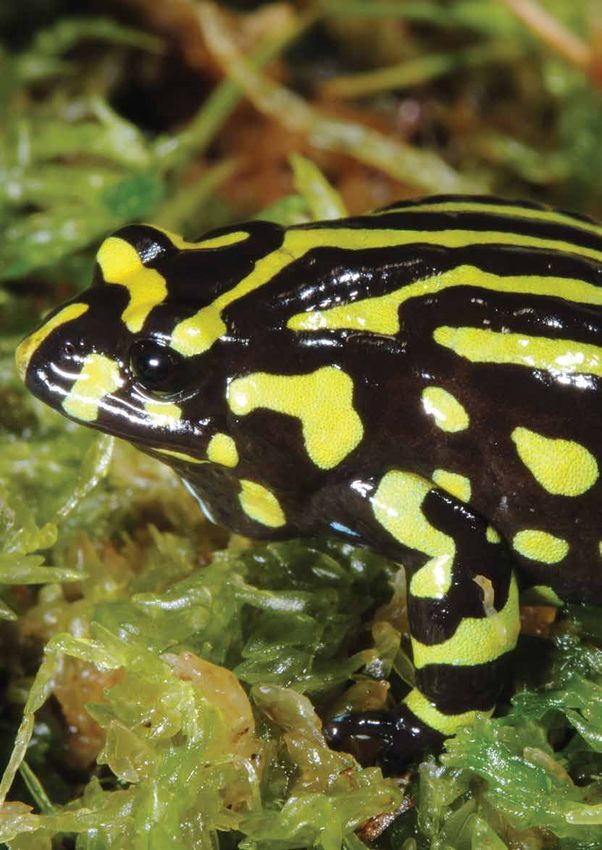
We are Australia’s
extinction crisis
Australia’s Australia is a land of incredible landscapes, unique
wildlife, ancient forests and beautiful reefs. It is
one of the few countries in the world designated as
Australia has 1,907 species and ecological
communities listed as threatened under national law.
The list includes little known insects, frogs, fish and
national
‘megadiverse’ because of the sheer abundance of plants, through to iconic species such as the Koala,
plants and animals found nowhere else on earth. Cassowary and Leadbeater’s Possum. Threatened
ecological communities include grasslands, banksia
But for all its natural beauty, the sad reality is that
woodlands, rainforest and alpine wetlands.
Australia leads the world on extinction. It has
environment
the highest number of mammals declared extinct The threats to these species and communities
since the arrival of Europeans, with 29 mammals are diverse and interconnected. These include
lost forever. To put that in context, the United habitat loss, invasive species, bushfires, disease
States has only lost two mammals to extinction and climate change.2 However, the ‘primary
since Europeans arrived there.1 driver’ of the imperilment of threatened wildlife
organisation
and ecosystems in Australia remains the
Many of these extinctions have occurred recently.
destruction and loss of habitat.3
Since 2009 three vertebrates, a bat, a marsupial
and a skink, have all gone extinct in Australia.
This is despite Australia signing up to global
targets in 2010 that aimed to eliminate extinction
by 2020 through the United Nations Convention on
Biological Diversity (known as the Aichi Targets).
Australia leads the
The Australian Conservation Foundation
(ACF) is a growing community of nearly half
We acknowledge the Traditional Owners of
this country and recognise their continuing
Across the board, indicators for biodiversity are world on extinction.
in substantial decline. This was confirmed in the
a million people who speak out, show up and connection to land, waters and community. most recent State of the Environment Report,
It has the highest number
act for a world where reefs, rivers, forests, We pay respect to their Elders past and present
people and wildlife thrive. and to the pivotal role that Aboriginal and
released in 2017, which painted a grim picture
for our reefs, rivers, forests and wildlife.
of mammals declared
We are proudly independent, non-
Torres Strait Islander people continue to play
in caring for country across Australia.
extinct since the arrival
partisan and powered by donations
from people like you.
of Europeans.
¹ US Fish & Wildlife Service, 'Delisted Species', https://ecos.fws.gov/ecp0/reports/delisting-report
² Jackson WJ, Argent RM, Bax NJ, Clark GF, Coleman S, Cresswell ID, Emmerson KM, Evans K, Hibberd MF, Johnston EL, Keywood MD, Klekociuk
A, Mackay R, Metcalfe D, Murphy H, Rankin A, Smith DC & Wienecke B (2017). Australia state of the environment 2016: overview, independent re-
port to the Australian Government Minister for the Environment and Energy, Australian Government Department of the Environment and Energy,
Canberra.
³ Megan C. Evans, James E. M. Watson, Richard A. Fuller, Oscar Venter, Simon C. Bennett, Peter R. Marsack, and Hugh P. Possingham, The Spatial
Distribution of Threats to Species in Australia (April 2011) 61, 4, Bioscience.
2 3
The importance of critical habitat                                                                            Box 1: Critical Habitat Protections
in conservation                                                                                               in the United States

Habitat loss is the leading cause of biodiversity         As threats from climate change, wildfires,          The critical habitat approach taken by                                         Figure 1:
decline globally. Human activity has caused an            invasive species and habitat loss continue          the US through its Endangered Species Act                                      Average population growth of Threatened
unprecedented decline in nature. We are in the            to increase, identifying and protecting             demonstrates that critical habitat protection                                  & Endangered vs Sensitive, Unprotected birds:
grip of a global sixth mass extinction event. The         critical habitat is essential to prevent further    can result in substantial gains for threatened                                 1968–20146
knock-on effects remain unknown.                          population declines and the extinction of           species when implemented properly.
                                                          threatened species and ecosystems.
Habitat is essential if the diversity of plants and                                                           Research has found that endangered species
animals that occur in Australia are to survive            If the Australian government fails to protect       which had critical habitat listed in the US were
and flourish in the wild. Most species of plants          critical habitat, Australia will fail to meet our   more likely to be stable or improving than
and animals have specific habitat requirements            international obligations to conserve nature,       species that had no critical habitat protection
which have been derived from their evolution.             achieve our national conservation objectives        within two years of the listing. Beyond two
For example, some species may need a                      and prevent extinctions.                            years, the data showed that species with
particular kind of tree which bears a certain size                                                            critical habitat protections were twice as likely
hollow to breed. Others may be found within                                                                   to be improving in terms of population size
a very narrow geographic and environmental                                                                    than those without protections. 4
range. Even widespread species can have very
                                                                                                              In fact, critical habitat listing in the US has
particular habitat needs depending on their
                                                                                                              resulted in gains which exceed that of basic
biology and ecology.
                                                                                                              species listing and even implementation of some
In the face of increasing threats and loss of                                                                 recovery plans.5 When looked at holistically,
habitat, conservation scientists have identified                                                              the Endangered Species Act and the protection
and promoted the concept of ‘critical habitat’ to                                                             of critical habitat have played a significant role
highlight the areas that are essential for species                                                            in reversing the declines in large numbers of
and ecosystems to survive into the future.                                                                    threatened species (see Figure 1).
These may include places such as breeding
areas, essential wildlife corridors, essential food
resources, or areas that enable species to persist
in times of hardship, such as drought. In effect,
they are areas so important that if destroyed, it
would drive species to extinction.
Critical habitat primarily relates to the
protection and preservation of threatened                     Preventing the
species. It found prominence through the
application in the United States’ Endangered
                                                              extinctions of
Species Act 1873 (See Box 1).                                 threatened species
                                                              simply cannot be
                                                              achieved without
                                                              protecting the habitat
                                                              they need to survive.
                                                                                                              ⁴ M artin Taylor, Kieran Suckling and Jeff Rachlinski ‘The Effectiveness of the Endangered Species Act: A Quantitative Analysis’ (April 2005)
                                                                                                                 BioScience,55, 4, 360-367.
                                                                                                              ⁵ Martin Taylor, Kieran Suckling and Jeff Rachlinski ‘The Effectiveness of the Endangered Species Act: A Quantitative Analysis’ (April 2005)
                                                                                                                BioScience,55, 4, 360-367.
                                                                                                              ⁶ Centre for Biological Diversity, A Wild Success: A Systemic Review of Bird Recovery Under the Endangered Species Act - June 2016

                                                      4                                                                                                                                  5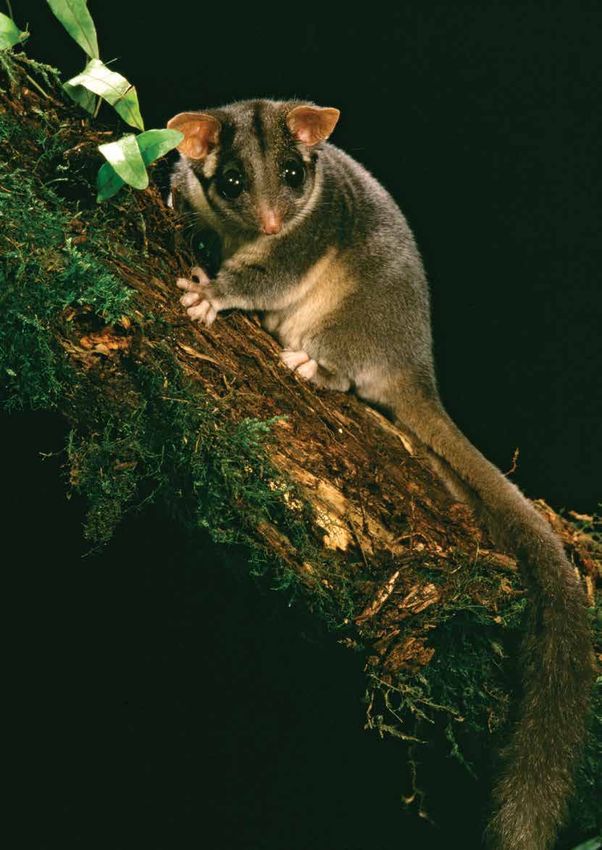
Mt.Kosciusko. Photo: Tamas, Flickr CC

                                            Protection of critical habitat
                                            under national law

                                            Australia currently has over 1900 species and            The designation of critical habitat in Australia
                                            ecological communities listed as threatened              primarily occurs through the national critical
                                            with extinction under our preeminent national            habitat register. It is important to note
                                            nature law, the Environment Protection and               that critical habitat designation does not
                                            Biodiversity Conservation Act 1999 (the EPBC             create parks or reserves. Instead it places
                                            Act). The EPBC Act provides for the listing of           restrictions on actions which would result in
                                            threatened species and ecological communities            the destruction of critical habitat, including
                                            and regulates destructive developments that              fines and even imprisonment for persons who
                                            may impact upon them.                                    knowingly damage critical habitat.
                                            Alongside the regulation of development, the             Improving Australia’s approach to the
                                            EPBC Act gives the Australian Government                 management and protection of critical habitat
                                            powers to protect threatened species. This               will have important benefits for the recovery
                                            includes overseeing the development of                   of threatened species and the awareness of
                                            recovery plans for threatened species and                species conservation in the broader Australian
                                            ecological communities and the provision to              public. Paired with an improvement in
                                            list habitat that is critical to the survival of a       recovery planning processes and threatened
                                            species on a national, critical habitat register.        species list management, stronger critical
                                                                                                     habitat laws will greatly improve transparency
                                            The EPBC Act defines critical habitat as
                                                                                                     and accountability in threatened species
                                            ‘habitat critical to the survival of a listed
                                                                                                     conservation. Similarly, such measures will also
                                            threatened species or ecological community.’7
                                                                                                     provide important signals to governments and
                                            The law establishes a wide variety of
                                                                                                     developers regarding the location of critically
                                            matters that may be taken into account when
                                                                                                     important environmental values that must be
                                            identifying critical habitat. This includes
                                                                                                     avoided when planning development projects.
                                            whether the habitat is used during times of
                                            stress (for example; fire, flood, drought), is
                                            essential during any part of a species life cycle,
                                            is used by important populations, is necessary
                                            to maintain genetic diversity and evolutionary
                                            potential, provides a corridor, or any other
                                            way habitat may be critical. 8

                                            ⁷ 2 07A (4)
                                            ⁸ The EPBC Regulations 2000 sub-section 7.09

                                        6                                                        7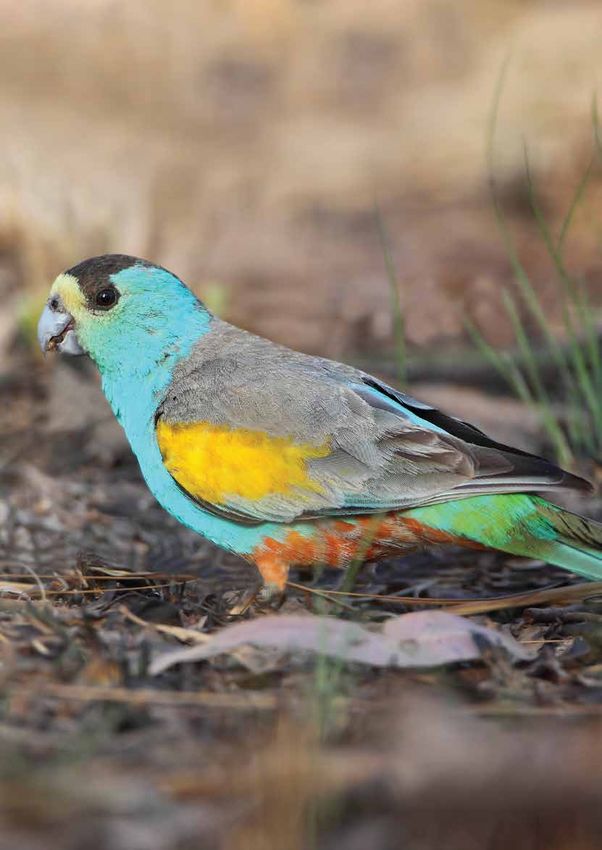
Let’s stand up       The failure of national law
                     in protecting critical habitat

for big old trees,   Despite having over 1900 nationally listed
                     threatened species and ecological communities,
                     Australia’s national critical habitat register lists
                                                                                                     Figure 2:
                                                                                                     Total for fauna listed as Critically Endangered
                                                                                                     and Endangered

wildlife and the
                     only five places as critical habitat (see Table 1).
                     The most recent critical habitat listing on the                                                              Species total
                     register was in 2005.                                                                                           230

                     Table 1:

living world
                                                                                                      Species with
                                                                                                                                       127
                     Register of Critical Habitat 9                                                   recovery plans

                         REGISTER OF CRITICAL HABITAT                            EFFECTIVE            Recovery plans
                                                                                                      that identify                    105
                                                                                                      Critical Habitat
                         Diomedea exulans (Wandering                             01 Jul 2002

we share
                         Albatross) – Macquarie Island
                                                                                                      Critical Habitat
                                                                                                      not on Cwlth land                80
                         Lepidium ginninderrense (Ginninderra                    28 Feb 2005
                         Peppercress) – Northwest corner Belconnen
                         Naval Transmission Station, ACT
                                                                                                      Critical Habitat wholly /
                                                                                                      partly on Cwlth land             25
                         Manorina melanotis (Black-eared Miner) – Gluepot        05 May 2004
                         Reserve, Taylorville Station and Calperum Station,
                         excluding the area of Calperum Station south and                             Listed on the Critical
                         east of Main Wentworth Road                                                  Habitat register

                         Thalassarche cauta (Shy Albatross) – Albatross          01 Jul 2002
                         Island, The Mewstone, Pedra Branca
                                                                                                     Given the immediacy of threats and the
                                                                                                     importance of conservation actions for
                         Thalassarche chrysostoma (Grey-headed                   01 Jul 2002         protecting critically endangered and
                         Albatross) – Macquarie Island
                                                                                                     endangered wildlife, it is of significant concern
                                                                                                     that no critical habitat has been listed for any
                     The Australian Conservation Foundation                                          species since 2005. It is clear that there are
                     undertook analysis of existing recovery plans                                   species on both Commonwealth and other
                     for animals listed as critically endangered and                                 land tenures that have sufficient scientific
                     endangered under the EPBC Act. Out of 230                                       knowledge to warrant the listing of their
                     listed species it was identified that 127 (55%)                                 critical habitat.
                     had recovery plans and 105 (45%) had clearly                                    Why then is Australia’s national legal system
                     identified critical habitat that was essential to                               failing to protect the most important places
                     their survival. These included specific areas                                   for our threatened wildlife? Because our
                     and locations as well as specific environmental                                 pre-eminent law for conserving biodiversity
                     values that would easily enable the listing of                                  and protecting the environment has not lived
                     critical habitat. Of the species surveyed, 25                                   up to its name or its objectives when it comes
                     (10%) had identified critical habitat wholly or                                 to conserving threatened species.
                     partly located on Commonwealth land. Despite
                     this, only two had habitat listed on the national
                     critical habitat register (See Figure 2).

                     9
                         Register of Critical Habitat http://www.environment.gov.au/cgi-bin/sprat/public/publicregisterofcriticalhabitat.pl

          8                                                                                      9
Photo: Jean-Paul Ferrero/AUSSCAPE

Lack of legal enforceability
across tenures

The existing critical habitat provisions in the                                   Despite the lack of penalty provisions outside
EPBC Act apply to all types of land tenure.                                       of Commonwealth land, there remains a
However, due to an anomaly in the legislation,                                    significant community benefit from having
the penalty provisions for willfully damaging                                     transparent and easily accessible listings of
critical habitat only apply to habitat in or on a                                 critical habitat on the public record. It provides
Commonwealth area. There is no penalty for                                        a tool that conservationists can use to educate
harming critical habitat listed on private or                                     the public, encourage awareness of threatened
state owned land, rendering the listing legally                                   species management, and sends an important
useless. As a result, there is no meaningful                                      signal to governments, developers and
protection under current national environment                                     planners as to which areas are to be avoided.
law for the majority of areas of critical habitat.
This in part explains some of the lack of listing                                 Case study — Leadbeater’s Possum
on the critical habitat register. However, it                                     The Leadbeater’s Possum, the faunal emblem of
does not explain the complete lack of action                                      Victoria, is a small, fast-moving, tree-dwelling
on the register over the past 13 years. As                                        marsupial with a distinctive club-shaped tail.
outlined in Figure 2, 10% of species surveyed                                     The possum was believed extinct until it was
in this report had both clearly identified areas                                  rediscovered in 1961. The Leadbeater’s lives
of critical habitat which occurred wholly                                         almost exclusively in the Montane Ash forests
or partly on Commonwealth land. This fact                                         of Victoria’s Central Highlands. These forests,
would make these species suitable for having                                      which stretch east from Melbourne’s doorstep,
at least some, if not all, of their habitat listed                                are some of the most carbon-dense on earth and
on the existing critical habitat register. Yet this                               provide essential drinking water for Melbourne
is not the case.                                                                  and regional Victoria.
In nature, threatened species are not concerned                                   Leadbeater’s Possum numbers have declined
by jurisdictional borders and types of land tenure.                               80% since the 1980s, and in 2015 the species was
Under the EPBC Act, environmental impacts                                         up-listed to critically endangered – the last step
and development assessments and approvals                                         before extinction. The main threat to the survival
are tenure blind, yet the critical habitat register                               of this iconic species is the ‘ongoing reduction
is tenure constrained. The lack of application                                    in the extent, quality and connectivity of its
of critical habitat penalties and enforcement                                     habitat’.10 The key drivers of this habitat loss are
provisions across tenures is a significant flaw                                   severe bushfire and logging, and the subsequent
in national conservation policy and legislative                                   loss of old hollow-bearing trees. While bushfire
design. The majority of critical habitat locations                                is a natural process, peer-reviewed science has
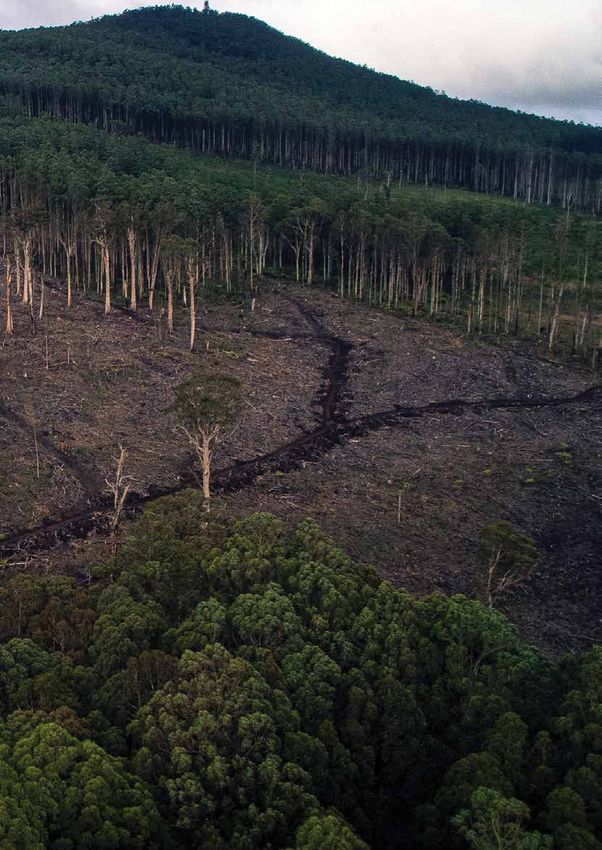
lie outside Commonwealth land (as identified                                      demonstrated that logging increases the severity
in Figure 2). This means that in order to achieve                                 of fire in the Leadbeater’s Montane Ash habitat.11
effective legal protection for critical habitat,
                                                                                  In 2015, the Federal Environment Minister
as well as greater public awareness through
                                                                                  received important conservation advice from the
prominence on a publicly accessible register, the
                                                                                  government’s own Threatened Species Scientific
critical habitat provisions are in urgent need of
                                                                                  Committee (TSSC). The TSSC advised that the
reform and proper utilisation.
                                                                                  ‘most effective way to prevent further decline

10
     National Recovery Plan for Leadbeater’s possum (Gymnobelideus leadbeateri), Commonwealth of Australia 2016’, 43.
11
      hris Taylor, Michael A. McCarthy, David B. Lindenmayer, /Nonlinear Effects of Stand Age on Fire Severity (July 2014) 7, 4, Conservation Letters.
     C

                                                                             10                                                                                                               11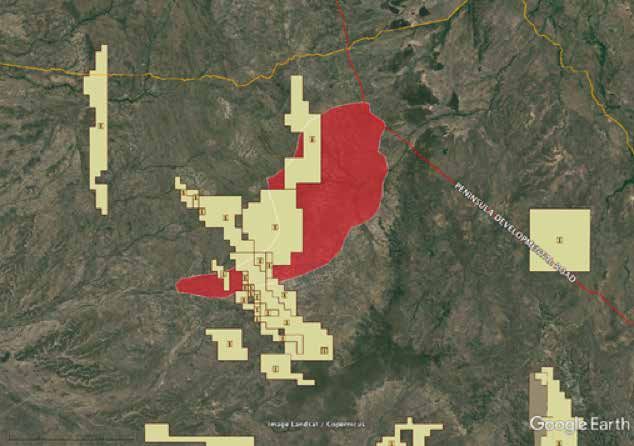
Under-utilisation and
ministerial discretion
and rebuild the population of Leadbeater’s If Australia’s critical habitat laws were tenure The EPBC Act affords significant discretion to Commonwealth land, no critical habitat has
Possum is to cease timber harvesting within blind, and all suitable Montane Ash forests in Ministerial decision makers regarding the rigour been listed on the register for the Grassland
the Mountain Ash forests of the Central Victoria’s Central Highlands were protected and manner with which certain provisions are Earless Dragon.
Highlands’.12 Despite that unequivocal advice, under national environment law, logging, applied. The extent of the under-utilisation of
EPBC Act Regulations identify matters the
destructive clearfell logging has continued, as recommended by the TSSC, would have critical habitat protections is a notable example.
Minister may consider when listing critical
destroying thousands of hectares of critical to cease. An end to logging in these forests The Humane Society International has provided
habitat. These include a species’ small, important
habitat for the species and pushing it ever closer would give the Leadbeater ’s Possum its best the Australian Government with data that would
populations, dependence on habitat to meet
to extinction. Just 1% of these forests are now chance of recovery and long-term survival. allow the Federal Environment Minister to register
essential life requirements or to persist during
old growth. Current 80 year logging rotations Yet as documents obtained through Freedom critical habitat for well over 60 species.15 It also
periods of stress, their reliance on habitat for
are keeping Ash forests young, preventing the of Information reveal, the TSSC agreed at has advocated extensively for the listing of critical
connectivity or as corridors in fragmented
establishment of the big, old, hollow-bearing its September 2016 meeting to advise the marine habitat on Commonwealth waters,16 but
landscapes, and their reliance on habitat for
trees this species needs for nesting and breeding, Environment Minister that under Australia’s no such listings have eventuated. It would appear
genetic diversity, adequate population recovery
effectively depriving future possum generations current tenure constrained critical habitat that the lack of effective application of critical
and long-term future. The majority of Australia’s
of the habitat they will need to survive. laws, ‘there would be no clear conservation habitat laws in Australia is primarily due to a lack
endangered and critically endangered species
benefit from pursuing a listing on the Register of political will.
A National Recovery Plan for the possum easily meet one or more of these criteria. If the
of Critical Habitat for this species.’ 14
was prepared in 2016 but has still not been The Federal Environment Minister is obliged Minister was required by law to list critical
released, despite a final draft being completed to maintain a register, but is not legally obliged habitat for these species after considering
over two years ago, and an extensive to list critical habitat on it. While the Minister such factors, the majority of Australia’s most
community and stakeholder consultation is required to consider conservation benefit threatened species would benefit both from
process being undertaken. As required and scientific advice when listing critical having their habitat protected and from
under the EPBC Act, the draft recovery plan habitat, economic and social matters are increased community awareness of the habitats
identifies the species’ critical habitat, stating allowed to outweigh these considerations. In they require to avoid extinction.
that ‘all current and prospective suitable contrast, the US Endangered Species Act makes
habitat for the species is critical for its listing of critical habitat obligatory within 12 Case study — Golden-shouldered Parrot
survival, and necessary for its recovery’.13 months of a species being listed. Once found over most of Cape York Peninsula,
The Grassland Earless Dragon is a prime the brilliantly-coloured Golden-shouldered
example of the failure to effectively Parrot is now restricted to two populations
implement Australia’s critical habitat laws. in the south of the region. The parrot is a
This endangered reptile occurs across the priority species under both Queensland and
Australian Capital Territory (ACT) and the Commonwealth law.17 Threats to the species
include grazing, loss of habitat structure
Monaro plains regions of New South Wales.
arising from altered fire regimes, land clearing
The species has critical habitat identified
and mining and exploration, and disturbance
across a range of tenures, including on
of termite mounds by feral pigs.
several Commonwealth defence sites across
the ACT. Despite the clear identification of Alwal National Park, which was declared
these sites in the species recovery plan, and a in 2010, is the only substantial protected
number of these important areas occurring on area containing Golden-shouldered Parrot
15
icola Beynon, Michael Kennedy and Alistair Graham, ‘Grumpy Old Greenies - lament waiting lists, wasted opportunities and wayward pork
N
barrelling in Australia’s biodiversity programs’ Humane Society International, 2005.
16
Lydia Gibson and Alexia Wellbelove,‘Protecting Critical Marine Habitats: The key to conserving our threatened marine species’ A Humane Society
International and WWF-Australia Report,2010.
12
hreatened Species Scientific Committee, Conservation Advice Gymnobelideus leadbeateri Leadbeater’s possum, 22/4/2015, 33.
T 17
Australian Government, Department of Environment, ‘20 birds by 2020’ http://www.environment.gov.au/biodiversity/threatened/species/20-birds-
13
National Recovery Plan for Leadbeater’s possum (Gymnobelideus leadbeateri), Commonwealth of Australia 2016’, 38. by-2020
14
Draft Minutes, 65th Meeting of the Threatened Species Scientific Committee, 6-8 September 2016.
12 13Golden Shouldered Parrot. Photo: Chris Tzaros
Lack of
precautionary
approach
habitat and is jointly managed by the Olkola The EPBC Act requires that the Environment
Aboriginal Corporation and the Queensland Minister must consider the ‘precautionary
Parks and Wildlife Service. Outside of the principle’, which dictates that a ‘lack of full scientific
national park, the recovery plan maps the certainty should not be used as a reason for
distribution of the two populations of the postponing a measure to prevent degradation of the
Golden-shouldered Parrot. environment where there are threats of serious or
irreversible environmental damage.’19 However, this
Figure 3 maps the extent of mining and
principle does not explicitly apply to critical habitat
exploration against the distribution of the
provisions. In direct contrast to the precautionary
Morehead River population of the Golden-
principle, a lack of full scientific certainty is
shouldered Parrot. The recovery plan for this
being used as a reason to continue destructive
species describes habitat critical for its survival
development and not list critical habitat, rather than
in association with the maps, however the
to take preventative action to protect the habitat
Federal Environment Minister has not listed
of particularly vulnerable species. This lack of
this critical habitat on the register.
precaution also contravenes adaptive management
Figure 3: principles which are essential for protecting our
Mining interests and Golden-shouldered Parrot biodiversity in the face of climate change and
critical habitat18 pressures on species to shift their ranges.
To avert Australia’s extinction crisis, and ensure
species persist into the future, strong action is
needed now to protect the best areas of habitat
that remain. Effectively protecting critical
habitat is dependent on both the time required
for scientific accuracy of identification and the
point at which opportunities to recover a species
are lost.20 Scientific uncertainty should not be
able to be used as a justification for the lack of
political will to take action or as a strategy for
parties who benefit from delays in protection by
calling for more information. In short, waiting
to identify critical habitat until better data is
available results in habitat loss in the interim.
This has particular relevance for critically
endangered and endangered species, many of
which are most threatened by continued habitat
loss. The absence of full scientific certainty
should not be a limit on protecting areas that are
likely to be essential to a species’ survival.
18
olden-shouldered Parrot habitat (red) redrawn from the national recovery plan. Image from Google Earth and mining interests derived from
G
Queensland Globe data. (https://data.qld.gov.au/dataset/queensland-globe).
19
EPBC Act s 391.
20
Tara G. Martin,Abbey E. Camaclang,Hugh P. Possingham, Lynn A. Maguire, Iadine Chadès, ‘Timing of Protection of Critical Habitat Matters’
Conservation Letters, 1 July 2016.
14 15Pengillyi (Corroboree Frog). Photo: M Swan
Failure to account
for climate change
The US Endangered Species Act has a broad Case study — Corroborree frog
approach which defines critical habitat to The Southern Corroboree Frog is a spectacularly-
include areas which will be essential for the patterned black and yellow amphibian which
future conservation of a species. Some species, lives in the Australian Alps. It has experienced
such as certain plants, may be relatively substantial decline as a result of introduced
immobile, whereas others may require Chytrid fungus and other threats and is now listed
the capacity to move relatively rapidly as as critically endangered. The species is thought to
environmental conditions change. Over the be highly susceptible to climate change, due to its
coming decades, Australia will experience the limited capacity for long migration and the fact
increasing effects of global warming. Species it already occupies some of the highest altitude
ranges are likely to be dramatically affected as areas in Australia. In many cases there is simply
they move to cooler areas as the temperature nowhere higher for the Corroboree frog to go.
warms. It is likely, under even optimistic
emissions abatement scenarios, that suitable The image below shows the current range of the
habitat ranges for many species will shift Southern Corroboree Frog (Table 2). It shows range
significantly. This will also mean that in the shifts where limited alpine wetland habitat is
future, critical habitat will also shift. available under modelled climate change impacts. To
provide adequate critical habitat protection now and
Central to adapting to the challenge of climate into the future, range shifts and contractions must be
change will be ensuring our legislative taken into account in defining and identifying critical
frameworks and conservation interventions are habitat for this species. The incorporation of data on
fit for purpose. Moving towards an adaptation both current and future habitat is essential to ensure
focus would require expanding the definition of the accuracy of critical habitat selection, particularly
adaptive management critical habitat to include in the context of global warming.
existing habitat and modelled future habitat as
a result of climate change. This is a particularly Table 2:
important inclusion where habitat loss and Current and modeled future distributions of the
degradation has strongly influenced a species’ critically endangered Southern Corroboree Frog23
decline, has fragmented a species’ existing range
CURRENT 2085 BUSINESS AS USUAL
and has limited a species’ capacity to move SCENARIO
across the landscape.
Likewise, a stronger, broader definition of critical
habitat must give significant emphasis to species
persistence. This should be evaluated in terms of
the extinction risk, population size, and/or number
of patches needed to achieve viable populations
into the future.21 22
21
eed et al. 2006; Rosenfeld & Hatfield 2006.
R
22
Camaclang, A.E., Maron, M., Martin, T.G. and Possingham, H.P., 2015. Current practices in the identification of critical habitat for threatened
species. Conservation Biology, 29(2), pp.482-492.
23
CliMAS Climate change and biodiversity in Australia http://climas.hpc.jcu.edu.au/maps/
16 17Rusty Coupe, Toolangi. Photo: Dale Cochrane
Critical habitat versus other
protection mechanisms
Australia’s National Reserve System (NRS), Alongside critical habitat designation, binding
which is made up of public, private and directives can guide decision making regarding
Indigenous protected areas, is the backbone of the loss of habitat for threatened species. For
our conservation estate and efforts. Australia example, biodiversity offsets are too often
is fortunate to have an abundance of intact used to excuse the destruction of irreplaceable
nature and has enjoyed significant growth habitat for threatened species. Critical habitat
of the NRS, especially of highly protected designation and binding directives can make
areas, at least up until 2013. There are a range clear the limits to biodiversity trade-offs that
of mechanisms available for conserving occur routinely in regulatory decision making
threatened species. Large-scale protected areas under the EPBC Act.
are the preferred tool for safeguarding big,
intact ecosystems important for biodiversity,
such as the Mountain Ash forests of the
Central Highlands of Victoria.
Yet Australia’s capacity to protect its threatened Australia's capacity
species solely through the protected-area system
is limited. Supporting legal frameworks and
to protect its
environmental impact assessment regimes are
also vital. A 2011 study highlighted significant
threatened species
gaps in the protected area estate when it came solely through the
to threatened species conservation. Specifically,
it found that 166 (12.6%) threatened species protected-area system
occurred entirely outside protected areas and
target levels of protection were met for only 259
is limited.
(19.6%) species.24
Critical habitat designation can strengthen
legal protection for threatened species. As a
regulatory mechanism, it can supplement and
support existing conservation tools, such as
protected areas. Critical habitat designation is
particularly useful because it can limit the loss
of habitat outside of formal protected areas.
24
atson, J.E., Evans, M.C., Carwardine, J., Fuller, R.A., Joseph, L.N., Segan, D.B., Taylor, M.F., Fensham, R.J. and Possingham, H.P., 2011. ‘The
W
Capacity of Australia's Protected‐Area System to Represent Threatened Species’, Conservation Biology, 25(2), pp.324-332.
18 19It's time for a new Fixing the system
to protect critical habitat
generation of The effective protection of critical habitat for
threatened species requires more than passing
mentions in recovery plans, threat abatement plans
Recommendations:
Establish new national environmental laws
laws to protect
which include strong provisions to protect
or conservation advice. It also requires that more
critical habitats and climate refuge for species.
than five places are listed on a reformed critical
habitat register that can offer legal protection
Establish a national sustainability commission
across multiple tenures. Subsuming critical habitat
to set national threatened species recovery
nature
into existing, similarly inadequate EPBC Act
standards, including working with the
protection is also not an alternative. It will only
Threatened Species Scientific Committee to
reduce visibility and ensure our threatened wildlife
identify and list critical habitat.
remains on its existing path to extinction. The
existing legislation fails on a number of fronts. It
Establish a new national critical habitat
fails in building public, industry and government
register which applies across all land tenures,
awareness of critical habitat areas. It is subject to
with mandatory consultation and education
the political whims of ministers who are afforded
programs.
broad ministerial discretion and may be subject
to the pull of vested industry interests. Our
Ensure the registering of critical habitat occurs
current law provides patently inadequate legal
within 12 months of a species being added to
protection to prevent the destruction of critical
the national threatened species list.
habitat. Addressing these issues requires clear legal
protection that places prescriptive limits on the
Adopt a persistence approach to critical habitat
destruction and loss of critical habitat.
listing, which accounts for climate change
The EPBC Act, Australia’s key piece of adaptation and impacts.
environmental law, has fundamentally failed
at its task of protecting biodiversity. A new Establish an independent national
generation of environmental law that protects Environmental Protection Agency that would
Australia’s vanishing threatened species be bound by conservation directives, critical
is desperately needed. A key to improving habitat designations and recovery plans.
the outcomes for threatened species will be
ensuring there is an effective critical habitat Establish a $200 million per annum national
register which provides effective legal threatened species fund to directly implement
protection and increased public awareness threatened species recovery plans.
Australia, as one of the few megadiverse developed
nations in the world, must move from a global
laggard to a leader when it comes to biodiversity
conservation. Failure to change the trajectory of our
current extinction crisis will spell disaster for our
iconic wildlife, leave future generations poorer and
leave Australia as a global embarrassment.
Key reforms are needed to effectively protect critical
habitat and our nationally threatened species.
20 21We love our beautiful planet Australian Conservation Foundation ISBN 123456789. Level 1, 60 Leicester Street Published March 2018 Carlton VIC 3053 ACF reports are available online ABN 22 007 498 482 at acf.org.au/reports Telephone 1800 223 669 Printed on 100% post-consumer Website acf.org.au recycled paper Email acf@acf.org.au Twitter @AusConservation
You can also read


