Fahrzeugkonzepte und Technologien der nächsten Generation Vehicle concepts and technologies of the next generation - eLib
←
→
Page content transcription
If your browser does not render page correctly, please read the page content below

DLR.de • Chart 1   > 5. Automotive Photonics > Fahrzeugkonzepte u. Technologien nächster Generation > Ge. Kopp > 14.02.2019

       Fahrzeugkonzepte und Technologien der nächsten Generation
       Vehicle concepts and technologies of the next generation

       5. Automotive Photonics, 14. Februar 2019, Ditzingen

       Dr.-Ing. Gerhard Kopp
DLR.de • Chart 2               > 5. Automotive Photonics > Fahrzeugkonzepte u. Technologien nächster Generation > Ge. Kopp > 14.02.2019

Vehicle concepts - initial situation

• Development of vehicle production in selected countries
                                                                                                                                                                      China
                            25.0
Vehicle production (cars,

                                                                                                                                                                                                          Other countries 2016:
  trucks, buses) [Mio.]

                            20.0                                                                                                                                                                          2.2 Mio. Brazil
                                                                                                                                                                                                          3.6 Mio. Mexico
                            15.0
                                                                                                                                                                      USA                                 2.9 Mio. Spain
                                                                                                                                                                      Japan                               2.0 Mio. France
                            10.0
                                                                                                                                                                                                          2.4 Mio. Canada
                                                                                                                                                                      Germany
                                                                                                                                                                                                          1.3 Mio. Russia
                             5.0                                                                                                                                      South Korea
                                                                                                                                                                      India
                              0
                                   1970                    1980                       1990                       2000                        2010                         2020

                                                 => Steadily growing vehicle production in China, South Korea, India, …

                                   Source: HDI Global SE – Fachinformation 2017; https://www.hdi.global/downloadcenter/DE_de/Haftpflicht/Kfz-Zulieferer/171012_H-FI_1_12_Fachinfo_Haft_Kfz-Zulieferer.pdf; 29.01.2019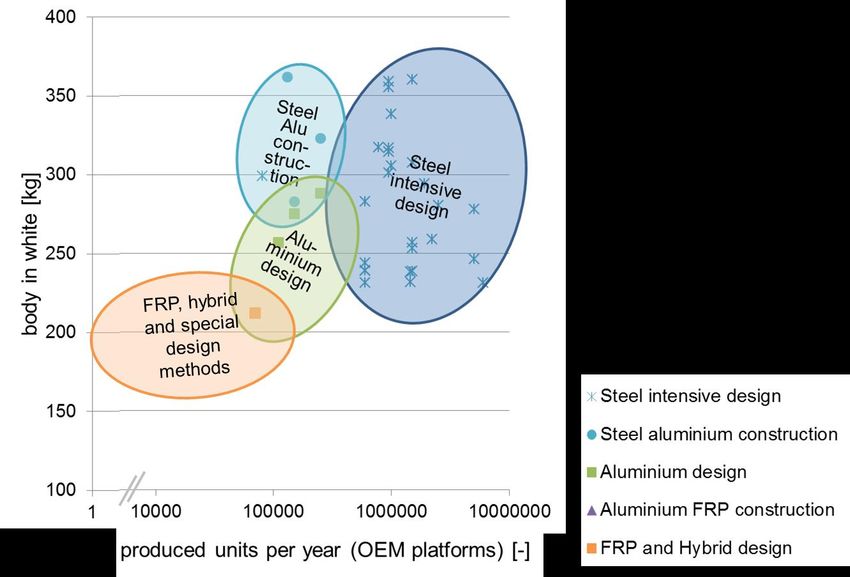
DLR.de • Chart 3   > 5. Automotive Photonics > Fahrzeugkonzepte u. Technologien nächster Generation > Ge. Kopp > 14.02.2019

Vehicle concepts - initial situation

• Analyze of the proportion of vehicle classes according to population density*

                                    => No specific vehicles for different purposes and population density

                     *Proportion of vehicle classes in new registrations for M1 vehicles in Germany 2016 according to population density; (Source: Own description according to approval data; M. Klötzke)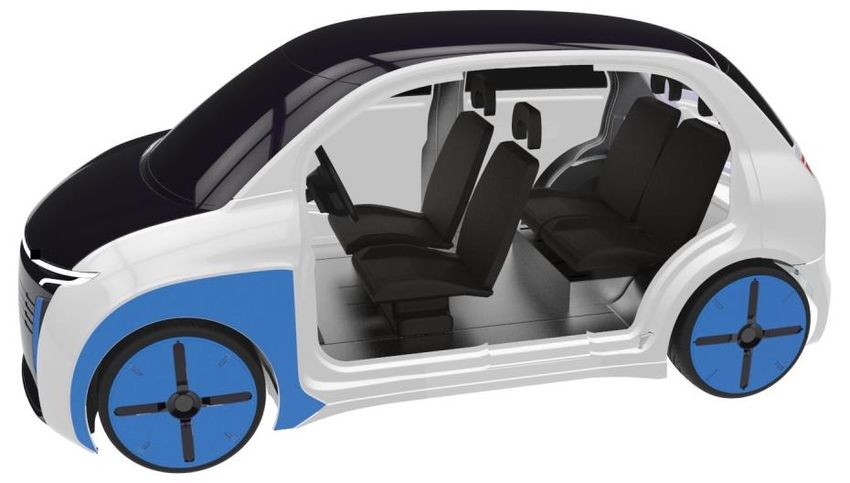
DLR.de • Chart 4   > 5. Automotive Photonics > Fahrzeugkonzepte u. Technologien nächster Generation > Ge. Kopp > 14.02.2019

Global Trends and Challenges - Mobility
Traffic jam                                                                   • Population growth, urbanization and increase in freight traffic
                                                                              • Every motorist spends 38 hours a year in traffic jams

Ecological damage                                                             • 18 percent of CO² emissions from traffic
                                                                              • 1,3 kg CO²-emissions per parking space search

Accidents                                                                     • 3,177 fatalities and 388,200 injured in traffic (2017)
                                                                              • 88 % of accidents due to mistakes of the driver

                                                                              • Demographics: by 2030, the proportion of over-65s in our society
Mobility in older
                                                                                will increase from 21 % today to 27.5 %
age
                                                                              • More individual, intermodal and efficient through information &
                                                                                communication
Digitalization
                                                                              • Business models: from product to user-oriented
                                                                                                                                                                               Source: Prof. Karsten Lemmer, DLR, (2016), "Questions of Future Mobility"
                                                                           All other information for Germany. Sources: Traffic in Figures 2015/2016; Center for Economics and Business Research 2014; AP COA PARKING Parking Study 2013; Results of the 13th
                                                                           coordinated population projection, Federal Statistical Office; Presentation: especially acatech; Pictures: shutterstock.com: Khongkit Wiriyachan, Vinogradov Illya, OliverSved, Andresr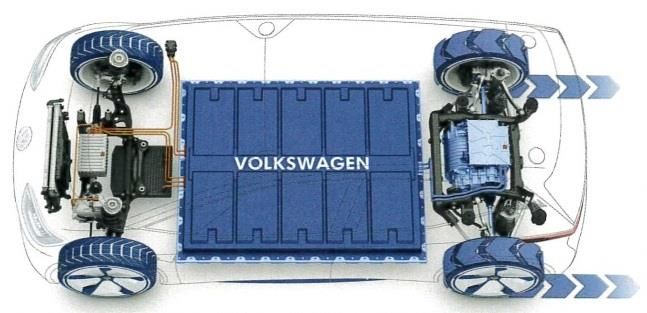
DLR.de • Chart 5   > 5. Automotive Photonics > Fahrzeugkonzepte u. Technologien nächster Generation > Ge. Kopp > 14.02.2019

NGC Film
DLR.de • Chart 6   > 5. Automotive Photonics > Fahrzeugkonzepte u. Technologien nächster Generation > Ge. Kopp > 14.02.2019

   Systematic approach to solving the challenges

Decarbonization (energy
                                                                                         System approach                                                   Efficient vehicles
      and fuels)                                                                              for the                                                     (aerodynamic, friction,
                                                                                                                                                       lightweight construction, …)
                                                                                          future mobility

Improved logistics and                                                                                                                                  Public transport and
 passenger transport                                                                                                                                       multimodality
                                                   Intelligent traffic                                 Infrastructure            Flexible und shared
                                                     management                               (energy / information / ...)             mobility
                                                                                                                                                               Picture source: DLR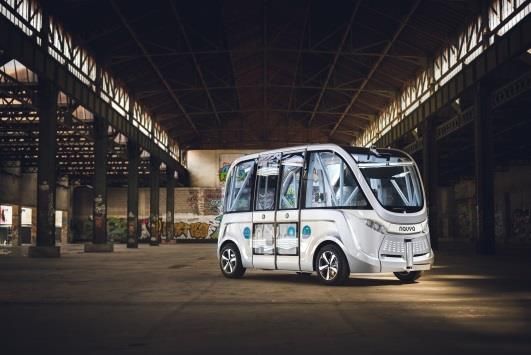
DLR.de • Chart 7   > 5. Automotive Photonics > Fahrzeugkonzepte u. Technologien nächster Generation > Ge. Kopp > 14.02.2019

Challenge - Future Complexity

• Future influence on vehicle concepts
                                          Sharing                      Sustainability                                          Multi-                         Health
                                                                                                                              modality      Urbanisation
                                                         Silver Society                         Mobility
                                    Resource                                                                                Traffic                                    Mobility sector
                                                                                                                                                 Affordable
                                  conservation                                                                            management

                                                                               Vehicle concepts and
                                                                                    packaging
                                                                                                                                                                          Vehicle

                                                                                                                                                                       Technological
                                                                                                                                                                        innovations

                                 „Vehicle          Powertrain /          Car body /           Interior /           Chassis       Electric /
                                 physics“         Energy storage        Doors / Flaps           HMI /                           Electronic /
                                                                                               Exterior                        „Connectivity“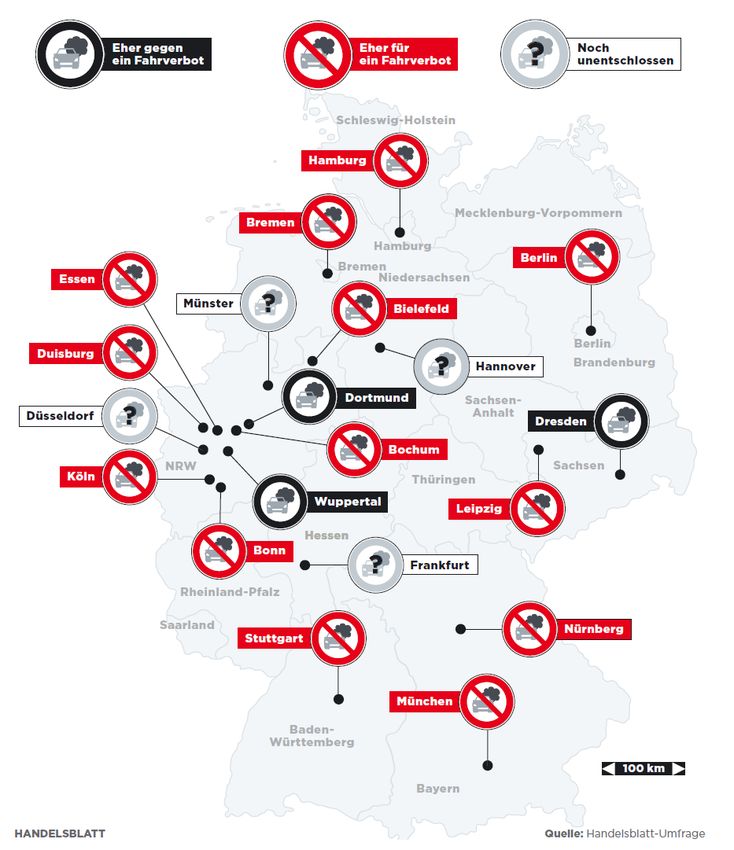
DLR.de • Chart 8   > 5. Automotive Photonics > Fahrzeugkonzepte u. Technologien nächster Generation > Ge. Kopp > 14.02.2019

Mobility on the way to the future

            1            Social challenges and ecology
                         Emission (NOx,CO2, etc.),energy, …

                   2             Technological innovations
                                 Electrification drive train, safety, digitization and automation, lightweight construction, …

              3
                            New vehicle concepts and production technologies
                            Example: Urban vehicle concepts, …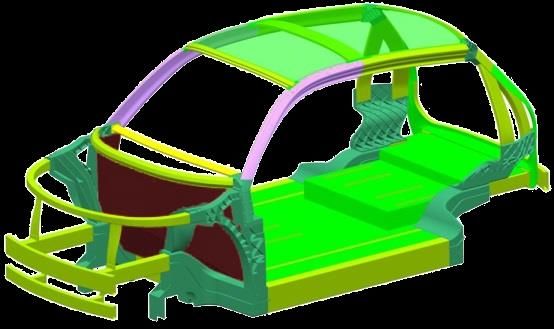
DLR.de • Chart 9   > 5. Automotive Photonics > Fahrzeugkonzepte u. Technologien nächster Generation > Ge. Kopp > 14.02.2019

Mobility on the way to the future

            1            Social challenges and ecology
                         Emission (NOx,CO2, etc.),energy, …
DLR.de • Chart 10          > 5. Automotive Photonics > Fahrzeugkonzepte u. Technologien nächster Generation > Ge. Kopp > 14.02.2019

Social challenges and ecology

• Emissions and energy consumption

                                                         China 2003: 2013
                                          210
             Objectives and planed CO2-
              emissions, normalized to

                                                    USA 2000: 205
                                          200
                                          190        Japan 2000: 187

                                          180
                    NEFZ [g/km]*

                                          160   EU 2000: 172                       China 2016: 151
                                                                                 Mexico 2016: 145                      USA 2020: 125
                                          140
                                                                                      Brazil 2017: 138
                                          120                                        EU 2016: 118 China 2020:                 India 2021: 113
                                                                                  Japan 2016: 115        117                      Japan 2023: 105
                                          100                                                  S. Korea 2020: 97                        Canada 2025: 97
                                                                                                                                        USA 2025: 97
                                                                                                       EU 2021: 95
                                           80                                                             EU 2025: 81 (-15% to 2021)                         EU 2030: 67 (-30% to 2021)
                                           60                                                                                                                ICCT mod. target
                                                                                                                                      ICCT str. target       analyze 2030: 60
                                           40                                                                                        analyze 2030: 42
                                                                                                                                                                                Goal: Decarbonisation of
                                                                                                                                                            German Federal
                                                                                                                                                                             transport sector 0 + ren. energy
                                           20                                                                                                             Environment Agency
                                                                                                                                                                                         (Paris)
                                                                                                                                                             2030: 29 - 38
                                            0
                                                 2000             2005              2010             2015             2020             2025              2030             2035             2040             2045             2050
                                                                                                                             Year                                                                                  * Till 2016 „actual value“

          Source: based on: Friedrich, H.: Mobilität auf dem Weg in die Zukunft – Regulatorik, Nachhaltigkeit, Funktionen und Technologien, Keynote VDI Leichtbaukongress 13. Juni 2017, Leipzig / Puls, T.: Co2-Reulierung in Europa – Ein Kompendium – Version 4.0, Institut der
          Deutschen Wirtschaft, https://www.iwkoeln.de/fileadmin/publikationen/2017/228037/Verkehrssektor_CO2-Kompendium.pdf; 08.08.2018 / Miller, J.: Reducing CO2 emissions from road transport in the European Union: An evaluation of policy options, icct – The international
          council on clean transportation, working paper 2016-10, https://www.theicct.org/sites/default/files/publications/ICCT_EU-CO2-policies_201606.pdf, 02.07.2018 / Dornoff, J.; Miller, J.; Mock, P.; Tietge, U.: The European Comission regulatory proposal for post 2020 CO2 targets for
          cars and vans: A summary and evaluation, ICCT – The international council on clean transportation , Briefing, Januar 2018, https://www.theicct.org/sites/default/files/publications/ICCT_EU-CO2-proposal_briefing_20180109.pdf; 09.08.2018 / Prahl, A.; Umpfenbach, K.; Kron, K.:
          Welchen Beitrag leisten die europäischen CO2-Flottengrenzwerte für Pkw zum Klimaschutz? – ecologic – Kurzstudie im Auftrag von Greenpeace, August 2017, https://www.greenpeace.de/sites/www.greenpeace.de/files/publications/2017-11-
          06_studie_ecologic_eu_flottengrenzwerte.pdf.; Internetabfrage am 09.08.2018 / Van den Adel, B.; Kugler, U.; Schmid, S.: Report : Development of the car fleet in EU28+2 to achieve the Paris Agreement target to limit global warming to 1.5°C, DLR e.V. - commissioned by
          Greenpeace Belgium, https://www.dlr.de/dlr/en/desktopdefault.aspx/tabid-10081/151_read-29854/#/gallery/32032; 25.09.2018
DLR.de • Chart 11 > 5. Automotive Photonics > Fahrzeugkonzepte u. Technologien nächster Generation > Ge. Kopp > 14.02.2019
Social challenges and ecology
• Emissions and energy consumption
Assumption on development of CO2 fleet emission target Scenario result from VECTOR21 for the new vehicle sales
for new passenger cars in EU28 in EU28+2 in the 66%-likelihood scenario
CO2 fleet emission target [g CO2/km]
140 16
Sales of new passenger cars
120 14
in EU28+2 [mio. Vehicles]
100 12
10
80
8
60
6
40 4
20 2
0 0
2015 2020 2025 2030 2035 2040 2045 2050 2015 2020 2025 2030 2035 2040 2045 2050
Reference scenario 50%-likelihood scenarios 66%-likelihood scenarios CNG HEV (Diesel) Diesel PHEV (Petrol) HEV (Petrol) Petrol
=> Implementation of renewable energy sources for new vehicles to achieve the 1.5° C limit
Source: Van den Adel, B.; Kugler, U.; Schmid, S.: Report : Development of the car fleet in EU28+2 to achieve the Paris Agreement target to limit global warming to 1.5°C, DLR e.V. - commissioned by Greenpeace
Belgium, https://www.dlr.de/dlr/en/desktopdefault.aspx/tabid-10081/151_read-29854/#/gallery/32032; 25.09.2018DLR.de • Chart 12 > 5. Automotive Photonics > Fahrzeugkonzepte u. Technologien nächster Generation > Ge. Kopp > 14.02.2019
Social challenges and ecology
• Emissions and energy consumption
Greenhouse gases: significant share of cities[1]
Pollutants: burden often far above limits
Restrictions:
• Europe: 500 measures in 40 cities
• 15 cities with city toll today
• China (for example Beijing, Guangzhou)
Issuing license plates as an inventive for new energy vehicles
• London: “Ultra Low Emission Zone“ from 2020
• Paris: Low Emission Zone is tightened
• Stuttgart: From 2018 - driving bans for diesel vehicles[2]
Handelsblatt from 11.05.2017
[1] C40 http://www.c40.org/researches/deadline-2020
[2] https://www.stadtklima-stuttgart.de/index.php?luft_grundlagen_grenzwerte, http://mnz.lubw.baden-wuerttemberg.de/messwerte/aktuell/spotstatDEBW118.htmDLR.de • Chart 13 > 5. Automotive Photonics > Fahrzeugkonzepte u. Technologien nächster Generation > Ge. Kopp > 14.02.2019
Social challenges and ecology
• Emissions and energy consumption
700
transport sector (Germany)
Energy consumption
650
600
Objective > - 35 %
[TWh]
550
500
450
400
0
2000 2010 2020 2030 2040 2050
Year
Source: THGNV-Szenario des Energiebedarfs im Verkehrssektor; Szenario für einen treibhausgasneutralen Verkehr im Jahr 2050, Treibhausgasneutrales Deutschland im Jahr 2050, Umweltbundesamt 2014,
https://www.umweltbundesamt.de/publikationen/treibhausgasneutrales-deutschland-im-jahr-2050-0; 15.06.2018DLR.de • Chart 14 > 5. Automotive Photonics > Fahrzeugkonzepte u. Technologien nächster Generation > Ge. Kopp > 14.02.2019
Mobility on the way to the future
1 Social challenges and ecology
Emission (NOx,CO2, etc.),energy, …
2 Technological innovations
Electrification drive train, safety, digitization and automation, lightweight construction, …DLR.de • Chart 15 > 5. Automotive Photonics > Fahrzeugkonzepte u. Technologien nächster Generation > Ge. Kopp > 14.02.2019
Technological innovations
• Electrification drive train
(Germany or Europe (EU)) [%]
Kienzle2017, Var. 2,
100 schematics
New registration share of
Kienzle2017, Var. 1,
90
electric vehicles BEV
schematics
80
70 BMU2017
60
Agora2018,
50 ProKlima Plus Kienzle2017, Var. 3,
schematics
40
30 BMU2017
Schmid2010
20 Agora2018, Agora2018, Friedrich2017b, Sz. AA
ProKlima Plus ProKlima
Agora2018, Friedrich2017b, Sz. AA
10 ProKlima Proff2014, EU
BMU2017 TMG2018 Friedrich2017b, Ref. Friedrich2017b, Ref.
0
2020 2025 2030 2035 2040 2045
Year
Source: Own compilation from different sources, in the context of the study “„Ökonomischer und ökologischer Nutzen des Konzept-Leichtbaus: Ungenutzte Potentiale heben“” for the Landesagentur Leichtbau BW, 2018/2019DLR.de • Chart 16 > 5. Automotive Photonics > Fahrzeugkonzepte u. Technologien nächster Generation > Ge. Kopp > 14.02.2019
Technological innovations
• Electrification drive train - Lower specific energy densities of alternative storage media and novel vehicle
architectures / platforms
Daimler: electric concept
VW: MEB platform
=> Variety of drive train and energy storage rises
Picture source left: own graph based on literature sources, right: Jordan, M.: Daimler AG geht mit Elektroauto auf Langstrecke: 500 km-Studie im Herbst in Paris, http://blog.mercedes-benz-passion.com/2016/06/daimler-
ag-geht-mit-elektroauto-auf-langstrecke-500-km-studie-im-herbst-in-paris/, 10.02.2017 / N.N.: Automobil Industrie, 11-12 2016, S. 39DLR.de • Chart 17 > 5. Automotive Photonics > Fahrzeugkonzepte u. Technologien nächster Generation > Ge. Kopp > 14.02.2019
Technological innovations
• Safety - example of road vehicle structures
Rollover test
100% rigid wall Sidecrash MDB
Full Width Euro NCAP Euro NCAP/IIHS
Pole Euro NCAP
40% Barriere ODB
Euro NCAP
Active safety Passive safetyDLR.de • Chart 18 > 5. Automotive Photonics > Fahrzeugkonzepte u. Technologien nächster Generation > Ge. Kopp > 14.02.2019
Technological innovations
• Safety - combination of active and passive safety – scenario side impact
250
200
Force
150
V2 Pedestrian
100
V1
"Following non-intelligent" 50
vehicle or commercial vehicle
0
0.00 0.02 0.04 0.06 0.08 0.10 0.12 Time
According to certification requirements
Structural weakened long beam with active energy absorberDLR.de • Chart 19 > 5. Automotive Photonics > Fahrzeugkonzepte u. Technologien nächster Generation > Ge. Kopp > 14.02.2019
Technological innovations
• Digitization and automation
Roadmaps for different scenarios of automation in road traffic
Level 5 Fully Automoted Driverless
Private Vehicls driving
Autonomous
Cars
EPoSS
Level 4 Cargo
Highway Autopilot
Semi-Auto- Urban
Parc Pilot nome Cars driving
Valet Urban & Suburban VDA
Parking Pilot
Highway City
Pilot Pilot
PWC
Level 3 Highway
Driving on highway
Chauffeur
Traffic Jam
Chauffeur ERTRAC
Highway Highway
Chauffeur Chauffeur
Level 2 Traffic Jam EPoSS – European Technology Platform on Smart Systems Integration
Assist ERTRAC – European Road Transport Research Advisory Council
Traffic Jam
PWC – Pricewaterhouse Coopers
Assist
Park
VDA – Verband der Automobilindustrie
Assist
2016 2018 2020 2022 2024 2026 2028 2030 2032 2034 2036
Source: N.N.: Automatisiertes Fahren im Personen- und Güterverkehr, - Auswirkungen auf den Modal-Split, das Verkehrssystem und die Siedlungsstrukturen, e-mobil, Landesagentur für Elektromobilität und
Brennstoffzellentechnologie Baden-Württemberg GmbH, August 2017, https://www.e-mobilbw.de/files/e-mobil/content/DE/Publikationen/PDF/PDF_2017/Studie_AutomatisiertesFahren.pdf, 21.03.2018DLR.de • Chart 20 > 5. Automotive Photonics > Fahrzeugkonzepte u. Technologien nächster Generation > Ge. Kopp > 14.02.2019
Technological innovations
• Digitization and automation
Evolution of autonomous car sales by level of automation
Level 0 Level 1 Level 2 Level 3 Level 4 Level 5
200
Level 5
Car sales (Mio. units)
150 Level 4
Level 3
100
Level 2
50 Level 1
Level 0
0
2015 2020 2025 2030 2035 2040 2045 2050
Source: Yole 2015 - Sensors and Data Management for Autonomous Vehicles; https://de.slideshare.net/Yole_Developpement/sensors-and-data-management-for-autonomous-vehicles-report-2015-by-yole-
developpement; 13.02.2019DLR.de • Chart 21 > 5. Automotive Photonics > Fahrzeugkonzepte u. Technologien nächster Generation > Ge. Kopp > 14.02.2019
Technological innovations
• Digitization and automation
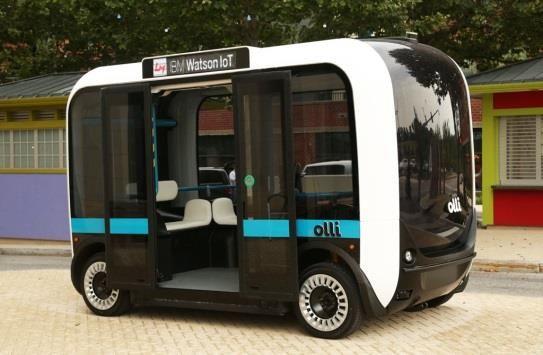
Highly automated with driver's workplace Autonomous, driverless
Rinspeed Oasis Local Motors Olli Navya Arma
NGC UMV Basic und Cargo Long NGC UMV People- und Cargomover Long
=> Increasing architecture diversity (derivatives) for different use cases (sharing, pubic transport, …).
Source: N.N.: Rinspeed Oasis, http://www.rinspeed.eu/aktuelles.php?aid=20, 10.02.2017 / N.N.: Local Motors Olli, https://localmotors.com/posts/2016/06/local-motors-debuts-olli-first-self-driving-vehicle- tap-power-ibm-watson/,
10.02.2017’/ N.N.: Navya Arma, http://navya.tech/?lang=de, 10.02.2017DLR.de • Chart 22 > 5. Automotive Photonics > Fahrzeugkonzepte u. Technologien nächster Generation > Ge. Kopp > 14.02.2019
Technological innovations
• Resource protection / light construction
Saving effects during vehicle
use
Environmental impact
Saving effects
(total Vehicle)
during
the production
Intelligent lightweight
construction
Production Phase of use Exploitation
Reference vehicle Intelligent lightweight construction
Source: Own compilation from different sources, in the context of the study “„Ökonomischer und ökologischer Nutzen des Konzept-Leichtbaus: Ungenutzte Potentiale heben“” for the Landesagentur Leichtbau BW, 2018/2019DLR.de • Chart 23 > 5. Automotive Photonics > Fahrzeugkonzepte u. Technologien nächster Generation > Ge. Kopp > 14.02.2019
Technological innovations
• Resource protection / light construction
Material
based
Innovations
=> The combination with an intelligent
Production based Innovations
lightweight design (change of topology)
with the right system boundary is
necessary
Source: own graph based on literature and manufacturer data 2005 - 2016 in combination with N.N.: Im Focus, Automobil Produktion Sonderausgabe, September 2006 / N.N.: Internationale OEM im Fokus, Sonderausgabe,
Oktober 2010 / N.N.: Global Automotive Business, Automobil Produktion, Sonderausgabe, November 2016DLR.de • Chart 24 > 5. Automotive Photonics > Fahrzeugkonzepte u. Technologien nächster Generation > Ge. Kopp > 14.02.2019
Technological innovations
• Resource protection / light construction
NGC Save Light NGC Urban NGC Interurban
Regional Vehicle Modular Vehicle Vehicle (IUV)
(SLRV) (UMV)
• Metal-foam-sandwich body • Modular multi-material-design • Fiber reinforced intensive body in
in white body in white white
• Crash safety state of the art • Adaptable safety structure with • Function integrated FRP (e.g.
of today automotive combination of active and structure integrated sensors)
vehicles (M1 class) passive safety • Body in white mass lower than
• Body in white mass lower • Body in white mass lower than 250 kg
than 90 kg 180 kgDLR.de • Chart 25 > 5. Automotive Photonics > Fahrzeugkonzepte u. Technologien nächster Generation > Ge. Kopp > 14.02.2019
Mobility on the way to the future
1 Social challenges and ecology
Emission (NOx,CO2, etc.),energy, …
2 Technological innovations
Electrification drive train, safety, digitization and automation, lightweight construction, …
3
New vehicle concepts and production technologies
Example: Urban vehicle concepts, …DLR.de • Chart 26 > 5. Automotive Photonics > Fahrzeugkonzepte u. Technologien nächster Generation > Ge. Kopp > 14.02.2019
New vehicle concepts and production technologies
Multiple Urban Use Cases Peer-Group Seats Length Electric Cargo NGC UMV Derivate
[m] range [km] capacity [l]
• Urban / suburban use field
• Concept for different Urban Use-Cases
• Private up to Shared
2+2 3,7 400 210
• People up to Cargo
• Variable interior, ergonomic opening
4 4,1 460 550
concept, 4 doors
2+2 3,7 300 280
2700-
2+x 3,7 400
3800
x 3,7 200 3800
Source: Münster, M.; Kopp, Ge.; Schäffer, M.; Sturm, R.; Deißer, O.; Kopp, Gu.; Friedrich, H.: Future Urban Vehicle Architectures and Body in White Structures - Challenges and Potentials. FutureCarBody 2018, 13.-14.06.2018,
Bad Nauheim, DeutschlandDLR.de • Chart 27 > 5. Automotive Photonics > Fahrzeugkonzepte u. Technologien nächster Generation > Ge. Kopp > 14.02.2019
New vehicle concepts and production technologies
Modular multi
• Modular MMD body in white material platform
• Modular multi material platform
• Optimized body structures for
electric vehicles in the sense of
purpose-design
• Innovative floor crash module
• Combined active and passive
safety concepts
=> Urban Modular’s six main modules build together different vehicles across a number of different classes
and open up new potential for synergies
Source: Münster, M.; Kopp, Ge.; Schäffer, M.; Sturm, R.; Deißer, O.; Kopp, Gu.; Friedrich, H.: Future Urban Vehicle Architectures and Body in White Structures - Challenges and Potentials. FutureCarBody 2018, 13.-14.06.2018,
Bad Nauheim, DeutschlandDLR.de • Chart 28 > 5. Automotive Photonics > Fahrzeugkonzepte u. Technologien nächster Generation > Ge. Kopp > 14.02.2019
Modular and safe body design – Modularization Strategy
UMV Basic
UMV Peoplemover
=> Aluminum intensive frame structure with profiles and nodes with
functionally integrated sandwich surfaces and flat components in FRP
Source: Münster, M.; Kopp, Ge.; Schäffer, M.; Sturm, R.; Deißer, O.; Kopp, Gu.; Friedrich, H.: Future Urban Vehicle Architectures and Body in White Structures - Challenges and Potentials. FutureCarBody 2018, 13.-14.06.2018,
Bad Nauheim, DeutschlandDLR.de • Chart 29 > 5. Automotive Photonics > Fahrzeugkonzepte u. Technologien nächster Generation > Ge. Kopp > 14.02.2019
Modular and safe body design – Modularization Strategy
UMV Basic
UMV Peoplemover
=> Aluminum intensive frame structure with profiles and nodes with
functionally integrated sandwich surfaces and flat components in FRP
Source: Münster, M.; Kopp, Ge.; Schäffer, M.; Sturm, R.; Deißer, O.; Kopp, Gu.; Friedrich, H.: Future Urban Vehicle Architectures and Body in White Structures - Challenges and Potentials. FutureCarBody 2018, 13.-14.06.2018,
Bad Nauheim, DeutschlandDLR.de • Chart 30 > 5. Automotive Photonics > Fahrzeugkonzepte u. Technologien nächster Generation > Ge. Kopp > 14.02.2019
Modular and safe body design – Modularization Strategy
UMV Basic
Variable greenhouse front Variable greenhouse rear
Scalable front Scalable rear
modules modules
UMV Peoplemover Length variability
Source: Münster, M.; Kopp, Ge.; Schäffer, M.; Sturm, R.; Deißer, O.; Kopp, Gu.; Friedrich, H.: Future Urban Vehicle Architectures and Body in White Structures - Challenges and Potentials. FutureCarBody 2018, 13.-14.06.2018,
Bad Nauheim, DeutschlandDLR.de • Chart 31 > 5. Automotive Photonics > Fahrzeugkonzepte u. Technologien nächster Generation > Ge. Kopp > 14.02.2019
Modular and safe body design – Modularization Strategy
UMV Basic
UMV Basic greenhouse
UMV Peoplemover
Source: Münster, M.; Kopp, Ge.; Schäffer, M.; Sturm, R.; Deißer, O.; Kopp, Gu.; Friedrich, H.: Future Urban Vehicle Architectures and Body in White Structures - Challenges and Potentials. FutureCarBody 2018, 13.-14.06.2018,
Bad Nauheim, DeutschlandDLR.de • Chart 32 > 5. Automotive Photonics > Fahrzeugkonzepte u. Technologien nächster Generation > Ge. Kopp > 14.02.2019
Modular and safe body design – Modularization Strategy
UMV Basic
UMV Basic greenhouse UMV Basic BIW
UMV Peoplemover
Source: Münster, M.; Kopp, Ge.; Schäffer, M.; Sturm, R.; Deißer, O.; Kopp, Gu.; Friedrich, H.: Future Urban Vehicle Architectures and Body in White Structures - Challenges and Potentials. FutureCarBody 2018, 13.-14.06.2018,
Bad Nauheim, DeutschlandDLR.de • Chart 33 > 5. Automotive Photonics > Fahrzeugkonzepte u. Technologien nächster Generation > Ge. Kopp > 14.02.2019
Modular and safe body design – Modularization Strategy
UMV Basic
UMV Basic greenhouse UMV Basic BIW
UMV Peoplemover UMV Peoplemover BIW
UMV Peoplemover
greenhouse
Source: Münster, M.; Kopp, Ge.; Schäffer, M.; Sturm, R.; Deißer, O.; Kopp, Gu.; Friedrich, H.: Future Urban Vehicle Architectures and Body in White Structures - Challenges and Potentials. FutureCarBody 2018, 13.-14.06.2018,
Bad Nauheim, DeutschlandDLR.de • Chart 34 > 5. Automotive Photonics > Fahrzeugkonzepte u. Technologien nächster Generation > Ge. Kopp > 14.02.2019
Modular and safe body design – Modularization Strategy
UMV Basic
Battery-Box
UMV Peoplemover
Source: Münster, M.; Kopp, Ge.; Schäffer, M.; Sturm, R.; Deißer, O.; Kopp, Gu.; Friedrich, H.: Future Urban Vehicle Architectures and Body in White Structures - Challenges and Potentials. FutureCarBody 2018, 13.-14.06.2018,
Bad Nauheim, DeutschlandDLR.de • Chart 35 > 5. Automotive Photonics > Fahrzeugkonzepte u. Technologien nächster Generation > Ge. Kopp > 14.02.2019
New vehicle concepts and production technologies
• Lightweight optimized and flexible structures for vehicle construction
Example strut dome and damper attachment
Conventional approach Hybrid approach
Variable component
elements
Add. Man.
Cast structure
Basic component elements
=> Optimized geometry and material used to adapt to different load requirements and vehicle
configurations
Source: Chamoun, M.; Kopp, Gu.; Friedrich, H.; Schuster, M.; Müllerschön, O.: Methode zur Entwicklung von variablen Strukturkonzepten durch Kombination additiver und konventioneller Fertigungsverfahren. WerkstoffPlus
Auto, Stuttgart, 2018DLR.de • Chart 36 > 5. Automotive Photonics > Fahrzeugkonzepte u. Technologien nächster Generation > Ge. Kopp > 14.02.2019
Trends in the area of future vehicle concepts
Airbus Pop.up
Current vehicles and possible, future developments
Rindspeed Snap
VW Golf (MQB A / B)
Navya Arma
Use-Case optimized vehicle concepts
VW Käfer
StreetScooter / DHL
Mercedes F015
Vehicle development
Picture source: Volkswagen, Airbus, Rinspeed, Navya, Streetskooter, DaimlerDLR.de • Chart 37 > 5. Automotive Photonics > Fahrzeugkonzepte u. Technologien nächster Generation > Ge. Kopp > 14.02.2019 Summery Requirements • Future mobility must be ecologically compatible (sustainable) • Technologies must be energy efficient • Vehicles will be electrified, automated and protecting resources
DLR.de • Chart 38   > 5. Automotive Photonics > Fahrzeugkonzepte u. Technologien nächster Generation > Ge. Kopp > 14.02.2019

Summery

Requirements                                                                                                        Approach

• Future mobility must be ecologically compatible                                                                   • Increasing efficiency in the field of drive train and
  (sustainable)                                                                                                       energy storage

• Technologies must be energy efficient                                                                             • Alternative fuels

• Vehicles will be electrified, automated and                                                                       • Resistance reduction and resource protection
  protecting resources                                                                                                (including lightweight construction)

                                                                                                                    • New approaches in the field of vehicle development
                                                                                                                      and flexible manufacturing processes / production to
                                                                                                                      accommodate the significantly increasing product
                                                                                                                      diversity
DLR.de • Chart 39 > 5. Automotive Photonics > Fahrzeugkonzepte u. Technologien nächster Generation > Ge. Kopp > 14.02.2019
Thank you for your attentionYou can also read


