Faster Rail Report Bringing Australia's rail network up to speed - Squarespace
←
→
Page content transcription
If your browser does not render page correctly, please read the page content below

Faster Rail
Report
Bringing Australia’s rail network up to speed.

FEBRUARY 2021
Contents
     Executive summary                                                    03

     Supporting Australia’s future                                        08

     The Faster Rail opportunity                                          24

     Our rail network needs investment                                    48

     Embracing a Faster Rail future                                       63

     Implementing Fast Rail                                               75

02   Faster Rail Report | Bringing Australia’s rail network up to speed
Executive
summary

            03
There is growing recognition                               requirements for our rail system is more than
                                                                being fast – it needs to provide competitive travel
     that the level of growth focused                           times for customers making their journey, be
                                                                frequent, reliable, comfortable and safe.
     predominantly on the three
     big cities is not sustainable if it                        The experience in other countries is that small
                                                                travel time improvements, combined with
     continues into the future.                                 other improvements such as better customer
                                                                experience, can have a significant impact on
     Our regional cities and towns need to be                   building patronage and supporting the economies
     supported to encourage better economic and                 and communities of the cities which they serve.
     social outcomes for their communities. The recent
     bushfires and COVID-19 crisis highlighted how              Faster Rail presents a unique opportunity to
     vulnerable Australia is to shocks and stresses. This       better connect the smaller cities, regional cities
     reinforces the need to connect regional cities and         and towns to the three big cities and to each
     towns to each other and our largest cities with a          other. However, this paper highlights the need to
     more resilient and sustainable transport network           take a strategic approach. The whole rail network,
     which, at the moment, is largely focused on road.          not just those identified for Faster Rail should be
     While COVID-19 will temporarily slow Australia’s           considered – together with other transport modes
     growth and reduce public transport patronage               to provide a better door-to-door travel experience
     levels, this provides an opportunity to invest in rail     across Australia. The opportunities for our
     now to shape our future beyond COVID-19.                   regional cities and towns to benefit from Faster
                                                                Rail are different requiring special attention and
     Previous investigations for High Speed Rail in             a coordinated approach across Australia.
     Australia have not progressed due to the high
     costs involved in connecting our three big cities.         To achieve the outcomes we desire for our
     Faster Rail presents a more pragmatic approach,            cities and regional areas, we need to reform
     where the rail network can be upgraded in stages.          our business case and appraisal approach to
     There is opportunity now to invest in targeted             focus on place-based outcomes. We also need
     rail network improvements to address current               innovative governance and funding approaches
     constraints and build the travel market for the            that adapt successful international models to the
     more significant improvements to come. The                 Australian context.

     Faster Rail                             Fast Rail                              High Speed Rail
     Speed: Typically between 160            Speed: Typically between 200           Speed: Typically greater than
     to 200km/hr                             and 250km/hr                           250km/hr
     Track: Upgraded existing                Track & services: Targeted             Track & services: New
     rail lines to improve travel            improvements and new                   dedicated tracks built to modern
     time, reliability and frequency.        dedicated tracks built to              standards and separated from
     Improvements may include                modern standards to facilitate         existing rail network.
     electrification and curve               speeds typically between 200
                                                                                    Example: TGV in France,
     easing.                                 – 250 km/hr. Typically requires
                                                                                    Shinkansen in Japan
                                             new rolling stock.
     Example: Ireland: Dublin to
     Cork                                    Example: West Coast Main
                                             Line: London to Manchester

04   Faster Rail Report | Bringing Australia’s rail network up to speed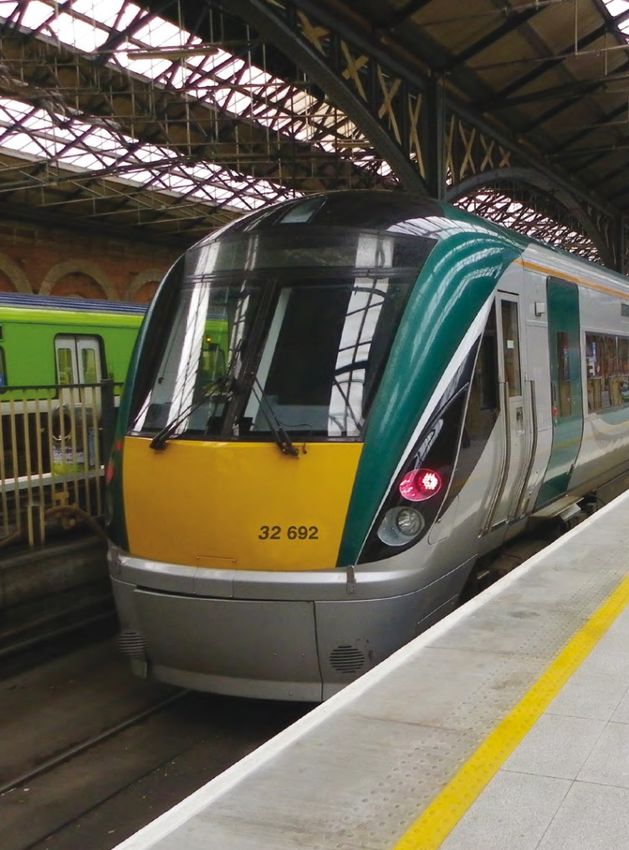
Compared to other countries,
                                                                    A three point plan is
     our regional rail network is not
                                                                    recommended:
     at the standard expected of a
                                                                    1. Immediately address regional rail
     modern rail system and is in                                   deficiencies by investing in existing
     urgent need of investment.                                     infrastructure to increase its speed,
                                                                    frequency and reliability.
     The Australian rail network is slow by world
     standards and is not comparable with door-to-                  2. Plan and deliver faster or fast rail
     door travel times to road transport.                           over the next 5 to 10 years to bring
                                                                    our regional rail network up to global
     Recent improvements to our regional rail                       standards and be competitive with road
     network such as Regional Rail Link (RRL) in                    transport.
     Victoria show what can be achieved by investing
     in our rail network. The improved reliability,                 3. Prepare for high speed rail in the long
     increased service frequency and reduced travel                 term to make rail competitive with air
     times that resulted from RRL has encouraged                    travel, but start acquiring the land for the
     more people to use rail in regional Victoria.                  network now.
     Separating regional services from metropolitan
     services was a key success factor for this project.
     However significantly more investment is                   This research paper was commissioned by the
     required in Victoria and the other states to make          Australasian Railway Association (ARA) to inform
     regional rail competitive with car travel.                 their position on Faster Rail. Our research has
     An integrated approach is required to upgrade our          identified six key moves to guide the successful
     rail network considering our longer-term ambition.         implementation of Faster Rail in Australia.
     Not every rail corridor will necessarily have Faster
     Rail, and some corridors have potential for longer
     term Fast Rail or ultimately High Speed Rail.

05   Faster Rail Report | Bringing Australia’s rail network up to speed
06
Lo Sy
nd d Travel Time (Minutes)
on Travel Time (Minutes) ne
to y
to
0
50
100
150
200
250
Sy
C
0
50
100
150
200
250
300
Lo Bi
rm d ne an
nd in y b
er
on gh Sy to ra
to am d ne G
M y
ou
lb
an to ur
Lo ch N n
nd es Sy
dn e w
on te ca
Lo to r Sy ey st
nd Li dn t le
on ve ey o G
to rp to os
oo W fo
Pe l ol rd
te Sy lo
rb ng
W or Br
is
dn
ey on
ar ou ba g
G sa gh to
ot w ne N
te to to o w
nb Kr Br
is G ra
ak ol
ur
g ow
ba d
N to M
ne Co
ew St to as
oc el N t
Yo
k
bo am
rk ho ur
to lm M ne bo
M el ur
times
Ph bo to
on il a M u Ba
tre de el rn la
e
Faster Rail Report | Bringing Australia’s rail network up to speed
al lp bo ra
to
travel times
Lo to hi ur
G t
s Q a ne
e
ue M to el
An b
Australian comparison of current rail and road travel times
el on
ge ec bo Sh g
le
s C ur ep
International comparison of current rail and road travel times
ity ne pa
to rt o
to
Sa n
n Tr
ar
Di al
eg go
o n
International comparison of current rail and road
Australian comparison of current rail and road travel
Rail Travel Time
Rail Travel Time
Road Travel Time
Road Travel Time
Pathway to success

            Move 1: Develop a long-term                                   Move 4: Establish a governance
            national vision for the rail network                          framework to deliver Fast Rail

            Recommendations:                                              Recommendations:

            • Widen the Faster Rail program to                            • Establish a shared governance model
              commence upgrade of the regional rail                         through mega-region deals
              network
                                                                          • Consider models that provide
            • Develop a national rail network plan                          transport authorities the ability to
                                                                            develop station precincts
            • Establish stakeholder and community
              consultation programs to inform the                         • Identify clear responsibilities for
              plan and build support for faster rail                        authorities to realise the benefits of
                                                                            Faster Rail
            Move 2: Support better social and
                                                                          Move 5: Develop a coordinated
            economic outcomes for regions
                                                                          funding approach
            Recommendations:
                                                                          Recommendations:
            • Update regional land use and
                                                                          • Three tiers of Government work
              economic plans. Confirm the unique
                                                                            together to hypothecate funding for
              opportunities for each town along
                                                                            Faster Rail
              Faster Rail corridors
                                                                          • Consider a range of funding
            • Identify complementary measures to
                                                                            mechanisms for Faster Rail
              achieve better social and economic
              outcomes for regional areas                                 • Develop an investment strategy for the
                                                                            National Rail Plan
            • Engage with the community,
              businesses to develop long term                             Move 6: Stage and target investment
              visions for regional centres                                in rail
            Move 3: Establish a policy framework                          Recommendations:
            for consistent delivery of Faster Rail
                                                                          • Immediately address regional rail
            Recommendations:                                                deficiencies by investing in existing
                                                                            infrastructure to increase its speed,
            • Work with Infrastructure Australia to
                                                                            frequency and reliability
              develop a place based business case
              and appraisal framework that accounts                       • Plan and deliver faster or fast rail
              for wider social and economic benefits                        over the next 5 to 10 years to bring
                                                                            our regional rail network up to global
            • Develop a national transport network
                                                                            standards and be competitive with
              plan that informs the national
                                                                            road transport
              population and settlement strategy
                                                                          • Prepare for high speed rail in the long
            • Establish a program to learn from past
                                                                            term by preserving the corridor
              experiences by applying Post Opening
              Project Evaluation techniques

07   Faster Rail Report | Bringing Australia’s rail network up to speed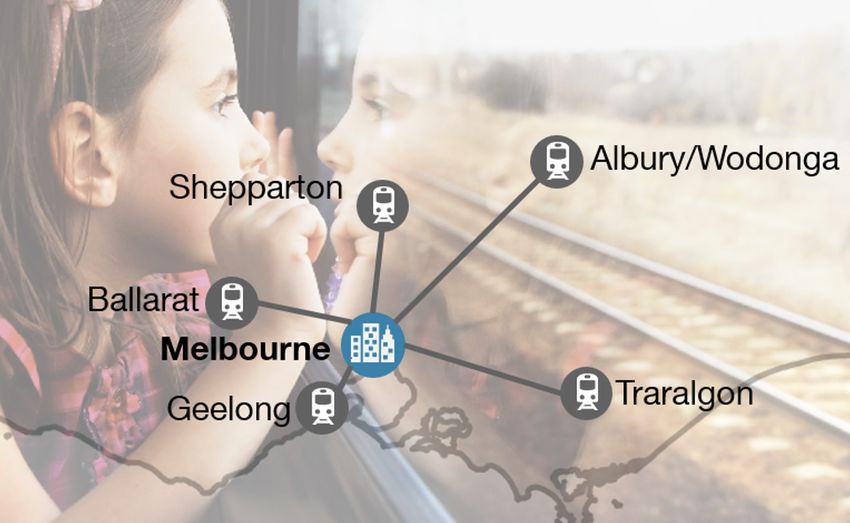
Supporting
Australia’s
future

              08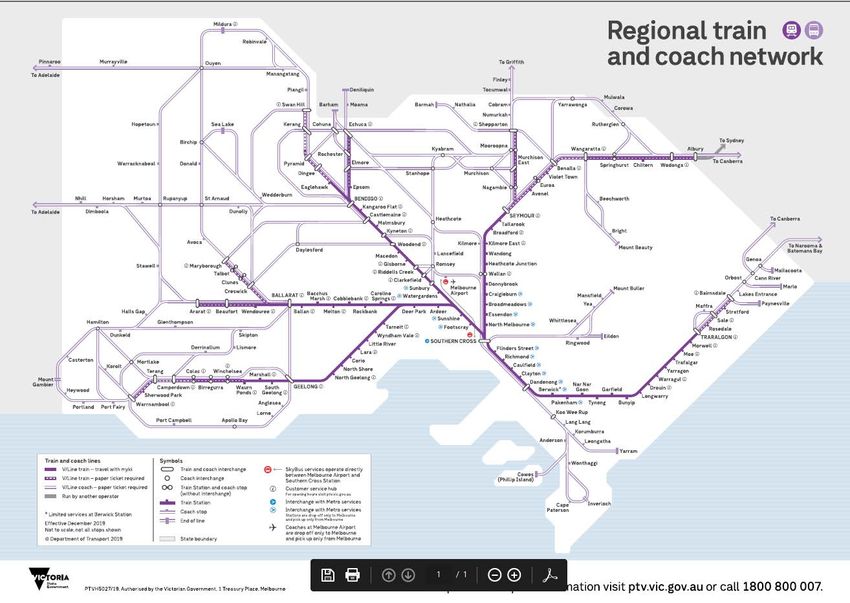
Introduction

     Australia is investing in Faster                           Fast, regular and reliable rail can bring distant
                                                                communities closer together, connecting people
     Rail. The Australian Government                            to more jobs, services and facilities. An integrated
                                                                approach to city and regional planning, including
     has released their vision for                              a focus on transport infrastructure that supports
     Faster Rail across Australia                               strong connections, holds the key to ensuring our
                                                                ongoing prosperity. Regions and smaller cities
     and are co-funding a number                                can play a pivotal role in the future of Australia’s
     of business cases to establish                             economic development. A better connected
                                                                national transport system, including a significant
     Faster Rail corridors. Faster                              role for faster rail services, is crucial to realising
     Rail business cases have                                   this potential.

     been completed for Greater                                 Faster rail services together with complementary
                                                                infrastructure, services and policy measures can
     Shepparton, Newcastle and                                  drive economic and social integration, improve
                                                                productivity and liveability in our regions. It will
     the Sunshine Coast while                                   provide a platform for new investment to share
     Faster Rail business case are                              and spread the growth and opportunities on
                                                                offer within Australia.
     underway for the Gold Coast,
                                                                This report explores the role faster regional
     Bomaderry, Parkes, Traralgon                               rail can play in shaping Australia’s future and
     and Albury-Wodonga corridors.                              the opportunities for Faster Rail in each state
                                                                and across the national network. The report
     The New South Wales, Victorian,                            highlights the urgent need for investment in
     Queensland, Western Australian                             our rail network and a range of actions that are
                                                                necessary to achieve our vision for a national
     and ACT governments are                                    Faster Rail network.
     progressing planning for Faster
     Rail in their jurisdictions.

09   Faster Rail Report | Bringing Australia’s rail network up to speed
Australia is growing
     Australia’s major cities of                                           While there is still a degree of uncertainty about
                                                                           the impacts of COVID-19 on population and
     Melbourne, Sydney and Brisbane                                        the economy, recent forecasts released by the
                                                                           Australian Government’s Centre for Population
     have grown significantly in recent                                    suggest that population growth projections may
     years and this is expected to                                         be reduced by about 5% in the capital cities by
                                                                           2031. These forecasts also indicate that locations
     continue in the future. Prior to                                      outside the capital cities will be less affected and
     the COVID-19 pandemic Sydney                                          population growth projections would only be
                                                                           reduced by 2% by 2031. This would still result a
     and Melbourne’s population were                                       high level of growth, but growth that is delayed by
     forecast to reach around 9 million,                                   about three years compared to previous forecasts.

     with Brisbane’s population to                                         This level of growth, if not planned for
                                                                           adequately, will exacerbate existing concerns
     reach around 5 million, by 2060.                                      regarding housing affordability, congestion and
                                                                           sustainability and ultimately impact upon our
                                                                           quality of life. These factors and others have the
                                                                           potential to reduce the productivity of our most
                                                                           important assets - our cities.

     Population growth, projections and forecasts, Australia

     Source: Centre for Population – Population Statement, December 2020

10   Faster Rail Report | Bringing Australia’s rail network up to speed
Forecasted population change (2020 to 2060) Investment is required into our regional cities
and towns to support existing communities and
Brisbane achieve better economic and social outcomes. Our
77% (+1.9 mil) smaller cities and regional areas are continuing
to grow, but at a slower rate than our fast
growing cities. According to the 2019 Australian
Sydney Infrastructure Audit our smaller cities grew by
68%
(+3.7 mil)
24% compared to our fast growing cities which
grew by 72% between 2008 and 2018. Further
83% Melbourne
regional economic growth has been significantly
(+4.3 mil)
impacted by recent challenges caused by drought
conditions, bushfires and COVID-19.
Source: ABS Population Projections (2017-2066),Assumptions: Medium
fertility, Medium life expectancy, Medium net overseas migration and Medium There is uncertainty around the extent of
interstate flows.
the impacts of the COVID-19 crisis. However
experience from overseas and past disruptions
The majority (52.7% share) of the nation’s GDP is suggest the wider health, economic and social
reliant upon the economies of the three major impacts are likely to be felt in the short to medium
cities of Melbourne, Sydney and Brisbane. The term. Rail is a long term investment for the
focus on growth and the economy in these cities nation over 100 or more years that will make our
has made Australia vulnerable to global shocks transport network more resilient to health and
and stresses as demonstrated by the recent environmental shocks and stresses. Rail is the only
disruptions caused by COVID-19. In the longer transport mode that provides the focus for both
term strong growth is expected to continue in economic development and sustainable housing
Australia. If past growth trends continue the cost growth. Faster Rail can make regional locations
of road congestion could double by 2031 to $40 even more exciting places to live, where regional
billion as referenced in Infrastructure Australia’s communities have access to a more diverse range
2019 Australian Infrastructure Audit. of services and facilities and a wider range of
jobs to choose from.
Global experience indicates that well-connected
cities and regions can take the pressure off our
larger cities and opportunities can be distributed
across a wider population.
2018-19 GDP Growth Rates - Volume Measure
Source: Australian National Accounts, Cat No. 5220.0
11 Faster Rail Report | Bringing Australia’s rail network up to speedThe vision for Australia
Across Australia there is a Regional cities must pull their weight. Investments
in the social, economic and accessibility offerings
renewed focus on Australia’s of these cities will attract more people and allow
these centres to thrive. Each city and town has
settlement pattern. One which unique characteristics and opportunities to
recognises that the continued contribute Australia’s vision.
focus on the nation’s growth In response to this, the Commonwealth and State
governments have developed policies and plans to
in the three big cities is not develop a vision and support Australia’s growth in
sustainable. the future.
Infrastructure Australia’s place typology
Infrastructure Australia developed a place typology to help inform future planning.
Source: 2019 Infrastructure Audit, pg. 10
The Australian Government released their future population plan
in March 2020. The plan outlines its policy to reduce Pre-COVID
migration levels by 15% and rebalance growth from the three
largest cities to smaller cities and regional centres. The plan
aims to better connect regional Australia with opportunities for
growth with the following investment priorities:
• Regional Deals
• Decentralisation agenda
• Designated Area Migration Agreements
• Regional provisional visas
• Destination Australia Scholarships
• Extending the Temporary Graduate visa for regional students
• $4.5 billion Roads of Strategic Importance
• Fast rail to connect Australia’s regions to the cities
12 Faster Rail Report | Bringing Australia’s rail network up to speedThe 2019 Australian
Infrastructure Audit provides
many important findings
noting that changing and
growing demand and a
mounting maintenance
backlog, means a new wave
of reform and investment is
necessary to ensure quality of
life and economic productivity
are enhanced over the next
15 years.
13 Faster Rail Report | Bringing Australia’s rail network up to speedThe Vision for our states
Queensland, New South Wales and Victoria have developed
regional plans which involve better transport connections,
including rail to support the growth of their regions.
New South Wales
The 20 Year Economic Vision for Regional NSW
released by the NSW Government in July 2018
recognise growth that is occurring in regional
areas. Of the 90,000 people moved into regional
NSW in 2015-16, with almost half of these
(41,000) coming from Greater Sydney and 49,000
from other states and territories. Regional NSW
attracted 12,000 more residents overall in the
2015-16 financial year.
The NSW regional economies are divided into five
types:
1. Metro satellite which accounts for 53% of
regional NSW’s population and experiencing
above-average growth of 1.7% per annum
as compound annual growth rate (CAGR).
Health and mining are key traded clusters i.e.
Gosford, Queanbeyan.
2. Growth Centre (25.9%) experiencing average
population growth with a CAGR of 1.0%.
Agribusiness is the key industry i.e. Orange,
Tamworth, Wagga Wagga.
3. Coastal (7.1%) experiencing average
population growth with a CAGR of 0.7%.
Health and agribusiness are the key industries
i.e. Nambucca, Clarence Valley.
4. Inland (13.4%) experiencing stable
population growth with a CAGR of 0.3%.
Agribusiness is the key industry i.e. Murray,
Cowra, Northern New England High Country.
5. Remote (1.5%) experiencing a decline in
population with a CAGR of -0.8%. Agribusiness
is the most significant industry i.e.
Castlereagh, Western Plains.
14 Faster Rail Report | Bringing Australia’s rail network up to speedVictoria
The Victorian Government has eight Regional
Growth Plans that provide direction on land use
and development. Settlement plans near Faster
Rail alignments include:
• Loddon Mallee South plans to promote
population growth in Bendigo, Bridgewater
and Inglewood with other towns subject to
planning constraints from bushfire and flood
hazards.
• Central Highlands plan to see major
population growth in Ballarat and Bacchus
Marsh, medium growth in Smythesdale,
Ararat, Creswick with the potential for major
growth in Ballan.
• Hume will promote major growth in
Shepparton, Wodonga and focus growth in
Wangaratta and Benalla and Seymour.
• G21 will identify planned growth and
strengthen Central Geelong with targeted
growth in Colac and Winchelsea.
Queensland
The Queensland Government has eleven long-
term strategic Regional Plans that support local
growth and development, whilst also protecting
the region’s natural resources. Settlement plans
include:
• Promotion of growth in South East
Queensland (54% increase from 2016 to
2041 of almost 1.8 million people).
• Regional economic clusters of Toowoomba,
Ipswich, Gold Coast and Coolangatta.
• Major expansion areas in Ripley, Springfield,
Yarrabilba, Park Ridge, Flagstone/
Flinders, Coomera, Gladstone and Central
Highlands.
15 Faster Rail Report | Bringing Australia’s rail network up to speedFaster Rail supporting better
outcomes for regional Australia
Faster regional rail is about Through or connecting services that are operated
beyond the fast rail service itself, will support
providing infrastructure and changed patterns in accessibility and share of the
resulting benefits.
services to drive economic
and social integration, improve The integration of Faster Rail in the fabric
of cities and towns. Securing attractive and
productivity and liveability. successful development at new, as well as within
established precincts around the stations, will
Through the enhancement of accessibility ensure that maximum benefit is derived from
between capital cities and regional towns, investment in faster regional rail and to deliver
faster regional rail can act as a catalyst for improvements to the quality of life in urban
transformational changes in regional centres to areas. To this end, Faster Rail can also play a
create and contribute to locational, accessibility critical role in supporting further growth to attract
and lifestyle benefits, enhancing the liveability and inward investment, thus contributing to the
affordability of housing to improve access to jobs competitiveness between centres and regions that
and growing visitor economies. keeps them vibrant or to their resilience which
The Australian context is unique, in a global sense, could prevent a deprived area from further decline.
given the overall size and relatively dispersed
nature of the population. Changes as a result of
Faster Rail will likely occur at a variety of spatial
scales, from the inter-regional through to the local.
Key themes that we anticipate will support the
success of faster regional rail in Australia are:
The harmonisation of strategies to drive
economic prosperity across broader regions.
For example, NSW is updating their Regional
Economic Development Strategies (REDS) that
identify and seek to build on the specialisations
and ‘endowments’ of each region – for the
Southern Tablelands this includes, for example,
“the region’s affordable land and house prices,
rural lifestyle choices, small community feel,
natural beauty and diverse economy also impact
the Region’s liveability and enhance it as an
attractive place to raise a family, retire or semi-
retire”.
The interconnectivity of Faster Rail
with other local and regional transport
networks. We understand through research
that the improved connectivity fast rail offers
is considerable, however these advantages are
focused in places where the service can be
accessed.
16 Faster Rail Report | Bringing Australia’s rail network up to speedWhilst investment in faster A holistic approach needs to be taken,
recognising the unique opportunities to support
rail services will provide a better economic and social outcomes in each
town or city.
foundation for growth, it is
not a single solution as it will The potential for faster rail services to transform
towns and cities is different on a case-by-case
require an integrated network, basis and dependent on many other factors.
For example, in New South Wales in towns like
accompanied by strategies that Goulburn and Orange, the extent of growth may
will support Australia’s growth be influenced by their water supply. This doesn’t
mean that these communities should not be
in the regional areas. supported by improved rail services, but the
approach needs to be flexible to meet the needs
of each location and their communities.
Key objectives of Faster Rail The opportunity
Current growth patterns that focus most of our
Supporting Australia’s vision of growth on our largest cities Sydney, Melbourne
a more balanced growth plan and Brisbane are not sustainable. Fast rail would
across our regions support growth in other cities and centres taking
pressure off the three large cities.
A wider range of new jobs is required to
stimulate the regional economies. Faster rail
Enabling better social and
connections would encourage urban renewal
economic outcomes in our
and more businesses to locate in smaller
smaller cities and regional
cities and regional centres. It also provides our
centres
ageing population better access to services and
facilities.
Investment into the rail network can make rail
more competitive with other modes. Rail is a
Better connecting our cities and
sustainable mode that can deliver productivity
centres
benefits and open up agglomeration between
our cities.
Apart from supporting investment in our smaller
cities, Fast Rail can encourage an integrated
Support greater investment in and borderless approach to providing better
Australia’s towns and regions regional transport connections, underpinned by
faster rail, to enhance access and outcomes for
regional residents.
Fast rail connection provides the opportunity to
Developing station precincts regenerate or establish a new activity centre in
the immediate station precinct.
17 Faster Rail Report | Bringing Australia’s rail network up to speedInternational evidence of
rail transforming cities
The outcomes for regional
Fast Rail Case Study:
towns and cities will
Manchester, UK
vary depending on the
The progressive upgrade of the West Coast
characteristics of each city, Main Line between 1998 and 2006 provides
wider policy and investment a good example of what could be achieved by
a Fast Rail solution.
measures and the nature of the
The upgrade resulted in a 25% reduction
fast rail improvements. of travel time and 33% increase in capacity
between London and Manchester. This
Experience from international examples is that
resulted in a significant reduction in air
while high speed rail can be transformational for
travel and a 77% increase in rail patronage
some towns, faster, more frequent and reliable rail
between these two cities. It virtually
connections can also make a difference.
eliminated domestic air travel between
Overall, the evidence of the impacts where faster, the two cities. This initiative coincided with
more frequent and reliable regional rail has a period of sustained growth for Greater
been implemented has been quite varied and Manchester following the bombing of the
dependent on a number of factors, including the Arndale Centre in 1996. Renewal in the
socio-economic characteristics of the region and city centre, including the Piccadilly station
the extent that complementary policies have been precinct, has transformed the city. The
introduced. Often it is quite difficult to isolate the improved rail connection was influential in
direct impacts of Faster Rail from the range of the BBC’s decision to move its headquarters
other factors that influence social and economic to Manchester in 2011.
change. Successful outcomes in many locations
High Speed Rail 2 is being planned which
are achieved with a range of measures that
will provide a further step change in
complement the introduction of Faster Rail.
rail connections between London and
Manchester and the West Coast. The recent
Oakervee Report recognises that the high
speed rail solution needs to be an integrated
rail response and that high speed rail cannot
serve every centre. Upgrades to the rail
network between Manchester and Leeds
is being planned to better connect the
“Northern Powerhouse” of England.
18 Faster Rail Report | Bringing Australia’s rail network up to speedWest Coast Main Line Upgrade: London to Manchester
• Increased capacity by one third
• Travel time reduction for 290km journey by 28% to 2 hours 5 mins
• 77% increase in patronage (2009 – 2017)
• Air travel reduced by 27%
• Saved 26,000 daily car journeys
• 23,009 tonnes of carbon withdrawn from flights
• BBC relocates to Manchester in 2011
• Creative sector now employs 84,000 people and contributes £63 billion to the regional economy
19 Faster Rail Report | Bringing Australia’s rail network up to speedHigh Speed Rail Case Study:
Lille, France
In France, the introduction of
High-Speed Rail, through TGV Case Study: Lille, Eurostar
and Eurostar has transformed The Lille High Speed Rail (Eurostar) station
was accompanied by development of the
many regional cities. Euralille renewal area. Euralille, focused
However, it highlighted that considerable planning around the High Speed Station, includes
and investment in complementary initiatives the Euralille commercial centre with a
were required to achieve the desired social hypermarket and 120 shops (over 66km2);
and economic outcomes. Without strategies to ‘Centre International d’Affaires des Gares’
support and diversify local economies some cities, (Stations International Business Centre)
particularly those close to Paris, suffered from with 300m2 of offices space and a 14,000
businesses relocating to Paris. A city that has strong workforce; 2,500 housing units
clearly benefited from High Speed Rail is Lille. for 4,000 residents; five hotels with 600
rooms; and 20 hectares of parks and green
Key to its success was that there was a plan to take spaces. A further 18,000-27,000m2 of
advantage of High Speed Rail and it had political offices is planned along with and the future
backing from the department’s mayor, a former regional headquarters of the National
Prime Minister. New innovation sector businesses Centre for Public Sector Training. The
were attracted to the city. Measures were also put project has been crucial to the broader
in place to protect the important historical centre of renewal of Lille and is still in development.
Lille. The response to High Speed Rail took a while
to be fully realised, an experience that is common Benefits
in many cities. Today, while Lille has grown and
embraced High Speed Rail, it has impacted smaller • Euralille is now the third largest business
centres in the region. This highlights the need for quarter in France
an integrated solution that considers the whole
• Development of a tertiary sector has
region, not just the town centre.
stimulated new and innovative industries
• Traditional and new industry sectors
contributing to economic development
• The second largest student population
in France
• Increasing property prices and an
attractive commuter region
• Leading on the development of the
green economy and green jobs
A focus on innovative, flexible, smaller
scale businesses based on the emerging
pattern of SME businesses and clusters
enabling Lille to become a leader in the
re-invention of growth through more
sustainable and smaller scale activities.
20 Faster Rail Report | Bringing Australia’s rail network up to speedHigh Speed Rail Case Study:
Montabaur and Limburg,
Germany
In Germany, the new
Cologne to Frankfurt
high-speed rail connection
between Cologne and Frankfurt A new €6bn (£5.2bn) dedicated high speed
rail line opened in 2002, linking Cologne
was opened in 2002 and and Frankfurt via Frankfurt International
Airport. Total travel time on the 190km
included connections to three route has been halved to one hour.
intermediate market towns.
Results:
Whilst including these stations was politically
driven and controversial at the time, it resulted • 50% increase in the rail market share
in a positive economic outcome for these towns.
• Generated 2.7% annual increase in GRP
Two of these towns, Montabaur and Limburg,
in regional towns along the route (towns
were peripheral market towns and had relatively
with population less than 35,000)
stagnant economies. Therefore, the impact of
High Speed Rail could be measured easily and • Share of business travellers in the
it was found that both experienced an increase corridor increase from 28% in 2005 to
of 2.7% per annum in GRP in the eight years 44% in 2011
after the opening of High Speed Rail. Both towns
benefited from quick access to the major cities • Local government secured developable
and by political leadership that resulted in securing land near the stations to take advantage
developable land close the high speed rail stations. of the rail
New residents were attracted to both towns, • Whole corridor output elasticity to an
increasing the labour pool and consumer markets increase in market access was found
which ultimately led to new businesses that to be 0.25 (total population of approx.
contributed to the towns growth. This example 15 million and GRP of over 130 billion
provides insight of how regional cities that are euros)
close to Sydney and Melbourne may be able
to protect and grow their economics to take The inclusion of intermediate stations at
advantage of Faster Rail. Montabaur (pop. 12,500), Limburg (pop.
34,000), and Siegburg (pop. 40,000) was
controversial, but has brought significant
economic benefits to those market towns.
GROWTH
POLICY PRODUCTIVITY
21 Faster Rail Report | Bringing Australia’s rail network up to speedHigh Speed Rail Case Study:
Regional Rail Link, Victoria
The Regional Rail Link Twenty-nine new VLocity trains were introduced
capable of operating at 160km/hr to run regional
(RRL) project in Victoria fast rail services. Regional Rail Link has contributed
to an approximately 80% increase in patronage
is an example where rail over a 10-year period from 2006.
improvements in Australia
Regional Rail Link delivered significant patronage
have resulted in significant growth to the regional network and particularly
the Geelong and Ballarat corridors. The Victorian
benefits to passengers and the Government estimated that RRL would take
wider region. 45,000 cars off the road during peak periods,
save 14,000 tonnes of greenhouse gases and
RRL was, at time of opening in 2015, one of the boost investment in the west of Melbourne by
largest and most expensive rail projects ever built in growing labour productivity increasing the gross
Victoria, with an estimated final cost of $3.65 billion. state product by $1.6 billion. The Victorian Auditor
General’s Report also identified a number of
A key feature of RRL was that it separated regional
intangible benefits generated by RRL including:
and metropolitan train lines by providing a
dedicated high speed corridor for V/Line trains • Project delivery capability has improved in the
to access the inner urban areas of Melbourne public sector from key individuals participating
from Geelong and Ballarat and providing partial in such a large and complex project.
separation from Bendigo. The new capacity and
reduction in conflicting train movements has • The rail and signalling industry’s technical skills
also provided more capacity for the metropolitan in Victoria have developed in response to the
system. It transformed the rail network and complexity of the project.
created capacity for an extra 10 regional services
• A ‘success breeds success’ phenomenon has
and 23 metropolitan services during each morning
given decision makers more confidence to
and evening peak. The project included 90
pursue complex and risky rail projects, such as
kilometres of new track, two new stations, three
the elevated rail sections between Caulfield and
rebuilt stations and the removal of two existing
Dandenong, and the Melbourne Metro Tunnel.
level crossings, as well as major bridge works and
other infrastructure works along the route.
22 Faster Rail Report | Bringing Australia’s rail network up to speedSource: VicTrack 23 Faster Rail Report | Bringing Australia’s rail network up to speed
The Faster Rail
opportunity

                  24
Why rail is important
Rail is a sustainable mode that Rail can also provide property value uplift around
stations. A study by the Journal of Real Estate
can support better economic Finance and Economics in 2007 that analysed
over 70 studies of the impact of rail investment
and social outcomes for the on property values indicated an average 8.4%
locations they serve. increase of property values within 400 metres of
the station.
Passenger rail provides vital transport links around
Australia to help meet the growing demands Passenger rail services are an important facilitator
through increasing population while helping to and contributor to socio-economic activity and
reduce road congestion, improve road safety and growth, playing a large role in city building in
reduce greenhouse gas emissions. Travel by rail comparison to other modes.
improves our health and well-being by inherently
encouraging more walking activity. Rail is a mode
that also supports our ageing population and Case Study: V/Line, Victoria
areas of social disadvantage providing important
connections to a range of services and facilities in V/Line patronage has grown significantly
regions and our capital cities. between 2006 and 2018 in line with
regional population growth in Victoria.
Customers using modern rail can be more The Gross Regional Product (GRP) has
productive during the train journey and fluctuated during this period between
experience a higher level of comfort, reliability ~$72,600 million and $80,600 million.
and convenience compared to other modes. In
Queensland, customers choose rail over other
forms of transport for convenience (86%), to relax
while travelling (82%), as an alternative to driving
(81%) and value for money (75%).
Victorian Population vs Patronage vs GRP (% Change)
Source: V/Line, ABS Cat 3218.0, Regional Development Victoria
25 Faster Rail Report | Bringing Australia’s rail network up to speedWhat does COVID-19 mean
for Faster Rail?
The COVID pandemic has workers wish to have more flexibility to work
from home following COVID-19 with surveys
had a significant impact on indicating that the number of people wishing
to work from home at least once per week has
the global economy, reducing risen from 27% to 42%.
movement between countries
During this period, people have been moving
and temporarily halting away from inner urban areas to locations remote
from their workplace that are more affordable.
migration to Australia. The population of regional areas outside capital
This will impact Australia’s population growth cities increased by 30,100 over the year to June
and is impacting our economy, our settlement 2020. This is almost 60 per cent higher than
patterns and travel patterns. There is uncertainty the 10 year average according to the Centre
regarding the extent and longevity of the impacts for Population’s Population Statement (2020).
of the COVID-19 pandemic. Past experience This period has seen a renaissance of our local
of similar disruptions, combined with current centres with people working from home and
trends, indicate the most significant impacts limiting their movement around cities. Of note,
are likely to be felt in the short term. However house prices in regional and outer suburban
there is evidence that some of the changes areas have risen due to the higher demand in
experienced during the pandemic will be these locations. While the major cities, and their
sustained. CBD’s, will recover following COVID-19, there is
likely to be more people working from home and
According to Infrastructure Australia’s Interim travelling less frequently to their workplace. This
Report for the 2021 Australian Infrastructure presents a significant opportunity for Faster Rail
Plan, COVID-19 has seen about 30% of the total to provide high quality connections from regional
Australian workforce working from home since centres into the CBD to service this demand.
March 2020. The report also indicates that
Net migration from Australian Capital Cities to Regional areas (FY2012 to FY2020)
Source: Infrastructure Australia Interim Report for the 2021 Australian Infrastructure Plan – ABS – Regional internal migration estimates
26 Faster Rail Report | Bringing Australia’s rail network up to speedPublic transport patronage has Indexed public transport demand*, by city
(January - October 2020)
been significantly affected by
the COVID-19 pandemic across
major Australian cities.
This was due to lockdowns in each state, health
concerns and the large uptake of working-from-
home arrangements. COVID-19 has triggered
a modal shift towards personal mobility, most
notably private vehicles.
The Infrastructure Australia Interim Report Note: *Baseline is February 10, 2020, Latest data is October 17, 2020. Rolling
for the 2021 Australian Infrastructure Plan average commences February 10, 2020.
Source: Apple Mobility data - https://covid19.apple.com/mobility; L.E.K.
highlighted the following trends: research and analysis
• Public transport in most cities fell to 10-30%
of normal levels in the initial lockdown but Regional rail patronage has also been affected by
settled at a ‘new normal’ of between 60- COVID-19. However the sharp decline experienced
70% in the second half of 2020 except for at the beginning of COVID-19 in March has slowly
Melbourne. This reflected people partially recovered as restrictions have been eased.
returning to work and working and travelling
more flexibly across the day.
• Road traffic levels were quick to rebound but
with less CBD focussed congestion.
• Decentralisation away from CBDs and
online shopping boosted demand for last
mile deliveries. Localisation has seen more
people walking and cycling.
NSW Trainlink (Intercity) Train Patronage
Source: Transport for New South Wales – Train Patronage Monthly Figures
27 Faster Rail Report | Bringing Australia’s rail network up to speedRail customers
Customers use regional rail to A range of factors make rail an attractive
alternative to other modes beyond faster travel
travel for a variety of reasons time. Rail can provide better customer outcomes
than other competing modes including cost of
that can be categorised under travel, door-to door journey time, convenience
the following typologies. (including service frequency), comfort, availability
of other modes of transport, reliability and
productivity. These factors that affect customers
need to be considered to fully realise the
opportunity of Faster Rail.
Business
A person who travels for work or business
purposes, generally infrequently. Business
travellers value their time highly and may
undertake journeys across a range of travel
times. This may involve day trips for example
from Sydney to Newcastle (currently 2 hours 40
mins) or Melbourne to Ballarat (1 hour 10 mins).
Commuter
A person who travels for work or educational
purposes on a regular basis, typically during peak
periods. These users are more prominent within
peri-urban areas with travel times generally less
than 2 hours. In Victoria, commuters are more
prevalent in regional centres that have with
shorter travel times to Melbourne, 63% and 66%
of travellers are commuters on the Ballarat and
Geelong lines respectively.
Leisure
A person who travels for a range of reasons
including visiting friends, shopping, events and
tourism. These users travel on the network
at various times and may travel for significant
periods of time i.e. >2 hour trips. For example in
Queensland, the regional rail network provides
a tourism gateway for National Parks and Great
Barrier Reef. 80% of Queensland Rail regional trips
are for leisure to visit friends/families and/or for
holidays and to attend special events.
28 Faster Rail Report | Bringing Australia’s rail network up to speedCase Study: V/Line, Victoria
Overall, 58% of regional rail trips in Victoria are commuters and 42% discretionary (leisure).
All lines are primarily comprised of discretionary trips, except for Ballarat (37%) and Geelong
(34%) which are the busiest corridors, with a higher proportion of commuter trips than other
lines. Ballarat had over 1.4 million customers in 2016, compared with Geelong with 2.1 million
customers from peri-urban stations. Ballarat’s population is less than half (111,726) that of
Geelong (263,280). The majority of V/line customers are professionals (36%).
V/Line Customer Profile by Corridor
Source: 2016 V/Line Customer Segmentation Research, V/Line Timetables
29 Faster Rail Report | Bringing Australia’s rail network up to speedPlanning for our regional rail Faster Rail can achieve better customer outcomes
by providing integrated transport solutions at
network needs to consider the stations to allow for easy access for a wide range
of passengers. Seamless transport interchange
passenger’s entire journey, with other modes including bus, taxi and light rail
understanding the passenger at regional and city hubs will improve access for
residents, business travellers and visitors to their
experience from home to ultimate destinations.
destination and back again.
Passengers are already demanding live-updated
information and seamless connections to other
transport modes, expecting a new, more joined-
up travel experience where they are in control.
Achieving this requires innovative thinking and
new levels of technical integration.
ACCESS TO
HOME STATION
Typical door-to-door journey to work in the
CBD involving interchange
INTERCHANGE
ACCESS TO
WORK RAIL
30 Faster Rail Report | Bringing Australia’s rail network up to speedDoor to door travel time 3 hours 4 hours
Faster Rail will provide better accessibility between our cities
Using Sydney to Canberra as an example, these images show the reachable area within a 150
minute journey by train under a Faster Rail scenario. This could provide a 3 hour door to door
journey for those travelling between the station precincts and a 4 hour journey time for those
travelling between large parts of the metropolitan areas of both cities. On the other hand, a 90
minute High Speed Rail connection would connect most of Canberra and Sydney within 3 to 4 hours.
This would enable rail to be competitive with car and coach and to some extent air-travel.
31 Faster Rail Report | Bringing Australia’s rail network up to speedFuture rail travel market
Demand for rail is continuing The growth in patronage across the
to increase, as population network is expected to be driven
by the following factors:
increases, roads become more
Land use uplift – Population in
congested and employment and peri-urban and regional centres is
residential patterns change. expected to grow, driven by affordable
housing and lifestyle amenity.
Australia’s population is forecast to double by
2075, further increasing demand for passenger Example: Moreton Bay in Queensland
and freight rail connectivity will be an important is forecast to grow by 240,000
factor in further integrating regional and residents (50%) by 2041, growth is
metropolitan economies for their mutual benefit. expected of nearly 20% in Newcastle
Achieving faster, frequent and more reliable in NSW and significant growth is
regional rail services would encourage more expected in Geelong in Victoria (64%)
people to live in regional centres travelling by 2041. This will increase the demand
between regional centres and to our largest cities. for local rail services.
As discussed previously, there is a great deal Operational efficiencies – Timetable
of uncertainty on how COVID-19 will impact efficiencies can increase service
population distribution, our economy and travel frequency along routes.
and mobility patterns. However based on trends to
Example: New V/line timetable will
date and experience of similar disruptions, there
be introduced in 2020 which enables
is potential for more people to commute between
the RRL section of the network to be
regional cities. COVID-19 has already changed
operating at full capacity during peak
the way people work and study, with many
periods.
organisations looking to continue remote working
and learning into the future. More flexible working Customer expectations – Trends in
will impact both the business and commuter customer profiles are also changing,
behaviour. Travel to and from work/education with a higher proportion of regular
facilities may become less regular as workers work commuters, especially in peri-urban
from home and travel less frequently to their place areas.
of work. This could encourage more people to
live in regional centres with Faster Rail providing Example: Around 30,000 individuals
greater access to the big cities. Depending on the currently commute on Victoria’s V/Line
extent of the impact of COVID-19 on Australia, network on weekdays during the peak,
some of the behaviours and trends may remain accounting for 58% of all trips on the
after the event. There is an opportunity to recognise network annually.
these events and position Faster Rail and related
policies and initiatives to support better social and
economic outcomes in our regions.
Faster rail could play a greater role in servicing
domestic and intentional tourism, once the
COVID-19 pandemic is over. In some cases rail
could become part of the international itinerary for
day trips or overnight stays to support attractions
such as the Museums and Galleries in Canberra
and other regional cities.
32 Faster Rail Report | Bringing Australia’s rail network up to speedThe national rail network
Australia’s national rail network However, there is increasing demand for travel
between our capital cities, for example, travel
evolved from the rail networks between Melbourne and Sydney has increased by
60% in the last 20 years. The current rail service
developed by each of the states cannot compete with air travel between the two
in the late 19th Century with cities – which is the second busiest air route in
the world.
different standards and gauges.
Beside connecting the capital cities, the national
It has only been in recent years that the state capital rail network connects towns and regions to
cities have been connected by standard gauge cities in other states. For example, those living
tracks enabling passengers to travel on a single in southern New South Wales cities such as
gauge without changing trains. Today the national Wagga Wagga can travel to Albury, Wodonga or
rail network is primarily used to transport freight. Melbourne. In this case improved rail services
However, rail passenger services operate between could help consolidate Wagga Wagga to the
most of the state capitals. All services between the Albury/Wodonga region.
East Coast capital cities exceed travel times by other
modes including car or coach and therefore do not
attract high proportions of the market.
2018/19 inter-city annual passenger movements (thousands)
Journey Total Pax Car Air Rail/Coach
Melbourne - Adelaide 3,861 1,222 2,487 132
(32%) (64%) (3%)
Melbourne - Sydney 11,497 1,937 9,240 363
(17%) (80%) (3%)
Sydney - Brisbane 6,839 1,716 4,788 308
(25%) (70%) (5%)
Sydney - Canberra 12,637 10,961 952 749
(87%) (8%) (6%)
Melbourne - Brisbane 2,048 139 1,909 71
(7%) (93%) (3%)
Source: BITRE 2019 Yearbook – Note rounding may mean the total car/air/rail/coach do not equal the total no. of passengers
33 Faster Rail Report | Bringing Australia’s rail network up to speedIndex of non-urban rail patronage, by operator
RRL Fully Open
(June 2015)
INDEX
Source: BITRE Trainline
Australian domestic passenger task, by mode of transport
INDEX
RRL Fully Open
(June 2015)
Source: BITRE (2019)
34 Faster Rail Report | Bringing Australia’s rail network up to speedThe national rail network
- opportunity
Across Australia there is an
opportunity to create a national
network that links capital
cities, joining communities and
strengthening industry.
The progressive development of Faster Rail in
each of the states could provide the opportunity
to reinvigorate the national rail passenger
network in a staged manner. For example travel
time improvements on the Sydney to Canberra
and the Albury to Melbourne corridors could
make rail travel competitive with road and coach
between Melbourne and Sydney. A nationally
coordinated approach could also improve travel
between Southern New South Wales and Victoria
and Northern New South Wales and Queensland.
There are also opportunities to better connect
Western Australia and South Australia.
Providing a connected national Faster Rail network
will help shape the future growth of our cities and
regions, bringing people, jobs and services closer
together across our state borders; providing a
catalyst for greater investment in our regional
centres; and, over time, help take pressure of the
cities of Sydney, Melbourne and Brisbane. Travel
time comparisons across modes are shown for
our major eastern seaboard cities showing that
Faster Rail could reduce rail travel time to be
competitive with car and in the case of high speed
rail ultimately air.
Comparing current and estimated rail travel times between our major cities
* Estimated from Commonwealth and State Faster and Fast Rail plans.
^ Note air travel time includes typical travel time from CBD to the airport, security and boarding time.
35 Faster Rail Report | Bringing Australia’s rail network up to speedRail in Victoria
Victoria has a centralised Victorian regional rail network has experienced
somewhat of a resurgence over the past 20
regional rail network around years. The resurgence has coincided with the
growth of Victoria’s regional centres and peri-
Melbourne. urban area. A key issue has been the conflict
The V/Line network comprises of more than between Melbourne’s metropolitan rail system
1,997 weekly rail services along 5 main corridors and the regional network that constrains
that include Geelong, Ballarat, Bendigo, capacity and causes delays as regional trains
Seymour and Traralgon. In addition to the rail enter Melbourne. The Regional Rail Link
services, V/Line operates 1,462 V/Line branded project, the largest rail project in Victoria’s
coach services to a range of destinations in recent history, introduced new fleet and other
Victoria and interstate. V/Line services both system upgrades increasing the capacity and
regional Victoria and the peri-urban area of attractiveness of rail to a growing regional
Melbourne with about 43% of patronage from market. These improvements combined with
locations within 50 km of Melbourne. Customer population growth have resulted in a significant
demand is dominated by travel from regional increase in patronage over the past decade.
centres to Melbourne, with approximately 10%
Demand for regional rail services will continue
of total travel from Melbourne to the regional
to grow, particularly on the Geelong corridor.
centres outside the evening peak period.
The V/Line Corporate Plan for the 2019/2020
Victoria’s rail network was largely established predicts patronage on the Geelong corridor will
in the 19th Century and the regional network exceed 16 million per annum by 2031, which will
suffered decline as road transport become constitute approximately 41% of V/Lines overall
the dominant mode of transport. However the rail patronage in 2031.
Source: Public Transport Victoria
36 Faster Rail Report | Bringing Australia’s rail network up to speedAnnual V/Line Patronage
Source: V/Line
Source: V/Line Corporate Plan 2019-2020 to 2022-23 (Draft)
37 Faster Rail Report | Bringing Australia’s rail network up to speedRail in Victoria – opportunities
Despite the success of RRL, RRL addressed three regional corridors and only
provides partial separation from the metropolitan
more needs to be done network along two corridors. Faster Rail would
provide competitive and in some cases much
to establish a high-quality faster travel times over car and coach. These
regional rail network. travel time benefits combined with improved
service frequencies would open up opportunities
for all rail customers, but in particular, commuters
and business travellers.
Existing and potential travel times for Fast Rail corridors
Journey Rail now Car/Coach Fast Rail (est)*
Melbourne – Geelong 70 min 65 min 35 min
Melbourne – Ballarat 85 min 85 min 45 min
Melbourne – Shepparton 165 min 130 min 135 min
Melbourne – Albury/Wodonga 215 min 200 min 165 min
Melbourne – Traralgon 140 min 110 min 65 min
Source: Google Maps, V/Line
* Estimated from Commonwealth and State Fast Rail plans
38 Faster Rail Report | Bringing Australia’s rail network up to speedFive corridors have been identified in the Faster provide better access to jobs and opportunities
Rail across Victoria. Faster Rail to Geelong has for regional communities and in metropolitan
the potential to cut travel times from 65 minutes Melbourne. The progressive role out of Bendigo
to 35 minutes. The first stage of this project was Metro is an example of increasing accessibility in
announced in November 2020 includes a third regional cities to the regional rail network.
track between Werribee and Laverton and would
cut travel times to 50 minutes between Geelong While planning for Faster Rail is progressing in
and the Melbourne CBD. A business case has Victoria, a range of targeted measures are being
been developed for Greater Shepparton, while implemented including:
Faster Rail business cases are being developed
• Improved service provision resulting
for the other corridors.
in increased frequency and operational
The other important rail corridor worthy of efficiencies with the introduction of the
consideration, as part of the Faster Rail program, new timetables for the Regional Rail Link
is the Melbourne to Bendigo corridor where component of the network.
further capacity improvements are proposed.
• Track improvements: including the
The Victorian regional rail network has significant
duplication of track between Geelong
opportunities for a range of important measures
and Waurn Ponds due to current track
that can be implemented in the short term to
constraints. Bendigo also provides an
build patronage.
opportunity, particularly with regards to
Regional rail can support growth areas by extending passing loops which will enable
connecting communities in high growth areas increased service frequency.
to jobs and services. Along the Geelong corridor
• Upgrading and expanding rolling stock:
there is potential to encourage land use uplift at
By replacing older locomotive hauled stock
new stations such as Cobblebank and support
with VLocity trains which will provide more
continued growth at Tarneit, Wyndham Vale and
comfort and enable increased frequency.
Waurn Ponds. A whole of network approach can
39 Faster Rail Report | Bringing Australia’s rail network up to speedYou can also read


