STRATEGIC PLAN 2017-2018 - DEDJTR DELIVERS JULY 2017 - DECEMBER 2018 - Department of Economic ...
←
→
Page content transcription
If your browser does not render page correctly, please read the page content below
DEDJTR DELIVERS

STRATEGIC
PLAN
2017-2018
UPDATE
JULY 2017 – DECEMBER 2018

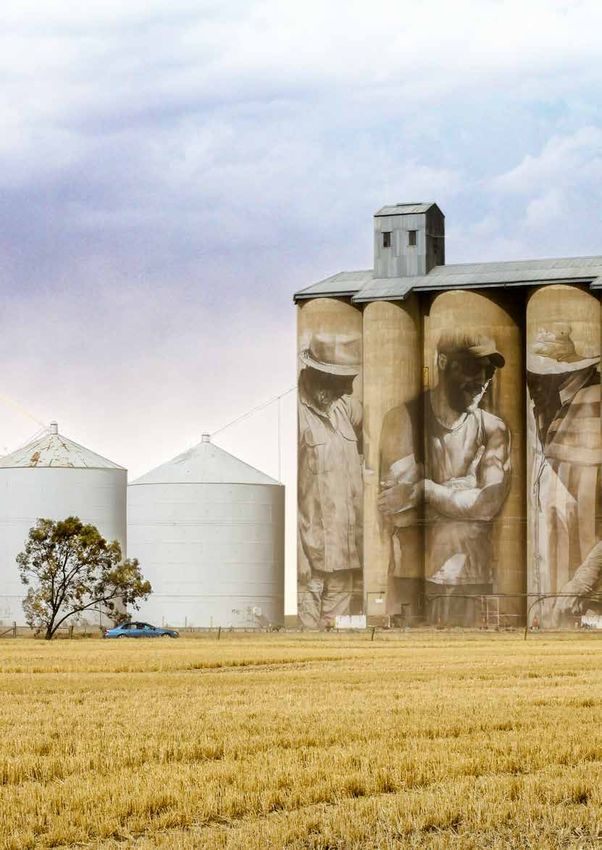
Front cover:
Brim Silo, Victoria
Part of the Silo Art Trail
Artist: Guido Van Helten

Disclaimer
The information contained in this report is provided
for general guidance and assistance only and is
not intended as advice. You should make your own
enquiries as to the appropriateness and suitability
of the information provided. While every effort has
been made to ensure the currency, accuracy or
completeness of the content we endeavour to keep
the content relevant and up to date and reserve the
right to make changes as required. The Victorian
Government, authors and presenters do not accept
any liability to any person for the information
(or the use of the information) which is provided
or referred to in the report.
Authorised by the Victorian Government
Department of Economic Development,
Jobs, Transport and Resources
1 Spring Street Melbourne Victoria 3000
Telephone (03) 9651 9999
January 2018
© Copyright State of Victoria 2017
Except for any logos, emblems, trademarks,
artwork and photography this document
is made available under the terms of the
Creative Commons Attribution 3.0
Australia licence.
This document is also available
in PDF and accessible Word format
at www.ecodev.vic.gov.au
CONTENTS

           Snapshot                                    6

           CHAPTER 01
           Message from the secretary                  9

           CHAPTER 02
           Our achievements                           10

           CHAPTER 03
           Our vision and mission                     16

           CHAPTER 04
           Our outcomes                               17

           CHAPTER 05
           How is the Victorian economy performing?   23

           CHAPTER 06
           Our strategic direction                    29

           CHAPTER 07
           Our organisation                           38

           CHAPTER 08
           How DEDJTR works                           44

           Appendix                                   48
4
DEDJTR DELIVERS STRATEGIC PLAN 2017 5
SNAPSHOT
DEDJTR DELIVERS 2017 AND 2018 STRATEGIC PLAN
 VISION

 A productive, competitive and sustainable economy that contributes to a prosperous and inclusive society.

 TEN YEAR OUTCOMES                                                               HEADLINE INDICATORS

 What does success look like?                                                    Is it working?

               Victoria is fair and prosperous
               •   Victorians build and share in income and wealth               •   Increased household incomes,
               •   Victorians participate in and are well connected                  including for low income households
                   to jobs and education                                         •   Increased participation
               •   Victorians have dignity and respect                               in employment
                                                                                 •   Increased participation through
                                                                                     business ownership
               Victoria is liveable and vibrant
               •   Victoria’s places, towns and cities are accessible            •   Improved connectivity
                   and well connected, diverse, resilient and safe                   and quality of transport
               •   Victoria’s society is open and its culture is vibrant             in towns and cities
                   and diverse                                                   •   Increased engagement with
               •   Victoria’s natural environment is productively and                arts and cultural activities
                   ethically managed and enhanced for future generations         •   Improved sustainable
                                                                                     use of natural resources
               Victoria is competitive
               •   Victoria’s infrastructure and networks are efficient,         •   Increased productivity
                   reliable, well connected and digitally enabled                •   Improved public transport
               •   Victoria’s business environment is competitive                    and road network reliability
                   and provides confidence                                       •   Enhanced confidence
                                                                                     in the economy
               Victoria is innovative
               •   Victorians are adaptive, knowledgeable                        •   Deepened level of
                   and entrepreneurial                                               knowledge and skills
               •   Victorian businesses are inventive, responsive                •   Enhanced level
                   and diverse                                                       of business innovation
               •   Victoria creates and diffuses knowledge through
                   research, collaboration and commercialisation

               Victoria is globally connected
               •   Victoria is a desired source of exports and                   •   Increased exports by
                   destination for foreign investment                                Victorian businesses
               •   Victoria is a desired location for visitors                   •   Increased economic activity
                   and global talent                                                 generated by tourism in Victoria
               •   Victorians learn from and contribute                          •   Increased number of international
                   to world’s best thinking                                          students choosing to study in Victoria

 OUR ENABLERS

               Our portfolio delivers for Victorians
               We are effective – citizen-centred, knowledgeable, collaborative and innovative
               We are efficient – allocating our resources and effort productively
               We have integrity – accountable, transparent and exemplary
7

MISSION

To get our economy and society working together for the benefit of all Victorians – by creating more
jobs for more people, connecting people and businesses, and maintaining Victoria’s envied reputation
for liveability now and for the future.

FOUR YEAR STRATEGIES

What are we doing about it?
•   Jobs, investment and trade:        •   Creative and visitor economies:           •    Collaboration
    Create more jobs for more people       Establish Victoria’s position                  and partnerships:
    by attracting investment and           as a premier creative and                      Proactively improve and
    leveraging global connections          visitor economy through                        deepen our relationships with
    to increase trade.                     quality cultural, recreational                 our partners and stakeholders
                                           and tourism experiences.                       in government, industry and
•   Supporting business:
                                                                                          the community by operating
    Support a thriving Victorian       •   Emergency management:
                                                                                          collaboratively and inclusively.
    business sector by delivering          Minimise the impact of
    services that are valued,              emergencies through effective
    modernising regulation and             preparation, coordination,
    improving access to markets.           response and recovery.
•   Inclusive local economies:
    Apply place-based, and other
    targeted approaches to increase
    employment and support the                                    Collaboration             Jobs,
    growth of local economies                                          and               investment
    and liveable communities and                                  partnerships            and trade
    promote access to employment
    that is fair and secure.
                                                    Emergency
•   Innovation:                                    management                                          Supporting
    Strengthen Victoria’s innovation                                                                    business
    and entrepreneurial culture
    and support the creation and
    application of new knowledge,                                        DEDJTR
    technologies and practices.
                                                   Creative            FOUR YEAR                          Inclusive
•   Infrastructure and services:
    Enhance Victoria’s liveability
                                                  and visitor
                                                  economies
                                                                       STRATEGIES                           local
                                                                                                         economies
    and competitiveness by
    providing transport and digital
    infrastructure and services
    that are efficient, reliable,                            Natural
    competitively priced and safe.                          resource                            Innovation
                                                            economy
•   Natural resource economy:                                               Infrastructure
    Sustainably grow our natural                                             and services
    resource economy through
    whole-of-life stewardship
    that promotes investor
    confidence and meets                          These Strategies are supported by a series of Priority Actions and
    community expectations.                    Enabling Actions, which are outlined in the 2017-18 DEDJTR Strategic Plan

OUR PEOPLE, OUR CULTURE, AND OUR PROCESSES AND SYSTEMS SUPPORT US TO DELIVER

            OUR GREAT PEOPLE                      OUR INNOVATIVE                                      OUR SAFETY
            AND CULTURE –                         WORKPLACE –                                         AND WELLBEING –
            Empower a capable,                    Enable a modern                                     Embed a culture of
            collaborative and                     and flexible workplace                              safety and wellbeing
            diverse workplace
8
9

01
MESSAGE FROM
THE SECRETARY
Over the next year DEDJTR has a considerable         We are connecting people through trade and
program of work to deliver jobs, connections         investment missions, our international offices,
and liveability – now and for the future.            level crossing removals, road improvements, the
                                                     night network, and the Metro Tunnel Project. Our
This Strategic Plan for 2017 and 2018 builds         work connects Victoria to the world through our
on all we have achieved in our first three years     cultural offerings. We are deepening connections
of operation, outlines our priority actions over     within Victorian communities and regions through
this timeframe and defines our aspirational          regional partnerships. We are connecting our work
outcomes for the long term.                          across the portfolio to ensure its value to the public.
This update follows the recent realignment           We are working to maintain Victoria and
of the department to strengthen our structure        Melbourne’s enviable reputation for liveability.
and hone our delivery focus. Our new structure       Strong population growth is projected to continue,
will help us to work even more effectively within    which will place pressure on our transport system
and across our portfolios, to better deliver our     and require investment in infrastructure and
growing work program for our ministers and           services. Transport construction activities are
meet the expectations of the Victorian               temporarily disruptive, but they are vital for serving
communities we serve.                                our growing population and creating attractive
                                                     places to live. Transport for Victoria is bringing
We are working toward more jobs for more people.
                                                     together our transport agencies to ensure our
We have seen very strong jobs growth in recent
                                                     planning and delivery give the best outcomes for
years, providing new employment for more than
                                                     Victorians across the transport network as a whole.
200,000 Victorians, and the growth in our services
sector is very strong. Our focus is on supporting    Our focus is on delivery, complemented by our
investment and trade to create new jobs, which       organisational development strategy DEDJTR
will help to support workers across the state.       Connects which aims to modernise our workplace
We are working to minimise the negative impact       and find efficiency savings to maximise the value
of and build resilience to challenges that           of our use of public resources. All of our people
businesses face. Recent examples of this             are working to achieve this goal.
include the drought and pricing changes
in the dairy industry.                               I look forward to working with my colleagues and
                                                     our stakeholders to do just that and deliver on
                                                     this plan, which will take us to the end of our first
                                                     four years as a department.

                                                     Richard Bolt
                                                     Secretary
02
OUR ACHIEVEMENTS                                                                   CONNECTION
                                                                                             JOBS

DEDJTR Delivers: supporting jobs, connections and liveability, across our full       LIVEABILITY
portfolio of responsibilities. Recent achievements of our department include:

        HIGHEST SHARE OF INVESTOR AND                            REGIONAL
        BUSINESS MIGRATION                                       DEVELOPMENT
Melbourne attracts:                                      Achieved regional investment targets,
59% of Australia’s business and investor migrants        facilitating projects worth over $920 million
60% of Australia’s share of Significant Investors.       in new capital investment and expected to
                                                         create 1,213 jobs.
        AGRICULTURE
        INFRASTRUCTURE
        AND JOBS FUND
                                                                 JOBS VICTORIA
A $200 million fund to strengthen the
performance and resilience of the agriculture            1,478 job seekers have been placed into work
sector. Projects supported include improving             through the Jobs Victoria Employment Network.
pipelines and channels in the Macalister
Irrigation District, upgrading rail sidings for
the grain sector, tackling Queensland Fruit Fly                  REGIONAL JOBS AND
and improving significant road networks and                      INFRASTRUCTURE FUND
bridges in farming regions.
                                                         245 projects approved equating to $1.035
                                                         billion investment in regional Victoria.
        TARGET
        ONE MILLION
                                                                 INVESTMENT
$46 million to get more Victorians fishing                       ATTRACTION
more often and support business and tourism
jobs in popular fishing areas around the state.          In 2016-17, facilitated projects worth an
                                                         estimated $2.23 billion in new capital
                                                         investment, estimated to create 6,280 jobs
        GROWING                                          and 16 new headquarters and research
        VISITOR ECONOMY
                                                         development centres.
Established Visit Victoria – a key driver
in growing our state’s visitor economy                           ACQUISITION OF GM HOLDEN SITE
to generate $36.5 billion a year and                             AT FISHERMANS BEND
support 300,000 jobs by 2025.
                                           9
                                       REGIONS           The site at Fisherman’s Bend will be a place
        REGIONAL
                                         1470            for design, engineering and technology that
                                      COMMUNITY
        ASSEMBLIES
                                       MEMBERS           will attract industry leaders in the areas of
                                                         aerospace, defence, marine design, automotive
Attended by 1,470 community members                      design and more. Fisherman’s Bend will
in nine regions to discuss and debate                    support around 80,000 residents and 60,000
the region’s top priorities.                             jobs by 2050.

        LOCAL JOBS                                               INTERNATIONAL TRADE
Minimum mandatory local content                          49 trade missions expected to result in around
requirements set for 72 Strategic Projects               $300 million of new export sales.
worth $49 billion and creating around
20,000 jobs.
DEDJTR DELIVERS STRATEGIC PLAN 2017 11
JOBS
CONNECTION
LIVEABILITY
SECURING
REGIONAL JOBS INNOVATION
Four year agreement to continue operations 400 new breeding lines created for Australian
at the Portland aluminium smelter securing canola-breeders, producing varieties yielding
650 jobs of workers and contractors, and $2.3 billion in canola oil production from
supporting over $386 million of wider 2010-2016.
downstream economic impacts to the region.
RECORD VISITS TO MARKET
CULTURAL AGENCIES ACCESS $60
12 M
ILL MILLION
12 MILLION VISITS VISIT ION
ORS
New agreement with China allowing
12 million attendances at exhibitions, Australia to export nectarines potentially
performances, programs and events at worth $60 million over the next three years.
Victoria’s major cultural institutions.
REGIONAL RAIL
ARTS AND
REVIVAL PROGRAM
CULTURE GRANTS $65.3
$65.3 MILLION MILLION
Secured Commonwealth funding for the $1.6
$65.3 million provided to more than 540 grant billion Regional Rail Revival Program, which will
recipients which enabled the work of Victorian upgrade Victoria’s regional passenger network
artists and arts companies to be presented and allow more trains to run more often.
around the state and in more than 50 cities
across the globe (2016-17). HIGH CAPACITY
METRO TRAINS
ON
LI
SCREEN
IL
D
Negotiated a $2.3 billion contract to build 65
E
M
AT
INVESTMENT .
ER
30
5
high-capacity metro trains, which will increase
EN
$2
G
84 film, television and games projects capacity and reduce crowding on Victoria’s
generated $230.5 million and more than 7,700 busiest rail corridor and service the Metro Tunnel.
job opportunities for the local sector (2016-17).
TRAINS,
TRAMS, JOBS
MEDICINAL
CANNABIS
Ordered nine new X’Trapolis trains and the first
DEDJTR successfully undertook a small- six of 48 new VLocity regional carriages as part
scale, strictly controlled medicinal cannabis of the Government’s Trains, Trams, Jobs: 2015-
cultivation trial. This new industry will 2025 rolling stock strategy.
potentially be worth up to $90 million, support
up to 500 new jobs, and provide treatment MURRAY BASIN
for up to 83,000 patients across Victoria and RAIL PROJECT
Australia by 2027.
Completed stage one and began stage two
of the $440 million Murray Basin Rail Project.12
NETWORK IMPACT SWAN STREET
MANAGEMENT PLAN BRIDGE PROJECT
Implemented several phases of the Network Began construction on the Swan Street
Impact Management Plan, which coordinates Bridge project involving a new east-bound
road system changes, bus replacement lane, new separated shared paths and a new
services and customer information pedestrian crossing.
associated with the Major Transport
Infrastructure Program.
CHANDLER HIGHWAY
UPGRADE
PORT OF
MELBOURNE LEASE Started works on the $110 million Chandler
Highway Upgrade comprising a new, six-lane
Finalised the Port of Melbourne lease bridge over the Yarra River, improved
and establishment of the Victorian walking and cycling paths and upgrade
Ports Corporation. of the Heidelberg Road intersection.
REGIONAL CLEARWAYS ON PUNT ROAD
TRAIN SERVICES AND HODDLE STREET PROJECT
Delivered 80 extra regional train services Implemented extended clearways
funded in the Victorian budget 2016-17. on Punt Road and completed design
work and consultation on the Streamlining
ROAD AND Hoddle Street Project, to improve traffic
PEDESTRIAN flow at key intersections.
CROSSINGS
Improved safety at 28 road crossings HIGH-VOLUME ARTERIAL
and 27 pedestrian railway crossings under ROADS PACKAGE
the Safer Country Crossing Program and
the State Level Crossings Upgrade Program. Released Expressions of Interest and
implemented design development and
community consultation for a $1.8 billion
SAFER SYSTEM ROADS package of upgrades to eight high-volume
INFRASTRUCTURE PROGRAM arterial roads in Melbourne’s west.
Delivered $119 million of road safety
improvements to Victoria’s highest-risk roads. GROWTH AREAS NEW
STATIONS PROGRAM
ROAD RESTORATION Opened Caroline Springs Station – under the
AND ROAD SURFACE Growth Areas New Stations program.
REPLACEMENT PROGRAM
Completed a major program of road PUBLIC
resurfacing and rehabilitation to address TRANSPORT FARES
long-term maintenance debt, through
the Road Restoration and Road Surface Implemented major improvements to public
Replacement Program. transport fare structures, making them easier
to understand, and fairer for Victorians.
STATION REVITALISATION
AND UPGRADES NIGHT
NETWORK
Began the $100 million revitalisation of Flinders
Street Station and stage one of the $63 million Made all-night public transport in Melbourne
Frankston Station Precinct Upgrade. and to regional centres on weekends permanent.DEDJTR DELIVERS STRATEGIC PLAN 2017 13
JOBS
CONNECTION
LIVEABILITY
WOMEN IN
MAJOR PROJECT SKILLS GUARANTEE TRANSPORT PROGRAM
35 major projects applying the Launched the Women in Transport program
policy to date will generate over to attract and retain more women in the
1,500 employment op portunities transport sector.
for Victorian apprentices, trainees
and engineering cadets.
ACTIVE TRANSPORT
VICTORIA
REGIONAL COMMUNITIES:
CERTAINTY ON GAS Established Active Transport Victoria within
Transport for Victoria to provide a stronger
Legislated for the permanent ban on focus on planning for walking and cycling.
unconventional gas exploration and
development in Victoria.
MYKI
MOBILE BLACK SPOTS PROGRAM Developed a new contract to operate
the myki system over the next seven years,
Contracted 141 new mobile towers with a greater focus on customer
in regional Victoria. improvements and value for money.
LATROBE VALLEY WORKER
REGIONAL CONNECTIVITY TRANSFER SCHEME
Delivered free public wifi pilots in Bendigo, Established the ground-breaking Latrobe
Ballarat and Melbourne CBD. Valley Worker Transfer Scheme to provide job
opportunities to workers retrenched as a result
of the Hazelwood Power Station closure.
DIGITAL ECONOMY
Hosted Victoria’s first Digital Innovation JOB SECURITY
Festival, comprising more than 130 events
across Victoria. Completed the Inquiry into the Labour Hire
Industry and Insecure Work and commenced
establishment of a new labour hire licensing
PUBLIC TRANSPORT
scheme.
INFRINGEMENT SYSTEM
$10.9
BILLION
Abolished on-the-spot public transport penalty METRO TUNNEL
fares and developed better training and PROJECT
support for authorised officers to provide a
fairer and more effective infringement system. Environmental Effects Statement process
approved, paving the way for construction
of the $10.9 billion rail project which will
TAXI, HIRE-CAR AND
transform the way people move around
RIDESHARE SERVICES
Melbourne.
Developed policies and legislation to regulate
rideshare services and make taxi and hire- NORTH EAST
car services safer, more responsive and more LINK
accessible. Established a fund to assist taxi
licence holders to transition to the new system. North East Link Authority established to
undertake investigation of preferred corridor
options and prepare a business case in relation
to the North East Link Project.14
WEST GATE REGIONAL
TUNNEL WIFI
Western Distributor Authority established Working in partnership with DELWP to provide
to deliver the $5.5 billion West Gate Tunnel WIFI to priority regional sites for improved
Project. Selected the preferred Design and collaboration and mobility.
Construct contractor, and released the
Environmental Effects Statement.
DEDJTR
TRIM/EDRMS
LEVEL CROSSING
REMOVALS 11 Document and records management systems
COMPLETE
consolidation. Easier sharing of documents
11 level crossings removed, and increased collaboration and efficiency.
8 stations rebuilt and a further 16 level
crossing removals underway, construction
INTEGRITY
commenced on the Mernda Rail Extension.
FRAMEWORK
New gifts, benefits and hospitality policy –
CELEBRATIONS acceptance of gifts, benefits and hospitality
policy updated to ensure greater transparency
Celebrations for International Women’s Day and accountability in decision making.
and IDAHOBIT Day.
ICT TRANSITION
DIVERSITY PROGRAM
AND INCLUSION
Getting infrastructure in place to support
Supporting LGBTI staff: supporting our LGBTI a more collaborative, flexible workplace
colleagues and creating a respectful and through technology upgrades. The first
welcoming workplace culture. in VPS to transition to Office 365 – from
lagging to leading in mobile ICT environment
and saving $13 million.
WHITE
RIBBON
DEDJTR DELIVERS –
Working inside and out of the workplace STRATEGIC PLAN 2016
to end family violence.
Developed DEDJTR Delivers – Strategic Plan
ONLINE SAFETY 2016, the department’s plan to realise a shared
AND INCIDENT vision over the next 10 years.
MANAGEMENT SYSTEM
Accessible on any device, in any location, OUTCOMES
making it easy to identify, assess and control FRAMEWORK
OHS hazards and risks.
Developed an Outcome Framework to better
track, monitor and measure success to
determine whether systems, services and
culture are focused on what matters.DEDJTR DELIVERS STRATEGIC PLAN 2017 15
JOBS
CONNECTION
LIVEABILITY
EMERGENCY
INCLUSION RESPONSE PLAN
Established a coordinated and consistent Developed an emergency response plan
approach to employment services for socially to help keep Victoria safe and build more
and geographically disadvantaged job seekers. resilient communities.
VICTORIA’S
ECONOMIC BOURKE STREET
GEOGRAPHY INCIDENT RECOVERY
Prepared a report to deepen our Played a key role in leading the immediate
understanding of Melbourne and regional response to the recovery efforts following
Victoria’s economic geography. the Bourke Street incident in January 2017.
DEDJTR ECONOMIC
FUTURE ASSESSMENT
OF WORK INFORMATION PORTAL
Examined the Victorian labour market Developed and released the DEDJTR Economic
and mapped occupations with the common Assessment Information Portal to staff.
skills needed to help the department plan
for the future.
NEW LEGISLATION
SMALL BUSINESS
REGULATION REVIEW Developed new legislation to modernise long
service leave laws, make them fairer for women,
Identified and commenced delivery of reforms families and those transitioning to retirement,
that will cut up to $131 million of red tape and easier to understand and apply.
for small businesses in the retail sector.
NEW ENTERPRISE BARGAINING
LEGISLATION
In 2016-17, concluded close to 50 public sector
Developed new legislation to strengthen enterprise agreements, including major
livestock biosecurity, prevent cruelty to animals agreements for nurses, teachers and
and set fishery catch limits. principals and a majority of the public
health sector workforce.
LATROBE VALLEY
MINE REHABILITATION
Helped establish the Latrobe Valley Mine
Rehabilitation Commissioner to lead mine
rehabilitation in the valley.
SMALL BUSINESS
COMMISSION
Helped establish the Small Business
Commission to ensure a competitive
and fair operating environment for small
business in Victoria.03
OUR VISION
AND MISSION
There are three supporting themes which unpack
what our mission means:
VISION More jobs for more people – we are creating
and maintaining jobs so more people have
meaningful work that is safe and secure.
A competitive, sustainable We do this by supporting businesses and
and productive economy that workers, developing and growing our
contributes to a prosperous future industries, attracting investment
to our regions and supporting industries in
and inclusive society. transition. We also create jobs by leveraging
our natural assets, including fostering our
visitor economy, creativity and innovation.
Making connections – we are connecting
Victorians to work, family and recreation.
MISSION We are connecting businesses to each other
and their customers. We do this by growing
our transport services, making them more
To get our economy and reliable and accessible and building new
society working together for infrastructure, across Melbourne and our
regions, and across all transport modes.
the benefit of all Victorians
We also connect Victoria to the world
– by creating more jobs for by attracting investment and talent,
more people, connecting and helping Victorian businesses trade
into global markets.
people and businesses, and
maintaining Victoria’s envied
reputation for liveability now Maintaining Victoria’s liveability –
and for the future. we are helping to create places, towns
and cities that are accessible, well
connected, culturally rich, diverse, resilient
and safe. We do this for all Victorians.17
04
OUR
OUTCOMES
DEDJTR’s Outcomes Framework gives life to our vision
by describing what we aspire to for the Victorian
economy and community over the long term.
To achieve our vision for Victoria, DEDJTR has
articulated ten-year outcomes in our Outcomes
Framework. Our Outcomes Framework helps us
link the activities we do with the outcomes we wish
to achieve. It describes how we want to make a
difference and measures the impact of our work.
Our outcomes are arranged into six themes. For each
outcome, a number of indicators and measures help
us to identify progress towards that outcome.
Monitoring progress towards outcomes tells us
if our work is improving the lives and prosperity of
Victorians. By taking this approach, DEDJTR is putting
Victorians at the centre of our activity in strategy,
policy and implementation.
DEDJTR’s Executive Board reviews performance
against the headline indicators – those indicators
which align closely with the Department’s four-year
strategies. In early 2018, an Outcomes Framework
Progress Report will be completed, which will reflect
on the department’s progress against outcomes
since the inception of the framework.
This section describes the outcomes DEDJTR aspires
to for the Victorian economy.18
VICTORIA IS FAIR VICTORIA IS LIVEABLE
AND PROSPEROUS AND VIBRANT
By placing Victorians first, all communities and We are maintaining Victoria’s vibrancy and
places share in a stronger and fairer economy. liveability. We do this by promoting cultural
diversity, creativity and natural resources, and
In a fair and prosperous Victoria, our economy by keeping people moving, as our population
continues to grow.
and society work together for the benefit of all
Victorians. By creating and maintaining more
jobs, more Victorians have meaningful work Maintaining Victoria’s liveability now and for
that is safe and secure. the future means creating places, towns and
cities that are well connected, culturally rich
We support business, workers and job-seekers, and physically diverse, as well as resilient and
developing and growing our future industries, safe. Victoria’s liveability also requires a natural
attracting investment to our regions, and environment which is accessible and contributes
supporting industries in transition. By growing our to the healthy, active lives of Victorians, now and
transport services and building new infrastructure into the future.
across Melbourne and our regions, we support
and connect businesses and workers, connecting We invest in accessible, reliable and
people across the State to jobs, education and affordable public transport to connect
services. Victorians to work, family and recreation.
We foster our visitor economy and support
The headline indicators used to measure creativity, to benefit all Victorians as well
progress in this domain are: as local and international visitors.
• An increase in household incomes, including We manage our natural resources to maximise
for low income households, demonstrating benefit for current and future generations.
rising living standards and inclusive growth The natural environment makes a strong
for Victorians contribution to Victoria’s economy and
• An increase in participation in employment, is a resource that is fundamental to our
which gives more people a chance to improve health and wellbeing. We leverage our abundant
their living standards natural assets in sustainable ways. Agricultural
and earth resources produced in Victoria make
• An increase in the opportunities for a significant contribution to income and wealth,
Victorians to participate in the economy particularly in regional and rural areas.
through business ownership, demonstrating
a reduction in the barriers some people face
to establish and maintain a business.
KEY DATA
Recent pace of household disposable income
growth has been modest and the household
income distribution has remained largely unchanged.
Victoria’s 2016-17 average labour force
participation rate of 65.7 per cent was the
highest for the State since records began in 1978.
There were 272,600 more people in employment
in August 2017 compared to November 2014, with
177,900 more people in full-time employment.DEDJTR DELIVERS STRATEGIC PLAN 2017 19
The headline indicators used to measure
progress in this domain are:
VICTORIA IS COMPETITIVE
• Improvements to connectivity and quality
of transport in towns and cities, which increase We are attracting investment and improving our
Melbourne’s and Victoria’s liveability by making transport network so that Victorians can benefit
it easier for everyone to get around and move from a strong, competitive and productive
goods to market economy that leads the nation in job creation.
• Increasing engagement with arts and cultural Broad-based improvements in productivity
activities, enriching the lives of Victorians contribute to increases in economic growth that
• Improving the sustainable use of natural lead to long-term improvements in prosperity.
resources to ensure that future generations More productive economies are more competitive
can continue to use Victoria’s resources and stable, and responsive to structural change.
to raise their quality of life.
Stable or strengthening business conditions
encourage business formation, growth and
KEY DATA investment. New and existing businesses are
more likely to take risks, invest and innovate
Over 6 million people now call Victoria home
and this figure is predicted to exceed 8 million in order to expand. Consumers benefit as
people in the next 20 years. increased competition leads to lower prices
and more product variety.
Victoria’s growing and ageing population will
place additional pressure on infrastructure,
We create and maintain jobs through strong
government services and affordable housing.
economic fundamentals: a better transport
The overall customer satisfaction index scores network that is more reliable and efficient, and a
for all modes of public transport were within
five per cent of target for 2016-17, and the
confident and competitive business environment.
metropolitan train service customer satisfaction
index score exceeded the satisfaction target set. The headline indicators used to measure progress
in this domain are:
• Increasing productivity, which remains the
cornerstone of sustainable increases in living
standards over the long term
• Improving public transport and road network
reliability to increase efficiency for Victorian
people and businesses
• A greater level of confidence in the economy,
which encourages consumers to spend and
investors to invest, both critical parts of
economic growth.
KEY DATA
Business confidence and business conditions
have improved since 2012.
Bus services exceeded punctuality targets in
2016-17. The punctuality of metropolitan bus, train
and tram services were within five per cent of
target for 2016-17 while regional train punctuality
was 85.3 per cent, short of the target set of
92 per cent.20
VICTORIA IS INNOVATIVE VICTORIA IS GLOBALLY
CONNECTED
We’re attracting and retaining highly skilled,
talented and creative workers so innovative
Victorians capitalise on global connections
businesses can thrive as they transform our
to attract investment and global talent, boost
economy to build industries for the future.
exports that leverage our clean and green
brand, and engage in world’s best thinking.
Highly skilled and creative Victorians create
the innovative businesses that can drive We connect Victoria to the world by attracting
the performance of our economy. investment and talent, and helping Victorian
businesses trade into global markets.
We foster creativity and innovation.
We work to improve training quality and choice, The headline indicators used to measure
encourage businesses to experiment with new progress in this domain are:
ideas, models and technologies, and encourage
greater collaboration between businesses, • Increasing exports by Victorian businesses,
research institutions and government. This demonstrating the international competitiveness
will increase the economic and social returns of Victorian industry, as well as contributing
generated from Victoria’s research capabilities. to Victorian economic growth
The headline indicators used to measure • Increasing the level of economic activity
progress in this domain are: generated by tourism in Victoria, because
spending by visitors to Victoria delivers
• Building Victorians’ knowledge and skills economic growth and jobs in our cities
that will enable people to succeed in the and regions
industries of the future, particularly
• Increasing the number of people who
STEM-related industries
choose Victoria as a place to study and
• Supporting business innovation: helping a source of education, increasing the value
businesses to develop and bring to market of the education sector as a source of future
new ideas, services and products. capability and economic growth.
KEY DATA KEY DATA
Consistent increase in proportion of domestic Total exports of goods and services from Victoria
tertiary graduates completing a degree in 2016-17 rose to $46 billion from $42.9 billion in
in a STEM-related field over the last five years. 2015-16. Both goods exports and services exports
increased in 2016-17 from the year prior, by 5 per
Thirty-five per cent of businesses featured cent and 11 per cent respectively.
on the BRW Fast Starters List 2016 (the fastest
growing start-up businesses in Australia) International visitors to Victoria spent $7.5 billion
are headquartered in Victoria, up from in 2016-17, representing growth of 11.5 per cent on
29 per cent in 2015. 2015-16 expenditure.
The total number of international students
enrolled full-time at Victorian education
institutions exceeded 200,000 for the first time
ever in 2016 (220,750 students).21 How the Outcomes Framework will help DEDJTR do its work DEDJTR’s Outcomes Framework includes an internally focused outcome – Our portfolio delivers for Victorians. DEDJTR seeks to continually improve the capability and performance of our staff by increasing collaboration and improving our knowledge base. We do this while retaining our focus on delivering services efficiently and improving our internal systems and processes. We embrace accountability and transparency. We demonstrate impartiality to inspire positive changes within and outside DEDJTR.
22
23

05
HOW IS THE VICTORIAN
ECONOMY PERFORMING?
                                                           A critical driver of Victoria’s recent economic
                                                           performance has been population growth,
                                                           particularly from overseas migration. In the
This section presents the                                  year to March 2017, Victoria’s population grew
                                                           by 149,374, the highest of any state. Melbourne
current state of the Victorian                             had the highest population growth of any capital
economy and outlines the                                   city over the same period. Fast population
challenges and opportunities                               growth, coupled with low interest rates, has
                                                           underpinned growth in household consumption
we need to be prepared for.                                and dwelling investment.

                                                           At an industry level, the shift towards service
                                                           sectors continues. Employment in healthcare,
                                                           education and retail services has grown
                                                           strongly in response to demand from a
                                                           growing population, as has employment in the
                                                           construction sector. These jobs are typically
                                                           located where the population is most dense
Victoria’s economy has become one of the                   – that is, across Greater Melbourne, and in
strongest in Australia, with growth in Gross State         urban centres across regional Victoria.
Product (GSP)1 of 3.3 per cent in 2015-16, well
above the national average of 2.7 per cent 2.              Knowledge-based sectors such as professional
The Department of Treasury and Finance                     services and finance have driven strong
forecasts this strong growth to continue, with             employment growth with firms tending
an estimated 3 per cent GSP growth in 2016-17,             to cluster in inner-Melbourne, as well as
and forecast growth of 2.75 per cent in 2017-18.           Melbourne’s west and Geelong.

This growth is translating into more jobs. Over            Victoria’s exports of goods and services
200,000 jobs have been created in Victoria                 totalled approximately $46 billion in 2016-17,
since the department was established, and                  with the lower Australian dollar supporting
employment is forecast to grow strongly                    export oriented sectors such as international
by 2 per cent in 2017-18.                                  education, tourism and agriculture.

1   Growth in the per capita Gross State Product (GSP)
    is the most commonly used measure of a state’s
    economic performance. If GSP grows, the economy
    is expanding. Because it is measured on a per capita
    basis, GSP is used to measure and compare the
    standard of living in this state and to compare
    Victoria’s performance with that of other states.
2   2016-17 GSP figures are expected to be available
    in November 2017.
24
ECONOMIC
Economic (GSP)
(GSP) GROWTH
growth – Victoria and Australia (e) Estimate (f) Forecast
4%
VICTORIA
3%
2%
AUSTRALIA
1%
0
2011-12 2012-13 2013-14 2014-15 2015-16 2016-17
Source:
Source: ABS 5220.0
DEDJTR Australian
analysis National
of forecasts Accounts:
and projections State
from Accounts
2017-18 2015-16
Victorian Budget (May-2017) and the Commonwealth Budget 2017-18 (May-2017)
Overall, Victoria is well positioned for sustained Victoria’s economy is continuing to pivot
growth over the medium-term because of towards high-skilled and population-based
its diverse strengths: world-class education services: professional services, construction
institutions, a culturally diverse population, strong and tourism are among the wide range of
technological capability, a positive business growth opportunities. However, there are
environment, quality infrastructure, transport a number of challenges that need to be
services, productive land, significant natural met to allow for sustained growth that
resources and environmental heritage, as well can be enjoyed by all Victorians.
as its proximity to emerging markets.
CONTRIBUTIONS TO VICTORIAN REAL GSP GROWTH AND AUSTRALIAN REAL GDP GROWTH
Contributions to Victorian real GSP growth (percentage points)
5
4
3
2
1
0
-1
-2
-3
2008-09 2009-10 2010-11 2011-12 2012-13 2013-14 2014-15 2015-16 2016-17
POPULATION PARTICIPATION LABOUR PRODUCTIVITY REAL GSP/GDP GROWTH
Source: DEDJTR analysis based on ABS dataDEDJTR DELIVERS STRATEGIC PLAN 2017 25
Promoting stronger productivity growth and CREATING JOBS
higher workforce participation will be important
in securing long-term sustainable economic
Strong overall employment growth has been
growth and rising living standards. Victoria’s
a key success story for the Victorian economy
labour force participation rate is at its highest
in recent years. However, this masks variation
level since 2011. The trend unemployment rate
across industries, regions and population
has fallen from a peak of 6.8 per cent in mid-
cohorts. Part-time employment’s share of total
2014 to 5.9 per cent in October 2017. However,
employment has grown from approximately
underemployment is high and wage growth
25 per cent to 33 per cent since 2000. In addition,
remains subdued.
one-fifth of Victorian workers are in casual
Whilst labour productivity 3 has grown recently employment. The development of new business
in Victoria, growth has been slowing for several models may see this number increase. This
decades (as it has been across the OECD). partially reflects changing worker preferences,
A structural shift away from capital intensive however, the rate of underemployment – people
sectors toward labour intensive service-based in part time or casual work who would prefer
sectors is common across developed economies. to work more hours – has grown significantly,
particularly for younger Victorians.
Raising living standards by growing productivity
will require making better use of Victoria’s skills Part-time and casual employment can have
and resources. This is underpinned by research ramifications for Victorians’ economic security
and innovation, infrastructure investment, and wellbeing. Without appropriate protections,
smarter regulation, and attracting and skilling vulnerable employment characterised by the
up businesses and a talented workforce. insecure nature of work can lead to poor job
Productivity is also about how government quality, low income and hardship. Fulfilling and
operates: focusing on the things that deliver secure employment is critical to providing each
the greatest improvements in Victorians’ lives. generation with the financial capacity to access the
services and living standard they need as they age.
VICTORIAN
Victorian EMPLOYMENT
employment – TOTAL (‘000 PERSONS)
– total ‘000 PERSONS
3,200
3,100
3,000
2,900
2,800
2,700
AUG-12 FEB-13 AUG-13 FEB-14 AUG-14 FEB-15 AUG-15 FEB-16 AUG-16 FEB-17 AUG-17
Source: ABS 6202.0
6202.0 Labour
Labour Force,
Force, seasonally
seasonallyadjusted,
adjusted,August
August2017
2017 (Note: this includes full-time and part-time employment)
3 Labour productivity is the value of output generated by
the workforce during a given time period. Higher labour
productivity allows us to become more competitive and
support higher household incomes.26
Victoria welcomed 2.7 million international
visitors, who spent a total of $6.9 billion,
a 6 per cent increase on 2015.
Structural shifts in the economy are opening Connecting globally
up new opportunities for economic growth, but Victoria is an open, competitive and trade-
are increasing social dislocation, particularly in oriented economy with exports worth $46 billion
already disadvantaged communities. Some areas in 2016-17 benefitting sectors such as tourism,
of Melbourne and regional Victoria experience international education, professional services,
considerably higher unemployment than average, and food and fibre across the State. China is
while low or negative growth in regional and rural Victoria’s top export market with goods exports
Victoria has been exacerbated by structural valued at $4.78 billion in 2016, while the United
change and is impacting the economic resilience States, New Zealand and Japan are other key
and viability of some areas. goods export markets. The real value of Victoria’s
Place-based strategies to support communities goods and services exports has increased year
in transition are critical to improving economic on year for the past five years.
participation and minimising the risk of social Our global connections benefit Victorians,
exclusion. This includes delivering targeted opening access to new products and experiences
employment programs that meet the needs — from the arrival of global retailers, to the
of different cohorts, promoting entrepreneurship exhibition of major cultural events and activities
and helping small businesses, using creative from abroad. Continuing to develop our offering
outlets to channel the disengaged into productive to foreign tourists also provides new and improved
pursuits, and embracing new models of ‘social opportunities for Victorians — greater choice,
enterprise’ that supplement the traditional role better infrastructure and more events. Over
of government in social assistance. the year to December 2016, Victoria welcomed
2.7 million international visitors, who spent a total
of $6.9 billion, a 6 per cent increase on 2015.
ENHANCING CONNECTIVITY
Victoria is home to Australia’s largest container
Transport infrastructure is a critical enabler and general cargo port, the Port of Melbourne,
for greater labour force participation and which handles around 36 per cent of Australia’s
productivity. Efficient transport links people container trade. The Port of Melbourne, Port of
to jobs, education, family, community and Geelong, Port of Portland and Port of Hastings
other services. serve as major hubs connecting Australia directly
to the Asia Pacific, Europe and North America.
Victoria’s population is projected to exceed
eight million people in the next 20 years. Given
that freight requirements could treble in this Connecting to the digital economy
time, and that freight generally uses the same The economy is increasingly digital, and reliant
infrastructure we use to move people, efficiencies on information and communications technology
and improvements need to be made to the connectivity. Factors such as technological
freight rail network. Recent steps to address this advancements, a changing global economic
include record investment to improve the freight and political landscape and demographic
rail to achieve broader transport efficiencies in changes will present both opportunities and
the network. Emphasis is also being placed on challenges for Victoria. Disruption across
maximising the use of existing infrastructure industries is likely to accelerate.
to achieve maximum productivity.
This environment requires resilience
Urban renewal and densification enables Victoria and adaptability from businesses, workers,
to maximise the value of existing investments government and the wider community. Business
in infrastructure and increases housing supply, success factors are changing fast, and being
but it needs to be managed. Integrating able to take advantage of new technologies
infrastructure and precinct development will and new markets globally is crucial.
continue to be critically important to ensure
connectivity and liveability in Victoria.DEDJTR DELIVERS STRATEGIC PLAN 2017 27
The skill requirements for workers will constantly There are many factors that contribute to
evolve as occupations are redefined, new Victoria’s liveability including our safe, open
occupations are created, and others disappear. and secure communities, outstanding cultural
and natural amenity, and world-class education
Government has a role in supporting workers, and healthcare facilities.
businesses and the wider community in navigating
this environment, taking advantage of the Melbourne has historically enjoyed strong
opportunities that arise from it, and ensuring rankings in a variety of liveability indices. Most
no part of the community is left behind. notably Melbourne has held top spot on The
Economist Magazine’s Global Liveability Index
This includes an ability to connect digitally. for the last seven years. Other rankings include
Connectivity initiatives underway include: Monocle’s Quality of Life, for which Melbourne
141 new mobile towers addressing blackspots, was 6th in 2016, and Mercer’s Quality of Living
free public wifi in Melbourne, Ballarat and Survey, for which Melbourne was 15th in 2016.
Bendigo, and connectivity on regional trains.
Victoria’s liveability has benefits in attracting
the best and brightest talent in an increasingly
MAINTAINING VICTORIA’S globalised and competitive labour market.
ENVIABLE LIVEABILITY This is reflected in strong net migration to
the State. This population growth has broadly
Victoria can be proud of its high standard of living. benefitted Victoria and driven economic growth,
Melbourne is consistently ranked one of the most however it increases pressure on the State’s
liveable cities in the world and our regional cities infrastructure, services, and affordable housing.
and towns provide a variety of employment Victoria’s continued economic growth, social
and lifestyle opportunities. cohesion, and liveability will depend on access
to services, housing and transport infrastructure
that connects Victorians to work, family
and recreation.28
29

  06
  OUR STRATEGIC
  DIRECTION

Our strategic direction and actions position DEDJTR to fulfil
our mission statement, meet our ten-year outcomes and generate
genuine change in the lives of the Victorian community.

Beyond the high level actions included in this plan, group business
plans contain more granular information on the actions we will
pursue over the next 18 months.

                             Collaboration        Jobs,
                                  and          investment
                             partnerships       and trade

                Emergency
               management                                   Supporting
                                                             business

                                     DEDJTR
               Creative            FOUR YEAR                   Inclusive
              and visitor
              economies
                                   STRATEGIES                    local
                                                              economies

                         Natural
                        resource                      Innovation
                        economy
                                     Infrastructure
                                      and services
30
• Develop and implement a pipeline of capital
1. Jobs, investment and trade
investment projects where public sector
capital contribution could lead to private
Create more jobs for more people by attracting sector investment, maximising economic
investment and leveraging global connections
development outcomes for Victoria.
to increase trade.
• Develop and implement strategic
Keeping Victoria globally connected will help initiatives to generate new employment
ensure a steady flow of trade and investment, opportunities for industry, including through
government procurement and projects.
which will support jobs and is vital for Victoria’s
continued economic growth. • Implement the International Education
Sector Strategy.
Victoria is well-placed to attract investors.
We are close to many emerging markets, • Develop a pipeline of partnership initiatives
particularly those in Asia, with growing middle with China related to agri-bioscience.
classes eager to trade with and invest in Victoria. • Develop the Victorian medicinal cannabis
Our strong tradition of providing high-quality industry and facilitate international
higher education to international students investment.
means that many alumni of Victorian
• Catalyse private investment by identifying
institutions are now business leaders in Asia.
policy levers (regulatory and planning)
to facilitate development of hotel
Priority actions
infrastructure.
• Develop and implement an Investment
Attraction Strategy setting out the • Develop an integrated pathway to grow
government’s priorities for investment food and fibre exports as part of a regional
attraction. Victoria jobs initiative, including setting
an export target.
• Implement Victoria’s Trade Statement.
• Develop criteria and identify the top
• Develop and implement multi-year trade 100 export orientated companies and
and investment plans for priority sectors 50 emerging export companies and develop
and markets. strategies for engagement with them.
• Progress development and implementation
of a regional tourism infrastructure priorities
plan to catalyse future private investment
• Create the Arden Innovation Precinct
including the identification of potential
anchor occupants and associated research
and development (R&D) infrastructure
required.
• Develop value proposition material for
priority sectors identified through the
Investment Attraction Strategy.
• Continue implementation of the Automotive
Transition Plan and coordinate tailored
support for energy exposed significant
manufacturing businesses.
• Develop a Global Talent Attraction Strategy
aimed at helping Victoria’s high-growth
industries attract the specialised investors,
successful business people and highly skilled
global talent they need to grow.31
2. Supporting business • Support the continued development
of, and increased investment in, intensive
Support a thriving Victorian business sector by agriculture in Victoria.
delivering services that are valued, modernising • Develop, influence and apply policy and
regulation and improving access to markets.
regulatory frameworks and production
systems for the supply of medicinal cannabis.
Victorian businesses need government business
services and regulatory settings to reflect • Implement the Victorian Government’s
modern-day realities. The Victorian economy animal welfare reforms.
continues to transition to a knowledge and • Advocate for systematic improvements
services based economy. The strategies to energy policy to improve the operating
that we have developed for priority sectors environment for Victorian businesses
acknowledge that these changes are occurring. and investment.
Their implementation will equip the economy
to manage and benefit from this transition. • Identify opportunities for regulatory reform
to improve the business environment, across
Priority actions priority industries.
• Implement the Strategic Business Relationship • Enact legislation to establish a licensing
Model across EIT, with a focus on senior scheme for labour hire operators.
engagement with major and growth firms.
• Improve Victorian Long Service Leave
• Implement sector strategies and priority laws, including developing portable long
initiatives with a focus on the strategic service leave laws.
industries identified as key targets
for growth.
• Modernise engagement with small
businesses through the introduction
of a digital engagement model to enable
business growth and employment.
• Deliver the Small Business Regulation
Review through a series of sectoral
studies that identify and reduce regulatory
and related barriers to small business
formation and growth.32
3. Inclusive local economies 4. Innovation
Apply place-based, and other targeted approaches Strengthen Victoria’s innovation
to increase employment and support the growth and entrepreneurial culture and support
of local economies and liveable communities. the creation and application of new
knowledge, technologies and practices.
There are pockets of disadvantage in both
metropolitan and regional Victoria that are In an economy driven by the services sector
not benefiting from Victoria’s economic and advanced manufacturing, start-ups and
growth as much as they should. small businesses are key. These start-ups will
be built around new technologies and innovative
Inclusive economic growth often needs to new ways of doing things. DEDJTR is working to
be addressed on a local geographic basis. support an ecosystem where new technologies
Place-based approaches provide a way for are developed and new businesses can thrive.
local communities to pursue their own agenda
in partnership with government. Local businesses Priority actions
and communities have in-depth information • Develop a Technology Enabled Futures
about the multiple and interacting local factors Program, to help TfV better prepare for the
that can prevent people getting into the future and respond to emerging technologies
workforce, impede the development and success and related services on the transport
of small business, or hinder employers finding network, to enhance social, economic and
skilled workers. environmental outcomes.
Priority actions • Identify target businesses as potential
• Support the effective operation of Regional occupants of the Fishermans Bend Precinct
Partnerships, including to identify, develop of Excellence.
and deliver priority projects and initiatives • Investigate financing and funding options
in each region. for start-up and scale up businesses,
• Support place-based economic development including assessment of various capital
outcomes across the Melbourne metropolitan sources and potential alternatives
area. to investment attraction grants.
• Lead the development of the vision for • Implement an innovation plan that will
priority precincts to maximise economic support the creation and growth of high
and community benefits. performance businesses.
• Build social and economic inclusion through • Develop and implement an information
linking job-seekers facing labour market and communications technology (ICT)
barriers to employers with job opportunities. strategy for Victorian agriculture to harness
technological advances.
• Implement the Latrobe Valley Economic
Development program to support economic • Design, undertake and deliver food and
transition in the Latrobe Valley, and deliver fibre research, development and practice
targeted transition programs including the change services in partnership with industry
Automotive Transition Plan. to increase productivity and growth.
• Implement the Ballarat GovHub and develop • Identify and implement interventions
proposals for Bendigo and the Latrobe Valley. in support of Melbourne becoming
a world-leading biotech city.
• Lead the development of the Victorian Rural
Women’s Network. • Develop an integrated digital technology
plan across priority industries, including
• Targeted place-based policy initiative to consideration of potential game changing
create jobs in areas of high unemployment, ideas in cyber security, data analytics and
including a focus on youth. The project will targeted workforce development initiatives.
include consideration of incentives such
as payroll tax. • Identify levers and options for intervention
to better leverage and encourage
commercialisation or manufacturing
opportunities post R&D.You can also read


