Electric Fleets in Urban Logistics - PUBLISHED AS PART OF THE ENCLOSE-PROJECT
←
→
Page content transcription
If your browser does not render page correctly, please read the page content below
PUBLISHED AS

Electric Fleets in                                                PART OF THE
                                                                  ENCLOSE-PROJECT

 Urban Logistics                              Improving urban freight
                                              efficiency in small and
                                              medium-sized historic
                                              towns

 Co-funded by the Intelligent Energy Europe
 Programme of the European Union
IMPRINT
Published as part of the ENCLOSE project, funded by the IEE (Intelligent Energy Europe/EASME). Owner and Publisher:
AustriaTech – Gesellschaft des Bundes für technologiepolitische Maßnahmen GmbH, Raimundgasse 1, A-1020 Vienna, Phone:
+43 1 26 33 444, E-Mail: office@austriatech.at. Graphics & Layout: Projektblatt, A-1230 Vienna, www.projektblatt.at;
Printer: Grasl Druck & Neue Medien GmbH Bad Vöslau.

The sole responsibility for the content of this brochure lies with the authors. It does not necessarily reflect the opinion of the
European Union. Neither the EACI nor the European Commission are responsible for any use that may be made of the infor-
mation contained therein..
Electric Fleets in
Urban Logistics
Improving urban freight efficiency in small
and medium-sized historic towns

This report is published as part of the ENCLOSE project,
funded by IEE (Intelligent Energy Europe/EASME).

                                                Co-funded by the Intelligent Energy Europe
                                                    Programme of the European Union

Vienna, March 2014

                                                                                             3
// ENCLOSE Electric Fleets in Urban Logistics

                                   Content
                                   Introduction                                                                                   5
                                   Challenges in urban logistics                                                                  6
                                   Electric vehicles in urban logistics – Addressing current issues in urban freight transport    8
                                              Low emission vehicles                                                               9
                                              Efficient deliveries                                                               11
                                   Regulations to support electric mobility                                                      14
                                              Access incentives                                                                  15
                                              Financial incentives and regulations                                               17
                                              Public Procurement                                                                 19
                                   User acceptance                                                                               20
                                              Driving comfort                                                                    20
                                              Cost                                                                               20
                                   Technical background                                                                          22
                                              Vehicle technology                                                                 22
                                              Charging infrastructure                                                            23
                                   Recommendations                                                                               25
                                   References                                                                                    28
                                   EU documents                                                                                  28
                                   Projects                                                                                      29
                                   Studies, Articles and Reports                                                                 31
                                   About ENCLOSE                                                                                 33

4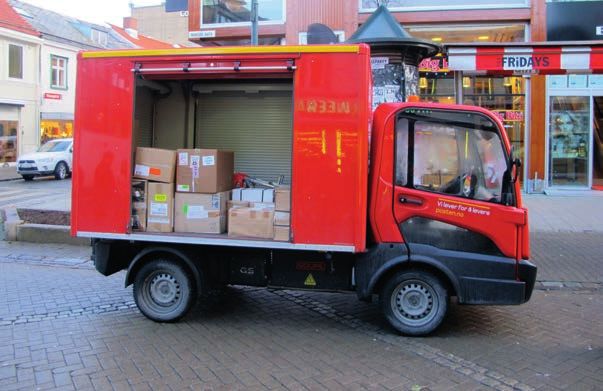
Introduction //

Introduction
Population growth combined with shifting consumption             The use of electric vehicles instead of conventionally-
patterns – such as a rise in online commerce and flexible        fuelled vehicles in freight transport is one way to improve
deliveries – have led to increasing inner and inter urban        urban freight efficiency. This can yield positive long-term
(freight) transport. Since the year 2000, the total number       effects for cities by increasing air quality as well as reducing
of global passenger and freight movements has increased          CO2 emissions and noise. With the sector being particu-
by an average of 4%, with global energy usage up by 30%.         larly vulnerable to disruptions in energy supply and price
This increased mobility has many positive effects, but also      volatility, the use of electric vehicles also offers an oppor-
negative effects on our environment. Transport currently         tunity to break its dependence on oil.
accounts for half of global oil consumption and nearly 20%
of world energy usage, of which 40% is utilised in urban         This report focuses on electric urban freight mobility by
transport. Global transport emissions have risen annually        taking into account technical, legal and social factors that
by nearly two billion tonnes of CO2 equivalent since 2000,       are relevant for small and medium-sized cities. It offers an
with freight transport generating between 20% and 60% of         overview of current developments by providing examples
local transport-based pollution (IEA 2013, p. 6ff.). Despite     of European cities that have successfully introduced electric
a substantial decrease in emissions of many air pollutants       vehicles into their logistics fleets. It also cites important
in Europe over the past decades, air pollutant concentra-        regulations, incentives and options for facilitating the
tions are still too high, with around 90% of city dwellers       modification of infrastructure by cities and companies. The
exposed to damaging air pollutants at levels deemed harmful      recommendations in chapter 7 provide a summary
to health by the World Health Organisation (EEA 2013,            of possible subsequent steps in the process.
online).
                                                                 It is clear that improving the efficiency of vehicle and fuel
Due to their particular architecture, small and medium-sized     technology is only part of the solution towards sustainable
historic towns are particularly affected by these develop-       urban logistics. Equally apparent is the fact that there can be
ments. They suffer from the elevated noise and air pollution,    no standardised path leading to the successful introduction
congestion and health and safety issues which result from        of electric freight transport. Each city must adapt the sugges-
more urban freight transport entering historic city centres.     tions provided to match its own unique situation and put
It is imperative that feasible and sustainable urban logistics   these on a legal footing. It is very important that the intro-
solutions are found that result in tangible reductions in        duction of electric vehicles constitutes an integral part of
energy consumption and environmental impacts. This is the        a city’s urban (mobility) planning. For this reason cities
focus of ENCLOSE – Energy Efficiency in City Logistics           involved in the ENCLOSE project develop “Sustainable
for Small and Mid-Sized European Historic Towns.                 Urban Logistics Plans” (SULP), which focus on subse-
                                                                 quent steps for implementation.
The International Energy Agency suggests an “Avoid, Shift
and Improve” policy approach for cities, which – when
applied to urban freight transport – implies:
   • Avoid freight delivery kilometres
   • Shift to more (energy-)efficient modes
   • Improve the efficiency of vehicle and fuel technology

                                                                                                                                                 5
// ENCLOSE Electric Fleets in Urban Logistics

                                   Challenges in urban logistics
                                   Urban freight logistics and the possibility of delivering and receiving goods and services whenever they
                                   are needed are important factors in various market sectors. At the same time, urban freight transport
                                   also causes economic, environmental and social problems that need to be addressed by offering
                                   alternative ways of transporting freight.

                                   Customers not only want their goods delivered on time, but           The retail sector (30 to 40% of daily deliveries in cities)
                                   precisely when they want them and where they need them.              is highly fragmented with respect to the demand for and
                                   Hardly anyone in a very competitive urban freight market             supply of freight transport. This results in a very high
                                   gives any thought to the transport-related implications              number of vehicle movements with low payloads. Studies
                                   of increasingly flexible delivery schemes. Consequently,             predict even further declines in efficiency in future, due to
                                   urban freight transport is on the rise. Countries in Eastern         anticipated trends in city centre redevelopment and incre-
                                   Europe in particular have shown a trend of increasing                asing interest in smaller store formats.
                                   vehicle kilometres over the past 10 years; freight activity in
                                   Lithuania and Hungary increased by approximately 50%                 The express, courier and postal sectors employ large vans
                                   overall, while annual road-freight transport jumped 75%              or small to medium sized trucks, based on consolidated
                                   (Eurostat 2012, online). Urban freight transport within              delivery and collection tours departing from cross dock
                                   major market sectors covers the following areas                      terminals. The number of daily deliveries ranges from
                                   (DG Move, p. 2):                                                     20 deliveries (traditional parcel delivery) to around 90
                                                                                                        deliveries (express courier delivery). The hotel, restaurant
                                                                                                        and catering sector is a rather homogeneous market sector.

        FIGURE 1 : MARKET SECTORS FOR URBAN FREIGHT TRANSPORT
                                                                                                               ✓✓ city distribution
                                                                                                               ✓✓ food products
                                                                                                               ✓✓ milk deliveries
                                ✓✓ waste disposal services                                                     ✓✓ bakery products
                                ✓✓ recycling materials                                                         ✓✓ goods on pallets
                                                                                                               ✓✓ beverages

                                                               WASTE                         RETAIL

                                                                                                                       ✓✓ postal and package deliveries
                                                         CONSTRUCTION                     EXPRESS, COURIER             ✓✓ city distribution
                 ✓✓ waste disposal services              AND ROAD                         AND POST                     ✓✓ parcels
                 ✓✓ utility services                     SERVICES                                                      ✓✓ goods on pallets
                 ✓✓ gardening services                                                                                 ✓✓ money deliveries
                                                                          HOTEL,
                                                                          RESTAURANT AND
                                                                          CATERING

                                                                              ✓✓ food products
                                                                              ✓✓ beverages
                                                                              ✓✓ fast food deliveries
                                                                              ✓✓ laundry services

        © AustriaTech, Based on DG Move, 2012

6
Challenges in urban logistics //

At the same time, its activities are subject to different          roads and a lack of loading and unloading areas within city
logistics and organisational requirements. The sector is also      centres combine with inefficient logistics processes to
defined by unpredictability as just-in-time deliveries are         produce negative effects that are attributable to the small
required frequently and in small quantities.                       scale of these cities as well as more pollution and noise
                                                                   (Figure 2). The smaller number of main roads leads to
Construction deliveries involve a wide range of materials          higher traffic levels and congestion. The space in small and
to building sites. These can be located in congested areas         medium-sized cities is also limited in terms of on-street              THE "AVOID, SHIFT
and sensitive locations such as heritage city centres with         parking and loading (BESTUFS II 2006, p. 8). In addition,              AND IMPROVE"
pedestrian zones. Another activity falling within this sector      delivery vehicles in historic city centres are perceived as a          approach suggests
is the removal of waste materials for disposal; road work and      visual intrusion; urban heritage areas in particular must meet         different options for
gardening activities can also be included in this category.        a number of obligations to maintain their status.                      urban freight transport
The challenge here lies in dealing with a high proportion of                                                                              challenges of small and
vehicles running with no or only a small payload.                  It is clear that cities need to reduce pollution-intensive             mid-sized cities.
                                                                   freight traffic by managing logistics processes more
Municipal waste management offers the collection and               efficiently and switching to greener vehicles. An “Avoid,
removal of household waste. The sustainability of this             shift and improve” approach such as suggested by the
sector can be improved by optimizing fleet management              International Energy Agency addresses this challenge by
and routing, by minimizing environmental impacts and by            suggesting different policy options relating to specific objec-
improving access to waste disposal facilities.                     tives. Reducing trip lengths and the need for travel can help
                                                                   prevent freight traffic. This can be achieved by introducing
To summarize, developments in these sectors have                   subsidies or tax incentives for low-carbon transport or by
economic, environmental and social impacts as cities are           implementing parking standards. Moving freight transport
confronted with more traffic, more congestion, more noise          from road to rail and water or shifting to more efficient
and more pollution. Root causes for these problems range           vehicle models can further alleviate the issues mentioned
from inadequate road infrastructure and inefficient logistics      above. One last step is to improve the efficiency of vehicle
processes resulting from a low load factor to unneces-             and fuel technology and to reduce energy consumption and
sarily long dwell times and/or a high amount of individual         emissions. The introduction of electric vehicles into logistics
deliveries.                                                        fleets is one example for this “improve” strategy, since
                                                                   vehicle fleets and fuel systems can be transformed into zero
Small and medium-sized cities are particularly affected by         emission technologies.
these negative impacts of urban freight transport. Narrow

        FIGURE 2 : IMPACTS OF URBAN FREIGHT TRANSPORT

                ECONOMIC IMPACTS                    ENVIRONMENTAL IMPACTS               SOCIAL IMPACTS                       IMPACTS OF SCALE

                 road congestion                      pollutant emissions                 physical consequences of            few resources
                                                                                          pollutant emmissions on
                                                                                          public health
                 inefficiency                          use of non-renewable                                                   lack of co-operations
                                                       fossil-fuel
                                                                                          traffic accidents
                 waste of resources                                                                                           less policy considerations
                                                      land and aggregates
                                                                                          noise
                                                                                                                              few logistics providers based
                                                      waste production                                                        in cities
                                                                                          visual intrusion
                                                                                                                              little infrastructure
                                                                                          other quality of life issues

                                                                                                                                                © AustriaTech

                                                                                                                                                                     7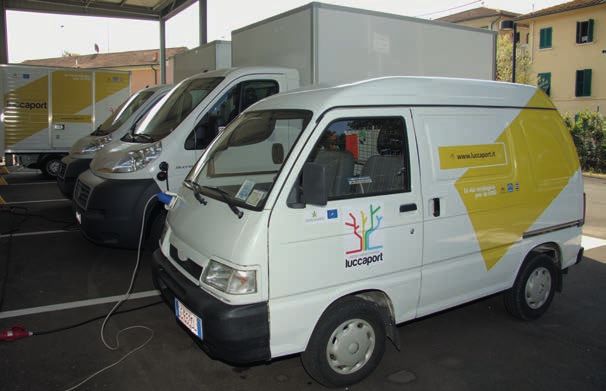
// ENCLOSE Electric Fleets in Urban Logistics

                                    Electric vehicles in urban logistics
                                    Addressing current issues in urban
                                    freight transport
                                    Electric vehicles are an energy-efficient alternative in inner-city traffic with frequent stops and can
                                    mitigate some of the problems caused by urban freight transport. Shifting inner-city distribution from
                                    conventionally-fuelled to electric vehicles helps to reduce emissions and noise. The advantages of
                                    electric vehicles are even more pronounced when switching to more efficient ways for the last-mile
                                    delivery of goods in city centres.

TABLE 1: KEY ACRONYMS

          EV OR BEV       All-electric or battery electric vehicles are powered only by one or more electric motors. They receive
                          electricity by plugging into the grid and storing it in batteries. They consume no petroleum-based fuel while
                          driving and produce no tailpipe emissions.

          PHEVS           Plug-in hybrid electric vehicles use batteries to power an electric motor, plug into the electric grid to charge,
                          and use a petroleum-based or alternative fuel to power an ICE or other propulsion source.
          HEVS            Hybrid electric vehicles combine an ICE or other propulsion source with batteries, regenerative braking,
                          and an electric motor to provide high fuel economy. They rely on a petroleum-based or alternative fuel for
                          power and are not plugged in to charge. HEV batteries are charged by the ICE or other propulsion source
                          and during regenerative braking.

          ICE             Internal combustion engines generate mechanical power by burning a liquid fuel (such as gasoline, diesel,
                          or biofuels) or a gaseous fuel (such as compressed natural gas). They are the dominant power source used
                          in on-road vehicles today.

          EVSE            Electric vehicle supply equipment delivers electrical energy from an electricity source to charge an EV’s or
                          PHEV’s batteries. It communicates with the EV/PHEV to ensure that an appropriate and safe flow of
                          electricity is supplied.

         © US Department of Energy 2012, Plug-In Electric Vehicle Handbook for Fleets

                    PUBLIC          Electric vehicles, whether purely electric, plug-in or hybrid                Public institutions play an important role in replacing
             INSTITUTIONS           (see Table 1 for definitions), face a number of market                       (a certain number of) conventionally-fuelled vehicles with
         play an important          barriers relating to aspects ranging from technology (range,                 electric cars, vans or two-wheelers. Municipal companies
        role by overcoming          charging time, insufficient charging network) to high                        have already started this process in various European cities
           market barier of         investment costs, false expectations, lacking or inadequate                  by procuring electric vehicles for their fleets and by installing
          electric vehicles.        incentives, lack of information, disinformation and misinfor-                charging infrastructure on company ground.
                                    mation (cf. EVUE).

8
Electric vehicles in urban logistics //

LOW EMISSION VEHICLES                                                    Vehicles of categories N and L are often used for the
                                                                         transport of goods, while passenger cars (category M)
Whilst the positive impact on air quality and noise of low               are also used for other services in city logistics. Hardly
emission vehicles is clear, there is a risk that the market              any electric variants exist so far for heavy duty vehicles
take-up of electric vehicles in urban freight transport is               weighing over 3.5 tonnes (categories N2 and N3) due to
very slow, because costs are high compared to conven-                    the limited battery capacity and extra weight introduced
tional vehicles and companies are still uncertain about the              by the battery.
maturity of the technology and about the availability of
charging infrastructure. Finding a meaningful regulatory                 In general, electric vehicles are suitable for duty cycles in
framework for the development and deployment of electric                 (sub-)urban areas involving a low daily driving range and
vehicles and infrastructure will remain a topic of concern for           a relatively low load capacity. Also they work best when
municipalities, governments and European institutions for                driving at low speed on flat terrain. Charging stations
the foreseeable future.                                                  should be available at regular intervals and charging times
                                                                         of more than 30 minutes are required to utilise electric
Nevertheless, electric freight vehicles are becoming more                vehicles to their full potential (see Figure 3, p. 10).
and more integrated into delivery fleets. There are several
types of electric vehicles available that differ in vehicle type,        Electric freight vehicles are best suited for last mile
weight or other criteria (see Annex for a listing of currently           deliveries in compact cities involving short distances.
available vehicles):                                                     If this is not the case, charging infrastructure must be
                                                                         available in order to recharge the vehicles during their
                                                                         duty cycle.

                                        TABLE 2: VEHICLE CATEGORIES

                                         POWER-DRIVEN VEHICLES HAVING AT                          MOTOR VEHICLES HAVING AT LEAST FOUR
                                         LEAST FOUR WHEELS AND USED FOR                           WHEELS AND USED FOR CARRYING
                                         CARRYING GOODS                                           PASSENGERS
                                          CATEGORY        WEIGHT                                  CATEGORY WEIGHT                        SEATS

                                            N1            < 3,5 tonnes                               M1          n.a.                    8

                                            N3            > 12 tonnes                                M3          > 5 tonnes              >8

                                         TRICYCLES                                                QUADRICYCLES
                                         CATEGORY         WEIGHT               MAX. SPEED         CATEGORY WEIGHT                               MAX. CONTINUOUS
                                                                                                                                                RATED POWER (EV)
                                            L5e           3 (symmetricaly      45km/h
                                                                                                     L6e         > 350 kg (excl. Battery)       < 4kW
                                                          arranged)
                                                                                                     L7e         > 550 kg for vehicles          < 15kW
                                                                                                                 intended for carrying
                                                                                                                 good (excl. Batery)

                                                                                                                                              © European Commission 2010, online

                                                                                                                                                                                 9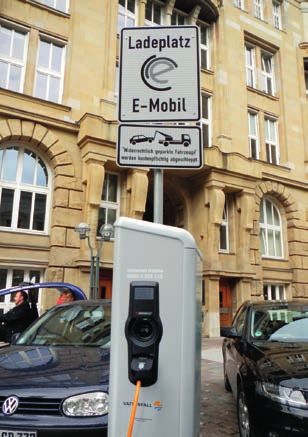
// ENCLOSE Electric Fleets in Urban Logistics
FIGURE 3: DUTY CYCLE COMPATIBILITY OF ELECTRIC VEHICLES
high (60+)
often (3-6 times/day)
often (3-6 times/day)
full
> 30 min.
occasional (2-3 times/day)
occasional (2-3 times/day)
medium (40-60)
20 -30 min..
half
rare (once/day)
rare (once/day)
low (10-40)
< 20 min.
< half
never
never
DAILY MILEAGE RETURN TO BASE POTENTIAL FOR TIME AVAILABLE FOR LOAD CAPACITY
FREQUENCY OPPORTUNITY CHARGING OPPORTUNITY CHARGING
mainly peak
motorway
hilly
full load all day
hight
mixed
reducing load
half load all day
medium
rural
mixed
sub-urban
off-peak
mainly
flat
low
PAYLOAD PROFILE VARIATION OF SPEED AVERAGE DURY CYCLE TERRAIN PEAK/OFF-PEAK
CHARGING
LOW COMPATIBILITY
MEDIUM COMPATIBILITY
HIGH COMPATIBILITY
© The Climate Group 2012, p. 18
10Electric vehicles in urban logistics //
PROVIDING CHARGING INFRASTRUCTURE
The availability of charging infrastructure is an important
factor for the success of electric vehicle fleets in urban freight
transport. Yet, as recent studies show, there is little or no
demand from current commercial electric vehicle users for
public charging points. This was the outcome of a study
for London (CLFQP 2012, p. 1f.), so this lack of interest
in shared on-street charging stations might be even more CASE STUDY: ELECTRIC POSTAL SERVICE
pronounced in smaller cities where daily routes are even
shorter or where a company’s charging infrastructure can
be accessed during the duty cycle. However, there may be
a demand in future when the number of freight companies
using electric vehicles increases.
EFFICIENT DELIVERIES
Electric freight vehicles only produce the desired environ-
mental effects when they are introduced in combination
with other measures in order to utilise the specific characte-
ristics of this propulsion system and make electric vehicles
competitive in comparison with conventional vehicles.
CONSOLIDATION OF SUPPLY
A widely adopted practice to tackle the “last mile” distri-
bution problem is the establishment of Urban Consoli- © http://www.postennorge.com
dation Centres (UCC). A UCC is a logistics facility for
the last mile collection and distribution of goods which is In order to reduce CO2 emission by 30% by 2015, Posten Norge in Trondheim
situated close to the urban area that it serves. UCCs are used (Norway) has been replacing diesel vehicles with electric (and hybrid) vehicles for
by large freight transport service providers for operational deliveries in the city centre. Mail is delivered by electric trolleys, while parcel and pallet
purposes near cities, functioning as a junction between distribution relies on vans and trucks with different load capacities.
urban and interurban parts of the transport chain. The main
freight operations carried out in UCCs are: According to the “Action plan for efficient goods transport in Trondheim”, the city
plans to further enhance the use of electric vehicles in logistics operations, integrating
• handling of cargo them in town logistics schemes (ENCLOSE 3.1, p. 10f)
• loading and unloading
• warehousing
• added value services
Shipments with the same origin and destination are conso-
lidated into a single vehicle to reduce the number of vehicles
employed. Electric vehicles provide an option for this last
mile inner-city distribution as the distances are relatively
short thanks to the combined deliveries. All the same, cities
find combining the installation of UCCs with the use of
electric vehicles challenging. While consolidating several
deliveries has a beneficial impact on the environment, high
initial investments and monopolistic trends amongst freight
companies provide a challenge.
Small or medium-sized cities also have to take into account the
dimensions of a UCC as studies show that UCCs are more
applicable in larger cities with bigger freight transport markets.
Nevertheless, there are also successful examples of smaller
towns adapting the idea of distribution centres in combination
with alternatively fuelled vehicles (see Case Study).
11// ENCLOSE Electric Fleets in Urban Logistics
TABLE 3 : POSITIVE AND NEGATIVE EFFECTS OF URBAN CONSOLIDATION CENTRES
ADVANTAGES DISADVANTAGES
ENVIRONMENT reduction of vehicle numbers
possible use of low- or zero-emission vehicles
reduction of emissions
reduction of congestion
FINANCE savings in supply chain and staffing costs for retailers public subsidies needed (up to 50%)
efficiency gains in historic city centres high (initial) investment costs
calculation of costs between retail partners difficult
transport cost savings resulting from consolidation are less
than additional handling costs
viable only with subsidies
LOGISTICS charging stations for electric vehicles in UCC low load capacity
increased level of security
reduced number of deliveries limited action range
better coordination of delivery times lack of bundled goods
use as storage facility trans-shipment necessary (tricycle use)
special parking areas
allow easier time-windowed operations
COOPERATION staff can concentrate on core activities necessary only for small retailers
cooperation between (larger) retail partners not always
easy (distance, competition…)
decreasing interest in cooperation when no visible cost
reduction occurs
© European Commission 2013c, p. 21ff.
CASE STUDY: DISTRIBUTION CENTRES A similar approach was taken in several French cities within
the “Petite Reine” initiative, where electrically assisted
bicycles and tricycles were used for deliveries. Based on the
concept of cargo cycles, these are used for last mile deliveries
for carriers and retailers. (DG Move, 2012, p. 114)
CONSOLIDATION OF DEMAND
Another option to reduce logistics traffic within city centres
is to combine deliveries to one area (e.g. shopping street
or district) from multiple suppliers. Collaborative orders
lead to an increase in average load factors and a reduction
in the numbers of deliveries. This concept is applicable for
electric vehicle fleets in areas with a pronounced residential
character because even though more clients can be reached,
© Binnenstadservice Netherlands the distances are shorter.
In ‘s-Hertogenbosch and nine other Dutch cities, distribution centres were estab- In the case of bundled deliveries, all the goods being picked
lished as part of the “Binnenstadservice” to reduce emissions and traffic in smaller and forwarded to the city centre in one tour must be homo-
sized cities. These distribution centres are located just outside the city centre geneous. This type of delivery is not generally suitable for
and offer combined services like collective stock management and collection of frozen products. Nevertheless, Amsterdam adapted a model
package materials (ENCLOSE 3.1, p. 13). to transport temperature-controlled products to a distri-
bution centre and deliver bundled goods by electric vehicles
to the city centre. The main target group are retailers.
12Electric vehicles in urban logistics //
In London a Delivery Service Plan (DSP) was imple-
mented in order to reduce the number of deliveries and DELIVERY SERVICE PLAN
gain cost benefits for organisations by consolidating goods
in bundles. As part of the implementation of the DSP The EU recommends the establishment of Delivery Service Plans as a way to
Transport for London, the procurement and storage of consolidate demand for urban freight transport. They reduce the number of deliveries
smaller goods (stationary) was centralised and delivery required and can also lead to cost savings for businesses. So far, these initiatives have
times reduced from twice a day to three times a week. In been voluntary, but it is possible for city authorities to make them a planning
addition, catering supply deliveries were reduced by 40%. requirement for new office and retail developments (DG Move, p. 106).
The development of the measures promoted in the DSP
was based on data collected on deliveries of small goods or
catering activities. (DG Move, p. 102) ‘s-Hertogenbosch
arranged partnership agreements between shopkeepers, CASE STUDY: ELECTRIC B2B SERVICES
transport companies and other stakeholders in order to
improve the efficiency of municipal deliveries.
Changing the behaviour of shippers, receivers and transport
operators, who are used to ordering goods whenever they
want and receiving rapid deliveries within narrow time
windows, is of course a challenge. Organisations often
order small volumes of goods and want to receive them just
in time. Consequently, a key issue is to encourage greater
consolidation of orders by individual large organisations and
foster collaboration in the procurement of transport services
(DG Move, p. 102).
An alternative approach to reducing transport kilometres
and congestion is the co-operative use of electric vans
for urban freight transport as for example implemented
in the Italian “Ariamia” project, where electric vehicles are
Luccaport FEV fleet in the consolidation centre © www.luccaport.it
offered for rent to ensure sustainable logistics for pick-up
and delivery of goods in the urban centre of Reggio Emilia. Lucca started business-to-business services with electric vehicles for freight operators
The basic idea of “Ariamia” is transferable to other cities, but providing palletized goods transport. The city also offers freight operations integ-
involves many players and funding for start-ups (SUGAR rated with leisure mobility as a service for tourists and for luggage transport, hence
2011, p. 106f.). combining freight and passenger transport.
13// ENCLOSE Electric Fleets in Urban Logistics
Regulations to support
electric mobility
The European Commission aims to decrease CO2 emissions as well as tackle air and noise pollution by
encouraging the use of alternative fuels. In order to limit air pollution the European Community has
policies in place limiting individual sources but also national totals of atmospheric emissions of a number
of pollutants. Many cities and member states are aligning with the Commission’s strategic guidelines
by granting electric delivery vans and trucks access to environmental zones or by exempting them from
certain fees or taxes. The regulations governing public vehicle procurement were also changed in order to
promote the use of electric vehicles.
Following the European policy on urban freight transport
that was published in the European Commission’s 2011
CASE STUDY: LOW EMISSION ZONE Transport White Paper (see Info Box p. 15), the EU
encourages the establishment of “Sustainable Urban Mobility
Plans” (SUMPs). To emphasise the special issues and condi-
tions in the field of urban logistics so called “Sustainable
Urban Logistics Plans” (SULPs) are developed as part of the
ENCLOSE project.
Following the concept of the EU’s proposed mobility plans,
© www.truckenmillieu.nl SULPs focus on energy efficiency and sustainability objec-
tives in the field of logistics. They are developed for each
In July 2007 Utrecht introduced a Low planning to expand the Low Emission city individually, covering a definition of visions, objectives
Emission Zone (“milieuzone”) in the Zone to the EURO 5 norm and to widen and targets in relation to the current sustainable mobility
inner city as part of a national covenant the zones. approach and a selection of policies and measures for city
which all Dutch cities can join. The logistics.
partners of the covenant agreed on a In 2007 and 2008 nine Dutch cities
common standard for environmental joined the network with another two Linking these objectives and goals on a city level to EU
zones throughout the country, applying cities only recently implementing Low guidelines and integrating them into an overall Sustainable
to heavy goods vehicles over 3.5 tonnes. Emission Zones. Originally, these zones Urban Mobility Plan is essential in order to gain acceptance
The aim is to support the use of clean applied solely to lorries; since July 2013 and EU support. Electro mobility plays an important role in
vehicles for transporting goods in the vans also have to meet the EURO 4 the context of SULPs and SUMPs since the use of electric
city as well as to reduce emissions from standard (ENCLOSE 2.1, p. 67ff). vehicles implies a reduction of CO2 emissions which is the
road freight traffic. The city of Utrecht is key issue of European Union transport policy.
Cities can define a number of regulatory measures in order
to manage urban freight transport and support the use of
electric vehicles. By granting companies regulative exemp-
tions and financial incentives for the use of electric freight
vehicles, cities can help compensate higher purchasing
prices and consequently make clean freight vehicles more
appealing to potential users.
14Regulations to support electric mobility //
ACCESS INCENTIVES
CASE STUDY: ACCESS SCHEMES
PERMITTING ACCESS
TO LOW EMISSION ZONES
Low Emission Zones (LEZ) or Zero Emission Zones are
implemented by cities in order to improve air quality and to
reduce the noise level in city centres by excluding vehicles
like heavy diesel trucks during working hours. Electric
trucks can be exempted from these restrictions.
Low Emission Zones are often introduced in larger cities
where air quality is a particular concern. Yet, smaller or
medium-sized cities like Utrecht (Netherlands) or Bologna
(Italy) have also installed these zones in order to reduce
CO2 and pollutant emission in the city centre and to
promote and stimulate the usage of electric vehicles as an
alternative for conventional vans.
© ‘s-Hertogenbosch (NL)
EXEMPTION FROM TIME RESTRICTIONS
Historic city centres in particular often have zones with The Dutch city of ‘s-Hertogenbosch has services in relation to the transportation
time restrictions in order to reduce the amount of traffic. In implemented specific by-laws for clean of heavy or large purchases by small
limited Traffic Zones, for example, vehicles are only allowed logistics vehicles that regulates inner city electric buses within the inner city.
access at certain times when other cars are prohibited from access. Only green and silent trucks with
entering. Non-authorized trucks, which do not fulfil certain an optimized delivery scheme are allowed Consequently, exemptions from time
requirements concerning CO2 emissions or noise, are not to enter the city centre after 12:00 a.m., restrictions are beneficial for companies
permitted to access the city centre for loading or unloading whereas other commercial freight vehicles that acquire electric trucks for their fleet,
operations. are only admitted in the time slots 7:00 to since they meet the requirements for
12:00 a.m. and 6:00 to 8:00 p.m. driving in the zone
(E-Mobility NSR 2013, 148).
This regulation applies not only to retail
freight deliveries, but also to public
EU POLICY AND REGULATIONS
In 2011 the European Commission published its Transport White Paper announcing a switch to the use of renewable energy sources and alternative
fuels in the transportation sector complementing its 2010 Communication on a Strategy on Clean and Energy Efficient Vehicles. An important White
Paper goal is to achieve virtually CO2-free city logistics by 2030 and phasing out conventionally-fuelled cars in urban transport by 2050.
Directive 20078/50/EC on ambient air quality and cleaner air for Europe sets air quality objectives for fine particles and other pollutants.
Regulation 443/2009/EC limits average fleet emission to 130 grams of CO2 per kilometre by 2015 and 95 grams by 2020. The emission target for vans
is 175 grams of CO2 per kilometre by 2017 and 147 grams by 2020 according to Regulation 510/2011/EC.
Directive 2009/33/EC on the promotion of clean and energy-efficient road transport vehicles aims at the market introduction of low-emission vehicles.
The Commission’s latest policy initiative is the Clean Power for Transport Package (2013) which includes Directive 2013/18 on the build-up of
charging infrastructure.
15// ENCLOSE Electric Fleets in Urban Logistics
As electric vehicles operate quietly, it is possible to expand
usage into morning and late evening hours. Also, multi-
shifts are possible and can be coordinated with recharging
shifts of the vehicles. This temporal shift to off-peak hours
can therefore relieve the city in rush-hours and prevent
congestion (E-Mobility NSR 2013, p. 148).
NIGHT TIME DELIVERIES
Another incentive for the electric delivery vehicles installed
by several cities are the night time deliveries that are made
possible by their low level of noise. Optimizing delivery
schedules can prevent morning road congestion and
increase efficiency. Projects testing night time delivery
have commenced in Dublin and Barcelona as part of the
NICHES project, where low-noise delivery vehicles are
typically allowed to access the city centre from 10:00 p.m.
to 7:00 a.m. The main benefits of this regulation are
(i) a reduction in delays for the logistics service providers by
using the free night-time road capacities,
(ii) a reduction in emissions and energy consumption due to
CASE STUDY: BUS LANE PRIORITY ACCESS less congestion and direct access to the shops, and
(iii) increased logistics efficiency.
In addition, road safety is enhanced thanks to fewer other
road users or pedestrians at this time of the day (NICHES
2007, p. 2).
According to the outcomes of the NICHES programme,
special zones with night time delivery options for “green”
freight vehicles can be implemented in every city, regardless
of its size. In terms of costs, the faster and more efficient
delivery process lowers logistics expenses, something which
can compensate for possible higher investments for quiet
(electric) vehicles and equipment (NICHES 2007, p. 3).
USE OF ALTERNATIVE DRIVING LANES
In order to address congestion, cities also have the option
© park and ride, CIVITAS Project of opening bus lanes for electric freight vehicles. Journey
time benefits that may result from this regulation can
As part of the CIVITAS initiative, Norwich (UK) tested priority access regulations motivate companies to change their fleet to electric vehicles.
for clean goods vehicles. The measure only applied to heavy goods vehicles and they However, as tests in Oslo and London show, the effects are
were only permitted to use some bus lanes that were considered most appropriate. This not only positive. Electric vehicles are confronted with a
allowed greater control over the number and behaviour of freight vehicles and made range of obstacles that may prevent them from using bus
the measure easier to enforce. The vehicle drivers received specific training in advance lanes:
on how and when to use the bus lane.
• start and stop conditions
The results of this project showed that: • conflicts with buses and vehicles in other lanes
• the width of the existing bus lanes was a barrier • bus lanes only cover a small percentage of the road
• only a few vehicles used the bus lane network (5% in London)
• the benefit from using the bus lane at off-peak times was limited • safety concerns for vulnerable users, particularly
• some stakeholders did not approve of the measure cyclists and pedestrians
© http://www.civitas.eu
16Regulations to support electric mobility //
Due to these problems most cities have so far decided
against the use of bus lanes for electric vehicles, as the CASE STUDY: PRIORITY PARKING
benefits do not outweigh the disadvantages.
DEVELOPING SPECIAL PARKING SLOTS
Another incentive for companies using electric delivery
vehicles is the allocation of free or specifically designed
parking spaces and (un)loading docks for electric vehicles.
The Danish cities Odense and Frederiksberg, for instance,
offer free parking to enable the use of electric trucks in
the city. Copenhagen previously exempted electric cars
from paying parking fees, yet this regulation had to be
changed again, as there was no legal basis for this incentive
(E-Mobility NSR 2013, p. 21), exemplifying the need to
align municipal level regulations with federal and suprana-
tional policies. A similar practice is also applied in Barcelona,
where parking is free during the charging process. Free
parking for electric delivery vehicles is also available in
Norway and Germany.
© Christioph Bellin, bildarchiv-hamburg.de
FINANCIAL INCENTIVES
In Germany special parking areas for policy, which is why a labelling system for
AND REGULATION e-trucks were installed in some city electric vehicles needs to be adopted first
centres, offering loading and unloading in order to unify this approach and to facil-
SUBSIDIES AND FUNDING FOR VEHICLES zones with charging infrastructure. This itate its implementation. In September and
AND INFRASTRUCTURE measure was introduced to reduce double October 2013 the city of Hamburg and
parking (perceived as a hindrance) and the state of Baden-Württemberg tabled
The most common form of subsidies in the field of electric accelerate the use of electric vehicles by a common framework in the German
mobility is financial support for electric vehicle purchases, logistics companies. As the outcomes Bundesrat for labelling and encouraging
usually granted by the government or individual cities as of the “E-mobility NSR” project show, EVs. It is expected that a nationwide
part of a program to reduce emissions. One example of this the reserved parking slots were blocked standard will be adopted in 2014.
kind of incentive just started in New York, where a “Truck by conventional cars nevertheless, until
Voucher Incentive Program” was implemented (Hybridcars. towing signs were established.
com 2013, online). This program focuses on private and
public companies that add electric trucks to their fleet; the The introduction of these parking and
goal is to replace 1.000 conventional trucks and transporters loading areas is subject to regional law and
in the region to reduce CO2 emissions.
Other subsidies for electric freight vehicles include:
• subsidies for a certain percentage of the acquisition
costs of an electric vehicle (e.g. Barcelona|Spain)
• grant or cash incentives given to the first companies (or
individuals) who buy an electric vehicle (e.g. Sweden)
• subsidies to municipalities and companies for the
acquisition of electric vehicles (e.g. Denmark)
Funding or subsidies are not only an option for vehicles
but also for installing the necessary charging infrastructure
for electric vehicles. In Europe, Norway, the Netherlands,
the UK and France offer sizeable programs to support the
electrical installation and use of charging infrastructure
for electric vehicle fleets. The E-mobility NSR program
recommends a targeted support program to stimulate the
adoption of electric vehicles. Several cities offer free charging
17// ENCLOSE Electric Fleets in Urban Logistics
FUNDING, for electric trucks at most public charging stations. Other
TAX INCENTIVES European countries such as Germany or Austria only
or exemption from fund research and development projects concentrating on
fees can make so-called model regions. In the US commercial applicants
e-vehicles highly receive tax credits if they install recharging stations (RAEL
attractive. 2010, p. 21f.).
TAX INCENTIVES
Another widely adapted method for fostering the use of
electric vehicles in logistics is the adoption of tax incentives.
In order to stimulate the electric vehicle market’s demand
side the EU revised the energy tax directive 2003/96/EC to
create standards for taxation that would link taxes to energy
content and CO2 emission, leading to lower taxes for electric
vehicles as a consequence (E-Mobility NSR 2013, p. 16).
Options for tax incentives include:
• exemption from vehicle registration taxes
• exemption from fuel consumption taxes
• exemption from taxation for company cars
• VAT exemptions
CASE STUDY: FUNDING FOR GREEN VEHICLES These exemptions are usually based on CO2 emission limits.
However, some countries only grant tax incentives for a
limited number of years in order to support the initial sale of
electric vehicles.
EXEMPTION FROM FEES
Apart from tax exemptions, electric vehicles are also
eligible for further reductions on various traffic-related fees.
Examples include:
• reduced fares for accessing environmental zones
• exemption from congestion charges
• free use of toll roads
• free parking
PUBLIC PROCUREMENT
© Renault, Brossard Yannik
Public procurement of electric vehicles for municipal
In February 2012 the British Government created a funding grant – called “Plug-In Van vehicle fleets can serve as a role model for private
Grant” – to support not only private but also business buyers purchasing an ultra-low companies, functioning as a method to promote the use of
emission van. Buyers receive a grant of 20 per cent towards the cost of the vehicle. clean energy trucks for logistics purposes as a consequence.
So far, only vans with a maximum weight of 3.5 tons or less and carbon dioxide exhaust Public authorities need vehicles for a broad range of appli-
emissions of less than 75 grams per kilometre are eligible for this grant (Gov.uk 2013, cations: delivery vans, transportation of gardening equip-
online). This is one of few financial incentives directly addressing electric vehicles for ment, emergency services vehicles (ambulance, fire engines,
logistics purposes. police vans), and special vehicles (sweeping trucks, garbage
trucks, buses…). Each of these types has a specific function
However, experiences differ across cities and countries. Vienna (Austria) offers one of the and different requirements, so purchasing criteria vary
most generous purchase subsidies for light duty vehicles (€10.000 per vehicle as of 2013) accordingly (EVUE 2012, p. 5). Municipal fleets usually
but this has so far met with little interest. cover large distances in cities, making them a specific source
of air pollution as they constitute a large proportion of heavy
18Regulations to support electric mobility //
vehicles and diesel engines. Therefore, investing in alter-
native energy resources within public fleets is a first step CASE STUDY: CHARGING SCHEMES
towards increasing the use of electric vehicles.
The initiatives listed below show different approaches
towards sustainable public procurement in EU countries,
based on the “Clean Vehicle Europe” initiative
(see http://www.cleanvehicle.eu).
ENVIRONMENTAL SCORE SCHEMES
Sustainable public procurement takes into account not only
the purchase price, but also the environmental impact of
the procured goods or services. Countries such as Belgium
and Denmark have developed schemes to evaluate vehicles
before the procurement process starts. In Belgium the evalu-
ation is based on an “ecoscore scheme”, which sets the
minimum target value for the purchase of vehicles. A similar
approach is used in Denmark, where awards of procurement
contracts are based on environmental requirements relating © http://www.alke.com
to CO2 emissions. Possible parameters can be:
In Rome vehicles are charged fees based on a charging schedule for permission to enter
• energy efficiency a Low Emission or Limited Traffic Zone within the historic city centre. Whereas
• compliance with EURO standards conventional diesel-fuelled cargo vehicles must pay an annual fee of EUR 570, hybrid
• eco-driving and electric vehicles are offered a discount, granting them access for EUR 430 (hybrid)
• alternative fuels or EUR 300 (electric vehicle).
• monitoring requirements for energy consumption
A similar charging scheme exists for the inner city of Milan, where hybrid or electric
PUBLIC PROCUREMENT ADVISORY UNIT vehicles receive an ECOPASS, which exempts them from being charged fees entirely
(Comi et al. 2008, p. 7f).
In Finland a Public Procurement Advisory Unit was
founded that serves both municipal and state authorities and
other public procurement units. Its function is to provide
authorities with free advice on public procurement law, the EV PROCUREMENT DIRECTIVE
application of the law or good practice in procurement. The
aim of this measure is to encourage joint procurement and In 2009 the Directive 2009/33/EC on the promotion of clean and energy-efficient
to create expertise on sustainable public procurement. road transport vehicles, also called the “Clean vehicles Directive”, was enacted. It requires
public authorities to take into account lifetime energy and environmental impacts when
SUSTAINABLE PUBLIC PROCUREMENT purchasing road vehicles. Important factors of this directive for governments to concen-
COACH trate on are energy consumption, emissions of carbon dioxide (CO2) and emissions
of oxides of nitrogen (NOx), non-methane hydro-carbons (NMHC) and particulate
Another initiative developed in the Netherlands is a matter (DG Environment 2011, p. 2).
web-based instrument that offers authorities the oppor-
tunity to track their performance in sustainable public
procurement. Public organisations must answer questions
to obtain customized advice on how to improve the organi-
sation and implementation of sustainable public procu-
rement within their company.
19// ENCLOSE Electric Fleets in Urban Logistics
User acceptance
An important factor for greening fleets in urban freight transport is the acceptance of electric
vehicles by companies and drivers. Most early adopters report very good suitability of electric
vehicles for their needs and considerably lower operational as well as maintenance costs compared
to conventional vehicles. Drivers’ enthusiasm about their vehicle is crucial in order to reach high user
acceptance.
BEFORE CHOOSING The choice of vehicle is one indicator for avoiding initial VEHICLE PERFORMANCE
a vehicle, require- rejection of electric vehicles; drivers see features such as
ments as battery perfor- clean, silent technology and comfortable operation as incen- Issues mentioned by test drivers in several European
mance or load capacity tives. Public acceptance of electric delivery vans will also be cities (E-Mobility NSR 2013) cover the vehicles’ driving
should be taken into affected by a positive image of the delivery sector based on behaviour, the possible load capacity and the vehicle's
consideration. the new low emission and low noise vehicles. battery. While most vehicles are perceived as silent, fast and
easy to drive, drivers complain about the battery’s perfor-
mance and the reduced load capacity (caused by the size of
DRIVING COMFORT the battery) compared to diesel trucks. These evaluations are
strongly influenced by the vehicle model, as some models
The driving comfort of electric vehicles is influenced by the are better suited for logistics purposes than others.
technical performance of the vehicle (including its applica-
bility for freight transport) and by the working environment WORKING ENVIRONMENT
of the drivers. In recent studies truck drivers mention the
fear of getting stranded in the electric van or the lack of The working environment is influenced by driving
public charging infrastructure as negative factors causing behaviour and the need to adapt it to conditions met in
rejection. Yet, they also appreciate the advantages compared electric vehicles. In general, electric vans and trucks are
to conventional vehicles in handling the car. perceived as comfortable and many drivers like the fact that
the vehicles are zero-emission. Many employees who parti-
cipated in pilot projects also believe that it is important for
the municipality to set a good example and demonstrate
sustainable behaviour.
FIGURE 4: POSITIVE AND NEGATIVE ASPECTS – VEHICLE PERFORMANCE Challenges are still related to the available charging
infrastructure and, notwithstanding lower total cost of
ownership, the high initial purchasing price. A number
good accelaration of companies offer tailored advice for fleet managers on
truck bed too high due to
battery space whether or not an electric, plug-in hybrid or range extender
automatic gear-box electric vehicle would be suitable for the needs of a driver
small load capacity based on their specific profile.
low sound
fast problems with air
condition and heating COST
flexible in traffic
lifespan of battery Even with higher procurement costs and additional invest-
operational range ments in loading infrastructure, the replacement of conven-
tional vehicles with electric ones still offers an oppor-
tunity to save costs by reducing operational costs, leading to
increased profitability for businesses:
• electricity prices are approximately 20% lower than
diesel prices
• no requirement for a tachograph
• electric vehicles are exempt from certain fees
• average maintenance costs are generally lower
20User acceptance //
Looking at the overall operational costs, electric vehicles
have the potential to become competitive compared to FIGURE 5 : POSITIVE AND NEGATIVE ASPECTS – WORKING ENVIRONMENT
conventional diesel-fuelled trucks. Indeed some studies
claim that total cost of ownership (TCO) is already at
similar levels for electric vehicles and conventionally fuelled
vehicles. Existing cost differentials (especially the higher
initial purchase price) are expected to diminish over the next comfortable to drive in training for drivers required
years (assuming increased production figures and advances many technical errors
in battery technologies) and there are a number of initi- operational reliability
lack of driver´s knowledge
atives looking into business models in various European
cities (SMARTSET project 2013). The US Electrification low emission heating problem
Coalition published case studies on the cities of Houston
difficult to procure space parts
and Loveland which show that these cities are actually
saving money by using electric vehicles in their vehicle fleets. good graphical overview of
battery information and uncertainty on who holds
City officials in Houston estimate that the city’s 27 Nissan status responsibility for repairs
Leaf electric vehicles will save the city $110.000 per year
compared to internal combustion engine vehicles (Electrifi-
cation Coalition 2013, online).
In addition to vehicle costs, another cost factor is the
required recharging infrastructure, with the amount of
investment depending on the type of infrastructure. The CASE STUDY: USER ACCEPTANCE
use of plug-in charging infrastructure requires one charging
spot for each distribution vehicle as they are fully recharged
overnight. At the moment one charging point costs around
EUR 6,200 for an electric vehicle with a battery capacity
of 120 kWh (Boer et al. 2013, p. 88), with the cost varying
considerably depending on installation, the available
network and location.
© www.postennorge.com
The importance of driver enthusiasm change to simpler vehicles such as electric
is shown by the initial reaction of some mopeds and trolleys. Truck drivers also
Posten Norge employees to the intro- complained about the smaller size of
duction of new electric vehicles. Drivers electric vans, which are able to access the
who are used to conventional delivery city’s narrow streets more easily and can
vans in particular did not appreciate the therefore replace larger vans or trucks.
21// ENCLOSE Electric Fleets in Urban Logistics
Technical background
The development of electric vehicles for the greening of freight transport depends mostly on the
availability of suitable, energy efficient batteries and appropriate charging infrastructure. There are
still several challenges which currently limit the use of electric vehicles to urban areas.
THE DEVELOPMENT OF Even with the technological improvements expected VEHICLE TECHNOLOGY
NEW BATTERIES PROMIS over the coming years in terms of the durability and cost
to bring more stability of batteries, limited power density and life cycle conside- Electric vehicles are increasingly viewed as a good option
and a wider driving rations will continue to pose challenges in using electric for inner city freight transport due to their low emission
range, which will make freight vehicles for long haul transport applications, as will rates and good performance on trips with frequent stops
E-Logistics even more the large volume and weight of batteries. Similarly, the high over shorter distances. Lower daily driving ranges and
attractive within the cost (often mainly administrative) of installing charging the possibility of recharging vehicles at scheduled times
next years. infrastructure can be an issue. Nevertheless, vehicle availa- (e.g. overnight) allow daily usage without interruptions to
bility continues to increase and electric vehicles are about vehicle operation. Nevertheless, the introduction of electric
twice as efficient as conventional vehicles, even after battery trucks into urban logistics also provides cities and transport
charging/discharging and transmission losses. Energy companies with a number of challenges concerning these
density is anticipated to improve by up to a factor of 10 by new types of vehicles. The major challenges include the
2030. battery weight, the limited driving range and sometimes a
lack of maintenance skills.
BATTERY STABILITY AND DRIVING RANGE
Battery performance determines the range and weight of
the vehicle and therefore influences possible fields of appli-
CASE STUDY: DRIVING RANGE cation. At present, lithium ion batteries are most often used
in electric freight vehicles with a current battery lifetime
of 1000 to 2000 cycles (approximately 6 years). In order
to achieve higher battery energy density, researchers are
working on lithium-air batteries, which are not commercially
available yet.
As projects over recent years have shown, electric vehicles
usually offer a lower driving range compared to conven-
tional trucks, since the battery’s energy density is compa-
ratively low. Existing technologies offer a driving range of
approximately 150 to 200 kilometres, depending on the
battery used. Driving range is influenced by various factors
including
• weather conditions (shorter battery range in hot or
cold seasons
• use of heating or air conditioning
© www.mp-ecodrive.com • driving style
In the UK electric transport vehicles with bution operations in cities. The procured Also, the kilometer range declines over time, which may
lithium ion batteries are used by grocery vehicles require a range of approximately reduce peak power capacity and energy density. For these
companies and for parcel and post distri- 200 kilometres. reasons electric vehicles are currently most suitable for daily
urban distribution activities as the battery energy density
is too low for regular long haul applications. According to
recent studies (Boer et al. 2013, p. 25), 20% of the battery
capacity is generally left unused, so it would be possible to
dispense with a portion of the battery weight.
22Technical Background //
At the moment, lithium ion batteries last for four years; IN-HOUSE CHARGING
however, practical experience has shown that the average
period of use is only two years. Improvements in battery Charging the electric vehicle overnight with a (slow) plug-in
powered trucks are expected within five years in terms of the charging system on company premises is the easiest option,
cost and durability of batteries. since the battery usually lasts long enough for one duty cycle
and can typically regenerate within 8 hours. Installation
AVAILABLE SPACE FOR PAYLOAD costs are relatively low compared to battery costs and the
charging station can be installed using the existing electric
The in-vehicle space available for transporting goods is grid.
determined by battery size and weight, which reduce the
payload and volume: PUBLIC CHARGING POINTS
• Electric vans: 500 kg – 2 t payload In a freight context and especially in an urban context, public
• Electric trucks: 2 – 3.5 t payload charging points in public spaces or en route are generally
• Electric tricycles: 150 – 200 kg payload viewed as less important. Such charging points can be used
during dwell times (of more than 10 minutes) on charging
In comparison with diesel vans, the heavy batteries can lots that are reserved parking spaces for electric vehicles. This
reduce the payload of electric vehicles by 200 kilograms and option might gain in importance with the introduction of A VARIETY OF
by 200-700 kilograms for converted vans. Consequently, fast charging as a way of charging freight vehicles en route CHARGING OPTIONS
there are very few electric vehicles with a payload of more at strategic locations – next to big loading and unloading ARE AVAILABLE TODAY:
than 1.500 kilograms on the market. Higher payloads lead to facilities such as stores. At the moment, fast charging takes in-house, public or
restrictions due to the weight regulations for logistics trucks: 20 to 45 minutes for smaller freight vehicles and can be inductive - other options
undertaken during loading and unloading. Over the coming are battery changing
• Vehicles over 2.8 tons need to be tracked by a years charging stations are expected to be scaled up from 50 stations.
tachograph to 200 kW, so even larger distribution trucks (over 7.5t) can
• Vehicles over 3.5 tons: the driver needs a truck driver’s be recharged within 15 to 30 minutes. However, this will
license and a professional driver qualification, which require a significant improvement in the current batteries,
results in greater costs for drivers than comparable with the installation of public charging infrastructure only
conventional vehicles being amortised when electric vehicles are operated in
multi-shifts.
In order to compensate for battery weights, the EU has
increased gross weights for original electric vans, which The challenge of this model lies in the lack of compati-
means that the payload loss can be reduced to between 5 bility between the existing infrastructure and electric freight
and 10%. An increase of one tonne is required to adapt the vehicles. The European Commission is currently planning
weight limits for trucks to the extra battery weight. the standardisation of charging infrastructure as part of its
Clean Power for Transport Package (2013) in order to avoid
incompatible plugs and charging equipment in future.
CHARGING INFRASTRUCTURE
There are several options for recharging the batteries of
electric vehicles:
• in-house charging
• public charging points
• inductive charging
• battery changing
23You can also read


