Flipping the Funnel - COVER STORY - Schweitzer Project
←
→
Page content transcription
If your browser does not render page correctly, please read the page content below
COVER STORY

                          Flipping
                          the Funnel
                                Story: Shruthi Nair

28 | RETAILME | DECEMBER 2020
COVER STORY

    R
“          etail is dead” – a preposterous narrative
           that started earlier this year, fueled by
           economic downturns and a little virus
    refusing to quit its rampage has gotten the
    whole industry to come together as a unit to
    innovate and transform – and after a long time –
    think about the distant future.

                                                       DECEMBER 2020 | RETAILME | 29
                                                                                 Source: shutterstock.com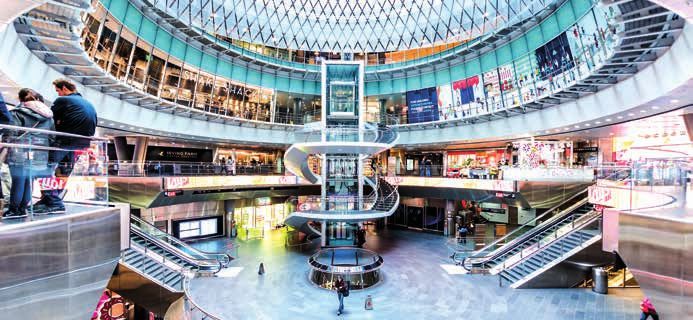
COVER STORY

A
        mong the many challenges the         2018 is set to increase to well over 2%         With the ongoing internal
        retail sector had been facing,       of GDP by 2030. This year we saw that       debate of ‘convenience versus
        was short-sightedness that           number go further up, with 49% of           experience’ consumers have today,
made coping with the economic                UAE consumers surveyed by Dubai             retailers have had to modify their
repercussions of the pandemic more           Economy and Visa revealing that they        offerings. But do the consumers know
difficult for some than the others. As       have been shopping online more              what they want or are they cognitively
they say, we are all in the same storm       because of the pandemic.                    adapting to what they’re fed online?
but not in the same boat.                        Then began the new preposterous         Are today’s so-called forward-thinking
    Unsurprisingly though, we saw            narrative that “physical retail is dead”.   retailers thinking far ahead, or are
a whole digital shift and adaptation         So does that mean that the GCC’s retail     they still sticking to textbook trends
                                             sector, which is expected to grow to        that have lost its relevance in today’s
happening much faster than was
                                             $554.13 billion by 2030, is going to be     world?
initially predicted. In all GCC
                                             dependent on e-commerce operations              It is essential to understand how
economies, e-commerce is expected
                                             solely? The quick answer to that is, no.    both the platforms for retail are
to witness a growth of over 50% from         But equations between physical and          going to transform individually and
2019 to 2030. According to Frost             digital retail are going to change, and     perhaps even interchange in purpose
and Sullivan, e-commerce, which              so are the functions and functionalities    and notion, all while neither of them
accounted for 0.4% of GCC GDP in             of the actual and virtual spaces.           perishes.

Store as stage; Customer as audience

                                                                                                                      Source: shutterstock.com

How would a customer define a retail         the future, the chances are that the        director of Interstore, said, “Stores
outlet or a shopping store? It will most     term could be used quite literally. Not     will move from being static places of
likely be along the lines of a place where   just theatre, but imagine a concert,        buying to living, working environments
people buy things. That definition           a theme park, an exhibition, or even        and ecosystems. Retailers need to think
worked well in the pre-digitisation age,     a museum - that is how experiential         of themselves as a host or a curator.
but not anymore. Stores can’t just be        retail is going to evolve.                  If I think of a food retailer, customers
places for transactions as e-commerce            Zurich-based Interstore is a retail     already expect them to be a specialist
platforms have emerged with                  design agency that has developed            and an expert”.
convenient and comfortable offerings to      concepts to transform retail spaces              “Newness is going to be critical.
entice the busy, lazy, and smartphone-       all over the world, including Dubai,        Retailers need to think of themselves
addicted customers of today.                 to promote the idea of the store as         as entertainers as well. It is going to be
    Retail Theatre, by definition, was       not just a place to buy and sell goods,     about how to create this moving story”,
about using music, art, light, and smell     but a place for shoppers to have            he added.
to allure customers to spend more            memorable experiences.                           If retailers are essentially
time in the store and subsequently               Speaking of the future of retail        entertainers, then retail spaces will have
spend more in the store. However, in         spaces, Nathan Watts, the creative          to be media for brand experiences and

30 | RETAILME | DECEMBER 2020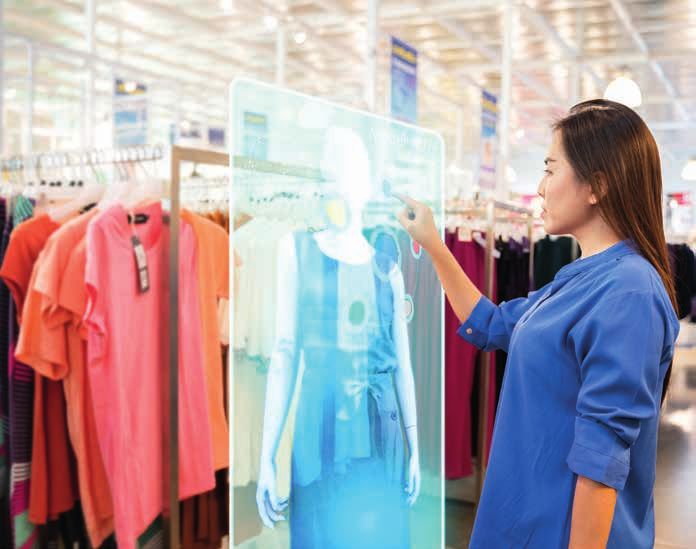
COVER STORY

                                                                                          backbone of the store that is making
                                                                                          the experience more seamless for the
                                                                                          customer. But technology as an element
                                                                                          of entertainment or theatre is a different
                                                                                          aspect. We are seeing tech being part
                                                                                          of the envelope of the space - we see
                                                                                          moving content or digitised surfaces
                                                                                          to create a wow factor. Retailers are
                                                                                          also starting to deploy automation and
                                                                                          a robotic system to create a sense of
                                                                                          theatre”, he said.
                                                                                              Another term, people associate
                                                                                          with shopping is ‘retail therapy’. This
                                                                                          concept is going to be more prominent
                                                                                          as smartphones are increasingly
                                                                                          contributing to the “loneliness
                                                                                          epidemic”. With COVID and everything
                                                                                          from schools, offices, and even co-
                                                                                          curricular moving online, we’ve seen the
                                                                                          emergence of terms like ‘screen fatigue’
                                                                                          and ‘zoom fatigue’.
stories. It could be a visual magazine or         “Customers will want to get in a            “We can get hung up on how
a radio channel and a marketing portal.       car and drive to an experience instead      digital is going to be the driving force
Such spaces can create a powerful, and        of places that are just warehouses          - but people still seek real-life social
emotionally galvanising experience, to        with products. The retail store of the      interaction, so shopping as a social
create an essential level brand affinity,     future may be smaller but will be more      experience will re-emerge and evolve.
trust and allegiance.                         experiential”, Watts said.                  Some retailers have already wised up to
    Yes – the spaces may be smaller, the          He added, “As an entertainer,           the fact that shoppers dwell for longer
footfall will be lesser, but the impact of    retailers need to start thinking about      and spend more money when they have
the store is going to be much higher.         their competitors, which are now            things to do with their friends”, he said.
A recent survey commissioned and              exhibitions, museums, theatre etc. We           Hence retailers have the opportunity
published by Epson revealed that 92% of       need to think about how we can engage       of providing their space as an escape, a
respondents in the UAE indicated they         more with the customers through our         place where they can keep their phones
would change their shopping behaviour         stores. Think of them as art galleries      down and take in actual experiences and
if more shopping destinations had an          - creative, engaging places that are        perhaps, that is the value proposition
experiential element, rising to 94% of        sensorial, which makes that store part of   against the e-commerce giants that
Generation Z and 93% of millennials.          a customer’s leisure time”, he said.        are threatening the very existence of
The study also revealed that such                 But how is digital going to be          traditional spaces.
experiences in retail stores would attract    integrated into all of this, if at all?         “It is in the interest of every physical
increased spending. 24% of consumers              “The element of technology is           retailer to get people off their screen
in the UAE claimed they would shop in         interesting as we see it in two ways.       to get the physical experience of that
a store they had never visited before if it   We see the smart store evolving with        space. So bringing all the technology is
offered an experiential element.              hidden technology, which is the             probably not the answer”, he said.
    “Retailers will need to think harder
about how to attract new audiences
and build frequency. By building
relevant offers and services around
their key businesses, whether through
diversification or strategic partnerships,
retailers will need to establish their own
new retail paradigms to engage and
remain relevant, ultimately providing
more reasons to visit and where people
can spend more time”, he said.
    Even the way customer acquisition
was seen and done would likely change.
Earlier retailers had to pay huge
amounts to bring customers into their
store. The store of the future will have
customers paying to experience what it
has to offer – again, like a concert or an
                                               Source: shutterstock.com
exhibition or a theme park.

                                                                                                             DECEMBER 2020 | RETAILME | 31
COVER STORY

Digital, digital everywhere

                                                                                                                 Source: shutterstock.com

But that’s not how the digital natives   But can you live without e-commerce        seven sub-categories: D2C, e-retail,
who’ve had a head-start on the whole     capabilities? Not anymore. You can’t       pure player, live shopping, affiliate
e-commerce transformation process        even attract traffic to your shop          social commerce, group buying, and
feel. Managing partner and CIO of        without a digital presence”, he said.      subscription-based e-commerce.
Middle East Venture Partners, a VC           Due to the rapid growth of online          While we see players
firm that invests in the early stages    retail, the Middle East region will also   experimenting and delving into the
of innovative companies across           witness a fast infrastructure capacity     first three forms of e-commerce,
different verticals including retail,    building, such as the $870 million         some local retailers are still relying on
Walid Mansour thinks that no retailer    Dubai Commercity, expected to be           global brands to lead the way when it
can survive without e-commerce           launched in January 2021 to support        comes to the more experimentative
capabilities.                            e-commerce retailers.                      and creative forms of e-commerce
    “I don’t think when people say           However, retailers here have been      like social commerce. Subscription-
retail is dead, it means that we are     limiting their scope when it comes to      based e-commerce stands on the
going to wake up one day to a virtual    e-commerce. Today e-commerce is            concept of getting recurring revenue
world where there are no addresses.      a vast universe in itself with at least    from customers, on products and

32 | RETAILME | DECEMBER 2020
COVER STORY

services, at a chargeable fee. The        beyond, making it vital for retailers          offering goods against a delivery fee.
amount of personalisation that can be     to increase personalisation and build          It’s a data mindset of looking at your
guaranteed by such a model and the        relationships with this essential              customers and selling to them using
number of loyal customers that this       population segment.                            data points that you can’t have in a
can generate is what makes this trend         “Common mistake in the past is             traditional retail environment”, he said.
one to watch out for.                     that incumbents have been applying                  What is also noticed since Covid
    “Social commerce is a completely      traditional retail mindsets into               is that, there is increased trust in
new way of shopping, which wasn’t         e-commerce. The acquisition cycle,             the safety, speed, and convenience
even in the mainstream of strategies      offerings, after-sales services are all        of contactless payments. According
in retail companies. I’ve come across     fundamentally different. You can’t have        to the UAE e-commerce Landscape
many retailers who say they want to       the same mindset and expect different          2020 survey, 61% are now using
transform but aren’t doing it. They       results. It is also the ability to transform   cards or digital wallets more to make
think about it as an additional channel   retail and not just think about having         payments online instead of opting for
to their main revenue line. Very few      digital experiences in retail. They            cash on delivery. The post-COVID-19
have been able to transform, either by    need to put e-commerce in a different          outlook is that 43% will continue using
acquiring companies or by reinventing     position that is not corrupted by              contactless payments; 48% will opt for
digital brands from scratch”, said        traditional thinking”, he added.               digital payments online over COD for
Mansour.                                      The most significant benefit               future e-commerce purchases.
    Gen Z is expected to account for      of this e-commerce boom is data,                    “If you don’t have online
nearly 1/4th of GCC’s population.         though. You can call it the new oil or         payments, you don’t have
Hence, vendors need to understand         the new soil, but one thing is sure. It        e-commerce. It doesn’t just enable
the purchasing habits of Gen Z, as        is going to be the most valuable asset         a payment infrastructure, but it also
well as Gen Alpha as both these           for any retailer. “There’s a depth of          gives you a lot of data, and that could
groups, will become a dominant            data that comes out of e-commerce.             enable a variety of services around it”,
population cohort by 2025 and             E-commerce is not about a channel for          said Mansour.

 Source: shutterstock.com

                                                                                                           DECEMBER 2020 | RETAILME | 33
COVER STORY

Phygital – Because “boring” retail is dead

                                                                                                                    Source: shutterstock.com

“Category after category technology             Many retailers have been                 It is an amalgamation of the two. In
in digital has been able to prove that     progressively echoing the idea that           essence, online and offline are going
you don’t need physical retail to get      stores aren’t required to sell a lot of       to interchange the roles it used to
whatever you are shopping — starting       products anymore as transactions              play earlier where physical store were
from books, electronics and even           are more efficient online. It’s already       places to shop, and mobile phones
fashion. For personalisation, if you       established that physical stores will         were sources of entertainment.
are good in your digital channelling       still be relevant but just with a different        But it even goes beyond that – the
with your discounts, promotions,           purpose, but also that many physical          big fat marriage between the two.
you loyalty, payment schemes,              stores that don’t find purpose will have      Physical spaces are going to make use
recommendation search engines are          to shut shop.                                 of online capabilities and e-commerce
all way better online than offline. I           “Boring retail is dead”, is what Atul    presence for a seamless shopping
don’t think retail will die, but I don’t   Bhatia, the head of strategy and growth       experience and e-commerce will be
suspect that the shops will not be         at Splash, part of Landmark Group             used to push customers to stores.
smarter and adapt the key premises         thinks.                                            “We (at Splash) are piloting the
of e-commerce”, said Mansour                    For consumers, the future of             ‘endless aisle’ model. If you walk
making a strong case for the future of     retail is not going to be a tug of war        through our store and you don’t find
e-commerce.                                between convenience and experience.           your preferred size or model, our

34 | RETAILME | DECEMBER 2020
COVER STORY

                                                                            “When you look at the competition
                                                                       like Zara, they are taking positions
                                                                       in prime spots in the mall and
                                                                       recalibrating. They are shutting down
                                                                       smaller stores and opening more
                                                                       prime spaces. The media is hyping
                                                                       about the retail apocalypse, and that’s
                                                                       not true as a lot of them are opening
                                                                       stores as well and that is to recalibrate
                                                                       the whole portfolio to align with
                                                                       consumer preferences”, Bhatia echoes.
                                                                           The battle isn’t between online and
                                                                       brick and mortar but rather about who
                                                                       will build the convergence between
                                                                       digital and physical retail faster. It
                                                                       presents enormous opportunities for
                                                                       innovation in future retail experiences
                                                                       especially with technologies like
                                                                       Artificial intelligence (AI), robotics,
                                                                       gamification, augmented and virtual
                                                                       reality (AR/VR) and the internet of
                                                                       things (IoT).
                                                                           For the lack of a better analogy
                                                                       during the Christmas month, Covid-19
                                                                       has been sort of crucifixion year for
                                                                       the retail sector, which is now slowly
                                                                       beginning its mighty resurrection.
                                                                       Time will tell how retailers can survive
                                                                       and pioneer this transformation and
  Source: shutterstock.com
                                                                       transition and which retailers will be
                                                                       able to do it successfully. ■

store staff can assist you in ordering
online rather than losing the sales.
So physical spaces are used to order
online. Secondly, when you are
ordering on e-commerce, we will
explore if we can bring the products
to our customers faster. If we have
hundreds of stores in the region, we
can use them as fulfilment centres
and bring the product to you more
quickly”, said Bhatia explaining how
Splash envisions this marriage.
     Clickbait media is to blame
for misconstruing what has been
happening in the retail space. When
people see headlines like ‘In the US,
630,000 outlets are forced to close’ or
‘Chalhoub group is closing over 60 of
its stores’, it is made to look like some
sort of retail armageddons. However,
what doesn’t get talked about much
(well, because bad news sells) is
that a lot of these store closures are
happening to move investments into
their other offerings, including digital.
     The best example is that Chalhoub
Group has witnessed a higher sales
growth with at least over 1% growth
year-on-year despite all these closures,
and that is because they moved their        Source: shutterstock.com
investment into e-commerce.

                                                                                         DECEMBER 2020 | RETAILME | 35
You can also read


