Annual Review No. 3 2018 - Flussbad Berlin
←
→
Page content transcription
If your browser does not render page correctly, please read the page content below
Flussbad
  Berlin

 Annual Review No. 3
        2018
Imprint

Publisher
Flussbad Berlin e.V.
Falckensteinstraße 48
10997 Berlin
Phone +49 30 5557445-0
info@flussbad.berlin
www.flussbad.berlin

Concept: Barbara Schindler, Jan Edler, Hans Georg Hiller
von Gaertringen, Katrin Hiller von Gaertringen
Editors: Barbara Schindler, Hans Georg Hiller
von Gaertringen, Katrin Hiller von Gaertringen

Design: NODE Berlin Oslo
Translation: Julie Hagedorn Group
As of June 2018
Cover: cc Marc Beckmann 2016 / OSTKREUZ
© all rights reserved by the copyright holders
cc: all rights reserved by the copyright holders under CC-BY-NC-SA 4.0

Flussbad Berlin team: Susanne Bernstein / Office manager; Lisa Blum / Events & Planning;
Kai Dolata / Treasurer; Jan Edler / Chairman; Tim Edler / Project author & Planning; Elena
Erickson / Planning; Charlotte Hopf / Deputy chairman; Barbara Schindler / Press & Public
Relations; Ana Shalin Stoeckermann / Education & Participation

Flussbad Berlin e.V. receives funding from the “National Urban Development Projects”
programme operated by the Federal Ministry of the Interior, Building and Community
as well as from the Berlin Senate Department for Urban Development and Housing.
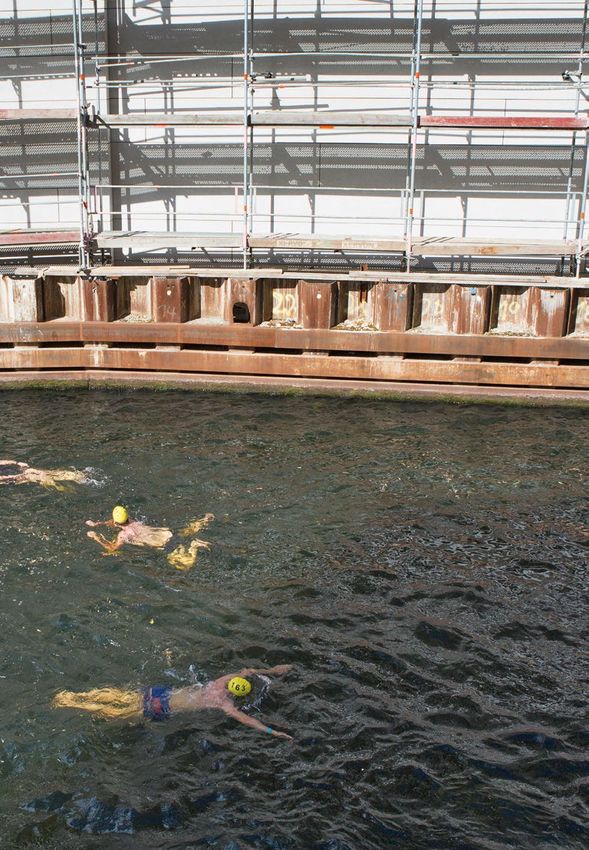
Table of Contents

4   Editorial                           40	Plants, wastewater and us.
                                            On the scientist Käthe Seidel
7   Official greeting                       Charlotte Hopf
    Katrin Lompscher
                                        42	A pioneering test filter – the
8	A work in progress                       path to a transparent river
   – Site plan                              Kai Dolata

10	When is the Flussbad going    46 Welcome to the
    to become a reality?              Flussbad garden!
    A conversation with Jan Edler
                                  48	A more vibrant environment
15	Getting the Flussbad flowing.     along the canal
    The November 2017 political       A talk with Jörg Rocholl
    debate in Berlin’s state
    parliament                    52 Journal 2017

22	Swimming. No more and               56	Best of …
    no less                                 press commentaries 2017
    Sylvia Metz
                                        58	A great reason to
28	“The spark that triggers                step out of the house
    other initiatives”                      New insights on
    A conversation with Hubert              Flussbad Berlin
    Weiger, Olaf Zimmermann
    and Tim Edler                       60 Volunteers voices

32 Spree residents                      63 Get involved and make
   Stefan Marx                             Berlin even better!

34	Singing in lieu of swimming
    3th Berlin Flussbad Cup

38	Planned weak points in the
    system. A brief history of
    wastewater disposal in Berlin
Editorial
All parties were in agreement! Well, almost all of them. To this day, many Berliners are still unaware of exactly
On 30 November 2017, the various members of Berlin’s how polluted the river gets after every downpour – and
House of Representatives – the parties known as the how complicated it is to clean it. For this reason, we
SPD, CDU, die Linke, die Grünen and FDP – voted in decided to explain as best we could the historical events
supporting the Flussbad project under the title “Das that led to Berlin’s so-called “overflow sewerage” sys-
Flussbad zum Fließen bringen or “Getting the Flussbad tem. We also take a look at the groundbreaking scientist
flowing”. The AfD, a right-wing party, abstained. The Käthe Seidel, who came up with the plant-based treat-
Berlin Senate was thus given the task of advancing the ment technique we’re thinking to use in the Flussbad.
implementation of the Flussbad and creating the condi- We also provide an overview of the current filter systems
tions for the project to receive all the permits it re- being tested under real-life conditions at the future site
quires to begin operation. Thanks to this motion, we of the Flussbad; indeed, this pioneering undertaking
are now one major step closer to achieving our goal of marks the first time ever in the world that such a system
generating a clean Spree Canal open to all. is being attempted in a river.
In our third Flussbad annual review, we are under- We are delighted at how many new members joined
standably eager to show how this political decision re- our association in 2017, and we owe a large number of
flects an overall shift in consciousness – one that has our activities to their voluntary commitment. These ac-
come about as a result of our efforts over the past tivities include our regular on-site walking tours as well
years. In turn, our work would not have been possible as all the presentations and discussions we organised
without the funding we received from the German fed- and participated at from Berlin to Paris. It also includes
eral government and the state government of Berlin. the organisation of our annual Berlin Flussbad Swimming
Besides, over the past several years, administrators and Cup and the refitting of the “Hans-Wilhelm” barge to
people in general have become much more conscious house our prototype test filter. As you might already
of the ecological importance of downtown waterways, know, we had to cancel our annual swimming cup in July
their tangible social force and the crucial role they play 2017 due to record-breaking rainfall and the resulting
in growing urban communities. pollution of the Spree Canal. However, we were thrilled
But when is the Flussbad actually going to become to see how many people nevertheless joined us at the
a reality? This is the question we posed to Jan Edler, one Monbijoubrücke that day, where we sang Barbara Mor-
of the co-initiators of the project and the current asso- genstern’s new Flussbad song with the Chor der
ciation chairman. We invite you to read his answers in Kulturen der Welt; this impromptu sing-along was a won-
the interview we carried out for this review. Just like derful substitute for the event we had been planning for
Jan, we never get tired of pointing out that the Flussbad months.
is about much more than just being able to swim in the We hope you enjoy reading this year’s annual review.
Spree. Indeed, as Sylvia Metz argues in her essay, swim- If you find yourself feeling inspired and enthusiastic
ming is so important it should probably accepted as about the Flussbad idea and all the work we do, then we
a basic human right. In fact, the contemporary debate encourage you to join us and become a member!
about “environmental justice” demonstrates that uni- There’s no better way to make sure the Flussbad Berlin
versal access to clean and swimmable water continues becomes a reality.
to be a pivotal social issue.
We were also interested in finding out what cultural Sincerely,
and environmental leaders think about the Flussbad. Barbara Schindler,
Is it possible to reconcile the ecological aspirations of Katrin and Hans Georg Hiller von Gaertringen
a clean and sustainable public swimming area with the Editors of the Flussbad Annual Review
protection of longstanding cultural values and monu-
ments? In a conversation on the pages of this year’s re-
view, Hubert Weiger from Friends of the Earth Germany
(BUND) and Olaf Zimmermann from the German Cultural
Council (Deutscher Kulturrat) agree that the future
Flussbad public swimming area is located in precisely
the right spot in the historic “cultural district” of Berlin’s
Museum Island and Humboldt Forum. Both emphasise
the opportunities provided by the Flussbad at the cen-
tre of the city to raise awareness among the general
public with regard to urgent ecological and social tasks.
4 Flussbad Berlin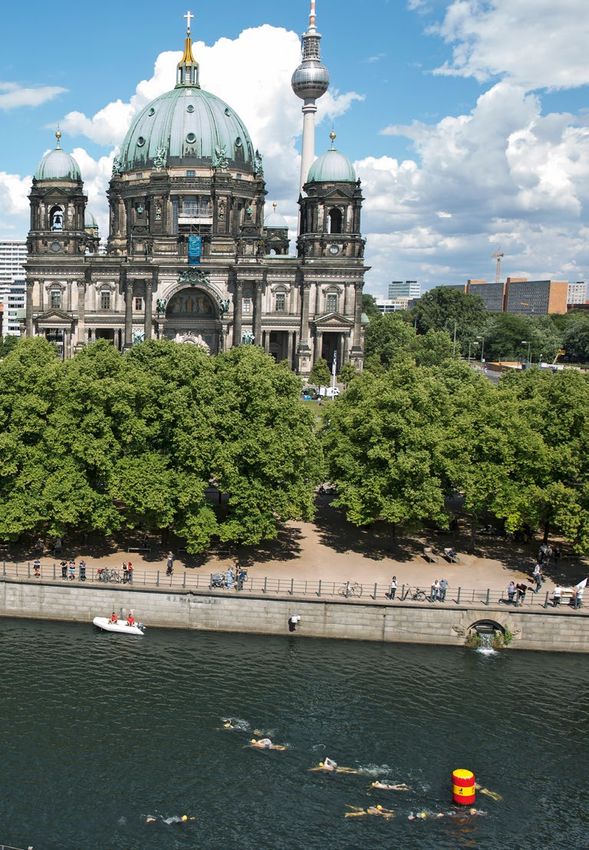
The “Hans-Wilhelm” barge containing
                       our test filter makes its way to the
                       Spree Canal in May 2017
cc 2017 Axel Schmidt

                                                                 5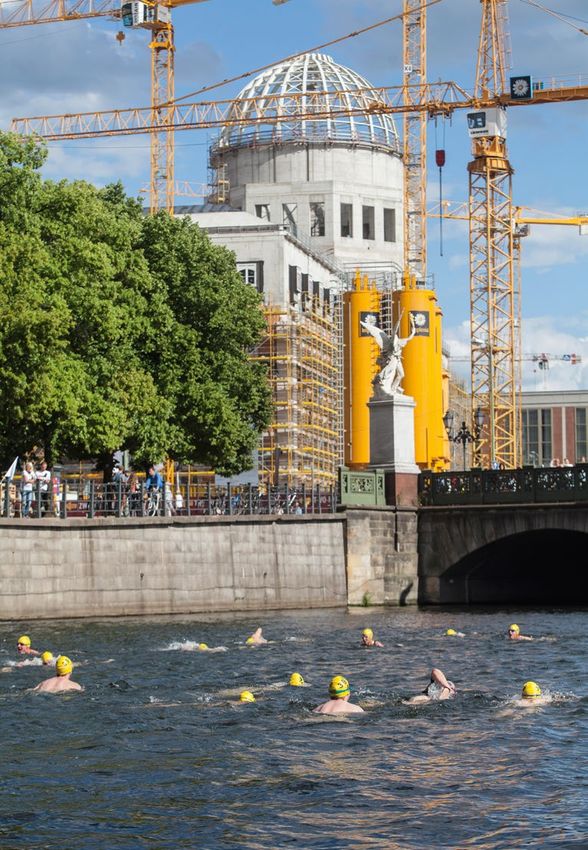
cc 2016 Espen Eichhöfer / OSTKREUZ

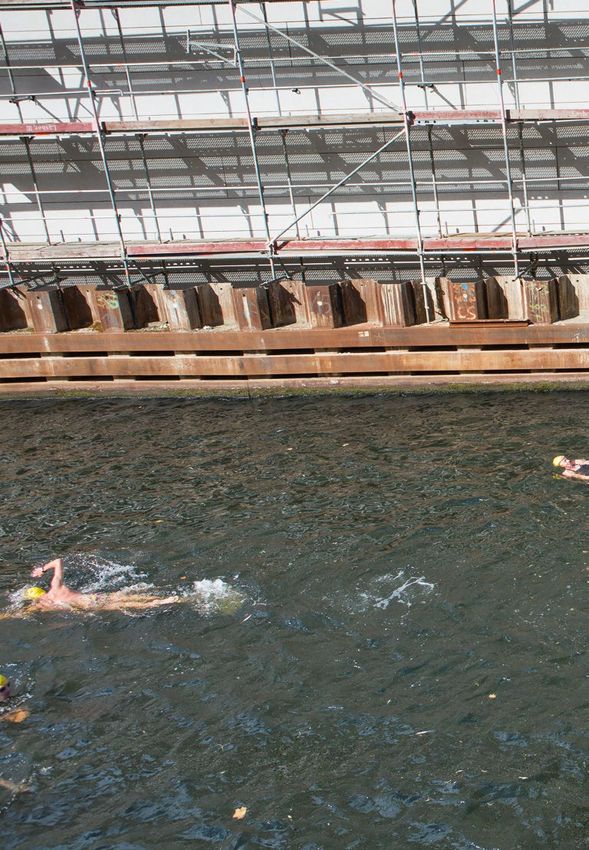
Swimmers wait in the crystal clear Spree Canal for the start of the 2nd Berlin Flussbad Cup, July 2016

6                                                                 Flussbad Berlin
Official Greeting
cc 2017 Stefanie Loos
Since the end of 2014, Germany’s federal government I consider the Flussbad Berlin to be a truly valuable un-
and the federal state of Berlin have been jointly support- dertaking. It is an important urban development project
ing the Flussbad Berlin Association in its efforts to drive with a high international profile, tremendous innovation
forward the innovative “Flussbad Berlin” project. Our potential and an above-average level of public
support comes in the form of a nationwide programme participation.
known as the National Urban Development Projects. Our In the past three years, the Flussbad Berlin Associa-
decision to support the Flussbad followed on a tremen- tion has achieved a great deal. It has worked tirelessly to
dous level of cross-party political support and advocacy publicise the project idea, to promote its multiple goals
for the project on the part of civil society actors. and to raise the level of enthusiasm for a Spree Canal
Why are Germany’s federal government and the that is clean, accessible and open to the general public.
state of Berlin supporting such a project? At first glance, At the end of 2016, Berlin’s governing coalition agreed to
it might appear that the Flussbad is only about making it enable swimming in the Spree and also to foster the re-
possible for people to swim in the Spree Canal. In fact, alisation of projects such as the Flussbad Berlin. Since
however, the creative and enterprising team at the then, with the help of funding and support from impor-
Flussbad Association has set its sights on something tant partners, the Flussbad Association was able to open
much bigger; their goal is to bring new life to the histori- an information platform depicting the project in the
cal centre of Berlin. courtyard of the European School of Management and
Until 1920, it was commonplace for Berliners to Technology (ESMT Berlin), which is now housed in the
bathe in the Spree. Indeed, there were roughly 30 bath- former GDR’s State Council Building (Staatsratsgebäude).
ing facilities well into the 20th century, all of which were The Flussbad team also anchored a pilot facility designed
forced to close as a result of industrialisation and the to test the various possible water-filter processes in the
related problems with sanitation and hygiene. adjacent Spree Canal.
Berlin’s waterways are part of the public identity, The year 2017 came to a crowning finish when Berlin’s
with the Spree River in particular acting as a lifeline. If we parliament passed the cross-fractional proposal “Getting
want to draw on this precious resource to invigorate our the Flussbad flowing” on 30 November 2017. This political
urban environment, it is essential that we make full use mandate represents a major step in the work being done
of the multitude of functions it offers us. We have the by the Flussbad Association to develop and implement
exciting and worthwhile opportunity to link the high-cul- the project in collaboration with a range of authorities.
ture museum environment found at the northern end of The Flussbad has captured the spirit of our time.
the Spree Island with the everyday life and recreational Berlin now joins the ranks of cities all over the globe at-
activities at its southern tip. The Fischerinsel would tempting to make their waterways viable for swimming
experience a considerable improvement in quality as a and urban recreation again. Chicago, Paris, London, Co-
residential space if it had an attractive and welcoming penhagen, Brussels and Munich are just a few examples.
area along its natural shoreline. Without a doubt, the In Berlin, the Flussbad also represents the attempt to cre-
Flussbad would provide an essential impulse to this in- ate a unique link between the past and the modern era.
ner-city residential district. I am delighted that the Flussbad Berlin is taking on
Again, let’s not forget; the Flussbad is not just about shape after 20 years. I am also excited to see that the
making it possible for Berliners to swim in the Spree. implementation of the project is now within tangible
The project combines ecology and the careful handling reach. Congratulations to the Flussbad Berlin Associa-
of natural water resources with sustainable and integra- tion on its fifth anniversary. I offer my personal support
tive urban development. It also achieves the very chal- in all of your efforts going forward and wish you much
lenging task of linking a breathtaking World Heritage Site success in the future!
with the day-to-day lives of Berliners living in the here
and now. Katrin Lompscher
Berlin Senator for Urban Development and Housing
Official Greeting 7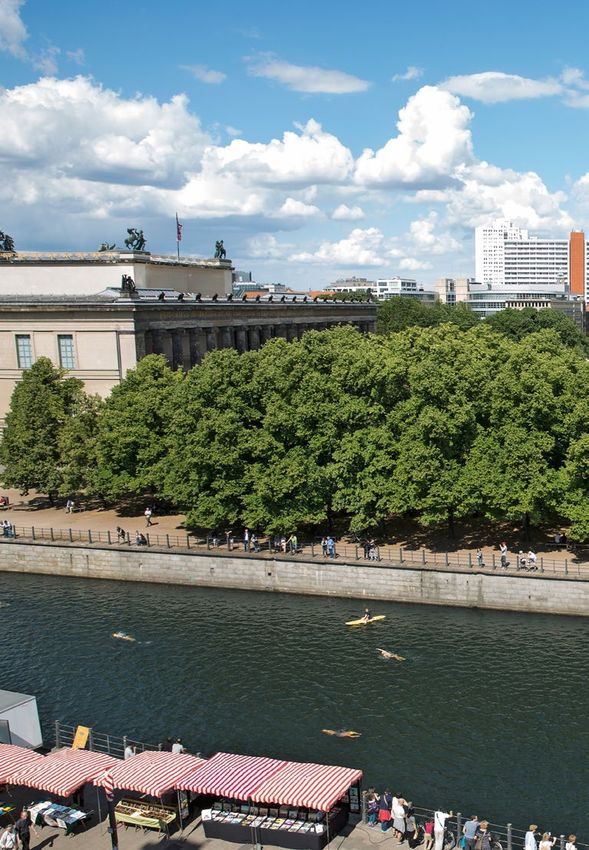
A project in
progress
Flussbad Berlin is an urban development project designed to reactivate a stretch of
water in Berlin’s historical centre known as the Spree Canal, which has lain almost
entirely dormant for 100 years. The plan divvies up the 1.8 kilometre-long canal into
three sections: after an ecological regeneration zone and a filter section, the project is
designed to allow for a swimming area in one of Berlin’s most historical settings, while
also fostering a new relationship among the adjacent buildings and open-air spaces.
It’s been twenty years since the project founders Additional key developments in our ongoing
came up with initial idea and design for the planning were the alternatives we devised for the
Flussbad. A first reworking of the project took large staircase originally planned for the Lustgar-
place after it won the 2011 LafargeHolcim Award ten – which became strongly criticised from her-
in Gold, Europe’s most important global prize for itage protection officials – and the related idea of
sustainable architecture and urban development. “central” access to the swimming area. We now
The designers moved the changing rooms from favour the installation of several decentralised
the banks of the Lustgarten to an area at the water-access areas: at the ESMT Berlin, across
pedestal of the memorial to freedom and unity from the Bode Museum and in front of the Hum-
that was planned at the time. In 2012, the project boldt Forum. Each of these areas would have its
was able to win over the jury of the global edition own unique character, scope and function, thus
of the LafargeHolcim Award, which granted the also requiring individual measures to realise them.
Flussbad its Bronze prize. In 2014, the design was The planned access area located at the weir
adjusted again after the project received support steps next to the ESMT Berlin has a special im-
from the LOTTO foundation. These funds were portance for the project. It would enhance the
used to test the Flussbad’s technical feasibility, opening-up of the park area behind the Staats-
and the project also reduced the extent of its ratsgebäude – a measure that is also being sought
previously planned structural interventions: the by the federal state of Berlin – and transform it
current design maintains the canal appearance in into an extraordinary public space for recreation
the upper area at the Fischerinsel, and the and swimming right in the middle of the city. At
changing rooms are now foreseen as a temporary this point, it seems that the open staircase at the
floating facility under the monument base, so as Humboldt Forum is an option that many of the
to limit the need to intervene in existing struc- neighbouring institutions can already agree upon
tures. In addition, the planned jetty along the left today – even independently of the Flussbad pro-
waterside has been exchanged in favour of an ject itself. Yet another project adjustment was
invisible solution involving a bypass canal for the made in response to criticism from monument
funnelling of sewage system overflows. protection officials; the plant filter around the
In 2014, the project became part of the fed- Jungfernbrücke will be omitted so as to preserve
eral programme known as the “National Urban the reflecting effect the canal water has for the
Development Projects”, and since then, we have historical buildings surrounding it.
been working on creating the basic conditions The following three pages provide an overview
necessary to implement the project. of the essential adjustments we’ve made over the
In the past several years, we took part in past years. Each one of them reflects the “work
many discussions with the Flussbad’s various in progress” nature of our project. From the very
neighbours and tenants in an attempt to learn beginning, our planning activities have aimed at
more about their respective needs, concerns and gathering all parties at the table, listening to all
objections. Among our discussion partners were attitudes and approaches, and ultimately bringing
the neighbouring museums, the Humboldt Forum, the project to a successful close with the help of
the ESMT Berlin, the Federal Foreign Office, the compromises and alternatives.
Historic Harbour and the passenger ship compa-
nies. No less important was our ongoing e xchange
with public authorities, including the Waterways
and Shipping Office and the Berlin Monument
Authority.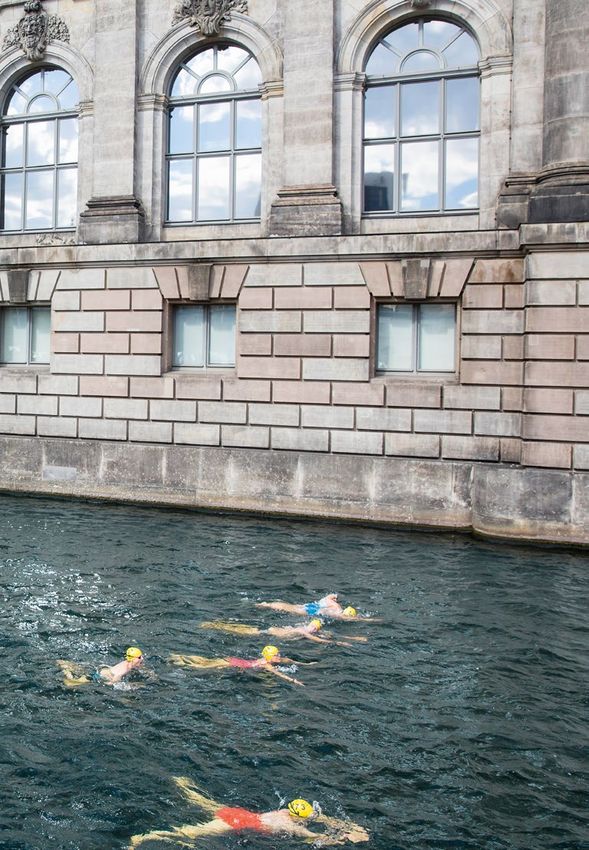
End weir/
Non-return valve Bode Museum
Temporary floating pier at
Monbijoubrücke/ Museumshöfe
Changing rooms,
WCs, lockers, etc.
Museum Island
dec
en
James Simon Gallery
al
)
Altes Mu
tr
(1
ise ss
d w
a te r a cce
Museum Courtyards [ >2035 ]
Swimming area
This 835-metre stretch of the Spree Canal along the west side of Museum Island
would have clean, swimmable water thanks to a plant filter located upstream. This
new bathing area would transform the canal – which remains almost entirely unused
to this day – into a public swimming and recreational space right in the middle of
downtown Berlin. After receiving criticism from heritage protection officials for the
open staircase planned at the Lustgarten in the original 1998 Flussbad design, the
planners came up with an alternative concept that features decentralised access to
the water, including a staircase and a new weir at the ESMT Berlin (2017 draft) and a
seasonally based floating dock at the Monbijoubrücke (2017 draft). The open staircase
at the Humboldt Forum (2012 draft) could be used as an additional access point to
the water, if required.
This new public space in the heart of Berlin would serve a number of different pur-
poses: it would be a site of recreation and sports involving clean river water, a space
for gathering, a new connection route and much more. People’s everyday physical ex-
periences in the area would enable a completely different feel for the city; it would
also create new levels of awareness, meaning and usage for this part of central Berlin,
where otherwise the focus is more on retrospective history.
Decentralised water access (2017)
Opening up the swimming area via two main access areas at both ends of the
canal section:
1) Access at the northern section: seasonally based floating dock installed at
the shoreline of the area known as “Am Kupfergraben” or Monbijoubrücke
2) Access at the southern section: open staircase at a new weir near the
ESMT Berlin garden (2017)
The open staircase at the Humboldt Forum (2012) has a supplementary
function. In this iteration, it does not involve functional access for
swimmers; however, it could be retrofitted with changing rooms, WCs,
lockers, etc. constructed on pontoons floating under the base of the
monument.
Project illustration according to specifications by the Berlin Senate Department for Urban Development and Housing, IV C Urban Development/Urban R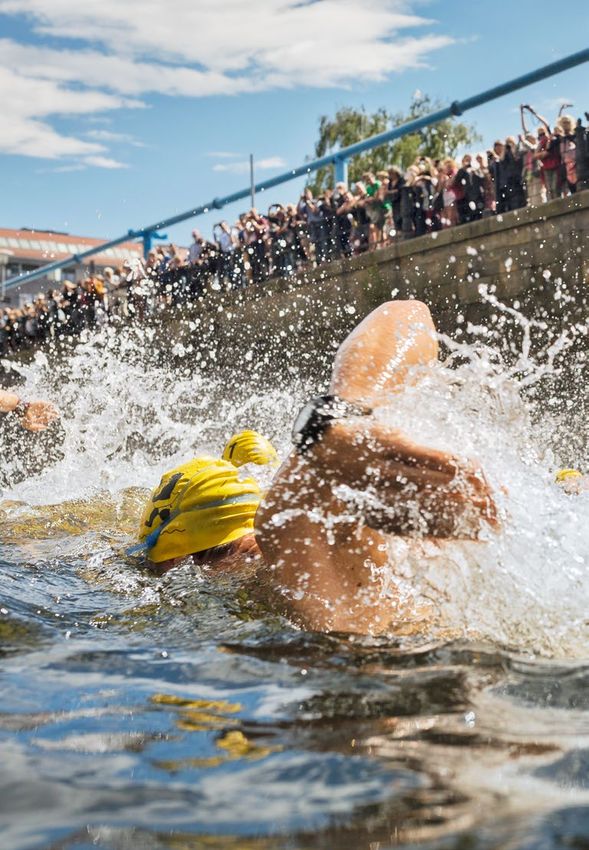
Filter area
                                                                                              The Flussbad foresees installing a natural plant filter stretching from
                                                                                              Gertraudenbrücke to the Foreign Office that will clean the Spree
                                                                                              water flowing through it. If this water is ever contaminated, it is due
                                                                                              to wastewater discharge from Berlin’s mixed sewage system during
                                                                                              heavy rainfall. In this roughly 300-metre filter area, the Spree water
                                                                                              will flow through a layer of gravel lined with aquatic plants, thus
                                                                                              cleaning it in a microbiological manner and making it possible for
                                                                                              people to swim in the subsequent water area.

                                                 Berlin Cathedral

useum

              Lustgarten

                                                                                             Humboldt Forum (2019)

                                                        Open staircase
                                                      at Humboldt Forum

                                                                                                         Drainage control structure
                                                                                                               (underground)

                                                                                                                Water terrace
                                                                                                                at Schlossplatz
                    de
                      ce

                                                                                                                     Changing rooms,
                            ra
                           nt

                                                                                                                     WCs, lockers, etc.
                                 lis
                                       ed
                                            wa te r           s
                                                      acces                                                                               ESMT Berlin (former GDR
                                                                                                                                           “Staatsratsgebäude”)

                                                                                                                                                   New combination
                                                                                                                                                     weir system

                                                                                                                                                        Open staircase
                                                                                                                                                  at the ESMT Berlin garden
                                                       Federal Foreign
                                                           Office

                                                                                      Weir steps
                                                                           (1.5 metre water level difference)
                                                                          de

                                                                           en                                              )
                                                                           c

                                                                                tr                             2                                                              Gravel filter
                                                                                     ali                  s s(                                                                with reeds
                                                                                         sed            e
                                                                                             water a cc

Renewal. The Flussbad Berlin Association suggests also other concept variants.
Mühlendamm lock
Historical
Island terraces
harbour area
Pedestrian jetty
Fischerinsel at water level
Natural waterway
The idea is to transform the section of the canal at Fischerinsel into an Sloped shoreline area
ecological regeneration zone similar to that of an oxbow lake. The shal- (“Historical window”)
low water zone would provide a much-needed living and reproduction
space for flora and fauna. This would contribute to improving the eco- Bridge underpass
logical condition of the water. By removing certain parts of the existing
canal walls, lush green areas with shallow embankments will be gener
ated acting as “historical windows” into Berlin’s old city wall, which
remains hidden underground to this day. A new jetty at water level will
invite visitors to explore the canal.
cc 2018 realities:united / Flussbad Berlin e.V.
Pedestrian jetty
at water level
Shoreline shallow
Bridge underpass
water zone
Bridge underpassWhen is the Flussbad
going to become a reality?
A conversation with Jan Edler
cc 2017 Dawin Meckel / OSTKREUZ
Editors: Jan, you and your brother important international prize for €110,000 in funding from the Berlin
Tim came up with the idea of creat- sustainable architecture and urban LOTTO Foundation to undertake an
ing the Flussbad in the Spree Canal development. It comes with prize initial study that would test the pro-
twenty years ago. Can you give us money totalling $100,000 US, which ject’s basic technical feasibility. Since
a quick overview of the genesis of places it on par with the well-known 2014, the association has received a
the project and the results you’ve Pritzker Prize. In 2012, we followed total of €4 million as part of the “Na-
achieved since then? that up with the Bronze prize at the tional Urban Development Projects”
We presented our Flussbad idea global level of the competition, this programme operated by the federal
in public for the first time in 1998. time with $50,000 US. The unique and state governments. These funds
Thomas Flierl, who was building thing about this award is that it ac- were used to develop the basic pa-
councillor for the district of Berlin- knowledges outstanding projects rameters of the Flussbad concept so
Mitte back then, said the project was that have not yet been realised – that social and political decisions can
“unrealistic enough to be able to dis- projects that need a little push to be made by the end of 2018 with re-
cuss it in an impartial way”. That re- get out there in the world. It provid- gard to the realisation of the project.
sponse reflected the prevalent belief ed the initial spark for the Flussbad
that our proposal was a utopian idea, project. This recognition from out- Didn’t that already happen? The
albeit one that many people thought side, coupled with broad media cov- Berlin Senate seems to have already
was great. At the time, Berlin still had erage, also paved the way for our made a preliminary decision in fa-
a somewhat fractured relationship first talks with political figures. It vour of implementing the Flussbad
to its waterways, including the Spree awoke the interest of Berlin’s Senate project.
River and Spree Canal, and almost Department of Urban Development Indeed, some of the facts point
everybody underestimated the im- and motivated us to found our in that direction. Since late 2016, the
portance of water in the process of non-profit Flussbad Association to Flussbad project has been anchored
urban development. A lot has hap- move the project forward. in the state government’s coalition
pened since then. agreement as an urban development
How has the Flussbad Association policy objective. And in November
When did the project gain developed since? 2017, a cross-fractional proposal re-
momentum? We started out with 15 founding garding the Flussbad was adopted by
In 2011, the Flussbad project was members, and that number has now the majority in Berlin’s parliament.
awarded Europe's LafargeHolcim grown to roughly 400 today. In 2014, The senate was given the task of
Award in Gold. The Holcim is the most the association was able to acquire supporting our project by establishing
10 Flussbad Berlina working committee and making We came up with an initial cost esti- authorities are obliged to provide
sure the Flussbad receives the per- mate when we launched the techni- lifeguards? As a society, we accept
mits it needs to get realised. cal feasibility study financed by the the fact that we swim in bodies of
But we’re still waiting for a clear LOTTO funds. At the moment, we’re natural water outside cities – thus
political decision with regard to the having these numbers verified by an putting ourselves in danger – without
realisation of the project. And, of engineering office. As soon as possi- the state preventing us from doing
course, we’re going to need broad ble, we’re going to take these num- so. In other words, our goal in this
and ongoing support, especially from bers and adjust them to fit the pro- realm is to come to some sort of so-
the public. In other words, if Berlin- ject development that has taken cial agreement. On this issue, it helps
ers want the Flussbad, then things place since then. At the end of 2018, to take a look abroad. In the Swiss
will work out. Membership in our as- we will publish the numbers together city of Basel, for example, public au-
sociation is a great way to express with the updated planning status. thorities construct and manage infra-
your support and encourage our structure facilities that enable resi-
work. There are many other valuable What kind of legal challenges does dents to swim in the water, but the
building blocks and ways to help us the project face? residents do so at their own liability.
promote the Flussbad project, such First of all, as I mentioned above,
as telling other people about it, and we have to deal with questions of Does that mean there is no need for
even sharing and liking items on so- ownership. Like almost all rivers in any official institutional body
cial media. Germany, the Spree Canal belongs to responsible?
the federal government. And, al- Of course, public authorities
How can you continue working on though very few ships have sailed would be the institutional body offi-
the project after 2018 when the through here in the past 100 years, it cially responsible for the project,
funding ends? is still officially a federal waterway. just like they are responsible for
That has already been taken care Even though it belongs to the federal public parks and green spaces. On
of, at least partially. For the first time government, the canal is used today the off chance that public authori-
ever, a separate title was created for primarily by the state of Berlin as a ties reject the idea of taking on this
the Flussbad in the 2019 state budget. receptacle for untreated sewage responsibility – which I don’t think
This symbolises a strong political during heavy rainfall. On the other they will – I can see the Flussbad be-
commitment to our project. We are hand, the fortifications along the riv- ing operated by a non-profit associ-
also going to try to acquire addition- erbank are shared equally by the fed- ation or foundation.
al funds so that when our current eral, the state and the municipal gov-
funding comes to an end, we can ernment. This is a highly complex The idea of filtering a river in the
guarantee a secure transition into a situation that requires a legal agree- middle of the city and keeping it
realisation project. ment supported by all participating clean involves many technical chal-
In other words, even though partners. What it ultimately comes lenges. How are things looking on
construction is by no means under- down to is the scope of each part- this point?
way, we can counter Mr Flierl’s quip ner’s responsibilities with regard to The study we carried out using
about the Flussbad being “unrealis- preservation and maintenance; in funds from the LOTTO foundation
tic enough” and argue that our pro- other words, as so often in these allowed us to produce the numbers
ject is now sufficiently realistic that cases, it’s about money. It is a fact showing that it’s theoretically possi-
we can start dreaming about having that it already costs a lot of money to ble to clean the Spree Canal in a nat-
a clean Spree River for everyone at maintain the canal today, even ural way. We are now testing out our
the centre of Berlin. though it is of no use to the general calculations at our true-to-scale wa-
public other than generating private ter filter test facility on a barge
What are the most urgent issues revenue from the few remaining ex- called the “Hans-Wilhelm”, which is
you’re currently working on? cursion boats that still operate on anchored in the Spree Canal. This
There are quite a few! For exam- the canal. This economic imbalance makes it possible for us to amass the
ple, questions of ownership, exclu- alone gives us a good argument in fa- data we need for the subsequent
sive usage rights and the develop- vour of the Flussbad, especially in planning of the filter. At this point,
ment of legal frameworks that terms of being for the common good. it’s still too early to be able to pres-
permit the safe operation of the ent results. Ultimately, things are
Flussbad in the middle of the city. Who would handle the day-to-day probably not going to focus on
We have to secure financing for the management of the Flussbad? And whether it’s possible to get the water
construction, operation and all the who would be liable if something clean enough, but instead which
related sponsorship issues. And, of happens? specific filters get the job done best.
course, there are a number of plan- We’ve noticed that many people
ning aspects that will have to be assume that having the Flussbad in Have the issues regarding the pro-
clarified at a later stage. the centre of the city automatically ject’s desired water-entrance areas
means that there will also be an or- been resolved? There was a great
Let’s cover each of these individual ganised bathing facility with all the deal of criticism on this point from
points. What is the current project associated operating and safety the museums and heritage protec-
status with regard to economic mat- measures. This begs the following tion officials, specifically regarding
ters? Many people have asked how question: if we make it possible for the stairs foreseen for the Lust
much it will cost to actually realise the general public to gain access to garten area.
the Flussbad. Have you already cal- clean bathing water, does this auto- We sought out a dialogue with
culated how much? matically also mean that public heritage officials and neighbouring
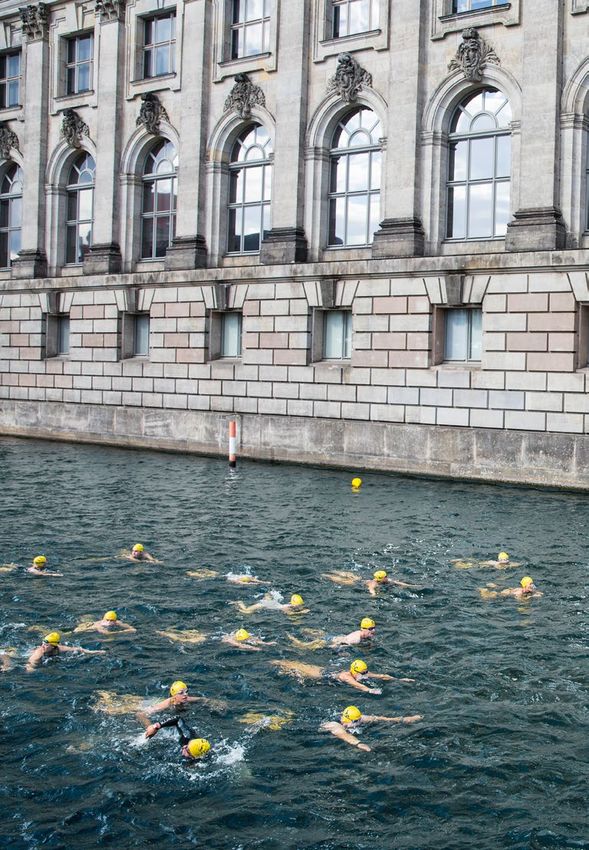
When is the Flussbad going to become a reality? 11cc 2016 Annette Hauschild / OSTKREUZ Participants in the 2nd Berlin Flussbad Cup at the Bode Museum, July 2016 12 Flussbad Berlin
institutions so that we would be able Heritage Foundation, which is the When do you think the Flussbad will
to better understand the reserva- owner and operator. open?
tions and fears expressed by these If we approach the Flussbad as a
groups. This allowed us to develop The Flussbad also came in for some large-scale project, then I would
the project further while also taking criticism relating to the plant filter have to say it’s going to take a while.
into account their concerns. We also and how it would alter the visuals on However, if we are prepared to see it
undertook the very first comprehen- the surface of the water at the as a series of individual measures
sive documentation of the historical Friedrichsgracht. building successively upon one an-
heritage found in the entire project Wherever we can, we try to ad- other, then we just need courage
area from the tip of the Fischerinsel dress the concerns people might and determination to be able to
all the way to the Bode Museum, have in terms of our concept and the make this happen – at least the
just to make sure that people can technology we use. This includes the swimming part of it – quite quickly.
judge for themselves whether the criticism that the canal will lose its One thing we need above all is a reli-
Flussbad is in accordance with her- role as a reflecting water surface in able and ongoing method of measur-
itage protection. We made a num- the area where the natural filter will ing the water quality. Our floating
ber of planning-related adjustments be set up. The heritage authorities test facility on the “Hans-Wilhelm”
designed to address those areas specifically found fault with the could provide a basis for this; we
that came under the most criticism; reeds we want to use as a natural fil- would also need some water access
and we made these changes in such ter, so we’ve been conducting a points, however temporary they
a way that they comply entirely with number of tests on the “Hans-Wil- would have to be. Then we would be
the requirements of heritage pro- helm” barge – which has been in op- able to test the Flussbad.
tection. This includes, in particular, eration since last summer in the
fundamental changes to the wa- Spree Canal – and we’re investigating How do you stay calm in the face of
ter-access concept. to what extent the natural filter sys- all these challenges?
tem can function effectively without There are a number of examples
What aspects did you change? the use of reeds. We shouldn’t for- across the globe that prove it’s pos-
The original access plan envis- get, however, that any filter we install sible to reclaim even heavily polluted
aged the Lustgarten as a large green will be entirely reversible and gener- water and make it fit for human use
space. Indeed, if you look at a map ally considered to be a temporary again. Just look at what happened in
of the area around Museum Island, it installation, seeing as the long term Basel, Switzerland. When people saw
makes sense to have this spot act as goal is to be able to swim in the wa- those apocalyptic images of the
a link to the widest space in the ca- ter without the need for such a filter. Rhein stained red with thousands of
nal. However, heritage protection At that point, the visibility of the wa- dead fish as a result of the 1986 San-
officials were especially opposed ter surface would be fully restored. doz catastrophe, it triggered massive
to the open-air stairs at Lustgarten; All in all, we value the fact that opposition to the ongoing industrial
they argued that our plans would Berlin’s heritage officials are taking exploitation and pollution of that riv-
affect the urban ensemble (Altes our project seriously and actively er; today, you can swim in the river
Museum, Lustgarten and Schloss- working to develop perspectives as again. Or think of Copenhagen,
brücke) designed by Karl Friedrich to how to process such an extraordi- where only a few years ago the port
Schinkel and also lead to the overuse nary urban development project. In- area seemed inaccessible due to
of the Lustgarten. deed, the project raises a number of heavy use and pollution; today, the
Based on their objections, we questions that touch on the goal of location has several port swimming
came up with an alternative “dual” sustainable urban development in areas, and even more nearby spaces
access concept that focuses on the general, and not just in Berlin. Usual- are going to be designated as swim-
neighbouring residential areas. A ly, however, these issues don’t have ming areas soon.
staircase at the southern part of the to be solved so concretely. This is In addition to these inspiring ex-
project near the former State Coun- one of the tasks and challenges fac- amples, which give us plenty of hope
cil Building (Staatsratsgebäude) – to- ing cultural development. for our own project, we are also see-
day occupied by the European ing a significant increase in the levels
School for Management and Technol- How is the dialogue going with the of awareness people have as to how
ogy – would link the Flussbad to the museums? important it is to foster the ecologi-
Fischerinsel and Luisenstadt areas. We have launched a regular dis- cal, sustainable and equitable devel-
A second access point could be near cussion roundtable with those muse- opment of our growing cities. The
the Museum Courtyards (Museums ums that are managed by the Prus- time is ripe!
höfe) opposite opposite the Bode sian Cultural Heritage Foundation.
Museum. Our subsequent discus- Our goal here is to incorporate their Jan Edler is co-creator of the Flussbad
Project. He is a founding member and
sions with heritage officials were concerns into our planning. We’ve the current board chairman of the non-
much more positive that the first already seen some encouraging pro- profit Flussbad Berlin Association.
round. And yet, I would argue that gress here; the foundation has Together with his brother, Tim Edler, he
has been working since 1997 on projects
the open staircase we initially pro- moved away from its initial and quite that inhabit the interface of art and
posed – which would be set up at public rejection of the project. The architecture – since 2000 as “reali-
the Humboldt Forum – remains a president of the foundation, Her- ties:united, studio for art and architec-
ture”. He was interviewed by Barbara
practical option. This is viewed less mann Parzinger, recently stated that Schindler and Katrin and Hans Georg
critically by heritage officials and is the issue is no longer if people will Hiller von Gaertringen.
even explicitly welcomed as a public soon be swimming along Museum Is-
area by the Prussian Cultural land, but rather how they’ll do it.
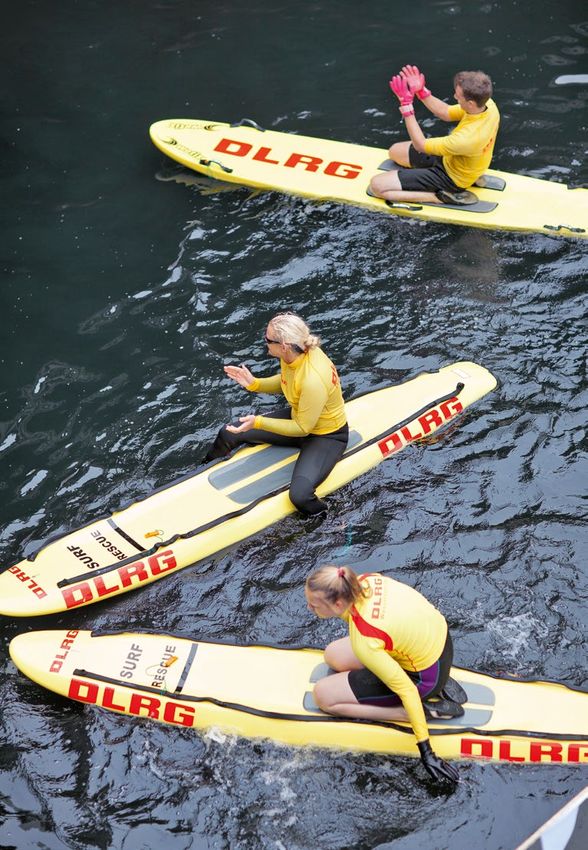
When is the Flussbad going to become a reality? 13cc 2016 Annette Hauschild / OSTKREUZ Synchronised swimmers from the Schwimm-Club Wedding 1929 e.V. at the Bode Museum during the 2nd Berlin Flussbad Cup, July 2016 14 Flussbad Berlin
Getting the Flussbad
flowing—a political
debate in Berlin’s state
parliament
On 30 November 2017, the government fractions that make up
Berlin’s state parliament – BÜNDNIS 90/DIE GRÜNEN, CDU, SPD,
Linkspartei, FDP and AfD – deliberated on a motion relating to
further support for the Flussbad Berlin. Immediately following the
debate, the motion was approved without opposition by a majority
comprising the coalition and other contributing fractions. The AfD
abstained. The following are excerpts from the speeches given by
members of parliament in the order in which they spoke.
compatible. The ownership structure
is, to say the least, complicated. We
still need to build a bridge to the
Waterways and Shipping Office,
© Tobias Koch
above all others, even though we are
© Rainer Christian Kurzeder
already in constant dialogue with
them. Of course, cleaning the water
is also a big task. If we get that up
and running and manage to build a CDU | Dr. Gottfried Ludewig, deputy
great filter – the feasibility of which chairman and parliamentary group
is currently being tested – then we healthcare policy spokesperson in
BÜNDNIS 90/DIE GRÜNEN | Silke could also apply this knowledge and Berlin’s state parliament:
Gebel, parliamentary group envi- experience to other bodies of water, (…) I am particularly pleased
ronmental policy spokesperson in such as the Wuhle or the Panke, and that we managed to bring the mo-
Berlin’s state parliament: generate even more ecological ben- tion to the plenary with the support
(..) It’s going to be a marathon, efits for the entire city. At this point, of all parliamentary groups, so that
not a short-distance run, which is we’ve set aside money in the budget we can make it clear that we, as a
why we decided to table this mo- so that the project team can contin- whole parliament, stand behind this
tion. We want to give the project ue working and concentrating on the project across all parliamentary
some tailwind and get clear that we future. Once again, our goal with this groups. It is a project we have sup-
intend to push it forward and sup- motion is to generate tailwind for ported for so many years now al-
port it across all departments and the project and ensure that the ready. […] The Flussbad takes free
levels. Planning is already underway. working group functions across all and open spaces and gives them a
It would be fatal if things were built levels. I hope that by the time the new function and meaning. These
in the area that ultimately ran coun- 2018 Flussbad Cup takes place […] are free and open spaces that are
ter to the Flussbad, even though we will have a report ready and be less and less available in our city,
perhaps everyone involved says: able to say that we’ve taken a major which continues to grow at a rapid
“Wow, that would be a great idea.” step forward here. I’m looking for- pace. This type of use is exactly our
It cannot be incompatible, which is ward to it. goal. […] I am delighted that this
why we said we need a working body ecologically innovative bathing area
that brings together all of this and allows us to create something
where we, as political actors, can unique, something typically Berlin. It
make sure that it continues to be sends out the signal that
A political debate in Berlin’s state parliament 15developments such as these are still expired – we are going to support accessible to all, as are the plan-
possible in Berlin; that the craziest the project office with €250,000 ning-related data on the social in-
and most exciting projects in the from the state budget. This is an im- dex. The Fischerinsel is found at the
world are being carried out in Berlin portant means of support for this southern end of the Spree Canal,
and nowhere else. However, it has to great idea. […] I am also on the Cul- and Stadtmitte is also not far away.
be clear to all of us that this is not a tural Committee, and I thoroughly What we have here are high-stress
project put forth by one individual. It enjoy examining issues relating to areas that are still disadvantaged.
is not a CDU project, it’s not an SPD monument protection and questions This is why we want to take advan-
or a Green party project, it’s not an of urban planning; however, to this tage of this idea of swimming in the
FDP project. Instead, it’s a project by day, I still cannot comprehend how Spree to offer inner-city residents
and for all of us, and it will continue some monument preservationists some sort of improvement in terms
to be a collaborative project, a clas- can say that the idea of removing a of environmental justice. We also
sic example of how this project, piece of the old quay wall and re- have a strong social interest in mak-
which is based on an original idea placing it with stairs leading down to ing this happen. […] The Flussbad
put forth by Tim and Jan Edler and the water for this project is, for project also provides an answer to
their friends, was promoted over the them, unimaginable. If this is the the question of what could possibly
years until it found an ever-increas- case, then I can only say, Ladies and prompt us to take a step towards
ing group of supporters, made its Gentlemen, how is it possible that a the otherwise sluggish implementa-
way to us here in the parliament and new entrance area – the James-Si- tion of the European Water Directive
all the way to where we find our- mon-Gallery – is being built on Mu- in Berlin. Indeed, in addition to the
selves today with this motion. […] I seum Island? Oddly enough, that this good condition of the Spree’s sur-
am delighted that this is taking place project is entirely compatible with face water, the Flussbad would give
across all parties. It would be great monument preservation, but when it us a new opportunity to use publi-
if, in addition to having this debate comes to reinstalling a quay wall, all cally accessible and clean water in
today, we also took up the senate’s of a sudden, the story is different. the Spree Canal. I have worked to
progress report – which is available This isn’t something we can explain ensure that we can vote directly on
twice a year – at least once a year. If to a normal person. […] And this is this motion today, especially seeing
we were to hold discussions with the reason why the Berlin state par- as it is a cross-party motion. […]
one another, we might be able to liament – indeed, all of us together Summer swimming is a great thing,
push this mammoth project forward – must announce that we want to but why not also set up an academy
year by year and perhaps even go for get this Flussbad flowing. We want to for children and youth to monitor
a swim together one summer in the create new areas of experience in and explore the new and all-natural
future – maybe in 2021 or 2022, al- the city for ourselves and for visi- water filter. Interested parties could
though I know the Senate is not so tors. We see this being done in other join together with experts to in-
good with dates. Many thanks to metropolises, and it means winning crease their knowledge about water
everyone who participated. back a piece of our city. I believe the and aquatic environments in a cen-
Flussbad continues to be a fascinat- tral downtown space at Museum Is-
ing, exciting project. Today, I am de- land. In my opinion, there are a myr-
lighted that we can clearly state – iad of exciting development
across all parties in the immediate opportunities – public bathing being
vote – that this project can and only one of many – to look forward
Foto: SPD Berlin
should be brought forward. To to here in the city centre, but also at
everyone who is still hesitating, we other waterside locations through-
simply say “Join us!” If you do, in a out the city.
couple of years, we’ll be able to go
SPD | Daniel Buchholz, chairman of swimming together in the Spree in
the urban development working Berlin.
group of the SPD parliamentary
Foto: FDP-Fraktion Berlin
group in Berlin’s state parliament:
(...) The German federal govern-
© Ben Gross Photography
ment and the state government of
Berlin have made €4 million available
so far [to fund the project]. Until
now, however, there was no clear FDP | Stefan Förster, FDP parlia-
decision as to whether the project mentary group spokesperson for
would actually be implemented. This building, living, monument protec-
is why it is very important that we DIE LINKE | Marion Platta, DIE LINKE tion in Berlin’s state parliament:
– as Berlin’s state parliament and spokesperson for environmental (...) What it’s going to take are
across all political parties – demon- policy and sustainability in Berlin’s active individuals and a project team
strate clearly that this idea is very state parliament: that is truly committed and full of
important to us, not just as an ideal. (...) I’ve been interested in the passion for their work. These are the
We have succeeded by working to- distribution of environmental justice basic prerequisites for the success
gether. If I’m not mistaken, all parlia- for many years now. The statistics of any idea like this. And the Edler
mentary groups agreed, and now, regarding air pollution, noise pollu- brothers are doing just that. And the
starting in 2019 – the point at which tion, bio-climatic conditions and the people that are working with them
the project financing would have level of green spaces are publically are doing the same, which means
16 Flussbad Berlincc 2018 Annette Hauschild / OSTKREUZ
From left to right: Daniel Buchholz (SPD), Stefan Förster (FDP), Silke Gebel (BÜNDNIS 90/DIE GRÜNEN),
Gottfried Ludewig (CDU) and Katalin Gennburg (DIE LINKE)
they already have the essential approved. Instead, we’ve had losing another one. We have consen-
building blocks. A project like this non-binding discussions, whereby sus on that point among all of us ap-
wouldn’t work if it were prescribed the preservation people pointed to plicants, I believe. […] And now, we
by the state; the civil-society ap- a few problems with the preliminary want to send out a positive signal to
proach is the most effective ap- plan, which they are absolutely right the project team – those great vi-
proach. State actors can and should to do. None of us want any part of sionaries – that they should get
support the project, but the people the UNESCO World Heritage Site to started. Indeed, we want them to
who came up with the idea are the be lost the way it was in Dresden. start going into detail with the
ones who need to implement it. Our We simply don’t want that. In this re- knowledge that we will accompany
job is to support them to the best of spect, we are going to do our ut- them in a constructive way through-
our ability. […] The same goes for most to ensure that the framework out the process. We want everyone
the question of historic preserva- conditions are right – and, indeed, to know that we also believe in
tion. I’m not as sceptical as others we are going to work together with re-thinking Berlin time and again,
on this question. To date, there sim- the heritage preservation team, not just to make sure the city stays
ply have been no concrete plans against them. Our goal is to gain a exciting.
that we could have officially major attraction in Berlin without
Flussbad Berlin sincerely thanks all of those political parties and
members of parliament who have campaigned for our project for
their support.
A political debate in Berlin’s state parliament 17The buoy at Lustgarten marking the halfway point of the 2nd Berlin Flussbad Cup, July 2016 18 Flussbad Berlin
Flussbad Berlin
19
                  cc 2016 Axel Schmidt
2nd Berlin Flussbad Cup in front of the Bode Museum, July 2016 20
21
     cc 2016 Axel Schmidt
Swimming. No more
and no less
Sylvia Metz
© Barbara Schindler 2017
Leopold Kuchwalek (100), Berlin’s oldest swimming instructor
22 Flussbad Berlinmotor disorders in children, obesity and ever-increasing
media consumption are cited as the reasons for this.3
The large number of swimming pool closures is also
seen as one of the biggest causes. When municipalities
stop spending money on swimming pools or delay their
renovation, this inevitably leads to a shortage of sports
facilities. If there is no pool in the vicinity of a school,
then swimming lessons simply don’t take place. The re-
sult is that people are dying today simply because they
can’t master a sequence of easy-to-learn physical
Foto: Ed. Gross Rimini
movements.
And what’s more, swimming is great for our health:
it has positive effects on a person’s mental abilities,
helps to reduce stress hormones, promotes blood cir-
culation, stimulates the heart and circulation, strength-
ens muscles and relieves joints. One of Germany’s lead-
My love for water came into being at the same time as ing daily newspapers, the Süddeutsche Zeitung, titled a
my love for Italian ice cream. And both of these affec- recent article: “Learning to swim. It’s as important as
tions continue uninterrupted to this day. As a child, my learning how to count.”4 This is the right approach.
family and I travelled every summer to the Adriatic coast Swimming is the fourth most popular sport among
in Italy. The area we stayed in had Luna Parks with Berliners.5 If someone asked me, I would put swimming
bumper-car swans us kids would drive around and at the top of my list. However, not everyone is as enthu-
around in at night; however, more importantly, they also siastic as I am. In fact, swimming lessons have even be-
had delicious Gelato and a Mediterranean sea that was come the subject of regular lawsuits; Germany’s Federal
as warm as a bath. In fact, I frolicked in this sea before I Constitutional Court recently determined that parents
even learned how to swim. of Muslim girls are not permitted to excuse their daugh-
For me, it was only logical that I should learn how to ters from joint swimming lessons with boys for religious
swim properly as soon as possible. Shortly before I reasons.6 The court argued that the state’s responsibility
started primary school, my parents signed me up for a to educate is more important than any religious objec-
swimming course on Saturday mornings in a pool in a tions. In my research on the theme, I came across
town next my own in the State of Hessen, Germany. In something called the UNESCO “International Charta for
the 1980s, it was perfectly normal for children to learn Physical Education, Physical Activity and Sports.”7 This
how to swim at the age of five. We proudly wore our actually exists, and I’m delighted it does. It states, for
“seahorse” badges on our swimsuits, and when we grew example, that sports are part of human beings’ non-
out of those suits, our mothers would sew the old badg- material heritage. Article 1 of the Charta says: “Every
es on our new suits. I had so much fun swimming that I person has a basic right to physical education, physical
went straight on to the “bronze” and “silver” levels and activity and sports without any difference made in
even joined the Marburg Swimming Association (MSV). terms of ethnicity, gender, sexual orientation, language,
When regular swimming lessons started in fifth grade, I religion, political or other convictions, national or social
ended up teaching our sports teacher how to do origin, wealth or other characteristics.”
butterfly. With regard to swimming, I wonder how concretely
A recent non-representative survey of my col- these noble principles can be put into actual practice.
leagues on the Flussbad Berlin team showed that 95 % Can every family afford swimming courses when even
of them learned how to swim at a nearby pool at the schools can’t offer them as part of physical education
age of five. The most common name for a swimming in- due to a lack of facilities? At the moment, swimming
structor was Uwe. When we think back to our first swim- courses during the school holidays at the Berliner
ming experiences – no matter whether we come from Bäder-Betriebe (BBB), Berlin’s official public swimming
East or West Germany – we can all vividly remember the pools, cost €105. Other providers charge up to €150. In
smell of chlorine. early 2011, Germany introduced its so-called “Bildungs
Unfortunately, it is no longer a given that children in paket”, an education package that states that “children
Germany learn to swim as early as we did. In fact, more in need should not be excluded from participating in
than half of all 10-year-olds in Germany don’t know how recreational activities. They must be able to participate
to swim.1 The German Lifesaving Association (DLRG) reg- in sports, play and culture. For this purpose, a monthly
ularly calls on schools to implement swimming instruc- amount of up to €10 is available, for example, for mem-
tion more consistently. In 2015, almost 500 people bership in a sports club, for fees for a music school or,
drowned in Germany, including 25 girls and boys aged in exceptional cases, also for equipment such as sports
up to 15 years old and 72 teenagers and young adults shoes and music instruments”.8 If a family dependent on
between the ages of 16 and 25.2 In 2016, for the first such funding decides in favour of the €105 swimming
time in ten years, the number of drowning deaths even course, its means that all other sports-club events are
grew to over 500. Refugees were also among those who out of the question for a good ten months. The family
died; indeed, many refugees cannot swim and often un- also has to decide, for example, between swimming les-
derestimate the dangers associated with swimming. sons and, let’s say, an arts class or football practice. In
However, refugees alone do not explain this distressing other words, the fact that so many children cannot
trend. swim these days is likely also due to social causes.
Some say that the blame for the growing number of But let’s assume that the family nevertheless
non-swimmers lies with our changing lifestyle. General decides in favour of sending their kid to a swimming
Swimming. No more and no less 23course. Once the child gets its “seahorse” badge, it organisations as being very important; indeed, they
might want to go swimming more often. Today, it costs represent the theoretical basis for our practical action.
€9 for a family with one kid to go swimming at one of Federal states, cities and communities receive orienta-
the BBB pools. If you don’t have this kind of money, tion aid and planning assistance for a form of sustainable
there’s simply no going to the pool. If your neighbour- urban planning that is environmentally friendly while
hood pool falls victim to the wave of closings – roughly also fostering health and social justice. In fact, a clean
80 pools are shut down in Germany each year – you environment is the prerequisite for being able to move
might even have to seek out a public swimming spot.9 around freely and engage in sports in public, no matter
Berlin indeed offers several lovely and often free beach- whether you’re in the city, in the countryside or on a
es and lakes, but most of these are not found in down- river.
town Berlin. While access to these swimming spots is However, we should not allow this approach to
possible in theory, it’s usually hard to organize such visits remain in the theoretical realm. We need to think very
in practice. And while some people enjoy “driving to the concretely about how each and every one of us – in the
lake for the weekend”, for others, this is simply not an context of our own personal lives and spheres of activity
alternative, whether for financial or time-related r easons. – can work to realise these goals. The Flussbad project
In other words, it’s simply not the case that people who wants to make swimming possible for everyone, and also
find Berlin’s swimming pools too expensive or too far to make it a part of our right to personal health and a
away can just drive to a lake. For this reason, public and clean environment. The Flussbad envisages a swimming
freely accessible spaces for sports and recreation in the area in a central location with excellent accessibility,
city should not be seen a luxury, but rather as a neces- free entrance and the opportunity to swim for leisure
sary investment in a healthy community. or for sport. This is the vision! And yet, for our society,
For a number of years now, this quandary has come swimming can only be the beginning. No more and
under increasing public scrutiny, with the focus being no less.
placed on the word “Umweltgerechtigkeit” or “environ-
mental justice”. In 2015, Berlin joined with the “Bund Dr. Sylvia Metz was responsible for public affairs at Flussbad Berlin
from July 2015 to December 2017.
Naturschutz” environmental group to generate the
“Umweltatlas” or “environmental atlas”, a study that
investigated the unequal distribution of environmental
pollution in Berlin, including noise pollution, air pollution
and too few green spaces.10 That report states the fol-
lowing: “It has long been known and scientifically proven
that social milieu influences people’s health and life
expectancy”. In fact, the study shows that negative
environmental factors and low-level social status
encounter one another directly in some neighbour-
hoods. In other words, if you live in certain parts of
Friedrichshain-Kreuzberg, Wedding, Reinickendorf or
Neukölln, you might want to refrain from mentioning so
to your healthcare insurer if they one day attempt to
introduce a new rating system based on external health
risk factors. If we were able to increase the opportunities
to learn how to swim in these neighbourhoods, it could
act as a great counterbalance.
By 2050, it is very likely that not just my family and
I, but also around 70% of the world’s population, will live
in cities. At a recent event focusing on health, I learned
that the World Health Organisation (WHO) has already
started thinking about what can be done to ameliorate
enormous urban crowding. Indeed, in its “Urban Health 1 https://www.dlrg.de/presse/pm-dlrg- 9 See http://www.dosb.de/de/service/
bilanz-2016.html (consulted online on sport-mehr/news/detail/news/1041_
Initiative”, it explicitly welcomes urban projects that July 10, 17). schwimmbaeder_geschlossen_oder_
foster health and help to avoid illnesses.11 Flussbad Berlin 2 https://www.dlrg.de/fileadmin/user_
upload/DLRG.de/Fuer-Mitglieder/
von_schliessung_bedroht/ (consulted
online on September 21, 2017).
is an urban project that embodies this very spirit. Downloads/Verbandskommunikation/ 10 http://www.stadtentwicklung.berlin.de/
PM_Statistik_Ertrinken_PM-Dokument_ umwelt/umweltatlas/index.shtml (con-
As I explored the topic further, I realised that the neu.pdf (consulted online July 10, 2017). sulted online on August 23, 2017).
link between health and urban planning today forms a 3 https://www.welt.de/regionales/nrw/
article154770566/Bequem-ueberge-
11 See http://www.who.int/sustainable-de-
velopment/cities/Factsheet-Cities-sus-
part of each and every contemporary sustainable devel- wichtig-und-falsch-erzogen.html tainable-health.pdf?ua=1 (consulted
(consulted online July 10, 2017). online on August 24, 2017).
opment agenda. For example, one of the goals of the 4 See Süddeutsche Zeitung, July 12, 2017, 12 See http://www.bmz.de/de/ministe-
S. 24. rium/ziele/2030_agenda/index.html
United Nations’ “Agenda 2030 for Sustainable Develop- 5 See https://www.statistik-berlin- (consulted online on August 24, 2017).
ment” is to make cities and residential settlements in- brandenburg.de/produkte/kleinestatis-
tik/AP_KleineStatistik_DE_2016_BE.pdf
13 https://www.csr-news.net/news/2017/
06/25/recht-auf-eine-gesunde-umwelt/
clusive, safe, resilient and sustainable.12 They are also (consulted online July 10, 2017). and http://www.leclubdesjuristes.com/
6 See the decision handed down by Ger- wp-content/uploads/2017/05/Draft-
looking into whether the “right to a healthy environ- many’s Federal Court, Az. 1 BvR 3237/13. project-of-the-Global-Pact-for-the-
ment” should be recognised as a new fundamental hu- 7 http://unesdoc.unesco.org/images/
0023/002354/235409GER.pdf
Environment-24-June-2017.pdf (con-
sulted online on August 24, 2017).
man right. The first step towards recognition has been (July 10, 17).
8 http://www.bmas.de/DE/Themen/Arbe-
taken, and soon a draft treaty will be submitted to the itsmarkt/Grundsicherung/Leistungen-
zur-Sicherung-des-Lebensunterhalts/
UN General Assembly.13 Bildungspaket/leistungen-bildungspaket.
I see these admirable expressions of intent and the html;jsessionid=3068527098331358B-
9D2A2C44E3874D9 (consulted online on
key goals pursued by the major health and environmental July 19, 17).
24 Flussbad BerlinYou can also read


