From knowledge of ecosystems and their services to environmental accounting - Carlo Blasi - Stati Generali della ...
←
→
Page content transcription
If your browser does not render page correctly, please read the page content below
Sessione Tematica
                     “Capitale naturale: contabilità e responsabilità degli attori”

       From knowledge of ecosystems and their services to
                  environmental accounting

Carlo Blasi

Dip. Biologia Ambientale, Sapienza Università di Roma
carlo.blasi@uniroma1.it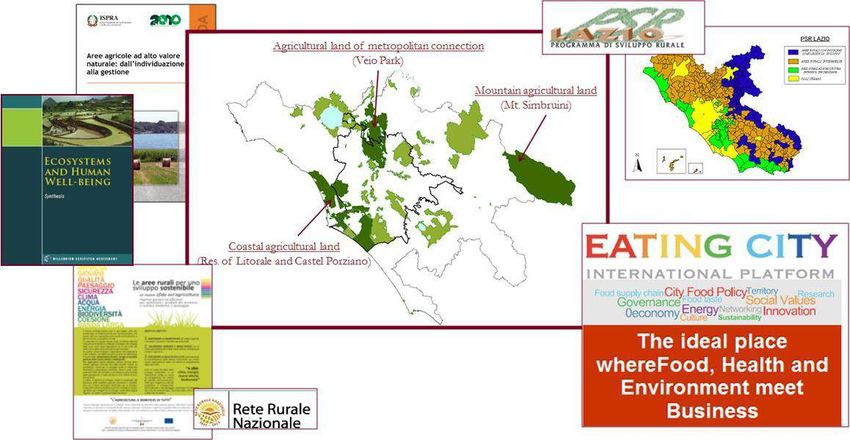
Understanding the value of        Assessing the
           nature by analysing        conservation status of
         ecosystem structure and           ecosystems
                 function

                                                 Using ecological land
    Highlighting the
                                                classification to define
     importance of
                                              landscape characteristics,
agrobiodiversity and of
                                              vulnerability and vocation
 green infrastructures

          Appreciating protected        Monitoring loss of
           areas as biodiversity      agricultural and natural
            sources with high        areas in quali-quantitative
             economic value                    terms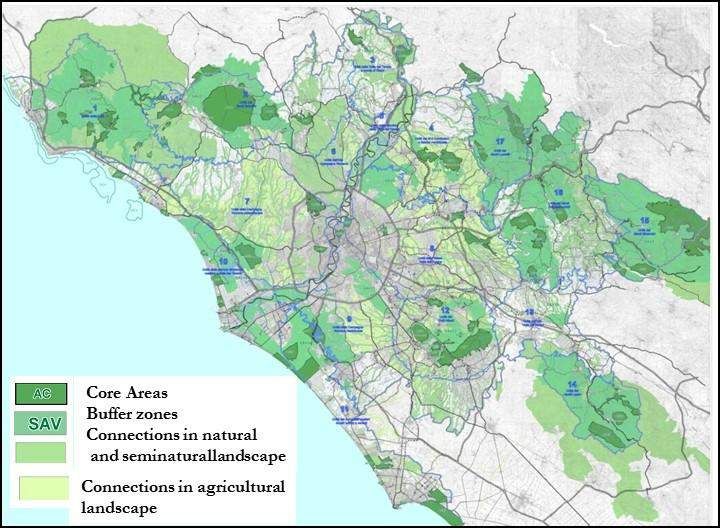
Understanding the value of              The Global Policy framework
nature by analysing ecosystem
    structure and function
                                                             Convention on Biological Diversity - 1992
                                                The ecosystem approach is a strategy for the integrated
                                                  management of land, water and living resources that
                                             promotes conservation and sustainable use in an equitable
                                                                                    way (COP 5, 2000)

                                     Global Strategy for Plant
                                     Conservation
                                     First adoption: 2002
                                     Last update: 2010
                                                                       Aichi Targets
                                              In 2010, the CBD Parties adopted the
                                              Strategic Plan for Biodiversity 2011–
                                                2020, including a set of 20 headline
                                                targets known as Aichi Biodiversity
                                                                             Targets

                                Target 11:
The European Policy framework
                                                                  Habitats Directive and
                    Biodiversity Strategy to 2020                 Natura 2000 network
                    COM(2011) 244

                                       Green Infrastructure
                                       Strategy
7th Environment Action
                                                                 PAC 2014-2020
Programme (EAP)
                                                                 -Greening
                                                                 - Agri-Environment Payments
           Priority objective 1:
           To protect, conserve
           and enhance the
           Union’s natural capital

                                              Carta of Rome on
                                              Natural and
                                              Cultural Capital
     Horizon 2020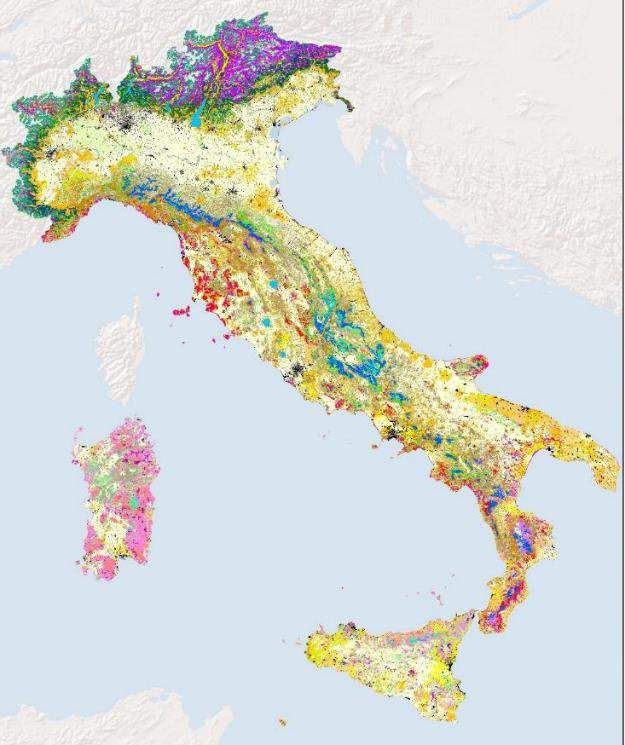
Mapping and Assessment on Ecosystems and their Services (MAES)
                                                              1 - Mapping
  The MAES project: Europe and Italy
 http://biodiversity.europa.eu/maes/maes-catalogue-of-case-
 studies/ ecosystem-map-of-italy.pdf

A Working Group on Mapping and Assessment on Ecosystems
and their Services (MAES) was set up under the Common
Implementation Framework (CIF), to support the
implementation of Action 5 by the EU and its Member States
                                                              2 - Assessment

Indicators for mapping and assessment of ecosystems
and their services are based on
    i) data availability
    ii) ability to convey information to the policy
        making and implementation processes

                                                              3 - Economic valuation

                             Second
      First Report           Report –
      - Apr 2013             Feb 2014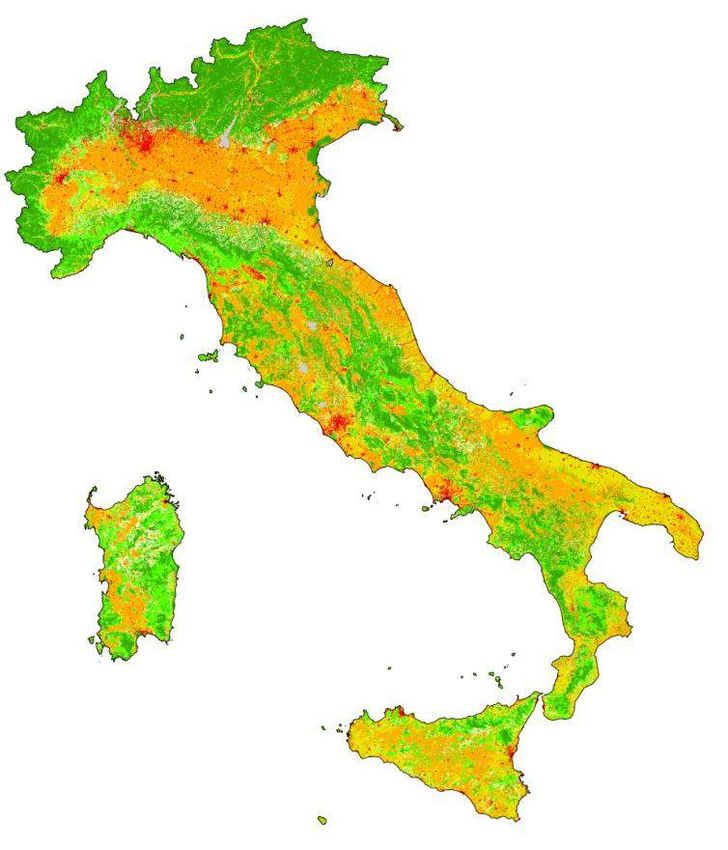
Recent national projects on environment and biodiversity

Land units
SMIRAGLIA D., et al 2013.            Phytoclimate                       Potential Natural Vegetation                               Ecoregions
JOURNAL OF MAPS                      Blasi and Michetti 2007                               BLASI C. Ed. (2010).                    Blasi et al., 2014 PLANT BIOSYSTEMS
                                     Biodiversity in Italy           Blasi et al . 2004 , FITOSOCIOLOGIA 41 (1), suppl. 1: 21-25

    Habitats
    Biondi E., C. 2012. PLANT   Important Plant Areas
    SOCIOLOGY, 49(1), 5-37      BLASI C. et al (2011). BIOLOGICAL                   Plant Invasion                                   Old-growth forests
                                CONSERVATION, vol. 144, p. 220-226                  L. Celesti‐Grapow, 2009 PLANT
                                                                                    BIOSYSTEMS                                       Blasi et al 2010, PLANT BIOSYSTEMS

   Since the 90’s a very high number of projects on Italian environmental heterogeneity and biodiversity have
      been completed through the cooperation between the Ministry of the Environment, Italian Botanical
       Society and the Sapienza University with the very high cooperation with the scientific community.
            This background knowledge allowed to build the current Map of Italian Ecosystems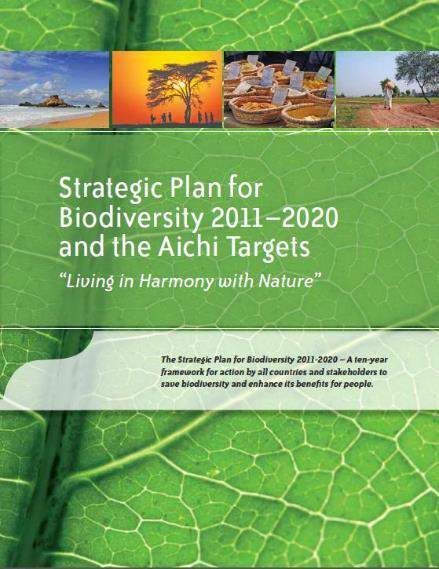
The first step of the MAES process in Italy – MAP ECOSYSTEMS

 1st Italian Meeting on the MAES Working Group
 Rome, Sapienza University 27.2.2014

                     Official presentation of the
                     Italian MAES project           Ecosystem Map of Italy (1:100,000)
                     Bruxelles 06.3.2014

                                                                                         7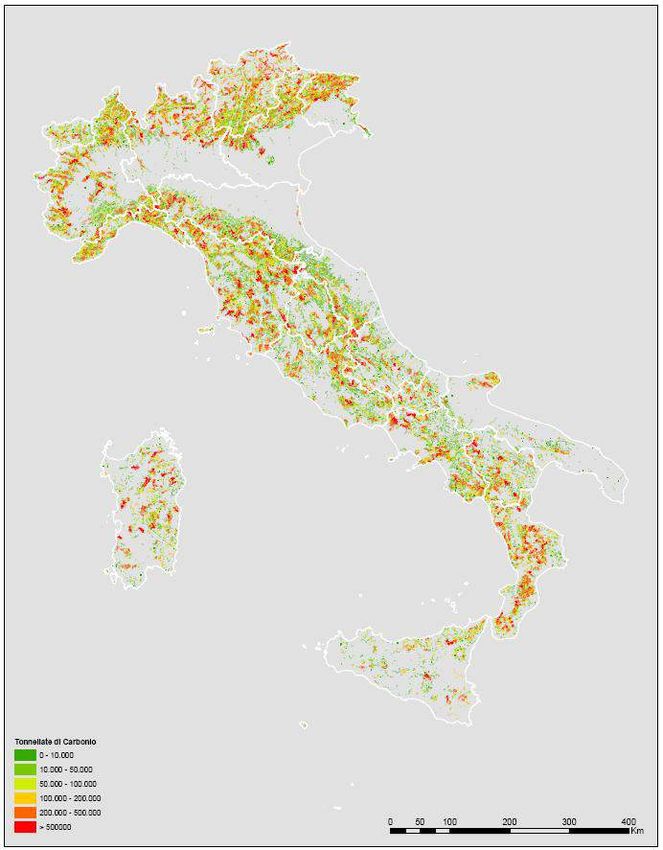
Legend of the Ecosystem Map of Italy

CLC 2006
                  &            Correspondence between CLC classes - EU ecosystem types - Italian ecosystem types

 PNV
                   =

Ecosystems map

90 classes (36 are forests)
Minimum mapping unit 25ha

    Structure of the
    legend classes

                                                                                                              8
Assessing the
conservation status of
                         The second step of the MAES process in Italy –
     ecosystems          ASSESSMENT THE CONDITION OF ECOSYSTEMS
                               for natural and semi-natural systems       vegetation dynamics
                                                                      structural and compositional
                                                                      distance between the actual
                                                                      vegetation cover and the mature
                                                                      stage of the potential natural
                                                                      vegetation/PNV

                               for agricultural systems
                                                                             cultural intensity
                                                                      impact of agricultural practices
                                                                      on ecological resources and
                                                                      processes

                                for urban systems
                                                                            artificialisation

                                                                           degree of soil sealing
Environmental quality (conservation and environmental status) of ecosystems and spatial
indices of conservation status
                      Application within the MAES process in Italy
                                                                    Map of the
                                                                    environmental
                                                                    quality classes

                                    Medium value at the national level of ILC (2006) = 0.56
                                    but with important variation at different locations
Environmental quality (conservation and environmental status) of ecosystems and spatial
indices of conservation status
ILC based on the ecosystems of Italy
Comparison among administrative regions
Liguria Region (NW Italy)
Puglia Region (SE Italy)
ILC (2006) = 0.77
ILC (2006) = 0.37Analysis of Carbon stock and sink
Crosswalk CLC types – INFC types
Codice CLC Descrizione legenda CLC Codice INFC Descrizione legenda INFC
3111 Bosco a prevalenza di leccio e sughera 15 +16 Leccete + Sugherete
Boschi di rovere, roverella e farnia + Boschi di cerro,
3112 Bosco a prevalenza di querce caducifoglie 9+10
farnetto, fragno e vallonea
3113 Bosco a prevalenza di latifoglie mesofile 12 Ostrieti e carpineti
3114 Bosco a prevalenza di castagno 11 Castagneti
3115 Bosco a prevalenza di faggio 8 Faggete
3116 Bosco a prevalenza di specie igrofile 13 Boschi igrofili
3117 Bosco a prevalenza di latifoglie non native 14 Altri boschi caducifogli
3121 Bosco a prevalenza di pini mediterranei 6 Pinete di pini mediterranei
Pinete di pino silvestre, pino montano + Pinete di pino
3122 Bosco a prevalenza di pini montani e oromediterranei 4+5
nero, pino laricio, pino loricato
3123 Bosco a prevalenza di abete bianco e/o abete rosso 2+3 Boschi di abete rosso + Boschi di abete bianco
3124 Bosco a prevalenza di larice e/o pino cembro 1 Boschi di larice - cembro
3125 Bosco a prevalenza di conifere non native 7 Altre formazioni di conifere, pure o miste
31311 Boschi misti a prevalenza di leccio 15 +16 Leccete + Sugherete
Boschi di rovere, roverella e farnia + Boschi di cerro,
31312 Boschi misti a prevalenza di querce caducifoglie 9+10
farnetto, fragno e vallonea
31313 Boschi misti a prevalenza di latifoglie mesofile 12 Ostrieti e carpineti
31314 Boschi misti a prevalenza di castagno 11 Castagneti
31315 Boschi misti a prevalenza di faggio 8 Faggete
31316 Boschi misti a prevalenza di specie igrofile 13 Boschi igrofili
31317 Boschi misti a prevalenza di latifoglie non native 14 Altri boschi caducifogli
31321 Boschi misti a prevalenza di pini mediterranei 6 Pinete di pini mediterranei
Pinete di pino silvestre, pino montano + Pinete di pino
31322 Boschi misti a prevalenza di pini montani e/o oromediterranei 4+5
nero, pino laricio, pino loricato
31323 Boschi misti a prevalenza di ab. bianco e/o ab. rosso 2+3 Boschi di abete rosso + Boschi di abete bianco
31324 Boschi a prevalenza di larice e/o pino cembro 1 Boschi di larice - cembro
31325 Boschi a prevalenza di conifere non native 7 Altre formazioni di conifere, pure o misteMapping and assessment of ecosystem services
Analysis of Carbon stock and sink
Beech forests Evergreen holm-oak woodlandMapping and assessment of ecosystem services Analysis of Carbon stock and sink Values of biomass (volume) and increase in class cover have been associated to mapping of forest types Carbon dioxide stock storage (as volume) have been calculated through the biomass values The increase in class cover has been used to calculate carbon sinks and carbon dioxide sinks by 2020 (UE 20- 20-20 targets)
Appreciating protected areas        Environmental accounting and National Parks
    as biodiversity sources with
        high economic value

Using ecological land classification
to define landscape characteristics,
     vulnerability and vocation
Monitoring loss of Environmental accounting and National Parks
agricultural and natural
areas in quali-quantitative
terms
Corine Land Cover 1990
(extracted from I&CLC2000, APAT 2005)
Corine Land Cover 2006Highlighting the importance Agrobiodiversity and Green infrastructures
of agrobiodiversity and of
green infrastructures
Rome Metropolitan Area
Recognition of areas of
floristic, faunistic and
habitat concern
Informing the definition of the Land Ecological Network and
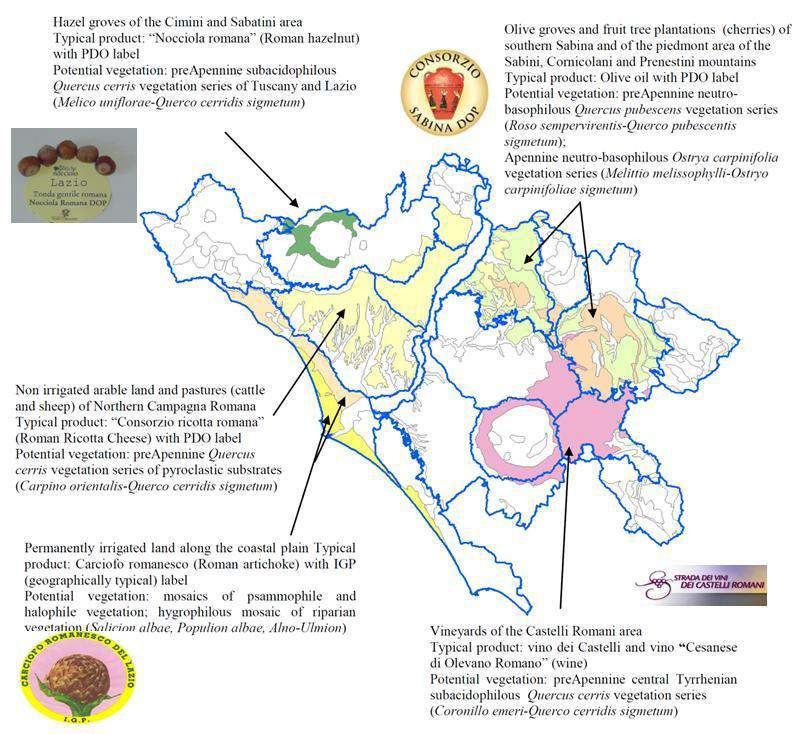
weighting the role of agricultural areasProgetto: Agricoltura e natura in città capitale naturale,
green economy, agrobiodiversità, cultura alimentare e benessere umano.
aree metropolitane
SAPIEXPO 2015You can also read


