FUTURE DIRECTION OF FOOTBALL AND NETBALL - AFL ...
←
→
Page content transcription
If your browser does not render page correctly, please read the page content below
FUTURE DIRECTION
OF FOOTBALL AND
NETBALL
Contents                                                                         Page

 EXECUTIVE SUMMARY                                                                2

 KEY STRATEGIC PILLARS                                                            5

 CONSULTATION PROCESS AND KEY FINDINGS: SENIORS                                   6

 RECOMMENDATIONS- SENIORS
                                                                                  10
 FOOTBALL

 NETBALL                                                                          19

 CONSULTATION PROCESS AND KEY FINDINGS: JUNIOR FOOTBALL                           23

 RECOMMENDATIONS- JUNIOR FOOTBALL                                                 27

 TALANTED PLAYER PATHWAY                                                          31

 RECOMMENDATIONS- REGION
                                                                                  35
 FEMALE FOOTBALL

 UMPIRING                                                                         37

 FACILITIES                                                                       40

 COMMUNITY, PEOPLE & CULTURE                                                      42

 APPENDIX 1- SENIOR                                                               46

 APPENDIX 2- JUNIORS                                                              48

1 |A F L O U T E R E A S T F U T U R E D I R E C T I O N O F F O O T B A L L & N E T B A L L
EXECUTIVE SUMMARY
This review was commissioned by the AFL Yarra Ranges Commission to “examine the sustainability
and viability of the current competitions in the AFL Yarra Ranges Commission”. This review aims to
develop, design and recommend a model for the future of all competitions in the region, ensuring
long term sustainability and viability for all affiliated clubs.

Following a “Review of Football in Country Victoria” released in 2011, Region Commissions were
established and charged with the responsibilities of:

    •   Enhancing competition structures to meet growth demands in the local area.
    •   Promoting competition equalisation.
    •   Increasing pathway effectiveness.
    •   Football sustainability within regions.
    •   Development of the game and junior pathways.
    •   Better considering geographic and economic factors currently restricting and burdening
        some country football clubs and competitions.

The Review also concluded: “Sustainability of clubs is the critical issue, not necessarily the
sustainability of leagues or governing bodies. For country Victoria to maintain its status, and indeed
grow, the clubs must be vibrant and financially sustainable. It is incumbent on administrators of all
governing bodies, including leagues (senior and juniors) and umpire associations, to consider this for
the future well-being of the clubs and the game.”

REVIEW - TERMS OF REFERENCE

The Competition Review was conducted under the framework of, and in accordance with, AFL
Victorian Country Rule 4.7 (AFL Victoria Country Reviews – Implementation and Appeals), managed
and overseen by the AFL Yarra Ranges Commission.

PROJECT OBJECTIVES AND DELIVERABLES

This review aims to identify the best long-term structure of football and netball in the AFL Yarra
Ranges region. The principles areas of the AFL Yarra Ranges Review were as follows:

    •   League Structure Senior.
    •   Northern and Southern Region Structure.
    •   Junior Structure- Male and Female.

Other key considerations of this review were:

    •   To provide competition structures that allow for entry levels for new clubs and provide
        optimum competitive balance for existing clubs.
    •   The structure of umpiring, netball, female football, facilities, and volunteers.
    •   Talent and representative programs.

2 |A F L O U T E R E A S T F U T U R E D I R E C T I O N O F F O O T B A L L & N E T B A L L
PURPOSE

To examine the sustainability and viability of the current competitions in the AFL Yarra Ranges
Commission. This review aims to develop, design, and recommend a model for the future of all
competitions in the region, ensuring long term sustainability. It will consider both competitive
balance and financial viability for all affiliated clubs. Where appropriate, the AFL Yarra Ranges has
informed the neighbouring commissions and leagues of this process.

AFL SOUTH EAST REVIEW

March 2018 saw a substantial shift in the football landscape in this region, leading to the scope of
the review changing significantly. The AFL South East Commission, under a separate football and
divisional review, proposed the development of a 3-tier competition featuring all thirty-one senior
affiliate clubs in the South East Commission. As per the AFL South East review document, the
recommendations from this review was as follows:

Full Divisional structure – Initially 3 divisions, for example a “Premier” Division with a minimum of 10
teams, then Divisions 1 and 2 below comprising the balance of teams.

                                                           This process was to occur over a two-year
                                                           implementation period, commencing with
                                                           the creation of two divisions from the
                                                           Nepean and Peninsula competitions in
                                                           2019 and the addition of South East
                                                           Football Netball (SEFNL) clubs in 2019. The
                                                           second stage of this process will not occur,
                                                           following a club driven change to the
                                                           Mornington Peninsula Football Netball
                                                           League (MPNFL) Constitution. MPNFL clubs
                                                           implemented a change to their
                                                           constitution, which mandated that 75%
                                                           majority of clubs had to vote any
                                                           competition changes i.e. seventeen of the
                                                           twenty-two affiliated clubs. Therefore a
                                                           75% club majority of MPNFL passed a
                                                           motion not to allow the SEFNL clubs to
                                                           enter a combined competition in 2019.

                                                       The AFL Yarra Ranges was requested by the
                                                       AFL South East commission, to present an
                                                       alternative divisional model to SEFNL clubs
                                                       which took place at Casey Fields on
                                                       Monday March 5th. This proposal was
                                                       aimed to create a three divisional structure
                                                       made up of clubs from the AFL Yarra
Ranges and SEFNL. This was one of many options made available to the existing eight SEFNL clubs.
Following multiple consultation meetings with AFL South East and all SEFNL clubs, six SEFNL clubs
formally applied to join the AFL Yarra Ranges on Wednesday August 1st, under AFL Victoria By-law
3.8 (ii).

3 |A F L O U T E R E A S T F U T U R E D I R E C T I O N O F F O O T B A L L & N E T B A L L
These clubs are: Beaconsfield, Berwick, Doveton, Narre Warren, Pakenham, and Officer were
formally accepted by the AFL Yarra Ranges Commission on Thursday August 2nd. A new entry level
club, Berwick Springs, have been accepted on this date.

FINAL RECOMMENDATIONS

The review considered all influences, both positive and negative, on the leagues and its affiliated
clubs to make informed recommendations including:

    •   Club sustainability & viability.
    •   Financial viability.
    •   Facilities.
    •   Participation and growth.
    •   Player access and numbers.
    •   Volunteerism.
    •   Netball.
    •   Other matters deemed appropriate.

AFL Yarra Ranges has concluded its Future Direction of Football and Netball Review and presents
the following report for the information of all stakeholders.

AFL Yarra Ranges thanks all Clubs, and the Yarra Ranges Umpiring Association for their support,
participation and feedback received to provide a sound foundation allowing this review to be
affectively by undertaken. The club participation and input received in our surveys, attending
Interviews and providing feedback has allowed all recommendations to be consider.

4 |A F L O U T E R E A S T F U T U R E D I R E C T I O N O F F O O T B A L L & N E T B A L L
KEY STRATEGIC PILLARS
The following form the 7 key strategic pillars for AFL Yarra Ranges which align to AFL Victoria’s
pillars. The objectives and key strategies identified within each will provide the focus and direction
of the football review.

                    PARTICIPATION
       • Initiate and support programs to increase player and umpire participation rates
        at all levels of football and netball in order to facilitate growth of the games.

                      COMMUNITY
       • Support leagues, their clubs and schools to provide quality management and
        environments to motivate volunteers, coaches, teachers and sports trainers for
        all levels of football and netball.

                    ENGAGEMENT
       • Develop stakeholder and community engagement initiatives that support the
        vision, values and mission statement of AFL Yarra Ranges while enhancing social
        value and equal opportunity for all.

                    DEVELOPMENT
       • Provide and promote development programs including pathways for players,
        umpires, coaches and administrators.

                          FACILITIES
       • Develop region wide plans to advocate for and collaborate on facility
        development for leagues, their clubs, umpires and schools.

                    PARTNERSHIPS
       • Develop strong and mutually beneficial partnerships with businesses,
        government, other sports and community organisations

              PEOPLE & CULTURE
       • Attract, develop and retain quality people and develop a culture of excellence
        in line with AFL Yarra Ranges key objectives and values.

5 |A F L O U T E R E A S T F U T U R E D I R E C T I O N O F F O O T B A L L & N E T B A L L
CONSULTATION PROCESS AND KEY FINDINGS: SENIORS
The club consultation process was extensive, and the input was valued. The Panel initially conducted
an online survey to gain preliminary data and feedback from clubs which, in turn, directed the
consultation process. All clubs completed this survey.

The Panel has conducted twenty-five interviews with clubs, groups and associations involved
between November 2017 and June 2018. All senior clubs were offered follow up meetings following
the announcement of the SEFNL proposal. Four meetings with club executives were held across the
AFL Yarra Ranges and South East Region two separate surveys were undertaken by all clubs, in late
2017 to mid-2018. The key findings from the consultation process were as follows:

Competition Structure

• 80% clubs believed that the commission needed to grow the competition for the long term
  sustainability of both competitions (football and netball).
• Fifteen out of the nineteen AFL Yarra Ranges clubs supported the inclusion of existing SEFNL clubs.
  Two clubs strongly opposed and two others had no position.
• All clubs supported divisional football, with promotion and relegations options.
• 90% of clubs did not believe that all current Yarra Ranges clubs would be in existance in ten years.
• The northern region clubs identified that they believe clubs within the proximity of metropolitan
  Melbourne assisted them with recruiting and retention players, with many recruited from other
  competitions with Melbourne.
• Though overall clubs supported the addition of South East clubs, they had clear concerns around
  the following areas- Travel, growth corridor and Under 18’s.

6 |A F L O U T E R E A S T F U T U R E D I R E C T I O N O F F O O T B A L L & N E T B A L L
Juniors and Under Age

    •    Most clubs believe they have good relationships with their junior clubs.
    •    80% believe they have a strong representation of home grown players.
    •    45% of clubs identified they have a transition program.
    •    40% of clubs identified they wish to transition to the one club model, i.e. senior, juniors and
         netball clubs incorporated as one club.
    •    Most clubs supported the current permit system for the under eighteen competition.
    •    80% of clubs prefer Saturday mornings for under eighteen/nineteen (game time).
    •    Saturday night was the most popular alternative time slot for under eighteens.

Club Sustainability

    •    Most clubs believed the salary cap should remain as is i.e. $110,000 division one and
         $80,000 division two.
    •    Clubs were asked to nominate their preferred Salary Cap amount for each of our proposed
         divisions. Indications from clubs are:
              - Premier $124,000.
              - Division 1 $103,000.
              - Division 2 $79,000.
    •    95% of clubs found operating within the proposed salary cap was achievable.
    •    Only 25% of the competition felt that the Salary Cap was effective. 15% felt that it was not,
         whilst 60% advised it was too early to make valued assessment.
    •    Only 20% of clubs believed the point and salary cap system improved recruiting, with most
         clubs identifying neighbouring competition points and salary cap levels as a major obstacle.
    •    75% of club believe the points system evened up the competition. Not one club identified
         that it was not working, with the remaining 25% unsure whether it made any difference or
         not.

Travel

    •    Between 15 minutes to one hour was identified as the ideal travel time for clubs.
    •    45% of clubs identified that travel had an impact on recruiting. This figure increased with
         clubs located further from the CBD.
    •    80% of clubs felt that travel affected gate takings in a negative manner.
    •    Only 35% of clubs felt travel affected retention of under eighteen/nineteen players.
    •    Creating more regional and/or area-based competitions based on geography was not well
         supported by clubs. 60% of clubs felt it would have no impact or adversely affect recruiting
         and player retention.

Clubs: Volunteers and Financial Sustainability

    •    90% of clubs found it difficult to recruit volunteers.
    •    75% clubs identified that they do not have a retention or training strategy for volunteers.
    •    40% of clubs had paid employees or support workers.
    •    45% of clubs identified that they would consider paid volunteers in the future.
    •    65% of clubs believe they have a broad mix of ages in their volunteer network. Those that do
         not identified that most of their volunteer network is over forty.
    •    Support from members: 5% said excellent, 50% said good, 45% felt it was poor to ok.
    •    60% had role descriptions for their volunteers.

7 |A F L O U T E R E A S T F U T U R E D I R E C T I O N O F F O O T B A L L & N E T B A L L
•      90% of clubs identified costs as a major concern.
   •      14% of clubs identified their financial position as strong. 81% believe they live year to year,
          whilst 5% identified that they often have poor years or make a loss.
   •      60% of clubs recorded a small profit, whilst 20% broke even. 10% made a small loss, whilst
          10% had a major loss, which contradicts previous commentary.
   •      Players and coaches and affiliations/fees were identified as the two major financial concerns
          for clubs.
   •      The primary source of revenue for senior clubs was sponsorship, bar and food sales, player
          registrations and functions.
   •      Functions, sponsorship, and fees are the revenue streams clubs find most difficult to
          maintain.

Netball

   •      60% of clubs did not find putting four netball sides out a challenge.
   •      65% of clubs put equal focus into both netball and football. The remaining 35% said they
          didn’t consider this as a key focus for their club, however felt they needed to address this
          area.
   •      80% invested financially into netball paying players and coaches, most of the financial
          investment was into coaching.
   •      88% of clubs believe that netball provides significant benefits to their club, both on and off
          field.
   •      90% of clubs supported netball equalisation in some capacity. 40% believe some
          modifications and improvements to our current rules were needed.
   •      20% of clubs believe netball equalisation is working. 75% said it was too early to offer an
          opinion.
   •      80% of clubs support the introduction of junior netball. The South East Clubs already have
          established junior netball with under thirteens, fifteens and seventeen age groups.

8 |A F L O U T E R E A S T F U T U R E D I R E C T I O N O F F O O T B A L L & N E T B A L L
Female Football

    •    33% of senior clubs have a female football team, whilst 25% are working towards teams for
         2019.
    •    70% of clubs identified female football as a priority.
    •    60% of clubs do not believe their existing facilities are adequate for females.
    •    80% of clubs believe they have strong female representation within their existing
         committees.
    •    85% believe their club is an inclusive place for women.

Umpiring

    •    30% of clubs felt the level of umpiring was at or above a satisfactory level. 40% felt it is poor,
         whilst 30% believe umpiring requires expansion, development and attention.
    •    Quality of umpires and the cost of umpiring were identified as the two major concerns for
         clubs.
    •    Most of our clubs support the introduction of a Director of Umpiring, a person to develop,
         recruit and train umpires.

Facilities

    •    50% of clubs felt their facilities were extremely good to excellent. 40% felt they were below
         the standard required.
    •    70% of clubs have a major facility project planned over the next five years.
    •    Female friendly facilities, change rooms, playing surface and lighting were the key facility
         focuses across our region. Facilities (female and Change rooms) were the biggest priority
         indicated by all clubs.
    •    65% of clubs did not believe their facilities affected their ability to recruit.
    •    All clubs recommended league support for facility upgrades.

9 |A F L O U T E R E A S T F U T U R E D I R E C T I O N O F F O O T B A L L & N E T B A L L
RECOMMENDATIONS- SENIOR FOOTBALL
FOOTBALL KEY OUTCOMES
• Ensure the long-term viability of the AFL Yarra Ranges Commission and Affiliated Clubs.
• Increase competition competitiveness.
• Improve promotion of Senior Competitions, further divisional structures.
• Identify a preferred under age structure for the region with further consultation and
discussions.
• Increased promotion and engagement through media, website, social media and other
outlets.
• Implement new Club Sustainability measures, training and support of committees and
volunteers.
Recommendation 1: Implement Commission and Competition names that engage all councils and
Local Government Area’s (LGA’s) represented in the region.
Following the review, the commission will represent the following LGA’s: Cardinia, Casey, Yarra
Ranges and Murrindindi. The review committee recommends that the names of competitions
greater reflect the region, factoring in the North East (Murrindindi), Outer East (Yarra Ranges) and
South East (Casey and Cardinia).
The review Committee recommends the following:
• The commission to be known as AFL Outer East.
• Junior Competitions to be known as Outer East Juniors.
• Senior Competition to be known as Outer East Football and Netball.
Please note: - For the remainder of the document, the AFL Yarra Ranges will be referred to by its
new commission name AFL Outer East.
Recommendation 2: Develop and Enhance Senior competition structures, through the
amalgamation of the Yarra Ranges and SEFNL Competitions.
All senior football and netball competition structures in the Outer East Region should promote the
sustainability of Clubs, whilst factoring in the following:
• Competitive balance.
• Meet the growth demands within the Region.
• Provide all clubs the opportunity to find their competitive and sustainable level.
• Promote competition equalisation as or if required.
• Consider geographic and economic factors that restrict and/or burden Club members.
10 |A F L O U T E R E A S T F U T U R E D I R E C T I O N O F F O O T B A L L & N E T B A L LThe competition will become a three-division competition effective from 2019. In the initial stages of
implementation, division structures may change as new clubs enter and competitive balance is
assessed.
Preference long term will be for nine or ten team divisions, as these provide an even home and away
fixture, providing the ability to play every opposing team twice.
COMPETITION STRUCTURE 2019
The commission can confirm its preferred structure for 2019. Final team placements will be
confirmed prior to the conclusion of the division one finals series of 2018. Please note that the final
structure may change following the completion of the review process. A final five finals series will be
retained under all future structures.
Season 2019 will have a minimum of sixteen to eighteen home away games, this will also be ratified
prior to conclusion of division one finals series.
PREMIER DIVISION
DIVISION ONE (1)
DIVISION TWO (2)
PREMIER DIVISION 1 DIVISION 2
8/9 Team Comp in 2019 8/9 Team Comp in 2019 8 Team Comp in 2019
• Top 5 AFL Yarra • Bottom 5 AFL Yarra • Sides to be made up
Ranges Division 1 Ranges Division 1 of existing AFL YR
Division 2 Clubs
• Top 3 SEFNL • Bottom 3 SEFNL
• 1 team from YR
Division 2- By
Application
Table 1.1 Divisional Structure 2019
11 |A F L O U T E R E A S T F U T U R E D I R E C T I O N O F F O O T B A L L & N E T B A L LProposed Division Entry Guidelines
• There is an option for one club being placed into Division 1 in 2019 from our existing Division
2 competition. Current ladder position in 2018, whilst considered, will not be the only
consideration in club promotion.
• Entry for either ninth team competitions would be by application only, addressing the below
criteria as a minimum standard.
• Should a Club who qualifies for Premier Division successfully request to start in Division 1,
their place would be offered to the next best placed club from their completion.
• A request to start down a division would need to be submitted via a formal application to
the commission and required in writing (signed by executive club officers) prior to October
1st, 2018.
Clubs that participate in the SEFNL or AFL Yarra Ranges Division 1 Senior Grand Final will be
automatically placed in Premier Division for 2019.
Some of the Key Selection Criteria’s for which clubs will be assessed for inclusion in Premier or
Division 1 in the initial year (2019), include but are not limited to, are:
• On field overall club performance over the past 5 years.
• Both football and netball will be considered allowing a whole of club assessment to take
place.
• Financial sustainability and payment performance.
• Ability of the club to compete in the higher division from a financial point of view.
• Club financial statements (audited) for past 2 years to be provided upon request.
• Quality and commitment towards both junior boy’s and girl’s football and development
pathway.
• Must have under age football or a clear pathway to in 2019
• Facilities, including capacity for crowds, netball, all-ability access, females (including
future development plans).
• Netball – fill all senior grades.
• Past compliance to SEFNL, Yarra Ranges and AFL Victoria’s rules & regulations.
Note: - any divisional changes will be at the sole discretion of the commission.
Promotion and Relegation
The preferred Promotion and Relegation criteria will be one club up and one club down
• In 2019, promotion from Division 2 will be by application or invitation only, subject to
commission approval and assessment.
• By 2021, the aim is to have promotion and relegation across all divisions, with no qualifying
parameters attached.
• In the initial stages of the implementation of the Outer East Football Netball competition,
the commission may utilise different promotion and relegation strategies to find competitive
balance. This may include strategies such as two up or down, no relegation or promotion
only. A consultative process will always be undertaken under this potential consideration.
12 |A F L O U T E R E A S T F U T U R E D I R E C T I O N O F F O O T B A L L & N E T B A L LRecommendation 3: Implement Sustainability measures that promote long term sustainability and
viability of clubs within our region.
The objectives of the Community Club Sustainability Program are as follows:
• support equalisation of community football competitions;
• ensure teams fielded in the Competitions are strong and as equally matched as possible;
• provide the best opportunities for players to develop and display their skills;
• provide opportunities to compete at a community level within an orderly and fair system;
• enable team spirit and public support;
• encourage community and corporate sponsorships of Community Clubs;
• reduce the inflationary nature of player payments to assist clubs survive financially and
reduce financial pressure;
• burden/stress on Clubs;
• promote player loyalty and junior development;
• support the role volunteers undertake in managing their Clubs
Key implementation measures to achieve this in 2019 in the Outer East Football Netball competition
are as follows:
Salary Cap and Player Points
The recommendation for 2019 is as follows:
a. Increase player point levels to match neighbouring competitions, EFL, NFL, AFL SE and AFL
Gippsland.
b. Utilise a tiered points system in each division to enhance competition equalisation.
c. Set Salary Cap levels that consider neighbouring competitions, club sustainability and
competitive balance.
d. Undertake Player Point and Salary Cap Audits consistently across the season, with a minimum of
two reviews per competition annually this is to ensure adherence.
Points will be increased to the following levels
PREMIER DIVISION 1 DIVISION 2
44 44 47
Table 1.2 Points levels 2019
Tiered points will be applied to clubs in any division by the commission where required to achieve
competition balance. Factors in determining application of this will include, but not exclusively
consider:
• Strong Junior Participation numbers.
• Long term/on-going premiership success.
• Extended periods of poor on field performance.
• Sustained periods of salary cap spend higher than league average spend.
PREMIER DIVISION 1 DIVISION 2
39 41 44
Table 1.3 Tiered Points levels 2019
Note: - Top three clubs from SEFNL playing in Premier Division will be limited to 39 points for season
2019 and reviewed annually.
13 |A F L O U T E R E A S T F U T U R E D I R E C T I O N O F F O O T B A L L & N E T B A L LThe recommended Salary Cap limits for Season 2019 were developed following consultation from
the clubs.
PREMIER DIVISION ONE (1) DIVISION TWO (2)
$125,000 $110,000 $80,000
Table 1.4 Salary Cap levels 2019
Salary Cap amounts are to be reviewed annually
• Club consultation is paramount in any changes to points or salary cap changes.
• Premier Division Salary Caps should closely align to MPNFL and EFL Division one
competitions.
• Club average spend data should be utilised in all Salary cap assessments.
Salary Cap amounts are to be reviewed annually. The review committee recommends the following:
• Club consultation is paramount in any changes to points or salary cap changes.
• Premier Division Salary Caps should closely align to MPNFL and EFL Division one
competitions.
• Club average spend data should be utilised in all Salary cap assessments.
Note: The 2019 Figures have taken neighbouring competition Salary Caps into account, with focus
on where competitions are proposed to be by 2020.
Region League and Competition APP for 2018 season 2018 PPS
Gippsland Ellinbank & District Football League $ 80,000 38 - 46 pts
Gippsland Gippsland Football League $ 160,000 38 - 46 pts
Gippsland West Gippsland Football Netball $ 120,000 38 - 46 pts
Goulburn Murray Kyabram District Football League $ 85,000 41 pts
Metro Eastern Football League Premier $ 225,000 47 pts
Metro Eastern Football League Div. 1 $ 150,000 47 pts
Metro Eastern Football League Div. 2 $ 100,000 47 pts
Metro Eastern Football League Div. 3 $ 75,000 47 pts
Metro Northern Football League Div. 1 $ 225,000 47pts
Metro Northern Football League Div. 2 $ 150,000 47pts
Metro Northern Football League Div. 3 $ 100,000 47pts
Metro Southern Football League Div. 1 $ 200,000 47 pts
Metro Southern Football League Div. 2 $ 150,000 47 pts
Metro Southern Football League Div. 3 $ 100,000 47 pts
South East MPNFL Div. 1 $ 150,000 39 pts
South East MPNFL Div. 2 $ 150,000 39 pts
Table 1.5 Neighbouring Competition Point and Salary Cap levels 2018
14 |A F L O U T E R E A S T F U T U R E D I R E C T I O N O F F O O T B A L L & N E T B A L LRegion League and Competition Proposed APP 2019/20 PPS
Metro Eastern Football League Premier $ 200,000 47 pts
Metro Eastern Football League Div. 1 $ 140,000 47 pts
Metro Eastern Football League Div. 2 $ 110,000 47 pts
Metro Eastern Football League Div. 3 $ 90,000 47 pts
Metro Eastern Football League Div. 4 $ 70,000 47 pts
South East MPNFL Div. 1 $ 140,000 40 pts
South East MPNFL Div. 2 $ 140,000 40 pts
Table 1.6 Neighbouring Competition Point and Salary Cap levels 2019 2020
Recommendation 4. Offer “points of entry” for new, existing or expansion clubs to plan to enter
the AFL Outer East competition.
Growth of new clubs from the South East region has been restricted due to limited entry level of
potential new clubs. It is vital that new clubs are established in the South East corridor to ensure
competitive balance and to provide varied levels that considers a range of playing capabilities. As
seen in Appendix 1.1, priority should be placed on the development of clubs in the Casey region.
The first step in this process will be see the introduction Berwick Springs Football Netball Club in
season 2019. Initially the club will compete in under nineteen level and Netball, becoming a senior
club we anticipate by 2020/2021.
Future competition growth is expected to be developed from the following sources:
• Competitive divisional structures that will attract clubs to both our Football Netball
competitions.
• Development of South East Junior clubs into sustainable senior clubs within our divisional
structure.
• New club development within surrounding growing suburbs, particularly Pakenham and
Officer.
Though growth in Berwick, Narre Warren and Beaconsfield will be minimal over the next 20 years
(appendix 1.4), there remains an under representation of football netball clubs in the region, which
needs to be addressed as a priority to ensure competitive balance. A key consideration is the
population demographics of Casey, in particular the high percentage of the population that come
from diverse, multicultural backgrounds (appendix 1.3).
15 |A F L O U T E R E A S T F U T U R E D I R E C T I O N O F F O O T B A L L & N E T B A L LRecommendation 5: Provide long term stability and competitive balance for clubs in the North of
the region.
The long-term sustainability of our affiliated Northern clubs is a key focus for the AFL Outer East in
2019 and beyond. Clubs ability to compete and remain viable both medium and long term will
underpin any work undertaken in this space. Any changes to the structure of football in the region
must consider:
• Ability to recruit from Melbourne and surrounding suburbs.
• Club viability and long-term sustainability.
• Financial viability.
• Travel.
• Competitive balance.
Working with AFL Goldfields and AFL Goulbourn Murray, during the 2019 season the AFL Outer East
Commission will investigate the below two options: -
Option 1: Forming of a District league competition from our existing Northern based clubs, Kinglake,
Yea, Thornton Eildon and Alexandra, with consideration of clubs located within the North East
including Kyabram and District, Riddell, and Ovens and King Competitions.
Option 2: Integration of Northern Clubs into the Outer East Structure as a District Model
Key areas to address in this process include:
• Creating clear pathways from Junior to Senior Saturday Under age competitions.
• The preferred under age competition structure seventeen, eighteen and nineteen in the
region.
• Alignment with Seymour District Juniors and senior football into one aligned region.
• Netball structures within this newly proposed region.
Recommendation 6: Appoint a Media Manager to improve promotion, communication and
community engagement.
Implementation:
• Increased and improve radio Coverage in the region, providing potential of multiple game.
Broadcasts each week, inclusive of preview and review shows.
• Grand Final days to be stand alone and avoid clashes with neighbouring competitions.
• Broadcast the League Presentation Night and other major events.
• Improve the coverage of Interleague and representative games at both senior and junior
levels.
• Improve promotion of local of clubs, players and the region.
• Highlight our clubs and communities better through special interest stories, volunteer
recognition, past legends, key dates and events.
• Continue to grow our social media footprint.
• Monitor and update content within website, football record and newspaper articles.
• Improve promotion of business partners, local councils and key stakeholders.
• Assist with the further development of sponsors.
16 |A F L O U T E R E A S T F U T U R E D I R E C T I O N O F F O O T B A L L & N E T B A L LRecommendation 7: Develop and implement strategies that promote transition from Junior
Football to Senior Competitions.
The preferred structure at underage level remains a key discussion for all competitions across
Victoria, with no ideal structure yet to emerge. The amalgamation of the two competitions poses
challenges at underage level, with different age progression in South East Juniors (seventeen to
nineteen) and AFL Yarra Ranges (sixteen to eighteen).
A phased in approach, supported by evidence, will be utilised in establishing preferred the preferred
structure for under eighteen and nineteen football.
In season 2019, the following structure will be implemented:
• Two underage options will be offered under eighteen and nineteen football. Clubs can
nominate a team in either age group or both.
• Maintain Current permit structure.
• Clubs will be provided the option of entering multiple teams at underage level.
• Preference will be given to alignment with seniors over grading of competitions.
• Alternative Fixturing and times will be utilised and encouraged (Friday/Saturday Night).
Other initiatives to be trialled include:
• Double headers in round one - three on Friday nights or other key dates for season 2019.
• Increased media cover and promotion of under eighteen and nineteen football.
• Clearer pathways for our interleague program.
• Appointment of Interleague Coaches in September/October of 2018 at all levels including
junior and senior coaches.
• Assistance for clubs in the development of better relationships with Junior and senior clubs
for transferring players from Junior to senior football.
• Implement a development evening to assist our coaches and captains to discuss further
ideas within the development of all age groups.
An extensive study will be undertaken in 2019 designed assess and recommend a preferred
underage football model for 2020 and beyond. Clubs, coaches, parents and players will be consulted
in developing recommendations for the 2020 season. Working with AFL South East, the following
options will also be explored:
• Outer East Juniors to assess odd year core age groups, nine, eleven, thirteen and fifteens.
• Under seventeen football played on Saturday mornings.
• Consistent age groups across the region sixteens and eighteens or seventeens and
nineteens.
• Graded competitions to ensure competitive results and retention of our youth.
17 |A F L O U T E R E A S T F U T U R E D I R E C T I O N O F F O O T B A L L & N E T B A L LRecommendation 8: Identify and implement operational efficiencies that will assist in the decline
in volunteer workload.
Volunteer workload was a consistent concern amongst all clubs through the review process.
Endeavour to decrease the demands and workload on all volunteers, particularly on match day will
be a major focus: -
• Review game time periods (Length of games), time on seniors, quarter and half time breaks
and the overall length of quarters.
• Identify preferred reserve/bench numbers for each division, including at reserves level.
• Trial rules that take pressure off player numbers such as 16 side competitions in Reserves
and no boundary umpires in under eighteens.
• Decreasing match day paperwork through the development of an online paperwork record
system.
18 |A F L O U T E R E A S T F U T U R E D I R E C T I O N O F F O O T B A L L & N E T B A L LNETBALL
KEY OUTCOMES
• Develop junior Netball across the region in under thirteen, fifteen and seventeen age
groups.
• Introduction of a clear talent pathway for all netballers in the region.
• Increase and further develop the region umpiring panel.
• Improved Netball facilities and facility capacity, inclusive of courts and change rooms
facilities.
• Increased promotion and recognition of Netball.
• Develop representative programs equivalent to those available in football, with the support
of Netball Victoria.
RECOMMENDATIONS
Recommendation 9: Appoint a Netball Development Manager.
This key appointment is required to develop and execute all Netball review recommendations and
grow Netball in the region. The review committee recommends the role is structured similarly to the
regions Football Development Manager position, with participation growth and development a key
focus. Operations staff should continue to manage day to day operations.
Recommendation 10: Create player pathways for all clubs, through the introduction of underage
Netball.
The aim of the AFL Outer East Commission is that by 2021, all senior clubs participating in the region
to have junior Netball sides across all age groups. To achieve this, in 2019 the following will be
implemented:
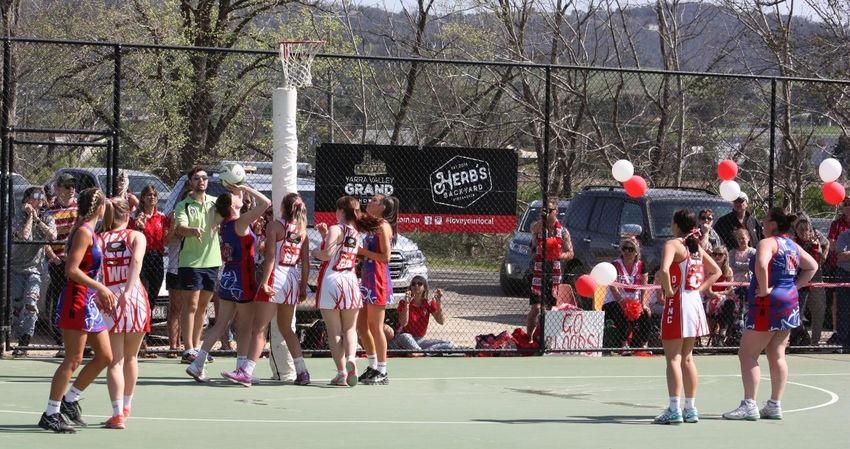
• Introduce under age netball in the eleven,
thirteen and fifteen age groups.
• Provide divisional Netball in junior ranks for
clubs with strong numbers.
• Work closely with local junior netball
competitions within our region.
• Build numbers in the seventeen and under age
group.
• Development of club-based Net-Set-Go
programs.
• Introduction of underage representative
Programs.
19 |A F L O U T E R E A S T F U T U R E D I R E C T I O N O F F O O T B A L L & N E T B A L LRecommendation 11: Increase promotion of Netball competitions and participants.
Further promote Netball coverage to continue to mirror the levels of football competitions. All
future media and promotional planning must consider Netball. Specifically, the following should be
considered from 2019:
• Improve media coverage of Senior Finals, including live stream and commentary for the A-
Grade Grand Finals.
• Continue to promote netball through weekly previews, reviews and feature stories.
• Maintain a social media presence across all platforms.
• Introduction of player of the week and monthly awards.
Recommendation 12: Introduce clear representative pathways for Netballers in the region.
The development of a Talent pathway is vital to achieve the desired growth at Junior Levels. The
long-term aim is to have a talent program at junior level that mirrors the junior football pathway.
Greater emphasis on senior representative programs is required. The structure and management of
the squads is an area that requires improvement, particularly coaching, selection and squad
composition. Key implementation strategies will include:
• Improve the Senior Interleague Program, with the Interleague Side to represent as the best
talent in our region.
• Appoint a Netball Manager as the Head of Interleague, with coaches and support staff
working as coordinates.
• Develop Junior Association and representation squads that provide talent identification
opportunities for talented players in our region.
• The Association championship squads at a senior level to become an Under 23 program,
providing opportunity for players to be identified and create an improved pathway for the
senior squad.
• Clear and defined coaching principles, code of practice, development standards, team
strategies and transition through the talent pathway.
• Umpiring development program to ensure our competitions are umpired by umpires
developed within our region.
20 |A F L O U T E R E A S T F U T U R E D I R E C T I O N O F F O O T B A L L & N E T B A L LRecommendation 13: Develop Netball Facilities that can facilitate the growth of the game in our
region.
To continue to develop female friendly facilities at all affiliated clubs, a focus on increased capacity
for participation will underpin all facility development in the region. Working with local and state
government and Netball Victoria facility development we aim to:
• Ensure Netball facility development is considered in all regional facility and master planning
processes.
• Improve Netball venues (lights, change rooms, spectator areas etc).
• Develop and improve court capacity to enable clubs to host additional matches (two courts
where grounds permit).
• Develop female friendly change rooms for netball participants.
• Ensure court surfaces are safe for training and matches.
• Develop a suitable minimum standard checklist.
Recommendation 14: Focus on the development and growth of the regions umpiring pool.
Growing the capacity and number of umpires in the region to support competition growth is vital. A
key driver of this will be improving the conditions for Netball umpires in our region. Particular focus
will be made on improving renumeration structures, umpire education, training and development.
To achieve these key drivers, the following will be implemented:
• The region is to manage umpire payments commencing 2019. All official umpires will be paid
monthly, provided with pay slips, and will include work cover insurance coverage.
• Support our head of umpiring to build the expertise, capacity and depth in our umpire pool.
A focus on the development of club umpires into pool umpires will be another key driver.
• Improve Umpire development, training and education, offering coaching and development
sessions that provide both accreditation and improvement.
• Ensure all A and B grade games are umpired by accredited competition umpires each week.
We are committed in providing all grades with official approved umpires and move away
from club-based umpires.
Recommendation 15: Continually review and modify the Netball by-laws to suit current needs.
Football Netball competitions constantly face challenges with the differences between how the
highest levels of the sports are managed and structured. Player movement between clubs and in
some instances, regions, affect club sustainability. In 2017, a Premium Player assessment
was introduced, designed to ensure clubs focused on building a playing list from within, instead of
seeking short term solutions with external recruitment.
The current Netball transfer system poses many challenges, with a large amount of unrestricted
Netball players permitted to compete in many competitions, inclusive of mid-week and weekend
competitions. This will not change in the short term.
21 |A F L O U T E R E A S T F U T U R E D I R E C T I O N O F F O O T B A L L & N E T B A L LFrom the commencement of season 2019 the By-laws will aim to:
• Minimise player movement between affiliated clubs.
• Create senior competitions at various standards to ensure all players can find their suitable
playing level.
• Minimise player payments, with investment focused on the development of Coaches,
equipment, and/or facilities.
• Assist clubs in building a sustainable player development, growth & retention model.
• Encourage VNL level or higher players entering our competitions, with a reasonable spread
across the clubs to assist with competition growth and competitiveness.
• Ensure all by-laws encourage junior development and provide a clear club pathway.
Recommendation 16: Facilitate club and volunteer development in Netball.
It is recognised that the greatest resource is our people. Clear focus is required to effectively manage
and support the regions netball volunteer network to aid volunteer retention and help recruit new
volunteers. The aim is to build the capacity of individuals, clubs, and communities, with specific
focus on the following:
• Coach Development.
• Netball Committees and subcommittees.
• Governance.
• Leadership and people management.
• Planning.
• Junior Development.
22 |A F L O U T E R E A S T F U T U R E D I R E C T I O N O F F O O T B A L L & N E T B A L LCONSULTATION PROCESS AND KEY FINDINGS: JUNIOR FOOTBALL
Junior clubs and parents completed an online survey to gain preliminary data which, in turn, directed
the consultation process. All clubs completed this survey. A junior club forum was undertaken in
November 2017 and a follow up meeting, focusing specifically on fixturing was held in July 2018.
The key findings from these two meetings were:
Participation
• Clubs identified both under sixteen and eighteen girls as being the two most difficult age
groups to establish teams and find players.
• 64% of clubs prefer even age groups. However, junior clubs were clear that they would
support either, placing the decision in regard to core age preferences with senior clubs.
• Regarding permits, 54.5% supported the current system, whilst 45.5% preferred capped
number of players.
• 84% of parents said that the ideal number of weekly training sessions should be one up to
U12’s.
• 70% of parents said that two training sessions a week would be ideal for U13’s and above.
• 43% of parents said that starting pre-season training in February is the most ideal.
• 74% of parents believe coaches on the field is beneficial at Under 9’s level.
• 95% of parents find the current length of games is suitable for all boys’ age groups.
• 64% of parents believe the current system is the best option for permit players.
• 68% believe the current age group structure will support player retention and growth.
• 76% of parents support the grading system in some age groups, with 48% in U14 and 51% in
U16.
• 81% of parents believe that the time for the U16’s is appropriate being the last match.
49% said they’d be open to U16’s playing Saturday morning before the 18’s.
Fixturing
• Clubs unanimously agree changes to the current fixturing system is required.
• Clubs were unanimous on retaining traditional home fixturing where possible.
• Clubs were unanimous that fixtures should be delivered in two blocks, round one-four and
five-fourteen.
• Clubs acknowledged that flexibility when playing away would be required, and that not all
teams from an away club would be together.
• 30 minutes or under is the preferred travel time between games for away games according
to both parents and clubs.
• 81.5% of parents were happy with current length of games.
• 73% of clubs believe the current time slot is ideal for under sixteens.
• Clubs support playing sixteens at an alternate time, however were clear on the need for
significant notice of any change in time.
• Friday night and Saturday morning were the preferred alternate time slots for under
sixteens.
• Clubs preferred flexible game times over flexibility in venues
• 71% of clubs supported the trial of equalisation methods. No percentage was the most
popular (42%)
• 82% of clubs supported a standalone grand final.
23 |A F L O U T E R E A S T F U T U R E D I R E C T I O N O F F O O T B A L L & N E T B A L L• 80% of clubs would prefer to play one less round than play in the middle week of the school
holidays (July).
• 73% of parents believe that the junior grand finals should be stand alone.
• 74% of parents agree that the league presentation and vote count should be merged into
one night.
• 48% of parents believe flexibility in fixtured game start times will facilitate the fixture space
change.
Equalisation
• Clubs did not support equalisation measures that focused on scoring.
• 80% of clubs supported grading within all age groups.
• Clubs supported grading, on the condition it was identified early in the season and no
changes to the nominated system occurred during the season proper.
• 85% of parents supported some element of grading.
Non-Competitive
• 64% of clubs supported the introduction of zones in non-competitive age groups.
• Clubs do not support playing multiple non-competitive games at the same time across the
ground.
• 73% of clubs believe they have an excellent relationship with their Auskick centre.
• 55% of clubs have Auskick Transition strategies.
• 45% identified Auskick as a major club focus. 55% are happy with the current Auskick status.
• All clubs were positive about their relationship with local primary & secondary schools.
• 64% of clubs identified improving recruitment out of local schools as a major focus.
• 55% of clubs have the Auskick Coordinator as a committee position with a further 18% of
clubs looking to introduce this idea.
• 86% parents believe 8:30am or later is a suitable time for the U9’s to start on a Sunday. 40%
said yes to non-comp games on Friday nights.
• 65% of parents said they would support U9 and U10 games being played on modified fields.
24 |A F L O U T E R E A S T F U T U R E D I R E C T I O N O F F O O T B A L L & N E T B A L LJunior Senior Pathways
• Only one junior club is formally aligned with its senior club, i.e. one club structure.
• 70% of junior clubs believe their relationship with their senior club is good or better.
• 30% believe the relationship needs more attention, which contrasts corresponding data
from our senior clubs.
• 63% of junior clubs do not believe there is a satisfactory transition program from under
sixteens to under eighteens.
• No junior club currently believes becoming a one club model is feasible over the next 5
years.
• Functions and events are a key area senior clubs offer the most support to junior clubs.
• 74% of parents believe their club has a good or strong relationship with their senior club.
• 68% of parents are unsure whether their club has a transition program.
• 75% of parents believe their club has very good or excellent coaching.
Volunteers
• 63% find recruiting volunteers difficult.
• 82% of clubs do not have retention strategies for volunteers.
• Clubs in general, do not find it difficult to find goal or boundary umpires on game days.
• Despite the difficulty clubs identified in finding volunteers, 63% of clubs stated they do not
require assistance or support from the competition.
• 36% of clubs pay volunteers at their club for variance roles.
• All clubs are happy with the support of their parent groups.
• 82% of clubs believe they have a good mix of age across their club volunteers.
• 50% of clubs have role descriptions for volunteers. 25% said no but were interested in
planning and developing such a system.
• 82% of clubs have a Coaching Coordinator.
• 90% of clubs provide coach support for their teams.
• 60% of clubs have a level 2 coach at their club.
• 60% of clubs conduct interviews, assessment processes and transition strategies for coaches.
• 65% of parents said that they volunteer on a match day.
• 46% said that they don’t volunteer due to having children to look after.
• 66% of parents said that they’re comfortable with all that their club does for its volunteers.
Financial
• 73% of clubs were concerned about costs.
• All clubs stated they make a profit each year. 55% are in a strong financial position.
• 72% will record a small profit, the remaining 28% will break even.
• Clubs believe affiliation fees are their greatest financial concern.
• Sponsorship is the most difficult revenue source for clubs to maintain and establish.
• 65% clubs wish to retain the current $5 gate levy for adult entry.
• 87% of parents said that they find their clubs fees reasonable.
• 62% of people said they’d support an increase in membership to scrap H&A entry fees.
• 56% said that they’d rather $5 per adult for finals entry fees.
• 64% of parents that the costs of junior football are reasonable.
25 |A F L O U T E R E A S T F U T U R E D I R E C T I O N O F F O O T B A L L & N E T B A L LFemale Football
• 91% have a key focus on female football.
• 91% of clubs invest in female football.
• 89% clubs believe female football provides benefits to clubs.
• 73% of clubs have female teams. Only one club indicated they do not wish to have a female
team in 2019.
• 91% of clubs are focused on increasing female participation.
• 81% of clubs do not believe their facilities are suitable for female football.
• 81% of clubs believe their club is inclusive for women.
• 91% have a balance of both women and men on their committees.
• 72% of parents believes that their club has equal focus on female football just as much as
the males.
• 57% of parents said their club’s facilities aren’t appropriate for females.
• 85% of parents believe their clubs is an inclusive environment for females.
Umpiring
• 55% of clubs believe the standard of umpiring is at the required level. 9% felt it was poor,
whilst 36% believe it needs some attention and development.
• All clubs identified the quality of umpiring as their major concern when it comes to umpiring.
• Clubs were supportive of the introduction of a Director of Umpiring for the region.
• Over 50% of parents believe that the standard of umpiring in the AFL Yarra Ranges needs
attention.
• Of the parents with concerns, 21% believe the age of umpires is a concern whilst 19%
believe that the quality of umpires is a concern.
Facilities
• Clubs were split on the standard of junior facilities, with 50% satisfied and 50% unhappy with
their current facility.
• 64% of clubs have a major facility project planned in the next 5 years.
• Developing female friendly facilities is the key facility focus for junior clubs.
• Most clubs did not believe facilities affected recruitment and retention of players.
• 34% of parents said the facilities were good whilst 27% rate their facilities as moderate.
26 |A F L O U T E R E A S T F U T U R E D I R E C T I O N O F F O O T B A L L & N E T B A L LRECOMMENDATIONS- JUNIOR FOOTBALL
KEY OUTCOMES
• Transition: Auskick to junior and junior to senior.
• Develop a fixture that maintains a sense community, whilst promoting participation growth.
• Improved communication between the commission and key stakeholders.
• Review and assess competition structures to ensure they are conducive to growth, service
the needs of all stakeholders and allow for maximum equality.
• Increased participation in female and male football.
• Increase Outer East representation across all levels of the talent pathway.
• Improved promotion of junior football across the region.
Recommendation 1: Develop and implement a fixturing system that facilitates future growth of
competition numbers.
Junior player numbers have increased significantly in the past three years (Appendix 2.1), with the
most significant increase in female football. This increase has placed significant pressure on junior
fixturing and facility availability (grounds), with 26 sides added across all competitions (Appendix
2.2) The traditional fixture model cannot facilitate current numbers and requires urgent
modification, across all age groups in both girls’ and boys’ football.
Any implemented fixturing system must consider the following key aspects:
• Keeping the local community feel (core fixtures).
• Provide opportunity to grade age groups.
• Integrate female teams.
• Provide the ability to release extended fixtures (rounds one-four and rounds five-fourteen).
• Provide flexibility for regrading and modification, as required.
Fixturing Solutions for 2019 and beyond will include:
• Decrease total match length: Quarter time breaks to shorten and not permitting any persons
to enter the ground during breaks (quarter and/or three-quarter time).
• Implement fixture announcement strategies that provide greater flexibility for change. Key
fixture Dates in November and Core Fixtures to be released in March.
• Modify Core fixtures implementation. Clubs to be together at home games where possible.
• Identify alternative time slots for Non-competitive and older age groups (girls and boys).
• Trial regional non-competitive competitions, including night competitions for under nine
competitions.
• Introduce new afternoon timeslots (example 4.40 pm) where grounds comply with AFL Vic
lighting minimum standard.
• Introduce cut-off date for team entries. Increased affiliation costs for late entry or clubs
charged for late entry and/or withdrawal of any teams, inclusive of girls and boys teams.
• Set start times for early morning fixtures (8.30 am starts), unless under agreement with
umpires and each club of commencing later than this time.
27 |A F L O U T E R E A S T F U T U R E D I R E C T I O N O F F O O T B A L L & N E T B A L LRecommendation 2: Improve promotion of junior competitions and participants.
This will be achieved through a concerted focus in two areas, events and media.
Events
• Increase exposure through major events such as Grand Finals and representative programs.
• Introduce Stand Alone Grand Finals, avoiding clashes with senior football finals.
• Junior Grand Final to be played the week before the senior finals begin, with fixturing to
reflect this.
• Yarra Ranges Girls Grand Finals to be integrated into the junior program. If this isn’t possible,
utilise standalone Grand Final time to ensure clubs can support their participating female
teams.
• Modify Premiership flags, aligning closer with senior football.
Media
Junior coverage needs to engage all clubs and participants in the forums they use most in today’s
environment. Future media and promotional planning must consider social media platforms that will
be most effective.
• Improved coverage of Finals, including live stream and commentary for the Grand Finals.
• Weekly previews, reviews and feature stories.
• Introduce Junior and Auskick Footballer of the week.
• Promote junior events through competition social media outlets.
• Junior results to be published via various competition news outlets.
Recommendation 3 and 4: Increase Participation
Recommendation 3: Investigate measures that encourage player retention, including equalisation
strategies designed to create competitive football.
Recommendation 4: Trial participation strategies in non-competitive age groups.
Implementation of both recommendations will be
phased in over the next two years (2019/2020).
Coaches, committees, and parents will be consulted
through this process, with feedback and
improvements sought from all involved. All changes
will be supported by evidence-based information and
collected data. Club support and willingness to trial
various strategies will be required for this to be
effective. Implementation will focus on and reinforce
the development of skills, fun and enjoyment for
participants over winning:
• Introduce grading and divisional structures in all
core age groups. Appendix 2.4 highlights the
effectiveness of this measure and the benefits in
assisting player retention.
• Begin to phase in and adopt the Junior Match policy
from 2019 and beyond.
28 |A F L O U T E R E A S T F U T U R E D I R E C T I O N O F F O O T B A L L & N E T B A L LYou can also read


