GBS: Towards licensure of a maternal vaccine - Kirsty Le Doare
←
→
Page content transcription
If your browser does not render page correctly, please read the page content below

GBS:
Towards licensure of a maternal
            vaccine
                 Kirsty Le Doare
     Paediatric Infectious Diseases Research Group
                    & Vaccine Institute,
           St George’s, University of London

         WHO PDVAC meeting 26th June 2018
Areas of focus for GBS vaccine development
  Focus area                                         Activity
Evidence Generation       -   CHAMPS network
                          -   Neonatal Cause-of-Death studies
                          -   Disease burden modeling
                          -   Whole genome sequencing
Vaccine development       -   Assay standardization
                          -   Validate path to licensure
Economic analysis         -   WHO global value proposition, with LSHTM
                          -   Cost-effectiveness modeling
Policy, guidance and      -   WHO Preferred Product Characteristics and technical R&D
norms                         roadmap
                          -   Support for WHO activities to facilitate GBS vaccine
                              development, licensure, and prequalification with a focus on
                              LMIC
Delivery/Integration in   -   Standardization of pregnancy vigilance
antenatal care            -   MNCH stakeholder engagement
EVIDENCE GENERATION –
   QUANTIFYING THE
BURDEN OF GBS DISEASE
Burden of Group B Streptococcus
worldwide for pregnant women,
stillbirths and children: Why? What

                                                Photo credit: ©Bill & Melinda Gates Foundation/Sarah Elliott
outcomes? How to estimate?
Series in journal of Clinical Infectious
Diseases, Nov 2017

Professor Joy Lawn
London School of Hygiene & Tropical Medicine
On behalf of the GBS Burden estimation expert
group
What is new to inform interventions?
• Input data worldwide
    • Worldwide reach from almost 100 countries and all regions (translated from ~20
      languages)
    • Volume of inputs at least doubled compared with previous databases
    • Investigator groups bringing important unpublished datasets – notably for stillbirths and
      regarding hypoxic ischaemic encephalopathy in neonates with GBS infection

• All outcomes of relevance
    • All relevant outcomes: cases, deaths and disability for pregnant women, stillbirths, and
      children
    • More data needed, particularly for stillbirths, preterm and disability, maternal cases
    • ‘Inverse care law’, where the most vulnerable have highest burden and least available data

• Informing vaccine impact
    • Inform vaccine design & potential
    • Better understand possible variation in virulence by region or by cases (e.g. maternal,
      fetal, child)

       11 papers, collaboration of 103 authors from over 30 institutions
      coordinated by the London School of Hygiene & Tropical Medicine
                                                                                 #GBSburden
Clinical Infectious Diseases
                                                                               #momandbaby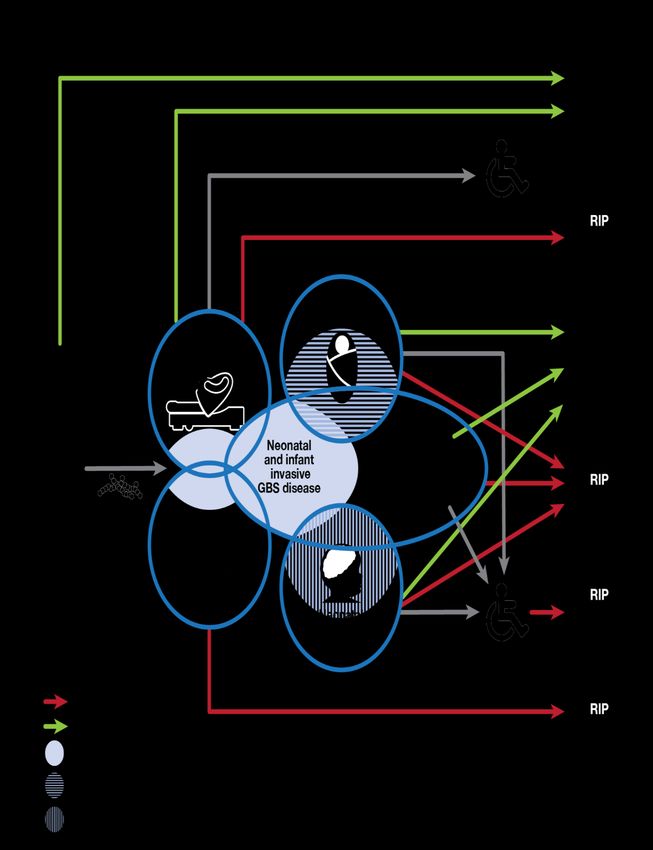
Modelling approach
Estimate national, regional,
                                                Four step
worldwide burden
                                              compartmen
• Pregnant women colonised, infants with
  GBS disease, deaths and disability            tal model
• Maternal GBS disease
• Stillbirths with GBS disease
• Preterm birth attributed to maternal GBS
  colonisation
                                                1              2                 3
To estimate GBS infant cases and
sequelae we applied a
compartmental model:                                                         4
   1. Exposed (maternal
colonisation)
   2. Cases (early and late onset)
   3. Deaths (neonatal and infant)
       “All models
   4. Disability amongstare  wrong
                          survivors        but some are useful” - Lord Box
Clinical Infectious Diseases
Cases of GBS in pregnant women, fetus, and
 infants worldwide     Developed
                                         N=20,000
                                          (5,000-
                                          37,000)

                                                                                                Asia
                                                                                             N=143,000
                                                                                              (70,000-
  Developed countries
                        Latin America                                                         230,000)
  Caribbean
  Central America
                           N=24,000
  South America
  Western Africa
                        (6,000-37,000)                                                             Oceania
  Northern Africa
  Middle Africa                                                Africa                               N=500
  Eastern Africa
  Southern Africa                                            N=220,000                            (300-800)
  Western Asia
  Central Asia
  Southern Asia
                                                          (63,000-265,000)
  Eastern Asia
  South-eastern Asia
  Oceania                                      Seale AC et al Clinical Infectious Diseases. 2017;65(S2):S200-19

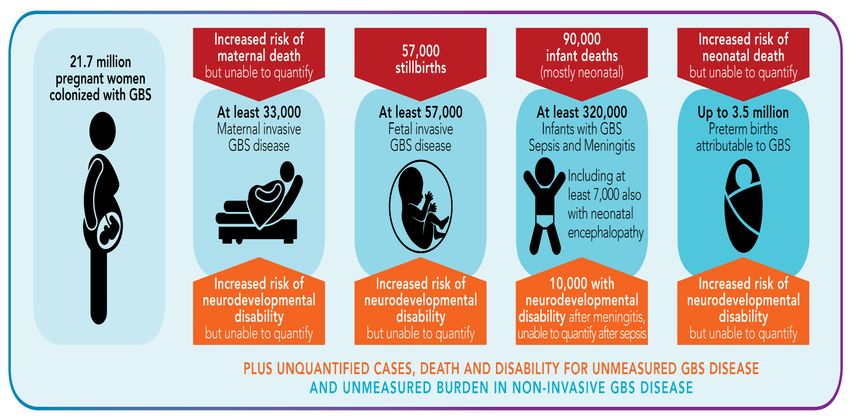
       CASES: 319,000 infants; 33,000 pregnant and postpartum women;
                                 57,000 fetus
Clinical Infectious Diseases
Deaths from GBS: stillbirths and infants
worldwide             Developed
                                             N=1,000
                                             (0-3,000)

                                                                                                          Asia
                                                                                                       N=45,000
                                                                                                    (14,000-90,000)
                      Latin America
Developed countries
Caribbean                N=5,000
Central America                                                                                               Oceania
South America         (1,000-12,000)
Western Africa
Northern Africa
                                                                                                               N=200
Middle Africa
Eastern Africa                                                          Africa                               (0-2,800)
Southern Africa
Western Asia                                                           N=96,000
Central Asia
Southern Asia                                                      (33,000-169,400)
Eastern Asia
South-eastern Asia
Oceania

                 DEATHS: 90,000 infants (mostly neonatal); 57,000 stillbirths
Clinical Infectious Diseases                             Seale AC et al Clinical Infectious Diseases. 2017;65(S2):S200-19
Why pursue a maternal GBS vaccine?
Could be
1. Higher impact than IAP as affects more outcomes prevented by IAP
2. Higher coverage especially in challenging settings more equitable than IAP
3. Leverage existing programmatic platforms (e.g. antenatal care) Could be prevented
by maternal GBS
4. Reduce antibiotic exposure (21.7 million women) vaccine
VACCINE DEVELOPMENT
Key investments for GBS vaccines
• Product Development:
   • Pfizer: GBS vaccine development (Phase 1)
   • Biovac/PATH: GBS vaccine development (preclinical)
   • Imperial College London: Lab assay standardization
• Evidence Generation:
   • LSHTM: disease burden modeling
   • Wits Health Consortium:
      • Evaluating association of anti-capsular serotype specific antibodies with
        maternal colonization and invasive GBS disease in infants in South Asian and
        African countries
      • Evaluating association of surface protein antibodies with maternal
        colonization and invasive GBS disease in infants
   • WHO and LSHTM: Value Proposition assessment
• Policy, guidance and norms
   • Support of WHO activities to facilitate GBS vaccine development,
     licensure, and prequalification with a focus on LMICs
GBS vaccine development pipeline
Vaccines Phase Program status
Candidate Manufacturer Vaccines Discovery Pre- Phase 1 Phase 2
construct clinical
NA Pfizer Multivalent X Clinical programme
CPS – commenced
CRM197
conjugate
GBS vaccine Novartis/GSK Trivalent (Ia, X Safety and
Ib, III) CPS- immunogenicity
CRM197 study completed.
conjugate Formulation
updated
NA GSK Multivalent X X Reformulation and
formulation return to pre-clinical
phase
NA GSK Pilus proteins X X
NA Biovac Polyvalent X Cell banks
CPS TT- developed with
conjugate local isolates
CT manufacturing
2019
CT registered for
2020
GBS-NN vaccine Minervax Rib/AlpC X Single component
MVX13211 vaccine completed
Phase 1 trial of 240
non-pregnant
http://www.who.int/immunization/research/development/ppc_groupb_strepvaccines/en/ women
© Bill & Melinda Gates complete
Foundation | 12VACCINE DEVELOPMENT – ASSAY STANDARDISATION AND CORRELATES OF PROTECTION
Anti-Capsular and anti-surface-protein assays
         Mono-plex and multi-plex, approximately 34 different assays used
                     RABA (Total Ig Ia,III,V) RI (Total Ig III)

                                                                       RPA (IgG Ia,Ib,II,III)
      Luminex binding
      assay (IgG all)
                                                                          Direct ELISA (IgG all)
Antigen-binding assay                    GBS Capsule
       (IgG all)                                                          IF (IgG Ia,Ib,Ic,II,III)

            Anti-pili antibody                                           Indirect ELISA (IgG
                                                                         Ia,Ib,II,III)

      Competitive binding ELISA (IgG Ia,III,V) Anti-protein antibody
                                                                             Le Doare et al Lancet ID 2018
Functional and semi-functional antibody assays
Killing or uptake, with or without standards 9 different assays in circulation
Baby Rabbit
Complement HL60 cells
PMN Baby Rabbit
Complement
Flow Cytometry
GBS Human
Complement
Baby Rabbit Anti-human C3c FITC
Complement
= C3b/iC3b on bacteria surface
10% 20%
C’ C’
7.5 min at 370C 20 min at 40C
GBS Flow
GBS GBS cytometry
HL60 cells (NOT Fluorescent)
Flow CytometryLow incidence means efficacy studies are
difficult
• GBS disease in infants represents an important unmet medical need
• Low incidence rates of GBS disease makes vaccine efficacy studies long and
complex
Sample Size Based on Assumptions (1:1 randomization ratio)
Disease Efficacy Power Lower Bound Per Protocol Sample size*
Rate Cases (total)
0.1% 75% 90% >20% 43 ~ 90,000
0.1% 75% 90% >30% 55 ~ 115,000
* Total sample size is adjusted to account for 10% prematurity loss and 15% early withdrawals.
A serological correlate of protection is needed
*Risk factor rate for combined early and late onset GBS in S. Africa (Dangor et al. 2016 PLoS One 10, e0123014)Precedent for Serological Correlates of
Protection for Encapsulated Pathogens
Pathogen MOA Correlate
Natural Vaccine
H. influenzae type B IgG1 0.15 µg/mL2 ≥ 0.15 µg/ml (conjugate)3
N. meningitidis hSBA4 ≥ 44 ≥ 45-7
S. pneumoniae IgG N/A ≥ 0.35 µg/ml in infants8
• Sero-epidemiology studies provided the mechanism of action and proposed
correlate
• Vaccine efficacy studies confirmed the correlate
• For PCVs in infants an IgG threshold to license new expanded serotype PCVs
was developed based on efficacy
• Not serotype specific
• Does not predict protection against disease in an individual
1Schneerson et al. 1971 J Immunol 107, 1081; 2Makela et al. 1977 J Inf Dis 136, S43; 3Eskola et al 1987 NEJM 317, 717 4Goldschneider et al. 1969 J Exp Med 129,
PfizeretConfidential
1307; 5Sierra │ 17 14, 195; 6Holst et al 2003 Vaccine 21, 734; 7Milagres et al 1991 Infect Imm 1 62, 4419; 8Siber et al 2007 Vaccine 25, 3816;
al 1991 NIHP Annals
9Plotkin 2010 Clin Vaccine Immunol 17, 1055;Serocorrelates of protection differ depending
on source of serum and assay
Lin et al 2001, 200470% disease EOD risk reduction if antibody
against STIa, III and V >1ug/mL in maternal serum
90% for STIa and STIII, 70% for STV,
If Ab ≥2μg/mL attack rates reduced from 1/100 livebirths to:
0.49/100 for serotype Ia Baker 2014
0/100 for serotype III75% disease EOD risk reduction if antibody
>1ug/mL STIa and STIII in Europe
Fabbrini 201680% disease Combined risk reduction if
antibody >6ug/mL STIa and 3ug/mL STIII in
South Africa
Dangor 2016Good correlation between antibody
concentration (ELISA) and OPkA for STIa & STIII
Baker 1999As well as in Europe for STIa, STIb and STIII….
Fabbrini 2016Functional antibody threshold associated with
absence of infant colonisation in The Gambia
Le Doare 2017Evidence limited about role of protein
antibody as a CoP against invasive disease
Larsson 2006
Dangor 2016
Fabbrini 2016CoP study
sample size considerations
• At 80% risk reduction the proportion of controls above the cut-off will
probably vary between 30% and 70%
• 80% reduction in a case-control study means an OR of 0.2
• precision of OR (95% CI) around 0.2 for varying case sample sizes assuming
30-70% controls > cut
Controls > cut N=30 cases N=90 N=150
N=90 c’trols N=270 c’trols N=450 c’trols
70% 0.08-0.49 0.12-0.33 0.13-0.30
50% 0.07-0.57 0.11-0.37 0.13-0.32
30% 0.05-0.81 0.09-0.45 0.11-0.37European Medicines agency meeting May 24, 2017
GBS Assay Standardisation Group Meeting with
Vaccine Working Party of the European Medicines Agency 24.5.17Next steps • Prospective case/control studies of common serotypes to derive CoP from natural exposure to GBS measured in both maternal and cord/infant serum. • Compare convalescent sera with acute illness sera to understand role of sample collection on Ab function. • Study antibody kinetics: transfer from mother to infant; Ab decline between birth and 3 months of life. • Establish the correlation between function and ELISA-type antibody data • Evaluate of the role of common protein antibody in protection against colonisation and disease.
ECONOMIC EVALUATION–
  VALUE PROPOSITION
Project components / Workstreams (WS)

Disease burden (WS 1)                                       Economic analyses (WS
 • Medical need for maternal
   immunization against GBS at global
                                                                     2):
   level                                                            • Economic burden of disease
 • Quantification of MI preventable                                 • Vaccine cost effectiveness
   burden of disease under different                                • Economic impact
   assumptions

                                Operationalization issues
                                        (WS 3):
                                    • Vaccination
                                      schedule           • Uptake
                                    • Service delivery   • M&E

                                                                                    Lambach, Capetown 2018
WS 1: Burden of disease (BoD) and medical
need of GBS vaccine for use in pregnant women
• Goal: Assess medical need of GBS vaccine
• Objectives:
• Burden: To assess the complete burden GBS disease in pregnancy
• Serotypes: To describe GBS serotypes by region (country if enough data)
• Intrapartum antibiotic prophylaxis: To estimate GBS disease burden preventable with IAP,
implications for antibiotic use and potentially AMR
• Vaccine impact: To estimate GBS disease burden preventable by vaccination in pregnant
women
• Data gaps: To synthesise data gaps regarding burden assessment and programmatic tracking
• Outputs
• Revised analyses of cases, deaths, disability
• Generation of DALYs
• Data relevant to inform economic analyses
Lambach, Capetown 2018WS 2: Economic evaluations regarding GBS
vaccine for use in pregnant women
• Goal: Evaluate GBS maternal-immunization preventable BoD, vaccine-
preventable disease incidence and numbers needed to vaccinate
• Objectives:
• Estimate cost of illness and cost of immunization programs (building on Workstream 1)
• Estimate global impact of maternal GBS vaccination on disease, deaths, antibiotic
consumption and resistance
• Conduct economic evaluation to assess the cost-effectiveness, return on investment,
budget impact, extended cost-effectiveness and producer/consumer surplus of
maternal GBS vaccination
• Outputs
• Estimates based on a range of health economic evaluations to understand the value of
a GBS vaccine targeting pregnant women from the perspective of the research and
development community, funders and countries
Lambach, Capetown 2018WS 3: Operationalization of GBS vaccination
programmes
• Goal: Evaluate the potential impact of vaccine introduction on standard medical
practice based on
• factors that may influence adoption and effectiveness of vaccination during
pregnancy
• capacity of existing service delivery models
• Research areas/questions:
• Vaccination schedule (repeat dose administration and optimal vaccination
timing during pregn.)
• Service delivery (integration into/optimal delivery by EPI/ANC)
• Uptake (acceptance by pregnant women, HCW)
• Monitoring and evaluation (adequate coverage monitoring for GBS
vaccination of pregnant women)
• Output
• Summary of latest "MI operationalization" evidence and application to GBS
vaccine
Lambach, Capetown 2018Key next steps?
Focus area Activity Status
Evidence - Disease burden modeling ✔
Generation - Whole genome sequencing ✔
- Ongoing evaluation of disease in Asia ✔
- Assay standardization ✔
Vaccine - Validate path to licensure ✔
development
Economic analysis - Global value proposition ✔
- Cost-effectiveness modeling ✔
Policy, guidance - Support for WHO activities to facilitate GBS vaccine
and norms development, licensure, and prequalification with a
focus on LMIC
Delivery/Integrati - Standardization of pregnancy vigilance ✔
on in antenatal - MNCH stakeholder engagement ✔
careThank you Joy Lawn, Shabir Madhi, Johan Vekemans, Philip Lambach, Nick Andrews
Bringing together stakeholders from basic science, immunology,
        vaccinology, social sciences, industry, public health and national
                         and international policy makers
        to tackle the key challenges related to the best use of vaccines in
         pregnancy and in newborns, and in the long term, to improve
                          maternal and newborn health

Pump priming grants           Fellowships               Network activities

                                                                       Join
                                                                       us!
                                                                   www.imprint-
                                                                   network.co.uk
You can also read


