GIZ. SolutIonS that work 2015
←
→
Page content transcription
If your browser does not render page correctly, please read the page content below

Integrated Company Report   2015

                                                                                              GIZ. Solutions
                                                                                              that work.

                                                             Integrated Company Report 2015

Deutsche Gesellschaft für
Internationale Zusammenarbeit (GIZ) GmbH

Registered offices
Bonn and Eschborn

Friedrich-Ebert-Allee 36 + 40   Dag-Hammarskjöld-Weg 1 – 5
53113 Bonn, Germany             65760 Eschborn, Germany
T +49 228 44 60-0               T +49 61 96 79-0
F +49 228 44 60-17 66           F +49 61 96 79-11 15

E info@giz.de
I www.giz.de
‘Faces and Stories’ introduces people from
                         around the world whose lives have been
                         improved through GIZ’s work. They are
                         strong individuals who have taken charge
                         of their own future.
                           www.giz.de /stories

                                                                      Solutions start
                                                                      with people

                                                                      GIZ is a global service provider in the field of international
                                                                      cooperation for sustainable development. People are always
                                                                      at the heart of our work. We adopt a flexible approach,
                                                                      working with our partners as equals to achieve effective
                                                                      solutions that offer people all over the world genuine pros-
                                                                      pects, and bring a lasting improvement to their lives.

2   GIZ Integrated Company Report 2015                                                                                                 3
‘Faces and Stories’ introduces people from
                         around the world whose lives have been
                         improved through GIZ’s work. They are
                         strong individuals who have taken charge
                         of their own future.
                           www.giz.de /stories

                                                                      Solutions start
                                                                      with people

                                                                      GIZ is a global service provider in the field of international
                                                                      cooperation for sustainable development. People are always
                                                                      at the heart of our work. We adopt a flexible approach,
                                                                      working with our partners as equals to achieve effective
                                                                      solutions that offer people all over the world genuine pros-
                                                                      pects, and bring a lasting improvement to their lives.

2   GIZ Integrated Company Report 2015                                                                                                 3
Contents

                                             Overviews                        Insights                Looking ahead

                                         Message from the Chairman         Solutions for                GIZ. Solutions
                                          of the Supervisory Board      a world with genuine              that work.
                                                      8                      prospects                         54
                                                                                    22
                                                Foreword by
                                           the Management Board            Solutions for
                                                     10                   a world more fit              Publishing details
                                                                             to live in                  Abbreviations
                                             Highlights in 2015                     32                         66
                                                     12
                                                                           Solutions for                  Photo credits
                                          Sustainable and effective –   tomorrow’s society                     67
                                         in Germany and worldwide                   42
                                                     14

                                                 GIZ profile
                                                     16                  Staff safety and security,
                                                                             and compliance
                                           GIZ around the globe                     27
                                                     18
                                                                             Digital solutions
                                                 Fiscal 2015                        41
                                                     58
                                                                         Working in fragile states
                                               Our personnel                        57
                                                     60

                                             Organisation chart
                                                     62

                                            GIZ’s official bodies
                                                     64

4   GIZ Integrated Company Report 2015                                                                                       5
Contents

                                             Overviews                        Insights                Looking ahead

                                         Message from the Chairman         Solutions for                GIZ. Solutions
                                          of the Supervisory Board      a world with genuine              that work.
                                                      8                      prospects                         54
                                                                                    22
                                                Foreword by
                                           the Management Board            Solutions for
                                                     10                   a world more fit              Publishing details
                                                                             to live in                  Abbreviations
                                             Highlights in 2015                     32                         66
                                                     12
                                                                           Solutions for                  Photo credits
                                          Sustainable and effective –   tomorrow’s society                     67
                                         in Germany and worldwide                   42
                                                     14

                                                 GIZ profile
                                                     16                  Staff safety and security,
                                                                             and compliance
                                           GIZ around the globe                     27
                                                     18
                                                                             Digital solutions
                                                 Fiscal 2015                        41
                                                     58
                                                                         Working in fragile states
                                               Our personnel                        57
                                                     60

                                             Organisation chart
                                                     62

                                            GIZ’s official bodies
                                                     64

4   GIZ Integrated Company Report 2015                                                                                       5
Overviews

                                         Message from the Chairman
                                          of the Supervisory Board
                                                      8

                                                Foreword by
                                           the Management Board
                                                     10

                                             Highlights in 2015
                                                     12

                                          Sustainable and effective –
                                         in Germany and worldwide
                                                     14

                                                 GIZ profile
                                                     16

                                           GIZ around the globe
                                                     18

6   GIZ Integrated Company Report 2015                                  7
Overviews

                                         Message from the Chairman
                                          of the Supervisory Board
                                                      8

                                                Foreword by
                                           the Management Board
                                                     10

                                             Highlights in 2015
                                                     12

                                          Sustainable and effective –
                                         in Germany and worldwide
                                                     14

                                                 GIZ profile
                                                     16

                                           GIZ around the globe
                                                     18

6   GIZ Integrated Company Report 2015                                  7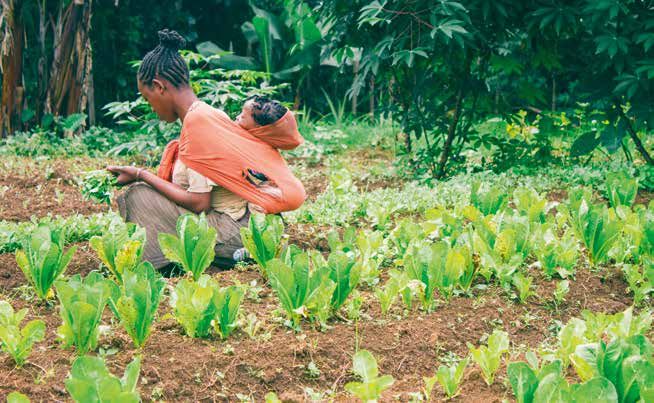
In this, the 2030 Agenda for Sustainable Development provides us with a guiding vision, a frame-
                                                                                                                                      work of reference and a compass. It lays out a development and transformation policy for the entire
                                                                                                                                      planet, and provides a blueprint for reconciling economic progress with social justice while respecting
                                                                                                                                      the ecological limits of the Earth.

                                                                                                                                      In future, we will continue to combine this focus of our development policy with our express com-
                                                                                                                                      mitment to realising the trailblazing agreement reached at the UN Climate Change Conference in
                                                                                                                                      Paris in 2015. We see the Paris Agreement as a mainstay of Germany’s international climate policy,
                                                                                                                                      both in our work to help partner countries adapt to climate change and in our endeavours to meet
                                                                                                                                      the emission reduction targets set. Here too, technical cooperation is an important pillar in imple-
                                                                                                                                      mentation efforts.
                             Message from the Chairman
                                                                                                                                      We are well equipped to meet these future challenges. BMZ’s budget for 2016 stands at over EUR
                             of the Supervisory Board                                                                                 7.4 billion – an all-time high. In its outline for the 2017 national budget, the German Cabinet has
                                                                                                                                      already decided to increase the BMZ’s budget by EUR 550 million.

                                                                                                                                      Yet all of us, BMZ, our implementing organisations, and our international and national partners, in-
                                                                                                                                      cluding civil society, private foundations, the churches, the private sector and the science and research
                                                                                                                                      community, are called on to align our development policy even more closely with the paradigm shift
                             One issue has dominated our headlines for months: hundreds of thousands of people are leaving their      ushered in by the 2030 Agenda. At BMZ we have already launched an extensive fine-tuning process:
                             homes and making their way to Europe in the hope of a better and more peaceful life. But in fact         all country and regional programmes and all of our instruments will be systematically reviewed to
                             the vast majority of people who do flee stay in their own country or in a neighbouring state, almost     pinpoint their contribution to realising the sustainable development goals (SDGs). They will then be
                             ninety per cent of them in developing countries.                                                         adjusted as required.

                             For the Federal Ministry for Economic Cooperation and Development (BMZ) and German develop-              Just like our partners around the world, we know we can rely on the expertise, the professionalism
                             ment policy as a whole, tackling the causes of displacement and creating genuine prospects of a better   and the long-standing experience of GIZ. Business development in 2015 once again underscored the
                             life and future bring with it special challenges and obligations. In 2016, BMZ will provide a total      fact that GIZ is a high-profile brand name in German international cooperation.
                             of over EUR 3 billion to fight these root causes, stabilise host regions and support those forced to
                             flee their homes. GIZ will be responsible for much of the practical implementation. The three BMZ        My special thanks and praise go to the Management Board and to all GIZ staff who implement
                             special initiatives, originally launched in 2014 and since ramped up, represent one main thrust of our   the development policy of the German Government in increasingly complex contexts, and often
                             engagement. They are ‘Tackling the Root Causes of Displacement, Reintegrating Refugees’, ‘ONE            under extremely difficult and challenging conditions, especially in crisis-affected regions. It is thanks
                             WORLD – No Hunger’ and ‘Stabilisation and Development in the Middle East and North Africa’.              to them that together with our partners we have managed to achieve structural changes and improve
                                                                                                                                      people’s lives and prospects for a better future.
                             One focus of our work is education, training and employment in the Middle East. In 2016 alone,
                             BMZ’s employment drive in the Middle East will channel EUR 200 million into efforts to create at
                             least 50,000 jobs for refugees and the host communities in Syria’s neighbouring countries.

                             Parallel to this, we at BMZ are using every instrument available to us to ensure that efforts to over-   Dr Friedrich Kitschelt
                             come the global challenges facing humanity (the need to eradicate poverty and hunger, build peace        Chairman of the GIZ Supervisory Board
                             and steward the Creation) remain firmly at the heart of our work.                                        State Secretary in the German Federal Ministry for Economic Cooperation and Development

8   GIZ Integrated Company Report 2015                                                                                                                                                                                    Message from the Chairman of the Supervisory Board   9
In this, the 2030 Agenda for Sustainable Development provides us with a guiding vision, a frame-
                                                                                                                                      work of reference and a compass. It lays out a development and transformation policy for the entire
                                                                                                                                      planet, and provides a blueprint for reconciling economic progress with social justice while respecting
                                                                                                                                      the ecological limits of the Earth.

                                                                                                                                      In future, we will continue to combine this focus of our development policy with our express com-
                                                                                                                                      mitment to realising the trailblazing agreement reached at the UN Climate Change Conference in
                                                                                                                                      Paris in 2015. We see the Paris Agreement as a mainstay of Germany’s international climate policy,
                                                                                                                                      both in our work to help partner countries adapt to climate change and in our endeavours to meet
                                                                                                                                      the emission reduction targets set. Here too, technical cooperation is an important pillar in imple-
                                                                                                                                      mentation efforts.
                             Message from the Chairman
                                                                                                                                      We are well equipped to meet these future challenges. BMZ’s budget for 2016 stands at over EUR
                             of the Supervisory Board                                                                                 7.4 billion – an all-time high. In its outline for the 2017 national budget, the German Cabinet has
                                                                                                                                      already decided to increase the BMZ’s budget by EUR 550 million.

                                                                                                                                      Yet all of us, BMZ, our implementing organisations, and our international and national partners, in-
                                                                                                                                      cluding civil society, private foundations, the churches, the private sector and the science and research
                                                                                                                                      community, are called on to align our development policy even more closely with the paradigm shift
                             One issue has dominated our headlines for months: hundreds of thousands of people are leaving their      ushered in by the 2030 Agenda. At BMZ we have already launched an extensive fine-tuning process:
                             homes and making their way to Europe in the hope of a better and more peaceful life. But in fact         all country and regional programmes and all of our instruments will be systematically reviewed to
                             the vast majority of people who do flee stay in their own country or in a neighbouring state, almost     pinpoint their contribution to realising the sustainable development goals (SDGs). They will then be
                             ninety per cent of them in developing countries.                                                         adjusted as required.

                             For the Federal Ministry for Economic Cooperation and Development (BMZ) and German develop-              Just like our partners around the world, we know we can rely on the expertise, the professionalism
                             ment policy as a whole, tackling the causes of displacement and creating genuine prospects of a better   and the long-standing experience of GIZ. Business development in 2015 once again underscored the
                             life and future bring with it special challenges and obligations. In 2016, BMZ will provide a total      fact that GIZ is a high-profile brand name in German international cooperation.
                             of over EUR 3 billion to fight these root causes, stabilise host regions and support those forced to
                             flee their homes. GIZ will be responsible for much of the practical implementation. The three BMZ        My special thanks and praise go to the Management Board and to all GIZ staff who implement
                             special initiatives, originally launched in 2014 and since ramped up, represent one main thrust of our   the development policy of the German Government in increasingly complex contexts, and often
                             engagement. They are ‘Tackling the Root Causes of Displacement, Reintegrating Refugees’, ‘ONE            under extremely difficult and challenging conditions, especially in crisis-affected regions. It is thanks
                             WORLD – No Hunger’ and ‘Stabilisation and Development in the Middle East and North Africa’.              to them that together with our partners we have managed to achieve structural changes and improve
                                                                                                                                      people’s lives and prospects for a better future.
                             One focus of our work is education, training and employment in the Middle East. In 2016 alone,
                             BMZ’s employment drive in the Middle East will channel EUR 200 million into efforts to create at
                             least 50,000 jobs for refugees and the host communities in Syria’s neighbouring countries.

                             Parallel to this, we at BMZ are using every instrument available to us to ensure that efforts to over-   Dr Friedrich Kitschelt
                             come the global challenges facing humanity (the need to eradicate poverty and hunger, build peace        Chairman of the GIZ Supervisory Board
                             and steward the Creation) remain firmly at the heart of our work.                                        State Secretary in the German Federal Ministry for Economic Cooperation and Development

8   GIZ Integrated Company Report 2015                                                                                                                                                                                    Message from the Chairman of the Supervisory Board   9
GIZ Management Board
                                                                                                                                                                                                                                                    (left to right):
                                                                                                                                                                                                                                                    Tanja Gönner
                                                                                                                                                                                                                                                    Dr Christoph Beier
                                                                                                                                                                                                                                                    Cornelia Richter
                                                                                                                                                                                                                                                    Dr Hans-Joachim Preuß

                              Foreword by
                              the Management Board

                              The 2030 Agenda for Sustainable Development, adopted by the global community in 2015, aims to            have forged with our partners on the basis of mutual trust, and our highly qualified local staff. It is
                              effectively combat poverty and make the world more equitable and more sustainable – no more and          important in this context that we continuously improve our security and risk management to keep
                              no less. With its universally valid sustainable development goals it is one of the most ambitious pro-   our staff safe. At the same time we are testing flexible forms of project implementation, including
                              jects of our time. Along with the recent international agreements on financing for development and       managing measures from neighbouring countries for limited periods.
                              climate action, the 2030 Agenda will be instrumental in shaping key policy areas of international
                              cooperation in the years to come.                                                                        Our aim is to generate impetus for sustainable development, and we also put this into practice
                                                                                                                                       within the company – in the way we deal with the environment, with clients and commissioning
                              In 2015, a watershed year for development, we aligned our services even more closely to the in-          parties, and with our staff. This is particularly important in conjunction with economic efficien-
                              tentions of these agreements and the demands of our commissioning parties and clients. A rise in         cy, transparency and compliance. We have established a new Compliance and Integrity Unit to
                              our business volume to over EUR 2.14 billion, with the largest increases recorded in the fields of       meet rising demands around the globe regarding compliance with legislation, internal company
                              migration, security and climate change, demonstrates that we are on the right path. The increase in      guidelines and ethical principles. As a company we have undertaken to comply with the ten Global
                              our workforce is also encouraging. At the end of 2015, over 17,300 people were working for GIZ –         Compact principles and are actively working to realise these in the fields of human rights, labour
                              more than ever before.                                                                                   standards, environmental protection and anti-corruption. Putting our company on a sustainable
                                                                                                                                       footing is an integral part of our daily work, both here in Germany and in our partner countries.
                              We aim to improve people’s prospects by adopting solutions that work. How we achieve this                This is reflected in our Integrated Company Report.
                              through international cooperation for sustainable development is explained in this report. To better
                              illustrate our work we take examples from the sectors that have dominated the debate at German           New ideas, proven expertise and passionate commitment are key characteristics of our staff around
                              and international level over the last year, and indeed continue to do so – tackling the causes of        the world. Without them GIZ could never be successful. On behalf of the entire Management
                              displacement, conserving the environment and protecting the climate, enhancing technical and             Board I would like to express my sincere gratitude to our staff for their work. My thanks also go to
                              vocational education and training, and promoting the private sector. The articles in this report also    our shareholder and all our commissioning parties and clients for the trust they have placed in us
                              clearly reflect how we support the German Government and international clients, including the            and for the broad backing we receive from the German Government, which is essential in enabling
                              European Union and the governments of other countries, in effectively positioning their political        us to achieve maximum effectiveness as a federal enterprise.
                              visions in global debates. And we report on our commitment to new trends, such as digitalisation,
                              new forms of cooperation involving a large number of partners and actors, and the challenges of
                              working in crisis-affected areas.

                              The challenges we face are increasing in number and scope. More than two thirds of the partner
                              countries of German development cooperation are already affected by crises or directly threatened
                              by armed hostilities. But even under such extremely difficult conditions, we manage to work swiftly      Tanja Gönner
                              and effectively thanks to our long-standing presence in partner countries, the close relations we        Chair of the Management Board

10   GIZ Integrated Company Report 2015                                                                                                                                                                                                  Foreword by the Management Board   11
GIZ Management Board
(left to right):
Tanja Gönner
Dr Christoph Beier
Cornelia Richter
Dr Hans-Joachim Preuß
Foreword by
the Management Board
The 2030 Agenda for Sustainable Development, adopted by the global community in 2015, aims to have forged with our partners on the basis of mutual trust, and our highly qualified local staff. It is
effectively combat poverty and make the world more equitable and more sustainable – no more and important in this context that we continuously improve our security and risk management to keep
no less. With its universally valid sustainable development goals it is one of the most ambitious pro- our staff safe. At the same time we are testing flexible forms of project implementation, including
jects of our time. Along with the recent international agreements on financing for development and managing measures from neighbouring countries for limited periods.
climate action, the 2030 Agenda will be instrumental in shaping key policy areas of international
cooperation in the years to come. Our aim is to generate impetus for sustainable development, and we also put this into practice
within the company – in the way we deal with the environment, with clients and commissioning
In 2015, a watershed year for development, we aligned our services even more closely to the in- parties, and with our staff. This is particularly important in conjunction with economic efficien-
tentions of these agreements and the demands of our commissioning parties and clients. A rise in cy, transparency and compliance. We have established a new Compliance and Integrity Unit to
our business volume to over EUR 2.14 billion, with the largest increases recorded in the fields of meet rising demands around the globe regarding compliance with legislation, internal company
migration, security and climate change, demonstrates that we are on the right path. The increase in guidelines and ethical principles. As a company we have undertaken to comply with the ten Global
our workforce is also encouraging. At the end of 2015, over 17,300 people were working for GIZ – Compact principles and are actively working to realise these in the fields of human rights, labour
more than ever before. standards, environmental protection and anti-corruption. Putting our company on a sustainable
footing is an integral part of our daily work, both here in Germany and in our partner countries.
We aim to improve people’s prospects by adopting solutions that work. How we achieve this This is reflected in our Integrated Company Report.
through international cooperation for sustainable development is explained in this report. To better
illustrate our work we take examples from the sectors that have dominated the debate at German New ideas, proven expertise and passionate commitment are key characteristics of our staff around
and international level over the last year, and indeed continue to do so – tackling the causes of the world. Without them GIZ could never be successful. On behalf of the entire Management
displacement, conserving the environment and protecting the climate, enhancing technical and Board I would like to express my sincere gratitude to our staff for their work. My thanks also go to
vocational education and training, and promoting the private sector. The articles in this report also our shareholder and all our commissioning parties and clients for the trust they have placed in us
clearly reflect how we support the German Government and international clients, including the and for the broad backing we receive from the German Government, which is essential in enabling
European Union and the governments of other countries, in effectively positioning their political us to achieve maximum effectiveness as a federal enterprise.
visions in global debates. And we report on our commitment to new trends, such as digitalisation,
new forms of cooperation involving a large number of partners and actors, and the challenges of
working in crisis-affected areas.
The challenges we face are increasing in number and scope. More than two thirds of the partner
countries of German development cooperation are already affected by crises or directly threatened
by armed hostilities. But even under such extremely difficult conditions, we manage to work swiftly Tanja Gönner
and effectively thanks to our long-standing presence in partner countries, the close relations we Chair of the Management Board
10 GIZ Integrated Company Report 2015 Foreword by the Management Board 11HIGHLIGHTS IN 2015
AGUSTÍN VÁZQUEZ SCALAwas the 10,000th
participant in the management training
programme of the Federal Ministry for
Economic Affairs and Energy. GIZ is
implementing the programme.
FEDERAL MINISTER FOR ECONOMIC COOPERATION AND DEVELOPMENT GERD
German Chancellor Angela Merkel at the
MÜLLER visited a project that is working to improve social and
Gavi Pledging Conference: Gavi, the Vaccine environmental standards in Bangladesh’s textile industry, and
Alliance, was founded by the Bill & Melinda found out first hand from workers what progress has been made.
Gates Foundation. GIZ supported BMZ
in organising the conference, which was held
in Berlin on 27 January 2015.
FEDERAL FOREIGN MINISTER FRANK-WALTER STEINMEIER with
trainees at the German-Sri Lankan vocational train-
ing institute in Kilinochchi. Training is offered in the
fields of food processing, construction, automobile
mechanics and electrical installation.
Germany’s G7 initiative: In her address ANDREA NAHLES, FEDERAL
MINISTER OF LABOUR AND SOCIAL AFFAIRS, spoke
about the need to
enable people to work in dignity around the world. GIZ organ-
ised the conference on supply chain standards held on 10 March
2015 in Berlin.
FEDERAL PRESIDENT JOACHIM GAUCK
at the Headquarters of the East
African Community (EAC). On
behalf of BMZ, GIZ advises the
Showcase for Germany’s global climate commitment: GIZ helped design the German pavilion for the
East African Community and
Federal Ministry for the Environment, Nature Conservation, Building and Nuclear Safety (BMUB)
the African Court on Human
and the Federal Ministry for Economic Cooperation and Development (BMZ) at the United Nations
and Peoples’ Rights.
Climate Change Conference in Paris in December 2015. At the Conference, FEDERAL ENVIRONMENT
MINISTER BARBARA HENDRICKS signed the new Paris Agreement on climate action.
12 GIZ Integrated Company Report 2015 Highlights in 2015 13HIGHLIGHTS IN 2015
AGUSTÍN VÁZQUEZ SCALAwas the 10,000th
participant in the management training
programme of the Federal Ministry for
Economic Affairs and Energy. GIZ is
implementing the programme.
FEDERAL MINISTER FOR ECONOMIC COOPERATION AND DEVELOPMENT GERD
German Chancellor Angela Merkel at the
MÜLLER visited a project that is working to improve social and
Gavi Pledging Conference: Gavi, the Vaccine environmental standards in Bangladesh’s textile industry, and
Alliance, was founded by the Bill & Melinda found out first hand from workers what progress has been made.
Gates Foundation. GIZ supported BMZ
in organising the conference, which was held
in Berlin on 27 January 2015.
FEDERAL FOREIGN MINISTER FRANK-WALTER STEINMEIER with
trainees at the German-Sri Lankan vocational train-
ing institute in Kilinochchi. Training is offered in the
fields of food processing, construction, automobile
mechanics and electrical installation.
Germany’s G7 initiative: In her address ANDREA NAHLES, FEDERAL
MINISTER OF LABOUR AND SOCIAL AFFAIRS, spoke
about the need to
enable people to work in dignity around the world. GIZ organ-
ised the conference on supply chain standards held on 10 March
2015 in Berlin.
FEDERAL PRESIDENT JOACHIM GAUCK
at the Headquarters of the East
African Community (EAC). On
behalf of BMZ, GIZ advises the
Showcase for Germany’s global climate commitment: GIZ helped design the German pavilion for the
East African Community and
Federal Ministry for the Environment, Nature Conservation, Building and Nuclear Safety (BMUB)
the African Court on Human
and the Federal Ministry for Economic Cooperation and Development (BMZ) at the United Nations
and Peoples’ Rights.
Climate Change Conference in Paris in December 2015. At the Conference, FEDERAL ENVIRONMENT
MINISTER BARBARA HENDRICKS signed the new Paris Agreement on climate action.
12 GIZ Integrated Company Report 2015 Highlights in 2015 13SUSTAINABLE AND EFFECTIVE –
IN GERMANY AND WORLDWIDE
CUTS OF ABOUT 20%
ACHIEVED IN CONSUMPTION OF
HEATING ENERGY, PAPER AND WATER
AT GERMAN LOCATIONS SINCE 2011*
Economic performance, environmental balance, social responsibility and political participation –
at GIZ we see these as the four dimensions of sustainability. Sustainable solutions emerge from the
interaction between the different dimensions. This is what guides us in our work with commission-
36,8%
ing parties, clients and partners around the world, in the way we deal with one another, and in the OF MANAGERIAL POSTS ACROSS THE
COMPANY HELD BY WOMEN
way we shape our own company.
With around 130 offices around the globe, keeping tabs on our corporate sustainability is a real
challenge. To help us, we use a tool we devised ourselves, the Corporate Sustainability Handprint®,
known as CSH. While an ecological footprint illustrates the downside of our impact on the envi-
ronment, our handprint highlights specific pro-sustainability actions on the part of GIZ, including
resource efficiency, integrity and anti-corruption, as well as health and safety.
GIZ offices inside and outside Germany record key data: carbon dioxide emissions caused by offi-
cial travel, for instance, and the number of managerial posts held by women. An in-country CSH
team assesses the figures once every two years, allowing GIZ in that country to set new targets for
sustainable action.
At GIZ, sustainability is firmly anchored at top management level, with responsibility vested in the
Chair of the Management Board. The Sustainability Board, which reports directly to the Manage-
ment Board, advises the company on targets, assesses the company’s sustainability performance and
45 EVENTS ORGANISED
BY STAFF AROUND THE WORLD TO
MARK THE GERMAN COUNCIL FOR
supports concrete steps to realise the targets set. The Director Corporate Sustainability is respon-
SUSTAINABLE DEVELOPMENT’S 2015
sible for the further development of the Sustainability Programme and communicates measures ACTION WEEK ON SUSTAINABILITY,
100%
undertaken and progress achieved. Sustainability management is coordinated and supported by the INCLUDING A BIKE DAY IN VIET NAM
31
Sustainability Office.
OF CARBON DIOXIDE EMISSIONS AT GERMAN
OF 39 INDICATORS LAID OUT
GIZ has made a large number of voluntary commitments. LOCATIONS OFFSET TO THE STRICTEST
IN THE GIZ’S SUSTAINABILITY PROGRAMME
INTERNATIONAL STANDARDS
It has signed up for the United Nations Global Compact 2013 – 2015 ACHIEVED IN FULL
and reports regularly on corporate sustainability,
most recently in the Progress Report on SOCIAL ENVIRONMENTAL
Sustainability 2015. RESPONSIBILITY BALANCE
www.giz.de/sustainability OUTSTANDING
www.giz.de/handprint
w
ww.giz.de/progress-sustainability-2015 The Corporate Sustainability Handprint was singled out as one of five best
www.giz.de/identity
practice examples in the Bertelsmann Foundation’s Corporate Responsibility
Index. GIZ ranked among the top 20 of the 187 companies listed and was
POLITICAL ECONOMIC awarded the title Corporate Responsibility Champion.
PARTICIPATION PERFORMANCE About 50% of our country offices introduced the Corporate Sustainability
Handprint in 2015. By the end of 2016 it will be used across the board.**
*Figures from 2011 to 2014. Not all figures currently available for 2015.
**Find out more about CSH online at www.giz.de/handprint and on page 39.
14 GIZ Integrated Company Report 2015 Sustainable and effective – in Germany and worldwide 15SUSTAINABLE AND EFFECTIVE –
IN GERMANY AND WORLDWIDE
CUTS OF ABOUT 20%
ACHIEVED IN CONSUMPTION OF
HEATING ENERGY, PAPER AND WATER
AT GERMAN LOCATIONS SINCE 2011*
Economic performance, environmental balance, social responsibility and political participation –
at GIZ we see these as the four dimensions of sustainability. Sustainable solutions emerge from the
interaction between the different dimensions. This is what guides us in our work with commission-
36,8%
ing parties, clients and partners around the world, in the way we deal with one another, and in the OF MANAGERIAL POSTS ACROSS THE
COMPANY HELD BY WOMEN
way we shape our own company.
With around 130 offices around the globe, keeping tabs on our corporate sustainability is a real
challenge. To help us, we use a tool we devised ourselves, the Corporate Sustainability Handprint®,
known as CSH. While an ecological footprint illustrates the downside of our impact on the envi-
ronment, our handprint highlights specific pro-sustainability actions on the part of GIZ, including
resource efficiency, integrity and anti-corruption, as well as health and safety.
GIZ offices inside and outside Germany record key data: carbon dioxide emissions caused by offi-
cial travel, for instance, and the number of managerial posts held by women. An in-country CSH
team assesses the figures once every two years, allowing GIZ in that country to set new targets for
sustainable action.
At GIZ, sustainability is firmly anchored at top management level, with responsibility vested in the
Chair of the Management Board. The Sustainability Board, which reports directly to the Manage-
ment Board, advises the company on targets, assesses the company’s sustainability performance and
45 EVENTS ORGANISED
BY STAFF AROUND THE WORLD TO
MARK THE GERMAN COUNCIL FOR
supports concrete steps to realise the targets set. The Director Corporate Sustainability is respon-
SUSTAINABLE DEVELOPMENT’S 2015
sible for the further development of the Sustainability Programme and communicates measures ACTION WEEK ON SUSTAINABILITY,
100%
undertaken and progress achieved. Sustainability management is coordinated and supported by the INCLUDING A BIKE DAY IN VIET NAM
31
Sustainability Office.
OF CARBON DIOXIDE EMISSIONS AT GERMAN
OF 39 INDICATORS LAID OUT
GIZ has made a large number of voluntary commitments. LOCATIONS OFFSET TO THE STRICTEST
IN THE GIZ’S SUSTAINABILITY PROGRAMME
INTERNATIONAL STANDARDS
It has signed up for the United Nations Global Compact 2013 – 2015 ACHIEVED IN FULL
and reports regularly on corporate sustainability,
most recently in the Progress Report on SOCIAL ENVIRONMENTAL
Sustainability 2015. RESPONSIBILITY BALANCE
www.giz.de/sustainability OUTSTANDING
www.giz.de/handprint
w
ww.giz.de/progress-sustainability-2015 The Corporate Sustainability Handprint was singled out as one of five best
www.giz.de/identity
practice examples in the Bertelsmann Foundation’s Corporate Responsibility
Index. GIZ ranked among the top 20 of the 187 companies listed and was
POLITICAL ECONOMIC awarded the title Corporate Responsibility Champion.
PARTICIPATION PERFORMANCE About 50% of our country offices introduced the Corporate Sustainability
Handprint in 2015. By the end of 2016 it will be used across the board.**
*Figures from 2011 to 2014. Not all figures currently available for 2015.
**Find out more about CSH online at www.giz.de/handprint and on page 39.
14 GIZ Integrated Company Report 2015 Sustainable and effective – in Germany and worldwide 15THE MAIN FACTS
AND FIGURES FOR 2015
17,319
EMPLOYEES WORLDWIDE
TOTAL BUSINESS VOLUME – OVER
EUR 2.1 billion
GIZ PROFILE
We provide services worldwide in the field of international cooperation for sustainable develop-
ment. GIZ has over 50 years of experience in a wide variety of areas, including economic develop-
ment and employment, energy and the environment, and peace and security. The diverse expertise bonn eschborn
of our federal enterprise is in demand around the globe, with the German Government, European
Union institutions, the United Nations and governments of other countries all benefiting from our
services. The German Federal Ministry for Economic Cooperation and Development (BMZ) is our
main commissioning party, but we also work with the private sector, fostering successful interaction
INCOME IN THE GERMAN PUBLIC SECTOR BUSINESS VOLUME
between development policy and foreign trade.
CLIENTS BUSINESS SECTOR OF GIZ INTERNATIONAL SERVICES
EUR 250 million EUR 166 million
All these commissioning parties place their trust in GIZ by working together with us to generate
ideas for political, social and economic change, develop these into concrete plans and implement
the envisaged change processes. Since we are a public-benefit federal enterprise, German and Euro-
pean values are central to our work. This makes us a reliable service provider that people can trust.
Together with our partners, we work to deliver flexible and effective solutions that offer people
better prospects and sustainably improve their living conditions.
INCOME FROM THE COFINANCING
The registered offices of GIZ are in Bonn and Eschborn. In 2015 our business volume exceeded
OF BMZ COMMISSIONS
EUR 2.1 billion. Around 70 per cent of our workforce of 17,319 people are national personnel
EUR 236 million
working locally in over 130 countries. In our capacity as a recognised sending organisation, we
currently have 730 development workers in action in partner countries. In addition, CIM, a joint
operation of GIZ and the Federal Employment Agency, placed almost 1,000 integrated and return-
ing experts with local employers abroad in 2015 while providing them with financial support and
advisory services.
www.giz.de/profile
16 GIZ Integrated Company Report 2015 GIZ profile 17THE MAIN FACTS
AND FIGURES FOR 2015
17,319
EMPLOYEES WORLDWIDE
TOTAL BUSINESS VOLUME – OVER
EUR 2.1 billion
GIZ PROFILE
We provide services worldwide in the field of international cooperation for sustainable develop-
ment. GIZ has over 50 years of experience in a wide variety of areas, including economic develop-
ment and employment, energy and the environment, and peace and security. The diverse expertise bonn eschborn
of our federal enterprise is in demand around the globe, with the German Government, European
Union institutions, the United Nations and governments of other countries all benefiting from our
services. The German Federal Ministry for Economic Cooperation and Development (BMZ) is our
main commissioning party, but we also work with the private sector, fostering successful interaction
INCOME IN THE GERMAN PUBLIC SECTOR BUSINESS VOLUME
between development policy and foreign trade.
CLIENTS BUSINESS SECTOR OF GIZ INTERNATIONAL SERVICES
EUR 250 million EUR 166 million
All these commissioning parties place their trust in GIZ by working together with us to generate
ideas for political, social and economic change, develop these into concrete plans and implement
the envisaged change processes. Since we are a public-benefit federal enterprise, German and Euro-
pean values are central to our work. This makes us a reliable service provider that people can trust.
Together with our partners, we work to deliver flexible and effective solutions that offer people
better prospects and sustainably improve their living conditions.
INCOME FROM THE COFINANCING
The registered offices of GIZ are in Bonn and Eschborn. In 2015 our business volume exceeded
OF BMZ COMMISSIONS
EUR 2.1 billion. Around 70 per cent of our workforce of 17,319 people are national personnel
EUR 236 million
working locally in over 130 countries. In our capacity as a recognised sending organisation, we
currently have 730 development workers in action in partner countries. In addition, CIM, a joint
operation of GIZ and the Federal Employment Agency, placed almost 1,000 integrated and return-
ing experts with local employers abroad in 2015 while providing them with financial support and
advisory services.
www.giz.de/profile
16 GIZ Integrated Company Report 2015 GIZ profile 17Moscow / Russian Federation
Brussels / Belgium Kyiv / Ukraine
Almaty / Kazakhstan
Chisinau / Republic of Moldova Ulan Bator / Mongolia
Sarajevo / Bosnia and Herzegovina Belgrade / Serbia
Pristina / Kosovo Bishkek / Kyrgyzstan
Podgorica / Montenegro Skopje / Macedonia Tbilisi / Georgia Tashkent / Uzbekistan
Tirana / Albania Baku / Azerbaijan
Ankara / Turkey Beijing / People’s Republic of China
Yerevan / Armenia Dushanbe / Tajikistan
Algiers / Algeria
Tunis / Tunisia
Rabat / Morocco Kabul / Afghanistan
Islamabad / Pakistan
Palestinian territories
Amman / Jordan
Cairo / Egypt
New Delhi / India
Kathmandu / Nepal
Riyadh, Saudi Arabia
Abu Dhabi / United Arab Emirates Dhaka / Bangladesh
Hanoi / Viet Nam
Mexico City / Mexico
Santo Domingo / Dominican Republic Nouakchott / Mauritania Vientiane / Laos
Yangon / Myanmar
Dakar / Senegal Sana’a / Yemen
Guatemala City / Guatemala Tegucigalpa / Honduras Niamey / Niger Manila / Philippines
San Salvador / El Salvador Bamako / Mali Bangkok / Thailand
Managua / Nicaragua
Ouagadougou / Phnom Penh / Cambodia
San José / Costa Rica Conakry / Guinea Burkina Faso Abuja / Nigeria Addis Ababa / Ethiopia
Freetown / Sierra Leone
Cotonou / Benin Colombo / Sri Lanka
Bogotá / Colombia Abidjan / Côte d’Ivoire Juba / South Sudan
Accra / Ghana Lomé/ Togo Yaoundé / Cameroon
Quito / Ecuador Kampala / Uganda
Kigali / Rwanda Nairobi / Kenya
Bujumbura / Burundi
Kinshasa / DR Congo
Jakarta / Indonesia
Dar es Salaam / Tanzania
Lima / Peru
Lilongwe / Malawi
Brasília / Brazil Lusaka / Zambia
La Paz / Bolivia
Antananarivo / Madagascar
Windhoek / Namibia
Gaborone / Botswana
Asunción / Paraguay Pretoria / South Africa Maputo / Mozambique
Santiago / Chile
10 12
GIZ AROUND THE GLOBE
9
OFFICES IN GERMANY 11 13
GIZ’s registered offices are in Bonn and Eschborn. 14
The company is also represented at 15 other locations
in Germany. 1 Bonn 15
2
GIZ sharing country office with other German development cooperation 3 Eschborn
organisations Bonn 1 Düsseldorf 9 Bremen
Eschborn 2 Bad Honnef 10 Hamburg 5
GIZ office 4
3 Wiesbaden 11 Hanover
4 Saarbrücken 12 Schwerin 6
5 Mannheim 13 Berlin
6 Stuttgart 14 Magdeburg
8
7 Feldafing 15 Dresden 7
As at: 20 May 2016 8 Munich
18 GIZ Integrated Company Report 2015 GIZ around the globe 19Moscow / Russian Federation
Brussels / Belgium Kyiv / Ukraine
Almaty / Kazakhstan
Chisinau / Republic of Moldova Ulan Bator / Mongolia
Sarajevo / Bosnia and Herzegovina Belgrade / Serbia
Pristina / Kosovo Bishkek / Kyrgyzstan
Podgorica / Montenegro Skopje / Macedonia Tbilisi / Georgia Tashkent / Uzbekistan
Tirana / Albania Baku / Azerbaijan
Ankara / Turkey Beijing / People’s Republic of China
Yerevan / Armenia Dushanbe / Tajikistan
Algiers / Algeria
Tunis / Tunisia
Rabat / Morocco Kabul / Afghanistan
Islamabad / Pakistan
Palestinian territories
Amman / Jordan
Cairo / Egypt
New Delhi / India
Kathmandu / Nepal
Riyadh, Saudi Arabia
Abu Dhabi / United Arab Emirates Dhaka / Bangladesh
Hanoi / Viet Nam
Mexico City / Mexico
Santo Domingo / Dominican Republic Nouakchott / Mauritania Vientiane / Laos
Yangon / Myanmar
Dakar / Senegal Sana’a / Yemen
Guatemala City / Guatemala Tegucigalpa / Honduras Niamey / Niger Manila / Philippines
San Salvador / El Salvador Bamako / Mali Bangkok / Thailand
Managua / Nicaragua
Ouagadougou / Phnom Penh / Cambodia
San José / Costa Rica Conakry / Guinea Burkina Faso Abuja / Nigeria Addis Ababa / Ethiopia
Freetown / Sierra Leone
Cotonou / Benin Colombo / Sri Lanka
Bogotá / Colombia Abidjan / Côte d’Ivoire Juba / South Sudan
Accra / Ghana Lomé/ Togo Yaoundé / Cameroon
Quito / Ecuador Kampala / Uganda
Kigali / Rwanda Nairobi / Kenya
Bujumbura / Burundi
Kinshasa / DR Congo
Jakarta / Indonesia
Dar es Salaam / Tanzania
Lima / Peru
Lilongwe / Malawi
Brasília / Brazil Lusaka / Zambia
La Paz / Bolivia
Antananarivo / Madagascar
Windhoek / Namibia
Gaborone / Botswana
Asunción / Paraguay Pretoria / South Africa Maputo / Mozambique
Santiago / Chile
10 12
GIZ AROUND THE GLOBE
9
OFFICES IN GERMANY 11 13
GIZ’s registered offices are in Bonn and Eschborn. 14
The company is also represented at 15 other locations
in Germany. 1 Bonn 15
2
GIZ sharing country office with other German development cooperation 3 Eschborn
organisations Bonn 1 Düsseldorf 9 Bremen
Eschborn 2 Bad Honnef 10 Hamburg 5
GIZ office 4
3 Wiesbaden 11 Hanover
4 Saarbrücken 12 Schwerin 6
5 Mannheim 13 Berlin
6 Stuttgart 14 Magdeburg
8
7 Feldafing 15 Dresden 7
As at: 20 May 2016 8 Munich
18 GIZ Integrated Company Report 2015 GIZ around the globe 19iNSIGHTS
Solutions for
a world with genuine
prospects
22
Solutions for
a world more fit
to live in
32
Solutions for
tomorrow’s society
42
20 GIZ Integrated Company Report 2015 21iNSIGHTS
Solutions for
a world with genuine
prospects
22
Solutions for
a world more fit
to live in
32
Solutions for
tomorrow’s society
42
20 GIZ Integrated Company Report 2015 21Solutions for
a world with
genuine prospects
Hardly anybody leaves their home willingly.
People who do, have good reasons – to flee war,
persecution, hunger or poverty. The UN Refugee
Agency estimates that about 60 million people
were displaced in 2015. They were seeking peace,
safety, security and a livelihood for themselves and
their children. On behalf of the German Govern
ment and international clients, GIZ is helping
cope with the challenges posed by migration in
the countries of origin, transit and destination.
Above all though, we are working to tackle the
root causes of migration and refugee movements
in the home countries of migrants, with food
security programmes, conflict and crisis prevention
projects and economic development and employ
ment programmes. We give people genuine
prospects in their own countries so that they do
not need to leave.
22 GIZ Integrated Company Report 2015 23Solutions for
a world with
genuine prospects
Hardly anybody leaves their home willingly.
People who do, have good reasons – to flee war,
persecution, hunger or poverty. The UN Refugee
Agency estimates that about 60 million people
were displaced in 2015. They were seeking peace,
safety, security and a livelihood for themselves and
their children. On behalf of the German Govern
ment and international clients, GIZ is helping
cope with the challenges posed by migration in
the countries of origin, transit and destination.
Above all though, we are working to tackle the
root causes of migration and refugee movements
in the home countries of migrants, with food
security programmes, conflict and crisis prevention
projects and economic development and employ
ment programmes. We give people genuine
prospects in their own countries so that they do
not need to leave.
22 GIZ Integrated Company Report 2015 23HIGHER INCOMES
AND BETTER FOOD FOR
AROUND
1
million
Water-spreading weirs retain rainwater
About 3,000 kilometres away, people face similar prob-
lems to those seen in Ethiopia. In drought-plagued Chad
PEOPLE IN ETHIOPIA too it is imperative to make the best possible use of scarce
and precious rainwater in agriculture. The rains are failing
more and more frequently, fields are left parched and dry,
and it is becoming increasingly difficult to feed the pop-
ulation. To enable farmers to continue growing crops and
keeping livestock, GIZ International Services is building
what are known as water-spreading weirs on behalf of the
Swiss Agency for Development and Cooperation (SDC).
It is the second project of this sort. The weirs are built in
river valleys where they channel rainwater directly onto
farmers’ fields and retain it. As in Ethiopia, the water can
around
now slowly percolate without washing away fertile soil.
35,000
Groundwater aquifers are replenished and watering places
for livestock filled. Farmers can then grow crops and
feed and water their livestock even outside the brief rainy
season. GIZ International Services contracts local com- FARMERS TRAINED
Creating a future panies to perform the construction work, and trains staff
to build and properly maintain the water-spreading weirs.
IN ZAMBIA
at home Since the end of 2013, 82 weirs of this sort have been
built in 17 river valleys in eastern Chad. The water table
in Sofaya, one of these regions, has risen from a depth of
twelve metres to five metres below the surface. As a result, and groundnuts, and producing milk too, the measure
many watering places for livestock now have water all year aims to lay the foundations for a better, more balanced
round once again. Thanks to these measures, almost 3,700 and varied diet. To this end green innovation centres for
In Africa, as in many parts of the world, having prospects lasting improvement in the nutritional status of its people. hectares of land has been returned to agricultural use. the agriculture and food sector are being established in
of a better future means first and foremost having enough The Sustainable Land Management programme in the rene.megela@giz.de the country’s eastern and southern provinces, with the
to eat all year round. And that is only possible if farmers highlands of Ethiopia is being cofinanced by the E uropean help of GIZ advisory services. These centres will train
produce enough. In many areas this is difficult, as a result Union and the Government of Canada. In six of nine Greater diversity in farmers’ fields some 35,000 small farmers, male and female, and give
of climate change, declining soil fertility, and changing federal states, GIZ is training trainers who then pass on and on people’s plates them a chance to share their experiences – in soil-con-
rainfall patterns. On behalf of German and international their knowledge to farmers, for example by teaching them Protecting fertile soils and farming them sustainably, serving cropping techniques, agroforestry methods,
clients and commissioning parties, GIZ is implement- to build terraces. This ensures that the precious rainwater collecting precious rainwater and using it for maximum livestock farming and breeding as well as in business and
ing many programmes to adapt agricultural production does not run off immediately and can percolate the dry effect – these are some of the most important conditions marketing. Cooperatives and small businesses are to learn
techniques to changing natural conditions, thus protect- soil slowly. Terraces retain water on slopes and ensure that for improving food and nutrition security, and not just in to process agricultural produce, thus ensuring that more
ing harvests and ensuring food security for a great many more water is available in the soil in the course of the year, Ethiopia and Chad. It is equally true in Zambia, where added value is generated locally.
people. largely countering the threat of harvests drying up and eight out of ten people still depend on agriculture for their ariane.riemann@giz.de // www.giz.de/en/worldwide/32209.html
withering, and of fertile soil being washed away. We are livelihood. However, it is not enough just to fill people’s
Terraces protect cropland also encouraging local small farmers to get together to es- stomachs. In Zambia, 42% of all children under the age Living in peace and security
Ethiopia is one of the countries whose agriculture is tablish user organisations. They can then decide together, of five and many women of childbearing age are under- Most people who have enough to eat and the chance of
particularly hard hit by climate change. Every year 30,000 for instance, which fruit and vegetables to grow in order nourished or malnourished because their diet consists gaining an education and finding work will not leave
hectares of cropland and grazing land is lost across the to supplement their daily diets, as well as increasing their almost exclusively of maize. Maize is the staple food in their homes. But in the long term, people will only stay
country. Soil is washed away by the rains or becomes in- income by selling their surpluses. Infrastructure measures, Zambia and also the most frequently grown crop. The if they can also live in peace and security. In the fight
fertile as one-sided cropping methods deplete the nutrients such as building terraces, are financed by the Kf W Devel- monoculture has dramatic consequences for soil fertil- against the causes of displacement, GIZ is therefore sup-
in the soil. The country is once again in the throes of a opment Bank. Around 390,000 hectares of cropland have ity. This is where the BMZ’s One World – No Hunger porting individual countries and regions on behalf of the
food crisis. Together with the Kf W Development Bank, been rehabilitated to date. More than 190,000 house- Initiative comes in. It aims to bring about a shift away German Government in an effort to prevent conflicts,
GIZ is working on behalf of BMZ to help Ethiopia’s Gov- holds, or one million people, are benefiting. from monocropping toward greater diversity in Zambia’s transform those that do exist peacefully and create an
ernment to halt the loss of fertile cropland and achieve a hans.schoeneberger@giz.de // www.giz.de/en/worldwide/18912.html fields and on people’s plates. By also cultivating soybeans enabling environment for peaceful coexistence.
24 GIZ Integrated Company Report 2015 Solutions for a world with genuine prospects 25HIGHER INCOMES
AND BETTER FOOD FOR
AROUND
1
million
Water-spreading weirs retain rainwater
About 3,000 kilometres away, people face similar prob-
lems to those seen in Ethiopia. In drought-plagued Chad
PEOPLE IN ETHIOPIA too it is imperative to make the best possible use of scarce
and precious rainwater in agriculture. The rains are failing
more and more frequently, fields are left parched and dry,
and it is becoming increasingly difficult to feed the pop-
ulation. To enable farmers to continue growing crops and
keeping livestock, GIZ International Services is building
what are known as water-spreading weirs on behalf of the
Swiss Agency for Development and Cooperation (SDC).
It is the second project of this sort. The weirs are built in
river valleys where they channel rainwater directly onto
farmers’ fields and retain it. As in Ethiopia, the water can
around
now slowly percolate without washing away fertile soil.
35,000
Groundwater aquifers are replenished and watering places
for livestock filled. Farmers can then grow crops and
feed and water their livestock even outside the brief rainy
season. GIZ International Services contracts local com- FARMERS TRAINED
Creating a future panies to perform the construction work, and trains staff
to build and properly maintain the water-spreading weirs.
IN ZAMBIA
at home Since the end of 2013, 82 weirs of this sort have been
built in 17 river valleys in eastern Chad. The water table
in Sofaya, one of these regions, has risen from a depth of
twelve metres to five metres below the surface. As a result, and groundnuts, and producing milk too, the measure
many watering places for livestock now have water all year aims to lay the foundations for a better, more balanced
round once again. Thanks to these measures, almost 3,700 and varied diet. To this end green innovation centres for
In Africa, as in many parts of the world, having prospects lasting improvement in the nutritional status of its people. hectares of land has been returned to agricultural use. the agriculture and food sector are being established in
of a better future means first and foremost having enough The Sustainable Land Management programme in the rene.megela@giz.de the country’s eastern and southern provinces, with the
to eat all year round. And that is only possible if farmers highlands of Ethiopia is being cofinanced by the E uropean help of GIZ advisory services. These centres will train
produce enough. In many areas this is difficult, as a result Union and the Government of Canada. In six of nine Greater diversity in farmers’ fields some 35,000 small farmers, male and female, and give
of climate change, declining soil fertility, and changing federal states, GIZ is training trainers who then pass on and on people’s plates them a chance to share their experiences – in soil-con-
rainfall patterns. On behalf of German and international their knowledge to farmers, for example by teaching them Protecting fertile soils and farming them sustainably, serving cropping techniques, agroforestry methods,
clients and commissioning parties, GIZ is implement- to build terraces. This ensures that the precious rainwater collecting precious rainwater and using it for maximum livestock farming and breeding as well as in business and
ing many programmes to adapt agricultural production does not run off immediately and can percolate the dry effect – these are some of the most important conditions marketing. Cooperatives and small businesses are to learn
techniques to changing natural conditions, thus protect- soil slowly. Terraces retain water on slopes and ensure that for improving food and nutrition security, and not just in to process agricultural produce, thus ensuring that more
ing harvests and ensuring food security for a great many more water is available in the soil in the course of the year, Ethiopia and Chad. It is equally true in Zambia, where added value is generated locally.
people. largely countering the threat of harvests drying up and eight out of ten people still depend on agriculture for their ariane.riemann@giz.de // www.giz.de/en/worldwide/32209.html
withering, and of fertile soil being washed away. We are livelihood. However, it is not enough just to fill people’s
Terraces protect cropland also encouraging local small farmers to get together to es- stomachs. In Zambia, 42% of all children under the age Living in peace and security
Ethiopia is one of the countries whose agriculture is tablish user organisations. They can then decide together, of five and many women of childbearing age are under- Most people who have enough to eat and the chance of
particularly hard hit by climate change. Every year 30,000 for instance, which fruit and vegetables to grow in order nourished or malnourished because their diet consists gaining an education and finding work will not leave
hectares of cropland and grazing land is lost across the to supplement their daily diets, as well as increasing their almost exclusively of maize. Maize is the staple food in their homes. But in the long term, people will only stay
country. Soil is washed away by the rains or becomes in- income by selling their surpluses. Infrastructure measures, Zambia and also the most frequently grown crop. The if they can also live in peace and security. In the fight
fertile as one-sided cropping methods deplete the nutrients such as building terraces, are financed by the Kf W Devel- monoculture has dramatic consequences for soil fertil- against the causes of displacement, GIZ is therefore sup-
in the soil. The country is once again in the throes of a opment Bank. Around 390,000 hectares of cropland have ity. This is where the BMZ’s One World – No Hunger porting individual countries and regions on behalf of the
food crisis. Together with the Kf W Development Bank, been rehabilitated to date. More than 190,000 house- Initiative comes in. It aims to bring about a shift away German Government in an effort to prevent conflicts,
GIZ is working on behalf of BMZ to help Ethiopia’s Gov- holds, or one million people, are benefiting. from monocropping toward greater diversity in Zambia’s transform those that do exist peacefully and create an
ernment to halt the loss of fertile cropland and achieve a hans.schoeneberger@giz.de // www.giz.de/en/worldwide/18912.html fields and on people’s plates. By also cultivating soybeans enabling environment for peaceful coexistence.
24 GIZ Integrated Company Report 2015 Solutions for a world with genuine prospects 25300 Enhancing police work to work and live safely even in fragile contexts, the GIZ
POLICE OFFICERS
The police are there to help you – but this is not always the way people policy on staff safety and security lays out the essentials
TRAINED IN MODERN FORENSIC
see the officers of the law in African countries. Often police officers of our company-wide security and risk management.
METHODS
are poorly trained and lack the most basic equipment, including Security Management Abroad, which is headed by the
laboratory facilities. Since 2008, GIZ has been working on behalf company’s crisis officer, and a psychosocial counselling
of the German Federal Foreign Office to reform national police unit can be contacted round the clock in an emergency.
structures in nine countries. One example is Côte d’Ivoire. Every avid
follower of ‘whodunits’ knows that if the forensic experts are not there
Staff safety GIZ intends to further expand this contact structure
in future (see page 57).
to record the evidence at a crime scene it is very difficult to apprehend
the offender. In Côte d’Ivoire, as in many other African states, investi-
and security, In countries where the security situation is judged to
be critical, we have full-time risk management staff.
gators have hitherto relied exclusively on witness statements – many of
which did not stand up in court. Forensic science has played no part, and compliance The country offices produce country-specific safety and
security concepts and measures, which are regularly
updated. At GIZ’s most recently established office in
as the police force had neither the laboratories nor the experts it would
need. That has now changed. Thanks to basic and advanced training South Sudan, for instance, all new colleagues are first
in forensic science and 100 new cases of forensic equipment, 300 police apprised of the situation on the ground and the risks in
officers are now able to apply modern forensic methods. Fingerprints Whether our staff are training the local police force in the country and in the specific project region. All travel
of suspects are compared with the nationwide criminal database and Afghanistan or working in refugee centres in northern inside and outside the capital, Juba, is monitored by the
more and more charges are being brought in court with the help of Iraq, it is a top priority for us to preserve their physical Risk Management Office and staff call in by radio at the
crime site evidence. The police force in Côte d’Ivoire is now planning and psychological wellbeing. start and end of each journey. In an emergency, the office
to make the forensic laboratory, built with GIZ support in the city In many of the countries in which we work, the political activates its emergency plans and assures professional crisis
of Abidjan, a regional centre serving the whole of West Africa. Mobile and economic situation is fraught. To enable our staff management.
teams from the centre could be dispatched to the scenes of violent
crimes throughout the region, and forensic officers from neighbouring
countries could undergo further training in Abidjan.
sabine.wenz@giz.de // Police Programme Africa: // www.giz.de/en/workingwithgiz/33687.html
component Côte d’Ivoire: www.giz.de/en/worldwide/19314.html
FORENSIC WORK AT A CRIME SCENE
Clear borders mean fewer conflicts Community of West African States, are working on a
Clearly designated and universally accepted national border information system and on harmonising regional
borders are a precondition for higher levels of peace and and national border management strategies. The example
security. This is by no means self-evident in Africa – a of Burkina Faso and Mali demonstrates how clearly des-
legacy of its colonial past. In Africa, only about one third ignated borders can generate cooperation that benefits all
of all national borders are in fact clearly designated. When sides. After fighting two wars over their disputed border,
valuable resources are discovered, in border regions in cross-border cooperation projects between the two coun-
particular, this brings with it a major risk of conflict. To tries are now flourishing. Grain stores and a health centre
overcome this constant potential for conflict, the African have been built that are open to people on both sides of
CHECKING FORGED BANKNOTES PRE-OPERATION BRIEFING Union launched a comprehensive border management the border. Step by step, the ‘peaceful, open and prosper-
programme in 2007, which GIZ is supporting on behalf ous borders’ that the African Union hoped to create with
of the German Federal Foreign Office. With GIZ sup- its programme are becoming reality.
port, Burkina Faso and Mali, Malawi and Zambia, and philip.kusch@giz.de // www.giz.de/en/worldwide/15759.html
Mozambique and Zambia have since demarcated the
full length of their shared borders. The maritime borders Learning to come together
between the Comoros, Mozambique, the Seychelles and Crossing borders, coming together, working in partner
Tanzania have also been established in law. GIZ is cur- ship to achieve a common goal – the factors that are
rently helping 17 partner countries to designate borders crucial in establishing peaceful coexistence across borders
peacefully, and is also supporting cross-border coopera- also apply within the borders of one state. This is particu-
tion schemes. The African Union and two regional organ- larly true in the aftermath of civil war, when it is essential
isations, the East African Community and the Economic to defuse conflicts, overcome prejudices and create common
26 GIZ Integrated Company Report 2015 Solutions for a world with genuine prospects 27
TRAINING IN A PHOTO LABYou can also read


