GRADUATION PATHWAYS & NEXT LEVEL PROGRAMS OF STUDY GUIDE 2022-2023
←
→
Page content transcription
If your browser does not render page correctly, please read the page content below

Version 22.1 | Last Updated 1.5.22

   GRADUATION PATHWAYS &
NEXT LEVEL PROGRAMS OF STUDY
      GUIDE 2022-2023
HOW                             Information about career pathways can feel overwhelming. In
                                this guide, we have tried to include easy-to-follow charts and
                                visuals to help communicate the complexity of career pathways.

TO USE
                                From the table of contents, you can easily find what pathway
                                may be of most interest to you.

PARENTS                            STUDENTS                           Industry &
Can learn about the                Can explore dozens of career       Community
offerings available through
the Next Level Programs of
Study in Lawrence Township.
                                   options available through
                                   Next Level Programs of Study
                                   courses offered through their
                                                                      Partners
                                                                     Can find crucial information
All pathways lead to viable        High School and McKenzie          related to Next Level
career opportunities for           Center for Innovation &           Programs of Study in
students. Information about        Technology. Tools and             Lawrence Township in one
how NLPS can help meet             resources are included or         place. Interested Businesses
graduation requirements,           referenced within the Career      & Community Partners
occupational data for career       Guide to help you determine       looking to expand their
clusters, and guidance on          your interests and choose         talent pipeline may offer
what resources are available       classes. Using the guide          Work Based Learning,
to your students throughout        alongside conversations with      Apprenticeship or Job
their high school journey are      counselors, parents, and other    Shadow arrangements
available in the guide.            advisors can help you make        aligned to Pathways that
                                   the most of your high school      match their talent pipeline
                                   experience and get on the         goals.
                                   path to a fulfilling career.
TABLE OF CONTENTS
  PRINCIPALS’ MESSAGE......................................................................Page 1
  GRADUATION PATHWAYS.......................................................................... Page 3
  BOX 1: DIPLOMA OPTIONS................................................................ Page 4
  BOX 2: EMPLOYABILITY SKILLS..................................................................Page 5
  BOX 3: POST-SECONDARY READINESS................................................Page 6
  ABOUT CTE ................................................................................... Page 7
  WORK-BASED LEARNING...................................................................Page 9
  FRESHMAN PATHWAY ENTRY OPTIONS .....................................................Page 11
  SOPHOMORE PATHWAY ENTRY OPTIONS..........................................Page 12
  NEXT LEVEL PROGRAMS OF STUDY:
   » Construction Trades Pathway..............................................................................13
   » Digital Design Pathway......................................................................................15
   » Radio & Television Pathway...............................................................................17
   » Automotive Technology Pathway.......................................................................19
   » Accounting Pathway...........................................................................................21
   » Business Administration Pathway......................................................................23
   » Entrepreneurship Pathway.................................................................................25
   » Finance & Investment Pathway..........................................................................27
   » Marketing & Sales Pathway...............................................................................29
   » Early Childhood Education Pathway...................................................................31
   » Education Professions Pathway..........................................................................33
   » Engineering Pathway..........................................................................................35
   » Biomedical Science & Tech. Pathway..................................................................37
   » Pharmacy Technician Pathway..........................................................................39
   » Pre-Nursing / Healthcare Spec. Pathway...........................................................41
   » Culinary Arts Pathway........................................................................................43
   » Hospitality Management Pathway....................................................................45
   » Barbering Pathway............................................................................................47
   » Cosmetology Pathway........................................................................................49
   » Cybersecurity Pathway........................................................................................51
   » IT Operations Pathway........................................................................................53
   » Software Development Pathway........................................................................55
   » IT Operations Pathway........................................................................................57
   » Criminal Justice Pathway....................................................................................59

Parents, Students and Community Members,

We are excited to share with you the Lawrence Township Next Level Programs of
Study. For Students, the High School experience is a launching pad for a lifetime of
opportunities and endless possibilities. In a learning community as vast as ours,
the definition of success and the pathway to achieve it is as diverse as our students.
Whether pursuing college after high school or entering the workforce, the programs
outlined in this guide are designed to provide a wide range of opportunities. For
students who continue their education beyond high school, these programs offer a
host of benefits including college credit, connections to meaningful employment
opportunities, and a host of skills that transfer to any career. For students entering
the workforce upon graduation, successful completion of one of these programs
prepares students to earn a liveable wage in high demand fields, offering a chance to
advance quickly.

To families, thank you for trusting us to walk alongside you as we guide your student
to success. For students, thank you for being willing and open to try new things.
It is an honor to walk with you on this journey. For our community, thank you for
supporting us as we build and sustain a High School experience that will help feed our
local demand for highly skilled and qualified graduates.

Sincerely,

  Franklyn Bush      Mari Swayne       Brett Crousore
 Principal, LCHS    Director, MCIT    Principal, LNHS

                                            1
H   igh school students today graduate into a different world than the one their
            parents did. Technological advancement, as well as factors like the pandemic, are
        causing rapid changes to our political, social, education and economic systems. The
        traditional career pattern of going to school early in your life, specializing in one field
        or job and then working in that field/job until you retire is outdated. It is expected that
        current students will hold an average of 17 different jobs across 5 different industries
        throughout their working lives. This means that the average student will change jobs
        every 3-5 years. Furthermore, 65% of the jobs expected to be available in the market in
        2032 do not yet exist.

        These concepts are important for students and families to keep in mind as they
        navigate this guide. Through Next Level Programs of Study, some students will discover
        a passion and launching point for a life-long career. However, this is unlikely for most.
        Instead, most students will use NLPS as a tool to go through the up-skilling cycle once
        before they graduate. In doing so, students gain valuable experience in learning and
        applying new technical skills, earning industry-recognized credentials and gaining
        meaningful experience through employment.

All career preparation begins with a cycle of learning. In some
cases, this is done in a formal setting such as a college, trade
school or even on-line classes. In other cases, the learning is less
formal through on-the-job training, apprenticeships or first-hand
experiences.

Potential employees communicate their readiness for a
given job to an employer through an earned credential
such as a degree, license, certification or credit. Employers
use these credentials to quickly screen for new candidates.

With students entering into new jobs every 3-5 years
throughout their career, we can reasonably predict that
they will go through this full cycle several times. NLPS
provides students with the opportunity to become
proficient at navigating this cycle before graduation.

                                        2
GRADUATION REQUIREMENTS
                For Class of 2023 & Beyond

Beginning with the graduation class of 2023, Indiana high school students
must satisfy three Graduation Requirements:
   1. Earn an Indiana High School Diploma - Box 1
   2. Demonstrate Employability Skills - Box 2
   3. Demonstrate at least one Post-Secondary Readiness Competency - Box 3

 1
                  Box 1: DIPLOMA OPTIONS:
                        • Core 40 Diploma [44 Credits] OR
                        • Academic Honors Diploma [47 Credits] OR
                        • Technical Honors Diploma [47 Credits]

 2
                  Box 2: EMPLOYABILITY SKILLS:
                        • Completion of a Project-Based Learning Experience OR
                        • Completion of a Service-Based Learning Experience OR
                        • Completion of a Work-Based Learning Experience

 3
                  Box 3: POST-SECONDARY READINESS COMPETENCIES:
                        •   Academic or Technical Honors Diploma
                        •   Minimum Score on ACT, SAT or ASVAB
                        •   State and/or Industry Recognized Credential or Certification
                        •   Career-Technical Education Concentrator
                        •   Federally-recognized Apprenticeship
                        •   Complete 3 AP, IB or Dual-Credit Courses with a C Average
                        •   Completion of a Locally-Created Pathway

                                               3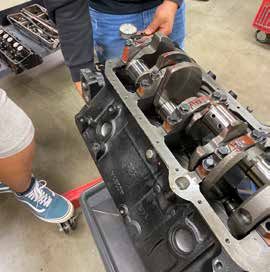
48

2
                                     Box 2: EMPLOYABILITY SKILLS:
                                           • Completion of a Project-Based Learning Experience OR
                                           • Completion of a Service-Based Learning Experience OR
                                           • Completion of a Work-Based Learning Experience

                          In Project-Based Learning (PBL), students are engaged
PROJECT-BASED LEARNING

                          in complex, authentic projects that require them to
                          apply a set of learned skills and/or knowledge. In most
                          cases, projects call for students to collaborate with each
                          other and present the product of their work to a public
                          audience. In LT, students experience PBL in a host of
                          different ways throughout their high school experience.
                          All Next Level Programs of Study will provide students
                          with a minimum of one PBL experience.

                         In Service-Based Learning (SBL), students apply newly
SERVICE-BASED LEARNING

                         learned skills and/or knowledge in the form of a
                         community service project. Service Projects are often
                         completed with the help of a community partner. While
                         many students are actively involved in community
                         service, to qualify as SBL, a given activity or community
                         service arrangement must be documented and include a
                         journaling or reflection component. Students interested
                         in completing SBL should discuss options with their
                         school counselor.

                         In Work-Based Learning (WBL), students apply recently
WORK-BASED LEARNING

                         learned skills and/or knowledge while working for a local
                         employer. Students engaged in WBL are often paid for
                         their work and complete assignments that ask them to
                         reflect on their experiences. For students, WBL can be a
                         tremendous opportunity to gain real-world experience
                         within a field of interest, while earning money and kick-
                         starting a professional network. For businesses, WBL
                         arrangements are powerful tools to recruit and attract
                         young, diverse talent.
                                                              5
3
             Box 3: POST-SECONDARY READINESS COMPETENCIES:
                 • Academic or Technical Honors Diploma
                 • Minimum Score on ACT, SAT or ASVAB
                 • State and/or Industry Recognized Credential or Certification
                 • Career-Technical Education Concentrator
                 • Federally-recognized Apprenticeship                               While many students will satisfy
                 • Complete 3 AP, IB or Dual-Credit Courses with a C Average         more than one Box 3 requirement,
                                                                                     we recommend that most students
                 • Completion of a Locally-Created Pathway
                                                                                     pursue a “Career & Technical Educa-
                                                                                     tion Concentrator” by completing
                                                                                     a NEXT LEVEL PROGRAM OF
                                                                                     STUDY.

Next Level Programs of Study Explained
The Next Level Programs of Study (NLPS) are a series of 3-4 courses that students take during
their high school career that will prepare them for a specific career pathway. Most of the NLPS
include opportunities for students to earn college credit and industry recognized certifications.
All students that complete an NLPS are prepared for meaningful employment in a career path-
way upon graduation.

 PRINCIPLES COURSE:                                              CONCENTRATOR COURSES:
 This course sets the foundation for a career path-              Students acquire the core occupational skills needed
 way and students can begin earning dual credits                 for a particular occupation. Industry recognized certifi-
 as they learn content that is often applicable to               cations are integrated into these courses and students
 multiple, closely related programs of study.                    are able to obtain CTE concentrator status after com-
                                                                 pletion of both courses.

PRINCIPLES                                CONCENTRATOR A                              CONCENTRATOR B
COURSE:                                   COURSE:                                     COURSE:
2 CREDITS                                 2 CREDITS                                   2 CREDITS

 EARN CTE CONCENTRATOR STATUS BY COMPLETING THESE THREE COURSES

CAPSTONE COURSE: 2+ CREDITS
After achieving CTE concentrator status, students can complete a program of study by enrolling in the
Capstone course. Students will be able to complete all of the technical courses required for the post-sec-
ondary program and have time built in for work-based learning opportunities, such as internships, clinicals,
or on-the-job training.

                                                         6
CAREER & TECHNICAL EDUCATION
                            NEXT LEVEL PROGRAMS OF STUDY (NLPS) OFFER ALL
                            STUDENTS THE OPPORTUNITY TO BENEFIT FROM THE UNIQUE
                            ELEMENTS OF CAREER & TECHNICAL EDUCATION (CTE).

REAL WORLD EXPERIENCE
CTE classes offered at McKenzie Center             to their course’s industry.
for Innovation & Technology offer unique           Activities available through CTE include
real world experiences that cannot be              project-based learning challenges
found in other high school courses. CTE            provided by industry, Career and
students learn by doing through hands-on           Technical Student Organization (CTSO)
lab experiences and on -the-job projects           competitions, opportunities to operate
through work-based learning or career              school-based businesses, and internships.
relevant experiences. Students have the            Students often have the opportunity to
opportunity to solve problems and create           work with and be mentored by a network
products using real equipment applicable           of industry professionals.

CAREER & TECHNICAL
STUDENT ORGANIZATIONS
Career and Technical Student
Organizations (CTSO’s) are CTE
organizations available for students
at McKenzie Center for Innovation &
Technology that expose students to career
awareness, career exploration and career
preparation.

Students learn not only industry-specific
skills, but also professional skills such as
communications, teamwork and problem
solving, which are valued by employers.

                                               7
DUAL CREDIT
Dual Credit courses offer high school College and University partners. Work
students the opportunity to earn both with your counselor to review the list of
high school and college credits in the Dual Credit courses available to you and
same course. Taking Dual Credit courses see what might be a good fit with your
prepares students for the transition to strengths and interests.
college and helps students jump ahead in
there postsecondary education. In Indiana, Lawrence Township’s partnership with Ivy
courses are offered at little to no cost to Tech Community College and Vincennes
the student. University in the development of Next
Level Programs of Study helps ensure that
Dual Credit courses are offered in dual credits obtained in high school are
partnership with Lawrence Township easily transferable .
Follow the QR Code to
take a virtual tour of
MCIT!
CERTIFICATIONS
CTE offers students the chance to earn
industry certifications while in high school.
These are programs that are usually
completed in a year or less and provide
specialized training within a particular
career path.
Many certifications that students can earn
are part of Indiana’s Promoted Industry
Certifications List which recognizes
certifications that are valued by industry,
have transference to postsecondary training
programs, and lead to quality employment.
Eligible promoted certifications can also
count towards Graduation.
8WORK-BASED LEARNING.........
WORK-BASED LEARNING ALLOWS STUDENTS TO LEARN FIRST-HAND WHAT
IT TAKES TO BE SUCCESSFUL IN THE WORKFORCE BY APPLYING THEIR
EDUCATION AND TECHNICAL SKILLS THROUGH ON-THE-JOB LEARNING.
These experiences within a chosen career pathway are an essential component to teach
the “why” of what is being taught in the classroom and how it transitions to the workplace.
Students often learn best through these experiences of acquiring skills in the context of
their real world application.
WHAT IS WORK-BASED LEARNING?
The Lawrence Township work-based learning program, offers a
combination of school and workplace learning with local employers.
Students either work off-site at an employer’s location, or employers
CAREER AWARENESS
come on-site into the classroom.
Students learn first-hand how to operate in the workforce, learning
what it takes to be successful while gaining both an education and
DISCOVER
valuable technical skills within their chosen career pathway. Career Awareness
experiences begin in
Middle School and
extends into 9th&10th
EMPLOYABILITY WORK-BASED
Grade. These experiences
present information on
SKILLS LEARNING
the multitude of careers
for students. These
CONTINUUM
introductory activities
Students learn not only typically occur within the
industry-specific technical academic setting.
skills, but also professional Check out the pictured
skills valued by nearly all work-based learning Activities might include:
employers, including: continuum that represents • Career Fair
the type of work-based • Career Presentation
• Communications learning experiences a • Workplace Tour (In
• Problem Solving student may participate in Person or Virtual)
• Teamwork throughout different phases
• Professionalism of a career pathway.
• Attendance
• Positive Attitude
• Ability
• Willingness to Learn
9HIGH SCHOOL
APPRENTICESHIPS
MCIT apprenticeship programs combine on- High school apprenticeships are also a valuable
the-job learning with academic and technical tool for businesses by providing new talent
classroom instruction. Students participating streams and creating a direct link between
in high school apprenticeships may be able to employers and the talent development system.
earn college credits and industry certifications.
Additionally, students have the opportunity Lawrence Township is actively pursuing
to begin on a career path that can eventually partnerships to expand on existing
lead to full-time employment. Students will apprenticeships through State Earn and Learn
often build off their high school apprenticeship (SEAL) programs, Youth Apprenticeships, and
by transitioning to a full-time registered Pre-Apprenticeships. Interested partners should
apprenticeship or obtaining additional post- contact the district via www.LTschools.org or call
secondary education after high school. MCIT Directly.
CAREER EXPLORATION
CAREER PREPARATION
INQUIRE
Career Exploration
activities combine the PREPARE CAREER TRAINING
academic setting and
the workplace. Through Career Preparation
structured learning
activities, students will
experiences are continued
authentic interactions with
DEVELOP
interact with industry industry professionals and Career Training
professionals to inform communities, designed experiences allow
career decisions. to reinforce and assess students to develop their
foundational professional skills for employment for
Activities might include: skills. a specific career, often
• Business or Industry continuing after high
Tour Activities might include: school.
• Project Based Learning • Clinical Experience
with Industry Partner • Internship Activities might include:
• Indiana Career Explorer • Extended Learning • Clinical Experience
• Informational (CTSO’s and Community • On-the-job Training
Interview Engagement) • Apprenticeship
• Job Shadow • School-based Enterprise • State Earn and Learn
• Networking Events • Youth Apprenticeship
10Version 22.1 | Last Updated 1.5.22 11 9
Version 22.1 | Last Updated 1.5.22

12
Version 22.1 | Last Updated 1.5.22

                                                    Construction Trades Pathway
                                                    Construction Trades workers help to build the school you
                                                    attend, the buildings where people work, the homes where
                                                    people live and roads people drive on. Our community
                                                    relies on Construction Trades workers to build, maintain
                                                    and repair the world around us. There is a shortage of
                                                    skilled workers in the Construction Trades. Successful
                                                    students are in high-demand and stand to gain from
                                                    tremendous growth opportunities after graduation.

Pathway Sequence & Course Information
   The Construction Trades Pathway consists of a four course sequence. Students that earn a “C” or better in the first three courses earn
   CTE Concentrator status to satisfy the box 3 requirement for graduation. This Pathway begins in the 10th Grade and requires concurrent
   enrollment in the Year 2 courses. This reflects the current version of the pathway; course sequences may be subject to change.

            Principles of Construction Trades: 2 Semesters | 10th or 11th Grade

                                                                                                                                        Year 1
            This course prepares students with the basic skills needed to continue in a construction trade field.
            Topics will include an introduction to the types and uses of common hand and power tools, learn the
            types and basic terminology associated with construction drawings, and basic safety. Additionally
            students will apply communication and mathematics skills within the context of the construction
            industry.

            Construction Trades - General Carpentry: 2 Semesters | 11th or 12th Grade
            This course builds upon the skills learned in the Principles of Construction Trades and examines
            the basics of framing. This includes studying the procedures for laying out and constructing floor
            systems, wall systems, ceiling joist and roof framing, and basic stair layout. This course is required to
            be taken concurrently with Construction Trades - Framing & Finishing as a double-block.                              (Concurrent)
                                                                                                                                        Year 2
            Construction Trades - Framing & Finishing: 2 Semesters | 11th or 12th Grade
            This course prepares students with advanced framing skills along with interior and exterior finishing
            techniques. Topics include roofing applications, thermal and moisture protection, exterior finishing,
            cold-formed steel framing, drywall installation and finishing, doors and door hardware, suspended
            ceilings, window, door, ceiling trim, and cabinet installation. Students also are exposed to basic elec-
            trical, HVAC, and plumbing installation.

            Construction Trades Capstone: 2+ Semesters | 11th or 12th Grade
                                                                                                                                 (Optional)
                                                                                                                                        Year 3

            The Construction Trades Capstone provides students with Work-Based Learning, Appren-
            ticeship and Internship opportunities. Students are matched with potential employers
            based on interest, skill and certification. Students gain valuable work experience, while
            also having the opportunity to begin earning wages as they learn.

                                                                   13
Additional Career
Information
Construction Trades Pathway - Continued
Graduation Pathways Requirements
Diploma Options Employability Skills Post-Secondary Readiness
1 ☑ Core 40
☑ Academic Honors
☑ Technical Honors
2 ☑ Project-Based
Learning
☑ Work-Based
Learning
3 ☑ CTE Concentrator
☑ Industry
Credentials
☑ Dual-Credit
Dual Credit & Industry Certifications
Dual Credit Industry Certifications
Successful students may earn Certifications may be earned
construction-trades dual-credit via through the Indiana-Kentucky-
Ivy Tech Community College. Ohio Regional Council of
Carpenters and the National
Center for Construction
Education & Research.
In-Demand Construction-Trades Occupations
Job
Education Median Job Growth Openings
Occupation
Level Salary Over Next 10 Years Projected Over
Next 10 Years
Carpenter $43,280 9% 20,374
High School + HVAC Technician $44,060 17% 7,771
Industry
Certification Plumber & Pipefitter $57, 400 18% 13,808
Electrician $57,680 10% 987
Interior Designer $50,850 8% 987
Associate‘s
Architectural and Civil Drafter $50,900 12% 1,354
Degree
Construction Manager $81,710 11% 5,468
Architect $83,930 9% 1,029
Bachelor’s
Degree
Architectural and Engineering Manager $115,410 9% 3,068
14Version 22.1 | Last Updated 1.5.22
Digital Design Pathway
Digital Design involves working with computers, animation,
video, and photography to create online media products
that engage the user, including websites, online marketing
campaigns, and interactive gaming apps. In this pathway,
students gain valuable experience using professional
equipment to create, modify, and publish media assets.
Digital Design skills are in high-demand and can be applied
to a multitude of future career pathways.
Pathway Sequence & Course Information
The Digital Design Pathway consists of a four course sequence. For the third course in the sequence, students have a choice in specialty.
Students that earn a “C” or better in the first three courses earn CTE Concentrator status to satisfy the box 3 requirement for graduation.
This reflects the current version of the pathway; course sequences may be subject to change.
Principles of Digital Design: 2 Semesters | 9th or 10th Grade
Year 1
This course introduces students to fundamental design theory. Investigations into design theory
and color dynamics will provide experiences in applying design theory, ideas and creative problem
solving, critical peer evaluation, and presentation skills. Students will also begin developing their
skills to capture, manipulate and layout digital images within Adobe Creative Cloud (Photoshop,
InDesign, etc.).
Digital Design - Graphics: 2 Semesters | 10th or 11th Grade
Year 2
This course expands on Principles of Digital Design by providing students with opportunities to
create the most common types of computer graphics used in visual communications. Students
advance their skills with professional vector-based & layout tools (primarily Adobe Creative Cloud)
Additionally, students will be introduced to a full range of image input technology and manipulation
including conventional photography, digital imaging, 3-D Cameras and computer scanners.
Interactive Media Design: Graphic Design & Layout: Professional Photography
Year 3
2 Semesters | 10, 11, or 12th Gr. 2 Semesters | 10, 11, or 12th Gr. & Videography:
Students specialize in emerg- Students specialize in the 2 Semesters | 10, 11, or 12th Gr.
ing digital media technologies OR layout and design of Graphic, OR Students specialize in the
such as Animation, Video Web and Print media. capture and production of
Production, Graphics and professional grade images and
Digital Audio. videos.
Digital Design Capstone: 2+ Semesters | 11th or 12th Grade
Year 4
The Digital Design Capstone course provides students the opportunity to dive deeper
into advanced concepts of Visual Communication including user experience/user inter-
face design, video production editing, animation and/or web design. Students will also
explore work-based learning and internship opportunities in Interactive Media.
15Additional Career
Information
Digital Design Pathway - Continued
Graduation Pathways Requirements
Diploma Options Employability Skills Post-Secondary Readiness
1 ☑ Core 40
☑ Academic Honors
☑ Technical Honors
2 ☑ Project-Based
Learning
☑ Work-Based
Learning
3 ☑ CTE Concentrator
☑ Industry
Credentials
☑ Dual-Credit
Dual Credit & Industry Certifications
Dual Credit Industry Certifications
Students may earn college credits for Students may earn Industry certifications through
Interactive Media through our dual- Adobe Digital Learning Services.
credit partner, Ivy Tech Community
College.
In-Demand Communications Occupations
Job
Education Median Job Growth Openings
Occupation
Level Salary Over Next 10 Years Projected Over
Next 10 Years
High School + Broadcast Technician $33,300 1% 566
Industry
Certification Audio & Video Equipment Technician $34,170 13% 1,044
Camera Operator - TV, Video, Motion Pic. $40,420 7% 293
Graphic Designer $41,550 4% 4,566
Associate‘s
Multimedia Artist & Animator $52,810 6% 333
Degree
Commercial and Industrial Designer $63,700 11% 849
Art Director $68,170 5% 598
Bachelor’s
Public Relations Specialist $55,460 10% 3,462
Degree
16Version 22.1 | Last Updated 1.5.22
Radio & Television Pathway
Radio & Television Broadcasting includes both presenting
and delivering news, weather, sports and featured stories
as a broadcaster or reporter, as well as the technical
production as a camera operator or production technician.
Successful students can expect to work with cutting
edge communications technology and assist with the
development and distribution of content to a school-wide
and community-wide audience.
Pathway Sequence & Course Information
The Radio & Television Pathway consists of a four course sequence. Students that earn a “C” or better in the first three courses earn CTE
Concentrator status to satisfy the box 3 requirement for graduation. This reflects the current version of the pathway; course sequences
may be subject to change.
Principles of Broadcasting: 2 Semesters | 9th or 10th Grade
Year 1
The purpose of the Principles of Broadcasting course is to provide entry-level fundamental skills for
students who wish to seek or pursue opportunities in the field of broadcasting or mass media.
Students will explore the technical aspects of audio and sound design for radio production and
distribution, as well as the technical aspects of video production and distribution.
Audio & Video Production Essentials: 2 Semesters | 10th or 11th Grade
Year 2
Audio and Video Production Essentials provides an in-depth study on audio and video production
techniques for radio, television, and digital technologies. Students will learn skills necessary for audio
production and on-air work used in radio and other digital formats. Additionally, experience will be
gained in the development of the video production process; including skills in message
development, directing, camera, video switcher, and character generator operations.
Mass Media Production: 2 Semesters | 10th, 11th or 12th Grade
Year 3
Mass Media Production will focus on the study of theory and practice in the voice and visual aspects
of radio and television performance. In addition, this course introduces the skills used to acquire and
deliver news stories in a digital media format. Students will learn how to research issues and events,
interview news sources, interact with law enforcement and government officials, along with learning
to write in a comprehensive news style.
Broadcasting Capstone: 2+ Semesters | 11th or 12th Grade
Year 4
The Broadcasting Capstone course provides students the opportunity to dive deeper
into the production of Mass Media through a practicum experience which will broadcast
student projects to the community. Students may also gain valuable experience working
in internships and work-based learning arrangements with local media outlets.
17Additional Career
Information
Radio & Television Pathway - Continued
Graduation Pathways Requirements
Diploma Options Employability Skills Post-Secondary Readiness
1 ☑ Core 40
☑ Academic Honors
☑ Technical Honors
2 ☑ Project-Based
Learning
3 ☑ CTE Concentrator
Dual Credit & Industry Certifications
This pathway is currently under development. No dual-credit or industry certifications are currently offered within this pathway. However,
we are actively exploring options for the future.
In-Demand Communications Occupations
Job
Education Median Job Growth Openings
Occupation
Level Salary Over Next 10 Years Projected Over
Next 10 Years
High School + Broadcast Technician $33,300 1% 566
Industry
Certification Audio & Video Equipment Technician $34,170 13% 1,044
Camera Operator - TV, Video, Motion Pic. $40,420 7% 293
Graphic Designer $41,550 4% 4,566
Associate‘s
Multimedia Artist & Animator $52,810 6% 333
Degree
Commercial and Industrial Designer $63,700 11% 849
Art Director $68,170 5% 598
Bachelor’s
Public Relations Specialist $55,460 10% 3,462
Degree
18Version 22.1 | Last Updated 1.5.22
Automotive Technology Pathway
Automotive Service Technology includes two distinct
tracks; Automotive Service and Collision Repair. The
Automotive Service Track prepares students to perform
repair and maintenance within the major Automotive
Systems. Collision Repair prepares students to replace and
repair damages to the body and chassis of a vehicle, as well
as the repair or replacement of other systems effected by a
collision.
Pathway Sequence & Course Information
The Automotive Technology Pathway consists of a four course sequence. In Year 2, students choose a Track to complete. Year 2 Courses
should be taken concurrently as a double-block. Students that earn a “C” or better in the first three courses earn CTE Concentrator status to
satisfy the box 3 requirement for graduation. This reflects the current version of the pathway; course sequences may be subject to change.
Principles of Automotive Service & Collision Repair: 2 Semesters | 10th or 11th
Year 1
The course provides students an overview of the operating, electrical, and general maintenance sys-
tems of the modern automobile. Students will study the maintenance and light repair of automotive
systems. They will be introduced to workshop safety and operation of equipment and tools used in
the automotive industry.
Automotive Service Track OR Collision Repair Track
Brake Systems: Automotive Body Repair:
2 Semesters | 11th or 12th Grade 2 Semesters | 11th or 12th Grade
(Concurrent)
Year 2
AND
AND
Steering & Suspensions: Plastic Body Repair &
2 Semesters | 11th or 12th Grade Painting Fundamentals:
2 Semesters | 11th or 12th Grade
Automotive Technology Capstone: 2+ Semesters | 12th Grade
(Optional)
Year 3
The Auto Technology Capstone provides students with Work-Based Learning, Appren-
ticeship and Internship opportunities. This program is sponsored by Ed Martin Automo-
tive. Through the program, students gain valuable work experience, while also having
the opportunity to begin earning wages as they learn.
19Additional Career
Information
Automotive Technology Pathway - Continued
Graduation Pathways Requirements
Diploma Options Employability Skills Post-Secondary Readiness
1 ☑ Core 40
☑ Academic Honors
☑ Technical Honors
2 ☑ Project-Based
Learning
☑ Work-Based
Learning
3 ☑ CTE Concentrator
☑ Industry
Credentials
☑ Dual-Credit
Dual Credit & Industry Certifications
Dual Credit Industry Certifications
Students may earn college credits Students may earn industry certifications
for Interactive Media through our through the National Institute for Auto-
dual-credit partner, Vincennes Uni- motive Service and I-CAR.
versity.
The Automotive Technology Pathway
is sponsored by Ed Martin Automotive
Group.
In-Demand Automotive Technology Occupations
Job
Education Median Job Growth Openings
Occupation
Level Salary Over Next 10 Years Projected Over
Next 10 Years
Recreation Vehicle Service Technician $36,030 12% 1,359
Automotive Service Technician $39,540 6% 16,517
High School + Bus and Truck Mechanic / Diesel Engine
$42,500 10% 8,301
Industry Specialist
Certification Automotive Body Repairer $44,390 9% 3,732
Aircraft Mechanic and Service Tech. $47,820 13% 1,332
Mobile Heavy Equipment Mechanic $48,510 9% 3,820
Associate‘s
Air Traffic Controller $120,410 5% 630
Degree
20Version 22.1 | Last Updated 1.5.22
Accounting Pathway
Accounting is the process of recording financial
transactions usually pertaining to a business or
organization. Financial statements are prepared to deliver
an accurate summary of an organization’s financial position
and operations. Students that complete the Accounting
Pathway will be prepared for entry level accounting jobs
such as billing and processing clerks. If interested, students
will also be well prepared to further pursue Accounting in
College.
Pathway Sequence & Course Information
The Accounting Pathway consists of a four course sequence. Students that earn a “C” or better in the first three courses earn CTE Concen-
trator status to satisfy the box 3 requirement for graduation. This reflects the current version of the pathway; course sequences may be
subject to change.
Principles of Business Management: 2 Semesters | 9th or 10th Grade
Year 1
Principles of Business Management examines business ownership, organization principles and
problems, management, and financial practices of business enterprises. Attention will be given
to developing business communication, problem-solving, and decision-making skills using
spreadsheets, word processing, data management, and presentation software. This course serves as
the entry point to multiple Business related pathways.
Accounting Fundamentals: 2 Semesters | 10th or 11th Grade
Year 2
This course introduces the language of business using Generally Accepted Accounting Principles
(GAAP) and procedures for proprietorships and partnerships using double-entry accounting.
Emphasis is placed on accounting principles as they relate to both manual and automated financial
systems. This course involves understanding, analyzing, and recording business transactions and
preparing, analyzing, and interpreting financial reports as a basis for decision-making.
Advanced Accounting: 2 Semesters | 10th, 11th or 12th Grade
Year 3
Advanced Accounting expands on the Generally Accepted Accounting Principles (GAAP) and
procedures for various forms of business ownership using double-entry accounting covered in
Accounting Fundamentals, including an emphasis on payroll accounting. Emphasis is placed
on applying Generally Accepted Accounting Principles through hands-on practice with popular
commercial accounting software packages that are currently used in business.
Accounting Capstone: 2+ Semesters | 11th or 12th Grade
Year 4
The Accounting Capstone provides students with Work-Based Learning, Apprenticeship
and Internship opportunities with local and regional businesses. Students are matched
with potential employers based on interest, skill and certification. Students gain valu-
able work experience, while also earning wages as they learn.
21Additional Career
Information
Accounting Pathway - Continued
Graduation Pathways Requirements
Diploma Options Employability Skills Post-Secondary Readiness
1 ☑ Core 40
☑ Academic Honors
☑ Technical Honors
2 ☑ Project-Based
Learning
☑ Work-Based
Learning
3 ☑ CTE Concentrator
☑ Industry
Credentials
☑ Dual-Credit
Dual Credit & Industry Certifications
Dual Credit Industry Certifications
Students may earn college credit Students may earn industry certifications in
through our dual-credit partner, Ivy Tech Quickbooks from Intuit.
Community College.
In-Demand Business Occupations
Job
Education Median Job Growth Openings
Occupation
Level Salary Over Next 10 Years Projected Over
Next 10 Years
Tax Preparer $34,840 17% 3,081
High School +
Industry Billing Clerk $35,460 14% 10,769
Certification Insurance Claims and Policy Processing
$37,610 10% 4,995
Clerk
Insurance Sales Agent $58,910 9% 11,589
Associate‘s
Degree
Financial Services Sales Agent $96,940 5% 4,215
Accountant and Auditor $65,880 11% 22,345
Bachelor’s
Personal Financial Advisor $104,710 16% 4,070
Degree
Financial Manager $113,150 19% 7,896
22Version 22.1 | Last Updated 1.5.22
Business Administration Pathway
Business Administration is responsible for supporting the
day-to-day activities of businesses, including executives
overseeing the business, human resources managing
people, training that develops people, or administrative
tasks that support all aspects of the business. In this
pathway, students are exposed to a broad spectrum of
business related topics including the management of
people and finances.
Pathway Sequence & Course Information
The Business Administration Pathway consists of a four course sequence. Students that earn a “C” or better in the first three courses earn
CTE Concentrator status to satisfy the box 3 requirement for graduation. This reflects the current version of the pathway; course sequenc-
es may be subject to change.
Principles of Business Management: 2 Semesters | 9th or 10th Grade
Year 1
Principles of Business Management examines business ownership, organization principles and
problems, management, and financial practices of business enterprises. Attention will be given
to developing business communication, problem-solving, and decision-making skills using
spreadsheets, word processing, data management, and presentation software. This course serves as
the entry point to multiple Business related pathways.
Management Fundamentals: 2 Semesters | 10th or 11th Grade
Year 2
Management Fundamentals describes the functions of managers, including the management of
activities and personnel. Describes the judicial system and the nature and sources of law
affecting business. Studies contracts, sales contracts with emphasis on Uniform Commercial Code
Applications, remedies for breach of contract and tort liabilities. Examines legal aspects of property
ownership, structures of business ownership, and agency relationships.
Accounting Fundamentals: 2 Semesters | 10th, 11th or 12th Grade
Year 3
This course introduces the language of business using Generally Accepted Accounting Principles
(GAAP) and procedures for proprietorships and partnerships using double-entry accounting.
Emphasis is placed on accounting principles as they relate to both manual and automated financial
systems. This course involves understanding, analyzing, and recording business transactions and
preparing, analyzing, and interpreting financial reports as a basis for decision-making.
Business Administration Capstone: 2+ Semesters | 11th or 12th Grade
Year 4
The Capstone course provides students with Work-Based Learning, Apprenticeship and
Internship opportunities with local and regional businesses. Students are matched with
potential employers based on interest, skill and certification. Students gain valuable
work experience, while also earning wages as they learn.
23Additional Career
Information
Business Administration Pathway - Continued
Graduation Pathways Requirements
Diploma Options Employability Skills Post-Secondary Readiness
1 2 3
☑ Core 40 ☑ Project-Based ☑ CTE Concentrator
☑ Academic Honors Learning ☑ Industry
☑ Technical Honors ☑ Work-Based Credentials
Learning ☑ Dual-Credit
Dual Credit & Industry Certifications
Dual Credit Industry Certifications
Students may earn college credit Students may earn industry certifications in
through our dual-credit partner, Ivy Tech Microsoft Office Products.
Community College.
In-Demand Business Occupations
Job
Education Median Job Growth Openings
Occupation
Level Salary Over Next 10 Years Projected Over
Next 10 Years
Tax Preparer $34,840 17% 3,081
High School +
Industry Billing Clerk $35,460 14% 10,769
Certification Insurance Claims and Policy Processing
$37,610 10% 4,995
Clerk
Insurance Sales Agent $58,910 9% 11,589
Associate‘s
Degree
Financial Services Sales Agent $96,940 5% 4,215
Accountant and Auditor $65,880 11% 22,345
Bachelor’s
Personal Financial Advisor $104,710 16% 4,070
Degree
Financial Manager $113,150 19% 7,896
24Version 22.1 | Last Updated 1.5.22
Entrepreneurship Pathway
Entrepreneurship is the act of creating, building and
scaling a business to generate a profit. It is common for an
entrepreneur to be an innovator, creating a new product or
idea or coming up with a way of doing things that can be
turned into a business. In this pathway, students will gain
the experience and knowledge needed to start and grow
their own business. They will meet other Entrepreneurs and
graduate inspired to create businesses that generate profit
and serve their communities.
Pathway Sequence & Course Information
The Entrepreneurship Pathway consists of a four course sequence. Students that earn a “C” or better in the first three courses earn CTE
Concentrator status to satisfy the box 3 requirement for graduation. This reflects the current version of the pathway; course sequences
may be subject to change.
Principles of Entrepreneurship: 2 Semesters | 9th or 10th Grade
Year 1
Principles of Entrepreneurship focuses on students learning about their own strengths, character and
skills and how their unique abilities can apply to entrepreneurship, as well as how an entrepreneurial
mindset can serve them regardless of their career path. The course helps students to identify and
evaluate business ideas while learning the steps and competencies required to launch a successful
new venture.
New Venture Development: 2 Semesters | 10th or 11th Grade
Year 2
New Venture Development is targeted to students interested in creating and growing their own
businesses. Students will apply marketing concepts to entrepreneurial company challenges, which
include creating and nurturing relationships with new customers, suppliers, distributors, employees
and investors; and understand the special challenges and opportunities involved in developing
marketing strategies “from the ground up.”
Small Business Operations: 2 Semesters | 10th, 11th or 12th Grade
Year 3
Small Business Operations will help students identify and evaluate the various sources available for
funding a new enterprise; demonstrate an understanding of financial terminology; read, prepare,
and analyze basic financial statements; estimating capital requirements and risk, exit strategies; and
prepare a budget for their business, including taxes and personnel costs. The student should also be
able to identify financing needs, and prepare sales forecasts.
Entrepreneurship Capstone: 2+ Semesters | 11th or 12th Grade
Year 4
The Capstone course provides students with Work-Based Learning, Apprenticeship and
Internship opportunities with local and regional businesses. Students are matched with
potential employers based on interest, skill and certification. Students gain valuable
work experience, while also earning wages as they learn.
25Additional Career
Information
Entrepreneurship Pathway - Continued
Graduation Pathways Requirements
Diploma Options Employability Skills Post-Secondary Readiness
1 ☑ Core 40
☑ Academic Honors
☑ Technical Honors
2 ☑ Project-Based
Learning
3 ☑ CTE Concentrator
☑ Dual-Credit
Dual Credit & Industry Credentials
Dual Credit
Students may earn college credit through
our dual-credit partner, Ivy Tech Community
College.
In-Demand Business Occupations
Job
Education Median Job Growth Openings
Occupation
Level Salary Over Next 10 Years Projected Over
Next 10 Years
Tax Preparer $34,840 17% 3,081
High School +
Industry Billing Clerk $35,460 14% 10,769
Certification Insurance Claims and Policy Processing
$37,610 10% 4,995
Clerk
Insurance Sales Agent $58,910 9% 11,589
Associate‘s
Degree
Financial Services Sales Agent $96,940 5% 4,215
Accountant and Auditor $65,880 11% 22,345
Bachelor’s
Personal Financial Advisor $104,710 16% 4,070
Degree
Financial Manager $113,150 19% 7,896
26Version 22.1 | Last Updated 1.5.22
Finance & Investment Pathway
Finance is the business of money. Banks loan money to
individuals and businesses, and offer a place for you to keep
your money safe and earn interest. Financial service companies
help you manage and grow your money. The insurance industry
provides families and companies with financial protection in
the event of accidents or emergencies. Successful students
in the Finance and Investment Pathway are prepared to enter
the Banking and Finance workforce directly or pursue further
education in the field.
Pathway Sequence & Course Information
The Finance & Investment Pathway consists of a four course sequence. Students that earn a “C” or better in the first three courses earn
CTE Concentrator status to satisfy the box 3 requirement for graduation. This reflects the current version of the pathway; course sequenc-
es may be subject to change.
Principles of Business Management: 2 Semesters | 9th or 10th Grade
Year 1
Principles of Business Management examines business ownership, organization principles and
problems, management, and financial practices of business enterprises. Attention will be given to de-
veloping business communication, problem-solving, and decision-making skills using spreadsheets,
word processing, data management, and presentation software. This course serves as the entry point
to multiple Business related pathways.
Personal Finance and Banking: 2 Semesters | 10th or 11th Grade
Year 2
Personal Finance and Banking emphasizes management of individual financial resources for growth
and maintenance of personal wealth. Covers home buying and mortgage financing, installment
financing, life and health insurance, securities, commodities and other investment opportunities.
Students will gain an overview of banking industry and the financial services provided by banks for
individuals and businesses.
Finance & Investment: 2 Semesters | 10th, 11th or 12th Grade
Year 3
Students analyze and synthesize high-level skills needed for a multitude of careers in the banking
and investment industry. Students learn banking, investments, and other finance fundamentals and
applications related to financial institutions, business and personal financial services, investment and
securities, risk management products, and corporate finance.
Finance & Investment Capstone: 2+ Semesters | 11th or 12th Grade
Year 4
The Capstone course provides students with Work-Based Learning, Apprenticeship and
Internship opportunities with local and regional businesses. Students are matched with
potential employers based on interest, skill and certification. Students gain valuable
work experience, while also earning wages as they learn.
27Additional Career
Information
Finance & Investment Pathway - Continued
Graduation Pathways Requirements
Diploma Options Employability Skills Post-Secondary Readiness
1 ☑ Core 40
☑ Academic Honors
☑ Technical Honors
2 ☑ Project-Based
Learning
3 ☑ CTE Concentrator
Dual Credit & Industry Certifications
This pathway is currently under development. No dual-credit or industry credentials are currently offered within this pathway. However, we
are actively exploring options for students to earn valuable credit via this pathway.
In-Demand Business Occupations
Job
Education Median Job Growth Openings
Occupation
Level Salary Over Next 10 Years Projected Over
Next 10 Years
Tax Preparer $34,840 17% 3,081
High School +
Industry Billing Clerk $35,460 14% 10,769
Certification Insurance Claims and Policy Processing
$37,610 10% 4,995
Clerk
Insurance Sales Agent $58,910 9% 11,589
Associate‘s
Degree
Financial Services Sales Agent $96,940 5% 4,215
Accountant and Auditor $65,880 11% 22,345
Bachelor’s
Personal Financial Advisor $104,710 16% 4,070
Degree
Financial Manager $113,150 19% 7,896
28Version 22.1 | Last Updated 1.5.22
Marketing & Sales Pathway
Marketing careers focus on contributing information,
ideas and research to help develop marketing strategies
to sell a business’s products or services. Sales people work
specifically with customers to identify their needs, and
sell them products and solutions that solve their needs or
problems. Successful students will be prepared to work in
customer-facing roles in business and retail.
Pathway Sequence & Course Information
The Marketing & Sales Pathway consists of a four course sequence. Students that earn a “C” or better in the first three courses earn CTE
Concentrator status to satisfy the box 3 requirement for graduation. This reflects the current version of the pathway; course sequences
may be subject to change.
Principles of Business Management: 2 Semesters | 9th or 10th Grade
Year 1
Principles of Business Management examines business ownership, organization principles and
problems, management, and financial practices of business enterprises. Attention will be given to de-
veloping business communication, problem-solving, and decision-making skills using spreadsheets,
word processing, data management, and presentation software. This course serves as the entry point
to multiple Business related pathways.
Marketing Fundamentals: 2 Semesters | 10th or 11th Grade
Year 2
Marketing Fundamentals provides a basic introduction to the scope and importance of
marketing in the global economy. Course topics include the seven functions of marketing:
promotion, channel management, pricing, product/service management, market planning,
marketing information management, and professional selling skills.
Digital Marketing: 2 Semesters | 10th, 11th or 12th Grade
Year 3
Digital Marketing provides an introduction to the world of e-commerce and digital marketing
media. The course covers how to integrate digital media and e-commerce into organizational
and marketing strategy. Students will explore e-commerce applications and the most popular
digital marketing tactics and tools.
Marketing Capstone: 2+ Semesters | 11th or 12th Grade
Year 4
The Capstone course provides students with Work-Based Learning, Apprenticeship and
Internship opportunities with local and regional businesses. Students are matched with
potential employers based on interest, skill and certification. Students gain valuable
work experience, while also earning wages as they learn.
29Additional Career
Information
Marketing & Sales Pathway - Continued
Graduation Pathways Requirements
Diploma Options Employability Skills Post-Secondary Readiness
1 ☑ Core 40
☑ Academic Honors
☑ Technical Honors
2 ☑ Project-Based
Learning
3 ☑ CTE Concentrator
Dual Credit & Industry Credentials
Dual Credit
Students may earn college credit through
our dual-credit partner, Ivy Tech Community
College.
In-Demand Business Occupations
Job
Education Median Job Growth Openings
Occupation
Level Salary Over Next 10 Years Projected Over
Next 10 Years
Tax Preparer $34,840 17% 3,081
High School +
Industry Billing Clerk $35,460 14% 10,769
Certification Insurance Claims and Policy Processing
$37,610 10% 4,995
Clerk
Insurance Sales Agent $58,910 9% 11,589
Associate‘s
Degree
Financial Services Sales Agent $96,940 5% 4,215
Accountant and Auditor $65,880 11% 22,345
Bachelor’s
Personal Financial Advisor $104,710 16% 4,070
Degree
Financial Manager $113,150 19% 7,896
30Version 22.1 | Last Updated 1.5.22
Early Childhood Education Pathway
Early Childhood Education focuses on teaching and
guiding Preschool children, helping them adjust socially
and interact with others, and giving them the building
blocks to learn and be curious. Exposing young children
to art, music, language, math, and social settings helps
to improve their development. Successful students will
be licensed and have opportunities to work in LT Early
Learning Centers during Summers or before
& After school.
Pathway Sequence & Course Information
The Early Childhood Education Pathway consists of a four course sequence. The Year 2 Courses ought to be taken concurrently (Dou-
ble-Block). Students that earn a “C” or better in the first three courses earn CTE Concentrator status to satisfy the box 3 requirement for
graduation. This reflects the current version of the pathway; course sequences may be subject to change.
Principles of Early Childhood Education: 2 Semesters | 9th or 10th Grade
Year 1
This course provides students with an overview of skills and strategies necessary to suc-
cessfully complete a certificate & exposure to types of programs, curricula and services
available to young children in Lawrence Township Schools.
Early Childhood Education - Curriculum: 2 Semesters | 10th or 11th Grade
This course provides students with an overview of skills and strategies necessary to suc-
cessfully complete a certificate & exposure to types of programs, curricula and services
available to young children in Lawrence Township Schools. (Concurrent)
Year 2
Early Childhood Education - Guidance: 2 Semesters | 10th or 11th Grade
This course allows students to analyze developmentally appropriate guidance, theory and
implementation for various early care and education settings. It also provides a basic un-
derstanding of the anti-bias/multicultural emphasis in the field of early childhood.
Early Childhood Education Capstone: 2+ Semesters | 11th or 12th Grade
Year 3
This course provides students with an opportunity for Work-Based Learning Experience in
one of the four nationally recognized Early Learning Centers in MSD of Lawrence Township.
31You can also read


