Grenada National Ecosystem Assessment (NEA) Training Series on Foresight Scenarios - Session 2 - An Overview to Foresight Scenarios Facilitated by ...
←
→
Page content transcription
If your browser does not render page correctly, please read the page content below

Grenada National Ecosystem Assessment
(NEA) Training Series on Foresight Scenarios

Session 2 – An Overview to Foresight Scenarios
Facilitated by Dr. Adrian Cashman
20th August 2021

1   August 2021

Foresight
Scenarios
Session 2: An Overview

In the last session we looked at some history and how scenarios have been used
    In this session we are going to look at types of scenarios and their different uses
    We are going to consider how each of them might be used in the context of
    Grenada

3     August, 2021
Let’s just remind ourselves of some of the things we
    went through during the last sessions

                    https://www.youtube.com/watch?v=bBSNZC7Todo

4    August, 2021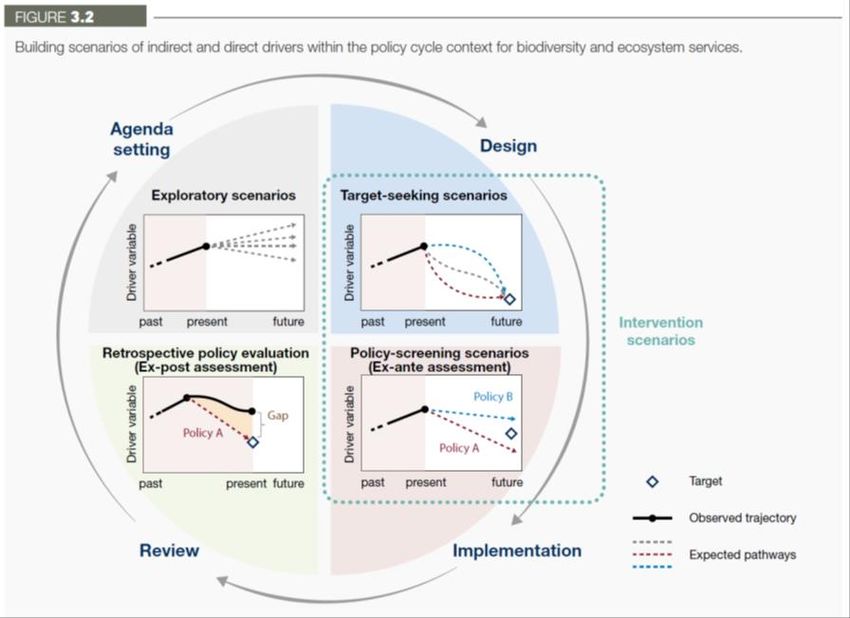
So what types of future are there?

5    August, 2021

A taxonomy of potential alternative futures
    It can be useful to consider four classes of potential alternative futures:
    1. Possible
    2. Plausible
    3. Probable
    4. Preferable

                                       (Source: adapted from Hancock & Bezold 1994).
    (Adapted from J. Voros, 2001)
    https://thevoroscope.com/publications/foresight-primer/

6     August, 2021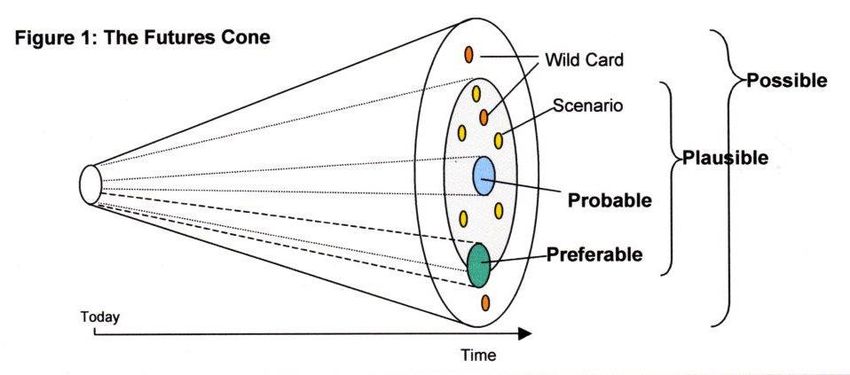
Possible futures
    • Includes all the kinds of futures we can possibly imagine – those which ‘might
      happen’ – no matter how far-fetched, unlikely or ‘way out’. They might, as a
      result, involve knowledge which we do not yet possess (the ‘warp drive’ of Star
      Trek is a good example), or might also involve transgressions of currently-
      accepted physical laws or principles.
    • Can be characterised as being reliant on the existence of some future
      knowledge that we do not yet possess, for it to come about.

7     August, 2021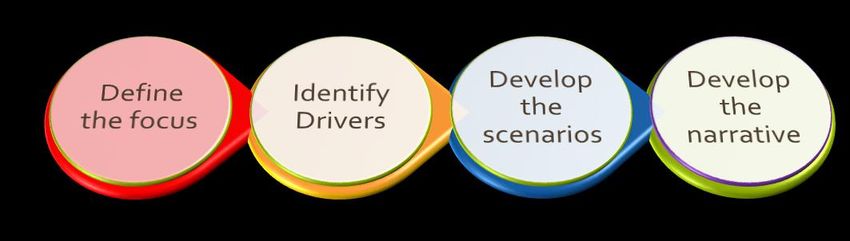
Plausible futures
    • Futures which ‘could’ happen according to our current knowledge of how
      things work.
    • Based on our current understanding of physical laws, processes, causation,
      systems of human interaction, etc. They are a smaller subset of futures than
      the Possible.

8    August, 2021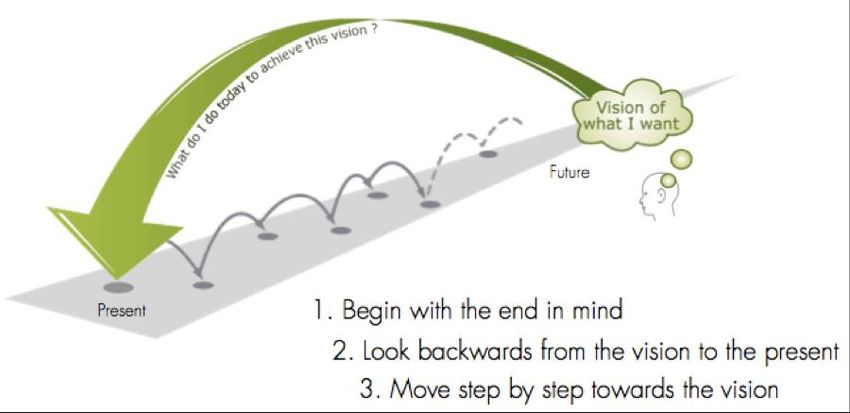
Probable futures
    • Futures which are considered ‘likely to happen’, and stem in part from the
      continuance of current trends.
    • Some probable futures are considered more likely than others; the one
      considered most likely is often called ‘business-as-usual’. It is a simple linear
      extension of the present.
    • However, trends are not necessarily continuous over long periods of time, and
      discontinuities in the trends may occur. Some trends may fade out suddenly,
      while new ones may emerge unexpectedly.
    • Just using trends gives rise to a much smaller class of futures than the previous
      two

9     August, 2021
Preferred futures
     • Preferred futures are concerned with what we ‘want to’ happen; in other
       words, these futures are largely emotional rather than cognitive.
     • Based on value judgements, and are more subjective than the previous three
       classes.
     • Because values differ so markedly between people, this class of futures is
       quite varied.
     • Preferable (or preferred) futures can be in any of the previous three classes

10     August, 2021
Approaches to Scenario Building
• The choice of the type of approach depends on the questions as well as the
scope and scale of analysis.
• There are two main approaches used to identify relevant drivers and to
construct the scenarios:
• Expert-based
• Participatory-based
• Based on the scenario assumptions, different types of tools may be used to
quantify the drivers and their impacts
11 August, 2021Expert-based Approaches
• All scenario construction implicitly involves some degree of expert opinion
• Formal expert-based scenario development entails identifying and eliciting
information from multiple experts, either individually or in a group
• Expert-based approaches are particularly valuable for translating a perceptual
model (i.e. qualitative understanding) into a formal model (i.e. mathematical
representation)
• Limitations include:
• Subjective choices and value laden assumptions related to disciplinary backgrounds
• Susceptible to scientific uncertainties
• Experts can also be stakeholders
12 August, 2021Participatory approaches
• Participatory approaches to scenario development consist of involving a
larger group of stakeholders through workshops or other formal meetings to
share ideas and ultimately develop scenarios based on their collective
knowledge
• Benefits from mobilising local and indigenous expertise, as well as enabling
participation and better informing local stakeholders
• Challenges include the limited understanding of relevant issues – in particular
the influence of external factors and inter-scale interactions
• Difficulty in translating qualitative data into quantitative inputs
13 August, 2021Discussion points
• What do you think the strengths and weakness of each approach might be
• Can you think of techniques which we might use to elicit information
14 August, 2021Focus
Discussion:
What might be an overarching question/issue regarding Grenada's biodiversity
and ecosystem services. Formulating this will assist in:
• The development of scenarios
• The exploration of Policy Options and Implications
So, what do you think the focus of the future foresight scenarios might be?
In your group brainstorm ideas and then try to synthesis them down to one or
two Key Questions.
15 August, 2021Focus – what are the scenarios about
• Scenario building must have a purpose – there is a question/issue that needs
to be addressed
• Scenarios are a way of going about answering the question or addressing the issue.
• The process starts by identifying our objective(s) of the exercise that will
benefit from the use of future scenarios and the mapping of potential impacts.
• Agree on the focus because everything builds around it
• One way is to formulate questions and iteratively discuss and agree
• Give direction as to the drivers and their influences
• Give direction as to the range of policy options
• Assists in identifying critical uncertainties
16 August, 2021Types of scenario
Scenarios may be thought of as fitting into one
of four types, depending on how they are to be
used in decision-making:
• Exploratory scenarios
• Target seeking (back-casting)
• Ex Ante scenarios (policy screening
scenarios)
• Ex Post scenarios (retrospective policy
assessment)
Scenario construction is a valuable endeavour
when attempting to construct possible futures
in the context of uncertainties, particularly
when ecological outcomes are highly
contingent on indirect drivers such as
economic growth and demography.
17 August, 202118 August, 2021
Comparing scenario types

19    August, 2021
Quiz time
     Question: What do the following terms mean to you?
     1. Ex post
     2. Normative
     3. Ex ante

20    August, 2021
Ex Post scenarios
• Ex-post assessments are the present evaluations of past efforts to achieve
policy goals throughout all stages of the policy cycle and decision-making
context
• Ex-post assessments can be based on the straightforward monitoring of
variables of interest as well as on a comparison of the achieved change or
status with the original targets and the anticipated impacts of the
implemented measures
21 August, 2021Ex Ante scenarios
• Ex-ante assessment is a proactive approach, oriented to identify and address
potential effects of environmental policies
• Ex-ante assessments use policy-screening scenarios to forecast the effects of
alternative policy or management options (interventions) on environmental
outcomes
• Ex-ante assessment usually starts in the very early stages of a policy
formulation and design
• May contribute to the social acceptance of policies by anticipating and
addressing conflicting objectives and adverse effects
• Assessment may include expert considerations and consultations with
relevant stakeholders
• Similar to EIAs and SEAs
22 August, 2021Target seeking scenarios
• There is an agreed end point and the definition of a clear set of objectives that
can either be specified in terms of achievable targets (e.g. in terms of the
extent of natural habitats remaining, or of food production self-sufficiency) or
as an objective function to be optimised (e.g. minimal biodiversity loss)
• Target-seeking scenarios can also be though of as ‘normative scenarios’
• Analyses, such as back-casting approaches, allows for the identification of
multiple potential pathways to a desired future vision
• Target-seeking scenarios are a valuable tool for examining the viability and
effectiveness of alternative pathways to a desired outcome
• This types of scenario helps to develop targets and indicators for the future
and assists with the design of policies
23 August, 2021Exploratory scenarios
• Raises awareness of future policy challenges to inform agenda setting
• Applicable where specific policy responses are being considered and/or the nature of
the problem to be addressed is unclear
• Can have strong qualitative and quantitative components and are often combined
with participatory approaches involving local and regional stakeholders
• Frequently employ a co-evolutionary approach through the use of matrices where the
projection of divergent futures is based on changes in the indirect and direct driver
assumptions
• Flexibility to construct storylines (conducive to greater creativity), coverage over a
wide range of outcomes
• Applied to problem areas where specific policy responses have yet to be formulated
or the nature of the problem remains unclear, hence relevant in the agenda-setting
stage of the policy cycle
• Utilised for climate change projections and were used in IPCC assessments
24 August, 2021Normative (target seeking) versus Exploratory
For a fuller exploration watch this video
https://www.youtube.com/watch?v=YLm0pM2xxtk
25 August, 2021So just to recall 26 August, 2021
Over to you – time for your thoughts
     In Break-out groups:
     1. What do you think of the four different approaches,
     2. How do you think the future of Ecosystem Services and Biodiversity would
        benefit from them
     3. How might they inform the path towards the Sustainable Development
        Goals?

     Choose some one to report back to the session.

27    August, 2021
Lets have a look at a set of scenarios
https://www.youtube.com/watch?v=bQGVYhrEHBE
What d you think of this – this is a global set of scenarios, what do you think a
‘downscaled to Grenada’ version might look like?
28 August, 2021Recap
• Looked at the taxonomy of futures
• Considered ways of going about constructing scenarios
• Introduced 4 approaches
29 August, 2021That’s all folks 30 August, 2021
You can also read


