GUIDE BOOK Andrei Dmitrievich Sakharov-PERSON OF THE ERA EXHIBITION - European Parliament
←
→
Page content transcription
If your browser does not render page correctly, please read the page content below

Sakharov Centennial
     1921-2021

     EXHIBITION

     Andrei
     Dmitrievich
     Sakharov –
     PERSON OF
     THE ERA

     GUIDE
     BOOK

          Person of the Era     1

028 Guidebook_A5.indd 1       26-04-2021 10:19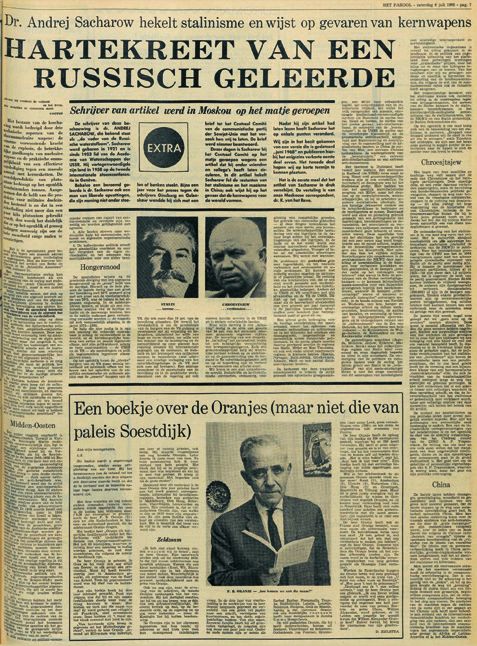
Table of Contents

          Foreword3

          The importance of Andrei Sakharov and
          His Legacy Today
          Edward Lucas                                                                                           5

          Smuggling Samizdat:
          The extraordinary tale how Sakharov’s
          essay reached the West
          Robert van Voren                                                                                       8

          The 1968 essay “Thoughts on Peace, Progress and
          Intellectual Freedom”
          Introduction
          Arkady Ostrovsky                                                                                      11

          Thoughts on Peace, Progress and
          Intellectual Freedom (an abbreviated version)                                                         14

          Background of the Exhibition                                                                         23

          Sakharov Today                                                                                       25

          QR Codes                                                                                             28

          Copyright © Andrei Sakharov Research Center, Kaunas
          Photos by Sergei Gavrishkevich, Yuri Rost, Alamy, Nkrita, private collections

          2                                                                              Andrei Dmitrievich Sakharov

028 Guidebook_A5.indd 2                                                                                          26-04-2021 10:19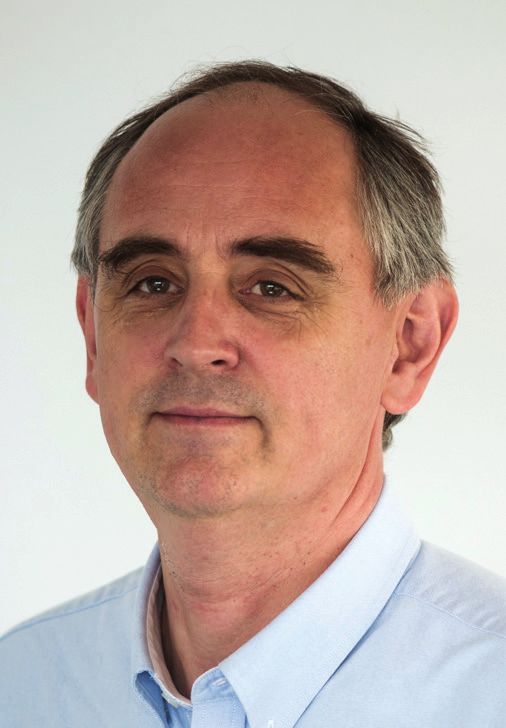
Foreword to the Guidebook “Andrei Dmitrievich
          Sakharov - Person of an Era”
          Exhibition “Sakharov Centennial 1921 - 2021”

          In February 1989, on the occasion of the award of the first Sakharov prize,
          the then President of the European Parliament, Lord Plumb, explained the
          meaning of the newly created prize and of its name. The award, he said, is
          intended to pay tribute to those individuals who defend freedom of thought
          and, for the European Parliament, Andrei Dmitrievich Sakharov embodies
          this fight. The same holds true today, in the year of his centenary.

          The story of Andrei Sakharov’s struggle for freedom continues to hum-
          ble and inspire us today. In 1968, in a famous essay partially reproduced
          in this guidebook, Andrei Sakharov courageously expressed the view that
          intellectual freedom is essential. In the following decades, he dedicated his
          life to defending the right to freedom of thought. Co-inventor of the Soviet
          hydrogen bomb, he called into question the consequences of the nuclear
          arms race, which he came to consider as a form of global suicide. Faced with
          the repressive and brutal Soviet regime, Andrei Sakharov had the courage
          to take a stand against it. Officially persecuted for years in the Soviet Union
          and forced into exile, he had the strength to continue the peaceful struggle
          for the advancement of human rights and individual freedoms.

          Andrei Sakharov was one of the driving forces of the dissident movements
          fighting for individual freedoms and democracy in the Soviet Union and in
          the Eastern European countries. His firm attachment to the importance of
          freedom of thought for a society, as well as his courageous acts have shaped
          the history of our continent, contributing to its pacification and making
          Europe’s reunification possible.

          Today, in a world where authoritarian regimes and populist forces undermine
          the fundamental freedoms and question the principle of human rights,
          the moral symbol represented by Andrei Sakharov constitutes a source of
          inspiration for all those that fight for democratic principles.

          For more than 30 years, the European Parliament contributes to keeping
          this symbol alive by awarding the Sakharov prize for Freedom of Thought.
          An important part of the European Parliament’s activities in support
          of human rights and democracy, the prize pays tribute all those who
          relentlessly fight for these values worldwide.

          Person of the Era                                                            3

028 Guidebook_A5.indd 3                                                               26-04-2021 10:19
A perfect illustration of this forceful fight are the laureates of the 2020
          Sakharov Prize - the Belarussian Democratic Opposition. Along with all the
          other Sakharov laureates, they taught us all what it means to never give up
          when it comes to defending your rights and freedoms and to fighting for a
          better, fairer society. A lesson that is both humbling and inspiring, just as
          Andrei Sakharov’s struggle for freedom and human rights was.

          David Maria Sassoli,
          President European Parliament

028 Guidebook_A5.indd 4                                                               26-04-2021 10:19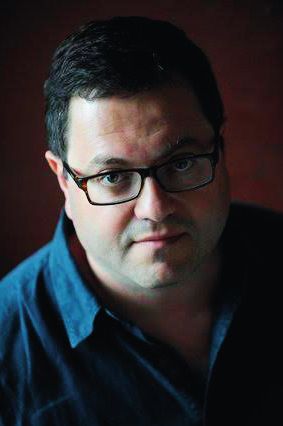
The Importance of
                                           Andrei Sakharov and
                                           His Legacy Today
                                           Edward Lucas

                                           The world in which Andrei Dmitrievich
                                           made his mark can seem distant. Most
                                           people reading this excellent and timely
                                           publication will have little first-hand
                                           knowledge of Sakharov’s life and works.
                                           In today’s globalised world, where we worry
                                           about climate change and pandemics rather
          than ideological struggles, the defining issues of the past age can seem like
          exotic but ancient history.

          The technological breakthrough of splitting the atom; the resulting
          development of weapons that could end life on the planet; a world sharply
          divided into Soviet and Western blocks, the astonishing courage of dis-
          sidents faced with the ruthless repression of Soviet life, and then the evil
          empire’s sudden, largely unforeseen collapse — these were the landmarks of
          Sakharov’s life. But blow off the dust, and they are just as relevant today.

          Start with technology, for Sakharov was a physicist before he was any-
          thing else. We are now on the brink of a technological leap as great as the
          breakthroughs in nuclear physics that marked Sakharov’s career. Hurtling
          towards us are advances in artificial intelligence, quantum computing and
          life sciences that present our species, and the planet it inhabits, with
          colossal opportunities and dangers. For that we need Sakharov’s
          perspective on the uses of our inventive powers. Technology must serve
          civilisation, not the other way round. It was the dangers of the arms race
          that first drew Sakharov to public life. These dangers have not gone away:
          indeed, the prospect of escalating capabilities in autonomous weapons
          are a terrifying reprise of the world of doomsday devices, dead hands,
          and Dr Strangelove.

          Person of the Era                                                              5

028 Guidebook_A5.indd 5                                                                 26-04-2021 10:19
If Sakharov could make his leap from the privileged heart of the Soviet
establishment to the perilous margins of Soviet society, we can believe
that others may do the same in other times and places. Sakharov’s courage
stretched the bounds of the possible then, and of our imagination now.
We cannot know if Chinese Sakharovs are right now examining their
consciences in the laboratories and research establishments of the Chinese
party state. But history shows us that there is indeed something about
physics that fosters moral courage. Physicists have been among the most
outspoken critics of the party-state in the past. The late Fang Lizhi was one
such dissident in the 1980s. Another, Liangying Xu, received the American
Physical Society’s Sakharov prize in 2008. More will come.
Sakharov’s message crossed an east-west gulf that no longer exists. But
even in today’s seemingly globalised and interconnected world, we have
seen the way in which the “Great Firewall of China” has cut off that country
from the free internet that the rest of the world uses. Carbon paper,
typewriters, and shortwave radio – technology that once seemed utterly
obsolescent – are coming back into fashion. The all-pervading digital
scrutiny of the Chinese party-state’s surveillance machine can capture
biometric data, crack electronic communications, and attack digital devices
anywhere in the world. But it still cannot penetrate a message written by
hand on a folded piece of paper, or prevent you tuning into a radio broadcast
bounced off the ionosphere. Sakharov, confined without a telephone in
Gorki, would appreciate the way in which the wheel of history has turned.
Sakharov’s powerful criticism of the Soviet regime was matched by an
unflinching eye for the West’s faults, in particular for racial injustice in the
United States. That could not be more topical today. Our greatest weakness
in the free world is not what our enemies do to us. It is what we do to
ourselves: the greed and complacency of our decision-makers, the festering
economic, social, and racial divisions in our societies. Nobody made
us do this. Sakharov’s stereoscopic vision was the antithesis of the
black-and-white simplicities of cold war propaganda.
It is easy to be discouraged. The Chinese and Russian regimes seem to
withstand the puny sanctions and criticism that we muster. China in
particular has a daunting combination of economic clout, military heft,
technological prowess, and decisive leadership. The “hybrid” arsenal
(which Sakharov would have instantly recognised under its old name of
“active measures”) allows our adversaries to rampage through our societies
and public institutions.
6 Andrei Dmitrievich Sakharov
028 Guidebook_A5.indd 6 26-04-2021 10:19Yet we should remember how much more daunting things seemed for
Sakharov — and indeed for the Lithuanians and other captive nations living
under Soviet rule in the 1960s. It seemed Quixotic to believe that the
courage of a sole, frail, cerebral figure, armed only with words and thoughts,
could dent the fortunes of a totalitarian superpower. Yet it did. His Nobel
Peace Prize in 1975 infuriated and demoralised the Soviet leadership
(as we now know from Politburo minutes). They refused to let Sakharov
attend the ceremony. He went to Vilnius instead, to attend the trial of his
fellow-dissident and friend, Sergei Kovalyev. Just 15 years later, Lithuania
declared the restoration of its independence – something that would have
seemed inconceivable at the time.
It is also important to remember Sakharov’s unwavering moral compass.
Many believed that Mikhail Gorbachev epitomized reform in the Soviet
Union. Those who stood in his way were troublemakers. That accusation
was frequently levelled against the Baltic states. Yet Sakharov thought the
slogan “don’t hamper Gorbachev’s efforts” was dangerous: for the Kremlin
leader, and for the Soviet Union.
In the closing minutes of the June 1989 session of the Congress of People’s
Deputies, Sakharov’s final words before Gorbachev (not for the last time)
switched off his microphone were to demand the withdrawal of the Soviet
ambassador from Beijing in protest at the crushing of the pro-democracy
protests there.
It is fitting that so many heroes of the resistance against the Chinese
party-state’s repression and aggression have received the Sakharov prize
awarded annually by the European Parliament: the democracy activists Wei
Jingsheng and Hu Jia and most recently Ilham Tohti, a peaceful advocate
of Uyghur culture, now languishing in jail. Is it too much to imagine a day of
dawning democracy in China when a repentant leadership summons Tohti to
Beijing? Impossible? That is how Sakharov’s invitation to Moscow seemed
only weeks before Gorbachev issued it.
Sakharov bequeathed us a colossal moral and intellectual legacy. It awaits
vindication. Let us get to work.
Person of the Era 7
028 Guidebook_A5.indd 7 26-04-2021 10:19Smuggling Samizdat:
The extraordinary tale of
how Sakharov’s first public
essay reached the West
Robert van Voren
In the 1960s, when the Soviet human rights
movement emerged and more and more
writers and thinkers sought alternative ways
to voice their opinions or have their literary
works published, there were only limited op-
tions. It was virtually impossible to publish
officially in the Soviet Union, unless the authorities themselves decided to
publish a work as part of a policy of “managed freedom”.1 As an alternative,
many dissident authors decided to turn to “samizdat”,2 and published their
works themselves by typing them out on a typewriter, often with carbon
paper between sheets of paper in order to create multiple copies.
A second possibility was to have works smuggled out of the country,
published in the West and sometimes, as tamizdat,3 or works published
tam (“over there”), and smuggled back into the USSR. Smuggling samizdat
out was a complicated matter, because Western visitors who functioned
as “couriers” were often searched at customs before leaving the country,
and so the most trusted avenue were diplomats or foreign correspondents,
who could make use of the diplomatic pouch.
One of the most extraordinary tales of ”samizdat smuggling” concerns
Sakharov’s 1968 essay “Thoughts on Progress, Peaceful Coexistence and
Intellectual Freedom”. One of Sakharov’s fellow dissidents, the historian
8 Andrei Dmitrievich Sakharov
028 Guidebook_A5.indd 8 26-04-2021 10:19Andrei Amalrik,4 obtained a copy and decided to try to get the text out to the
West for publication. Two years earlier, two Soviet writers, Andrei Sinyavsky
and Yuli Daniel, had been sentenced to seven and five years’ labor camp,
respectively for publishing their works in the West under pseudonyms,
and thus it was clear that following their example would not be without risk,
and would likely be met with repressive measures by the authorities. Amalrik
decided to turn to one of his close Western friends, Karel van het Reve, the
Dutch correspondent of the newspaper Het Parool in Moscow
Van het Reve, a professor of Slavic languages, had arrived in Moscow in
1967 for a two- year stint and was one of the most fearless correspondents
in Moscow. While most stayed clear from the dissident movement, Van het
Reve became friends with many of them and was not shy about reporting on
them in his newspaper.
After he received a copy of Sakharov’s essay
from Amalrik, Van het Reve immediately realized
he had something unique in his hands. Here was
a prominent nuclear physicist, a member of the
upper nomenklatura, or Soviet elite, who openly
criticized his government and carefully outlined
his vision for the future. In order to maximize the
chance of the text reaching the West, Van het
Reve decided to give a copy to his colleague Ray
Anderson of the New York Times. Both would
try to get the text out, and then publish it in their
respective newspapers.
Karel van het Reve translated the text into Dutch
and turned the manuscript into a two-part publication. The first part he ma-
naged to send out with a person who was apparently able to pass customs
without any checking. On July 6, 1968 the first half appeared in Het Parool.
Realizing it was an international scoop, Het Parool’s editor in chief in Am-
sterdam was delighted, and immediately called Van het Reve to tell him
he wanted his “sugar cake”, meaning the rest of the text. As they were in
a hurry, they decided that Van het Reve would read the entire text over the
telephone. Apparently, the KGB did not have a Dutch-speaking censor on
1
E.g. “One Day in the Life of Ivan Denisovich” by Aleksandr Solzhenitsyn or “Doctor Zhivago” by Boris Pasternak
2
Samizdat: a word made out of a merger of from “sam” (self) and “izdat“ (publish)
3
Tamizdat: a word made out of a merger of “tam” (there, meaning the West) and “izdat“ (publish)
4
Andrei Amalrik (1938-1980), author of among others the famous essay “Will the Soviet Union Survive
until 1984”.
Person of the Era 9
028 Guidebook_A5.indd 9 26-04-2021 10:19hand, and thus in the course of several hours the
whole text was read unobstructed, and subsequently
the second part also appeared in Het Parool.6
Ray Anderson was less fortunate. He managed to
get the text out, but his editor in New York was very
hesitant. He was convinced the text was a fake and
refused to publish it in the New York Times. After long
deliberations, he agreed that Ray Anderson could write
an article in which he summarized Sakharov’s main
message. The article was published on July 11, 1968.
Gradually, the editor realized that they text was real,
and that indeed this prominent physicist was the author, and ten days later,
on July 21, 1968 the whole text was published in the New York Times.7
The publication greatly upset the Soviet authorities. Sakharov was a highly
respected member of the elite and although he had repeatedly voiced his
concern over the development of the nuclear arsenal, nuclear proliferation,
and the threat of a nuclear war, this went much further. Here was a
document in which he openly criticized Soviet policy in much more extensive
terms and focused on issues that in their view were none of his business.
To them, Sakharov had allowed himself to take an anti-Soviet stand, which
under normal conditions would have led to criminal prosecution. When the
KGB found out of the existence of the essay, they demanded that Sakharov
withdrew his text, which he flatly refused. Now the text was even published
in the West, as was reported in a “top secret” report from TASS in
The Hague, and the damage was done.
Andrei Sakharov was suddenly propelled into the position of a leading critic
of the Soviet authorities. Soon, he and several dissident friends would
establish the dissident group, the Committee for Human Rights, and step
by step he became the main spokesperson of the human rights movement
in his country, and spent most of his time defending political prisoners,
holding press conferences and meetings with foreign visitors, and writing
more works on Soviet policy, East-West relations, and the threat of a
nuclear war.
5
The identity of the person was never revealed but there is reason to believe it was the well-known violinist
Emmy Verhey who at that time visited Moscow frequently
6
Karel van het Reve wrote twice about his “international scoop”, once in 1975 and a second time in …; the second
article was also published in the book “Voor Sacharov”, edited by John Löwenhardt and Bart Tromp (1986).
7
For an extensive description see the biography of Karel van het Reve “Denkbeelden uit een Dubbelleven” by
Ger Verrips, Arbeiderspers, 2004
10 Andrei Dmitrievich Sakharov
028 Guidebook_A5.indd 10 26-04-2021 10:19The 1968 essay
“Thoughts on Peace,
Progress and
Intellectual Freedom”
by Andrei Sakharov
Introduction
Arkady Ostrovsky
Among the epistolary legacy of Andrei
Sakharov, his “Thoughts on Peace,
Progress and Intellectual Freedom”
published in samizdat in Russian and in the New York Times in English in
1968, stand out for three main reasons.
One, it was Sakharov’s first published statement that manifested a pivot
from his role of a secret nuclear scientist to the number one public advocate
of human rights in the Soviet Union and in the world.
Two, it is the most comprehensive expression of his scientific and humanistic
view of the world and as such it represents a connection between what are
often wrongly considered to be two distinctly separate parts of his life.
Three, it had an explosive impact on all thinking people in the Soviet Union,
Europe and United States and was printed in 18 million copies, overtaking
Agatha Christie’s novels. And as such it remains as alive and relevant now as
it was then.
Sakharov’s essay was novel not only in terms of its thesis, but also in terms
of his method of thinking about a world divided by the ideological rivalries
of the Cold War. That method, as he states at the beginning, was formed by
his scientific life, and is based on a deep and unprejudiced study of facts,
theories, and views. Both as a scientist and as a humanist, he saw truth not
as relative, but as an absolute category.
Person of the Era 11
028 Guidebook_A5.indd 11 26-04-2021 10:19That “scientific approach” untainted by ideological constructions allowed
him to penetrate the essence of political systems with the same precision
that he penetrated physical matter. In a country whose political regime relied
on lies and propaganda, his attitude toward truth was the biggest heresy
of all.
The essay was a logical continuation of his activities as a nuclear scientist
and inventor of the Soviet H-bomb, the deadliest weapon on the planet that
was capable of wiping out human civilization several times over. The idea
behind the bomb, as far as Sakharov was concerned, was to prevent a
military conflict between the two superpowers by making the cost of
escalation intolerably high.
Yet, the very existence of such as a weapon created risks that could only
be mitigated by putting the values of human life and spirit, rather than
geopolitics or ideologies, at the heart of any decision-making. This required
abandoning the logic of a zero-sum game, as well as any realpolitik, and
accepting the universal principle of the “rights of man” to decide their own
fate and express their free will.
Sakharov’s belief in the moral imperative was engendered by the victory over
fascism in Europe and the rejection of Stalinism in the Soviet Union. Like
most people of his generation, Sakharov made a clear distinction between
the socialist ideas of social justice and the moral importance of labor,
which he subscribed to, and Stalinism, that hypocritically and demagogically
used socialist ideology to perpetrate crimes comparable to the horrors of
Hitlerism that engaged in an openly cannibalistic ideology. “As a consequence
of this ‘specific feature’ of Stalinism, it was the Soviet people, its most
active, talented and honest representatives, who suffered the most terrible
blow,” Sakharov wrote.
His own ability to rise above ideologies that prescribed to people how to
think meant that he was equally appalled by McCarthyism in America and
the manifestation of neo-Stalinism in the Soviet Union; by the egotism and
racism of white workers towards American Blacks and the egotism of the
unaccountable Soviet nomenklatura, protective of its hidden privileges, and
contemptuous towards a vast majority of Soviet workers.
12 Andrei Dmitrievich Sakharov
028 Guidebook_A5.indd 12 26-04-2021 10:19The convergence between capitalism and socialism would be beneficial
to people in both countries but must not involve a deal between the two
self-interested elite groups, he argued. Market reforms and the removal of
censorship in Czechoslovakia was a proof positive that such convergence
was possible and desirable. His essay was an appeal to the Soviet
government and to “all people of goodwill around the world”.
Sakharov underestimated the “egotism” of the Soviet managerial group that
considered his idea of “convergence” with its emphasis on the transparency
of distribution, market reforms and intellectual freedom a far greater and
more real threat than a thermonuclear war. Two weeks after the publication
of Sakharov’s essay in the New York Times, the Soviet government
responded to his idea by crushing Czechoslovakian reform with tanks.
Sakharov was not naïve and never thought the process of convergence was
quick or easy. In his essay he said it was likely to take about 30 years and
he lived long enough to see it happen. In 1986 Mikhail Gorbachev brought
Sakharov back from exile in Gorky and began to open up the country and
implement Sakharov’s idea of convergence based on intellectual freedom
and respect for human rights.
Russia’s current conflict with the West, its reversal to the worst Soviet
practices driven largely by the egotism and corruption of the post-Soviet
ruling elite, does not negate Sakharov’s ideas advocated in “Thoughts on
Peace, Progress and Intellectual Freedom”. It only makes them as relevant
today as they were then. Yet, 100 years after his birth, nobody embodies the
idea of convergence and moral imperative as much as Sakharov himself.
Person of the Era 13
028 Guidebook_A5.indd 13 26-04-2021 10:19Thoughts on Peace,
Progress and
Intellectual Freedom
An abbreviated version
of the original text8
The author’s views were formed in a scientific
milieu and by the scientific and technological
intelligentsia, which has shown a great deal of
concern about fundamental and specific issues
of foreign and domestic policy, on matters
concerning the future of humankind. This
concern was particularly sustained by an awareness that the scientific
method of managing policy, the economy, art, education, and military affairs
had not yet become a reality.
By “scientific,” we mean a method based on deep study of facts, theories,
and views, presumably unprejudiced, impartial in their conclusions and
involving open discussion. Moreover, the complex and multifaceted nature
of all phenomena of modern life; the enormous opportunities and dangers
connected to the scientific and technological revolution, along with a
number of civic and social trends, urgently require exactly such an approach,
which is acknowledged even in a number of official statements.
In this essay, submitted to readers for discussion, the author intends,
with the greatest persuasiveness and frankness possible, to outline two
theses shared by many people throughout the world. The essence of
these theses is:
“THE DIVISION OF HUMANKIND THREATENS IT WITH DESTRUCTION”
Civilization is threatened by these phenomena: universal thermonuclear war,
severe hunger for most of humanity, stupefaction by the drug of “mass cultu-
re,” and, in the grip of bureaucratized dogmatism, the dissemination of mass
myths, the abandoning of entire peoples and continents to the power of brutal
and bloody demagogues, and death and degeneration from the unforeseen
results of rapid changes in the conditions for existence on the planet.
8
On page 28 a QR code will lead the reader to the complete text on the website of the
Andrei Sakharov Research Center as published in the New York Times in 1968.
14 Andrei Dmitrievich Sakharov
028 Guidebook_A5.indd 14 26-04-2021 10:19Faced with danger, any action which increases the disunity of humankind,
any preaching of the incompatibility of world ideology and nations is
madness, is criminal. Only world-wide cooperation under the conditions of
intellectual freedom, the high moral ideals of socialism and labor, with the
elimination of the factors of dogmatism and the pressure of hidden interests
of the ruling classes will be in the interests of preserving civilization.
The reader understands that even so, this is not a question of an ideological
world with the kind of fanatic, sectarian and extremist ideologies which
repudiate any possibility of rapprochement with them. It is not about any
discussion and compromise, for example, with the ideologies of fascist,
racist, militarist or Maoist demagogy.
Millions of people throughout the world are striving to end poverty; they
detest persecution, dogmatism, and demagoguery (and their extreme ex-
pression – racism, fascism, Stalinism and Maoism); they believe in progress
on the basis of utilizing, under conditions of social justice and intellectual
freedom, all the positive experience accumulated by humankind.
INTELLECTUAL FREEDOM IS ESSENTIAL
This is freedom to receive and disseminate information; freedom of
unprejudiced and impartial discussion; and freedom from the pressure of
authority and prejudices. Such triple freedom of thought is the only
guarantee against the infection of the people by mass myths which in the
hands of cunning hypocrites and demagogues easily turn into a bloody
dictatorship. This is the only guarantee that a scientific and democratic
approach to politics, economics, and culture will work.
But freedom of thought in modern society is under a triple threat: from
the calculated opiate of “mass culture”; from cowardly and selfish petty
bourgeois ideology; from the ossified dogmatism of the bureaucratic
oligarchy and its beloved weapon – ideological censorship.
Therefore, freedom of thought needs the defense of all thinking and honest
people. This is the task not only of the intelligentsia, but of all strata of
society, especially its most active and organized stratum, the working class.
The global dangers of war, hunger, cultism, and bureaucratism threaten all
of humankind.
Person of the Era 15
028 Guidebook_A5.indd 15 26-04-2021 10:19The realization by the working class and the intelligentsia of the commonality
of their interests is a remarkable phenomenon of our time. We can say that
the most progressive, international and selfless part of the intelligentsia is
essentially part of the working class; and the advanced, educated, and
international part of the working class, the part farthest from the petty
bourgeoisie, is simultaneously part of the intelligentsia.
Such a position of the intelligentsia in society makes it pointless to loudly
demand that the intelligentsia subordinate its efforts to the will and
interests of the working class (in the USSR, Poland and other socialist
countries). In fact, such calls imply submission to the will of the party,
or to be more specific, to its central apparatus, to its bureaucrats. But where
is the guarantee that these bureaucrats always express the true interests
of the working class as a whole, the true interests of progress, and not their
own caste interests?
This essay is divided into two parts. The first is titled “Dangers” and the
second “Grounds for Hope.”
THE THREAT OF NUCLEAR WAR
The experience of past wars provided numerous examples of how the first
use of a new technological or tactical method of attack has usually turned
out to be very effective when a simple antidote could be found. But in the
event of thermonuclear war, the first use may already be decisive and nullify
years of work and many billions spent on the creation of anti-missile defense.
The exception is when there is a very great difference in the technological
and economic potentials of two opposing enemies. In this case, the stronger
side, having created an anti-missile defense with lots of safety reserves, is
tempted to try to get rid of the dangerous, unstable balance forever – to go
on a preventive adventure, expending part of its attack potential on destro-
ying most of the enemy’s missile launch positions and counting on impunity
at the last stage of escalation, that is, when destroying the enemy’s cities
and industries.
Fortunately for the world’s stability, the difference between the technical
and economic potentials of the USSR and USA are not so great, that for one
of these sides, such “preventive aggression” would not be associated with
a nearly inevitable risk of a retaliatory, devastating strike, and this situation
will not change if the arms race is extended to building anti-missile defense
systems.
In the opinion of many, shared by the author, the diplomatic formulation of
this mutually understood situation (for example, in the form of a treaty on
16 Andrei Dmitrievich Sakharov
028 Guidebook_A5.indd 16 26-04-2021 10:19a moratorium of construction of anti-missile defense systems) would be
a useful demonstration of the wish of the USA and USSR to preserve the
status quo and not expand the arms race to insanely expensive anti-missile
systems; a demonstration of the wish to cooperate and not fight.
Thermonuclear war cannot be viewed as the continuation of politics by
military means (in Clausewitz’s formula) but is a means of global suicide.
INTERNATIONAL TENSIONS AND NEW PRINCIPLES
International politics should be fully imbued with scientific methodology and
a democratic spirit, with an effort to fearlessly consider all facts, views,
and theories, with the maximum transparency of precisely formulated main
and intermediate goals, with a principled consistency.
1 A
ll peoples have the right to decide their own fate with free
expression of will. This right is guaranteed by international
oversight of compliance with the Declaration of Human Rights
by all governments. International monitoring involves both the
use of economic sanctions and the use of the UN’s armed forces
for protection of human rights.
2 A
ll military and military-economic forms of export of
counterrevolution and revolution are unlawful and are the
equivalent of aggression.
3 A
ll countries strive toward mutual aid in economic, cultural, and
general organizational problems in order to eliminate domestic
and international difficulties painlessly, and in order to prevent
the aggravation of international tension and strengthening of
the forces of reaction.
4 I nternational policy does not pursue the goals of exploiting local
concrete conditions to expand a zone of influence and to create
difficulties for another country. The purpose of international
policy is to ensure the universal implementation of the
Declaration of Human Rights, to prevent the aggravation of the
international situation, and the strengthening of tendencies of
militarism and nationalism.
Person of the Era 17
028 Guidebook_A5.indd 17 26-04-2021 10:19Such policy is not in any way a betrayal of the revolutionary and national
liberation struggle, the struggle with reaction and counterrevolution.
On the contrary, in eliminating all dubious cases, the opportunity for decisive
actions is increased in those extreme cases of reaction, racism, and
militarism, when no other means remain except armed struggle; the
deepening of peaceful coexistence would provide the opportunity to prevent
such tragic events as have occurred in Greece and Indonesia.
Such a policy positions the Soviet armed forces before clearly limited defensive
tasks, the tasks of defense of our country and our allies from aggression.
As history indicates, in defending the Motherland, and her great social and
cultural conquests, our people and its armed forces are united and invincible.
POLLUTION OF THE ENVIRONMENT
We live in a rapidly changing world. Industrial and hydraulic engineering,
logging operations, plowing of virgin lands, and the use of toxic chemicals
– all of this is changing the face of Earth, our “habitat,” in uncontrollable,
spontaneous ways.
Scientific study of all the interconnections in nature and the consequences
of our intervention clearly lags behind the pace of the changes underway.
An enormous quantity of harmful wastes from industry and transportation
are released into the air and water, including carcinogenic wastes. Will the
“safety limit” be crossed everywhere, as is already the case in a number
of places?
Carbon dioxide from the burning of coal changes the heat-reflecting proper-
ties of the atmosphere. Sooner or later, this takes on dangerous proportions.
But we do not know when this will be. The toxic chemicals used in agricul-
ture to combat pests have penetrated the bodies of humans and animals
both directly and in the form of a number of modified, even more dangerous
compounds, and have a very harmful effect on the brain, nervous system,
bone marrow, lymph nodes, liver, and other organs.
The use of antibiotics in poultry farming contributes to the development of
new forms of pathogenic microbes which are resistant to antibiotics.
I could mention the problem of the dumping of detergents and radioactive
waste, the erosion and salinization of the soil, the flooding of fields, the
deforestation of mountain slopes and woods needed for water conservation,
the death of birds and such useful animals as toads and frogs, and many
other examples of unreasonable predation caused by the primacy of local,
temporary, bureaucratic and selfish interests, and sometimes simply
18 Andrei Dmitrievich Sakharov
028 Guidebook_A5.indd 18 26-04-2021 10:19questions of bureaucratic prestige, as was the case in the notorious problem
of Lake Baikal.
The problems of geohygiene are complicated and multi-faceted, and very
closely interlinked with economic and social problems. It is impossible to
solve them completely at a national, much less a local scale. The saving of
our external habitat urgently requires overcoming disunity and the pressure
of temporary, local interests.
Otherwise, the USSR will poison the USA with its wastes and the USA will
poison the USSR with its wastes. For now, this is hyperbole, but with an
increase in the amount of wastes by 10% every year, in 100 years, the overall
increase will reach 20,000 times as much.
POLICE DICTATORSHIPS
Fascism in Germany lasted 12 years; Stalinism in the USSR lasted twice as
long. Even with very many features in common, there are certain differences.
There is a much more sophisticated reserve of hypocrisy and demagoguery,
relying not on an openly cannibalistic program, like Hitler’s, but on a progres-
sive and scientific socialist ideology, popular among working people.
This served as a very convenient screen for deceiving the working class, for
dulling the vigilance of the intelligentsia and rivals in the struggle for power;
with the cunning and sudden use of chain reaction mechanisms of torture,
executions, and denunciations; with intimidation and duping of millions of
people, who are largely not cowards or fools at all. This “special nature” of
Stalinism had as one of its consequences that the most terrible blow was
made against the Soviet people, its most active, capable, and honest
representatives.
No less than 10-15 million Soviet people perished in the dungeons of the
NKVD (the secret police) from torture and execution; in labor camps for
exiled kulaks and the so-called “kulak enablers” and members of their
families; and in labor camps “with no right of correspondence” (these were
essentially prototypes of the fascist death camps, where, for example,
thousands of prisoners were machined-gunned to death if the labor camps
were “overcrowded” or if “special instructions” were received).
People perished in the freezing coal mines of Norilsk and Vorkuta, and from
the cold, hunger, and backbreaking labor at countless construction sites,
logging camps, and canals; or simply died while being transported in boar-
ded-up train cars and the flooded holds of the “death ships” of the Sea of
Person of the Era 19
028 Guidebook_A5.indd 19 26-04-2021 10:19Okhotsk; and during the deportation of entire peoples – the Crimean Tatars,
the Volga Germans, the Kalmyks, and many other peoples.
Stalin’s aides came and went (Yagoda, Molotov, Yezhov, Zhdanov, Malenkov,
and Beria) but Stalin’s anti-people regime remained just as ferocious and at
the same time dogmatically limited, and blind in its cruelty. The destruction
of the military and engineering cadres before the war; the blind faith in the
rationality of a partner in crime – Hitler – and other sources of the national
tragedy of 1941 are covered well in the book The Punished Peoples by Alex-
ander Nekrich; in the writings of Maj. Gen. Petro Grigorenko and in a number
of other publications – this is far from the only example of this combination
of crimes and criminal narrow-mindedness and short-sightedness.
Stalinist dogmatism and detachment from real life were particularly manife-
sted in the rural areas – in the policy of unrestrained exploitation of villages
– with predatory procurement at “symbolic” prices; with almost serf-like
enslavement of the peasantry; with depriving collective farmers of the right
to own the main means of mechanization; and with the appointment of
collective farm chairmen on the basis of obsequiousness and cunning. The
result is obvious – the most profound destruction of the economy and the
entire way of life in the village, difficult to repair, which, by the “law of com-
municating vessels” has undermined industry as well.
The anti-people nature of Stalinism was vividly manifested in the persecu-
tion of the military who survived fascist captivity but landed in Stalin’s labor
camps; in the anti-worker “decrees”; in the criminal deportation of entire
peoples, dooming them to slow death; in the vociferous petty bourgeois
antisemitism common to Stalin’s bureaucracy and the NKVD (and to Stalin
personally); in the draconian laws to preserve socialist property (five years
for taking the gleanings from the fields and so on) which essentially served
for the most part as a means of meeting the demand for the “slave market”;
in the Ukrainophobia peculiar to Stalin, and so on.
THE THREAT TO INTELLECTUAL FREEDOM
A threat to the independence and the value of the human individual is a
threat to the meaning of human life.
Nothing so threatens the freedom of the individual and the meaning of life as
war, poverty, and terror. But there are very serious indirect dangers as well,
only slightly more distant.
20 Andrei Dmitrievich Sakharov
028 Guidebook_A5.indd 20 26-04-2021 10:19One of these dangers is the stultification of people (the “grey masses” in
the cynical definition of the bourgeois futurologist) with “mass culture”,
intentional, or commercially determined reduction of the intellectual level
and the problematic, which emphasizes entertainment or utilitarianism,
with carefully guarded censorship.
Another example is connected to the problems of education. The educational
system under government control; the separation of the school from the
church; the universal free learning – all of this is the greatest achievement
of social progress. But all of this has its reverse side – in this case, it is
excessive unification, which spreads both to the teaching itself, and to the
programs, particularly in such subjects as literature, history, sociology,
geography, and to the system of exams.
It is impossible not to see the danger in excessive appeal to authorities, to a
certain narrowing of the framework of discussions and the intellectual daring
of conclusions at the age when the formation of beliefs occurs. In ancient
China, the system of exams for a position led to mental stagnation, to the
canonization of the reactionary sides of Confucianism. It is very undesirable
to have something like this in modern society.
Modern technology and mass psychology have provided ever new
opportunities for management by established criteria, behavior, desires, and
beliefs of the popular masses. This is not only information management,
taking account of the theory of advertising and mass psychology, but more
technical methods as well, about which a lot is being written in the foreign
press. Examples are the systematic control of the birth rate, biochemical
management of psychological processes, and radio electronic control of
psychological processes.
From my perspective, we cannot fully reject new methods; we cannot
fundamentally prohibit the development of science and technology. But we
must clearly understand the terrible danger to basic human values, to the
very meaning of life, which is concealed in the abuse of technical and
biochemical methods and methods of mass psychology.
A human being should not turn into a chicken or a rat as in the famous
experiments, experiencing electronic pleasure from electrodes embedded in
the brain. Also related is the question of the growing use of tranquilizers and
mood enhancers, legal and illegal drugs and so on.
Person of the Era 21
028 Guidebook_A5.indd 21 26-04-2021 10:19We must not forget as well about the quite real danger about which Norbert
Weiner wrote in his book Cybernetics – about the lack of sustainable human
installation criteria in cybernetic technology. The unprecedented seductive
power given to humanity (or, even worse, to a certain group in a divided
humanity) in the use of the wise advice of future intellectual assistants –
artificial “thinking” automatons – can turn out to be, as Weiner stresses, a
fatal trap: t advice can turn out to be incomprehensibly insidious, pursuing
not human goals, but the goals of solving abstract tasks, unpredictably
transformed in the artificial brain.
Such a danger will become quite real several decades from now, if human
values, above all freedom of thought, are not reinforced during this period,
and disunity is not eliminated.
22 Andrei Dmitrievich Sakharov
028 Guidebook_A5.indd 22 26-04-2021 10:19Background on the Exhibition
The original Russian-language version of the exhibition “Andrei Dmitrievich
Sakharov – Man of an Era” was developed by the Moscow Sakharov Center.
It was translated into English by Catherine A. Fitzpatrick and subsequently
enlarged with several new banners together with the Andrei Sakharov Rese-
arch Center for Democratic Development and the Sakharov Prize Office of
the European Parliament.
For the exhibition four new clips were developed, to be shown during
the exhibition:
1 O
n basis of a 90-minute film by the Ukrainian filmmaker Iosif
Pasternak a 22-minute clip was produced that focuses on se-
veral important moments in Sakharov’s life, much of it based on
documentary material.
2 A
9-minute clip was made by the French journalist Nicolas
Miletitch and the Ukrainian filmmaker Lesya Kharchenko, based
on interviews Nicolas Miletitch made with Soviet dissidents and
others who knew Andrei Sakharov personally.
3 A
third clip of 7 minutes is based on an interview made with the
granddaughter of Andrei Sakharov, Marina Sakharov-Liberman,
made in February 2020.
4 A
fourth clips was made by the European Parliament on the
occasion of the Sakharov Centennial.
Person of the Era 23
028 Guidebook_A5.indd 23 26-04-2021 10:19In addition to the above, the exhibition includes an expose showing how
uncensored literature, so-called samizdat9, was made in Communist times,
and also how samizdat was smuggled out of the country to the West.
Some of this literature was then printed in the West and smuggled back
into the Eastern Bloc, so-called tamizdat.10 A selection of original samizdat
and tamizdat is shown.
This part of the exposition includes typewriters, photo- and film-cameras
and also the “magical slates” that were used to communicate
in flats of dissidents that were bugged by the KGB.
A collection of books by and about Andrei Sakharov completes the exhibition.
(credit: By Nkrita - Own work, CC BY-SA 4.0)
9
Samizdat, literally “self-published,” was a form of dissident activity across the socialist Eastern Bloc in
which individuals reproduced censored and underground makeshift publications, often by hand,
and passed the documents from reader to reader.
10
Tamizdat refers to literature published abroad (там, tam, “there”), often from smuggled manuscripts.
24 Andrei Dmitrievich Sakharov
028 Guidebook_A5.indd 24 26-04-2021 10:19Sakharov Today
More than thirty years after Dr. Andrei Sakharov died at a relatively young
age, his legacy lives on and continues to inspire people across the globe.
Many organizations and institutions invoke his heritage to mobilize people
to stand for their rights and actively contribute to the creation of a more
just and humane society. Special emphasis has been made on educating
younger people, who grew up after Sakharov died and who have no living
recollection of his enormous contribution to world peace and human rights.
Moscow Sakharov Center
The Public Commission for the Preservation of Academician Sakharov’s
Legacy was formed in 1990 at the behest of Sakharov’s widow Elena
Bonner. In 1994, the Public Commission created the Sakharov Archive,
and on the 75th anniversary of Sakharov’s birth the Sakharov Center was
opened in Moscow, not far from the house where he and Bonner had lived
from 1972–1989 (except for the years of exile, 1980–1986).
The Sakharov Center is a museum, civic and volunteer center. The Center
organises and hosts public lectures and discussions, press conferences,
film screenings, theater performances, exhibitions, and charitable events.
It also creates projects for informal education in the field of human rights.
The permanent exhibition at the Centers museum is dedicated to the
history of Soviet totalitarianism and resistance to oppression. The Center
also hosts and updates online databases on history of political repression
and the human rights movement.
The Moscow Sakharov Center has become a common home for human
rights defenders and civic activists in Moscow and throughout Russia.
Every year, the Sakharov Center hosts more than 400 events dedicated
to both historical memory and current pressing events and topics.
In contemporary Russia Sakharov Center remains one of the very few
independent venues which provides an alternative to the official
mainstream. It gives an opportunity to civic activists, human rights
defenders and public intellectuals to present their take on human rights,
democracy and freedom to the public and to create and implement civic
initiatives in these spheres.
Person of the Era 25
028 Guidebook_A5.indd 25 26-04-2021 10:19The Public Commission for the Preservation of Academician Sakharov’s
Legacy was declared in December 2014 a “foreign agent” by Russian
authorities and has to function despite multiple legislative and unspoken
restrictions and barriers.
Andrei Sakharov Research Center for
Democratic Development
The same motto guides the Andrei Sakharov Research Center for Democratic
Development. Founded at Vytautas Magnus University in Kaunas
(Lithuania) in 2017 with the goal of contributing to the development of a
pluralist and democratic society in Eastern Europe and the former Soviet
Union based on the rule of law, respect for human rights and equal opportu-
nities for all. The Center combines academic work with public events.
A special focus of the center is on the younger generation, in order to promote
their active civic participation through “young changemaker events,”
where social and political developments in Europe are discussed.
Among the public events are annual Sakharov Conferences, held on or
around Sakharov’s birthday on May 21, and annual Leonidas Donskis
Memorial Conferences, commemorating Leonidas Donskis, the prominent
Lithuanian thinker and political activist who died in 2016, and for whom
Andrei Sakharov was an ongoing source of inspiration.
Among the archival holdings are the world’s largest archives on the political
abuse of psychiatry in the USSR, as well as archives of well-known
Sovietologists and human rights activists.
Sakharov Prize, the European Parliament prize for
Freedom of Thought
Andrei Sakharov was in exile to Gorky when he learnt that the European
Parliament intended to create a prize for freedom of thought which would
bear his name. He sent a message to the European Parliament, giving his
permission for his name to be given to the prize and saying how moved he
was. He rightly saw the prize as an encouragement to all those who, like him,
had committed themselves to championing human rights. More than 30
years on, the prize that bears his name goes far beyond borders, even those
of oppressive regimes, to reward human rights activists and dissidents all
over the world.
26 Andrei Dmitrievich Sakharov
028 Guidebook_A5.indd 26 26-04-2021 10:19Awarded for the first time in 1988 to Nelson Mandela and Anatoli Marchen-
ko, the Sakharov Prize for Freedom of Thought is the highest tribute paid by
the European Union to human rights work. It gives recognition to individuals,
groups and organisations that have made an outstanding contribution to
protecting freedom of thought. Through the prize and its associated net-
work the EU assists laureates, who are supported and empowered in their
efforts to defend their causes.
The prize has so far been awarded to dissidents, political leaders, journalists,
lawyers, civil-society activists, writers, mothers, wives, minority leaders, an
anti-terrorist group, peace activists, an anti-torture activist, a cartoonist,
long-serving prisoners of conscience, a film-maker, the UN as a body and
even a child campaigning for the right to education. It promotes in particular
freedom of expression, the rights of minorities, respect for international law,
the development of democracy and the implementation of the rule of law.
Several laureates, including Nelson Mandela, Malala Yousafzai, Denis Muk-
wege and Nadia Murad, went on to win the Nobel Peace Prize.
The European Parliament awards the Sakharov Prize, with its EUR 50,000
endowment, at a formal plenary sitting in Strasbourg towards the end of
each year. Each of the Parliament’s political groups may nominate can-
didates, as may individual Members (the support of at least 40 MEPs is
required for each candidate). The nominees are presented at a joint meeting
of the Foreign Affairs Committee, the Development Committee and the
Human Rights Subcommittee, and the members of the full committees vote
on a shortlist of three candidates. The final winner or winners of the Sakhar-
ov Prize are chosen by the Conference of Presidents, a European Parliament
body led by the President, which includes the leaders of all the political
groups represented in the Parliament, making the choice of laureates a truly
European choice.
Person of the Era 27
028 Guidebook_A5.indd 27 26-04-2021 10:19QR Codes
English Russian original Lithuanian
version of the version of translation
exhibition the exhibition
The production of this guidebook was supported by:
028 Guidebook_A5.indd 28 26-04-2021 10:19You can also read


