Gynecology & Obstetrics - Longdom Publishing SL
←
→
Page content transcription
If your browser does not render page correctly, please read the page content below
logy & Obs
   co
   e           t

                etr
Gyn

   ISSN: 2161-0932 ics   Gynecology & Obstetrics                                                                            Research Article

Premenstrual Syndrome (PMS) Treatment with Physiological Modulators
Cornell Umobert1*, Hernandez Santos JR2, Belcaro G3
1Loyola University School of Medicine, Chicago, United States; 2Centro Medico Nacional 20 de noviembre Ciudad de Mexico,
United States; 3University G.d’ Annunzio Chieti, Pescara, Italy

             ABSTRACT
             Background: Premenstrual Syndrome (PMS) is a very common disease in females, and safe treatments are still
             needed.
             Objective: To treat symptoms of PMS using a combination of natural products at low dosages following the concepts
             of Physiological Modulation.
             Methods: Twenty two female affect by PMS were admitted and treated with a combination consisting of calcium,
             Vitamin D, lycopene, astaxanthin, and citrus bioflavonoids (Formula A28) in comparing with placebo. Two
             tablets/day were given at the moment of symptoms appearance and for the following three days.
             The scoring of somatic and behavioral symptoms (in total 32) was applied using a scale between 0 (no symptom) to 4
             (maximum expression of the symptom). The main variable to be measured was the sum of the scores (total score).
             Results: Formula A28 was effective in reducing by 75% the total score (t-test p
Umobert C, et al.
and complementary alternative medicine that sometimes were disease, bowel irritable syndrome, allergy or intolerance were not
shown to be effective [5]. There is an aspect that has not been admitted to the trial.
analyzed carefully and belongs to the oxidative stress condition
Other diseases such as hypertension, dyslipidemia were not
during the PMS. Despite some author was underlining this
within the exclusion criteria provided that the therapy in place
condition as an imbalance between oxidant/antioxidant status
was, effective, safe, and established by at least 3 months.
[6] conflicting results were found by others but none was
determining the activity of compounds or antioxidant Women under oral contraceptive treatment were not excluded
formulations. A particular combination of antioxidants was only in case that the treatment was safe and identical for at least
shown to reduce the oxidative stress during menstrual cycle in 6 months.
healthy women without PMS [7]. The aim of our research was to
determine the modification of PMS symptoms administering a Patients
combination of products (F) with natural anti-inflammatory and
antioxidant activity, calcium and vitamin D at low dosages as Twenty-two women between 14 and 45 years (all but 4 were
typical for Physiological Modulation approach [8]. health professionals nurse or doctors), were admitted presenting
somatic and behavioral symptoms of PMS as reported in Table 2
[2].
MATERIAL AND METHODS
Subjects were instructed to fill up a daily questionnaire relative
Admission criteria to the symptoms, by mean of a semi-quantitative scale scoring
from 0 to 4 (see later in experimental procedure) to be
Women between 20 and 35 years were admitted presenting completed during 3 subsequent menstrual cycles.
somatic and behavioral symptoms as reported in Table 1.
Table 2: General characteristics of the patients: mean values and SD,
Table 1: Somatic and behavioral symptoms of premenstrual syndrome. and frequency.
Somatical symptoms Behavioral symptoms Variable Mean SD
Colic pain Irritability Age (years) 34 11.6
Bloatedness Emotional tension Age of menarche (years) 13 1.3
Brest tenderness Anxiety Duration of menstruation (days) 5 1.4
Intestinalmodification Mood swing Frequency
Body weightincrease Depression School University degree/total 6/22
Hot flashes Aggression School Bachelor/total 12/22
Acne Anger Activity: professional/total 18/12
Libido reduction Fatigue Activity: house wife/total 0/22
Back pain Confusion/loss of concentration Students 4/22
Foodcraving Lethargy Smoking/total 0/22
Dizziness Sadness Concomitant therapy: oral 16/22
contraceptive
Headake Indecision
Concomitant therapy; other 2/22
Thirst Paranoia
Previous therapy for premenstrual 18/22
Nausea Over Sensitivity syndrome
Clumsiness Loss of motivation
At least 5 somatic and 5 behavioral symptoms were necessary to
Fluidretention Cryingeasily be admitted to the trial.
Institution
Exclusion criteria
The trial was conducted under the supervision of Irwin Labs
Subjects suffering from any cancer, chronic diseases such as (Spoltore-PE Italy).
Alzheimer ’ s disease, depression, anorexia, paranoia, Chron ’ s
Gynecol Obstet (Sunnyvale), Vol.10 Iss.4 No:523 2Umobert C, et al.
Experimental procedure RESULTS
The data were recorded during three subsequent menstrual All the 22 cases concluded the experience, and no side effect
cycles, and only those women reporting similar symptoms in the was declared. The patients ’ general characteristics are
first two evaluations were admitted. The criteria used for summarized in Table 2.
admission were such that only 1 point of difference between the
first two score evaluations (baseline and placebo) for any of the The level of education was quite high, since most of the patients
symptoms was accepted. In case of a scoring difference of >1 the were medical professional, and 4 cases only were young students.
subject was not admitted to the trial. Data relative to the scoring are summarized in Table 3. Almost
for all the symptoms the highest scores were appearing in the
Variables measurement first day before menses.
Three sets of measurements for the variables were requested: Table 3: Scores averages (mean and SD) and percentages of inhibition
The first consisted of the baseline evaluation, in the day of the following A28 treatment.
symptom appearance, and was done by the investigators together
with the participants; the second evaluation was done directly by Period Placebo After A 28 %Inhibition
the patients only after the treatment with placebo.
The third evaluation was done by the patient only during the Measures Mean SD Mean SD
treatment with the active formula (F).
Somatic variables
The highest scoring only was used for the evaluation, no matter
about the day (1 to 3) of appearance. Colic type pain 2.9 0.75 0.5Ɏ 0.50 83
Treatments Bloatedness 1.7 0.77 0.4 Ɏ 0.50 76
The month immediately after the baseline evaluation consisted Breast tenderness 2.4 0.79 0.8 Ɏ 0.49 66
of placebo in the quantity of 2 cps, to be taken together
immediately before sleeping and at least two hours after the Intestinal modifications 1.9 0.87 0.7 Ɏ 0.47 65
evening meal. The treatment was continued for 3 days before
the expected menses. Body weight increase 0.5 0.67 0.1 Ɏ 0.27 86
The second treatment was immediately following next month Hot flashes 2.2 0.80 0.8 Ɏ 0.49 63
consisting of 3 days, where the active formula (A28) was given in
the amount of 2 cps/day, to be taken together before sleeping. Acne b 1.3 1.04 0.5 Ɏ 0.71 62
The patients were instructed to take F at least two hours after
the evening meal. Two boxes containing 10 cps (placebo or A28) Libido reduction 2.0 1.50 0.7 Ɏ 0.60 64
were given to each participant. The capsule of both treatments,
Back pain 2.2 0.50 0.5 Ɏ 0.51 77
placebo and F, were identical for color and weight.
Food craving 1.0 0.82 0.5 Ɏ 0.57 52
Main variables
Dizziness 1.6 0.73 0.1 Ɏ 0.33 93
The main variables were the sum of the score of both somatic
and behavioral symptoms, while all the other variables were
Headache 2.6 0.50 0.5 Ɏ 0.58 82
considered as ancillary variables.
Thirst 1.4 0.67 0.5 Ɏ 0.51 65
STATISTICAL ANALYSIS
Nausea 1.5 0.74 0Ɏ 0.20 97
This study was based on a heuristic hypothesis, since no data
were available to calculate the test power. Clumsiness 1.0 0.76 0.1 Ɏ 0.27 92
The average values and dispersion measures were calculated for
Fluid retention 1.0 0.69 0.3 Ɏ 0.53 73
each variable following the placebo and F treatments. The
differences between treatments (placebo and A28) were tested
Total score somatic 27.2 5.27 6.9 c 2.71 75
using the Test U (Mann-Whitney). Limited to the sum of the
somatic and behavioral symptoms the t test was calculated. Behavioral variables
The JMP15 Pro of SAS Institute (2020) was used for the
calculations. Irritability 2.5 0.74 0.8 Ɏ 0.43 69
Emotional tension 2.3 0.63 0.7 Ɏ 0.56 71
Compliance
The compliance was consisting of the counting of residual cps Anxiety 2.1 0.64 0.8 Ɏ 0.40 63
both for placebo and active formula.
Gynecol Obstet (Sunnyvale), Vol.10 Iss.4 No:523 3Umobert C, et al.
Mood swing 2.0 0.79 0.8 Ɏ 0.40 70
women with PMS and PMDD. It is probable that the etiology is
multifactorial and in part genetically determined and due to
Depression 2.0 0.98 0.2 Ɏ 0.46 92 neurotransmitter and neuropeptide differential sensitivity [15].
Although the specific neurotansmitter, neuroendocrine and
Aggressiveness 1.4 1.18 0.4 Ɏ 0.57 73
neurosteroid abnormalities determining the syndrome are not
known, serotonin, norepinephrine, γ-aminobutiric acid
Anger 2.2 0.75 1.1 Ɏ 0.48 52
(GABA), allopregnandolone (ALLO) which is a metabolite of
Fatigue 2.4 0.73 0.7 Ɏ 0.55 71 progesterone that acts at the GABAA receptor), endorfins and
factor involved in calcium homeostasis may be all involved.
Loss of concentration 1.9 0.94 0.4 Ɏ 0.50 77
It may be interesting consider that receptors of any type (e.g for
serotonin, norepinephine, GABA) are located primarily on the
Lethargy 1.4 0.91 0.2 Ɏ 0.37 89
cellular membranes. The membrane functions in general belong
Sadness 2.3 0.89 1.0 Ɏ 0.20 55 to the oxidative condition of the membrane itself, and the
receptor is maintained in place with the normal function
Indecision 1.9 0.75 0.1 Ɏ 0.27 96 depending upon the membrane structure around and within the
receptor. The membrane around and within the receptor (rafts)
Paranoia 1.8 1.11 0.1 Ɏ 0.43 93 can have a differential sensitivity to the oxidative stress (OS)
depending upon the quantity of double bonds in the lipids
Over sensitivity 2.0 0.76 0.8 Ɏ 0.37 58 constituting the phospholipids (PL) and the antioxidant reserve
available in the cellular system. Lipids rafts consisting of
Loss of motivation 2.2 0.91 0.2 Ɏ 0.40 91 cholesterol/sfingo lipids micro domains are involved in protein
traffic, formation of signaling complexes and are abundantly
Crying easily 1.7 0.99 0.1 Ɏ 0.33 93
represented of several postsynaptic dendrites [16].
Total score behavioral 32.7 10.9 8.3 c 75 This means that a neuroamine receptor (e.g for serotonin,
1 dopamine) may be more sensible to the oxidation than an
estrogenic receptor or vice versa.
The main observations that can be drawn from the study The consequence of this is that even a mild oxidation in absence
are the following of an adequate antioxidant capacity can trigger the dysfunction
The total scoring following placebo and after the treatment with of certain receptor only, whereas a massive oxidation generates a
F were significantly different (t test pUmobert C, et al.
One example of this ambivalent condition is the use of oral
contraceptives in the control of PMS. The combined hormonal
contraception (CHC) was shown to have beneficial effect [17] on
the syndrome.
Oral contraceptives increases substantially the OS condition,
however in most of the cases they do not cause any evident
damage in normal women.
In fact, OS following CHC is not causing any particular
symptom, a part of and the risk of venous thrombosis and some
vague complains, meaning that the hormonal increase
determined by the estrogens and/or progestins daily
administration do not cause those symptoms which are
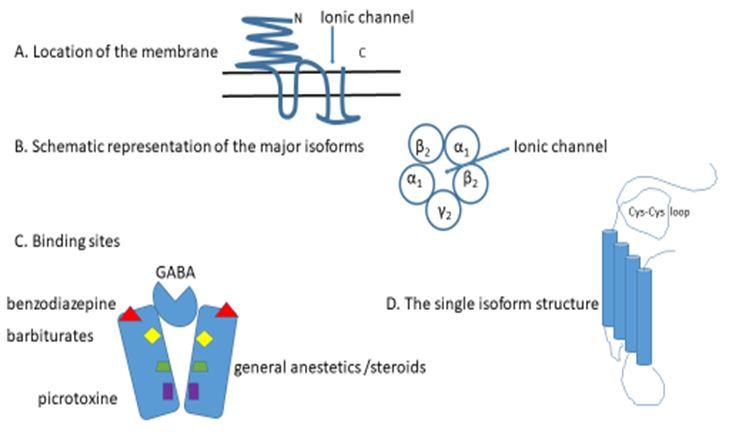
characteristic of PMS/PMDD, despite the massive increase of Figure 2: GABAA receptors consist of 5 subunits 2α1, 2ß2, 1γ2
OS. coupled around a central ion pore.
One of the reason could be this increase is counterbalanced by Description of Figure 2: A. The receptor has a large dominion
the concomitant overproduction of the antioxidant reserve. In outside of the membrane with the aim of stabilize the structure
other terms all the system seems to be over expressed and and maintain the ionic channel in place.
balanced.
B. The channel proteins belong to genes located into four gene
Despite CHC sometimes is effective in the treatment of PMS, in clusters (chromosome 4, 5, 15 and X) which determine the
many cases it fail in the control of the symptoms. As known the various isoforms, α, β, γ each with different dispositions
progestogens contained in some hormonal contraceptives are among them, and inside the same protein. The most
metabolized (into pregnenolone and allopregnanolone) which represented seems the pentameric complex arranged as γ2 β2
modify and activate the GABAergic system increasing the α1 β2 α1.
central GABA-mediated inhibition.
C. Binding sites are many, located in different part of the
The lack of the activity of CHC on PMS indicates that the receptors and each site determine the opening of the channel
syndromes are not related to the dysregulation of individual allowing the Cl- inflow and the modification of membrane
neurotransmitters and belongs to a more intricate mechanism. potential.
The GABAA receptor D. The single isoform is characterized by proteins containing in
the external part a loop that is maintained by two cysteins,
The GABAA receptors are the major inhibitory stabilized by a double bond which can be easily oxidized [18]. An
neurotransmitter receptors in the mammalian brain, widely oxidation of this bond makes the monomeric protein inefficient
present particularly in the striatum, mesolimbic, cortex, and do not allow the appropriate function of the ionic channel.
hypothalamus, midbrain.
This aspects make clear that OS may compromise directly
Particularly important PMS are those located in the amygdala. (receptor per se) or indirectly (rafts) the neuronal firing and
GABAA receptors open channels for Cl that lead to an influx of inhibitory neurons can be more sensible than stimulating
ions that hyperpolarizes the neuronal membrane and makes less neurons [19-21].
likely to generate action potentials to stimulate output neurons
to firing from the amygdala to the frontal cortex. Bioflavonoids have been found to interact with ionotropic
GABA receptors, acting via multiple binding size and can be
In the amygdala when the excitatory signals (EPSPs or excitatory one of the possibilities to modulate their activity [22].
post synaptic potential) caused by fear or stress will be inhibited,
a marked decrease in anxiety and a greater feeling of calm take Calcium sensing receptors
place.
Extracellular fluid (ECF) Ca concentration is maintained within
The GABAA receptors consist of 5 subunits 2α1, 2ß2, 1γ2 a narrow range in normal individuals since any change in its
coupled around a central ion pore [2,3] and located transversally entry into the EFF is rapidly matched by an identical change of
on the membrane (Figure 2). urinary excretion. An adequate secretion of parathyroid
hormone (PTH is required for this adaptation and Ca sensing
receptors (CaSR) are fundamental to make efficient this minute-
to minute control. However, Many CaSRs (Figure 3) are present
thorough the body, in kidney, bones, skin, stomach and colon
[23].
Gynecol Obstet (Sunnyvale), Vol.10 Iss.4 No:523 5Umobert C, et al.
Figure 3: The binding of Ca+ ions to the receptor is of the type
“Venous flytrup”.
Description of Figure 3: Activation results in conformational
changes resulting in signal transduction through the complex
Gα part of the inhibitory/activatory glycoprotein cluster G α
β γ.
Table 4: CaSRs, inflammation and oxidative stress.
Ingredient Dose Unit Activity
Vitamin D3 (cholecalciferol) 1.25 μg Calcium absorptions
Calcium carbonate 209 mg Calcium receptors (CARS) modulation in the GI
Calcium lactate 143 mg Calcium availability
Lycopene 1 mg Reduction of lymphocytes reactivity as inflammatory triggers
Astaxanthin 0.25 mg Antioxidant activity for central GABA receptors
Citrus flavonoids 33.3 mg Antioxidant, anti-inflammatory activity
The ECD domain in humans contains 612 amino acids with the CONCLUSION
presence of 17 cysteins that form four disulfide bonds stabilizing
the quaternary structure which is fundamental for the protein The treatment of PMS with a formula based on the concepts of
functionality. Physiological Modulation was shown to be very effective in
reducing somatic and behavioral symptoms.
Cysteins are very sensible to oxidation, and an appropriate
antioxidant protection is needed to maintain the efficiency of AKNOWLEDGEMENTS
the CaSR receptor.
UC was conceiving the trial, JRHS and GB were treating and
For what concerns the gastrointestinal tract in humans, CaSR in evaluating the patients, UC was evaluating the data and wrote
humans are present in the stomach, in the small and large the text.
intestine and in the colon.
No funding was received for the trial, which was conducted as
In the stomach CaSR receptor are localized to the basolateral investigators initiative.
membrane of surface epithelial cells, in the antrum and to a
lesser extent in the acid-secreting glands in the fundus; in both Brava Company (Mexico City) was providing the placebo, and
cases they control the acid secretion. the product.
In the small and large intestine they are localized on the basal
membrane of the intestinal crypt and villiepithelial cells.
ETHICS APPROVAL AND INFORMED
CONSENT
In the colon surface cells are responsible for absorption whereas
in the crypt are responsible for secretion and motility through The study was approved by the Ethics Committee IAPS
the smooth muscles nerve plexus. (International Agency for Pharma Supplements) No 12 of May
2019, and written informed consent was obtained by all the
According to the concept of Physiological Modulation the participants.
disease was treated using low dosages of products aimed to reset
the GABA receptors, CaSRs, inflammation, and oxidative stress
CONFLICT OF INTEREST
as reported in Table 4.
No conflict of interest. A28 is protected with a patent filed by a
The use of 2 cps allows doubling the quantities, which still are
Mexican Company
substantially low. The combination of products was found very
active, confirming that the approach following MF concepts was
clinically valid. REFERENCES
1. Greene R, Dalton K. The premenstrual syndrome. Br Med J.
1953;9:1007-1014.
Gynecol Obstet (Sunnyvale), Vol.10 Iss.4 No:523 6Umobert C, et al.
2. Pearlstein T, Steiner M. Premenstrual dysphoric disorder: burden 13. Halbreich U. The etiology, biology, and evolving pathology of
of illness and treatment update. J Psychiatry Neurosci. premenstrual syndromes. Neuroendocrinol. 2003;28:55-59.
2008;33:291-301. 14. Parry BL. Psychobiology of premenstrual dysphoric disorder.
3. O’Brien PM. Helping women with premenstrual syndrome. Br Semin Reprod Endocrinol. 1997;15:55-68.
Med J. 1993;307:1471-1475. 15. Rubinow DR, Schmidt PJ. Gonadal steroid regulation of mood:
4. De Monico SO, Brown CS, Ling FW. Premenstrual syndrome. the lesson of premenstrual syndrome. Front Neuroendocrinol.
Curr Opin Obstet Gynecol. 1994:6:499-502. 2006;27:210-216.
5. Kim SY, Park HJ, Lee H. Acupuncture for premenstrual syndrome: 16. Hering H, Lin CC, Sheng M. Lipid rafts in the maintenance,
a systematic review and meta-analysis of randomized controlled dendritic spines, and surface AMPA receptor stability. J Neurosci.
trials. BJOG. 2011;118:899-915. 2003;23:267-3271.
6. Duvan CI, Cumaoglu A, Turhan NO. Oxidant/antioxidant status 17. Lopez LM, Kaptain AA, Helerhorst. Oral contraceptives
in premenstrual syndrome. Arch Gynecol Obstet. containing drospirenone for premenstrual syndrome. Cochrane
2011;283:299-304. Database of Systematic Rev. 2012;CD006586.
7. Cornelli U, Belcaro G, Cesarone MR, Finco A. Analysis of 18. Miller PS, Smart TG. Binding, activation and modulation of Cys-
oxidative stress during the menstrual cycle. Reprod Biol loop receptors. Trend Pharmacol Sci. 2010;31:161-174.
Endocrinol. 2013;2:11-74. 19. Nothdurfer C, Tanasic S, Di Benedetto B. Lipid raft integrity
8. Cornelli U, Belcaro G. Treatment of anemia owing to increased affects GABAA receptor, but not NMDA receptor modulation by
menstrual blood loss: activity of Physiological Modualtors. J psychopharmacological compounds. Neuroendocrinol.
Hematology. 2015;4:164-170. 2013;16:1361-1371.
9. Batra P, Harper DM. Recognizing and treating premenstrual 20. Sigel E, Steinman ME. Structure, function and modulation of
dysphoric disorders. Hosp Phys. 2003:45-57. GABAA receptors. J Biol Chem. 2012;287:40224-40231.
10. Tiller CM, Davidhizar R, Bechtel GS, Stewart J. Premenstrual 21. Froesti W. GABA receptors. Biotrend Rev. 2011;7:1.
syndrome. Self care measures are part of the solution. Adv Nurse 22. Hanrakan JR, Chebib M, Johnston GAR. Interaction of
Pract. 2000;8:88-95. flavonoids with ionotropic GABA receptors. Adv Pharmacol
11. Pearlstein T, Steiner M. Premenstrual dysphoric disorder: burden 2015;72:189-200.
of illness and treatment update. J Psychiatry Neurosci 23. Thakker RV. Calcium-sensing receptor: role in health and disease.
2008;33:291-301. Ind J Endocrinol Metab. 2012;16:S213-S216.
12. Eriksson O, Backstrom T, Stridsberg M. Differential responses to
estrogen challenge test in women with and without premenstrual
dysphoria. Neuroendocrinol. 2006;31:415-427.
Gynecol Obstet (Sunnyvale), Vol.10 Iss.4 No:523 7You can also read


