Hawke's Bay New Zealand's Premium Wine Region
←
→
Page content transcription
If your browser does not render page correctly, please read the page content below
Hawke’s Bay
New Zealand’s Premium Wine Region

                                    1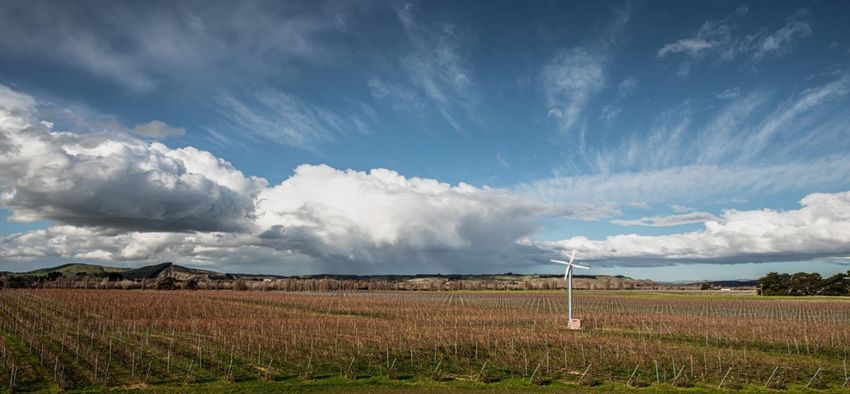
A Brief History of Hawke’s Bay

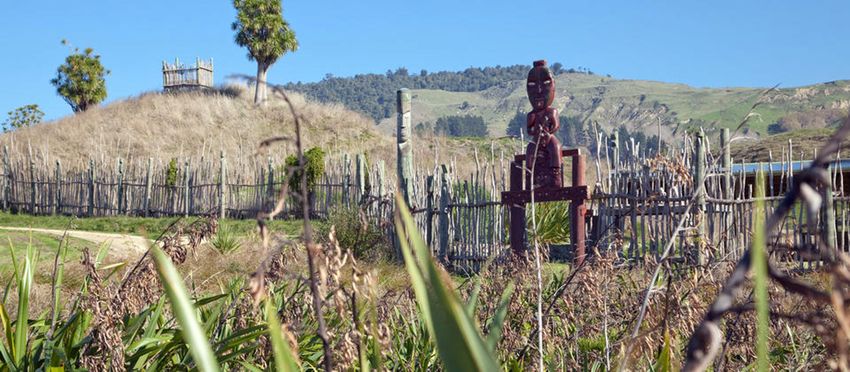
                          • Māori first settled in Hawke’s Bay around 1250–1300 AD.

                          • Early Māori settlements were established from Māhia Peninsula in the north to
                            Pōrangahau on the south coast. Ngāti Kahungunu arrived during the 16th century and
                            became the dominant iwi (tribe) in the region.

                          • James Cook sailed the Endeavour into Hawke Bay in October 1769. Captain and crew
                            remained on board, but some Māori paid them a visit by waka (canoe). Some trading of
                            goods occurred during this visit, and during Cook’s second visit in 1773.

                          • Mission stations were not established in Hawke’s Bay until 1844, when one was started
                            by William and Elizabeth Colenso at Waitangi, near Clive, and another by James and
                            Elizabeth Hamlin at Wairoa.

Source: Kerryn Pollock, 'Hawke’s Bay region', Te Ara - the Encyclopedia of New Zealand

                                                                                                                    2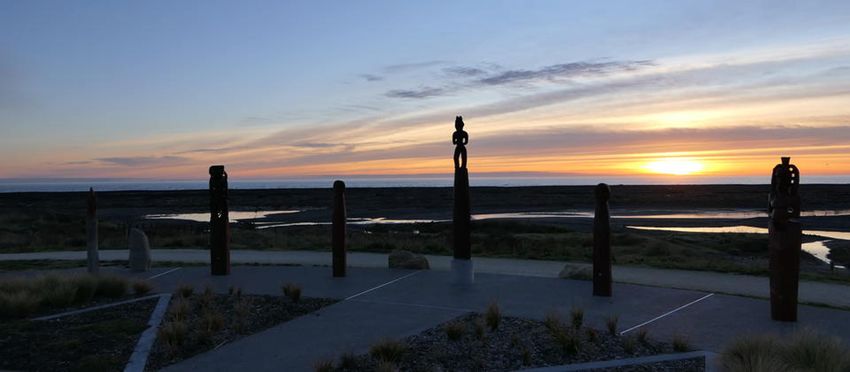
Māori Heritage in Te Matau-a-Māui
         • Ngāti Kahungunu is the largest iwi (tribe) in Hawke’s Bay, and the third largest in New Zealand. Its
           people claim descent from both the earliest-known settlers of the region and the eponymous ancestor
           Kahungunu and his kin, who arrived later.

         • There are 75 Ngāti Kahungunu and 11 Rangitāne marae in Hawke’s Bay. Waipapa a Iwi marae in
           Mōhaka is distinguished by its historic round meeting house, Rongomaiwahine. The Tākitimu meeting
           house in Wairoa was unveiled in 1938 as a memorial to Sir James Carroll, a distinguished Ngāti
           Kahungunu politician.

         • Ōtātara pā in Taradale, which dates from the 16th century, is one of the most important pā sites in New
           Zealand. Ngāti Paarau hapū of Waiohiki are kaitiaki (guardians) of the site.

         • Māori lost most of their land through sales and confiscations. Despite this, Hawke’s Bay still has a
           significant Māori population in the 21st century.

         • Today, nearly a quarter of the Hawke’s Bay population identify as Māori, a number higher than the
           national percentage.
Source: Kerryn Pollock, 'Hawke’s Bay region', Te Ara - the Encyclopedia of New Zealand

                                                                                                                  3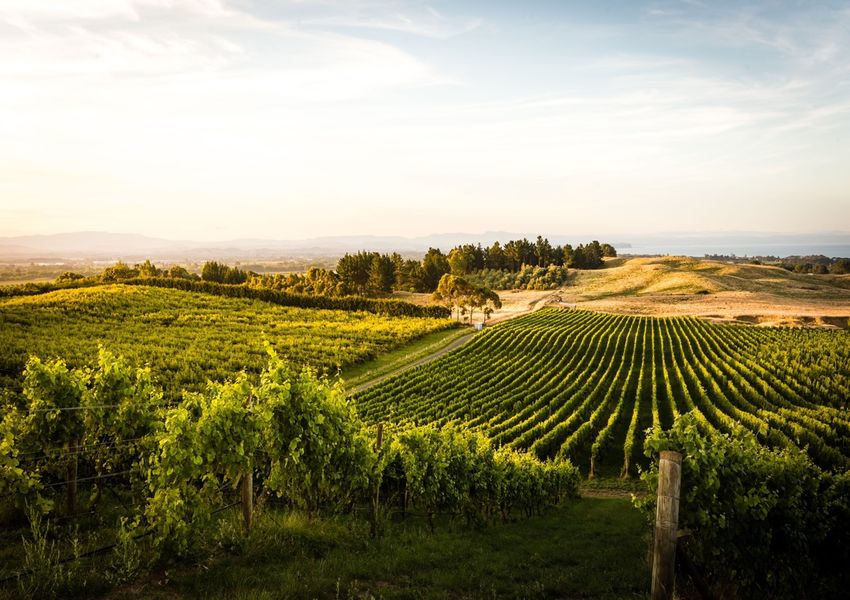
Hawke’s Bay

                       Insert panoramic image/images taken from Te Mata Peak

From the summit of Te Mata Peak in Havelock North there is a 360-degree outlook that shows the diversity of
the Hawke’s Bay landscape. There are ranges, hills and plains, watched over by the ever-present Ruahine and
     Kaweka ranges to the west; the curve of Hawke Bay itself, tipped by Māhia Peninsula and the ranges
 surrounding Lake Waikaremoana in the north; and a hint of the eastern coast and hill country that stretches
                                          south to Cape Turnagain.
  The Wairoa, Mōhaka and Esk rivers run down from the ranges in the north. The Tūtaekurī, Ngaruroro and
          Tukituki rivers flow through the central plains. All drain into the ocean on the east coast.
                                                                                                         4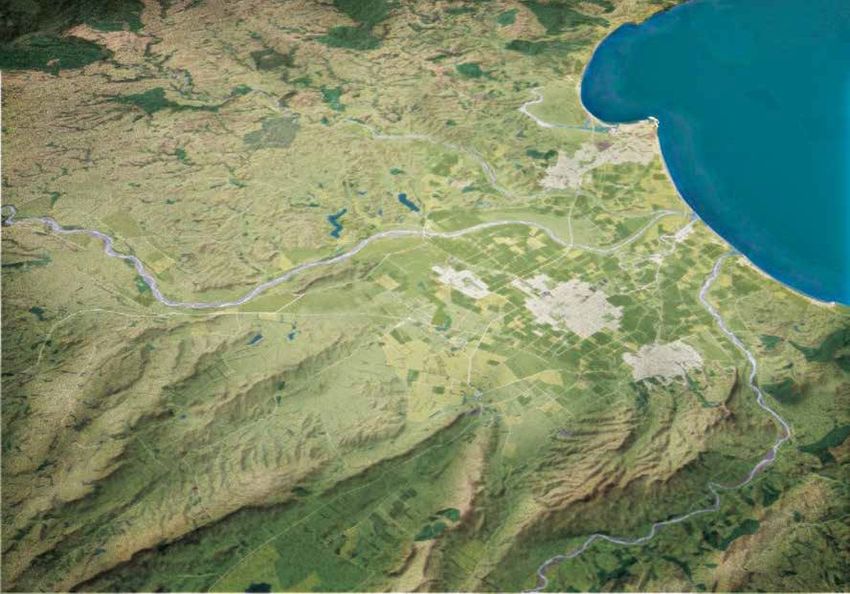
Where is Hawke’s Bay?

                                                                • Hawke’s Bay is located on the East
                                                                  Coast of the North Island - a 60
                                                                  minute flight from Auckland and
                                  AUCKLAND                        Wellington, and a 90 minute flight
                                                                  from Christchurch.
                                                                • Hawke’s Bay Region covers a total
                                                  HAWKE’S BAY
                                                                  land area of 14,641 sq. km with
                                              NAPIER
                                                                  350km of Pacific Ocean coastline.
 40˚SOUTH                                     HASTINGS
                                          CENTRAL HAWKE’S BAY
(through Waipukerau)
                                                                • Vineyards are concentrated in areas
                                 WELLINGTON                       around the cities of Hastings and
                                                                  Napier, within sheltering inland
                         CHRISTCHURCH
                                                                  ranges. However, you will find
                                                                  vineyards also extend North and
                                                                  South of the region.

                                                                                                        5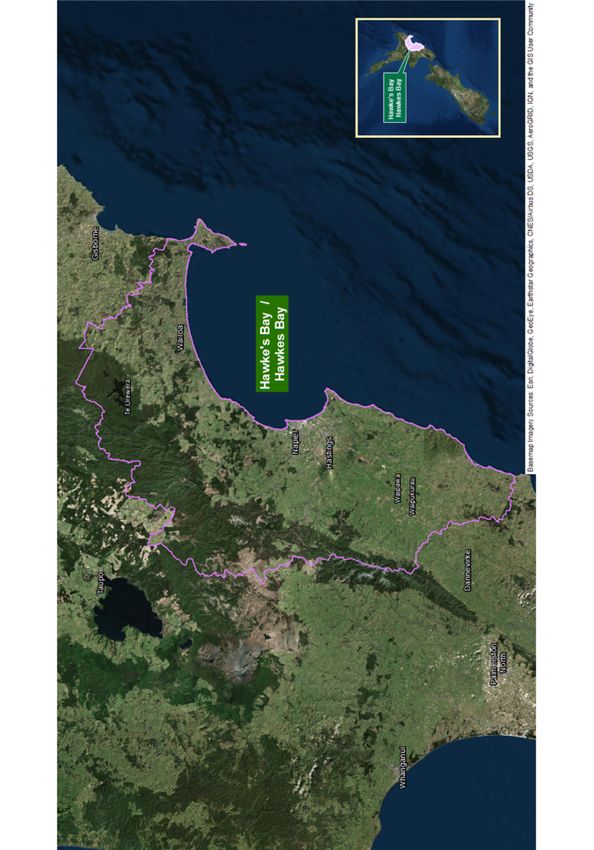
Hawke’s Bay Geographical Indication

                                      6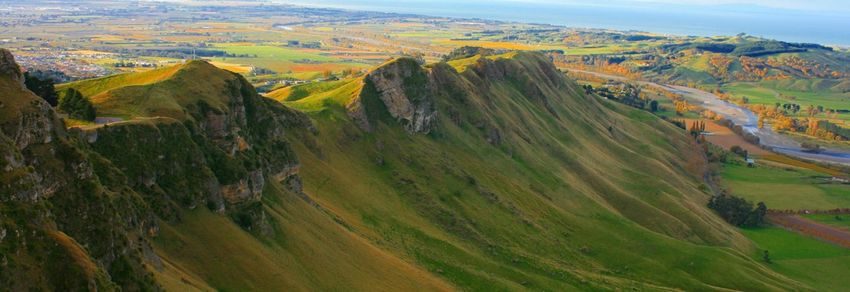
New Zealand’s Oldest Wine Region

• Vines were first planted in Hawke’s Bay back in 1851 by French Missionaries who
  established Mission Estate.
• By the early 20th century, Mission Estate, Te Mata Estate (1896), Vidal Estate (1905),
  McDonalds Winery (1897 - Church Road) and Glenvale Winery (1933 - Esk Valley
  Winery) were all established, confirming Hawke’s Bay as a pioneering, innovative wine
  region.

                                                                                           7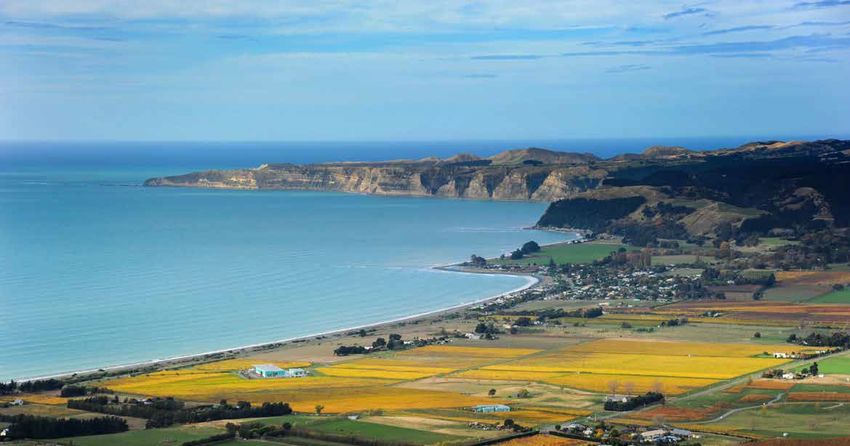
Hawke’s Bay Climate

• Hawke’s Bay has a generally dry, warm climate because it is sheltered on the west by the North
  Island’s main mountain ranges. The region has 2,150–2,250 hours of sunshine each year, and
  the Heretaunga plains have even more.

• In summer the maximum daytime temperature is usually 19–24°C. In winter, the usual daily
  maximum is 10–15°C.

• Rainfall is highly variable – summer can have droughts or heavy rains. The inland mountains and
  some coastal ranges receive the most rain (1,600–2,400 millimetres per year), followed by the
  inland hills and southern Hawke’s Bay (1,200–2,400 millimetres). The central plains receive 800–
  1,200 millimetres. The Heretaunga plains often receive less.

                                                                                                     8
Hawke’s Bay: a Maritime Climate

• Very sunny, with heat summations somewhere between Burgundy and Bordeaux, the maritime influence
  tempers hot summer days and permits a long growing season. Prevailing hot dry north westerly winds & low
  rainfall, make Hawke’s Bay one of the warmest & sunniest areas in New Zealand.
• Surrounding high country offers wind protection through frost can be a risk in some inland areas. Cooler, wet
  weather can occasionally pose problems in the growing season but free-draining soils with natural low fertility
  help reduce its impact.                                                                                    9
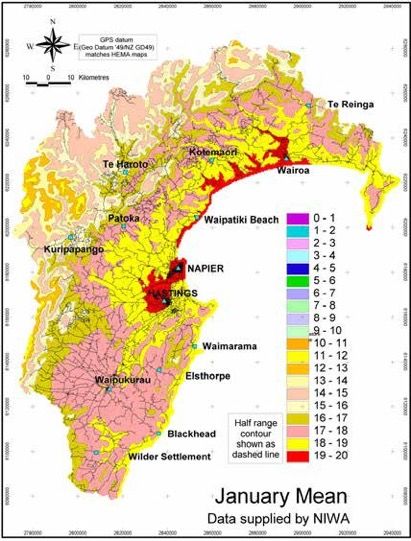
Hawke’s Bay Climatic Maps
Heat Degree Days                 January Mean Temperature

                                                            10
Hawke’s Bay Climatic Maps
Annual Rainfall October Frost Days
11Global Climate Comparisons
1590
1546
1500
1470
1382
1352
1242
1195
1123
625
470
427 432 429
348 347
288
257
183 193 204 193
150
106 116 112
42
Medoc, Valence, Coonawarra, Manjimup, Napa City, Hawke’s Bay Waipukurau, Dijon, Blenheim,
Bordeaux Rhône South Western California Central Burgundy Marlborough
Australia Australia Hawke’s Bay
HB comparable to
HEAT DEGREES DAYS RAINFALL mm (growing season) RAINFALL (for 3 months of vintage)
SOURCE: “ Viticulture and Environment,” John Gladstone. 1992 (adjusted to remove the 19 degree C upper limit)Hawke’s Bay figures are a mean of six geographically distributed vineyards from 1995 – 2014
12Hawke’s Bay Sub-Regions
ESK RIVER
DARTMOOR N
VALLEY
HAWKE
TUTAEKURI BAY
RIVER
N A P IER
CROWNTHORPE
TERRACES
K O R O K IP O
OH ITI
GIMBLETT
GRAVELS
NGARURORO BRIDGE PA TUKITUKI
RIVER TRIANGLE RIVER
H A S T IN G S
TE AW ANGA
HAVELOCK HILLS
MANGATAHI
TERRACES
HAVELOCK
NORTH
TUKITUKI VALLEY
C EN T R A L
HA W KE’S BAY
13Hawke’s Bay Sub-Regions
• Within Hawke’s Bay GI, the only other GI currently registered with IPONZ
is Central Hawke’s Bay.
• Te Mata is denominated as a Special Character Zone.
• Gimblett Gravels is a registered trademark of the GIMBLETT GRAVELS
Winegrowers Association and can only be used by members producing
wines in that designated area.
• Similarly, Bridge Pa Triangle Wine District members can use their logo and
branding if they meet the association’s criteria.
14Hawke’s Bay Geography
Over thousands of years, four major Hawke’s Bay rivers moved and formed valleys & terraces to
create over 25 different soil types from clay loam, to limestone, to sands and free draining gravels,
and red metal. From North to South, the rivers are Esk, Tūtaekurī, Ngaruroro and Tukituki.
Altitude within Hawke’s Bay ranges from sea level to several hundred metres inland.
Warm north-facing hillsides, river valleys and terraces, and coastal areas provide a range of low
vigour vineyard sites suitable for a diversity of varieties. 15Hawke’s Bay Soil
Whirinaki
Eskdale
BayView
Rissington
Westshore
NAPIER
Puketapu
Green Meadows
Taradale
Awatoto
Fernhill
Pakowhai
Clive
Whakatu
Haumoana
Mangateretere
Flaxmere
Maraekakaho HASTINGS TeAwanga
Clifton
Bridge Pa
Havelock North
Pakipaki
1:120,000
Soil Map of the
Heretaunga Plains
Sheet 1 of 2
Raukawa
Ocean Beach
DATA FROM: Soil information obtained from the Hawke's Bay Regional
Council's Geographic Information Systems Database.
DATA FROM: Soil map and legend compiled by E. Griffiths, 1997, from
Te Hauke the
Soil Map of Heretaunga Plains, Hawke's Bay (DSIR 1938), with additional
Lake Poukawa LIMITATIONS AND COPYRIGHT
soil surveys by E. Griffiths, G. Smith, B. Purdie, and B. McLaughlin of
New
This map may not be reproduced or transmitted to any other
Zealand Soil Bureau, DSIR, 1971 to 1991, and by E. Griffiths,1991 to
1997.
party, in any form or by any means, electronic, mechanical,
photocopying, recording or otherwise, without the written
Private Bag 11052, Palmerston North and the intellectual property rights in DISCLAIMER
respect of the soil information is vested in Landcare Research New Zealand Ltd. The Hawk e'permission
Soil information
s Bay obtained
Regional fromcannot
Council Landcare
of the copyright holder.
Research
guarantee thatNew
theZealand Ltd,
data s hown on this map is 100% accurate.
16Hawke’s Bay Soil Profiles
Central Hawke’s Bay
Over the last 5 million years plate tectonic movement
has uplifted greywacke rock formed from compressed
sand to shape the Kaweka and Ruahine mountain
ranges.
These same geological powers, combined with natural
weathering processes, have also caused the rock to
fracture and erode into streams and rivers where it is
transported and deposited as greywacke alluvium.
This creates the multitudes of soil types from rounded
gravels, sand, silt and clay.
Hawke’s Bay’s soils are heavily influenced by this
alluvium but also by aeolian (wind blown) material
taking the form of volcanic ashes, loess or silt and fine
sand from river beds.
17Hawke’s Bay Soil Profiles
Esk River Te Awanga Heretaunga Bridge Pa Gimblett Gravels
18Hawke’s Bay Soil Profiles
Mangatahi &
Crownthorpe
Ohiti Dartmoor Valley Terraces Havelock Hills Tukituki Valley
19Hawke’s Bay Wine Production
Hawke's Bay is New Zealand’s second largest wine region, with the largest premium red wine
production in the country.
Whilst many of the national wine brands have a presence here, the majority of Hawke’s Bay
wineries produce less than 200,000 litres per annum and are family owned, offering truly boutique
premium wines and an artisan experience.
20Hawke’s Bay Wine Stats over 10 years
Vintages (2010-2019)
By Region (tonnes) 2010 2011 2012 2013 2014 2015 2016 2017 2018 2019
Hawke's Bay 38,860 35,533 32,793 38,829 44,502 36,057 42,958 33,679 41,061 37,173
* The data shown are the results from the New Zealand Winegrowers’ Annual Vintage Survey, whereas “Industry Total” represents
the tonnes crushed by the total wine industry. The difference between ‘Survey Total’ and ‘Industry Total’ is data from wine companies who
did not respond to the Vintage Survey. ND: No data available
Source: New Zealand Winegrowers' Annual Vintage Surveys +/-3.5%
Producing Vineyard Area (2010-2019)
By region (ha) 2010 2011 2012 2013 2014 2015 2016 2017 2018 2019*
Hawke's Bay 4,947 4,993 5,030 4,846 4,774 4,638 4,641 4,615 4,678 4,771
*projected in 2018
Winegrowers Membership (2010-2019)
Wineries by region 2010 2011 2012 2013 2014 2015 2016 2017 2018 2019
Hawke’s Bay 85 91 84 77 76 75 76 79 91 98
Grape growers by
2010 2011 2012 2013 2014 2015 2016 2017 2018 2019
region **
Hawke’s Bay 171 122 103 104 102 74 71 65 62 58
**The grape growers do not equate to number of vineyards. This number just accounts for independent Growers in the region. Many vineyard owners are registered out-with
Hawke’s Bay, such as the larger National and International brand owners.
Source: New Zealand Winegrowers Annual Report 2019
21Hawke’s Bay Key Varieties 2020
22Chardonnay Production 2018
Vintage 2019 numbers show HB and Marlborough producing the same volumes of Chardonnay
23Syrah Production 2018
90% of New Zealand’s Syrah, Cabernets and Merlot are produced in Hawke’s Bay.
24Merlot & Cabernet Sauvignon Production 2018
25Sustainable wine practices in Hawke’s Bay
Sustainable Winegrowing New Zealand was developed in order to:
• Provide a 'best practice' model of environmental guidelines for the vineyard and winery.
• Guarantee better quality control from the vineyard through to the bottle.
• Assure consumers that products are made with minimal impact on the natural and social environment.
• Monitor, measure, reduce... repeat.
• Sustainable certification must be awarded through an independently audited programme - either Sustainable
Winegrowing New Zealand or a recognised organic or biodynamic certification.
• Recognised certification programmes include AsureQuality, BioGro-NZ, Demeter, ISO 140001 and New Zealand
Winegrowers’ own certification programme, Sustainable Winegrowing New Zealand®, SWNZ®.
Approved sustainable winemaking accreditation programmes operating in New Zealand
• Key focus areas of the Sustainable Winegrowing New Zealand programme include Waste, Water, Pest and
Disease, Climate Action and People. These align with several of the United Nations Sustainable Development
Goals (SDGs), as well as adhering to standards and guidelines issued by the International Organisation of Vine
and Wine (OIV).
• Hawke’s Bay has the highest percentage of Sustainable Winegrowing New Zealand® accredited wineries than
any other wine region in the country. We also embrace our Tangata whenua links and strive to promote
inclusion and diversity in our industry.
26Hawke’s Bay – one more time
> New Zealand’s oldest established wine region (1851)
> Largest premium red wine production in NZ
> Renowned for full-bodied Red Blends, elegant Syrah and rich, complex Chardonnays
> Over 200 vineyards including 58 independent growers, 98 wineries and 38 cellar doors
> Hawke’s Bay offers extensive wine tourism experiences (wine tours, vineyard cycling, winery
concerts, urban wineries), indeed it is the home of the winner of the First National Cellar Door Award
2019 – Church Road. 27Thank you!
28Hawke’s Bay Accolades
“Although I had tasted a few wines from Hawke’s Bay prior to my arrival,
simply didn’t fully grasp what
this warm North Island region was capable of, and how truly unique it is.”
Daenna Van Mulligan, www.winescores.com
“Australia has probably at least 20 regions that consistently produce outstanding shiraz. New
Zealand has one: Hawke's Bay.”
Huon Hooke, The Age
“This fêted part of the North Island can turn it's hand to anything.”
Steven Spurrier, Decanter World Wine Awards Chairman
“Some of New Zealand's best Chardonnay, Syrah and full-bodied red blends are produced here.
Sub-regional and even single vineyard expressions are part of what makes the wine scene
fascinating, and a sign that Hawke’s Bay and its wine producers are critical to New Zealand's
wine future.”
Cameron Douglas MS
29Hawke’s Bay Accolades
“What really struck me about our #mwnztrip visit to @HawkesBay_Wine region - how all the
producers, hotels, restaurants & food producers are united in their desire to talk about Hawke’s Bay
first, and themselves 2nd. Great feeling of unity and shared purpose, & some amazing wines.”
Justin Howard-Sneyd MW
“In general, they gave a really good impression and the best can comfortably be compared with the
Rhône, both in quality and, in many cases, stylistically.” Blind tasting 2018 Syrah
Richard Hemming MW for Jancisrobinson.com
"Simply put, Hawke’s Bay produces some of the finest flavoured, complex, textural Chardonnay’s in the
new world, and the warm low vigour vineyards of the region produce, at their best, rich elegant ripe
red wines based on either Merlot or Syrah. Nowhere else in New Zealand can do this.
These are wines that we love...it is why we are here!”
Steve Smith MW
30Contacts
Hawke’s Bay Wine / www.hawkesbaywine.co.nz
Adele Fitzgerald - Office Maxime Cavey - Marketing
Tel: +64 (0) 22 096 4755 Tel: +64 (0) 275 281 538
adele@hawkesbaywine.co.nz maxime@hawkesbaywine.co.nz
Sally Duncan: Chair Tania Fulcher: Marketing Committee Chair
Tel: +64 (0) 21 859 913 Tel: +64 (0) 21 183 9894
sally@temata.co.nz tania@teawangaestate.co.nz
@hawkesbaywine HawkesBay_Wine @hawkesbaywine #hawkesbaywine #hbwine #nzwine
Hawke’s Bay Tourism / www.hawkesbaynz.com
New Zealand Winegrowers / www.nzwine.com
31You can also read


