Hills and Fleurieu Landscape Board Business Plan 2020-21 - An initial business plan under the Landscape South Australia Act 2019
←
→
Page content transcription
If your browser does not render page correctly, please read the page content below
Hills and Fleurieu
                                     Landscape Board
                                Business Plan 2020-21
                An initial business plan under the Landscape South Australia Act 2019

Hills and Fleurieu Landscape Board

                                                                     Business Plan 2020-21 | 1
Acknowledgement
of Country

The Hills and Fleurieu Landscape Board
acknowledges the Kaurna, Peramangk,
and Ngarrindjeri Nations as the
Traditional Owners of the region. We
respect Aboriginal people’s deep
knowledge and relationship with
Country. We are committed to involving
and partnering First Nations in planning
for and managing landscapes.

2 | Business Plan 2020-21
Landscape South Australia
reform
The South Australian Government is reforming how our landscapes are
managed, putting community at the heart of sustainably managing the
state’s soil, water, pest plants and animals and biodiversity. From 1 July
2020, the new Landscape South Australia Act 2019 (the Act) will replace
the Natural Resources Management Act 2004.

Eight new regional landscape boards and a new metropolitan board,
Green Adelaide, will administer the Act and partner with government
and regional communities to deliver a stronger, back to basics system        I, David Speirs, Minister
with greater autonomy and flexibility to respond to local issues.            for Environment and
Landscape boards will support local communities and land managers            Water, after taking into
to be directly responsible for sustainably managing their region’s           account and in
natural resources. They will deliver practical, on-ground programs           accordance with the
that manage our water, land and soil, pests and biodiversity through
a range of partnerships, for example with farming systems groups,            requirements of section
environmental non-government organisations, Aboriginal communities           51(1)&(3), and Schedule 5
and local councils.                                                          Part 30, under clause 95,
In 2020-21, landscape boards will work alongside community members           of the Landscape South
and stakeholders to develop a simple and accessible five year regional       Australia Act 2019 hereby
landscape plan with five priorities (seven for Green Adelaide). Boards       approve the initial
will need to report their spending against the levy simply and clearly.
                                                                             Business Plan 2020-21 for
The Act also introduces a number of other benefits, including a cap on       the Hills and Fleurieu
landscape and water levies, new regional Grassroots Grants programs          Landscape Board.
that will provide support for community groups, not for profit
organisations and volunteers to address environmental issues at a local
level, and the creation of a new Landscape Priorities Fund that will
support large scale projects such as bushfire recovery and landscape
restoration work. From 2022, communities will have the opportunity to
elect three out of seven board members.
                                                                             Hon David Speirs MP
These reforms have been deeply informed by the people who are well           MINISTER FOR
placed to sustain our environment – those who work, live and care for
our landscapes. This input has been invaluable to ensure the reforms         ENVIRONMENT AND
meet the needs of local communities and landholders.                         WATER
Business plans for 2020-21 are transitional. The land and water levy
amounts that are set out in the business plans for 2020-21 reflect the       Date: 22 June 2020
levy amounts collected in NRM regions in 2019-20, adjusted by CPI
(1.9%), This will provide for broad consistency in the levy rates paid by
levy payers in this transitional year while planning is undertaken by the
landscape boards.

                                                                                   Business Plan 2020-21 | 1
Foreword

                  A message from the Hills and Fleurieu                      our three main
                  Landscape Board Presiding Member –                         pillars. We will
                                                                             partner with the
                  David Greenhough                                           community, local
                                                                             government, industry, local environment groups
                  As a member of the local Hills and Fleurieu                and the Australian government to achieve these
                  community, I am proud to be the inaugural                  on-ground outcomes.
                  Presiding Member for the new Hills and Fleurieu
                  Landscape Board. We are fortunate to live in one of        The COVID-19 pandemic has impacted on our
                  the most beautiful parts of Australia, with its thriving   entire community in unprecedented ways, and
                  primary production, connected communities and              undoubtedly will influence the board’s operations
                  rich biodiversity.                                         through 2020-21. The board, however, stands
                                                                             ready to do what it can to work with and support
                  The Minister for Environment and Water has given           the community on issues such as job recovery,
                  landscape boards a strong mandate for getting              particularly through contracting local goods and
                  ‘back-to-basics’ – putting community at the heart of       services for our work.
                  our three main pillars:
                    • water resource management;                             One of the board’s most important tasks in 2020-
                    • sustainable agriculture; and                           21 will be the development of a five-year Hills and
                    • control of pest plants and animals.                    Fleurieu Landscape Plan. Our promise is to work
                                                                             with the community to produce a practical plan
                  I am looking forward to working with our new               that puts community back at the heart of managing
                  Hills and Fleurieu board members, local councils,          the sustainability of the Hills and Fleurieu region’s
                  industry, local organisations, environmental               landscapes.
                  groups, and our community as a whole to improve
                  management of our region’s landscapes. We will             It will be a plan that seeks to build strong
                  engage with the community and look to build                partnerships with landholders, First Nations people
                  partnerships and find innovative ways to sustain           and the wider community. It will empower local
                  our precious natural environment, strengthen               people and communities to bring their knowledge
                  our regional economies and bolster our great               and understanding to managing their landscapes.
                  communities.
                                                                             We welcome the councils, community groups,
                  This is the inaugural business plan for the Hills and      landowners, businesses and residents who now
                  Fleurieu Landscape Board. The business plan is an          form part of the Hills and Fleurieu region. We look
                  important accountability tool that sets out:               forward to working together with you to create
                   • the income that the Hills and Fleurieu Landscape       new opportunities and directions in the sustainable
                      Board will receive through levies and other            management of our landscapes in the Hills and
                      funding; and                                           Fleurieu region.
                   • how the board will spend that money to achieve
                      the best outcomes.                                     David Greenhough

                  The Business Plan 2020-21 provides a transitional          Presiding Member
                  path from the work of the former natural resources
                  management board. Key foci for this year will be
                  supporting the Cudlee Creek fire recovery effort,
                  delivering the new Grassroots Grants program,
                  providing practical support to landholders and
                  managers, and delivering important work against

2 | Business Plan 2020-21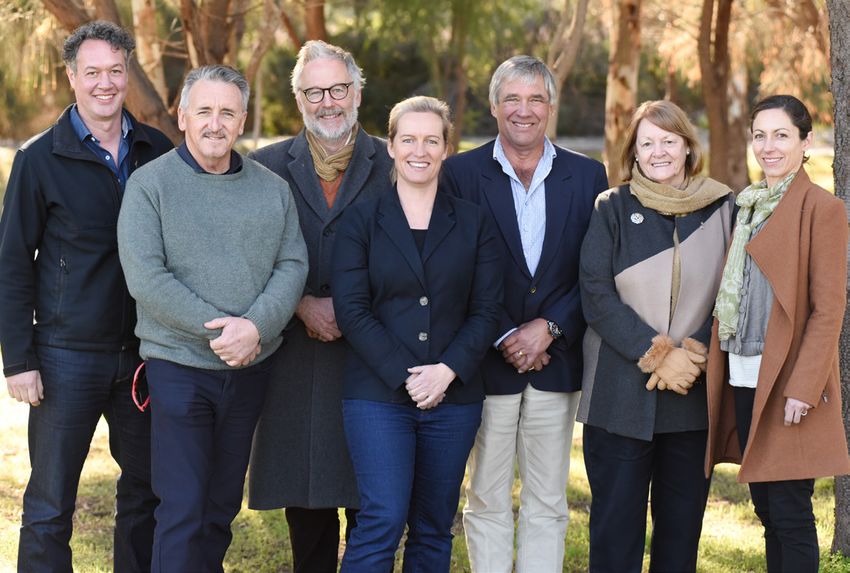
We will engage with the community and look
to build partnerships and find innovative ways
to sustain our precious natural environment,
strengthen our regional economies and
bolster our great communities.

Hills and Fleurieu Landscape Board (l-r) Andy Lowe, Drew Smith, Chris West, Amy Williams, David Greenhough
(Presiding Member), Carol Schofield, Janet Klein.

                                                                                                   Business Plan 2020-21 | 3
Our priorities

For 2020-21, the Board has adopted the SA Murray-Darling Basin (SAMDB) and Adelaide and Mt
Lofty Ranges (AMLR) Regional NRM Plans as its Landscape Plan while it develops its own plan
with the community.

We will focus on five transitional priorities from the SAMDB Regional Plan 1. The priorities align with the Back to Basics
principles, with a clear focus on managing water, land, pest plant and animals, and biodiversity. There are also priorities
focussed on people - engaging community at the centre of managing the region’s landscapes, and climate adaptation –
making our landscapes more resilient for the future.

    Transitional priorities                                 Key focus areas

                                                            Supporting landholders to:
                                                              - adopt sustainable land management practices (soils, pests, water,
                        Sustainable                             biodiversity);
                        production                            - undertake land management responsibilities (compliance actions where
                                                                required); and
                        (includes land and                    - increase groundcover and water quality in bushfire affected areas
                        pest management)
                                                            Controlling emerging weeds and pests
                                                            Collaborating to manage overabundant native species

                                                            Water allocation planning and implementation to supporting sustainable use
                                                            of water resources
                        Water                               Integrated water management and implementing low flows to improve
                                                            aquatic ecosystem health
                                                            Support effective stormwater management planning

                                                            Support restoration of habitats and management of threats to coastal,
                                                            terrestrial and aquatic biodiversity
                                                            Implement recovery plan actions for prioritised threatened species and
                        Biodiversity                        threatened ecological communities
                                                            Improve capacity and involvement of landholders, Aboriginal people and
                                                            community in restoration of ecological communities

                                                            Community involvement with board initiatives in managing landscapes
                                                            Community participation in simple landscape planning
                        People                              Increased partnering in board program delivery
                                                            Aboriginal people engaged in planning and delivery of landscape projects
                                                            and cultural heritage assessment

                        Climate                             Incorporate climate adaptation into planning and program delivery,
                        adaptation                          including advice for urban centres and regenerative agriculture

1

 These priorities are ‘strategic directions’ in the SAMDB Regional NRM Plan, and closely align with the AMLR Regional NRM Plan ‘key drivers’ of Land management
and change, Economic impacts, Knowledge and community capacity, Climate change.

4 | Business Plan 2020-21
Our region and key projects

                                                                                       Cudlee Creek
                               Landscape Officers working
                                                                                     bushfire recovery
                                   with local government,
                                                                                         supporting
                               industries and landholders to
                                                                                        landholders
                               manage pests, land and water

   Community based environment
   centres throughout the region

                                                               Landscape and
                                                               water planning
                                                            with community and
               Delivering Australian                            stakeholders
           government-funded projects
             for threatened species and
               sustainable agriculture

                                                                                 Business Plan 2020-21 | 5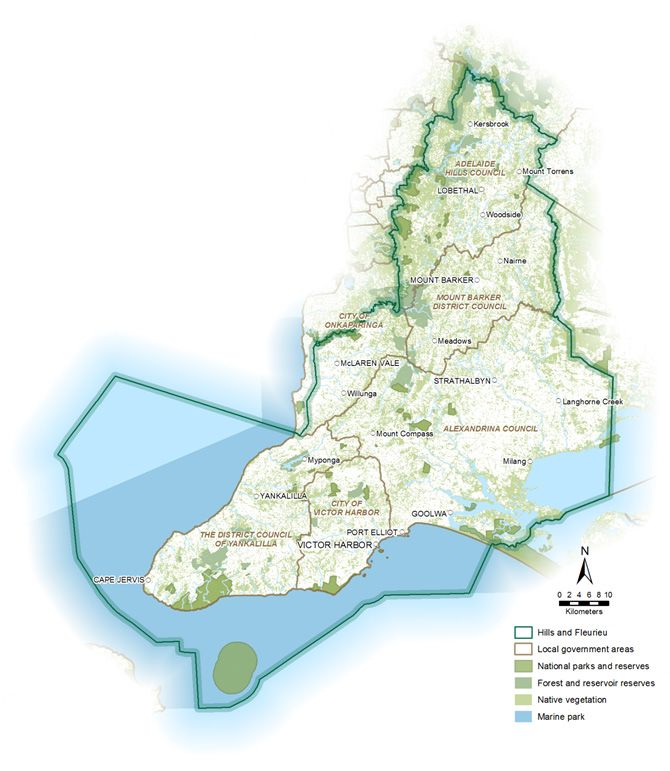
Sources of funding (income)
                  Table 1 Sources of funding

                      Funding source                                                                                            2020-21 budget ($)

                      Landscape and water levies1

                      Regional landscape levy (formerly NRM land levy)                                                                        5,032,000

                      Water levy                                                                                                              2,162,000

                      External funding

                      Australian Government National Landcare Program ‘Regional Land
                                                                                                                                              1,272,000
                      Partnerships’ funding2

                      Australian Government bushfire recovery Woodlands Birds funding 2                                                         750,000

                      Service level agreement with Green Adelaide 3                                                                             832,000

                      Other sources of income

                      Interest                                                                                                                    10,000

                      TOTAL INCOME                                                                                                         10,058,000

                  1
                    Landscape levy income to be raised in 2020-21 is based on 1.9% actual CPI rate (September 2019 quarter, Adelaide) increase on the
                    approved 2019-20 income, and water levy income is based on 1.9% increase on the 2019-20 water levy rates.
                  2
                     The H&F Landscape Board is the service provider for the AMLR area for the Australian Government’s National Landcare Program: Regional
                    Land Partnerships (RLP) funding.
                  3
                      As part of transition, Green Adelaide will support some community partnership commitments and staff roles within the Hills and Fleurieu
                    region in 2020-21.

                                                                                                                  Green Adelaide SLA
                  Fig 1. Income by funding source

                                                                                                                    Australian
                                                                                  Regional                          Government
                                                                                  landscape levy

                                                                                                                Water levy

6 | Business Plan 2020-21
Business Plan 2020-21 | 7
Program investment (expenditure)
                  The Board invests funding from the levies and other sources into delivering activities against the five
                  priorities and their key focus areas. The following tables provide the anticipated expenditure against each
                  priority and focus area.

                  Table 2 Expenditure by priorities and funding source in 2020-21

                                                                             Landscape             External
                     Priority                                                and water            and other        Total ($)
                                                                              levies ($)         funding ($)

                     Sustainable production                                    2,062,000             705,000        2,767,000

                     Water                                                     2,711,000                   0        2,711,000

                     Biodiversity                                                   533,000        1,529,000        2,062,000

                     People                                                    1,754,000             619,000        2,373,000

                     Climate adaptation                                             145,000                0          145,000

                     Total expenditure                                        7,205,000            2,853,000     10,058,000

                  Fig 2. Expenditure by priority
                                                                                              Climate adaptation

                                                                      Sustainable               People
                                                                      production

                                                                                                 Biodiversity

                                                                                Water

8 | Business Plan 2020-21
Table 3 Expenditure by priority and focus areas in 2020-21
Expenditure
Priority Projects Levy External
funding ($) funding ($)
Landholder and industry groups advice and capacity building 375,000 200,000
Healthy soils, healthy landscapes 74,000 169,000
Regional Agricultural Landcare Facilitator 0 136,000
Emerging pests, including roadside weeds 278,000 69,000
Reducing total grazing pressure 154,000 0
Sustainable Advice on overabundant native animals with DEW and councils 45,000 0
production
Regenerative agriculture 141,000 0
Wildlife for Wine 100,000 0
Woodland trees in pastures 132,000 0
Coordination of compliance activities 54,000 131,000
Program support1 709,000 0
Eastern Mt Lofty Ranges and Angas Bremer water allocation planning, 329,000 0
monitoring and implementation2
Western Mt Lofty Ranges and McLaren Vale water allocation planning, 263,000 0
monitoring and implementation2
Watercourse, wetlands and stormwater management 58,000 0
Water
WAA advice, permits and policy, and specialist watercourse management 171,000 0
Securing low flows 221,000 0
Program support1 265,000 0
State water planning and management contribution3 1,404,000 0
Advice and engagement for landholders and groups on biodiversity, 104,000 0
native vegetation and habitats
Mt Lofty Ranges bandicoot recovery 49,000 0
Management of Australian Government partnerships for biodiversity
Biodiversity 8,000 79,000
outcomes
Back from the Brink (threatened species and ecological communities) 79,000 700,000
Bushfire recovery for threatened woodland birds 0 750,000
Program support1 293,000 0
Cudlee Creek Fire Recovery 202,000 66,000
Grassroots Grants 220,000 0
Support and advice for volunteer groups 234,000 34,000
Community run Natural Resource Centres 23,000 331,000
Raising community awareness and information 203,000 26,000
People
Landscape planning with community 142,000 0
Collaborating and partnering Australian, state and local government, 207,000 0
industry and community organisations
Aboriginal partnerships 76,000 136,000
Program support1 447,000 26,000
Collaborating with state and local government to promote climate
Climate 109,000 0
resilience planning and adaptation
adaptation
Program support1 36,000 0
TOTAL 7,205,000 2,853,000
1
Included in the ‘Program Support’ for each priority are board and committee expenses of $196,000, monitoring, business running costs and resource centres.
2
The Hills and Fleurieu region includes parts of five Prescribed Water Resource Areas (PWRAs), and shares four of these resources with neighbouring landscape
regions. The board is responsible for water planning for the Eastern Mt Lofty Ranges, Western Mt Lofty Ranges, McLaren Vale and Angas Bremer PWRAs. The boards
that share water resources will collaborate to ensure that resources are effectively managed with consistent approaches.
3
State Water Planning and Management contributions include the following functions: water licensing and assessment, water resource monitoring, state and
condition reporting for water resources, compliance activities and water planning advice to support the management of water resources. These services are
provided by the Department for Environment and Water, including departmental staff based regionally.
*In 2020-21, H&F levy-funded staff salaries and on-costs will cost $3,126,000. In Table 3, these staff costs are apportioned to the projects that they will deliver.
Business Plan 2020-21 | 9Hills and Fleurieu Landscape Board
The board is a statutory regional board formed It will work with the community to:
under the Landscape South Australia Act 2019. • develop a 5-year Landscape Plan that sets the
Landscape board responsibilities include: priorities for action;
• undertaking, promoting and integrating the • prepare a Regional Engagement Statement and
management of natural resources within the an Aboriginal Engagement Statement;
region; • prepare a statutory annual report and a
• supporting landholders to understand their community-facing report showing how the levy
responsibilities in land management, water funds have been spent in the financial year;
management, and pest animal and plant control; • conduct monitoring to understand the condition
• promoting awareness of the importance of of landscapes; and
integrated and sustainable natural resources • evaluate its programs to understand its impact.
management; and
• assisting in the management of over-abundant
native animals. Staffing
The board consists of seven community members Under the Act, day-to-day operations of the board
with a range of skills and knowledge, appointed by are managed by a General Manager who employs
the Minister for Environment and Water. staff to deliver the programs and services. In 2020-
21, it is anticipated that there will be 39.3 full-time
For more information about the board members, equivalent (FTE) positions (29 FTE funded by levies
see the Hills and Fleurieu Landscape Board website and 10.3 FTE funded by external funding). The staff
www.landscape.sa.gov.au. are public sector employees.
In 2020-21, the board will receive Corporate Services
Board planning and reporting support (including finance, human resources, and
framework information technology) through the Department
for Environment and Water.
During 2020-21, the Hills and Fleurieu Landscape
Board has strategic oversight of the delivery of this
business plan, including implementing the board’s Partnering to deliver outcomes
planning framework (see Figure 3).
The Hills and Fleurieu Landscape Board is proud
Fig 3. Landscape board planning framework to partner with the Australian Government to
deliver significant outcomes for the sustainable
management of agricultural land and the
10 conservation of threatened species and ecological
communities.
Years
Policies
The H&F Landscape Board will continue to partner
Water allocation with local community groups for delivery of parts of
Landscape plans its projects, and will seek out and develop new and
innovative partnerships.
Plan
Timeframe
Water affecting
5 Sets the long-term activities control
policies
Years vision and 5-year
priorities
Business Plan
Allocates funding
1 for priorities
Year
Action
Projects and partnering
10 | Business Plan 2020-21Landscape and water levies
To enable the Hills and Fleurieu Landscape Board quarterly contributions to the landscape board and
to lead the management of landscapes in the gazette a levy rate to reimburse themselves for this
region, the Act provides for two types of levies to amount.
be raised: a regional landscape levy collected by
constituent councils from rate payers; and a water In the Hills and Fleurieu landscape management
levy collected from all water licence holders in the region, the regional landscape levy is raised based
region. on the value of rateable land. In 2020-21, the
landscape levies will continue to be collected based
on the existing NRM region boundaries (see Table
Why do we pay levies? 4). This will allow time for the board to work with
councils to implement an equalisation scheme so
The levies are a primary source of funding for the that in future a common levy can be collected across
management of the region’s landscapes and natural the region.
resources. Our landscapes benefit everyone, which
is why we contribute to the levies. The levies enable The total amount of income collected from the
the board to deliver important programs, and also landscape levy in 2020-21 will be a CPI (Consumer
enable it to leverage significant, additional funding Price Index) increase on the amount raised last
- greatly increasing the amount of work achieved in year in the AMLR and SAMDB portions of the H&F
our region. region.
Regional landscape levy
The landscape levy is raised and collected by local
councils in the same way as the NRM levy has been
collected in the past. Councils will continue to pay
Table 4 Council contributions to regional landscape levy income, number of rateable properties and collection fees
for councils for 2020/21
Council contribution No. rateable
Local government area to regional landscape Collection fees ($)
properties
levy 2020-21 ($)
Adelaide Hills (AMLR NRM area) 952,629 18,657 7,196
Adelaide Hills (SAMDB NRM area) 6,042 47 2,544
Alexandrina (AMLR NRM area) 179,955 3,781 3,477
Alexandrina (SAMDB NRM area) 1,352,730 15,852 6,495
Mount Barker (AMLR NRM area) 111,879 2,147 3,069
Mount Barker (SAMDB NRM area) 1,511,687 15,957 6,521
Onkaparinga (AMLR NRM area) 312,093 6,547 4,169
Onkaparinga (SAMDB NRM area) 4,459 33 2,540
Victor Harbor (AMLR NRM area) 401,342 11,177 5,326
Victor Harbor (SAMDB NRM area) 3,419 20 2,537
Yankalilla 195,929 5,888 4,004
Total 5,032,164 80,106 47,879
Business Plan 2020-21 | 11Water levy The levy rates for 2020-21 (Table 5) are increased by
CPI (September quarter, Adelaide) on the 2019-20
Water levies are collected by the Department for rates.
Environment and Water on behalf of the Minister
and paid to the landscape board.
Water resource sharing arrangements
In 2020-21, the Hills and Fleurieu Landscape Board
will raise water levies in accordance with the existing For the prescribed water resource areas that are
levy basis: shared by Hills and Fleurieu and neighbouring
• For the Eastern Mt Lofty Ranges and Angas landscape regions, the water levy is shared between
Bremer prescribed water resources (formerly in the boards in proportion to the amount of water
the SAMDB NRM region), levies will continue allocated in each region (see Table 5).
to be charged based on a rate per ML of water
allocated, with a minimum charge of $200.; and The Hills and Fleurieu Landscape Board will work
• For the Western Mt Lofty Ranges and McLaren together with the Green Adelaide, Northern and
Vale prescribed water resources (formerly in Yorke, and Murraylands and Riverland Landscape
the AMLR NRM region), levies will continue to Boards to ensure that water planning and programs
be charged based on a rate per ML of water are implemented collaboratively.
allocated.
Table 5 2020-21 water levy rates and proportion of allocated water in each Prescribed Water Resource in the Hills
and Fleurieu region
Prescribed Water Resource Area (PWRA)/ Proportion of the PWRA’s
Prescribed Wells Area (PWA) and 2020-21 levy rate allocated water within Hills
allocation type & Fleurieu
$6.75 ML of water allocated
Angas Bremer PWA water taking allocation or a levy of $200, whichever 100%
is greater
$6.75 ML of water allocated
Eastern Mt Lofty Ranges PWRA water taking or a levy of $200, whichever 98%
allocation is greater
Eastern Mount Lofty Ranges PWRA water $1.61 / ML 100%
taking Lower Angas Bremer allocation (Flood)
McLaren Vale PWA water taking allocation $6.28 /ML 96%
Western Mount Lofty Ranges PWRA water
taking allocation (including water levy on
organisations authorised under section 105 $6.28/ML 93%
to take water from a water resources within
the Western Mount Lofty Ranges PWRA)
Western Mount Lofty Ranges PWRA public $1,255,800 100%
water supply - SA Water fixed charge
12 | Business Plan 2020-21Connect with us
hf.landscapeboard@sa.gov.au
Mt Barker
Upper level, Corner Mann & Walker Street, Mount
Barker, SA, 5251
Ph: 08 8391 7500
Willunga
5 Aldinga Road, Willunga, SA, 5172
Ph: 08 8550 3400
DISCLAIMER:
The Hills and Fleurieu Landscape Board and its employees do not
warrant or make any representation regarding the use or results
of use of the information contained herein as to its correctness,
accuracy, currency or otherwise.
Licensed under Creative Commons Attribution 4.0
License www.creativecommons.org/licenses/by/4.0
Copyright owner:
Crown in right of the State of South Australia 2020
Business Plan 2020-21 | 13www.landscape.sa.gov.au
You can also read


