History Leaving Cert. Exam, 2021 - K. Roche/Institute of Education - The Institute of Education
←
→
Page content transcription
If your browser does not render page correctly, please read the page content below
History
 Leaving
Cert. Exam,
  2021.

              K. Roche/Institute of Education.   1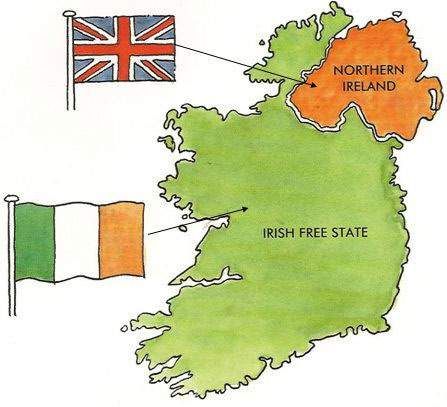
What way should you
address the exam?
• Always do the Documents Section
  first – Examiners want to correct
  this early.

• Where students leave Documents
  Section until the end, past exam
  scripts show it to left incomplete.

• Be alert to what you are being
  asked to do.
K. Roche/Institute of Education.        2

Answering the
Documents Section –
     Properly.

      K. Roche/Institute of Education.   3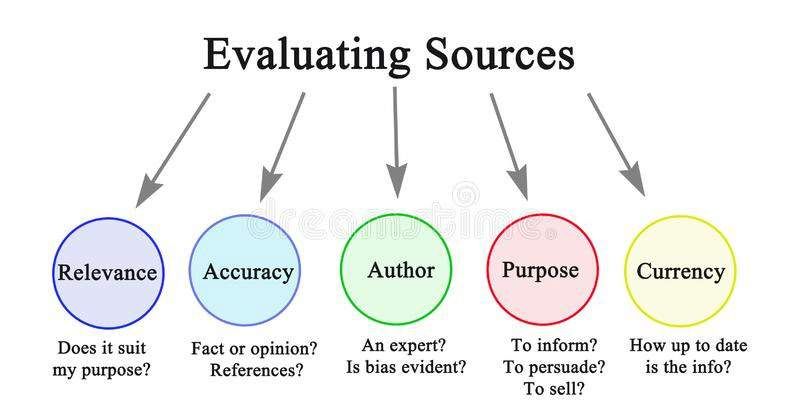
Documents Layout - What are the questions
               asking??

 1. (a, b ,c & d)Comprehension –
    brief, short answers required. Do             3. Criticism – what are the
    not write paragraphs here.                    strengths and weaknesses of the
                                                  particular type of source
 2. Comparative – which document                  document(s) provided?
    is the better? You can select                 (newspaper sources,
    either document (there is no                  photographs, interviews etc.)
    wrong answer). But justify your               Ensure to deliberately provide
    answer by analysing the                       more strengths and few
    strengths of one document over                weaknesses. Write 15-16 lines
    the other. Ensure to reference                for 3 (a) and 3 (b).
    both documents. Write 15-16
    lines for 2 (a) and 2 (b).                    4. Context – Question will ask
                                                  you to address the topic; write
                                                  four paragraphs.
                          K. Roche/Institute of Education.                          4
K. Roche/Institute of Education. 5
Primary Sources
  Primary sources are the most
  valuable sources for historians.

Types of Primary Sources                       Examples
                                               books, magazines, newspapers,
                                               government documents, reports,
Published documents
                                               advertisements, maps, posters, legal
                                               documents, and other kinds of literature
                                               personal letters, diaries, wills, deeds, and
Unpublished documents
                                               school report cards
                                               photographs, posters, cartoons, films,
Visual documents
                                               and paintings
                                               pottery, furniture, clothing, buildings and
Relics or Artefacts
                                               other excavated physical items

                               K. Roche/Institute of Education.                           6
Photographs as primary sources –
strengths:

• Evidence from an event.
• They are a primary visual source.
• Visual account of event, occasion
  or personality.
• Give insight into fashion of
  time/era.                                             Photographs as primary
• They inform us of events before                       sources-weaknesses:
  the television and digital age.                       • The purpose of the
• Photographs can make people                             photograph may distort
  react (i.e., against the horror of                      reality of situation.
  war).                                                 • The photographer may have
                                                          a bias or political agenda.
                                                        • A photograph can be
                                                          airbrushed.
                                                        • Photographs can elevate a
                                                          personality if the subject is
                                                          central in the foreground.
                             K. Roche/Institute of Education.                        7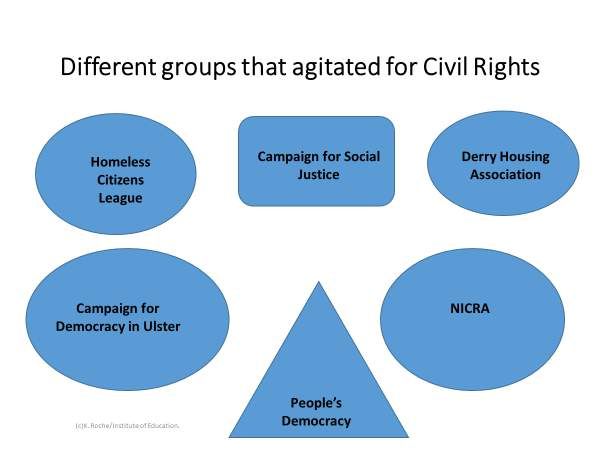
Newspaper articles as sources –
Strengths:

• Form of mass communication.
• May reflect and report public
  opinion.
• They include photographs, content
  and quantitative data.                                    Newspaper articles as sources –
• Articles and reporters were close to                      Weaknesses:
  the events of their time.
• Allow historians to gain a sense of                       • Editorial of newspaper may be
  time chronology due to their                                biased or represent a political
  regular/daily publishing.                                   agenda.
• Newspapers highlight popular and                          • Article writer may have a bias.
  important personalities from the                          • Some newspapers more
  time being researched.                                      interested in sales than quality
                                                              journalism; stories can be
                                                              sensationalised.
                                                            • A particular newspaper may have
                                                              an intended audience; this
                                                              suggests a bias.
                                  K. Roche/Institute of Education.                            8
2020 Exam - Johnson and Vietnam
War.
                             • SEC never asked same
                               topic twice…..
                             • Potential Question4?
                             • Impact of Vietnam War
                               on US society.

           K. Roche/Institute of Education.            9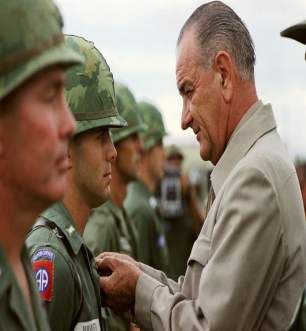
The Montgomery Bus boycott,
1955-1956.
                             • Why did the boycott
                               occur in 1955?
                             • How was the bus
                               boycott a success?
                             • How did boycott
                               contribute to civil rights
                               movement.
                             • Contribution of Martin
                               Luther King.

           K. Roche/Institute of Education.             10
The Apollo Moon Landing, 1969.
• What was the
significance of the
Apollo Moon landing?
• How did the Apollo
Moon landing reflect
the Cold War climate?
K. Roche/Institute of Education. 11Exam Tip – Reference the
Presidents!
Montgomery Bus boycott. The Moon landing.
• President Truman. • President Eisenhower.
• President Eisenhower. • President Kennedy.
• President Kennedy. • President Johnson.
• President Johnson. • President Nixon.
K. Roche/Institute of Education. 12Know what modules you are going to answer
from.
• Politics and Society in
Northern Ireland,
1945-1993.
• Sovereignty and
Partition, 1912-1949.
• Dictatorship and
The SEC will determine the
Democracy, 1920-1945. marking criteria for all State
Exams. Criteria is subject to
change.
K. Roche/Institute of Education. 13Northern Ireland 2020 LC Exam Questions.
1. During the period 1949-1969, how effectively did Northern
Irish governments respond to the social and economic
problems they faced? (100)
2. What was the Sunningdale Agreement and why did the
power-sharing executive, 1973-1974, collapse? (100)
3. What was the contribution of Ian Paisley to the affairs of
Northern Ireland? (100)
4. During your study of Northern Ireland, 1949-1993, what did
you learn about Seamus Heaney and/or cultural responses to the
“Troubles”?
K. Roche/Institute of Education. 14Exam Tip Northern
Ireland!
• Remember, Northern Ireland
consisted of two diverse
communities.
• Split along political, cultural, religious
and even sporting lines.
• Different traditions ensured a
segregated society.
• Such daily segregation allowed
tensions to simmer beneath surface
in Northern Ireland.
K. Roche/Institute of Education. 15Who did not
feature in 2020?
• Clear reference to
three important
Prime Ministers:
• Brookeborough
.
• O’Neill.
• Faulkner.
K. Roche/Institute of Education. 16Terence O’Neill
• Coleraine university
controversy.
• New Ulster vision.
• Ecumenism (he ordered
flag in City Hall to fly at
half-mast after death of
Pope John XXIII in 1963).
• His moderate approach
enraged Ian Paisley and
members of his own UUP.
K. Roche/Institute of Education. 17Brian Faulkner. • Last Northern Ireland
Prime Minister.
• Disagreed with O’Neill’s
moderate approach
towards Nationalists.
• The Troubles started in
1969. Faulkner had to
address the violence.
• Introduced policy of
internment.
• 1972 march in Derry
against internment led
to Direct Rule.
K. Roche/Institute of Education. 18Civil Rights movements.
K. Roche/Institute of Education. 19Nationalists Grievances?
• Housing
allocation.
• RUC and B-
Specials.
• Lack of investment
in nationalist
areas.
• Symbolism.
K. Roche/Institute of Education. 20The Troubles….and why they
lasted so long………..
• Students need
knowledge of Labour
government, 1974-
1979.
• Roy Mason.
• IRA long war.
• Violence to
terror……The Shankill
Butchers. Mason brought in the policy
of Ulsterisation.
K. Roche/Institute of Education. 21Political
Solutions………
• Include even minor attempts that
failed:
• Ulster Convention 1975.
• Ulsterisation.
• Thatcher and Supergrass tactic.
• Dealing with moderates only.
K. Roche/Institute of Education. 22Political Solutions
• Sunningdale. Use the various
personalities.
• New Ireland
Forum.
• Anglo-Irish
Agreement.
• Downing Street
Agreement.
K. Roche/Institute of Education. 23Key Personalities for 2021 Exam?
• Bernadette Devlin.
• John Hume.
• Margaret
Thatcher.
• Develop all
personalities that
appear in any
question choice.
K. Roche/Institute of Education. 24• Careful!!!
The • Question should also include reference to
Apprentice religious culture and identity and ecumenism.
Boys. • Develop all!
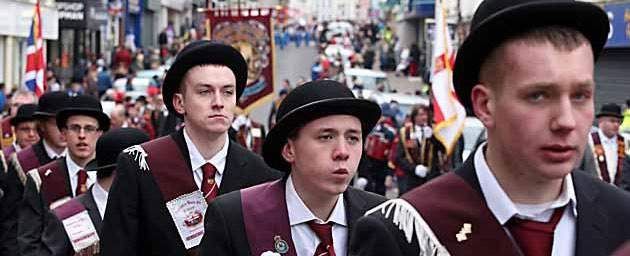
• Ancient Order of Hibernians…????
K. Roche/Institute of Education. 25Potential Questions for 2021 Exam?
1. The Apprentice Boys of Derry; Religious culture and identity;
ecumenism.
2. How effective was the leadership of O’Neill in Northern Ireland?
3. Why did civil rights movements emerge in Northern Ireland and how
did they contribute to the Troubles?
4. Why did the Troubles start in Northern Ireland and why did they last do
long?
5. What political solutions contributed towards a settlement in Northern
Irish affairs?
6. Assess the contribution of one or more of the following to affairs in
Northern Ireland: Bernadette Devlin; Margaret Thatcher; John Hume.
K. Roche/Institute of Education. 26Sovereignty and Partition, 1912-1949.
K. Roche/Institute of Education. 272020 LC Exam Paper.
1. During the period 1912-1921, what attempts were made to obtain
self-government for Ireland, and to what extent were they
successful? (100)
2. During the period 1923-1945, how effectively did Irish governments
tackle the social and economic problems they faced? (100)
3. What were the successes and failures of Éamon de Valera as a
political leader? (100)
4. What attempts were made to promote cultural identity in Ireland,
North and South? Refer to one or more of the following: language;
religion; education.
K. Roche/Institute of Education. 28Sovereignty & Partition
1912-1922 1923-1949
• 1912-1914 Home Rule • Socio-economics.
crisis. • Law and Order.
• 1916. • Assertion of
• Rise of Sinn Féin. independence.
• War of Independence. • The Church, women
• Treaty negotiations. and social morality.
• Civil War. • Anglo-Irish relations.
• Bombing of Belfast.
K. Roche/Institute of Education. 29Part 1: 1912-1923.
• Waltz the Examiner through the different topics.
• Key personalities have contributed to Irish affairs
through these events.
• Role of the gun and physical force.
• Change from moderate (Home Rule) nationalism in
1912 to republican nationalism (Sinn Féin) by 1918.
K. Roche/Institute of Education. 30Part 2: 1923-1949.
• The question should be a blended question.
• Candidate should be forced to compare two
governments or two events.
• The Church replaced the influence of the
Crown.
• The Church used to assert an independent and
Catholic Ireland.
• Church moral teaching influenced state social
morality.
• Bombing of Belfast to be compared to war
experience in Dublin.
K. Roche/Institute of Education. 31Potential Questions for 2021 Exam Paper.
1. 1912-1914 Home Rule Crisis.
2. The rise of ‘new’ Sinn Fein, 1916-1918.
3. The Treaty negotiations and impact.
4. Assertion of independence.
5. 1932 Eucharistic Congress and social morality.
6. Steps towards partition, 1912-1949.
7. The Bombing of Belfast 1941.
K. Roche/Institute of Education. 321912-1914 Home Rule crisis.
• No reference in 2020.
• This topic introduces both the role of
the gun and the concept of partition.
• Crisis stirred Tom Clarke to regroup
the IRB.
• It polarized Irish politics between
nationalists and unionists.
• It made the Irish question very
difficult for London to solve.
K. Roche/Institute of Education. 33Three Case Studies?
• No explicit reference to any Case Study in 2020.
• Remember, most students will answer a Case
Study question………..poorly.
• Any case study must be answered in context of
the wider topic.
K. Roche/Institute of Education. 34Dictatorship and Democracy, 1920-1945.
2020 LC Exam Paper.
1. Which had the greater social and economic problems
during the inter-war period, Britain or Germany? Argue
your case, referring to both. (100)
2. What were the main characteristics of Stalin’s rule in
Russia? (100)
3. During the period 1920-1945, how did anti-Semitism and
the Holocaust affect Europe? (100)
4. From your study of World War II, what did you learn
about two of the following: wartime alliances; the Home
Front; Vichy France?
K. Roche/Institute of Education. 35What was not asked?
Democracies? Case Studies
• France. • Jarrow March?
• Role of Cinema. • Moscow Show Trials?
• Nuremberg Rallies…..
K. Roche/Institute of Education. 36Dictatorship themes for 2021.
• Propaganda.
• Totalitarianism.
• The Church.
• The question should be
blended!!
K. Roche/Institute of Education. 37Exam Tip - Fascism & Nazism.
• Fascism – implies a
plural.
• Nazism – most extreme
form of fascism.
• Why – Herrenvolk
allowed wide use of
race policies.
K. Roche/Institute of Education. 38Dictators and the Church.
• 1929 Lateran Treaty.
• 1933 Concordat.
• Demise of Church-State
relations.
• Stalin – anti religion
campaign from 1928-
1940.
K. Roche/Institute of Education. 39Cinema - two
possible questions.
• Developments of
Anglo-American
cinema.
• Contribution of
Chaplin, Crosby and
Riefenstahl.
K. Roche/Institute of Education. 40Essay Writing tips for 2021 exam.
K. Roche/Institute of Education. 41Be alert to the ‘and’ word…..
• The question has two
parts.
• Each part must be
addressed but not in
equal quantity.
• Must answer both
components or OE*
mark will be cut.
K. Roche/Institute of Education. 42Appropriate content………..
• Evidence to confirm
your knowledge of the
course.
• Key personalities.
• Comparative content.
• Geographical content.
• Cultural references.
• Quantitative data.
• Evaluation.
K. Roche/Institute of Education. 43Break the 60!
The Examiner can award you up to 40 points for each essay!
K. Roche/Institute of Education. 44Write a brief list or plan of what elements will help shape paragraph
outline. Make a note of essential content and personalities. Avoid writing in
an ad-hoc fashion. Refer to the plan as you write; it will help bring order
and cohesion to your essays.
K. Roche/Institute of Education. 45Opening and Closing
Opening Paragraph Conclusion
• Define the • Make sure you have
concept/topic. one!!
• Use key words. • Summarise your
elements/components
• Show you understand used to answer question.
the question.
• Ensure to include key
word(s).
• Crucial tip…? Include a
new piece of content.
K. Roche/Institute of Education. 46Watch the clock!!!
Ensure to complete the Documents Section and
both essays.
K. Roche/Institute of Education. 47You can also read


