Home, flammable home - AUSTRALIA - Bushfire and Natural Hazards
←
→
Page content transcription
If your browser does not render page correctly, please read the page content below

ISSUE THREE 2019

                 AUSTRALIA
      Conflicting cues in emergency warnings
    Fire Australia 2019 exceeds expectations
                Strength in shared resources

   Home,
flammable
   home
 Demonstration burn shows
value of home fire sprinklers
When I programme an
F220 Network late on a Friday,
I still get the next day off.
                                                                                                          A Pertronic F220 network is
                                                                                                          programmable from a single point using
                                                                                                            Ethernet-connected Pertronic FireUtils®.
                                                                                                                   Pertronic FireUtils® is a free software
                                                                                                                   app that makes it quick and easy to
                                                                                                                    programme any F220 fire system.
                                                                                                                    Typically a 34-panel network
                                                                                                                   configuration upload takes less than
                                                                                                                   one minute.
                                                                                                                           FireUtils® runs on Windows 7, 8
                                                                                                                                and 10 and is free to
                                                                                                                                      authorised fire industry
                                                                                                                                        professionals.

                                                                                                            Programming an F220 network is quick and
                                                                                                            easy with Ethernet-connected Pertronic
                                                                                                            FireUtils®

                                                                                                            The F220 is independently tested and certified
                                                                                                            to AS 7240.2, AS 7240.4, and AS 4428.3

Contact Pertronic for more information
PERTRONIC INDUSTRIES PTY LTD

Brisbane                     Sydney                       Melbourne                    Adelaide                    Perth

                                                                                                                                               F220
3/43-49 Sandgate Road        19/287 Victoria Road         B2/2a Westall Road           65 Manton Street            3/71 Beringarra Avenue
Albion QLD 4010              Rydalmere NSW 2116           Springvale VIC 3171          Hindmarsh SA 5007           Malaga WA 6090
Phone 07 3255 2222           Phone 02 9638 7655           Phone 03 9562 7577           Phone 08 8340 9533          Phone 08 6555 3008
sales.qld@pertronic.com.au   sales.nsw@pertronic.com.au   sales.vic@pertronic.com.au   sales.sa@pertronic.com.au   sales.wa@pertronic.com.au

www.pertronic.com.au                                                                                                                           FIRE ALARM SYSTEM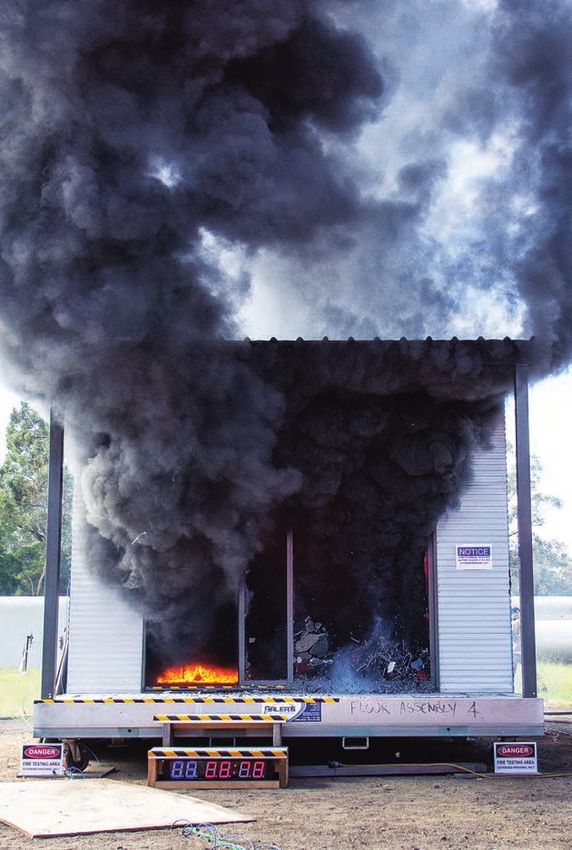
ISSUE THREE 2019
CONTENT
THE PROGRESS
JOURNEY AUSTRALIA
One of our driving motivations at AFAC is to
STUART support the development and capability of
ELLIS AM
IN THIS ISSUE
12
our member agencies to ensure the safety
Chief Executive Officer, of communities across Australia and
AFAC New Zealand. 12 H ome, flammable home
Twice a year, the AFAC National 15 US lessons for home fire sprinkler
Council – comprising the chiefs of fire, adoption
emergency services and land management
16 Impacts of conflicting cues in
organisations from across Australia and
emergency warnings
New Zealand – meet to discuss the
strategic direction and priorities of the 19 New SA routine service registration
sector. In April, the National Council confirms FPA Australia proposal
convened in Canberra to endorse new 20 Strong growth for Fire Australia 2019
and revised AFAC Doctrine, in response
to changes across the sector. It will ensure our agencies uphold 24 Partnerships build capacity in the
good practice and remain agile when presented with the Pacific
challenges that come with our often unpredictable and complex 28 Divulging data – how numbers and
work environment. figures are helping South Australia
These developments are, of course, made possible by the
30 Professionalising fire safety
input and experience of our member agencies that contribute
to the collective knowledge of the fire and emergency services engineering: the Education Report
sector through AFAC’s collaboration framework, our network of 32 Sharing the load
28
35 specialised groups and networks from across Australia and 36 Thinking about the future at AFAC19
New Zealand, guided by AFAC’s five Strategic Directions.
Our commitment to creating more diverse and inclusive 38 A time to remember and reflect
workplaces has continued, with the Male Champions of Change 40 Coexisting with combustion: the future
Fire and Emergency Group marking two years since its inception of bushfire management
and having completed a range of projects. Read more about its
32
42 The particles making building cladding
ongoing journey toward achieving gender balance within fire and
emergency services on page 10.
fire-safe
We are proud to be taking steps forward in improving the safety REGULAR FEATURES
of Australian homes with the launch of the Home Fire Sprinkler
4 News
Coalition (HFSC) this year, a joint initiative between AFAC and
FPA Australia. Residential sprinklers can be the difference 44 AFAC Q&A
between a small amount of damage and a disaster in your home, 46 Blast from the past
as shown by the demonstration burn at the HFSC launch in
48 Standards Australia update
Sydney, covered on page 12.
Resource sharing between agencies continues to be a 49 Calendar of events
focus for AFAC and was the central theme of our 2019 Motorola 50 Movers and shakers
Knowledge Event Series, covered on page 10. We also take the
OUR COVER
opportunity to look back at the latest fire season with AFAC’s
National Resource Sharing Centre, as seen on page 32.
Flames and smoke engulf a room with no sprinklers and shatter its sliding door during a
I hope you enjoy this edition of Fire Australia.
demonstration burn to launch the Home Fire Sprinkler Coalition.
PHOTO: TOM BICKNELL, FPA AUSTRALIA
ABOUT FIRE AUSTRALIA
ADVERTISING LISTING
Fire Australia is a joint publication of Fire Protection Association Australia, AFAC and the Bushfire and Natural
2 PERTRONIC 23 CONTROL PANELS AUSTRALIA Hazards CRC. We aim to bring the latest news, developments and technical information to the fire protection
industry, emergency services and natural hazards research organisations. Fire Australia is produced quarterly
5 JOHNSON CONTROLS 26 BOSS FIRE
and distributed throughout Australia and New Zealand. Editorial submissions are welcome and can be sent
7 SECURITON 39 PROVIDERS OF CHOICE to: tom.bicknell@fpaa.com.au. For more details on submitting a contribution, please contact the editors.
9 SECURITON 51 ALAN WILSON INSURANCE BROKERS
JOINT EDITORS Fire Australia magazine is
11 FIRESENSE 52 VIKING printed by a printer with
ISO14001 Environmental
15 ARCHER TESTING
Tom Bicknell (FPA Australia) Management System
19 BLUE MOUNTAINS ECONOMIC TEL +61 3 8892 3118 tom.bicknell@fpaa.com.au Accreditation using
ENTERPRISE Nathan Maddock (Bushfire and Natural Hazards CRC) vegetable-based inks onto
TEL +61 3 9412 9600 nathan.maddock@bnhcrc.com.au FSC -certified paper.
To advertise in Fire Australia, contact: Tom Bicknell, Leone Knight (AFAC) ISSN 1032-6529 (Print)
FPA Australia, PO Box 1049, Box Hill VIC 3128, Australia 1300 731 922 tom.bicknell@fpaa.com.au TEL +61 3 9418 5241 leone.knight@aidr.org.au ISSN 2200-9221 (Online)
DISCLAIMER The views expressed in this publication are not necessarily those of FPA Australia, AFAC or the Bushfire and Natural Hazards CRC. Articles and advertisements are published in good faith but Fire
Australia magazine and its agents do not warrant the accuracy or currency of any information or data contained herein. Fire Australia magazine and its agents do not accept any responsibility or liability whatsoever
with regard to the material in this publication. It is not possible for FPA Australia to ensure that advertisements published in this magazine comply in all respects with the Competition and Consumer Act 2010 and
the provisions which apply to advertising. Responsibility lies with the person, company or agency submitting the advertisement for publication. Material in Fire Australia magazine is subject to copyright. This
publication may not be reproduced in printed or electronic form without permission. Contact 1300 731 922.
ISSUE THREE 2019 FIRE
2019 FIRE AUSTRALIA 3
NEWS ISSUE THREE 2019
and capability is required for electricity
A POWERFUL CASE
networks to continue to deliver quality
services in the future for the community.
FOR FUTURE RESEARCH
With our climate and demographics
changing, new vulnerabilities and risks
are emerging. Australia’s networks
need to respond to these significant
challenges. These priorities will help
them.”
Four high-level priorities for research
related to natural hazard resilience for
electricity networks were identified:
◆◆understanding the fundamental
vulnerabilities of Australia’s
electricity networks and strategies
to minimise the risks posed by those
vulnerabilities
◆◆new approaches to stakeholder
engagement to support better
planning and implementation of
resilient networks and distributed
generation capability
PHOTO: SOUTH AUSTRALIA SES
◆◆new concepts in operation and
regulation of electricity networks
(including frameworks)
◆◆harnessing current and new data to
enhance forecasting and modelling of
electricity networks to better manage
E
the risk and impacts associated with
Emergency lectricity networks have Australia. The statement forms natural hazards.
services considered their future research part of a broader national research These research priorities represent
dealing with a needs and have identified the agenda in natural hazards emergency the consensus view of industry experts
fallen tree and following as their highest priorities: management that was developed by the and are based on extensive consultation
powerline.
◆◆risk and vulnerability CRC in 2017. and discussion. By synthesising this
◆◆stakeholder engagement By identifying the research priorities information, the research makes it
◆◆regulation for Australian electricity networks, the easier for researchers, policymakers
◆◆capturing data for better forecasting statement poses questions to guide a and practitioners at all levels to plan
and modelling. national research agenda and prioritises and prioritise their work, thus enabling a
Australian electricity networks knowledge gaps to be filled, explained nationally coordinated research capacity
– a statement on national research Dr Richard Thornton, CEO of the to address the major issues of our
priorities for natural hazards emergency Bushfire and Natural Hazards CRC. day, and supporting the uptake of that
management and resilience was “Our electricity networks are research into practice.
released on 16 May by the Bushfire undergoing transformation, and
and Natural Hazards CRC, S&C Electric the research priorities represent a The National Research Priorities are available
Company and Energy Networks consensus view on what new knowledge at: bnhcrc.com.au/nationalpriorities.
of women in the fire protection sector.
Attendees heard from Elissa Fazio,
WOMEN IN a fire engineer with News Corp and
PHOTO: TOM BICKNELL, FPA AUSTRALIA
FIRE SPARKS Board Director of FPA Australia; Amanda
Leck of AFAC; and Lorraine Carli of US
CONVERSATION organisation the National Fire Protection
F
Association (NFPA). The session drew
PA Australia held its first ‘Women on their experience in improving gender
in Fire’ session at the recent diversity in the fire and emergency
Fire Australia Conference and services, engineering and in the US fire
Tradeshow 2019 in May, drawing more protection sector.
than 50 professionals to hear from “We have a group of young female need to change the public image of fire The Women in
key figures in the industry and discuss fire engineers at NFPA, and they go out protection to make it a visible career Fire session at
strategies to attract more women to into the community and talk to young path for young women. Fire Australia
fire protection. girls about getting into fire engineering,” “I think we need to start really early
2019 drew on
the experience
The session had one of the largest Ms Carli said. “These women took this with that message [that women can do of other
attendances of the conference, upon themselves and said, ‘we can do this job],” she said. “Unless children are industries.
reflecting a broad interest within the this for our community’.” exposed to that opportunity, they won’t
industry to address the low percentage In Australia, Ms Fazio identified a go down that pathway.”
4 FIRE AUSTRALIA ISSUE THREE 2019
It’s amazing what can happen when your
                             team isn’t satisfied with “good enough”.

T: 1300 725 688 (toll free) E: FSP.InsideSales.ANZ@jci.com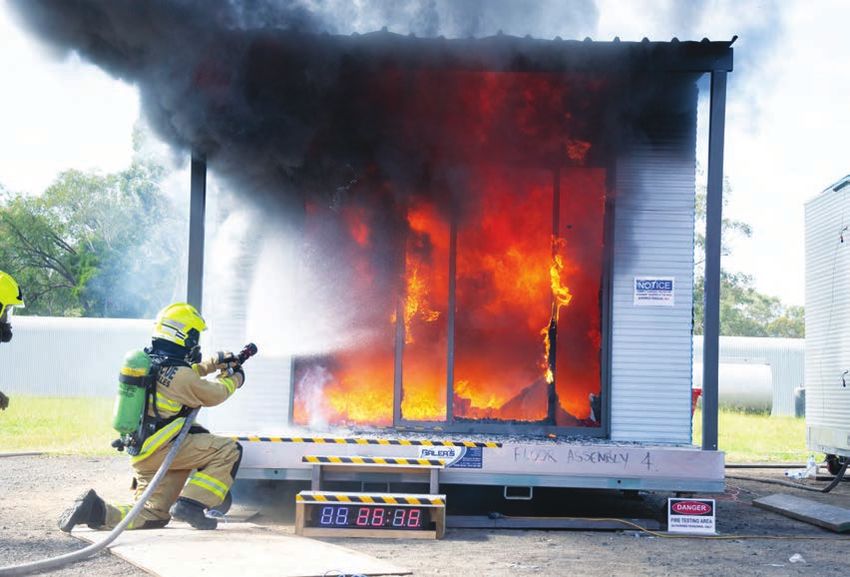
NEWS ISSUE THREE 2019


        HEALTHY AGEING AND RETIREMENT
        FOR FIRST RESPONDERS

        A
                 FAC hosted the ‘Healthy             National Engagement Manager for
                 Ageing, Healthy Retirement’         Police and Emergency Services,
                 masterclass in April, in            presented findings from a national

                                                                                                                                                                       PHOTO: ZOE KENYON, AFAC
        recognition of the continued need to         survey of the mental health of 21,000
        address the mental health and wellbeing      emergency services personnel. The
        issues faced by fire and emergency           study was conducted with support from
        services personnel across Australasia.       the Bushfire and Natural Hazards CRC.
           The masterclass, sponsored by                 Rich Adams from Team Rubicon
        Stewart and Heaton Clothing Company,         Australia spoke about the key values
        aimed to raise awareness of the issues       of purpose, community and identity for         by showing how good health is aligned                  AFAC’s event
        around transitions into retirement. It       military veterans and first responders.        with a good work ethic.                                focused on
        provided insights into good practice         Mr Adams presented on the resources                Representatives of South Australia                 mental health
        from across the fire and emergency           available for veterans after service,          Metropolitan Fire Service, Ambulance
                                                                                                                                                           and wellbeing
                                                                                                                                                           issues facing
        services sector to demonstrate the           including recognising the impacts of           Victoria and Police Association of                     Australia’s
        impact of retirement on the mental           retirement on veterans’ sense of identity.     Victoria also shared their insights on                 fire and
        health and wellbeing of personnel.               Andrew McGarity, Manager, Industry         mental health and a healthy transition                 emergency
           A diverse range of presenters             Management Health and Safety at Fire           into retirement at the masterclass.                    services
        and discussion topics painted a              and Rescue NSW, also presented at the              The partnership between AFAC and                   personnel.
        comprehensive picture of the current         event. Mr McGarity spoke about how             Stewart and Heaton highlights the work
        research and initiatives to assist with      inspiration was drawn from the National        of agencies at the forefront of practice in
        healthy ageing and retirement for first      Rugby League (NRL) to develop the              the mental health and wellbeing space.
        responders.                                  Career Transition Booklet, which               The event took place in Melbourne
           James Maskey, Beyond Blue’s               supports current and former firefighters       on 17 April.

                                                                                                     PHOTO: AMY MULDER, BUSHFIRE AND NATURAL HAZARDS CRC

        Fire Safety Assessment                       after an order has been published in

        accreditation opens for                      the NSW Government Gazette, which is
                                                     expected in January 2020.
        applications                                     Following this, relevant fire protection

        A
                                                     work in the state will be required to be
                  pplications for the new Fire       undertaken by a CFSP accredited by
                  Safety Assessment (FSA) class      FPAS or other future approved schemes.
                  of accreditation under the Fire        The FSA class of accreditation will
        Protection Accreditation Scheme (FPAS)       ultimately be available across multiple           Dr Blythe McLennan presenting at the workforce
        opened in early April.                       jurisdictions, however the initial launch         and volunteerism 2030 RAF.
            The launch of the new class of
        accreditation is the start of a yearlong
                                                     will be focused on NSW.
                                                         The launch of the class and its
                                                                                                       Forums firing with
        process to assess and recognise the          recognition by the NSW Government is              utilisation focus

                                                                                                       T
        competence of fire safety practitioners      a major step forward in fire protection
        in two key areas of work.                    for the state, and a validation of the                    he Bushfire and Natural Hazards CRC’s
            The FSA class of accreditation           effort the industry has voluntarily                       new-look Research Advisory Forums
        certifies individuals who assess             invested in raising competency and                        (RAFs) have provided an effective
        the performance capability of fire           standards.                                        platform to discuss the utilisation of CRC research
        safety measures to inform annual or              “In recent years thousands of                 and projects.
        supplementary fire safety statements.        individuals in the fire protection                    Since the CRC began in 2013, the format of
            This class of accreditation has been     industry have voluntarily gained FPAS             the forums has evolved many times to reflect
        designed to address the requirements         accreditation and related training,               the current needs of the research. The latest
        for certain fire protection work in NSW to   and the launch of the new Fire Safety             change allows a greater focus on the utilisation
        be carried out by a ‘competent fire safety   Assessment class is another major                 of research according to themes, rather than the
        practitioner’ (CFSP) under the state’s       step in that path of industry self-               previous focus on individual projects.
        2017 fire safety reforms.                    improvement,” FPA Australia CEO Scott                 The first of the new RAFs was held in conjunction
            As per the NSW Government’s              Williams said.                                    with the Northern Australia Fire Managers Forum
        approval of the FSA and Fire Systems             “The recognition of the FSA and               and also looked at that particular region of Australia.
        Design (FSD) classes of accreditation        FSD classes of accreditation is a                 The second RAF focused on bushfire mitigation as
        in February, individuals holding FSA         strong endorsement from the NSW                   a workshop and formed part of the 6th International
        accreditation will be recognised as          Government that the industry is on the            Fire Behaviour and Fuels Conference. RAFs
        CFSPs under the 2017 reforms.                right track in holding ourselves to a high        have also been held in Melbourne on the theme
            That recognition will be formalised      standard, in order to deliver the best fire       workforce and volunteerism, and in Canberra on the
        by the NSW Government after a phase-         protection services to the community              theme economics, policy and planning.
        in period of approximately 12 months,        that we can.”

6          FIRE AUSTRALIA    ISSUE THREE 2019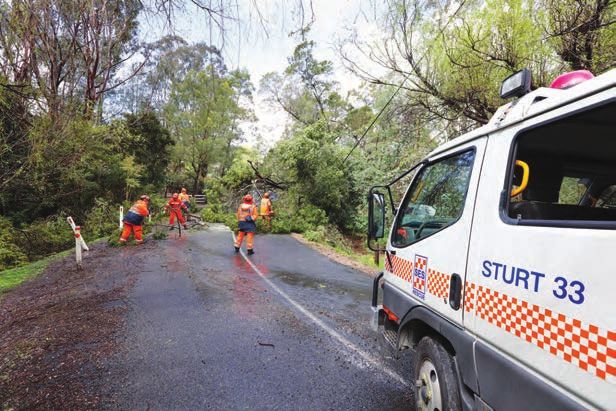
ISSUE THREE 2019 NEWS
PHOTO: QUEENSLAND FIRE AND EMERGENCY SERVICES
The International Association of
Wildland Fire (IAWF) conference
GLOBAL FIRE highlighted the interconnected
FOCUS ON nature of the global fire community,
simultaneously taking place in three
DIVERSITY, locations: Sydney, Australia; Marseille,
CULTURAL France; and Albuquerque, United
States. The Sydney conference saw
BURNING AND 337 delegates attend – not only from all
COMMUNITIES Australian states and territories, but also
delegates from 12 other countries.
The collection features best practice guidance for warnings and
T
The conference wrapped up with two
he latest research and successful field trips – one focusing on public information during an emergency.
lessons learned about the investigation of unseasonable fires,
bushfire behaviour and fuels coordinated by the New South Wales Warnings Collection
management were shared at the Rural Fire Service, and the other explored
launched online
A
6th International Fire Behaviour and iconic Blue Mountains fire management
Fuels Conference, which was held sites with the Office of Environment and collection of resources covering the
from 29 April to 3 May. The focus was Heritage New South Wales. theme of ‘warnings’ has been made
centred on people, with sessions The Bushfire and Natural Hazards available online. The Warnings Collection
dedicated to Indigenous fire CRC was a lead partner with the IAWF is available on the Knowledge Hub, an online
management, community recovery, in all three conferences, with the New initiative that supports education and learning
shared responsibility, women’s careers South Wales Rural Fire Service and developed by the Australian Institute for Disaster
in fire and the new National Fire the Bureau of Meteorology as major Resilience (AIDR).
Danger Ratings System research. supporters in Sydney. The collection recognises the life-saving value
of public information and warnings during an
Michelle emergency. The resources available support learning
McKemey from and best-practice guidelines, which are informed
the University of
by research featured in the Australian Journal of
New England and
Lesley Patterson, Emergency Management and the Bushfire and
Banbai Aboriginal Natural Hazards CRC.
Elder and Ranger, The collection includes a four-part video series
presenting at the presented by Associate Professor Amisha Mehta and
PHOTO: AMY MULDER, BUSHFIRE AND NATURAL HAZARDS CRC
6th International Associate Professor Brooke Fisher Liu, who explore
Fire Behaviour and the key concepts and strategies to provide effective
Fuels Conference,
Sydney. risk and warning information.
There is also exclusive footage from the AFAC18
conference powered by INTERSCHUTZ in Perth,
which showcases a panel session about how to
improve the dissemination of public information
and warnings.
The Warnings Collection is available on the AIDR Knowledge
Hub. Visit bit.ly/2HyJt3g.
How does Jack
protect a small premise
against fire?
NEWS ISSUE THREE 2019
Children as agents
PHOTO: DAVID BRUCE, BUSHFIRE AND NATURAL HAZARDS CRC
of change in disaster STRATEGY
preparedness RELEASE FOR
I
nvesting in children’s education on AFAC
T
bushfire behaviour enables them
to participate in bushfire planning, he AFAC Strategy 2019–2023
development and implementation and has been released and lays
brings progress to their communities – the foundations for AFAC’s
that’s the belief of Bushfire and Natural vision, values, purpose and approach
Hazards CRC researcher Dr Briony in delivering strategic support to its
The Northern Australia Fire Managers Forum brought together Towers. Dr Towers, from RMIT University, members into the future.
leaders to discuss emergency management within the region. recently featured on the Emerging The AFAC Strategy covers
Minds podcast, in the episode Disaster future service delivery; significant
Northern fire issues preparedness: myths and programs organisational relationships,
aired at forum that hold promise, which forms part partners and key stakeholders;
A
of the Community Trauma Toolkit. In AFAC’s international connections;
wet and muggy Darwin was the location for the podcast, Dr Towers explains that and the advancement of the
the 2019 Northern Australia Fire Managers children who have been involved in the sector’s capability.
(NAFM) Forum, which brought together fire development of their family’s bushfire The document summarises the
managers from across the north of Australia to discuss plans have a sophisticated understanding role of AFAC within the emergency
topics of interest to the tropical savannas. The forum of bushfire risk. However, being involved in management sector. It also outlines
was held on 3 April 2019, with a field trip the following developing the plans is just a starting point. AFAC’s commitment to support
day where the participants visited the Tiwi Islands to view “Uncovering misconceptions and the development of more resilient
Indigenous-based plantation forestry operations. investing in children’s education on communities across Australia and
The Executive Director of Bushfires NT, Collene bushfire behaviour enables them to New Zealand through assisting the
Bremner, opened the forum with comments on the genuinely participate in bushfire plan membership network.
challenges of fire management across the north of development and implementation and It provides an insight into the
Australia, drawing on specific issues in the Northern become agents of change for their work of AFAC and how this will
Territory. communities,” Dr Towers said. support member agencies into the
Other talks focused on the main highlights, activities future. Importantly, it communicates
and weather impacts of the last fire season and how Listen to the podcast at www.emergingminds. AFAC’s role in building the
these would affect the season. Despite good rainfall com.au or on podcast platforms. collective knowledge and capability
during the forum, the wet season, as a whole, across PHOTO: AFAC/BUSHFIRE AND NATURAL HAZARDS CRC of the sector by collaborating
the Northern Territory and Western Australia received across jurisdictions to discover
below average rainfall. Queensland, in contrast, was opportunities, solve problems and
still feeling the effects of a severe drought and several promote a community-centred
major fires that were quickly followed by two cyclones approach.
and extensive flooding.
The NAFM Forum 2019 attracted 46 participants The AFAC Strategy 2019–2023 is available
Dr Briony Towers presenting her work on child-
and was hosted by Bushfires NT, with the support of the centred disaster risk reduction at the AFAC18 online. Visit bit.ly/30FmLhs.
Bushfire and Natural Hazards CRC. conference in Perth last year.
T
he future of Queensland’s a sound plan for the betterment of the
CRC supports Queensland’s future emergency services has now
been set out in a strategic plan,
public, explained the CRC’s Partnership
Development Director Sarah Mizzi.
The Bushfire and Natural Hazards CRC with research and insight from the “It is a strategy to ensure the agency
has aided Queensland’s future emergency Bushfire and Natural Hazards CRC. is well positioned and well prepared for
management systems. Queensland Fire and Emergency the future, to better meet unforeseen
Services (QFES) engaged the CRC challenges and supporting ways to work
to assist with the agency’s strategic better with communities,” Mizzi said.
planning into the next decade as part of By partnering with the CRC,
its new Strategy 2030. QFES was able to develop a better
The CRC coordinated workshops, understanding of how it can work with
PHOTO: QUEENSLAND FIRE AND EMERGENCY SERVICES
conducted additional research studies the community, rather than for the
and used focus groups to contribute to community, during times of need.
the final report. Through the strategy development
Strategy 2030 aims to position QFES process, QFES has also benefited
as an innovative and trusted leader in from the CRC’s expertise, gained
community safety, making it adaptable through its ongoing research
to the changing needs and expectations across a number of programs
of the community. including emergency management
The CRC is well positioned to provide capability, incident management,
support to QFES in this process and volunteering, emergency warnings
in ensuring that the organisation has and communications.
8 FIRE AUSTRALIA ISSUE THREE 2019
ISSUE THREE 2019                  NEWS


      ROBOTICS EDUCATION MEETS
      EMERGENCY RESPONSE

      I
         nnovative ideas for building resilience   the future’ – such as such as virtual reality,
         and partnering agencies with schools      robotics and 3D printing – and respond to
         was at the forefront at the Disaster      real-world scenarios and problems.
      Resilient Australia–New Zealand School           The Bot Rescue program challenges

                                                                                                    PHOTO: ALANA BEITZ, AFAC
      Education Network (DRANZSEN) Forum           students to design a robot to assist in an
      in Victoria.                                 emergency scenario through collecting
          The first DRANZSEN event for 2019        data, clearing debris or retrieval and
      captured a diverse range of child-           delivery. Students also create a 3D
      centred approaches to learning about         disaster scene for the robot to navigate.
      natural hazards, harmful impacts and         This practical activity is part of a unit of
      opportunities to reduce risk and build       learning with a focus on natural hazards,                          how fire and emergency service agencies        Julie Fagan
      community resilience, including hands-       exploring local risk, harmful impacts on                           can partner with Victorian Tech Schools        from Geelong
      on robotics design.                          communities and current technologies                               to engage with students and explore            Tech School
          Geelong Tech School Director             used by response agencies.                                         technological solutions to real-world
                                                                                                                                                                     presents the
                                                                                                                                                                     Bot Rescue
      Leanne Collins presented with STEM               Ms Fagan said the Bot Rescue                                   problems while facilitating a conversation     program.
      facilitator Julie Fagan, who showcased       program was popular with students                                  about disaster response and resilience.
      their Bot Rescue program, developed          because it appealed to existing curiosity                          The DRANZSEN event roadshow informs
      in partnership with Victoria State           about emergencies and disasters.                                   the National DRANZSEN Forum taking
      Emergency Service.                           The program also explores emerging                                 place in Melbourne on 30 August 2019.
          In 2016, the Victorian Government        technologies that are shifting the                                 DRANZSEN Forums are free events
      allocated $128 million to establish ten      way emergency agencies respond to                                  offered through the Australian Institute for
      Tech Schools across the state. Tech          scenarios, allowing young minds to                                 Disaster Resilience.
      Schools partner with state, private and      consider challenges and opportunities
      independent schools to offer educational     in the industry for themselves.                                    For more information on DRANZSEN, visit:
      programs that incorporate the ‘tools of          Importantly, the program demonstrates                          bit.ly/2JzB55C.

Early warning and highest sensitivity in small areas.
SecuriRAS ASD 531 aspirating smoke detector:
ü Perfect for electric cabinets, IT racks, portable switchrooms,
  ventilation ducts, car parks and roof spaces
ü Fast and easy 3 step commissioning
ü Selectable Class A, B or C sensitivity, 75 m pipe length, IP 54 enclosure
ü A simple affordable and reliable ASD solution

Authorised Business Partner:

Securiton AG, Alarm and Security Systems
www.securiton.com, info@securiton.com
A company of the Swiss Securitas Group
NEWS ISSUE THREE 2019
RESOURCE SHARING EXPERTISE
AROUND AUSTRALASIA City of
Webster Fire
C
Chief and
onfronted with longer in Houston, Texas presented on the Emergency
operational seasons and the operational lessons and challenges Manager
PHOTO: ZOE KENYON, AFAC
complexities of climate change, from multi-hazard events, including Patrick Shipp
fire and emergency services are the national-level space target hazard, and AFAC
National
experiencing growing pressure on their Hurricane Harvey, wildfires and human-
Resource
existing resources, requiring an increase made disasters. Sharing
in response capability and cross-border He was accompanied by NSW Rural Centre
deployments. Fire Service Assistant Commissioner Manager
To confront these challenges, AFAC Steve Yorke, who provided an Australian Attendees gained valuable insights Luke Purcell
and Motorola teamed up to deliver the perspective on resourcing. As Director, about the importance of effective answer
2019 Knowledge Event Series on the Operational and Mitigation Services coordination and communication with
audience
questions
topic ‘sharing resources in response to at NSW RFS, Assistant Commissioner different agencies during operational at the
multi-hazard events: perspectives from Yorke has been active in many major periods. The event took place in every Melbourne
Texas, USA’. fire incidents and has been deployed to Australian state and territory and in Motorola
Fire Chief and Emergency Manager Canada and Tasmania through the AFAC Wellington, New Zealand between Knowledge
Patrick Shipp from the City of Webster National Resource Sharing Centre. 27 May and 12 June. Event.
Two years of change
BURNING in the sector
POTENTIAL AT
T
he Male Champions of Change Fire and
Emergency Group marked two years since
PRESCRIBED FIRE the group’s establishment when they met
FORUMS on 30 April in Canberra.
Founder of the Male Champions of Change
T
and former Australian Sex Discrimination
wo prescribed burning forums Commissioner Elizabeth Broderick AO shared
recently addressed the current lessons arising from her experience with
PHOTO: DEB SPARKES
and future issues of the practice. the strategy. Ms Broderick spoke about how
The North Australia Savanna Fire listening and learning can build a gender diverse
Forum allowed practitioners and locals organisation, and about the need to address both
in the Northern Territory to address the covert and overt unconscious discrimination
emerging technologies and issues in Attendees discuss prescribed burning practice at that can exist in a workplace.
delivering savanna burning carbon the Institute of Foresters of Australia Subtropical Ms Broderick concluded by stating that a
abatement programs. Forum. focus on gender equality is not a “battle of the
Carbon abatement programs allow overcome them. Eighty people attended sexes”. Based on her experiences, Ms Broderick
land management organisations to sell the forum, from land management said everyone benefits from a clear focus on
carbon credit units to the government agencies, state and private forestry gender equality and the overall capability of an
through the Emissions Reduction Fund, organisations, fire services and research organisation lifts in response to the change.
or to businesses who are seeking to institutions. AFAC CEO Stuart Ellis thanked all organisations
offset their greenhouse gas emissions. The participating groups agreed that and leaders involved in the strategy for the progress
By increasing the extent of prescribed the increase in cultural burning is an made over the past two years. He reminded the
burning undertaken, the savanna emerging opportunity that can provide ‘Champions’ that the strategy demands a personal
burning projects abate approximately multiple benefits for prescribed burning. and organisational commitment from members,
1.2 million tonnes of CO2e each year, The groups also recognised that an and about the importance of consistency between
which represents ten percent of all increased community understanding words and actions.
carbon credit units produced across all and involvement in prescribed burning The Male Champions of Change strategy is
methods. would help to address some of the about male leaders advocating for, and acting
The second forum was the Institute outstanding challenges and assist with to advance, gender equality. The initiative
of Foresters of Australia Subtropical ecological and risk reduction outcomes. is convened by the Victorian Human Rights
Forum, which took place in Lismore. The The Centre of Excellence for and Equal Opportunity Commissioner Kristen
event focused on prescribed burning for Prescribed Burning is an initiative of Hilton, alongside a group made up of men and
multiple outcomes in north-east NSW the Australian Institute for Disaster women who are leaders from across the fire
and south-east Queensland. Resilience, and communicates the and emergency services sector, including AFAC
Participants workshopped the guiding frameworks and principles members. These Champions work together to
changes they have witnessed in bushfire regarding prescribed burning. advance gender equality and support an increase
management and the challenges they in the representation of women in leadership
face in addressing these changes, and For more information, please visit: positions across the sector.
they brainstormed innovative ideas to bit.ly/2J1sQya.
10 FIRE AUSTRALIA ISSUE THREE 2019By the Fire Industry,
For the Fire Industry
You asked, we delivered.
With over 30 years’ fire industry experience, FireSense has a range of TPS & Fire Rated cables to
cater specifically to the fire industry.
We designed our cables with you, the fire contractor in mind.
Smallest Diameter on the market
Easiest to strip
Always in stock
Delivered direct to site
Independently Certified
Approved to relevant Australian Standards
FireSense TPS & Fire Rated Cables are the benchmark
in the fire industry, with a larger range than ever before.
Visit our website, or call your local branch for further information.
firesense.com.au
sales@firesense.com.au salesvic@firesense.com.au salesqld@firesense.com.au
02 8850 2888 03 9646 4557 07 3890 8842
FireSense is a specialist supplier of electronic fire systems and fire rated cabling products to installers and wholesalers.
With an extensive range of products covering electronic fire detection systems, building evacuation systems,
high sensitivity aspirated smoke detection systems, fire alarm control cabling and fire rated power and control cables,
FireSense is the right partner for your next major project.
FireSense’s head office and warehousing is located in North West Sydney and has regional sales offices and warehousing in Melbourne and Brisbane.DEMO BURN REPORT
A FRNSW
firefighter
extinguishes
the blaze that
took hold of the
room without a
sprinkler at the
demonstration
burn.
PHOTOS: FPA AUSTRALIA
HOME, FLAMMABLE HOME
J
Identical rooms, identical furniture and ust four minutes and 30 seconds facility in Londonderry to highlight the
an identical spark: two demonstration after a small fire was lit in a life-saving value of residential sprinklers.
burns to launch the Home Fire Sprinkler purpose-built reproduction of an The event preceded changes to the
average apartment lounge room, the National Construction Code (NCC) 2019
Coalition have shown the life-saving inside of the structure reached a deadly introduced on 1 May, requiring all newly
value of installing automatic sprinkler 1,245 degrees Celsius. constructed shared accommodation
systems in modern Australian homes. Next door, an identical lounge room buildings under 25 metres and over
replica reached just 90 degrees – the three storeys to have sprinklers installed,
temperature and flames dulled by a going beyond previous requirements for
BY ALANA BEITZ single residential sprinkler installed into sprinklers only in residential buildings
the structure’s roof. above 25 metres.
AFAC
The demonstration burns took place To ensure the public and industry
on 29 April at Fire and Rescue NSW’s stakeholders are aware of the new
(FRNSW) fire research and testing NCC 2019 regulations and the safety
12 FIRE AUSTRALIA ISSUE THREE 2019DEMO BURN REPORT
value of residential sprinklers, the took 29 minutes. winter as the temperature drops. The
Home Fire Sprinkler Coalition – a Many synthetic items of furniture and demonstration burn replicated what
partnership between AFAC and FPA other belongings also create a deadly could occur if a spark from a heating
Australia – has been established to smoke as they burn. The same research device or fireplace escaped and
provide independent, non-commercial found that home fire sprinklers provide caught hold.
information about sprinklers. dual protection to residents during a Each room was 3.6 m by 6 m in
house fire by suppressing the spread size, common dimensions for a room
Synthetics spark concern of flames and acting as a physical in a modern apartment. Maintaining
The new NCC 2019 regulations respond barrier for smoke movement within the consistency between the two rooms
to the risks of modern Australian homes, space. This creates a safer operating is key to the integrity of a side-by-side
namely the increase in synthetic materials environment for firefighters when demonstration burn and the focus of
used to build and furnish them. Fuelled by they arrive on the scene of a sprinkler- the FRNSW Fire Investigation and
these materials, residential fires can reach controlled fire. Research Unit.
deadly flashover (the complete ignition of “We replicate everything, so one
combustible materials in a compartment Hitting close to home room is an exact clone of the other,
due to radiant heat) in as little as three The demonstration burns were from the paint and the hangings on the
minutes. specifically designed to reflect the walls down to the carpet on the ground,”
Speaking to the media at the typical living conditions of everyday FRNSW Fire Research Team Leader
demonstration burn, FRNSW Australians. In each test structure, a Morgan Cook explained.
Commissioner and AFAC President Paul small fan heater sat beside a couch Common house items were used
Baxter conveyed the deadly potential of with a blanket draped over it – a in each room, including two couches,
modern furnishings. familiar scene in many homes during a coffee table, a lamp, a bookcase,
“Most people don’t realise when they
settle in to watch Netflix at night, they
Room temperature readings (by height intervals)
are sitting on basically a drum of petrol Temperature °C
– that is what all of our furniture is made 1400 1245.1
out of these days.”
1200
Research conducted by FRNSW,
1000
AFAC, FPA Australia and CSIRO
following the coronial inquest into a 800
tragic 2012 Bankstown apartment fire 600
confirmed the increased fire risk of 400
modern Australian homes. 90.4
200
The investigation found that a fire in
a modern home can spread in less than 0
2:00 4:30 6:30
five minutes, a fatal reduction in the time Time (mins)
residents can escape compared to older 180cm Non-sprinklered 120cm Non-sprinklered 60cm Non-sprinklered
homes built between 1950–70, which 180cm Sprinklered 120cm Sprinklered 60cm Sprinklered
The room
with no
sprinkler and
its synthetic,
flammable
contents were
completely
destroyed
during the
demonstration
burn.
ISSUE THREE 2019 FIRE AUSTRALIA 13DEMO BURN REPORT
The residential
sprinklers
contained
the blaze to
just one area
of the room
during the
demonstration
burn.
curtains, cushions, a rug and a child’s maximum of 90.4 degrees. At the time of “That provides the critical time for
play tent. the sprinkler activation, the temperature the occupants of the building to be able
“It’s really important that these burns of the room at mid-level (120 cm) had to escape.”
are identically laid out and accurately only reached 33.4 degrees, and the FRNSW’s Morgan Cook said the
recorded, both for the credibility of our ground level (60 cm) temperature was launch of the Home Fire Sprinkler
research and to show how much impact just 20.3 degrees. Coalition was a success and generated
a sprinkler will have during a home fire,” After firefighters extinguished both an important discussion about home
Mr Cook said. fires, the difference between the two fire safety and building regulations.
Conditions outside the rooms rooms was clear. The room without a “The visual impact of a demonstration
were closely supervised, and the wind sprinkler had reached flashover point burn is a really powerful tool in changing
direction and speed, air temperature, at about 2 minutes and 30 seconds, public understanding of home fires.
humidity and pressure were measured engulfing every item in the room and “It’s really simple when you see both
to monitor their impact on the burns. leaving nothing to be salvaged. of the rooms after the fires have been
Inside, three temperature readings Comparatively, the room with a extinguished – without a sprinkler a
took place in each room every two sprinkler contained the blaze to just room is completely destroyed in no time
seconds for the duration of the one side of one couch, damaging some at all. Seeing that really pushes people
burns – one at average head height of the items in the room but leaving the to act,” Mr Cook said.
(180 centimetres), one at sitting height majority untouched by flames.
(120 cm) and one at floor level (60 cm). “In almost all circumstances, the More information about automatic residential
fire will be limited to sometimes just sprinklers, including regulation changes in
A tale of two burns the object of origin, but most likely the the NCC 2019, is available on the Home Fire
Two minutes after each spark was lit, room of origin,” Commissioner Baxter Sprinkler Coalition website:
the temperature in both rooms hit explained at the demonstration burn. www.homefiresprinklers.org.au.
90 degrees, activating the sprinkler
in one room.
While the temperatures dropped in
the room equipped with a sprinkler, the
heat in the room without one continued
to climb, jumping from 90 degrees to
314.1 degrees in just 15 seconds. Another
15 seconds later, the temperature more
than doubled, reaching 752.3 degrees.
The temperature continued to rise,
reaching a maximum of 1,245 degrees
and collapsing the roof and shattering
the glass sliding doors before firefighters
intervened. In these conditions, a person
would not survive.
In comparison, the temperature in FRNSW Commissioner and AFAC President Paul Baxter addresses the media
at the Home Fire Sprinkler Coalition launch.
the room with a sprinkler reached a
14 FIRE AUSTRALIA ISSUE THREE 2019RESIDENTIAL SPRINKLERS
US LESSONS FOR HOME FIRE
SPRINKLER ADOPTION
BY TOM BICKNELL “We know the solution exists in home and two-family homes, no reduction in
fire sprinklers,” she stated. “More than building has been seen, and installation
FPA Australia
I
90 percent of the time, home fires can costs have averaged only US$1.35 per
n the US, 80 percent of fire-related be controlled by only one sprinkler head.” sprinklered square foot.
deaths occur at home, from an In the US experience, consumers Efforts to increase home sprinkler
annual average of 368,000 home have been on board. In surveys of adoption in the US have also run
fires. That number was a driving factor homeowners, the US HFSC found that into resistance from a residential
behind the establishment of the US 74 percent would be more likely to construction industry unfamiliar with
Home Fire Sprinkler Coalition in 1996, buy a home with fire sprinklers, and sprinklers, and a sprinkler industry
formed to educate the public about the 70 percent said a sprinklered house unfamiliar with residential construction.
life-saving value of fire sprinklers in the had more value. But despite the challenges, work to
home. Some of the key hurdles to increase home fire sprinkler adoption
Australia’s own recently established overcome, however, are in perceptions in the US and in Australia will continue,
US consumers
Home Fire Sprinkler Coalition (HFSC) is that sprinklers cost too much and will spurred on by another number shared are on board
modelled after the US organisation, and stall construction, said Ms Carli. But the by Ms Carli with conference attendees: with home
the local industry heard some of the key data doesn’t support this concern; in “The risk of dying in a home fire sprinklers,
lessons learned by the US HFSC in its US jurisdictions that have introduced decreases by 85 percent if sprinklers are according to
23 years of operation at the recent Fire requirements for sprinklers in new one present.” Lorraine Carli.
Australia Conference and Tradeshow
2019 in Melbourne. PHOTO: TOM BICKNELL, FPA AUSTRALIA
Lorraine Carli, President of the US
HFSC and Vice President of Outreach
and Advocacy at the National Fire
“We know the solution
Protection Association, spoke about the exists in home fire
US experience with home fire sprinklers.
“We know that 80 percent of fire sprinklers. More than
deaths happen in the home, so if we’re
going to solve the problem we have to
90 percent of the time,
go to the home,” she said. home fires can be
The speed of fire spread in homes
has dramatically increased in the last controlled by only one
half century due to the ubiquity of
synthetic materials in furnishings, she
sprinkler head.”
explained, as well as the trend towards – Lorraine Carli
open-plan living spaces that allow faster
fire propagation.PROTECTIVE ACTION
IMPACTS OF
CONFLICTING CUES IN
EMERGENCY
WARNINGS
New research confirms a long-held suspicion that emergency
warnings do not always have precedence when other
sources conflict with official advice.
BY DR PAULA DOOTSON, action. Environmental cues such as the Processing model and the Protective
ASSOCIATE PROFESSOR weather outside, information offered by Action Decision model.
DOMINIQUE GREER, the media or the actions peers are taking The Risk Information Seeking and
SOPHIE A. MILLER AND all influence people’s decisions and can Processing model proposes seven
PROFESSOR VIVIENNE inhibit taking timely protective action. factors that influence the extent to
TIPPETT When cues from different information which people seek out information and
sources are in conflict, such as when the time they spend analysing it. These
Queensland University of Technology and
a flood evacuation warning has been include:
Bushfire and Natural Hazards CRC
issued but the weather conditions in the ◆◆individual characteristics
A
immediate area appear sunny and fine, ◆◆perceived hazard characteristics (i.e.
ustralia’s emergency services it can cause uncertainty about the right risk perceptions)
agencies face immense action to take. ◆◆affective response to the risk
challenges when responding Our team, through the Bushfire and ◆◆social pressures to possess relevant
to natural hazards. Evacuating people Natural Hazards CRC project ‘Effective information
in affected regions requires time, risk and warning communication during ◆◆information sufficiency
influence, coordination and expertise. natural hazards’, found that conflicting ◆◆one’s personal capacity to learn
Triggering large-scale public cues do exist across multiple hazard types ◆◆beliefs about the usefulness of
evacuations in time-critical situations and can affect information processing of information in various channels.
of flood or bushfire is problematic, as risk perceptions, and therefore prevent The Risk Information Seeking and
there is always some uncertainty about appropriate protective action. Processing model is built on the idea
whether, or how, a natural hazard will that just because information is available
occur. Compounding this problem is the Undertaking the research does not mean people will do anything
fact that emergency services are not This research draws on two models to to respond to it.
the only source of information that the explain the effect of conflicting clues: The Protective Action Decision
public uses when considering taking the Risk Information Seeking and model suggests that an individual’s
16 FIRE AUSTRALIA ISSUE THREE 2019PROTECTIVE ACTION
Research has shown that environmental cues,
perceptions, and therefore prevent
such as the weather outside, influence how
individuals react to warning messages. appropriate protective action. The
significant results were evenly spread
across hazards, suggesting the problem
is not unique to one hazard.
Findings
CONSISTENT CUES
Consistent cues refers to when the
instruction in the emergency warning
was consistent with the environmental
cue and social cues of media, a warning
from an unofficial organisation, and
peer behaviour. When presented with
consistent cues, participants were more
likely to intend to evacuate; perceive
risk about the event; share information
with friends, family and peers; find
emergency warnings to be effective;
comprehend the information; and have a
higher current information level.
Behavioural intentions to evacuate:
participants were more likely to intend to
evacuate under the ‘bushfire, evacuate
now’, condition when the emergency
warning was consistent with a social cue
from the media.
Risk perceptions about the
flood/bushfire: perceived hazard
characteristics were higher for
participants when they received
consistent instructions from emergency
warnings, environmental cues and social
cues of media and unofficial warning
organisations across bushfire and flood,
and across both escalations of warnings.
Sharing information with friends,
family and peers: information sharing
was more likely for participants who
PHOTO: CFA received consistent environmental and
media cues across ‘flood, prepare to
decision to engage in a protective environmental cue – e.g. a gif (an image evacuate’ and ‘bushfire, evacuate now’
action is informed by how they process file that supports both animated and warnings.
socio-environmental cues alongside static images) of a sunny day, bushfire or Perceived effectiveness: perceived
official communications. Environmental flood – or one of three social cues – e.g. effectiveness has to do with how
cues include smells and sights, while a media article suggesting evacuating attention-grabbing, powerfully
social cues incorporate the behaviour or staying, an organisation releasing informative, meaningful and convincing
of others. This can produce modelling an unofficial warning suggesting the emergency warning was, and
behaviours, media coverage as a form evacuating or staying, or observed whether it was worth remembering.
of authority to effect behaviours, and behaviour of neighbours evacuating or Participants perceived emergency
information from unofficial sources as staying. Taking protective action in the warnings to be more effective when
another behavioural influence. event of bushfire or flood can mean any social cues from the media and unofficial
Previous research indicates that number of things, including preparing warning organisations were consistent
many situational and personal factors property and family for evacuation, with emergency warnings or ‘evacuate
will affect an individual’s behaviour in calling for emergency assistance or now’ messages across flood and
an emergency, such as age, gender, telling friends or family about the event. bushfire.
language, country of birth and past The survey also collected information Perceived comprehension: perceived
experience with hazards. on participants’ age, gender, language, comprehension has to do with how easy
Our team surveyed 2,649 adults country of birth and past experience it was for participants to understand
across all Australian states and territories with hazards to ascertain whether the message and comprehend the
about bushfires and floods. The these impacted the likelihood of taking information in the message. Perceived
respondents were randomly assigned protective action. comprehension was higher for
to one of 32 experimental conditions Our research has confirmed participants who received a ‘bushfire,
that presented them with an emergency emergency services agencies’ evacuate now’ warning that was
warning (‘prepare to evacuate’ suspicions that conflicting cues can consistent with the social cue of an
or ‘evacuate now’) and either an affect information processing of risk unofficial warning organisation.
ISSUE THREE 2019 FIRE AUSTRALIA 17PROTECTIVE ACTION
WORD FROM THE
EMERGENCY SERVICES
To have empirical evidence of how
conflicting cues can impact what the
community thinks and how they act
is important for us because it helps
emergency services agencies tailor
the information and warnings it delivers
to the community during emergency
events. These findings, combined with
the next stage of the research project,
will help us develop ways to address
ambiguity caused by conflicting cues
to encourage the community to take
protective action. Specifically, we will
use these findings and future work
to inform how we can tailor warnings
and the key messages delivered by
operational personnel to acknowledge
the lack of environmental and visual
cues of the immediate threat.”
– Hayley Gillespie,
Executive Manager Media at Queensland
Fire and Emergency Services
PHOTO: SOUTH AUSTRALIAN SES
This is the Current information level: current participants were more likely to seek evacuating. Seemingly, the social cue
first research information level refers to the out additional information, while their was enough confirmation so they did
to offer participants’ perceived knowledge of a information processing and self-efficacy not need to read more of the warning or
empirical hazard. Participants perceived they had were affected. seek further confirmation. Conversely,
evidence of
the impact a higher current information level when Seek out further information: heuristic information processing was
of conflicting they received a ‘flood, evacuate now’ information-seeking refers to the found to be higher for participants who
cues and how emergency warning consistent with a participants’ likelihood of searching received a ‘flood, prepare to evacuate’
they influence social cue from an unofficial warning for information about a hazard in order emergency warning that was in conflict
public organisation. to understand it better, as opposed to with the social cue of an unofficial
behaviour in tuning out when the topic of the hazard warning organisation.
Australia.
CONFLICTING CUES comes up. Participants were more likely Ability to follow the instruction:
Conflicting cues refers to when the to seek information when a ‘bushfire, self-efficacy has to do with a person’s
instruction in the warning message prepare to evacuate’ emergency perceived ability to complete a task or
conflicted with the environmental warning conflicted with the social cue engage in a specific action. Participants
and social cues, unofficial warning of an unofficial warning organisation. perceived their self-efficacy to be
organisations and peer behaviour. While seeking out additional information higher when the emergency warning
When faced with conflicting cues, is sometimes encouraged and thus was consistent with the social cue of
could be considered a protective peers performing evacuation actions
Note: This stimulus has been changed and stylised action, it can result in milling behaviour in the bushfire context. Interestingly,
graphics used for the purpose of this article. – a communicative process whereby participants perceived their self-efficacy
individuals come together in an attempt to be higher when the ‘bushfire,
to define the situation, confirm the threat evacuate now’ emergency warning
or risk, and propose and adopt new conflicted with the media social cue.
behaviours (known as protective actions).
Getting stuck in the milling process for What next?
extended periods of time can potentially Our team is planning to develop
Conflicting cue instructions for a flood warning (presented after place individuals in danger. and test intervention to mitigate the
the emergency warning message): You look outside the window Process the information: heuristic negative effects of conflicting cues to
and see it is a sunny day.
information processing happens when improve protective action. Among other
individuals skim through information, do things, the intervention could include
not spend much time thinking about the an acknowledgment of the potential
information, or believe they have been existence of conflicting cues in official
presented with far more information emergency warnings. It could also require
than they personally need about a topic. emergency warnings to better convey a
Heuristic information processing was sense of urgency. The outcomes of our
Consistent cue instructions for a flood warning (presented after higher for participants who received a research have the potential to optimise
the emergency warning message): You look outside the window ‘flood, evacuate now’ warning that was emergency warnings and encourage
and see it is raining. consistent with the social cue of peers community compliance.
18 FIRE AUSTRALIA ISSUE THREE 2019You can also read


