How Do Manufacturing Enterprises Construct E-Commerce Platforms for Sustainable Development? A Case Study of Resource Orchestration - MDPI
←
→
Page content transcription
If your browser does not render page correctly, please read the page content below
sustainability

Article
How Do Manufacturing Enterprises Construct
E-Commerce Platforms for Sustainable Development?
A Case Study of Resource Orchestration
Jingbo Hu 1 , Taohua Ouyang 2, *, William X. Wei 3                 and Jiawei Cai 4
 1    School of Business Administration, Jiangxi University of Finance and Economics, Nanchang 330013, China;
      jing_bohu@yeah.net
 2    School of Economics and Management, Beihang University, Beijing 100191, China
 3    School of Business, MacEwan University, Edmonton, AB T5J 2P2, Canada; weix@macewan.ca
 4    School of Economics and Management, Beijing Jiaotong University, Beijing 100044, China;
      19120689@bjtu.edu.cn
 *    Correspondence: taohuaouyang@buaa.edu.cn

 Received: 13 July 2020; Accepted: 14 August 2020; Published: 17 August 2020

 Abstract: The existing literatures mainly focus on the pricing, strategic significance and sustainable
 development characteristics of the e-commerce platform, and lack deep research on mechanisms
 in the process of construction like main structure of recourses and driving force. This paper
 takes Haier as a Chinese example and explores how manufacturing enterprises create and develop
 the sustainable e-commerce platform. The research findings show that: (1) An e-commerce platform
 respectively carries the functions of sales channels, service differences and innovation incubation
 in different stages of the manufacturing enterprises’ sustainable development; (2) For managing
 e-commerce platform of manufacturing enterprises’ sustainable development, resource orchestration
 can effectively realize the integration of value creation and resource; (3) Finally, it further reveals
 that the driving power which resource orchestration continuously promotes for the sustainable
 e-commerce platforms to construct is from the co-creation value of manufacturers and users. This
 paper discusses the structure of e-commerce platforms based on the main characteristics of each
 resource, and systematically explores the mechanism and evolutionary driving force of resource
 orchestration to promote the construction of e-commerce platforms for the sustainable development.
 It complements and enriches the innovation ecosystem and resource orchestration theory, providing
 significant practical guidance to the sustainable development of manufacturing enterprises.

 Keywords:      e-commerce              platform;       resource    orchestration;      sustainable     development;
 construction mechanism

1. Introduction
     Due to the pressure of sales channels and increasing personalized user needs, many manufacturing
enterprises begin to transform into electronic commerce (“e-commerce”), and establish sustainable
e-commerce platforms to communicate with users, suppliers, makers and other relevant organizations
to improve their understanding of user needs, products and services [1]. With the significant
environmental changes in the sustainable development of the manufacturing industry, the world
crosses from the 3.0 era of electronic information manufacturing industry into the 4.0 era of intelligent
and digital manufacturing industry. Chinese manufacturing enterprises usher great opportunities
in transformation, upgrading and sustainable innovation. For example, enterprises like Haier play
the leading role of the world in home appliances and communication equipment by establishing
various e-commerce sales and sustainable innovation platforms [2]. The reason is that e-commerce

Sustainability 2020, 12, 6640; doi:10.3390/su12166640                                www.mdpi.com/journal/sustainability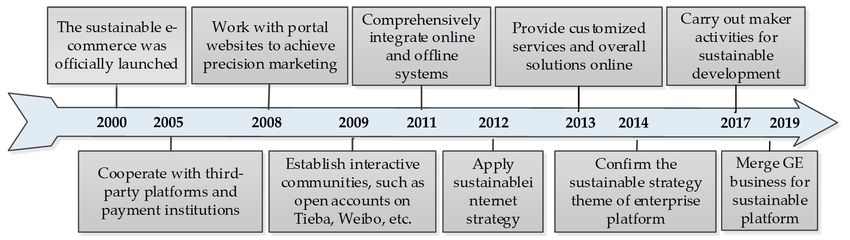
Sustainability 2020, 12, 6640                                                                       2 of 18

platforms promote the emergence of a new market business model for the sustainable development.
The platform is not only the foundation to support and connect the front end, but also the fertile soil to
generate rich sustainable ecology. Discovering and determining the relationship with the platform, and
then cultivating or adapting to the platform ecology, is undoubtedly one of the important strategies for
the manufacturing enterprise’s sustainable development in the future [3,4].
     A platform is a two-sided market with network effect since ancient times. For the sustainable
development, it changed from the early agricultural market connecting buyers and sellers to
an ecological-featured multilateral platform that involves different groups, such as suppliers,
manufacturers, customers and intermediary service providers which trust and cooperate with
each other [5,6]. Taking sustainable e-commerce platforms as examples, e-commerce giant Alibaba
connects buyers and sellers, and manufacturing enterprises like GREE, TCL and Haier also build
e-commerce platforms for users and other organizations to incubate innovation. Therefore, “e-commerce
platform” has attracted more and more attention from academia and the manufacturing field, in
which the content mainly includes the function of the sustainable e-commerce platforms, key factors
of success, characteristics of each stage and related financial, logistics, and credit mechanisms [7].
However, most of the research about internet manufacturing enterprises such as Alibaba and Tencent,
only discuss the innovation management challenges and strategic characteristics of the sustainable
platform ecosystem [8,9], and seldom deeply analyze the development process mechanism of
e-commerce platforms.
     As more and more manufacturing enterprises are trying to become the Internet enterprises
represented by e-commerce platforms, the main problems their transformation and upgrading are
faced with is to realize value creation effectively, as well as adjustability of resource management for
the sustainable development. Some researchers studied e-commerce platforms from the perspective of
resource-based theory (RBT), and believed that the unique core resources of manufacturing enterprises
are valuable, rare, inimitable and hard to copy, and constitute the key elements for manufacturing
enterprises to compete in an e-commerce strategy. However, manufacturing enterprises are becoming
increasingly difficult to have absolute advantages by their unique recourses in the dynamic changes
of the market. Sirmon et al. [10] argue that resources must go through accumulation, development,
integration and coordination; that is to say, only resources which are effectively managed can create
sustainable competitiveness in a dynamic environment, and they then put forward the “resource
orchestration” theory. The theory emphasizes that in a dynamic environment managers have to
constantly integrate resources, construct capabilities, and use these capabilities to create value, so as
to achieve sustainable competitive advantages. However, there are only few studies on e-commerce
platforms from the perspective of “resource orchestration”, and the research on how manufacturing
enterprises develop sustainable e-commerce platforms through resource orchestration still has not
been deeply discussed.
     E-commerce platforms that this paper focuses on are the new challenge and opportunity to
manufacturing enterprises’ sustainable development in the current era. Through the sustainable
development of e-commerce platforms, Haier has also expanded its brand influence and increased
profits. In addition, based on the sustainable development of e-commerce platforms, Haier has
promoted the platform transformation of manufacturing enterprises and formed a strong platform
ecosystem. Therefore, this paper studies from the perspective of resource orchestration theory, and
takes the Haier group as the case study object to deeply discuss the sustainable development process
mechanism. The specific research problems include: Firstly, what are the structural characteristics
of sustainable e-commerce platforms formed by resource subjects under the “Internet +”? Secondly,
how does resource orchestration construct an e-commerce platform and what is the driving force for
the manufacturing enterprise’s sustainable development?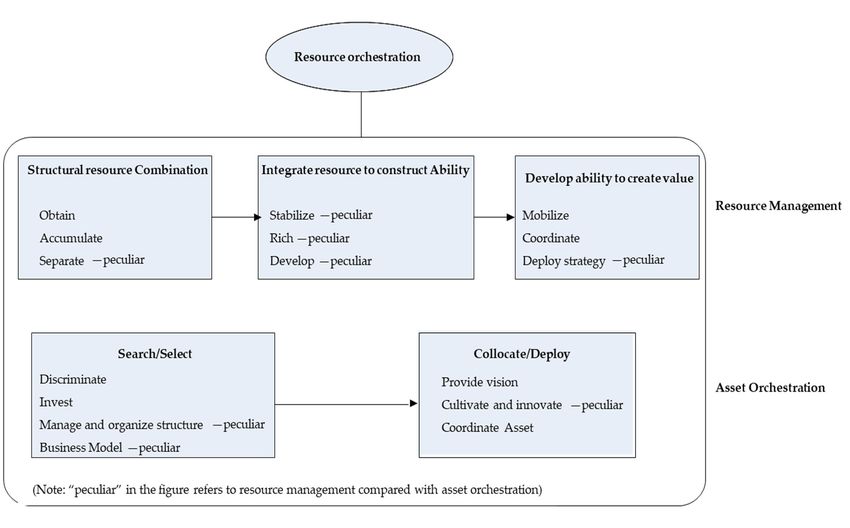
Sustainability 2020, 12, 6640                                                                        3 of 18

2. Literature Review

2.1. E-Commerce Platform for the Sustainable Development: Concept and Construct Research
      “Platform” originally referred to a two-sided market, characterized by network externalities and
competitions [11]. In other words, there are generally participants on both sides, and the final profit is
generated by the interaction of participants on the same platform [12]. However, with the sustainable
development of manufacturing enterprises’ information technology, the application of the platform is
not only limited to two sides of participants, and the two-sided platform has been extended to a platform
ecosystem, including participants of different groups, such as suppliers, manufacturers, customers,
intermediary service providers and platform complementary persons [13,14]. An e-commerce platform
is a two-sided or even multi-sided market with endogenous side decisions [15], which connects buyers,
sellers, suppliers, complementary parts suppliers and other relevant resources for the sustainable
development [16].
      As the Internet and online shopping matured in the China market, other related institutions
from different industries such as finance, logistics, telecoms and software services began to gather
by revolving around the users’ needs in a sustainable e-commerce platform. These institutions are
connected by the Internet, promoting and driving each other, building the sustainable ecosystem with
the scale profits and competitive advantages. A large e-commerce platform like Alibaba has constructed
huge ecosystems after attracting the participation of many professional suppliers, financial institutions,
software service providers and logistics institutions [17]. The two or more sides of participants of
the platform do not only accomplish their own tasks, but also share resources and complement each
other for the manufacturing enterprise’s sustainable development [18].
      At present, the research on the construction of a sustainable e-commerce platform mainly has
the following characteristics: First, a large number of existing literatures focus on the price mechanism
of the sustainable platform of Internet manufacturing enterprises, and believe that the platform will
develop effectively through the network effect as long as it has an appropriate price mechanism [19];
second, focus on the strategic significance of e-commerce for service-oriented manufacturing enterprises’
sustainable development, or specifically on the construction of logistics, finance and marketing related
to e-commerce [20]; third, in the study on the evolution of the ecological construction of e-commerce
platforms, pay more attention to the sustainable development characteristics of each stage, or specificities
of each stage and the promotion and hindrance factors [21]. Therefore, the existing literature lacks
in-depth studies on the main structure, mechanism and driving force of the construction process of
e-commerce platforms of manufacturing enterprises’ sustainable development.

2.2. Resource Orchestration for the Sustainable E-Commerce Platform
      People and things that enable a manufacturing enterprise to improve the sustainable e-commerce
platform operating efficiency and receive ultimate benefits all belong to the resources. It includes
organizational process, organizational structure and information of manufacturing enterprises’
sustainable e-commerce [22]. In other words, the sustainable resources of manufacturing enterprises are
the forces that they can use to formulate and implement their strategies. Resource-based theory holds
that the unique core resources, which are valuable, scarce, inimitable and hard to copy, are the source for
manufacturing enterprises to obtain sustainable competitive advantages [23]. However, the sustainable
development of manufacturing enterprises not only need unique e-commerce heterogeneous resources,
but also need to constantly integrate resources and construct capabilities to cope with the drastic
changes of e-commerce platforms [24].
      Due to the uncertainty of the dynamic environment caused by fluctuation of market demands
and change of the sustainable e-commerce platform, Sirmon et al. [25] proposed the theory of
resource management, and explained the three components of resource management process in detail:
structuring the resource portfolio, bundling resources to build capabilities, and leveraging capabilities
to create value. Meanwhile, Helfat et al. [26] proposed the asset orchestration framework, which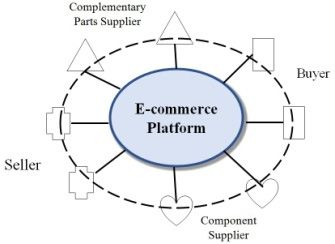
Sustainability 2020, 12, 6640                                                                               4 of 18

Sustainability 2020, 12, x FOR PEER REVIEW                                                                   4 of 18
mainly contains search and selection, collocation and deployment, cultivation and innovation, etc.
 etc. Although
Although          resource
             resource       management
                        management      andand  asset
                                             asset     orchestration
                                                    orchestration     both
                                                                   both     focusononmanagers’
                                                                          focus       managers’behaviors
                                                                                                  behaviors and
                                                                                                              and
 how these
how    these behaviors
              behaviors affect
                          affectthe
                                 thesustainable
                                     sustainabledevelopment
                                                   development of ofmanufacturing
                                                                      manufacturing enterprises
                                                                                       enterprises and
                                                                                                    and enhance
                                                                                                        enhance
 their  competitive   advantages,   resource  management     lacks  a resource  deployment    strategy
their competitive advantages, resource management lacks a resource deployment strategy and asset       and   asset
 orchestrationlacks
orchestration     lacksinnovation
                         innovationandand   cultivation
                                        cultivation      based
                                                     based       on resource
                                                            on resource         integration
                                                                         integration         [27]. Accordingly,
                                                                                     [27]. Accordingly,  Sirmon
 Sirmon    et al.  [10]  proposed   the  resource   orchestration   theory   according   to the   similarity
et al. [10] proposed the resource orchestration theory according to the similarity and complementary          and
 complementary       character of resource  management      and  asset orchestration  in Figure
character of resource management and asset orchestration in Figure 1, and believed that resource 1, and believed
 that resource management
management                      is also
                 is also important    inimportant
                                         fostering in  fostering capabilities
                                                    innovation   innovation capabilities   to create sustainable
                                                                               to create sustainable   value for
 value   for manufacturing
manufacturing enterprises.    enterprises.

           Figure 1. Difference
           Figure 1. Difference of
                                of resource
                                   resource orchestration,
                                            orchestration, resource
                                                           resourcemanagement
                                                                    managementand
                                                                               andasset
                                                                                   assetorchestration.
                                                                                        orchestration.
     Resource orchestration theory well connects uncertain environment and capabilities, and refines
      Resource orchestration theory well connects uncertain environment and capabilities, and refines
several components of the resource strategic management process. To cope with the dynamic
 several components of the resource strategic management process. To cope with the dynamic
environment, the sustainable development of manufacturing enterprises need to construct e-commerce
 environment, the sustainable development of manufacturing enterprises need to construct e-
platforms through resource orchestration such as obtaining, transforming, coordinating and other
 commerce platforms through resource orchestration such as obtaining, transforming, coordinating
behaviors based on cooperation and innovation of resource subjects [28].
 and other behaviors based on cooperation and innovation of resource subjects [28].
     Therefore, studying e-commerce platforms from the perspective of “resources orchestration”
      Therefore, studying e-commerce platforms from the perspective of “resources orchestration”
with dynamic environments and managerial behaviors will greatly facilitate the in-depth study of
 with dynamic environments and managerial behaviors will greatly facilitate the in-depth study of
the mechanisms and evolutionary dynamics of e-commerce platform ecosystems.
 the mechanisms and evolutionary dynamics of e-commerce platform ecosystems.
2.3. Theoretical Analysis Framework
 2.3. Theoretical Analysis Framework
      Above all, because of the limitations of the existing researches and the fact that the manufacturing
       Above are
enterprises    all,undergoing
                     because oftransformation
                                    the limitations andofupgrading
                                                           the existing    researches e-commerce
                                                                      by developing      and the factplatforms,
                                                                                                          that the
 manufacturing      enterprises    are  undergoing     transformation     and    upgrading    by   developing
the writers expect a breakthrough in this paper by exploring the construction of sustainable e-commerce          e-
 commercefrom
platforms    platforms,   the writers expect
                  a new theory-based           a breakthrough
                                         perspective.   This paperincould
                                                                     this paper
                                                                            breakby   exploring
                                                                                   through       the construction
                                                                                            the existing  research
 of sustainable   e-commerce     platforms  from   a new  theory-based    perspective.   This paper
limitations and explore the construction of sustainable e-commerce platforms from a new theory-based  could break
 through the This
perspective.    existing
                     paperresearch
                             is basedlimitations  and explore
                                       on the perspective        the construction
                                                             of resource             of sustainable
                                                                           orchestration   theory and e-commerce
                                                                                                        combines
 platforms  from   a new   theory-based    perspective.  This  paper  is based   on  the perspective
with the market environment of Haier group’s sustainable e-commerce platform construction.             of resource
                                                                                                               For
 orchestration   theory   and   combines   with  the  market   environment     of  Haier  group’s
the sustainable development of manufacturing enterprises, internal and external resource combinationsustainable  e-
 commerce     platform   construction.   For  the  sustainable   development     of  manufacturing
and construction ability are mutually improved to promote the construction of an e-commerce           enterprises,
 internal and
platform.    Thisexternal  resourcethe
                   paper follows       combination    and construction
                                         structural logic                   ability are mutually
                                                            of inducement-process-result,      and improved
                                                                                                     then refinesto
 promote the construction of an e-commerce platform. This paper follows the structural logic of
 inducement-process-result, and then refines the theoretical analysis framework (see Figure 2). By
 analyzing the framework, this paper attempts to establish the process mechanism of sustainable e-
Sustainability 2020, 12, 6640 5 of 18
Sustainability
the theoretical2020, analysis
12, x FOR PEER REVIEW(see
framework Figure 2). By analyzing the framework, this paper attempts5 of 18
to
establish the process mechanism of sustainable e-commerce platform construction driven by resource
commerce platform
orchestration, construction
and explores driven driving
the internal by resource
forceorchestration, and explores the internal driving
of its evolution.
force of its evolution.
Figure 2. The theoretical analysis framework of this paper.
Figure 2. The theoretical analysis framework of this paper.
3. Analytical Method
3. Analytical Method
3.1. Research Methods and Object Selection
3.1. Research Methodsmethod,
As an empirical and Object Selection
a case study usually adopts multiple ways such as interviews, observations
and reading internal documents of manufacturing enterprises’ sustainable development to observe
As an empirical method, a case study usually adopts multiple ways such as interviews,
the research subjects. This method emphasizes the fit between the research problems and explains
observations and reading internal documents of manufacturing enterprises’ sustainable development
the phenomenon or constructs the theory based on a detailed description of the sustainable development
to observe the research subjects. This method emphasizes the fit between the research problems and
phenomenon [29]. Data fidelity is the basic principle of this method, which enables researchers to
explains the phenomenon or constructs the theory based on a detailed description of the sustainable
maintain an objective attitude in the research process [30]. Due to the varied development level of
development phenomenon [29]. Data fidelity is the basic principle of this method, which enables
enterprises and the limitations of relevant researches, the case study method should be more suitable
researchers to maintain an objective attitude in the research process [30]. Due to the varied
for this research. The reason why the writers chose Haier is that it has the best sustainable development
development level of enterprises and the limitations of relevant researches, the case study method
practice which embodies the three principles of case sample selection:
should be more suitable for this research. The reason why the writers chose Haier is that it has the
Firstly, the selection of case objects takes into account the principle of importance and
best sustainable development practice which embodies the three principles of case sample selection:
representativeness [31]. As the world’s largest manufacturer of white goods, Haier has a wide
Firstly, the selection of case objects takes into account the principle of importance and
range of products, which covers home appliances, communications, IT digital products and many other
representativeness [31]. As the world’s largest manufacturer of white goods, Haier has a wide range
fields. Besides their own e-commerce platform Ehaier, Haier has already completed the sustainable
of products, which covers home appliances, communications, IT digital products and many other
cooperation with other third-party e-commerce platforms. The case of Haier’s sustainable e-commerce
fields. Besides their own e-commerce platform Ehaier, Haier has already completed the sustainable
platform reflects the importance and representativeness principles of case selection.
cooperation with other third-party e-commerce platforms. The case of Haier’s sustainable e-
Secondly, the selection of research samples follows the principle of theoretical sampling. The case
commerce platform reflects the importance and representativeness principles of case selection.
selected is based on theoretical needs such as expanding emerging theories or complementing gaps
Secondly, the selection of research samples follows the principle of theoretical sampling. The
in existing theories [32]. Although the literature in the past acknowledged the important role of
case selected is based on theoretical needs such as expanding emerging theories or complementing
resources in sustainable e-commerce platforms, few studies have been noticed how the dynamic
gaps in existing theories [32]. Although the literature in the past acknowledged the important role of
environment and resource orchestration of managers’ behaviors promote the sustainable development of
resources in sustainable e-commerce platforms, few studies have been noticed how the dynamic
e-commerce platforms. Based on the theory of resource orchestration, this paper explores the sustainable
environment and resource orchestration of managers’ behaviors promote the sustainable
development of
development process of Haier’s
e-commerce e-commerce
platforms. Basedplatform and tries
on the theory of to open up
resource the “black box”
orchestration, this of how
paper
manufacturing enterprises realize the sustainable development of e-commerce platforms
explores the sustainable development process of Haier’s e-commerce platform and tries to open up through
resource
the orchestration,
“black box” of howwhich is helpful to improve
manufacturing the resource
enterprises realizeorchestration and e-commerce
the sustainable development platform.
of e-
Thirdly, the case selection considers the consistency principle of theoretical
commerce platforms through resource orchestration, which is helpful to improve the resource target and case object.
The sustainable
orchestration anddevelopment
e-commerce of Haier’s e-commerce platform in different stages is accomplished in
platform.
the process
Thirdly,ofthe
constantly orchestrating
case selection resources
considers and constructing
the consistency dynamic
principle capabilities
of theoretical according
target and case to
the rapidly changing market environment. This research team has more than ten
object. The sustainable development of Haier’s e-commerce platform in different stages is years of Haier tracking
research experience,
accomplished in the and has a of
process deep understanding
constantly of the manufacturing
orchestrating resources and enterprise’s
constructingsustainable
dynamic
capabilities according to the rapidly changing market environment. This research team has more than
ten years of Haier tracking research experience, and has a deep understanding of the manufacturing
enterprise’s sustainable development in the research case. The process of obtaining the detailedSustainability 2020, 12, 6640 6 of 18
development in12,
Sustainability 2020, the research
x FOR case. The process of obtaining the detailed primary and secondary
PEER REVIEW 6 of 18
materials of the manufacturing enterprise which are needed in this research also verify this point.
primary and
Therefore, the secondary
sustainable materials
practicalofand
the theoretical
manufacturinggoalsenterprise which are needed
of the manufacturing in this in
enterprise research
this case
also verify this point.
are consistent with each other. Therefore, the sustainable practical and theoretical goals of the manufacturing
enterprise in this case are consistent with each other.
3.2. Data Collection and Analysis
3.2. Data Collection and Analysis
The data collection and analysis include three phases to ensure reliability and validity, shown in
FigureThe data collection
3. Phase and analysis
1 is the preparation to include
establishthree phasesduring
reliability to ensure reliability
December and validity,
of 2017 shown of
and November
in Figure
2019. 3. Phase
Previous 1 is the preparation
interview to establish
data was studied and thereliability duringe-commerce
sustainable December ofplatform
2017 anddevelopment
November
of 2019. Previous interview data was studied and the sustainable e-commerce
chronological timeline was drawn in February of 2018, followed by the initial interviews and platform development
chronological timeline was drawn in February of 2018, followed by the initial interviews and the
the theoretical lens of resource orchestration selection. Phase 2 engaged in onsite visits from summer
theoretical lens of resource orchestration selection. Phase 2 engaged in onsite visits from summer
vacation in 2018 and 2019. The authors interviewed many middle and senior team members of Haier,
vacation in 2018 and 2019. The authors interviewed many middle and senior team members of Haier,
refined three different phases, and readjusted the framework. Phase 3 is the follow-up from January to
refined three different phases, and readjusted the framework. Phase 3 is the follow-up from January
November of 2019. When the interview data was not enough to support theoretical analysis, additional
to November of 2019. When the interview data was not enough to support theoretical analysis,
data was collected via phone calls and emails to assure data-theory-model alignment.
additional data was collected via phone calls and emails to assure data-theory-model alignment.
Phase 1: Preparation Phase 2: Onsite Visits Phase 3: Follow-up
May 2017 Jan. 2018
Data Aug. 2018 May 2019
Reviewed Held initial
interviews with Interviewed with Spacesat’s Supplemented and confirmed
previous interview
the gatekeeper internal development, supplier via phone calls and emails
Collection data in Jun 2016 network and partner
and gathered
universities
secondary data
Oct. 2019
Supported theoretical constructs
Aug. 2017 July 2018 Dec. 2018 Apr. 2019 and processes with axial coding
Drew chronological Selected Divided interview Readjusted the
Data timeline of Spacesat’s ambidextrous data into three preliminary Dec. 2019
sustained innovation capability as different phases theoretical Assured data–theory–model
Analysis with external and the theoretical framework alignment with informants and co–
internal cooperation lens
researchers
May 2017–July 2018 Aug. 2018–Apr. 2019 May 2019–Dec. 2019
Measures to Establish Reliability Measures to Establish Validity
• Collected data from secondary sources to refine • Established an interview team of ten researchers:
related research topics one asked questions and others also took notes
• Prepared a semi–structured interview guideline that • Discussed theoretical ideas in the team and
was theoretically relevant presented models to informants
• Recorded and checked interview transcripts to • Ensured process theory was supported by data and
assure the accuracy and integrity of case data literature
Figure 3. Overview
Overviewofofresearch
researchmethods.
methods.
3.2.1.
3.2.1.Data
DataCollection
Collection
This
Thispaper
paperfollows
follows the process
process ofofcase
casestudy:
study:“Clarify
“Clarify Research
Research Problems
Problems →→ Literature
Literature Review
Review
→→CaseCaseStudy
StudyDraft Design →
Draft Design → Data Collection →
Data Collection → Data
Data Analysis” [33]. The
Analysis” [33]. Thepaper
paper also
also finds
finds outout
theoretical
theoreticalinnovation
innovation points
points through
through thethe cycle
cycle analysis
analysisandandrepeatedly
repeatedlyfocuses
focuses onon theoretical
theoretical andand
data[34].
data [34].The
Thedata
data sources
sources of this
this study
studyinclude
includepersonnel
personnelinterviews,
interviews,field observation
field observationand literature
and literature
materials.The
materials. Themulti-channel
multi-channel sources
sources can
can make
makethe theresearch
researchdata
datasupplement
supplement and
andcross-verify
cross-verify each
each
other,thus
other, thus avoiding
avoiding the the deviation
deviation caused
caused by thebysingle
the single information
information collectioncollection
channel,channel, and
and improving
improving
the the construction
construction validity. Thevalidity. The data collection
data collection sources ofsources of this
this paper paperinclude
mainly mainly the
include the
following
following
three aspects:three aspects:
Thefirst
The firstisisinterview
interviewandandresearch.
research.The
Theresearch
researchteamteam made
made a total
a total of of 4 times
4 times comprehensive
comprehensive field
field interviews in 2017. The interview content is in Table 1. The main interview
interviews in 2017. The interview content is in Table 1. The main interview objects are the mid-levelobjects are the mid-
level managers
managers and related and department
related department staffgroup’s
staff of Haier of Haier group’s development.
sustainable sustainable development.
The interview The
uses
interview uses a semi-structured model and the duration of each is at least 1 h and, at most, 2.5 h. All
the interviews are recorded, and the interview records are finally organized for nearly 200,000 words.Sustainability 2020, 12, 6640 7 of 18
a semi-structured model and the duration of each is at least 1 h and, at most, 2.5 h. All the interviews
are recorded, and the interview records are finally organized for nearly 200,000 words.
Table 1. Overview of formal interview with Haier.
Interview Theme Interviewees Main Content
Background, positioning and planning
Virtual and Real Strategy Department of E-mail proposed by Haier sustainable
Integration of Electronic development
Commerce
Integration issue of Haier’s virtual net
Sustainable Business Strategy Department of Group
and real net
Strategy
Change of channels, confusion of Haier
Executive Vice President of and the integration of people and orders
the Group in the process of sustainable
development
Marketing System which
Operating System of Haier,
Supports the Virtual and Issue of Haier’s multi-point contact,
the Operating System of
Real Integration of integration of virtual net and real net
Integration of Virtual and Real
Sustainable E-Commerce
Logistics, Service System Independent management, interface
which Supports Interface of Logistics Business issue of service, transformation of
the Virtual and Real E-commerce, Interface of Service sustainable internal system; core follow
Integration of Business E-commerce of logistics, issue of 24 h and the last
Sustainable E-commerce kilometer
Mechanism Innovation Challenges to PSI and node organization
Management by sustainable network strategy
Virtual and Real Integration
Informatization of E-commerce sustainable development
Operation, Interface of Logistics
Sustainable E-commerce stage, mass customization
and Service
Platform
Transformation of business process in
E-commerce Department of White the context of sustainable e-commerce,
Home Appliances Group changes brought about by supply chain
system and mechanism
Business, Research,
Development, Supply Problem of price, introduction of
Chain System Related to external resources, impact of virtual
E-mail, Haier Research Center,
White Home Appliances network on the market, and challenges
and Sustainable under the sustainable network strategy
E-Commerce Platform
The second is field observation. In the process of interview and investigation, the team also
observes the case manufacturing enterprises on the spot. In addition, the graduate students we
cooperated with in this research have also participated in the internship at Haier Beijing branch in
the summer holidays of 2018 and 2019 before graduation. They respectively practiced in the digital
marketing center, customer service center and physical stores of Haier. Therefore, they actually had
a direct understanding and experience of Haier’s sustainable e-commerce and we can obtain direct
observation data.
The third is documentation. Another important source of this study is the paper and electronic
documents. The second-hand data provide relevant background information of the Haier group, and
can verify or falsify the data obtained through other channels. The secondary materials mainly include
research literature, data released by national authorities, research reports issued by famous consulting
institutions, online media such as the official website, blogs and other relevant information of Haier
group’s sustainable development.Sustainability 2020, 12, 6640 8 of 18
3.2.2. Data Analysis
In this study, the research team sorted out more than 140,000 words of the interview transcripts
and triangulated them according to multiple data sources and multiple interviewees to select credible
data for analysis. The team also adopts the method proposed by Corbin and Strauss [35] to encode
theSustainability
collected2020,
data, 12, x FOR PEER REVIEW
and explores and analyzes the process mechanism of manufacturing e-commerce 8 of 18
platform sustainable development based on resource orchestration. The data analysis and coding
the collected data, and explores and analyzes the process mechanism of manufacturing e-commerce
process in this paper includes the following three steps:
platform sustainable development based on resource orchestration. The data analysis and coding
The first one is open coding. In this stage, the team repeatedly reads the materials of manufacturing
process in this paper includes the following three steps:
enterprises’ sustainable
The first one is development,
open coding.which In this is related
stage, tothethe case repeatedly
team of Haier, and keeps
reads theanmaterials
open mind ofto
accurately grasp the
manufacturing meaning sustainable
enterprises’ of the interviewees,
development, tryingwhich
to avoid imposing
is related thecase
to the literature
of Haier,or and
researchers’
keeps
minds
an open mind to accurately grasp the meaning of the interviewees, trying to avoid imposing theby
on the interview data. In coding, the meaning of each sentence is mainly represented
theliterature
interviewee’s own words.
or researchers’ First-order
minds concepts are
on the interview data.mainly formed
In coding, theinmeaning
this stage,of which are usually
each sentence is
words repeatedly mentioned by interviewees, such as cooperative subjects,
mainly represented by the interviewee’s own words. First-order concepts are mainly formed in this sustainable development
stages
stage,aswhich
well as aredifferent
usually structures in e-commerce
words repeatedly mentioned platforms.
by interviewees, such as cooperative subjects,
The second
sustainable one is spindle
development coding.
stages as wellThis stage is mainly
as different based
structures on the researcher’s
in e-commerce platforms.grasp of existing
literature
Thesuch
second as one
resource orchestration
is spindle coding. This and e-commerce
stage platform
is mainly based on thesustainable
researcher’sdevelopment,
grasp of existingand
repeated
literaturecomparison of interview
such as resource data to summarize
orchestration and e-commerce relatively abstract
platform second-order
sustainable concepts.and
development, This
repeated
stage is a keycomparison
period forofthe interview
emergencedata of
to new
summarize
concepts. relatively abstract the
For example, second-order
second-order concepts. Thisof
concepts
stage isorganization
resource a key periodand for the
coreemergence
competence of new concepts.
in this For example,
paper occur the second-order concepts of
in this stage.
resource
The last organization and corecoding.
one is selective competenceIn this in this paper
stage, theoccur
teamin combines
this stage. relevant literatures and
case materials to check all coding data, and refines and integrates allrelevant
The last one is selective coding. In this stage, the team combines literatures
second-order and case
concepts with
materials
more accurateto check all coding
concepts, data, summarizing
forming and refines and integrates
concepts likeall value
second-order
creationconcepts
in the with more
sustainable
accurate concepts,
development process. forming summarizing concepts like value creation in the sustainable development
process.
Therefore, based on the above coding analysis, the conceptual evolution process of data coding
analysis Therefore, based
in this paper is on the above
reflected coding4.analysis, the conceptual evolution process of data coding
in Figure
analysis in this paper is reflected in Figure 4.
Figure4.4.Conceptual
Figure Conceptualevolution
evolution process
process of
of data
data coding
coding analysis
analysisin
inthis
thispaper.
paper.
4. 4.
Case Description
Case Descriptionand
andFindings
Findings
Since
Since it it
waswasestablished
establishedinin1984,
1984,Haier
Haierhas
has been
been adhering
adhering to
to the
the principle
principleofof“user-centered”
“user-centered”toto
drive
drive thethe continuous
continuous andand sustainable
sustainable development
development of manufacturing
of manufacturing enterprises.
enterprises. From
From the initial
the initial stage
stage of brand-name strategy, to the development of diversification, internationalization
of brand-name strategy, to the development of diversification, internationalization and globalization and
globalization strategy, it has now entered the stage of sustainable development, and started a new
attempt to transform manufacturing enterprises in the Internet era—from manufacturing products
to manufacturing maker’s platforms. From the ordinary home appliance manufacturer to the current
world-class large manufacturing enterprise, the sustainable development of Haier’s e-commerce is
proceeding simultaneously. From the service differences of the single sales function, delivery andSustainability 2020, 12, 6640 9 of 18
strategy, it has now entered the stage of sustainable development, and started a new attempt to transform
manufacturing enterprises in the Internet era—from manufacturing products to manufacturing
maker’s platforms. From the ordinary home appliance manufacturer to the current world-class
large manufacturing enterprise, the sustainable development of Haier’s e-commerce is proceeding
simultaneously. From the service differences of the single sales function, delivery and installation in
2000 to the platform
Sustainability ecosystem
2020, 12, x FOR of innovation incubation, Haier has experienced nearly 16 years
PEER REVIEW of
9 of 18
sustainable development. The key events in its sustainable development process of the e-commerce
16 yearsare
platform of sustainable
shown in Figuredevelopment.
5. The key events in its sustainable development process of the e-
commerce platform are shown in Figure 5.
Figure 5. Key events in the development of Haier’s e-commerce platform.
Figure 5. Key events in the development of Haier’s e-commerce platform.
4.1.Initial
4.1. InitialStage
Stageofofthe
theSustainable
Sustainable E-Commerce
E-Commerce Platform:
Platform: Sales Channel
Channel
Since2000,
Since 2000,chain
chainretailers
retailershave
havedeveloped
developedrapidly
rapidlyand
andhave
havebegun
beguntotocontrol
controlthe
thesales
sales channels
channels of
of home appliances. Manufacturers can only improve sustainable sales performance
home appliances. Manufacturers can only improve sustainable sales performance by cooperating with by cooperating
with retailers.
these these retailers. The popularity
The popularity of e-commerce,
of e-commerce, especially
especially of big-ticket
of big-ticket items on
items traded traded on the
the Internet,
gives manufacturers a chance to break away from the control of chain retail channels. On MarchOn
Internet, gives manufacturers a chance to break away from the control of chain retail channels. 10
ofMarch 10 of 2000,
2000, Haier investedHaier10 invested
million yuan10 million yuan
to set up to set up E-commerce
E-commerce Co. Ltd., on Co. Ltd., of
the basis on accumulated
the basis of
accumulated
experience experience
in the in the
call center, call center,
officially officially
launching launching the
the sustainable sustainable
e-commerce e-commerce
project. This is project.
the first
This is the first e-commerce company in China’s home appliance industry.
e-commerce company in China’s home appliance industry. By building its own website, Haier promotes By building its own
website,
the Haierdevelopment
sustainable promotes theof sustainable
manufacturingdevelopment of manufacturing
enterprises on the one hand, enterprises on thethe
and increases one hand,
strength
ofand increases
product the strength
marketing through of e-commerce
product marketing through
on the other e-commerce
hand. on the other
At the beginning, Haierhand. At the
e-commerce
was mainly sustainably responsible for receiving online orders, and then delivered to 42 industrialand
beginning, Haier e-commerce was mainly sustainably responsible for receiving online orders, and
then delivered to 42 industrial and trade companies nationwide for delivery, installation and
trade companies nationwide for delivery, installation and maintenance, and exchanged user feedback
maintenance, and exchanged user feedback information through after-sales service.
information through after-sales service.
In 2005, Haier began to cooperate with third-party sustainable e-commerce platforms for selling
In 2005, Haier began to cooperate with third-party sustainable e-commerce platforms for selling
more products and promptly understanding user needs. In 2008, Haier released information on major
more products and promptly understanding user needs. In 2008, Haier released information on major
web portals including Baidu, and pushed the desired products to users. To ensure smooth online
web portals including Baidu, and pushed the desired products to users. To ensure smooth online
transactions, it also cooperated with China Construction Bank, Industrial and Commercial Bank of
transactions, it also cooperated with China Construction Bank, Industrial and Commercial Bank of
China and other commercial banks, as well as the widely used third-party payment platform Alipay,
China and other commercial banks, as well as the widely used third-party payment platform Alipay,
to realize online payment functions.
to realize online payment functions.
“Haier cooperated with third-party e-commerce platforms to attract more user groups for our
“Haier cooperated
sustainable with third-party
development; at the same e-commerce platforms
time cooperated withtoBaidu
attract more
such user groups
a portal for the
to achieve our
sustainable development; at the same time cooperated with Baidu such a portal to achieve
matching of products and search, precision marketing.... Haier has built sustainable e-commerce the matching
ofplatforms
productsinand search,ways,
various precision
so as marketing.... Haier has
to keenly perceiving the built
needssustainable e-commerce
of the consumer platforms
market and making in
various ways,response
timely sales so as to according
keenly perceiving the needs of the consumer market and making timely sales
to user needs.”
response according to user needs.”
—Vice President of Haier Group
—Vice President of Haier Group
4.2. Growth Stage of the Sustainable E-Commerce Platforms: Service Differences
After the initial stage of sustainable development, Haier’s e-commerce platform has basically
realized the delivery of various products to users. However, with the growing maturity of the
sustainable e-commerce market environment and the continuous increase of user requirements,
Haier launched the integration of virtual network and real network (Virtual network is the mobile
terminal media realized by information technology, such as telemarketing, television and network shopping.
There is also one kind of oldest and most traditional social network, such as word of mouth; Real network refers
to the operation network where users can experience and contact products/services), and proposed theSustainability 2020, 12, 6640 10 of 18
4.2. Growth Stage of the Sustainable E-Commerce Platforms: Service Differences
After the initial stage of sustainable development, Haier’s e-commerce platform has basically
realized the delivery of various products to users. However, with the growing maturity of the sustainable
e-commerce market environment and the continuous increase of user requirements, Haier launched
the integration of virtual network and real network (Virtual network is the mobile terminal media
realized by information technology, such as telemarketing, television and network shopping. There
is also one kind of oldest and most traditional social network, such as word of mouth; Real network
refers to the operation network where users can experience and contact products/services), and
proposed the differentiation of the sustainable e-commerce platform of 24-hour time-limited delivery,
synchronous loading and overtime free-of-charge service.
“The real network and virtual network of Haier is separated at first. But through the virtual-real
integration, the sustainable developing resources of physical stores, regarding more than thirty
thousand stores as wealth and the analysis of a large amount of data and ask for a lot of user needs,
Haier finally implemented differentiation through the way of timely delivery and the final kilometer
issue.”
—Director of E-commerce Department
Haier has built its own Gooday logistics company, and achieved seamless coverage of the three and
four levels of markets. The nearest community store matched by the sustainable system is responsible
for door-to-door delivery, so as to achieve “sales to village, delivery to door and service to buyers”.
However, through the establishment and upgrading of the company’s internal and external systems,
Haier finally realized timely information transmission and 6–8 hours’ delivery in the center city and 24
hours’ delivery in the region. In addition, social platforms began to boom in 2009 and 2010. Haier
integrated internal logistics, services, information and other resources on the one hand, and started
to create communities, BBS and Weibo to communicate more and deeper with users on the other
hand. It not only met the personalized needs of users, but also optimized the internal process of
manufacturing enterprises’ sustainable development and shortens the supply cycle. With all these,
Haier’s e-commerce differentiation can cope with market competition more effectively.
4.3. Development Stage of the Sustainable E-Commerce Platform: Innovation Incubation
At the beginning of 2012, Ehaier (Ehaier is an e-commerce platform built by Haier itself, which
was established in 2002 and started to provide customized services in 2012) started to work on
the customization service of home appliances, and launched the personalized customization of TV, air
conditioning panel and other products. In 2013, it cooperated with third-party sustainable e-commerce
platforms to try many C2B (Customer to Business) customization activities. Haier established five R&D
centers in the world and formed a global network of sustainable innovative resources. At the same
time, it established an open online platform, HOPE (HOPE—Haier Open Partnership Ecosystem,
which is used to connect experts with top innovation manufacturers in the global innovation network),
on which global user resources can realize zero-distance interaction.
Subsequently, Haier put forward the theme of “To improve manufacturing enterprise sustainable
development, employee maker (maker refers to people who work to turn ideas into reality with user
innovation at core) and user personalization” at the “Internet innovation interaction” conference, and
began to transform and develop. At present, the Haier platform only has three types of people—platform
owners, small micro owners and makers. The main responsibility of the sustainable platform owners
is not controlling but providing service. Small micro owners mainly lead teams to start a business,
while employees become makers for entrepreneurship and innovation. As the main body of rapid
resource allocation directly to users, the platform provides open resource support for small micro
owners. Among them, “Thunderobot” game is a typical case of Haier’s innovation incubation of
collaborative resources in the transformation stage. “Thunderobot” relied on the channels of BaiduSustainability 2020, 12, 6640 11 of 18
Post Bar, BBS, QQ group and other channels to interact with users, and summarized 13 pain spots of
users from 300,000 comments, so as to see the product opportunities of gaming laptops. The maker
group integrated the resource of external design and internal boundaryless team of the enterprise,
and came up with product ideas according to user needs. Then after R&D and trial production, and
after the test of the majority of players, they made reservation sales, and finally improved the product
according to the sustainable platform user evaluation feedback, and the final product was delivered in
such a cycle.
Therefore, people can interact with users and find new market opportunities through sales with
the sustainable e-commerce platform represented by Ehaier and the third-party platform at the same
time; obtain funding, policy, and sales support through maker incubation platform represented by
Hailifang (Hailfang is the Haier creative crowd funding platform for tapping more professional talents’
creativity) and have world-class customized services through R&D platform represented by HOPE. At
the same time, it also creates value around user needs and forms a win-win sustainable e-commerce
network in the future.
5. Case Analysis and Discussion
Based on the review of the three sustainable development stages of Haier’s e-commerce platform,
this paper analyzes and discusses the structure characteristics, construction mechanism and internal
driving force of the resources constructed by the e-commerce platform.
5.1. Sustainable E-Commerce Platform Structure of Manufacturing Enterprises Constructed by Various
Resources
With the sustainable development of information technology, the Internet has been as ubiquitous
as air and water, and penetrated into all aspects of our life. For business changes, the Internet has
changed the trading place, expanded the trading time, enriched the trading categories, reduced
the intermediate links and accelerated the trading speed [36]. The sustainable platform promotes
the coordination of resource subjects among bilateral or multilateral participants and improves value
through cost reduction [37]. In other words, it provides an interactive mechanism that meets the need of
innovation of each group by connecting bilateral or multilateral groups to it, and makes profits from it.
The core of the platform strategy is to build a sustainable e-commerce platform ecosystem that benefits
all parties and the essence of the platform is that multiple members of the organization achieved
common growth through continuous resource cooperation [38]. Therefore, from the early 2000s,
Haier tried to build an e-commerce platform based on years of accumulated resources. As a platform
connecting multiple manufacturing enterprises and users, it realizes the sustainable development
of an e-commerce platform from hub type, network type to symbiosis type (as shown in Table 2).
The specific analysis is as follows:Therefore,from
Therefore,
Therefore, fromthe
from theearly
the early2000s,
early 2000s,Haier
2000s, Haiertried
Haier triedto
tried totobuild
buildan
build anane-commerce
e-commerceplatform
e-commerce platformbased
platform basedon
based onyears
on yearsof
years ofof
accumulated resources.
accumulated resources.
accumulated resources. As As a platform
As aa platform connecting
platform connecting multiple
connecting multiple manufacturing
multiple manufacturing enterprises
manufacturing enterprises
enterprises andandusers, ititit
users,
and users,
realizesthe
realizes
realizes thesustainable
the sustainabledevelopment
sustainable developmentof
development ofofan
anane-commerce
e-commerceplatform
e-commerce platformfrom
platform fromhub
from hubtype,
hub type,network
type, networktype
network typeto
type toto
symbiosistype
symbiosis
symbiosis type(as
type (asshown
(as shownin
shown ininTable
Table2).
Table 2).2).The
Thespecific
The specificanalysis
specific analysisis
analysis isisas
asasfollows:
follows:
follows:
Sustainability 2020, 12, 6640 12 of 18
Table2.
Table
Table 2.2.Structural
Structuralcharacteristics
Structural characteristicsof
characteristics ofofsustainable
sustainablee-commerce
sustainable e-commerceplatform
e-commerce platformconstructed
platform constructedby
constructed bybyvarious
various
various
resources.
resources.
resources.
Table 2. Structural characteristics of sustainable e-commerce platform constructed by various resources.
Stage
Stage
Stage
Stage Initial
Initial
Initial Stage
Stage
Stage Growth
Growth
Growth Stage
Stage
Stage Development
Development
Development Stage
Stage
Stage
Dimension
Dimension
Dimension Initial Stage Growth Stage Development Stage
Dimension Buyer
Buyer
Buyer and
and
and seller
seller
seller conduct Buyer
conduct
conduct Buyer
Buyer and
andand seller
seller
seller work
work
work oror Different
or Different
Different resources
resources
resources realize
realize
realize the
the
the
one-to-one
Buyer and sellercooperation
conduct
one-to-one cooperation
one-to-one cooperation cooperate
Buyer and
cooperate with
cooperate with
seller one-to-one
work
with one-to-oneor
one-to-one co-creation
Different and
resources
co-creation and
co-creation sharing
realize
and sharing
sharing of
ofof
Resource
Resource
Resource one-to-one
onon
on cooperation on
product/service
product/service
product/service cooperate
cooperation
cooperation with
cooperation onon
on product/ theadvanced
one-to-one
product/
product/ co-creation
advanced
advanced and sharing of
technologies/
technologies/
technologies/
Resource
Cooperative product/service resources
Cooperative
Cooperative
resources
resources
resources through
through
through the
the
the cooperation
service
service
service on product/
resources
resources
resources through
through
through advanced
products
products
products technologies/
through
through
through the
the
the
Cooperative
Action
Action
Action through
sustainable
sustainable
sustainable e-commerce service
the e-commerce
sustainable
e-commerce the
the resources
thesustainable
sustainable through
sustainable e-e-
e- productse-commerce
sustainable
sustainable
sustainable through
e-commerce
e-commerce
Action
e-commerce
platform platform
respectively. the sustainable
commerce platform. the sustainable e-commerce
platforms.
platform
platform respectively.
respectively. commerce
commerce platform.
platform. platforms.
platforms.
respectively. e-commerce platform. platforms.
Organizational
Organizational
Organizational
Organizational
Resource
Resource
Resource Clear
Clear
Clear Partly
Partly
Partly Blurred
Blurred
Blurred Blurred
Blurred
Blurred and
and
and Open
Open
Open
Resource
Boundary
Boundary Clear Partly Blurred Blurred and Open
Boundary
Boundary
Core
Core
Core
Core
Manufacturing
Manufacturing
Manufacturing
Manufacturing Resource
Resource
Resource
Resource Provider
Provider
Provider
Provider Resource
Resource
Resource
Resource Integrator
Integrator
Integrator
Integrator Resource
Resource
Resource
Resource Leader
Leader
Leader
Leader
Enterprise
Enterprise
Enterprise
Enterprise Role
Role
Role
Role
Main
Main
Main
Main Structure
Structure
Structure
Structure
Type
Type
Type
Type
Hub
Hub
Hub type
type
type Network
Network
Network
Network type
type
type
type
Hub type Symbiosis
Symbiosis
Symbiosis
Symbiosis type
type
type
type
InitialStage:
Initial
Initial Stage:Haier’s
Stage: Haier’se-commerce
Haier’s e-commerceplatform
e-commerce platformis
platform isisaa aresource
resourcesales
resource salesplatform
sales platformconnecting
platform connectingproducts
connecting productsand
products and
and
InitialItStage:
users. enables Haier’s
users toe-commerce
know more platform
about is aproducts
various resourcethrough
sales platform
the connecting
sustainable products
platform which
users. It
users. It enables
enables users
users to
to know
know more
more about
about various
various products
products through
through the
the sustainable
sustainable platform
platform which
which
and users. It enables users to know more about various products through the sustainable platform
which is convenient for them to purchase and also grows up based on user feedback. At this stage,
the sustainable e-commerce platform of Haier only connects the two sides of its own products and
users. The related organizational actions are bilateral hubs characterized by single transaction of
resource cooperation between seller and buyer and clear organizational boundaries.
“E-commerce is a sustainable platform to communicate with users, and it provides resource channels
between manufacturers and users. Internet now actually gives Haier a good mirror for this kind of
communication.”
—Director of Strategic Planning Department
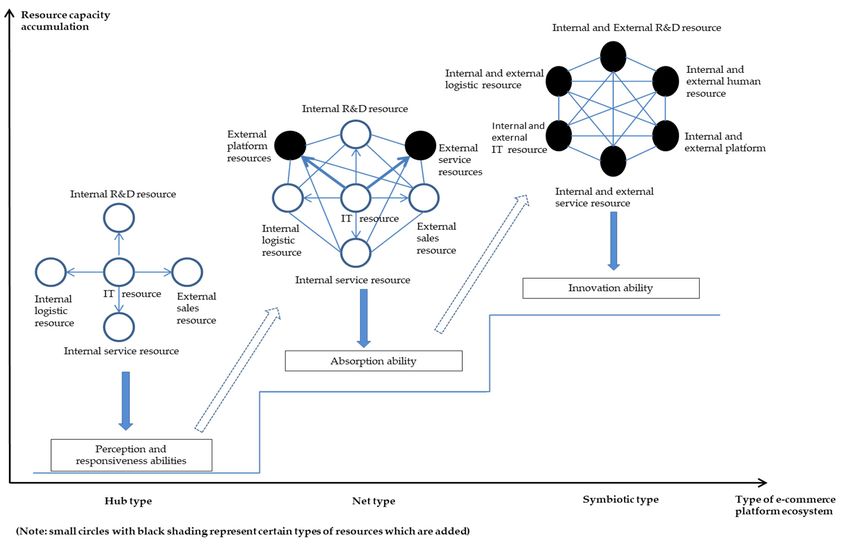
Growth Stage: With the gradual maturity of the sustainable e-commerce market in the home appliance
industry and the improvement of user demand, Haier integrates resources through internal resource
deployment and cooperation with social platforms to expand resources. We can see from the case
data, firstly, that Haier achieved internal implementation through the sustainable system. As soon
as a customer orders, the production, logistics, services, and other resources can see it and act
immediately. The entity store has also become an important member of the sustainable e-commerce
platform to participate in the last mile distribution. The internal resources subject boundaries of Haier
group gradually became blurred. Secondly, for increasing the interaction between users and crossing
the boundary of multiple external organizations, the main external resource of Haier contact with other
manufacturing enterprises through the social platform. After the development in this stage, Haier
e-commerce carries the integration and cooperation of resources among buyers and sellers, and its
platform has formed a network-type e-commerce bilateral sustainable platform.
E-commerce is a good platform to communicate with users. By opening up the internal resource
subjects and the external resource subjects of the industrial chain to achieve the integration of the real
and the virtual, and also promote the interactive and sustainable development of resources between
the buyers and sellers of the platform...You can also read


