HOW RAIL TECHNOLOGY ENABLES SUSTAINABILITY BY REDUCING CARBON EMISSIONS (AND COSTS)
←
→
Page content transcription
If your browser does not render page correctly, please read the page content below

HOW RAIL TECHNOLOGY ENABLES
SUSTAINABILITY BY REDUCING
CARBON EMISSIONS (AND COSTS)

  This article examines how the implementation of more efficient train driving, using Connected Driver Advice Systems (C-DAS)
  technology, can significantly reduce CO2-e emissions – while at the same time, providing significant fuel and energy use savings.

                                                                        adopted pervasively across the market, result in a significant
                                                                        overall reduction.
  With many countries committing to 2050 net-zero
                                                                        Rail transport, for both passengers and freight, is already
  carbon emissions targets, industries are investigating                one of the most efficient and least energy-intensive forms of
  how to minimise their carbon dioxide equivalent                       transport available. It provides equal or better levels of service
  (CO2-e) emissions to help meet this ambitious goal.                   than other transport modes, but with far lower energy use
  Annual global CO2-e emissions continue to                             and emissions per Gross Tonne Kilometre (GTK) or passenger
  rise, and as of 2019, were 36 billion tonnes - up from                kilometre. Rail transports 8% of the world’s passengers and 7%
  22 billion tonnes in 1990     [1].                                    of global freight, yet generates just 2% of total transport energy
                                                                        demand [2].

                                                                        However, operators can extend the advantages of rail transport
                                                                        by implementing existing technology to further increase
                                                                        efficiencies – thereby reducing costs and becoming even
                                                                        more environmentally friendly, helping meet net-zero global
                                                                        emissions targets.

                                                                        What are Rail Driving Advice Systems?

                                                                        Rail driving advice systems inform train drivers of the optimal
                                                                        travel speed to ensure they arrive in time using the minimum
                                                                        amount of energy. Railways around the world are now starting
Conceptual technologies, often either unproven or not fully             to implement Connected Driver Advisory Systems (C-DAS), which
developed, are sometimes mooted as the answer to reaching a             extend the capability of driving advice systems. C-DAS enables
zero-carbon economy.                                                    communication with a central control system that monitors train
                                                                        behaviour, and revises train schedules in real-time.
However, while these conceptual technologies are being
developed, there are innovative, proven solutions that are
                                                                        A leading C-DAS solution is Energymiser®, developed by TTG
available today, tested by innovators and early majority
                                                                        Transportation Technology, which is now part of the Modaxo
companies, that significantly reduce CO2-e emissions. These
                                                                        collection of transport technology companies.
solutions incrementally reduce CO2-e emissions, but when
Energymiser® saves energy by using the following four
                                                                         driving modes:

                                                                         l Power - accelerating with full power on steep inclines.

                                                                         l Hold Speed - holding at speeds less than the speed limit.

                                                                         l Coast - slowing down for flat routes or steep declines.

                                                                         l Brake - decelerating for stopping or slowing down a
                                                                            steep decline.

                                                                       C-DAS can help smooth the flow of trains through junctions
                                                                       leading to reduced delays at converging routes. It also integrates
                                                                       with other technology and complements critical safety systems.
                                                                       Energymiser® can also be interfaced to autonomous train
                                                                       operations.

                                                                       Is C-DAS/Energymiser® Proven Technology?

                                                                       Energymiser® is proven technology that has been implemented
                                                                       globally. It has been installed on over 8,000 train and driver
What is Energymiser®?
                                                                       applications across 80,000 kilometres of track in ten countries
Energymiser®     is an award-winning C-DAS technology that             and four continents. Energymiser® can be retrofitted or
provides real-time driver advice and performance reports for           integrated for any train type and does not involve extensive
any kind of train – including diesel, electric, high-speed, freight,   configuration or large-scale investment.
and heavy haul.
                                                                       The technology already delivers sustainability improvements to
Energymiser®     reinforces good driving behaviour and provides        leading world-class railways, including SNCF in France, KiwiRail
drivers information to make accurate and consistent driving            in New Zeland, and key operators in the United Kingdom,
decisions. It does not direct drivers on what to do – it simply        including Arriva, Abellio and First Group. It is also used or is user
provides advice based on track characteristics and the                 ready on trains in Europe, Australia, and Africa.
timetable.
                                                                       What are the Potential Carbon Reductions and Fuel/Energy
Essentially,   Energymiser®   reduces energy consumption and           Savings?
CO2-e emissions while improving on-time arrivals. It calculates
                                                                       Extensive Energymiser® trials and simulation studies have been
the optimal train speed required to arrive at the next critical
                                                                       conducted globally. Results have shown there is a proven ability
timing point on time. By optimising the journey it can reduce
                                                                       to make significant fuel, energy, and CO2-e emissions reductions
energy used, engine and brake wear whilst still maintaining the
                                                                       by simply enabling more efficient train driving.
timetable.
                                                                       KiwiRail, New Zealand’s largest rail transport operator, services
Energymiser® prepares journey data, temporary speed
                                                                       approximately 4,000 kilometres of track. Since Energymiser®
restrictions, and optional timetables and adapts to actual
                                                                       was installed on the freight fleet, it has enabled a 10%
conditions throughout each unique rail journey. Energymiser®
                                                                       reduction in fuel costs. Between 2015 and 2020, KiwiRail saved
does not save energy by simply slowing trains down; it
                                                                       approximately 17 million litres of diesel, worth tens of millions
generates and continuously adjusts an optimal profile
                                                                       of dollars.
throughout a trip.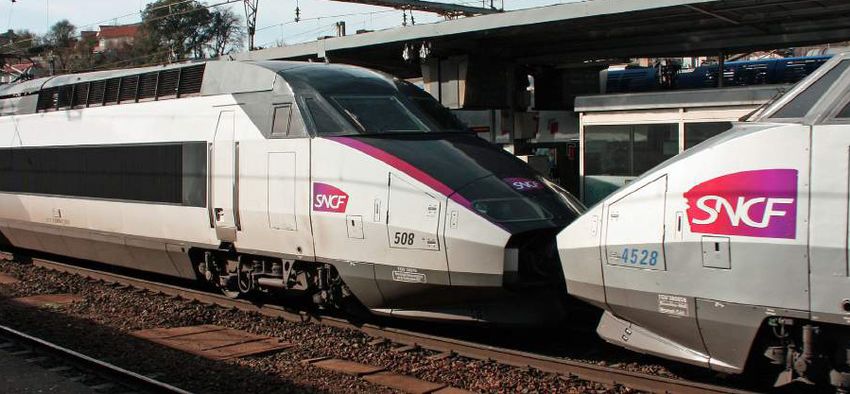
Annual carbon emissions are down 15% from 272,345 CO2-e                  Additionally, in many countries, baseload power is normally
                                                             [3].
tonnes in 2015/16, to 230,036 CO2-e tonnes in 2019/20                    provided by the cleanest generators, with older and less-
KiwiRail has also reduced its annual energy usage by 39 GWh.             efficient generators only used during periods of peak demand.
                                                                         Reducing energy demand in peak times can further reduce
                                                                         emissions as these least energyefficient generators are taken
                                                                         offline.

                                                                         Depending on the type of rail operation, the return on
                                                                         investment period for an Energymiser® implementation is
                                                                         approximately one to three years.
    SNCF is France’s national state-owned railway
    and includes the signature high-speed service,                       What are the Potential Global Carbon Emission Reductions?
    the TGV. SNCF uses 9 TWh of electricity in France
                                                                         Globally, transport accounts for almost 25% of all greenhouse
    annually, or 3% of all electricity consumed in
                                                                         gas emissions. Of this, rail accounts for 3% of transport
    France [4]. SNCF installed Energymiser® on all TGV
                                                                         emissions [6], [7], [8]. Overall, rail accounts for approximately 270
    trains to achieve energy consumption savings of
                                                                         million tonnes CO2-e per year.
    up to 10%.
                                                                         If used globally on every single locomotive, assuming a
                                                                         conservative 10% reduction, Energymiser® could reduce rail
Current energy expenditure directly related to TGV trains is             carbon emissions by over 27 million tonnes CO2-e per year.
around €200 million annually, down from €220 million, from an
overall SNCF energy budget of €1.3 billion [5]. When the system
is fully rolled out, SNCF expects to save millions off its electricity        This reduction in carbon emissions is equivalent
bill annually, and achieve a significant reduction in CO2-e                   to planting over 450 million trees that sequester
emissions.                                                                    carbon for 10 years or taking 5.8 million cars off
                                                                              the road [9].
Energymiser® has already achieved 6% to 10+% energy savings
for passenger and coal trains in the United Kingdom, where
it is the C-DAS market leader on a congested rail network.
Energymiser® has also provided 8.9% energy savings for long
and heavy iron ore trains in Africa. These energy savings
translate into similar CO2-e reductions.

For electric trains, the cost of electricity and electricity grid
reliability are key issues for rail operators. While energy-             These calculations demonstrate that energy use efficiency
efficient, they have a significant impact on national electricity        measures, such as Energymiser®, can significantly decrease the
supply systems. Electricity costs typically increase during high         carbon footprint of rail transport, without requiring large scale
demand periods, and there are substantial opportunities for              capital investment.
railways to increase profitability by reducing their energy use
during these times.
Why isn’t Every Rail Operator using C-DAS?

Historically, some barriers can delay new technology like
Energymiser® from being widely adopted – such as government
regulations and requirements, electricity market conditions,
and reluctance to adopt new technology in a complex operating
environment. Today, driver assist technology is now expected as
part of new operations and is usually specified as a key tender
requirement.

In New Zealand, KiwiRail has shown that these organisational
and cultural barriers can be overcome by bringing all parties to
the table to discuss the long-term economic and environmental
benefits. In 2013, KiwiRail conducted a three-month trial on a
freight line in the North Island.

After the promised fuel reduction target of 10% was
demonstrated, the decision was made to implement
Energymiser® across the entire fleet [10].

KiwiRail enlisted senior train drivers to champion the system,
which is now installed in all of KiwiRail’s 180 locomotives. Over
350 train drivers have successfully received training on how
to use Energymiser®. There is even scope to include C-DAS in
training and simulation programs for train drivers, so they are
familiar with the system before operating locomotives in the
real world.

                                                                    References
                                                                    [1] Global
                                                                             Carbon Project. (2020). Supplemental data of Global
                                                                    Carbon Budget 2020 (Version 1.0) [Data set]. Global Carbon
                                                                    Project.
                                                                    [2] International
                                                                                   Energy Agency (2019). The Future of Rail.
                                                                    Opportunities for energy and the environment.
                                                                    [3] KiwiRail
                                                                              (2020). Building on Recovery Looking Ahead. KiwiRail
   CONCLUSION                                                      Integrated Report 2020.
                                                                    [4] SNCF     (2020). Energy to power trains and rail facilities.
   When considering how to practically reduce CO2-e
   emissions, there are tools and solutions already                 [5] TTG     Transportation Technology (2020). TTG Case Studies.
   available that can make a tangible impact right now.
                                                                    [6] Global
                                                                             Railway Review (2019). C-DAS: Connected on-board
   These proven examples, like Energymiser®, show                   train energy optimisation.
   major environmental benefits can be achieved, with               [7] International    Energy Agency (2020). Rail Tracking Report 2020.
   the added advantage of cost savings and service
                                                                    [8] SimsR., R. Schaeffer, F. Creutzig, X. Cruz-Núñez, M. D’Agosto,
   improvements.
                                                                    D. Dimitriu, M.J. Figueroa Meza, L. Fulton, S. Kobayashi, O.Lah, A.
                                                                    McKinnon, P. Newman, M. Ouyang, J.J. Schauer, D. Sperling, and
   Energymiser® can enable efficiencies that help rail
                                                                    G. Tiwari, 2014: Transport. In: Climate Change 2014: Mitigation
   operators reduce fuel or electricity use (usually a rail         of Climate Change. Contribution of Working Group III to the
   operator’s largest expense), reduce CO2-e emissions,             Fifth Assessment Report of the Intergovernmental Panel on
   and improve on-time performance simultaneously.                  Climate Change [Edenhofer, O., R. Pichs-Madruga, Y. Sokona, E.
                                                                    Farahani, S. Kadner, K. Seyboth, A. Adler, I. Baum, S. Brunner,
   This all supports the most efficient form of transport,          P. Eickemeier, B. Kriemann, J. Savolainen, S. Schlömer, C. von
                                                                    Stechow, T. Zwickel and J.C. Minx (eds.)]. Cambridge University
   rail, becoming even more sustainable – making
                                                                    Press, Cambridge, United Kingdom and New York, NY, USA.
   rail transport a more attractive and affordable
                                                                    [9] United
   investment.                                                              States Environmental Protection Agency (2021).
                                                                    Greenhouse Gas Equivalencies Calculator.
                                                                    [10] Rail
                                                                           Express (2020). “This is for our grandchildren”: Why
                                                                    KiwiRail’s C-DAS is about more than saving fuel.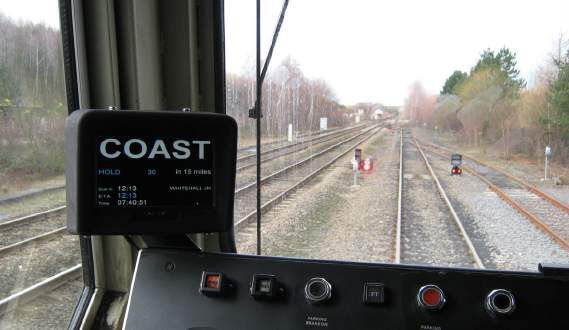
S I G N A T U R E R A I L . C O M

t: +44 (0)1904 639091 | info@signaturerail.com

Jervaulx House, 6 St. Mary’s Court, Blossom Street,
York, YO24 1AH, UK
You can also read


