IDENTITY AWARENESS, PROTECTION, AND MANAGEMENT GUIDE - A GUIDE FOR ONLINE PRIVACY AND SECURITY COMPRISED OF THE COMPLETE COLLECTION OF DEPARTMENT ...
←
→
Page content transcription
If your browser does not render page correctly, please read the page content below
IDENTITY AWARENESS, PROTECTION,
AND MANAGEMENT GUIDE
A GUIDE FOR ONLINE PRIVACY AND SECURITY COMPRISED OF THE
COMPLETE COLLECTION OF DEPARTMENT OF DEFENSE SMART CARDS
EIGHTH EDITION, MARCH 2019
HOW TO USE THIS GUIDE
The Identity Awareness, Protection, and Management (IAPM) Guide is a comprehensive resource to help you
protect your privacy and secure your identity data online.

The IAPM Guide is divided into two-page chapters detailing key privacy considerations on the most popular
online services, mobile apps, and consumer devices available in the market today. Each chapter provides you
with tools, recommendations, and step-by-step guides to implement settings that maximize your security. The
guide is updated twice a year, in March and September.

While some of the chapters in the IAPM Guide deal with technical issues, they do not require a technical
background to follow.

The US Department of Defense creates this guide as a public service, and hopes this guide will help readers
keep their identities private and secure.
TABLE OF CONTENTS
1. OVERVIEW......................................................................................................................................... 2
2. FACEBOOK........................................................................................................................................ 4
3. FACEBOOK MOBILE......................................................................................................................... 6
4. TWITTER........................................................................................................................................... 8
5. INSTAGRAM...................................................................................................................................... 10
6. LINKEDIN.......................................................................................................................................... 12
7. PHOTO SHARING SERVICES........................................................................................................... 14
8. ONLINE DATING SERVICES............................................................................................................. 16
9. MOBILE DATING APPS................................................................................................................... 18
10. SECURE CHAT APPS....................................................................................................................... 20
11. SMARTPHONES................................................................................................................................ 22
12. TRAVELING SAFELY WITH SMARTPHONES.................................................................................. 24
13. EXIF DATA REMOVAL....................................................................................................................... 26
14. MOBILE WALLETS............................................................................................................................ 28
15. HEALTH APPS & FITNESS TRACKERS........................................................................................... 30
16. SECURING YOUR HOME WIRELESS NETWORK............................................................................ 32
17. ONLINE REGISTRATION................................................................................................................... 34
18. OPTING OUT OF DATA AGGREGATORS......................................................................................... 36
19. IDENTITY THEFT PREVENTION....................................................................................................... 38
20. KEEPING YOUR KIDS SAFE ONLINE............................................................................................... 40
21. VOICE OVER INTERNET PROTOCOL (VOIP)................................................................................. 42
22. VIRTUAL PRIVATE NETWORK (VPN)............................................................................................. 44
23. WINDOWS 10.................................................................................................................................... 46

     INDEX................................................................................................................................................ 48

USEFUL LINKS AND RESOURCES
 •     A Parent’s Guide to Internet Safety                        https://www.fbi.gov/resources/parents
 •     The Balance: Identity Theft 101                            https://www.thebalance.com/identity-theft-basics-4073614
 •     Privacy Right Clearinghouse                                http://www.privacyrights.org/privacy-basics
 •     HTTPS Everywhere                                           https://www.eff.org/https-everywhere
 •     Securing Your Web Browser                                  https://www.us-cert.gov/publications/securing-your-web-browser

DISCLAIMER:
The Department of Defense (DoD) expressly disclaims liability for errors and omissions in the contents of this guide. No warranty of any kind, implied, expressed, statutory,
including but not limited to warranties of non-infringement of third-party rights, titles, merchantability, or fitness for a particular purpose is given with respect to the contents
of this guide or its links to other Internet resources. The information provided in this guide is for general information purposes only.

Reference in this guide to any specific commercial product, process, or service, or the use of any trade, firm or corporation name is for the information and convenience of the
public and does not constitute endorsement, recommendation or favoring by DoD or the U.S. Government.

DoD does not control or guarantee the accuracy, relevance, timeliness, or completeness of information contained in this guide; does not endorse the organizations or their
websites referenced herein; does not endorse the views they express or the products/services they offer; cannot authorize the use of copyrighted materials contained in
referenced websites. DoD is not responsible for transmissions users receive from the sponsor of the referenced website and does not guarantee that non-DoD websites
comply with Section 508 (Accessibility Requirements) of the Rehabilitation Act.

                                                                                                       Identity Awareness, Protection, and Management Guide                             1
WHY IS IDENTITY PROTECTION A CONCERN?
     YOUR DATA IS EVERYWHERE

                                              Everything you do creates a stream of data

                 PERSONAL                              FINANCIAL                             BIOMETRIC                            BEHAVIORAL

           • Name                               • Credit Cards                        • Face Recognition                    • Browsing history
           • Birthdate                          • Bank Accounts                       • Voice Recognition                   • Social Media
           • Work, Education,                  • Digital Wallets                     • Fitness Tracker Data                • Relationships
              and Address History               • Online Payments                     • Device Authentication               • Interactions with
           • Family and Friends                 • Purchase history                    • DNA Analysis                          devices and sensors
           • Likes and Interests                                                                                            • Location tracking

     YOUR DATA IS VALUABLE

     • The 21st-century world is based on trading personal data, instead of               When you trade your data
        money, for convenience or utility.
                                                                                           for a service, you are not
     • Online companies collect your data to develop targeted ads and sell
        them. Digital advertising was worth $266 billion worldwide in 2018.1
                                                                                           the customer.
     • On the criminal side, personal data is worth a lot of money. PII
        sells for $1-1,000 dollars each on the Dark Web, where criminals                   YOU ARE
        sell it in bulk.2
                                                                                           THE PRODUCT
     YOUR DATA IS UNPROTECTED

     • The United States has no centralized, formal legal structure to             • Companies can and do share data with each other, so you don’t
        protect your data.                                                             know who might take over your data. 91% of users install mobile
                                                                                       apps without reading the terms of service, which often allow for
                                                                                       data sharing.3
                                          Data Cannot Be                            • Biometric data is everywhere. Even a picture of your face can
                                          Truly Deleted Once                           pose risks.

                                          It’s Out There                            • Hacks are constant. Your data has probably already been stolen.

     YOUR DATA CAN BE DANGEROUS
     • Any piece of data alone can be innocuous, but tied to other                 • Oversharing online can lead to personal embarrassment or
        sources, it becomes a three-dimensional image of you that can                  professional consequences.
        pose a threat. Advertising firms, public records companies, or
                                                                                    • Online behavior can reveal patterns of life that can lead to physical
        criminals can link disparate information about you together.
                                                                                       risk in the real world.
     • Identity theft can waste time and hurt consumers financially.

    1 https://www.statista.com/outlook/216/100/digital-advertising/worldwide#market-revenue
    2 https://www.experian.com/blogs/ask-experian/heres-how-much-your-personal-information-is-selling-for-on-the-dark-web/
    3 https://www2.deloitte.com/content/dam/Deloitte/us/Documents/technology-media-telecommunications/us-tmt-2017-global-mobile-consumer-survey-executive-sum-
    mary.pdf

2   Identity Awareness, Protection, and Management Guide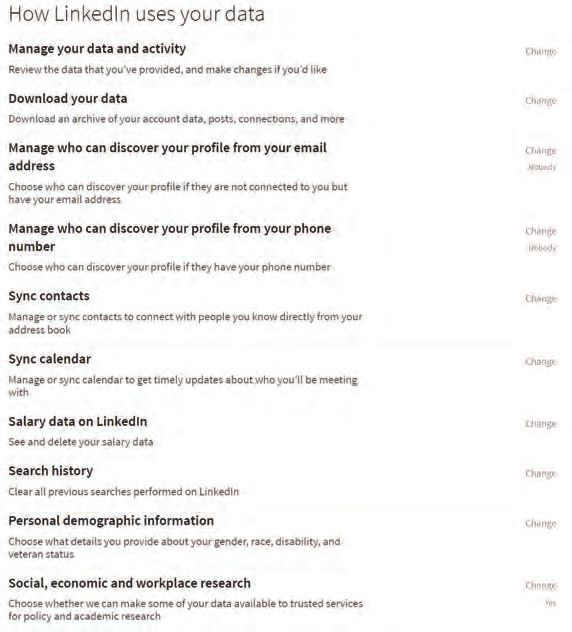
WHAT CAN YOU DO ABOUT IT?
 EDUCATE YOURSELF

 • 74% of people are unaware that Facebook develops profiles of
    users’ interests.4                                                                                       REVIEW TERMS
 • Knowing the risks puts you ahead of most people.                                                          OF SERVICES,
 • The IAPM Guide is a great start. Look at the Table of Contents page
    for more information sources.
                                                                                                             and stay up-to-date with
                                                                                                             privacy updates and changes.

 PROTECT YOURSELF

 • Use caution before agreeing to share your information. Think                 • When in doubt, opt out.
    before you click.
                                                                                 • Threats to your identity constantly change. Monitor your credit and
 • Learn how to tell the legitimate from the illegitimate.                          online accounts, and keep your software and devices up-to-date.

 Be proactive about identity security. Only share PII with people or companies you trust.

                   41%                                                  39%                                               25%
          of online adults have shared                            say that they use the                           admit that they often use
             the password to one of                               same (or very similar)                         passwords that are less se-
          their online accounts with a                           passwords for many of                          cure than they’d like, because
           friend or family member.5                             their online accounts.6                        simpler passwords are easier
                                                                                                                to remember than more com-
                                                                                                                         plex ones.7

 STRIKE THE RIGHT BALANCE

                                                     DON’T PANIC!
                                                     Your identity and privacy can still be protected.
                                                     • Social media and apps are useful, but make sure you use them safely.
                                                     • Before using a product or sending your PII to someone, ask yourself if it is providing enough
                                                        of a benefit to be worth the risk.
                                                     • If your identity has already been stolen, you still have time to react and recover.

4 http://www.pewinternet.org/2019/01/16/facebook-algorithms-and-personal-data/
5 http://www.pewinternet.org/2017/01/26/americans-and-cybersecurity/
6 http://www.pewinternet.org/2017/01/26/americans-and-cybersecurity/
7 http://www.pewinternet.org/2017/01/26/americans-and-cybersecurity/

                                                                                          Identity Awareness, Protection, and Management Guide            3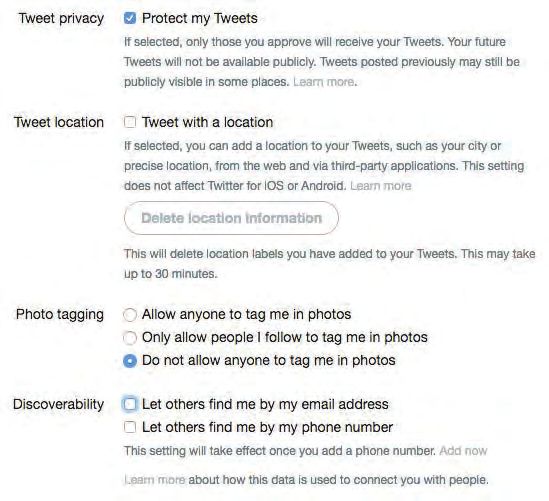
FACEBOOK
 SOCIAL NETWORK - DO’S AND DON’TS
  •   Only establish and maintain connections with people you know and trust. Review your connections often.
  •   Assume that ANYONE can see any information about your activities, personal life, or professional life that you post and share.
  •   Ensure your family and friends take similar precautions with their accounts; their privacy and sharing settings can expose your personal data.
  •   Avoid posting or tagging images of you, or your family, that clearly show faces. Select pictures taken at a distance, at an angle, or otherwise concealed.
  •   Use secure browser settings when possible, and monitor your browsing history to ensure you recognize all access points.
  •   Remember that even if you restrict your data from public view, the service still has access to your data and may share it with third parties.

                                                                                   3   Use the Your Facebook Information tab to view or download your data
 MAXIMIZING YOUR FACEBOOK PRIVACY
                                                                                       or delete your account.
Facebook provides shortcuts to privacy settings                                   This tab contains shortcuts
that limit what others can see in your profile.                                   to your Activity Log and an
                                                                                  informative Managing Your
Click on Privacy Checkup to change your basic                                     Information tab that guides
privacy settings.                                                                 you through common
                                                                                  Facebook and Instagram
                               For more                                           data management
                               extensive and                                      questions and concerns.
                               granular control,
                               navigate to
                                                                                   4   Timeline and Tagging controls how others interact with your Timeline.
                               Settings from
                                                                                       Select View As to preview what others can see on your profile.
                               the top drop
                               down menu. Click
                               through each tab
                               to control how
                               your personal
                               information is
                               shared with
                               others.

 RECOMMENDED SETTINGS
                      The (1) Security and Login, (2) Privacy, (3) Your
                      Facebook Information, (4) Timeline and tagging, (5)
                      Location, (6) Face Recognition, (7) Public Posts, (8)
                      Ads, and (9) Apps and Websites tabs contain settings
                      for concealing personal information. Use the settings            Facebook uses your device to
                      displayed below to maximize your security online.            5
                                                                                       obtain and store location data. The
                                                                                  Location tab displays if your Location
                      Facebook interactions (e.g., likes, posts) have been        History is on. Use View your location
                      used to behaviorally profile individuals. Minimize the      history >     > Delete all location
                      amount of personal information you share by limiting        history to remove stored data.
                      your interactions.
                                                                                   6   Use the Face Recognition tab and disable face recognition by setting
                        1  The Security and Login tab contains settings to
                                                                                       to No as shown. This prevents Facebook from searching and matching
                           protect your login credentials, monitor attempted
                                                                                  your face against all photos and videos uploaded to its database.
                      and successful logins, and recover your account in
                      the event of a lockout. Use Where You’re Logged In to
                      monitor login activity and end inactive sessions, and
                      turn ON alerts for unauthorized login under Setting Up
                      Extra Security > Get alerts.
                                                                                   7   Followers are people outside your “Friends” network who interact with
                                                                                       content you share publicly. Your Public Posts are streamed on their
                                                                                  News Feeds. To prevent this, set Who Can Follow Me to Friends. Restrict
                                                                                  Public Post and Public Profile settings as shown.

 2   Use the Privacy tab to control which audiences can search for you,
     contact you, and see your posts. Under Your Activity > Use Activity
Log, review past posts individually and limit the audiences for each entry.
Use Limit Past Posts to retroactively change the settings of all “Public”
posts to a “Friends” only audience.

 4     Identity Awareness, Protection, and Management Guide
Last Updated: 03/01/2019

 RECOMMENDED SETTINGS CONTINUED
 8   Use the Ads tab to prevent Facebook from tracking and using your             9    Using Facebook
     data for advertising. Under Ad settings, adjust each entry to Not                 as a login method
allowed or No One.                                                               for other apps or sites
                                                                                 enables those services
                                                                                 to access your Facebook
                                                                                 data. Use the Apps and
                                                                                 Websites tab to examine
                                                                                 and manage Active,
                                                                                 Expired, and Removed
                                                                                 permissions to limit
                                                                                 unnecessary access.

 FACEBOOK PROFILE PAGE
The Facebook profile page contains tabs that allow users to add information about themselves, view friend lists, and post text entries or photos to their
profiles. General audience settings reside within these tabs. Use the guidelines below to maximize your security while interacting with these features.

 ABOUT                                                                            FRIENDS
Avoid entering personal data in the About section unless required by             The Friends tab provides a searchable list of all your Facebook Contacts.
Facebook. This information is mostly optional and contains data fields           Click > Edit Privacy to restrict access to your Friend List and Following
including Work and Education, Places You’ve Lived, Contact and Basic             settings; set these fields to Friends or Only Me.
Info, Family and Relationships, Details About You, and Life Events. Use
audience settings to change the mandatory fields to Friends or Only Me.

 ACTIVITY LOG                                                                     REVIEWING YOUR INFORMATION
The Activity Log tool chronologically displays your Posts, Posts You’re          To review a comprehensive list of data collected by Facebook, navigate to
Tagged in, and Others’ Posts To Your Timeline. Use the dropdown menu             Settings > Your Facebook Information > Access Your Information.
shown to delete or manage how individual posts appear on your Timeline.
                                                                                 You can
                                                                                 Download Your
                                                                                 Information
                                                                                 entirely or by type
                                                                                 or date range; in
                                                                                 HTML or JSON
                                                                                 format; and in
                                                                                 high, medium, or
                                                                                 low media quality.

 DEACTIVATING/DELETING YOUR FACEBOOK ACCOUNT
                                                  Deactivating an account removes your name and photos from posts that you have shared. To deactivate
                                                  your Facebook account, navigate to Settings > General > Manage Account then click on Deactivate your
                                                  account. Your account remains deactivated until the next login. Some information may still be visible,
                                                  such as your name in someone else’s friend list and messages you have exchanged.

                                                  To delete your account, navigate to Settings > Your Facebook Information > Delete Your Account and
                                                  Information, then click Delete Account. The deletion process begins 14 days after request submission,
                                                  and Facebook will permanently remove most of your data within 90 days.

                                                                                       Identity Awareness, Protection, and Management Guide                  5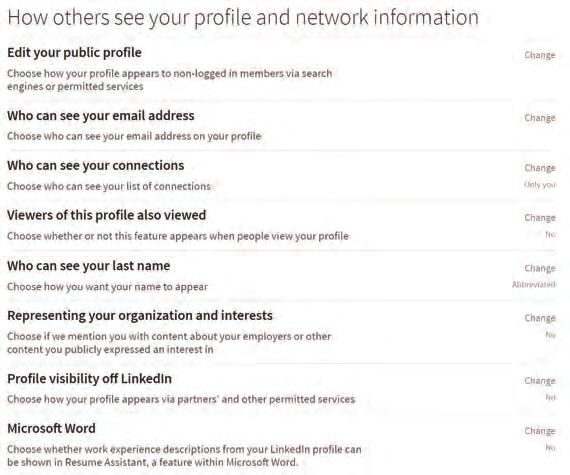
FACEBOOK MOBILE
 SOCIAL NETWORK - DO’S AND DON’TS
  •   Only establish and maintain connections with people you know and trust. Review your connections often.
  •   Assume that ANYONE can see any information you post and share regarding your activities, whereabouts, and personal or professional life.
  •   Ensure your family and friends take similar precautions with their accounts; their privacy and sharing settings can expose your personal data.
  •   Avoid posting or tagging images of yourself or family that clearly show faces. Select pictures taken at a distance, at an angle, or otherwise concealed.
  •   Use secure browser settings when possible, and monitor your browsing history to ensure that you recognize all access points.
  •   Remember that even if you restrict your data from public view, the service still has access to your data and may share it with third parties.

 OVERVIEW
Facebook reports 1.49 billion daily active global users in June 2018. Most users access the mobile app, as reflected by Facebook mobile’s advertising
revenue, which accounted for 91% of Facebook’s overall advertising revenue for Q1 2018. Using Facebook’s mobile app (vs. website) places your identity at
greater risk because smartphones provide to access additional personal data (e.g., location). Use the following recommendations to best protect yourself.

 FACEBOOK MOBILE SETTINGS
Facebook Mobile settings closely resemble those of the website. Settings you implement carry across both the web and mobile app. From the icon in the
navigation panel, select Settings & Privacy > Settings. Navigate tabs within the Security, Privacy, and Ads sections to implement settings shown below.

                                                                                                                                           Ad Preferences >
                                                                                                                                           Your Information

 Review your active sessions                                                                                                            Toggle all
 and devices frequently to spot                                                                                                         OFF
 unauthorized activity

               Turn ON “two-factor
               authentication”
                                                                                                                             Toggle OFF in both
                                                                                                                             Facebook Mobile &
                   Turn ON                                                                                                   Messenger (if using)
                                                                                                                             to ensure full effect

 IPHONE SETTINGS                                                                   ANDROID SETTINGS
iPhones can be configured to control how your data is shared while you            Android phones can be configured to protect your personal data while you
are using the Facebook app. From the iPhone’s Settings, scroll down to the        are using the Facebook app. Navigate to Settings > Apps > Facebook and
Facebook tab to review and adjust Facebook’s access to your data, such as         scroll down to App Settings > Permissions to review and adjust Facebook’s
Location, Photos, Camera, and Microphone. Toggle OFF all permissions at           access to your data. Toggle OFF all permissions unless required for a
all times unless required on a case-by-case basis.                                specific, limited-time use case (e.g., uploading a photo).

                                                      Disable all
                                                      permissions

                                                                                                                                          Toggle all
                                                                                                                                          OFF
                                                                     Toggle
                                                                     OFF

 6     Identity Awareness, Protection, and Management Guide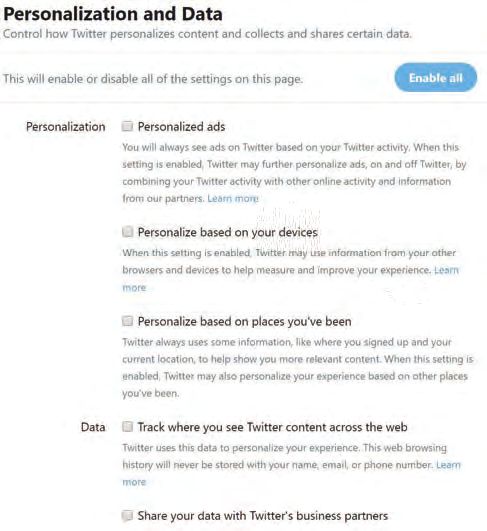
Last Updated: 03/01/2019

 POSTING TO FACEBOOK
                                                                                Facebook Mobile allows you to post a new status, upload photos, or
                                                                                check in to locations using the What’s on your mind? prompt. The icons
                                                                                highlighted on the update prompt are shortcuts for adding further personal
                                                                                information to each post. Several shortcuts pose a significant risk to your
                                                                                privacy and should be used sparingly. Follow the guidelines outlined in this
                                                                                section to prevent over-sharing your information.

                                                                                 SELECTING YOUR PRIVACY
                                                                                With every post, Facebook Mobile allows you to select the audience through
                                                                                the Select Privacy tab beneath your name. For maximum privacy, select
                                                                                Specific friends with whom you would like to share your post. Never make
                                                                                your posts available to the public.

 ADD PHOTOS                              TAG FRIENDS                             ADD LOCATION                            LIVE VIDEO BROADCAST

                                                                                                        Do NOT
                                                                                                        turn on

Avoid posting photos to your           Tagging friends in individual posts      Never disclose your location within     Avoid posting live video broadcasts.
Timeline. These photos can often be    extends the visibility of your post      a Facebook post. Doing so allows        Videos are hard to vet for potentially
viewed from your contacts’ profile     and profile to your friends’ networks.   Facebook to keep records on your        harmful data and can lead to legal
pages and can be saved without         Limit the number of tags you add to      whereabouts and allows others to        repercussions if others believe a
your knowledge or consent.             your Facebook posts.                     see when you are away from home.        video compromises their privacy.

 NEARBY FRIENDS - LOCATION SETTINGS                                              LOCAL
Nearby Friends allows you to share your location with friends. When             Local uses your GPS location to display local venues. When activated, the
activated, Facebook collects your location data, even while you are not         feature permits check-ins, provides a map of your location, and suggests
using the app, and continually broadcasts your approximate locations to         places to go based on where you and your friends have already been, or on
your friends. You also have the option to allow certain users to see your       situational needs such as dining. Avoid posting on these public threads.
precise location for set periods of time. Do not turn on Nearby Friends.

                                        Disable Location History to
                                        prevent Facebook from logging
                                        your precise location at all times

                                                                                To use this feature, you must have Location History enabled. This feature
                                                                                permits Facebook to track your precise location, even when the app is not in
When this feature is enabled, Facebook builds a history of your precise         use. Avoid giving Facebook permission to track your location.
locations. You can view and manage this information from Settings >
Location > View your Location History. In general, avoid giving Facebook
permission to track your location.

                                                                                      Identity Awareness, Protection, and Management Guide                 7
TWITTER
 SOCIAL NETWORK - DO’S AND DON’TS
  •   Only establish and maintain connections with people you know and trust. Review your connections often.
  •   Assume that ANYONE can see any information you post and share regarding your activities, whereabouts, and personal or professional life.
  •   Ensure your family and friends take similar precautions with their accounts; their privacy and sharing settings can expose your personal data.
  •   Avoid posting or tagging images of you, or your family, that clearly show faces. Select pictures taken at a distance, at an angle, or otherwise concealed.
  •   Use secure browser settings when possible, and monitor your browsing history to ensure that you recognize all access points.
  •   Remember that even if you restrict your data from public view, the service still has access to your data and may share it with third parties.

 OVERVIEW
Twitter is a social networking and micro-blogging site that hosts 326 million monthly active users, as of mid 2018. Twitter allows users to post text-based
entries to their profiles and follow updates from other accounts. On average, Twitter users post approximately 500 million entries per day from both the
website and its mobile app. For most, Twitter is used as a source to discover breaking news developments and stay up-to-date on current events or their
friends’ recent whereabouts. Should you choose to maintain a Twitter account, use the recommendations in this card to enhance your privacy.

 TWITTER PROFILES
Profile pages can be operated by a single individual, a group of individuals, or even large organizations. Regardless of who maintains the account, each
individual profile is labeled with a unique username known as a Twitter Handle (e.g., @google). Handles allow other users to locate profiles and mention
them in posts. In general, profile pages tend to contain some of the account owner’s personal data and display every Tweet posted by that user.

                                                                                                                    Twitter updates from users you Follow
                                                                                                                       will appear on your Home page.
                                                                                                                    Similarly, those who Follow your profile
                                                                                                                         will see your Twitter updates.

 POSTING TO TWITTER
A Twitter entry is referred to as a “Tweet.” Tweets can be composed of photos, videos, links, polls, or short text entries, limited to 280 characters.
Tweets are public, indexed, and searchable, unless protected by the user. Many users never Tweet, choosing only to follow persons or topics of interest.
                                                                                      Mentions (@username) are used to tag other users or accounts in a
                                                                                      Twitter update. Tags create a link to the mentioned individual’s profile.
                                                                                      When a public user mentions a private Twitter account, the link to the
                                                                                      profile of the private account becomes visible to the public.

                                                                                      Hashtags (#topic) are used to highlight key topics in individual posts.
                                                                                      When a hashtag is posted by numerous users across the network, the
                                                                                      hashtag becomes a “trending topic” of conversation. Trending topics are
                                                                                      advertised on Twitter and extend the reach of posts and profiles. Tweets
                                                                                      with hashtags are searchable within the Twitter search engine.
                                                                                      When a Tweet is published, other Twitter users are able to interact with
                                                             Tweets display the       the post through the icons highlighted to the left. These icons permit
                                                              profiles of those       actions including Replies, Retweets, Likes, and More.
                                                               who interacted
                                                              with the posted         • Replies - Replies are text responses to another user’s Tweet. The
                                                             content. Limit your        Reply prompt automatically mentions the author of the original Tweet
                                                               interactions to
                                                             better control your        within the text of the reply.
                                                               profile’s reach.       • Retweets - Retweets are used to forward other users’ Tweets to your
                                                                                        personal followers. Retweets always retain a link back to the original
                                                                                        poster’s profile page.
                                                                                      • Likes - Likes are used to show endorsement of another user’s post. A
                                                                                        list of entries liked by a single user appears directly within that user’s
                                                                                        Twitter profile page.

 8     Identity Awareness, Protection, and Management Guide
Last Updated: 03/01/2019
TWITTER SETTINGS
Access Twitter’s settings by selecting the thumbnail image of your profile photo in the top banner. From the dropdown menu, select Settings and privacy
and navigate to pages containing customizable security options: Privacy and safety, Email notifications, and Account. After configuring your privacy
settings, access your Twitter data tab to review device and login histories to ensure that your account has not been accessed by unauthorized users.
PRIVACY AND SAFETY
Apply the settings shown below in the Privacy and safety tab to control how others can interact with your Twitter profile and your Tweets. Save changes.
Go to Personalization
and Data > Edit
Uncheck
Uncheck
all boxes
Uncheck
both
ACCOUNT SETTINGS EMAIL NOTIFICATIONS SETTINGS
Account settings allow you to customize your Twitter handle and contact Email notifications alert you when others interact with your profile or
email. You can also request your Twitter archive which contains a content. For maximum security, customize the notifications settings to
transcript of all of your past Tweets and replies, or elect to Deactivate your receive all alerts related to you and your account activities. Save changes.
account.
Use a nickname,
initials, or
pseudonym. Don’t
reveal your full
name inside the
username
Check all
In the Security section, use Set up login verification and check the box for
Password reset verification to further secure your account. Check
Identity Awareness, Protection, and Management Guide 9INSTAGRAM
INSTAGRAM - DO’S AND DON’TS
• Don’t connect your Instagram account with your other SNS profiles (e.g., Facebook, Twitter, Tumblr). It increases your account’s discoverability.
• Only accept follow requests from people you know and trust. Assume that ANYONE can see and forward photos you post, and save or forward copies.
• Ensure your family and friends take similar precautions with their accounts; their privacy and sharing settings can expose your personal data.
• Avoid posting or tagging images that clearly show your face. Select pictures of yourself taken at a distance, at an angle, or wearing sunglasses.
• Don’t embed your posts with hashtags (e.g., #foodie, #caturday), as hashtags increase your posts’ visibility and make them searchable by others.
• Remember that even if you restrict your data from public view, Instagram still has access to your data and may share it with third parties.
INSTAGRAM OVERVIEW
Instagram is a photo-sharing application that allows users
Photo scaling and editing tools to curate original content using pictures and videos. With 1
billion monthly active users as of June 2018, it is currently the
second most popular social networking service (SNS) in the
world, exceeded only by Facebook (which acquired Instagram
in April 2012). Instagram functions primarily as a mobile
platform. Its popularity stems from the ease with which users
can take photos on the go and quickly upload, edit (using
many pre-set digital filters), and post images.
In terms of privacy, Instagram accounts can be either public
or private. Content posted on public Instagram accounts
is indexed and can be searched and viewed by anyone,
including non-Instagram members, via search engines such
Pre-set photo filters as Google. Posts made on private accounts are only shared
with followers that have been approved by the account owner.
It is recommended that you keep your personal Instagram
account set to private at all times.
MANAGING YOUR INSTAGRAM PROFILE INSTAGRAM MEDIA FORMATS
Instagram supports three different media
formats for upload, storage, and sharing: Stories
• Stories are temporary video or photo
Choose a profile photo Don’t reveal
your name, posts that you share in real time but
that doesn’t include your which are not saved to your profile
face or a location you birthdate,
or other page. New stories are designated with Videos
frequent.
personally a pink-purple circle around your profile
identifiable page and are viewable for 24 hours.
information
(PII) in the • Videos can be shared in a single post
Don’t reveal username. or as a video series. The best video
your full Choose formats are MP4 and MOV.
name in something
the “name” not linked to • Photos can be shared in a single
field. It your ID. post or as a photo series. Instagram
can be left supports a maximum resolution of Photos
empty (or
you can Do not link a 1080x1080 pixels. Larger photos are
insert an personal website automatically downsized during upload.
emoji!). or add Bio The aspect ratio must be set between
information. 1:91:1 (landscape) and 4:5 (portrait).
ACCOUNT REGISTRATION - PRIVACY TIPS
1 2 3
DO NOT use your
Facebook account for
sign up or log in. “Full Name” is NOT REQUIRED
during registration. Do not share.
Choose a complex password
and change it every 3 months. DO NOT allow
contacts
access.
10 Identity Awareness, Protection, and Management GuideLast Updated: 03/01/2019
PRIVACY SETTINGS
To access your privacy settings, go to your Profile and tap icon in the top-right corner of the screen. Apply the settings shown below to control how
your photos and videos are shared, and to minimize the amount of personal information you share with Instagram and third parties.
6
Click on “Clear
Search History” 1
to delete your
Instagram 2 7
search history
periodically.
3
Make your 4
Instagram
account private.
5
1 ACTIVITY STATUS 3 PHOTOS & VIDEOS OF YOU 6 CONTACTS SYNCING
Toggle OFF “Show Activity Status” to prevent Toggle OFF “Add Automatically” to review when
other users from seeing when you were last active others tag you in photos before they are added
Toggle OFF
on Instagram apps. automatically to your Instagram profile.
7 EMAIL AND SMS
4 LINKED ACCOUNTS
2 STORY CONTROLS
Block specific people
from viewing your
Instagram Stories by Toggle
their usernames everything
OFF
Toggle OFF
DO NOT link
your other SNS
accounts
DELETING INSTAGRAM
5 2-FACTOR AUTHENTICATION From the Settings page, click on Help Center,
then type in “delete my account” to pull up the
Delete Your Account page. Follow the steps
Toggle OFF and confirm deletion by clicking “Permanently
delete my account.” Once you delete your
Toggle ON account, it can’t be reactivated and you can’t
sign up again with the same username.
Identity Awareness, Protection, and Management Guide 11LINKEDIN
SOCIAL NETWORK - DO’S AND DON’TS
• Only establish and maintain connections with people you know and trust. Review your connections often.
• Assume that ANYONE can see any information you post and share regarding your activities, whereabouts, and personal or professional life.
• Ensure your family and friends take similar precautions with their accounts; their privacy and sharing settings can expose your personal data.
• Avoid posting images of you, or your family, that clearly show faces. Select pictures taken at a distance, at an angle, or otherwise concealed.
• Use secure browser settings when possible, and monitor your browsing history to ensure that you recognize all access points.
• Remember that even if you restrict your data from public view, the service still has access to your data and may share it with third parties.
MANAGING YOUR LINKEDIN PRESENCE
LinkedIn is a professional networking service with 590 million users worldwide. It
is mainly used to connect employers who create job postings and job seekers who
share their resumes and CVs. Users typically maintain profile pages outlining their
professional and educational achievements, and establish networks with others who
report similar interests and backgrounds. They can also share their areas of expertise,
Manage your
skills, personal interests, and hobbies. Since 2016, LinkedIn has been a subsidiary of “Settings & Privacy”
Microsoft. Follow the recommended settings to limit the exposure of your personally
identifiable information (PII) without foregoing LinkedIn’s many useful features.
PRIVACY SETTINGS
Click on the Privacy tab under Settings & Privacy. Apply the settings shown below to ensure that your profile is visible only to the people of your choosing.
1
3
Set to “No One”
Set to “No”
Set to “Only you”
Set to “No”
Set to “No”
2
Set to “Abbreviated” Set to “No”
Set to “No” 2 WHO CAN SEE YOUR LAST NAME
Set to “No”
ABBREVIATE
your last name
Set to “No”
1 EDITING YOUR PUBLIC PROFILE
Set your public profile visibility to “Off”
unless you are actively seeking a job or
are otherwise required to have a public
professional web presence. 3 PROFILE VIEWING OPTIONS
If your public profile is visible, make sure
all the optional fields are checked OFF to
prevent overexposure.
Set to “Private Mode”
to ensure that your
LinkedIn browsing
Uncheck all history isn’t made
optional fields visible to other
members
12 Identity Awareness, Protection, and Management GuideLast Updated: 03/01/2019
DATA COLLECTION, DATA PRIVACY, & ADS
Apply the Data Privacy and Advertising settings shown below to minimize the amount of information you share with LinkedIn and third parties. You can find
these settings under Settings & Privacy > Privacy > How LinkedIn uses your data. .
Navigate to Settings & Privacy > Ads > General advertising preferences
and implement the suggested settings below to minimize the amount of
Check data LinkedIn collects about you. The section called Data Collected on
regularly
LinkedIn on the Ads page should be reviewed frequently with most of
1
the featured turned OFF unless you are actively job searching or building
professional networks.
Set to “Nobody” Do not let LinkedIn
share your data with
3rd-party advertisers
Set to “Nobody”
Set to “No”
Do not
sync
Navigate to Settings & Privacy > Account > Partners and Third Parties >
Permitted Services monthly and review which services and apps you’ve
given access to your LinkedIn data. Remove permissions from services
that you no longer use nor require.
Clear
regularly DO NOT
connect to
Twitter or
Microsoft
Set to “No”
Navigate to Settings > Communications > LinkedIn messages and set
1 Participate in research to No to prevent LinkedIn from using your activities
REQUEST DATA ARCHIVE for internal research purposes.
LinkedIn maintains an archive detailing each user’s unique account activity.
Navigate to Settings & Privacy > Privacy > How LinkedIn uses your data >
Download your data to receive a comprehensive report of your past activity
and network information. Review your data frequently to ensure that you
are not over-sharing information. Visit the Help Center to see the types of
information LinkedIn collects.
Set to
“No”
LOGINS AND SECURITY SETTINGS
Navigate to Settings & Privacy > Account > Login and security > Two-step
verification and select Turn on. Use Where you’re signed in to regularly
check for suspicious account access activity.
CLOSING YOUR LINKEDIN ACCOUNT
Check
If you no longer plan to use the LinkedIn service, click Closing Your LinkedIn regularly
Account under Account settings and confirm your decision.
Turn ON
Identity Awareness, Protection, and Management Guide 13PHOTO SHARING SERVICES
PHOTO SHARING SERVICES - DO’S AND DON’TS
• Only share photos with people you know and trust. Assume that ANYONE can see, save a copy, and forward photos you post and share online.
• Ensure your family and friends take similar precautions with their photos; their privacy settings can expose you to unwanted parties.
• Avoid posting or tagging images that clearly show your face. Select pictures of yourself taken at a distance, at an angle, or wearing sunglasses.
• Remember that even if you restrict your data from public view, the service still has access to your data and may share it with third parties.
• Remove EXIF (Exchangeable Image File Format, or photo metadata) and location data from the photos you upload whenever possible.
• Limit the visibility of the photos to only your account or to accounts that you approve individually.
OVERVIEW
Photo sharing services (PSS) are online photo albums that store, organize, and share your digital photos; many social networking services (SNS) such as
Facebook and Twitter also function as photo sharing services. PSS provide a convenient way to share photos, but can expose you to privacy risks if you do
not take proper precautions. This chapter explains how you can control the security settings of six popular photo sharing services to protect your privacy.
SERVICE PRIMARY USE PRIVACY EXIF? LOCATION ALLOW GOOGLE
OPTIONS? OPTIONS REPOSTING? INDEXED?
Share temporary photo Everyone, My Friends, Yes User location tracked by No No
Snapchat & video messages Custom default; disabled with
known as “Snaps” “Ghost Mode” feature
Organize and share Private (able to share No Locations on photos No, but photos can No
iOS
photos from Apple album/images) tracked by default; no be downloaded
Photos
devices option to remove info once shared
Automatically back up, Private (able to share Yes Can tag location to No, but photos can No, but the
organize, share photos albums/images and tag photos; geolocation be downloaded service is owned
from smartphones your Google contacts) tracking if enabled once shared by Google
Share photos Public, Private, Contacts, Yes Can tag location to Yes If Public (can opt
within grouped user Family, Friends photos, can embed out)
environments location in EXIF data
Share and comment Public, Hidden (images No None (can add location Yes If Public
on photos viewable with direct URL), to photo description)
Secret
Share concepts and Public, Private (with No None (can add location Yes If Public (can opt
ideas using images Secret Boards) to photo description) out)
SNAPCHAT IOS PHOTOS
Snapchat allows users to send iOS Photos is an intelligent photo organizer and sharing tool exclusively for
temporary photo and video Apple users. It is the default photo app on all iOS devices and comes pre-
messages (“Snaps”) to one another. installed on Macs, iPhones, and iPads. It cannot be removed or uninstalled.
Snaps can only be viewed once
by the intended recipient(s) and iCloud Photo Sharing is a feature
are set to expire within 1 and 10 allows users to create private albums
seconds. from photos and share with their
contacts. To share photos from your
Tap your profile photo icon and Apple device, navigate to Settings >
then Settings > Who Can...: Photos:
Toggle OFF
• Shared Albums: Toggle ON unless you own
• Set Contact Me to My Friends
multiple Apple
• Limit View My Story to My When photos are shared with contacts deviecs
Friends or Custom who does not use iCloud, the app
• Tap See My Location. Turn on creates a link to a public website with
Ghost Mode and toggle OFF the shared photos which anyone can
Allow friends to request my see and access. Users can also post
location to SNS, messengers, and other photo
• Tap See Me in Quick Add sharing apps directly from iOS Photos.
and toggle OFF the box to
avoid being recommended as
connection to other users iOS Photos doesn’t provide a
privacy control for managing
location data in photos. If you are
Under Additional Services > Toggle OFF
after viewing concerned, process your photos
Manage > Maps, toggle OFF Share Toggle
has concluded through EXIF removal tools (see
OFF
Usage Data pg. 26-27) before sharing them.
14 Identity Awareness, Protection, and Management GuideLast Updated: 03/01/2019
PINTEREST FLICKR
Pinterest is a site where users can upload, categorize, and share images Flickr, acquired by SmugMug in April 2018 and supporting 90 million
called Pins on dedicated pages called Pin Boards. The site has more than monthly active users, offers free and paid accounts for photo sharing
250 million monthly active users (MAU). To maximize your privacy on and editing. To maximize your privacy, click your avatar in the upper right
Pinterest, make the following modifications to your account settings. Go to corner and select Settings from the drop down menu. This takes you to the
> Edit settings > Account Basics and make the following changes: Account settings page.
• Under Search privacy, toggle ON Hide your profile from search Make the following changes under the Privacy & Permissions tab for
engines Global settings and Defaults for new uploads:
Under Personalization, toggle OFF the following selections:
• Use sites you visit to improve which recommendations and ads you
see: toggle OFF
• Use information from our partners to improve which
recommendations and ads you see: toggle OFF
When you make a new Board in Pinterest, toggle the Secret boards option
ON to keep your pins private.
Under the Sharing
& Extending tab, do
Toggle Do NOT
ON NOT connect your
account to SNS. connect
IMGUR GOOGLE PHOTOS
Imgur allows users to share photos or albums with anyone using a Google Photos, the default photo app on Android devices, is a photo
customized URL and easily post their photos to other sites such as Reddit sharing, storage, and organizational tool with more than 500 million active
and Facebook. Imgur has over 250 million MAU. By default, Imgur strips all users. It seamlessly connects with Gmail to allow easy online photo
EXIF data from the photos you upload. However, you still need to make a sharing via albums and public URls. In addition to location tagging, Google
few modifications to your account settings to maximize privacy. Photos uses face recognition to group similar faces and encourages photo
organization by faces contained in the photos.
Hover over your username (top right) and select Settings from the drop
down menu to make the following changes: Make the following changes to your account settings to minimize the
• When creating a new album, select Hidden to make albums accessible degree of personal data shared and collected by Google, and maximize your
by URL only, or Secret so album is visible only to you privacy. Open the Google Photos app on your smartphone or browser and
• Comment mentions: check this box to receive notifications when you navigate to Settings:
are mentioned in a comment. • Go to Group similar faces and TURN OFF face grouping
• Use the Security tab to review account activity sessions. • Under Sharing, turn ON Remove geo location
• Under Google Apps, select Google Location settings and turn OFF Use
location
Turn OFF
Select Hidden or Secret
to maximize privacy
Monitor Activities
Turn ON
Identity Awareness, Protection, and Management Guide 15ONLINE DATING SERVICES
ONLINE DATING SERVICES - DO’S AND DON’TS
• Do not link online dating profiles to your social networking or photo sharing services (e.g., Facebook and Instagram).
• Avoid using usernames and profile photos that appear on other social networking sites.
• Do not include information unique to you (e.g., last name or place of work) in your public profile data or messages.
• If possible, upgrade your account to a paid version; paid accounts often offer more control over who can see your profile and what data is visible.
• Always read and take the time to understand the site’s Terms and Conditions before agreeing to register an account.
• Remember that even if you restrict your data from public view, the service still has access to your data and may share it with third parties.
OVERVIEW
Online dating services are used by individuals looking to develop a personal or romantic relationship with other users. While each service is unique,
sites typically ask users to maintain a public profile containing photos of themselves and personal information. These profiles are often searchable
through the site and, at times, may be pushed to users who share common interests or locations. Should you elect to participate in online dating, use the
recommendations in this card to protect your web-based online dating profiles and associated personal data. For additional information about mobile-
based services such as Tinder, Bumble, Hinge, or Coffee Meets Bagel, please reference the Mobile Dating Apps chapter.
COMMON THREATS FROM DATING SITES
Online dating sites present a unique set of threats to users in comparison to other social networking sites. Dating sites encourage interactions between
unacquainted individuals, collect extensive personal information that is used to match compatible individuals, and have few methods of verifying the
accuracy of users’ claims. Before participating in online dating, consider the following threats to your personal data:
• Sites use questionnaires to pair like-minded individuals, allowing the services to collect targeted information about users’ lifestyles.
• Most sites encourage users to connect a social network to their profiles or require them to supply face photos to help verify the account’s legitimacy.
• Matches may request personal contact information (e.g., phone number or SNS). Use the dating site’s chat feature as the only form of communication.
• Catfishing—a form of social engineering that uses a fake online persona to glean information from unsuspecting, real individuals—is common among
online dating sites and can lead to identity theft, character defamation, and other general online scams.
SELECTING A DATING SITE
Online dating sites are designed to pair individuals with one another based on common interests, values, lifetime achievements, and daily lifestyles. As a
result, users of these sites often find themselves divulging additional information that they may not feel comfortable sharing on other social networking
services (e.g., Facebook). Prior to registering an account, examine the types of data collected by each online dating site and select the service that best fits
your privacy needs. Five of the top dating sites and their respective data requirements are outlined in the following table:
SITE REGISTRATION VISIBLE PROFILE DATA SHARING PRICING
INFORMATION INFORMATION OPTIONS
Gender, partner gender preference, Most registration information, optional Login with Facebook, Free to join; $21-$27/
age preference, ZIP code, email lifestyle and dating preferences, photos upload photos from month to send messages
address, password, birthday, Facebook and use the invisible
seriousness of relationship, height, browsing feature; other
body type, relationship status, have/ features available at cost
want kids, education, smoke, drink,
ethnicities, religion, salary, interests
First name, email address, birthday, First name, most registration Login with Facebook, Free to join and send
location, gender, sexual orientation, information, optional questionnaire upload photos from messages (“A-List Basic”).
biography, lifestyle questionnaire, answers Facebook, connect $25-35/month for A-List
photos Instagram feed and Premium, which offers
upload photos enhanced profile priority
and messaging features.
Gender, sexual orientation, ZIP code, Most registration information Upload photos from Free to join, send
email address, country, birthdate, Facebook messages, and hide
ethnicity, physical description, profile; $6-$13/month to
personal questionnaires, biography, see extended profiles
interests, face photo
Gender, sexual orientation, ZIP code, Most registration information, Register with One-time activation
email address, face photo, birthdate, biography, optional lifestyle and dating Facebook or Google, fee of $24.95 for paid
physical description, lifestyle preferences upload photos from memberships. 1 month:
questionnaire, face photo Facebook $29.95, 3 months: $19.95/
month, 6 months: $14.98/
month
Name, gender, sexual preference, Occupation, ethnicity, height, education, Optional login with Free to join. Membership
ZIP code, email address, children, college, language, religion, smoke/ Facebook required for active
city of residence, DOB, ethnicity, drink preferences, children, passionate engagement ($15.95-
height about, similarities, hobbies, positive $54.95/month depending
characteristics, what user is most on plan and subscription
thankful for length)
16 Identity Awareness, Protection, and Management GuideLast Updated: 03/01/2019
REGISTRATION DATA MATCH.COM
Protecting your identity data begins with registration. The example identity Match.com (parent company Match Group owns Tinder, OKCupid, Plenty of
below displays the best ways to populate common dating site identity Fish, and Hinge) hosted 8.1 million paid subscribers in 2018. Free accounts
fields. Use the same principles in this example to register your account. display photos, interests, and desired traits in significant others.
Name: Jennifer Vident (Use “Jen V.” or “JV”)
• Do not provide your full name
UNCHECK
Date of Birth: 3/23/1981 (Use “1/1/1981”)
• Supply a false date with your true birth year
Gender: Female DO NOT opt to have your profile shared with a “sister site” during registration
• True identification is required for proper site use
Navigate to Settings to toggle profile
Sexual Preference: Male / Female / Other visibility. Turn the member spotlight OFF
• True identification is required for proper site use to prevent the profile from appearing in
Current Location: Hackensack, NJ (Use New York, NY) ads. Hidden profiles prevent others from
• Select a large metropolitan area / nearby zip code seeing the account but also disable its
matching capability.
Username: SightSeer889
• Usernames should not represent your true name Private Mode is the optimal security setting—your profile is only visible
to select people—and is available with a paid subscription. Private Mode
Photo: Use a photo that does not clearly show your permits matching and emailing, and enables a user to see who is interested
face or distinguishable landmarks near your location in or has viewed the profile.
OKCUPID PLENTY OF FISH
OKCupid hosts ~8 million unique monthly visitors. Personal profiles display Plenty of Fish hosts 80 million registered members. Profiles display the
the user’s first name, photos, registration information, and answers to free- information submitted during registration and the traits that users look for
text questions pertaining to the user’s interests and daily activities. in significant others.
Navigate to Settings > General and activate “Disable auto login links” Select Edit Profile and elect to hide your profile from others. Hidden profiles
to help limit accidentally logging in through email. The questionnaire is do not appear in search results and, unlike other sites, do not lose matching
optional: submitted answers may be kept private using the lock icon shown. or searching functionality as a result. Select Upload Images and set images
to private so they can only be shared with individuals via private message.
Paid subscriptions do not offer significant security upgrades compared to
free accounts. Paid subscriptions do not offer significant security upgrades compared to
free accounts. Subscriptions are designed to increase the reach of a profile.
ZOOSK EHARMONY
Zoosk hosts 27 million registered members. Dating profiles consist of the eHarmony hosts ~750k paid subscribers and 10 million active users.
data entered during registration and free-text entries describing the owners’ Profiles display registration information, photos, and Q&A responses. Other
dating preferences and personal background. data includes free-text responses addressing the users’ interests.
Free Zoosk accounts offer little to no privacy setting options. Zoosk Free eHarmony accounts offer little to no privacy setting options; the site
provides multiple options to verify your account, including completing a determines which data can be seen by others. The site provides detailed
photo verification and linking your number, Twitter, Facebook, or US military user safety tips and warns what types of data may be harmful to share.
service records.
Avoid linking
your accounts
When others visit the proflie, Zoosk identifies the visitor to the profile owner. Photos can only be seen by users who maintain paid accounts. Paid
Users can activate private browsing for 30 minutes by paying 30 Zoosk accounts also permit users to see who has viewed their profiles and initiate
coins (starting coin price: $5.95 for 60 coins, purchased within the profile). SecureCalls (phone calls without sharing personal phone numbers).
Identity Awareness, Protection, and Management Guide 17MOBILE DATING APPS
MOBILE DATING APPS - DO’S AND DON’TS
• Avoid using usernames and profile photos that also appear on other social networking services and profiles.
• Do not include information unique to you (e.g., last name or place of work) in your public profile data or messages.
• Install all app updates as soon as they become available. Check your app’s privacy settings after each update to ensure maximum protection.
• Enable push notifications and alerts for your apps to help keep track of who is connecting with your profiles.
• Avoid posting images that may reveal your geographical location, such as a photo with a famous landmark in the background.
• Always read and take the time to understand the apps’ Terms and Conditions before agreeing to register an account.
OVERVIEW
It is estimated that one out of every three American adults have used online dating services and mobile dating apps to actively discover romantic
connections. As these apps continue to gain traction, users’ identity data will be placed at a significantly higher privacy risk. Should you elect to participate
in mobile dating, use the recommendations on this card to protect your personal and identity data. For additional information about the risks of online
dating on web-based services such as Match, Plenty of Fish, Zoosk, OKCupid, or eHarmony, please reference the Online Dating Services chapter.
USING MOBILE DATING APPS
Matching: Mobile dating apps frequently employ a
technique called “Swiping”—the motion of directing one’s
finger across a phone screen’s surface—to help convey
interest in other users’ profiles. Traditionally, swiping a
profile to the right indicates interest, while swiping it to the
left indicates disinterest in the profile. Regardless of the
swiping direction, selections are typically kept secret until
both individuals show a mutual interest in one another.
Communication: Each app provides a matches page
where users can revisit their matches’ profiles or open
a text dialogue with them through the app. Profiles and
conversations remain accessible unless the app employs
a time limit or a user manually unmatches the profiles.
SELECTING A DATING APP
In general, mobile dating apps offer little to no user-controlled privacy settings. As a result, users must show discretion when registering an account and
should avoid sharing potentially harmful data. Prior to registering an account, examine the types of data required by each mobile dating app, and select the
service that best fits your privacy needs. Four of the top mobile dating apps and their respective data requirements are outlined in the following table:
DATING APP REGISTRATION VISIBLE PROFILE APP PRICING
INFORMATION INFORMATION PERMISSIONS
Tinder Facebook account or phone number Name, photos, age, approximate Location, Cellular Free to join; up to
verification (provided through Account location, gender, biography, work Data, Storage & Push $10 / month for an
Kit, which is powered by Facebook) information, education information, Notifications upgraded account
Instagram photos, Spotify account (top (change location,
Required: First name, birth date, gender, artists, favorite song) Access to Facebook rewind features,
at least one profile photo, email address Account disable ads)
Optional: school.
Bumble Phone number verification or Facebook Name, photos, age, location, biography, Camera, Location, Free to join; enhanced
account info work information, education information Phone, Cellular Data, features available
and Storage at-cost
Likes, photos, general info, and
relationship interests Access to Facebook
Account
Hinge Facebook or Instagram account info Name, photos, age, location, biography, Location, Cellular Data Free to join; preferred
height, education information, work & Push Notifications membership with
Required: Name, profile picture, information, hometown, religion, premium features
email address, First name, birthday, interests, dating preferences Access to Facebook available for $5-13/
neighborhood, gender, sexual Account month
orientation, height, 6 photos, 3 questions
Coffee Meets Phone number verification or Facebook Passions, hobbies, height, ethnicity, Location, Cellular Data, Free to join; up to
Bagel account info religion, occupation, employer, education, Push Notifications, $25 can be spent on
photos Contacts, & Photos credits (“beans”) at
Relationship interests, gender, location a time to view more
Access to Facebook profiles in a day
Account
18 Identity Awareness, Protection, and Management GuideYou can also read


