Illiberal discourse in Romania: the year of exception 2020 The health crisis and the electoral campaigns, vectors of hatred in public discourse ...
←
→
Page content transcription
If your browser does not render page correctly, please read the page content below
CJI.RO
Illiberal discourse in Romania:
the year of exception 2020
The health crisis and the electoral campaigns,
vectors of hatred in public discourse.

          AU T H O RS :

          Dumitrița Holdiș   DAT E O F P U B L I CAT I O N :

          Bianca Rus         March, 2021
CJI.RO
                                       A U T H O RS :

                                       Dumitrița Holdiș
                                       Bianca Rus

                                       E D I TO RS :

                                       Cristina Lupu and
                                       Ioana Avădani

                                       DAT E O F P U B L I CAT I O N :

                                       March, 2021

                                       The report “Illiberal discourse in Romania: the year of exception 2020. The health crisis and the electoral
                                       campaigns, vectors of hatred in public discourse” was published by the Center for Independent Journalism,
CENTRUL PENTRU JURNALISM INDEPENDENT

                                       with the financial support of the Friedrich Naumann Foundation for Freedom Romania.

                                       The Friedrich Naumann Foundation for Freedom is not responsible for the content of the report. The
                                       opinions expressed in this publication are exclusively those of the authors. They do not necessarily reflect
                                       those of the Friedrich Naumann Foundation for Freedom Romania. This publication may not be reproduced,
                                       stored, or transmitted in any form or by any means, without the written permission of the publisher.
02
Executive summary

                                                                                                                                                                                                                               CJI.RO
                                       T
                                                 he present study follows and analyzes the elements that form the illibe-             the right to information. Although less present in the mainstream press, the illiberal
                                                 ral discourse in Romania in 2020 and its spread by political actors in the           discourse during the parliamentary election campaign was very present on social media
                                                 mainstream press. Data collection took place between March 15th 2020                 platforms, especially on Facebook and at rallies organized by the AUR party, where the
                                                 and December 10th 2020 and was done through media monitoring. Quali-                 most virulent illiberal topics were intensely promoted.
                                       tative research methods such as discourse analysis were used. Three major events
                                       structured both the data collection and the present analysis: the state of emergen-
                                       cy declared as a result of the spread of the SARS-CoV-2 virus, responsible for the           The rise of a far-right party in the Romanian Parliament
                                       Covid-19 pandemic, in Romania (March 16th - May 15th), local (September) and par-            shocked a part of the Romanian public. But the illiberal
                                       liamentary elections (December). Exceptional moments like these see an increase              discourse promoted by organisations like AUR is not
                                       in political debates in society. The results of our research show that:                      a novelty in the Romanian public space. The press
                                          ⌦  During the state of emergency and the state of alert (monitoring March-August)         plays the role of an amplifier for this speech, and
                                          the most common illiberal themes were: anti-Roma racism, intolerant speech against        often the simple quote, without a proper context, is
                                          Romanian citizens working abroad or the “diaspora”, attacks on fundamental rights
                                          such as the freedom to expression and the right to information, and anti-justice
                                                                                                                                    enough to legitimize it in the eyes of the public. The
                                          discourses. Topics such as population control and militarism were also very popular,      responsibility of the press to present balanced messages
                                          especially in the months of the state of emergency. The actors who most commonly          remains and is even more vital now. Diversification of
                                          spread these themes are politicians (representatives of all governing political           information sources and of newsrooms, media education,
CENTRUL PENTRU JURNALISM INDEPENDENT

                                          parties), both from the local and the national level.                                     professionalization of the press and of politicians are
                                          ⌦   During the local elections (the pre-campaign and the electoral campaign itself,       essential to combat illiberal discourse in the future.
                                          July 20th - September 26th, 2020), the illiberal discourse instrumentalized the
                                          perceived - or the assumed - minority identity of candidates in order to discredit
                                          them. Predominant were anti-feminist, anti-LGBTQ and xenophobic sentiments, which
                                          sought to minimize and downplay violence against women, children and minorities,
                                          weaponizing it to serve political interests. Politicians have been the main vehicle for
                                          the spread of this type of discourse.
                                          ⌦ The illiberal discourse during the parliamentary election campaign was dominated by
                                          nationalism with an emphasis on anti-Hungarian sentiment, religious discourse against
                                          anti-Covid-19 protection measures and attempts to restrict fundamental rights such as
03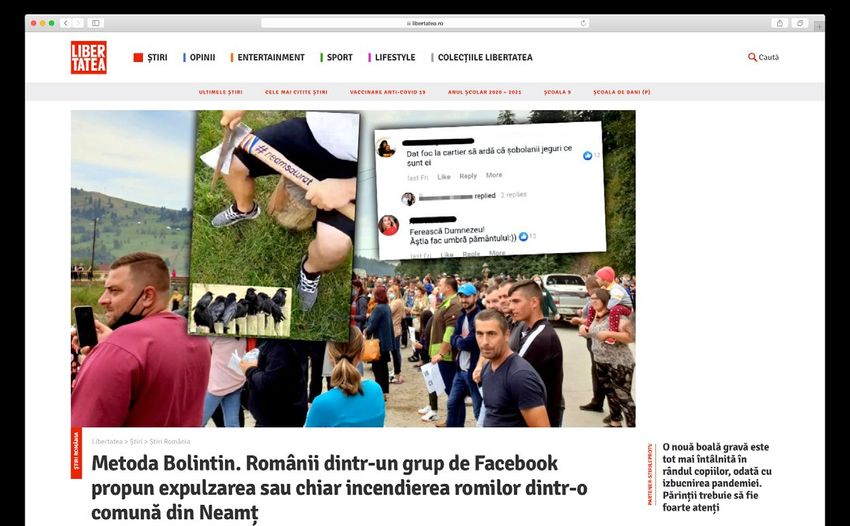
Introduction

                                                                                                                                                                                                                                                                                                 CJI.RO
                                       A
                                                  fter the exit-poll results to the Romanian parliamentary elections held on December                                                          The results of this study show that AUR’s ascension in Romania during a crisis year should
                                                  6th were published, the entry of a far-right party into the Parliament dominated the                                                     not shock anyone. Nationalism and attacks on ethnic minorities have been a leitmotif in the
                                                  political analyses for days. The news that the Alliance for the Union of Romanians (AUR)                                                 repertoires of all the Romanian political leaders, starting with the President of Romania. Misogyny
                                                  obtained 9% of votes came as a shock. The mainstream Romanian press barely cove-                                                         and attacks on the LGBTQ community are politically weaponized, especially during the elections,
                                       red AUR, as a political contender in the upcoming elections. Their representatives were not seen at                                                 when being “gay” becomes an insult to which the reply is fervent denial. The need for order and
                                       debates, they did not have electoral campaign materials running on the TV networks with national                                                    discipline, of police intervention and punishments have been themes frequently invoked by
                                       coverage, nor were they asked what books they read or what they thought of sexual education                                                         the governing leaders in the past year and before. Fundamental rights were limited specifically
                                       modules in schools1. With few exceptions, they did not give interviews during the campaign, nor                                                     through censorship or lack of access to information, but also by threatening the press or accusing
                                       did they present their governing programme in press releases. For most Romanians, AUR meant                                                         it of spreading false information. As a consequence, the AUR ideology does not stand out in
                                       nothing. For the mainstream press, it did not represent a subject relevant enough to be discussed.                                                  this discursive frame. Nationalism, neo-conservative values, intolerance to difference, social
                                       However, more than 500,000 Romanians at home and abroad voted for them.                                                                             darwinism - on one hand, and order and discipline - on the other, these are all elements found
                                           There are two major questions concerning this surprising outcome. Why were we not                                                               within the discourse of all political parties. What sets AUR apart from other political actors,
                                       aware of AUR and why did we not consider it relevant? And why has a political organisation                                                          however, is the consensus regarding these values at an organizational level. While other parties
                                       that promotes an ideology of hatred became so popular? While the first question may require                                                         have different ideological tendencies or different levels and nuances of adherence to these
                                       a methodological approach other than the discourse analysis, the latter will be partially                                                           iliberal values, AUR seems to be, as of yet, a much more coherent ideological block.
                                       answered through this study. The context that allowed AUR a spot on the Romanian political
CENTRUL PENTRU JURNALISM INDEPENDENT

                                       scene is to be considered over a long span of time. However, its success in the year 2020 - not
                                       as a right-wing movement, but as a political party - has to be understood through the lens
                                                                                                                                                                                           AUR’s illiberal speech coexists in the public sphere
                                       of the pandemic. In March 2020, once the state of emergency was instated, the Center for                                                            alongside other instances of illiberal speech belonging
                                       Independent Journalism (CIJ) started monitoring illiberal themes in public speech and the                                                           to central political actors. The relationship of the press
                                       way in which it was propagated in the mainstream press. Social media platforms and pages                                                            to this type of speech leads to its amplification, in most
                                       that spread disinformation or conspiracies were monitored only punctually (for example,                                                             cases. Therefore, this present study will also analyze
                                       when a specific event was heavily addressed on specific pages).                                                                                     how the press handles illiberal speech - how it manages
                                           This qualitative study follows the construction of illiberal speech in Romania during                                                           the need to inform in relation to not reproducing hatred
                                       exceptional events: the Covid-19 pandemic, the local and parliamentary elections. Illiberal                                                         and intolerance. Once this context is established, AUR’s
                                       speech was defined for this study’s purpose by three main categories of elements: hate                                                              ascension may still look like a surprise, but it stops being
                                       speech, speech that promotes social control and speech that attacks fundamental human
                                       rights, such as the right to freedom of expression or the right of access to information.
                                                                                                                                                                                           an accident.
                                       1
                                        See the Recorder project “Whom do we elect? The complete catalogue of the upcoming Parliament”, an extensive approach to present all the candidates to the 2020 parliamentary elections, but which fell short by
04

                                       only showcasing the members of already well-established political parties. The catalogue is available here: https://recorder.ro/pe-cine-alegem-catalogul-aproape-complet-al-viitorului-parlament/
Introduction, methodology

                                                                                                                                                                                                                                    CJI.RO
                                       This study uses qualitative research methods, in order to answer the following questions:
                                       ⌦ What are the elements of illiberal speech in Romania in 2020?
                                       ⌦ Who are the actors who spread this type of speech in the public sphere?
                                       ⌦ How does the mainstream Romanian press handle this speech? Which are the positive and negative practices noticed during the study?

                                       The data collection lasted from March 15th 2020 to December 10th 2020. The events that have structured it were:
                                       ⌦ The state of emergency (March 16th - May 15th) and the state of alert (May 16th - August 15th 2020) (224 incidents)
                                       ⌦ The campaign and the local elections (August 28th - September 26th 2020) (79 incidents)
                                       ⌦ The campaign and the parliamentary elections (November 6th - December 5th 2020) (91 incidents)

                                       Alongside the media monitoring conducted by CIJ researchers, other monitoring projects were also used - journalists from Casa Jurnalistului monitored the public speech during
                                       the state of emergency2 and the local elections3, and G4Media kept track of the public speech on television during the parliamentary elections4.

                                       The public speech was monitored throughout the year, with a specific focus on the exceptional periods, such as the
                                       state of emergency and the electoral campaigns. These are moments when the political communication is stimulated
                                       and the opportunity for intense dialogue arises in society.
CENTRUL PENTRU JURNALISM INDEPENDENT

                                       Monitored actors:
                                       ⌦ Public   figures, representatives of state institutions, such as: the President, the Prime-Minister, ministers and other figures responsible with the management of the health
                                       crisis; leaders of political parties; leaders of the local administration; representatives of influential institutions like the Police, the Army or the Romanian Orthodox Church
                                       ⌦ Opinion leaders, such as: journalists and intellectuals with a strong public presence
                                       ⌦ Rarely: celebrities or athletes

                                       Monitored press organizations:
                                       ⌦ Sitesof television networks with national coverage with the highest audience during the news shows: ProTV, Digi24, Antena 1, Antena3, România TV5;
                                       ⌦ National and local online press
                                       ⌦ Specifically: social media pages of public figures, if they initiated an incident.

                                       2
                                           https://coronavirus.casajurnalistului.ro/
                                       3
                                           https://alegeri.casajurnalistului.ro/
                                       4
                                           https://www.g4media.ro/alegeri-parlamentare
05

                                       5
                                           We considered the audience numbers of news shows at the beginning of the data collection phase, starting March 2020: https://www.paginademedia.ro/2020/04/audiente-stiri-martie-2020#.
CJI.RO
                                       Introduction, methodology

                                       The qualitative research method used in this study allows the deconstruction of illiberal speech and its elements. After a pre-monitoring period where major themes were identified
                                       and after consulting specialty literature in the field, the following list of illiberal speech elements was established:

                                            Isolationism                                                  Racism and xenophobia                                        Classism                                                    Gender and Sexuality       Authoritarianism/Statism

                                            Anti-EU sentiments                                            Religious intolerance,                                       Anti-emigrant,                                              Misogyny, homophobic,      Militarism, anti-justice
                                                                                                          anti-Roma and                                                anti-poor, anti-socially                                    transphobic, anti-LGBTQ,   speech, promotion of
                                                                                                          anti-Hungarian sentiments                                    assisted sentiments                                         anti-abortion speech       population control and
                                                                                                                                                                                                                                                              punitive measures

                                       The study has also monitored the type of speech that                                                                                                         For a functional definition of illiberalism, Paweł Surowiec’s & Václav Štětka’s6 proposal
                                                                                                                                                                                                    was considered. They define the illiberal discourse as a neo-conservative ideology
                                       attacks the fundamental rights which guarantee the
CENTRUL PENTRU JURNALISM INDEPENDENT

                                                                                                                                                                                                    focused on patriotism, religious values, traditional values, often containing ethnocentric,
                                       freedom of the press - the right to freedom of expression                                                                                                    racist or homophobic tendencies. We have added authoritarianism and classism to
                                       and the right to access to information.                                                                                                                      these elements, because, more often than not, those who adhere to the illiberal values
                                                                                                                                                                                                    support a strong police state and a weak social state. According to a study from 2014,
                                                                                                                                                                                                    speech which instigates to hatred is a very important part of this type of speech, and
                                                                                                                                                                                                    in Romania, it targets Roma, Jews, Hungarians, the sexual minorities (LGBTQ), as well
                                                                                                                                                                                                    as religious groups. The study also shows that the sources of this speech are most
                                                                                                                                                                                                    frequently the journalists, politicians and opinion leaders, but public authorities, law
                                                                                                                                                                                                    enforcement institutions and far-right groups as well.7 Local political actors are more
                                                                                                                                                                                                    prone to use illiberal speech than those who operate at a national level.8

                                       6
                                           Paweł Surowiec & Václav Štětka (2020) Introduction: media and illiberal democracy in Central and Eastern Europe, East European Politics, 36:1, 1-8, DOI: 10.1080/21599165.2019.1692822
                                       7
                                           Daniela Angi și Gabriel Bădescu, 2014, Discursul instigator la ură în România, available here: http://www.fdsc.ro/library/files/studiul_diu_integral.pdf
06

                                       8
                                           Active Watch, 2019, Raportul privind discursul intolerant şi instigarea la ură, available here http://blog.activewatch.ro/diverse/rapraportul-anual-cu-privire-la-discursul-intolerant-si-instigator-la-ura/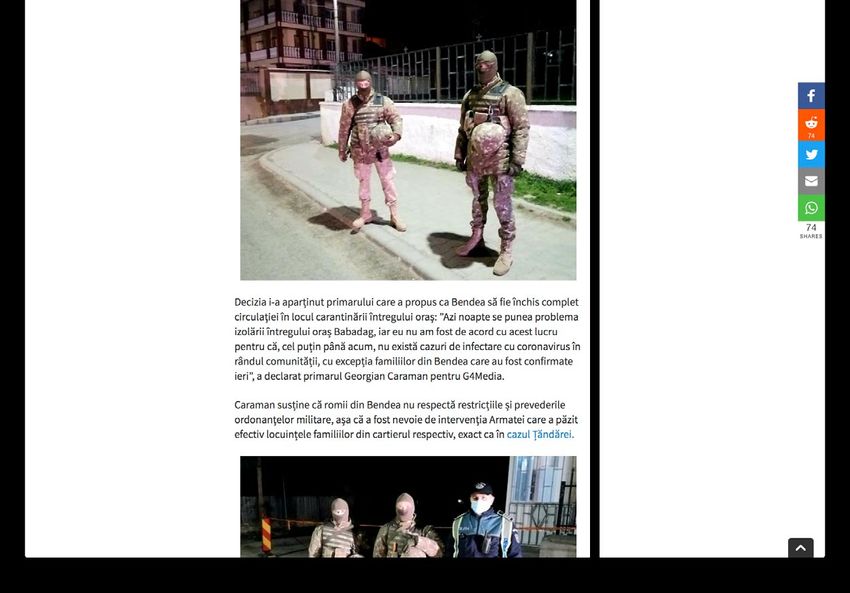
The state of the press in 2020

                                                                                                                                                                                                                                                                                               CJI.RO
                                       F
                                               reedom and pluralism of the press. The financial sustainability of journalism in                                                                     nerable sectors. Media Factbook estimated a 16% decrease in the commercial media
                                               Romania is one of the issues signaled with priority and recurrence by most                                                                           market, which would account for losses of approximately EUR 78 million, out of the
                                               press observers in the country. The report “State of Romanian Mass-Media”,                                                                           total of EUR 480 million recorded by the industry in 201912.
                                               published by CIJ in March 20209, names the major problems of the Romanian
                                       press, as defined by the interviewed journalists: “issues related to financial                                                                                  Only a week after the state of emergency was declared, the Romanian Joint Industry
                                       sustainability, the concentrati-on of economic power in the hands of big players,                                                                            Committee for Print and Internet (BRAT) estimated the online media’s ad revenue had
                                       political pressure and unacknowledged partisanship, both in the local and the national                                                                       dropped by 50% compared to the same period in 2019. Newspaper kiosk revenues fell
                                       press.” The report adds: “The dilution of journalistic identity is one of the fundamental                                                                    to 10% of the previous year’s revenue, due to the traffic restrictions imposed by the
                                       problems of Romanian media. Competing against social media platforms, the press                                                                              state of emergency. Ironically, this happened while traffic doubled for online news, and
                                       chases online traffic with a never ending string of news articles, but with little focus on                                                                  the overall consumption of information published on sites increased by 54% since
                                       the public interest.” Regarding media pluralism, the latest Media Pluralism Monitor                                                                          March 9th13. To combat some of the economic effects of the crisis, the Romanian
                                       report identifies the lack of inclusivity found in the Ro-manian press as a high factor of                                                                   government had set up a financial aid package of EUR 50 million for the press. Some
                                       risk. Access to media for minorities is very limited10, only the Hungarian community has                                                                     media organizations have refused to access these funds, arguing that this type of
                                       its own media system catered to its needs, however, it is politically seized by the                                                                          funding may raise questions concerning the credibility of the press, and could limit the
                                       Hungarian political leaders in Transylvania, and lately, also by the Hungarian                                                                               independence of media organizations. Recorder14, Newsweek România, G4Media15, RFI
                                       government of Prime-Minister Viktor Orban11. The Roma community, at least as                                                                                 are among the organizations that have publicly stated that they will not accept money
                                       numerous, does not have its own television, newspapers, online press or radio, being                                                                         from the government through this funding scheme.
CENTRUL PENTRU JURNALISM INDEPENDENT

                                       the community most exposed to scarcity, poverty, social and economic exclusion in
                                       Romania.
                                                                                                                                                                                                    It is important to note the context of the financial state
                                       The financial situation of the press. The media industry found itself on an upward financial
                                       slope in 2019, with all types of media in steady growth, except for the print media, which had
                                                                                                                                                                                                    of the press and of the media pluralism and freedom,
                                       seen a decrease in revenue in 2019 compared to 2018. If before the health crisis growth pre-                                                                 even briefly, because it offers a structural understanding
                                       dictions were expected, the state of emergency turned the media into one of the most vul-                                                                    to the issue of illiberal speech and its spread in Romania.

                                       9
                                            https://cji.ro/starea-mass-media-2020/
                                       10
                                            Monitoring Media Pluralism in the Digital Era: Application of the Media Pluralism Monitor in the European Union, Albania and
                                            Turkey in the years 2018-2019, Country Report: Romania, available here: https://cadmus.eui.eu/bitstream/handle/1814/67815/romania_results_mpm_2020_cmpf.pdf?sequence=1&isAllowed=y
                                       11
                                            Kiss T. (2018) Media Consumption and the Hungarian-Language Media in Transylvania. In: Kiss T., Székely I., Toró T., Bárdi N., Horváth I. (eds) Unequal Accommodation of Minority Rights. Palgrave Politics of Identity and Citizenship Series.
                                       12
                                            Media FactBook 2020 is available here: http://www.mediafactbook.ro/
                                       13
                                            https://www.brat.ro/stiri/comunicat-de-presa-sprijin-din-partea-autorita-ilor-pentru-editorii-legitimi-de-presa-scrisa-i-online.html
                                       14
                                            https://recorder.ro/recorder-nu-se-inscrie-pe-lista-institutiilor-de-presa-care-solicita-bani-de-la-guvern-cateva-explicatii/
07

                                       15
                                            https://www.g4media.ro/ce-nu-veti-auzi-niciodata-de-la-presa-finantata-de-guvernul-orban-cum-au-capitalizat-liberalii-moguli-care-nu-aveau-nevoie-sau-nu-merita-ajutor.html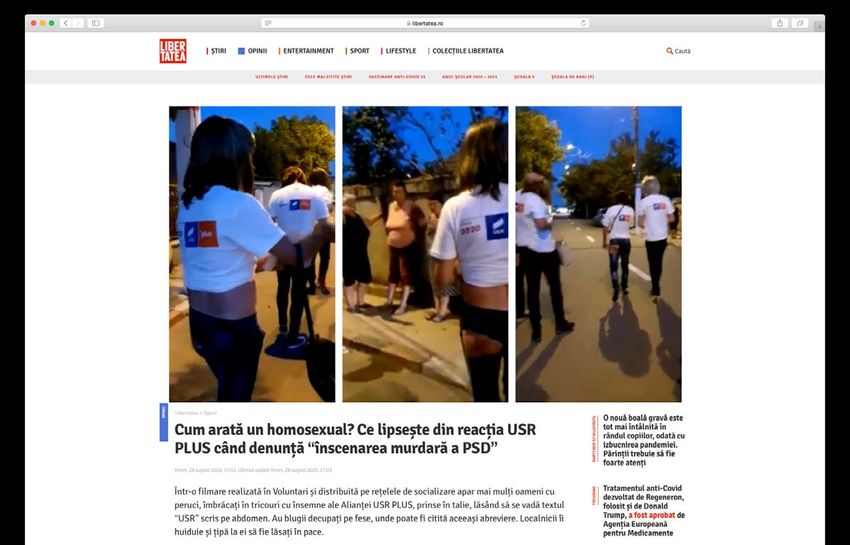
CJI.RO
                                                CHAPTER 1:
                                                                                    The health crisis and our collective sin

                                       T
                                                  he recording of the first cases of SARS-CoV-2 in Romania in February - March 2020                                                            1. ANTI-ROM A R ACISM
                                                  triggered a conversation in the public sphere about the causes and ways in which
                                                                                                                                                                                               On March 9th 2020, one week before the state of emergency was declared, the “issue” of
                                                  the virus entered and spread throughout the country. Although the virus was alrea-
                                                                                                                                                                                               some of the first Covid-19 victims’ Roma ethnicity was already circulating in the public
                                                  dy taking hold in Europe, especially Italy, Spain and France, in Central and Eastern
                                                                                                                                                                                               sphere. At that time, most European countries had been counting a significant number
                                       Europe the number of cases was significantly lower. During the first week under the state
                                                                                                                                                                                               of Covid-19 infections, and Romania had also identified its first case in February. Howe-
                                       of emergency, Romania counted an average of 55 new infections per day16. With the state of
                                                                                                                                                                                               ver, when in Timișoara - a city in Western Romania - the first case was discovered in a
                                       emergency going into effect on March 16th17, strict measures to control the population were
                                                                                                                                                                                               high school, the Roma ethnicity of the infected student was used as reasoning to “ex-
                                       imposed, such as limiting the right to free movement, the right to assembly and the institu-
                                                                                                                                                                                               plain” the disease. The county school inspector recorded a conversation with the pre-
                                       tionalisation (quarantining) of people who tested positive. Attempts have also been made to
                                                                                                                                                                                               fect of Timiș, who refused at the time to consider measures to contain the spread of the
                                       limit the dissemination of “false” information about the pandemic by blocking online pages
                                                                                                                                                                                               virus, linking the occurrence of the case to the Roma ethnicity of the infected student.
                                       and articles. Failure to comply with these measures would have serious financial consequ-
                                                                                                                                                                                               The structural prejudices of Romanian institutions came - yet again - to light during the
                                       ences, such as fines of at least 2,000 lei (approximately EUR 400) in case of going out in pu-
                                                                                                                                                                                               pandemic, and determined the course of the crisis response.
                                       blic without an official signed statement (detailing the identity, address, reason for being in
                                       a public space and the exact route of the person), or with this document in possession, but                                                                 An IRES18 study on how Roma are perceived during the pandemic shows that 52% of
                                       incorrectly filled out. In the spring of 2020, Romania was locked down at home due to a pan-                                                            the surveyed population read or heard news about Roma during the state of emergency,
                                       demic caused by a virus of which little was known, and that was wreaking havoc in several                                                               83% of them received this information from television, and 7% from social media plat-
                                       countries around the world. Fear and insecurity were the background noise of the year.                                                                  forms. The proportion of negative news about Roma was almost double that of positive
CENTRUL PENTRU JURNALISM INDEPENDENT

                                           The themes of the dominant discourses during the health crisis crystallized early on in                                                             news: 41% negative news versus 28% positive news. 28% of the respondents categorized
                                       the public sphere. The queues at the customs, the cases of non-compliance with the ban                                                                  the news as neutral. Although the Romanian public is still connected to television, soci-
                                       on free movement, the stinging fines, the illegal gatherings - these subjects were spread                                                               al media platforms are becoming very present as a source of information, and not only
                                       like a cobweb all over the news programmes and the written content. From the topics                                                                     among the youth. The same study shows that online media articles dealing with topics
                                       monitored by CIJ during the state of emergency and during the first three months of the                                                                 involving Roma have a higher rate of comments than articles on other topics, and they
                                       state of alert, anti-Roma racism, hatred directed towards returning Romanian emigrants                                                                  are 80% negative. Also, with the onset of the state of emergency, articles in the online
                                       and statist discourse with a strong emphasis on population control were the prevalent                                                                   environment that mention Roma saw an increase of 36%.
                                       topics found in the public speech. If anti-Roma and anti-emigrant speeches were vehicu-
                                       lated among a variety of actors at national and local levels - politicians, journalists, local
                                       authorities, sports personalities, etc., the statist speech was predictably delivered by sta-
                                       te representatives and reproduced in the media with little resistance or context.
                                       16
                                            https://www.cnscbt.ro/index.php/analiza-cazuri-confirmate-covid19/1643-analiza-cazuri-confirmate-pana-la-5-04-2020/file
                                       17
                                             https://www.presidency.ro/ro/media/decrete-si-acte-oficiale/decret-semnat-de-presedintele-romaniei-domnul-klaus-iohannis-privind-instituirea-starii-de-urgenta-pe-teritoriul-romaniei
08

                                       18
                                            Institutul Român pentru Evaluare şi Strategie (The Romanian Institute for Evaluation and Strategy), source: https://ires.ro/articol/403/percep-ia-asupra-romilor-in-timpul--pandemiei-de-covid-19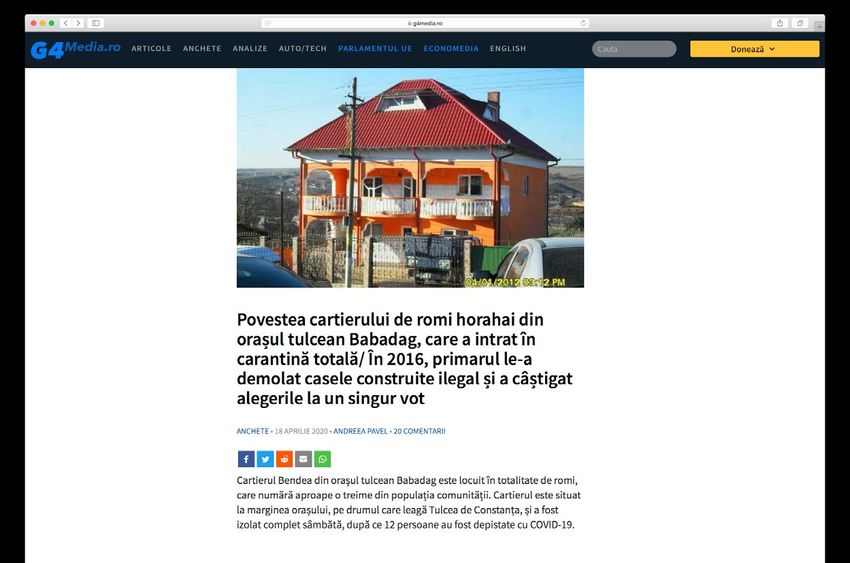
CJI.RO
                                             CHAPTER 1:
                                                                    The health crisis and our collective sin /                                                         1. ANTI-ROM A R ACISM

                                       1.1. Ethnicity - the source and the antidote to the virus                                                                                             1.2. The fear of Roma people and the police raids
                                       While the Roma ethnicity was seen, at first, as a possible cause of infection with the                                                                Cases of police interventions against Roma communities from different parts of the coun-
                                       new coronavirus, in other instances it became the protective shield against the virus.                                                                try: the Bolintin-Vale case20, police raids in Cluj21, in Bucharest in the Rahova neighbor-
                                       If the Roma get infected, it is because they are Roma, not because they are exposed                                                                   hood22 din București, in Babadag23 were widely covered in the Romanian press, both in
                                       to the virus, and if they do not get infected, it is because the “gypsy antibodies” pro-                                                              the traditional one and on the social media platforms. The scenario of these news ma-
                                       tect them. An article published on March 20th, 2020 by Evenimentul Zilei, titled “Gypsy                                                               terials follows a similar narrative: a group of Roma people, from a neighborhood or a
                                       antibodies defeated “the Eurovirus” in the neighborhood “La Capace” in Jilava”19 best                                                                 locality where the Roma are the majority, do not respect the measures imposed during
                                       illustrates this topic. It suggests, with an ironic tone, that Roma people are immune to                                                              the state of emergency. Most of the time it is related to a party or a social event. Mee-
                                       the new virus. The only interaction with a local, reported by the publication, shows that                                                             tings were forbidden during the state of emergency, resulting in the violation of law by
                                       the villagers understand that they must keep social distance and protect themselves:                                                                  those who organized or participated in these meetings. Police raids on these events
                                       “We protect ourselves for our health. It is normal to be scared, to protect our children                                                              were overwhelmingly characterized by violence: physical aggression against those who
                                       and grandchildren from this disease.” This aspect is not further commented on, the ar-                                                                did not comply with the measures - the Rahova and Bolintin-Vale cases were among the
                                       ticle presenting instead, in detail, the precarious living conditions of the villagers, em-                                                           most covered; acts of violence against the police; arrests; zonal quarantining.
                                       phasizing the fact that they steal electricity and live on lands that they do not legally
                                       own. The comparison to the Wild West - Jilava is a locality in the immediate vicinity of
                                       Bucharest, the Romanian capital - calls upon the classic racist anti-Roma theme: sava-
CENTRUL PENTRU JURNALISM INDEPENDENT

                                       gery, associated with criminality, witchcraft, Roma bodies either protect them from the
                                       virus or make them the main spreaders. In both cases, the result is the total negligence
                                       of the authorities.

                                       19
                                            https://evz.ro/anticorpii-tiganesti-au-invins-eurovirusul-in-cartierul-la-capace-din-jilava.html
                                       20
                                            https://www.libertatea.ro/stiri/raport-oficial-cum-se-apara-seful-politiei-din-bolintin-care-a-batut-un-rom-culcat-la-pamant-2969029
                                       21
                                            https://gazetadecluj.ro/revolta-romilor-de-la-spitalul-de-boli-infectioase-din-cluj-napoca-inabusita-de-pulanul-jandarmilor/
                                       22
                                            https://www.antena3.ro/actualitate/petrecere-scandal-rahova-politia-paste-2020-567343.html
09

                                       23
                                            https://www.g4media.ro/povestea-cartierului-de-romi-horahai-din-orasul-tulcean-babadag-care-a-intrat-in-carantina-totala-in-2016-primarul-le-a-demolat-casele-construite-ilegal-si-a-castigat-alegerile-la-un-singur-vot.html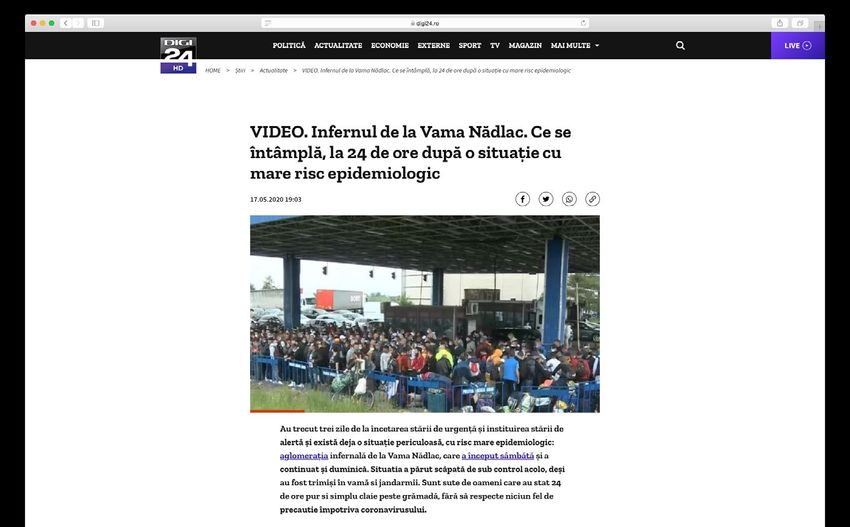
CJI.RO
                                             CHAPTER 1:
                                                                    The health crisis and our collective sin /                                                         1. ANTI-ROM A R ACISM

                                       Most of the time, the high volume of force is justified in the press by the use of alarming terms: revolt, war, scan-
                                       dal on the one hand - police batons, gunfire, hundreds of policemen and gendarmes, on the other.

                                                            “War scenes ensued in the Rahova neighborhood, where hundreds of policemen and
                                                                               gendarmes intervened to calm the spirits.”.24
                                                                            “Roma revolt at the Infectious Diseases Hospital in Cluj Napoca,
                                                                                       suppressed by the gendarmes’ baton”25
                                           The social conflict between the Roma and law enforcement is implicit. Rarely does the content of the news include the
                                       perspective of the groups targeted in the police raids, statements or interviews are taken with the representatives of state
                                       institutions, and the images presented often include law enforcement in intimidating poses, similar to an occupation force.
                                                                                                                                                                                                             S O U RC E :   G4Media26
                                           The same study published by IRES shows that only 19% of respondents believe that the force used against the Roma
                                       is exaggerated, the rest claiming that it is appropriate or too weak. 80% of respondents believe that the Roma people
                                       have complied with the restrictions less than other ethnic groups.
                                          The anti-Roma discourse was initiated in the media either by the violent incidents described above, or it was promo-
CENTRUL PENTRU JURNALISM INDEPENDENT

                                       ted by political figures such as former President Traian Băsescu, Traian Berbeceanu, Chief of Staff to Minister Vela27, and
                                       former mayor of Târgu Mureș, Dorin Florea.
                                          Voices condemning the violence against Roma were often the representatives of the Roma community such as Ro-
                                       mani CRISS28 and the Civic Union of Roma Youth, Emil Neia Lăcătuș, president of the Roma Party29, representatives of the
                                       National Council for Combating Discrimination, such as the president of the institution, Asztalos Csaba30, and voices from
                                       the activist and academic circles.

                                       24
                                            https://www.antena3.ro/actualitate/petrecere-scandal-rahova-politia-paste-2020-567343.html
                                       25
                                            https://gazetadecluj.ro/revolta-romilor-de-la-spitalul-de-boli-infectioase-din-cluj-napoca-inabusita-de-pulanul-jandarmilor/
                                       26
                                            https://www.g4media.ro/povestea-cartierului-de-romi-horahai-din-orasul-tulcean-babadag-care-a-intrat-in-carantina-totala-in-2016-primarul-le-a-demolat-casele-construite-ilegal-si-a-castigat-alegerile-la-un-singur-vot.html
                                       27
                                            https://www.libertatea.ro/stiri/traian-berbeceanu-sef-de-cabinet-al-lui-marcel-vela-la-violenta-trebuie-raspuns-cu-violenta-2963088
                                       28
                                            https://www.agerpres.ro/comunicate/2020/04/24/comunicat-de-presa-romani-criss--492595
                                       29
                                            https://www.observatorbn.ro/2020/03/17/emil-neia-lacatus-apel-in-sprijinul-romilor-cea-mai-vulnerabila-etnie-la-raspandirea-coronavirusului-le-cere-autoritatilor-sa-nu-ii-excluda-in-planurile-lor-de-limitare-a-epidemei/
10

                                       30
                                            https://www.hotnews.ro/stiri-esential-23919137-ura-raspandeste-mai-repede-mai-intens-decat-coronavirusul-interviu-astzalos-csaba-seful-cncd-despre-riscurile-crizei-prin-care-trece-romania.htm
CJI.RO
CHAPTER 1:
The health crisis and our collective sin
2. THE ANTI-EMIGR ANT SENTIMENT
A local publication from Prahova County, The Prahovean Observatory (Observatorul Prahovean), summarizes - in one of the most violent articles collected during this research - one of the
symbolic themes of the state of emergency in Romania: the migrant who has not contributed to the public health system for years, and is, after years of illegal activities in the West, returning
to take advantage of the services provided by the Romanian state:
You parasitic slackers (putori31), you didn’t pay taxes once, yet
THE PERCEPTION ABOUT ROMA DURING THE COVID-19 PANDEMIC (OPINION POLL, JUNE 2020
now, you come back to steal from us and kill us! How much
longer should we put up with your rudeness, quarantine,
hospitalization, whims and graces? 32 100% 80% 60% 40% 20% 0 20% 40%
Illiberal discourse often contains xenophobic themes against migrants, Who do you
Diaspora
believe to
-68% 32%
foreigners, invaders who want to take advantage of, destroy or annihilate the Immigrants -81% 19%
local population. The best-known European political figures promoting these be most at Roma People -91% 9%
topics are the Hungarian Prime-Minister Viktor Orbán, the President of the fault for the Medical staff -92% 8%
French National Front, Marine le Pen, or the UKIP leader, Nigel Farage. The spread of the No one / none of those mentioned (SPONTANEOUS) -93% 7%
anti-migrant discourse is usually directed against a population of different new coro- Romanian / international authorities (SPONTANEOUS) -96% 4%
nationality than that of the inland majority. In Romania, exceptionally, navirus in People in general (SPONTANEOUS) -96% 4%
these themes are used against people who are part of the autochthonous Romania? Chinese People (SPONTANEOUS) -97% 3%
CENTRUL PENTRU JURNALISM INDEPENDENT
Tourists / those who have traveled abroad (SPONTANEOUS)
population. The “invaders” are those Romanians who did not remain abroad -98% 2%
Nature / God (SPONTANEOUS)
once the health crisis broke out, in countries such as Italy, Spain and France, -98% 2%
The elderly
where most Romanian emigrants work. Once holding a status of heroes, who -99% 1%
Hungarian people
sacrificed themselves for the good of the country, considered civilizing forces, -99% 1%
YES NO Coronavirus virus doesn’t exist (SPONTANEOUS) -99% 1%
the Romanian emigrants became “parasitic slackers” who “came to kill us”.
Jewish people -99% 1%
The belief that the Romanians who returned are the main spreaders of Others -98% 2%
the virus was widespread in Romania. According to IRES, 32% of Romanians I don’t know (SPONTANEOUS) -97% 4%
believe that the diaspora is at fault for the spread of the virus, 19% believe I do not answer -87% 13%
that immigrants are to blame and 9% believe that the Roma are responsible.
S O U RC E : IRES study, funded by the Together Agency Foundation33 The hypothesis of Roma people being at fault for the spread of COVID-19 is confirmed by 1 in 10 Romanians.
Roma people are the 3rd most responsible group perceived at fault for the spread of the virus, while the diaspora is considered the main factor.
31
It is a term used in Romanian to describe in a derogatory manner “lazy” people who refuse work
32
hhttps://www.observatorulph.ro/voxpublica/2565173-bai-putorilor-care-n-ati-platit-un-leu-impozit-si-v-ati-intors-sa-ne-furati-iar-si-sa-ne-omorati-pana-cand-sa-va-mai-suportam-nesimtirea-carantina-spitalizarea-figurile
https://www.scribd.com/document/467755005/IRES-AGENTIA-IMPREUNA-Perceptia-Romilor-in-Timpul-Pandemiei-Covid-19-2020#from_embed
11
33CJI.RO
CHAPTER 1:
The health crisis and our collective sin / 2. THE ANTI-EMIGR ANT SENTIMENT
The press describes the congestion at the entry points in the country in sensationalist terms such as ”the inferno at
the Nădlac Customs”34, ”the danger is at the country’s borders”35, ”the assault of the diaspora on the borders”36.
Doctor from the Nădlac customs: Those who can no longer get away with
theft and prostitution have come back.” 37
The mechanism by which this theme is propagated is that of overwhelming numbers: over 200,000 Romanians
will enter or have entered the country, over 57,000 Romanians come from Italy. The images associated to this news
suggest the same idea: overwhelming numbers, disorder, onrush, invasion:
S O U RC E : DIGI2438
This issue of painting the emigrants as responsible for the spread of the virus was triggered by transit blockages
at the customs in the west of the country, but also by the statements made by President Iohannis asking Romanian
emigrants to remain in the countries where they work, without considering that returning to Romania was, for most
of them, a necessity, not a choice.39 The Minister of Internal Affairs, Marcel Vela, “invited” them to the Covid-19
isolation centers with an ironic and disrespectful tone. Representatives of the PSD40 (Social Democrat Party),
UDMR41 (The Democratic Union of Hungarians in Romanian) și PMP42 (People’s Movement Party) political parties
also launched public attacks on Romanian workers who worked and lived abroad and were now returning to the
country. Practically, the entire political spectrum in Romania had representatives with aggressive public outbursts
CENTRUL PENTRU JURNALISM INDEPENDENT
against emigrants, without getting sanctioned in any way by their leaders or colleagues. The consequences of these
attacks would be seen in the impressive election results of a new political party that promoted, in opposition and
underground, the pride of being Romanian.
Anti-emigrant discourse is often interlocked with elements of anti-Roma racism and classism. For a more coherent
analysis of illiberal discourse, we have created individual categories or units, such as anti-Roma racism or anti-
emigrant discourse, but the reality is that these elements often merge in journalistic texts.
34
https://www.digi24.ro/stiri/actualitate/video-infernul-de-la-vama-nadlac-ce-se-intampla-acum-la-24-de-ore-dupa-o-situatie-cu-mare-risc-epidemiologic-1308523
35
https://www.capital.ro/avertizarea-cumplita-a-lui-rafila-pericolul-e-la-granita-romaniei-ce-ne-va-lovi.html
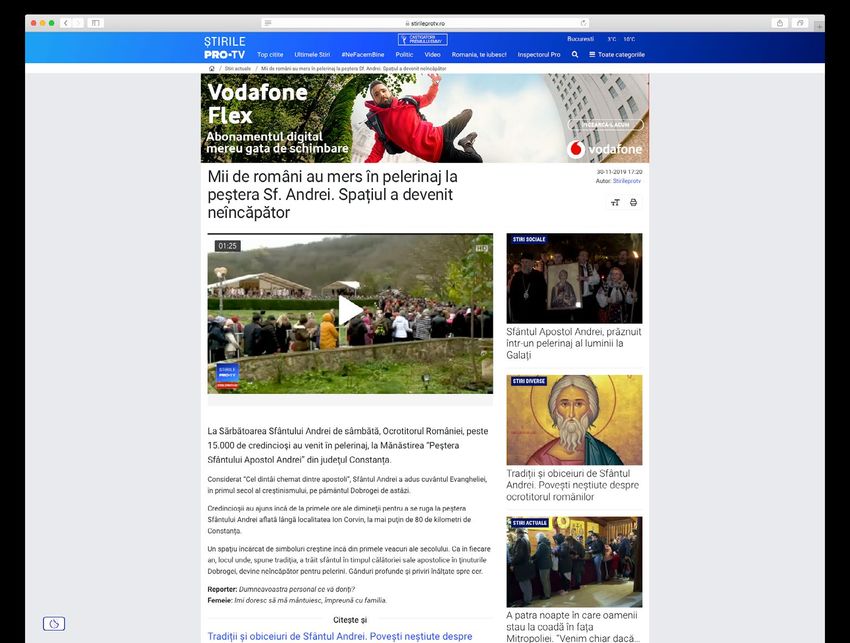
36
https://adevarul.ro/news/eveniment/de-s-a-oprit-asaltul-diaspora-granite-1_5e8c9d2a5163ec4271825b03/index.html
37
https://stirileprotv.ro/stiri/actualitate/medic-din-vama-nadlac-au-venit-cei-carora-nu-le-mai-merge-cu-furturile-si-prostitutia.html
38
https://www.digi24.ro/stiri/actualitate/video-infernul-de-la-vama-nadlac-ce-se-intampla-acum-la-24-de-ore-dupa-o-situatie-cu-mare-risc-epidemiologic-1308523
39
https://www.businessmagazin.ro/actualitate/apelul-presedintelui-iohannis-pentru-diaspora-oare-cat-de-multe-victime-va-face-epidemia-nu-stim-dar-depinde-de-noi-sa-fie-cat-mai-putine-19046109
40
https://adevarul.ro/news/politica/psd-pnl-pune-zilnic-pericol-romani-incompetenta-hotie-mii-infectati-intra-zilnic-tara-din-prostia-cabinetului-pnl-1_5f003b475163ec42719f4140/index.html
41
https://www.stiridiaspora.ro/un-deputat-udmr-cere-taxarea-romanilor-care-se-intorc-in-ara-in-aceasta-perioada_438739.html
12
42
https://stirileprotv.ro/stiri/politic/un-parlamentar-ii-critica-pe-unii-romanii-din-diaspora-zici-ca-noi-suntem-datori-la-ei.htmlCJI.RO
CHAPTER 1:
The health crisis and our collective sin
3. PRO-ORDER AND ANTI-JUSTICE DISCOURSE
Another topic that marked the public discussions in Romania was the compliance to the virus prevention
measures and the involvement of the Ministry of Internal Affairs (MIA) in the management of the health crisis.
Once the state of emergency was instated, a series of penalties were imposed for those who did not comply
with these measures. The free movement of the population was severely restricted, and access to public
space was allowed only with a statement of personal accountability containing the exact route of the person
and the reason for travel - and the latter was regulated by law and narrowed to a number of strictly defined
circumstances. The fines for non-compliance with this measure started from 2,000 lei (approximately EUR
400), a restrictive amount even for a middle-class citizen in Romania. Once the Ministry of Internal Affairs
became the main coordinator in the health crisis management43, and the Strategic Communication Group one
of the main communicators in relation to the press and the population, the crisis seemed less a sanitary one
and more a crisis of public order.
“Cluj-Napoca will be monitored by drones. People will be checked for compliance to isolation.”44
“10,000 soldiers took to the streets. The reason why they are equipped in battle attire” 45
VIDEO “The army sent out soldiers and military vehicles on the streets of Bucharest. The center of
CENTRUL PENTRU JURNALISM INDEPENDENT
the capital, packed with police, gendarmerie and military.”46
S O U RC E : DIGI2447
43
Article 5 of the Decree no.195 from March 16th 2020 regarding the establishment of the state of emergency on Romanian territory: http://legislatie.just.ro/Public/DetaliiDocumentAfis/223831
44
https://www-wall--street-ro.cdn.ampproject.org/v/s/www.wall-street.ro/articol/Sanatate/253138/o-noua-era-clujenii-vor-fi-verificati-daca-respecta-izolarea-cu-drone.html-amp?usqp=mq331AQFKAGwASA=&fbclid=IwAR3mURtbumctMElP8iRagAd0lPWzyw9OVMvhbJ_tNio2VNtCjN7jsI-
ELe9U&_js_v=0.1#aoh=15864428437301&referrer=https%3A%2F%2Fwww.google.com&_tf=De%20pe%20%251%24s&share=https%3A%2F%2Fwww.wall-street.ro%2Farticol%2FSanatate%2F253138%2Fo-noua-era-clujenii-vor-fi-verificati-daca-respecta-izolarea-cu-drone.html
45
https://www.digi24.ro/stiri/actualitate/10-000-de-militari-au-iesit-pe-strazi-de-ce-acestia-sunt-echipati-in-tinuta-de-lupta-1281031
46
https://www.g4media.ro/video-armata-a-scos-pe-strazile-din-bucuresti-soldati-si-vehicule-militare.html
13
47
https://www.digi24.ro/stiri/actualitate/10-000-de-militari-au-iesit-pe-strazi-de-ce-acestia-sunt-echipati-in-tinuta-de-lupta-1281031CJI.RO
CHAPTER 1:
The health crisis and our collective sin / 3. PRO- ORDER AND ANTI-JUSTICE DISCOURSE
The image presented by most news programs was that of a country under siege, where V I D EO The government has adopted the law project on quarantine,
the danger of an attack on the physical integrity of the citizen was imminent. The press isolation and compulsory hospitalization. Orban:
has rarely challenged the decision which enabled the military to manage the health crisis “It is an unprecedented situation, CCR is a PSD branch.”
and enact control over an airborne virus.
Through the voices of President Iohannis, Prime Minister Ludovic Orban and Interior
Minister Vela, calls for compliance were omnipresent. The number of policemen on the Promoting anti-justice discourse alongside pro-order
streets, the number of fines and the countless cases of violation of restrictions had become discourse is a dangerous combination, because it
the daily topics in the news. Calls for compliance are not authoritative in themselves, but legitimizes the state’s strong arm to the detriment
when they are coupled with punitive measures and “threats”, they create the image of of the one overseeing precisely the potential abuse
a state that controls only through punishment, or using fear as motivation. This image
that was painting the law enforcement as a necessary manager of the health crisis was
of power. Once the health crisis had been defined as
seriously affected once the Ombudsman contested the state’s punitive measures in the
a crisis of public order and the number of infections
Romanian Constitutional Court (CCR), and fines that were too high - and lacked transparent had increased, whom do we hold accountable? The
enforcement procedures - were declared unconstitutional. Forced quarantining of infected intuitive answer is: those who do not respect the
people and the state of alert which succeeded the state of emergency were also declared public order. And if we take into account the number
unconstitutional. Following these decisions, Prime Minister Ludovic Orban (then the of fines applied during the state of emergency,
it comes easy to conclude that the enemy is the
CENTRUL PENTRU JURNALISM INDEPENDENT
leader of PNL - National Liberal Party) launched a series of attacks on the Ombudsman,
calling the institution “the enemy of the people”48, demanding the dismissal of Renate
Weber49, accusing the Constitutional Court of thwarting the fight against the pandemic50
country’s population itself.
and claiming that these institutions are subservient to the Social Democratic Party51.
48
https://stirileprotv.ro/stiri/politic/orban-in-ultimele-luni-avocatului-poporului-s-a-transformat-in-dusmanul-poporului.html
49
https://www.agerpres.ro/politica/2020/06/22/orban-renate-weber-nu-mai-este-de-mult-avocatul-poporului-ne-straduim-sa-obtinem-sustinere-pentru-demiterea-sa--527440
50
https://www.digi24.ro/stiri/actualitate/autoritatile-nu-ii-mai-pot-tine-pe-romani-in-izolare-si-carantina-pacientii-covid-au-inceput-sa-plece-din-spitale-incepand-de-vineri-1332925
14
51
https://www.libertatea.ro/stiri/proiectul-de-lege-privind-carantina-in-sedinta-de-guvern-3056637CJI.RO
CHAPTER 1:
The health crisis and our collective sin
4. FREEDOM OF EXPRESSION AND Attacks on the freedom of expression also came from the Police. Two cases of such
ACCESS TO INFOR M ATION violations were reported in Florești, Cluj-Napoca County. Iulia Ungureanu from Florești,
a student in Cluj-Napoca, was fined for criticizing the way the mayor managed the health
A number of restrictive measures against the press have to be mentioned, although they crisis52 , and a man was beaten after displaying an anti-police banner on the balcony
are not per se part of the discourse analysis during the state of emergency. of his house53. The local press reported other cases in which Facebook users were fined
under Law 61/1991 for insults directed at the Police. Thus, in Borșa, Șișești (Maramureș)
4.1. The right to expression and Hârlău (Iași) three people got fined after criticizing the Police for the way they
The state of emergency was initially introduced in Romania by Presidential Decree no.195, managed the enforcement of restrictions imposed by the state of emergency, in all
for 30 days, on March 16th 2020, and was renewed on April 14th for another 30 days. The cases insulting language was directed at the institution. The local press in Satu Mare
text of the presidential decree restricted fundamental rights, such as the right to free informed that seven people were fined based on the same law for insults brought to the
movement, the right to strike, the right to family and private life. The decree contained institution, although it does not specify the insults.54
some directives which would have concerning effects on the freedom of expression.
Paragraph 54 of the presidential decree mentioned the possibility of blocking the content
of online publications or blocking users’ access to them, if it was deemed that “the
content promotes false news about the evolution of COVID-19 and about the protection
and prevention measures.” Initially a public institution with technical tasks and without
any expertise in fundamental rights, the National Authority for Administration and
CENTRUL PENTRU JURNALISM INDEPENDENT
Regulation in Communications (ANCOM) was tasked with deciding what content was
considered harmful and would have to be blocked as a consequence. Subsequently, the
responsibility of the decision-making was transferred to the Strategic Communication
Group (GCS), yet again another institution without expertise in matters that pertain to
freedom of expression. Moreover, the expertise of GCS members was and still is not
known, as the identities of the group have not been made public, despite specific FoI
requests made by the CIJ and other civil society and media organizations. During the
state of emergency, 15 websites were suspended and two others were forced to delete
published articles from their platforms. The suspension ceased immediately after the
state of emergency was lifted.
52
https://www.apador.org/wp-content/uploads/2020/04/Sesizare-MAI-abuz-politie-locala-Floresti.pdf
53
https://www.libertatea.ro/stiri/video-barbat-din-cluj-incatusat-de-agenti-pentru-ca-a-pus-pe-balcon-un-banner-in-care-critica-politia-2966569
15
54
https://www.presasm.ro/amenda-mare-pentru-un-cetatean-dupa-ce-a-injurat-politia-pe-facebook/CJI.RO
CHAPTER 1:
The health crisis and our collective sin / 4. FREEDOM OF EXPRESSION AND ACCESS TO INFOR M ATION
4.2. The right to information The right to free speech and information are not
A direct attack on the right to information was the doubling of the response time of public elements of illiberal discourse per se, but are part of
institutions to requests for public information, from 10 to 20 days in the case of simple the instruments used by illiberal leaders in order to
requests, from 30 to 60 days in the case of complex requests, and from 24 to 48 hours in
case of requests from the press. In practice, the activity of information provision was de
promote their agenda and stay in power. Access to
facto suspended. In two cases documented by the press, the County Health Directorates information allows the public and journalists to verify
- DSP Cluj and DSP Botoșani - refused to respond to requests for information during the the statements, promises, actions of political leaders,
crisis. An order to the prefects from the Ministry of Internal Affairs dated March 21st 2020 and freedom of expression offers the opportunity
forbade the publication of local information regarding the number of applied COVID tests, to challenge those in a position of power. Once they
the number of people who tested positive, the state of health of hospitalized patients and are restricted, the power of political elites is less
the locations where quarantine centers would be set up. Other institutions - including the
Ministry of Internal Affairs - have simply ignored requests for information.
controlled. At the discursive level, attacks on these
fundamental rights signal a trend towards impunity
There were also reports of threats to medical staff who had contact with the press and are a reliable indicator of illiberal tendencies in
and provided information about the health crisis management, such as the manager
of the Infectious Diseases Hospital in Iași who got fired55 , or the case of a union leader
political power.
of the Timiș Police, who was put under disciplinary investigation and then placed in
CENTRUL PENTRU JURNALISM INDEPENDENT
reserve when he spoke publicly about the practices of encouraging policemen to give
as many fines as possible56. Subsequently, following the public reactions of disapproval
to this decision, the policeman was reinstated in his job.
55
https://www.libertatea.ro/stiri/mihnea-hurmuzache-destituit-sef-de-sectie-carmen-dorobat-3054402
16
56
https://www.libertatea.ro/stiri/valer-kovacs-politist-ipj-timis-si-lider-de-sindicat-sefii-pun-presiuni-pe-noi-sa-dam-mai-multe-amenzi-in-starea-de-urgenta-2954262CJI.RO
CHAPTER 2:
Local elections and the rebirth of traditional values
O
riginally scheduled for June 28th, 2020, the elections for local administration In Romania, local public authorities are elected by direct vote, based on a single ballot,
in Romania were postponed due to the pandemic and held on September 27th, for a term of 4 years.
a date established by law no. 135/202057. The elections took place in an extre- Despite the warnings, the turnout on September 27th at the elections did not decrea-
mely difficult political context, both in terms of the health crisis and because se significantly: 46.62% of eligible citizens voted, only 2 points less than in the 2016 local
of political tensions between a minority government and the parliamentary majority58. elections. Although Bucharest had the lowest voter turnout in the country, 36.92%, it was
The organization of the elections had been challenged by various politicians. The still 4 points higher than in 2016.64.
first voice that reacted and pleaded for the postponement of the local elections belon- The Bucharest City Hall was won by the independent candidate Nicușor Dan, suppor-
ged to Ionuț Moșteanu, USR vice-president and spokesman of the USR-PLUS Alliance ted by the main right-wing parties (PNL and USR-PLUS Alliance), with 42.81% of the cast
(centre-right), who called the organization of the elections an “irresponsibility” and ballots.65 At national level, PNL scored a percentage of 34.58% on local Town Halls, PSD
asked President Iohannis to consult with the parties59. A few days later, the USR-PLUS - 30.34%, and USR-PLUS - 6.58%.
Alliance sent a press release in which it drew attention to the fact that the organization
of local elections in the given pandemic conditions could influence the participation of
citizens, and this would alter the democratic process as a consequence60. The leader of Illiberal discourse in local elections
ProRomânia (centre-left), Victor Ponta, claimed that it would be necessary to postpone In the pre-campaign period, as well as during the election campaign itself (July 20th -
the local elections because the people involved in their organization would be exposed September 26th, 202066), the illiberal discourse aimed specifically to instrumentalize the
to a high risk of infection61. In early September, voices of PSD (centre-left) leaders, such perceived - or otherwise affirmed - minoritarian or underrepresented identity in order to
as Marcel Ciolacu, said that local elections should be postponed for the same reasons discredit candidates. Predominant were anti-feminist, anti-LGBTQ and xenophobic disco-
that had to do with the danger to the population during the pandemic and accused urses, which sought to minimize and downplay the violence against women, children and
CENTRUL PENTRU JURNALISM INDEPENDENT
the government of “double standards” - if schools will not be reopened, why would the minorities, weaponizing it to serve political interests. Politicians were the main vehicle
elections be organized?62 Rareș Bogdan, the vice-president of PNL (centre-right), was of this type of speech, as well as its source, and the press played an important role in
among the only voices in PNL who requested the postponement of the local elections, saturating the public sphere with illiberal messages, by simply quoting politicians’ state-
also for reasons related to public health63. ments, without context or critical framing.
57
http://legislatie.just.ro/Public/DetaliiDocument/227889
58
https://www.digi24.ro/stiri/actualitate/politica/guvernul-orban-i-este-demis-urmeaza-guvernul-orban-ii-ce-se-intampla-mai-departe-1255611
59
https://romania.europalibera.org/a/un-lider-usr-cere-amanarea-alegerilor-locale-pe-fondul-pandemiei-/30730245.html
60
https://romania.europalibera.org/a/usr-plus-cere-am%C3%A2narea-alegerilor-%C8%99i-consult%C4%83ri-cu-iohannis-/30753968.html
61
https://www.digi24.ro/alegeri-locale-2020/victor-ponta-si-a-unit-fortele-cu-robert-negoita-la-primaria-capitalei-dar-vrea-amanarea-alegerilor-locale-1342120
62
https://stirileprotv.ro/stiri/politic/ciolacu-vrea-amanarea-alegerilor-locale-daca-nu-se-deschid-scolile-in-14-septembrie.html
63
https://www.digi24.ro/stiri/actualitate/politica/rares-bogdan-prim-vicepresedinte-pnl-spune-ca-alegerile-locale-din-septembrie-s-ar-putea-amana-1343089
64
https://romania.europalibera.org/a/ce-arata-prezenta-la-vot-/30860145.html
65
https://www.libertatea.ro/stiri/rezultatele-finale-ale-alegerilor-locale-2020-3147242
17
66
The articles were collected during July-September 2020.CJI.RO
CHAPTER 2:
Local elections and the rebirth of traditional values
1. R ACISM AND XENOPHOBIA due to the fact that they did not work”. The Roma are then blamed for this approach
and reduced to the stereotype of the lazy person who refused work, the one who does
Anti-Roma racism also made its reappearance, this time in the electoral discourse. If at
not deserve social assistance, the one who is burdening the state, although the state
the beginning of the pandemic the Roma were the ones who spread the virus, during
does not offer the Roma community real chances at social and economic inclusion.
the local elections we return to the already established racist rhetoric among Romanian
Not only does the article ignore the socio-economic implications of the situation
politicians, through which the Roma community “sells itself for votes”, “does not work”
presented through anti-social security discourse, a classist discourse in itself, but it is
and must be “cleaned” from Romanian territory. Roma people are reduced to stereotypes,
also an example for the intentional (re)production and propagation of racist language
and the “danger” they represent for Romania is instrumentalized to win votes.
(“gypsies”). The journalist from Bugetul.ro retrieves the article from stiripesurse.ro70,
During an electoral year, in pre-campaign period, the Iași City Hall demanded the where the text does not contain racist terms such as “gypsies”, but in his article this
evacuation of a Roma family from the house they occupied under the legal basis of racist term finds a place in the sensationalist title and in the racist text.
a disability certificate, because “the neighbors get no peace” and “their children are
An illustrative episode of the high degree of toxicity and injustice that hate speech brings,
terrorizing them”67. There have been several complaints of public disorder against the
especially the anti-Roma one, is the use of negative associations of the Roma ethnicity with
family. The author of the article, who uses racist terms such as “gypsies”, informs us that
the purpose of intimidating and discrediting political candidates. The USR-PLUS candidate
the incumbent mayor, Mihai Chirica, ordered the demolition of several buildings with
for Slatina City Hall, Florin Duca, is questioned by Daniel Militaru, the president of PLUS Olt71,
seismic risk since 2017, buildings occupied by “gypsy families that caused disturbance
about his alleged name change, writes Libertatea72. Militaru insinuated that Duca would
in the area”, reason for which the area was declared a risk, “due to criminal activity”.
have changed his name in 1997 from Fieraru to Duca. The discussion between the two brings
Moreover, the same journalist writes about a multifunctional center for “gypsy families”68
CENTRUL PENTRU JURNALISM INDEPENDENT
up the topic of Roma ethnicity, Militaru asking Duca if he is “of ethnicity”, a euphemism
waiting to be built by the Iași City Hall. There is, therefore, a recurring theme in the
frequently used, often ironically, to designate the Roma ethnicity. However, their dialogue
behavior of the mayor’s office under the leadership of Mihai Chirica, reactivated before
crafts the association of the Roma ethnic group with “criminals, sweepers, etc.”, as if the
the elections: “cleaning” neighborhoods of Roma families, and even veiled facilitation
Roma people were not worthy of actively participating in politics. Militaru claims that in
of segregation of the Roma community in Iași - a form of institutionalized racism, which,
2014, a person named Fieraru Florin from Slatina was convicted of tax evasion and believes
especially during a pandemic, endangers the lives of these Romanian citizens.
that Duca Florin is that person. The PLUS Ethics Commission ruled that Militaru’s insinuation
On August 18th, the online newspaper Bugetul.ro69 writes that, in a recording of Duca was discriminatory and that Militaru was to be suspended from office. Even if such
published online, Nicolae Giugea, the PNL candidate for Craiova City Hall, “promises racist displays are denounced and charged consequently among the political elites, the
social aid from public funds (...) to Roma who complain that they do not have a pension Roma ethnicity is still abstracticized and reduced to a political campaign tool.
67
https://www.bzi.ro/primaria-iasi-a-cerut-evacuarea-unei-familii-de-tigani-din-centru-au-terorizat-profesorii-arhitectii-si-medicii-din-zona-4007832
68
https://www.bzi.ro/zona-cicoarei-va-avea-un-centru-multifunctional-pentru-familiile-de-tigani-licitatia-pentru-serviciile-de-asistenta-tehnica-a-fost-anulata-4011468
69
https://www.bugetul.ro/inregistrarea-care-arunca-n-aer-scena-politica-pnl-le-ofera-pensii-tiganilor-de-peste-60-de-ani-pentru-a-obtine-votul-comunitatii-se-poate-face-treaba-asta/
70
https://www.stiripesurse.ro/video-candidatul-pnl-la-primaria-craiova-promite-ajutoare-sociale-pe-post-de-pensii-romilor-care-au-decis-sa-il-voteze_1496955.html
71
Within the USR-PLUS Alliance, the two otherwise distinct parties - USR and PLUS - had decided through various internal procedures whose candidate runs for which office, as a representative of the alli-
ance. The episode reminisced here happens during an internal online meeting of the PLUS Olt council with PLUS party members on May 26th 2020, 2 months prior to the pre-campaign period.
18
72
https://www.libertatea.ro/stiri/usr-plus-penalizeaza-un-sef-care-a-interogat-un-candidat-te-ai-nascut-de-etnie-cum-ca-sa-stim-si-noi-eu-te-intreb-ca-esti-candidatul-nostru-3107168You can also read


