Impact of Anticipatory Action - Bangladesh Striking before the floods to protect agricultural livelihoods - Food and ...
←
→
Page content transcription
If your browser does not render page correctly, please read the page content below
Bangladesh

Impact of Anticipatory Action
Striking before the floods to protect agricultural livelihoods

Efficient humanitarian assistance
requires anticipation. For FAO, this means
harnessing risk information systems to act
      faster and avert acute hunger.
              QU Dongyu
          FAO Director-General
Bangladesh

Impact of Anticipatory Action
Striking before the floods to protect agricultural livelihoods

Food and Agriculture Organization of the United Nations
Dhaka, 2021
REQUIRED CITATION
   FAO. 2021. Bangladesh – Impact of Anticipatory Action. Striking before the floods to protect
   agricultural livelihoods. Dhaka.

The designations employed and the presentation of material in this information product do not imply
the expression of any opinion whatsoever on the part of the Food and Agriculture Organization of
the United Nations (FAO) concerning the legal or development status of any country, territory, city or
area or of its authorities, or concerning the delimitation of its frontiers or boundaries. Dashed lines on
maps represent approximate border lines for which there may not yet be full agreement. The mention
of specific companies or products of manufacturers, whether or not these have been patented, does
not imply that these have been endorsed or recommended by FAO in preference to others of a similar
nature that are not mentioned.

©FAO, 2021

Some rights reserved. This work is made available under the Creative Commons Attribution-
NonCommercial-ShareAlike 3.0 IGO licence (CC BY-NC-SA 3.0 IGO;
https://creativecommons.org/licenses/by-nc-sa/3.0/igo/legalcode/legalcode).

Under the terms of this licence, this work may be copied, redistributed and adapted for
non‑commercial purposes, provided that the work is appropriately cited. In any use of this work,
there should be no suggestion that FAO endorses any specific organization, products or services. The
use of the FAO logo is not permitted. If the work is adapted, then it must be licensed under the same
or equivalent Creative Commons license. If a translation of this work is created, it must include the
following disclaimer along with the required citation: “This translation was not created by the Food
and Agriculture Organization of the United Nations (FAO). FAO is not responsible for the content or
accuracy of this translation. The original English edition shall be the authoritative edition.”

Disputes arising under the licence that cannot be settled amicably will be resolved by mediation and
arbitration as described in Article 8 of the licence except as otherwise provided herein. The applicable
mediation rules will be the mediation rules of the World Intellectual Property Organization
http://www.wipo.int/amc/en/mediation/rules and any arbitration will be in accordance with the
Arbitration Rules of the United Nations Commission on International Trade Law (UNCITRAL).

Third-party materials. Users wishing to reuse material from this work that is attributed to a third
party, such as tables, figures or images, are responsible for determining whether permission is needed
for that reuse and for obtaining permission from the copyright holder. The risk of claims resulting from
infringement of any third-party-owned component in the work rests solely with the user.

Sales, rights and licensing. FAO information products are available on the FAO website
(www.fao.org/publications) and can be purchased through publications-sales@fao.org.
Requests for commercial use should be submitted via: www.fao.org/contact-us/licence-request.
Queries regarding rights and licensing should be submitted to: copyright@fao.org.

Photo cover: ©FAO
Contents

Anticipatory action in Bangladesh...............................................1

Challenges for Bangladesh ..........................................................4

Crisis timeline for the 2020 floods in Bangladesh ......................7

Triggers for anticipatory action .................................................10

Deciding how to intervene..........................................................13

Return on investment ................................................................17

Impact stories..............................................................................20

What we learned.........................................................................23

References...................................................................................30

                                                                                       Bangladesh | iii
©FAO
Anticipatory   The intensity and frequency of natural hazards and conflicts are increasing,
               and they are leaving in their wake an unprecedented level of humanitarian
action in      needs. The number of people displaced by conflict is the highest ever
               recorded, and millions more are poised to migrate out of necessity.
Bangladesh
               Not surprisingly, the impact on local economies, people’s lives and their
               livelihoods has increased, too. In some of the worst-hit places, it can seem
               unrelenting. One crisis will follow another, every time stripping away at
               the hard-earned but limited assets of the poorest and most vulnerable.
               Recurrent crises are also depriving people of their self-reliance and dignity.

               Globally, expanding needs, competing priorities and limited resources
               call for new approaches to make humanitarian interventions as effective
               as possible. This includes new ways to ensure that the impacts of hazards
               are limited before they can grow into even more devastating and costly
               disasters.

               That is why the Food and Agriculture Organization of the United Nations
               (FAO) has been a long-time advocate of anticipatory interventions and
               works closely with governments and partners in the development,
               humanitarian and scientific communities to anticipate crises before they
               reach their peak.

               By building country-specific anticipatory action systems, FAO and its
               partners are able to monitor key indicators that predict shocks and trigger
               actions once they exceed pre-defined thresholds that raise the alarm.

               That is when FAO’s Special Fund for Emergency and Rehabilitation
               Activities (SFERA) usually comes into play and through its Anticipatory
               Action Window makes funds available when signs point towards a looming
               crisis. Along the way, it draws on FAO’s greatest asset – its technical
               knowledge and expertise in supporting vulnerable farmers and rural
               livelihoods.

               In recent years, anticipatory action has drawn the attention of the wider
               humanitarian and development community, and of the United Nations
               Office for the Coordination of Humanitarian Affairs (OCHA), in particular.
               Seeing the potential of anticipatory action as a way to link humanitarian
               and development objectives by protecting – rather than rebuilding –
               livelihoods, OCHA, through its Central Emergency Response Fund (CERF),
               has set aside USD 140 million for anticipatory action pilot projects around
               the world between 2020 and 2021. The Bangladesh anticipatory action
               pilot for the 2020 monsoon floods is one of the first projects in this growing
               number of collaborative, multi-agency interventions. It is also the very first
               sudden-onset disaster in which FAO tested this type of protective action
               that was previously applied only in more gradually unfolding crises.

               Anticipatory actions are varied and flexible, but highly time-sensitive.
               They can range from cash transfers that help fishers store their gear
               ahead of a cyclone to veterinary care to keep a farmer’s livestock healthy

                                                                                       Bangladesh | 1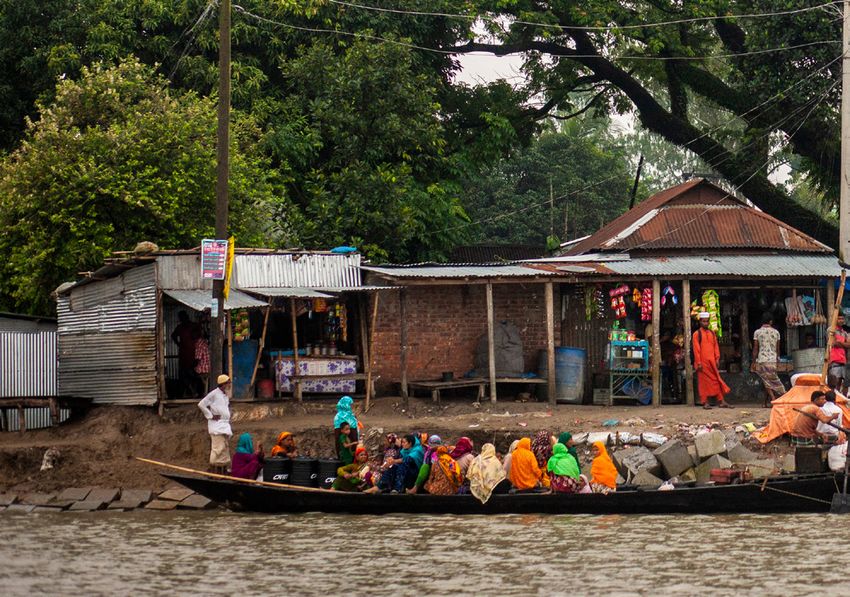
©FAO

                                    and productive throughout a drought. Anticipatory actions may build
                                    flood defences that protect crops against a severe rainy season, or provide
                                    agricultural inputs and technical support to increase food production
                                    ahead of potential food crises. They rely on a concrete forecast and
                                    pre‑agreed early warning thresholds, and they need to be implemented
                                    before a hazard reaches its peak.

                                    Acting early means families may not have to take on debt, sell agricultural
                                    assets or take children out of school. It can also prevent them from cutting
                                    down on meals or reducing the quality of the food they eat. Moreover,
                                    anticipatory actions can help save limited aid budgets and protect years of
                                    hard-fought development gains that could otherwise be lost.

                                    This study1 documents the outcome of acting early to protect farming
                                    families in northwestern Bangladesh from impending floods. It outlines
                                    FAO’s contribution to a first-of-its-kind collaboration with the International
                                    Federation of Red Cross and Red Crescent Societies (IFRC), Bangladesh
                                    Red Crescent Society (BDRCS), the United Nations Population Fund
                                    (UNFPA) and the World Food Programme (WFP). Specifically, it provides

                                    1
                                        Unless otherwise noted, the information presented in this study draws from the impact
                                        analysis conducted by FAO in August–September 2020 titled ‘Assessing the impact of
                                        anticipatory actions to protect agricultural assets in the face of floods, Bangladesh’
                                        (forthcoming). Additional information was gleaned from the OCHA study ‘Collective
                                        Anticipatory Humanitarian Action for Monsoon Flooding – Interim Report’, conducted in
                                        November 2020 and published in January 2021.

2 | Impact of Anticipatory Action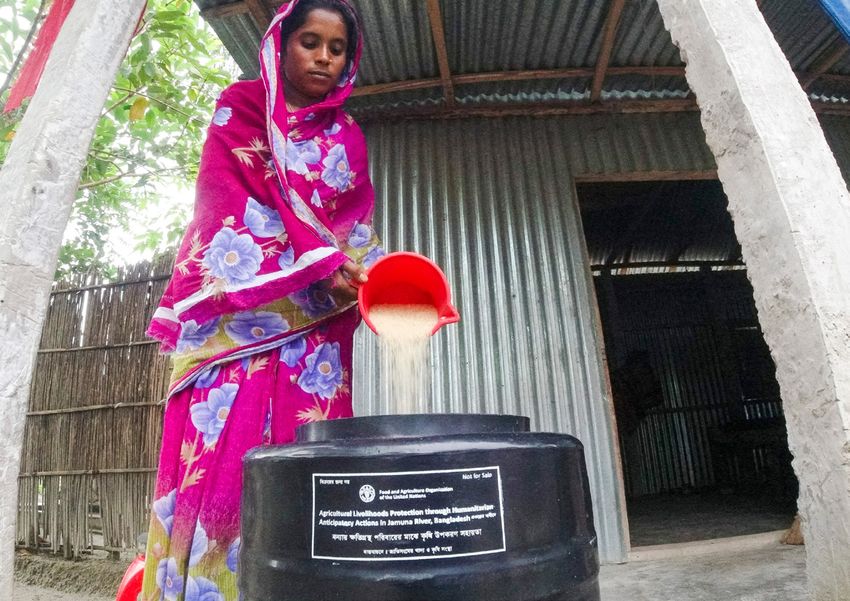
Anticipatory action is a evidence on how effective FAO’s anticipatory actions have been in
core element of the new supporting vulnerable groups and highlights their perspectives on the
humanitarian model that benefits of acting early. Follow-up studies are needed to explore the
organizations need to full benefits of FAO’s interventions and to gain a more comprehensive
adopt in order to effectively understanding of its cascading effect on resilience and well-being.
protect and mitigate future
climate risks. In the 2020 Bangladesh project, FAO and partners built on the foundations
laid out by IFRC and BDRCS who, since 2017, have been investing in
anticipatory actions and gathering evidence on the benefits of acting early
based on flood forecasts. Their system, gains and insights underpinned
this collaborative process.
The Government of Bangladesh, likewise, is no stranger to anticipatory
action. In May 2020, thanks to its Disaster Management Office more than
2 million people were evacuated from at-risk areas as Cyclone Amphan
headed towards Bangladesh. As a Category 5 cyclone, it was the strongest
storm to hit the region since 2007.
Together, these efforts help to change the way the international community
manages disasters, from a reactive approach to a proactive one.
Intervention areas FAO and partners intervention areas
NEPAL
Jalpaiguri
Dingram
Koch Bihar
Kishanganj Panchagarh
aputra
Thakurgaon ahm
Br Guwahati
Tis
Goalpara
Nilphamari
ta
Pirganj Dhuburi
Lalmanir
Saidpur Hat
INDIA
Rangpur rigra
m
Raiganj Dinajpur
Ku
Tura
Gaibandha
Sunamganj
Jaipur Hat Sherpur Jaria Chhatak
a
Farraka
RAJSHAH Bogra Bra Surm
Jamalpur Sylhet
Rautpara Silchar
Jam
Naogaon
hm
Mymensingh Gouripur DHAKA
apu
Nawabganj
una
Ga Maulvi Bazar
Sirajganj
tra
ng Nator
e s Rajshahi Kishorganj
Habiganj
Tangail
a
hn
g
INDIA Bhairab Bazar Me
Bahamrapur Pabna Gazipur
Narsinghdi Brahmanbaria INDIA
Kushtia Manikganj
Agartala
Meherpur Ga
Dhaka (Dacca)
Ga
Dabgram Rajbari ng Aijal
Chuadanga i
ra
es (
Pa Narayanganj
Ho
Jhenida Faridpur d ma Munshiganj
oghly
Magura
) Comilla
Burdwan Santipur Chandpur
Dom Narail Palong
dar Madaripur Laksham Khagrachari
Megh
Bangaon Jessore
Gopalganj shmipur
KHULNA a ak Feni
n
L
Barrackpore Khulna CHITTAGONG
Habra Satkhira
Bagherhat
Barisal Bhola Noakhali
Kolkata Chalna Rangamati
(Calcutta) Pirojpur Jhalakati Karnaphuli Res.
a t k h a n I.
Patuakhali Chittagong Bungtlang
.
Diamond
pI
Bandarban
D aul
Harbour
wi
Barguna d
S an
Haldia Satkania
s
a n
S u n d a r b
e s Kutubdia I.
Bichari
n g
G a Matarbari I.
o f t h e Maiskhal I.
M o u t h s Cox's
Kal
Bazar
ada
n
B A Y O F B E N G A L MYANMAR
Source: United Nations Geospatial. 2004. Modified by author to highlight intervention areas, 14 March 2021.
Bangladesh | 3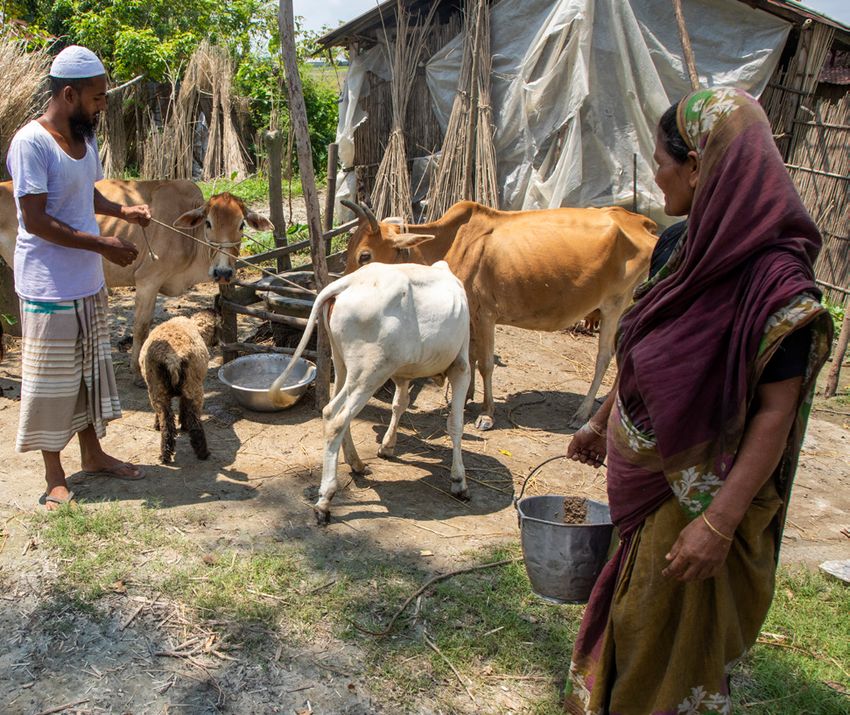
©FAO

        Challenges for              For families across Bangladesh, monsoons are part of the annual cycle
                                    of life. Typically starting in June, heavy clouds unleash torrential rains
        Bangladesh                  that flood streets and farmland and test the limits of the country’s vast
                                    river systems. For the next four months, some 80 percent of Bangladesh’s
                                    annual rainfall will pour down and typically submerge a quarter of the
                                    land (FAO, IFRC, OCHA and WFP, 2020). About twice every decade, a much
                                    heavier monsoon rain will swallow up more than half of the country, and
                                    with it the lives and livelihoods of its poorest people. Such events can
                                    risk people’s lives and livelihoods, with hard-to-replace assets washed
                                    away or destroyed and their animals hungry and sick. Those living along
                                    rivers are the most vulnerable and many of them tend to be among the
                                    country’s poorest.

                                    Each year, farming and livestock-owning families prepare themselves the
                                    best they can. They pack as much food, fodder and essential belongings as
                                    they can carry and relocate to higher ground. Those who can, bring their
                                    animals to community livestock shelters to give them a better chance of
                                    surviving the monsoon months. Others migrate with their livestock in tow,
                                    seeking refuge in the highlands or wherever they can find sanctuary until
                                    the waters recede.

4 | Impact of Anticipatory Action
Community centres fill up quickly, leaving some people with no other
choice but to build makeshift shelters for themselves and their animals
along bridges and high roads.
People across Bangladesh have shown remarkable resilience in the face
of these recurring and increasingly extreme weather shocks. But in some
years, the intensity and long duration of the monsoon rains simply exceeds
their ability to cope. By the time the monsoon season ends, many families
will have lost valuable livestock, seeds and other assets and exhausted
their reserves of food and money.
For these families, it is a struggle to restart their food production and make
up for their losses. In the worst cases, they will have to take out crippling
loans – often at unfavourable conditions – to start over, making their
existence even more fragile than before.
This ongoing cycle of loss and often only partial recovery can trap families
in poverty and hold back their long-term development. It can also wipe
out hard-fought development gains in their communities. Counting her
losses from the 2020 monsoon floods, one mother in Shaghata summed
up the choice she now faced between shelter and school fees: ‘What
should I do? Should I raise [and educate] my children or should I build a
new house?’
Existential choices like these are frequent in areas where poverty and
disaster risk overlap. This includes the Northwest of Bangladesh, where
many of the country’s 230 rivers run and, in some areas, up to half of the
population live below the poverty line.
While monsoon rains affect most of the country, communities in the
Brahmaputra-Jamuna basin are among those particularly affected by
heavy downpours and flooding. For families living in riverine lowland
areas, it is naturally difficult to avoid the perils of rising waters. The same
goes for those inhabiting the thousands of small islands that dot the river
basin. Here, farmers navigate an uncertain existence in return for fertile soil
to grow their rice and graze their animals – a trade off in which the river
can take away overnight what it helped families build over years.
In the worst cases, human life will be lost. Livestock will perish, houses
and farmland may be damaged beyond repair, and in some areas entire
villages will have to be rebuilt. Often, soil erosion will significantly change
the landscape and force people to relocate permanently.
Women-headed households, people with disabilities and those living in
precarious dwellings are particularly vulnerable and often don’t have the
means to build up a buffer to absorb a shock like this. Without proper
support, these groups can quickly see an extreme weather event become a
livelihood crisis that can threaten their very existence.
Bangladesh | 5This is particularly true in years of extreme monsoon rains, which
2020 turned out to be. Bangladesh saw the heaviest floods in 10 years.
And while the damage is still being counted, it is likely to exceed the
previous year’s, when farmers lost more than USD 200 million worth of
crops and livestock and displaced some 300 000 people (CERF, 2019).
The COVID-19 pandemic added even more challenges to an already
extraordinary year, with the limitations it placed on employment, travel
and commerce, in addition to its impact on health. Traditionally, the
monsoon season is a busy time for livestock trade, and it is the time for
sowing the aman rice harvest. But with many markets temporarily closed,
livestock traders had fewer opportunities to generate income and farmers
had a harder time sourcing inputs.
Even when the pandemic is finally over, another threat is here to stay for
the future: climate change is contributing to increasingly extreme weather
events, like the 2020 monsoon floods, and will make it progressively more
difficult for families to cope with shocks, particularly those who are most
exposed. Such changes in climate also put increased pressure on the
Government of Bangladesh to protect its people.
All of these factors create urgency to find solutions that ensure
communities can progress and thrive despite recurring natural hazards.
That also means finding ways to prevent those hazards from becoming
major setbacks that can make people even more vulnerable to
future shocks.
Experience in other countries2 has shown that acting before at-risk
communities face stress is an effective way to protect their assets,
keep them food secure and harness agriculture’s potential as a driver
of stability.
Bangladesh is the first sudden-onset disaster to receive funding for an
anticipatory action intervention through OCHA’s CERF Fund. As such, it
poses new planning and logistic challenges to FAO and its partners, in a
context where time is even more of the essence. For the same reasons, it
also offers a major opportunity to learn from this experience and identify
how this kind of context affects the efficacy of anticipatory actions and
how such interventions should be adjusted to meet these challenges.
2
See, for example, the reports on the impact of Early Warning Early Action in Mongolia
(FAO, 2018) and Colombia (FAO, 2019). Consult the References section for more details.
6 | Impact of Anticipatory Action©FAO
Crisis timeline Based on the agencies’ previous experience working with at-risk
communities in Bangladesh, OCHA, in early 2020, asked FAO, UNFPA
for the and WFP to start planning for an anticipatory action in the country and
pre-arranged USD 5.2 million in funds for a wide range of protective
2020 floods interventions in support of at-risk families before floods would peak.
in Bangladesh For FAO this meant looking at how seasonal weather patterns coincide
with important periods in Bangladesh’s agricultural cycles – both for crop
farmers and livestock owners – and determining what activities would be
most helpful to each at the time of intervention.
For this, crisis timelines proved to be a valuable analysis tool. Crisis
timelines can help to understand the evolution of a hazard and its impacts
in relation to people’s livelihoods. More specifically, they highlight when
and how hazards have impacted people in the past. This information –
combined with seasonality mapping, solid forecasts, and data on past
emergency response projects – allows impact-based forecasting. In other
words, it provides an understanding of who and what a potential hazard is
likely to impact. While each shock is unique and some uncertainties always
remain, crisis timelines can help actors identify appropriate early warnings
and adapt anticipatory actions to the local context.
Bangladesh | 7Crisis timeline for the 2020 floods in Bangladesh
JAN FEB MAR APR MAY JUN JUL AUG SEP OCT NOV DEC
Expected
spread of
COVID-19
disease
Expected
containment
measure
intensity
Climate
patterns
Monsoon
season
INFORMATION
CLIMATE
Seasonal
floods
Cyclones
Landslides
Boro rice
Aus rice
AGRICULTURE
SEASONALITY
Aman rice
(monsoon)
Livestock
trade peak
Lean season
TYPICAL IMPACT
OF FLOODS
Agriculture
& livestock
TIMINGS – 2020 FLOODS
ANTICIPATORY ACTION
Early warning
triggers (4 and 11 July)
Anticipatory
action from 11July)
2020 FLOODS
IMPACT OF
Standard
emergency
response
8 | Impact of Anticipatory Action©FAO
Bangladesh | 9©FAO
For the 2020 anticipatory action in Bangladesh, FAO and partners relied
Triggers for on a state-of-the-art early warning system that combined the forecasts
of two institutions: the national Flood Forecasting and Warning Centre
anticipatory (FFWC) that resides in the Bangladesh Water Development Board, and the
Global Flood Awareness System (GLOFAS), developed by the European
action Commission and the European Centre for Medium-Range Weather
Forecasts (ECMWF). The Bangladesh Red Crescent Society (BDRCS) and
the Red Cross Red Crescent Climate Centre (RCCC), in turn, used their
experience in the project area to help adapt GLOFAS to the local context.
FAO and partners in Since 2017, the early warning system has been collecting data on water
Bangladesh used state- flows and weather in the country and, through predictive analytics, has
of-the-art data collection been able to anticipate when monsoon flooding would peak and where.
and predictive analytics
to anticipate when the To support vulnerable groups in the Brahmaputra-Jamuna basin, the
flooding would peak. early warning system continually measures the water flow in the area
and projects when severe floods are likely.
Comparing water levels over a number of days, the system has two
triggers. The first is a readiness trigger that alerts humanitarian actors
when it’s time to prepare for action. This trigger is activated if the water
flow at the Bahadurabad gauging station is projected to cross the
critical mark of 100 000 m3 per second for a significant number of days
according to GLOFAS or FFWC. It signals a 50 percent chance of heavy
10 | Impact of Anticipatory Actionflooding (one in 10 years or higher severity) occurring within 10 days. If
waters continue to rise, a second trigger will initiate action. This second
trigger is set off when the forecasts show that the water level at
Bahadurabad will rise by more than 0.85m above the government-defined
‘danger level’ within five days. The system was monitored closely by the
BDRCS who provided updates on a regular basis to the partners.
In 2020, the first trigger also set in motion the immediate release of
pre‑agreed funds. The second trigger activated the distribution of a diverse
package of interventions that FAO, UNFPA and WFP designed together
ahead of time, in collaboration with BDRCS/IFRC and the United Nations
Resident Coordinator Office.
Process in 2020
By June, the United Nations (UN) Resident Coordinator and Emergency
Relief Coordinator approved the multi-agency Anticipatory Action Plan –
also called the AA Framework – for Bangladesh, and the three agencies
began to identify potential beneficiaries for each action. The framework
outlined three pre‑agreed components: the forecast and triggers, the
kinds of anticipatory actions, and the amount and manner of funding.
This allowed the agencies to know when to act, how to act and to rapidly
have funds in hand to carry out the pre-agreed activities.
At this time, attention shifted to monitoring the early warning system for
signs of impending floods. The partners didn’t have to wait long.
By 4 July, the system reached the first trigger mark – at this point the plan
was activated. The same day, only four hours after the system raised alarm,
OCHA’s CERF window released the pre-agreed USD 5.2 million to the three
partners – the fastest disbursal of such funds in UN history.
With its share of USD 500 000, FAO began preparing for action by procuring
waterproof storage drums and 25-kg bags of animal feed for distribution
to 14 000 families – some 70 000 people – before the floods would reach
their peak.
By 11 July – a week after the first trigger told partners to prepare – water
and weather conditions activated the warning system’s action trigger.
It was time for FAO and its partners to get to work.
Ultimately, FAO expanded its intervention to more than 18 700 families
in total – or over 93 800 people. When floods reached their peak in FAO’s
target areas on 23 July, all of the originally targeted families had received
their inputs and most of the additional households too. In the end
83 percent of families received their drums or feed before the disaster
reached its crest.
Bangladesh | 11The intervention in Bangladesh shows how anticipatory action should
work: a warning system is set in place early on, the system flags changes
that suggest floods are coming, and action is triggered as soon as the data
hits the threshold for imminent floods. As a result, assistance in 2020 was
provided much earlier compared with the rapid response to the 2019 floods.
Having relevant information in advance ensures enough time to launch
and implement anticipatory actions on the ground. It provides time to
assess local needs and build tailored plans that not only provide support
but also put farmers on a stronger footing to face future shocks.
It is worth noting here that the original action plan assumed a five-day
turn-around between the action trigger date and the inputs reaching
beneficiary families, which would have placed the peak at 16 July.
However, follow-up analysis placed the ultimate peak date at 23 July 2020.
The fact that floods peaked slightly later was fortuitous and meant that a
larger number of people were set up with drums or animal feed before the
peak of the floods.
A crisis within a crisis
This peak period also coincided with trade and movement restrictions
related to COVID-19, which made it even harder for farming families to
access food and inputs and sell their goods between July and September.
Considering these market disruptions, FAO was distributing items that
families likely would not have been able to procure otherwise, even if they
had the funds to do so, which many already did not.
FAO and partners intervened just ahead of the sowing period for the aman
rice season, the traditional time to sell livestock, and the lean season,
which begins in September. The ability to protect seed, livestock and food
was therefore likely to have a critical impact on people’s food security.
The effects of COVID-19 restrictions in Bangladesh
COVID-19 restrictions had two main impacts. Firstly, This meant that already vulnerable families were entering
they exacerbated people’s existing vulnerabilities. the monsoon season more exposed than usual, as their
Markets became harder to access, supply chains stalled, livelihoods had already taken a hit.
and farmers struggled to source inputs for the aman and
boro rice seasons. The second impact was on the logistics of aid operations.
In a short period of time, FAO had to move both drums
About 60 percent of farmers reported they needed to sell and fodder to communities with COVID-19 restrictions
their rice at higher prices due to increased transportation in place. Service providers were already experiencing
costs they incurred. labour shortages, lack of logistics support locally and
internationally, and the cancellation of orders from
Herders alike could not travel to sell livestock or products, importing countries. These challenging conditions made it
and 75 percent of dairy farmers encountered considerable more difficult to procure items in a short period of time and
disruptions in getting milk to markets, which caused them delayed the process of getting the inputs to communities –
significant losses (FAO, 2020). in a few cases, until after the floods peaked.
12 | Impact of Anticipatory Action©FAO
Deciding how Collaborations between agencies with different mandates make it possible
to anticipate a variety of needs and support diverse groups facing disaster.
to intervene The intervention in the northwest of Bangladesh was a prime example
of this.
Two weeks before the system triggered action, BDRCS, FAO, IFRC,
UNFPA and WFP finalized an action plan that combined cash relief for
vulnerable groups, asset protection for farmers, and reproductive health
and hygiene kits for women and girls. The plan focused on the districts of
Gaibandha, Jamalpur and Kurigram, where people are historically worst
affected by floods and poverty rates are high.
Pre-approval of funds from OCHA CERF was critical, as it allowed the
partners to get to work immediately and get ready for action at a time
when there was still room to prevent harm. For FAO, it meant staff could
purchase and distribute essential items to farmers before the floods would
reach their peak. Ideally, in similar future situations FAO would work
with the local government to pre-position key inputs prior to flooding in
coordination with cooperating partners.
Bangladesh | 13Protecting crop farmers and livestock keepers alike
Based on feedback from previous beneficiaries and after talking to
government focal points in the field, FAO’s part of the joint action
consisted of two separate interventions that would target two different
kinds of farming households: those dependent on crop and those
dependent on livestock.
Each of the crop-farming families received a large watertight plastic
drum that could float and store their rice, seed and tools, allowing them
to protect their valuables, food and farming assets for the next planting
season. The drums came with ropes that allowed farmers to anchor their
assets to their house or take them along when evacuating through flooded
streets. In areas where wells had filled up with dirty street water, the drums
could also store clean drinking water until the wells were safe again.
Since livestock are the main assets for many people in the Brahmaputra-
Jamuna basin, it was clear that protecting people’s livelihoods also meant
protecting their animals. To this end, livestock keepers received three
25‑kg bags of animal feed to help them keep their herds strong, healthy
and productive throughout the floods and ongoing pandemic.
©FAO
14 | Impact of Anticipatory ActionFAO secured boats and trucks to get inputs to their intended destinations
and staff to help distribute materials at flood-safe sites that it made
available across the impact area. There was a significant increase in the
cost of last-mile distribution to the communities, given logistics constraints
during the flood.
It is worth noting that FAO had originally also considered organizing
vaccination campaigns but had to abandon the idea given the difficulty to
procure and administer veterinary drugs on short notice when supply was
scarce. Instead, FAO decided to focus fully on procuring and distributing
the available aid – feed and drums – as soon as possible and use the
resources earmarked for medicine and vaccines to extend the support on
feed to an additional 5 000 families.
Deciding who to support
In selecting beneficiaries, FAO paid special attention to those who were
most vulnerable, including single-headed or low-income households and
landless people in fragile housing. For this, FAO worked closely with local
government departments and partners on the ground. More specifically, it
used lists provided by Bangladesh’s Department of Livestock and Services
to reach people who had previously received some form of government
support based on their low income.
This kind of support particularly impacts women, since they do most of
the livestock rearing in Bangladesh. During monsoon rains, those who
can, bring their animals to livestock shelters to keep them dry. But it’s not
a guarantee they’ll stay healthy. Livestock shelters are often overcrowded
and diseases can spread quickly. This is particularly true when feed is
scarce, causing animals to get weaker, and access to vaccines is limited.
That was the case during the early months of the COVID-19 pandemic,
when veterinary care and supply chains were disrupted. Getting animal
feed to livestock keepers quickly therefore became a top priority.
In the end, more than 40 percent of the people that received
FAO support were living in extreme poverty, meaning on less than
USD 1.90 a day (OCHA, 2020). Morethan 80 percent lived on less than
USD 3.20 per day. Women made up 60 percent of the beneficiaries.
Mixing different kinds of support
The collaboration with UNFPA and WFP provided a great opportunity to
mix cash and non-cash interventions to respond to a variety of needs in
flood-affected communities.
While each family received one kind of support, the fact that vulnerable
people living in the same area received support that was tailored to their
specific situation and needs meant that communities overall benefited
from complementary lines of support.
Bangladesh | 15The fact that the partners took care to avoid overlap in their beneficiary
lists had two benefits: for one, they were able to reach a wider group of
people in the same area. Secondly, this combination of collective planning
and individual action is easier to coordinate and saves time in situations
where speed is of the essence, as is the case in sudden-onset events.
In addition to FAO’s non-cash intervention that protected farmers’
existing assets, WFP provided cash support to families likely to need help
covering food, shelter, medicine and other essentials. UNFPA, meanwhile,
provided support with hygiene care kits to women and girls affected by
gender‑based violence and those struggling to keep up with menstrual
hygiene throughout the monsoon season. Expecting mothers also received
special care to prevent maternal deaths in challenging times.
The goal in time is to move towards more integrated actions that allow
families to reap the benefits of various kinds of aid that address both
their short-term needs and longer-term resilience and can reinforce one
another. Beneficiary feedback gleaned from post-distribution interviews
supports this. Indeed, beneficiaries said that in-kind assistance was
critical at times of floods, when markets were not fully functional. At the
same time, they suggested to combine goods with cash to address other
immediate needs.
In the meantime, FAO plans to integrate anticipatory action into its longer-
term Resilience Strategy for Bangladesh, after significant efforts of the UN
Country Team to integrate resilience as a major theme within the country’s
United Nations Sustainable Development Cooperation Framework.
©FAO
16 | Impact of Anticipatory ActionReturn on For every US dollar FAO invested in anticipatory action in Bangladesh,
families received a return of USD 0.80, or 80 cents, in direct benefits. These
investment benefits included avoided seed and livestock losses. Keeping animals
well fed and productive also meant that families could sell them at higher
prices, they won’t need to buy milk for their children, and they might be
able to generate some side income from these and other assets they were
able to protect. These secondary benefits were not included in the return
on investment (ROI) calculation, which should therefore be considered as
a conservative estimate.
FAO’s return-on-investment ratio in Bangladesh was considerably lower
than estimated based on previous anticipatory actions. This included,
for example, animal feed distribution ahead of harsh winter in Mongolia,
which has shown to generate benefits more than seven times larger than
the original investment. Since this is the first FAO impact analysis focusing
on anticipatory action for sudden-onset events, some of the differences
with the results of previous studies might be due to the different hazards
that are being addressed. For instance, differences might be related
to the higher operational costs associated with distributing goods to
hard‑to‑reach communities on remote islands, within a short period of
time, with little preparedness and under COVID-19 restrictions. Also, floods
cause immediate impacts that are more difficult to prevent as compared
with slow‑onset events such as drought.
Some nuances are also important to explore and better understand for
future programming. For instance, the amount and value of seeds washed
away by floods was significantly lower among beneficiary households
compared to non-beneficiaries, pointing to a potential noteworthy
contribution to the future harvest. On the other hand, no significant
differences between the two groups were found on the amount of stored
food damaged by floodwater. Further, goat mortality was considerably
lower among beneficiaries compared to non-beneficiaries, while the same
indicator did not show significant differences for cattle.
Finally, the timing of the project review also matters. Returning to
beneficiaries just a month after a major disaster to assess the impact of the
aid may be too soon to capture the full benefits that the inputs can and
will have in quantitative terms. Compare this to slow-onset disasters that
often last many months, and the benefits have more time to materialize
before data is collected.
In other words, the comparatively low return on investment recorded in
September does not mean the Bangladesh intervention was a failure.
While the action did not fully ‘pay for itself’ in the way other anticipatory
actions have, it was effective in the goal it set to achieve: protecting people
and their livelihood assets against impending floods. More importantly, as
the interventions meant to preserve durable assets, most of the benefits
are likely to accrue in a longer time frame. Therefore, the benefit-cost ratio
is likely to be higher and greater than one over a longer period.
Bangladesh | 17Measuring success in sudden-onset disasters
The specific challenges that come with applying anticipatory action to
sudden-onset events also make the Bangladesh action a case worth
studying further. Specifically, not just how to improve the delivery of aid
but also what parameters of success agencies should set when working in
sudden-onset contexts.
The analysis showed families who received aid were better able to
protect crop seeds and animals from the impact of floods compared with
non‑beneficiaries. Participating families sold their animals at higher prices
at the market, and animal deaths were significantly lower than among
families in the control group – vulnerable families in the same areas that
did not receive FAO’s assistance. The fact that households who received
drums saved more seeds than non-beneficiary families also means they
are more likely to be able to plant in the important aman rice season,
which directly follows the monsoon season.
FAO’s internal review showed the vast majority of beneficiaries found
the aid useful and said it made a tangible difference to their situation.
In an independent review conducted by OCHA, likewise, 95 percent of
respondents said their ‘life had very much improved’ as a result of FAO’s
anticipatory action. In the same study, FAO scored a ‘very good’ mark
in overall satisfaction and placed in the top 40 percent of aid providers,
alongside UNFPA and WFP, who were also part of the review.
Some other points to consider are the fact that beneficiary families
reported no distress sale of livestock, while non-beneficiary families did
sell some of their animals to cope with the cost of immediate needs. The
sale of animals at low prices right after a hazard is likely to have a negative
impact on productive assets, therefore further increasing the vulnerability
of households in the medium and long term.
Of the families who took out loans after the floods, families who
participated in the FAO project spent half as much on buying new animals
than families in the control group. This further suggests they had less need
to replace animals because of death or sickness.
Quantifying the benefits of anticipatory action in a sudden-onset event
may ultimately require agencies to collect and analyse data at more than
one point in time. While it is important to collect data right after the hazard
in order to explore the effectiveness of anticipatory action in mitigating
the immediate impact of shocks (for example, how many animals were
saved from death and how many seeds farmers could save), follow-up
studies are also essential to measure the full benefits of the intervention.
While such studies would be valuable to all anticipatory actions, they are
particularly important for improving our understanding of the cascading
effects of acting early on resilience and well-being in sudden-onset events.
18 | Impact of Anticipatory ActionAnticipatory action
in Bangladesh
March 2020
Partners engaged by OCHA to begin
developing the Anticipatory Action Plan
June 2020
Anticipatory Action Plan is
4 July 2020 endorsed by the Bangladesh
Resident Coordinator
First 10-day trigger is met through the
GLOFAS global early warning system,
+
confirmed by the BRCS focal point
11 July 2020
UNFPA reaches almost Funds are rapidly released by CERF
15 000 women, girls and to FAO, UNFPA and WFP to begin Second 5-day trigger is met through
transgender people through implementation within 10 days the Bangladesh Water Development
the distribution of dignity along the Jamuna river basin Board, confirmed by the BRCS focal
and hygiene kits point, and UN agencies accelerate
their implementation efforts
WFP reaches more than
22 400 families through FAO reaches more than
cash transfers of USD 53 18 700 families through distributing:
- watertight plastic drums
- animal feed to keep livestock alive and healthy
Impact
assessment
beneficiaries were more able
to keep their animals alive
USD 1 USD 0.80
thanks to the feed provided
for every USD 1 FAO spent on livelihood interventions,
households had a return of USD 0.80
none of the beneficiaries reported distress
sale of goats while non-beneficiaries
sold 0.39 goats per household on average
to cope with the impact of floods
households who received drums saved
more seeds and were better able to plant
beneficiaries of livestock feed spent during the boro rice season, which directly
less than half of the money from follows the monsoon season
new loans on purchasing animals
compared to non-beneficiariesImpact stories Morjina Begum and her husband were prepared for the floods. And still,
they were hit harder than they expected. They had packed their stove
and some dry goods in anticipation of the rising waters, and straw for
Morjina Begum their animals, Begum recalls. Together with her two daughters and
Gaibandha District mother‑in‑law, she and her husband made it to higher ground just in time
when the riverbanks ran over. She is glad they managed to bring their five
cows to safety, but they lost everything else.
“We couldn’t save our property,” says Begum. “We lost our land and two
houses. We had a new tin latrine and building materials too. We lost it all.”
Along with the house, their chickens perished overnight.
Once they made it to the highlands, she had hoped they’d find a decent
place where they could make a temporary home, but the only place left
was a cemetery. The local government let them shelter there, says Begum,
but she doesn’t feel safe at night and is keen to move as soon as possible.
©FAO/Saikat Mojumder
“I worry that our cows are out in the open at night. Anyone could come
and steal them.”
For Begum and her family, her cows are more than a source of milk for
her young children – they are their main ticket to building a new life and
livelihood in a safe location.
“Without this feed, our “We will try to prepare ourselves for the next flood-season. We can sell one
cows could not survive. We cow and with that money we will try to buy some land to build a house,”
are still giving the feed to she says.
our cows now and they are
healthy because of this.” FAO knows the importance of livestock assets for families facing floods
and displacement. That’s why its anticipatory action team moved quickly
to bring large bags of animal feed to Begum and other livestock farmers
sheltering in her area, before the flood reached its peak.
“Without this feed, our cows could not survive,” she says matter-of-factly.
“We are still giving the feed to our cows now and they are healthy because
of this.”
The difference between selling a healthy cow or a weak cow can be
significant. “Previously, the market value of this cow was only 20 000 taka,
but now it has a market value of approximately 40 000 taka,” she explains.
“My children are also getting the benefits, they are drinking the milk, they
are getting nutrition. It keeps them healthy.”
20 | Impact of Anticipatory ActionKokila Akther Kokila Akther was three months pregnant when the Brahmaputra river
and Samiul Islam ran over and flooded her house and water well. Like most years during
Kurigram District the rainy season, she quickly packed what she could and left with her
husband, three-year-old son and mother-in-law to ride out the floods in a
nearby shelter. But the food and income from the nuts they had planted
on a small, rented piece of land have vanished with the waters.
One thing that was different about Akther’s sheltering experience this
year was the plastic storage drum she received from FAO just ahead of the
floods. Now she uses it to store her rice seeds in a dry place while she waits
for the end of the rainy season. But in the early days of the floods, when
her well was flooded with dirty water, it served another important function.
“I stored safe water in the drum to drink and for cooking. Drinking safe
water helped me not to get sick and to stay healthy in my pregnancy
©FAO/Saikat Mojumder
period,” she says.
In the shelter, the couple shared their water with other families too.
“So they all benefited from it,” says Akther.
But during the monsoon season, the family has struggled to make
ends meet.
“Drinking safe water
helped me not to get sick “Sometimes we don’t have enough money to cultivate the land,” says
and to stay healthy in my her husband Samiul Islam, “when there’s a lack of seed and the seed
pregnancy period.” becomes really pricey.”
Being able to safely store seed until the planting season allows farmers like
them to take advantage of periods when seed prices are low and increases
the likelihood they’ll be able to plant for the season.
“The drum is good for storing seed,” says Islam. “So we will use it that way.”
©FAO/Saikat Mojumder
Bangladesh | 21Khoybor When the floods hit northern Bangladesh, 58-year-old Khoybor, who goes
Kurigram District by one name, was living on one of the small islands in the delta where
the Brahmaputra meets the Teesta river. In a matter of hours his village –
Montala – became submerged in water and virtually ceased to exist.
He managed to move his household of six to the mainland to shelter with
family there. But shortly after they arrived at their destination in Chilmari,
some 60 km south of the Indian border, their new refuge was flooded
too. Now Khoybor and his extended family live in a small hut on a road
that leads up to a nearby dam. Many families found shelter here during
the peak of the monsoon rains, as it’s on higher ground and safe from
floodwaters.
Some have since been able to return to their homes, but Khoybor’s family
©FAO/Saikat Mojumder
have nothing to return to, he says. In addition to their house, their planted
fields were lost and some of their livestock died from disease. He did
manage to save three cows and two goats, which are the primary assets
they have with them now.
“We have to work and build a new house,” he says. “And for that, we
need land.”
“We have to work and build
a new house. And for that, For families like Khoybor’s, ensuring their livestock stays strong and
we need land.” productive is a key to rebuilding their old livelihoods and saving up the
funds they’ll need to buy new farmland in a safer location.
That’s why FAO provided Khoybor and livestock farmers like him with an
ample supply of animal feed before the floods reached a peak, so they
could save as many animals as possible.
Without the feed, he says, a larger number of his cows and goats would
most likely be dead and it would be even harder to raise the money for his
new land. When the time comes, Khoybor says, he’s got his eye on a piece
of land in the highlands on the mainland.
©FAO/Saikat Mojumder
22 | Impact of Anticipatory Action©FAO
What we There are many reasons the anticipatory action in Bangladesh lends
itself to further research, not least the fact that FAO was able to apply
learned its previous anticipatory action experience in slow-onset disasters to a
new context where a hazard unfolds much faster. How a sudden-onset
environment – as the one discussed above – influences people’s needs
and choices, how it impacts the delivery and effectiveness of aid and
how anticipatory action embedded in longer-term resilience efforts can
be brought to scale should be at the heart of that research. Still, the
implementation and initial assessment of the project already provide clear
take-aways that can inform future actions in Bangladesh and beyond.
The importance of layered actions
While the vast majority of people who received FAO inputs found the items
useful, many beneficiaries asked for additional kinds of support to cover
other immediate needs. Cash support came up frequently, often in relation
to repairing a house or building a new home in a safer location. Others
feared they would no longer be able to pay the fees to send their children
to school. Collaborating with other agencies in one project area provides
the unique opportunity to layer actions for those additional needs and
tackle various kinds of vulnerabilities at once. Several interviewed families,
for instance, suggested combining direct inputs with cash to provide them
Bangladesh | 23©FAO 24 | Impact of Anticipatory Action
with immediate utility and flexibility. While this kind of layered approach
requires good coordination and increased funding to ensure the number
of people receiving aid remains the same, the overall resilience of each
family would likely increase significantly more if various interventions
reinforce one another. This is especially true in contexts where most
families face various kinds of vulnerabilities, and each could become a
poverty trap if left unaddressed in times of crisis.

Furthermore, the selection of anticipatory actions and their feasibility
also needs to be considered in the planning process. While vaccines
were originally included in the Anticipatory Action Framework, once
the actions were triggered, FAO moved away from these inputs as (a)
they require technical equipment, such a refrigerators, to transport them
and (b) they can be a time-consuming input to procure if the country
does not have them readily available. Instead, looking into items such
as worming tablets, water purification methods and keeping livestock
dry can be effective to reduce illness in animals as well. Therefore, the
logistical planning of delivering inputs for sudden-onset disasters needs
to be developed ahead of time, while taking into consideration potential
logistics, transport and distribution challenges from additional hazards, as
the COVID-19 pandemic has shown.

The need to preposition

The pre-approval of CERF funds allowed FAO to procure its inputs before
the second warning trigger called agencies to action, but the lead time was
still not enough. In the end, FAO was not able to procure animal vaccines
in time to reach families before the floods and that part of the original plan
had to be abandoned. While the animal feed was helpful, it is likely that
animal health results would have been better had households received a
combination of various animal inputs. Yet this provided a valuable lesson
for future projects, to reassess the feasibility and logistics of anticipatory
actions in sudden-onset contexts. Even if animal health items are
prepositioned and stored adequately, veterinary support is often needed
to administer them, which may be difficult to ensure for remote areas
ahead of an impending disaster and might only be possible in exceptional
circumstances.

In the future, FAO should consider prepositioning and storing items that
can be readily used in and outside of crisis situations, such as silos, animal
treatments and vitamin supplements, and seeds and farming tools. When
planning to distribute inputs and items within a very short timeframe,
the need for prepositioning is relevant for many anticipatory action
partners and solutions for flexible financing need to be identified. In the
case of a disaster, OCHA CERF or other funding partners could reimburse
anticipatory action implementers for emergency goods they have already
purchased. If the expected crisis does not occur, FAO and its partners,
including the government, could absorb the cost and use the items in
non‑emergency projects throughout the year.

                                                                       Bangladesh | 25
©FAO
Another priority should be to set up emergency livestock shelters in
partnership with local arms of the government, from departments such as
Livestock Services and Agricultural Extension. The shelters could be used
also as distribution points for the rapid delivery of anticipatory assistance,
so that transport and logistical matters can be planned out beforehand.
The benefits of social protection and government involvement
In the 2020 Bangladesh action, the government provided significant
support in the implementation stage of the project, specifically in logistics
planning, transport and distribution. FAO and its partners, however, did
not involve government agencies to the same degree in the planning stage
of the action or triggering of the system. This means that linkages with
existing social protection efforts have not yet been explored to the fullest.
For future activities, a more systematic use of national registries, for
example, can ensure that support benefits the poorest and most
vulnerable quickly, in line with national poverty and vulnerability
indicators. FAO, in turn, could contribute to making existing systems and
registries stronger by providing updated information from the field on
people’s exposure to various hazards.
26 | Impact of Anticipatory ActionUsing established social protection systems to deliver FAO aid and support
to farmers would also cut cost and time, especially if agreements are put
in place with various government departments that can systematically
channel anticipatory actions through national programmes. Building
these stronger ties would make it easy in the event of a shock to adjust the
benefits people receive and make the coordination between government
and humanitarian actors stronger and more coherent.
What’s more, partnering with the government to monitor and coordinate
the triggering of the early warning system can help further embed the
anticipatory approach into existing strategies and plans, thus ensuring
that anticipatory action becomes an integral part of disaster risk
management.
The value of preparing for multiple shocks
The 2020 monsoon floods struck in the middle of a global pandemic
that severely interrupted markets and transport and worsened the
situation of many who already had little buffer to withstand a crisis.
Bangladesh | 27This experience shows that we cannot assume that anticipatory actions
happen in spaces where one hazard strikes at a time. We need to be
prepared to deal with multiple shocks – be it a pandemic, conflict or
additional climate hazard – happening at once. This also means we need
to build holistic systems that can provide warnings ahead of shocks and
allow stakeholders to adapt to complex risk situations. Creating these
systems will involve many of the lessons outlined here, relating to logistics,
prepositioning, and stronger coordination with and access to finance for
government and a wide range of partners.
Anticipatory actions must build on longer-term resilience programming
FAO’s 2020 anticipatory action in the Jamuna basin did not occur in
a vacuum. Instead, it built on a long-standing collaboration with the
government to support the design and implementation of context-
specific resilience strategies and programmes that protect agricultural
livelihoods against recurrent hazards. And that is precisely the foundation
of successful anticipatory actions, which need to be beneficial for people
in the long term, as well as the short term.
Flooding, specifically, occurs so regularly in Bangladesh that anticipatory
actions need to be embedded in resilience efforts and address root causes
of vulnerabilities.
FAO’s long-term resilience programming reflects years of experience in
responding to flooding, cyclones and landslides in the country. Its five-year
Resilience Strategy for Bangladesh, in turn, promotes a combination of
preparedness and anticipatory actions, within a larger strategy to develop
long‑term resilience in farming communities.
The strategy, which FAO and the government have been designing
together, focuses on highly vulnerable areas such as the Haor wetlands,
the Chittagong Hill Tracts, the Jamuna Flood Basin and the cyclone‑prone
districts of the southwest. For example, FAO has been working with
various resource and research partners to make food supply chains more
shock-resistant by introducing new crop varieties in the Haor wetlands
and improving rural producers’ access to urban markets. The lessons
learned from interventions like these, in turn, can be integrated into future
anticipatory actions in these and other areas of the country.
If long-term measures are in place to protect livelihoods, anticipatory
actions can build on existing systems and complement those efforts in
sudden hazard situations, so both together can ensure farming families
are and remain resilient to shocks. For small-scale farmers and livestock
keepers, heeding early warning signals can make all the difference
between a crisis and a catastrophe – between weathering a shock and
experiencing a full-blown crisis.
28 | Impact of Anticipatory ActionYou can also read


