IMPACT REPORT 2020 - Aqua Spark
←
→
Page content transcription
If your browser does not render page correctly, please read the page content below
IMPACT REPORT 2020
7            index
                                                                                       Blueprint of Sustainable Aquaculture

                                                                                                                   8
                                                                                           10                          Pathways to impact
                                                                                               Harnessing the opportunity
                                                                                                                          Production    10
                                                                                                                    Feed Ingredients    10
                                                                                                                  Health and Disease    11

                                                                                    12  Our Portfolio
                                                                                                        Farm Management Technologies
                                                                                                                            Genetics
                                                                                                                                        11
                                                                                                                                        11

                                                                                                                Portfolio Map    14
                                                                                                                 Shiok Meats     16
                                                                                                        Swedish Algae Factory    16

                                                                                                   19
                                                                                    28              2020: Leadership in Crisis

                                                                                        Our Impact in Numbers
                                                                                                                                       Efishery
                                                                                                                                       Matorka
                                                                                                                                                  20
                                                                                                                                                  22

                                                                                                                       30
                                                                                                                                       Xpertsea   24

                                                                                                                                Looking Forward
                                                                          2020: A Year of Firsts
                                                                                                                   4 6 18 26 31 32

©Aqua-Spark Operating B.V.
 July 2021

All rights reserved. This publication or any portion thereof may not be
reproduced or used in any manner whatsoever without the express
written permission of the publisher.

Content Amy Novogratz, Flavio Corsin / Aqua-Spark
Contributor Stephen Hall
Graphic & Illustrative design Marnix de Klerk & Nina Mathijsen / Detour

SAVE THE OCEAN please don’t print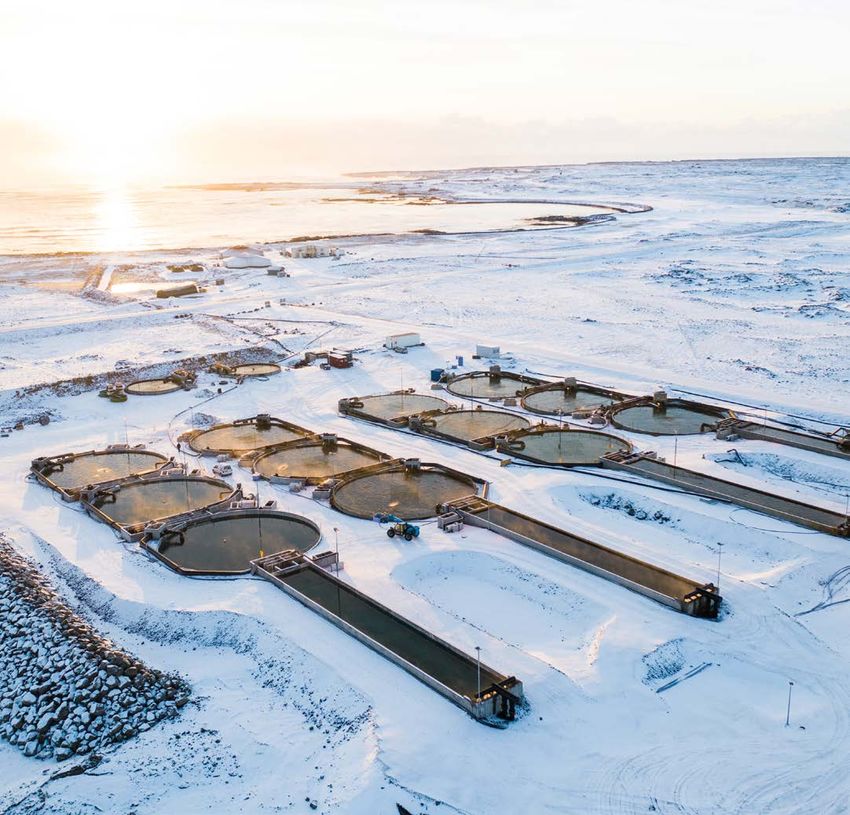
9 SEPTEMBER 2020
         FORBES
                       “There has been a
                        large increase in the
                        number of countries
                        requesting the World
                        Bank for investments
                        in aquaculture.
                        Aqua-Spark has been
                        a major influencer in
                        this space, bringing
                        in essential business
                        investing acumen
                        along with a commit-
                        ment to innovation
                        for sustainability.”
                          Randall Brummett
                          Senior Fisheries and Aquaculture
                          Specialist /World Bank

                   2                  5
FEEDNAVIGATOR.COM         Blueprint of
        3 JULY 2020       Sustainable
                          Aquaculture
                          With our growing world population we are placing
                          Earth’s natural resources under severe pressure.
                          One of our most pressing challenges will be to
                          feed everyone a balanced and nutritious diet
                          while keeping our effects on the environment
                          to a minimum.
                          Today, fish supplies 17 percent of all the protein consumed in the world. This share
                          is growing because of rising income among consumers accompanied by increased
                          demand for high-quality fish. By 2030, the world is expected to eat 20 percent more
                          fish than in 2016 – this increase can only come from aquaculture because we are
                          already exploiting wild fish stocks.

                          Aquaculture is growing faster than other major food production sectors.

                          But achieving further growth means making demands on our increasingly stressed
                          environment. Although aquaculture is, in many ways, more resource efficient than
                          other animal production systems it still has a long way to go. We need to do much
                          better.

                          We believe that reliably meeting the world’s growing demand for fish, while simul-
                          taneously sustaining our environment, will require a radical transformation of
                          global aquaculture.

                                                      This is why Aqua-Spark exists.
                          Aqua-Spark is a global investment fund based in Utrecht, the Netherlands, that
                          is developing this optimal aquaculture food system by investing in companies
                          all along the aquaculture value chain working to solve industry challenges, with
                          a shared vision of a sustainable future. We are building a portfolio ecosystem of
                          companies working toward healthy, transparent, resource efficient, resilient aqua-
                          culture production that will act as a blueprint from which to scale this industry to
                          meet growing demand. Our ultimate goal is moving the commercial aquaculture
                          industry to one that is truly sustainable.

                      6                                                           7   Blueprint of Sustainable Aquaculture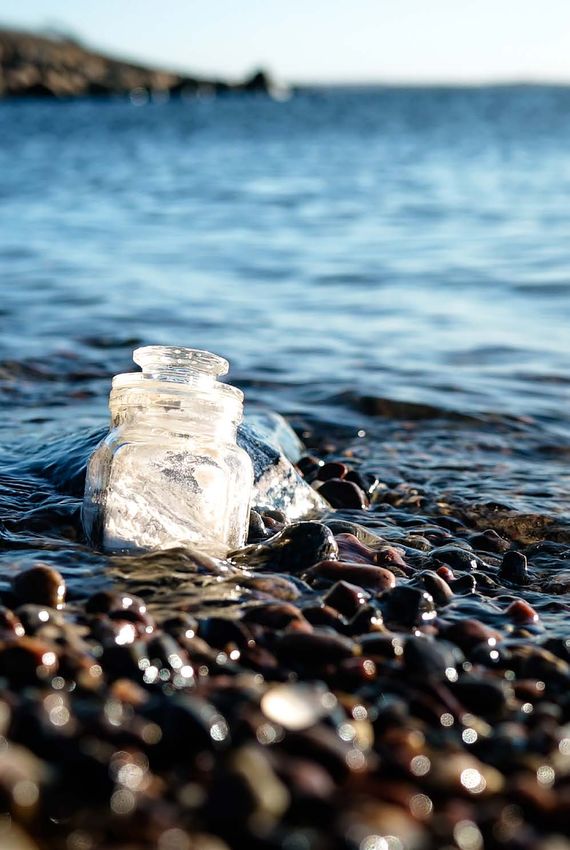
Pathways to Impact This is an ambition that requires holistic thinking -
reducing resource use, greening the feed stream, better
monitoring for and treatment of disease, a more trans-
The diagram below summarizes our Theory of Change.
This is our pathway to impact and we use it to help guide
our investment choices and the approaches we take to
When we started exploring aquaculture, we saw great solu- parent, traceable system, are all interconnected but also support our portfolio companies.
tions to some of the industry’s challenges around feed, waste, require their own major focus. And we can’t produce
pollution and disease, but they were in the very early stages. truly sustainable fish at an affordable scale until we solve This diagram has evolved since our launch in 2015, with
Three striking factors stood out as holding the industry back all of these challenges and others. learnings and changes from the industry. We are com-
from true sustainability - 1. the lack of coordination 2. the mitted to these outcomes, how we get there might con-
seemingly impenetrable opacity and 3. likely because of the tinue to adapt along the way.
first two, the absence of outside financing.
These findings led to the shape of Aqua-Spark and enable aquaculture to reach its potential as the health-
...with the aim to SDG
14
greatly influenced our Theory of Change and the belief iest, most resource efficient, lowest footprint animal
Decrease antibiotic use across
LIFE BELOW WATER
that through investing in companies solving pertinent protein to produce and create the blueprint from which
the industry
challenges in aquaculture, all along the value chain, that to scale this industry.
share a vision and are open to cooperation, we could
Reduce industry usage of wild
We invest in... ...in order to have... resources
Production Increase production &
Exemplars of best practice
Pioneering farms, feed consumption of healthy food
approaches to aquaculture
mills, hatcheries and cell-
production
based seafood producers
Reduce Pollution
Feed Ingredients
Alternative feed ingredients
More sustainably produced
that reduce environmental
2
feeds adopted by farmers
demands and dependency Increase valorization of SDG
on wild caught fish underutilized resources
ZERO HUNGER
Health and Disease Improved fish health and
Health technologies that welfare technologies Improving efficiencies
reduce the impact of adopted by farmers.
disease without resorting Reduced antibiotic use
to antibiotics
Improve animal welfare
Farm Management
Technologies Improve farm management
Production technologies technologies adopted by
that improve management farmers Increase assess to financial
practices, resource use and services for farmers
product traceability
Genetics
Breeding technologies that Improved seed adopted
by farmers
Reduce resource footprint SDG
13
enhance seed quality CLIMATE ACTION
Embracing diversity in
Consumer Products
and Distribution
Improved supply chain,
traceability, marketing infra-
aquaculture SDG
12
Marketing channels and
products to meet demand
structure and market access RESPONSIBLE
for sustainability produced Increase transparency and
for sustainably sourced
aquaculture products traceability CONSUMPTION
aquaculture
AND PRODUCTION
Pathways to Impact 8 9 Pathways to Impact
Harnessing the Health and Disease
Like other farming sectors, the likelihood of major disease
Opportunity
problems occurring increases as aquaculture activities in-
tensify and expand. Thus, the aquaculture industry has been
overwhelmed with its share of diseases and problems caused
by viruses, bacteria, fungi, parasites and other undiagnosed and
Production emerging pathogens. Disease is now a primary constraint to
the culture of many aquatic species, impeding both economic
Fish farms, feed mills and hatcheries are the foundation of and social development in many countries. Finding new and
the aquaculture system and must be a key focus for atten- more effective ways to enhance fish health and battle disease
tion if we are to deliver impact at scale. We believe that by is a key imperative for the sector.
investing in pioneering enterprises that are in the
Meeting this challenge is especially important to research and develop new antimicrobial
vanguard of best practices we can help ac-
when considering bacterial disease. Not only are medicines, vaccines, and diagnostic tools.
celerate the transformation of the sector.
these diseases highly prevalent, but our current Aqua-Spark is committed to supporting that
In 2020 we added cell-based production to with cell-based taking 35% of the market. These approach relies largely on antibiotics, to which effort.
our portfolio, bypassing the challenges of may be optimistic estimates, and they are likely pathogens are becoming increasingly resistant.
farming by converting nutrients directly lower for seafood, but they highlight the poten- The World Health Organisation sees antibiotic As measures of progress towards impact in im-
into seafood. We see the future of seafood tial of this segment. resistance as one of the biggest threats to global proving health and combating disease, we have
as diverse, with both cell based and plant health and food security today and says that chosen to track the number of animals treated
based playing a major role. According Tracking progress towards impact for this greater innovation and investment are required with alternatives to antibiotics.
to some analysts, in 2040, 60% of segment of our portfolio includes the volume
the meat and seafood people will of fish harvested and the number of meals pro-
eat is expected to come not from
live animals but from plant-
duced, to provide a more direct indicator of end
user benefit.
Farm Management Technologies
based and cell-based products, We believe that investing in innovative new technologies and
making them accessible and affordable for small and large
enterprises alike can be transformational in regards to feed-
Feed Ingredients ing practices, animal health and welfare, resource use and
harvesting practices, to name a few.
Our overarching goal is to feed fish with nutritious ingredients
In many respects, the aquaculture industry re- Measuring progress to impact for this segment
that minimize demands on natural resources. To this end, re-
mains very fragmented and inefficient. Dominated includes the number of farms served. Where other
ducing demand for wild caught fish as a feed ingredient is a key
by small holder farmers and small and medium en- benefits, resulting from efficiency improvements,
objective that is relatively straightforward to track.
terprises, at a global scale, few operations current- are delivered through the use of a technology,
Currently between 1/3 and 1/4 of fish We track our progress towards impact using ly adopt the rigorous farm management practices these are also tracked.
caught globally goes into animal the total volume of alternative feed ingredients that a truly sustainable farming sector needs.
feed. Because these fisheries are fully produced. However we do not report on this to
exploited, it is clearly not sustainable avoid disclosing confidential information from
to increase catches of fish from the wild to
feed farmed fish. Tripling the production
specific companies in the portfolio. We do con-
vert the amount of alternative ingredients into
Genetics
Our main goal here is to embrace and enable the diversity of Also,
of aquaculture, without working on more volume of wild fish that would be required to
aquaculture. We are currently farming 100s of species of aq- unlike the
sustainable practices, would drive the need produce those ingredients. At this early stage
uaculture and do not want aquaculture to move to an industry other animal
for 8 times more feed than we are currently in the growth of our portfolio companies, the
of fish, fish and fish, as the other animal proteins have. Diver- proteins, selective
producing. We believe that a combination volumes are understandably low, but these will
sity is vital for risk mitigation and also in honoring different breeding commercially is
of different alternative feed ingredients and grow substantially in the coming years.
environments, different cultures and keeping diets healthy nascent and offers a big op-
technologies that improve feeding efficiencies
and interesting. portunity to improve growth,
are the solution to decreasing the footprint of
immunity, and production
animal feed significantly.
efficiencies.
Harnessing the Opportunity 10 11 Harnessing the Opportunity
Our Portfolio
The portfolio works as an ecosystem, with the compa- “2020 saw two mega-trends for
nies agreeing to collaborate on optimal solutions, share
knowledge and networks, and work together toward a aquaculture related to Covid-19
shared vision of a healthy, sustainable, accessible
global aquaculture industry. This systemic ap-
and lockdowns; the huge swing
proach recognizes that industry-wide change to more value added seafood
requires organized solutions that bring together
disparate components of the aquaculture val- for in-home consumption from
ue chain in a coordinated and synergistic way. groceries and delivery; and
Investments by Value Chain further disruptions in wild fish-
2%
€ 140,000,000
Financial Infrastructure
meal and fish oil, with alterna-
18%
€ 120,000,000
25%
€ 100,000,000
tive ingredients filling the void.
Farming/Production Feed Ingredients
€ 80,000,000
€ 60,000,000
Aqua-Spark was particularly
43%
€ 40,000,000
12%
prescient to have explored
these fields previously and
€ 20,000,000
Farm Management Health Disease
Technologies € -
invested in companies placed to
1/1/2015 YE 2015 YE 2016 YE 2017 YE 2018 YE 2019
AUM
take advantage of the situation
Total Cumulative NAV Growth
Aqua-Spark fund performance Total Cumulative Invested Capital
€160,000,000
€140,000,000
AUM
Total Cumulative
and be placed in prime position
for the “new normal”, coming
€120,000,000 NAV Growth
Total Cumulative
€100,000,000 Invested Capital
€80,000,000 out of the pandemic.”
€60,000,000
€40,000,000
Kevin Fitzsimmons
€20,000,000
Professor and Director of International
€-
Initiatives, University of Arizona
1/1/2015 2015 2016 2017 2018 2019 2020
Our Portfolio 12 13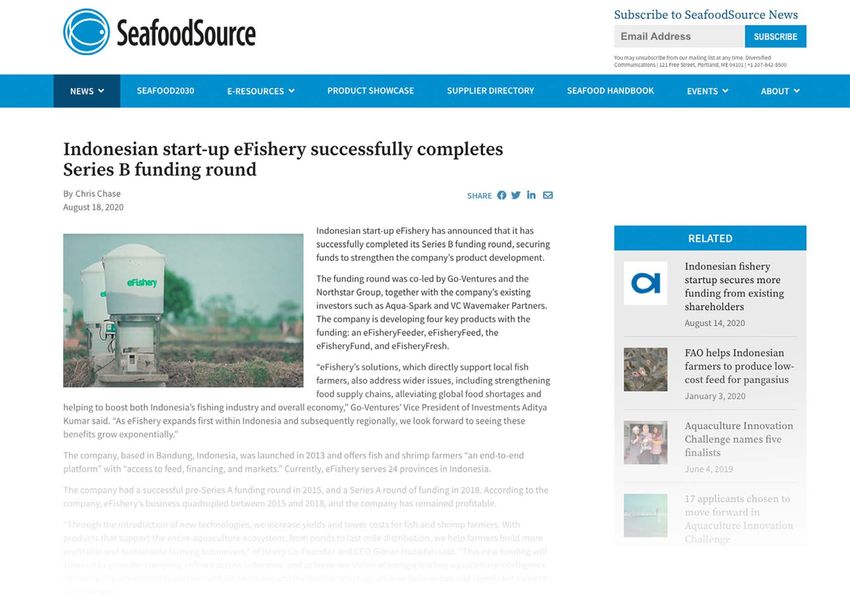
Portfolio Map

 New 2020 portfolio companies

 Countries served by our portfolio

                                     Portfolio Map   14   15 Portfolio Map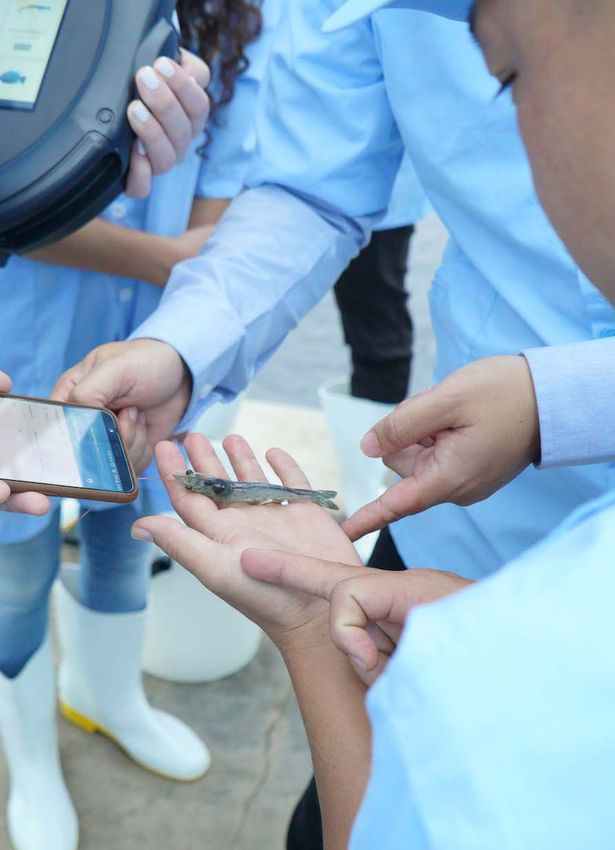
2020 Investments
In 2020 we focussed most of our investment activity
on supporting the growth of the companies in our
portfolio. Additionally, we closed two new deals
– a Swedish company that is solving a big challenge of
effluent waste by creating value from the waste water of
RAS systems (Swedish Algae Factory) and our first invest-
ment into cellular aquaculture in a company producing
crustaceans from stem cells (Shiok).

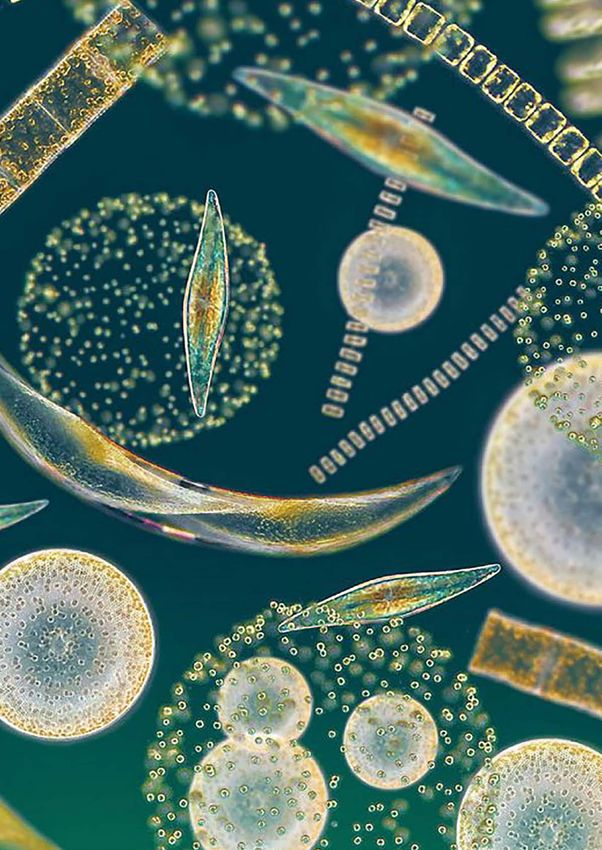
                                                              Swedish Algae Factory is a Gothenburg-based
                                                              company using algae to convert effluent water
                                                              produced by Recirculating Aquaculture Systems
                                                              (RAS) into valuable products. Swedish Algae
                                                              Factory offers an affordable, sustainable solu-
                                                              tion to the challenge of wastewater for farmers.
                                                              Through its circular model, the algae cleans
                                                              wastewater, absorbs carbon dioxide, and also
                                                              creates nutrient-rich organic biomass that can
                                                              be used for fish feed or fertilizer. Swedish Algae
                                                              Factory extracts a unique nanoporous silica
        Shiok Meats is a Singapore-based company              material from diatoms (Algica). The extract has
        developing cell-based crustacean meats (shrimp,       exceptional light-altering properties as well as
        crab, lobster) as a substitute for natural or         the ability to absorb or release particles depend-
        farmed crustaceans. It brings delicious, clean        ing on its surrounding environment. Algica is in
        and healthy seafood by harvesting from cells in-      demand across a range of industries because it
        stead of animals. The cell-based animal protein       can replace harmful and/or less efficient chem-
        industry has been on our radar for some time as       ical substances. For example, Algica improves
        once it is at scale it will have an enormous influ-   the efficiency of solar panels and can be used for
        ence on food production efficiency, food safety,      moisturization, cleansing, and ultraviolet light
        and the environment. As our first investment          protection in personal care products.
        in cell-based seafood, Shiok Meats immediately
        stood out with their strong, female-led team
        and impressive milestones to-date. While we’ve
        invested in a number of technologies working
        to make shrimp farming more efficient, health-
        ier, and less polluting, Shiok Meats is the first
        company in our portfolio to focus on shrimp
                                                                                                                   Swedish Algae Factory:
        production.
                                                                                                                   Jar of Algica, their nonporous silica product cultivated from diatoms

                                2020 Investments   16                                                                                                                         17    2020 Investments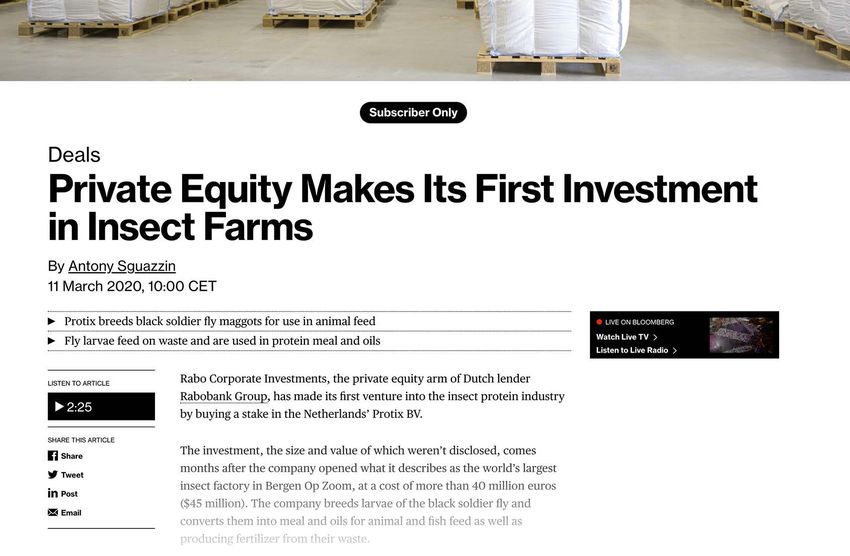
SEAFOODSOURCE.COM                          2020:
     18 AUGUST 2020                        Leadership in Crisis
                                           Like many sectors, the global aquacul-
                                           ture industry has been hard hit by the
                                           Covid-19 pandemic. “The pandemic has
                                           caused widespread upheaval in fisher-
                                           ies and aquaculture as production has
                                           been disrupted, supply chains have
                                           been interrupted and consumer spend-
                                           ing restricted by various lockdowns,” said
                                           FAO Deputy Director-General, Maria
                                           Helena Semedo.

                                           With food service effectively in lock-
                                           down for extended periods around
                                           the globe, cutting off access to mar-
                                           ket for our farms and the companies
                                           that serve farms, our full portfolio had
                                           to rethink strategy and work through a
                                           high degree of uncertainty. We saw an
                                           exceptional amount of creativity, per-
                                           severance and dedication throughout
                                           our portfolio, and would like to highlight
                                           a few cases of exceptional leadership
                                           during this difficult year.

                      Portfolio
                      Portfolio Map
                                Map   4
                                      18                              19 2020: Leadership in Crisis
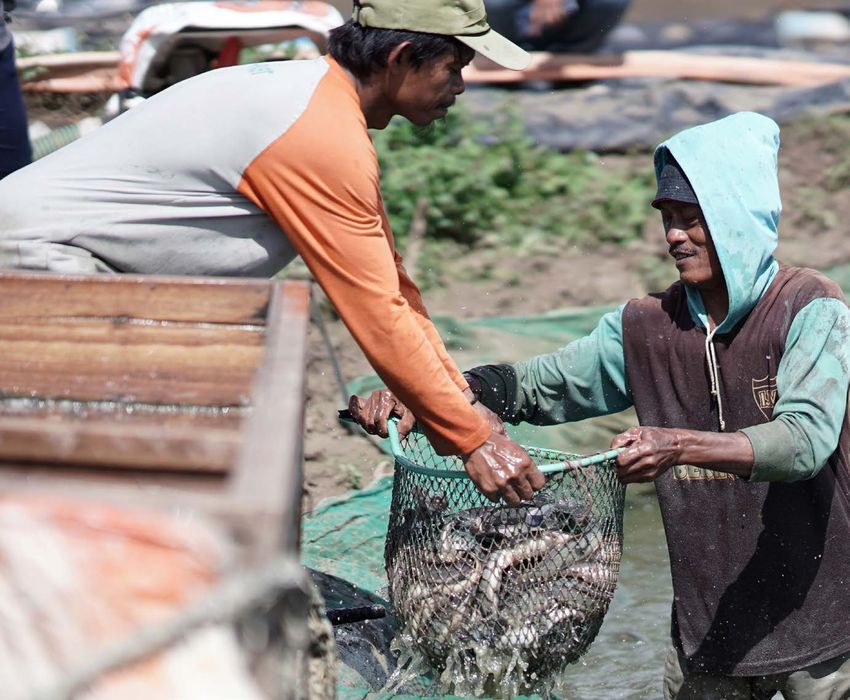
eFishery is an IoT, data and marketplace plat-
form that helps farmers generate better prac-
tices and more income by using smart feeding
technology. Their cloud connected feeding
machine automatically senses and disperses feed according
to the fishes’ behavioral appetite. It can reduce up to 24% of
feed use, reduce pollution and waste, increase fish health and
increase profits. The data the feeder generates enables financ-
ing from eFishery Fund and market access from eFishery Fresh.
Efishery had been on a continuous growth tra- eFishery reacted promptly.
jectory - 2019 brought more than twenty times
the results of the prior year and closed 2019 They offered discounts and delayed
with almost 40 thousand units in the field with payments for feeders so that farmers
expectations that 2020 would bring even more could remain active on the platform.
growth.
Due to their close relationship with
About half of eFishery’s feeders are used by the government, eFishery reached out
shrimp farmers, the other half by fish farmers. and was granted use of the goverment’s
Shrimp is for the export market while fish for cold storage facilities and refrigerated
domestic. Until now, the eFishery Fresh, the trucks facilities at no cost. This enabled the
marketplace, focussed on domestic fish sales. company to buy the fish from their farmers
and process them as frozen products which
The Covid-19 lockdown meant the closure of provided liquidity for the farmers and bought
restaurants, food services and even some of the eFishery some time to find buyers in the market.
supermarkets and traditional markets across
Indonesia. The eFishery marketplace went down Since some companies and local governments
and at the same time middlemen started sup-
stopped buying fish which left farm-
ers with fish stuck in their ponds.
In two months, eFishery porting their
employees by
They couldn’t harvest them because revenue got back to pre- purchasing
there was nobody buying, so they Covid, they grew their fish for them,
had to watch them grow bigger
while prices for fish were decreas-
margins, and, perhaps eFishery
agreed with
The
middle-
ing, nearly by 50%. Not only could most importantly, most such organi- men who had
the farmers not afford the feed to of their farmers are still zations to be been trading fish were Gibran re-
continue to keep fish in their ponds,
but it often meant they didn’t have
in business with a rate the supplier of
those fish.
losing out from these new distribution
channels, eFishery offered them roles in the
alized what it meant for
the farmers when he was able to visit them for
cash to feed their families. of non-performing loans logistics and distribution of eFishery products. the first time post lockdown. “The first time I
lower than 1%! Frozen fish visited farmers in the area after lockdown, some
“Things were really, really bad. If was a lim- In two months, eFishery revenue got back to of the farmers approached me and kissed the
this keeps happening, farmers will lose their ited market in Indonesia, pre-Covid. eFishery pre-Covid, they grew their margins and, perhaps back of my hand saying “thank you so much,
business. And if farmers go bankrupt, this will launched a campaign toward consumers about most importantly, most of their farmers are we’re so grateful for eFishery, you’re my savior,
impact the Indonesian aquaculture sector for the benefits of buying frozen Tilapia. Forced still in business with a rate of non-performing If it weren’t for you, my family and I will go out
good,” says eFishery Founder and CEO Gibran changes in eating habits due to lockdown also led loans lower than 1%! eFishery conserved its 100% of business”. This was such a heartfelt occasion,
Huzaifah. The eFishery business would also be consumers to buy frozen fish and cook them at retention rate amid Covid-19 and strengthened also felt funny where 50 years old farmers bowed
gravely impacted as farmers could not afford to home, opened up even more market access chan- farmers’ loyalty and respect. eFishery stood true while kissing my hand.”
pay the Feeder fees, used less feed through the nels for eFishery. to their farmer-first mandate, and provides a
platform and sold less fish through the market- solid example of the resilience of a human-cen-
place. tred approach.
2020: Leadership in Crisis 20 21 2020: Leadership in CrisisMatorka is an innovative Arctic char farming operation
Set amongst vibrant hot springs and dramatic lava fields, the fish
based in Iceland. It has the potential to be the most
raising and processing facility (Grindavick, Iceland).
cost efficient land based Salmonid farming operation
in the world whilst being completely sustainable.
The Matorka farm uses no antibiotics or chemicals,
is powered by renewable energy, and makes a delib-
erate effort to protect the surrounding environment
– all while producing a delicious fish.
Pre-Covid, Matorka was doing very well Additionally, they put big effort into staying
with sales. The demand for their product close to their network of seafood brokers in
outstripped the supply and they were able to Europe relationships they had developed over the
keep sales at this level with very little marketing years. Through these brokers Matorka could shift
effort. They sold to some of the most reputable promptly their products towards the European
restaurants in the world, like Nobu, the high retail markets. With the number of flights being
end Japanese restaurant. Matorka served the US reduced dramatically, Matorka had also to modify
and European markets, with 80 to 90 percent of its logistics and move from using predominantly
their fish going into food service and the hotel air freight to shipping 50% of their products by
industry. With the Covid-19 lockdown shutting sea freight, which incidentally also reduced the
down hotels and restaurants and countries such carbon footprint linked to their sales.
as the US imposing travel bans, most of Mator-
ka’s market was shut down, almost overnight. The shift to retail was also possible because,
pre-Covid, Matorka had already initiated the pro-
The company responded quickly. Not knowing cess of obtaining the sustainability and quality
how long the lockdown would last, they pre- certifications required to enter the retail market.
pared for the longterm. They had obtained ASC certification and they
were close to obtaining GlobalGAP certification,
Their first step was focused on the immediate both of which further improved Matorka’s sus-
reduction of fish feeding by 30% in order to keep tainability by requiring stricter disposal of organ-
the fish in the water for a longer period while ic waste. To satisfy retailers’ requirements Mator-
alternative market linkages were established. ka had also to change their labeling and internal
This allowed the farm to delay sales while keep- traceability system, for example by introducing a
ing the value of fish in the tanks, with very little barcode inventory control system. These changes
additional cost. This approach worked from will allow Matorka to continue selling to retail
a financial and logistics perspective, but was markets, even as the food services sector opens
not necessarily the best choice for keeping fish up again.
strong and healthy, so might have delayed cost The care for their staff, awareness programs and Covid-19 has been, and to a certain extent still
effects. Matorka’s location, which is close to an airport, prompt introduction of WHO measures resulted is a challenge for Matorka. At the same time the
with their fast response time and agile system, in Matorka having zero Covid-19 cases and not business emerged stronger than before. The
The team put a lot of effort into strengthening allowed them to satisfy smaller and last-minute losing a single production date, at a time when company has a larger and more diverse network
relationships. First, they focussed on Iceland orders that the “less nimble” operations could the seafood news was full with factory closures of customers. Their new traceability and logis-
so they knew they could continue to sell fish not fill. because of the occurrence of Covid-19 cases. tics systems will allow them to continue to bring
there. Iceland did a remarkable job of contain- More than that, in 2020 Matorka managed to on retailers while continuing to work with food
ing Covid-19 through an extensive tracking and During their efforts to diversify their market, experience a 20% growth compared with 2019! service companies as they reopen across the US
tracing program. Though tourism had stopped, Matorka also established and strengthened con- This growth was due to increased stocking at and Europe. They’ve also sped up and increased
local restaurants never closed down. The lack of nections with Chinese and Japanese customers. the beginning of the year and their ability to their efforts around building a brand and start-
tourist-driven consumption was compensated Although those connections did not bring sales continue producing in spite of the Covid-related ing marketing efforts. This was not the story for
by redirecting the sales to Icelandic consumers, during Covid-19, they opened up potential sales challenges. everyone. Three of Matorka’s competitors were
keeping sales in Iceland unchanged. opportunities that the company aims to material- forced to stop farming Arctic char because of
ise in 2021. Covid-related challenges.
2020: Leadership in Crisis 22 23 2020: Leadership in CrisisXpertSea is a Canadian Aquacul-
Transparency and the ability to demonstrate talent outside Quebec city, where XpertSea is
ture Technology Company that is
results were key factors for gaining the trust headquartered
using data to transform aquacul-
of investors in the debt facility. XpertSea prior-
ture into a modern, efficient and
itized what needed to be achieved, distributed Covid-19 has meant a lot of suffering for a lot of
sustainable source of food for our
the workload within the team and got to work, people in Ecuador and globally. One of XpertSea
planet. XpertSea provides technology that helps shrimp and
rallying to make the business grow. account managers lost his 40-years old brother
fish farms increase their operational efficiency through reliable
because he could not find a hospital. But also
data. The XpertSea Platform replaces traditional hand-counting The financing mechanism provided by Xpert- represented an opportunity for XpertSea to ac-
with precision hardware and software tools for rapidly counting Sea proved an essential service for struggling celerate their ambition of developing a platform
and analyzing aquatic species, with 95% accuracy or better. farmers who were not only faced with the health for a completely traceable seafood
Combining artificial intelligence, computer vision, machine challenge of Covid-19, but also with a sharp drop market.
learning and the Internet of Things, the XpertSea Platform is in shrimp prices driven by the closing of hotels
increasing the availability of quality food, reducing the environ- and restaurants globally. Farmers were caught
mental impact of food production, and improving profitability in the middle, between having to sell their
across the aquaculture food chain. shrimp at low prices and having to repay in-
creasingly assertive suppliers eager to get
Through working both directly with farms and They had a local team in Ecuador, who were very paid in the moment of crises. Farmers’
through enterprise partners, XpertSea realized involved in strategic decisions and they lever- cashflow quickly became an issue,
the lack of fair financial services for farmers aged the fact that Ecuador, even in the worst mo- making the XpertSea offering
was a major bottleneck for the sustainable de- ments of the crisis, prioritized aquaculture as a a boon which allowed farm-
velopment of the industry. They saw an oppor- major revenue driver. But Covid-19 made even ers to keep their business
tunity to leverage their farm man- the simple afloat and pay their staff.
agement technology to facilitate
accurate, fairer and more efficient
The $3,5 million debt task of visit-
ing a farm ex-
The support given to
farmers resulted in
transactions between producers and facility allowed the tremely diffi- strengthened trust.
buyers and so launched Xpertrade, company to trade more cult. Xpertsea “Now we are seeing
their data driven marketplace in took a sys- farmers wanting
early 2020. Though they had been than 2,000 metric tons tematic and to work with us
working in most SE Asian Shrimp of shrimp in 2020, scrupulous on more and
markets, due to timezones, curren-
cy and tech acceptance they chose
achieving a 50 percent approach.
They strictly
more things, as
they have seen
Ecuador to begin in. month-over-month respected that we are
The marketplace was launched in
increase in new ponds the sanitary
measures put
trustworthy
and have their
Ecuador in January 2020, just one registered on the plat- in place by the interests in
month before the first Covid-19 form and a 10x revenue country, they mind,” says
case was confirmed in the country. obtained the Valerie Ro-
The number of cases and mortality growth from Q1 to Q4 required au- bitaille, CEO
rapidly grew, XpertSea faced wheth- 2020! thorizations and co-founder
er to continue or to postpone the for travel to of XpertSea.
marketplace activities, but decided that times the farms, put in place measures to allow Xpert-
of crisis confirm the need for more transparent sea staff to conduct activities remotely when The Covid-related
and efficient supply chains that benefit farmers possible and provided their teams with early events not only
and went forward with their plans. Even with access to vaccination. Perhaps most important- strengthened the
horrific photos of Covid-19 in the streets of ly Xpertsea was transparent toward the farmers, proposition of Xpert-
Guayaquil on many front pages they were able demonstrating to them that very strict security Sea, but also created a
to raise $3.5 Million in a debt facility from Aq- measures had been put in place as to not endan- culture of remote work-
ua-Spark investors to get started. ger their customers. ing that strengthened the
relationship within the global
team and enabled the hiring of
2020: Leadership in Crisis 2411 MARCH 2020
BLOOMBERG.COM
“2020 saw Protix
becoming the first
insect company to
reach commercial
scale. They are true
pioneers in the
global insect
farming industry.
Aqua-Spark played
a very relevant role
in the success of
Protix.”
Gorjan Nikolik
Senior Analyst - aquaculture, fisheries
and seafood / Rabobank International
26 27Our Impact in
Numbers
Increase Aalorization
5,256,000 of Underutilized Resources
Volume of “waste” upcycled (kg)
Decrease Antibiotic
use across the Industry
Number of animals treated
with antibiotic replacements1
60+ Million
Improving Efficiencies
Feed saved (kg)
124
Million
11,520
38.6
Reduce Industry Number of farms served with
Usage of Wild Resources technology to improve efficiency
Fish saved with alternative
feed ingredients (kg)
Million
44 Improved Animal Welfare
Number farms served with
animal welfare technology
Increase Production &
Consumption of Healthy Food
2,727,176
16
Volume of food
Increase Access to Financial
harvested/produced (kg)
Meals produced
11,127,474 Services for Farmers
Funds received
by farmers (USD)
7,884,220
Meals produced
Million
16
in developing countries
Embracing Diversity in Aquaculture
Number of species groups served by our
portfolio
5,256,000
13
Reduce Pollution
Volume of water saved (m3)
Increase Transparency and Traceability
Volume of food traded with improved
transparency/traceability (kg)
1 Companies in our portfolio treat more broadly than fish
Our Impact in Numbers 28 29 Our Impact in Numbers MillionLooking forward
10 SEPTEMBER 2020
FEEDNAVIGATOR
It’s hard not to start with looking back. This is our fourth
impact report since launching in 2015, and you’ll notice
our metrics and way of capturing impact has evolved
with this fast changing industry, but our theory of change
and priorities have remained consistent. It is our hope
that our portfolio ecosystem of companies solving chal-
lenges across the value chain of aquaculture become
commercial successes which showcase the right way of
doing things, shifting standards, setting the new normal
and ultimately become the foundation from which this
industry grows.
You’ll notice until now our impact reports have focussed on
environmental impact. Through our Shared Values Manifesto
we set social agreements with our companies. We track social
indicators, such as employees, gender, employee turnover, SME’s
catalyzed, etc. This will become increasingly relevant when we
close Aqua-Spark Africa in 2021. Aqua-Spark Africa is dedicated
to developing a framework for sustainable aquaculture in Africa.
Connected to Aqua-Spark Africa and to our greater goal of driv-
ing investment into sustainable aquaculture globally, this fall we
will launch Aqua Insights, our biannual reporting series on global
aquaculture markets. The first report is focussed on the invest-
ment and impact opportunity of tilapia in Africa.
Finally, fostering synergies amongst our portfolio remains a pri-
ority focus. As the companies grow we are seeing more and more
opportunity for cooperation and plan to report some tangible
evidence of what that results in next year.
We look forward to continuing the work with you.
Looking Forward 30 31“We’ve never seen anything like
1 DECEMBER 2020
INTRAFISH.COM 2020 and the shared disrup-
tions to our lives. What’s most
remarkable, though, is that de-
spite that disruption, there has
been continued innovation in
the aquaculture sector. In fact,
I’d say development has accel-
erated. It’s as if the industry
advanced 10 years in the span
of 12 months. Clearly, the sector
is rising to the challenge of the
new demands for sustainable
businesses, from established
companies to start-ups. There’s
a window here for aquaculture
to establish itself as a leader in
the blue economy -- I hope the
sector takes advantage.”
Drew Cherry
Editor-in-Chief, IntraFish
32 33Big thanks to our entire ecosystem of portfolio
companies and partners, including our 206
investors from 27 countries who were with us in
2020. We are thrilled to be part of a global move-
ment working together to shape the future of
aquaculture and change the planet’s relationship
with food.
aqua-spark.nlYou can also read


