Improving Diagnosis and Treatment of Maternal Sepsis - A CMQCC Quality Improvement Toolkit - PAC/LAC
←
→
Page content transcription
If your browser does not render page correctly, please read the page content below

Improving Diagnosis
and Treatment of
Maternal Sepsis
A CMQCC Quality Improvement Toolkit

Improving Diagnosis and
Treatment of Maternal Sepsis
A CMQCC Quality Improvement Toolkit
January 2020

Ronald Gibbs, MD, Melissa Bauer, DO, Lori Olvera,
DNP, RNC-OB, EFM-C, Christa Sakowski, MSN,
C-EFM, CLE, Valerie Cape, Elliott Main, MD

Suggested citation:
Gibbs R, Bauer M, Olvera L, Sakowski C, Cape V, Main E. Improving Diagnosis and Treatment of Maternal
Sepsis: A Quality Improvement Toolkit. Stanford, CA: California Maternal Quality Care Collaborative.

Copyright information:
©2019 California Maternal Quality Care Collaborative: The material in this toolkit may be freely reproduced and
disseminated for informational, educational and non-commercial purposes only.

This toolkit is considered a resource, but does not define the standard of care in California. Readers are
advised to adapt the guidelines and resources based on their local facility’s level of care and patient
populations served and are also advised to not rely solely on the guidelines presented here.

For correspondence:
California Maternal Quality Care Collaborative
Medical School Office Building, Stanford University
1265 Welch Road MS#5414
Stanford, CA 93405
Phone: (650) 725-6108
Email: info@cmqcc.org
Website: www.cmqcc.org

Table of Contents
ACKNOWLEDGEMENTS4-5           • RAPID RESPONSE TEAM             SPECIAL POPULATIONS
                                 AND ESCALATION OF CARE         APPENDIX C: JUSTIFICATION
EXECUTIVE SUMMARY      6-7      COORDINATION                    FOR ADJUSTMENTS TO CMS
THE CASE FOR                   • DISTINGUISHING                  SEPSIS-1 CRITERIA FOR END
IMPROVING RESPONSE               CHORIOAMNIONITIS/               ORGAN INJURY
TO MATERNAL SEPSIS     8-9      INTRAAMNIOTIC INFECTION        APPENDIX D: MATERNAL
                                 FROM SEPSIS                     SEPSIS EVALUATION FLOW
 • INTRODUCTION
                              PART III. ASSESSMENT               CHART
PART I. SCREENING             AND TREATMENT OF                  APPENDIX E: COLLECTING A
AND DIAGNOSIS OF              MATERNAL SEPSIS:                   URINE SPECIMEN FROM A
SEPSIS10-18                  ANTIBIOTICS AND                    FOLEY CATHETER
 • KEY PRINCIPLES             SOURCE CONTROL           24-33
                                                                APPENDIX F: THE IMPORTANCE
 • INADEQUACY OF CURRENT       • KEY PRINCIPLES                  OF TAKING A RESPIRATORY
   SCREENING AND DIAGNOSTIC    • GROUP A STREPTOCOCCUS           RATE
   CRITERIA                      (GAS) INFECTIONS               APPENDIX G: HOW TO TAKE
 • A NEW TWO-STEP APPROACH     • EMPIRIC COVERAGE FOR            AN ORAL TEMPERATURE
   TO SCREENING                  PATIENTS WITH                   MEASUREMENT
 • STEP 1: INITIAL SEPSIS        CONFIRMED SEPSIS OF            APPENDIX H: TEAM
   SCREEN                        UNKNOWN SOURCE (WITH            REASSESSMENT
                                 END ORGAN INJURY) OR            COMMUNICATION
 • SEPSIS SCREENING POINTS       SEPTIC SHOCK
 • STEP 2: CONFIRMATION OF                                      APPENDIX I: SAMPLE:
                               • PROPOSED ANTIBIOTIC             MATERNAL SEPSIS
   SEPSIS                        DOSING AND DURATION             DEBRIEFING FORM
 • ADVANTAGE OF A TWO-STEP       FOR SEPSIS BY SPECIFIC
   APPROACH FOR SEPSIS           INFECTIOUS CONDITIONS          APPENDIX J: SAMPLE: UC
                                                                 DAVIS HEALTH MATERNAL
 • MATERNAL SEPSIS             • SOURCE CONTROL                  SEPSIS DRILL SCENARIO
   EVALUATION FLOW CHART       • IMAGING:                       APPENDIX K: MATERNAL
 • DISCUSSION OF THE ROLE        RECOMMENDATIONS                 SEPSIS EDUCATION FOR
   OF LACTIC ACID IN THE         FOR IDENTIFYING SPECIFIC        NURSES
   PERIPARTUM PERIOD             SOURCES OF INFECTION
                                                                APPENDIX L: LACTATION
PART II. ASSESSMENT           PART IV. OBSTETRIC                 SAFETY OF ANTIMICROBIALS
AND TREATMENT OF              CONSIDERATIONS                     USED FOR TREATMENT OF
MATERNAL SEPSIS:              IN THE CASE OF                     SEPSIS
CARE BUNDLES         19-23   MATERNAL SEPSIS        34-35     APPENDIX M: SAMPLE: SUTTER
 • KEY PRINCIPLES              • KEY PRINCIPLES                  HEALTH SEPSIS ORDER SET
 • ASSESSMENT                  • INDICATIONS FOR DELIVERY
   AND MONITORING
   RECOMMENDATIONS            PART V. DISCHARGE
                              EDUCATION36-38
 • CULTURES
                               • KEY PRINCIPLES
 • FLUID MANAGEMENT
 • ADDITIONAL                 PART VI. APPENDICES   40-66
   CONSIDERATIONS FOR          APPENDIX A: COMPARISON OF
   PREGNANT WOMEN WITH          SEPSIS TERMINOLOGY
   SEPSIS
                               APPENDIX B: CMS SEPSIS-1
 • COMMUNICATION AND            ACCOMMODATIONS FOR                              Improving Diagnosis
   TEAMWORK TOOLS                                                   and Treatment of Maternal Sepsis
                                                                                                       3
                                                                A CMQCC Quality Improvement Toolkit
Acknowledgements

    Sepsis Task Force Advisory Group
    We would like to thank the Task Force members for offering their time, expertise and enthusiastic
    support for the development of this toolkit.

    Gillian Abir, MBChB, FRCA                 Holly Champagne, DNP, RNC-OB,       Shabnam Gaskari, PharmD,
    Clinical Associate Professor,             CNS                                 BCPPS
    Department of Anesthesiology,             Clinical Nurse Specialist, Kaiser   Assistant Director of Pharmacy-
    Perioperative and Pain                    Permanente (Roseville, CA)          Clinical Services, Lucile
    Medicine, Stanford University                                                 Packard Children’s Hospital
    School of Medicine (Stanford,                                                 Stanford (Palo Alto, CA)
                                              Meyng S. Cho, PharmD, BCPS
    CA)
                                              Clinical Coordinator, Pharmacy
                                              Department, Sutter Medical          Ronald Gibbs, MD
    Muhammad Afzal, MD, FCCP                  Center (Sacramento, CA)             Task Force Co-Chair,
    Medical Director Pulmonary                                                    Clinical Professor, Knowles
    and Critical Care, Sutter                                                     Distinguished Scholar,
                                              Katarina Lannér-Cusin, MD,
    Medical Center (Sacramento,                                                   Department of Obstetrics and
    CA)                                       FACOG
                                                                                  Gynecology, Maternal Fetal
                                              Administrative Medical              Medicine, Stanford University
                                              Director Women’s Services,          School of Medicine (Stanford,
    Natali Aziz, MD, MS                       Co-Chair Sutter OB/GYN              CA)
    Clinical Associate Professor              Quality Committee, Alta
    Obstetrics and Gynecology,                Bates Summit Medical Center
    Maternal Fetal Medicine,                  (Berkeley, CA)                      William Gilbert, MD
    Stanford University School of                                                 Maternal Fetal Medicine,
    Medicine (Stanford, CA)                                                       Regional Medical Director,
                                              Mary D’Alton, MD
                                                                                  Women’s Services, Sutter Health
                                              Maternal Fetal Medicine,            Valley Region and Clinical
    Melissa Bauer, DO                         Obstetrics and Gynecology,          Professor, Department of
    Assistant Professor                       Columbia University, Irving         Obstetrics and Gynecology,
    Anesthesiology/Obstetric                  Medical Center (New York City,      University of California, Davis
    Anesthesiology, University of             NY)                                 (Sacramento, CA)
    Michigan (Ann Arbor, MI)
                                              Matthew Garabedian, MD, MPH,        Herman Hedriana, MD
    Valerie Cape                              FACOG                               Professor and Chief, Division
    Project Manager, CMQCC,                   The Permanente Medical              of Maternal Fetal Medicine,
    Stanford University School of             Group, Inc., Maternal Fetal         Department of Obstetrics
    Medicine (Stanford, CA)                   Medicine, Chief, Women’s Health     and Gynecology, University
                                              Subspecialty (Roseville, CA)        of California Davis Health
                                                                                  (Sacramento, CA)

        Improving Diagnosis
4       and Treatment of Maternal Sepsis
        A CMQCC Quality Improvement Toolkit
Beth Stephens-Hennessy, MSN,      Brett Laurence, MD               Marla J. Seacrist, PhD, RN
RNC-OB, EFM, CNS                  Infectious Disease, Sutter       Professor, California State
Perinatal Clinical Nurse          Health (Sacramento, CA)          University Stanislaus
Specialist, Sutter Health                                          (Turlock, CA)
(Sacramento, CA)                  Elliott Main, MD
                                  Task Force Co-Chair, Medical     Laurence Shields, MD
Shanthi Kappagoda, MD             Director, CMQCC, Clinical        Maternal Fetal Medicine, Marian
Clinical Assistant Professor,     Professor Obstetrics and         Regional Medical Center, Santa
Medicine - Infectious Diseases,   Gynecology, Maternal Fetal       Maria, Medical Director of
Stanford University School of     Medicine, Stanford University    Perinatal Safety, Dignity Health
Medicine (Stanford, CA)           School of Medicine (Stanford,    (San Francisco, CA)
                                  CA)
Tom Kelly, MD
Perinatologist, Chief, Division   Lori Olvera, DNP, RNC-OB,        Angelique I. Silva, MS, RN,
of Perinatal Medicine,            EFM-C                            RNC-OB, C-EFM
Professor of Obstetrics,          Task Force Co-Chair, Clinical    Perinatal Nurse Educator and
Gynecology and Reproductive       Nurse Educator High Risk         Safety Specialist, UC Davis
Sciences, University of           Maternity and Labor and          Medical Center (Sacramento,
California (San Diego, CA)        Delivery, Sutter Health          CA)
                                  (Sacramento, CA)
Michelle J. Khan, MD, MPH,
FACOG                             Christa Sakowski, MSN, C-EFM,
Obstetrics and Gynecology,        CLE
Reproductive Infectious           CMQCC Clinical Lead, Stanford
Diseases, Kaiser San Leandro      University School of Medicine
Medical Center (San Leandro,      (Stanford, CA)
CA)

The Task Force would like to acknowledge the input from Hani S. Sharkey, MD (Diagnostic Radiology,
Kaiser Permanente San Leandro Medical Center) and David Hovsepian, MD (Interventional
Radiology, Stanford Medical Center) on the imaging recommendations for maternal sepsis.

The Task Force would also like to acknowledge Dr. Phillip Anderson, MD, USCD, and co-author of
LactMed for his review and comments of the content of Appendix L.

                                                                                     Improving Diagnosis
                                                                         and Treatment of Maternal Sepsis
                                                                                                            5
                                                                     A CMQCC Quality Improvement Toolkit
Executive Summary
Introduction
Sepsis is an important cause of maternal morbidity and            Campaign, Centers for Disease Control (CDC), and The
mortality. The Centers for Disease Control and Prevention         Surgical Infection Society, and Infectious Diseases Society
notes that the proportion of U.S. maternal deaths from            of America.9-10
sepsis (12.7%) is similar to the proportion of deaths from
obstetric hemorrhage (11.4%) and hypertensive disorders           A major finding of the Task Force was that current
(7.4%).1 It is estimated that 63 to 73% of maternal deaths        screening systems for sepsis used in other adults perform
from sepsis are preventable.2-3 Furthermore, for each             poorly in pregnancy. Accordingly, we developed and
maternal death, there are 50 women who experience life-           recommend a new, two-step approach for the diagnosis
threatening morbidity from sepsis.4 This is concerning,           of sepsis during pregnancy and postpartum. The first
given that prompt recognition and rapid treatment of              screening step is limited to vital signs adjusted for
pregnant and postpartum women with sepsis usually                 pregnancy and the white blood cell count. The second
results in good outcomes in this young and generally              diagnostic step uses evaluation for end organ injury
healthy population. Physiological changes of pregnancy            with laboratory values adjusted for pregnancy where
can mask signs of sepsis (e.g. elevated heart rate, lower         needed. This two-step approach allows for increased
blood pressure and higher white blood cell count). Labor          sensitivity and fewer missed cases with greater
can further impact these physiologic parameters and               specificity with fewer false positives. The utility of lactic
significantly raise lactic acid levels.5 As a result, the         acid determinations during labor remains debatable.
national sepsis criteria are not satisfactory for the obstetric   Nevertheless, women with elevated values require careful
population.6-7                                                    individual consideration.

Maternal sepsis may be caused by many different                   For assessment and treatment of maternal sepsis, we
infections, notably in the genital tract, lung, wound,            recommend that clinicians act quickly upon recognition
breast or gastrointestinal tract. Because a pregnant              of sepsis and septic shock because sepsis is a medical
woman experiences physiological changes to her immune             emergency. We recommend that blood cultures be drawn
system, she may be more susceptible to developing severe          when sepsis is confirmed even if antibiotic therapy has
infections.8 While general supportive measures are useful         been initiated and that appropriate f luid resuscitation
for all persons with sepsis, the choice of specific antibiotics   be initiated promptly. Women with sepsis should be
or source control procedures will be dependent on the             monitored closely for response or lack of response
specific infection.                                               to interventions, and effective team communication
                                                                  enables members to relay relevant information in a
Previous CMQCC clinical quality improvement toolkits for          way that is clear and understood during bedside care
hemorrhage and hypertension have been instrumental in             and handoffs. We emphasize that early administration
driving reductions in maternal mortality and morbidity,           of antibiotics, ideally within one hour of presentation,
and there are similar opportunities for improving outcomes        is critically important in sepsis. The initial choice
for women who experience maternal sepsis. We have                 of antibiotics in critically ill patients is generally
created simple and practical approaches to care that make         empiric and broad spectrum to cover most or all likely
adoption of our CMQCC toolkits much more likely to                pathogens. For some infections such as some abscesses
succeed. The Sepsis Task Force Advisory Group included a          or necrotizing fasciitis, source control with surgical/
multi-disciplinary team of experts from around California         percutaneous drainage or debridement, is needed and
as well as consultants from outside the state. The editorial      should be initiated in a timely fashion using the least
process was extensive, taking nearly a year. Several of the       invasive approach possible.
tools have been developed and recommended by national
and international organizations including the American            There are unique, special obstetric considerations in the
College of Obstetrics and Gynecology (ACOG), Society of           case of maternal sepsis. We recommend that the timing
Maternal Fetal Medicine (SMFM), Surviving Sepsis                  of delivery in a pregnant patient who is septic should

      Improving Diagnosis
6     and Treatment of Maternal Sepsis
      A CMQCC Quality Improvement Toolkit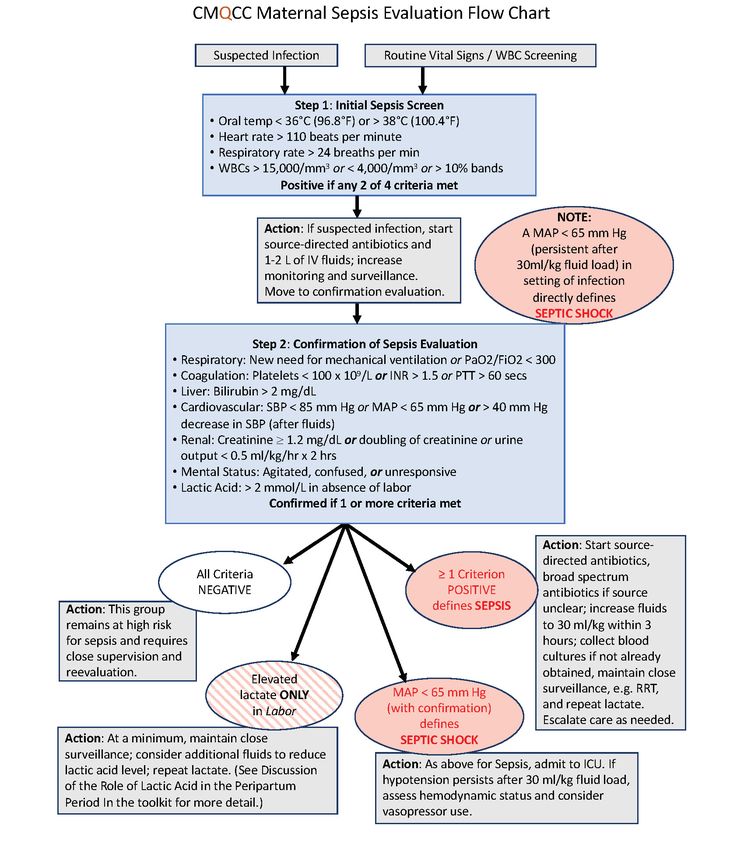
be individualized, taking into consideration gestational
age and maternal-fetal status. Choice of anesthesia for a
patient with clinical signs and/or symptoms consistent with
a diagnosis of sepsis or septic shock can be difficult. We                   A major finding of the Task
recommend that avoidance of neuraxial procedures should                      Force was that current
be strongly considered in the risk assessment of these                       screening systems for
patients.                                                                    sepsis used in other adults
                                                                             perform poorly in pregnancy.
An important proportion of women will develop sepsis
                                                                             Accordingly, we developed
following discharge from the delivery hospitalization.
                                                                             and recommend a new,
Accordingly, every woman and at least one support person
                                                                             two-step approach for the
should receive discharge instructions on the danger signs
                                                                             diagnosis of sepsis during
of infection and sepsis. Instructions at every point of care
                                                                             pregnancy and postpartum.
should include ways to decrease infection risk, such as
frequent hand washing. Finally, for women who have had
sepsis, follow-up contact should be made within days after
discharge.

The goal of this toolkit is to guide and support obstetrical care providers and their hospitals and organizations
to implement methods for timely recognition of sepsis and for an organized, evidence-based response for this
life-threatening condition. Implementation of this toolkit is intended to improve safety in all birth facilities.

An educational slide set is available as a supplemental resource to help clinicians educate their teams about the
Maternal Sepsis Toolkit.

References:
1.  Creanga AA, Syverson C, Seed K, et al. Pregnancy-Related Mortality in the United States, 2011-2013. Obstet Gynecol
    2017 Aug;130(2):366-373.
2. The California Pregnancy-Associated Mortality Review. Report from 2002-2007 Maternal Death Reviews. Sacramento:
    California Department of Public Health, Maternal, Child and Adolescent Health Division. 2017 available at: https://
    www.cdph.ca.gov/Programs/CFH/DMCAH/Pages/PAMR.aspx
3. Bauer ME, Lorenz RP, Bauer ST, et al. Maternal deaths due to sepsis in the state of Michigan, 1999-2006. Obstet Gynecol
    2015 Oct;126(4):747-52.
4. Acosta CD, Kurinczuk J, Lucas DN, et al. Severe Maternal Sepsis in the UK, 2011-2012: A National Case-Control Study.
    PLoS Med. 2014 Jul 8; 11(7):e1001672.
5. Bauer ME, Balistreri M, MacEachern M, et al. Normal Range for Maternal Lactic Acid during Pregnancy and Labor: A
    Systematic Review and Meta-Analysis of Observational Studies. Am J Perinatol 2019 Jul;36(9):898-906.
6. Bauer ME, Housey M, Bauer ST, et al. Risk Factors, Etiologies, and Screening Tools for Sepsis in Pregnant Women: A
    Multicenter Case-Control Study. Anesth Analg 2018 Aug 29.
7. Singer M, Deutschman CS, Seymour CW. The Third International Consensus Definitions for Sepsis and Septic Shock
    (Sepsis-3). JAMA. 2016;315(8):801-810.
8. Lapinsky, SE. Obstetric Infections. Crit Care Clin 2013 Jul;29(3):509-20. Doi: 10.1016/j.ccc.2013.03.006. Epub 2013 April
    30.
9. Plante LA, Pacheco LD, Louis JM. Society for Maternal-Fetal Medicine (SMFM) Consult Series #47: Sepsis during
    pregnancy and the puerperium. Am J Obstet Gynecol. 2019 Apr;220(4):B2-B10. doi: 10.1016/j.ajog.2019.01.216.
                                                                                                         Improving Diagnosis
10. Severe Sepsis and Septic Shock: Management Bundle (Composite Measure). https://cmit.cms.gov/CMIT_public/
                                                                                             and Treatment of Maternal Sepsis
                                                                                                                              7
    ViewMeasure?MeasureId=1017#tab1                                                      A CMQCC Quality Improvement Toolkit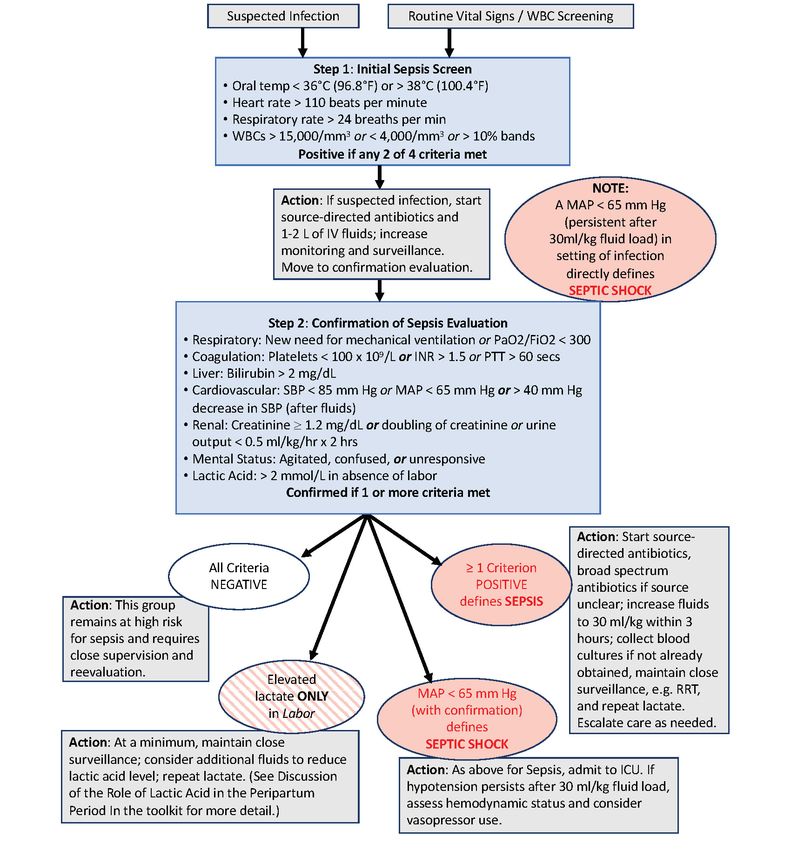
The Case for Improving Response
to Maternal Sepsis
Introduction
Sepsis is a leading cause of maternal morbidity and mortality. The Centers for Disease Control and Prevention notes that
the proportion of U.S. maternal deaths from sepsis (12.7%) is similar to the proportion of deaths from obstetric hemorrhage
(11.4%) and hypertensive disorders (7.4%).1 In a recent California maternal mortality committee report it was estimated
that 63% of maternal deaths from sepsis had a good or strong chance to have been preventable.2-3 Furthermore, for each
maternal death, there are 50 women who experience life-threatening morbidity from sepsis.4 This is concerning, given that
prompt recognition and rapid treatment of pregnant and postpartum women with sepsis usually results in good outcomes
in this young and generally healthy population. Physiological changes of pregnancy can mimic signs of sepsis (e.g. elevated
heart rate, lower blood pressure and higher white blood cell count). Labor can further impact these physiologic parameters
and significantly raise lactic acid levels.5 As a result, the national sepsis criteria are not satisfactory for the obstetric
population.6-7

Sepsis may be caused by many different infections (Table 1) which can make the clinical scenario more complex.6,8 A
pregnant woman experiences physiological immune changes which allow tolerance to paternally derived fetal antigens,
and she may be susceptible to developing more severe bacterial, fungal, or viral infections.9 While general supportive
measures are useful for all persons with sepsis, the choice of specific antibiotics or source control procedures will be
dependent on the specific infection.

      Improving Diagnosis
8     and Treatment of Maternal Sepsis
      A CMQCC Quality Improvement Toolkit
TABLE 1. Leading Causes of Maternal Sepsis

                                                      Intrapartum/
               Antepartum                         Immediate Postpartum                          Post-discharge

             Septic abortion              Chorioamnionitis/intraamniotic infection           Pneumonia/influenza

             Chorioamnionitis/
                                                       Endometritis                              Pyelonephritis
          intraamniotic infection

                                                                                               Wound Infection/
          Pneumonia/influenza                      Pneumonia/influenza
                                                                                              necrotizing fasciitis

              Pyelonephritis                           Pyelonephritis                               Mastitis

                                                     Wound Infection/
               Appendicitis                                                                      Cholecystitis
                                                    necrotizing fasciitis

Clinical quality improvement toolkits for hemorrhage and hypertension have been instrumental in driving reductions
in maternal mortality and morbidity, and there are similar opportunities for improving outcomes for women who
experience maternal sepsis. We have created simple and practical approaches to care that make adoption of our CMQCC
toolkits much more likely to succeed. Here, we present a two-step approach for the diagnosis of sepsis that is designed to
reduce false-positive and false-negative cases. In addition, we provide practical implementation aids for support bundles,
antibiotic choices, and navigation through the Centers for Medicare and Medicaid Services (CMS) Sepsis-1 protocols.10

References:
1.  Creanga AA, Syverson C, Seed K, et al. Pregnancy-Related Mortality in the United States, 2011-2013. Obstet Gynecol
    2017 Aug;130(2):366-373.
2. The California Pregnancy-Associated Mortality Review. Report from 2002-2007 Maternal Death Reviews. Sacramento:
    California Department of Public Health, Maternal, Child and Adolescent Health Division. 2017 available at: https://
    www.cdph.ca.gov/Programs/CFH/DMCAH/Pages/PAMR.aspx
3. Bauer ME, Lorenz RP, Bauer ST, et al. Maternal deaths due to sepsis in the state of Michigan, 1999-2006. Obstet Gynecol
    2015 Oct;126(4):747-52.
4. Acosta CD, Kurinczuk JJ, Lucas DN, et al. Severe Maternal Sepsis in the UK, 2011-2012: A National Case-Control Study.
    PLoS Med. 2014 Jul;8;11(7):e1001672.
5. Bauer ME, Balistreri M, MacEachern M, et al. Normal Range for Maternal Lactic Acid during Pregnancy and Labor: A
    Systematic Review and Meta-Analysis of Observational Studies. Am J Perinatol 2019 Jul;36(9):898-906.
6. Bauer ME, Housey M, Bauer ST, et al. Risk Factors, Etiologies, and Screening Tools for Sepsis in Pregnant Women: A
    Multicenter Case-Control Study. Anesth Analg 2018 Aug 29.
7. Singer M, Deutschman CS, Seymour CW. The Third International Consensus Definitions for Sepsis and Septic Shock
    (Sepsis-3). JAMA 2016 Feb;23;315(8):801-810.
8. Plante LA, Pacheco LD, Louis JM. Society for Maternal-Fetal Medicine (SMFM) Consult Series #47: Sepsis during
    pregnancy and the puerperium. Am J Obstet Gynecol. 2019 Apr;220(4):B2-B10.
9. Lapinsky, SE. Obstetric Infections. Crit Care Clin 2013 Jul;29(3):509-20.
10. Severe Sepsis and Septic Shock: Management Bundle (Composite Measure). https://cmit.cms.gov/CMIT_public/
    ViewMeasure?MeasureId=1017#tab1
                                                                                                      Improving Diagnosis
                                                                                          and Treatment of Maternal Sepsis
                                                                                                                             9
                                                                                      A CMQCC Quality Improvement Toolkit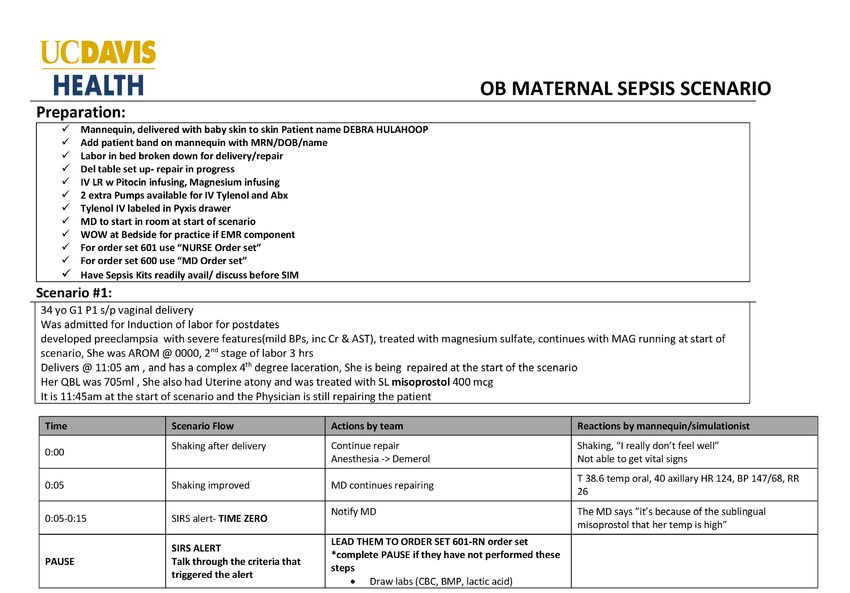
PART I.
In This Toolkit                Screening and
                               Diagnosis of Sepsis
PART I.
Screening and
Diagnosis of Sepsis   10-18

                               KEY PRINCIPLES:
PART II.
Assessment and                 1   Current screening systems perform poorly in pregnancy.
Treatment of
Maternal Sepsis:               2   We recommend a two-step approach for the diagnosis of sepsis during
Care Bundles          19-23       pregnancy and postpartum. The first screening step is limited to
                                   vital signs adjusted for pregnancy and the most recent white blood
                                   cell (WBC) count (within 24 hours). The second diagnostic step uses
                                   evaluation for end organ injury with laboratory values adjusted for
                                   pregnancy where needed.
PART III.
Assessment and                 3   The utility of lactic acid during labor is debated. Nevertheless, women
Treatment of                       with elevated values require careful individual consideration.
Maternal Sepsis:
Antibiotics and
Source Control        24-33

PART IV.
Obstetric
Considerations
in the Case of
Maternal Sepsis       34-35

PART V.
Discharge Education 36-38

PART VI.
Appendices40-66
Inadequacy of Current identify sepsis. While SIRS criteria appear to be sensitive
when applied to pregnant women, they have very high rates
Screening and Diagnostic of false-positive findings due to their low specificity.8 As an
example, in a cohort of 913 women with the most common
Criteria obstetric infection, (chorioamnionitis/intraamniotic
infection), 575 women (63%) met SIRS criteria, but only five
There is considerable controversy about both the
were deemed to have sepsis. The same study examined the
definition of sepsis and what criteria to use to screen
utility of screening using vital signs adjusted for pregnancy
for sepsis in non-pregnant adults. In 2016, a taskforce
(Maternal Early Warning Scores or [MEWS]). Ninety-two
composed of members of the Society of Critical Care
women (10.3%) met criteria of MEWS with a score of ≥ 5;
Medicine and the European Society of Intensive Care
however, only 5 women had sepsis.9 MEWS and SIRS score
Medicine produced new definitions for sepsis.1 They
poorly in detecting sepsis.
recommended the use of quick Sequential Sepsis-related
Organ Failure Assessment (qSOFA) (systolic BP ≤ 100
mm Hg; respiratory rate ≥ 22 breaths/min; or altered TABLE 2. Performance of SIRS, Modified MEWS, and
mental status) bedside scoring for sepsis screening qSOFA Criteria for Diagnosing Sepsis8
outside of the Intensive Care Unit (ICU). A score of
two or more identified patients who have a suspected Criteria Sensitivity Specificity
infection and are at risk for increased mortality. They no
longer recommended the use of systemic inflammatory
SIRS (any two): T < 36°C or > 38°C;
response syndrome (SIRS) criteria for screening 0.93 0.63
WBC < 4 or > 12; HR > 90; RR > 20
and classification of sepsis because SIRS focused
on inflammation and did not adequately reflect the
dysregulation seen in persons with sepsis. However, the Modified MEWS (any one): SBC
new recommendations have been met with criticism. < 90 mm Hg; HR > 120; RR > 30; 0.82 0.87
neurological changes
While qSOFA scoring correlates with in-hospital mortality
with increased specificity, it lacks the sensitivity to detect
sepsis at an early stage to allow for early intervention. 2-4 qSOFA (any two): RR > 22; SBC < 100
Furthermore, the Centers for Medicare and Medicaid mm Hg: neurological changes; RR > 22 0.50 0.95
Services (CMS) sepsis core measure continues to use the and SBC < 100 mm HG
prior definition for diagnosis of sepsis (source of infection
and two or more SIRS criteria) when determining
payment for sepsis management. 5 Notably, studies that
In contrast to SIRS, the currently recommended qSOFA
evaluated sepsis criteria specifically excluded pregnant
had lower sensitivity of 50% and a higher specificity of
women. This limits their utility for maternal sepsis given
95%. 8 The Society of Obstetric Medicine Australia and
the significant vital sign changes that occur during
New Zealand proposed an obstetrically modified qSOFA
pregnancy.
screening tool (referred to as omqSOFA) with raised
thresholds for pregnancy, thereby potentially increasing
The World Health Organization (WHO) has defined the specificity. However, given the poor sensitivity with
maternal sepsis simply as a life-threatening condition standard qSOFA, the proposed more stringent omqSOFA
with organ dysfunction resulting from infection during would also have poor sensitivity. 8,10
pregnancy, childbirth, post-abortion, or the postpartum
period (up to 42 days).6 Defining the criteria for sepsis and
Due to the high false-positive rates for SIRS and low
organ dysfunction during pregnancy and labor has been
sensitivity for qSOFA in pregnancy, most hospitals
challenging. A recent meta-analysis of 87 studies (including
are not formally screening for sepsis in obstetric
8,834 patients) examined the range of normal values
patients as they are required to do in other patient care
during pregnancy. They found considerable overlap with
departments. This is concerning, as sepsis remains one
SIRS criteria. Healthy pregnant women during the second
of the top five etiologies of maternal mortality. Due to
trimester, third trimester, and labor often met each of the
the concern for missing upwards of 50% of patients with
SIRS criteria except temperature.7 In a case control study of
maternal sepsis, we chose not to endorse the qSOFA
patients with maternal sepsis, SIRS criteria had a sensitivity
screening tool.
and specificity of 93% and 63% respectively, to correctly
Improving Diagnosis
and Treatment of Maternal Sepsis
11
A CMQCC Quality Improvement ToolkitA New Two-Step Approach to Sepsis Screening Points:
Screening • In the setting of suspected infection, a mean arterial
The California Maternal Quality Care Collaborative pressure (MAP) < 65 mm Hg is sufficient to initiate the
(CMQCC) proposes a new two-step approach for screening sepsis protocol even if other sepsis screening criteria
of pregnant women to reduce both false-positive and are not met.
false-negative cases. We take advantage of the high • If an abnormal value is detected, verification of the
sensitivity of an obstetrically modified SIRS screen as a abnormal value and a complete set of vital signs
first step and then follow with the high specificity of an including oxygen saturation should be taken and
evaluation for end organ injury using obstetrically modified repeated after 15 minutes.
laboratory ranges. • A screen is considered positive if two or more values
meet the criteria listed in Box 1. A white blood cell count
Step 1: Initial Sepsis Screen that has been obtained within 24 hours can be used for
the initial screen.
Centers for Medicare and Medicaid Services (CMS) sepsis
core measure and Sepsis-3 definitions of sepsis require a • Our recommended threshold for heart rate is 110
full evaluation for end organ injury in suspected sepsis.1 It beats per minute based on two standard deviations of
would be costly over-intervention to initiate the complete normal. Other entities have recommended 120 beats per
organ injury panel of laboratory testing and interventions minute as a cut off for the MEWS criteria, but this may
for every pregnant woman with a positive standard SIRS have a lower sensitivity for sepsis. Note that a sustained
criterion; (recall the 63% of women with chorioamnionitis/ maternal heart rate > 130 beats per minute is especially
intraamniotic infection that have positive standard SIRS concerning for current or future end organ injury from
criteria). Therefore, we modified standard SIRS criteria sepsis.
to account for physiological changes of pregnancy in • Abnormal temperature and elevated heart rate may be
order to reduce false-positive cases during the initial the most common combination but note that not all
sepsis screening. We based our approach on a recent women with sepsis will have a fever at ≥ 38.0°C (100.4°F).
meta-analysis of healthy pregnant women that found that Therefore, if infection is suspected (e.g. costovertebral
two standard deviations from the mean for temperature, angle tenderness plus low grade temperature elevation;
heart rate, and respiratory rate were 38.1°C (100.6°F), 107 or prolonged rupture of membranes with maternal
beats per minute, and 25 breaths per minute, respectively. or fetal tachycardia), it is appropriate to proceed with
Assuming a normal distribution, patients meeting these further laboratory testing to rule out end organ injury
thresholds for each criterion would occur 2.5% of the time. and bedside assessment as discussed in Step 2, Box 2.
It would be expected that approximately 2.5% or less (since • Maternal corticosteroid administration often increases
two or more criteria are required) of patients may meet the the white blood cell count, but the suspicion for
proposed screening criteria due to physiological changes infection should not be discounted without further
of pregnancy rather than infection.7 These criteria were evaluation. White blood cell values peak 24 hours after
rounded to ≥ 38.0°C (100.4°F), > 110 beats per minute, and administration of corticosteroids for fetal lung maturity
> 24 breaths per minute. (two standard deviations from the mean is 20.8 x 10 6/L),
and return close to baseline values by 96 hours after
BOX 1. Initial Sepsis Screen administration.11
• Screening criteria parameters should be continued
Step 1: Initial Sepsis Screen for All Patients with Suspected through all stages of labor and continued until the
Infection (POSITIVE if two (2) or more criteria are met) patient is discharged from the hospital. Vital signs
should not be taken during contractions to avoid
• Oral temperature < 36°C (98.6°F) or ≥ 38°C (100.4°F) obtaining transient aberrant values.
• Heart rate > 110 beats per minute and sustained for 15
minutes
• Respiratory rate > 24 breaths per minute and sustained for
15 minutes
• White blood cell count > 15,000/mm3 or < 4,000/mm3 or >
10% immature neutrophils (bands)
Improving Diagnosis
12 and Treatment of Maternal Sepsis
A CMQCC Quality Improvement ToolkitCase Study:
Sarah, a 24-year old primara was hospitalized for preterm
To detect women with impending rupture of membranes at 32 weeks of gestation. On the
sepsis, all members of the clinical eighth day of hospitalization, Sarah reported “feeling
team should maintain a high index of warm” and her heart was “racing.” Her vital signs
suspicion and embrace non-hierarchical included: Temp 36.6°C (97.8 °F), HR 130/min, Resp 22/
communication. All team members min, BP 115/62 mm Hg, oxygen saturation 98% room
should feel empowered to speak up air, FHR 160/min. She began contracting every three
about a concern and know that their minutes with a cervical exam of 3/80/-1. No foul-smelling
input is valued by the care team. Effective drainage noted. WBC was being collected daily and was
team communication enables members now noted to be 22,000/mm 3 . Although the patient had
to relay relevant information in a way that a positive screen for sepsis, no confirmatory testing was
is clear and understood. For example, if a performed because Sarah did not have a fever and there
nurse suspects infection in a patient who was “no clear source” of infection. The rising WBC was
screens positive for two or more modified discounted as Sarah received betamethasone four days
SIRS criteria, this may be sufficient to prior. Two hours following the screen for sepsis, the
proceed to Step 2 for further evaluation. patient was still contracting and looked uncomfortable.
The fetal heart rate tracing indicated minimal variability
with occasional late decelerations. The patient was
repositioned, fluid bolus administered, and oxygen was
delivered at 10L/min via facemask. The decision was
Step 2: Confirmation of Sepsis made to perform a repeat cesarean section immediately.
If the initial sepsis screen is positive ([two or more of the Apgar scores were 1 and 8. In the recovery room, the
four elements from Box 1] with suspicion or evidence of patient developed chills and a temperature of 38.8 °C
infection), the next step is evaluation for end organ injury (101.8°F),HR of 120/min, and BP of 88/40 (MAP 56) mm
including laboratory studies listed in Box 2, and prompt Hg. She also felt short of breath with respirations of 36/
bedside evaluation by a physician or other clinician with min. Oxygen was applied at 3L/min via nasal prongs. The
the ability to escalate care. While waiting for organ injury intensivist and rapid response nurse were called to the
laboratory results, therapy should be promptly initiated bedside to evaluate for septic shock. Intravenous fluids at
(ideally within one hour) for infection with administration 30 mL/kg were administered. Sepsis end organ injury labs
of antibiotics targeted for the presumed site and bolus of and blood cultures were sent. Piperacillin/tazobactam
1-2L intravenous fluids (IV).12 (Zosyn) was administered intravenously for the unknown
source of infection. The lactate level was reported 30
BOX 2. Confirmation of Sepsis minutes later at 9 mmol/L; the urine output was 10 mL/
hour, and the patient was bleeding at the incision site.
Step 2: Confirmation of Sepsis Test to Evaluate End Organ Following team consultation, which included a full
Injury
rapid response team and intensivist, the patient was
Laboratory values transferred to the ICU. The patient remained hypotensive
(BP 88/44 mm Hg) and received a second fluid bolus
• Complete blood count (including % immature neutrophils
of two liters. She eventually stabilized with continued
[bands], platelets)
• Coagulation status (prothrombin time/international broad-spectrum antibiotics and close monitoring,
normalized ratio/partial thromboplastin time) and was discharged home at six days postpartum.
• Comprehensive metabolic panel (specifically include The blood cultures grew both Group B streptococcus
bilirubin, creatinine) and E. coli. Final diagnosis: Septic shock secondary to
• Venous lactic acid chorioamnionitis following prolonged preterm rupture of
membranes.
Bedside assessment
• Urine output (place Foley catheter with urometer) Lessons Learned:
• Pulse oximetry Even though she did not have a fever, Sarah met initial
• Mental status assessment screening criteria for sepsis–any two criteria positive (in her
See Table 3 for Criteria for End Organ Injury
Improving Diagnosis
and Treatment of Maternal Sepsis
13
A CMQCC Quality Improvement Toolkitcase, heart rate and WBC) with suspicion of infection. TABLE 3. Criteria for End Organ Injury for Diagnosis of
A key lesson is that fever does not need to be present for Maternal Sepsis (only one criterion is sufficient for diagnosis)
patient to have an infection. Sarah displayed multiple
indicators for an infection including prolonged preterm Measure of End
Criteria (one criterion is sufficient for diagnosis)
rupture of membranes, contractions, feeling warm, Organ Injury
increased WBC, and maternal and fetal tachycardia. A Respiratory • Acute respiratory failure as evidenced by acute
maternal heart rate of 130/min is particularly noteworthy. function need for invasive or non-invasive mechanical
ventilation, OR
With the lack of sepsis confirmation testing, there were
• PaO2/FiO2 < 300
missed opportunities to perform earlier delivery and
earlier treatment with fluids and antibiotics that could Coagulation • Platelets < 100 x 109/L, OR
have avoided progression to septic shock. This case status • International Normalized ratio (INR) > 1.5, OR
illustrates the common mistake of minimalizing signs and • Partial Thromboplastin Time (PTT) > 60 seconds
symptoms in our young healthy maternity patients and
Liver function • Bilirubin > 2 mg/dL
discounting important signals: “there is no fever, therefore
she is not infected”; “the WBC elevation is because of the
Cardiovascular • Persistent hypotension after fluid administration:
betamethasone”; “130/min HR is related to labor”, etc. Of function o SBP < 85 mm Hg, OR
note, per our CMQCC algorithm, we recommend prompt o MAP < 65 mm Hg, OR
initiation of fluids and antibiotics after a positive sepsis o > 40 mm Hg decrease in SBP
screen with suspected infection, even before the sepsis
Renal function • Creatinine > 1.2 mg/dL, OR
confirmation testing is complete. • Doubling of creatinine, OR
• Urine output < 0.5 mL/kg/hour (for 2 hours)
We aligned the diagnostic criteria for end organ injury and Mental status • Agitation, confusion, or unresponsiveness
assessment
therefore the diagnosis of sepsis with the CMS sepsis core
measure wherever possible, as outlined in the measure Lactic acid • 2 mmol/L in the absence of labor (Lactic acid
is not used for diagnosis in labor, but remains
specifications.5 CMQCC adjusted several criteria for important for treatment. Please see discussion.)
pregnancy when supported by clinical data and the revised
criteria are noted in Table 3. (See Appendix A for side-by-side
PaO2 = Partial pressure of oxygen in the alveoli; FiO2 = Fraction of inspired
comparison of End Organ Injury Criteria among CMS
oxygen; SBP = systolic blood pressure; MAP = mean arterial pressure;
Sepsis-1, CMQCC Sepsis Toolkit, and Sepsis-3 SOFA score.) End organs are the same as for Sepsis-31
A discussion of the data to support the CMQCC adjustments
(Appendices B and C) follows the table.
Advantage of a Two-Step Approach for Sepsis
Patients who meet two or more criteria of the initial sepsis screen (Step 1) and also meet one or more end organ injury
criteria (Step 2) receive a diagnosis of sepsis. The two-step process allows for increased sensitivity resulting in fewer
missed sepsis cases and also increased specificity resulting in fewer false-positive cases. This is similar to testing for
syphilis, where venereal disease research laboratory (VDRL) test is used as a screening tool followed by the much more
specific Treponema pallidum particle agglutination (TPPA) assay as the diagnostic test. Other groups that have struggled
with diagnostic criteria for maternal sepsis have suggested a similar approach.13 This tactic has been in routine use in the
obstetric units of three major health care systems in California: Dignity Health, Sutter Health, and Kaiser-Permanente.
Their experience has confirmed that approximately 2% of patients will screen positive, and these women are then followed
with a second step (end organ injury evaluation) to confirm the diagnosis. In our clinical experience, this system rarely
fails to identify patients with sepsis defined by end organ injury.
Based on the evaluation of the two-step system as shown in Table 4 below, the approximate sensitivity is 32/33 = 97%. TP/(TP
+FN); the approximate specificity is 14,552/ (14,552 + 166) = 99% TN/(TN+FP).
Improving Diagnosis
14 and Treatment of Maternal Sepsis
A CMQCC Quality Improvement ToolkitTABLE 4. Performance of a Two-Step System for Diagnosis of Maternal Sepsis
(data extracted from clinical practice data sets, not formal research studies)
System Obstetric Vital Signs Screen Sepsis (End Organ Injury)
Among Screen Not Among Screen
Population Screened Screen Positive Total with End Organ Injury
Positive Positive
Dignity Health* 13,015 166 (1.3%) 20 19 (95%) 1 (5%)
(Intrapartum) (10.5% of screen positives)
(0.15% of all screened)
Sutter Health** 525 10 (1.9%) 1 1 (100%) 0 (0%)
(Intrapartum) (20% of screen positives)
(0.46% of all screened)
Sutter Health** 576 11 (1.9%) 4 4 (100%) 0 (0%)
(Antepartum) (36.4% of screen positives)
(0.46% of all screened)
Sutter Health** 636 12 (1.9%) 8*** 8 (100%) 0 (0%)
(Postpartum) (66.6% of screen positives)
(1.9% of all screened)
Combined Population 14,752 199 (1.3%) 33 32 (97%) 1 (3%)
(16.6% of screen positives)
(0.22% of all screened)
***5 of the 8 were identified by elevated lactate and 3 by oliguria
*Dignity screen: Temp ≥ 38°C, HR > 110, RR > 24, two of these three criteria (Note: in the setting of suspected infection, if MAP
< 65 mm Hg and confirmed, then the diagnosis of septic shock was made). Confirmation of sepsis was made using end organ
injury criteria.
Dignity Health data: Courtesy of Larry Shields, MD (using MEWS surveillance system, built into electronic health records)
**Sutter screen: Temp ≥ 38°C, HR > 110, RR > 24, WBC > 15k, two of these four criteria (Note: in the setting of suspected
infection, if MAP < 65 mm Hg and confirmed, then the diagnosis of septic shock was made). Confirmation of sepsis was made
using end organ injury criteria.
Sutter Health data: Courtesy of Lori Olvera, DNP (from OB Sepsis QI project, chart reviews)
BOX 3. Evaluation of Two-Step System
Approximate Sensitivity: 32/33 = 97%. TP/(TP+FN)
Approximate Specificity: 14,552/ (14,552 + 166) = 99%. TN/(TN+FP)
Improving Diagnosis
and Treatment of Maternal Sepsis
15
A CMQCC Quality Improvement ToolkitFigure 1 and Appendix D can be used to guide bedside care. All such algorithms need local review and subsequent
modifications to meet specific local issues.
FIGURE 1. Maternal Sepsis Evaluation Flow Chart
CMQCC Maternal Sepsis Evaluation Flow Chart
Improving Diagnosis
16 and Treatment of Maternal Sepsis
A CMQCC Quality Improvement ToolkitDiscussion of the Role of Lactic Acid in the evaluation for additional fluids, and repeating evaluation of
lactic acid over time.
Peripartum Period
The CMQCC Sepsis Taskforce had the most difficulty
There are special considerations for the blood draw
forging consensus regarding the utility of lactic acid in
technique to obtain a valid lactic acid result. Inaccurate
the evaluation of infections in the intrapartum period.
lactic acid results may occur as a result of a difficult blood
Even outside of pregnancy the correct role for lactic acid in
draw, prolonged tourniquet time, or prolonged transport
the diagnosis of sepsis is being reevaluated. The Sepsis-3
times to the laboratory. These issues can cause an elevated
consensus experts did not agree with prior panels for use
lactic acid level in the specimen. As a result, a woman might
of lactic acid in establishing the diagnosis of sepsis and
unnecessarily receive escalation of care.
recommended against the use of lactic acid for screening
concurrent with qSOFA screening.1 Furthermore, pregnancy
complicates the interpretation of lactic acid levels. Labor For lab testing, a gray-top tube or a venous/arterial
can be associated with high levels of lactic acid in the blood gas syringe should be used. Hemolysis during the
absence of serious infection, likely due to anaerobic blood draw can raise lactic acid levels proportionally
metabolism during prolonged physical exertion. When not and techniques to minimize hemolysis during specimen
in labor, lactic acid levels in pregnant women are similar collection should be utilized. A recent same-subject
to non-pregnant women. In those settings, the same lactic controlled study did not show a relationship with routine
acid value thresholds can be used with expected values less tourniquet use; still, it is generally recommended that
than 2 mmol/L.14 A meta-analysis of 22 studies of normal the lactic acid sample should be first in a multiple vial
healthy pregnant women without infection demonstrated collection, placed immediately on ice, delivered quickly to
a rise in the average level of lactic acid during labor with the laboratory, and the analysis should be performed within
an increasing portion of cases above 2.0 mmol/L. Most 20-30 minutes for the most accurate results.20
importantly, these data were from women without infection
and illustrate the limited utility of lactic acid for screening
for sepsis in this population.14
Conversely, for pregnant women with infection, high lactic
acid levels are concerning. In a cohort of pregnant women
with suspected infection presenting to the emergency room,
elevated levels of lactic acid were associated with higher
morbidity (ICU admission, telemetry, length of stay, and
positive blood cultures).15 Also, in a study of 100 pregnant
women with infection, a lactic acid level ≥ 4mmol/L had
a sensitivity and specificity to identify sepsis of 38% and
88%, respectively.16 Lactic acid can also be considered an
important criterion to follow for adequate treatment of
hypoperfusion in patients with sepsis (as suggested by the
Surviving Sepsis Campaign).12
In summary, in pregnant women with a positive initial
sepsis screen and suspected infection who are not in
labor, a lactic acid level > 2 mmol/L confirms a diagnosis
of sepsis per CMS criteria. As noted above, lactic acid
levels may increase during labor as a result of anaerobic
metabolism.17-19 However, we have limited data to make
strong recommendations for the interpretation of elevated
lactic acid for women in labor with suspected infection.
Therefore, for women in labor with a positive initial sepsis
screen, but negative confirmation of sepsis (lacking criteria
for end organ injury) who have an elevated lactic acid
level, we recommend close surveillance, repeated bedside
Improving Diagnosis
and Treatment of Maternal Sepsis
17
A CMQCC Quality Improvement ToolkitReferences:
1. Singer M, Deutschman CS, Seymour CW, et al. The Third International Consensus Definitions for Sepsis and Septic
Shock (Sepsis-3). JAMA 2016 Feb;23;315(8):801-810. Doi: 10.1001/jama.2016.0287
2. Serafim R, Gomes JA, Salluh J, et al. A Comparison of the Quick-SOFA and Systemic Inflammatory Response Syndrome
Criteria for the Diagnosis of Sepsis and Prediction of Mortality: A Systematic Review and Meta-Analysis. Chest 2018
Mar;153(3):646-55.
3. Sprung CL, Schein RMH, Balk RA. The new sepsis consensus definitions: the good, the bad and the ugly. Intensive Care
Med 2016 Dec;42(12):2024-2026.
4. Simpson SQ. SIRS in the Time of Sepsis-3. Chest 2018 Jan;153(1):34-38.
5. QualityNet. Specifications Manual for National Hospital Inpatient Quality Measures
Quality Net: CMS; [Accessed April 16, 2019]. Available from: https://www.qualitynet.org/dcs/
ContentServer?c=Page&pagename=QnetPublic%2FPage%2FQnetTier3&cid=1228776794502.
6. Bonet M, Nogueira Pileggi V, Rijken MJ, et al. Towards a consensus definition of maternal sepsis: results of a systematic
review and expert consultation. Reprod Health 2017 May;30;14(1):67.
7. Bauer ME, Bauer ST, Rajala B, et al. Maternal physiologic parameters in relationship to systemic inflammatory
response syndrome criteria: a systematic review and meta-analysis. Obstet Gynecol 2014 Sep;124(3):535-41.
8. Bauer ME, Housey M, Bauer ST, et al. Risk Factors, Etiologies, and Screening Tools for Sepsis in Pregnant Women: A
Multicenter Case–Control Study. Anesth & Analg 2018 Aug 29.
9. Lappen JR, Keene M, Lore M, et al. Existing models fail to predict sepsis in obstetric population with intrauterine
infection. Am J Obstet Gynecol 2010 Dec;203(6):573.e1-5.
10. Bowyer L, Robinson HL, Barrett H, et al. SOMANZ guidelines for the investigation and management sepsis in
pregnancy. Aust N Z J Obstet Gynaecol 2017 Oct;57(5):540-551.
11. Bauer ME, Price LK, MacEachern MP, et al. Maternal leukocytosis after antenatal corticosteroid administration: a
systematic review and meta-analysis. J Obstet Gynecol 2018 Feb;38(2):210-216.
12. Rhodes A, Evans LE, Alhazzani W, et al. Surviving Sepsis Campaign: International Guidelines for Management of
Sepsis and Septic Shock: 2016. Crit Care Med 2017 Mar;45(3):486-552.
13. Edwards SE, Grobman WA, Lappen JR, et al. Modified obstetric early warning scoring systems (MOEWS): validating
the diagnostic performance for severe sepsis in women with chorioamnionitis. Am J of Obstet & Gynecol 2015
Apr;212(4):536.e1-8.
14. Bauer ME, Balistreri M, MacEachern M, et al. Normal Range for Maternal Lactic Acid during Pregnancy and Labor: A
Systematic Review and Meta-Analysis of Observational Studies. Am J Perinatol 2019 Jul;36(9):898-906.
15. Albright CM, Ali TN, Lopes V, et al. Lactic acid measurement to identify risk of morbidity from sepsis in pregnancy. Am
J Perinatol 2015 Apr;32(5):481-6.
16. Agarwal R, Yadav YK, Garg S, et al. Lactic acid as an adjuvant marker in pregnancy-associated sepsis. S Afr J Obstet
Gynecol 2018;24(1):8-10.
17. Katz M, Kroll D, Shapiro Y, et al. Energy expenditure in normal labor. Is J Med Sci 1990 26(05):254-257.
18. Marx GF, Green NM. Maternal lactate, pyruvate, and excess lactate production during labor and delivery. Am J Obstet
Gynecol 1964 Nov;15;90:786-793.
19. Schneider H, Proger M, Ziegler WH, et al. Biochemical changes in the mother and the fetus during labor and its
significance for the management of the second stage. Int J Gynaecol Obstet 1990;31(02):117-126.
20. Balakrishnan V, Wilson J, Taggart B, et al. Impact of Phlebotomy Tourniquet Use on Blood Lactate Levels in Acutely Ill
Patients. CJME 2016 Sep;18(5):358-62.
Improving Diagnosis
18 and Treatment of Maternal Sepsis
A CMQCC Quality Improvement ToolkitPART II.
In This Toolkit
Assessment and
Treatment of
PART I. Maternal Sepsis:
Care Bundles
Screening and
Diagnosis of Sepsis 10-18
PART II.
Assessment and KEY PRINCIPLES:
Treatment of
The Surviving Sepsis Campaign recommends the following:
Maternal Sepsis:
Care Bundles 19-23
11. Act quickly upon recognition of sepsis and septic shock.
22. Minimize time to treatment. Sepsis is a medical emergency.
PART III. 33. Monitor closely for response or lack of response to interventions.
Assessment and
Treatment of 44. Communicate sepsis status during bedside care and handoff.
Maternal Sepsis:
Antibiotics and
Source Control 24-33
PART IV.
Obstetric
Considerations
in the Case of
Maternal Sepsis 34-35
PART V.
Discharge Education 36-38
PART VI.
Appendices40-66
Improving Diagnosis
and Treatment of Maternal Sepsis
19
A CMQCC Quality Improvement ToolkitTABLE 5. Assessment and Monitoring Recommendations Following a Positive Step 1 Initial Sepsis Screen
The ongoing assessment recommendations are based on ‘Time Zero’. Once the patient triggers a positive initial sepsis screen,
‘Time Zero’ will start.
Monitoring Time Frame Additional Considerations
Fetal monitoring Continuous Antepartum/intrapartum
Pulse oximetry Continuous Until vital signs are normalized
Q 30 minutes from Until lactate less than 2.0 mmol/L, then Q2 h for non-laboring
Blood pressure (MAP)
‘Time Zero’ patients*
Q 30 minutes from Until lactate less than 2.0 mmol/L, then Q2 h for non-laboring
Temperature
‘Time Zero’ patients*
Q 1 hour from
Urine output Foley catheter with urometer
‘Time Zero’
Mental status Continuous Note agitation, confusion, or unresponsiveness
*Jones, AE. Lactate Clearance for Assessing Response to Resuscitation in Severe Sepsis. Acad Emerg Med 2013 Aug;20(8):844-847
A review of nursing technique for collecting a urine sample from a Foley catheter is provided in Appendix E.
Cultures
Blood cultures are not required for women with
uncomplicated infections, but all guidelines for sepsis
recommend blood cultures and other site cultures as
appropriate. Blood cultures should be collected prior
to antibiotic administration when possible. Society of
Critical Care Medicine recommends appropriate routine We recommend that blood
microbiologic cultures be obtained prior to starting cultures be drawn when sepsis
antimicrobial therapy in patients with suspected sepsis and
is confirmed (see Maternal
septic shock if it does not result in substantial delay in the
start of antimicrobials. Sepsis Evaluation Flow Chart)
even if antibiotic therapy has
For chorioamnionitis/intraamniotic infection and been initiated.
endometritis, lower genital tract cultures are rarely
performed because they may reflect primarily contaminating
organisms. Furthermore, patients initially diagnosed with
chorioamnionitis/endometritis generally have negative blood
cultures, or a positive culture is reported after a recovered
patient has been discharged. Should the patient show signs of
end organ injury or septic shock, however, blood cultures
should be obtained if not already done. In order to optimize identification of causative organisms, at least two sets of
cultures for anaerobes and aerobes should be collected.1 If the same organism is identified in both sets of blood cultures,
the likelihood that the organism is causing sepsis is increased.2
Blood cultures should be drawn within three hours following a diagnosis of sepsis with organ dysfunction per CMS
guidelines (Hospital IQR Guidelines) V 5.5. 3 According to CMS guidelines, it is acceptable to draw blood cultures if
antibiotics were commenced in the previous 24 hours before sepsis was identified. In addition, if there is concern for
a patient’s deteriorating condition due to rapidly advancing infection, antibiotics should be started immediately with
documentation that blood cultures will be drawn as soon as possible.
Improving Diagnosis
20 and Treatment of Maternal Sepsis
A CMQCC Quality Improvement ToolkitFluid Management TABLE 6. Additional Considerations for Pregnant Women
with Sepsis
Patients with sepsis or septic shock have low circulating
intravascular volume. It is vital to optimize circulating
Consideration Comment
volume and improve cardiac output (blood pressure) and
tissue perfusion. We recommend that resuscitation from Norepinephrine is recommended in
sepsis-induced hypoperfusion include at least 30 mL/ Vasopressors pregnancy and used if MAP < 65 mm Hg
kg of intravenous crystalloid fluid within three hours of if unresponsive to intravenous fluids.
recognition of sepsis.4 Surviving Sepsis Campaign does not Dobutamine is recommended for
recommend one crystalloid over another. myocardial dysfunction or hypoperfusion
Inotrope despite intravenous fluids and
vasopressors as it increases cardiac
Surviving Sepsis Campaign (2018) recommends that output.
following initial fluid resuscitation, additional fluids
Glucose control Avoid hyperglycemia > 180 mg/dl.
administration should be guided by frequent reassessment
of hemodynamic status.4 The most common approach is to Reduce fetal oxygen consumption and
Maternal temperature control fetal tachycardia using acetaminophen
use a non-invasive cardiac output monitor that measures and cooling blankets.
stroke volume and cardiac output in response to a fluid
Consider steroids for fetal lung maturity
challenge, either from a 250 mL fluid bolus or from passive Fetal lung maturity
if 23-36* weeks of pregnancy.
leg raising. It should be noted that passive leg raising is
Lower leg sequential compression
contraindicated due to vena cava pressure unless a uterine DVT prophylaxis
devices while on bed rest.
displacement is performed. The use of non-invasive
continuous cardiac output monitoring has been validated *Gymafi-Bannerman C, Thom EA, Blackwell SC et al. Antenatal
in the obstetric population.5-6 A Rapid Response Team (RRT) Betamethasone For Women at Risk for Late Preterm Delivery. N Eng J Med
nurse, ICU nurse, or emergency room nurse may perform 2016 Apr;374:1311-1320
a non-invasive cardiac monitor perfusion assessment. The
nurse will record the stroke volume index (SVI) baseline,
Communication and Teamwork Tools
SVI challenge and SVI percentage change. If the SVI A critical aspect of care for a patient with sepsis is clear
percentage change is greater than 10, the patient is fluid and direct communication. Effective communication
responsive. If SVI percentage change is less than 10, then techniques will enhance perinatal patient outcomes. With
additional fluids are not required. The use of non-invasive any new practice, there may be resistance to establishing
monitoring is also beneficial in patients with preeclampsia a treatment plan for early recognition of maternal
or an existing cardiac condition where there is concern sepsis. Clear communication that is firm and respectful
for administrating large fluid boluses. It is important can provide a culture of safety. We provide a review of
to determine if your facility has a non-invasive cardiac communication techniques in Appendix H, examples of a
monitor and, if so, who performs the test. Usually this will sepsis debriefing tool (Appendix I), and scenario for a sepsis
be accomplished in conjunction with an intensivist who drill (Appendix J).
is co-managing the patient. When dynamic measurement
systems are not available, tissue perfusion can be assessed
after aggressive fluid resuscitation including blood pressure
Rapid Response Team and Escalation of
and heart rate response, urine output, transthoracic Care Coordination
echocardiogram, central venous pressure (CVP), or central Most hospitals have a RRT that is important for supporting
venous oxygen saturation (ScvO2) measurement, pulse patients with sepsis and septic shock. Typically, the RRT
pressure variation, and lactate clearance/normalization.7 is comprised of a critical care nurse and a respiratory
Tissue perfusion assessment must be performed by a therapist. The RRT supports the care team outside of
physician, physician’s assistant, or nurse practitioner. the emergency and intensive care departments and is
particularly useful in obstetric units where critically
Care of maternal sepsis requires a multidisciplinary team. ill patients are uncommon. The RRT can assist with
Table 6 provides special recommendations that are specific assessment of a deteriorating patient, provide early
to pregnancy that can easily be overlooked in the ICU intervention, and make recommendations for lab tests and
setting.8,7 treatment.
Improving Diagnosis
and Treatment of Maternal Sepsis
21
A CMQCC Quality Improvement ToolkitYou can also read


