Improving Efficiency, Responsiveness and Patient Care with RFID Location Based Patient Tracking at SunnyBrook Health Sciences Center - By Klaus ...
←
→
Page content transcription
If your browser does not render page correctly, please read the page content below

Whitepaper

Improving Efficiency, Responsiveness and Patient Care
with RFID Location Based Patient Tracking at
SunnyBrook Health Sciences Center
By Klaus Schoeke, FEIG ELECTRONICS INC
As the largest trauma center in Canada, Sunnybrook           OR Information Management Services staff installed
Health Sciences Centre sees approximately 13,500             an RFID system to provide location based tracking of
surgical patients per year in the hospital OR                patients’ progress in and out of 19 operating rooms
department. Sunnybrook OR Information Management             in the OR department. As a result, Sunnybrook has
Services strives towards excellence in increasing            increased visibility into utilization data by 100 percent,
patient satisfaction, being innovative and forward           enabling the hospital to continuously improve quality
thinking, and enabling senior management to have             of care and operational efficiency for a better and
the tools and information at their fingertips to make        safer patient experience. Building on the success of
important decisions related to patient flow, staffing        the initial system, which was deployed in 2015, the
models, maintaining efficiency and achieving targets.        hospital has expanded RFID technology to new areas
                                                             of care and asset tracking.
In order to improve efficiency, patient satisfaction
and responsiveness to patients’ families, Sunnybrook

Streamlining Patient Flow
Previously, Sunnybrook did not have a formal process in place for tracking patients through the perioperative areas.
Like many other hospitals, Sunnybrook was forced to rely on a time-consuming, manual process for tracking
how much time each patient spends in each area of the surgery department — an important metric for utilization
reporting, staffing models, scheduling and patient flow for a better overall patient experience. Yet in Mass Trauma/
Mass Casualty (Code Orange) situations, when every second
counts, the lack of automated patient tracking slows down the
entire process, hampering the ability to make fast decisions.
With the installation of a fully automated RFID system,
communications duties can be streamlined, freeing up valuable
time for hospital staff to focus on delivering quality patient care,
while still remaining responsive to patients and their families.
Moreover, by automatically tracking the time in/ time out of each
area in the OR department, the hospital has real-time visibility into
patient movements and whereabouts, as well as valuable utilization
data to optimize workflow.

It’s no longer necessary to wait for personnel to update the computer
records to know if a patient arrived in a room before it was ready,
for example, or spent more time than expected in post-anesthetic
recovery. In this way, Sunnybrook is enabled to continuously improve
quality of care and operational efficiency for a better and safer
patient experience.

Patient tracking with RFID technology provides surgeons, OR theatre
teams, and administrations with real-time workflow summaries and
improved utilization data collection to help forecast utilization in real-
time and identify bottlenecks and resource needs. By improving and
encouraging transparency of patient flow throughout OR, including
recovery, pre-op, ambulatory, in-patient and discharge, increased
access to patient location information benefits not only the hospital,
but also its patients and their family members.

                                                                 the gurney with the patient, sequentially numbered
Anatomy of an RFID System                                        RFID tags are adhered to the binders that contain
After conducting significant research, the OR                    patients’ charts. During pilot testing, the team placed
Information Management Services team contacted                   the binders in various locations and positions on the
RFID technology provider RFID Canada and FEIG                    gurney. Testing showed that it was necessary to attach
ELECTRONICS to evaluate their business needs and                 tags to the front and back of each binder, in the event
determine the best RFID solution and strategy to                 that the attendant might hold the binder under
track patients’ progress in and out of Sunnybrook’s 19           their arm.
operating rooms.
                                                                 Each patient is assigned the unique tag ID number
RFID wristbands were first considered; however, that             corresponding to their binder, and they have the option
solution was rejected due to the cost, as well as the            to provide that number to family members or loved
fact that staff cannot guarantee the orientation of each         ones. To read the RFID tags, three antennas were
patient’s wrist when their gurney passes the fixed RFID          installed at entry doors and check points in the surgical
readers. Because the patient’s chart always travels on           unit — from registration to pre-op, to the operating
room, and on to post-op. The RFID system collects          in registration, pre-op preparation, the operating room,
real-time data as each tag passes an antenna and           post-operative recovery and the surgical short stay
transmits data to a reader.                                unit. When the patient leaves the recovery room the
                                                           binder is left in the discharge bin and re-used the next
Pilot testing was done extensively with observation,
                                                           day for a cost-efficient system.
trial and error, and evaluation of results. FEIG antenna
positioning was adjusted based on the test runs of the     Overall, the RFID system project took approximately
gurneys from reception to the operating room area; as      4 months total to design, pilot and implement. Working
a result, one antenna was positioned vertically, one       together, the Sunnybrook team, RFID Canada and
horizontally, and one was affixed to the ceiling.          FEIG Electronics evaluated and tested various system
In addition, when testing the system it was                configurations and components to determine the
determined that barriers needed to be installed along      best RFID solution and strategy. The OR Information
the wall-mounted readers to prevent staff from             Management Services team also worked with
running into them.                                         the nurses to analyze their workflow process and
                                                           determine how a system could be designed to meet
Once the system was up and running, Sunnybrook
                                                           their needs.
installed monitors in the waiting area to display
real-time updates on each patient’s whereabouts,           Toward the end of the design project, the OR team
reducing the need for family members to request            approached the in-house IT department and asked
frequent status reports. The unique patient ID numbers     for their help to rollout the system in the hospital. To
are displayed, instead of names, in order to protect       ensure a user-friendly design, nurses were asked to
patient confidentiality while engaging patients and        evaluate the software user interface and data input
their families in an affordable, intelligent health care   fields, and their specifications were included in the
system. In addition, there is a “Find My Patient” app      custom software program.
that can be downloaded to help family members locate
                                                           Likewise, patients and family members were surveyed
their loved ones in real-time.
                                                           to determine what information would be most helpful,
The hospital’s OR Information Management Services          resulting in the team’s development of the “Find My
staff wrote a custom software program that tracks          Patient” app to provide up to the minute information
the patients and their charts coming and going, and        about patients’ whereabouts from a screen or kiosk.
records how much time each patient spends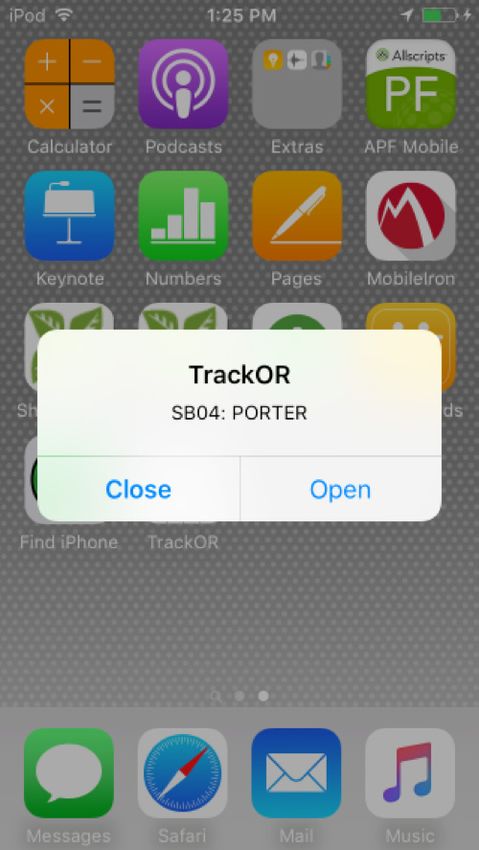
A Healthy Outcome
The data collected by this RFID system facilitates
improvements in scheduling of procedures, staffing
and overall operations. This valuable data allows
hospital senior administration to make informed
decisions and helps Sunnybrook maintain peak
efficiency, enabling the hospital to continuously
improve quality of care for a better and safer patient
experience.
                                                             A Day At A Glance: Select any day, any patient, any point in time – hour
                                                             by hour glance. View by patient count or view by bed count.

RFID data details the actual workflow and utilization,       happened when clerks were not on shift and the
and the information is available across the                  registration system was updated only when RN’s
organization, allowing management to see how many            had time. This made information outdated, and often
patients are actually in each location at any given time.    the patient census was incorrect. By automating the
This is the first time the hospital has ever had actual      information, the staff is freed up to tend to patients
utilization data across the OR department, increasing        and management has a better view of bed needs,
visibility into utilization statistics by 100 percent. The   demonstrating to management that the short stay unit
hospital’s custom software program makes it easy to          is not underutilized or overstaffed, and indicating when
review any day at a glance, providing valuable data that     more support and resources are needed. RFID enabled
facilitates improvements in scheduling of procedures,        an accurate patient count in real time.
staffing and overall operations.
                                                             The previous patient information system relied on
Because the automated RFID system is not dependent           staff to manually update a software that costs the
on personnel to enter information into a computer,           hospital $100,000 per year to maintain. Based on the
Sunnybrook nursing and allied services staff now             development and implementation of TrackOR, the OR &
are able to focus on taking care of patients first. The      Related Services has completed moved away from that
resulting efficiency improvements enabled by automatic       program to a new custom program based on the RFID
data collection allow management to significantly            scheduling system, saving those annual maintenance
improve workflow for operational efficiency, providing       costs while improving productivity.
more time for nursing, not documentation.
                                                             After two years of seeking approval to implement the
In addition, with 14 beds in the hospital surgical short     system, the OR IM team set aside money in their own
stay unit, it’s important to maximize use of those           budget to test and prove the system. After seeing the
beds for maximum efficiency. Previously, the hospital        results, the hospital’s executive management team
used a patient registration system where clerical staff      has given approval to expand the solution and take the
manually counted patients each day at midnight.              system “as far as possible.”

However, patients are discharged at all hours, and
because RN’s are at the bedside, some discharges
RFID Equipment in the SunnyBrook Patient Location Application

Registration Stations:                                       Patient De-Activation Stations:
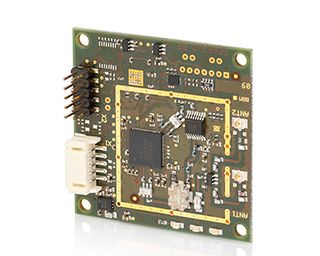
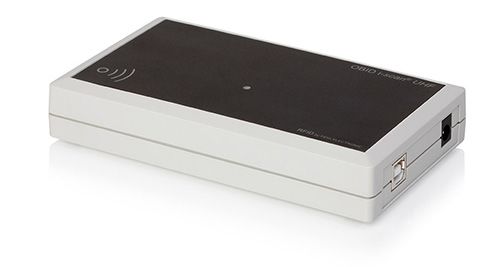
• FEIG’s MU02 Reader is encased in a USB case on             • FEIG Readers MRU102 encased in a custom box are
  desks in our two areas where patient charts are              designed to hold the completed files. Data is used
  assembled. The reader is used to scan UHF RFID               to study patient flow and for informative decision
  tags and map to unique patient id.                           making for staffing levels.
                                                               Staff is able to view patient
                                                               movement data in real time
                                                               and respond to changes.

LRU 1002                         MU02

Patient Activation Stations (Binders/Charts):
• FEIG Readers: Custom Readers (MU02 & NF Antenna)
  read over 1000+ passive UHF RFID labels affixed to
  the front and back of the patient binders.

Patient Tracking:
• FEIG Readers LRU1002 and Times-7 6590C and
  A6030 antennas were installed in discreet locations,
  out of view and close to ceiling height. RFID Tags are
  read by the mounted antennas at key locations to
  track patient flow. Data is collected and reported on
  overview screens as well as location specific plasma       Strategically placed RFID antennas capture directional movement
  screens, touch screens and desk computers.                 and exact location of patient

                               Klaus Schoeke is the Technical Sales Director at FEIG ELECTRONICS. He holds a
                               master degree in electrical engineering with specialty of high frequency technology.
                               He worked for Philips, Sartorius and Feig Electronics in the fields of project
                               management, marketing and sales.

FEIG ELECTRONICS Inc.
2220 Northmont Parkway, Suite 250 Duluth, GA 30096 USA
Phone: +1 770 491 8060 Fax: +1 687 417 6273
E-mail: info@feig-electronics.com

You can also read


