The Six Ideas A Quieter Operations Roadmap - Presented by NAV CANADA & GTAA to Transport Canada June 18, 2018 - Toronto Pearson
←
→
Page content transcription
If your browser does not render page correctly, please read the page content below
The Six Ideas
A Quiet er Operat ions Roadmap

Presented by NAV CANADA & GTAA to Transport Canada
June 18, 2018

                                                     1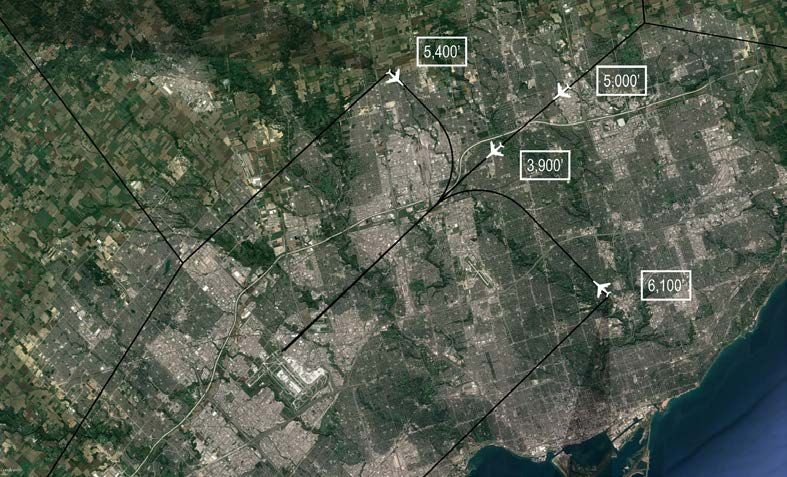
The GTAA and NAV CANADA
are addressing aircraft noise
for resident s.

                                2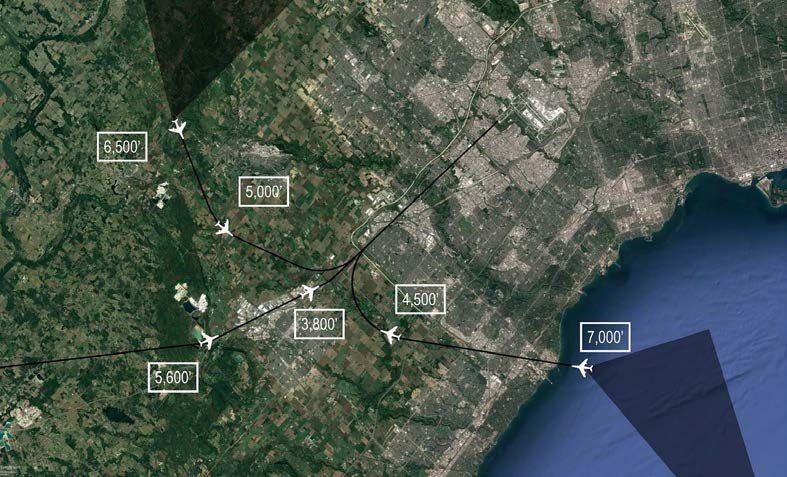
The Six Ideas
 In June 2015, in response t o communit y feedback, t he GTAA and NAV CANADA began a st udy of
                     six ideas w it h t he pot ent ial t o reduce t he noise impact of
                   Toront o Pearson’s operat ions on surrounding neighbourhoods.

                                             Phase 3 (Spring 2018): Public Consultation on the Six Ideas
                 Phase 2
    Phase 1                 Elected
                 (2016 –                  CENAC
   (Summer                  Official
                                          Feb 27                                               Public Consultation Period:
                  2017):    Briefings:                       Public
     2015):                                                                 W ebsite                 Mar 3 – Apr 20
                Technical   - W ebinar                       Notice                              - 15 public meetings/
  Stakeholder               - In-Person                                     Live
                Analysis/                                    & Ads
                                                                            Feb 23                 technical briefings
  Roundtables                                                Feb 12
                Briefings   W eek of      Stakeholders
                                                                                                   - Online Survey
                            Feb 5         Mar 1

                         Six Ideas                                          Implementation
                    Public Engagement                                          Ideas 1-4
                           Report                                             2018-2019
                         July 2018
                                                                           Testing Ideas 5-6
                                                                              2018-2019

                                                                                                                             3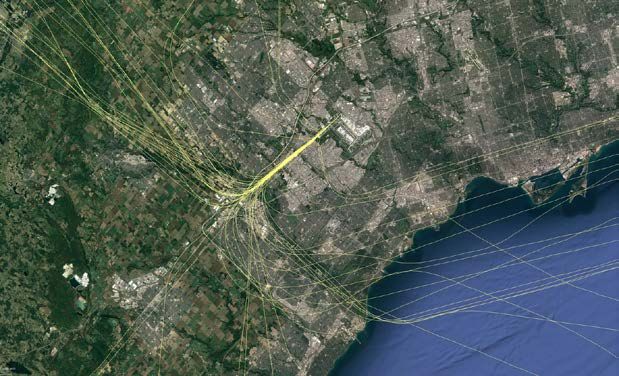
Out reach by t he numbers

2.9+ M t radit ional advert ising
              250,000 social impressions
160,000 aut omat ed calls
              8,700 w ebsit e visit s
    ~430 resident s at 19 public meet ings

900 +survey responses                        4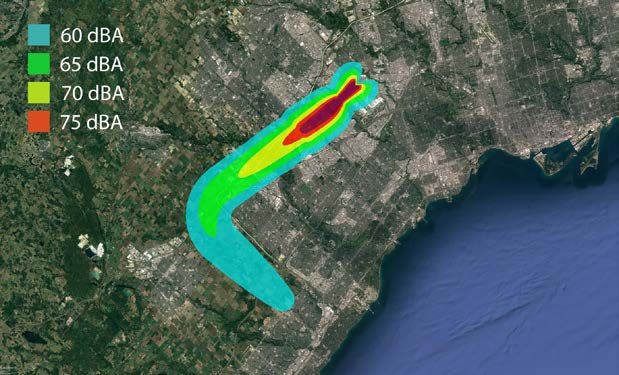
W hat w e heard
The Six Ideas.

                  5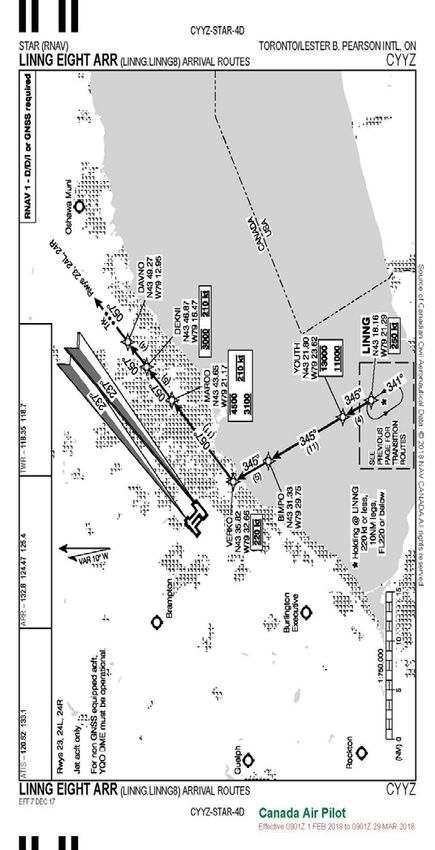
The Six Ideas
 Idea 1 - New approach procedures for nighttime operations

 Idea 2 - New departure procedures for nighttime operations

 Idea 3 - Increased downwind arrival speeds

 Idea 4 - New technology to reduce the need for low altitude levelling by arriving
 aircraft

 Idea 5 - Summer weekend runway alternation

 Idea 6 - Review of nighttime Preferential Runway System
                                                                                     6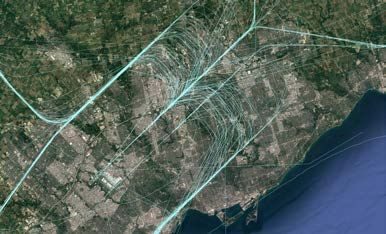
Ideas 1 - 4
NAV CANADA

              7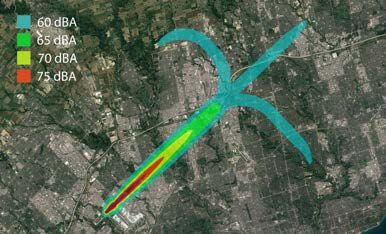
Idea 1 - New
night t ime arrivals
 ➔ W hat w e proposed
   New RNAV approaches,
   specifically constructed where
   possible to fly over fewer
   residential areas, designed to
   provide for continuous descent
   and enable aircraft to be higher in
   portions of the flight path.

 ➔ Noise analysis suggests that up to
   112,000 few er people will be
   affected by noise levels >60dBA
   from overnight flights depending
   on the runway in use.

                                         8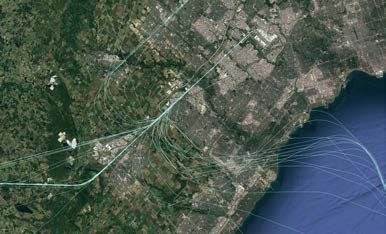
Idea 1 - New night t ime arrivals
 ➔ W hat w e heard (480 respondents)

                                       9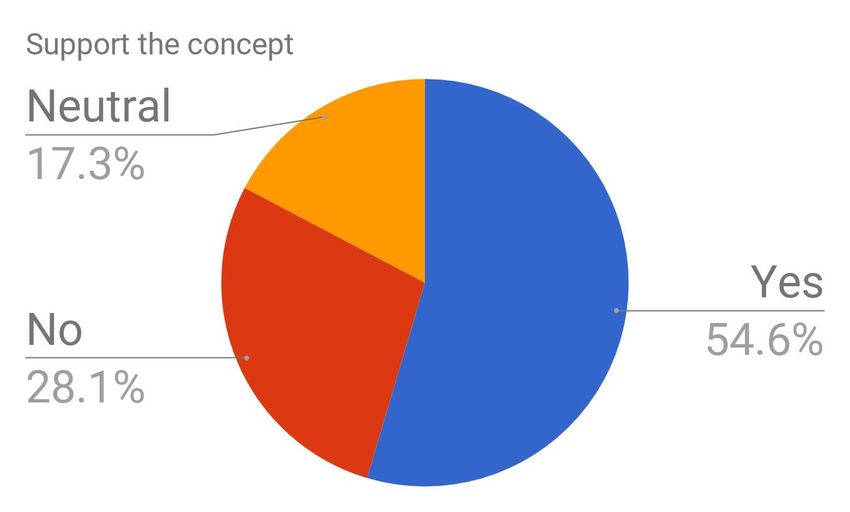
Idea 1 - New night t ime
arrivals
 ➔ R esidents had balanced perspective in
   regards to the changes bringing
   improvements across the region.

 ➔ S ome concern about increased impact
   depending on respondents location.

 ➔ R esidents at meetings in Georgetown,
   L easide, parts of Oakville and V aughan
   were particularly supportive of this idea.

 ➔ In survey feedback, the greatest number
   of those opposed to the idea were from
   E tobicoke.

                                                10
Idea 1 - New night t ime arrivals
➔ W hat ’s Next
Implementation planned for N ovember 2018
T o be published in the C anada Air Pilot
U tilization to be studied as part of 180 -
day review
C lose monitoring of community concerns
11Idea 2 - New
night t ime depart ures
➔ W hat w e proposed
A mix of strategies to reduce
residential impacts, including
changing the location where
aircraft turn or altering current
headings.
➔ Noise analysis suggest that as
many as 221,000 few er people
will be exposed to noise levels
>60 dBA depending on direction.
12Idea 2 - New night t ime depart ures
➔ W hat w e heard (464 respondents)
13Idea 2 - New night t ime
depart ures
➔ W hat w e heard
➔ N ight departure routings are not a significant
concern in many communities because of the
low number of departures that occur at night
➔ S imilar trends as Idea # 1
➔ R esidents attending consultation meetings in
locations west of the airport were generally
supportive.
➔ Greatest number of those supporting the idea
in the survey were from Mississauga, which
stands to gain from changes.
14Idea 2 - New night t ime depart ures
➔ W hat ’s Next
Implementation planned for N ovember 2018
Flight tracks to be studied as part of 180 -
day review
C lose monitoring of community concerns
15Idea 3 - Increased dow nw ind arrival speeds
➔ W hat w as proposed
Changes to the published speeds on the “downwind” portion of the arrival flight path
from 200 knots to 210 knots.
➔ W hat t he benefit s are
A potential reduction in the need for flaps to be deployed by pilots of certain aircraft
types in order to slow their speed on the downwind. Reducing flap use may reduce
airframe noise.
➔ W hat has happened
The change to the published speed was implemented effective April 27, 2017 via an
amendment to the Canada Air Pilot, the aeronautical publication used by pilots.
16Increased dow nw ind arrival speeds
In 2012 the speed
was increased from
190 to 200 knots. At
the time, this was
the highest speed
allowable by design
criteria.
Today the criteria
enable 210 knot s.
17Idea 4 - Increased use
of CDO
➔ W hat w e st udied
Use of Performance Based
Navigation technology to
increase use of continuous
descent during periods in which
the “high/ low” is not required.
Ways to reduce use of the
downwind when possible.
➔ Noise modelling suggests that as
many as 80,000 few er people
will be exposed to noise >60 dBA
when the new approaches are
used.
18Idea 4 - Increased use of CDO
➔ W hat w e heard (458 respondents)
19Idea 4 - Increased use of CDO
➔ S ignificant support for Idea # 4
➔ R esidents under downwind segments view
increases in altitude and potential for reduced
low altitude leveling positively.
➔ Greater number view this as bringing
improvements across the region.
➔ All communities viewed this option as a
positive development.
20Idea 4 - Increased use of CDO
➔ W hat ’s Next
Implementation planned for early 2019
T o be published in C anada Air Pilot
Flight track analysis to be undertaken as
part of 180 - day review
C lose monitoring of community concerns
21Ideas 5 & 6
Great er Toront o Airport s Aut horit y
22Idea 5
Summer W eekend Runw ay Alt ernat ion
23Idea 5 - Summer W eekend Runw ay Alt ernat ion
➔ W hat w e st udied
Two operational concepts, measured against the same set of criteria:
● Adhere to a published schedule
● Maintain ability to meet capacity requirements
● Consider the values and guiding principles provided by the Residents’ Reference Panel
Opt ion 1: Not feasible Resident s living nort h
Runway alternation program with Did not meet all criteria or sout h of t he airport
east/ west AND north/ south runways Not included in proposal. w ill NOT experience a
change due t o Idea 5
Opt ion 2: Deemed Feasible
Runway alternation program with only the Met all viability criteria.
east/ west runways Final proposal based on
this option.
24Idea 5 - Summer W eekend Runw ay Alt ernat ion
➔ W hat w e proposed
● Summer weekend runway alternation program involving the three east / w est
runw ays
○ Will provide some predictable respite for residents living under final
approach or init ial depart ure paths
○ Residents living under the downwind would not see respite from this program
● May to October, inclusive (26 weekends) between 6:30 a.m. and 11:59 p.m.
○ Residents could experience 13 w eekends of relief over the summer months
○ A published schedule so residents would know in advance what to expect
and could plan accordingly
25Idea 5 – Summer W eekend Runw ay Alt ernat ion
➔ How it w ill w ork
Residents would receive full or partial respite on alternate weekends. Partial respite relates to the “offload” of additional arrivals or
departures on a primary runway.
Residents would receive full impact on alternate weekends.
Published schedule of expected runway configurations allowing residents to plan weekends. In effect May-October.
W est erly operat ions Odd w eekends East erly operat ions
15R 15L 15R 15L
05 23 05 23
Primary Partial
departure Partial
relief
direc tion relief
Primary
arrival Partial 06
33L 33R
24R
Partial 06
33L 33R
24R
direc tion relief 0 6R
L 24L relief 0 6R
L 24L
Overflow Even w eekends
W est erly operat ions East erly operat ions
for 15R 15L 15R 15L
departure 05 23 05 23
Partial Partial
demand
relief relief
Overflow
for arrival
demand 33L 33R Partial 33L 33R
06 24R 06 24R Partial
0 6R
L 24L relief 0 6R
L 24L reliefIdea 5 – Summer W eekend Runw ay Alt ernat ion
➔ St at us quo versus program
T his graphic shows traffic distribution
(arrivals and depart ures) over the
entire summer period (26 w eekends).
It c ompares ac tual t raffic dist ribut ion 15R 15L
from 2015 against modeled fut ure
05 23
t raffic dist ribut ion.
0% 20 15 Actual
33L
33R
0% F uture 06L 24R
06R 24LIdea 5 - Communit y Feedback
W hat w e heard
➔ Residents impacted by east/ west runway
operations had mixed opinions about a summer
weekend runway alternation program, with the
majority unsure about possible benefits or impacts
➔ Of the residents impacted by east/ west
operations, 68% eit her did not oppose t o a t est or
w ere uncert ain about t he benefit s of a t est, while
31% objected to testing.
➔ Resident s’ Reference Panel advised that a noise
sharing program should only be pursued if respite
afforded to communities is meaningful and
predictable
28Idea 5 - Summer W eekend Runw ay Alt ernat ion
.
➔ W hat ’s next
Eight -w eekend t est period: July 28 – Sept ember 16, 2018
• V alidate our understanding about
benefits to the c ommunities east
and west of the airport
• E nable residents to provide
informed feedbac k and allow us to
c ollec t data for analysis
29Idea 5 – Test Success Crit eria
A successful t est means…
➔ Schedule can be used reliably
R unway configurations according to schedule within 10 % of predicted 98% (within
justifiable variances)
➔ Review of dat a (noise and t raffic) support s predict ed operat ional impact change
➔ Operat ionally feasible
N oise complaint data
● N o operational issues preventing implementation
too variable to be used
➔ Communit y feedback support s implement at ion as success metric.
● S urvey results indicate that respite was meaningful/ predictable
30Idea 5 – Communit y Feedback During Test ing
Communit y feedback on Idea 5 t est ing w ill t ell us w het her t he respit e is
meaningful and predict able.
Feedback Tools include:
● Targeted tele-town hall (like a live radio show) that includes a survey
● Open online survey (mandatory postal code identification), open for a two-week period before the
testing starts
W hat are w e asking t he communit y?
● Same questions for both the targeted tele-town hall and the open online survey
● Pre-t est : questions on current perception of noise impacts and perceived benefits of a summer
weekend runway alternation program
● Post t est : questions on whether or not residents perceived a difference during their respite
weekends and if they found having a predictable schedule useful
31Idea 5 – Communicat ions & Out reach During Test ing
How and w hen w e’re com m unicat ing:
Before t he Test At t he end of Test
(Lat e June and t hroughout July) (Mid- and Lat e Sept ember)
● Stakeholder briefing ● Stakeholder briefings
● CENAC update ● CENAC update
● New webpages on ● Website updated
torontpearson.com/ conversations ● Social media - Toronto Pearson
● Social media - Toronto Pearson channels
channels ● Email newsletter (Checking In)
● Print ads in Metroland and Toronto Star ● Email to engaged stakeholders and
● Email newsletter (Checking In) community groups
● Email to engaged stakeholders and ● Targeted Phone Calls + Tele-Town halls
community groups ● Online surveys
● Targeted Phone Calls + Tele-Town halls
● Online surveys
32Idea 6
Preferent ial Runw ay Syst em Review
33Idea 6 - Preferent ial Runw ay Syst em Review
Toronto Pearson’s preferential runway system is intended to minimize the population overflown between
midnight and 06:30.
The current system was designated in the 1970s. As the population around the airport has changed and
additional runways have
15R
been
15L
built since the system was put in place, it was time to review the system.
05 23
➔ Current Program
Arrivals Depart ures
33L
33R
06L 24R
06R 24L
Arrival Runway Priority Departure Runway Priority
1.Runway 05 1.Runway 23
2.Runway 15L 2.Runway 33R
3.Runway 06L 3.Runway 24R
*Consistent with operational safety *Consistent with operational safetyIdea 6 - Preferent ial Runw ay Syst em Review
➔ W hat w e st udied
T he current nighttime preferential runway system was implemented in the 1970 s, and
since then the population around the airport has changed, and additional runways have
been built.
Object ive: fly over t he few est people possible at night t ime.
➔ Result s of review and t echnical analysis:
● Need to update the current preferential runway system to meet this objective
● Updating the preferential runway system will also to provide more reliable usage
Note: Analysis based on implementation of Idea 1 new nighttime arrival and Idea 2 new
nighttime departure routes.
35Idea 6 - Preferent ial Runw ay Syst em Review
➔ W hat w e proposed
A revised nighttime preferential runway system which provides feasible runway
pairings that:
● minimize the total population impacted by aircraft noise of 45dB C N E L or higher
between midnight and 6:30 a.m.
● will improve the reliability of the system
● provides alternatives for “into the wind” configurations
36Idea 6 - Preferent ial Runw ay Syst em Review
➔ Recommended Night Preferences
1st Choice - Whenever crosswind, tailwinds Selection driven by weather conditions and infrastructure availability
& winds-aloft allow when 1st or 2nd choice are not operable. Ultimately any single or pair
of runways can be used.
Operation for northerly wind
15R
Operation for southerly wind
15L
05 23
15R 15L 15R 15L
05 23 05 23
33L
33R
06L 24R
06R 24L
33L 33L
2nd Choice - Whenever crosswind, tailwinds
33R 33R
06L 24R 06L 24R
06R 06R
& winds-aloft allow
24L 24L
15R 15L
Operation for westerly wind Operation for easterly wind
05 23 15R 15L 15R 15L
05 23 05 23
33L
33R 33L 33L
06L 24R 33R 33R
06R 24L 06L 24R 06L 24R
06R 24L 06R 24LIdea 6 - Communit y Feedback
W hat w e heard
➔ Idea 6 is also designed to improve reporting
on the effec tiveness of the preferential
runway system. W hen asked if this type of
reporting would be benefic ial, 56% of
residents said yes, 22% were unsure of the
benefits, and 23% did not think it would be
benefic ial
➔ Of the survey respondents, 63% eit her did not
oppose t o a t est or w ere uncert ain about t he
benefit s of a t est of Idea 6, while 37%
objected to testing.
38Idea 6 – Preferent ial Runw ay Syst em Review
.
➔ W hat ’s next
Test ing Period in Lat e 2018 / Early 2019
• V alidate our understanding about
benefits of an updated preferential
runway system
• Improve c ommunic ations about
runway usage at nighttime
39Idea 6 – Test Success Crit eria
A successful t est m eans…
➔ Im proved usage of preferent ial runw ays
● Usage of preferential runways higher than for same period of winter/ spring 2017-2018
➔ Review of dat a (noise and t raffic) support s predict ed operat ional im pact change
➔ Operat ionally feasible
● No operational issues preventing implementation
➔ Com m unit y feedback indicat es bet t er underst anding and great er level of accept ance for
preferent ial runw ay usage
● Survey feedback
● Elected officials are better informed
40Idea 6 - Communit y Feedback During Test ing
Engagement goals:
● Inform impacted community of the new preferential runway system test and that they
may see a change in operations overhead
● Inform impacted community that we will communicate about the new preferential
runway system to help clarify which runways are used overnight and in what conditions
● Include opportunity for community to provide feedback on reporting effectiveness
W hat are w e asking t he communit y?
● W e are looking for feedback from the community that it understands and accepts
preferential runway usage decisions
● Did you find the information in the communications helpful?
● Did you find the frequency of updates helpful?
● Do you better understand how we use preferential runways at night?
● Did you notice a difference in operations?
41Idea 6 - Communicat ions & Out reach During Test ing
Pre-Test Communicat ions Post -Test
TEST
• Stakeholder briefings Communications & Survey
• CENAC briefing • Testing Complete Update
• New webpages on PERIOD • W ebsite, Social media,
torontopearson.com/ conversations Checking In, Elected
• Social media – Toronto Pearson
Regular updates
Officials, CENAC,
channels to the website to Engaged stakeholders
• Email newsletter (Checking In) report on new and community groups
• Email to engaged stakeholders preferential • Post-Test Survey
and community groups runway system (2 week period after test ends)
• Targeted telephone outreach to usage decisions • Online survey promoted
communities impacted by
and adherence through communications
preferential runways channels, postal codes
statistics
mandatory for analysis of
feedback
42Timeline Idea 2: New
Nighttime
Departure
Routes
Idea 4:
Six Ideas: Idea 1: New Increase
Public Nighttime Report Back Continuous Report Back
Engagement Arrival on Idea 5 Descent on Idea 6
Report Routes Test Operations Test
August Sept em be Oct ober Novem be Decem be January February Spring Sum m er
July 2018 Fall 2019
2018 r 2018 2018 r 2018 r 2018 2019 2019 2019 2019
Idea 5 Test:
Summer W eekend Runway
Idea 6 Test: New Nighttime Preferential Runway System
Alternation (Final Dates TBD)
W eekends July 28 – Sept 16The Six Ideas
A Quiet er Operat ions Roadmap
THANK YOU
Presented by NAV CANADA & GTAA to Transport Canada
June 18, 2018
44You can also read


