In words - SOUND SMELL - Whitepaper Lesaffre
←
→
Page content transcription
If your browser does not render page correctly, please read the page content below
SOUND
     SMELL                              TEXTURE

APPEARANCE                                          TASTE

                PIZZA
        in words
    A GLOSSARY OF SENSORY TERMS TO DESCRIBE PIZZA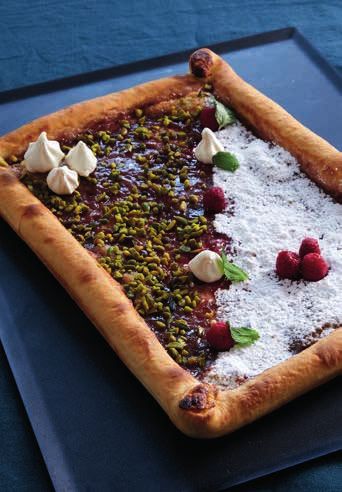
CONTENTS:
                                     The idea behind the project___________________________ 3
                                     Editorial___________________________________________ 4
                                     About Sensory Analysis_______________________________ 6
                                     Two sensory approaches______________________________ 8
                                     General tasting practices______________________________ 9
                                     Appearance_______________________________________ 10
                                     Smell____________________________________________ 16
                                     Sound ___________________________________________ 22
                                     Texture__________________________________________ 26
                                     Taste____________________________________________ 32

A GLOSSARY OF SENSORY TERMS TO DESCRIBE PIZZA                      |2|       © 2019 - LESAFFRE / THE NORTH AMERICAN PIZZA & CULINARY ACADEMY
The idea behind the project
               Lesaffre now offers, in collaboration with Leo Spizzirri, the founder of The North American Pizza
               & Culinary Academy, a booklet devoted to the organoleptic properties of the yeast leavened pizza.
               This is a versatile product due to its simple formulation, ease of dough manipulation, and variety of
               toppings. Pizza comes in an infinite variety of forms, shapes and sizes around the world. It is extremely
               popular and easily adaptable to meet diverse tastes and preferences of the customer.
               Leveraging its baking and sensory expertise, Lesaffre and The North American Pizza & Culinary Academy
               wish to provide a reference to bakers and pizza makers that include terms and assessment protocols, as well
               as consumers vocabulary. As in previous editions, the descriptors should be adapted accordingly to the type
               of pizza under consideration. We shall focus specifically on the pizza base crust without going further into
               toppings.

               About the authors
                                                Lesaffre sets the global standard for yeast and other fermentation products.
                                                The company designs, manufactures and markets solutions that promote baking,
                                                nutrition, health and the protection of living things organisms. In close collaboration
                                                with its clients, Lesaffre confidently innovates, in order to better nourish and protect
                                                the planet.
               A native of Chicago, Leo Spizzirri brings a lifetime experience of dough
               rheology and high-speed manufacturing to the pizza and baking industry. His
               past responsibilities have made him the go-to reference for dough and pizza
               innovations leading, in particular, to his involvement in the development of major
               national brands across the United States and Canada.
               A craft baker and pizza maker by trade, Leo Spizzirri completed his studies at the oldest pizza school in the
               world, the Scuola Italiana Pizzaioli in Venice, Italy.
               Leo Spizzirri is the co-founder and Maestro Istruttore of the North American Pizza & Culinary Academy
               located in Lisle, Illinois. His cutting-edge school boasts a climate-controlled dough laboratory, a baking
               room with 7 different types of oven and a theatre style show kitchen!
               This booklet was produced with the help and support of Giuseppe Esposito, Nestlé Italy, to whom we are
               grateful for his contribution of the large number of consumer terms.

A GLOSSARY OF SENSORY TERMS TO DESCRIBE PIZZA                                          |3|             © 2019 - LESAFFRE / THE NORTH AMERICAN PIZZA & CULINARY ACADEMY
EDITORIAL
                                                A product of Europe, and almost certainly of Italy,
                                                although its precise origins have been the subject
                  by Leo Spizzirri              of much controversy, the pizza is a successful export
                                                that now enjoys a presence on every continent. It is
                                                generally found in the form of a rounded dough base
                                                garnished with a topping...
                                                As, arguably one of the world’s favourite foods, the pizza
                                                is available in a plethora of different forms: the toppings
                                                are naturally adapted to local tastes, but the base remains a
                                                common denominator in all pizzas. Hence the importance
                                                of quality ingredients. However, it is necessary to cater to
                                                the clearly identified tastes and expectations of pizza lovers
                                                when it comes to crust thickness, softness or crunchiness.
                                                Regardless of the different consumer habits and customs;
                                                whether the pizza is consumed on the premises, taken away,
                                                chilled or frozen for re-heating at home; or sold in rolled
                                                dough form for home-baking; a meticulous knowledge of
                                                the production process is required to guarantee top-quality
                                                results.
                                                Pizza is widely consumed around the world, well beyond
                                                Italian borders. In 2013, it is thought that in excess of an
                                                estimated 30 billion pizzas were thought to have been
                                                consumed.
                                                Americans are generally considered to be the biggest
                                                consumers, munching their way through some 13 kg/year/
                                                inhabitant.
                                                In traditional consumer countries, the pizza is even
                                                attempting a foray into the dessert niche with innovative
                                                sweet variations, including chocolate toppings; or in more
                                                refreshing basil, mint, or citrus fruit versions. In another
                                                novel bid for expansion, the humble pizza is currently trying
                                                to capture the United States breakfast market!
                                                As a constantly evolving, highly specialised product,
                                                requiring technical expertise and acclaimed worldwide, the
                                                pizza undergoes close scrutiny from a sensory angle in this
                                                booklet, in an effort to attribute key quality descriptors to
                                                this go-to product.

A GLOSSARY OF SENSORY TERMS TO DESCRIBE PIZZA       |4|               © 2019 - LESAFFRE / THE NORTH AMERICAN PIZZA & CULINARY ACADEMY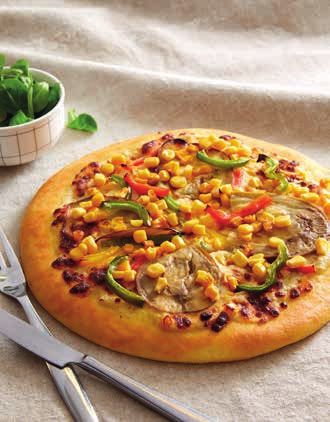
About Sensory Analysis
Sensory analysis is an essential tool for industrial, instore and craft bakeries.
• Marketing
Development and validation of product concepts, analysis of competition
• Research & Développement
Formulation and process optimisation
crust and crumb
• Quality the pizza,
e of
Follow-up of raw materials, earanc Sm
pp ell
ingredients, finished products… ll a of the
ev ra piz Sm
O
ell ssesse
za
(a
of t d fro
he m ha
pizz lf of
a a pizza
SME
(smo LL
ky, o
r... ce, ,
lou n e
ily...
)
co ara lum
)
ap pe, HT
G
pe vo
)
(sh SI
a
HEARING
( sound
crispiness…)
This technique involves a
(ar savo
human panel highlighting and
om ur
TA and mok
as y, s
ST flav y...)
describing the organoleptic
E ou
properties (appearance, smell, CH
outh pizza
TOU , soft...)
)
-feel
nt
ista
rs
sound, texture, taste) of a
nd m f the
(res
product.
ch a re o
tou textu
the nd
(To und a
So
Taste
of the p
izza
A GLOSSARY OF SENSORY TERMS TO DESCRIBE PIZZA |6| © 2019 - LESAFFRE / THE NORTH AMERICAN PIZZA & CULINARY ACADEMY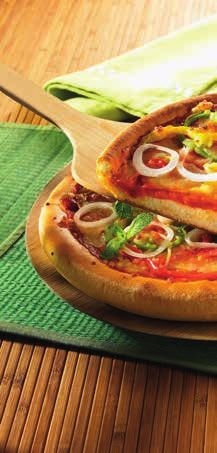
SENSORY RESPONSE
                                                                (hedonism)

                                                                   BRAIN
                                                             (coding, perception)

                                                                                    RECEPTOR

                                                                                                                            STIMU
                                                                                    Eyes

                                                       NERVE FIBRES
                                                        (sensation)

                                                                                                                               LI
                                                                                    RECEPTOR
                                                                                    Noze

                                           RECEPTOR
                                                Ears
                                                                                    RECEPTOR
                                                                                    Tongue

                                                            RECEPTOR
                                                            Skin

               The aromas released in the mouth when eating a pizza develop and travel to the nose via
               the back of the throat, a route described by specialists as the retronasal route. Such aromas
               are not to be confused with those perceived when smelling the product (scent and smell).
               The simultaneous perception of tastes, smells and mouth-feel sensations experienced during
               tasting is collectively known as “flavours”.

A GLOSSARY OF SENSORY TERMS TO DESCRIBE PIZZA                              |7|            © 2019 - LESAFFRE / THE NORTH AMERICAN PIZZA & CULINARY ACADEMY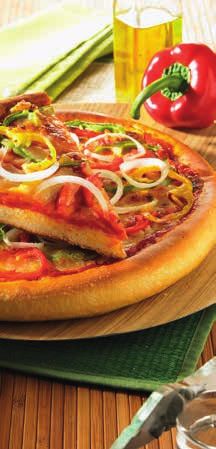
Two sensory approaches
                                                   Expert                                                                           Consumer
                                                   vocabulary                                                                       vocabulary

                         Objective analysis of various sensory criteria or attributes
      Test

                                                                                                                     Consumers’ assessment of a product’s acceptability
                                     used as a measuring instrument

                                    Expert: 10 to 15 people having undergone
      Panel

                                    20 hours’ specialist training and monitored                                                 No training, 60 people minimum
                                           to regular performance tests

                                          Scoring scale with identified criteria                                         • Allocation of score on assessment scale
Product assessment

                                           (attribute with precise definition)                                                    • Reasons for preferences
   presentation
   and product

                                                                                                                           (hedonism: Whether «liked/disliked»)
                                                              Fruity smell
                                       Weak                                              Strong                           Dislike                                               Like

                                      0                                                         10                         1      2     3      4     5       6    7         8     9

                                                             Sensory profile                                    Score                 Assessment histogram
                        Product A
                                                                 CRUMB COLOUR                                   10
                        Product B                 CRACKERS                      RIPE WHEAT SMELL
                                                  FLAVOUR
                        Product C                                                                               8                                                     7,5
      Typical results

                                         ACID TASTE                                      CEREAL SMELL
                                                                                                                                         6,6
                                                                                                                6                                      5,3
                                                                                                                                                                                       5
                                    MALTY/TOASTY                                            SOURDOUGH
                                      FLAVOUR                                                 SMELL                       3,9
                                                                                                                4

                                         FRUITY
                                        FLAVOUR                                            FRUITY SMELL         2

                                           SOURDOUGH
                                            FLAVOUR
                                                                                      MALTY/TOASTY              0
                                                                                         SMELL                            A               B              C            D                E
                                                      CEREAL FLAVOUR       RIPE WHEAT FLAVOUR
                                                                                                                                                   Products
   conclusion

                         Product B is characterized by stronger ripe wheat &
     Typical

                        malty/toasty smells and flavours than products A & C.                                                   The preferred product is the…
                            N.B.: possibility of correlate with TAXT+, pH meter readings, etc.

    A GLOSSARY OF SENSORY TERMS TO DESCRIBE PIZZA                                                         |8|                     © 2019 - LESAFFRE / THE NORTH AMERICAN PIZZA & CULINARY ACADEMY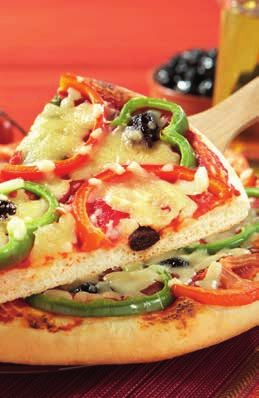
General tasting practices
          Tasters are required to :
          • Report any physiological impediments (cold, on-going dental care, etc.).
          • Avoid smoking, wearing perfume, eating any strong-tasting products (confectionery,
            coffee, spicy food, etc.) for at least one hour prior to tasting.
          • Avoid talking to other tasters when assessing the products and remain silent
            during the tasting.
          • Assess equivalent amounts for each product.
          • Rinse out the mouth with water before tasting each product.
          • Take the amount of time deemed necessary for each test.

          The products should be :
          • Presented as a blind sample (coded samples).
          • Presented under the same conditions (temperature, amounts and degree of baking).
          • If compared, assessed at the same stage of preservation: i.e. with the same degree of shelf life.
          • Temperature of pizzas during tasting: for the purposes of comparison, it is essential for the pizzas to
            be tasted at the same temperature, and always hot, in order to replicate typical consumption patterns.
            The recommendation is 4 to 6 minutes after removal from the oven.
          • In the case of fresh or frozen pre-wrapped pizzas, the recommendation is to test them several times
            throughout their shelf-life and until their best before date. The reheating recommendations should be
            followed.
          • The assessed pizzas should be presented at the same or an identical degree of baking.
          • Round pizzas should ideally be cut into 8 (large), or 6 (medium) slices to be able to assess similar pieces.

Pizza is highly sensitive to cooling. It can therefore be useful, if the conditions so permit, to assess the product’s texture whilst hot and after cooling.
The current pizza reference document is a detailed tool for use in assessing the product base, without the topping as such (excluding categories
such as overall smell and general aroma of pizza), given the infinite variety of toppings that are possible.
Furthermore, in addition, most of the concepts presented can be used to evaluate similar types of product, such as focaccia, ciabatta, and
Flammenküche.

A GLOSSARY OF SENSORY TERMS TO DESCRIBE PIZZA                                                 |9|                  © 2019 - LESAFFRE / THE NORTH AMERICAN PIZZA & CULINARY ACADEMY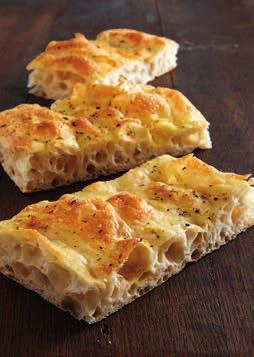
APPEARANCE
The first factor to be assessed when eating a pizza is appearance.
The assessment occurs in 3 stages: the overall appearance of the
pizza, then the crust, and concluding with an examination of the
interior of the dough.
Shared experiences
                                                “    I hope that pizza, especially the Napoletana, will continue to survive the test
                                                of time, unchanged in its traditional, original form, because it’s just perfect the
                                                way it is!

                                                I eat pizza whenever I can, it’s my favourite meal, I easily have it 4 times a week!
                                                I’m happy to eat pizza at home, take it away, or have one out, with friends, or at a
                                                restaurant.
                                                I make my own pizza at home, but I must admit that when I want a really good quality
                                                pizza, I go to a good pizzeria.
                           Pasquale
                                                I’m lucky enough to live in Naples, so I can easily find excellent shops selling top-
                              CICCI
                                                quality tasting products.
              Grocery store keeper,             Eating pizza for me is all about enjoying good company!
                               Italy
                                                It’s a great opportunity to get together with the family and friends and create an
                                                event around this traditional Italian dish.
                                                What constitutes a good pizza for me is a nice golden crust, not too pale, not too dark,
                                                quite well risen with a puffy rim.
                                                My all-time favourite is the traditional pizza Napoletana, with a thin crust to get that
                                                fine crispy texture, but it must be well risen at the sides!
                                                As for the topping, I have a real weakness for provola/pepper, really hot, it’s delicious.
                                                Also, I think it’s an absolute crime when a pizza is served cold or lukewarm …
                                                a good pizza should always be eaten really hot, otherwise you don’t get to enjoy the
                                                true taste of the dough, or the special texture.
                                                                                                ”

A GLOSSARY OF SENSORY TERMS TO DESCRIBE PIZZA                                        | 11 |            © 2019 - LESAFFRE / THE NORTH AMERICAN PIZZA & CULINARY ACADEMY
Appearance/General
Expert
vocabulary
Consumer
vocabulary
• Regularity of the pizza shape • Even shape (varying degree)
Several slices should be assessed
• Round, rounded
• Lovely
Asymmetrical Symmetrical
• Shape of pizza
In the case of round pizzas • Even shape (varying degree)
• Round, rounded
Oval Round
• Overall development of pizza
Several slices should be assessed • Thin, flat, compact / thick, puffy, risen, voluminous
• Lovely
Under-developed, flat Well-developed, risen
• Difference in thickness between
rim/base
Examine the pizza slice: is there a difference in thickness • Thin, flat, compact / thick, puffy, risen, voluminous
between the rim and the middle of the pizza?
• Lovely
No difference Very flat base, well-risen rim
• Industrial/artisanal, traditional, hand-made
• Spontaneous comments by experts
• Unappetising / appetising, appealing
A GLOSSARY OF SENSORY TERMS TO DESCRIBE PIZZA | 12 | © 2019 - LESAFFRE / THE NORTH AMERICAN PIZZA & CULINARY ACADEMYAppearance/Crust
Expert
vocabulary
Consumer
vocabulary
e.g e.g
• Colour of crust (shade) GOLDEN BROWN
• White, pale, cream, yellow, coloured, golden, grey,
reddish, brownish, brown, caramelised, chestnut
brown, burnt, black, charred
• Intensity of crust colour • Dull, matt/glossy, oily
Pale Dark
• Raw, unbaked, under-baked, pale, light, coloured,
dark, over-baked, burnt, charred
• Evenness of crust colour
Assess the colour differences on the rim and top of the pizza
Very patchy (black Even (uniformly pale, or uniformly • Uniform, even / uneven, patchy, speckles, dots
areas and pale areas) pale chestnut, for example)
• Evenness of crust’s surface /
Presence of blisters on surface • Blisters (small to large), bubbles (small to large),
Examine the rim: are there air bubbles? lumpy, bumpy, puffy, coarse, rough, spikes (varying
degree) / smooth (varying degree)
Puffy, uneven, bubbles Smooth
• Presence of grits • Rough, gritty
Examine the rim and top of the pizza • Traditional
No grits Presence of grits over the entirety of the visible dough
• Presence of speckles
Examine the rim and top of the pizza • Uniform, patchy, speckled (varying
degree), dots (varying degree), baked
No speckles heavily speckled dough (herbs, in open wood fire
grains, pepper…)
• Thickness of crust
Examine a slice of the pizza. • Thin, flat, tight, dense compact / thick,
puffy, well-risen, voluminous
Thin rim Thick rim
A GLOSSARY OF SENSORY TERMS TO DESCRIBE PIZZA | 13 | © 2019 - LESAFFRE / THE NORTH AMERICAN PIZZA & CULINARY ACADEMYAppearance/Interior of dough
Expert
vocabulary
Consumer
vocabulary
e.g e.g e.g
WHITE BEIGE/ GOLDEN • White, pale, cream, yellow, coloured, grey, caramel,
• Colour of crumb
CREAM brown
• Intensity of crumb colour
• Pale, light, coloured, dark
Pale Dark
• Evenness of crumb colour
• Pale, light, coloured, dark
Patchy, speckled Uniform
• Heavy, dense, compact, under-risen, not risen,
• Number of air-holes under-developed, flat, lacking bubbles, few bubbles /
Examine a slice of the pizza bubbles (varying amount), hollows (varying amount),
open honeycomb structure, aerated, light, air-holes
(varying amount), well-risen, well-developed, fluffy,
Few Many mousse-like
• Heavy, dense, compact, under-risen, not risen,
• Average size of air-holes under-developed, flat, lacking bubbles, few bubbles /
Examine a slice of the pizza bubbles (varying amount), hollows (varying amount),
open honeycomb structure, aerated, light, air-holes
(varying amount), well-risen, well-developed, fluffy,
Small Large mousse-like
• Heavy, dense, compact, under-risen, not risen,
• Regularity in size of air-holes under-developed, flat, lacking bubbles, few bubbles /
Examine a slice of the pizza bubbles (varying amount), hollows (varying amount),
open honeycomb structure, aerated, light, air-holes
(varying amount), well-risen, well-developed, fluffy,
Irregular Regular mousse-like
A GLOSSARY OF SENSORY TERMS TO DESCRIBE PIZZA | 14 | © 2019 - LESAFFRE / THE NORTH AMERICAN PIZZA & CULINARY ACADEMYAppearance Illustration
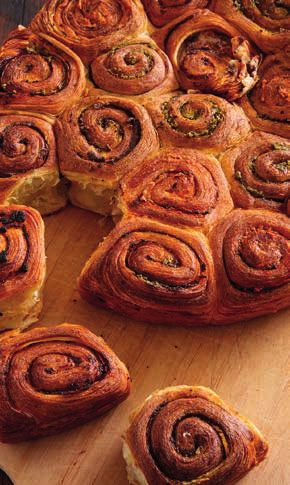
Flaky/rolled pizza
Recipe
Flour type 65 1000 g 100 %
Water (base temperature: 60°C) 500 g 50 %
Fresh yeast 40 g 4%
Sunflower oil 30 g 3%
Sugar 30 g 3%
Salt 20 g 2%
Butter for folding into dough 100/500 g 20 %
Process
Type of mixer Spiral
Mixing 8 min on slow speed
Dough T° 25-26°C
Bulk fermentation 5 min
Dividing 1000 g
Pre-shaping Smooth, light rounds
Lamination 38 cm / 25 cm rectangle
Cooling 60 min at 3°C
Lamination 1 double + 1 single
CreamAerated
Cooling 60 min at 3°C
Shaping “roulé raisin” type Aerated
Topping
Final proof
Discretionary
90 min / 32°C / 75% Hygrometry Blown-up Aerated
Blocked fermentation
Baking
up to 8 hours at 4°C
8 min at 280°C (deck oven)
Cream
Aerated
Aerated Cream
A GLOSSARY OF SENSORY TERMS TO DESCRIBE PIZZA | 15 | © 2019 - LESAFFRE / THE NORTH AMERICAN PIZZA & CULINARY ACADEMYSMELL The smell of a freshly-baked product has a strong power of attraction. The act of tasting begins when the smell first enters the consumer’s nose… and then continues in the mouth.
Shared experiences
                                                               “   The Chinese market boasts a broad range of pizzas offering a variety
                                                               of tastes and many more sensory attributes besides.

                                                               The American style pizza forms the core of the market, although the
                                                               Italian type pizza segment is expanding, due to its nutritional merits.
                                                               In the American style pizza segment, the Chinese have a preference for
                                                               dough with an appealing colour and a soft texture, a good-quality sauce
                                                               and an attractive topping.

                                                               Likewise, the Chinese preference in Italian style pizzas is for a good crust
                                                               colour, but a crispy dough texture. The quality markers for this type of pizza
                                          Yi Qing Ding         are the type of olive oil and cheese used (parmesan, ricotta, etc).
                                                       R&D
                                                               N.B.: the Chinese have high standards for their pizza; as criteria for purchase
                                                       Feizi
                                                  Hangzhou     include quality of topping (meat must be top-quality and generous, and
                                                     Chine     vegetables brightly-coloured), as well as the price.
                                                Bin Cheng      Innovation-wise, we have launched a pizza based on durian, as well as a
                                                R&D Director   salted egg yolk flavour pizza, both of which have had huge success.
                                                  Margerita    A pizza may appear to be easy to produce, but don’t be fooled by appearances!
                                                    Fuzhou
                                                               The production of a good pizza requires a thorough mastery of all the factors
                                                      Chine
                                                               involved, from the choice of ingredients to the act of purchase on the retail
                                                               premises, not to mention the entire production and baking process.

                                                               The most critical steps involved are the dough manufacture, choice of
                                                               topping ingredients and the appropriate baking: the minimum baking
                                                               temperature and short baking time are key to a perfect finished product.
                                                               In a nutshell, the most important factors prompting the consumer to buy
                                                               one particular pizza in preference to another are: brand, price, taste and
                                                               attractive topping!
                                                                                   ”

A GLOSSARY OF SENSORY TERMS TO DESCRIBE PIZZA                                       | 17 |           © 2019 - LESAFFRE / THE NORTH AMERICAN PIZZA & CULINARY ACADEMY
Smell
Here, we come to the smell of the pizza dough. For optimum test results, break open the crust to smell inside. The hotter the pizza, the more
intense the aromas reaching the nose. Each expert descriptor is illustrated by a reference that can be mixed in an opaque glass, and then
heated in a microwave oven.
• For best results, when making up samples, add the ingredients in the order described (mixing thoroughly in the case of liquid ingredients)
Expert
vocabulary
Consumer
vocabulary
• Acetic, vinegary smell RECIPE
2 g alcohol vinegar • Acidic, sourdough, yeast, tangy, spicy, peppery
Weak Intense 8 g de pizza
• Alcohol smell RECIPE
6 g pizza • Acidic, alcoholic, strong
Weak Intense 2 squirts ethanol
• Bread smell RECIPE
7 g flour T55 5 g water • Bread, fresh bread, ciabatta, wheat, brioche
8 g pizza
Weak Intense
• Cardboard smell RECIPE
8 g of 1 day-old pizza, little yeast, • Cardboard, neutral, flour, floury, doughy, paper
no fat
Weak Intense
• Cereal smell RECIPE
5 g wholemeal bread 3 g water • Cereals, bran, flour, grains, popcorn, wheat
Weak Intense 3 g wholemeal flour 3 g pizza
• Crackers/ grilled cheese* °
smell RECIPE • Crackers, biscuit, biscuity, cheese, grilled cheese,
2 g cheese-flavoured cracker grilled
+ 7g water + 5 g pizza
Weak Intense
• Fermented smell RECIPE
0,2 g desactivated yeast • Fermentation, ferment, fermented, yeast (fresh)
5 g pizza 1 g water
Weak Intense
The descriptors are organized in alphabetical order.
A GLOSSARY OF SENSORY TERMS TO DESCRIBE PIZZA | 18 | © 2019 - LESAFFRE / THE NORTH AMERICAN PIZZA & CULINARY ACADEMY• Solid ingredients, e.g. the pizza itself, should ideally be cut up into small slices for optimum release of the aromas.
• The pizza used for the sample bottles is a standard pizza recipe, baked without topping.
• Before smelling the samples, heat for 5 or 6 seconds in a household microwave oven.
Expert
vocabulary
Consumer
vocabulary
• Fresh yeast smell RECIPE
2 g fresh yeast • Fermentation, ferment, fermented, yeast (fresh)
Weak Intense 2 g dried yeast 8 g pizza
• Herb*° aroma RECIPE • Herbs
1 small pinch mixed dried herbs
8 g pizza • Types of herb (thyme, oregano, basil, etc…)
Weak Intense
• Malty smell RECIPE
• Smoky, open wood fire, burnt, charred, grilled,
5 g liquid instant coffee toasted, popcorn
Weak Intense 5 g over-baked pizza
• Melted cheese* smell RECIPE • Cheese, grilled cheese, rancid, fat
2 g Emmental • Types of cheese (mozzarella, gorgonzola, etc…)
Weak Intense 8 g pizza
• Oil*° smell RECIPE
2 g neutral fresh sheep’s cheese • Oil, oily, fried, fat, brioche, brioche-like
8 g pizza
Weak Intense
• Olive *° smell RECIPE
3 g black olive juice • Olive, oil
8 g pizza
Weak Intense
• Open wood fire smell RECIPE • Smoked, open wood fire, burnt, charred, grilled,
2 g burnt pizza toasted
5 g pizza 5 g water
Weak Intense
A GLOSSARY OF SENSORY TERMS TO DESCRIBE PIZZA | 19 | © 2019 - LESAFFRE / THE NORTH AMERICAN PIZZA & CULINARY ACADEMYSmell
Expert
vocabulary
Consumer
vocabulary
• Pancake batter smell RECIPE • Pancake batter, flour, floury, dough, unbaked dough,
7 g flour T55 5 g milk brioche, brioche-like
Weak Intense 8 g pizza
• Pepper*° smell RECIPE
1 small pinch ground pepper • Peppery, tangy, spicy, acidic
+ 8 g pizza
Weak Intense
• Sourdough smell RECIPE
10 g flour T55 3 g de Crème • Spicy, tangy, peppery, sharp
de Levain (live sourdough) • Types of spices (cumin, curry, etc…)
Weak Intense 7 g water
• Spicy* ° smell RECIPE
1 small pinch mixed spices • Sourdough, tangy, acidic, metallic, spicy, peppery
8 g pizza
Weak intense
• Tomato* smell RECIPE
2 g baked tomato puree • Tomato, acidic, sweet
8 g pizza
Weak Intense
• Vegetables, meat, herbs, onion/garlic, fish, cheese,
• Other smells added by the topping
fruits…
• Neutral, bland, little, no smell / aromatic, fragrant,
• Spontaneous comments by experts strong, intense
• Classic, traditional, artisanal
*smells frequently exuded by the topping
°ingredients that can be added directly to the dough
A GLOSSARY OF SENSORY TERMS TO DESCRIBE PIZZA | 20 | © 2019 - LESAFFRE / THE NORTH AMERICAN PIZZA & CULINARY ACADEMYThe bigga’ Teglia pizza
Smell Illustration
Bigga recipe
Wheat flour Type 65 1500 g 50 %
Water 675 g 45 %
Fresh yeast 15 g 1%
Bigga process
Mixing (base T°: 55°C) Manual, solely by hand
Dough T° 20°C – 21°C
Fermentation 16 - 20 hours at 25°C
Final recipe
Wheat flour Type 65 1500 g 50 %
Water 1425g + 450g "bassinage" 47.5 % + 15 %
Salt 75 g 2.5 %
Fresh yeast 60 g 2%
Olive oil 75 g 2.5 %
Biga phase 1 Total Bigga 30% of flour
Final process
Mixing (base 10 min on slow speed + 5 min on high speed
temperature: 75°C) + 1 min on slow speed with oil
Dough T° 25°C
Bulk fermentation 60 min on tray, pre-rounded
Olive
Olive
Dividing
Pre-shaping
1.3 Kg
Compact rectangles placed on trays Herbs Wood fire
Bulk fermentation 4 hours at room temperature or 24 hours at 4°C herbs Wood fire
Shaping Shaped with the fingers on a well-floured table,
then placed on a pizza tray (60 X 40 cm) Olive Olive Herbs
Topping (option) Sauce only
Wood fire
herbs
Baking 300°C top heat 300°C bottom heat / 15 min
Topping Optional: Add aromatic herbs and bake for
another 2 min in oven
A GLOSSARY OF SENSORY TERMS TO DESCRIBE PIZZA | 21 | © 2019 - LESAFFRE / THE NORTH AMERICAN PIZZA & CULINARY ACADEMYSOUND While sound is just one small factor in the quality assessment of a pizza, it is nonetheless the crispy, or crunchy texture, or sometimes combined soft/ crusty texture, that will contribute greatly to the consumer’s assessment of the product!
Shared experiences
                                                “     The first quality criterion of a good pizza is its appearance: it should have the black spots of a leopard.
                                                An even shape is not mandatory. It should have the classic freshly-baked bread smell and the pizza should be light and airy. Pizzas
                                                vary enormously throughout the world, ranging from the highly standardised, industrially-made pizza at one end of the spectrum
                                                through to the more irregularly shaped, so-called «artisanal» versions at the other.
                                                But make no mistake: a pizza is not just a bit of bread with tomato paste on top!
                                                For me, the original pizza is the Neapolitan, created and invented in Naples. The Pizza Napoletana is based on a simple dough
                                                recipe, simple ingredients, long fermentation, 60/65% water, no chemical ingredients, and starts with a yeast-based fermentation.
                                                The Roman and Sicilian style pizzas, for example, were created in the United States and then spread all around the world.
                                                In 2004, the first Neapolitan pizzeria was founded in the United States, but it wasn’t such a great success. In 2008, a second attempt
                                                was made, this time it was a big hit. It marked the beginning of a wave of Neapolitan pizzerias that were about to take the American
                                                market by storm. When I arrived in the United States in 2011, I brought with me two pizza recipes, which nobody had ever heard of
         Pasquale Cozzolino                     on that side of the Atlantic: the «fried pizza», known back then as the Montanara, and the Pala (one of my own creations).
              Executive Chef at                 The Montanara is made using the same dough as the Neapolitan pizza, but it is deep-fried and topped with a tomato sauce and
                      Ribalata,                 pecorino cheese, then baked in a wood fire oven in order to «dry out» the oil. The Pala, however, differs from the Napoletana in
                          USA                   terms of the water content : 78% for the Pala compared with 60/65% for the Napoletana, which means you have to bake it at a
                                                low temperature for the water to evaporate. The Pala also has a special ingredient: extra virgin olive oil. When water evaporates
                                                during baking, the oil content helps to preserve the moisture in the dough. It is the oil that makes the pizza soft inside and extra
                                                crispy on the outside.
                                                How to make a good pizza? Firstly it requires simple, good quality ingredients: for me that means flour, salt, water and yeast
                                                (natural, or brewer’s yeast). Then, the fermentation phase is extremely important; minimum 24h and temperature-controlled.
                                                If the fermentation phase lasts only 3/4h, the gluten will not be completely broken down, making the pizza less digestible.
                                                Personally speaking, I use 48h fermentation to optimise the digestibility of my own pizzas; a pizza Napoletana generally requires
                                                12h fermentation.
                                                For mixing, you will need a mixer that allows for maximum water absorption by the dough. Last of all, baking is very important;
                                                it’s better to bake it in a wood fire oven. In short, a pizza maker should know his job to keep his customers coming back for more.
                                                For instance, he should be able to reassure customers with his knowledge of top-quality ingredients, appropriate length of
                                                fermentation, etc.
                                                In my restaurants, customers thought the pizza Napoletana was too soft and soggy! But then I explained that the original pizza
                                                was like that, baked at a low temperature to keep the moisture inside the dough, and that the soft texture originally meant you
                                                could fold the pizza and eat it while walking along. Not exactly soggy, but certainly juicy, because it contained fresh mozzarella,
                                                which is high in fat (compared to other lower-fat cheeses, etc.), as well as a freshly made tomato sauce.
                                                The pizza Napoletana is nowadays regarded as a «healthy» pizza, you can even treat yourself to a glass of wine with it.
                                                The United States turned out to be the perfect trial territory for the pizza Napoletana, given the diverse backgrounds of consumers.
                                                Americans came to love it, once they accepted the «moist» texture, but it’s also popular with Asians, Indians, the French and of
                                                course southern Italians (Italians from the north prefer it crunchier, but it’s not really an issue, because if you bake it a bit longer,
                                                you can get a crispier texture anyway). In other words, everyone loves pizza!
                                                                                                                                 ”
A GLOSSARY OF SENSORY TERMS TO DESCRIBE PIZZA                                                           | 23 |                  © 2019 - LESAFFRE / THE NORTH AMERICAN PIZZA & CULINARY ACADEMY
Sound / Pizza to the touch
The descriptors are presented in the order in which we recommend conducting the assessment.
Expert
vocabulary
Consumer
Vocabulaire
Consommateurs
vocabulary
• Brittleness
Assess the texture of the pizza and the sound it makes when • Soft, rubbery/crispy, crackling, crunchy, crumbly,
pinching the edges between the thumb and fingers
brittle
No crackling sound Loud crackling sound
Sound / Pizza in the mouth
Expert
vocabulary
Consumer
vocabulary
• Crunchiness
Assess the sound it makes when biting into
the rim of the pizza • Soft, rubbery/hard, tough, crispy, crunchy,
crackling sound
Not crunchy, Very crunchy, sound
no sound persists for a while
• Crispiness
Assess the length of time it stays crispy when chewing
a piece of the crust • Soft, rubbery/hard, tough, crispy, crunchy,
crackling sound
No sound, doesn’t stay Stays crispy for a long
crispy for long /not crispy time, very crispy
• Crispiness outside, softness inside
Assess the differences in texture when biting into a slice
of the pizza taken from the middle and folded in two, • Soft, rubbery/hard, tough, crispy, crunchy,
with topping inside* crackling sound
Very crunchy + no softness Slightly crunchy,
or very soft + no crunchiness then soft
*: or when simply biting into the pizza in the case of a «calzone»
A GLOSSARY OF SENSORY TERMS TO DESCRIBE PIZZA | 24 | © 2019 - LESAFFRE / THE NORTH AMERICAN PIZZA & CULINARY ACADEMYSound Illustration
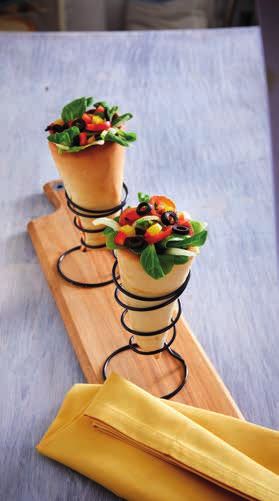
Corno Pizza
Recipe
Wheat flour Type 65 1000 g 100 %
Water 470 g 47 %
Salt 20 g 2%
Fresh yeast 10 g 1%
Sunflower oil 30 g 3%
Sugar 5g 0,5 %
Process
Type of mixer Spiral
Mixing 3 min slow speed + 2 min high speed
Dough T° 24-26°C
Bulk fermentation 5 min
Dividing 250 g
Pre-shaping Smooth, light rounds
Fermentation 4 hours -> 24 hours at 4°C / 50% relative humidity
Laminator 1.5 mm rectangle
Cutting Shape Cutter
Shaping Mould into a cone shape
Final proof 30 min at 28°C
Crunchy
Crispy
Crunchy
1st bake 160°C / 4 min (pre-baked)
Crispy
Topping Tomato Mozzarella Crunchy
2nd bake 280°C / 4 min
Crispy Crispy
Crunchy
Topping Lettuce, tomatoes, olives, peppers
Crunchy Crispy
Crunchy
A GLOSSARY OF SENSORY TERMS TO DESCRIBE PIZZA | 25 | © 2019 - LESAFFRE / THE NORTH AMERICAN PIZZA & CULINARY ACADEMYTEXTURE First perceived through the sense of touch, then in the mouth, a pizza’s texture is an essential factor, which can evolve rapidly. Texture is often lost as it cools down.
Shared experiences
                                      “    The fresh pizza market is a mature market somewhat in decline for the last few years. The
                                      fresh pizza segment in small and medium supermarkets is now faced with the development of new
                                      alternative offerings, which share the same values of convenience, practicality and pleasure. It also
                                      has to compete with the home-made pizza, fresh pre-wrapped pizza in the refrigerated section, and
                                      the catering industry.
                                       Today, 52% of French households buy fresh pizza. The          The premium family pizza is highly appetising thanks
                                       purchasing frequency of 5 purchases/year/household            to its stone-baked soft dough with a crispy cheese
                                       is already down, with the loss of one purchasing act/         crust, copious, flavoursome toppings and generous
            SODEBO
                                       year/household in the last 10 years. Mainly to blame          600g format.
                      France           is the current revamping of the market with the
                                                                                                     For all of our pizzas, 100% of our doughs and sauces
                                       introduction of the increasingly popular cardboard
                                                                                                     are made on our site at Saint-Georges-de-Montaigu,
                                       box format. This development currently accounts for
                                                                                                     as are most of the cold pork meats used for our
                                       more than half the market share in terms of value.
                                                                                                     toppings. Our pizza dough specialists are busy every
                                       Consumers are therefore buying «less but better»,
                                                                                                     day making dough, which is used on the same day for
                                       hence the drop in purchasing frequency
                                                                                                     the manufacture of our pizzas.
                                       The market may well be on the downturn, but there
                                                                                                     Sensory analysis is a key factor in the development of
                                       is no sign of disenchantment! Pizzas are consumed by
                                                                                                     our pizzas and the quality control of our products.
                                       almost everybody, and the category is firmly rooted
                                                                                                     It is therefore the QSE (Quality, Safety, Environment)
                                       in pleasure, indulgence and convenience. Fresh pizza
                                                                                                     department’s task to ensure that our pizzas remain
                                       is a marker of quality and freshness in the small or
                                                                                                     compliant throughout their life span:
                                       medium supermarket segment. Consumers expect
                                       more transparency surrounding the sourcing of                 • appearance : degree of baking, distribution of
                                       ingredients, and especially variety and originality in        topping.
                                       the recipes. SODEBO caters to this need by providing
                                                                                                     • to the touch : texture and stability of dough.
                                       a constant stream of new varieties, including the
                                       upcoming Pizza Crust Indiana (sweet curried chicken)          • mouth-feel: dough texture, taste of our ingredients,
                                       and even the Dolce Pizza Bolognese.                           no extraneous flavours.
                                       At Sodebo, we make 4 pizza ranges, including 2                For pizza development purposes, a hedonic consumer
                                       upgraded ranges: The Dolce Pizza range represents             panel tests our products on the basis of their
                                       all the finesse and flavour of an Italian style pizza. The    preferences. Some of the characteristics tested are
                                       pizzas are top-quality, refined and reminiscent of what       more specific to this type of product: dough texture
                                       one might expect of a genuine Italian restaurant: thin        (ideally soft and/or crispy), assessment of thickness
                                       stone-baked dough, authentic ingredients selected             of the dough and especially the surrounding rim, the
                                       for their taste and luxury presentation (generous             dough/topping ratio, or taste of topping (seasoning,
                                       shreds, shavings, slices).                                    salty taste). The results of these panel tests are
                                       The Crust range conjures up the indulgence associated         key decision-making factors when validating our
                                       with a generous, rich pizza and topping.                      innovation projects.
                                                                                                                               ”
A GLOSSARY OF SENSORY TERMS TO DESCRIBE PIZZA                                               | 27 |              © 2019 - LESAFFRE / THE NORTH AMERICAN PIZZA & CULINARY ACADEMY
Texture / Pizza to the touch
Expert
vocabulary
Consumer
vocabulary
• Elasticity
Assess the behaviour of the pizza when vertical pressure is
applied to the surface by the hand
• Hard, firm, tough/elastic, supple, rubbery
Resistant to deformation Easily deformed +
+ doesn’t spring back springs back to initial shape
• Resistance to lateral pressure
Assess the behaviour of the pizza dough when gently
tearing apart at the sides • Hard, tough, rigid/brittle
Easy to tear in two Difficult to tear in two
• Pliability
Fold a slice of the pizza down the middle, with topping in
the centre. Assess the tear line, which forms along the pizza. • Hard, tough, rigid, brittle/supple,
delicate, soft, moist
Tears along the entire length No tearing, pliable
• Rigidity
Using another slice of the pizza; assessment ideally to be
conducted 3 or 4 minutes after removal from the oven. Hold • Tough, rigid, hard/soft, moist
the slice by the rim and assess the behaviour of the tip.
The tip is droopy, soft The slice remains rigid, upright
Texture / Mouth-feel of the pizza, dough rim
• Chewing resistance, dough rim
Tear off a piece of the crust and place it in the mouth, • Hard, firm, tough, rubbery/easy to chew, light, airy,
then assess its resistance to chewing (molars) aerated, creamy soft, brioche-like, delicate, melt-in-
the-mouth.
Firm, rubbery Delicate, needs little chewing
• Friability
Assess the crumbliness of the dough /crust rim when chewing • Filling, heavy, over-filling, rubbery/light, airy, friable,
crumbly, gritty.
Not crumbly Crumbly
The descriptors are presented in the order in which we recommend conducting the assessment.
A GLOSSARY OF SENSORY TERMS TO DESCRIBE PIZZA | 28 | © 2019 - LESAFFRE / THE NORTH AMERICAN PIZZA & CULINARY ACADEMYExpert
vocabulary
Consumer
vocabulary
• Stickiness
Assess the stickiness of a piece of dough taken from the rim.
Chew the piece 10 times, by gently biting up and down to assess the stickiness • Dry/sticky, doughy, spongy, moist
(whether or not a film is created between the gums).
Not sticky Very sticky
• Greasiness of dough
Assess the greasy mouth-feel after chewing and • Dry, cardboard/fatty, greasy,
swallowing a piece of the dough rim oily (not at all, a little, very)
Slightly greasy very greasy
• Spontaneous comments by experts • Pleasing (fairly to very)
Texture / Mouth-feel of the pizza, middle part
• Chewing resistance, middle part
• Hard, firm, tough, rubbery/easy to chew, light, airy,
Assess the resistance of a piece of dough taken from middle, folded in two
aerated, creamy, brioche-like, delicate, melt-in-the-
mouth
Firm, rubbery Delicate, needs little chewing
• Moistness of dough, middle part
Assess the moistness of a piece of dough taken from middle, folded in two, • Dry, cardboard/moist, fresh, soggy, spongy,
with topping inside, when chewing viscous, glue-like
Dry Moist*
• Doughiness
Assess the development of the structure of a piece of dough • Light, delicate, aerated, airy, friable, crumbly/doughy,
placed in the mouth without chewing.
heavy, dense, compact, filling, over-filling
Not doughy Doughy
• Spontaneous comments by experts • Pleasant (fairly to very)
*assessment using this descriptor highlights the migration of sauce into the dough
A GLOSSARY OF SENSORY TERMS TO DESCRIBE PIZZA | 29 | © 2019 - LESAFFRE / THE NORTH AMERICAN PIZZA & CULINARY ACADEMYTexture Illustration
The «healthy» pizza
Recipe
Wheat flour Type 65 500 g 50 %
Corn flour 500 g 50 %
Water 600 g 60 %
Salt 20 g 2%
Fresh yeast 30 g 3%
Sunflower oil 30 g 3%
Sugar 5g 0,5 %
Process 1 :
Type of mixer Spiral
Mixing 4 min on slow speed
Boiling of flour Water T°: 80°C
Rest 60 min
Process 2:
Type of mixer Spiral
Mixing 8 min on slow speed
Dough T° 28-30°C
Crispy & Aerated Bulk fermentation No
Delicate Fresh Dividing 340 g
Delicate Fresh & Delicate Pre-shaping Smooth, light rounds
Shaping Oiled American pizza mould 25 cm
Crispy & Aerated Fermentation 60 – 80 min at 32°C
Fresh Delicate Topping Cream, aubergine, pepper, onion, sweetcorn
Crrispy Baking 250°C / 5 min 30 sec / tunnel oven
A GLOSSARY OF SENSORY TERMS TO DESCRIBE PIZZA | 30 | © 2019 - LESAFFRE / THE NORTH AMERICAN PIZZA & CULINARY ACADEMYTASTE The taste of a pizza is the major indicator of quality for a consumer. The aromas contributed by the dough are very important, especially in American style pizzas with a thick crust and almost equally generous topping. The descriptors below focus on the dough without topping on the edges, and are organized in alphabetical order; some descriptors are intrinsic to the dough, others relate to the migration of certain ingredients in the topping, especially those with a greater likelihood of migrating (tomato paste, spices, etc.).
Shared experiences

                                                “   Dodo Pizza use their own IT to improve
                                                processes and make a consistent quality product.
                                                                                                       Eastern countries should have a range of key
                                                                                                       characteristics:
                                                The first pizzeria was opened in 2011 in Syktyvkar.    - medium brown colour of the dough’s edges,
                                                Thanks to the strict standards and their own           presented with some air bubbles and a roughish
                                                information system, it reached the operational         surface
                                                plus in two months and paid off in less than a year.   -   moderate air hole structure inside
                                                They have introduced technologies in                   -   very sweet taste
                                                the first pizzeria that help them to bake
                                                                                                       -   good aromatic quality
                                                delicious pizza, clearly fulfil orders, cope with
                                                rush hours and improve the efficiency of               - finally, while the taste of the pizza is still a
                                                the staff. Since 2013, they have been helping          decisive factor in the purchasing act, given the
                                                young entrepreneurs to launch their own pizzerias      decline in buying power, the price is still extremely
                                                according to their standards. During the first two     important for the consumer.
                                                years, their partners launched pizzerias in Russia,    In 2018/2019, Dodo centralized production and
                                                Kazakhstan and Romania.                                introduced the long cold fermentation technique,
                                                In 2015, the first pizzerias were opened in            which has been a resounding success! To prove it,
                                                Lithuania, Estonia and Uzbekistan. In 2016-2017,       the chain is now twice as big as their competitors.
                                                they opened pizzerias in America, China, Great         The Dodo manufacturing process requires
                Gleb KOTLYAROV                  Britain and Kyrgyzstan.                                compliance with a variety of critical points: careful
                 Manager R&D                    Like any other pizza chain, Dodo faced a               selection of ingredients (flour and yeast quality are
                                                few problems, notably regarding the lack of            paramount), mixing, dividing and fermentation,
                    Dodo Pizza                                                                         with strictly controlled temperatures, timing and
                                                information on customer satisfaction. In order
                         Russia                 to strengthen the bond with their customers, the       weighing. The lamination and baking stages are
                                                chain launched a consumer survey campaign with         also important considerations for the quality of
                                                the aim of getting an undertanding on customer         the finished product.
                                                motivations and the reasons behind their               Pizza is a highly technical product requiring
                                                preferences. Tests were introduced into pizzerias,     thorough control over a combination of factors!
                                                enabling them to try out new concepts. These           Some restaurant chains use ingredients and frozen
                                                allowed Dodo to identify the key characteristics       dough to obtain a certain amount of flexibility
                                                important for the consumer:                            in their production process. Conversely, Dodo
                                                Dough should correspond to the type of product,        works solely with fresh dough and products,
                                                toppings should be in accordance with the recipe,      thereby making it especially difficult to guarantee
                                                the shape and cutting of the pizza should comply       consistent quality: the only guarantee is to ensure
                                                with their standards.                                  strict compliance with the specifications at every

                                                                                                                                ”
                                                According to the results of the studies, the           stage in the process.
                                                ideal pizza for the Eurasian market and some

A GLOSSARY OF SENSORY TERMS TO DESCRIBE PIZZA                                           | 33 |              © 2019 - LESAFFRE / THE NORTH AMERICAN PIZZA & CULINARY ACADEMY
Taste / Dough rim
Here, we are focusing mainly with the taste of the pizza dough. To ensure optimum testing, the tasting should focus on the
edges or inside of the pizza. Each expert descriptor is illustrated by a reference pizza base recipe (pizza base 1 or pizza base 2),
together with an added ingredient to lend distinctive aromatic typicity.
The descriptors are organized in alphabetical order.
Pizza base 1 Pizza base 2
Recipe Recipe
Wheat flour Type 65 1000 g 100 % Wheat flour Type 65 1000 g 100 %
Water 530 g 53 % Water 520 g 52 %
Salt 20 g 2% Salt 20 g 2%
Fresh yeast 6g 0,6 % Fresh yeast 20 g 2%
Olive oil 30 g 3% Olive oil 10 g 1%
Process Process
Type of mixer Spiral Type of mixer Spiral
Mixing 8 min on slow speed Mixing 8 min on slow speed
Dough T° 25-26°C Dough T° 25-26°C
Bulk 5 min Bulk 5 min
fermentation fermentation
Dividing 340 g Dividing 340 g
Pre-shaping Smooth, light rounds Pre-shaping Smooth, light rounds
Tray proofing Oiled trays proofing / oil surface of dough pieces/ Shaping Oiled American pizza mould, diameter 26 cm
24h at 4°C Cover with another tray to prevent skinning Final proof 80 min at 32°C / 75% H
Shaping Manually on a grill mould 30 cm Blocking 1 or 2 hours at 4°C / 50% relative humidity
Topping 60 g tomato sauce + 120 g mozzarella Topping 40 g tomato sauce + 120 g mozzarella
Baking 280°C / 5-6 min / Deck oven Baking 5.30 min at 250°C
A GLOSSARY OF SENSORY TERMS TO DESCRIBE PIZZA | 34 | © 2019 - LESAFFRE / THE NORTH AMERICAN PIZZA & CULINARY ACADEMYExpert
vocabulary
Consumer
vocabulary
• Acetic, vinegar aroma
RECIPE
• Tangy, sourdough, acidic
Pizza base 1 with 4% white vinegar
Weak Intense
• Bread aroma
RECIPE
• Bread, freshly baked bread, ciabatta, wheat, brioche
Pizza base 2 no oil
Weak Intense
• Cardboard aroma RECIPE
Pizza base 1 with no bulk fermentation • Cardboard, neutral, flour, floury, paper, doughy
phase, no oil.
Tasting sample: 1 day old pizza
Weak Intense
• Cereal aroma RECIPE
Pizza base 1 replacing 50% of flour • Cereals, bran, flour, grains, popcorn, wheat
with wholemeal flour
Weak Intense
• Crackers/grilled • Crackers, biscuit, biscuity, cheese, grilled cheese,
cheese * ° aroma RECIPE
Pizza base 1 + 2% yeast extract
grilled, rancid, fat
BioSpringer CH7012-20-PW0402 • Types of cheese (mozzarella, gorgonzola, etc.)
Weak Intense
• Fermented/yeast aroma
RECIPE
• Fermentation, ferment, fermented, yeast (fresh)
Pizza base 2 + 4% fresh yeast
Weak Intense
• Herb * ° aroma • Herbs
RECIPE
Pizza base 1 + 1% dried aromatic herbs • Types of herb (Thyme, oregano, basil, etc.)
Weak Intense
• Malty aroma RECIPE
• Smoky, open wood fire, burnt, charred, grilled,
Pizza base 1 + 2% caramel-coloured toasted, popcorn
malt powder
Weak Intense
• Oil * ° aroma
RECIPE
• Oil, oily, fried, fatty, brioche, brioche-like
Pizza base 1 + 30% olive oil
Weak Intense
A GLOSSARY OF SENSORY TERMS TO DESCRIBE PIZZA | 35 | © 2019 - LESAFFRE / THE NORTH AMERICAN PIZZA & CULINARY ACADEMYTaste / Dough rim
Expert
vocabulary
Consumer
vocabulary
• Olive * ° aroma
RECIPE
• Oil, olive
Pizza base 1 + 20% black olives
Weak Intense
• Open wood fire aroma RECIPE • Smoky, open wood fire, burnt, charred, grilled,
Pizza base 1 + 0.5% very dark toasted
coloured rye malt powder
Weak Intense
• Pancake batter aroma RECIPE
• Pancake batter, flour, floury, dough, raw unbaked
Bigga’Telia pizza (recipe in chapter dough, brioche, brioche-like
on «Smell») no herbs
Weak Intense
• Peppery * ° aroma
RECIPE
Pizza base 1 + 0.7% white pepper
• Peppery, tangy, spicy, acidic
Weak Intense
• Sourdough aroma RECIPE
Pizza base 1 + 30% natural • Sourdough, acidic, metallic, tangy, spicy, peppery
liquid sourdough
Weak Intense
• Spicy aroma * ° RECIPE • Spicy, tangy, peppery, sharp
Pizza base 1 + 1%
Weak Intense Raz el Hanout spice • Types of spice (cumin, curry, etc.)
• Tomato * aroma RECIPE
Pizza base 1 + 10% tomato puree • Tomato, acidic, sweet
(corrected hydratation)
Weak Intense
• Other aromas added by topping • Vegetables, meat, onion/garlic, fish, cheese, fruit…
• Insipid, neutral, bland, little, no flavour/ flavoursome,
• Spontaneous comments by experts fragrant, aromatic, strong, intense
• Classic, traditional, artisanal
*aromas frequently exuded by the topping
°ingredients that can be added directly to the dough
A GLOSSARY OF SENSORY TERMS TO DESCRIBE PIZZA | 36 | © 2019 - LESAFFRE / THE NORTH AMERICAN PIZZA & CULINARY ACADEMYTaste / Dough edges
Expert
vocabulary
Consumer
vocabulary
• Acidic taste
VERY ACIDIC RECIPE
• Tangy, acidic, bitter, spicy
4% vinegar
Slightly/not acidic Highly acidic
• Salty taste
VERY SALTY RECIPE
• Bland, neutral/salty (slightly to over-salty)
3% salt
Slightly/not salty Very salty
• Sweet taste
VERY SWEET RECIPE
• Sugary, sweet
10% sugar
Slightly/not sweet Very sweet
• Umami taste
VERY STRONG UMAMI RECIPE
• Bland, neutral/salty (slightly to over-umami)
0,15% monosodium glutamate
Slight/no umami Strong umami
• Spontaneous comments by experts • Lingering taste
A GLOSSARY OF SENSORY TERMS TO DESCRIBE PIZZA | 37 | © 2019 - LESAFFRE / THE NORTH AMERICAN PIZZA & CULINARY ACADEMYTaste / Recipe
The Candy crust
(Pistachio marzipan dough recipe)
RECIPE
100 g ground almonds
100 g icing sugar
1 egg white
5 g pistachio dough flavouring
Process
- Mix 5 minutes in dough mixer with flat beater
- Place bulk preparation on baking parchment
and leave to rest 2 hours at 4°C
- Then roll out by hand with a little flour to create
thin sausage shapes (approx. 0.8mm in diameter)
A GLOSSARY OF SENSORY TERMS TO DESCRIBE PIZZA | 38 | © 2019 - LESAFFRE / THE NORTH AMERICAN PIZZA & CULINARY ACADEMYTaste Illustration
The Candy crust
(Pistachio marzipan dough recipe)
Recipe
Wheat flour T65 1000 g 100 %
Water 500 g 50 %
Salt 20 g 2%
Fresh yeast 5g 0,5 %
Sunflower oil 30 g 3%
Sugar 5g 0,5 %
Process
Type of mixer Spiral
Mixing 8 min on slow speed
Dough T° 25-26°C
Bulk fermentation No
Dividing 340 g
Pre-shaping Smooth, light rounds
Fermentation 1 to 4 days / 4°C / 50% relative humidity
Allow to reach room 60 min / room T°
temperature
Shaping Rectangle 20 cm / 30 cm Pistachio Almond
Incorporate marzipan
into edges
Edges should be well sealed
Almond
Pick vit Docking Pistachio Pistachio
Topping 150 g raspberry compote Almond
Baking Tunnel Oven 250°C / 5 min 30 sec
Almond Pistachio
Decoration Icing sugar, raspberries, meringues, mint Pistachio Almond
A GLOSSARY OF SENSORY TERMS TO DESCRIBE PIZZA | 39 | © 2019 - LESAFFRE / THE NORTH AMERICAN PIZZA & CULINARY ACADEMYPIZZA
in words
A G LO S S A R Y O F S E N S O R Y T E R M S
TO D E S C R I B E P I Z Z A
Renowned for its sensory expertise, Lesaffre has developed, together with Leo Spizzirri, a glossary of
sensory attributes adapted to the assessment of pizzas. This tool is used to combine two approaches:
the more subjective approach of consumers and the more objective angle of experts.
Browse this booklet, sample and enjoy!
Already published:
“LE PAIN” in words,
SANDWICH BREAD in words,
“LE CROISSANT” in words,
to describe crusty bread,
sandwich bread and
croissants.
CONTRIBUTORS : Guiseppe Esposito, Nestlé / Leo Spizzirri, The North American Pizza & Culinary Academy
Sara Autton,Charles Billiet, Sherrill Cropper, LESAFFRE
LAYOUT : Audrey Spruyt, LESAFFRE/ PHOTOGRAPHS: Studio TEKHNE
CONTACT : LESAFFRE INTERNATIONAL, BAKING CENTER™ - 77 rue de Menin 59520 MARQUETTE-LEZ-LILLE- FRANCE - Tel. +33 (0)3 20 14 80 00 - lepainmotamot@lesaffre.com - www.lesaffre.comYou can also read


