Indigenous technology is often misunderstood, but it can be part of everyday life
←
→
Page content transcription
If your browser does not render page correctly, please read the page content below
Indigenous technology is often
misunderstood, but it can be part of
everyday life
7 September 2021, by Andrew Peters

                                                              that have existed in various parts of the world that
                                                               are still relevant, and prevalent, today

                                                              Indigenous knowledges and technology have been
                                                              linked from the beginning of time. Fundamental
                                                              concepts of Indigenous knowledges can and should
                                                              underpin the development and role of technology in
                                                              multiple ways.

                                                              These concepts include:

                                                                      relationality and connection
Igniting fire at Tjapukai Aboriginal Cultural Park. Credit:           reciprocity
Shutterstock                                                          reflexivity
                                                                      Country

                                                              Relationality/connection refers to the Indigenous
The COVID pandemic has highlighted our need for               understanding of all things being connected. One
connection and forced billions of people to adapt to          action can impact many others—similar to the
a changed world. Much of this adaptation is heavily           fundamental Western scientific concept of "cause
reliant on technology, and in particular information          and effect."
technology, which is being used to keep many
people connected.                                             Embracing and understanding reciprocity ensures
                                                              the benefits of the use of technology don't come at
Although the pandemic is posing many problems                 the expense of others (including people, plants,
for our modern, technological world, it also                  animals and the broader environment).
presents an opportunity to embrace ancient and
valuable Indigenous knowledges and identify
potential within them in different ways.

The notion of Indigenous technology is one such
opportunity.

A history of Indigenous technology

Indigenous technology is a relatively
misunderstood phenomenon.

This isn't the use of technology by or for the benefit
of Indigenous peoples. It refers to the multiple
ways that Indigenous knowledges are used to
improve the lives of humans—ancient practices

                                                                                                             1/4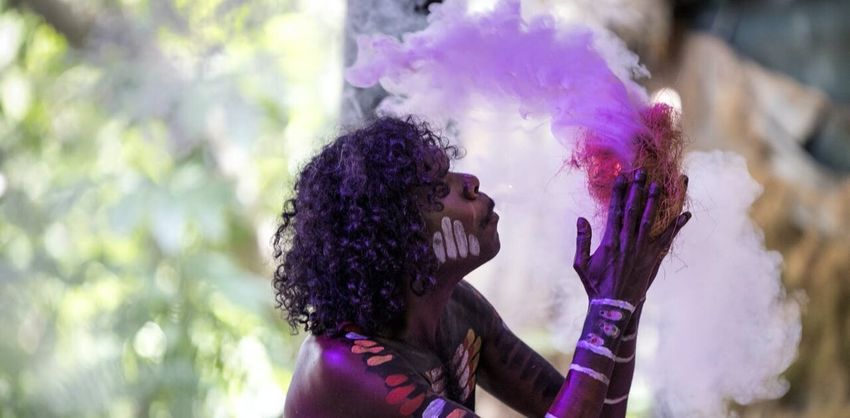
tonics rich in vitamin C for treating diseases.
Aboriginal woman showing the traditional bush seeds
used for food and agriculture. Credit: Shutterstock    Agriculture and aquaculture

                                                       Thousands of years ago, the Gunditjmara people of
                                                       Budj Bim in western Victoria modified natural
Reflexivity involves the constant cycle of learning    features and created a series of artificial ponds,
and listening that underpins knowledge creation        wetlands and networks of channels.
and transfer for Indigenous peoples and cultures. It
is also seen as an important element of research    These practices allowed water flows between dams
and development in the world of technology          to accommodate the farming of eels. The
(particularly relevant now as we are developing     Gunditjmara people also built substantial stone
ways to treat COVID.                                structures close to work sites to shelter from chilly
                                                    southerly winds that can still be seen in various
And Country refers to the grounding of knowledges parts of western Victoria today.
in our land and all it contains. Our knowledges and
languages come from the land, and this is where
they belong. This makes our knowledges
contextual and specific to a certain group.
Understanding the specifics of a certain group is
crucial to gaining cultural knowledge.

In the world of business technology, this relates to
knowing and understanding your market and their
specific wants and needs—a fundamental principle
of marketing.

Native foods and food technology

Native foods and food technology have sustained
Indigenous communities all over the world for
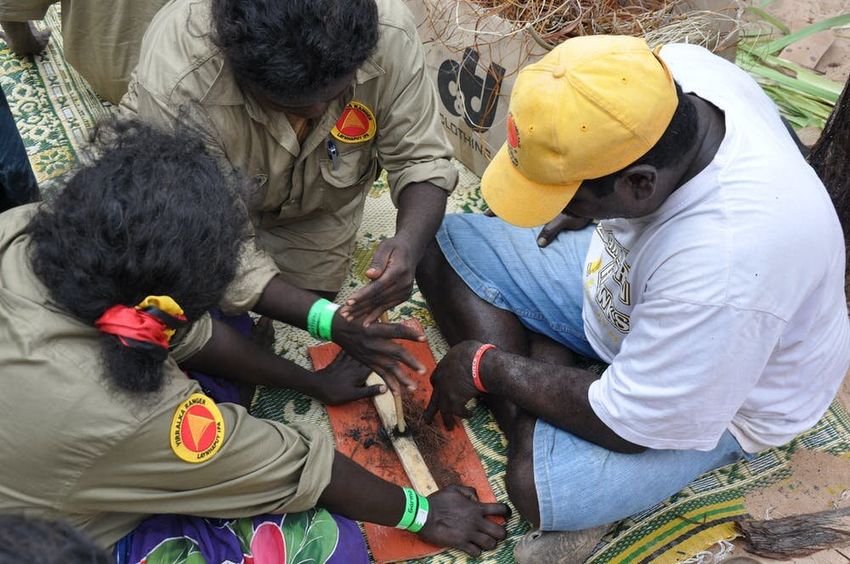
thousands of years. Today, native foods are used       Dhimarru Indigenous Rangers teaching traditional fire
in a variety of ways, including connecting people      making at Garma Festival. Credit: Shutterstock
with culture through culinary experiences such as
the Tasmanian "Wave to Plate" project.

In southeast Australia, the Wurundjeri people's        Fire management
name comes from the Witchetty grub found in the
Manna gum that is rich in Vitamin C and good for       Indigenous cultural burning and fire management is
skin wounds. Wurundjeri people still use plants        another ancient practice that lives on today.
such as the Manna gum (Eucalyptus), murrnong
and tee tree (melaleuca) for both nutritional and      These practices are increasingly being used as
medical purposes.                                      tools for national park management, emergency
                                                       services and other organizations to better
Native groups in North America have practiced          understand our native environment and connect
plant-based medicinal practices for thousands of       with Aboriginal cultures, peoples and histories.
years, and continue to this day. This includes the
direct consumption of plant parts, using them as       Astronomy and geology
ointments, and boiling them as part of tea drinks.
Some groups also use conifer needles to create         Traditional Indigenous storytelling has enabled

                                                                                                         2/4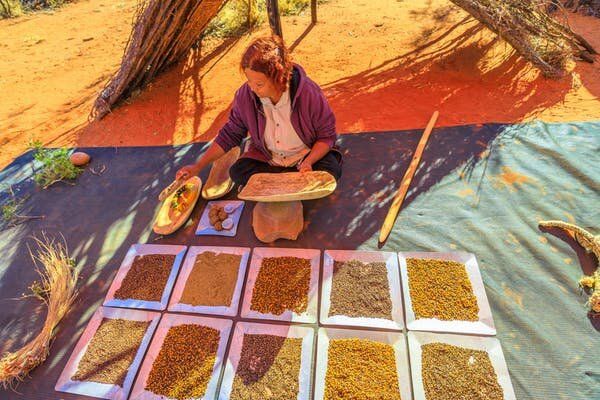
modern-day scientists to discover meteorites they       Provided by The Conversation
might not otherwise have found.

And in New Zealand, geologists are continuing to
use Maori traditions to better understand
earthquakes and tsunamis.

Health and well-being

Concepts of Indigenous and Western health and
medicine have long differed.

Western health has primarily focused on "problem
correction" and the patient's physiology. Whereas
for Indigenous people, health and well-being have
long included physical, mental, spiritual and
environmental issues for both individuals and
communities—what Western health now calls
"holistic care."

Transport

Indigenous peoples have found innumerable ways
to physically navigate their Country, including with
the bark canoe, a symbol of transport technology.

Using the bark from an appropriate tree, the
process today revisits ancient traditions and
provides direct cultural connection for many young
Aboriginal people. The prevalence of scar trees in
many parts of the country shows just how
widespread this practice still is.

These continued uses of Indigenous technology are
an affirmation of culture and history for Aboriginal
peoples. It's also a clear way for all Australians to
connect with a culture that not only has a deep,
deep history on our land, but continues and is still
growing today.

This article is republished from The Conversation
under a Creative Commons license. Read the

                                                                                       3/4
APA citation: Indigenous technology is often misunderstood, but it can be part of everyday life (2021,
                                   September 7) retrieved 25 October 2021 from https://phys.org/news/2021-09-indigenous-technology-
                                   misunderstood-everyday-life.html

                                   This document is subject to copyright. Apart from any fair dealing for the purpose of private study or research, no
                                   part may be reproduced without the written permission. The content is provided for information purposes only.

                                                                                                                                                4/4

Powered by TCPDF (www.tcpdf.org)
You can also read


